Yemeni naval forces seize Israeli-linked vessel

The Cradle | November 19, 2023
Fifty-two crew members on an Israeli-linked ship in the Red Sea were detained by Yemeni naval forces who intercepted and seized the vessel on 19 October, sources told Al-Mayadeen.
An official Yemeni source confirmed to the outlet that the news is true.
Saudi media also reported that Yemeni forces seized the Israeli-linked Galaxy Leader vessel. According to Hebrew media reports, the ship is owned by a British company owned by Israeli businessman Abraham Unger, who goes by the name ‘Rami.’
In an official statement, the Israeli army described the incident as “very serious” and clarified that the ship was not Israeli:
“The ship departed from Turkiye on its way to India, staffed by civilians of various nationalities, not including Israelis.”
The Yemeni army is expected to release a statement later on Sunday.
Yemen’s Armed Forces, allied with the Ansarallah resistance movement, had announced earlier in a statement on 19 November that they would target all vessels associated with Israel in the Red Sea.
“To provide relief to our oppressed people in Gaza,” the armed forces announced, “they will target … ships carrying the flag of the Zionist entity, ships operated by Israeli companies, ships owned by Israeli companies.”
The Yemeni statement also calls on “all countries of the world to withdraw citizens working on the crews of these ships,” to “avoid shipping on or handling these vessels,” and to “inform ships to stay away from these vessels.”
This is not the first statement issued by Ansarallah and the Yemeni army vowing to attack Israeli-linked vessels in the Red Sea.
Less than one week ago, Ansarallah leader Abdel Malik al-Houthi said that “eyes are open,” and vowed to “monitor and locate Israeli ships in the Red Sea.”
“We will continue to plan for additional operations. We can’t stop,” he said, adding that “we will not hesitate to target” Israeli-linked ships.
The Yemeni resistance has been carrying out frequent drone and missile attacks against Israel, which it began last month in solidarity with the Palestinian resistance in Gaza.
In response, the Israeli army has deployed warships to the Red Sea.
According to Hebrew media reports, some of these attacks have been intercepted by Saudi Arabia and Jordan.
Nonetheless, Yemen has vowed to continue attacking Israel.
The Prime Minister of Yemen’s National Salvation Government (NSG), Abdulaziz bin Habtour, said on 10 November that Sanaa will continue to conduct attacks on Israel for as long as the ethnic cleansing campaign of Gaza continues.
Bin Habtour added that the attacks will continue despite possible setbacks to peace talks with the Saudi-led coalition in Yemen, as fighting for Palestine is “a sacred duty for every Muslim and Arab.”
The Sanaa government has also decided to ban all US-made goods and those produced by international companies that support Israel’s occupation of Palestine.
Umm al-Rashrash ‘Eilat’, an Unprepared City Under Threat
Al-Manar | November 7, 2023
Umm al-Rashrash, or what is called ‘Eliat’, a city located on the coast of the Gulf of Aqaba in the Red Sea, has found itself in a dire situation after becoming the destination for survivors and fleeing illegal settlers from the Gaza Strip and northern Palestine settlements. With over 60,000 settlers seeking refuge since Operation Al-Aqsa Flood began, the city has faced unexpected challenges.

No Defensive Systems above The City
Previously relying on the Iron Dome system for protection, which is only equipped to handle short-range missiles and artillery shells, ‘Eilat’ quickly realized its vulnerability when facing drones, winged missiles, and ballistic missiles.
The city had not anticipated being a direct target for right-wing and Iraqi resistance groups. It was assumed that American warships would provide ample protection. However, the arrival of the first batch of drones and missiles shattered that belief, leaving the city exposed and in need of additional air defense systems.
The lack of defensive measures and fortified rooms further compounds the threat facing illegal settlers in Eilat. With no shelters to protect them, every missile or intrusion poses a significant danger to their lives. The city’s vulnerability is heightened by the ease of infiltration through its beaches. The situation is exacerbated by the transformation of a large part of the military base, located on the coastal road’s southern entrance, into entertainment centers. This decision, made in 2021, diminished the city’s ability to defend against potential attacks.
To address these pressing concerns, the Zionist entity has deployed military boats in the Red Sea and positioned SAR-class corvettes to conduct patrols near Eilat’s port. Efforts are underway to bring in multiple defense systems, but the frequency of attacks leaves the city in a perpetual state of danger.
From a City of Displacement to a Front Line
With the beginning of the Al-Aqsa Flood operation, the Zionist entity worked to develop an emergency plan to evacuate its settlements, which is in two stages: The first, called “a safe distance,” is designated for the settlements adjacent to the fence, whether in the Gaza Strip (up to 4 km from the fence) or in the north on the border with Lebanon. (Up to 2 km from the fence). As for the second plan, it is called “Naseem,” and it is designated for settlements located between 4 and 7 km from the fence.
In the context of precautionary preparations for an increase in the number of residents who will evacuate from their homes, it was reported in the Zionist entity that the National Emergency Authority (Rahal) and the ‘Eilat’ Municipality are seeking to establish a tent city in the ‘Eilat’ industrial zone, which has an area of about 150 dunums.

However, after the transformation of ‘Eilat’ from a tourist city that received the displaced into a front line and into a targeted city, it can be said that everything that the entity worked on regarding the displaced must be reconsidered and it must search for new ways, a new city and a new place to shelter those fleeing from its settlements, with the losses it costs.
According to Zionist media reports there is new economic and popular pressure due to the deteriorating conditions of the displaced and the lack of good care for them.
Algerian parliament unanimously votes to support Palestine militarily
The Cradle | November 3, 2023
The Algerian parliament on 2 November unanimously voted to authorize President Abdelmadjid Tebboune to enter the Gaza-Israel war and throw his support behind Palestine.
The 100/100 vote came a day after the anniversary of Algeria’s war of liberation against French colonialism.
Algeria is the second Arab nation that looks to enter the war against Israel, following Yemen’s declaration of war just two days prior.
“We launched a large number of ballistic and cruise missiles and a large number of drones at various targets of the Zionist enemy in the Palestine Occupied Territories,” the spokesperson of the Yemeni armed forces, General Yahya Saree, said earlier this week. “We emphasize that this operation is the third operation in support of our oppressed brothers in Palestine.”
Saree then added that “the position of our Yemeni people towards the cause of Palestine is fixed and principled, and the Palestinian people have the full right to defend themselves and use their full rights.” “Our forces performed their duty in supporting Gaza and fired ballistic and cruise missiles at enemy targets in the Occupied Territories.”
Arab nations have recently been following suit in their support of the Palestinian piece; Kuwait has condemned the Israeli aggression, Bahrain has cut all diplomatic ties, and Jordan has recalled their ambassador to Israel.
Nations outside of West Asia who have voiced their support for Palestine include Cuba, Chile, Venezuela, Bolivia – who’ve cut diplomatic ties with Israel completely – Nicaragua, and others.
Ansarullah officials head to Riyadh for ceasefire talks with Saudis
Press TV – September 14, 2023
Representatives of Yemen’s Ansarullah movement and members of a mediation team from Oman have left for Riyadh to negotiate a permanent ceasefire with Saudi officials, news agencies say.
“The Omani plane took off towards Riyadh carrying the Houthi [Ansarullah] delegation,” French news agency AFP reported, citing an aviation official in the Yemeni capital Sana’a on Thursday.
The talks between Saudi officials and Ansarullah envoys will reportedly focus on a full reopening of Yemeni ports and Sana’a International Airport, payment of wages for public servants from oil revenues, reconstruction efforts, and a timeline for the withdrawal of foreign forces from Yemen.
Ali al-Qahoum, a member of Ansarullah’s political bureau, said the Omani delegation and representatives from the National Salvation Government will try to complete the previous rounds of ceasefire talks. He expressed his optimism over mediation efforts, and Oman’s efforts to restore peace and stability in Yemen.
Oman, which borders Yemen, has been trying for years to bridge differences between the warring parties.
The first round of the Oman-mediated consultations between Riyadh and Sana’a, which are running in parallel to UN peace efforts, was held in April when Saudi envoys visited the Yemeni capital.
The peace initiatives have gained momentum since Saudi Arabia and Iran agreed to resume diplomatic ties back in March following a Chinese-brokered deal after a seven-year estrangement.
Saudi Arabia launched the war of aggression against Yemen in March 2015, enlisting the assistance of some of its regional allies, including the United Arab Emirates, as well as massive shipments of advanced weaponry from the US and Western Europe.
The Western governments further extended their political and logistical support to Riyadh in their failed bid to restore power in Yemen to the country’s former Saudi-installed government.
The former Yemeni government’s president, Abd Rabbuh Mansur Hadi, resigned from the presidency in late 2014 and later fled to Riyadh amid a political conflict with Ansarullah. The movement has been running Yemen’s affairs in the absence of a functioning administration.
The war further led to the killing of tens of thousands of Yemenis and turned the entire nation into the scene of the world’s worst humanitarian crisis.
YouTube ‘arbitrarily’ shutters channels affiliated with Yemen’s Ansarallah resistance
The Cradle | July 18, 2023
US video-sharing and social media platform YouTube on 17 July closed 18 channels affiliated with Yemen’s ruling Ansarallah resistance movement, including those of the media bureau of Yemen’s Operations Command Center (OCC) and the resistance’s art and documentary production unit.
In a statement issued to Yemen’s SABA news agency, Yemeni officials called the move “an arbitrary measure and intellectual terrorism that reaffirms the aggressive intentions of the US-Saudi-Emirati coalition of aggression against Yemen by harnessing their media assets to serve their colonial project. It also reveals the falsity of the slogans of freedom of opinion and expression raised by western countries.”
The suspended channels reportedly had over 500,000 subscribers and hosted over 7 thousand videos with over 90 million views.
According to officials, many of the closed channels hosted art and music and did not promote any form of political hatred or incitement.
This is not the first time that YouTube and other social medial platforms have deleted Yemeni accounts or pages without any prior justification.
In 2021, the US Justice Department seized the website domain of the Yemeni Arabic-language Al-Masirah television channel and nearly three dozen other regional websites.
Social media giants often purge content that supports the Axis of Resistance and works to silence journalists who document Israeli and US war crimes in the region.
Western censorship often targets non-hegemonic news organizations like PressTV and RT.
Last year, a leak of internal Twitter files offered evidence that the Pentagon collaborated with Twitter to wage a secret “PsyOps campaign” across West Asia to sway public opinion in favor of Washington’s military interests in the region.
Ansarallah forces surround Saudi-controlled Marib: Report
The Cradle | July 12, 2023
Yemen’s Ansarallah resistance movement fired two ballistic missiles at the country’s central city of Marib on 11 July, coinciding with heavy mobilization of fighters and equipment outside the city, sources in the Saudi-backed government were quoted as saying.
A military official, Rashad al-Mekhlafi, told Arab News that two missiles landed in northern Marib, near a military base and a camp for internally displaced people.
“The missiles exploded in an open area in Marib without causing any injuries,” he said.
Sources in the Saudi-backed Presidential Leadership Council (PLC) recently told Arab News that Ansarallah has been deploying large numbers of fighters and equipment in preparation for an offensive against the city, which had been halted last year by a truce that was implemented in April.
“They have assembled fighters and enormous military equipment, including armored vehicles, cannons, and drone launchers, on the southern, western, northern, and east-northern surroundings of Marib,” Mekhlafi said.
“We are prepared to repel any attack. We bolstered the front lines with newly graduated military battalions, including sniper and infantry forces. What the Houthis were unable to achieve in previous years would be possible today,” he added.
Another government source was anonymously quoted as saying that the “legitimate government is prepared to repel any attack even as Saudi, UN, American, and European mediators advise restraint.”
Following the implementation of a truce agreement in April last year, intense fighting in Marib ceased, and Ansarallah was unable to capture the city. However, border skirmishes and periodic clashes have since been common.
While significant areas of the energy-rich province are under Ansarallah’s control, the main city is fully in the hands of the Saudi-backed government and the forces loyal to it.
Omani-mediated negotiations have recently resulted in agreements between the Saudi-led coalition and Ansarallah, particularly regarding the blockades on Hodeidah port and Sanaa airport, as well as the payment of salaries of government employees.
Saudi Arabia, as a result, has significantly reduced the scale of its bombing campaign on the country.
Many factors continue to complicate peace in war-torn Yemen – particularly a widespread Emirati occupation of the country and its ports and oilfields, as well as the presence of US, UK, and French troops.
Some have suggested in recent months that Saudi and Emirati interests in Yemen have begun to diverge, claiming that the UAE aims to maintain control over the country’s resources and strategic ports and waterways while Riyadh is increasingly looking to find a way out of the war.
The Middle East and US Terrorist Activities
By Viktor Mikhin – New Eastern Outlook – 08.06.2023
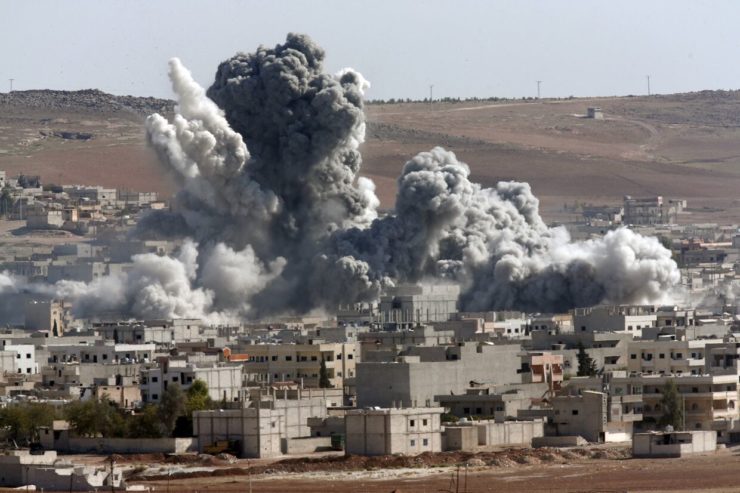
Incredibly high civilian casualty rates from American-led military adventurism in Afghanistan, Iraq, Pakistan, Syria, Yemen, Libya, and Somalia have been revealed in a new research by Brown University’s The Cost of War Project in the State of Rhode Island. The report provides direct data on the victims of the war in which nearly a million people were killed by the US efforts.
According to the study, another important aspect that has indirectly killed several million more people is the military destruction of the economy, public services, infrastructure and the environment, which increases the death toll long after the bombs have been dropped and increases over time. The report estimates that these factors contributed to more than 3.5 million deaths. This aspect requires more research, and the project specifically emphasizes that “the many long-term and underestimated consequences of war” need to be explored in more detail.
Another study shows that the number of direct casualties from wars that killed nearly a million people is an understatement, which the report again refers to by saying that “the exact death toll remains unknown.” In another section of the project’s report on the Iraqi death toll, it says that “estimates of the Iraqi war death toll have been particularly inconsistent. The Lancet 2006 estimated that approximately 600,000 Iraqis died as a result of military violence between 2003 and 2006.” The report goes on to say that the controversy over conflicting reports about the death toll in Iraq stems from news reports estimates, with some exaggerating the death toll while those who supported the illegal invasion downplayed the death toll.
The project cites a report in The Lancet that says the death toll in Iraq since 2003 and in the next three years alone reached 600,000 Iraqis. Various unbiased studies have been conducted, concluding that more than one million Iraqis were killed as a result of the US invasion and occupation of Iraq from 2003 to 2011.
Even the one million mark in Iraqi deaths could be considered an understatement when there were daily reports of almost daily terrorist bombings that killed hundreds of Iraqis. And then, add to that the US and DAESH era from 2014 to 2017, when hundreds of thousands more people were killed, and it’s not hard to imagine that over a million Iraqis have died and continue to die today as a result of the US so-called “war on terror.”
There is no doubt that the US military presence has brought nothing but insecurity and instability to West Asia. In January 2018, Leader of the Islamic Revolution in Iran, Ayatollah Sayyid Ali Khamenei said: “What is important is that the corruptive presence of the US in this region must end… They (Americans) have brought war, discord, sedition and destruction to this region; they brought about destruction of infrastructures. Of course, they do this everywhere in the world… It must be stopped.”
The Cost of War Project’s latest study also warns that “these wars continue to affect millions of people around the world, who live with their consequences and die from them.” The report focuses on the impact of the wars unleashed by the United States on women and children, who “bear the brunt of these ongoing consequences.”
The report notes that while some people have died in combat, many more, especially children, have died as a result of the negative effects of wars, such as the spread of disease and damage to public services. “More research is needed on the impact of the destruction of public services by war, especially outside the health care system, on public health,” the report says. “Damage to water and sanitation systems, roads and commercial infrastructure such as ports, for example, has significant and important negative consequences.”
The study says that the wars and conflicts the United States has fought or been involved in under the pretext of supposedly fighting terrorism since September 11, 2001, clearly show that the consequences of the ongoing violence of war are so vast and complex that they cannot be measured. It should be noted that after the 9/11 attacks, the US waged wars and fomented conflicts, especially in West Asia, under the pretext of fighting terrorism. However, as a result of US military adventurism, there has been an extremely dramatic increase in terrorist groups that had no presence in West Asia or countries such as Somalia prior to Washington’s military intervention in the region.
In other words, the so-called “war on terror” has had the opposite effect from the stated goal of Pentagon’s campaign of instability in West Asia, which has allowed terrorism to flourish. In other words, and many experts agree, the presence of US troops and US policies in the Middle East and other parts of the world have only led to the direct growth of terrorism and terrorist organizations that have destabilized peace and tranquility in those parts of the world.
The report states that the damage and continued deaths caused by the wars mean that those who have unleashed them must take responsibility, including financial responsibility for repairing the damage caused. Suffice it to recall how the American clown of a Secretary of State Colin Powell shook some test tube of incomprehensible white powder on the UN podium and hysterically frightened the whole world with unthinkable troubles from Saddam Hussein. And that was the reason for the barbaric and unjustifiable attack on sovereign Iraq in 2003, from which the Iraqis are still unable to recover and rebuild their state.
Iraqis, and indeed millions of other people, still suffer from distress, pain and trauma in both current and former war zones, according to the study, which calls on the United States as well as its allies to ease the continuing loss and suffering of millions and provide the required “reparations, though not easy, and cheap.” It is something “imperative,” the report notes.
The project correctly and very justifiably blames the US for its role in the military adventurism it embarked on after 9/11, particularly the casualties inflicted during the American two-year war and the 20 year of occupation of Afghanistan. The report focuses on Afghanistan as an example of how people, particularly women and children, the most vulnerable in society, are dying because, despite the indiscriminate withdrawal (or rather shameful flight) of US troops, the damage Washington has done to Afghanistan’s vital services, such as its health sector, sanitation and other infrastructure over 20 years of war and occupation, means that Afghans are still dying today. “Although the United States withdrew military forces from Afghanistan in 2021, officially ending the war that began with its invasion 20 years ago, Afghans are suffering and dying from war-related causes today more often than ever,” the report notes alarmingly.
The Cost of War Project says that much more research is needed to gather more adequate data “to guide life-saving actions.” “More research is needed on the impact of the destruction of public services by war, especially outside the health care system, on public health,” the report notes. “Damage to water and sanitation systems, roads and commercial infrastructure such as ports, for example, has significant consequences.”
In the case of Somalia, for example, the US intervention and the ensuing war prevented the delivery of humanitarian aid, which, according to the study, exacerbated the famine. This is a natural disaster that could have been mitigated if the US had instead chosen to spend a huge amount of money on humanitarian aid programs instead of radicalizing the local population (and increasing terrorism and bloodshed) by bombing civilians with drones. The section of the report reads: “While all belligerents must be held accountable, in the causation sections this report addresses the relevant consequences of the actions of the United States, as the primary power responsible for all these crimes.”
Critics argue that if the United States had not fought wars against West Asian countries or provoked conflicts in the region, other parties would not have participated in any combat missions. In this case, the US should be solely responsible for the disturbing direct and indirect death toll resulting from its provocative and illegal military measures. Washington’s policy of intimidation, military adventurism and terrorism against peace-loving nations of the world must end. And this is the will and aspiration of peoples who want to live in peace and prosperity, without wars and aggressions, and to follow the path of building a new multipolar world, actively promoted by Russian President Vladimir Putin.
US, UK disrupt peace efforts in Yemen
The Cradle | June 2, 2023
Washington and the UK have been continually disrupting peace negotiations in Yemen, informed sources in Sanaa were cited as saying in a report by Lebanese daily Al-Akhbar on 2 June.
“Washington and London are actively disrupting the Yemeni-Saudi political negotiations,” the newspaper wrote.
According to Al-Akhbar, the US and UK are trying to “obstruct all efforts that could lead to peace, and put among their first considerations the Israeli interest.”
This “Israeli interest” is the reason that Saudi Arabia has been “procrastinating” in the agreements it made with Sanaa, which include lifting all blockades and paying government employee salaries, Al-Akhbar said.
This, along with US and UK involvement, aim to keep Yemen in “a state of no war but no peace.”
Al-Akhbar’s sources were quoted as saying: “The political leadership in Yemen knows from the outset that … Riyadh is unable to abide by the terms of the agreement and … end the repercussions of the war due to the divergent regional interests.”
“The [coalition], as much as they agree on undermining Yemeni independence and sovereignty, they are in conflict with each other,” the sources added.
They went on to say that the Ansarallah resistance movement and the Sanaa government do not regret the political flexibility they showed during recent Omani-mediated talks with the kingdom. They warned, however, that time is not on the coalition’s side and that their military power has grown significantly.
The report goes on to explain how Saudi interests diverge from those of the UAE, the west, and Israel.
According to the Al-Akhbar report, Saudi Arabia has realized – despite its procrastination as a result of external pressure – that its interest lies in ending the war and withdrawing from “the Yemeni quagmire.”
However, the UAE wishes to maintain its occupation of Yemen’s ports and oilfields, as well as its occupation of the country’s waterways and particularly its islands, including the Socotra archipelago, which Abu Dhabi has been working in collaboration with Israel to transform into joint military and intelligence hubs. There have also been recent concerns over UAE-backed separatist ambitions in the south.
This also falls in line with the US and Israeli interest to maintain and bolster influence in the Red Sea.
The report adds that Israel is also particularly interested in the Bab al-Mandab Strait, which it considers a “vital artery” for trade with the east, and a key factor in strengthening influence in the Horn of Africa.
It concludes that the Israeli security establishment has significant concerns over Ansarallah’s capability to strike Israel with missiles.
Up to 4.5 Million Dead in ‘Post-9/11 War Zones’ – Study
By Will Porter | The Libertarian Institute | May 16, 2023
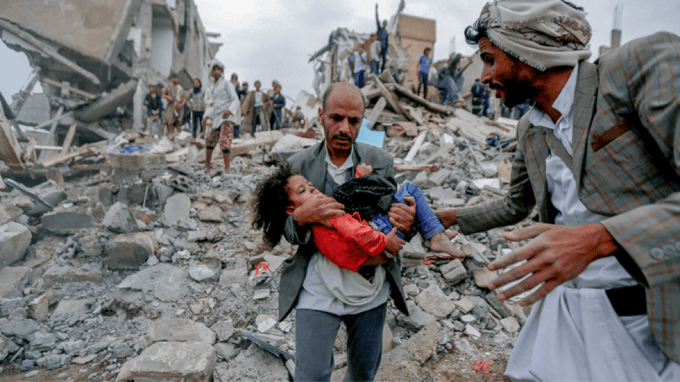
The far-reaching effects of America’s War on Terror may have contributed to the deaths of some 4.5 million people, according to new research by Brown University’s ‘Costs of War’ project. While many of the fatalities were the direct result of violent conflict, indirect causes such as economic collapse and food insecurity have taken a far greater toll.
Published on Monday, the study examines the long-term impact of the “post-9/11 wars” and the “devastating indirect toll” inflicted in Afghanistan, Iraq, Pakistan, Syria, Yemen, Libya and Somalia – all nations subject to US military intervention since 2001.
“Some of these people were killed in the fighting, but far more, especially children, have been killed by the reverberating effects of war, such as the spread of disease,” the paper said. “These latter indirect deaths – estimated at 3.6-3.7 million – and related health problems have resulted from the post-9/11 wars’ destruction of economies, public services, and the environment.”
Though the researchers acknowledged that the true total figure remains unknown, the study reviews a wide range of factors contributing to mortality. Those include economic collapse and the resulting loss of livelihood for local residents, the destruction of health infrastructure and public services, environmental contamination, as well as other cultural effects of war that can lead to further violence down the line.
“While this research does not ascribe blame to any single warring party or factor, and neither does it suggest the full death count is quantifiable, a reasonable and conservative estimate suggests that at least 4.5 million people have died in the major post-9/11 war zones,” the study concluded.
It went on to stress that “body counts are complicated and controversial,” and that tallying deaths from indirect causes is even more difficult, suggesting its figures are merely a tentative estimate based on a variety of sources.
The researchers found staggering levels of child malnutrition in some of the affected countries, with Afghanistan and Yemen topping the list. In the wake of Washington’s two-decade military occupation, more than 3 million Afghan children are now experiencing wasting, a symptom of severe, potentially life-threatening malnutrition.
Last year, Doctors Without Borders warned of a “worrying increase” in Afghanistan’s malnutrition rates, citing “the suspension of international aid” as among the primary causes. A special representative for the United Nations, Dr. Ramiz Alakbarov, described the situation as “almost inconceivable,” adding that up to 95 percent of Afghans were “not eating enough food, with that percentage rising to almost 100 percent for female-headed households.”
UN emergency aid coordinator Martin Griffiths has also attributed the crisis in Afghanistan, in part, to international sanctions and the seizure of government bank accounts following the Taliban’s sudden rise to power in the summer of 2021.
The study found that more than 2 million children in Yemen were also suffering from wasting following eight years of brutal bombings by Saudi Arabia and its allies, which have all but crippled the country’s healthcare sector. Riyadh has received indispensable support from the United States throughout the conflict despite countless reports of attacks on civilians and infrastructure, including hospitals, clinics, homes, factories, farms and bridges. A UN estimate in late 2021 suggested some 377,000 people had been killed in Yemen since the war erupted in 2015, with 70 percent thought to be children under the age of 5.
The Costs of War authors said the study aimed to “convey the scale of the suffering” in the war-torn nations, stating the “urgent need to mitigate the damage” inflicted by US military interventions and their long-term and indirect consequences. They added that additional research is needed on the subject, voicing hopes such work could “prevent further loss of life,” as America’s post-9/11 wars “are ongoing for millions around the world who are living with and dying from their effects.”
China’s role in the Yemen war ceasefire should not go unnoticed
RT | April 19, 2023
Eight and a half years of the Yemeni civil war has seen the Arab country torn into shreds.
Estimates suggest at least 350,000 people have died from the war or its consequences, which began in 2014. This includes approximately 85,000 children under the age of five who have died of starvation. Basic civil infrastructure and supply chains have collapsed, and typically treatable communicable diseases like cholera have claimed countless lives.
The war is primarily between the Yemeni government of Rashad al-Alimi, who took over in 2022 from Abdrabbuh Mansur Hadi, and the Houthi armed movement. The conflict escalated significantly when Saudi Arabia became involved in 2015 by backing Hadi (and now al-Alimi) in what is seen as a proxy war between Riyadh and Tehran, who is rumored to be supporting the Houthis.
Some of my first memories as a writer and college radio host was speaking to victims of the war and learning about the situation on the ground.
Fortunately, it now looks like the war might come to a close. US media reported on April 6th that a ceasefire had been struck between warring parties at least through the end of this year. Then, on April 7th, Lebanese news outlet Al Mayadeen reported that Riyadh had informed the Yemeni presidential leadership council of its decision to end the war and close the Yemen file once for all. This was further corroborated by a Reuters report, confirming that Saudi delegates would travel to the capital Sana’a to discuss a “permanent ceasefire.” And indeed these talks just wrapped up on April 14th and are expected to have a follow-up.
What is apparent from this situation, and what I had previously noted, is that the thawing of relations between Iran and Saudi Arabia would likely lead to an end to the conflicts in Yemen and Syria. We are now seeing that play out. Most importantly, it was not US President Joe Biden – who had promised to end the conflict – but China that set the stage for this diplomatic achievement. And it’s not even a secret among US commentators since outlets like The Intercept, heavily quoting foreign policy experts, are giving China the credit.
It is difficult to compare such horrors but in my years speaking with victims of conflict, including Ukrainian refugees now, or previously with Afghans, Syrians and others, some of the most striking stories I’ve heard are from Yemenis. It is undoubtedly one of the most brutal and total wars seen in modern history, yet almost entirely off the radar for most Western media for nearly a decade.
Despite all of its diplomatic capital and links to the Middle East, somehow Washington managed – despite promising to halt the conflict – to be so anti-peace that it has driven perennial enemies to the table. And now, as the recently reported, CIA Director William Burns “expressed frustration” with Riyadh over its rapprochements with regional adversaries. Apparently, the US feels ‘blindsided’ by the deluge of peaceful resolutions – things it could never even fathom, apparently – and it’s angry with Riyadh, hitherto one of America’s largest arms importers.
Of course, buried under this frustration is a sense of loss. Anyone with some degree of familiarity with US politics and especially US foreign policy knows it is dominated by big money. In foreign affairs, this is primarily the military-industrial complex, which thrives off war and hatred. Peace is bad for business. And thus, the owners of US officials – the people who bankroll their campaigns and/or their bosses’ campaigns – are probably ticked.
Such a reaction explains why US diplomacy is inherently antithetical to peace. The US has been involved in numerous conflicts in the Middle East for some three decades, arguably more. With all of this history between Washington and its ‘partners’ in the region, it has extraordinarily little to show for it. The truth is that the US has stoked, proliferated and literally profited from sowing discord and conflict.
On the other hand, China wants to do business in other ways. Beijing is, to be fair, the fourth largest arms supplier in the world – but, according to Statista, it only has a global market share of 5.2% compared to Washington’s 40%. Chinese companies want to sell their goods or services, develop infrastructure and sell affordable and reliable products. This creates a political environment where stability, predictability and orderliness are cherished values.
As such, Chinese diplomacy is largely to thank for the expected conclusion of the gruesome human tragedy that has been the war in Yemen. Counter to what Washington spews about their so-called “rules-based international order” that no one can ever seem to articulate, Beijing believes in the post-WWII status quo – international law, the United Nations, sovereignty and diplomacy. And that is precisely why a growing number of high-level European officials, including most recently French President Emmanuel Macron, believe China can also help mediate the conflict in Ukraine.
Bradley Blankenship is an American journalist, columnist and political commentator. He has a syndicated column at CGTN and is a freelance reporter for international news agencies including Xinhua News Agency.
Leaked files: Britain’s secret propaganda ops in Yemen
By Kit Klarenberg | The Cradle | April 17 2023
Yemen’s civil war, considered the world’s gravest humanitarian crisis, appears to be nearing its end due to a China-brokered detente between Iran and Saudi Arabia, who support opposing sides in the bitter conflict.
Early signs suggest that the rapprochement between Tehran and Riyadh may not only end hostilities in Yemen, but across the wider region.
The US, Israel, and Britain have the most to lose from a sudden onset of peace in West Asia. In the Yemeni context, London may be the biggest loser of all. For years, it provided the Saudi-led coalition with weaponry used to target civilians and civilian infrastructure, with receipts running into billions of pounds sterling.
During the entirety of the war, Yemen was struck by British-made bombs, dropped by British-made planes, flown by British-trained pilots, which then flew back to Riyadh to be repaired and serviced by British contractors. In 2019, a nameless BAE Systems executive estimated that if London pulled its backing for the proxy war, “in seven to 14 days, there wouldn’t be a jet in the sky.”
In addition to supplying weapons, the war also presented a golden opportunity for Britain to establish a military base in Yemen, fulfilling long-held fantasies of recovering the Empire’s long-lost glory days “East of Suez.”
Al-Ghaydah airport in al-Mahrah, Yemen’s far eastern governorate, has for some time quietly housed “a fully-fledged force” of British soldiers, providing “military training and logistical support” to coalition forces and Saudi-backed militias. There are even indications that this involvement could extend to torture methods, which is a troubling reflection of one of London’s leading exports.
The Cradle has obtained exclusive information about a previously undisclosed aspect of London’s role in the proxy war against Yemen’s Ansarallah-led resistance. It has been revealed that a multi-channel propaganda campaign, led by the intelligence cut-out ARK and its founder Alistair Harris, a veteran MI6 operative, has been operating in complete secrecy throughout the nine-year-long conflict – one that specifically targeted Yemen’s civilian population.
Anti-Ansarallah ops
Leaked Foreign Office documents have revealed that ARK’s “multimedia” information warfare campaign was designed to undermine public sympathy for the Ansarallah movement and ensure that the conflict would only end on terms that aligned with London’s financial, ideological, and geopolitical interests.
For instance, public acceptance of the UN’s widely unpopular peace proposal required propaganda support from local NGOs and media organizations that “support UK objectives” to “communicate effectively with Yemeni citizens” and change their minds.
It was also necessary to counter “new actors” in the information space that were critical of the Saudi-led coalition’s brutal bombing campaigns and the illegitimate, US-backed puppet government that the aerial assaults sought to protect.
Considering the high rate of illiteracy in the local population, ARK conceived the creation of a suite of “visually rich” products extolling the virtues of a Riyadh-dominated peace plan. These products would be disseminated on and offline, would “deliberately include different demographics, sects, and locations to ensure inclusivity,” and would be informed by focus groups and polling of Yemenis. ARK’s campaign even extended to convening “gender-segregated poetry competitions using peace as a theme” and “plays and town hall meetings.”
Publicly, many of these propaganda products appeared to be the work of Tadafur – Arabic for “work collectively and unite” – an astroturf network of NGOs and journalists constructed by ARK. Its overt mission was to “resolve local level conflicts” and “unite local communities in their conflict resolution efforts.”
The campaign began initially at a “hyper-local level” across six Yemeni governorates, “before being amplified at the national level.” Activities “[in] all areas and at both levels” had unified messaging across “common macro themes,” such as the slogan “Our Yemen, Our Future.”
In each governorate, a “credible” local NGO was identified as a messenger, along with “well-known” and “respected and influential” journalists who served as “dedicated field officers” across the sextet, managed by ARK.
In Hajjah – “a site of strong Houthi influence” – the Al-Mustaqbal Institute for Development was ARK’s NGO of choice; in Ansarallah-governed Sanaa, it was the Faces Institution for Rights and Media; in Marib, the Marib Social Generations Club; in Lahij, Rouwad Institution for Development and Human Rights; in Hadhramaut, Ahed Institute for Rights and Freedom; in Taiz, Generations Without Qat.
These local NGOs were instrumental in promoting ARK’s agenda and advancing the narrative that aligned with Britain’s objectives in Yemen.
The company’s roster of “field officers” comprised of individuals with various backgrounds, such as:
“Human rights abuse” specialist Mansour Hassan Mohammad Abu Ali, TV producer Thy Yazen Hussain, Public Organisation to Protect Human Rights press official and “experienced journalist” Waleed Abdul Mutlab Mohammed al-Rajihi, producer from Alhadramiah Documentary Institute Abdullah Amr Ramdan Mas’id, editorial secretary of Family and Development magazine and the Yemen Times’ Taiz news manager Rania Abdullah Saif al-Shara’bi, as well as journalist and activist Waheeb Qa’id Saleh Thiban.
A Trojan Horse
Once ARK’s field officers and NGOs “successfully designed and implemented hyper-local campaigns,” coverage of “information around the related activities will then be amplified at the national level.” A key platform for this amplification was a Facebook page called “Bab,” launched in 2016 with tens of thousands of followers who were unaware that the page was created by ARK as a British intelligence asset.
Under the guise of a popular grassroots online community, ARK used the Bab page to broadcast slick propaganda “promoting the peace process,” including videos and images of “local peacebuilding initiatives” organized by its NGO and field officer nexus.
“Campaign content will highlight tangible, real-life examples of compelling peacebuilding efforts that all Yemenis, regardless of their political affiliation, can relate to,” ARK stated.
“These will offer inspirational examples for others to emulate, demonstrating practical ways to engage with the peace process at a local level. Taken together, these individual stories form the broader campaign with a national message: Yemenis share a collective desire for a peaceful resolution to the conflict.”
When “high engagement levels” with this content were secured, Bab users were invited to submit their own, which demonstrated “support for the peace process.” They were explicitly asked “to mirror content ARK has produced, such as voxpops, short videos, or infographics.” This was then “shared by the project and field teams through influential WhatsApp messaging groups, a key way of reaching Yemeni youth.”
ARK’s “well-connected communications team” would then “strategically share packaged stories with broadcast media or key social influencers, or offer selected journalists exclusive access to stories.” Creating a constant flow of content was a deliberate ploy to “collectively be as ‘loud’ as partisan national political and military actors.” In other words, to create a parallel communications structure to Ansarallah’s own, which would drown out the resistance movement’s pronouncements.
ARK’s role in Yemen’s peace process
While one might argue that the non-consensual recruitment of private citizens as information warriors by British intelligence was justified by the moral urgency of ending the Yemen war quickly, the exploitation of these individuals was cynical in the extreme. It amounted to a Trojan Horse operation aimed at compelling Yemenis to embrace a peace deal that was wildly inequitable and contrary to their own interests.
Multiple passages in the leaked files refer to the paramount need to ensure no linkage between these propaganda initiatives and the UN’s peace efforts. One passage refers to how campaign “themes and activities” would at no point “directly promote the UN or the formal peace process,” while another says concealing the operation’s agenda behind ostensibly independent civil society voices “minimizes the risk” that “outputs are perceived as institutional communications stemming from or directly promoting the UN.”
Yet, once ARK’s campaigns began “performing successfully at the national level,” the company’s field officers planned to “build a bridge” between its local foot soldiers and national “stakeholders” – and, resultantly, the UN. In other words, the entire ruse served to entrench ARK’s central role in peace negotiations via the backdoor.
Diminished western influence
At that time, the ceasefire deal proposed by the UN required Ansarallah and its allied forces to virtually surrender before Riyadh’s military assaults and economic blockade of the country could be partially lifted, along with other stringent requirements that the Saudis refused to compromise on. The US aggressively encouraged such intransigence, viewing any Ansarallah influence in Yemen as strengthening Iran’s regional position.
However, these perspectives are no longer relevant to Yemen’s peace process. China has now encouraged Riyadh to offer significant concessions, and as a result, the end of the war is within sight, with critical supplies finally allowed to enter Yemen, prisoners returned, Sanaa’s airport reopened, and other positive developments.
Evidently, Washington’s offers of arms deals and security assurances are no longer sufficient to influence events overseas and convince its allies to carry out its agenda. The failure of ARK’s anti-Ansarallah propaganda campaigns to coerce Yemenis to accept peace on the west’s terms also highlights Britain’s significantly reduced power in the modern era.
Whereas wars could once be won on the coat-tails of well-laid propaganda campaigns, the experiences of Yemen, Syria, Iraq, and Afghanistan show that the tide has turned. Subversive information campaigns can confuse and misdirect populations but, at best, can only prolong conflict – not win it.
KSA readies draft peace deal to end Yemen war
The Cradle | April 7, 2023
A comprehensive peace document is being drafted to end the Yemen war as it enters its ninth year, an informed Yemeni source revealed to Saudi-owned Asharq Al-Awsat newspaper today, 7 April.
The peace proposal is being sponsored by the UN and is said to cover three phases to end the conflict that has killed some 400,000 people through direct and indirect causes since 2015 and created the world’s worst humanitarian crisis.
The first phase of the peace deal would include a nationwide ceasefire, the reopening of all land, air, and sea routes, the merger of the central banks, and comprehensive prisoner exchanges.
The parties would then hold direct negotiations to establish how the Yemenis envision a state, followed by a transitional period.
Saudi Defense Minister Prince Khalid bin Salman held talks in Riyadh with the Chairman of the Yemeni Presidential Leadership Council (PLC) Dr. Rashad Al-Alimi, to discuss the latest efforts to revive the peace process in line with the UN proposal.
The source speaking with Asharq Al-Awsat expected a ceasefire to be declared in the coming days, for the truce to be consolidated, and for fighting to stop at the battlefronts. Other arrangements will need weeks to be implemented.
The source also claimed Ansarallah has sought to escalate the fighting in recent weeks to make additional military gains before a ceasefire is declared.
Yemeni sources similarly told Al-Mayadeen that “the Saudi vision for the solution provides for the extension of the existing truce in Yemen for another year in understanding with [the Ansarallah-led government in] Sanaa,” adding that “the vision provides for the extension of the truce in exchange for the delivery of salaries, the unification of the currency and the full opening of the port of Hodeidah.”
Further, “The extension of the truce on its new terms will be followed by an official Saudi announcement of the end of the war and the cessation of its intervention in Yemen,” Al-Mayadeen’s sources said.
Optimism surrounding a peace deal has increased following the recent Saudi-Iranian rapprochement, as some observers contend the Ansarallah movement is an Iranian proxy and that Saudi Arabia is no longer interested in prolonging this conflict and is serious in its efforts to reach a solution.
However, resistance to a peace deal may come from the US and UAE.
Abu Dhabi controls most of Yemen’s southern ports, from which Yemeni oil is exported, and is also occupying several strategic islands off the country’s coast and is in the process of establishing a “maritime empire” in Yemeni waters.
Because of this, analysts have suggested that the UAE is uninterested in a solution that ends the war in Yemen.
According to an exclusive by The Cradle, the US, and UAE have “furiously sought to undermine” the understanding reached between Saudi Arabia and Ansarallah in order “to prevent a resolution of the Yemen war.”
The US is unlikely to welcome an end to the war, given that US weapons manufacturers profit significantly from the conflict.
According to a US Government Accountability Office report, the United States concluded over $54 billion in arms sales to Saudi Arabia and the UAE from 2015, the first year of the Yemen war, through 2021. These arms sales accounted for 17 percent of total sales under the U.S. government’s Foreign Military Sales program.
Featured Video
Trita Parsi: Israel Set a Trap for Total War in the Region
or go to
Aletho News Archives – Video-Images
From the Archive
Zionism’s Violent Legacy
By Donald Neff | Washington Report On Middle East Affairs | January 1996
On January 4, 1948, Jewish terrorists drove a truck loaded with explosives into the center of the all Arab city of Jaffa and detonated it, killing 26 and wounding around 100 Palestinian men, women and children.[1] The attack was the work of the Irgun Zvai Leumi – the “National Military Organization,” also known by the Hebrew letters Etzel – the largest Jewish terrorist group in Palestine. The Irgun was headed by Revisionist Zionist Menachem Begin and had been killing and maiming Arabs, Britons and even Jews for the previous ten years in its efforts to establish a Jewish state.
This terror campaign meant that at the core of Revisionist Zionism there existed a philosophical embrace of violence. … continue
Blog Roll
 Aletho News
- Trita Parsi: Israel Set a Trap for Total War in the Region
- Trump’s Iran war is on an Israeli leash
- Saudi oil boss issues global supply warning
- Riyadh Says Its Oil System Is Intact. The Numbers Say Otherwise.
- Trump and Netanyahu Want to “Finish the Job” on Iran
- US ‘one-sided dictation’ not Iran’s beliefs makes rational talks impossible: Baghaei
- Iran’s Next Strike May Not Explode. It Could Shut You Down /Col Doug Macgregor
- Iran: US political targets legitimate if assassinations return
- Iraq shuts key border crossing with Iran under US pressure: Report
- Undersea Internet cables could be targeted in retaliation for attacks on Iran: IRGC deputy chief
- If Americans Knew
- The Israel Lobby’s Changing Fortunes
- AIPAC has become such a political liability that it’s shifting to a more “nimble” approach to buying politicians
- At least 160 Israeli settler attacks in 2 weeks
- Will Gaza’s Ancient Christian Community Disappear Forever?
- Israel’s vision of regional security rests on keeping Arab states weak
- Heidi Levine recounts how Palestinian youths helped save her in settler attack
- DAILY UPDATE: Latest essential news on Palestine, Israel, & region
- Trump’s Intensifying Sabotage of the ICC, for Israel’s Sake
- Israeli military detain US and UK volunteers in West Bank including Democratic NY politician Brad Lander
- Americans at National Conservatism Conference held in Israel this year criticize Israel
- No Tricks Zone
- E-Cars Reduce CO2 Emissions By Only 41% Compared To Internal Combustion Engine Vehicles
- Predictions Made By Renowned Climate Professor Over Past Decades Have Been Proven To Be Poor
- New Study Suggests Large Regions Of The Pacific Ocean Have Been Cooling For The Last 80 Years
- Germany’s Green Energy Debacle: High Energy Costs Force Kahla Porzellan to Close After 182 Years!
- New Study: 50 Years Of The Most Aggressive ‘Net Zero’ Policies Can Only Affect The Global Climate By 0.03°C
- US September “Heat” Was No Record…Many Records Set Decades Ago
- Latest European Green Energy Debacle; Portugal’s Largest Flagship Solar Park Insolvent!
- Green Energy Debacle: German Expert Professor Fritz Vahrenholt Warns Of Severe Economic And Social Consequences
- Two More Paleo Reconstructions Affirm Meters-Higher Sea Levels Across Ireland, Brazil 7000-6000 Years Ago
- New Study: Earth And Venus Surface Warmth Largely Explained By Convection And Lapse Rate, Not CO2 Or Radiation

