Russia: UN chief report blaming Iran for attacks on Saudi oil facilities not based on convincing evidence
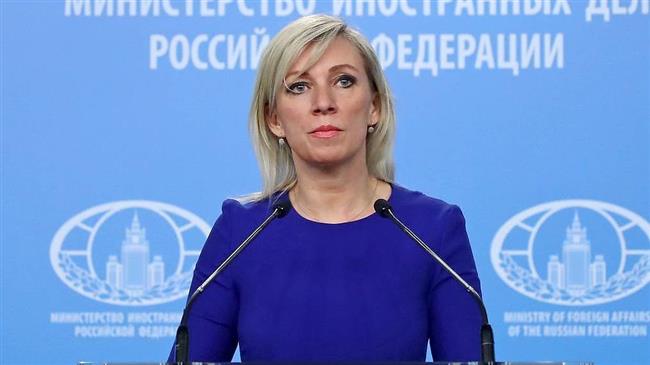
Russian Foreign Ministry spokeswoman Maria Zakharova
Press TV | June 17, 2020
The Russian Foreign Ministry says the UN chief’s report on Iran’s involvement in the last year attacks on Saudi oil facilities is biased and not substantiated by facts.
“What we surely won’t argue with is, unfortunately, that the report can hardly be called balanced and calibrated,” the ministry spokesperson Maria Zakharova said during a press briefing on Wednesday.
She added Russia will present a “detailed analysis” of the UN report during the relevant discussion at the Security Council later on June 30.
“We can also speak about a lack of impartiality and the absence of strong facts to support the accusations leveled at Iran,” she noted, stressing “Nobody has ever presented any convincing evidence of Iran’s violations to the Security Council members.”
The Russian official said that the report was not valid, arguing the “self-appointed inspectors” had claimed based on their “personal observations” that what they saw was “roughly reminiscent of what Iran had once demonstrated at arms exhibitions.”
Last week, UN Secretary General Antonio Guterres said in a report to the Security Council that cruise missiles used in attacks on oil facilities and an airport in Saudi Arabia last year were of “Iranian origin.”
He also said the “items may have been transferred in a manner inconsistent” with UN Security Council Resolution 2231, which endorses the international nuclear deal – officially known as the Joint Comprehensive Plan of Action (JCPOA) – signed between Iran and major world powers in 2015. The allegations were roundly rejected by Iran’s Foreign Ministry.
The ministry said in a statement that the claims appear to have been made under political pressure from the US and Saudi regimes.
“Preparing reports with political motivation will not change the facts and it is clear to all that the current circumstances in the region have directly resulted from the wrong policies of the United States and the child-killing Saudi regime,” the statement said.
The ministry highly recommended that the UN Secretariat not play into the hands of the US in its “pre-planned scenario to annul the cancellation of Iran’s arms embargo.” It also warned the UN against contributing to such a dangerous trend by preparing illegal reports.
Separately, Iran’s UN Mission also responded to the report on Friday, saying, “Iran categorically rejects the observations contained in the report concerning the Iranian connection to the export of weapons or their components that are used in attacks on Saudi Arabia and the Iranian origin of alleged US seizures of armaments.”
US President Donald Trump withdrew Washington from the JCPOA in 2018 and reinstated Washington’s unilateral sanctions against Tehran. His administration has also been piling up pressure on the United Nations to extend and strengthen the embargo on Iran, which is set to expire in October under the nuclear deal.
Washington seeks to restore all Security Council sanctions lifted against Iran if the 15-member body fails to preserve the UN ban on selling conventional arms to Iran.
Iran dismisses UN report on missiles ‘of Iranian origin,’ says body under US, Saudi pressure
Press TV – June 12, 2020
Iran has dismissed a recent claim by the United Nations that missiles used to attack Saudi Arabia have been “of Iranian origin,” saying the organization has spoken out under political pressure from the US and the Saudi regime.
In a statement on Friday, the Iranian Ministry of Foreign Affairs said it was deeply concerned about the use of the UN Secretariat as a means to achieve political objectives.
“Preparing reports with political motivation will not change the facts and it is clear to all that the current circumstances in the region have directly resulted from the wrong policies of the United States and the child-killing Saudi regime,” the statement said.
UN Secretary General Antonio Guterres told the Security Council in a report seen by Reuters on Thursday that cruise missiles used in several attacks on oil facilities and an international airport in Saudi Arabia in November 2019 and February 2020 had been of “Iranian origin.”
He also said the “items may have been transferred in a manner inconsistent” with Security Council Resolution 2231, which enshrines the international nuclear deal – officially known as the Joint Comprehensive Plan of Action (JCPOA) – signed between Iran and world powers in 2015.
Guterres pointed out in his report that the United Nations had examined the debris of weapons used in the attacks on an oil facility in Afif in May, the Abha international airport in June and August, and the Aramco oil facilities in Khurais and Abqaiq in September.
Referring to the “examination of the weapons debris,” the Iranian Foreign Ministry censured the inattention to the sales of lethal weapons to Saudi Arabia that are used against the defenseless people of Yemen while “Saudi garbage is being checked for proof.”
“Undoubtedly, such reports will not only fail to help [promote] peace and security in the region and implement [UN] Security Council resolutions, but also completely destroy the validity and reputation of the United Nations,” the ministry warned.
It said the UN report came at a time that the United States is drafting a “dangerous” resolution to “illegally” extend an arms embargo against Iran, adding this would strengthen the likelihood of it being prepared on Washington’s order to be used at the Security Council against Iran.
The Iranian Foreign Ministry highly recommended that the UN Secretariat not play into the hands of the US in its “pre-planned scenario to annul the cancellation of Iran’s arms embargo.” It also warned the UN against contributing to such a dangerous trend by preparing illegal reports.
In May 2018, President Donald Trump unilaterally pulled the United States out of the JCPOA and later re-imposed the sanctions that had been lifted against Tehran and began unleashing the “toughest ever” bans.
Although the US is not a party to the JCPOA any longer, it recently launched a campaign to renew the Iran arms ban — in place since 2006/2007 – through a resolution at the Security Council. Russia and China are against the push, and most likely to veto it.
To circumvent the veto, the US says it will argue that it legally remains a “participant state” in the nuclear pact only to trigger the snapback that would restore the UN sanctions, which had been in place against Iran prior to the JCPOA inking.
Tehran says Washington, through its unilateral withdrawal from the deal, has forfeited all rights to have a say in the agreement.
European Union foreign policy chief Josep Borrell said on Tuesday that the US has already pulled out of the JCPOA and cannot currently use its former membership of the deal to seek a permanent arms embargo on Tehran.
“The United States has withdrawn from the JCPOA, and now they cannot claim that they are still part of the JCPOA in order to deal with this issue from the JCPOA agreement. They withdraw. It’s clear. They withdraw,” Borrell said.
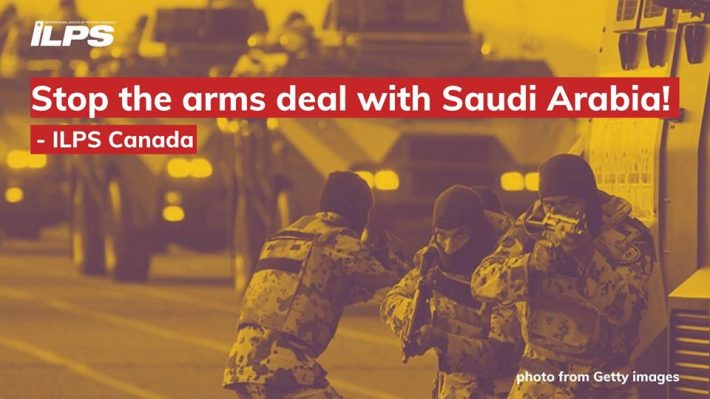
Stop Canada’s arms deal with Saudi Arabia!
International League of Peoples’ Struggle, Canada | June 12, 2020
After stalling for two years, the Canadian government has renegotiated a sale of light armored vehicles to Saudi Arabia for $14 billion. The deal was put on hold in 2018 because of political pressure against Saudi Arabia’s war on Yemen and the murder of Jamal Khashoggi, a journalist. This news is jolting because, in December 2018, Prime Minister Justin Trudeau had said he would not go ahead with the sale. However, the Minister of Foreign Affairs Francois-Philippe Champagne announced that the contract was back on the table on Thursday, April 9, 2020.
The government claims it must proceed with the deal because thousands of jobs and substantial revenues might otherwise be lost. General Dynamics is the supplier building the vehicles to be sold. The government its sales rep. General Dynamics stands to lose profits from the transaction. However, it could be involved in the manufacture of other machinery for domestic and foreign use.
In response to the objection that the items to be sold to Saudi Arabia will likely be used for war, Minister Champagne tells the people not to worry.
“Under our law, Canadian goods cannot be exported where there is a substantial risk that they would be used to commit or to facilitate serious violations of international humanitarian law, international human rights law or serious acts of gender-based violence.” (The Defense Post, April 10, 2020).
If that is the case, then, no military items should be exported. Champagne added that there are protections in that export permits be delayed or canceled if it learns of goods sold not used for the buyers’ stated purposes. Well, it is pretty clear that military items are for military use, just as it is clear that Saudi Arabia is an aggressor who will likely use military equipment in its aggression against Yemen and elsewhere. Saudi Arabia is committing human rights violations and crimes against humanity. The fact that the war inhibits health care and safety responses to COVID-19 is even more reprehensible.
The Canadian Chapter of the International League of Peoples’ Struggles has opposed all military contracts with Saudi Arabia all along. We have stood in solidarity with the people of Yemen who have been suffering under assault after assault by Saudi forces, calling for Saudi Arabia keep its hands off Yemen. According to Dr. Yahyia Mohammed Saleh Mushed of the Union of Arab Academics at Sana’a University, the war has displaced around 200,000 people and left the country in misery (Sanctions Kill webinar, May 31, 2020). We deplore the coalition states (US, UK, France and Canada) that arms and supports these assaults. Furthermore, we find no justify for the blockade against Yemen, and join in the calls for the illegal economic coercive measures against Yemen and all countries to be lifted, especially in view of the humanitarian concerns during a pandemic.
Canada has been on the war path for the past two decades. It stands by the US imperialist war machine steadfastly and plays a deadly role as its most fervent ally. It itself is an imperialist state with ambitions for market expansion abroad. Prime Minister Justin Trudeau voices intolerance against states that dare to follow an independent course away from the dictates and norms set by the US. His negative relations with Venezuela are the starkest example. Also, his government has been increasing the national military budget and expanding the Canadian armed forces, favouring more active engagement. Money for health care and housing has been siphoned for the folly of war.
Now with the determination to rise against domestic militarization and resist its racist blades, let us also decry international militarization and organize to dismantle NATO, the US military bases and imperialist military agreements, and send the troops home. Let us expose and put pressure against the arms trade that encourages instability and feeds off bloody conflict. Let us call for a reduction of military budgets and redirect more tax money into social services and regional economic development.
Stop the Sales of Arms to Saudi Arabia!
Reject the arms trade!
Stop US and Canadian imperialism!
Dismantle NATO!
Close all foreign military bases!
End the coercive economic measures against all targeted countries!
International League of Peoples’ Struggle is an an alliance of organizations and movements that promotes, supports and develops the anti-imperialist and democratic struggles of the peoples of the world against imperialism and all reaction.
Saudi Arabia exempts Western arms purchases from austerity plan: FT
Press TV – June 7, 2020
Saudi Arabia is reportedly continuing to import weapons from Western countries, especially the United States, despite austerity measures taken recently to handle the kingdom’s worst financial crisis in decades.
Saudi Arabia posted a $9 billion budget deficit in the first quarter of 2020 due to plummeting oil prices and the novel coronavirus (COVID-19) pandemic.
Riyadh announced last month that it will suspend the cost of living allowance for state workers and raise the value added tax threefold in a bid to boost state finances.
However, the Financial Times reported on Sunday that the kingdom’s military expenditure emerged unscathed from the tough austerity measures, citing military contracts signed with American arms giants.
A Western arms industry executive based in the Persian Gulf quoted top Saudi officials as saying that there would be no military cuts.
“I was fully expecting there to be a cut, but the information from very senior levels and princes is ‘no, we’re not going to do it. In fact, don’t come and ask me if your program is going to slip, keep working hard at it, because we are just carrying ahead,’” the executive said.
“We’ve got a large number of requirements popping in through the door.”
The report cited the Pentagon’s contracts worth more than $2.6 billion for the delivery of more than 1,000 air-to-surface and anti-ship missiles to Saudi Arabia.
The US arms manufacturer Lockheed Martin, which supplies THAAD missiles to Riyadh, also told the Financial Times that it had “not seen a backing off of expenditures on defense” by any of its main Middle Eastern customers.
Robert Harward, chief executive of Lockheed’s Middle East unit, said although it was too early to judge, he expected that customers, including Saudi Arabia, “will continue with their procurement”.
“Regional threats are not receding and are more unpredictable than ever,” he said. “Countries will have to make choices on budgets, as countries always have to do.”
Another Persian Gulf-based military executive confirmed that his company had not witnessed “any shift in attitudes from the customers,” but suggested that it could still change, the FT added.
Meanwhile, the Saudi Finance Ministry stressed that the kingdom would “continue to support our military needs.”
The ministry said it had been working to rationalize spending to ensure the country got military equipment “for the right cost for the right quantity with the right specification”.
Saudi Arabia was the world’s largest weapons importer in 2015–19, according to the Stockholm International Peace Research Institute (SIPRI). The regime’s imports of major arms increased by 130 percent compared with the previous five-year period.
The kingdom is stuck in a costly war on Yemen it launched in March 2015 in a bid to reinstall the former Saudi-backed regime and crush the popular Houthi Ansarullah movement.
However, over five years into the Western-sponsored war, Saudi Arabia has achieved neither of its objectives and instead plunged Yemen into what the UN says is the world’s worst humanitarian crisis.
Riyadh is the largest buyer of American-made weaponry. US President Donald Trump signed an arms deal worth $110 billion with Saudi Arabia in May 2017 on his first foreign trip since becoming president.
Before his presidency, he had described the kingdom as “a milk cow” which would be slaughtered when its milk ran out.
Saudi-led coalition conducts 47 new airstrikes on Yemen
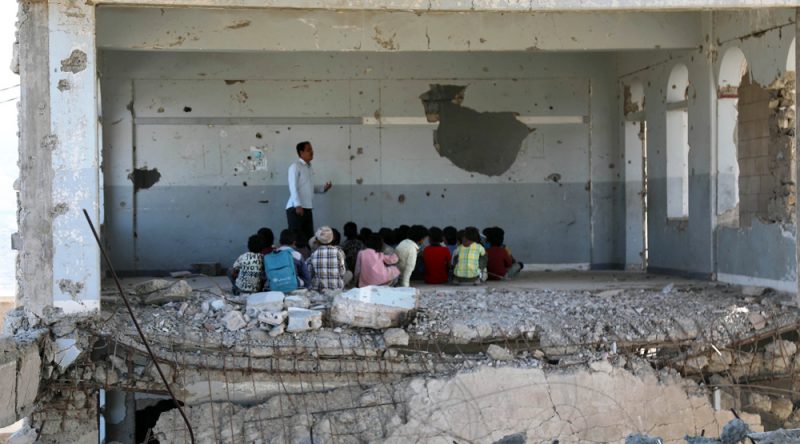
Children listen to their teacher in a destroyed classroom at a school which was heavily damaged in a Saudi-led airstrike, in Ta’izz, Yemen, on September 3, 2019. (Photo by AFP)
Press TV – May 28, 2020
Warplanes from the Saudi-led military coalition waging war on Yemen have carried out 47 airstrikes on different parts in the country, further destroying the impoverished country’s infrastructure.
Yemen’s Arabic-language al-Masirah TV cited an unnamed Yemeni military source as saying on Wednesday that the Saudi-led fighter jets had pounded localities in Yemen’s Ma’rib, Jawf, Sa’ada, and Hajjah provinces during the previous hours.
Majzar and Midghal districts in the central province of Ma’rib were struck 19 times, and Khasf Village in the Hazm district in the northern province of Jawf were pounded five times, the source said.
The airstrikes inflicted heavy damage on infrastructure in those localities.
According to the report, the Saudi-led coalition also violated a ceasefire in the western province of Hudaydah 67 times during the previous hours, killing at least one civilian.
Supported militarily by the US, the UK, and other Western countries, Saudi Arabia and a number of its regional allies launched the devastating war on Yemen in March 2015 to subdue a popular uprising that had overthrown a regime friendly to Riyadh.
The US-based Armed Conflict Location and Event Data Project (ACLED), a nonprofit conflict-research organization, estimates that the war has claimed more than 100,000 lives over the past five years.
More than half of Yemen’s hospitals and clinics have been destroyed or closed during the war by the Saudi-led coalition at a time when Yemenis are in desperate need of medical supplies to fight the COVID-19 pandemic.
At least 80 percent of the 28-million-strong population is also reliant on aid to survive in what the United Nations (UN) has called the world’s worst humanitarian crisis.
Report: Denmark sold arms to UAE despite ban over Yemen concerns
MEMO | May 20, 2020
A series of Danish investigations published on Danwatch on Sunday accused the country’s largest arms manufacturer of war crimes in Yemen.
The report, which is based on information gathered from intelligence reports, public access requests, satellite imagery, television and interviews, found that Danish arms manufacturer Terma had continued to supply radar and missile defence systems to the UAE which were later used in the civil war in Yemen.
Sales from Terma continued beyond 22 November 2018, despite a decision by Denmark and other European states to block arms exports to Saudi Arabia and the UAE as a result of their involvement in Yemen.
Danwatch, TV2 and Lighthouse’s investigation alleges military hardware provided by Terma after 2018 was used to prevent cargo ships carrying emergency aid from reaching the Yemeni coast.
The report reviews footage from Emirati television station Aloom Al-Daar, which was later uploaded to YouTube, showing a UAE warship stopping a smaller cargo ship as part of the blockade of Yemen.
Danwatch claims this footage, and “several other videos” demonstrates the UAE’s participation in the blockade, and therefore, Terma’s complicity in causing a famine which, according to the investigation, caused the deaths of at least 85,000 Yemeni children.
The report goes on to claim Terma’s arms exports to the UAE facilitated Emirati bombing of opposition-held regions of the country, by providing a defence system for the Archangel fighter aircraft.
The investigation was able to pinpoint Emirati Archangel aircraft in several places in the war zone through satellite images, Danwatch reported.
General Secretary of Amnesty International in Denmark, Trine Christensen, told the reporters: “The Emirates is deeply involved in the blockade of Yemen. The blockade has had catastrophic consequences for the civilian population and is contributing to extensive famine because food and medicine supplies cannot enter the country.”
Adding, “of course, only a court can decide whether or not what is going on in Yemen is a war crime. But it smells strongly of war crimes and crimes against humanity.”
According to the investigation, the continuation of sales, and their subsequent use by the UAE in Yemen could amount to a violation of international humanitarian law and the perpetration of war crimes.
Both Terma and Denmark’s authorities repeatedly refused requests to speak to those carrying out the investigation directly.
Ansarullah slams Saudi Arabia, UAE for using television programs to promote Israel
Press TV – May 8, 2020
The leader of Yemen’s popular Houthi Ansarullah movement has slammed Saudi Arabia and the United Arab Emirates for using certain television programs to promote relations with Israel and demean the Palestinian struggle against occupation.
“Those who are directly coordinated with Israel, or through intermediaries allied with Israel, are partners in their crime,” Abdul-Malik Badreddin al-Houthi said in a speech on Thursday, according to Yemen’s al-Masirah television network.
Al-Houthi added that colluding in crimes committed by the Israeli regime was amongst “the most dangerous” of acts.
“The evils committed by the Zionists are the most significant. This is because the scope of their crimes extends to all of humanity given the large scope of Zionist influence over major countries,” he said.
“People have to avoid providing any assistance to Israel, the United States or their supporters,” al-Houthi added.
Riyadh’s pro-Israel programming
Al-Houthi’s remarks come in response to the airing of a string of media productions by certain Persian Gulf countries promoting ties with Israel.
The new “Umm Haroun” television series is one of such programs produced by the Dubai-based Saudi-owned Middle East Broadcasting Center (MBC).
The series directed by Egypt’s Ahmed Gamal el-Adl in the United Arab Emirates stars a Kuwaiti actress who plays the role of a Jewish midwife of Turkish origin living in the Persian Gulf country before settling in the occupied Palestinian territories.
Hebrew-language outlet N12 reported on Sunday that many believe Saudi Crown Prince Mohammed bin Salman is involved in the series as he is interested in closer relations between the kingdom and Israel.
The Palestinian resistance movement Hamas in Gaza denounced the TV series as a “political and cultural attempt to introduce the Zionist project to Persian Gulf society.”
Critics regard the show as an invitation to normalized ties with Israel. The show has consequentially provoked a storm in the Arab world.
The airing of the series has taken place as Riyadh, along with certain other Persian Gulf states such as the UAE, have moved to embrace relations with the Israeli regime, specifically in the past year.
Numerous Israeli delegations have consequently visited certain Persian Gulf states in recent months. Arab delegations from Persian Gulf states have also visited Israel.
No Arab country has formal relations with the Israeli regime, with the exception of Jordan and Egypt.
“Exit 7”: Yet another pro-Israel production
The “Umm Haroun” series is not the only MBC production seeking to promote ties with Israel to the Arab public.
“Exit 7” is another series currently being aired by the Saudi company.
According to Asia Times, the program seeks to promote various western values alongside breaking taboos regarding Israel.
Characters in the series promote “doing business with Israel” and argue against Saudi aid being sent to Palestine.
The program also disseminates blatantly anti-Palestinian themes, such as claiming that Palestinians “attack Saudi Arabia” whenever an opportunity arises.
Characters in the series also seek to legitimize Israeli occupation of Palestinian land by claiming that Palestinians “sold their land” to Jewish settlers.
Egypt, which signed a peace treaty with Israel in 1979, has disseminated similar claims of Palestinians selling their lands to Jewish settler to legitimize its ties with the Israeli regime.
According to Persian Gulf states analyst Nabeel Nowairah, MBC’s pro-Israel themes clearly “came from the high levels of the government”.
“You cannot talk about these things unless they’re approved by some agency or another. So it has the blessing of Saudi Crown Prince Mohammad bin Salman in some way,” he said.
The Arab-Israeli attempts to normalize ties come as Tel Aviv and Washington have stepped up attempts to legitimize Israeli occupation as part of US President Donald Trump’s so-called “deal of the century” initiative unveiled earlier this year.
Al-Houthi’s remarks on Thursday also come as Tel Aviv has mulled military intervention against Sana’a following the failure of the Saudi war on Yemen seeking to crush the popular Ansarullah, according to reports.
Saudi Arabia and a number of its regional allies launched the devastating war on Yemen in March 2015 in order to bring the country’s former president Abd Rabbuh Mansur Hadi back to power and defeat Ansarullah.
The Saudi-led attempt has, however, been brought to a standstill by the Yemeni resistance.
The US-based Armed Conflict Location and Event Data Project (ACLED), a nonprofit conflict-research organization, estimates that the war has claimed more than 100,000 lives over the past five years.
The UN says over 24 million Yemenis are in dire need of humanitarian aid, including 10 million suffering from extreme levels of hunger.
Riyadh makes inroads into Hollywood
The push to normalize ties with Israel comes as bin Salman has also sought to greatly westernize the kingdom ever since being appointed crown prince in 2017.
According to The Hollywood Reporter, many major US entertainment brands are bracing themselves for large Saudi investment opportunities in the near future.
Last month, Saudi Arabia was disclosed to have bought a 5.7 percent stake in the American events operator Live Nation.
According to the report, Saudi Arabia’s public investment fund has also specifically made an offer to buy the Warner Music Group, one of the three major music moguls in the US.
Many major Hollywood stars have also visited and performed in the oil-rich kingdom in the last year.
The report highlighted that Hollywood companies seeks to overlook the brutal murder of dissident journalist Jamal Khashoggi under the orders of the Saudi state in 2018 – which caused major international uproar – as they step up cooperation with the Saudi regime.
See also:
UK arms giant sold £15bn in weapons to Saudi Arabia during Yemen war: Report
Press TV – | April 15, 2020
Britain’s leading arms manufacturer is found to have sold above £15 billion ($18.9) worth of arms to Saudi Arabia since the kingdom started a brutal war against Yemen, the Arab world’s most impoverished nation.
The Guardian carried a news article on Tuesday, citing data obtained from the BAE (British Aerospace) Systems’ most recent annual report that has also been newly analyzed by Britain’s Campaign Against the Arms Trade (CAAT).
The sum includes £2.5 billion in revenues that the company received from Saudi arms sales in 2019.
The sales came despite a ruling by Britain’s Court of Appeal in June last year that all British arms exports that could be used against Yemen were to be halted.
Andrew Smith of the CAAT, meanwhile, said, “The last five years have seen a brutal humanitarian crisis for the people of Yemen, but for BAE it’s been business as usual. The war has only been possible because of arms companies and complicit governments willing to support it.”
The data further showed that the true value of the UK’s arms sales to Saudi Arabia is far greater than the £5.3bn total value of the country’s export licenses since March 2015, when Riyadh and a coalition of its allies launched the military campaign.
The gap has been due to the fact that arms have also been sold to the Saudi kingdom under open licenses, which authorize the sales without recording the cost under the official export total.
“These figures expose the cozy relationship between the Saudi regime and BAE. But they also imply that the value of UK arms sales is far greater than government figures show,” Smith added.
Riyadh is BAE’s third biggest buyer. The company maintains and supplies Tornado warplanes to the kingdom and provides “operational capability” to its Air Force and Navy.
Saudi Arabia and its allies have been staging indiscriminate attacks against Yemen since March 2015 to put the country’s former Saudi-allied officials back in the saddle.
The war — which has the support of the UK, the US and other Western states — has killed tens of thousands of Yemenis and rendered at least 80 percent of Yemen’s 28-million-strong population dependent on aid for survival.
The UK government has been under fire for keeping up arms sales to the Saudi regime despite widespread reports that the weapons are being used against Yemeni civilians and non-military infrastructure.
Last week, the invaders claimed they were halting military operations in support of United Nations peace efforts and to avoid further spread of the new coronavirus in Yemen.
The Yemeni army, however, reported days afterwards that it had been forced to repel several Saudi-led assaults on various fronts in just one day.
The Houthi Ansarullah movement — which runs Yemen and leads its armed forces — said the Western-backed coalition had even ramped up its acts of aggression since announcing the so-called truce.
Ottawa dances with the Saudi kingdom
By Yves Engler · April 11, 2020
As Canadians focus on the coronavirus pandemic the Trudeau government announced it was lifting its suspension of arms export permits to Saudi Arabia. It has also renegotiated the government’s $14 billion armoured vehicle deal with the belligerent, repressive, monarchy.
This is not surprising. The government set the stage for this decision with its September review that found no evidence linking Canadian military exports to human rights violations committed by the Saudis. The Global Affairs review claimed there was no “credible” link between arms exports to the Saudis and human rights abuses even though the April 2016 memo to foreign minister Stéphane Dion originally approving the armoured vehicle export permits claimed they would assist Riyadh in “countering instability in Yemen.” The five year old Saudi led war against Yemen has left 100,000 dead. Throughout their time in office the Liberals have largely ignored Saudi violence in Yemen.
Despite a great deal of public attention devoted to a diplomatic spat, after Riyadh withdrew its ambassador over an innocuous tweet from the Canadian Embassy in August 2018, the Liberals have sought to mend relations and continue business as usual. In December 2018 HMCS Regina assumed command of a 33-nation Combined Maritime Forces naval coalition patrolling the region from Saudi Arabia. Last September foreign Minister Chrystia Freeland said, “Saudi Arabia is an important partner for Canada and we continue to work with Saudi Arabia on a number of different issues at a number of different levels.” For its part, the Canadian Embassy’s website continues to claim, “the Saudi government plays an important role in promoting regional peace and stability.”
According to an access to information request by PhD researcher Anthony Fenton, Freeland phoned new Saudi foreign minister Ibrahim Abdulaziz Al-Assaf in January 2019. In briefing notes for the (unannounced) discussion Freeland was encouraged to tell her counterpart (under the headline “points to register” regarding Yemen): “Appreciate the hard work and heavy lifting by the Saudis and encourage ongoing efforts in this regard.”
After Crown Prince Mohammad bin Salman’s (MBS) thugs killed and dismembered journalist Jamal Khashoggi in October 2018, Trudeau treaded carefully regarding the murder. Ten days after the Canadian Press reported, “the prime minister said only that Canada has ‘serious issues’ with reports the Washington Post columnist was killed by Saudi Arabian operatives inside Saudi Arabia’s consulate in Turkey.” Six weeks later the Liberals sanctioned 17 Saudi nationals over the issue but none of them were in positions of significant authority.
Foreign minister Freeland looked the other way when Saudi student Mohammed Zuraibi Alzoabi fled Canada last year — presumably with help from the embassy — to avoid sexual assault charges in Cape Breton. While Freeland told reporters that Global Affairs was investigating the matter, Halifax Chronicle Herald journalist Aaron Beswick’s Access to Information request suggested they didn’t even bother contacting the Saudi embassy concerning the matter.
In April 2019 the Saudis beheaded 37 mostly minority Shiites. Ottawa waited 48 hours — after many other countries criticized the mass execution — to release a “muted” statement. The Trudeau government stayed mum on the Saudi’s effort to derail pro-democracy demonstrations in Sudan and Algeria in 2018/19 as well as Riyadh’s funding for Libyan warlord Khalifa Haftar’s bid to seize Tripoli by force.
While they implemented a freeze on new export permit approvals, shipments of Canadian weaponry continued. The year 2018 set a record for Canadian rifle and armoured vehicle sales to the Saudis. Over $17 million in rifles were exported to the kingdom in 2018 and a similar amount in 2019. Canada exported $2 billion worth of “tanks and other armoured fighting vehicles” to the Saudis in 2019. In February Canada exported $155.5 million worth of “Tanks and other armoured fighting vehicles” to Saudi Arabia.
The Global Affairs review that claimed there was no “credible” link between Canadian weapons exports to the Saudis and human rights abuses noted there were 48 arms export permit applications awaiting government approval.
As Fenton has documented in detail, armoured vehicles made by Canadian company Streit Group in the UAE have repeatedly been videoed in Yemen. Equipment from three other Canadian armoured vehicle makers — Terradyne, IAG Guardian and General Dynamics — was found with Saudi-backed forces in Yemen. Fenton has shown many examples of the Saudi-led coalition using Canadian-made rifles as well.
The Trudeau government arming the monarchy’s military while saying little about its brutal war in Yemen should be understood for what it was: War profiteering and enabling of massive human rights abuses.
Over a dozen ships carrying fuel, food impounded in Djibouti: Yemeni official
Press TV – April 9, 2020
A Yemeni maritime official says the Saudi-led coalition has impounded more than a dozen ships carrying energy derivatives and food destined for the conflict-plagued and impoverished Arab country, despite the fact that the vessels had earlier acquired necessary permits from the United Nations.
The unnamed official at Hudaydah port told Arabic-language al-Masirah television network on Thursday that 14 tankers loaded with more than 320 thousand tons of oil derivatives and three vessels with foodstuff aboard have been marooned at a port in Djibouti.
He added that the vessels had undergone inspection by the United Nations and obtained the relevant papers to dock at Yemen’s Hudaydah port.
The remarks came a day after the Saudi-led coalition, which has been engaged in a brutal five-year-old military aggression against Yemen, declared a two-week ceasefire, and announced that it would take effect at 12 p.m. local time (0900 GMT) on Thursday.
Yemen’s Houthi Ansarullah movement has, in return, downplayed the Saudi-led coalition’s ceasefire announcement, describing it as a chance for the alliance to get out of the quagmire with minimum disgrace. The movement highlighted it would will not abide unless a years-long siege on the impoverished nation is lifted.
Mohammed al-Bukhaiti, a senior member of the political bureau of the Ansarullah movement, told the Lebanon-based and Arabic-language al-Mayadeen television news network that the coalition’s move to announce a ceasefire was just another ploy by the aggressors.
“Saudis have repeatedly declared ceasefire in Yemen, but have violated it every time,” he noted.
Bukhaiti said Riyadh is using the outbreak of COVID-19 as an opportunity for ceasefire and a face-saving exit from the Yemen war.
However, he added, with the siege of Yemen in place, the war will not end.
“If any ceasefire does not include the removal of the siege on Yemen, that would be the continuation of the Saudi war,” he noted.
Houthis unilaterally release 70 prisoners
Separately, the Ansarullah movement has unilaterally released dozens of Saudi-sponsored Yemeni militiamen loyal to the country’s former president Abd Rabbuh Mansur Hadi.
The head of the Houthi-affiliated National Committee for Prisoners Affairs (NCPA), Abdulqader al-Mortada, said in a post published on his official Twitter page on Thursday that 70 prisoners were set free on humanitarian grounds and handed over to local authorities in a number of provinces amid the coronavirus pandemic.
Saudi Arabia and a number of its regional allies launched the devastating war on Yemen in March 2015 in order to bring Hadi back to power and crush Ansarullah.
The US-based Armed Conflict Location and Event Data Project (ACLED), a nonprofit conflict-research organization, estimates that the war has claimed more than 100,000 lives over the past five years.
Saudi Arabia and the United Arab Emirates have purchased billions of dollars’ worth of weapons from the United States, France and the United Kingdom in their war on Yemen.
Riyadh and its allies have been widely criticized for the high civilian death toll resulted from their bombing campaign in Yemen.
The UN says over 24 million Yemenis are in dire need of humanitarian aid, including 10 million suffering from extreme levels of hunger.
COVID-19: Devastated Saudi Royal Family Seeks to End Yemen War
By Joe Lauria | Consortium News | April 8, 2020
As the coronavirus continues its assault on members of the Saudi royal family, the rulers of the Kingdom on Wednesday called off its assault on Yemen.
The unilateral ceasefire will begin at noon on Thursday, Saudi time, and is to last at least two weeks.
Senior members of the royal family, including 84-year old King Salman, and the effective ruler, Muhammad bin Salman, have retreated to an island off the coast of Jeddah in the Red Sea.
Prince Faisal bin Bandar bin Abdulaziz Al Saud, the powerful governor of Riyadh who is a nephew to the king, is stricken with the disease and is in intensive care, The New York Times reported, citing two doctors “with ties” to King Faisal Hospital and two others sources near to the royal family.
In all, 150 members of the ruling family are reported to have been infected. The Saudi government officially said it is ending the war because of its fear that the virus could spread in Yemen, where there are still no reported cases.
Joining in the ceasefire would be the nations of the Saudi-led coalition as well as the Yemeni government in exile in the Saudi capital, the Times reported. The coalition said in a statement:
“On the occasion of holding and succeeding the efforts of the UN envoy to Yemen and to alleviate the suffering of the brotherly Yemeni people and work to confront the corona pandemic and prevent it from spreading, the coalition announces a comprehensive ceasefire for a period of two weeks, starting on Thursday.”
Mohammed Ali al-Houthi, a top Houthi official, tweeted an eight-page plan to end the war. The Houthis control the Yemeni capital Sanaa.
The unilateral ceasefire would end a vicious five-year campaign by the richest nation in the Middle East against the poorest. It began on March 26, 2015 just as the UN was close to brokering a deal to end the political standoff, as the then UN envoy to Yemen told me at the time.
Martin Griffiths, the current UN envoy, said in a statement: “The parties must now utilise this opportunity and cease immediately all hostilities with the utmost urgency.”
The BBC reported that the two sides would communicate in a video conference to discuss the ceasefire. “The proposal calls for the halting of all air, ground and naval hostilities,” the British national broadcaster said.
There has been as yet no reaction from Washington. The United States has backed the Saudi war with logistical and material support.
An end to the conflict would come as UN Secretary General Antonio Guterres has called for a global ceasefire, in which he said some 70 nations have already signed on. Saudi Arabia would appear on Wednesday to have joined that list.
UPDATE: At least 150 members of the Saudi royal family have been infected and as a result Riyadh is seeking to end its five-year disastrous assault on Yemen.
Ansurullah calls on Saudi-led alliance to consider Yemen’s mediation proposal
Press TV – April 2, 2020
Yemen’s popular Houthi Ansarullah movement has called on the Saudi-led coalition of aggressors to consider its proposal for 12-party mediation aimed at ending the bloody war on the impoverished Arab state.
In a tweet on Wednesday, Mohammed Ali al-Houthi, the chairman of the Supreme Revolutionary Committee of Yemen, proposed that twelve countries, including Russia, as well as the United Nations mediate to end the Yemen conflict.
The top Houthi official suggested that four Arab countries, four Muslim countries, three Asian nations, Russia as well as the UN be included in the group of mediators.
He referred to Algeria, Tunisia, Egypt, Iraq, Pakistan, Malaysia, Indonesia, Sierra Leone, Russia, China, South Korea and Japan as his proposed countries.
The proposal comes a week after United Nations Secretary General Antonio Guterres called for a ceasefire in all conflicts worldwide amid a global fight against the coronavirus pandemic.
Guterres warned that in war-torn countries health systems have collapsed and the small number of health professionals left were often targeted in the fighting.
The world body has been trying to mediate an end to conflicts in countries including Syria, Yemen and Libya, while also providing humanitarian assistance to millions of civilians.
Ansarullah has welcomed the call, saying an aerial and maritime blockade imposed on Yemen by the Saudi regime and its coalition allies should be lifted to facilitate the adoption of preventive measures against the coronavirus outbreak.
While Yemen has not recorded any COVID-19 cases to date, the possibility of an outbreak threatens the war-ravaged country’s already fragile healthcare system.
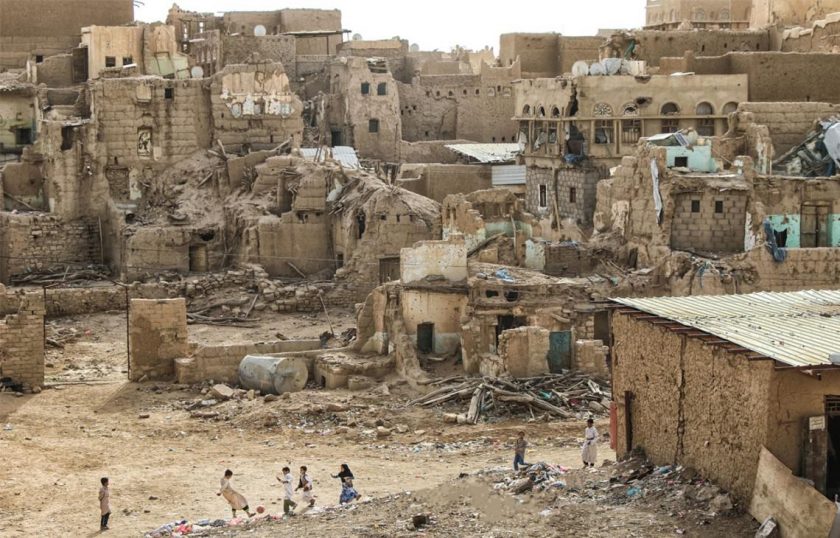
Tens of thousands of Yemenis have died since the beginning of the war that Saudi Arabia and its allies launched in 2015 to restore power to Yemen’s former Riyadh-allied officials. The aggression has also brought entire Yemen to the edge of famine.
The United States and many of its allies have been providing political, military, logistical, and advisory support for the war.
Featured Video

Deception – Submarines against Olof Palme
or go to
Aletho News Archives – Video-Images
From the Archives
Woolsey Fire started at Santa Susana Field Lab — where “radioactive materials released were never accurately measured”
By John Laforge | CounterPunch | November 30, 2018
In my Nov. 16 column, I reported on potential radiation risks posed by California’s Woolsey wildfire having burned over parts or all of the Santa Susana Field Laboratory—south of Simi Valley, Calif., 30 miles outside Los Angeles—site of at least four partial or total nuclear reactor meltdowns.
The field laboratory operated 10 experimental reactors and conducted rocket engine tests. In his 2014 book Atomic Accidents, researcher James Mahaffey writes, “The cores in four experimental reactors on site … melted.” Reactor core melts always result in the release of large amounts of radioactive gases and particles. Clean up of the deeply contaminated site has not been conducted in spite of a 2010 agreement.
Los Angeles’s KABC-7 TV reported Nov. 13 that the Santa Susana lab site “appears to be the origin of the Woolsey Fire” which has torched over 96,000 acres. Southern Calif. Public Radio said, “According to Cal Fire, the Woolsey Fire started on the afternoon of Thursday, Nov. 8 … on the Santa Susana site.” … continue
Blog Roll
 Aletho News
- Dr. Abu-Sitta: Beirut ‘felt like a day in Shifa Hospital’
- Iran Has Won the War, It Will Be Up to the US to Secure the Peace: Mohammad Marandi
- Iran condemns assassination threats against Iranian negotiators amid US talks
- Brussels cannot say where its own pipeline inspectors are as Hungary’s oil lifeline remains shut
- Israel’s Iran War: Myth and Reality
- Between war and industrial breakdown: The US-Israeli attrition crisis
- Pressure builds on Iran to ‘drop’ Lebanon ceasefire demand as Islamabad talks hang in balance
- In another clash report, US denies agreement to release Iran’s assets
- What is fueling unrest across the EU?
- Why no power can undermine Iran’s eternal dominance over the Strait of Hormuz
- If Americans Knew
- Pro-Israel ‘Thinktanks’ and Individuals who Influence U.S. Foreign Policy
- Mearsheimer reveals how Israel dictates US policies on Iran, Gaza – video
- After killing 350+, Israel still has a “score to settle” with Lebanon before ceasefire – Daily Update
- Military aid to Israel emerges as the latest political litmus test for Democrats
- The only Palestinian children’s rights organization closes following years-long Israeli campaign against it
- ‘I Can’t Forget the Smell’: Lebanese Reel After Israel Kills Over 300 in Single Day
- DNC Shoots Down Resolutions Calling Out AIPAC and Limiting Arms to Israel
- TCN: Is Israel Blackmailing President Trump?
- Israel killed at least 303 Lebanese yesterday – who were they? Daily Update
- Amnesty: Urgent – Protect Lebanese civilians from brutal escalation in Israeli attacks
- No Tricks Zone
- German Expert: Heat Dome Led To Record Temps In Western USA…Warmer In 1934, 1936
- New Study: No Linear Warming Or Glacier Retreat Along Northern Antarctic Peninsula Since 1980s
- An Inconvenient Tree: Uncovered In Alps… Europe Much Warmer Than Today 6000 Years Ago
- New Study Reports A 60% Slowdown In Greenland’s Ice Loss Rate In The Last Decade
- Low Intensity Tornado Wrecks Major Solar Farm, Creating A Potential Toxic Dump
- New Study Finds Warming Saves Lives…Cold Temperatures 12 Times More Deadly Than Excess Heat
- German Science Blog Accuses PIK Climate Institute Of Hallucinating Climate Tipping Points
- Devastating Assessment Of Comirnaty Vaccine By Former Senior Pfizer Europe Toxicologist
- New Study: CO2 Is ‘Effectively Negligible’ As An Explanatory Climate Change Factor Since 2000
- Former Pfizer Toxicologist Dr. Helmut Sterz Tells Bundestag Hearing Pfizer Vaccine Should Have Never Been Approved
 Aletho News