Pentagon exploits post 9/11 laws to wage ‘secret wars’ worldwide: Report
The Cradle | November 9, 2022
A report released last week by the New York University School of Law’s Brennan Center for Justice details how the US Department of Defense (DoD) has been allowed to covertly deploy troops and wage secret wars over the past two decades in dozens of countries across the globe.
Among the nations in West Asia affected by these so-called ‘security cooperation authorities’ are Lebanon, Iraq, Syria, and Yemen; however, they also include many African and Latin American nations.
Known as ‘security cooperation authorities,’ they were passed by the US Congress in the years following the 11 September attacks, and are a continuation of the 2001 Authorization for Use of Military Force (AUMF), a piece of legislation that has been stretched by four successive governments.
According to the report, the AUMF covers “a broad assortment of terrorist groups, the full list of which the executive branch long withheld from Congress and still withholds from the public.”
Following in this tradition, the ‘security cooperation authorities’ being abused by the Pentagon are Section 333 and Section 127e of Title 10 of the United States Code (USC).
Section 333 authorizes the US army to “train and equip foreign forces anywhere in the world,” while Section 127e authorizes the Pentagon to “provide support to foreign forces, paramilitaries, and private individuals who are in turn supporting US counterterrorism operations,” with a spending limit of $100,000,000 per fiscal year.
However, thanks to the vague definition of ‘support’ and ‘training’ in the text of these laws, both Section 333 and Section 127e programs have been abused to target “adversarial” groups under a strained interpretation of constitutional self-defense; they have also allowed the US army to develop and control proxy forces that fight on behalf of – and sometimes alongside – their own.
As a result of this, in dozens of countries, these programs have been used as a springboard for hostilities, with the Pentagon often declining to inform Congress or the US public about their secret operations under the reasoning that the incidents are “too minor to trigger statutory reporting requirements.”
“Researchers and reporters uncovered Section 127e programs not only in Afghanistan and Iraq, but also in Cameroon, Egypt, Kenya, Lebanon, Libya, Mali, Mauritania, Niger, Nigeria, Somalia, Syria, Tunisia, and Yemen,” the report highlights.
Researchers also point out that defense authorities “have given little indication of how [they] interpret Section 333 and 127e.”
Even more concerning, and ignoring the damage caused by these ‘anti-terror’ laws, the US Congress recently expanded the Pentagon’s security cooperation authorities, particularly with Section 1202 of the National Defense Authorization Act (NDAA).
Section 1202 allows the US army to allow “irregular warfare operations” against “rogue states” like Iran or North Korea, or “near-peers,” like Russia and China.
The report comes at a time when the US army and its proxy militias are accused of illegally occupying vast regions of Syria and Yemen, looting oil from the war-torn countries, just over a year after their brutal occupation of Afghanistan ended. Moreover, a former US official on Tuesday revealed that anti-Iran militias are being armed in the Iraqi Kurdistan Region (IKR), where both the CIA and the Mossad are known to operate.
US, UK preparing for fresh escalation in Yemen: Ansarullah
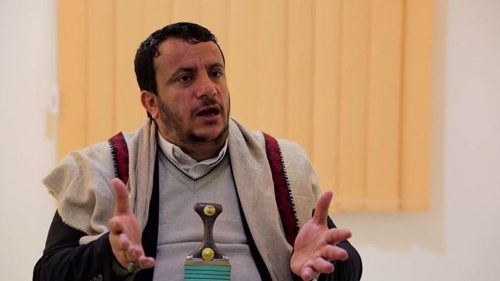
Ali al-Qahoum, a member of the Yemeni popular resistance Ansarullah movement’s Political Bureau (Courtesy of al-Mayadeen)
Press TV – November 6, 2022
Yemen’s popular resistance Ansarullah movement warns about the United States and the UK’s fresh malicious intentions in the war-ravaged country.
Ali al-Qahoum, a member of Ansarullah’s Political Bureau, raised the alarm during an exclusive interview with Lebanon’s al-Mayadeen television network on Sunday.
There is “a direct US military presence in Yemen, and an influx of US forces, specifically in Hadhramaut,” he said, referring to Yemen’s biggest province, which spans from the country’s center towards its eastern areas.
“There is also an influx of British forces into al-Mahrah,” he added, referring to Yemen’s second-largest province that neighbors Hadharamaut to the east.
The US and the UK were preparing for a fresh round of escalation in Yemen, he further warned without elaborating.
The Western countries have been contributing heavily and unabatedly to a war of aggression that a Saudi Arabia-led coalition has been waging against Yemen since 2015.
The coalition has been seeking, unsuccessfully though, to restore Yemen’s power to the country’s former Western- and Riyadh-aligned officials. The war has killed hundreds of thousands of Yemenis and spawned the world’s worst humanitarian crisis.
Washington and London have been providing the coalition with direct arms, logistical, and political support, including through outfitting it with precision-guided ammunitions that the Saudi-led forces have been using amply against Yemen’s civilian population.
Al-Qahoum said new US and British military delegations had arrived in Yemen earlier this week.
Reporting on Wednesday, Yemen Press Agency cited informed local sources as saying that Hadhramaut’s Provincial Governor, Mabkhout bin Madi, had held a face-to-face meeting with the US delegation in his office.
The Ansarullah official, however, asserted that despite the Western states’ apparent preparations for a new flare-up in Yemen, “the Yemenis are ready to defend their dignity and every inch of their country.”
“Ansarullah has military capabilities that preserve Yemen’s sovereignty and independence,” he added.
Yemeni army carries out ‘warning’ operation against Greek tanker
The Cradle | October 22, 2022
Yemen’s Armed Forces announced on 21 October they carried out a “warning” drone strike on Al-Dabba port of Hadhramaut in order to prevent a Greek tanker, the Nissos Kea, from looting oil from the facility.
This was the first attack carried out by Yemen’s forces since the expiration of the UN-brokered truce agreement on 2 October.
The country’s official military spokesman, Brigadier General Yahya Saree, said in a statement that “the oil ship violated the decision issued by the competent authorities to ban the transportation and export of Yemen’s sovereign oil derivatives.”
“The warning message came after addressing the authorities of that ship, and informing them of the decision based on Yemeni laws … The ship was dealt with through cautionary measures, through which we were keen to preserve the safety of its crew and the security of Yemen’s infrastructure,” Saree added.
According to Hadhramaut’s governor in the Saudi-backed Presidential Council, Mabkhout ibn Madi, the ship was meant to arrive at Al-Dabba port a week ago, but remained stationed outside of Yemeni waters due to threats issued against the Greek Ministry of Transport.
“Greece transmitted these threats to us, and to the Ministry of Oil,” Ibn Madi said. Following the ship’s entry into Al-Dabba port, however, its crew ignored the warning issued earlier this month by Yemen’s Supreme Economic Committee and proceeded to attempt an oil looting operation.
According to exclusive sources, the drone strike targeted the area between the Greek ship and the port buoy, sending a “clear military message,” but not compromising the safety of the tanker’s crew, as planned. This is not the first time a Greek vessel is involved in the looting of Yemen’s natural resources.
“The American envoy has been communicating for two weeks with mediators in Sanaa to allow the tanker to ship oil from Al-Dabba port,” the sources added.
As Washington and its allies face a severe energy crisis of their own making, the US is in desperate need of immediate sources of energy, a likely reason that its envoy pressured Sanaa to allow the Greek tanker to make off with the oil. As a result of this energy crisis, US forces have stepped up their oil looting operations in Syria.
The Yemeni operation comes as a renewal of the several warnings issued by the Armed Forces and the Ansarallah resistance movement against the international oil companies operating in the country, and against the Saudi-led coalition, who have consistently plundered Yemen’s oil.
The Saudi-backed government, however, has claimed to have intercepted the operation.
Saudi-led coalition seizes new emergency fuel ship headed for Yemen
The Cradle | October 21, 2022
On 21 October, the Saudi-led coalition seized the oil tanker ‘Lady Sarah,’ preventing it from reaching Yemen’s port of Hodeidah despite its previous inspection in Djibouti and having permits from the UN Verification and Inspection Mechanism (UNIVM).
Yemeni officials revealed that three ships are currently detained by the coalition. Since the beginning of 2021, the Saudi-led coalition has impounded at least 13 ships near the Yemeni coast.
The official spokesperson for the Yemeni Petroleum Company (YPC), Issam Al-Mutawakel, said that Sanaa holds the UN partially responsible for the humanitarian and economic consequences of the coalition’s actions.
Just one week ago, delegations from Yemen and Saudi Arabia visited each other’s capitals to discuss a prisoner exchange deal, marking the first time a Saudi delegation arrived in Sanaa since the Ansarallah resistance group took control of the city in 2014 and ended the reign of the Saudi-backed president.
A delegation representing Ansarallah also visited Riyadh and toured the prisons that are holding Yemeni fighters.
“Our technical team was tasked with validating the names and condition of our prisoners ahead of a possible exchange deal,” said Abdul Qadir al-Murtada, head of the prisoners’ committee in Yemen’s National Salvation Government.
Murtada added that the Saudi delegation visited for a similar purpose and toured Sanaa’s prisons, meeting the Saudi army’s prisoners of war.
“We do not accept a situation where Yemeni people are caught between war and peace,” Yemeni Foreign Minister, Hisham Sharaf, said during a meeting with a UN representative on 11 October.
Oman has reportedly been making progress in mediating the dispute between Yemen and Saudi-led coalition to restart the UN-sponsored truce that expired earlier this month.
Citing well-informed sources in Sanaa, Arabic media reports say Omani officials have made inroads in settling several issues, particularly relating to the opening of Sanaa airport and the lifting of restrictions imposed on the port of Hodeidah.
However, issues remain over Sanaa’s demand that the country’s oil revenues be used to pay the salaries of state workers and the army. In this regard, the Saudi-appointed government in Aden has reportedly agreed to pay the pensions of military retirees exclusively, along with the salaries of all civil servants.
The geopolitical consequences of the OPEC+ agreement

By Hazem Ayyad | MEMO | October 7, 2022
Amir Hossein Zamani Nia, Iran’s OPEC governor, announced when he left a meeting with representatives of the 13 member states of the Organisation of Petroleum Exporting Countries (OPEC) and their ten allies – known as OPEC+ – the decision to reduce oil production by two million barrels per day for November.
The initial reactions to the large production cut were hysteria. One American journalist asked the Saudi Minister of Energy, Prince Abdulaziz Bin Salman, if he was worried about the American reaction to the production cut. He sarcastically told her to enjoy the sun in Vienna; a clear indication of the difficulties that Europeans will face next winter.
The American reactions to the decision of the OPEC+ countries were quick and distinct. White House press secretary Karine Jean-Pierre commented on the decision by saying it was clear that the OPEC+ alliance was “aligning with Russia” and was making a “short-sighted decision” to reduce oil production at the height of the conflict in Ukraine.
White House National Security Adviser Jake Sullivan noted that US President Joe Biden was feeling “disappointed” with the decision of the OPEC+ alliance to reduce its oil production.
The reactions confirm President Biden’s failure to manage the sanctions against Russia and the dismantling of the OPEC+ alliance, whose decisions ruined the ambitions of the US administration, the US Treasury, and the Federal Reserve to fight inflation and reduce interest rates.
The OPEC+ alliance has once again proven its strength and the unity of its countries, which include Iran, Saudi Arabia, the UAE and Russia. Despite the disparity, competition and conflict between its countries, the OPEC+ agreement exceeded the limits of technical performance confirmed by UAE Energy Minister, Suhail Al Mazrouei, when his country announced it was joining the efforts to reduce production. Its geopolitical reach extended from the Gulf and Yemen to the Red Sea and the Mediterranean.
The agreement that included regional opponents such as Iran, Saudi Arabia and the UAE, and international sponsors such as Russia, stressed the geopolitical dimensions as it coincided with a meeting held by the Russian President’s Special Envoy to the Middle East and Africa, Deputy Foreign Minister Mikhail Bogdanov, on Wednesday evening with the Emirati Ambassador to Moscow, Mohammed Ahmed Al-Jaber, to discuss the situation in Yemen and the Gulf region after the expiry of the deadline for the truce agreement in Yemen on 2 October.
This meeting came at the request of the Emirati ambassador and coincided with threats made by a member of the Political Bureau of the Houthi movement, Muhammad Al-Bakhiti. He said: “We have the ability and the courage to strike the Saudi and Emirati oil facilities if our demands are not met.”
The meeting with the Emirati ambassador coincided with a press conference held by the US special envoy to Yemen, Tim Lenderking, during which he discussed his country’s position on renewing the truce in Yemen between the countries of the Arab coalition, led by Saudi Arabia and the UAE, and the Houthi group. The US official held the Houthis responsible for hindering the reaching of an agreement without providing practical solutions for resuming the truce or dealing with Houthi threats.
These actions and movements confirm the connection between the regional files and their connection to the international mediations led by both America and Russia in Yemeni. Saudi Arabia and the UAE view the OPEC+ agreement as a trump card and a comprehensive framework that allows activating mediations and truces in Yemen, with the positive and consensual atmosphere it provides, which the Biden administration was unable to provide. This is despite its frequent talk about security cooperation in the Red Sea and the Gulf and naval and air manoeuvres, but it quickly turned into a political and economic framework that serves Israel and its interests more than it serves the interests of Riyadh and Abu Dhabi.
OPEC+ has shifted from a technical framework to an emerging economic and geopolitical framework; fuelled by the Ukrainian war and Russian demands. The tense American reactions deepened the Arab Gulf states’ mistrust of the American partner, which repeatedly failed to deal with the Yemeni and Iranian file. It also failed to deal with the economic requirements of the Gulf states and their political and cultural specificity, which put them in conflict with the powers of the region and threatened their political and religious legitimacy.
This article first appeared in Arabic in Arabi21 on 6 October 2022.
As truce ends, Yemen warns oil companies to leave Saudi Arabia, UAE
Press TV – October 2, 2022
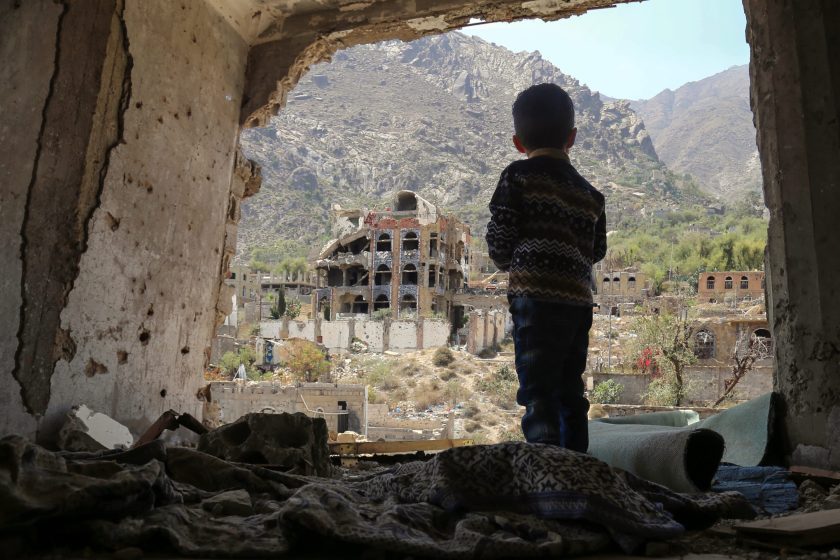
Yemen’s Armed Forces have put oil companies operating in Saudi Arabia and the United Arab Emirates on notice, warning that they could be targeted as long as Riyadh and its allies fail to commit to a proper ceasefire.
Tweeting on Sunday, the Armed Forces’ spokesman Brigadier General Yahya Saree said Yemeni troops were providing the oil companies with a window of opportunity to leave the Saudi and Emirati soils “fast.”
The Saudi kingdom and its allies, most notably the United Arab Emirates, have been waging a war against Yemen since March 2015, trying, in vain, to restore Yemen’s power to its former Riyadh-friendly officials. The military campaign, which has been enjoying unstinting arms, logistical, and political support from the United States, has killed hundreds of thousands of people, and turned the entire Yemen into the scene of the world’s worst humanitarian crisis.
A temporary United Nations-mediated ceasefire took effect between the warring sides in April and has been renewed twice ever since. The truce, however, expired on Sunday amid the invading coalition’s constant violations of the agreement and its refusal to properly lift a siege that it has been enforcing against Yemen simultaneously with the war.
“The warning,” Saree said, “stands as long as the countries that make up the invading American-Saudi coalition refuse to adhere to a ceasefire that allows the Yemeni people to exploit their oil wealth….”
Also on Sunday, Hans Grundberg, the United Nations’ special envoy for Yemen, confirmed failure of efforts aimed at extending the truce.
“The UN special envoy regrets that an agreement has not been reached today, as an extended and expanded truce would provide additional critical benefits to the population,” a statement said.
“I urge [the warring parties] to fulfill their obligation to the Yemeni people to pursue every avenue for peace,” the Swedish diplomat was quoted as saying.
108 civilians killed by mines and cluster bombs in Yemen since April: Report
The Cradle | September 18, 2022
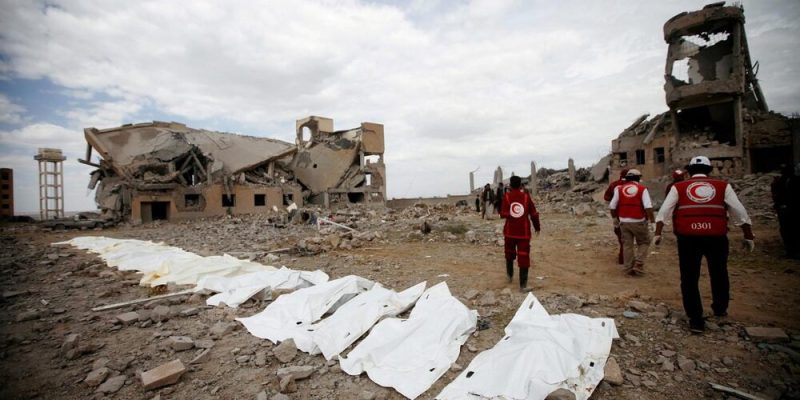
The Executive Center for Mine Action (YEMAC) in Sanaa has confirmed that 324 civilians have been killed and injured since the truce took effect on 2 April as a result of mines and cluster bombs used by the Saudi-led coalition.
In a statement, the Center said that since the beginning of the UN-brokered truce, 108 civilians had been killed and 216 injured through landmines, cluster bomb explosions, and other remnants of the 8-year-long war.
The YEMAC renewed the call to provide field supplies and equipment to demine the battlefields in Yemen from cluster bombs, unexploded shells, and mines. Despite the agreement to do so, efforts remain constrained by the Saudi-led coalition.
According to the reports, cluster bombs used by the Saudi-led coalition have caused the most damage, killing 18 civilians and wounding 57 others.
Another report published by the Entesaf Organization, which focuses on the rights of women and children, Saudi Arabia’s war in Yemen has killed and injured over 13,000 Yemeni civilians since 2015.
On 29 August, Abdul Karim al-Safiani, deputy director of Yemen’s Water Resource Organization, stated that he discovered high radioactive substances and toxic metals in freshwater resources in Hodeidah province.
According to Yemeni sources, Saudi Arabia and its partners are also responsible for the looting of vast quantities of oil from detained tankers.
Earlier this month, the spokesman for the Yemeni Petroleum Company (YPC) in Sanaa, Issam al-Mutawakel, said the total number of fuel ships seized by the coalition reached 12 ships.
Sanaa accused the Saudi-led coalition on 28 August of destroying 2,995 water facilities since the beginning of the war in 2015, including dams, barriers, pumps, tanks, irrigation channels, and irrigation networks, fueling the humanitarian crisis in the country.
According to the United Nations Refugee Agency (UNHCR), more than 23.4 are in desperate need of humanitarian assistance in Yemen, the worst human-made humanitarian crisis in the world.
Meanwhile, the Saudi-led coalition is blocking the country’s access to assistance and necessary resources by controlling access via sea, air, and land. Half of the country’s health facilities are also out of service and lack energy and supplies for the adequate treatment of its patients.
The West is poised to throw Yemen under the bus again to fuel its economic war on Russia
By Robert Inlakesh | Samizdat | September 11, 2022
Strained by the consequences of the ongoing conflict between NATO and Russia over Ukraine, France may be destroying all prospects for peace in Yemen, in a bid to secure energy resource from the United Arab Emirates.
Considered to be home to the worst humanitarian crisis in modern history, according to the United Nations, earlier this year, its people saw glimmers of hope towards ending its seven-year long war. A ceasefire truce, which has largely held since April, has been viewed as the first step towards reaching a UN-mediated solution for peace between the Ansarallah government in Sanaa and the Saudi-led coalition forces which claim to represent the internationally backed Yemeni government in exile.
According to UN estimates, the total number of people killed in Yemen’s war already reached 377,000 by the beginning of 2022. The civilian death rate is said to have doubled, according to the Norwegian Refugee Council (NRC), since the controversial withdrawal of UN human rights monitors last October.
Although Saudi coalition forces and Ansarallah, popularly referred to in Western media as the “Iran-backed Houthi rebels,” have managed to keep fighting to a minimum during the past months, another major player in the south of Yemen has recently decided to go on the offensive. The Southern Transitional Council (STC), often called Yemen’s southern separatists, are backed by the United Arab Emirates (UAE) and declared the start of a new military operation in the Abyan province “to cleanse it of terrorist organisations.” This follows territorial gains by the STC, in neighboring Shawba province, against the Muslim Brotherhood aligned Islah Party and others. The offensives launched by the UAE-backed STC have been regarded as a major challenge to UN efforts to end the conflict in Yemen, as well as having imperiled the Saudi initiative, which it calls the ‘Yemen Presidential Council,’ aimed at solidifying the legitimacy of the alternative Yemeni leadership in exile.
Where France Comes In
Although its role is little known to the Western public, Paris is the third largest arms supplier to the UAE and Saudi Arabia for their war efforts in Yemen, ranking just behind the US and UK. In fact, Germany, Spain and Italy have also sold weapons that have been used in the devastating war. Despite criticism, from human rights groups, of French weapons being used by Abu Dhabi and Riyadh to commit war crimes, the sale of weapons has continued from France.
April 15, 2019, French investigative magazine, Disclose, published an expose on Paris’s role in Yemen’s war. The information presented was based on a leaked French Military Intelligence (DRM) report dating back to September, 2018, clearly proving that the country had sold offensive weapons that were used in civilian areas, a charge that the French government has denied. As far back as June, 2018, credible reports began to emerge that French special forces units were operating on the ground in Yemen, alongside forces belonging to the UAE. Last December, Paris decided to further tighten its relationship with Abu Dhabi, signing its largest ever weapons sale to the UAE, worth 19.23 billion US dollars according to a report from Reuters.
France first turned to the US
France is now desperately in need of alternative energy suppliers to Russia, in order to meet its required needs, fearing that as the winter hits, Moscow may strategically cut off its natural gas completely. As part of NATO, Paris is backing a US-led initiative which seeks to make Russia pay an economic and military price for its offensive in Ukraine, however, this strategy has majorly backfired economically.
US President Joe Biden made two major foreign policy pledges when running for office in 2020, which are relevant to the current French predicament. The first being to revive the Obama-era Iran nuclear deal and the second being to find a diplomatic solution to the war in Yemen. Due to the ongoing NATO-Russia conflict, seeking a revival of the Iran nuclear deal has re-emerged on the political agenda of his administration in a major way. Iran, free from sanctions, could become an alternative source to fill the energy needs of Europe in the future, yet it could take some time for this to actually happen.
On the issue of the war in Yemen, Joe Biden pledged as part of his first speech on his government’s foreign policy goals, that he would hold Saudi Arabia to account and seek to find a solution to the crisis in Yemen. However, the war in Ukraine clearly changed his approach to Riyadh, so much so that Washington signaled in the review a decision to not sell offensive weapons to the Saudi government. The US President was heavily criticized by Human Rights Watch for traveling to Saudi Arabia in July.
Despite US attempts to have Gulf Cooperation Council (GCC) states increase their oil production, none have yet complied in the manner that Washington had hoped for. Specifically in the cases of the UAE and Saudi Arabia, it is clear that both are seeking to fast track their journey to diversify their economies. That has meant them hanging onto their strategic reserves of oil and gas, during a global energy crisis, which has made fiscal sense for them. In the cases of Venezuela and Iran, despite the US having seemingly reached out to both, neither seem to be a real replacement to Russia in the near future.
All Bets On Yemen
France is now looking for alternatives on its own. In June, the European Union announced that it had signed an agreement with Israel and Egypt. Under the deal, Israel will send gas through pipelines to Egypt, where it will then be transported to Europe. Although this may work, Tel Aviv does not have the capacity to replace Moscow as Europe’s main supplier of gas. Israel seeks to double its gas output, but in doing so is already running into potential problems over its maritime border dispute with Lebanon and its planned extraction of gas from the ‘Karish field’ in September, considered to be located in a disputed area. Lebanese Hezbollah has even threatened to strike all of Israel’s gas facilities in the event that Beirut is not given a fair deal to access its own resources.
French President, Emmanuel Macron, has attempted to persuade resource rich Algeria to become part of the EU’s solution, also going on a three-day trip to Algiers in order to mend ties. Algeria, which maintains close relations with Moscow, withdrew its ambassador from Paris for three months last year, during a diplomatic row. Macron had accused the Algerian President Abdelmadjid Tebboune’s government of “exploiting memory” and “rewriting history” of the colonial era and even questioned the legitimacy of Algeria as a State prior to French settler-colonial rule there. Around 1.5 million Algerians were killed in the battle for independence from France, which its resistance eventually managed to win in 1962. The tone of the French president has now dramatically changed from that of last year, with Macron remarking that both nations “have a complex, painful common past. And it has at times prevented us from looking at the future.”
The other major alternative path that France seems to be now seeking, is through its close alliance with the UAE. As mentioned above, it has been clear for some time that Paris has been involved in supplying weapons, logistical support and even boots on the ground to its allies in Abu Dhabi and Riyadh, aiding their fight in Yemen. However, it is also clear that the UAE has not been interested in cutting into its strategic oil reserves to meet the demands of Europe.
In July, as President Macron hosted the Emirati President, Mohammed bin Zayed al-Nahyan, in Paris, the French ministry of economy announced a new strategic energy agreement between the UAE and France. An aide to the French president noted that France was eager to secure diesel fuel from the UAE, hinting that the cooperation agreement involving France’s ‘Total Energies’ and the UAE’s ‘ADNOC’ may be linked. Although it is unknown as to what the specifics of the “strategic agreement” are, it has been speculated that the deal could potentially be worth billions.
Then, in August, the UAE-backed STC suddenly began new offensive operations in both the Shabwa and Abyan provinces. It just so happens that the STC forces decided to take over the energy sites in the Shabwa province too. Leading human rights NGOs had urged Paris to keep in mind Abu Dhabi’s human rights abuses in the advent of the signing of the strategic energy agreement, calls clearly not heeded. On August 21st, when UAE-backed forces seized the oil facilities in Yemen’s south, it may have been with the French deal in mind. Yemen’s former foreign minister, Dr. Abu Bakr al-Qirbi stated on Twitter that “preparations are being made to export gas from the Balhaf facility in light of increased international gas prices.” This was then followed by an announcement from the parliament of the Sana’a-based National Salvation Government, warning of suspicious movement from both US and French forces.
The key Balhaf facility, in Yemen’s Shabwa province, has reportedly been turned into a base for forces belonging to the UAE, with allegations suggesting that Paris could “provide protection for the facility through the French Foreign Legion.” There are also countless reports of the UAE looting resources from Yemen, which would seem to support the idea that they could be attempting to extract them to send to France. The latest reported looting of Yemen’s resources, from June, quotes Yemeni officials as having alleged that a Gulf Aetos tanker, carrying 400,000 barrels of Yemeni crude oil, had departed from Rudum port and was being operated by the UAE.
What these offensive moves by the STC also mean, is that the Saudi-backed forces in Yemen and Ansarallah will likely also get involved in the combat too. This could mean the dissolution of the ceasefire truce between the two sides, the renewal of the Ansarallah offensive to take the oil rich Marib province from the Saudi-backed forces and the death of any potential peace initiative to end the war.
It is unlikely that Ansarallah will stay silent, if the STC are aiding in the theft of Yemen’s resources for the sake of France. One of the major reasons behind the dramatic escalation of violence last year, was the Ansarallah offensive, launched with the aim of taking out the last northern stronghold of the Saudi-led coalition, Marib. The purpose of taking the resource rich area would be to stop the looting of Yemen’s resources, which according to reports is amounting to the theft of millions of barrels per year. Some sources claim that an unofficial agreement is in place between the US and Saudi governments, to purposefully keep the resources of Yemen away from its people and instead, divert the profits to Saudi banks.
Part of the reason why there was a Yemeni revolution in 2011, then a seizure of power in 2015 by Ansarallah in conjunction with the country’s military, was the popular belief that the past two Presidents of Yemen, Ali Abdullah Saleh and Abdrabbuh Mansour Hadi, were corrupt. The people of Yemen were fed up with Saleh for a multitude of reasons, primarily that he mismanaged resources, had sold out to the United States and was corrupt. President Hadi was later to be seen as a stooge, controlled completely by the Saudis.
Perhaps the biggest problem here however, is not just that Yemen is a resource rich country, with a starving population, being torn apart by foreign powers, but also that nobody even knows what their governments are involved in. On August 25, then British prime minister, Boris Johnson, stated, about rising energy bills, that “While people are paying energy bills, people in Ukraine are paying with blood”. Yet, it may turn out that for Europe to keep the lights on, the people of Yemen will pay with their blood. Except in this case, the UK, US and France can’t blame that bloodshed on Moscow, this is their own doing.
Robert Inlakesh is a political analyst, journalist and documentary filmmaker currently based in London, UK. He has reported from and lived in the occupied Palestinian territories and currently works with Quds News.
Israeli naval delegation deployed to Yemen’s Socotra Island
The Cradle | September 2, 2022
Yemeni media reported on 2 September that a delegation of Israeli military experts has been deployed to the UAE-controlled Yemeni island of Socotra, located in the Gulf of Aden.
According to the report, the Israeli team has been on the island for the past few days, and is accompanied by several Emirati intelligence officers.
The report adds that the delegation, who belong to Tel Aviv’s navy, have been carrying out search operations and excavations across Socotra Island.
The island, inhabited by around 60,000 people, overlooks the Strait of Bab Al-Mandab, a major shipping corridor that links the Red Sea to both the Gulf of Aden and the Arabian Sea. Over the past year, Israel has reportedly been working with its Gulf partner to establish a presence on Socotra.
According to a Yemeni media report from March, the UAE is involved in the development of a construction project to build facilities on the island for the purpose of hosting Israeli soldiers, officers, and other military experts and personnel.
This is allegedly part of a plan to turn the Yemeni island into a center for regional espionage, as well as to increase military control over maritime routes.
Last year, Israel signed an agreement with the UAE, allowing it to establish an intelligence center at the island’s Hadibu Airport.
Israel is also interested in the strategic Yemeni island because it serves as a potential flashpoint for a confrontation with Iran. In 2020, the Washington Institute published an analysis examining how Israeli submarines could potentially strike the Islamic Republic from positions near Yemen.
In January of this year, Socotra Island made headlines due to controversial photos of Israeli tourists who had visited the island under a UAE-issued visa.
In June of 2020, the UAE established control of the island by bribing its tribal authorities.
Former Yemeni President Abd Rabbuh Mansour Hadi described the UAE’s takeover of the island as “a full-fledged coup,” however.
Since the start of the war on Yemen in 2015, the UAE has been an integral part of the Saudi-led coalition, backing mercenary groups across the country and taking part in indiscriminate bombing campaigns.
The Saudi-led coalition, which continues to violate the UN-brokered ceasefire agreement, receives logistical and military support from the US, the UK, France, and most notably Israel.
Study Exposes Misinformation Campaign Pushing Pro-American Narratives on Twitter, Facebook
By Kyle Anzalone | The Libertarian Institute | August 24, 2022
Graphika and the Stanford Internet Observatory released a study showing a “series of covert campaigns over a period of almost five years” that pushed pro-Western misinformation on Twitter, Facebook and five other social media platforms. The operations targeted people living in Central Asia and the Middle East.
An investigation was launched after Twitter and Merta turned over the data on two overlapping accounts to Graphika and the Stanford Internet Observatory. The accounts were removed in July and August for violating teams of services, including “platform manipulation” and “inauthentic behavior.” The fake accounts deployed misinformation to set narratives supporting Western geopolitical goals.
According to the executive summary, “Our joint investigation found an interconnected web of accounts on Twitter, Facebook, Instagram, and five other social media platforms that used deceptive tactics to promote pro-Western narratives in the Middle East and Central Asia.” It continues, “The platforms’ datasets appear to cover a series of covert campaigns over a period of almost five years rather than one homogeneous operation.”
One operation by the covert accounts was directed at Central Asia. A narrative the fake accounts tried to spread was painting Russia as the looming enemy. “Assets in the group consistently portrayed Russia as a threat to Central Asia. A recurring narrative claimed that Russia is abusing Russian-Central Asian partnerships, namely the CSTO, to extract one-sided benefits…The assets also said Central Asian countries must leave these organizations if they wish to retake their full sovereignty from Russia.”
The Central Asia operations also sought to portray Russia as a villain and support the Ukrainian war effort. On several occasions, the accounts attempted to generate hashtag campaigns supporting Kiev.
The covert accounts campaigns against Iran linked to articles from fake media outlets to spread misinformation. The report says, “Several suspended accounts were linked to two sham media outlets operating in Persian.” However, not all the posts are linked to phony media outlets. The accounts frequently linked to stories from US government-funded sources like Voice of America.
A different operation attempted to set the discourse on the war in Yemen. “These accounts shared content critical of Iranian and Houthi rebel activity in Yemen. Posts accused Houthi rebel leaders of blocking humanitarian aid deliveries, acting as proxies for Iran and Hezbollah,” the report authors wrote.
While Graphika and the Stanford Internet Observatory do not name a culprit for the misinformation campaigns, they say the accounts were likely ineffective at spreading misinformation. “The data also shows the limitations of using inauthentic tactics to generate engagement and build influence online. The vast majority of posts and tweets we reviewed received no more than a handful of likes or retweets.”
Saudi coalition seizes another Yemen-bound fuel tanker
Press TV – July 20, 2022
Yemen’s Petroleum Company (YPC) says the Saudi-led coalition has seized yet another Yemen-bound fuel ship in blatant violation of a UN-brokered ceasefire.
In a statement released on Wednesday, the YPC said the seizure has “brought the number of confiscated Yemen-bound fuel ships to three” in recent days. The Lady Sarah fuel vessel was inspected and cleared by the UN, it added.
Reacting to the seizure, Mohammed Abdulsalam, the chief negotiator of Yemen’s National Salvation Government, said the coalition has constantly violated the truce and is “killing time, which is not accepted by our nation.”
Saudi-led coalition forces committed thousands of violations of the ceasefire agreement within a month of its entry into force on April 2. The agreement was extended under the auspices of the UN on June 2 and is set to expire next month.
Over the past year, the coalition has been consistently looting and selling large quantities of Yemeni gas and crude oil.
Yemeni authorities accuse the Saudi-led coalition of carrying out a systematic campaign aimed at depleting the country’s natural resources.
Earlier this month, Mohammad Tahir Anam, an adviser to the Yemeni Supreme Political Council, warned Riyadh and its allies that companies and ships involved in the looting of Yemeni oil will be targeted by the Ansarullah resistance movement if the theft persists.
On July 3, Yemeni Prime Minister Abdulaziz Saleh bin Habtoor said the looting of Yemen’s oil by the Saudi-led coalition is carried out under directives from the White house.
Yemen’s Minister of Oil and Minerals Ahmad Abdullah Dares has warned that the Saudi seizure of ships carrying petroleum products to Yemen could lead to the suspension of the service sectors and cause “a humanitarian catastrophe.”
Yemeni media reports said participants at a massive protest in the capital on Wednesday denounced the seizure of fuel tankers heading to the port of Hudaydah by Saudi-led forces.
The protest was organized in front of the United Nations office in Sana’a.
Saudi Arabia and a number of its regional allies — including the United Arab Emirates (UAE) — launched the devastating war on Yemen in March 2015. The war was meant to eliminate Yemen’s popular Houthi Ansarullah movement and reinstall a former regime. The conflict, accompanied by a tight siege, has failed to reach its goals, but has killed hundreds of thousands of Yemeni people.
The Yemeni army and popular committees have intensified their retaliatory attacks against targets deep inside Saudi Arabia and the UAE in response to the Saudi siege.
17 killed, injured in Saudi attack on Yemen’s Sa’ada Province
Press TV – July 11, 2022
The Saudi-led coalition has once again broken the terms of a United Nations-mediated truce, killing and injuring as many as 17 people in a cross-border attack on the impoverished country.
The casualties were caused on Sunday after Saudi forces opened fire on a border area in Yemen’s Sa’ada Province, which lies to Yemen’s extreme northwest, a security source told Yemen’s official Saba Net news agency.
Most of the wounded, who have been transferred to a hospital in the city of Razih in the western part of the province, are in a life-threatening condition, the source said.
Elsewhere in the province, the coalition targeted the Shada’a District, killing one person and injuring seven others.
Saudi Arabia launched the devastating war on Yemen in March 2015 in collaboration with its Arab allies and with arms and logistical support from the United States and other Western states.
The objective was to reinstall the Riyadh-friendly regime of former president Abd Rabbuh Mansur Hadi and crush Yemen’s Ansarullah popular resistance movement, which has been running state affairs in the absence of a functional government in Yemen.
While the Saudi-led coalition has failed to meet any of its objectives, the war has killed hundreds of thousands of Yemenis and spawned the world’s worst humanitarian crisis.
The UN-brokered truce between the coalition and Ansarullah, which came into effect in April, was extended for another two months on June 2.
As part of the ceasefire, commercial flights have resumed from Sana’a International Airport to Amman and Cairo, while oil tankers have been able to dock at the port city of al-Hudaydah.
The elusive truce has provided a rare let-up in the Saudi-led coalition’s attacks on the Arab country, even though the coalition has been accused of a series of ceasefire violations.
Also on Sunday, the Yemeni National Salvation Government’s health ministry said a total of 31 people had been killed and 356 others injured as a result of the invaders’ violations of the make-or-break ceasefire.
Featured Video

Trita Parsi: Israel Set a Trap for Total War in the Region
or go to
Aletho News Archives – Video-Images
From the Archive
Zionism’s Violent Legacy
By Donald Neff | Washington Report On Middle East Affairs | January 1996
On January 4, 1948, Jewish terrorists drove a truck loaded with explosives into the center of the all Arab city of Jaffa and detonated it, killing 26 and wounding around 100 Palestinian men, women and children.[1] The attack was the work of the Irgun Zvai Leumi – the “National Military Organization,” also known by the Hebrew letters Etzel – the largest Jewish terrorist group in Palestine. The Irgun was headed by Revisionist Zionist Menachem Begin and had been killing and maiming Arabs, Britons and even Jews for the previous ten years in its efforts to establish a Jewish state.
This terror campaign meant that at the core of Revisionist Zionism there existed a philosophical embrace of violence. … continue
Blog Roll
 Aletho News
- Trita Parsi: Israel Set a Trap for Total War in the Region
- Trump’s Iran war is on an Israeli leash
- Saudi oil boss issues global supply warning
- Riyadh Says Its Oil System Is Intact. The Numbers Say Otherwise.
- Trump and Netanyahu Want to “Finish the Job” on Iran
- US ‘one-sided dictation’ not Iran’s beliefs makes rational talks impossible: Baghaei
- Iran’s Next Strike May Not Explode. It Could Shut You Down /Col Doug Macgregor
- Iran: US political targets legitimate if assassinations return
- Iraq shuts key border crossing with Iran under US pressure: Report
- Undersea Internet cables could be targeted in retaliation for attacks on Iran: IRGC deputy chief
- If Americans Knew
- The Israel Lobby’s Changing Fortunes
- AIPAC has become such a political liability that it’s shifting to a more “nimble” approach to buying politicians
- At least 160 Israeli settler attacks in 2 weeks
- Will Gaza’s Ancient Christian Community Disappear Forever?
- Israel’s vision of regional security rests on keeping Arab states weak
- Heidi Levine recounts how Palestinian youths helped save her in settler attack
- DAILY UPDATE: Latest essential news on Palestine, Israel, & region
- Trump’s Intensifying Sabotage of the ICC, for Israel’s Sake
- Israeli military detain US and UK volunteers in West Bank including Democratic NY politician Brad Lander
- Americans at National Conservatism Conference held in Israel this year criticize Israel
- No Tricks Zone
- E-Cars Reduce CO2 Emissions By Only 41% Compared To Internal Combustion Engine Vehicles
- Predictions Made By Renowned Climate Professor Over Past Decades Have Been Proven To Be Poor
- New Study Suggests Large Regions Of The Pacific Ocean Have Been Cooling For The Last 80 Years
- Germany’s Green Energy Debacle: High Energy Costs Force Kahla Porzellan to Close After 182 Years!
- New Study: 50 Years Of The Most Aggressive ‘Net Zero’ Policies Can Only Affect The Global Climate By 0.03°C
- US September “Heat” Was No Record…Many Records Set Decades Ago
- Latest European Green Energy Debacle; Portugal’s Largest Flagship Solar Park Insolvent!
- Green Energy Debacle: German Expert Professor Fritz Vahrenholt Warns Of Severe Economic And Social Consequences
- Two More Paleo Reconstructions Affirm Meters-Higher Sea Levels Across Ireland, Brazil 7000-6000 Years Ago
- New Study: Earth And Venus Surface Warmth Largely Explained By Convection And Lapse Rate, Not CO2 Or Radiation

