YouTube CEO: Users don’t like “authoritative” mainstream media channels but we boost them anyway
Susan Wojcicki confirms your suspicions
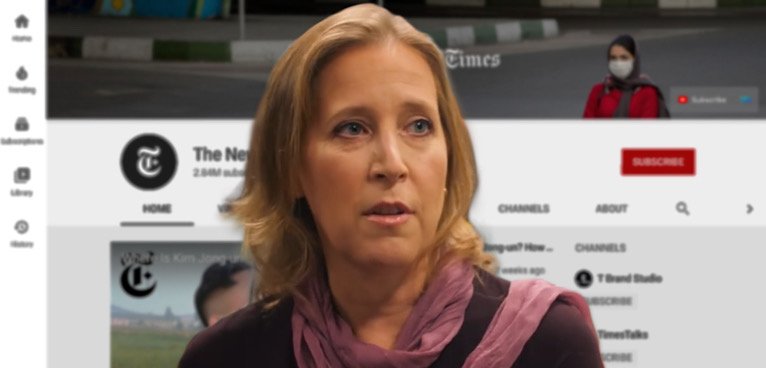
By Tom Parker | Reclaim The Net | May 10, 2020
Over the last few years, YouTube and its executives have made it clear that when it comes to news and current events, “authoritative sources” (mainstream media outlets it deems to be trustworthy) will get boosted via the platform’s recommendation tools while independent creators who cover the news will be suppressed.
And during an interview on The New York Times’ “Rabbit Hole” podcast, YouTube CEO Susan Wojcicki admitted that most YouTube users don’t want to watch these “authoritative” sources but said the platform will continue to boost them anyway.
Wojcicki said that she decided to start prioritizing authoritative sources in the wake of the terrorist attack in Nice, France on Bastille Day (July 14) in 2016.
“I remember reading about it and being just extremely upset and thinking our users need to know about it,” Wojcicki said.
She then decided that YouTube would start pushing videos about the attack to the homepage of users in France and prioritize videos from authoritative sources when French users searched for information about the attack.
However, after making the change, YouTube engineers warned Wojcicki videos from the mainstream “authoritative” sources weren’t performing very well in terms of engagement.
“The users don’t wanna actually see it,” the engineers told Wojcicki at the time.
But Wojcicki decided to keep showing the videos to users and told the engineers. “It doesn’t matter. We have a responsibility. Something happened in the world and it’s important for our users to know,” Wojcicki boasted.
She added that this was the first time YouTube started pushing information to users that was “relevant,” even if the users didn’t want to see it, compared to other content.
 YouTube’s heavy promotion of authoritative sources makes it almost impossible to find coverage of news and current events from independent creators
In the years since Wojcicki made this decision, YouTube has rigged the site heavily in favor of authoritative sources to the point that they’re now 10x more likely to top search results for some news events while YouTubers won’t even get recommended for breaking news.
And despite most YouTube users relatively not wanting to watch these mainstream media sources, YouTube’s constant promotion of them in search, recommendations, and on the homepage has boosted their views by 75% since the start of 2020, cementing and strengthening the dominance of legacy sources in the online era.
Another stat that reveals how aggressively YouTube is pushing these unpopular authoritative sources is that the coronavirus news shelf, which forces videos from mainstream media outlets onto users via the homepage, has been viewed over 10 billion times.
Recent comments from YouTube’s Chief Product Officer, Neal Mohan, suggest that the platform’s approach to who gets to cover the news and its attitude towards independent creators won’t be changing any time soon.
During an interview last month, he said creators “espousing” opinions “in their basement” can’t provide context on the news.
Why I No Longer Read Facebook
By Eve Mykytyn | May 2, 2020
In an effort to stem the torrent of ‘false’ cures and conspiracy theories about COVID-19, Facebook announced it would begin informing users globally who have liked, commented on, or shared “harmful” misinformation about the coronavirus, that the content they reacted to was incorrect and pointing them in the direction of what Facebook considers to be a ‘reliable’ source. The reliable source? The World Health Organization. Here’s the distinctly noninformative WHO Covid 19 website .
I don’t know what caused Covid 19 to become our disease du jour. Was it a bat? A natural or laboratory mutation? Not only do I not know, but I don’t believe that Facebook, or the WHO know either. Why not let theories abound? Perhaps free speech means that we trust the people to evaluate the source and sort out the facts for themselves.
The general rule in the US is that no publisher has an obligation to print any particular view: that rule dates from when ‘publisher’ meant print and print was inexpensive. The founders intentionally strove to open a ‘marketplace of ideas,’ a ‘public square’ with pamphleteers and speeches. Published content was restricted only by the threat of litigation over libel or defamation which requires publishing material known (or should have known) to be false.
Exceptions to the general rule came about when publishing was through a limited medium regulated by the government. When television stations were a limited resource obtained through government licensing of the few channels, the government imposed free speech requirements including an equal time rule, requiring television stations to present both sides of an issue. The rule was dropped, considered unnecessary only when television began to offer a plethora of stations.
So now we get to Facebook ( youtube, twitter, etc.). Which is it most like, television or freely available printing?
For many years, including the time that these major platforms became monopolies, the internet depended on cable service which due to the physical nature of cable was a limited resource for which the government issued licenses to certain cable companies. In 1965, the FCC established rules for cable systems and the Supreme Court affirmed the FCC’s jurisdiction over cable. I believe that Facebook is also subject to regulation as a monopoly as the government has authority to interfere with monopolies, particularly when they are successful (which is, admittedly another issue) ask AT&T.
But Facebook wants it both ways. They don’t admit liability for defamatory statements published on their site. They argue that they behave simply as a platform, a means of transmission. But they also reserve the right to censor content by restricting or deleting material they deem incorrect. So which is it? If they have the power to censor what we see why shouldn’t they be liable for the content?
This censoring of free speech applies broadly. Google favors some content over others in its search engine, Youtube has been on a tear not only deleting videos but replacing videos with others that express an alternative view. See where they plan to ban holocaust ‘denial’ (revisionist in any way) videos and offer wikipedia instead. Further they intend to offer the banned videos to researchers and NGOs “looking to understand hate in order to combat it,” thereby providing content only to a restricted class of their own choosing. Twitter inserts a page when a ‘controversial’ link is clicked warning the user that the link has been identified as malware although Twitter admits that malware warnings are posted based on content.
What is it that compels these platforms to come down on both sides of the free speech issue? After all, by editing content Facebook becomes more like a publisher and less like a mere platform. Facebook does so because it regularly gets brought before Congress to explain free speech congress doesn’t like. Facebook also defers to European countries that regulate speech.
Facebook argues that internet companies aren’t governments and they can restrict what they like. That’s why they don’t follow the First Amendment and instead enforce more restrictive rules in response to criticism of their content. See, for ex., the New Yorker on the ‘free speech excuse.’
I believe that major platforms have become the public square. Yet we allow Facebook to restrict our speech and they do so effectively. As owners of the public square they are uniquely positioned to and do silence dissenters. Platforms take down posts that don’t fit their ‘standards, and they do so swiftly. Perhaps before we allow Facebook to be the arbitrator of free speech, we should rethink the present day meaning of a marketplace of ideas.
Soros-linked political pressure group Avaaz joins forces with MSM to purge climate skeptics from YouTube

Extinction Rebellion Climate Change Action In London © Getty Images / Mike Kemp
By Sophia Narwitz | RT | January 17, 2020
Independent mainstream media outlets are engaging in a politically-motivated campaign to force YouTube to demonetize and hide any video that denies [catastrophic, man-made] climate change.
Published on Avaaz’s website, the left-leaning non-profit group released a report on January 16 that claims YouTube is profiting by broadcasting misinformation to millions of people by giving climate denial videos too much prominence. The report is an undisguised intimidation campaign, as not only does it list major advertizers who are running ads on videos that question the legitimacy of the threat climate change poses for humanity, but it explicitly calls for them to put pressure on the platform as a means of putting an end to the so-called disinformation.
Despite the findings being published just yesterday, many mainstream sites had lengthy articles posted not long after that, which featured quotes from those who worked on the report. Timings which suggest select websites were given early access, making it clear what agenda is being pushed, more so as they all tout the same talking points. Vice, Time, Gizmodo, The Verge, and countless other news entities want YouTube to punish creators who don’t toe the “correct” ideological line. The objective is to demonetize, and thus censor, such individuals as they’ll be less inclined to work on content that they won’t be able to profit from.
Nell Greenburg, a campaign director at Avaaz, claims the report isn’t about removing content, but that contradicts the report’s own messaging. There is a clear attempt to have content hidden as the report calls into question the promotion of such videos in the “up next” box on the site. It’s semantics at this point, but hiding videos would hurt creators and dissuade them from even trying to share their thoughts. It is an indirect way of removing ‘wrongthink.’
YouTube has already called into question the methodology of the report, but, given the media and powerful activist groups are targeting advertisers such as Nintendo, Red Bull, Uber, and Warner Bros, it’s a safe assumption the platform giant will give into their demands if their bottom line ever becomes affected. We are less than one year removed from Vox Media’s war on Google and its subsequent “adpocalypse,” after all.
Samsung has already contacted the company to “resolve the current issue and prevent future repetition,” so a second adpocalypse is probably likely. Though, this time, the scale could change as residing in the crosshairs isn’t just independent creators, but Fox News and other right-leaning media, given that they, too, have content on YouTube that questions the validity of a [catastrophic, man-made] changing climate.
That the MSM agrees with this says a whole lot, since many websites are in no position to push a platform into limiting content they deem as false, especially when considering the one-sided nature of their many blunders. If 2019 was any indication, they’re not exactly on top of stuff. From the reaction to the Covington school kids, to the countless Trump and Russia stories that went nowhere and fizzled, the most blatant purveyors of literal fake news are the mainstream media.
As for George Soros’ connection with Avaaz, while it claims to be predominantly member-funded now, its seed money was reportedly allocated by the billionaire’s opaque network of groups, and various prominent figures from his Open Society Foundation, such as former Democratic congressman Tom Periello, have been among its leadership. Leaked documents from 2010 detail that promoting climate change campaigns was always designated as a primary function of Avaaz.
This situation ultimately raises questions into why anyone, or anything, should have the power to dictate what others can create. Regardless of one’s personal views on the matter, there’s no denying that bold claims have been made about the climate that later were disproved. Little is, as yet, set in stone, and content that lands on any one side of the debate should be free to exist. If a creator is making videos people are watching, their hard work shouldn’t be thrown in the bin simply because an activist group with ties to one of the world’s richest people and his proxies says so. It is not the role of billionaires and their pet projects to play babysitter.
Sophia Narwitz is a writer and journalist from the US. Outside of her work on RT, she is a primary writer for Colin Moriarty’s Side Quest content, and she manages her own YouTube channel.
Only thing clear about the new Transparency Act is that US senators are about to let Google keep manipulating your search results
By Michael Rectenwald | RT | November 10, 2019
In June, whistleblower Zach Vorhies dumped internal Google documents exposing the company’s shady practices and political agenda. Rather than investigate, US lawmakers are offering Big Tech political cover and a legislative decoy.
Internal documents and secret recordings continue to make abundantly clear what many already knew and others strongly suspected about Google and other digital goliaths; that Google, Facebook, Instagram, Twitter, YouTube and others manipulate their content and their users.
Stepping into the fray, Senator John Thune (R-S.D.) has boasted that his new bill – the Filter Bubble Transparency Act – is the silver bullet for bursting user information filter bubbles, the predictable information dead ends that reinforce users’ pre-existing perspectives. He would have us believe that the use of personal user data by search engine algorithms is the real problem with the internet.
But this issue is the least of the problems that users face online. The bill’s co-sponsors hope we’ve forgotten – or never knew – that Google and the rest are not the unbiased, politically neutral information sources or social media platforms that they (so poorly) pretend to be. Far from it.
Google blacklists sources and prevents them from appearing in news results or featured links. Google’s blacklist is a manually curated file including over 500 websites that are excluded from news results.
Google applies fringe ranking to sites, downgrading those sites – but not The New York Times and The Washington Post – that promote “conspiracy theories” and “fake news.” Fringe ranking involves the manual grading of sites, although only those whose conspiracy theories or fake news stories fail to meet Google’s criteria for credible, plausible narratives are downgraded.
Google and YouTube use “hate speech” labeling, downgrading sites and videos they believe contain “hate speech.” YouTube scoring is apparently based solely on whether videos express “supremacism.”
Google and YouTube use “authoritativeness” scoring to rank sites and videos. The authoritativeness score is necessarily based on whether a news site or video conforms to Google or YouTube’s notions of credible and respectable views.
Last is the little-known fact that Google ranks websites against Wikipedia pages, treating Wikipedia as an unbiased and authoritative source. As Zach Vorhies told me in a private chat, “the core issue is that sites are not being ranked according to user data, they are being ranked against Wikipedia.” Websites are downgraded if Wikipedia pages contain negative information about them. Yet, as information age philosopher Jaron Lanier has noted, Wikipedia is notorious for its left-leaning political bias and its overwriting of known facts to suit its agenda. The issue has been addressed on Wikipedia itself.
Together, Google’s site-ranking methods favor liberal and left-leaning sites – but Google goes even further by steering voters toward preferred candidates and, in an insider video, the company made clear that it intends to intervene in the 2020 presidential election.
The Big Tech giants manipulate data and users and under questionable pretences and using highly subjective criteria. And they’ve done most of these things, or so they hoped, without our knowledge or permission.
The proposed legislation doesn’t even mention –let alone address– these practices. Instead, it pretends to talk tough. Google, Facebook, and other major search and social media platforms would be required to give users an option to use “input-transparent algorithms” that don’t incorporate user data in search results. Platform providers would have to disclose when they use “opaque algorithms” that use such user-connected data. Whoopee.
While it may be true that, as Sen. Thune suggests, the new internet bill was written to give users “more control over what they see online,” it leaves that control by and large in the hands of Google and other digital giants. The proposed bill deflects attention from the basis of this control – the manipulation of search results and use of other data-meddling and scoring tactics by big digital players. Whether intentionally or not, the Filter Bubble Transparency Act serves as a diversionary device, allowing Big Tech to hide in plain sight.
Michael Rectenwald is the author of nine books, including the most recent, Google Archipelago.
YouTube suppressed Tulsi Gabbard search results during Hillary Clinton ‘foreign asset’ row
RT | October 23, 2019
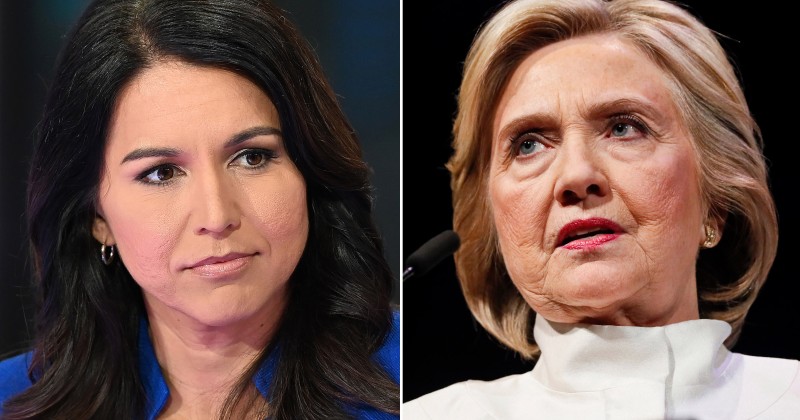
Conservative internet personality Steven Crowder has accused YouTube of suppressing search results for 2020 Democratic hopeful Tulsi Gabbard during her recent spat with former Secretary of State Hillary Clinton.
Following Clinton’s suggestion last Friday that Gabbard (D-Hawaii) was being “groomed” by foreign election-meddlers, the dovish congresswoman shot back with a harsh rebuttal labeling Clinton the “queen of warmongers,” but in a lengthy video posted on Tuesday, Crowder says YouTube concealed her content amid the dispute.
Using a virtual private network (VPN) to observe search results in different countries, Crowder claims to have found evidence the platform demoted Gabbard’s official campaign videos for searches conducted in the US.
The first VPN test was carried out last Friday and compared search results from the US and Spain, showing Gabbard’s channel and videos were buried far below other content in American queries at the height of her feud with Clinton.
A second test two days later, after the Clinton quarrel had calmed down, had a much different outcome, showing similar results between searches attempted in the two countries.
Crowder, who ran afoul of YouTube earlier this year and had his own channel demonetized, claims the platform deliberately throttled Gabbard’s content to limit her message in an attempt at “election meddling.”
Over the summer, Gabbard filed a lawsuit against YouTube’s parent company, Google, alleging the tech giant intentionally blocked her campaign ads on the heels of a Democratic presidential debate that – as shown by Google’s own search analytics – generated intense interest in her candidacy.
A number of conservative commentators weighed in on the allegation, noting the “chilling effect” such suppression could have on anyone challenging “establishment politicians” and the Washington swamp.
“We all knew, now we have proof,” another commenter said.
Some in Crowder’s camp took issue with the claim, however, with New York congressional candidate Joey ‘Salads’ Saladino arguing the comedian failed to prove what he alleged.
Another critic similarly challenged Crowder’s accusation, stating his tests did not show any manipulation of search results, but rather a new feature on YouTube which prioritizes news items curated by its partner “fact checkers” over other videos. While YouTube says the feature was rolled out to combat “misinformation,” it nonetheless raises questions about how the platform chooses which stories to serve up to viewers, at the expense of other content.
YouTube Bans Infowars Relaunch – Days After Promising To Allow ‘Controversial’ Content
By Tyler Durden – Zero Hedge – 08/30/2019
On Tuesday, YouTube CEO Susan Wojcicki announced that the platform would invite “offensive” content back onto the site – writing in an open letter to YouTube creators “Without an open system, diverse and authentic voices have trouble breaking through.”
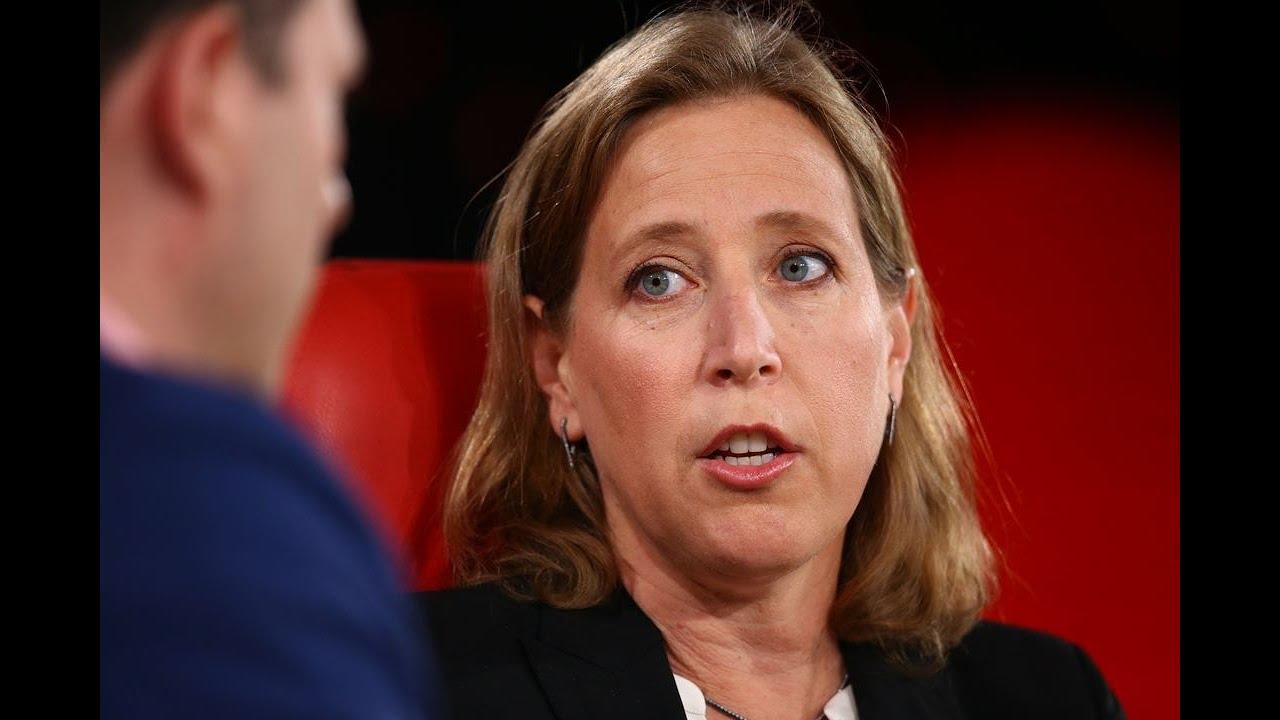
“I believe preserving an open platform is more important than ever,” she added.
In response, Infowars relaunched its ‘War Room’ YouTube channel – which boasted 2.4 million followers before being terminated in August 2018 for “violating YouTube’s community guidelines.”

The first new video uploaded to the new War Room channel featured host Owen Shroyer celebrating Wojcicki’s announcement, and was titled “Breaking! YouTube CEO says ‘Alex Jones’ and ‘Infowars Ban Is Over.’”
Wojcicki didn’t mention Infowars in her letter, but this is how Shroyer apparently interpreted it. Since going live, War Room has uploaded 13 videos covering topics typical to Infowars, like “liberal racism,” the end of “globalism,” and how Lizzo’s performance at the VMAs was “disgusting.” –VICE
That didn’t last long
Shortly after VICE published their article noting that Shroyer’s video had been up for 17 hours, YouTube deleted Infowars’ War Room channel – again.
Remember how @SusanWojcicki stated #YouTube was an open platform the other day?
Yeah turns out she was gaslighting us… once again.@MarkDice you were spot on. https://t.co/zewI48h0Vr
— Zach Vorhies (@Perpetualmaniac) August 29, 2019
“We’re committed to preserving openness and balancing it with our responsibility to protect our community,” said YouTube spokeswoman Ivy Choi. “This means taking action against channels that continue to violate our policies.”
Infowars and its founder Alex Jones suffered coordinated bans across several platforms last year, including Facebook and Apple’s iTunes, after online activists Sleeping Giants lobbied tech companies to cut all ties with Jones and his network.
Okay… what is happening here?@iTunes @apple, are you really choosing to host Infowars on your platform after Alex Jones’ harassment of Sandy Hook parents and Vegas shooting victims and threats to the Special Counsel? How does this not break your Terms Of Service? https://t.co/Bfhwf6NXYN
— Sleeping Giants (@slpng_giants) July 30, 2018
So much for “preserving an open platform” so that “diverse and authentic voices” can break through.
YouTube ‘borderline content’ crackdown hits UK shores, creators demand justice
RT | August 28, 2019
YouTube is cracking down on “borderline content” that doesn’t quite break its rules, expanding an algorithm-tweak that prevents controversial material from gaining a US audience to the rest of the English-speaking world.
A recommendations tweak that cut the referral views of content that “brushes right up against our policy line” in half in the US over the past six months is being rolled out across the UK, Ireland, South Africa, and “other English-language markets,” YouTube CEO Susan Wojcicki said in a quarterly letter to creators on Tuesday, patting herself on the back for what she claimed was the company’s tolerance for non-mainstream views.
“A commitment to openness is not easy,” Wojcicki wrote, likely provoking a few spit-takes from readers. “It sometimes means leaving up content that is outside the mainstream, controversial or even offensive.” But diversity of opinion “makes us a stronger and more informed society, even if we disagree with some of those views,” she continued – begging the question of why YouTube feels compelled to de-platform so many outside-the-mainstream commentators even as its CEO has admitted in the past that “news or news commentary [is] a very small percentage of the number of views we have.”
“Reducing the spread of borderline content” was one of “four Rs” Wojcicki claimed formed the company’s framework for dealing with creators, accompanied by “remove content that violates our policy,” “raise up authoritative voices,” and “reward trusted, eligible creators.”
Creators were up in arms about the rising tide of censorship, which took out a number of popular channels without warning. Many speculated about the platform’s future, even calling for Wojcicki’s resignation.
“Youtube’s final form will be mainstream TV,” one user lamented. “YouTube was primarily built by edgy content. That’s what made it great,” another agreed. “We prefer diversity and free speech on YouTube, not racism and censorship,” said another.
Many insisted the crackdown was part of the company’s admitted efforts to control the 2020 US election (even, apparently, in the UK).
Even some who disagreed with the “borderline” content creators opposed banning them. “These people will become martyrs,” one user warned, suggesting those who disagree with “extremists” should “debate them, make them look stupid,” but not censor.
Others breathed a sigh of relief. “It’s about time society starts to protect itself against the (far) right. The slide into violence and extremism is having rl consequences,” one person tweeted.
The truth about YouTube’s intent does occasionally flash though the corporate jargon. “We keep tightening and tightening the policies,” Wojcicki told the Guardian in an interview earlier this month, noting that “with every policy we make, there is content that will become borderline, or will find ways to skirt around those policies.” That content becomes the target of new policies, and the cycle begins anew.
And “borderline content” – like “sowing discord,” the excuse used to de-platform hundreds of channels earlier this month for their opposition to the Hong Kong protests – has no official definition, allowing moderators to delete any channel they want without having to produce proof any rule has been violated.
YouTube axes anti-protest channels as US Ministry of Truth battles China over Hong Kong
RT | August 23, 2019
YouTube has disabled 210 channels for posting content related to the Hong Kong protests “in a coordinated manner,” following in the footsteps of Facebook and Twitter in restricting its arbitrary censorship to pro-China accounts.
“Channels in this network behaved in a coordinated manner while uploading videos related to the ongoing protests in Hong Kong,” Google threat analyst Shane Huntley claimed in a blog post on Thursday, adding that the Google team’s “discovery” was “consistent with recent observations and actions related to China announced by Facebook and Twitter.”
Translation? The channels were “sowing political discord” on behalf of the Chinese government, and had to be stopped. How did Google know it was the Chinese nefariously attempting to poison the minds against the protesters? The “use of VPNs” and “other methods of disguise” – widespread in the era of mass surveillance – was all the proof required to wipe the channels out of existence.
Twitter got the anti-China censorship ball rolling earlier this week, in perhaps the first-ever social media preemptive strike “proactively” deplatforming hundreds of thousands of accounts for the capital crime of “sowing discord.” Their crimes included “undermining the legitimacy and political positions of the protest movement on the ground.” One could argue that the protests themselves are a form of political discord, but resistance is futile when charged with such an inchoate offense.
None of the social media platforms have ever defined what exactly constitutes “attempting to sow discord,” though a common thread running through the mass deplatformings of the past year suggests it involves posting in support of a government the US doesn’t like – whether Russia, Iran, Venezuela, or China.
The social media Ministry of Truth has become increasingly open about the irrelevance of truth in what constitutes actionable disinformation. One group of “experts” in the spread of disinfo online even published a paper this week explaining that true statements could constitute disinformation if they were arranged to serve a purpose, calling for platforms to expand their definition of “inauthentic behavior” to include anyone reposting information portraying the “good guys” in a negative light.
The Chinese government challenged Twitter to explain its decision to ban state-owned media from advertising, asking “Why is it that China’s official media’s presentation is surely negative or wrong?”
Beijing has pointed to a US role in fanning the flames of unrest, a charge that grows more plausible with every day the protests continue despite having succeeded in forcing the Hong Kong government to withdraw a bill that would have allowed criminal suspects to be extradited to China. Armies of pro-protest tweeters swarm any post by Secretary of State Mike Pompeo with pleas to intervene in their plight, even as US lawmakers threaten to rain down fire and fury should anyone harm a hair on a protester’s head. And photos of the protest leaders meeting with US diplomats suggest there is certainly some “coordinated inauthentic behavior” at play on the other side.
YouTube, as a subsidiary of Google, has been exposed as even more partisan than Twitter’s arbiters of truth. A whistleblower released nearly 1,000 pages of internal documentation earlier this month showing YouTube’s algorithms were aimed more at shaping reality than at accurately portraying it. The platform removed Iranian state media channels as Washington ramped up tensions with Tehran in the Strait of Hormuz, and its deactivation of pro-China channels now suggests the protests – despite achieving their initially stated goal – are far from over.
Google Executive Allegedly Says Only Big Tech Can Prevent 2020 ‘Trump Situation’
Sputnik – June 25, 2019
While Big Tech has consistently brushed off accusations of discrimination and political bias, a new investigative report by Project Veritas provides new insight into Google’s alleged internal practices.
Project Veritas has published a new report on Google along with an undercover video of the company’s head of Responsible Innovation, Jen Gennai, and leaked docs by an alleged insider that purportedly expose the tech giant’s plans to influence the outcome of the 2020 presidential elections in the United States and “prevent the next Trump situation”.
“Elizabeth Warren is saying we should break up Google. And like, I love her but she’s very misguided, like that will not make it better it will make it worse, because all these smaller companies who don’t have the same resources that we do will be charged with preventing the next Trump situation, it’s like a small company cannot do that”, she appears to be saying in the footage, which was filmed at a restaurant on a hidden camera.
Gennai was referring to a statement by Massachusetts Senator Warren to break up tech giants like Amazon, Google, and Facebook as the companies face mounting backlash ahead of the 2020 vote.
The executive, whose “Responsible Innovation” sector monitors and evaluates the implementation of AI technologies, said in the video that Google has been working to reprogramme its systems and algorithms.
“We all got screwed over in 2016, again it wasn’t just us, it was, the people got screwed over, the news media got screwed over, like, everybody got screwed over so we’re rapidly been like, what happened there and how do we prevent it from happening again. We’re also training our algorithms, if 2016 happened again, would we have, would the outcome be different?”
According to Project Veritas, Gennai as well addressed the anti-conservative bias accusations the company has recently faced and explained that “conservative sources” and “credible sources” didn’t always overlap in line with Google’s editorial practices.
“We have gotten accusations of around fairness is that we’re unfair to conservatives because we’re choosing what we find as credible news sources and those sources don’t necessarily overlap with conservative sources…”
As part of the report, the video also contains snippets of an interview with an alleged Google whistleblower, who provided information on the alleged “algorithmic unfairness” and Machine Learning Fairness, which he claimed was “one of the many tools the company uses to advance a political agenda”.
“They are going to redefine a reality based on what they think is fair and based upon what they want, and what and is part of their agenda”.
Gennai has already read the Project Veritas report and penned a Medium post to explain what happened, claiming that the outlet had edited the video “to make it seem that I am a powerful executive who was confirming that Google is working to alter the 2020 election”.
She dismissed the report as an “unadulterated nonsense” and reiterated that the company “works to be a trustworthy source of information, without regard to political viewpoint”.
“In a casual restaurant setting, I was explaining how Google’s Trust and Safety team (a team I used to work on) is working to help prevent the types of online foreign interference that happened in 2016. I was having a casual chat with someone at a restaurant and used some imprecise language. Project Veritas got me. Well done”, she wrote.
YouTube has already removed the video of the interview with Gennai from the platform, while Reddit has suspended Project Veritas’ account following the release of the report.
This isn’t the first time Project Veritas has had its accounts or content removed after publishing an investigative report which exposes the internal practices of big tech firms. One of its reports, which shed light on Pinterest’s internal blacklists, was censored heavily as a result of questionable privacy complaints.
Aside from being taken down from YouTube, Project Veritas was also suspended on Twitter and other journalists who talked about the report in their videos had them removed.
In the past few weeks, Google and its video-sharing platform YouTube have faced multiple accusations of political bias against conservative views and independent media sites, as well as suppression of free speech.
The tech giants have, however, always denied the allegations.
Internet Free Speech All but Dead
Unelected, unnamed censors are operating across the Internet to suppress “unapproved” content.

By Philip Giraldi | Global Research | June 8, 2019
The Internet was originally promoted as a completely free and uncensored mechanism for people everywhere to exchange views and communicate, but it has been observed by many users that that is not really true anymore. Both governments and the service providers have developed a taste for controlling the product, with President Barack Obama once considering a “kill switch“ that would turn off the Internet completely in the event of a “national emergency.”
President Donald Trump has also had a lot to say about fake news and is reported to be supporting limiting protections relating to the Internet. In May, a “net neutrality” bill that would have prevented service providers from manipulating Internet traffic passed in the House of Representatives, but it is reported to be “dead on arrival” in the Senate, so it will never be enacted.
Social networking sites have voluntarily employed technical fixes that restrict some content and have also hired “reviewers” who look for objectionable material and remove it. Pending European legislation, meanwhile, might require Internet search engines to eliminate access to many unacceptable old posts. YouTube has already been engaged in deleting existing old material and is working with biased “partners” like the Anti-Defamation League (ADL) to set up guidelines to restrict future content. Many users of Facebook will have already undoubtedly noted that some contacts have been blocked temporarily (or even permanently) and denied access to the site.
Google now automatically disables or limits searches for material that it deems to be undesirable. If Google does not approve of something it will either not appear in search results or it will be very low on the list. And what does come up will likely favor content that derives from those who pay Google to promote their products or services. Information that originates with competitors will either be very low in the search results or even blocked. Google is consequently hardly an unbiased source of information.
In May 2017 Facebook announced that it would be hiring 3,000 new censors, and my own experience of social networking censorship soon followed. I had posted an article entitled “Charlottesville Requiem” that I had written for a website. At the end of the first day, the site managers noticed that, while the article had clearly attracted a substantial Facebook readership, the “likes” for the piece were not showing up on the screen counter, i.e., were not being tabulated. It was also impossible to share the piece on Facebook, as the button to do so had been removed.
The “likes” on sites like Facebook, Yahoo! news comments, YouTube, and Google are important because they automatically determine how the piece is distributed throughout the site. If there are a lot of likes, the piece goes to the top when a search is made or when someone opens the page. Articles similarly can be sent to Coventry if they receive a lot of dislikes or negative marks, so the approvals or disapprovals can be very important in determining what kind of audience is reached or what a search will reveal.
In my case, after one day my page reverted to normal, the “likes” reappeared, and readers were again able to share the article. But it was clear that someone had been managing what I had posted, apparently because there had been disapproval of my content based on what must have been a political judgment.
A couple of days later, I learned of another example of a similar incident. The Ron Paul Institute (RPI) website posts much of its material on YouTube (owned by Google) on a site where there had been advertising that kicked back to RPI a small percentage of the money earned. Suddenly, without explanation, both the ads and rebate were eliminated after a “manual review” determined the content to be “unsuitable for all advertisers.” This was a judgment rendered apparently due to disapproval of what the institute does and says. The ability to comment on and link from the pieces was also turned off.
Dissident British former diplomat Craig Murray also noted in April 2018 the secretive manipulation of his articles that are posted on Facebook, observing that his “site’s visitor numbers [were] currently around one-third normal levels, stuck at around 20,000 unique visitors per day. The cause [was] not hard to find. Normally over half of our visitors arrive via Facebook. These last few days, virtually nothing has come from Facebook. What is especially pernicious is that Facebook deliberately imposes this censorship in a secretive way.
“The primary mechanism when a block is imposed by Facebook is that my posts to Facebook are simply not sent into the timelines of the large majority of people who are friends or who follow. I am left to believe the post has been shared with them, but in fact it has only been shown to a tiny number. Then, if you are one of the few recipients and do see the post and share it, it will show to you on your timeline as shared, but in fact the vast majority of your own friends will also not receive it. Facebook is not doing what it is telling you it is doing—it shows you it is shared—and Facebook is deliberately concealing that fact from you. Twitter has a similar system known as ‘shadow banning.’ Again, it is secretive and the victim is not informed.”
More recently, pressure to censor Internet social networking and information sites has increased, coming both from government and from various interested constituencies. In late May, Facebook founder and CEO Mark Zuckerberg met with French President Emmanuel Macron to discuss how to eliminate “hate speech” on the Internet.
The two men agreed that the United States Internet model, in spite of already being heavily manipulated, is too laissez faire, and expressed an interest in exploring the French system where it is considered acceptable to ban unacceptable points of view. Zuckerberg suggested that it might serve as a good model for the entire European Union. France is reportedly considering legislation that establishes a regulator with power to fine Internet companies up to 4% of their global revenue, which can in some cases be an enormous sum, if they do not curb hateful expressions.
So unelected, unnamed censors are operating all around the Internet to control the content, which I suppose should surprise no one, and the interference will only get worse as both governments and service providers are willing to do what it takes to eliminate views that they find unacceptable—which, curiously enough, leads one to consider how “Russiagate” came about and the current hysteria being generated in the conventional media and also online against both Venezuela and Iran. How much of the anger is essentially fake, being manipulated or even fabricated by large companies that earn mega billions of dollars by offering under false pretenses a heavily managed product that largely does what the government wants? Banning hate speech will be, unfortunately, only the first step in eliminating any and all criticisms of the status quo.
People Who Support Internet Censorship Are Infantile Narcissists
By Caitlin Johnstone | June 7, 2019
As of this writing, journalist Ford Fischer is still completely demonetized on YouTube as the result of a new set of rules that were put in place because of some doofy Twitter drama between some unfunny asshole named Steven Crowder and some infantile narcissist who thinks the world revolves around his opinions named Carlos Maza. It remains an unknown if Fischer will ever be restored to an important source of income around which he has built his livelihood.
Fischer often covers white supremacist rallies and counter-protests, and his channel was demonetized within minutes of YouTube’s new rules against hate speech going into effect because some of his content, as you’d expect, includes white supremacists saying and doing white supremacist things. Maza, a Vox reporter who launched a viral Twitter campaign to have Crowder removed from YouTube for making homophobic and bigoted comments about him on his channel, expressed concern over Fischer’s financial censorship.
“What’s happening to Ford is fucking awful,” Maza tweeted yesterday. “He’s a good journalist doing important work. I don’t understand how YouTube is still so bad at this. How can they not differentiate between white supremacist content and good faith reporting on white supremacy?”
I say that Maza is an infantile narcissist who thinks the world revolves around his opinions because it genuinely seems to have surprised him that good people would get harmed in the crossfire of his censorship campaign.
I mean, what did he think was going to happen? Did he think some soulless, multibillion-dollar Silicon Valley corporation was going to display company-wide wisdom and woke insightfulness while implementing his agenda to censor obnoxious voices? Did he imagine that YouTube executives were going to sit down with him over a cup of coffee and go down a list with him to get his personal opinion of who should and should not be censored?
Think about it. How narcissistic do you have to be to assume that a vast corporation is going to use your exact personal perceptual filters while determining who should and should not be censored for oafish behavior? How incapable of understanding the existence of other points of view must you be to believe it’s reasonable to expect that a giant, sweeping censorship campaign will exercise surgical precision which aligns perfectly with your own exact personal values system? How arrogant and self-centered must you be to demand pro-censorship reforms throughout an enormous Google-owned platform, then whine that they’re not implementing your censorship desires correctly?
This is the same staggering degree of cloistered, dim-eyed narcissism that leads people to support Julian Assange’s persecution on the grounds that he’s “not a journalist”. These egocentric dolts sincerely seem to believe that the US government is going to prosecute Assange for unauthorized publications about US war crimes, then when it comes time to imprison the next Assange the US Attorney General is going to show up on their doorstep to ask them for their opinion as to whether the next target is or is not a real journalist. Obviously the power-serving agenda that you are helping to manufacture consent for is not going to be guided by your personal set of opinions, you fucking moron.
The fact that other people aren’t going to see and interpret information the same way as you do is something Carlos Maza and the thousands of people who’ve supported his pro-censorship campaign should have learned as small children. Understanding that the world doesn’t revolve around you and your wants and desires is a basic stage in childhood development. People who believe Silicon Valley tech giants can implement censorship in a way that is wise and beneficent are still basically toddlers in this respect. One wonders if they still interrupt their mother’s important conversations with demands for attention and apple juice.
Ford Fischer was not the first good guy to get caught in the crossfire of internet censorship, and he will not be the last. In addition to the way unexpected interpretations of what constitutes hate speech can lead to important voices losing their platforms or being unable to make a living doing what they do, the new rules appear to contain a troubling new escalation that could see skeptics of legitimate military false flags completely censored.
“Finally, we will remove content denying that well-documented violent events, like the Holocaust or the shooting at Sandy Hook Elementary, took place,” reads a single sentence in the official YouTube blog about its new rules.
The sentence appears almost as an aside, without any elaboration or further information added, and at first glance it reads innocuously enough. No Holocaust deniers or Sandy Hook false flag videos? Okay, got it. I personally am not a denier of either of those events, so this couldn’t possibly affect me personally, right?
Wrong. YouTube does not say that it will just be censoring Holocaust deniers and Sandy Hook shooting deniers, it says it will “remove content denying that well-documented violent events, like the Holocaust or the shooting at Sandy Hook Elementary, took place.”
So what does this mean? Where exactly is the line drawn? If you are not an infantilized narcissist, you will not assume that YouTube intends to implement this guideline in the same way you would. It is very possible that it will include skeptics of violent events which the entire political/media class agrees were perpetrated by enemies of the US-centralized power alliance, which just so happen to manufacture support for increased aggressions against those nations.
Would the new rules end up forbidding, for example, this excellent YouTube video animation explaining how a leaked OPCW report disputes the official narrative about an alleged chemical attack in Douma, Syria last year? If you are not making the assumption that YouTube will be implementing its censorship using your own personal values system, there is no reason to assume it wouldn’t. After all, the official narrative that dozens of civilians were killed by the Assad government dropping chlorine cylinders through rooftops is the mainstream consensus narrative maintained by all respected US officials and “authoritative” news outlets.
This is a perfect example of a very real possibility that could be a disastrous consequence of increased internet censorship. It is a known fact that the US government has an extensive history of using false flags to manufacture consent for war, from the USS Liberty to the Gulf of Tonkin to the false Nayirah testimony about removing babies from incubators to the WMD narrative in Iraq. These new rules could easily serve as a narrative control device preventing critical discussions about suspicious acts of violence which have already happened, and which happen in the future.
Consider the fact that Google, which owns YouTube, has had ties to the CIA and the NSA from its very inception, is known to have a cozy relationship with the NSA, and has served US intelligence community narrative control agendas by tweaking its algorithms to deliberately hide dissenting alternative media outlets. Consider this, then ask yourself this question: do you trust this company to make wise and beneficent distinctions when it comes to censoring public conversations?
In a corporatist system of government which draws no meaningful distinction between corporate power and state power, corporate censorship is state censorship. Only someone who believes that giant Silicon Valley corporations would implement censorship according to their own personal values system could ever support giving these oligarchic establishments that kind of power. And if you believe that, it’s because you never really grew up.
Featured Video
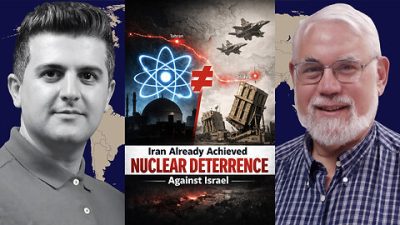
Prof. Ted Postol: Iran Already Achieved Nuclear Deterrence Against Israel
or go to
Aletho News Archives – Video-Images
From the Archives
How the occupied mentality syndrome works
Saudi Arabia on the American chessboard – Part 3
By B. J. Sabri | American Herald Tribune | June 27, 2016
Read part 2: “The occupied mentality Syndrome“
Previously I argued whether Saudi Arabia’s repeated involvements in U.S. interventions and wars stem from free national will or in response to a specific condition. For starters, in Saudi Arabia there is no national will. In Saudi Arabia, the national will is the will of the Al Saud clan. Still, when a major Arab state allies itself with a superpower that committed unspeakable crimes against humanity in almost every Arab country, then something is wrong. This fact alone should compel us to examine the U.S.-Saudi relation for one exceptional reason. As a result of the U.S.-Saudi wars, hundreds of thousands of people in Afghanistan, Iraq, Iran, Libya, Syria, Yemen, and Somalia have lost their lives. Millions became displaced in their own homelands. And millions more rendered refugees.
Attributing the Saudi policies to the bonds of “partnership” with the U.S. is frivolous. There are no bonds between these two thugs except those of business, military deals, secret plots, and wars. Proving this point, bonds such as these have no space for the American and Saudi peoples to share significant cultural or societal exchanges. If partnership is not the reason for the Saudi contribution to the U.S. strategy of empire and imperialism, then another reason must exist.
This leads to three possibilities. … continue
Blog Roll
 Aletho News
- NIAID/NIH and USDA Fund Bioengineered Chimeric Influenza Viruses Built Using Pandemic H1N1 Components: Journal ‘Science Advances’
- Hezbollah hits Israeli warship off Lebanon’s coast, sets it aflame
- Iran slams US strikes on B1 bridge, Mahshahr petrochemical plants as ‘blatant acts of state terrorism’
- In letter to UN chief, Araghchi warns of dire consequences of US-Israeli attacks on Iran’s nuclear facilities
- Why the CIA conspiracy to invade Iran with Kurdish militias failed
- Why Are Upbeat US Claims About Mission to Rescue Pilot ‘Highly Questionable’?
- Aircraft destroyed during US ‘rescue’ of downed F-15 pilot cost more than $100 million each
- Washington University removes professor who condemned US-Israeli war on Iran
- Russia Warns of Retaliation as UK Authorizes Seizure of Vessels
- Serbia thwarts plot to bomb Russia-Hungary gas pipeline – Vucic
- If Americans Knew
- In Iran, Israel-US take aim at “reason, research, and freedom of thought” – Daily Update
- US loses planes over Iran, Israel downgrades Lebanon war goals – Daily Update
- Israel Is Blocking Palestinians from Easter at Church Where Jesus Resurrected
- Plot to assassinate Palestinian activist follows harassment campaign promoted by Zionist groups and elected officials
- Prominent New York synagogue hosts presentation on why U.S. Jews should support the ethnic cleansing of Gaza
- Tapper vs. Piker: Is the CNN Anchor Auditioning for David Ellison?
- Shouldn’t Democrats Be Able to Condemn Genocide?
- Israel-US kill negotiators, destroy civilian structures, but Iran’s military capabilities still largely intact – Daily Update
- ‘War crime’: Global condemnation as Israeli ministers celebrate death penalty law targeting Palestinian prisoners
- 7 Ways Israel Is Turning Lebanon Into Gaza
- No Tricks Zone
- An Inconvenient Tree: Uncovered In Alps… Europe Much Warmer Than Today 6000 Years Ago
- New Study Reports A 60% Slowdown In Greenland’s Ice Loss Rate In The Last Decade
- Low Intensity Tornado Wrecks Major Solar Farm, Creating A Potential Toxic Dump
- New Study Finds Warming Saves Lives…Cold Temperatures 12 Times More Deadly Than Excess Heat
- German Science Blog Accuses PIK Climate Institute Of Hallucinating Climate Tipping Points
- Devastating Assessment Of Comirnaty Vaccine By Former Senior Pfizer Europe Toxicologist
- New Study: CO2 Is ‘Effectively Negligible’ As An Explanatory Climate Change Factor Since 2000
- Former Pfizer Toxicologist Dr. Helmut Sterz Tells Bundestag Hearing Pfizer Vaccine Should Have Never Been Approved
- Energy Expert: Germany’s Nuclear Phaseout Was A “500 Billion Euro Mistake”
- New Research: South Australia’s Mid-Holocene Sea Surface Temperatures Were 4°C Warmer Than Today
 Aletho News