The Gaza ceasefire’s Phase 2 only exists in the media and at UN meetings
By Robert Inlakesh | Al Mayadeen | January 14, 2026
As the debate continues to rage regarding what Phase Two of the Gaza Ceasefire will look like, it has become clear that there is no such thing occurring on the ground. From start to finish, the entire process has been a US-Israeli gambit to achieve their regime change goals, while removing Gaza’s suffering from the headlines.
Through December 2025, reports emerged claiming that this January would see the implementation of a second phase to the so-called Gaza Ceasefire agreement. As expected, there has been even more stalling on this front, as only vague comments made regarding the implementation of US President Donald Trump’s plan.
United Nations Security Council (UNSC) resolution 2803, passed on November 17, 2025, laid out the agenda for the Gaza Strip as clear as day. There were no guarantees for the rights of the Palestinian people, all references to precedents set for decades on the issue of “Israel’s” occupation were absent, instead, there was a vague outline of a regime change plot.
Contrary to the Trump administration’s claims that it no longer seeks to be involved in “nation building”, UNSC Resolution 2803 gives approval for what is labelled the “Board of Peace” (BoP) in Gaza. It also approves the deployment of an “International Stabilisation Force” (ISF).
In essence, the BoP is an undemocratic rule set to be imposed upon the Palestinian people, with Trump taking over the role as de facto dictator of the Gaza Strip, while the ISF is set to be a multi-national invasion force tasked with regime change. Phase Two of the ceasefire will hedge upon the success of both these pillars of the so-called “peace plan”.
The failure of Phase Two
When it comes to the BoP, there is no clear strategy that has been set forth for making this work on the ground. A number of different vague proposals have been floated through the media in recent months, all pointing towards the imposition of the BoP for areas still under Israeli occupation.
The Zionist regime’s forces not only refused to respect the so-called “Yellow Line” barrier in the Gaza Strip, which was supposed to demark 53% of the territory from the remaining 47% in the hands of the Hamas-led administration and security authority. The Israelis are now operating inside nearly 60% of the territory.
Under the control of the Israeli occupation forces are five ISIS-linked militant groups that have been established, with the purpose of fighting the Palestinian resistance. The only people living in the seized territory are these militants and their families, whose numbers reportedly reach only into the thousands.
Last year, the Wall Street Journal reported that Donald Trump’s so-called “Project Sunrise” was being seriously pitched to regional governments. The proposal advances a rather ridiculous model featuring luxury resorts on the sea, high-rise buildings, high-speed rail, and an advanced AI-driven grid. All of this will allegedly cost at least 112 billion dollars over 10 years, according to the 32-page document put forth by Jared Kushner and Steve Witkoff.
This model aligns with an AI generated video published by the US President in early 2025, called “Trump Gaza”, featuring a sleazy billionaire’s playground where Trump and Israeli PM Benjamin Netanyahu are sitting at a resort together.
In the world, what has actually been laid out by more serious officials within the Trump and Netanyahu administration’s, is the idea of reconstruction in the areas of Gaza where the Zionist regime is currently based. This is of course failing the complete disarmament of the Palestinian resistance, which evidently is not going to happen.
This is where the so-called ISF comes into the picture. This multi-national force is intended to be composed of troop contributions from around the world. According to what has been revealed publicly, it appears as if the plan is for the ISF to number into the tens of thousands at most, meaning they will be outnumbered by the Palestinian resistance.
At this stage, although the ISF was supposed to have already been deployed to Gaza, Israeli authorities have been making huge issues regarding which armies will be permitted to join this force. Zionist officials have publicly opposed the inclusion of Turkish or Qatari forces, yet they now appear unable to secure even Azerbaijan’s agreement to agree to contribute troops.
The Egyptians, on the other hand, who are a guarantor of the ISF project, have publicly suggested that it be set up as a “peacekeeping force” that could be comparable to the UNIFIL forces deployed in Southern Lebanon. The US and Israelis are, however, adamant that the ISF not be a peacekeeping force, and according to UNSC 2803, it is not a UN-aligned force. If Cairo says no, getting the ISF off the ground will be difficult.
In the spirit of trying to reach some level of compromise in this regard, the US has floated the idea that the ISF would only work to ensure the security of the borders, train a new Palestinian security force and perhaps coordinate on other issues like securing the transfer of humanitarian supplies.
Yet, even such a limited ISF mission is already showing signs of disaster if it does go ahead. The security firm, UG Solutions – which was responsible for employing private military contractors to lead the defunct Gaza Humanitarian Foundation (GHF) scheme – was revealed as early on during the ceasefire to have been interviewing new recruits to deploy to the Gaza Strip.
According to the investigative reporting of Drop Site News, the role of these military contractors could be to coordinate with the ISF and again participate in aid distribution. The GHF project resulted in what Palestinians called a “death trap”, luring starving civilians to aid sites, where American private military contractors and the Israeli military would open fire upon them. The result was over 2,000 civilians murdered, primarily by the Zionist regime, over a period of 6 months. The GHF was directly funded by the US Trump administration.
Under the worst-case scenario, which the Israelis are pushing for, the ISF will be tasked with disarming the Palestinian Resistance. It does not take a military expert to understand that bringing together hundreds of soldiers from one foreign army, with thousands from another, all of whom speak different languages, have never encountered a situation like Gaza and operate under different doctrines, is a recipe for disaster.
The ISF is intended to be the regime change force that finishes the job that the Israeli military failed at. Bear in mind that the Israelis had deployed hundreds of thousands of soldiers, on rotation, inside the Gaza Strip and still failed.
Prior to the announcement of the ceasefire on October 8, 2025, the Israeli military was in the process of launching its failed “Gideon’s Chariots 2” Operation. According to internal Israeli estimates at the time, the goal of this campaign, which was to occupy Gaza City, would have required up to 200,000 soldiers and possibly taken up to a decade if it was to mirror a West Bank style occupation.
The Israelis were never willing to fight the Palestinian Resistance head on, instead they carried out a genocide, and the majority of their military tasks on a day-to-day basis were destroying civilian infrastructure. In other words, the Israeli army has not changed its primary function, during the war, since the beginning of the so-called ceasefire.
It has continued to demolish buildings and feed its own private industry that has developed behind this demolition work, throughout the ceasefire period. The only difference has been that it no longer experiences the high levels of danger it did previously, due to the resistance adhering to the ceasefire.
This entire genocide has gone down in a similar manner to the way the ceasefire is being implemented. The US-Israeli alliance has no idea how to achieve their desired victory, so they come up with scheme after scheme, military operation after military operation, then when they fail, they simply escalate the violence against civilians and try again.
The way that the US and Israeli military have managed the conflict in Gaza is perhaps the most embarrassing failure in the history of modern warfare. The combined power of the region’s most advanced military, alongside the world’s dominant military power, were not capable of defeating Palestinian Resistance groups who were armed primarily with light weapons they produced themselves under siege.
In every conceivable way, the Israelis and Americans have the upper hand, yet they have to resort to calling in an international invasion force to do their job for them, after committing genocide for over two years and destroying almost every standing structure in all of Gaza. Quite frankly, it is pathetic, not only that they have failed militarily and instead fought against civilians, but that they are so irrational that they cannot even accept defeat.
On the first day the ceasefire was declared, I predicted this exact predicament, that countless schemes would be set forth and that the agreement would be frozen between Phase One and Phase Two for some time. This is precisely what has happened. There was never any real ceasefire, because only one side has adhered to it, Hamas and the Palestinian Resistance. The exact same scenario has played out in Lebanon. The inevitable outcome on both fronts is more war.
We must act before Palestinian hostages are executed in the world’s worst prisons
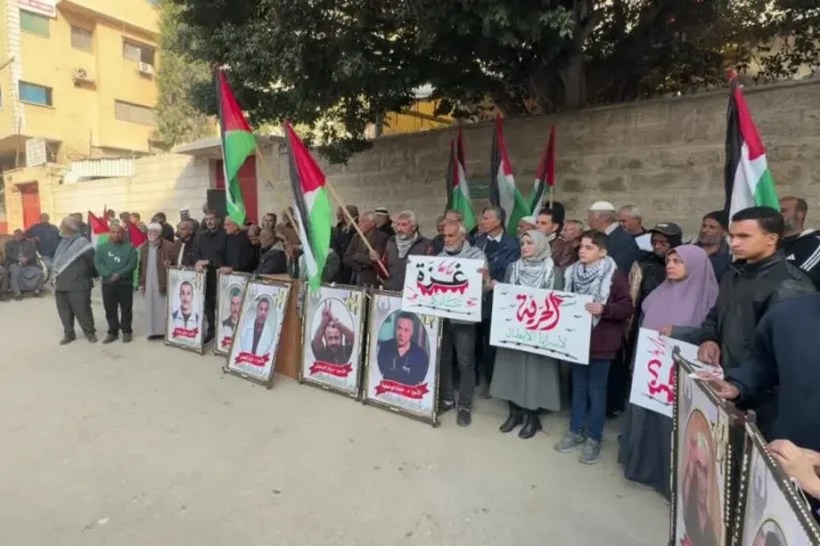
Demonstration held in Gaza in solidarity with Palestinian prisoners in Israeli jails. [photo by AA]
By Adnan Hmidan | MEMO | January 14, 2026
Warnings are no longer enough. Condemnation alone no longer carries any weight. We are standing at a moment that will be remembered, not for what was said, but for what was done. Today, in Israeli prisons, Palestinians are not simply being detained. They are being pushed, step by step, towards a reality where death itself is written into law, where execution is no longer a crime but a procedure, no longer an exception but a policy.
This is no longer just about harsh detention conditions or even about the routine violation of prisoners’ rights. The danger now runs deeper. What is unfolding is a systematic attempt to reshape justice to fit the needs of occupation, to turn trials into formalities before punishment and to reduce the law to a tool of retaliation rather than protection. New legislation, exceptional legal routes and an openly hostile political discourse now speak of execution not with embarrassment but with confidence, pride even. In such a climate, every legal fig leaf has fallen away and every moral mask has been removed.
Human rights organisations across the world have issued clear warnings about this direction, especially the push to establish “special” courts for Palestinians alone. These courts do not merely breach the principle of equality before the law; they destroy the very idea of justice. They operate outside internationally recognised standards and function in a space dominated by security priorities rather than judicial independence. When a person stands before a court designed especially and exclusively for him or her, not to offer fairness, but to ensure conviction, justice ceases to exist. It is a performance where the ending is known before the first word is spoken.
The threat does not end in the courtroom. It extends into a growing policy of denying release altogether, cutting off any realistic hope of freedom through exchange, parole, or genuine judicial review. What we are witnessing is a dangerous shift from punishment with limits to punishment without end, from imprisonment as a legal measure to imprisonment as a permanent political sentence. This approach deepens arbitrary detention, entrenches isolation and strips detainees of the most basic forms of human connection, turning prisons into spaces beyond accountability and beyond compassion.
Most disturbing of all is the open preparation for the death penalty, particularly when it is framed in a way that is mandatory, discriminatory, and aimed squarely at Palestinians. This represents a grave assault on the right to life and raises the terrifying possibility of executions carried out after trials shaped more by politics than by justice. Any attempt to apply such punishment retroactively, or to enforce it selectively, shatters the principle of legality and transforms the law into an instrument of elimination rather than protection. This is not a distant fear. It is a path already being cleared, step by step, in front of a world that seems increasingly willing to look away.
It is from this sense of urgency that the Red Ribbons Campaign was born, not as a slogan, nor as a gesture, but as a human alarm. A warning sounded before prison cells become execution chambers, and before silence becomes complicity. The colour red was chosen for a reason beyond the aesthetic; it signifies danger, the colour of blood and the colour of the final signal when words are no longer enough. It is the colour of freedom when it is taken by force and of injustice when it is endured in silence.
The campaign calls for a coordinated digital action beginning on the evening of Thursday 15th of January, under two clear hashtags: #الحرية_للأسرى and #FreePalHostages. The aim is to restore the human face of those held in Israeli prisons, not as statistics and certainly not as abstract political figures, but as doctors who once healed others, women whose lives were interrupted and children who should have been in classrooms, not in prison cells. This is about breaking a narrative that allows the suffering of one side to be visible while the pain of the other is deliberately and forcefully made invisible.
The action then moves from screens to streets on Saturday the 31st of January, with posters carrying the faces of Palestinian hostages placed in public spaces. This is not meant as theatre, but rather to remember while people are still alive, refusing to await their death to set a memorial. It is a way of saying: these lives matter now, not later.
But this movement will only have meaning if it belongs to people on the street and not just to organisations, movements or campaigns. It will only succeed if it becomes personal. No special permit is required to demonstrate care. No official mandate is needed to act. A photo can be placed in your local neighbourhood, with red ribbons tied around it; a picture taken, and then shared. In doing so, you become part of something larger, not a campaign of noise, but a community of conscience.
This is not a political disagreement that can be postponed. It is a moral test that demands an answer now. Will we act before executions take place, or will we limit ourselves to words of sorrow afterwards? Will we raise our voices while there is still time, or will we save them for statements that come too late?
The Red Ribbons Campaign may not be the final chapter in this struggle, but it could be one of the last chances to prevent a darker one from being written. History is not kind to those who watch from a distance. Blood, once spilled cannot be taken up. And justice, when abandoned at the moment of danger, becomes nothing more than a story we tell ourselves later.
We must act now, not because we seek attention, but because we refuse to be silent witnesses to the execution of Palestinian hostages in the world’s worst prisons.
Former Head of Israeli Military Intelligence Directorate: There’s a ‘very significant influence operation by the US’ in Iran
The Dissident | January 14, 2026
Recently, the Israeli newspaper Maariv interviewed the head of the Military Intelligence Directorat in Israel from 2018-2021, Tamir Hayman, who revealed that the United States currently has a “Significant Influence Operation” on the ground in Iran.
In the interview, Hayman said, “If the question is, is there zero operation right now? The answer is no, because there is already an operation. There is currently a very significant influence operation by the US” referring to the current unrest happening in Iran.
He added, “The sequence of news that is received from within Iran, rumors that are coming, videos that are coming, there are many things that are happening that have no explanation. It could be a coincidence, and it could be something else. Simply put, an influence effort is an effort that operates primarily in the cyber realm, and in the realm of local disruption and subversion, and there are some.”
Along with this, Tamir Hayman, acknowledged that U.S. sanctions were the cause of the economic issues that in Iran that sparked the initial protests in Iran which are apparently being exploited by American and Israeli intelligence, saying, “there is the attempt, as we heard tonight from Trump, that this is a path of negotiation with the Americans, that this is really the only thing that can save the Iranian economy, the lifting of sanctions”.
This comment comes at the same time that Tamir Morag, the Diplomatic Correspondent for the Netanyahu-linked Channel 14 in Israel, reported that “foreign actors are arming the protesters in Iran with live firearms, which is the reason for the hundreds of regime personnel killed.”
American and Israeli officials have been fairly open about the fact that Israeli intelligence is currently operating on the ground in Iran, with the former Secretary of State and CIA director, Mike Pompeo saying, “Happy New Year to every Iranian in the streets. Also, to every Mossad agent walking beside them” and the Israeli Heritage Minister, Amichai Eliyahu saying, “When we attacked in Iran during ‘Rising Lion’ we were on its soil and knew how to lay the groundwork for a strike. I can assure you that we have some of our people operating there right now”.
But now, Tamir Morag has revealed that there are “very significant influence operations by the US” in Iran, which include “operates primarily in the cyber realm, and in the realm of local disruption and subversion” and according to Tamir Morag, apparent operations to arm protestors in Iran to kill Iranian government officials.
Referring to the protests in Iran, the U.S. government connected private intelligence firm Stratfor, wrote, “the United States may also try to intervene, such as by covertly helping to organize the protesters”, something that is apparently already underway through American “influence operations”.
Israel–Syria security pact stumbles as Tel Aviv rejects withdrawal: Report
The Cradle | January 14, 2026
Israel has refused any withdrawal from Mount Hermon and the other areas of Syria it occupied after the fall of former Syrian president Bashar al-Assad’s government, while rejecting Russian patrols in the country’s south and demanding that Damascus be prohibited from ever possessing air defenses, Hebrew media revealed.
“The Israeli position is clear and non-negotiable: there will be no withdrawal from Mount Hermon,” an Israeli official was cited as saying by Hebrew newspaper Maariv on 14 January.
According to the report, talks are stalling due to Damascus’s demand that a security agreement with Tel Aviv be linked to a withdrawal of Israeli army forces from Syria.
The Israeli report added that Tel Aviv is concerned with a Syrian attempt to re-establish a Russian military presence in southern Syria. Israel considers this move a direct threat to its “freedom of action,” Maariv claimed.
The source told the newspaper that Israel is obstructing plans to deploy Russian forces in southern Syria, and that Tel Aviv has conveyed to Damascus, Moscow, and Washington that it will not allow a Russian presence.
Russian media had reported last year that the Syrian government was requesting a resumption of Russian military patrols in the south in order to help limit continuous Israeli raids and incursions.
The sources add that Tel Aviv is following with concern reports that Damascus is hoping to purchase weapons from Russia and Turkiye.
“The Israeli message conveyed to all relevant parties [is that] Israel will not agree that in any future security arrangement, Syria will have strategic weapons, primarily advanced air defense systems and weapons that could change the regional balance of power,” according to Maariv.
“The Israeli goal is clear: freezing the existing situation – without an IDF withdrawal from Mount Hermon, without Syrian reinforcements, and without a foreign military presence that limits the IDF.”
In particular, Israel is demanding a complete demilitarization of southern Syria. “Israel’s security-strategic interest comes first. For now, Trump accepts this position.”
The report also says that the two rounds of Syrian–Israeli talks in Paris last week made “no breakthrough was achieved,” only a “limited understanding” for “the establishment of a coordination mechanism aimed at preventing clashes on the ground, with active US involvement.”
A joint statement by Washington, Tel Aviv, and Damascus on 6 January said that Syria and Israel have agreed to establish a US-supervised “joint fusion mechanism” to “share intelligence” and pursue de-escalation.
Damascus and Tel Aviv “reaffirm their commitment to strive toward achieving lasting security and stability arrangements for both countries,” the statement said, adding that they agreed to “establish a joint fusion mechanism – a dedicated communication cell.”
This mechanism aims “to facilitate immediate and ongoing coordination on their intelligence sharing, military de-escalation, diplomatic engagement, and commercial opportunities under the supervision of the US.”
“This mechanism will serve as a platform to address any disputes promptly and work to prevent misunderstandings,” according to the statement, published by the US State Department after the two rounds of Paris talks.
The Israeli army occupied large swathes of southern Syria as soon as Assad’s government fell, declaring the 1974 Disengagement Agreement null. It has since established permanent outposts and has seized control over vital water sources – practically encircling the Syrian capital.
The occupation continues to expand as Israeli forces carry out almost daily raids. In a span of one year, the Israeli army attacked Syria over 600 times.
Tel Aviv and the new Syrian government have been engaged in direct talks for nearly a year to reach a security arrangement. Damascus has vowed that it has no interest in confronting Israel and has reportedly made commitments to coordinate with Tel Aviv against Iran, Hezbollah, and the Axis of Resistance.
Despite this, Israel has shown no willingness to pull out of Syria.
Negotiations stalled for several weeks before Hebrew media reported in late December that “significant progress” had been made and that a deal could be announced “soon.”
A Syrian source told Israeli outlet i24 on 27 December that there was the possibility of a meeting between Israeli Prime Minister Benjamin Netanyahu and Syria’s self-appointed President Ahmad al-Sharaa, a former Al-Qaeda chief.
US President Donald Trump is reportedly pressuring both sides to reach a deal quickly.
Knesset advances bill mandating death by hanging for Palestinian prisoners
The Cradle | January 13, 2026
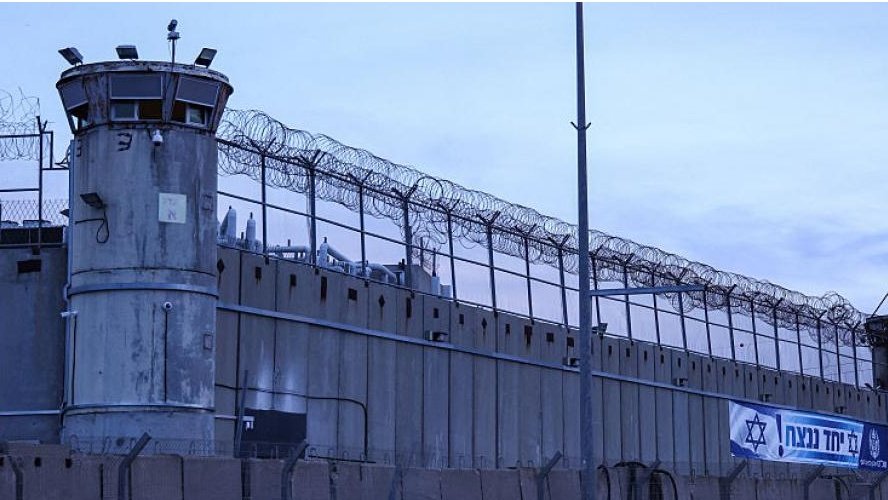
Israeli lawmakers are advancing a bill that would introduce executions by hanging for Palestinians convicted under military law, according to a report by Haaretz published on 13 January.
The report detailed the proposal and internal objections following its approval in a first Knesset reading in November.
The legislation, formally titled the “death penalty for terrorists” bill, was initiated by Israeli lawmaker Limor Son Har-Melech of the Otzma Yehudit party and approved by a vote of 39-16.
It would allow Israeli military courts to impose death sentences without a prosecutor’s request and by a simple majority rather than unanimous verdicts.
Under the proposal, executions would be carried out by hanging and completed within 90 days of a final ruling, following a judge-signed order and under the supervision of the Israel Prison Service.
A designated prison officer would perform the execution, appointed directly by the prison service commissioner.
The bill mandates near-total isolation for prisoners sentenced to death, with visits restricted to authorized personnel and legal consultations limited to visual contact via video calls only, with no possibility of sentence reduction once imposed.
Prison officers and the state would be granted full civil and criminal immunity for carrying out executions.
While execution details would be published on the prison service website, the Freedom of Information Law would not apply, and those involved would remain anonymous.
Israeli National Security Minister Itamar Ben Gvir celebrated the vote by handing out sweets and wearing a gold noose pin.
He later said the noose represented “one of the options,” adding that “the electric chair” and “lethal injection” were also possibilities.
Legal advisors to the Knesset’s National Security Committee warned that the bill raises serious constitutional and legal concerns, saying it would apply only to Palestinians in the occupied West Bank, creating a separate legal regime and risking violations of international treaties.
Human rights groups condemned the proposal, with The Association for Civil Rights in Israel saying it would grant the state power to carry out “the intentional taking of a human life,” calling it another step toward a “racist legal system” built on selective and oppressive enforcement against Palestinians.
Eilat port faces worst crisis as Red Sea shipping collapses
Al Mayadeen | January 12, 2026
The southern port of Eilat in occupied Palestine is facing the most severe crisis in its history, with operations nearly paralyzed for more than two years amid disruptions to Red Sea shipping routes, attacks on vessels, and escalating regional tensions, according to Yedioth Ahronoth.
The newspaper reported that port workers arrive each morning to empty docks, prepared to work, but with no ships docking. Once generating around 240 million shekels annually, the port’s revenues have dropped to almost zero, while government assistance has amounted to just 15 million shekels.
According to the report, the General Federation of Labor, the Histadrut, pledged an additional 5 million shekels to prevent layoffs, but the funds have yet to be delivered due to a suspected conflict-of-interest scandal involving its head, Arnon Bar-David.
The crisis has been compounded by a recent decision by the finance and transport ministries not to extend the port’s operating concession, citing failure to meet required conditions. Port management is reportedly preparing to challenge the decision and demand that the government reverse its stance.
Yedioth Ahronoth noted that operations at the Port of Eilat came to a complete halt after Sanaa seized a vessel bound for the port in November 2023. This followed what had been a record year, with around 150,000 vehicles handled by October 2023 and expectations of another 15,000 arrivals.
Port finance vice president Batya Zafrani said that on the day of the incident, shipping companies NYK and ZIM suspended deliveries for several months. “We thought the government would intervene, but after three months we began worrying about the workers’ future,” she said, adding that the 15 million shekels in government aid would only cover two months of operations.
Avi Hormaro, chairman of the Eilat port and chief executive of the Nakash Group, criticized the government’s handling of the crisis, saying the Israeli occupation authorities had neglected the port. “The transport ministry is making efforts, but other ministries are not interested,” he said.
Hormaro added that just as Kiryat Shmona had been forgotten, the port was also being sidelined, arguing that “a group in Yemen is deciding for the Israeli occupation whether it has a southern port or not.” He stressed that responsibility for keeping Red Sea shipping lanes open lies with the government, not the port authority.
Eilat port shut down due to debt
The Israeli economic media outlet The Marker reported in July that the port of Eilat will completely cease operations starting next Sunday after the city municipality froze its bank accounts due to millions of shekels in accumulated debts.
This development comes as the port has faced near-total paralysis since November 2023, when Yemen imposed a naval blockade on ships heading to “Israel”, leading to a sharp decline in revenue and a collapse in commercial activity at the facility.
The Eilat Municipality announced that it had frozen the port’s bank accounts due to massive accumulated debts, and according to the Israeli economic outlet The Marker, all operations will come to a complete halt starting Sunday, signaling a total economic shutdown of the port.
The crisis at Eilat Port began when Yemeni forces imposed a naval blockade on ships heading to “Israel,” prompting international shipping companies to avoid the Red Sea route, which brought the port’s operations to a near standstill and caused a collapse in its revenue.
Iran protest-riots can only achieve US-Israeli intervention, ‘shadow CIA’ concludes
By Max Blumenthal | The Grayzone | January 13, 2026
Stratfor, the “shadow CIA” which contracts for US intelligence and advises US-backed opposition movements, published an important assessment of the protest-riots in Iran this January 7.
Stratfor concluded that the ultimate utility of the unrest is to create an opening for a US-Israeli bombing campaign:
“While unlikely to collapse the regime, the ongoing unrest could open the door for Israel or the United States to conduct covert or overt activities aimed at further destabilizing the Iranian government, either indirectly by encouraging the protests or directly via military action against Iranian leaders.”
The private spying contractor explained that the external, US-backed Iranian opposition is too fractious and weak to affect change inside Iran, and that the institutions of the Islamic Republic remain united. Therefore, the only impact the protest-riots can achieve is to ease the path for a military campaign by the US and Israel.
Stratfor’s assessment ends by predicting that “renewed military strikes on Iran would also likely put an end to the current protest movement by leading instead to a wider display of Iranian nationalism and unity, a pattern observed after U.S. and Israeli strikes in 2025.”
This is one of the more sober pieces of analysis of the unrest in Iran to emerge from any US intel-aligned outfit. However, with CIA director and “Mossad stenographer” John Ratcliffe controlling Trump’s Iran briefings alongside White House chief of staff and former Netanyahu campaign advisor Suzie Wiles, the president may not have the benefit of such clarity.
The Coming War on Iran: What Has Really Been Happening?
By Robert Inlakesh | The Palestine Chronicle | January 13, 2026
The unrest inside Iran was effectively brought to a halt by the authorities, culminating in mass pro-government demonstrations in the millions across the country. Yet, the specter of a US-Israeli regime change operation continues to lie in the wake.
If you have been following the course of the protests/riots inside Iran on social media or in the corporate press, the impression given since the beginning of the year has been that Tehran is on the verge of collapse. Countless false claims were issued regarding the fall of entire cities, the collapse of the Islamic Revolutionary Guard Corps (IRGC), a massacre of peaceful protesters and even that Ayatollah Khamenei was seeking to escape to Moscow.
Evidently, the reality on the ground couldn’t have been more opposite of what the pro-regime change news outlets and social media influence operations have been portraying. Therefore, to understand what is happening, it is important to understand what truly transpired.
The Road to another Regime Change War
Ever since the conclusion of the 12-Day War between Iran and Israel last June, foreign policy hawks have made it abundantly clear that another round of fighting was only a matter of time. In fact, on July 7, 2025, Axios News reported that Israeli officials were already seeking a green-light, from the US President for them to attack Iran again.
Influential pro-Israeli Washington-based think tanks – such as the Foundation for Defense of Democracies (FDD), Washington Institute for Near East Policy (WINEP), and the Atlantic Council – all agreed that another round would be necessary, yet argued in different ways that the next round would have to result in the closure of the conflict for the foreseeable future.
The reasoning behind this was clear: if the next round was to mirror the 12-Day War, then another round would again become an inevitability. This scenario would mean that every 6-12 months, the conflict would go from Cold to Hot, a predicament that would actually heavily favour Iran.
If Tehran manages to keep repeating a similar series of rounds to what we saw in June of 2025, the Israelis will be at an enormous disadvantage. Not only does Israel have a smaller territory in which to operate, making taking out vital infrastructure easier, but it cannot produce weapons and rebuild at the rate Iran can. For example, the air defence munitions it depleted last year have still not been fully replenished, and many of the sites struck in Tel Aviv remain in ruins.
Iran, on the other hand, has been able to mass-produce ballistic missiles and drones. Western publicly released estimates greatly vary, but often indicate that the Iranians have replenished their arsenals, whereas the indications coming from Iran itself appear to suggest that they have superseded what they previously possessed, both in quantity and quality.
The US and Israel, nevertheless, have clearly been threatening to attack Iran once again for months, using varying excuses about why. Israeli PM Benjamin Netanyahu has recently been complaining about Iran’s missile program, which quickly became a talking point of the Trump administration, too.
Yet, the moment to attack Iran clearly hadn’t presented itself. There were simply too many variables, too many unknowns, and too many doubts for them to commit any action. We also saw this when it came to Israeli threats against Hezbollah in Lebanon. Even got to the point late last year that Hezbollah’s Secretary General, Naim Qassem, publicly stated that Israel is just bluffing and that although something may happen in the new year, he essentially told the Israelis to shut up and just attack if they were set on doing so.
Why didn’t Israel attack Lebanon? Perhaps the biggest reason why they didn’t is because of Iran and the fear of how far such a war could go. The Israelis attempted assassinations and ramped up their air attacks as a means of attempting to draw a retaliatory strike from Hezbollah, but this failed. Instead, the option left on the table was full-scale war or no war at all.
Then came the pivot to Iran, at least in terms of public propaganda and ramping up rhetoric.
Riots In Iran as A Prelude to War
On December 28, the Israelis spotted a new opportunity. Protests erupted throughout cities across Iran, as mainly shopkeepers took to the streets in order to express their outrage at government mismanagement amidst the ongoing sanctions-induced economic crisis.
To be clear, these protests were totally organic and genuine; they had the backing of major Unions inside the country, and the Iranian government appeared to be quickly engaging with them in order to reach concessions. There was no violence at these protests initially. Even when suspected agent provocateurs had attempted to chant for regime change, shopkeeper protesters had forced them out of their crowds.
By December 29, former Israeli Prime Minister Naftali Bennett then posted a video on social media, in which he claimed that Israel was standing with the Iranians “rising up” against their government. Bear in mind that when this address was issued, the situation in Iran was in fact relatively calm, and the widespread riots had not yet taken place.
However, on social media, old videos and AI-generated clips were suddenly spread like wildfire, in a clearly coordinated campaign led by the Israelis and their Iranian opposition allies.
Almost out of nowhere, rioters began to spring up in small groups, primarily in the West of Iran. Some of these rioters carried weapons, but most just committed vandalism and burned down cars or shops. At this point, the protests over the economic crisis began to reduce, to be replaced by anti-government protests. Despite the violence and escalating rhetoric, the authorities in Tehran made sure to distinguish between rioters and legitimate protesters, not bringing down full force against them.
Then came the first day of the New Year, when the violence suddenly exploded. Iranian opposition channels began claiming cities had fallen, which never happened; they claimed millions were rising against the government, which also was not the case. On January 1, two Iranian police officers were murdered, and rioters even executed a young man who belonged to the Basij paramilitary force in the country.
The day after saw all the major Unions condemn the violent rioters, as Israel’s official Persian-language account posted AI-generated images depicting Iran’s police forces hosing down peaceful protesters. Again, the riots escalated and more members of the security forces were murdered, as rioters committed arson attacks.
All of this ended up coming to a head on January 8, as the riots escalated dramatically and this led to Iran shutting down the internet across the country as it took the gloves off and sent its IRGC forces in to stabilise the situation.
The largest recorded anti-government protests, as one called for by the Shah’s son from the comfort of California, numbered no more than in the tens of thousands. It is estimated that at their peak, there were around 40,000 that showed up.
The footage that began emerging from the streets of Tehran and elsewhere was nothing short of shocking, mass destruction and arson against public transit, the burning of mosques, attacks on schools, medical clinics, shops, homes and streets left in ruins as dumpsters were overturned and set alight, along with all the vehicles in sight.
In total, Iran claims that over 100 members of its security forces were murdered, 350 Mosques were set ablaze and 150 ambulances were damaged or destroyed. Civilians were also brutally murdered by the rioters, reportedly including a three-year-old child and a nurse who was burned to death; multiple police officers were also burned alive.
Without needing to go any further, there is copious evidence of armed militants firing on security forces and mass violence committed against civilian infrastructure. What started as a totally normal and organic series of protests was hijacked and turned into an Israeli-backed riot campaign. This was not comparable to the likes of the 2022 or 2009 unrest, which were evidently taken advantage of by Iran’s enemies, but had support from a sizable portion of the population nonetheless.
In the end, it appeared that by January 12, when millions of Iranians came to the streets across the country in solidarity with their government and against the rioters, the Israeli-backed operation had failed.
Yet, the US government had begun to ramp up its direct threats of intervention as the riots died down. Leaving the question open as to when the next round of American strikes would occur, following Donald Trump’s decision to bomb Iran last year.
The real question is whether these riots were a desperate and failed regime change attempt in and of themselves, or this was simply a prelude to what’s coming next. If the Israelis were truly betting on these riots equalling regime change, then perhaps the calculation is for the US to attack in order to revive the riots on the ground.
Alternatively, the instability was only for the purpose of setting up a larger attack, which would mean a much larger war could have been planned. In order for the US and Israel to achieve their desired outcome, that being either regime change or a massive blow that will end the war between Israel and Iran for the foreseeable future, they will likely go after Iran’s infrastructure.
In such a scenario, expect the kitchen sink to be thrown at Iran. Armed terrorist militia insurgencies, airstrikes, agents on the ground, and more riot activity. In particular, attacks on the electrical grid, water, oil, agriculture, and everything that makes the economy function. In other words, an attempt to achieve regime change this way, or to simply make war so costly that Iran won’t seek it for some time afterwards. Perhaps the goal could be to weaken Iran to a degree where it would negotiate on US terms, yet this is highly unlikely.
Iran dealt with these threats by issuing its own, doubling down and adopting an ultra-aggressive posture. What comes next could go many ways, so we are left to wait and see.
– Robert Inlakesh is a journalist, writer, and documentary filmmaker. He focuses on the Middle East, specializing in Palestine. He contributed this article to The Palestine Chronicle.
Iran’s Mass Protests /Patrick Henningsen & Lt Col Daniel Davis
Daniel Davis / Deep Dive – January 12, 2026
Australian festival boycotted for excluding Palestinian writer
MEMO | January 12, 2026
Dozens of writers and cultural figures have boycotted the Adelaide Festival in Australia after the organisers excluded Palestinian-Australian academic and writer Randa Abdel-Fattah from the Adelaide Writers’ Week programme, scheduled to take place next month.
The festival removed Abdel-Fattah from the list of participants, despite her taking part in the 2023 edition, where she chaired and joined several sessions and discussions.
The Adelaide Festival includes a wide range of cultural events, such as arts, music, theatre and public talks, with Writers’ Week considered one of its most important annual programmes.
On Thursday, the festival’s board issued a statement saying it was “shocked and saddened by the tragic events in Bondi”, adding that it had informed Abdel-Fattah of its decision not to proceed with her planned appearance. The board justified the move by citing what it described as “cultural sensitivity” at this time.
In response, Randa Abdel-Fattah released a separate statement accusing the festival’s management of “blatant and shameful racism against Palestinians”. She said linking her to the Bondi events was “disgraceful” and argued that the decision stripped her of her humanity and turned her into a target for racist fears simply because she is Palestinian and holds openly stated political views.
Abdel-Fattah also criticised Australian arts and cultural institutions more broadly, accusing them of showing “complete contempt and inhumanity towards Palestinians” since 7 October 2023.
She said: “The only Palestinians they will tolerate are silent and invisible ones.”
So far, 47 participants have withdrawn from the festival in support of Abdel-Fattah, with expectations that more may follow.
Palestinian surgeon Ghassan Abu Sittah defeats pro-Israel lawfare in landmark GMC ruling
MEMO | January 12, 2026
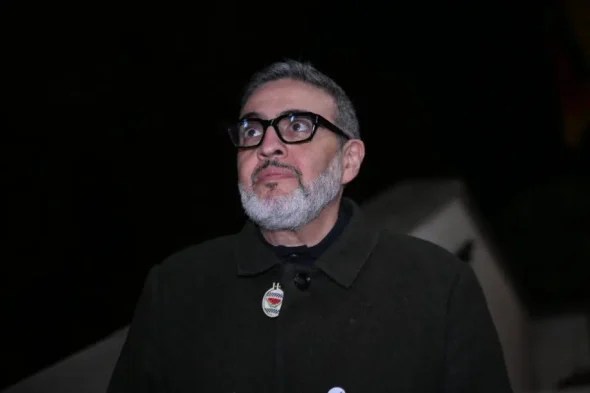
Prominent Palestinian reconstructive surgeon and academic Dr Ghassan Abu Sittah has won a misconduct case brought against him by pro-Israel lobbyists, in what campaigners have described as a major blow to the UK’s Israel lobby and its use of lawfare to silence critics of Israel’s assault on Gaza.
On Friday, the Medical Practitioners Tribunal Service (MPTS) dismissed a two-year-long General Medical Council (GMC) case against Abu Sittah, concluding that there was no evidence that his writing or social media activity supported terrorism, anti-Semitism or violence.
“WE WON”, said Abu Sittah on X following his victory over UK Lawyers for Israel (UKLFI).
“The General Medical Council Tribunal has thrown out the complaint made by UK Lawyers for Israel, accusing me of support of violence and terrorism and antisemitism”.
The case stemmed from complaints lodged in 2023 by UKLFI, a notorious pro-Israel pressure group that has repeatedly targeted activists, academics and professionals who speak out for Palestinian rights.
The complaint centred on an article written by Abu Sittah in the Lebanese newspaper Al Akhbar and two reposts on X, which UKLFI alleged had “impaired his fitness to practise”.
The tribunal found that an “ordinary reader” would not interpret the material as providing material or moral support for terrorism, nor as endorsing violence. It also ruled that there was no intent on Abu Sittah’s part to promote violence or hatred, leaving no basis for a finding of misconduct.
Abu Sittah, a Kuwait-born British Palestinian plastic and reconstructive surgery consultant and rector of the University of Glasgow, said the case was part of a broader strategy of intimidation aimed at silencing pro-Palestinian voices.
“This complaint forms part of a broader lawfare strategy which aims to instrumentalise regulatory processes to intimidate, silence and exhaust those who speak out against injustice in Palestine,” he said. “I do not, and have never, supported violence against civilians. I know too well its consequences.”
Abu Sittah spent 43 days in Gaza during Israel’s initial assault in October 2023, working at Al-Ahli, Al-Shifa and Al-Awda hospitals. He has repeatedly spoken publicly about the mass civilian casualties he treated, including children with catastrophic injuries, and has accused the Israeli military of using white phosphorus and deliberately targeting civilians.
The case was supported by the International Centre of Justice for Palestinians (ICJP), whose director, Tayab Ali, described the ruling as a “complete vindication”.
“For months, Dr Abu Sittah was shamelessly targeted by pro-Israel lobby groups through a sustained campaign of lawfare,” Ali said. “The serious allegations advanced against him have now been entirely rejected.”
The ruling comes amid growing scrutiny of UKLFI’s tactics. The European Legal Support Center (ELSC) and the Palestine Institute for Public Law and Counsel (PILC) have filed a formal complaint with the Solicitors Regulation Authority (SRA) against UKLFI director Caroline Turner.
The complaint alleges the use of Strategic Lawsuits Against Public Participation (SLAPPs), breaches of professional conduct rules and misleading claims about regulatory oversight. It also calls for an investigation into whether UKLFI is effectively operating as an unregulated law firm.
The complaint details eight threatening letters sent by UKLFI between 2022 and 2025, which ELSC says demonstrate a pattern of vexatious and legally baseless intimidation aimed at shutting down Palestine solidarity efforts. Campaigners argue that these tactics have contributed to workers being disciplined or dismissed, events being cancelled and activists being smeared.
Abu Sittah’s victory also fits into a wider pattern of setbacks for pro-Israel efforts to suppress dissent in the UK. In December, a court quashed a summons issued against comedian Reginald D Hunter. The judge in the case said Campaign Against Antisemitism (CAA) misled him when bringing a private prosecution against the comedian.
Satellite images reveal extensive bulldozing of rubble in Beit Hanun amid signs of broader plans
Palestinian Information Center – January 12, 2026
GAZA – An analysis conducted by Al Jazeera of satellite images has revealed that the Israeli occupation army has carried out large-scale operations to remove the rubble of destroyed homes in the city of Beit Hanun, in the northern Gaza Strip, raising fundamental questions about the objectives of these actions and whether they are limited to security considerations or extend to broader plans.
The analysis relied on high-resolution satellite images captured between October 8, 2025, two days before the start of the ceasefire in Gaza, and the most recent images dated January 10 of the current year. These images show the continued bulldozing and removal of rubble in devastated neighborhoods, particularly in the Al-Boura area and along the outskirts of Al-Masriyin and Al-Na’ayma streets in northeastern Beit Hanun.
Geographic measurements indicate that the area from which home rubble was removed, along with land that was leveled, amounts to approximately 408,000 square meters, roughly 100 acres. The number of homes whose rubble was cleared is estimated at around 329, in addition to agricultural structures, rooms, and property belonging to farmers in an area considered one of the city’s agricultural zones.
The images also show bulldozers operating among the destroyed homes undergoing debris removal, within a zone that includes several active and inactive Israeli military positions.
The data suggest that the rubble-removal operations began at the start of Beit Hanun’s urban boundary, adjacent to the security fence separating it from nearby Israeli settlements close to the northern border, including the settlement of Sderot.
These scenes contradict recent statements by the Israeli army reported by the newspaper Yedioth Ahronoth regarding the purpose of “recruiting” civilian tractors belonging to settlers in the Gaza envelope for use inside the Strip, including in Beit Hanun.
According to the newspaper, the army explained that it had borrowed these tractors for a military unit to carry out tasks behind the border aimed at improving visibility by removing dense vegetation, clearing shrubs, and leveling the ground, without mentioning the removal of rubble from hundreds of homes.
The Israeli army also denied that the purpose of these works was to prepare Palestinian land for Israeli agricultural needs.
The use of agricultural equipment belonging to settlers inside the Gaza Strip is considered unprecedented since 2005. The newspaper noted that the Israeli army’s Southern Command had previously expressed reservations about such a step.
Beit Hanun lies at the extreme northern edge of the Gaza Strip within what are known as the “zero zones,” areas under full Israeli military control. The city has suffered unprecedented levels of destruction due to continuous bombardment and bulldozing over two years of war, including during the ceasefire period, and its residents have only been able to return for short, partial periods.
In the same context, Israel has not concealed its settlement intentions in the Gaza Strip. References to Beit Hanun have repeatedly appeared in speeches and slogans by leaders of the far-right within Prime Minister Benjamin Netanyahu’s government.
In January 2024, ministers and Knesset members from the ruling coalition signed what was termed the “Charter of Victory and the Renewal of Settlement in the Gaza Strip and Northern Samaria” during a conference held in Jerusalem, where a map was displayed showing planned settlement points, including a settlement nucleus on the outskirts of Beit Hanun.
In December of the same year, ministers and Knesset members visited a site overlooking the Gaza Strip from the settlement of Sderot and discussed establishing settlements inside it. Meanwhile, Hadar Bar-Hai, director of a settlement group, stated that Beit Hanun and Beit Lahiya are uninhabited areas, affirming that more than 800 Jewish families are ready to settle immediately once permitted.
Last December, Israeli Army Minister Israel Katz made statements about the future of the Gaza Strip, revealing during a conference at the settlement of Beit El a plan to establish military-agricultural “Nahal nuclei” in northern Gaza, asserting that Israel “will never withdraw and will never leave Gaza.”
Katz described these bases as an alternative to the settlements evacuated in 2005, prompting discontent within the US administration, which demanded clarifications, viewing the plan as contradictory to US President Donald Trump’s plan to end the war.
Meanwhile, the Israeli army continues, in parallel, to demolish homes and expand its areas of control within what is known as the “Yellow Line” in the Gaza Strip, including leveling thousands of dunams of land and residential buildings.
The ceasefire agreement ended a genocidal war launched by Israel against Gaza Strip on October 8, 2023, which lasted two years and resulted in more than 71,000 Palestinian martyrs and over 171,000 wounded, in addition to widespread destruction affecting nearly 90% of civilian infrastructure. The United Nations has estimated the cost of reconstruction at approximately $70 billion.
Featured Video
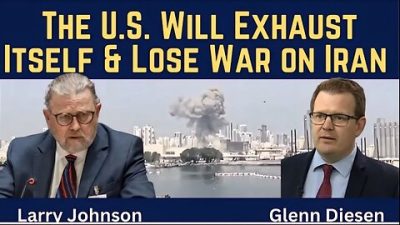
Larry Johnson: The U.S. Will Exhaust Itself & Lose War Against Iran
or go to
Aletho News Archives – Video-Images
From the Archives
Revealed: Israel’s hidden history of attacks on Iran
By Robert Inlakesh | MintPress News | April 17, 2024
Iran’s retaliatory attack on Israel was framed in the West as a reckless attempt to spark a major regional war, but in reality, Israel has been attacking Iran for decades.
As is routinely the case with Western-backed wars, the corporate media’s timeline begins at the moment that suits their narrative. We have seen this play out recently, with the attempt to rob the Gaza war of all contexts before October 7, 2023. Similarly, when it comes to Israel’s conflict with Iran, the two have been embroiled in what is referred to as a “shadow war,” the details of which are pretty shocking. … continue
Blog Roll
 Aletho News
- Hormuz Strait: Iran’s Strategic Trump Card for Forcing Enemies to the Negotiating Table
- Trump bit off more than he can chew with Iran – ex-Pentagon analyst
- Murdering Khamenei Will Kill Trump’s Presidency
- Unexpected Iranian reaction paralyzed Americans and Israelis on the first day of war
- Larry Johnson: The U.S. Will Exhaust Itself & Lose War Against Iran
- In The Name of ‘Helping Iran’, The U.S. And Israel Slaughter Over 100 Iranian Schoolgirls
- Why are Americans killing and dying for Israel, again?
- Timing of US-Israel attack on Iran bears symbolic meaning in Judaism
- 70 martyrs, 90 wounded in US-Israeli strike on elementary school
- Did Israel Just Forfeit Its ‘Right To Exist’? — Carlson’s Interview with Huckabee
- If Americans Knew
- When Presbyterians Fought Christian Zionism
- Israel starts another war on Iran – Not a ceasefire Day 141
- ‘Terror Was Needed to Make Arabs Leave’: What the Israeli Army Did in 1948, Revealed
- 17,000 Unaccompanied Orphans in Gaza, in World’s Biggest Orphan Crisis
- Israeli leaders want to buy global legitimacy – Not a ceasefire Day 140
- Israel warns of a Ramadan escalation — while doing everything to provoke one
- Democrats Should Release Their 2024 Election Autopsy – and Stop the Gaza Denial
- Israel responsible for 2/3 of press killings worldwide – Not a ceasefire Day 139
- Are the Jews indigenous to Palestine?
- AIPAC Wants to Kill a Bill that would Ensure Israel Complies with Ceasefire
- No Tricks Zone
- Glaciers Worldwide Are Suddendly Surging, Experts Blame Warming!
- Surprising Discovery: Sahara Is Greening…Billions Of Trees Where Once Thought To Be Barren
- New Research Reaffirms Clouds, Aerosols, And Surface Solar Radiation Are ‘Driving The Climate System’
- Germany: Electric Car Catches Fire At Charging Station, Sets Off Local “Inferno”, Widespread Damage
- New Study: Canada’s New Brunswick Was 1°C Warmer Than Today During The Medieval Warm Period
- Coal Power Back In Trend As Globe Tries To Keep Pace With Growing Demand For Power
- New Study: A 4°C Warmer Beaufort Sea Had ‘No Sea Ice’ 11,700 – 8200 Years Ago
- Unfudging The Data: Dutch Meteorological Institute Reinstates Early 20th Centruy Heat Waves It Had Erased Earlier
- German Gas Crisis…Chancellor Merz Allegedly Bans Gas Debate Ahead of Elections!
- Pollen Reconstructions Show The Last Glacial’s Warming Events Were Global, 10x Greater Than Modern
 Aletho News