Swiss probe links Ali Abunimah detention to Israeli political pressure
Al Mayadeen | November 17, 2025
A Swiss parliamentary investigation has revealed that the detention and expulsion of Palestinian-US journalist Ali Abunimah in January were the result of political interference and undisclosed ties between senior Swiss officials and Israeli interests. The findings have raised alarms about institutional bias and shrinking space for Palestine advocacy in Europe.
The Control Commission of the Council of States released its report last week, confirming that Nicoletta della Valle, then-head of Switzerland’s federal police agency (Fedpol), personally intervened to impose an entry ban against Abunimah. The decision, investigators found, “deviated from standard practice” and was implemented in a manner they described as “unsatisfactory” and “particularly problematic.”
Abunimah, the executive director and co-founder of The Electronic Intifada, had entered Switzerland legally and was scheduled to speak at a public event before being detained without warning by plainclothes officers. He was held incommunicado for three days and deported without due process.
Della Valle’s ties to Israeli interests raise conflict concerns
The report detailed how Zurich police initially requested a ban before Abunimah’s arrival. Fedpol rejected the request after consulting intelligence and immigration agencies. However, following a phone call from the commander of Zurich’s cantonal police, della Valle reversed that decision, without new evidence, and verbally instructed her staff to enforce the ban after Abunimah had already entered the country.
Critics have pointed to Della Valle’s post-retirement role at Champel Capital, an Israeli investment firm with ties to high-ranking Israeli officials, including Major General Giora Eiland and politician Amir Weitmann. Both men are known for advocating extreme measures against Gaza and its population. Della Valle’s name has since been quietly removed from the firm’s website.
Abunimah said the findings confirmed that “serious irregularities and abuses of power” were carried out to suppress public criticism of “Israel’s” genocide in Gaza. He noted that the entry ban violated basic democratic rights and was politically motivated.
UN experts condemn growing restrictions on Palestine advocacy
International human rights bodies have condemned Abunimah’s detention and broader crackdowns on critics of the Israeli occupation in Europe.
Francesca Albanese, the UN Special Rapporteur on the Occupied Palestinian Territories, warned at the time of a “toxic climate” for freedom of speech, while UN Special Rapporteur on Freedom of Expression, Irene Khan, called the repression of Palestinian voices “alarming” and “unjustifiable.”
The parliamentary report reconstructs a clear pattern of intervention. Authorities confirmed that Abunimah posed no threat, but the entry ban was forced through via irregular backchannel influence. Della Valle’s personal directive to override procedural safeguards has become the centerpiece of a growing scandal.
Swiss Zionist lobbying under scrutiny following revelations
The case has intensified scrutiny of Swiss institutions and their connections to Zionist lobbying networks. Switzerland hosts a wide range of organizations affiliated with the global Zionist movement, including the Swiss Zionist Federation, KKL-JNF, Keren Hayesod, and the Jewish Agency’s Swiss branch, all of which have supported illegal settlement activity and lobbied for policies targeting Palestinian advocacy.
Parallel groups, such as the Switzerland-“Israel” Society (GIS), the Swiss Federation of Jewish Communities (SIG), and CICAD, as well as newer outfits like NAIN, have pushed for bans on the Palestinian Resistance in Gaza, cuts to UNRWA funding, and efforts to equate anti-Zionism with anti-Semitism.
Observers say these organizations shape political narratives and influence policymakers, enabling state repression of pro-Palestinian voices under the guise of combating hate speech.
Legal challenge underway
Abunimah is now taking legal action in Zurich and at the federal level, with his legal team preparing further filings based on the parliamentary commission’s findings. His case has become emblematic of growing concerns about freedom of expression in Europe and the ability of foreign-linked networks to suppress dissent through state institutions.
“These grave violations of democratic and human rights were carried out to prevent me from speaking at lawful public events, organized by Swiss citizens and residents, calling for an end to ‘Israel’s’ genocide in Gaza,” Abunimah said in a social media post.
Germany lifts arms export restrictions to ‘Israel’
Al Mayadeen | November 17, 2025
The German government announced it will lift restrictions on arms exports to “Israel,” a move set to take effect on November 24. The decision follows what Berlin described as a “stabilized” ceasefire in Gaza that has been in place since October 10.
Government Spokesperson Sebastian Hille confirmed the move, stating, “The restrictions on arms exports to Israel… will be lifted.” Hille added that the decision comes after reassessing conditions on the ground, claiming expectations for adherence to the ceasefire and the delivery of humanitarian aid.
The original suspension, introduced in August 2025, was framed by Chancellor Friedrich Merz as a response to “Israel’s” declared plans to occupy Gaza City, which he said complicated the justification for continued arms transfers.
At the time, Merz noted that it was “increasingly challenging” to reconcile the stated objectives of disarming Hamas and freeing captives with the military escalation.
Surge in exports since October 2023
Following the start of the war in October 2023, German arms exports to “Israel” surged dramatically. While export approvals in 2022 amounted to roughly €32 million, by October 2023, licenses worth €203 million had been greenlit, €198.68 million of which came after October 7.
Between October 2023 and May 2025, Germany approved €485.1 million worth of arms exports to “Israel,” covering everything from firearms and ammunition to tank engines, electronic systems, and naval equipment. These transfers filled critical gaps for “Israel,” especially as US manufacturers were strained by military commitments to Ukraine and European partners.
Germany became “Israel’s” second-largest arms supplier after the US, accounting for about one-third of its military imports during this period.
August ban: Loopholes, legal theater
The August 2025 announcement of halting military equipment exports appeared to mark a turning point, but closer scrutiny revealed that the so-called ban excluded existing contracts, which continued to be fulfilled.
Critically, the same day the halt was announced, Germany approved a €500 million export license for the INS Drakon, a Dolphin-class submarine. Government lawyers would later argue that the license had been approved earlier, despite evidence to the contrary.
Other loopholes also weakened the suspension’s impact. The restriction only applied to items “clearly usable in Gaza,” leaving space for shipments ostensibly intended for other regions. Additionally, German firms like Renk AG and Sig Sauer immediately explored relocating production to the US to bypass restrictions.
Between August 8 and September 13, Germany issued no new approvals. But within the next nine days, €2.46 million in “other military goods” was approved. Compared to the €250 million authorized between January and early August 2025, the actual disruption was minimal.
Despite mounting domestic pressure, 73% of Germans favored tighter arms controls, and over 30 NGOs demanded a full embargo. German courts routinely dismissed legal challenges to the exports, citing plaintiffs’ lack of standing and the confidential nature of licensing decisions.
A return to status quo
Despite headlines about a policy shift, the August suspension did little to interrupt Germany’s arms pipeline to “Israel”. Existing contracts were honored throughout the 108-day suspension. Critics, including the BDS movement and human rights groups, labeled the suspension a public relations gesture rather than a genuine policy change.
As of late November, Germany will resume full military cooperation with “Israel”, reaffirming what many see as its enduring commitment to the doctrine of Staatsräson, the idea that “Israel’s” security is a cornerstone of German foreign policy, irrespective of the legal and humanitarian implications.
Turkish Hercules Crashes on Azerbaijan-Georgia Border
By Alexandr Svaranc – New Eastern Outlook – November 17, 2025
Unfortunately, airplane crashes are becoming a common feature of our time that leads to human casualties. Such incidents are caused by technical failures, human error, or external interference. It seemed nothing foreshadowed the destruction of the Turkish C-130 military transport aircraft, but…
Why did the Turks fly to Azerbaijan, and what happened on the journey back?
Türkiye is a strategic ally of Azerbaijan and made an exceptional (military and political) contribution to the success of the Azerbaijani side in the Second Karabakh War.
Incidentally, after 2020, Türkiye, Israel, and a few others began competing over who provided more support to Azerbaijan and played the key role in Baku’s victory. In the fall of 2024, President Recep Tayypi Erdoğan, verbally threatening Israel and the West with a “night invasion” by the heirs of Ottoman askeri, repeatedly recalled Türkiye’s experience in Nagorno-Karabakh. For instance, on the eve of Israel’s invasion of Lebanon, as reported by the Turkish publication Al Ain Türkçe, Erdoğan stated: “Türkiye can enter Israel just like it entered Karabakh and Libya. We will do the same to them. There is no reason not to do it. We just need to be strong so we can take these steps.”
In turn, President Ilham Aliyev publicly tried to convince everyone that, allegedly, nobody provided military assistance to Azerbaijan and that he alone secured the victory. Nevertheless, Baku always emphasized the moral and political support of Türkiye and Pakistan.
On the Israeli side, certain people, e.g., blogger Roman Tsypin, express a certain resentment in this regard. Tsypin believes that the decisive role in Azerbaijan’s military success in Karabakh belongs to Israel, thanks to its weapons, specialists, and medical assistance. However, Aliyev did not invite Netanyahu to the parade celebrating the 5th anniversary of the victory (although on November 8 he demonstrated his army’s power, equipped predominantly with Israeli weaponry: the Harop loitering drone and the Orbiter mini UAV, the Lora long-range tactical ballistic missile system, etc.). The Israeli expert forgot, however, to mention how Aliyev could have invited Netanyahu to Baku if seats on the podium next to him were “reserved” for Israel’s sworn enemies, namely Erdoğan and Sharif?
A group of Turkish military personnel arrived in Baku along with Turkish President R. Erdoğan (including an F-16 flight group with the Chief of the Air Force Staff, Sergeant Major General Ilker Aykut) to attend the parade at Azadliq Square on November 8. The group of the Turkish Air Force in F-16 fighters, which have been stationed at the Ganja airbase since the summer of 2020, participated in demonstration flights in the sky over the Azerbaijani capital, demonstrating Turkic solidarity and collective strength. But the celebration ended, and it was time for the guests to depart.
Groups of officers and technical staff of the Turkish Air Force who participated in the Baku parade returned home in two groups. The first group completed the journey as planned. The second group, consisting of 20 people, was returning on November 11 on a C-130 Hercules military transport aircraft (tail number 68-1609) from Ganja, which had delivered spare parts and technicians for servicing the F-16s to Azerbaijan. However, in Georgia, in the Signagi area, very close to the border of brotherly Azerbaijan (5 km), the Turkish military aircraft disappeared from radars 27 minutes after takeoff and reaching cruising speed, unexpectedly went into a spin, and crashed. The entire crew of 20 people perished (including the Chief of Staff of the Turkish Air Force, Sergeant Major General Aykut). What happened?
Probable causes and speculation
Regarding this aviation accident, Georgian law enforcement agencies initiated a criminal case under the article on violation of air transport safety rules resulting in death. Search and rescue operations were conducted at the scene, the bodies of the deceased Turkish military personnel were found, and the black boxes were delivered to the Kayseri airbase for a subsequent investigation into possible causes by Turkish specialists.
Recep Erdoğan called this tragedy a “heavy blow for the country,” demanding its cause be thoroughly investigated by examining all versions, and also called on the public for political vigilance, to avoid panic, and to exclude all speculation regarding assumptions about the military aircraft’s crash.
According to data from the Turkish newspaper Sözcü, the Turkish Air Force aircraft had a history of over half a century (57 years); it was manufactured in 1968 and initially served in the Saudi Arabian Air Force. In 2010, it was purchased for the Turkish Air Force and included in the 222nd “Rhinoceros” Squadron of the 12th Air Base in Kayseri, and in 2020, it underwent a scheduled major overhaul. Lockheed C-130 Hercules aircraft have been in service with Türkiyr since the 1960s and are considered the most reliable in their class. However, many of them have reached the end of their service life (50-60 years), are possibly technically obsolete, and recently (in October), the Turkish Ministry of Defense announced plans to replace the outdated C-130s with new C-130J Super Hercules models.
Theories regarding the incident’s causes may be split into three categories: technical malfunctions, human factors, and external impact.
In an interview with Milliyet, Turkish security expert Joshkun Bashbug ruled out pilot error, as the aircraft’s pilot was an experienced pilot, the flight took place during the day, the crew was well-rested, the technical personnel of the Turkish Air Force are professionally “one of the best in the world,” and the weather was good. In other words, the Turkish expert confidently denies human error.
Regarding technical malfunctions of the aircraft, considering its long service life, expert opinions differ. Video footage of the crash online shows the Turkish C-130 falling like a rock without its nose and tail sections. Former C-130 pilot Bulent Borali, in an interview with the Turkish TV channel A Haber, suggested that the rupture in the aircraft’s fuselage could be related to “corrosion, rust, or oxidation of the outdated metal,” or that the special cargo in the cabin was not properly secured and broke loose during flight, destroying the airframe.
However, this particular aircraft was, firstly, serviced by a highly qualified technical group of the Turkish military. Secondly, if the special equipment being transported shifted during turbulence, it could have torn off the tail section, but how did it damage the cockpit? Thirdly, the C-130 is not a supersonic aircraft by design and was not in critical flight conditions (i.e., it did not experience overloads, which, according to Russian military expert Alexey Levonkov, does not indicate wear and “metal fatigue”). Due to the absence of fire during the fall and smoke coming from the wings, Levonkov does not rule out technical issues in the C-130’s four engines.
As for suggestions of external impact, a variety of versions – even mystical ones – have emerged. Among Turkish experts, there is an opinion that the aircraft could have been shot down. In particular, this is noted by expert Abdulkadir Selvi of the Turkish newspaper Hürriyet.
Joshkun Bashbug does not rule out “a collision between two aircraft, sabotage, or any other attack.” Considering the unstable nature of the Caucasus and the absence of a peace between Azerbaijan and Armenia, his colleague Ibrahim Keles did not exclude accidental (unintentional) external interference. Since the C-130’s flight route did not enter Armenian airspace and ran directly from Azerbaijan to Georgia, but crashed 5 km from the border, the Azerbaijani air defense systems located in the border area may have been automatically activated, failing to recognize the friend-or-foe system, and become the cause of the lethal fire.
It should be noted that President Aliyev was the first foreign representative to offer his condolences to Erdoğan and express readiness to provide all possible assistance in search and rescue operations and the investigation of the incident. The prompt reaction of the Azerbaijani leader is, of course, primarily related to special relations with Türkiye. Meanwhile, there is obviously a moral aftertaste that the tragedy happened in connection with the invitation to the victory parade over Armenia in Karabakh (the war itself ended on the night of November 9-10, but for some reason Aliyev held the parade on November 8). Finally, President Aliyev has often been the first to express condolences when similar aviation tragedies occurred (for example, the downing of a Russian military helicopter on November 9, 2020, in the sky over Armenia by an Azerbaijani missile from Nakhchivan, or the crash of an Iranian military helicopter on May 19, 2024, carrying Iranian President Raisi after returning from a meeting with Aliyev in Nakhchivan).
The host of the Armenian publication ProArmenia, Nver Mnatsakanyan, notes that some Azerbaijani media outlets have begun spreading unbelievable versions about the causes of the Turkish plane’s crash in the sky over Georgia. An opinion is being floated (for example, by military expert Abuzer Abilov) about the alleged involvement of a Russian missile launched from the 102nd military base in Gyumri (Armenia), supposedly due to the recent escalation of Russian-Azerbaijani relations. But why would Russia so primitively spoil such effective partner relations with Türkiye, which has effectively become our “southern gateway” to Southeastern Europe against the background of SMO-related sanctions?
Finally, in Armenia itself, a number of experts (Araiyk Sargsyan, Vladimir Poghosyan) believe that the main cause of the Turkish C-130 aviation tragedy is mysticism—divine wrath in response to the aggression and mass deportation of the Armenian population of Karabakh—that it is revenge for the 4,000 dead soldiers for the shameful attack by the anti-Armenian coalition. Let us leave mysticism to mystics.
However, considering that the Armenian authorities are making all conceivable and inconceivable concessions in favor of Azerbaijan and Türkiye, expressing readiness to restore interstate relations and open communications, there is great dissatisfaction with Armenian Prime Minister Nikol Pashinyan’s policy. Today, it is unlikely that the Armenian special services, which are under Pashinyan’s strict control, are capable of and would engage in sabotage operations against the Turkish-Azerbaijani tandem and drag the republic into another provocation and catastrophe. But nobody can rule out the involvement of special services of interested foreign states (for example, from Middle Eastern and Asian countries) and radical representatives of the Armenian opposition.
If there was any external damage (or an explosion inside the aircraft), then the technical expertise should reveal its trace and mechanism. I hope a thorough investigation by the Turkish side will reveal the true causes of the tragedy, which, in peacetime, is especially regrettable.
Alexander SVARANTS, Doctor of Political Sciences, Professor, Turkologist, expert on Middle Eastern countries
Red ribbons in London: A silent uprising bringing Palestinian hostages back into view
By Adnan Hmidan | MEMO | November 16, 2025
Walking through Westminster, in the quiet rush of central London, flashes of red caught my attention — ribbons tied to lampposts, railings, and street fixtures. They were not adverts or campaign posters, but dense, symbolic gestures: spontaneous in form, unmistakable in meaning. They returned to public sight faces that have long been hidden behind prison walls — Palestinian hostages abducted by the occupation from homes and hospitals, held without trial under a system that resembles nothing but the law of the jungle.
These ribbons seemed like individual efforts, small and uncoordinated, yet unified in what they were trying to say: that the Palestinian hostage file remains locked in darkness, despite being one of the most devastating human crises. Thousands have been torn from their lives with no charges, no legal process, no daylight.
Of the nearly 9,100 Palestinians currently detained, it is estimated that almost a third are effectively treated as hostages; abducted and denied even the bare minimum of legal rights or guarantees.
A language that must reclaim its meaning
For years, the word “prisoner” has been used broadly. But what the occupation practises is not detention — it is abduction. People are taken from their beds or hospital rooms and disappear for indefinite periods, without charges, court hearings, or the most basic procedural rights.
The figures alone reveal the scale of the crisis:
3,544 held under administrative detention without trial
400 children
53 women
16 doctors
117 Palestinian hostages killed in the past two years alone during the genocide in Gaza
These individuals cannot honestly be called “prisoners.” They are hostages in every legal and moral sense — seized outside any legitimate framework by a state whose own foundations rest on dispossession and violation.
Red… a colour that bears witness, not beauty
The choice of red is self-explanatory. It is the colour of spilled blood, of injustice endured, of wounds that never fully heal.
These ribbons may hang quietly across London, but the question they raise is anything but quiet:
How can thousands of people be abducted in this way, while the world remains unable — or unwilling — to see them?
No one is asked to lead a campaign or become an activist. What is needed is recognition, a wider awakening to a file packed with human lives, daily suffering, families searching, and children growing up in absence.
Stories hanging from lampposts… so memory does not fade
Seeing the ribbons brought back the painful stories that fill this file:
The child pulled from his bed because soldiers deemed him a “threat,”
The woman taken from her home in front of her children,
The doctor who vanished from an operating room and never returned,
Those subjected to torture and enforced disappearance,
And the testimonies of rape and sexual abuse recently documented by international organisations.
These stories need no embellishment; their truth is weight enough. They also echo Steve Biko’s famous line:
“The most potent weapon in the hands of the oppressor is the mind of the oppressed.”
These red ribbons feel like a modest attempt to unsettle that weapon.
Catherine Connolly’s victory: Europe’s moral rebellion against the Israeli occupation
When execution becomes a celebration
It is difficult to grasp that the occupation’s National Security Minister, Itamar Ben-Gvir, celebrated inside the Knesset after passing a law permitting the execution of Palestinian detainees.
More troubling still is how easily such a moment can pass as a routine political step — as though it were merely another debate rather than a descent into deeper, institutionalised brutality.
When a state legalises killing those it has abducted without trial, imprisonment ceases to resemble detention. It becomes just one point on a chain that runs from abduction to torture to death.
The rising number of Palestinians dying inside Israeli prisons is not an exaggeration — it is an expanding reality.
Preserving memory before preserving the body
Red ribbons do not claim to liberate anyone, nor do they replace political or legal work. But they accomplish something essential: they return faces to public view and stop stories from being buried in darkness.
The Palestinian hostage file needs wider adoption and genuine engagement. It is a file overflowing with pain and heavy with violations, yet among the least addressed internationally.
Ribbons cannot break iron bars.
But they can remind the world that behind every statistic is a human being waiting to be rescued from disappearance.
Justice begins when we choose to see.
And sometimes, the first step toward that justice is nothing more than a small red thread tied to a lamppost in a distant city.
Hamas, other factions urge Algeria to reject US Gaza forces resolution
Al Mayadeen | November 16, 2025
The Palestinian people are closely following developments over a US draft resolution on international forces in Gaza, with Palestinian leaders expressing hope that Algeria will take a firm stance against the measure, which they say undermines Palestinian sacrifices and aspirations.
A senior Hamas official told Al Mayadeen on Sunday that the Palestinian people are hoping for an “honorable stance” from Algeria in rejecting the US draft resolution regarding international forces.
The official added that Hamas has confidence that Algeria will oppose the resolution, which they said inflicts injustice on the sacrifices and aspirations of the Palestinian people, describing the anticipated Algerian position as a source of hope for Palestinians in preventing any new international trusteeship over Gaza.
Palestinian factions call on Algeria to stand for Gaza at UNSC
Meanwhile, Palestinian Resistance factions in Gaza issued a statement expressing deep concern over the ongoing efforts at the United Nations to pass a US draft resolution proposing the deployment of international forces in the Strip. The factions described the resolution as a disguised attempt to impose a new form of occupation on Gaza and to legitimize foreign trusteeship of the Palestinian cause.
In the statement, the factions called on the Algerian government and people to maintain their long-standing principled support for Palestine and to reject any initiatives that would undermine Gaza’s identity or the right of Palestinians to self-determination. They described Algeria’s historical position on Palestine as a source of genuine hope for the Palestinian people and a reflection of the Arab world’s independent popular stance.
The factions stressed that any foreign intervention in Gaza, regardless of its title or justification, constitutes a “violation of Palestinian sovereignty and perpetuates the suffering of the local population.” They emphasized that lasting security and stability can only be achieved by ending the occupation, lifting the blockade, and respecting the inalienable rights of the Palestinian people.
Expressing confidence in Algeria’s supportive position, the statement urged all Arab and Muslim countries, as well as free peoples around the world, to stand against the US resolution and reject any form of foreign tutelage or intervention, defending Gaza’s right to freedom, dignity, and independence.
Trump considers skipping disarmament phase of Gaza plan amid deadlock: Report
The Cradle | November 16, 2025
The US is looking to “forgo” the stage of the Gaza ceasefire initiative, which involves deploying an international security force to the strip to disarm Hamas and other Palestinian resistance factions, Israeli media reported over the weekend.
The October ceasefire agreement remains in its first stage as talks continue to stall over the issue of Hamas’s disarmament and post-war administration of Gaza.
This potential change in US direction is causing ongoing negotiations to “deadlock,” an Israeli security source told Hebrew news outlet Channel 13.
The source said Washington is struggling to get commitments from countries to directly participate in disarming the factions.
As a result, it has started to look for “interim solutions, which are currently unacceptable to Israel.”
“This interim solution is the worst there is,” the source added, referring to the plan to forgo disarmament and skip ahead to reconstruction.
“Hamas has been strengthening in recent weeks since the end of the war. There can be no rehabilitation before demilitarization. It is contrary to Trump’s plan. Gaza must be demilitarized,” the Israeli source went on to say.
Channel 13 notes that there has been a collapse in ceasefire talks over Washington’s inability to form the international force – referred to in Donald Trump’s ‘peace plan’ as the International Stabilization Force (ISF).
The US recently submitted a draft for the establishment of the force, and is seeking UN backing to implement the plan along with the rest of Trump’s 20-point ceasefire initiative.
The draft includes a broad mandate for Washington to govern Gaza for at least two years. It also mentions that the ISF will be established in coordination with the Gaza ‘Board of Peace,’ which Trump will head.
Russia has proposed its own draft, which entirely removes the ‘Board of Peace’ clause and calls on the UN to identify “options” for the ISF.
The US draft is expected to be put to a vote at the UN on Monday. On 14 November, the US, Saudi Arabia, Qatar, Egypt, the UAE, Indonesia, Pakistan, Jordan, and Turkiye issued a joint statement backing the US draft. That day, Indonesia said it had readied 20,000 troops for the plan.
Arab and Islamic states have “leaned toward supporting the US draft because Washington is the only party capable of enforcing its resolution on the ground and pressuring Israel to implement it,” a source told Asharq al-Awsat, adding that there is “firm American intent to deploy forces soon, even if that requires sending a multinational force should Moscow use its veto.”
However, multiple reports in western and Hebrew media over the past several days have revealed an Arab unwillingness to directly force Hamas’s disarmament through a confrontation.
“Most countries that have expressed interest in participating in the ISF have said they would not be willing to enforce the disarmament … and would only act as a peacekeeping force,” Times of Israel wrote.
Israel’s Broadcasting Corporation (KAN) reported on Saturday that Tel Aviv is expecting the resolution to pass, and is preparing for the entry of thousands of foreign soldiers into Gaza.
Enemy plot against Lebanon similar to conspiracy imposed on Syria, says lawmaker
Press TV – November 16, 2025
A senior Lebanese lawmaker says his country does not need a new agreement given the fragile ceasefire that Israel repeatedly violates, warning that the occupying entity is devising a plot against Lebanon similar to the conspiracy imposed on neighboring Syria.
“Some in Lebanon insist on disarmament of Hezbollah and assert that the enemy will no longer have an excuse against Lebanon in case the resistance movement lays down arms,” Hussein Hajj Hassan, a member of Loyalty to the Resistance Bloc – the political wing of Hezbollah in the Lebanese parliament – said on Saturday evening.
“They believe the sole reason behind Israel’s aggression against Lebanon lies in Hezbollah’s weapons,” he said, adding that the plot the Tel Aviv regime is drawing up for Lebanon is akin to the conspiracy imposed on Syria.
“It involves creation of a buffer zone, continuation and expansion of the Zionist occupation, and destruction of the elements of power, not only the Hezbollah resistance movement, but also the government.”
Hajj Hassan noted that the talk of a new agreement with Israel is meaningless whilst the regime does not stand committed to the ceasefire deal concluded in November last year.
“The ceasefire agreement has been brokered by the United States and France, carries UN guarantees, and stipulates the withdrawal of Israeli forces from Lebanese territory, cessation of aggression, release of Lebanese prisoners, and reconstruction of the country. The need for a new deal is pointless, especially as the previous agreement has not been implemented at all by Zionist occupiers,” the Lebanese legislator said.
“Is there a resistance group and weapons in Syria? So why does the Zionist regime keep invading the country, occupying more land there, and affirming that it will not pull out?” Hajj Hassan questioned.
The Lebanese lawmaker highlighted that Syria’s ruling Hay’at Tahrir al-Sham (HTS) regime is allied to Washington, yet the Zionist regime is pressing ahead with its acts of aggression and occupation of Syrian territories.
“The more concessions you grant the Zionist enemy, the weaker you become. Hezbollah and national unity are the only guarantors of deterrence and defense,” he emphasized.
Israel and Hezbollah reached a ceasefire agreement that took effect on November 27, 2024. Under the deal, Tel Aviv was required to withdraw fully from the Lebanese territory—but has kept forces stationed at five sites, in clear violation of UN Security Council Resolution 1701 and the terms of last November’s agreement.
Since the implementation of the ceasefire, Israel has violated the agreement multiple times through repeated assaults on the Lebanese territory.
Lebanese authorities have warned that the Israeli regime’s violations of the ceasefire threaten national stability.
Israelis NOT Sweating Sde Teiman Rape!
Prosecutor’s ONLY Concern: Leaked Rape Tape Undermines Israel’s International Legal Impunity

By Ilana Mercer • Unz Review • November 15, 2025
There’s a reason I purposefully avoided mention of the fracas in Israel over the leaked Sde Teiman video, in the companion column to this one: “Rectal Raping of Palestinian Men Is Habitual In the Sexually Deviant, Serial-Killer State.”
You see, the Hasbara herd seems to have one gift, in Israel and stateside. They live in a self-reverential and self-referential world: They talk from under wet cement about … themselves. And, they are training you to do the same: talk about them.
As hard as it is for this lot to compute; the genocide, however, is about their victims, Israel’s victims, the Palestinians.
About the Sde Teima leaked rape tape, suffice it to say the following: Like the Hostage Square demonstrators in Tel Aviv, whose concern was exclusively for only their hostages; the same Israeli society is not unhappy about crimes against Palestinians; but that one such crime had been made public to the detriment of their criminally complicit countrymen.
More so than mere publicity—after all, Israel is conducting genocide to a packed house, the world—Israel’s military advocate general worries that the leaked Sde Teiman footage will undermine Israel’s international legal impunity.
The case of the rectal-rape-with-objects of a Palestinian hostage, one among thousands held in the legal limbo of detention-without-trial, was leaked by the Military Advocate General’s office (MAG), whose apparatchiks had heretofore never expressed—nor acted to convey—regret, remorse, contrition, or penitence over the genocide ongoing. (So you know, Israel has merely shifted to “genocide lite” and to the “ghettoization” of the Strip.)
There are no nettles of conscience in the genocidal society. The on-camera rape has just become a PR (public relations) problem. Unless the world’s yelling can be quelled, Israel’s legal representatives fear for the country’s legal impunity, which is meant to last in perpetuity.
Like all shouting scraps in Israel, this one is entirely without an ethical or moral dimension. The leak of the filmed rape is but a procedural, administrative annoyance, the “Minister of Defense and many others in the political sphere and public discourse,” even claiming that any criminal proceedings constitute a “blood libel.”
At about this time, Israeli think-tank residents are fretting. As the Israel Democracy Institute (IDI) put it (in all sincerity), it is imperative to preserve “Israel’s legal and diplomatic ‘resilience’ internationally, and thus … our ability to protect IDF (Israel Defense Forces) service members from legal risks around the world.”
If the IDF justice system, headed by the [aforementioned] MAG [Military Advocate General], is not perceived as professionally independent, Israel will struggle to argue that there is no place to advance overseas legal proceedings against soldiers and commanders alleged to have violated the law of armed conflict, and that the Israeli justice system should be given primacy in handling suspects. (IDI)
Cloaking themselves in the raiment of decency, the code-word for “impunity” in Israeli think tanks is “resilience.” The country must remain “resilient” internationally. Bathed in blood though it is; Israel and its military advocate general still want continued carte-blanche from the international community for their crimes. Hence the Brownian motion over the public rape of a Palestinian hostage.
Again, the leaked Sde Teiman tape threatens Israel’s legal impunity which is meant to last in perpetuity.
Let us, then, end forthwith conversation about Israel’s two-bit Kabuki players. We who inhabit the Global Genocidal Western Woke matrix have a responsibility to help pilot Palestinians through these dangerous shoals. Or, support those who are doing that work. Let’s, then, return to the resilient victims of the genocidal entity, the Palestinians.
Early in the genocide, in essays that provide a comprehensive chronology of the signal events, the people violated and the first principles flouted, I had picked up on—and postulated about—the seemingly systematic nature of the sexual sadism evinced by Israel’s army and security forces.
Palestinians are “living alongside serial-killing sexual sadists,” I remarked in a subsection of the essay, “Why The Israel-Occupied Levant Must be Liberated, S.O.S.,” further noting that “the pairing of sexual arousal and violence toward Palestinians, in the practices of the IDF and Israeli Security Forces, makes for a particularly irremediable pathology, the stuff of serial killers.”
As though Israel was not already outside all moral gravitational pull—the evidence for my deductions is now in. What we’ve known to be deductively true has been empirically confirmed. The social science is in: Palestinians are sexually brutalized by Israeli occupation forces!
If you had lingering doubts that sexual perversion and predation by the Israeli military and security forces is systemic and statistically significant—new social science nixes that naïve notion.
Incidents of sexual torture are not outlier cases. The Israel Occupation Forces are indeed a festering cauldron of serial-killing sadists and sexual deviants. Helpless Palestinians are the repository of this rot.
Having investigated the phenomenon and tabulated the results; the UN International Commission of Inquiry has revealed that rape, genital mutilation—of men, women, boys and girls—exhibitionism (public flashing); all the sexual perversions and paraphilias I had picked up on—are systemic, pervasive, carried out happily, seemingly ordained from above. No crime is a “one-off.”
“Israel uses sexual violence as a weapon of war,” concludes the Independent International Commission of Inquiry on the Occupied Palestinian Territory, writing, on March 13, 2025, that,
The frequency, prevalence and severity of sexual and gender-based crimes perpetrated across the Occupied Palestinian Territory leads the Commission to conclude that sexual and gender-based violence is increasingly used as a method of war by Israel to destabilize, dominate, oppress and destroy the Palestinian people. The Commission documented a pattern of sexual violence, including cases of rape and other forms of sexual violence, torture and other inhumane acts that amount to war crimes and crimes against humanity.
Section number 222 of the report’s summary states that, “Israeli detention is characterized by widespread and systematic abuse and sexual and gender-based violence. These practices have increased significantly in severity and frequency since 7 October 2023, following orders and statements of the Minister for National Security Ben Gvir who is in charge of prisons. The mistreatment of Palestinian detainees by Israeli authorities is a result of an intentional policy that utilizes sexual, reproductive and other forms of gender-based violence to humiliate and degrade Palestinians in detention. This was observed across several facilities, temporary holding locations, during interrogation and while in transit.”
These Israelis are men and women of cold violence. Their hearts are as black as boot polish. The brutalized bodies of Palestinian men, women, and children; their pets and livestock bear this out. But broad-brush statements aggregating their practices are not enough.
Daily, the Palestinians’ closest neighbors, the settlers, make manifest their red-hot hatred toward them, stealing private Palestinian property, vandalizing installations on this land, regularly slaughtering helpless livestock with biblical cruelty (watch settlers gouge the eyes out of helpless lambs), and generally menacing Palestinian property owners. Most disturbing is the overt, perverted threat of sexual violence from settlers and their soldier helpers.
Indeed, the poisonous cabal of Israeli settlers and soldiers works cheek by jowl.
In “Holy Redemption: Stealing Palestinian Land,” a TRT World exclusive documentary, there is no editorializing. The videographers plainly followed and recorded these settlers in character. Twenty-nine minutes and 20 seconds into this TRT settler odyssey, Turkish TV captures a uniformed IDF, in cahoots with settlers, publicly manhandling himself on camera, in a manner not fit to print.
Said IDF soldier hisses:
“I spit on Palestine. F-ck your mother. I’m the Israeli Army.” He is not done. Just as I imagined this breed of Cain could not expose itself as more indecent, the same soldier comes close to indecent exposure. At the said timestamp, the atavistic, low-brow individual shows himself to be lacking the inhibitions to keep his perversion private. Reflexively. Quite obviously, this IDF had been aroused by threatening a helpless group of Palestinian homesteaders. He had likely imbibed a pornographic sensibility and had not been taught propriety and shame in public.
Right there on film is that pathological pairing of violence and sexual arousal, the stuff of serial killers!
In another unremarkable vignette, filmed by B’Tselem, an Israeli human rights group, an armed settler threatens a Palestinian farmer in the South Hebron Hills with rape. “Rape in the name of God,” a la SdeTeiman, promises settler Shem Tov Luski, to a mortified, modest Palestinian man. “No officers were dispatched, and the residents were advised to file a complaint at the Kiryat Arba police station,” reports Wikipedia.
At one point, the “Halachic right to rape” (See “Sde Teiman: Genocide, Snuff Films, Extra-Judicial Assassinations & Rape Are De Facto Legal in Israel”) had been issued from the very top of Israeli moral precincts.
His flesh softer than sin, the delightful Rabbi Col. Eyal Karim, the head of the military rabbinate of the Israel Defense Forces, had instructed, in 2016, that, essentially, any carnal demands of the flesh be allowed: “As part of maintaining fitness for the army and the soldiers’ morale during fighting, it is permitted to … satisfy the evil inclination by lying with attractive Gentile women against their will… .’ News of the rabbinical rape-injunction came courtesy of Israel’s own YnetNews.com.
Before Rabbi Karim, there was Shmuel Eliyahu, chief rabbi of Safad, who “urged a genocide in Gaza and excused rape by soldiers.” (Via Electronic Intifada.)
Israel’s female soldiers are as sadistic and malevolent. In a clip, “Israel’s ‘Sick’ Female Guards,” young Israeli uniformed IDF females and security police terrorize Palestinian men as they shuttle from one check point to the next.
We zoom out again to the abstraction of the aggregated data:
214. “Israel has targeted civilian women and girls directly, acts that constitute the crime against humanity of murder and the war crime of willful killing. Women and girls have also died from complications related to pregnancy and childbirth due to the conditions imposed by the Israeli authorities impacting access to reproductive health care, acts that amount to the crime against humanity of extermination. …”
221. “Palestinian men and boys have been subjected to specific persecutory acts intended to punish them collectively. The way in which these often-sexual acts are committed, including their filming, photographing and dissemination online, in conjunction with similar cases being documented in several locations, shows that forced public stripping and nudity, as well as sexualized torture and ill-treatment, are part of the persecutory attack against men and boys committed to punish, humiliate and intimidate Palestinian men and boys into subjugation. …”
224. “Specific forms of sexual and gender-based violence such as forced public stripping and nudity, sexual harassment including threats of rape, as well as sexual assault, de facto form part of the Israel Security Forces (ISF) standard operating procedures towards Palestinians. The Commission concludes that these and other forms of sexualized torture, including rape and violence targeting the genitals, are committed with either explicit orders or an implicit encouragement by the top civilian and military leadership. The Commission found that all its documented incidents of sexual and gender-based violence committed by members of the ISF were met with impunity. Under these circumstances, the civilian and military leaders are as responsible for these crimes, as are the direct perpetrators. …”
In the “widespread use of sexualized violence against men and boys,” the Lemkin Institute for Genocide Prevention and Human Security has [too] identified several specific patterns of sexualized violence that are indicative of a genocidal process, not all overlapping the findings of the International Commission of Inquiry on the Occupied Palestinian Territory:
Life-force atrocities (including ritualized humiliations); separation of families and other reproductive violence; and possible elitocide through the use of sexualized violence.
By “elitocide,” the Lemkin Institute is probably referring to sexual violence to whittle at the finest and noblest; the people we most rely on: altruistic aid and rescue workers, healers in their clinics ministering to their patients, peace activists, writers, reporters and intellectuals recording the crimes for posterity.
Dr. Adnan Al Bursh, for example. The 50-year-old renowned orthopedic surgeon headed the orthopedic department at Al-Shifa Hospital in Gaza City. “A doctor. a stellar surgeon. The embodiment of Palestinian ethics, Dr. Al Bursh was likely raped to death.”
To genocide, snuff films, the torture and torching of animals, and the rape and robbery of their Palestinian owners; to bombings, boobytrapping and extra-judicial assassinations the world over—add “elitocide.”
Another new term to add to Israel’s lexicon of crime. All this, remember, is customary, informal law in the Genocidal Society.
***
* Image of Lebanese boys disfigured by Israeli boobytraps courtesy of Rania Khalek. https://raniakhalek.com/israeli-terror-in-lebanon-inside-the-pager-attacks-bt-documentary-exclusive/

Ilana Mercer, paleolibertarian author, essayist and theorist, has been writing up an anti-war, anti-woke storm since 1998, starting in Canada. On arriving in the US, in 2002, her weekly column was right away syndicated. Mercer’s national syndication fell through shortly after due to writing in strident opposition to the war in Iraq. ILANA is described as “a system-builder. Distilled, her modus operandi has been to methodically apply first principles to the day’s events.” She’s Jewish, grew up in Israel ages five to nineteen, and left, at 19, never to return. She had refused to serve in the IDF, Israel’s compulsory military. Ilana’s focus since October of 2023 has been the genocide (because that is our obligation). A war against civilians is a war on civilization.
Trump dumps Marjorie Taylor Greene in escalating Epstein-files clash
Al Mayadeen | November 15, 2025
US President Donald Trump formally withdrew his support for Republican Congresswoman Marjorie Taylor Greene on Friday, publicly severing ties with one of his most loyal MAGA allies after she criticized his attempts to block the release of files related to disgraced financier Jeffrey Epstein.
Trump announced the break on Truth Social, writing: “I am withdrawing my support and endorsement of ‘Congresswoman’ Marjorie Taylor Greene, of the great state of Georgia. All I see ‘Wacky’ Marjorie do is COMPLAIN, COMPLAIN, COMPLAIN!”
He added that he would offer his “unyielding support” to a primary challenger “if the right person runs” for Georgia’s 14th congressional district. The rupture came hours after Greene told Politico that Trump was wrong to try to halt the release of Epstein-related documents at a time when many US citizens, including his own supporters, are struggling financially.
“It’s insanely the wrong direction to go. The five-alarm fire is healthcare and affordability for Americans. And that’s where the focus should be,” she said.
“Releasing the Epstein files is the easiest thing in the world. Just release it all. Let the American people sort through every bit of it, and, you know, support the victims. That’s just like the most common sense, easiest thing in the world. But to spend any effort trying to stop it makes – it just doesn’t make sense to me,” she added.
Policy clashes and Gaza stance fuel Greene’s widening split with Trump
It marks the sharpest public split yet between Trump and the 51-year-old lawmaker, who built her national profile as one of his fiercest defenders. In recent months, Greene has increasingly broken with the White House and members of her own party on domestic and foreign policy.
Earlier this week, Trump rebuked her criticism of his agenda, saying she had “lost her way” after she accused him of prioritizing foreign affairs over the economic struggles facing US citizens. Greene responded on X: “The only way is through Jesus. That’s my way, and I’ve definitely not lost it. Actually I’m working hard to put my faith into action.”
Since Trump’s return to office, Greene has clashed more frequently with Republican leadership. She denounced plans to send “billions of dollars” in weapons to Ukraine and broke with the party’s longstanding support for “Israel” by calling its war in Gaza a “genocide.”
She has also voiced frustration with congressional leaders during the government shutdown that ended this week. In a rare move for a Republican, she joined Democrats in pushing for expanded healthcare subsidies.
The global Zionist organ trafficking conspiracy
By Kit Klarenberg | Al Mayadeen | November 15, 2025
In early October, Israeli-Ukrainian Boris Wolfman was arrested in Russia. He is charged with masterminding a criminal organ trafficking scheme. His capture, wholly ignored by the Western media, raises the prospect that at long last, some justice will be served in a number of major organ trafficking scandals, dating back many years. Wolfman’s apprehension also highlights Tel Aviv’s little-scrutinised role as the world’s centre of illegal organ harvesting and trafficking. Grimly, the Gaza genocide may have greatly facilitated this perverse commerce.
Ever since October 7th, credible allegations have widely circulated that Zionist Occupation Forces are illegally harvesting the organs of slain Palestinians. In November 2023, the Euro-Med Monitor published a report documenting how Israeli soldiers confiscated dozens of corpses from major hospitals in Gaza, to the extent of digging up and raiding mass graves built in their grounds to accommodate the never-ending influx of slaughtered civilians. While some bodies were subsequently handed over to the Red Cross, many were and remain withheld.
Euro-Med Monitor records how many corpses exhibited clear indications of organ harvesting, including missing cochleas and corneas, as well as hearts, kidneys, and livers. Since then, the Zionist entity has released token numbers of murdered Palestinians at intermittent intervals to their surviving relatives. Frequently, the bodies are decomposed beyond recognition, making conducting professional autopsies – and identifying whether organs have been stolen – difficult if not impossible. Sometimes, the corpses are frozen solid, again greatly complicating medical examinations, and potentially obscuring organ theft.
The 1949 Fourth Geneva Convention mandates respect for the dignity of dead civilians, and explicitly prohibits the looting or mutilation of their bodies during wartime. However, the Zionist entity has not only failed to ratify the treaty, but expressly rejects its applicability to Gaza and the illegally-occupied West Bank. Moreover, repulsive local laws and legal precedents unique to Tel Aviv grant authorities the power to refuse to release dead Palestinians to their families.
Their bodies can be used as grisly bargaining chips – or their organs looted with impunity. For decades, the Zionist entity has been the illicit organ trade’s international nucleus. While Palestinians have long-raised alarm over Tel Aviv’s theft of their fallen comrades’ organs, it was not until the early 2000s that the practice was officially admitted. Yehuda Hiss, head of “Israel’s” Abu Kabir Institute, openly boasted of harvesting skin, bones, and other human materials during autopsies. He was never punished, suggesting his macabre activities were state-sanctioned.
This interpretation is amply reinforced by former Institute employee Meira Weiss’ 2014 work Over Their Dead Bodies. She reveals how, during the First Intifada 1987 – 1993, ZOF officials directed the centre “to harvest organs from Palestinians using a military regulation that an autopsy must be conducted on every killed Palestinian.” This gave them free rein to seize whatever they wished from bodies in their care. Institute apparatchiks nostalgically referred to these years as the “good days”, as they could pilfer organs “consistently and freely”.
Disturbingly, the Gaza genocide’s catastrophic death toll may represent the dawning of a new era of “good days” for the Zionist entity’s organ trade. Wolfman’s arrest, and the collapse of the conspiracies he oversaw, are unlikely to dent Tel Aviv’s operations in the field. He was but one player in a world-spanning nexus of Israeli traffickers. In the manner of a hydra, Wolfman’s removal will simply lead to others taking his place. After all, the returns are high, and risks mysteriously low.
‘Organ Broker’
In July 2015, the European Parliament issued a landmark report on organ trafficking. Its introduction notes, “before 2000, the problem of trafficking in human organs…was primarily limited to the Indian subcontinent and Southeast Asia.” However, the report noted that following the turn of the millennium, “trafficking in organs has seemingly started to spread globally, to a large extent driven by Israeli doctors.” The document went on to detail a number of high-profile organ trafficking cases.
In all but one, the evidentiary trail led directly back to the Zionist entity. An accompanying map of international organ trade routes places Tel Aviv at the very core, with its citizens both being leading customers, and heading the gangs that supply organs to overseas buyers. One cited case was the exposure in 2003 of a leading South African hospital performing over 100 illegal transplants on overseas patients – “the majority” from “Israel”.
Local law enforcement uncovered how a criminal syndicate led by well-connected Israeli Ilan Perry recruited poor, desperate individuals from Brazil, Romania, and elsewhere who were willing to sell their organs for a token sum, then transported them to South Africa. Customers would pay vast amounts for the transplants – Perry, the “organ broker”, and his associates would pocket the bulk, with the rest paid to ‘donors’ and hospital staff to perform the illegal procedures, then keep quiet about the connivance.
Another cited case is the Medicus Clinic scandal in Pristina, Kosovo. It erupted in October 2008, when a young Turkish man collapsed at the city’s airport. After a fresh surgical scar was found on his abdomen, he explained his kidney had been removed at the clinic, leading to a police raid. Medicus was already on local law enforcement’s radar due to the profusion of foreigners arriving in Pristina with letters of invitation to the clinic for heart treatment, which Medicus was not known to provide.
Subsequent investigations revealed Israeli Moshe Harel and Turkish doctor Yusuf Sonmez – known as “the world’s most renowned organ trafficker” – were responsible for sourcing clientele, who paid in excess of $100,000 for transplants. The surgeries were primarily conducted by local Kosovo Albanian medical professionals. Patients spent a short period in recovery before being discharged, provided with “information on their treatment to present to doctors in their home countries.” Donors did not enjoy such charity.
As the EU report notes, suppliers were forced to sign documents attesting they were donating their organs “voluntarily to a relative or altruistically to a stranger.” These documents were written in Albanian, and not translated to them. While in some cases they were promised fees of up to $30,000, “a number of them received only part of the money and some nothing at all.” Those given a portion were told they’d get the remainder “on condition that they themselves would recruit other ‘donors’.”
‘Notable Price’
Boris Wolfman was also centrally embroiled in Medicus. While a wanted man in multiple jurisdictions and subject to an Interpol red notice, he remained at large in Turkey for years until his recent deportation to Russia. Incredibly, he kickstarted another organ trafficking venture in the meantime, exploiting vulnerable Kenyans for small sums, selling their kidneys et al. to wealthy buyers from Germany and “Israel” for up to $200,000. As in Kosovo, donors were not given the money promised, or provided with appropriate medical care post-procedure.
It remains to be seen what, if any light, his prosecution will shed on the wider criminal network in which he operated, or whether the Zionist entity might be directly implicated in Wolfman’s venture. Still, that he is facing trial at all is somewhat miraculous. His confederates in the Medicus horror have proven suspiciously impervious to legal repercussions for their monstrous activities. Sonmez likewise lived freely and openly in Turkey for some years after the conspiracy’s unravelling, despite facing criminal charges in multiple countries.
Turkish prosecutors sought to jail him for 171 years, but Sonmez never served a day in prison, and appears to have vanished without a trace. Meanwhile, Harel was arrested by Israeli police in 2012, only to be released. He was nabbed again in Cyprus six years later on an Interpol warrant, but demands from Kosovo authorities he be extradited inexplicably appear to have not been acted upon. Whether the pair’s continuing liberty is indicative of state protection is an open, obvious question.
The Zionist entity’s 21st-century Holocaust in Gaza, and disastrously failed wars against Hezbollah and Iran, have “exacted a notable price” on its finances, Focus Economics has recorded. For example, tourism – once a core component of “Israel’s” income – has shrunk from millions of visitors annually to almost literally zero. “A full recovery could take multiple years and is likely dependent on a permanent end to hostilities with Hamas, Hezbollah and Iran,” the outlet forecasts – fantastically, given the Resistance cannot peacefully coexist with Tel Aviv.
Meanwhile, the Zionist entity continues to suffer mass brain drain, foreign investor flight, diplomatic isolation, and a huge drop in confidence among its largest overseas trading partners. Grotesquely, organ trafficking might represent one of Tel Aviv’s few dependable profit sources at this stage. With thousands of Palestinians both dead and alive in its custody, “Israel” certainly has ample resources to fuel the trade. Mainstream blackout on Wolfman’s long-overdue arrest may indicate the entity’s overseas puppet masters are relaxed about the prospect.
US plan for a divided Gaza cements long-term occupation, trapping 2 million Palestinians in ruins: Report
Press TV – November 15, 2025
The US is drafting a plan to entrench Gaza’s division, creating a fortified “green zone” under “joint Israeli–international control,” while relegating most Palestinians to a devastated “red zone” left in ruins and neglect, a report says.
According to internal documents obtained by The Guardian and sources briefed on US deliberations, Washington is working towards institutionalizing a partition of Gaza along the Israeli-imposed “yellow line.”
Under the blueprint, foreign troops would be deployed alongside Israeli forces in the east, while nearly the entire Palestinian population remains displaced west of it, the daily reported on Friday.
One senior American official, acknowledging the depth of Washington’s ambitions, admitted, “Ideally, you would want to make it all whole, right? But that’s aspirational. It’s going to take some time. It’s not going to be easy.”
The revelation sharply contradicted earlier American pledges, including President Donald Trump’s own assurances, that a 20-point so-called ceasefire scheme announced by the chief executive earlier this year would pave the way to full Palestinian governance across Gaza.
Instead, Washington’s planning documents pointed to a fractured, semi-occupied coastal sliver, where reconstruction is limited to the Israeli-controlled sector, while the rest of Gaza is effectively abandoned.
The United States has been cycling through back-to-back plans, from fenced “alternative safe communities (ASC)” to a “green-zone enclave model,” all devised without Palestinian involvement and without addressing more than two years of Washington-backed Israeli genocide that Gaza has suffered since October 2023. Even humanitarian agencies, long alarmed by US proposals, were not informed of the abrupt scrapping of the ASC model.
Observers say, with no credible roadmap for Israeli withdrawal, international peacekeeping, or large-scale rebuilding, Gaza risks being locked into a “not war but not peace” paralysis.
This, they note, would pave the way for a divided territory under constant threat of Israeli attacks, stripped of Palestinian self-rule, and starved of the reconstruction needed for even minimal recovery.
Trump’s 20-point scheme hinges on, what he calls, an “international stabilization force (ISF)” mandated by the UN Security Council.
However, Washington refuses to place a single American trooper on the ground or finance the reconstruction Palestinians desperately need, the paper wrote.
European nations were drafted into early versions of the plan, including as many as 1,500 British troops and 1,000 French forces, but diplomats from allied capitals dismissed the proposals as unrealistic and politically suicidal, it added.
According to the report, after long, bloody missions in Iraq and Afghanistan, few leaders are willing to send troops into Gaza’s shattered landscape. One source described the plan in blunt terms as “delusional.”
The documents, The Guardian revealed, also envision Jordan sending hundreds of infantry forces and thousands of police officers, despite King Abdullah’s explicitly rejecting any deployment.
With more than half the Jordanian population of Palestinian descent, such participation would be explosive domestically and a direct threat to Jordan’s internal stability, it said.
A US “concept of operation” states that foreign troops would operate only within the “green zone.” None would enter the Palestinian-held western side, where the Hamas resistance movement is reasserting control.
The “enclave” would begin with just a few hundred troops and slowly expand to a force of 20,000, integrating with Israeli forces along the dividing line.
According to the report, the parallels to the United States disastrous invasions of the 2000s are, therefore, unavoidable. In both wars, US-created “green zones” became symbols of occupation, shielded by blast walls, while chaos and destruction consumed the surrounding cities.
US planners openly hope that limited reconstruction in the green zone will “attract” desperate Palestinians into the Israeli-controlled area. As one US official put it, “People will say ‘hey we want that,’ and so it evolves in that direction. No one’s talking about a military operation to force it.”
Experts commenting on the report said the blueprint envisages a future for Palestinians conditioned on accepting the Israeli regime’s authority, not on justice, sovereignty, or the right to rebuild their own homeland.
The report came as more than 80 percent of Gaza’s infrastructure, including nearly every school and hospital, lies in ruins.
Israel continues to block even basic aid items. Tent poles, water filters, and construction materials remain barred under “dual use” claims.
Around 1.5 million Palestinians still wait for emergency shelter items, and more than two million are crushed into the narrow territory that the US plan designates as the red zone.
Iran rejects Canada’s baseless claims of foiling ‘lethal plots’ by Tehran
Press TV – November 15, 2025
Iran has strongly dismissed allegations of sabotage operations raised by the head of Canada’s domestic Security Agency against the Islamic Republic, calling the claims baseless and fabricated.
On Thursday, Dan Rogers, director of the Canadian Security Intelligence Service, claimed that the agency this year foiled potentially lethal threats by Iran directed against people whom Tehran sees as enemies.
He claimed that the agency countered actions by Iranian intelligence services and what he called their proxies, who allegedly targeted individuals they perceived as threats to Iran.
Rogers also alleged that his agents had blocked attempts by Russia to illegally acquire Canadian goods and technologies. He also levelled some accusations against China and India for espionage and transnational repression efforts against Canada.
Zahra Ershadi, Iran’s deputy permanent representative to the United Nations, said in a statement on Friday that the allegations were aimed at shifting attention away from Israel’s ongoing actions in West Asia and Canada’s role in supporting them.
“The ridiculous accusations of the Canadian Security Organization against Iran have no purpose other than to divert attention from the ongoing violations and crimes committed by the Zionist regime in the West Asia region and Canada’s support for it,” she said.
Ershadi also criticized the obstruction of consular services for Iranians living in Canada, urging the Canadian government to reverse “irresponsible and unjustified” policies toward Tehran.
During the genocide in Gaza, Canada and several other Western countries continued to supply lethal weapons to the Israeli regime despite the enormous human toll in Palestinian territory.
Featured Video
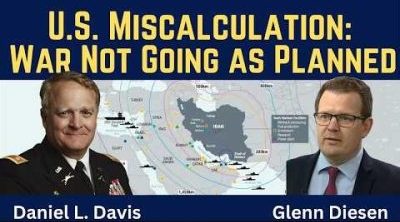
Daniel Davis: U.S. Miscalculation – War Not Going as Planned
or go to
Aletho News Archives – Video-Images
From the Archives
Revealed: Israel’s hidden history of attacks on Iran
By Robert Inlakesh | MintPress News | April 17, 2024
Iran’s retaliatory attack on Israel was framed in the West as a reckless attempt to spark a major regional war, but in reality, Israel has been attacking Iran for decades.
As is routinely the case with Western-backed wars, the corporate media’s timeline begins at the moment that suits their narrative. We have seen this play out recently, with the attempt to rob the Gaza war of all contexts before October 7, 2023. Similarly, when it comes to Israel’s conflict with Iran, the two have been embroiled in what is referred to as a “shadow war,” the details of which are pretty shocking. … continue
Blog Roll
 Aletho News
- Daniel Davis: U.S. Miscalculation – War Not Going as Planned
- US-Israeli strike targets IRIB facility; broadcasts continue
- The diabetes treatment that worsens the disease
- Forget Oil: Natural Gas Prices Are About to Go Through the Roof If Hormuz Isn’t Reopened Soon
- Hormuz Strait: Iran’s Strategic Trump Card for Forcing Enemies to the Negotiating Table
- Trump bit off more than he can chew with Iran – ex-Pentagon analyst
- Murdering Khamenei Will Kill Trump’s Presidency
- Unexpected Iranian reaction paralyzed Americans and Israelis on the first day of war
- Larry Johnson: The U.S. Will Exhaust Itself & Lose War Against Iran
- In The Name of ‘Helping Iran’, The U.S. And Israel Slaughter Over 100 Iranian Schoolgirls
- If Americans Knew
- Israel, US on a Zionist mission to bring Iran down – Not a ceasefire Day 141
- When Presbyterians Fought Christian Zionism
- Israel starts another war on Iran – Not a ceasefire Day 141
- ‘Terror Was Needed to Make Arabs Leave’: What the Israeli Army Did in 1948, Revealed
- 17,000 Unaccompanied Orphans in Gaza, in World’s Biggest Orphan Crisis
- Israeli leaders want to buy global legitimacy – Not a ceasefire Day 140
- Israel warns of a Ramadan escalation — while doing everything to provoke one
- Democrats Should Release Their 2024 Election Autopsy – and Stop the Gaza Denial
- Israel responsible for 2/3 of press killings worldwide – Not a ceasefire Day 139
- Are the Jews indigenous to Palestine?
- No Tricks Zone
- Glaciers Worldwide Are Suddendly Surging, Experts Blame Warming!
- Surprising Discovery: Sahara Is Greening…Billions Of Trees Where Once Thought To Be Barren
- New Research Reaffirms Clouds, Aerosols, And Surface Solar Radiation Are ‘Driving The Climate System’
- Germany: Electric Car Catches Fire At Charging Station, Sets Off Local “Inferno”, Widespread Damage
- New Study: Canada’s New Brunswick Was 1°C Warmer Than Today During The Medieval Warm Period
- Coal Power Back In Trend As Globe Tries To Keep Pace With Growing Demand For Power
- New Study: A 4°C Warmer Beaufort Sea Had ‘No Sea Ice’ 11,700 – 8200 Years Ago
- Unfudging The Data: Dutch Meteorological Institute Reinstates Early 20th Centruy Heat Waves It Had Erased Earlier
- German Gas Crisis…Chancellor Merz Allegedly Bans Gas Debate Ahead of Elections!
- Pollen Reconstructions Show The Last Glacial’s Warming Events Were Global, 10x Greater Than Modern
 Aletho News