On Wednesday the White House Press Secretary Sarah Huckabee Sanders equated Donald Trump’s declaration that Jerusalem is Israel’s capital and his decision to move the US Embassy in Israel from Tel-Aviv to Jerusalem with putting America first.
To equate Trump’s Jerusalem decisions with the idea of putting America first is nothing but a scam being played on American people who genuinely care about other Americans and about America.
Today, when Trump signed the tax bill into law, he made a comment about rebuilding America’s infrastructure. He pointed out how the US spent over $7 trillion in the Middle East and said that money could have been used to improve the infrastructure across America. This statement of Trump’s, coming on the heels of his Jerusalem decision, shows he just doesn’t get it. Either that, or he is playing the fool.
Surely Trump knows that Israel and its powerful lobby decide key US decisions in US foreign policy for the Middle East. I’d be shocked if when candidate Trump met with his biggest campaign contributor, billionaire American Jewish casino mogul Sheldon Adelson, that Adelson did not make it very clear to Trump that Israel and the Israel lobby call the shots in regards to US Middle East foreign policy.
Pleasing Adelson is probably Trump’s motivation for claiming that Jerusalem is Israel’s capital, for the decision to move the US embassy to Jerusalem and for Trump torpedoing the nuclear agreement with Iran.
Trump’s overwhelming desire to please Adelson, Israel and the Israel lobby does NOT at all put America first. This ungodly trinity that Trump works to please wants US politicians to start a new war for Israel’s benefit, this time against Iran. In 2013 at Yeshiva University in New York Adelson said regarding the US and Iran:
“You pick up your cell phone and you call somewhere in Nebraska and you say ‘OK, let it go,’ and so there’s an atomic weapon goes over, ballistic missiles in the middle of the desert that doesn’t hurt a soul, maybe a couple of rattlesnakes and scorpions or whatever. And then you say, ‘See? The next one is in the middle of Tehran.’”
Trump must know that using the people in the American military to fight wars for the Jewish state of Israel is in no way, shape or form putting America first. US politicians from both parties voted to use American troops and American tax dollars for Israel’s benefit when they launched the war against Iraq in 2003.
Now the same forces of Israel, its lobby and Israel first individuals like Adelson are moving us down that same road to a new war for Israel’s benefit. These Israel first forces are moving Americans in the US military “as a lamb to the slaughter” to quote a phrase from the Hebrew/Jewish authors of the Bible.
Since our thoughts and beliefs determine our actions, if we really want to break free from this deadly cycle of religious inspired violence, we need to work to change the thinking of people who are currently under the spell of the “revealed” religions.
The American founder and Deist Thomas Paine made this clear when he wrote in his outstanding book on God, Deism and religion, The Age of Reason that we need a revolution in religion based on our innate God-given reason and Deism.
Mark Weber, an American historian and director of the Institute for Historical Review, has been banned from Britain. British authorities decline to provide any explanation for or details about the ban. Weber, who has violated no British (or American) law, apparently is forbidden to enter the UK solely because authorities do not approve of views he has expressed.
On September 23 Weber was at the international airport of Madrid, Spain, waiting in line to get a boarding pass to take a flight to London’s Heathrow airport for a lay-over of a few hours before getting a connecting flight to return to the US. That’s when an Iberia airlines official told him that he would not be allowed to board the London-bound flight because he is not permitted to enter the UK. This was the first Weber had heard of this ban.
He was obliged to pay hundreds of dollars to arrange belated alternative flights back to the US. After his return home, Weber wrote letters to relevant British agencies, including the Home Office and UK Visas and Immigration, to learn more about this matter. He received no answers to his repeated inquiries.
The UK government routinely bans visitors “if their presence would not be conducive to the public good.” Although British authorities will not say just who is on its list of “excluded” persons, it is known that Edward Snowden, Martha Stewart, Louis Farrakhan, Pamela Geller, Michael Savage and Geert Wilders are among those who have been banned.
According to well-informed British citizens who monitor such matters, UK officials almost certainly banned Weber to comply with the wishes of Jewish-Zionist groups, which openly expressed their unhappiness with him after he gave a talk on April 11, 2015, to a meeting in London titled “The Danger and Challenge of Jewish-Zionist Power.” (The text of Weber’s address is posted on the IHR website, along with an audio recording. A video of the talk is posted on YouTube.)
This “London Forum” gathering, which drew an audience of more than a hundred, received extensive but hostile coverage in major British newspapers, including the Mail on Sunday and the Daily Express, as well as Jewish news services.
London’s Metropolitan Police Force looked into the talks by Weber and the other speakers, and decided that what they said “does not reach the threshold for a criminal investigation,” the London Daily Expressreported. The news that Weber and the other speakers “would go unpunished provoked outrage in the Jewish community,” the Express also noted. A spokesman for the “Campaign Against Anti-Semitism” organization, the paper reported, said that the “speakers should have been barred from the UK.” (That’s apparently just what British authorities have since done, at least with regard to Weber. The current British government of Prime Minister Theresa May is widely regarded as one of the most ardently pro-Zionist in history.)
Although British media called the event a gathering of “Holocaust deniers,” in fact not a single one of the speakers at the meeting spoke about the Holocaust, or said anything that could be considered “Holocaust denial.”
“It’s no wonder that British authorities are unwilling to explain just why they decided to ban me from the UK,” says Weber. “This shameful ‘McCarthyite’ blacklisting targets me, and perhaps others, not for any unlawful speech or behavior, but merely for my views, real or perceived. This ban strikingly confirms the validity of what I said in my ‘London Forum’ talk about the scope and reach of Jewish-Zionist power.”
“British politicians would understandably protest if UK citizens were banned from Hungary, Spain, Saudi Arabia, Russia or other countries merely because they had expressed views that authorities there do not like,” Weber adds.
Mark Weber is director of the Institute for Historical Review (IHR), an independent educational and publishing center that works to promote peace, understanding and justice through greater public awareness of the past, and especially socially-politically relevant aspects of modern history. It is recognized by the U.S. Internal Revenue Service as a 501(c)(3) public interest, educational, not-for-profit enterprise. Founded in 1978, the IHR is non-partisan, non-ideological, and non-sectarian. Its offices are in Orange County, southern California.
Mark Weber holds Bachelor’s and Master’s degrees in history. In 1988 Weber testified for five days in Toronto District Court as a recognized expert on Germany’s World War II Jewish policy.
From the moment of arrest, Palestinian children encounter ill-treatment and torture at the hands of Israeli forces. Three out of four experience physical violence during arrest or interrogation.
Israel has the dubious distinction of being the only country in the world that systematically prosecutes between 500 and 700 children in military courts each year.
Ill-treatment in the Israeli military detention system remains “widespread, systematic, and institutionalized throughout the process,” according to the UN Children’s Fund (UNICEF) report Children in Israeli Military Detention Observations and Recommendations.
Recent amendments to Israeli military law concerning children have had little to no impact on their treatment during the first 24 to 48 hours after an arrest, when most of the ill-treatment occurs at the hands of Israeli soldiers, police, and the security service.
International juvenile justice standards, which Israel has obliged itself to implement by ratifying the UN Convention on the Rights of the Child in 1991, demand that children should only be deprived of their liberty as a measure of last resort and include universal prohibitions against physical violence and torture among other protections. Despite these obligations Israeli authorities persistently disregard and fail to comply with international law.
The No Way to Treat a Child campaign seeks to challenge Israel’s prolonged military occupation of Palestinians by exposing widespread and systematic ill-treatment of Palestinian children in the Israeli military detention system.
It is a project of Defense for Children International – Palestine and American Friends Service Committee.
Not for the first time, the free world has stood up for truth and justice in Palestine. The General Assembly’s vote against President Trump’s decision on Jerusalem was a victory for the rule of law over the law of the jungle. It now leaves both the US and Israel isolated, disgraced and humiliated.
Washington’s threat to cut aid to countries that voted not to recognise Jerusalem as Israel’s capital was an insult to the UN and a vicious assault on the sovereign rights of its members. In their customary delusional manner, Israelis believed the US threat was enough to force compliance. They were mistaken; people around the world are simply tired of their arrogance and unethical conduct.
As it stands, Trump’s threat is consistent with a long-standing policy of US blackmail and intimidation exerted within the UN to further Israel’s illegal claims. It was no different from the threats issued to impoverished nations to extract the controversial UN Partition Resolution 181 in 1947.
When that vote was taken, it narrowly gained the two-thirds majority to be adopted – 33 countries voted in favour, 13 opposed and ten abstained. Haiti, Liberia and the Philippines all opposed the partition plan initially but were forced to change their position following the intervention of officials “at the highest levels in Washington”, including President Harry Truman. They were threatened with the withdrawal of US financial aid. James Forrestal, the then Secretary of Defence admitted that “the methods that had been used… to bring coercion and duress on other nations in the General Assembly bordered closely onto scandal.”
By allowing itself to be used in such a scandalous manner to facilitate the claims of one people, the UN had done immense damage to its credibility. It had, in fact, violated one of the most fundamental principles of its Charter namely, “respect for the principle of equal rights and self-determination of peoples” (Article 1).
There were, apart from Forrestal, other US officials who were prepared to acknowledge the wrong done to the Palestinian people. Commander E.H. Hutchison, who chaired the Jordan-Israel Armistice Commission after the 1948 Arab-Israeli War, recalled that “every step in the establishment of a Zionist state” was “a challenge to justice”.
While there are parallels between what happened in the General Assembly in 1947 and 2017, there are, nonetheless, striking differences. Both presidents, Trump and Truman, sought to exploit an international crisis to bolster their domestic standings. However, what the incumbent president does not realise is that the free world has moved on from the days of diplomatic blackmail. So, whereas two-thirds were coerced to vote for partition in 1947, 70 years on two-thirds exercised their free will and voted for peace and the rule of law.
Where does this crushing defeat leave Israel and its mercurial Prime Minister, Benyamin Netanyahu? For sure, Israel will become more isolated among the community of nations. Instead of countries moving their embassies to Jerusalem many will now consider severing or curtailing diplomatic contact with the Zionist state. South Africa’s ruling African National Congress (ANC) has taken the lead by adopting a resolution at its national conference to downgrade the South African embassy in Israel to a liaison office
As for Netanyahu, the UN defeat will, almost certainly, increase calls for his resignation. He is, in political terms, damaged goods, even to the point of being toxic. Only the delusional would want to be associated with him.
Instead of disparaging the UN as “the house of lies”, the Israeli prime minister and his fellow travellers should be eternally grateful to the world body for voting to partition Palestine. Gratitude, regrettably, has never been in their lexicon.
In years gone by, Israel was aided and encouraged by a combination of blind American support; indifference on the part of western powers; and the complicity of “leading” Arab countries. If nothing else, yesterday’s vote at the UN on Jerusalem must mark the beginning of the end of that long chapter of subterfuge.
Political disasters can sometimes be turned into opportunities. This scandalous attempt by the Trump administration to trample roughshod over the UN, in defiance of international norms and standards, must be seized as an opportunity to review Israel’s membership of the world body. After all, it was admitted to the world body on condition that it respects the terms of partition and allows the Palestinian refugees to return (Resolution 273). Israel has not only refused to honour the terms of its membership; it has systematically undermined the UN Charter and brought the world body into disrepute. Surely, the UN would be a much better organisation without member states like this.
As for the Arab leaders who were misled into believing that Donald Trump can realise their grand ambitions, they too must think again.
It is reasonable to surmise that the Indian decision to vote in the UN General Assembly on Thursday against the US president Donald Trump’s recognition of Jerusalem as the capital of Israel would only have been taken at the level of Prime Minister Narendra Modi.
India has been largely harmonizing its foreign policies with Washington through the past decade. And, to boot it, the Trump administration has openly threatened to punish any country that voted against it. Generally speaking, bureaucrats in the South Block wouldn’t jeopardize their career – or their post-retirement assignments by annoying the Americans. (Read WikiLeaks and you’ll learn more about it.) Conceivably, therefore, they would have passed the Jerusalem buck to the PMO where it was lying until the PM got back from the Gujarat campaign.
Then, there is the personal bonding between Modi and Israeli PM Benjamin Netanyahu (who is expected to pay a week-long visit to India in January.) Won’t ‘Bibi’ take it amiss? Frankly, that is a non-issue. The arms sales to India constitute a significant source of budgetary support for Israel. Israelis are a very pragmatic lot. The Haaretz newspaper recently featured a lengthy article highlighting the RSS and affiliated Hindu nationalists as an exotic breed who adore Adolf Hitler and subscribe to the Nazi ideology. But has that prevented Israel from doing business with the Modi government? Of course not.
A third aspect is about the ideological affinities devolving upon Islamophobia between the present Indian ruling elite and their Israeli counterparts. Thus, all in all, Modi took a bold decision. Neither academics who claim expertise in West Asian studies nor diplomats who extensively served in the region – or, even ministers in Modi’s cabinet – probably expected him to take such a bold decision.
No doubt, Modi took a wise decision. India has a relationship with West Asia that goes far beyond the regimes in those countries. The West Asian region is in transition, in a historical sense, and India is doing the right thing by taking into account the groundswell of popular opinion over the Jerusalem question. This is one of those rare opportunities available for India to position itself in terms of time past, time present and time future. As a shrewd political mind, Modi senses it.
Diplomacy is far from a cynical process. The importance of principles cannot but be stressed if foreign policy is to be durable and sustainable. Good diplomacy is about maneuvering and negotiating to safeguard interests, but without jettisoning principles. In such a sense, India has had a principled stance on the Palestine issue, which it has maintained even while developing a pragmatic ‘win-win’ relationship with Israel through the past quarter century. India cannot and should not identify with Zionism. Ironically, there is a very significant body of opinion even amongst Jews who find Zionism to be repugnant as an ideology.
Finally, although Trump’s decision on Jerusalem was largely prompted by considerations of US domestic politics, there is undeniably a foreign-policy dimension to it. A former Turkish diplomat and area specialist Faruk Logoglu (who used to be Foreign Secretary when I served as ambassador in Ankara and whom I highly respect at a personal level) told the Tehran Times in an interview this week,
Trump probably calculated that the reactions from the region, especially from Saudi Arabia and Egypt would be meek and he was actually right. The US President aims to isolate Iran by forming a Saudi-led Sunni alliance in the region with the addition of Israel. Trump’s ultimate target is Iran. The issue of Jerusalem is just a way-station in Trump’s strategy against Iran. (Tehran Times)
Evidently, Trump is putting immense pressure on Saudi Arabia. Trump telephoned Saudi King Salman on Wednesday to rev up the anti-Iran campaign, again. But, interestingly, on the very next day, Salman phoned Russian President Vladimir Putin. (Kremlin readout) Saudi Arabia is doing a delicate balancing act. It cannot afford to displease Trump, given the stark realities of the petrodollar. But it increasingly feels he’s a blood sucker and wants to put some space in between. One gets the impression that Saudis want to focus on their own transition and the much-needed internal restructuring. They hope to get a helping hand from Putin to work out an exit strategy in Yemen.
Israel, on the other hand, is spreading exaggerated reports at regular intervals – largely through sly remarks and innuendos –that it is having a quiet affair with Saudi Arabia’s Crown Prince. It is a disinformation game that Israelis are good at playing. And they have nothing to lose anyway.
Suffice to say, Jerusalem is the tip of an iceberg. But looking ahead, Trump’s Iran project is doomed to fail. Unless Israel fundamentally reorients its own strategies (which seems unlikely under Bibi), its own future may become uncertain. Iran and Turkey (plus Egypt, if it can get its act together) are the only two authentic regional powers in the Middle East. This geopolitical reality will manifest – if not already – as time passes. Therefore, keeping the relations with Israel at a transactional level without harboring romantic notions about it is the prudent thing to do.
Israeli Attorney General Avichai Mendelblit has joined a lawsuit by an army reservist against Palestinian filmmaker Mohammad Bakri, over the latter’s 2002 film “Jenin, Jenin”.
According to a report in Haaretz, “the unusual move” will see the top legal official support Nissim Meghnagi’s defamation of character suit against the acclaimed director due to the “public interest in the case”. The paper says this is a “rarely exercised” privilege of the Attorney General.
Meghnagi is a veteran of “Operation Defensive Shield”, which saw Israeli occupation forces conduct large-scale attacks on Palestinian population centres. In Jenin refugee camp, more than 50 residents were killed, including some two dozen non-combatants.
In 2016, Meghnagi sued Bakri for 2.6 million shekels ($0.74 million), claiming that “he appears in and was named in the movie, and that the film libelled Israeli soldiers by presenting them as war criminals”.
“Bakri argues that the purpose of the suit is persecution and political silencing, and says the case is without merit”, reported Haaretz, since Meghnagi only appears on camera for a few seconds, and “he cannot be identified as the person behind the deeds described in the movie”.
Haaretz says that “Mendelblit’s announcement throwing his weight behind the suit followed requests from Meghnagi himself and from Israel Defence Force Chief of Staff Lt. Gen. Gadi Eisenkot.”
Five years ago, a district court rejected a lawsuit by five other soldiers who participated in “Operation Defensive Shield”, a decision upheld by the Supreme Court.
Then Attorney General Menachem Mazuz sided with the soldiers, but Mendelblit said in his announcement that “in contrast to the previous proceedings, this plaintiff actually appears in the movie while the narrator accuses the Israeli soldiers of looting”.
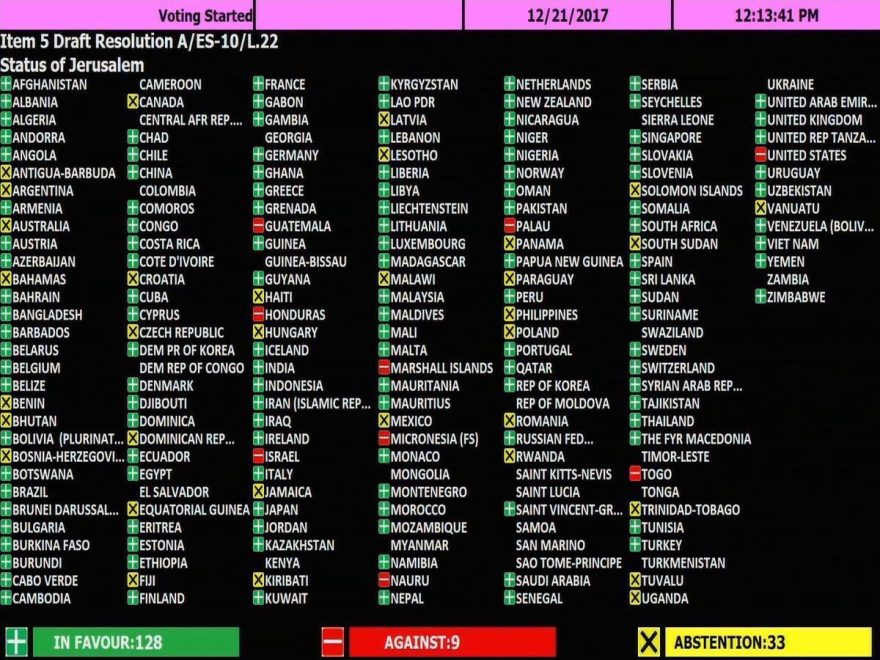
The UN General Assembly has overwhelming adopted a resolution calling on the US to reverse its decision to recognize Jerusalem as the capital of Israel. One hundred and twenty-eight countries voted in favor of the motion.
Nine states voted against the UN resolution and 35 nations abstained.
Turkey, which has led the Muslim opposition to the US Jerusalem declaration, was among the first to speak at the meeting. Turkish Foreign Minister Mevlut Cavusoglu stressed that only a two-state solution and sticking to the 1967 borders can be a foundation for a lasting peace between Israel and Palestine. The minister said that since Jerusalem is the cradle for the “three monotheistic religions,” all of humanity should come together to preserve the status quo.
“The recent decision of a UN member state to recognize Jerusalem as the capital of Israel violates the international law, including all relevant UN resolutions. This decision is an outrageous assault on all universal values,” Cavusoglu said.
US envoy to the UN Nikki Haley said that whatever decision is made by the UNGA, it will not influence Washington’s decision to recognize Jerusalem as the capital of Israel. Haley reminded UN members of the US’ generous contributions to the organization and said that the United States expects its will to be respected in return.
“When we make a generous contributions to the UN, we also have a legitimate expectation that our goodwill is recognized and respected,” Haley said, adding that the vote will be “remembered” by the US and “make a difference on how the Americans look at the UN.”
Israeli envoy to the UN Danny Danon stated that Israel considers Jerusalem its capital, dating back to Biblical times, and the US decision only outlines the obvious. Danon went further and accused the UN of “double standards” and an “unbreakable bond of hypocrisy” with Palestine and prejudice against Israel.
“Those who support today’s resolution are like puppets. You’re puppets pulled by the strings of your Palestinian puppet masters. You’re like marionettes forced to dance, while the Palestinian leadership looks on with glee,” Danon told the gathering.
The US leadership earlier voiced threats towards UN member states which would back the UN resolution against its Jerusalem decision. Haley said Washington would be “taking names.”
Trump also suggested that countries which vote in favor of the resolution at the UN General Assembly will lose money. “Let them vote against us,” he said. “We’ll save a lot. We don’t care. But this isn’t like it used to be where they could vote against you and then you pay them hundreds of millions of dollars… we’re not going to be taken advantage of any longer.”
The US threats were condemned by Turkey, with the country’s President Recep Tayyip Erdogan stating that Trump “cannot buy Turkey’s democratic will.”
“I hope and expect the United States won’t get the result it expects from there (the UN General Assembly) and the world will give a very good lesson to the United States,” Erdogan said during a speech in Ankara on Thursday ahead of the meeting.
On Monday, the US vetoed a UN Security Council (UNSC) resolution on Jerusalem, which had demanded that the American decision to recognize the city as the Israeli capital be withdrawn. All other UNSC members voted in favor of the document.
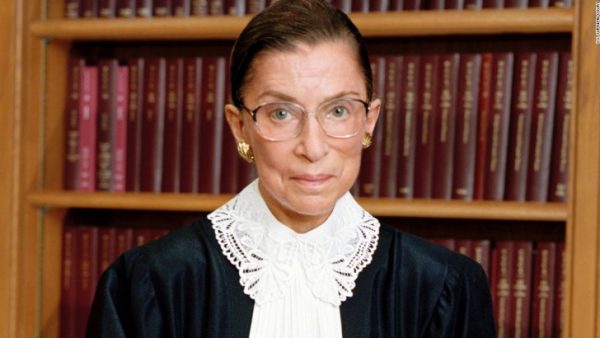
The iconic and even trending Supreme Court Justice Ruth Bader Ginsburg (lovingly known to fans as Notorious RBG or Ruth Badass Ginsburg) came this close to receiving the 2018 Genesis Prize, aka the “Jewish Nobel,” awarded yearly to Jews who have attained excellence and recognition in their fields, and who inspire others in their dedication to the Jewish community, Jewish values, and the State of Israel.
The award comes with a $1 million payout, and there, as they say, was the rub.
Ha’aretzreports that the prize was taken away from Ginsburg (and given to Natalie Portman) because the committee’s legal advisor discovered a rule against awarding monetary prizes to US judges. She had already decided to donate half of her prize money to women’s groups in the US, and the other half to equivalent organizations in Israel. Apparently her office had even contacted the groups and told them they had some big bucks coming their way.
Well, the charities got stiffed, but Ginsburg got a consolation prize: a new and prestigious award was created for her – the Genesis Prize for Lifetime Achievement. She will receive the award during a ceremony next summer.
Does Ginsburg meet all of the qualifications for a Genesis award? She has indeed attained excellence and recognition; no doubt she has been an inspiration – to Jews and Gentiles alike – as she has beaten the odds and risen to the very top of her field. Is she “dedicated to Jewish community, Jewish values, and the Jewish State”? Let’s do some sleuthing to find out.
A little background
Ginsburg was born on March 15th, 1933 in Brooklyn, New York. She fought her way past gender discrimination (one of 9 women in a class of 500 at Harvard Law School) and became only the second female and the sixth Jewish justice to be appointed to the Supreme Court.
Religiously, Ginsburg became non-observant when, at her mother’s death, she saw up close the second-class role of women in Orthodox Judaism. She has worked tirelessly for women’s rights throughout her distinguished career.
My heritage as a Jew and my occupation as a judge fit together symmetrically. The demand for justice runs through the entirety of Jewish history and Jewish tradition. I take pride in and draw strength from my heritage, as signs in my chambers attest: a large silver mezuzah on my door post, [and the Hebrew words] from Deuteronomy: “Zedek, zedek, tirdof” — “Justice, justice shall you pursue.”
Check the box marked “Jewish values.”
Moving on to “Jewish community,” just look back to last September. Ms. Ginsburg surprised members of a Washington DC synagogue when she came to speak at their Rosh Hashanah service. She talked about faith, about her fellow Jewish justices over the years and the views they have shared. She reminded worshipers that “the Jewish religion is an ethical religion. That is, we are taught to do right, to love mercy, do justice.” And she remarked that their shared experience as Jews makes them compassionate: “If you are a member of a minority group, particularly a minority group that has been picked on, you have empathy for others who are similarly situated.”
Ginsburg has pursued justice wholeheartedly all her life, and has throughout her career advocated for progressive causes. In 1972, she co-founded the Women’s Rights Project at the ACLU, and fought more than 300 gender discrimination cases between 1973 and 1974.
But these admirable convictions we see in Ginsburg that are common among many Americans – empathy toward the marginalized, advocacy for defenseless – suddenly evaporate in certain situations. Perhaps it’s subconscious, but there lurks another loyalty ready to override the cause of true justice and compassion. Ruth Bader Ginsburg is among the many influential members of the P.E.P. Club: Progressive Except Palestine.
For someone dedicated to liberty and justice for all, she is resoundingly silent on the issue of Palestine. Nowhere in her recently published collection of writings, My Own Words, do the words “Palestine” or “Palestinian” appear. Even “Arab” is nowhere to be found, although she discusses the Holocaust, Zionism, and Israel.
Ginsburg was poised to donate $500,000 to women’s organizations in Israel, a country which – surely she has heard – has been flagrantly violating the human rights of Palestinians for decades, denying them the most basic justice. This is a country in which many rock stars fear to book a concert, lest they be ostracized by the moral majority for pandering to an apartheid state – but Ginsburg was about to drop a cool half a mil.
Well, at least we can check the most important box of all: the one marked “dedication to the State of Israel.”
This leaning is no surprise, given Ginsburg’s admiration for one particular former US Supreme Court justice.
The Honorable Louis Brandeis
Louis Brandeis, associate justice
on the US Supreme Court, 1916 to 1939
Ruth Bader Ginsburg is a big fan of the Supreme Court’s first Jewish justice, Louis Dembitz Brandeis. Brandeis is revered today as a great judge, but at the time of his appointment – 1916 – he was recognized by some as “unscrupulous” in his methods and at times “unethical” in his behavior.
Distinguished historian Bruce Allen Murphy revealed that Brandeis was involved in some covert pursuits for many years, both before and during his time on the Supreme Court. The fact that he and his primary cohort, Felix Frankfurter, kept their work secret indicates that they knew it was – or at least looked – unethical.
Brandeis’ endeavors included (but were not limited to) advancing the Zionist agenda, both in the US and internationally. Murphy describes his work in general as “part of a vast, carefully planned and orchestrated political crusade.”
Israeli professor Dr. Sarah Schmidt described a clandestine society of which Brandeis was a part: “a secret underground guerilla force determined to influence the course of events in a quiet, anonymous way.” The most ambitious young Jewish men were recruited for the work. Their secret initiation ceremony included the charge:
You are about to take a step which will bind you to a single cause for all your life… [Y]ou will be fellow of a brotherhood whose bond you will regard as greater than any other in your life – dearer than that of family, of school, of nation. By entering this brotherhood, you become a self-dedicated soldier in the army of Zion. Your obligation to Zion becomes your paramount obligation… It is the wish of your heart and of your own free will to join our fellowship, to share its duties, its tasks, and its necessary sacrifices.
Brandeis also served as president of the Provisional Executive Committee for Zionist Affairs – essentially the leader of the world’s Zionists. He spent several months during 1914 – 1915 on a speaking tour to build a network of support for the “Jewish homeland,” underscoring the goals of self-determination and freedom.
In 1916, President Woodrow Wilson named Brandeis to the Supreme Court. As required, Brandeis officially resigned from his formal affiliations, including stepping down from his leadership role in Zionism. However, he zealously continued his work on a more informal basis, even from his Supreme Court chambers. Later, he would persuade the next 2 Jewish justices – Cardozo and Frankfurter – to join the ranks of the Zionist Organization of America, assuring a continued, subtle partiality toward the Jewish project.
Brandeis is tapped
In fact, Brandeis remained so deeply involved in Zionism that he was chosen by a leader of the movement for a very important job: that of, possibly, helping to turn the tide of World War I for the British.
Great Britain was in desperate need of an ally in the war, and the Zionists were in need of an ally in their quest for a homeland. Brandeis was tasked with delivering the United States as an ally to Great Britain; Great Britain would reimburse the Zionists with the Balfour Declaration.
Samuel Landman, secretary of the World Zionist Organization, claimed in a 1936 article in World Jewry, that it was “Jewish help that brought USA into the war on the side of the Allies.” The goal was not victory for the Allies, but real estate in Palestine, so Brandeis and associate Felix Frankfurter reportedly worked to ensure the war would last until Palestine was in the bag. They even reportedly sabotaged a potential opportunity to end the war in May 1917 (18 months early), which would have saved much destruction and many lives, including Brandeis’ fellow Americans.
Eventually, of course, Germany was defeated. According to historian Henry Wickham Steed, one of Germany’s top generals considered the Balfour Declaration to be “the cleverest thing done by the Allies in the way of propaganda,” and wished Germany had thought of it first.
Landman further stated that Germany was aware of the Jewish connection, and, chillingly, this “contributed in no small measure to the prominence which anti-Semitism occupie[d] in the Nazi program” only a few decades later. This horrific irony can not be overstated.
“Never again”
Ruth Bader Ginsburg spoke of those days in 2004 at the Holocaust Memorial Museum:
Hitler’s Europe, his Holocaust Kingdom, was not lawless. Indeed, it was a kingdom full of laws, laws deployed by highly educated people—teachers, lawyers, and judges—to facilitate oppression, slavery, and mass murder. We convene to say “Never again,” not only to Western history’s most unjust regime, but also to a world in which good men and women, abroad and even in the USA, witnessed or knew of the Holocaust Kingdom’s crimes against humanity, and let them happen…
In striving to drain dry the waters of prejudice and oppression, we must rely… upon the wisdom of our laws and the decency of our institutions, upon our reasoning minds and our feeling hearts. And as a constant spark to carry on, upon our vivid memories of the evils we wish to banish from our world.
And indeed, Ginsburg has famously spent years of her life checking America’s laws against the rubric of our Constitution to banish what evil she can from America.
But as a highly intelligent woman, in the Information Age, is it even remotely possible that she is not aware of the opinions of progressive Jewish anti-Zionist voices from the time of Brandeis, like Alfred Lilienthal and Rabbi Elmer Berger, or the historians of our time who have brought to light the folly of early Zionism, like Noam Chomsky, Norman Finkelstein, and Ilan Pappé? (The Palestinian historians who first wrote about this, sadly, are less likely to have shown up on her radar.)
Can she not know about the displacement of 750,000 Palestinians in the Nakba? Or the Deir Yassin massacre? Or a hundred other stories of injustice imposed on a people because of where they lived by another people who had been mistreated because of what they believed?
Aharon Barak
To be passionate about justice and yet ignore this gross injustice requires a studied unconcern. “Progressive Except Palestine” has mentors in the highest places, and Ginsburg has a friend who may be among the best.
Meet Aharon Barak
Former Israeli supreme court president Aharon Barak, partly educated at Harvard, talks some good talk, the kind that would resonate with Americans:
Democracy has its own internal morality, based on the dignity and equality of all human beings… Most central of all human rights is the right to dignity. It is the source from which all other human rights are derived.
[E]quality is a fundamental value of every democratic society…. The feeling of the lack of equality is the most difficult of feelings. It undermines the forces that unite society.
And he discusses his home country in language that sounds relatable:
The State of Israel is a State whose values are Jewish and democratic. Here we have established a State that preserves law, that achieves its national goals and the vision of generations, and that does so while recognizing and realizing human rights in general and human dignity in particular. Between these two there are harmony and accord, not conflict and estrangement.
The Israeli legal system is a young system, albeit one with deep historical roots that reflect its Jewish values. It is a legal system that guards its democratic nature despite the existential struggle it has faced since its founding.
No wonder Ginsburg and Barak are close: they share a deep reverence for democracy, and for the Jewish values they like to believe are inherent in their respective countries’ justice systems.
But Barak sees the Israeli court, and Israel itself, as an exceptional world. It is not a simple, safe democracy like America, but a “defensive democracy” that fights daily for its very survival. Barak lives under the delusion that nuclear-capable, Iron-Dome, cruise-missile, armored-personnel-carrier Israel, is under constant “existential threat” from rock-throwing, homemade-missile-launching, underfed Palestinians. Israel was created through ethnic cleansing and is maintained through illegal occupation and blockade, and when Palestinians legally exercise their right to resist, Barak sees this as “terrorism.”
we have recognized the power of the state to protect its security and the security of its citizens on the one hand; on the other hand, we have emphasized that the rights of every individual must be preserved, including the rights of the individual suspected of being a terrorist (sic).
It sounds so ethical, but Gideon Spiro knew better and wrote eloquently about “The Barak Method”:
No doubt about it: Barak has succeeded in creating around him a “human-rights man” aura even outside Israel. This is a huge propaganda feat…considering that Barak is, to a large extent, the judicial designer, enabler and backer of the regime of human-rights abuses in the Occupied Territories. [He] legitimized almost all the injustices of the occupation. He has led Israel’s judicial system into the role of indentured servant to the security forces – the IDF, the Shin Bet (domestic secret service), the Mossad and the settlers.
Barak’s time on the bench is replete with examples of Supreme Court benevolence toward individuals suspected of being terrorists (i.e. pretty much every Palestinian who set foot in his courtroom). One such example happened in 1992.
Mass Deportation
Hamas had killed six Israeli soldiers, and in retaliation, the IDF arrested, blindfolded, and deported 415 Palestinians (believed to be Hamas members) to Lebanon.
Human rights organizations immediately petitioned the Israeli Supreme Court – Barak was on call that night – and testimony was heard. It was pointed out that the men had not been given a hearing before the deportation.
The Court ruled: Israel must grant the deportees a hearing – but it would take place a month later.
The deportees spent the month in freezing winter weather. The Red Cross asked to bring them medical aid, but Israel refused. The UN Security Council condemned the mass deportation (full text here).
On January 17, 1993, the hearing in Israel began. A few days later, the Israeli Supreme Court found – unanimously – that in one sense, the deportation orders were not valid, but in another sense, the orders were valid. (Obviously, this is a simplification; find details here and here.)
Punitive house demolition
Another area in which Aharon Barak labored to find the alleged balance between security and human rights is in the area of house demolition. His court recognized the need for proportionality, and concluded that “only when human life has been lost is it permissible to destroy the buildings where the terrorists lived.”
A relative of Abdelrahman Shaludi, a Palestinian who killed two Israelis last month, displays his portrait inside his family home after it was razed by Israel in E. Jerusalem. Nov. 19, 2014.
The struggle was real for Barak and the rest of the Israeli Supreme Court on the issue of administrative detention – holding people for months or years without even charging them with a crime. Once again, they had to choose between protecting fundamental human rights of the individual or protecting “national security.”
They went with national security. And so the practice of administrative detention continues unchecked: Palestinians are arrested without charge and detained for 6 months; their case undergoes “judicial review,” in which a judge looks at their file (without representation from the detainee) and often approves another 6-month term, and another, and another. Some have been held for years. During Barak’s reign, well over a thousand Palestinians were held under administrative detention.
Since 1967, Israeli forces have arrested over 800,000 Palestinians – almost 20% of the Palestinian population, and about 40% of the male Palestinians in the occupied territories.
The separation (aka apartheid) wall
It was on Aharon Barak’s watch that construction of the Wall was begun. Correction: “security fence to prevent terror.” The damage done by this “fence” – confiscating Palestinian land, cutting off children from their schools, patients from their doctors, workers from their jobs, families from each other, farmers from their land – this is what Barak termed “proportionate damage.” In 2004 and 2005 he and his Court dropped a few crumbs for the Palestinians in the form of rulings to alter the route of the wall a bit, but at no point did they address the legality of the wall itself.
The rest of the world, however, did address the issue. In 2004, the UN Security Council called on Israel to abide by international law; the General Assembly called on the International Court of Justice to rule on the wall. The ICJ complied, in 2004 finding the wall to be in violation of international law. The Israeli Supreme Court chose, as usual, to ignore near global condemnation, Barak himself claiming “factual superiority” over the ICJ.
Extrajudicial executions (aka targeted killing)
The final verdict of Aharon Barak’s career, the cherry on top of his years of whatever-that-was, looked just like the others. It was all about balance. Harm – even death – to civilians is permitted if there was no better way to manage the situation; harm must be proportionate, that is the civilian “damage” must be comparable to the military advantage achieved. In Barak’s own decisive words, “we cannot determine that a preventative strike is always legal, just as we cannot determine that it is always illegal.” So, kill if you must, and fall on the mercy of the Court (wink, wink).
Torture (aka moderate physical pressure)
Aharon Barak had a few words on the issue of torture, which Justice Ginsburg found compelling. She explained in a recent interview:
The police think that a suspect they have apprehended knows where and when a bomb is going to go off…Can the police use torture to extract that information? And in an eloquent decision by Aharon Barak, then the chief justice of Israel, the court said: ‘Torture? Never.’
Barak himself elaborated: “They act against the law, by violating and trampling it, while in its war against terrorism, a democratic state acts within the framework of the law and according to the law.”
An Israeli Peace activist demonstrates a torture technique used by Shin Bet interrogators against Palestinian prisoners.
But once again, the actions of the State speak louder than the words of the Court.
The ruling to which Ginsburg referred left a “narrow opening for torture: a defense of “necessity,” which allows for interrogators, during “extraordinary circumstances” (for example, in a “ticking time bomb scenario,” when innocent lives, according to Israeli officials, are believed to be in the balance), to independently choose to break the no-torture law. Later, if torturers are taken to court for it, they may use the “necessity defense.”)
That “narrow opening” has proved to be wide and welcoming.
According to a 2016 Ha’aretz article, over 1,000 complaints of torture have been registered against Israel’s General Security Service, Shin Bet, since 2001. Not a single criminal investigation has ever been launched by the one investigator that the department employs.
It has been reported that 70-90% of the time, detained men, women and children are not permitted to speak to anyone – including a lawyer – until they have “confessed.” And once that confession has been obtained, whether it is genuine or not, there is no recanting.
Caution: PEP causes selective blindness
While Justice Ruth Bader Ginsburg has done great things for women and minorities, and is no doubt a woman of compassion and conscience, she shows all of the symptoms of P.E.P. Prognosis: if the anti-BDS law (Israel calls BDS an “Israel de-legitimization program”) comes before the Supreme Court, will she uphold it, limiting our free speech and support for human rights? Or if the Taylor Force Act comes up for judicial review – the law which would effectively deprive Palestinian widows of their “survivor benefits” (Israeli hasbara calls it a “terrorism incentivizing program”), would Ginsburg sympathize with women and orphans when they are Palestinian?
It is likely that she has seen reports of the humanitarian crisis in Gaza and the rampant and illegal settlement-building in the West Bank and East Jerusalem, but there is no indication that these issues have penetrated her consciousness. If they had, one expects she would be in a moral quandary –what does one do with a lifetime of unexposed bias when light finally shines on it?
Conclusion
Lady Justice is the traditional symbol of our judicial systems. Her attributes include a blindfold – to represent impartiality and a total absence of bias; a balance – to represent the weighing of the evidence as the only source of a decision of guilt or innocence; and a sword – to represent the authority of the court, and the swiftness of the meting out of justice.
“Progressive Except Palestine” is, sadly, a reality for too many people of all faiths and and people of no faith. The result? Where justice ought to be applied impartially, objectivity becomes impossible when Israel is part of the equation. Where guilt or innocence should be determined based on evidence, the label “terrorist” makes guilt a foregone conclusion. And where justice should be meted out swiftly, only injustice seems to move at that pace.
And when one of America’s Supreme Court justices is complicit in this, there is little hope of improvement.
Kathryn Shihadah is a staff writer for If Americans Knew
How Israeli dual citizens and their associates work to influence U.S. legislation in favor of Israel. For more information see
“Israeli dual citizens driving US laws against Palestinians, BDS, etc” (http://iakn.us/2iKxkhX)
“Adelson-funded Israel lobby group IAC could soon rival AIPAC” (http://iakn.us/2BTyIX9)
If Americans Knew: The Israel lobby (http://iakn.us/2z4UbXP)
The video was made by DeceptionsUSA with assistance from If Americans Knew. Please donate so we can continue our work! (http://iakn.us/2kRFSRf)
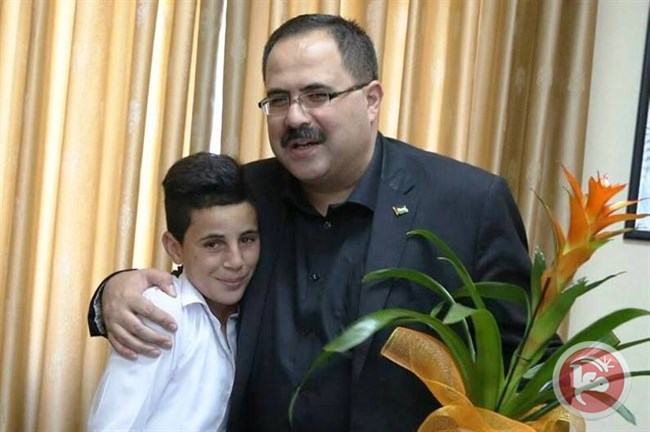
RAMALLAH – Fourteen-year-old Muhammad Fadel al-Tamimi remains in a medically-induced coma as of Tuesday, days after he was hot in the face with a rubber-coated steel bullet by Israeli forces.
The Palestinian teenager, a resident of the central occupied West Bank town of Nabi Saleh, was injured during clashes in his village on Friday.
According to locals, the bullet settled in the boy’s skull after it entered his face below his nose and broke his jaw.
The teenager is currently being held in the ICU of the al-Istishari Hospital in Ramallah.
Al-Tamimi, a former prisoner, was detained when he was 13 years old, and was previously injured several times during weekly clashes in his village.
His cousin, 17-year-old Ahed al-Tamimi, was detained on Tuesday morning by Israeli forces for slapping and kicking Israeli soldiers on the same day that Muhammad was injured.
RAMALLAH – Israeli forces detained a 17-year-old Palestinian girl from the Nabi Saleh village in northwestern Ramallah in the central occupied West Bank on Tuesday morning before dawn.
Israeli forces raided the home of the al-Tamimi family, well-known internationally for their activism against the Israeli occupation, and detained Ahed al-Tamimi, 17.
Israeli forces also confiscated computers, mobile phones and cameras from the house during the raid.
According to locals, Ahed was arrested over a video went viral on social media of her slapping an armed Israeli officer during a raid on Nabi Saleh.
Ahed Tamimi is well-known across Palestine and the Arab world for videos of her, since her childhood, defiantly resisting Israeli soldiers who clash with Palestinians in her village nearly every week.
Two years ago, her family made headlines when an Israeli soldier violently attempted to arrest her younger brother , who had one arm in a cast at the time. Ahed and her mother managed to pull the soldier of her brother and free him.
Israeli military raids into Palestinian cities, towns, and refugee camps are a near daily occurrence.
According to the Palestinian Prisoner’s Society (PPS), since US President Donald Trump’s announcement recognizing Jerusalem as Israel’s capital, Israeli forces have detained 450 Palestinians, including 138 minors, and nine women.
Prisoners rights group Addameer recorded 6,198 Palestinians were detained by Israel as of October. The group has estimated that some 40 percent of Palestinian men will be detained by Israel at some point in their lives.
Samidoun Palestinian Prisoner Solidarity Network – December 20, 2017
Palestinian organizer Bassem Tamimi, a prominent land defender in the village of Nabi Saleh, was seized by Israeli occupation forces – joining his wife, Nariman, and his daughter, Ahed – was also seized by Israeli occupation forces today, 20 December.
He was arrested as he attended the hearing for his daughter Ahed in Ofer military court, where her detention was extended for 10 days for further interrogation. This came one day after both Ahed and then her mother were arrested by occupation forces following attacks on them in Israeli media for protesting and defending their land from Israeli occupation soldiers who had shot another local boy, 14-year-old Mohammed Tamimi, in the head with a rubber-coated metal bullet.
In overnight, violent raids, occupation forces seized a cousin of the family, Nour Tamimi, 21, from her family home in Nabi Saleh. This means that Ahed and both of her parents, Nariman and Bassem – all of whom are leading land defenders in Nabi Saleh – are currently seized by the Israeli occupation forces. … continue
BETHLEHEM – The mother of a Palestinian teenage girl, who was detained from her home by Israeli forces before dawn on Tuesday, was reportedly detained at an Israeli police station when seeking information about her daughter’s whereabouts.
Official Palestinian Authority (PA)-owned Wafa news agency reported that Nariman al-Tamimi was detained by Israeli officers on Tuesday morning at the Benyamin police station, north of Ramallah in the central occupied West Bank.
Nariman was attempting to seek information about her 17-year-old daughter Ahed, who was arrested from their home in the village of Nabi Saleh hours earlier.
The whereabouts of both Nariman and Ahed remained unknown.
The al-Tamimi family is well-known internationally for their activism against the Israeli occupation, with Ahed in particular being the subject of several viral videos in which she defiantly stands up to Israeli soldiers who regularly raid her village in the central West Bank Ramallah district.
Two years ago, the family made headlines when an Israeli soldier violently attempted to arrest Nariman’s son Muhammad , who had one arm in a cast at the time. Ahed and Nariman managed to pull the soldier off of Muhammad and free him.
RAMALLAH – Fourteen-year-old Muhammad Fadel al-Tamimi remains in a medically-induced coma as of Tuesday, days after he was hot in the face with a rubber-coated steel bullet by Israeli forces.
The Palestinian teenager, a resident of the central occupied West Bank town of Nabi Saleh, was injured during clashes in his village on Friday.
According to locals, the bullet settled in the boy’s skull after it entered his face below his nose and broke his jaw.
The teenager is currently being held in the ICU of the al-Istishari Hospital in Ramallah.
Al-Tamimi, a former prisoner, was detained when he was 13 years old, and was previously injured several times during weekly clashes in his village.
His cousin, 17-year-old Ahed al-Tamimi, was detained on Tuesday morning by Israeli forces for slapping and kicking Israeli soldiers on the same day that Muhammad was injured.
It is tempting to interpret the announcement this week of a delay until the new year in US vice-president Mike Pence’s visit to the Middle East as the ultimate travel warning. It follows an eruption of regional unrest over Donald Trump’s recognition of Jerusalem as Israel’s capital.
During protests last Friday, Israeli occupation forces killed four Palestinians and injured more than 250.
US officials, however, are not worried about Pence’s safety. In fact, predictions of a third Palestinian uprising in response to Trump’s Jerusalem declaration may be premature.
After decades of flagrant US bias towards Israel, Trump has confirmed to Palestinians only what they already knew. Some even grudgingly welcomed his candour. They hope he has finally silenced US claims to being an “honest broker” in an interminable “peace process” that has simply bought time for Israel to entrench the occupation.
The Palestinians’ anger towards Israel and the US is a slow-burning fuse. It will detonate at a moment of their choosing, not of Trump’s.
Rather, the hesitation in Washington over the vice-president’s visit reflects the messy new diplomatic reality that the White House has unleashed.
Pence was due here to smooth the path to Trump’s long-promised peace plan and to highlight the plight of Christians in the Middle East. The door has now been firmly shut in his face on both counts. Palestinian officials have declared a boycott of him, as have Christian leaders in Palestine and Egypt.
Instead of cancelling Pence’s visit or exploiting the extra breathing space to try to reverse the damage, the bull-headed Trump administration has indicated it is eager to break more of the china.
Denied access to Palestinian officials, his schedule will focus on Israel. Following a diplomatic precedent set by his boss in May, Pence is due to visit the Western Wall in Jerusalem’s occupied Old City and immediately below the Al Aqsa mosque plaza.
His visit, however, has been billed as “official”, not private. And it will be invested with far graver symbolism, given Trump’s designation of Jerusalem as Israel’s capital.
To add insult to injury, and in contravention of claims that Washington will not pre-determine the borders of a divided Jerusalem before peace talks, an unnamed senior US official gave Pence’s visit an even more troubling context. He noted that there was no scenario in which the US did not see the Western Wall ending up in Israel’s hands.
The US policy change on Jerusalem has been a hammer blow to the three main pillars supporting the cause of Palestinian statehood: the Palestinian Authority, the European Union and the Arab states.
The biggest loser is Palestinian president Mahmoud Abbas. Washington stripped him of his emperor’s clothes: he now heads a Palestinian government-in-waiting that is unlikely ever to be attached to a state, viable or otherwise.
The Arab states, which assumed they were the key to a much-touted “outside-in” strategy, creating a regional framework for peace, have been deprived of the single issue – Jerusalem – that matters most to them.
Egypt scrambled to help Abbas at the weekend by drafting a UN security resolution to rescind any change of status for Jerusalem. But an inevitable US veto made the move moot.
And Europe, which has played “good cop” to the bullying US one, has been exposed as complicit in its partner’s rogue behaviour.
Europe’s predicament is underscored by its peace-making rhetoric. It has long cried wolf, warning that a moment would soon arrive when a two-state solution was no longer feasible, when a temporary occupation morphed into permanent apartheid.
Now that the heart of a Palestinian state has been publicly devoured by the wolf, what will Europe and Abbas do?
The signs are that they will pretend nothing has changed – if only out of fear of what might fill the void if peace-making were exposed as a hollow charade.
But it is precisely the pretence of a peace process that has kept Palestinians chained to an illusion. The perpetuation of false hope about statehood does not benefit Palestinians; it preserves a calm that aids Israel.
That was why the White House accused Abbas of walking away from dialogue last week. But only a fool keeps on appealing to the better nature of a deaf thug.
The burden now falls on the PA, the Arab states and Europe to accept the new reality, and assert a policy independent of the US.
Some Palestinian leaders, like Hanan Ashrawi, already understand this. “Trump’s move is a new era,” she said last week. “There’s no going back.”
Palestinian goals and strategies must be reassessed. Nonetheless, the pressures for a return to the “peace” business as usual will be intense.
Ordinary Palestinians in Jerusalem may be the first to signal the new direction of struggle – one that recognises that a Palestinian state is dead and buried.
In recent years, growing numbers have started applying, as Israeli law entitles them to, for Israeli citizenship. Israel has twisted and turned to delay honouring its commitment, even as it calls Jerusalem its “united capital”.
Palestinians will have to shame Israel, the US and the watching world by adopting the tools of an anti-apartheid struggle – of non-violent resistance and civil disobedience – to gain equal rights in a single state.
At the moment, the undercurrents of Palestinian rage chiefly swirl below the surface. But they will rise in time, and the consequences of Trump’s deed will become all too apparent.
Dr. Anthony Fauci’s private diary reveals a “mind-numbing” contradiction between what the former top U.S. infectious disease official knew about COVID-19 and what he told the public, senior White House adviser Peter Navarro, Ph.D., said last week on “American Thought Leaders.”
“I show, actually, how a prosecution can and should happen … at the state level, most likely,” Navarro said. “He should wind up in prison, and we’ve got the receipts in this book to put him there.”
Navarro said Fauci repeatedly acknowledged important facts in private, then publicly pursued policies that contradicted those facts — with devastating consequences.
“What he says many times privately in his diary is so at odds with both his public behavior and public statements that it’s mind-numbing,” Navarro said.
Navarro examines the lasting damage caused by lockdowns and other pandemic policies, and the ongoing toll of long COVID.
His book also addresses questions about vaccine safety, including why healthy young people faced COVID-19 vaccination mandates despite concerns about myocarditis, and why women were not warned about miscarriage risks linked to the shots. … continue
This site is provided as a research and reference tool. Although we make every reasonable effort to ensure that the information and data provided at this site are useful, accurate, and current, we cannot guarantee that the information and data provided here will be error-free. By using this site, you assume all responsibility for and risk arising from your use of and reliance upon the contents of this site.
This site and the information available through it do not, and are not intended to constitute legal advice. Should you require legal advice, you should consult your own attorney.
Nothing within this site or linked to by this site constitutes investment advice or medical advice.
Materials accessible from or added to this site by third parties, such as comments posted, are strictly the responsibility of the third party who added such materials or made them accessible and we neither endorse nor undertake to control, monitor, edit or assume responsibility for any such third-party material.
The posting of stories, commentaries, reports, documents and links (embedded or otherwise) on this site does not in any way, shape or form, implied or otherwise, necessarily express or suggest endorsement or support of any of such posted material or parts therein.
The word “alleged” is deemed to occur before the word “fraud.” Since the rule of law still applies. To peasants, at least.
Fair Use
This site contains copyrighted material the use of which has not always been specifically authorized by the copyright owner. We are making such material available in our efforts to advance understanding of environmental, political, human rights, economic, democracy, scientific, and social justice issues, etc. We believe this constitutes a ‘fair use’ of any such copyrighted material as provided for in section 107 of the US Copyright Law. In accordance with Title 17 U.S.C. Section 107, the material on this site is distributed without profit to those who have expressed a prior interest in receiving the included information for research and educational purposes. For more info go to: http://www.law.cornell.edu/uscode/17/107.shtml. If you wish to use copyrighted material from this site for purposes of your own that go beyond ‘fair use’, you must obtain permission from the copyright owner.
DMCA Contact
This is information for anyone that wishes to challenge our “fair use” of copyrighted material.
If you are a legal copyright holder or a designated agent for such and you believe that content residing on or accessible through our website infringes a copyright and falls outside the boundaries of “Fair Use”, please send a notice of infringement by contacting atheonews@gmail.com.
We will respond and take necessary action immediately.
If notice is given of an alleged copyright violation we will act expeditiously to remove or disable access to the material(s) in question.
All 3rd party material posted on this website is copyright the respective owners / authors. Aletho News makes no claim of copyright on such material.
 On Wednesday the White House Press Secretary Sarah Huckabee Sanders equated Donald Trump’s declaration that Jerusalem is Israel’s capital and his decision to move the US Embassy in Israel from Tel-Aviv to Jerusalem with putting America first.


Samidoun Palestinian Prisoner Solidarity Network – December 20, 2017
 RAMALLAH – Fourteen-year-old Muhammad Fadel al-Tamimi remains in a medically-induced coma as of Tuesday, days after he was hot in the face with a rubber-coated steel bullet by Israeli forces.


