Palestinian youth and students among 11 raided and arrested by Israeli occupation forces
Samidoun Palestinian Prisoners Solidarity Network | April 19, 2016
 Israeli occupation soldiers arrested 11 Palestinians in dawn raids on Tuesday, 19 April, focusing on students and youth. Three students at Al-Quds University’s Abu Dis campus – Noor al-Islam Darwish, Hala Beitar and Salam Abu Sharar, all women – were raided and arrested in Ramallah.
Majd Yousef Atwan, 22, from al-Khader near Bethlehem, a recent beauty school graduate, was arrested in a 2:00 am army raid on her home; her father said that she was being accused of “incitement for Facebook postings.”
Many students and youth have been arrested by Israeli occupation forces in the run-up to Palestinian campus elections; while many Palestinians are being persecuted for Facebook posts, including poetry.
Murad Mohammed Taqatqa and Walid Issa Taqatqa of Beit Fajar near Bethlehem were also arrested by occupation forces, as was Abdel-Rahim Mahmoud Awad from Beit Awwa near al-Khalil. Ahmed Nidal Awel, 20, and Ayman Farouk Barham, 35, were arrested by Israeli occupation forces in Kufr Qaddoum.
In Al-Ram, north of Jerusalem, the Israeli forces shot a 15-year-old boy in the leg at the entrance to the village as they invaded it; Palestinian Red Crescent medics reported they were prevented from accessing the boy to provide medical care and that he was then arrested by the occupation forces. Another al-Ram resident was also arrested.
‘Fake Jewish graves in Muslim cemeteries’: UNESCO slams Israeli occupation of Palestinian sites
RT | April 18, 2016
The Israeli authorities are furious after a UNESCO resolution stated that the Temple Mount and holy sites in Hebron and Bethlehem are an “integral part of Palestine.” The organization also criticized Israel, “the occupying power,” for planting fake graves in Muslim cemeteries.
Two tourist destinations, the Cave of the Patriarchs in the heart of the old city of Hebron and Rachel’s Tomb in Bethlehem, are named in the paper as “Palestinian sites.” The draft decision by the UNESCO executive board on occupied Palestine was released April 11.
UNESCO “reaffirms that the two concerned sites located in… Hebron and in Bethlehem are an integral part of Palestine” and “disapproves the ongoing Israeli illegal excavations, works, construction of private roads for settlers and a separation wall inside the Old City of… Hebron, that harmfully affect the integrity of the site,” the statement says.
UNESCO slammed Israeli attacks on Muslims in the Temple Mount, which it only refers to by its Arabic name, Al-Haram Al-Sharif, and its holy site, Al-Aqsa Mosque.
The organization “strongly condemns the Israeli aggressions and illegal measures against the freedom of worship and Muslims’ access to their Holy Site Al-Aqsa Mosque/Al-Haram Al Sharif, and requests Israel, the Occupying Power, to respect the historic Status Quo and to immediately stop these measures,” the statement says.
Al-Aqsa Mosque became the flashpoint for bloodshed in 2015, amid mounting tensions over the holy site, sacred to both Muslims and Jews.
UNESCO called on Israel to stop “banning Muslims from burying their dead in some spaces and by planting Jewish fake graves in other spaces of the Muslim cemeteries.”
The group also criticized “the continuous Israeli blockade of the Gaza Strip,” which causes an “intolerable number of casualties among Palestinian children,” as well as “the attacks on schools and other educational and cultural facilities and the denial of access to education.”
Israeli authorities have reacted with anger to the UNESCO document.
“This is yet another absurd UN decision,” Prime Minister Benjamin Netanyahu said, as cited by Israeli media.
“UNESCO ignores the unique historic connection of Judaism to the Temple Mount, where the two temples stood for a thousand years and to which every Jew in the world has prayed for thousands of years. The UN is rewriting a basic part of human history and has again proven that there is no low to which it will not stoop,” he added.
This is not the first UNESCO resolution that condemns Israel for aggression at holy sites in Jerusalem and the West Bank. In October 2015 the group issued a document which censured Israel for limiting Muslim access to Jerusalem’s Al-Aqsa Mosque compound and reaffirmed that the Cave of the Patriarchs in Hebron and Rachel’s Tomb in Bethlehem are Palestinian sites.
The document was passed by 26 votes to six – those against being the US, the UK, Germany, the Netherlands, the Czech Republic and Estonia.
What’s Israel’s Role in the Nagorno-Karabakh Conflict?
Sputnik – April 17, 2016
With the decades-long Azeri-Armenian conflict over the disputed Nagorno-Karabakh region burning out of control for four intense, blood-soaked days at the beginning of this month, questions have emerged over the secretive role played by Israel in the conflict.
Late last week, commenting on the recent escalation of the conflict between Armenia and Azerbaijan over the disputed region of Nagorno-Karabakh, former Israeli foreign minister Avigdor Lieberman blamed Armenia for provoking four days of clashes which left over a hundred dead and dozens wounded.
Azerbaijan, Lieberman said, had “no reasons for escalating the conflict,” despite extensive reports confirming that Azerbaijan was the party that launched offensive operations to regain control of territory in the Armenia-backed Nagorno-Karabakh Republic.
For its part, the Azeri Defense Ministry called the operation, which resulted in the taking of several strategic heights and settlements, a successful ‘counteroffensive’ launched in response to Armenian shelling.
Lieberman’s words would be echoed by retired Israel Defense Forces general Ephraim Sneh, who emphasized in a Friday op-ed for Al-Monitor that Azerbaijan is Israel’s “strategic ally,” and that at the moment, Baku “needs all the diplomatic help [Israel] can muster.”
Sneh slammed Tel Aviv for “staying silent” in Baku’s hour of need, explaining that Azerbaijan is one of Israel’s only friends in the Islamic world, and adding that Israel needs Azerbaijan to ensure its energy security, with Baku providing the Jewish State with some 40% of its oil.
Russia’s mediation of the conflict, Sneh suggested, has been disastrous for Baku, with the “status quo” that emerged in 1994 following the six-year war which began in the late 1980s “convenient for everyone, except for Azerbaijan.”
Blaming Armenia for violations of the ceasefire (and absolving the Azeris of their own violations), Sneh candidly admitted that Baku started the latest bloodshed, and suggested that Azerbaijan’s challenging of the status quo may actually work in its favor.
Saying that the current Moscow-brokered ceasefire, is “tenuous at best and not expected to last long,” the general says that he is hopeful that “now that Azerbaijan has proved its military superiority, there is a chance for real diplomatic negotiations that could lead to an agreement between the two countries,” i.e. for the ethnically Armenian Nagorno-Karabakh Republic to give its territory. In this sense, Sneh says, the Azeris could take a lesson from Tel Aviv and negotiate according to a formula of “land for peace,” which Israel used in the late 1970s in negotiations with Egypt to return the Sinai Peninsula.
This time, Sneh argues, the Azeris should do the same, but in reverse, promising Armenia peace in exchange for Nagorno-Karabakh. “Armenia’s weak economy could stand to benefit from such an agreement.” Moreover, “improved economic relations with Turkey are just one important economic benefit that Armenia can be assured of as soon as it withdraws from the occupied Azeri territories.””Meanwhile, Azerbaijan needs much more robust diplomatic support than it is receiving today.” Unfortunately, Sneh complains, Baku hasn’t been getting it from Israel.
But just how silent has Tel Aviv actually been?
To begin with, hints of the extensive military cooperation between the two countries emerged in the first days of the conflict, indicating that Israeli ‘suicide drones’ were being used by Azeri forces in the course of their offensive. The Harop unmanned aerial vehicle, which acts as a ‘kamikaze’ capable of destroying targets by ramming into them, is produced by Israeli Aerospace Industries (IAI).
According to French intelligence newsletter Intelligence Online, in addition to drones, Israel also provides Baku with advanced radar systems, control and command posts, and other intelligence-collection equipment, and has even entered a bid to provide Baku with a $150 million observation satellite.
Israel has refused to confirm or deny its sale of drones, or other weaponry, to Azerbaijan. However, Meretz party chairwoman Zehava Galon came out publicly warning that Israel intends to send more drones to Baku. In a letter addressed to Defense Minister Moshe Ya’alon, Galon urged that the Israeli government should stop weapons deliveries to the Azeris until it could be assured that Baku would halt the fighting in Nagorno-Karabakh.
At the same time, Israeli security and intelligence specialist Yossi Melman says that Israel has a massive, but highly secretive, defense footprint in Azerbaijan.
In his analysis for The Jerusalem Post, Melman explained that Israel and Azerbaijan enjoy annual trade which is “$5 billion larger than between Israel and France.” Moreover, he said, “most of the content remains confidential, and consists of Azeri oil sold to Israel and Israeli weapons and intelligence technologies purchased by Azerbaijan.”
From modest beginnings in the early 1990s, Azerbaijan has grown to become “the second-biggest market in Asia, after India, for Israeli weapons,” with Israeli defense companies enjoying literally billions of dollars in sales in the Caucasian state. At the same time, Melman indicates, “the best promoters of the military sales and ties are Israeli ministers and officials who visit the Caucasian nation.”
“This week,” the analyst recalls, “The Washington Post enabled the world to have a peeping window into the secret relations [between the two countries] when it published a photo of an Israeli-made ‘suicidal drone’ exploding itself on a bus leading Armenian combatants to the front lines. Seven people were killed, and the Armenian government protested to Israel.”
“A few days after the incident, military journalists visited Israeli Aerospace Industries facilities and were briefed on the various products, from drones to satellites, which the company has to offer. An IAI spokeswoman was asked if the company was behind the Washington Post revelation. She refused to answer but openly smiled when one reporter commented that such a photo is good for business and promotes sales of products that can be labeled ‘battle proven’.”
In addition to military ties, Melman notes that the two countries also have strong intelligence ties, with Mossad given permission to set up a large station in Azerbaijan, taking advantage of the region’s geography to run operations throughout the North Caucasus.
Both Russian and Iranian officials have previously accused Azerbaijan of allowing Mossad to use their territory for espionage activities, the latter indicating that the Israeli missions included everything from “recruiting and planting agents,” to “communication interception and aerial reconnaissance,” Melman explained. Moreover, he added, “more than a year ago Iran claimed to have shot down an Israeli-made drone,” claims which Israeli officials have refused to comment on.
Pointing to the secretive nature of political, defense and intelligence cooperation between the two countries, the analyst noted that “it was [Azeri President Ilham] Alieyev himself who was quoted in a WikiLeaks cable sent from the US Embassy in Baku [saying] that ‘bilateral relations between Azerbaijan and Israel are like an iceberg. Nine-tenths are below the surface.'”
Ultimately, Melmen notes, “seemingly, Israel and Azerbaijan are an odd couple, not meant to be with each other,” with the Caucasian nation not really serving as a model of Western democracy, being run by the same family since 1991, and facing issues including corruption and the suppression of free media. “On the other hand, Israel is not too selective in choosing friends when it comes to weapons sales and national interests. A quick look at the map,” showing that Azerbaijan borders Iran, Israel’s sworn enemy, “can explain Israeli priorities.”
Read more:
Nagorno-Karabakh Crisis Could Get Messy If New Arms Suppliers Emerge
Turkey Claims Azerbaijan ‘Patient’ Over Nagorno-Karabakh Conflict
Armenia Rejects Israeli Proposal on Arms Purchase – Defense Minister
Israeli Gov’t Meets in Golan Heights, Extolls Conquest
Sputnik – April 17, 2016
On Sunday, Israeli Prime Minister Benjamin Netanyahu conducted a cabinet meeting in the Golan Heights for the first time in history, in order to stress that the region had been “captured from Syria almost a half of century ago” and that it has been Israeli territory ever since, calling on the international community to recognize this fact.
According to the draft resolution on Syria, which has been endorsed by US, Russia and other states, the Golan Heights were unlawfully captured by Israel during the Six-Day War in 1967 and must be returned to Syria.
Benjamin Netanyahu promised not to oppose the resolution of the ongoing crisis in the neighboring country, provided that the Syrian peace process doesn’t impinge on Israeli security.
“I made a decision to hold a Cabinet meeting in the Golan Heights, to convey a clear message: the Golan Heights will remain in Israeli hands. Israel will never withdraw from the Golan,” said Netanyahu. This can be regarded as a symbolic gesture reflecting Israel’s adamant determination not to abandon the Golan Heights.
When Syria gained independence from French rule in 1944, the Golan Heights became part of the country and was later incorporated into Quneitra Province. Most of the province was conquered by Israel in 1967 and 1973, which conducted a policy of ethnic cleansing, forcing over 130,000 people to flee their homes.
Yes, Hillary Clinton Is a Neocon
By Robert Parry | Consortium News | April 16, 2016
If there were any doubts that Hillary Clinton favors a neoconservative foreign policy, her performance at Thursday’s debate should have laid them to rest. In every meaningful sense, she is a neocon and – if she becomes President – Americans should expect more global tensions and conflicts in pursuit of the neocons’ signature goal of “regime change” in countries that get in their way.
Beyond sharing this neocon “regime change” obsession, former Secretary of State Clinton also talks like a neocon. One of their trademark skills is to use propaganda or “perception management” to demonize their targets and to romanticize their allies, what is called “gluing white hats” on their side and “gluing black hats” on the other.
So, in defending her role in the Libyan “regime change,” Clinton called the slain Libyan leader Muammar Gaddafi “genocidal” though that is a gross exaggeration of Gaddafi’s efforts to beat back Islamic militants in 2011. But her approach fits with what the neocons do. They realize that almost no one will dare challenge such a characterization because to do so opens you to accusations of being a “Gaddafi apologist.”
Similarly, before the Iraq War, the neocons knew that they could level pretty much any charge against Saddam Hussein no matter how false or absurd, knowing that it would go uncontested in mainstream political and media circles. No one wanted to be a “Saddam apologist.”
Clinton, like the neocons, also shows selective humanitarian outrage. For instance, she laments the suffering of Israelis under crude (almost never lethal) rocket fire from Gaza but shows next to no sympathy for Palestinians being slaughtered by sophisticated (highly lethal) Israeli missiles and bombs.
She talks about the need for “safe zones” or “no-fly zones” for Syrians opposed to another demonized enemy, Syria’s President Bashar al-Assad, but not for the people of Gaza who face the wrath of Israeli Prime Minister Benjamin Netanyahu.
“Yes, I do still support a no-fly zone [in Syria] because I think we need to put in safe havens for those poor Syrians who are fleeing both Assad and ISIS and have some place that they can be safe,” Clinton said. But she showed no such empathy for Palestinians defenseless against Israel’s “mowing the grass” operations against men, women and children trapped in Gaza.
In Clinton’s (and the neocons’) worldview, the Israelis are the aggrieved victims and the Palestinians the heartless aggressors. Referring to the Gaza rocket fire, she said: “I can tell you right now I have been there with Israeli officials going back more than 25 years that they do not seek this kind of attacks. They do not invite the rockets raining down on their towns and villages. They do not believe that there should be a constant incitement by Hamas aided and abetted by Iran against Israel. …
“So, I don’t know how you run a country when you are under constant threat, terrorist attack, rockets coming at you. You have a right to defend yourself.”
Ignoring History
Clinton ignored the history of the Israeli-Palestinian conflict, which dates back to the 1940s when Israeli terrorist organizations engaged in massacres to drive Palestinians from their ancestral lands and murdered British officials who were responsible for governing the territory. Israeli encroachment on Palestinian lands has continued to the present day.
But Clinton framed the conflict entirely along the propaganda lines of the Israeli government: “Remember, Israel left Gaza. They took out all the Israelis. They turned the keys over to the Palestinian people. And what happened? Hamas took over Gaza. So instead of having a thriving economy with the kind of opportunities that the children of the Palestinians deserve, we have a terrorist haven that is getting more and more rockets shipped in from Iran and elsewhere.”
So, Clinton made clear – both at the debate and in her recent AIPAC speech – that she is fully in line with the neocon reverence for Israel and eager to take out any government or group that Israel puts on its enemies list. While waxing rhapsodic about the U.S.-Israeli relationship – promising to take it “to the next level” – Clinton vows to challenge Syria, Iran, Russia and other countries that have resisted or obstructed the neocon/Israeli “wish list” for “regime change.”
In response to Clinton’s Israel-pandering, Sen. Bernie Sanders, who once worked on an Israeli kibbutz as a young man, did the unthinkable in American politics. He called out Clinton for her double standards on Israel-Palestine and suggested that Netanyahu may not be the greatest man on earth.
“You gave a major speech to AIPAC,” Sanders said, “and you barely mentioned the Palestinians. … All that I am saying is we cannot continue to be one-sided. There are two sides to the issue. … There comes a time when if we pursue justice and peace, we are going to have to say that Netanyahu is not right all of the time.”
But in Hillary Clinton’s mind, the Israeli-Palestinian dispute is essentially one-sided. During her speech to the American Israel Public Affairs Committee last month, she depicted Israel as entirely an innocent victim in the Mideast conflicts.
“As we gather here, three evolving threats — Iran’s continued aggression, a rising tide of extremism across a wide arc of instability, and the growing effort to de-legitimize Israel on the world stage — are converging to make the U.S.-Israel alliance more indispensable than ever,” she declared.
“The United States and Israel must be closer than ever, stronger than ever and more determined than ever to prevail against our common adversaries and to advance our shared values. … This is especially true at a time when Israel faces brutal terrorist stabbings, shootings and vehicle attacks at home. Parents worry about letting their children walk down the street. Families live in fear.”
Yet, Clinton made no reference to Palestinian parents who worry about their children walking down the street or playing on a beach and facing the possibility of sudden death from an Israeli drone or warplane. Instead, she scolded Palestinian adults. “Palestinian leaders need to stop inciting violence, stop celebrating terrorists as martyrs and stop paying rewards to their families,” she said.
Then, Clinton promised to put her future administration at the service of the Israeli government. Clinton said, “One of the first things I’ll do in office is invite the Israeli prime minister to visit the White House. And I will send a delegation from the Pentagon and the Joint Chiefs to Israel for early consultations. Let’s also expand our collaboration beyond security.”
Pleasing Phrases
In selling her neocon policies to the American public, Clinton puts the military aspects in pleasing phrases, like “safe zones” and “no-fly zones.” Yet, what she means by that is that as President she will invade Syria and push “regime change,” following much the same course that she used to persuade a reluctant President Obama to invade Libya in 2011.
The Libyan operation was sold as a “humanitarian” mission to protect innocent civilians though Gaddafi was targeting Islamic militants much as he claimed at the time and was not engaging in any mass slaughter of civilians. Clinton also knew that the European allies, such as France, had less than noble motives in wanting to take out Gaddafi.
As Clinton confidant Sidney Blumenthal explained to her, the French were concerned that Gaddafi was working to develop a pan-African currency which would have given Francophone African countries greater freedom from their former colonial master and would undermine French economic dominance of those ex-colonies.
In an April 2, 2011 email, Blumenthal informed Clinton that sources close to one of Gaddafi sons reported that Gaddafi’s government had accumulated 143 tons of gold and a similar amount of silver that “was intended to be used to establish a pan-African currency” that would be an alternative to the French franc.
Blumenthal added that “this was one of the factors that influenced President Nicolas Sarkozy’s decision to commit France to the attack on Libya.” Sarkozy also wanted a greater share of Libya’s oil production and to increase French influence in North Africa, Blumenthal wrote.
But few Americans would rally to a war fought to keep North Africa under France’s thumb. So, the winning approach was to demonize Gaddafi with salacious rumors about him giving Viagra to his troops so they could rape more, a ludicrous allegation that was raised by then-U.S. Ambassador to the United Nations Susan Rice, who also claimed that Gaddafi’s snipers were intentionally shooting children.
With Americans fed a steady diet of such crude propaganda, there was little serious debate about the wisdom of Clinton’s Libyan “regime change.” Meanwhile, other emails show that Clinton’s advisers were contemplating how to exploit Gaddafi’s overthrow as the dramatic moment to declare a “Clinton Doctrine” built on using “smart power.”
On Oct. 20, 2011, when U.S.-backed rebels captured Gaddafi, sodomized him with a knife and then murdered him, Secretary of State Clinton couldn’t contain her glee. Paraphrasing a famous Julius Caesar quote, she declared about Gaddafi, “we came, we saw, he died.”
But this U.S.-organized “regime change” quickly turned sour as old tribal rivalries, which Gaddafi had contained, were unleashed. Plus, it turned out that Gaddafi’s warnings that many of the rebels were Islamic militants turned out to be true. On Sept. 11, 2012, one extremist militia overran the U.S. consulate in Benghazi killing U.S. Ambassador Christopher Stevens and three other Americans.
Soon, Libya slid into anarchy and Western nations abandoned their embassies in Tripoli. President Obama now terms the Libyan fiasco the biggest mistake of his presidency. But Clinton refuses to be chastened by the debacle, much as she appeared to learn nothing from her support for the Iraq invasion in 2003.
The Libyan Mirage
During Thursday’s debate – instead of joining Obama in recognition of the Libyan failure – Clinton acted as if she had overseen some glowing success: “Well, let me say I think we did a great deal to help the Libyan people after Gaddafi’s demise. … We helped them hold two successful elections, something that is not easy, which they did very well because they had a pent-up desire to try to chart their own future after 42 years of dictatorship. I was very proud of that. …
“We also worked to help them set up their government. We sent a lot of American experts there. We offered to help them secure their borders, to train a new military. They, at the end, when it came to security issues, … did not want troops from any other country, not just us, European or other countries, in Libya.
“And so we were caught in a very difficult position. They could not provide security on their own, which we could see and we told them that, but they didn’t want to have others helping to provide that security. And the result has been a clash between different parts of the country, terrorists taking up some locations in the country.”
But that is exactly the point. Like the earlier neocon-driven “regime change” in Iraq, the “regime change” obsession blinds the neocons from recognizing that not only are these operations violations of basic international law regarding sovereignty of other nations but the invasions unleash powerful internal rivalries that neocons, who know little about the inner workings of these countries, soon find they can’t control.
Yet, America’s neocons are so arrogant and so influential that they simply move from one catastrophe to the next like a swarm of locust spreading chaos and death around the globe. They also adapt readily to changes in the political climate.
That’s why some savvy neocons, such as the Brookings Institution’s Robert Kagan, have endorsed Clinton, who The New York Times reported has become “the vessel into which many interventionists are pouring their hopes.”
Kagan told the Times, “I feel comfortable with her on foreign policy. If she pursues a policy which we think she will pursue it’s something that might have been called neocon, but clearly her supporters are not going to call it that; they are going to call it something else.”
Now with Clinton’s election seemingly within reach, the neocons are even more excited about how they can get back to work achieving Syrian “regime change,” overturning Obama’s nuclear deal with Iran, and – what is becoming their ultimate goal – destabilizing nuclear-armed Russia and seeking “regime change” in Moscow.
After all, by helping Assad bring some stability to Syria and assisting Obama in securing the Iranian nuclear deal, Russian President Vladimir Putin has become what the neocons view as the linchpin of resistance to their “regime change” goals. Pull Putin down, the thinking goes, and the neocons can resume checking off their to-do list of Israel’s adversaries: Syria, Iran, Hezbollah, Hamas, etc.
And what could possibly go wrong by destabilizing nuclear-armed Russia and forcing some disruptive “regime change”?
By making Russia’s economy scream and instigating a Maidan-style revolt in Moscow’s Red Square, the neocons see their geopolitical path being cleared, but what they don’t take into account is that the likely successor to Putin would not be some malleable drunk like the late Russian President Boris Yeltsin but, far more likely, a hardline nationalist who might be a lot more careless with the nuclear codes than Putin.
But, hey, when has a neocon “regime change” scheme veered off into a dangerous and unanticipated direction?
A Neocon True-Believer
In Thursday’s debate, Hillary Clinton showed how much she has become a neocon true-believer. Despite the catastrophic “regime changes” in Iraq and Libya, she vowed to invade Syria, although she dresses up that reality in pretty phrases like “safe zones” and “no-fly zones.” She also revived the idea of increasing the flow of weapons to “moderate” rebels although they, in reality, mostly fight under the command umbrella of Al Qaeda’s Nusra Front.
Clinton also suggested that the Syria mess can be blamed on President Obama’s rejection of her recommendations in 2011 to authorize a more direct U.S. military intervention. “Nobody stood up to Assad and removed him,” Clinton said, “and we have had a far greater disaster in Syria than we are currently dealing with right now in Libya.”
In other words, Clinton still harbors the “regime change” goal in Syria. But the problem always was that the anti-Assad forces were penetrated by Al Qaeda and what is now called the Islamic State. The more likely result from Clinton’s goal of removing Assad would be the collapse of the Syrian security forces and a victory for Al Qaeda’s Nusra Front and/or the Islamic State.
If that were to happen, the horrific situation in Syria would become cataclysmic. Millions of Syrians – Alawites, Shiites, Christians, secularists and other “infidels” – would have to flee the beheading swords of these terror groups. That might well force a full-scale U.S. and European invasion of Syria with the bloody outcome probably similar to the disastrous Iraq War.
The only reasonable hope for Syria is for the Assad regime and the less radical Sunni oppositionists to work out some power-sharing agreement, stabilize most of the country, neutralize to some degree the jihadists, and then hold elections, letting the Syrian people decide whether “Assad must go!” – not the U.S. government. But that’s not what Clinton wants.
Perhaps even more dangerous, Clinton’s bellicose rhetoric suggests that she would eagerly move into a dangerous Cold War confrontation with Russia under the upside-down propaganda theme blaming tensions in Eastern Europe on “Russian aggression,” not NATO’s expansion up to Russia’s borders and the U.S.-backed coup in Ukraine in 2014 which ousted an elected president and touched off a civil war.
That coup, which followed neocon fury at Putin for his helping Obama avert U.S. bombing campaigns against Syria and Iran, was largely orchestrated by neocons associated with the U.S. government, including Assistant Secretary of State for European Affairs Victoria Nuland (Robert Kagan’s wife), Sen. John McCain and National Endowment for Democracy President Carl Gershman.
After the violent coup, when the people of Crimea voted by 96 percent to secede from Ukraine and rejoin Russia, the U.S. government and Western media deemed that a “Russian invasion” and when ethnic Russians in eastern Ukraine rose up in resistance to the new authorities in Kiev that became “Russian aggression.”
NATO on the Move
Though President Obama should know better – and I’m told that he does know better – he has succumbed this time to pressure to go along with what he calls the Washington “playbook” of saber-rattling and militarism. NATO is moving more and more combat troops up to the Russian border while Washington has organized punishing economic sanctions aimed at disrupting the Russian economy.
Hillary Clinton appears fully onboard with the neocon goal of grabbing the Big Enchilada, “regime change” in Moscow. Rather than seeing the world as it is, she continues to look through the wrong end of the telescope in line with all the anti-Russian propaganda and the demonization of Putin, whom Clinton has compared to Hitler.
Supporting NATO’s military buildup on Russia’s border, Clinton said, “With Russia being more aggressive, making all kinds of intimidating moves toward the Baltic countries, we’ve seen what they’ve done in eastern Ukraine, we know how they want to rewrite the map of Europe, it is not in our interests [to reduce U.S. support for NATO]. Think of how much it would cost if Russia’s aggression were not deterred because NATO was there on the front lines making it clear they could not move forward.”
Though Clinton’s anti-Russian delusions are shared by many powerful people in Official Washington, they are no more accurate than the other claims about Iraq’s WMD, Gaddafi passing out Viagra to his troops, the humanitarian need to invade Syria, the craziness about Iran being the principal source of terrorism (when it is the Saudis, the Qataris, the Turks and other Sunni powers that have bred Al Qaeda and the Islamic State), and the notion that the Palestinians are the ones picking on the Israelis, not the other way around.
However, Clinton’s buying into the neocon propaganda about Russia may be the most dangerous – arguably existential – threat that a Clinton presidency would present to the world. Yes, she may launch U.S. military strikes against the Syrian government (which could open the gates of Damascus to Al Qaeda and the Islamic State); yes, she might push Iran into renouncing the nuclear agreement (and putting the Israeli/neocon goal to bomb-bomb-bomb-Iran back on the table); yes, she might make Obama’s progressive critics long for his more temperate presidency.
But Clinton’s potential escalation of the new Cold War with Russia could be both the most costly and conceivably the most suicidal feature of a Clinton-45 presidency. Unlike her times as Secretary of State, when Obama could block her militaristic schemes, there will be no one to stop her if she is elected President, surrounded by likeminded neocon advisers.
Investigative reporter Robert Parry broke many of the Iran-Contra stories for The Associated Press and Newsweek in the 1980s. You can buy his latest book, America’s Stolen Narrative, either in print here or as an e-book (from Amazon and barnesandnoble.com).
Palestinian Prisoners Day Statement: In Struggle, Towards Liberation
Samidoun Palestinian Prisoner Solidarity Network – April 17, 2016

On 17 April, Palestinian Prisoners’ Day, Samidoun Palestinian Prisoner Solidarity Network salutes the struggle of 7,000 Palestinian prisoners inside Israeli jails: struggling for not only their own freedom, but for the freedom of the land and people of Palestine. Palestinian prisoners struggle through torture, solitary confinement, abuse, repression, denial of family visits, arbitrary imprisonment and brutal racism on a daily basis. Yet they not only persist and exemplify “samidoun” – those who are steadfast – the Palestinian prisoners are leaders of the Palestinian liberation movement, and of the global struggle for justice and liberation.
Each year, on 17 April, in Palestine and around the world, Palestinians and supporters of justice in Palestine come together to review the situation of Palestinian prisoners and demand their freedom. It is an opportunity to renew our work and our activity to free Palestinian prisoners, and to examine the last year of struggle, inside and outside the prison walls.
Imprisonment has always been a weapon of colonialism in Palestine. From the British colonizers who suppressed Palestinian revolts through mass imprisonment, home demolitions, and execution – and who first imposed the “emergency law” of administrative detention used against Palestinians today – to the Zionist colonizers who for 68 years have imposed a system of occupation, apartheid, criminalization, racism and dispossession upon the Palestinian people, the colonizers of Palestine have imprisoned strugglers, leaders, fighters, and visionaries. Imprisonment targets all sectors of the Palestinian people: workers, strugglers, teachers, journalists, doctors and health workers, farmers, fishers; from Jerusalem, the West Bank, the Gaza Strip, Occupied Palestine ’48; refugees in the camps inside Palestine and around the world – millions denied their right to return and yet pursued and imprisoned in international jails.
In the past year, as throughout this history of struggle, we have witnessed time and again the resilience, resistance and struggle of Palestinian prisoners. It is not only the case that thousands of Palestinians have been jailed since October 2015 in an attempt to stop the rising intifada in the streets and villages of Palestine; it is also the case that Palestinian prisoners are engaged in daily intifada, daily resistance, behind the prison walls. They are part of the struggle – indeed, leaders in the struggle – confronting occupation, colonialism, settlements, home demolition, land confiscation and extrajudicial executions.
From Palestinian lawyer Muhammad Allan, to Palestinian journalist Mohammed al-Qeeq, to baker and resistor Khader Adnan, to the strugglers of the “Battle of Breaking the Chains” – Nidal Abu Aker, Ghassan Zawahreh, Shadi Ma’ali, Munir Abu Sharar and Badr al-Ruzza – Palestinian prisoners have put their bodies on the line in hunger strikes, demanding not only their own freedom but an end to the system of administrative detention without charge or trial that currently holds approximately 700 Palestinians in Israeli prisons. Today, Sami Janazrah, Fouad Assi, and Adib Mafarjah are on hunger strike against administrative detention. Eyad Fawaghra is refusing food, demanding an end to the denial of family visits. Shukri Khawaja is demanding an end to solitary confinement, joined by up to 88 other Palestinian prisoners expressing their solidarity in daily hunger strikes.
Today, 17 April, thousands of Palestinian prisoners are refusing food in a one-day hunger strike in support of prisoners in Nafha subject to violent attacks by Israeli occupation prison guards and special forces on 14 April. Throughout the prisons of the south, prisoners have joined across political lines in rejection of the violent raids that are a constant of Palestinian prisoner life in Israeli jails.
Statistics: Israeli jails hold approximately 7,000 Palestinian prisoners. These include over 400 children and 70 women prisoners, held in 22 prisons and interrogation centers. There have been 4,800 arrests since October 2015, including 1,400 children and minor teens. Approximately 700 Palestinians are held in administrative detention without charge or trial.
Women Prisoners: The number of women prisoners is now 68, including 17 girls under 18. Imprisoned in Hasharon and Damon prisons, injured women prisoners are being denied access to needed medical services and are instead supported by their fellow prisoners. The longest-serving woman prisoner, Lena Jarbouni, has been imprisoned since 2001. The youngest girl prisoner, Dima al-Wawi, is 12 years old. Khalida Jarrar. Palestinian parliamentarian, leftist and prisoner advocate, serving a 15-month sentence, is also among the women prisoners at Hasharon.
Administrative Detainees: Approximately 700 Palestinians are imprisoned without charge or trial under administrative detention by Israeli military order. Administrative detention orders are issued on the basis of secret evidence hidden from both the detainee and their lawyer. These orders are indefinitely renewable and are often renewed repeatedly over years.
Sick and ill prisoners: Over 1,700 sick prisoners inside Israeli jails suffer from various diseases, worsened by ill treatment, delay and denial of medical care, and dismissal of medical issues. Dozens of Palestinian prisoners suffer from serious diseases, including cancer, heart disease, kidney disease, rheumatoid arthritis, stomach ulcers and high blood pressure. There are 24 prisoners with cancer in Israeli prisons, and 23 Palestinians permanently confined in the Ramle Prison Clinic, infamous among Palestinian prisoners for its poor treatment. Some of them are unable to move from their hospital beds. Despite severe illness, they are consistently denied medical release or access to private physicians.
Child Prisoners: Over 400 Palestinians under 18 are imprisoned. Many are arrested in traumatic and violent night-time military raids on their homes, and Palestinian child detainees report very high levels of physical and psychological abuse and torture. Six children are held in administrative detention. Several Palestinian children between the ages of 12 and 14 are imprisoned in Israeli jails. Recent reports from Defence for Children International Palestine and Human Rights Watch highlight the abuse of Palestinian children in Israeli detention, interrogation and imprisonment.
Former Prisoners, Re-Arrests and Pursuit: Former prisoners, including over 70 released in the 2011 Wafa al-Ahrar prisoner exchange for captured Israeli soldier Gilad Shalit, are pursued for renewed arrest and imprisonment. Under Israeli Military Order 1651, released prisoners in an exchange face the reimposition of their original sentence at any time on the basis of “secret evidence.” As in administrative detention cases, Palestinian prisoners and their lawyers are denied access to this evidence, which can include allegations such as “association” or “support” for a “prohibited organization,” a category which includes all major Palestinian political parties. 47 former prisoners have seen their sentences reimposed under this order. The targeting of former prisoners does not only happen inside Palestine. The pursuit, attempt to extradite, and killing of Omar Nayef Zayed in the Palestinian Embassy in Sofia, Bulgaria emphasizes the global nature of this targeting. Rasmea Odeh, Palestinian community leader in the United States, is threatened with imprisonment and deportation on the basis of her imprisonment – and torture – by Israeli forces in the 1960s and 1970s.
Torture is a constant reality of Israeli occupation arrest, detention and interrogation of Palestinians, including beatings, psychological torture, threats and insults, including threats of sexual abuse and violence and threats to family members; forced stress positions and shackling; sleep deprivation; long-term solitary confinement and isolation.
Palestinians are facing ongoing and increasing attacks. The extrajudicial execution of Palestinians under the control of Israeli occupation soldiers – including but not limited to the filmed and photographed executions of Abdelfattah Al Sharif and Hadeel al Hashlamoun – are a new attack on Palestinians that is part and parcel of the same system of terror and repression that carries out mass arrests and violent dawn raids on Palestinian homes. This comes alongside the ongoing imprisonment of the bodies of Palestinians killed by Israeli occupation soldiers. Some Palestinian corpses have been held for over 30 years. Today, the Israeli occupation forces continue to withhold 15 bodies of Palestinians. Nearly every week brings news of a new racist and repressive law being considered or enacted by the Israeli occupation: the “Law to Prevent Harm Caused by Hunger Strikers” permitting forced feeding; lengthy sentences for stone throwing; the imprisonment of 12-year-old Palestinians; threats to execute Palestinian prisoners.
The imprisonment of Palestinians is a collective attack on the Palestinian people and their struggle for liberation. These are not individual cases, but part of the comprehensive attempt of a colonial power to erase and suppress the indigenous Palestinian people and their collective struggle. We see this in the criminalization of Palestinian political parties, all declared “prohibited” by military order, and the military courts and trials that convict Palestinians at a rate of over 99% on the basis of these military orders that govern occupied Palestine. We see this in the targeting of Palestinian student organizers and leaders like Abdullah Ramadan, Asmaa Qadah and Donya Musleh, the ransacking of student blocs’ offices and the attempt to disrupt the vibrant political life of Palestinian students on campuses. We see this in the increased threats of arrests or denial of residence made against Palestinian BDS organizers and activists building the international movement for boycott, divestment and sanctions against Israel. And we see this, of course, in the imprisonment of Palestinian political leaders like Ahmad Sa’adat, General Secretary of the Popular Front for the Liberation of Palestine; Marwan Barghouthi, Fateh leader; Khalida Jarrar, Palestinian parliamentarian and prisoners’ advocate; Hassan Yousef, Hamas leader and Palestinian Legislative Council member; and the countless local leaders targeted for administrative detention and military trials.
We see this in the imprisonment of over 18 Palestinian journalists – 43 in the past six months – and the forced closure of Palestinian TV and radio stations, and in the targeting of Palestinian researchers and human rights defenders like Eteraf Rimawi of Bisan Center, and also in the administrative detention of teachers like circus trainer Mohammed Abu Sakha, 24, who combined Palestinian identity with circus performance as he taught numerous Palestinian children.
We also see the targeting and imprisonment of Palestinians and strugglers for Palestine in international courts and prisons. Georges Ibrahim Abdallah, Lebanese Arab communist struggler for Palestine, has been imprisoned in French jails for 32 years, despite being eligible for release for 16 years. Hillary Clinton – today a US presidential candidate – personally intervened to pressure the French state to overturn its own judiciary to keep him imprisoned. The interior minister who agreed to do so, Manuel Valls, today threatens and supports the prosecution of dozens of Palestine solidarity activists across France for calling for boycott, divestment and sanctions against the Israeli state for its ongoing crimes against Palestinians. In the United States, the Holy Land Five are serving lengthy sentences for fundraising for charity for Palestinians among the Palestinian community. Rasmea Odeh, torture survivor and community leader, is facing imprisonment and deportation because of her time in Israeli prisons. Omar Nayef Zayed was pursued in Bulgaria for extradition and renewed imprisonment over 25 years after he escaped Israeli prisons, only to be found dead inside the Palestinian Embassy in Sofia, where he had taken refuge, on 26 February.
Towards Liberation
Just as imprisonment is a collective experience, the resistance struggle for the liberation of the prisoners is also collective. As the Palestinian Human Rights Organizations Council noted in their statement for Palestinian Prisoners’ Day, “The issues of prisoners transcends one of individual human rights; it is also one of collective rights of an entire people – the Palestinian people, who continue to be deprived of the right to self-determination and sovereignty.”
And so the struggle to liberate Palestinian prisoners – and all political prisoners – is not simply a struggle for an individual human right, but for collective liberation from occupation, apartheid and settler colonialism. This is one reason why this struggle finds such resonance with other struggles for justice and liberation, linked in collective confrontation of oppression, imperialism, settler colonialism, Zionism and racism.
The movement to boycott G4S, the British-Danish security conglomerate that provides security systems, equipment and control rooms for Israeli prisons, checkpoints and police training centers – and youth imprisonment, migrant detention and deportation contracts in the US, UK and Australia – has grown even more in the past year. Palestinian prisoners and Palestinian civil society organizations joined with hundreds of international organizations to demand the UN stop doing business with G4S, a demand that has achieved clear victories in Jordan and elsewhere. In the United States, prison divestment movements challenging the mass incarceration of Black youth and other oppressed communities in the US have won divestment from G4S and the cancellation of its contracts at multiple universities. Indeed, the collective movements against G4S have garnered so much strength that the corporation announced that it would be selling off its Israeli subsidiary and exiting other “reputationally damaging” industries like youth incarceration in the US and UK within the next one to two years. At the same time, on a daily basis, G4S and its “security” technology continue to contribute to the insecurity and oppression of Palestinians and other oppressed people. The struggle to boycott G4S must continue until it is out of occupied Palestine and the prison business.
Palestinian prisoners called for “the inclusion of our cause, as prisoners of freedom and fighters for the freedom of our people, human dignity, and the right to a dignified life, within the program of the boycott movement as a major issue of paramount importance.” The struggle of Palestinian prisoners is an essential and powerful part of BDS and boycott struggles, and builds our solidarity and our responsibility to act in support of other oppressed peoples and communities.
As the Black4Palestine statement highlighted, “Israel’s widespread use of detention and imprisonment against Palestinians evokes the mass incarceration of Black people in the US, including the political imprisonment of our own revolutionaries. Soldiers, police, and courts justify lethal force against us and our children who pose no imminent threat. And while the US and Israel would continue to oppress us without collaborating with each other, we have witnessed police and soldiers from the two countries train side-by-side.”
The United States, European Union and Canada are complicit in the imprisonment of Palestinians, funding Israel and its military, supporting its military research and development and defending it in international bodies from prosecution or condemnation for its oppression of Palestinians. At the same time, these states are responsible for the detention and incarceration of migrants, the mass targeting, criminalization and oppression of Black communities, police repression, racist incarceration in countries throughout Europe, and the colonial repression of Indigenous people and communities. These policies represent one logic, that of imperialism.
At the same time, these forces are confronted by a growing movement of joint struggle against racist imprisonment and mass incarceration, in North America and around the world. Black communities, migrant justice movements, Indigenous movements and others have been leading powerful upsurges against the state repression, violence and incarceration targeting entire communities and oppressed peoples. Palestinian and pro-Palestinian activists and organizations are involved – and must be more deeply so – in all of these critical struggles.
These powerful grassroots movements – including the movement for justice in Palestine – are witnessing breakthroughs on a popular level, witnessing real, mass public demand for an end to the policies of mass incarceration and the state violence of imprisonment and police repression. Prison divestment and abolition movements and demands are growing, gathering allies and support.
The movement to free Palestinian political prisoners – and to free Palestine – is a movement to confront settler colonialism, Zionism and imperialism. It is connected deeply to movements to free international political prisoners imprisoned by the same forces: Mumia Abu-Jamal, Leonard Peltier, Oscar Lopez Rivera, Ricardo Palmera, the political prisoners of the Philippines, of the Black Liberation Movement, and all prisoners jailed for their struggle for justice.
On 17 April 2016, Palestinian Prisoners’ Day, it is critical to escalate the struggle; to consolidate and build on the victories achieved in the G4S campaign; to deepen our collective movements against mass incarceration, racism, police repression and state violence; to raise high the voices, ideas and visions of imprisoned Palestinians, leaders in the struggle for a free and liberated Palestine; and to do everything we can, at grassroots, popular and official levels, to support the demands of the Palestinian prisoners, to seek the freedom of the Palestinian people, and to hold accountable and prosecute the Israeli officials responsible for their oppression and torture in all international arenas, from prosecutions in the International Criminal Court to the international grassroots isolation of settler-colonial Israel through BDS campaigns.
We invite activists and organizations to build on and intensify their work on Palestinian prisoners in the coming year, as we seek to do this in our own organizing. We invite organizers to form Samidoun chapters in your own cities and areas, or to form Samidoun committees and subcommittees to work on Palestinian prisoners in your existing organizations. To join us, please email us at samidoun@samidoun.net.
Iran Accuses US of Violating Nuclear Deal
By Stephen Lendman | April 16, 2016
America’s history shows trustworthiness isn’t its long suit, treaties and other deals agreed to systematically violated – culpability ignored or counterparties wrongfully blamed for its breaches.
After last year’s nuclear deal was consummated, Obama lied, saying “(h)istory shows that America must lead not just with our might, but with our principles. It shows we are stronger not when we are alone, but when we bring the world together.”
According to a complaint filed last August with the IAEA, Iran said Washington breached nuclear deal principles straightaway – three days after the deal was reached.
At the time, White House press secretary Josh Earnest said “(t)he military option… remain(s) on the table…enhanced because we’ve been spending (past) years gathering significantly more (intelligence) about Iran’s nuclear program.”
Tehran said this threat to use military force preemptively without just cause constitutes a “material breach of the commitments just undertaken.”
The agreement was never meant to be a vehicle to facilitate US spying on the Islamic Republic.
Iran “(r)ecall(ed) past instances, in which highly confidential information provided by the Islamic Republic of Iran to the Agency inspectors had been leaked, posing a grave threat to the national security of Iran… it is absolutely essential and imperative for the Agency to take immediate and urgent action to reject such flagrant abuses,” a statement said.
Washington used the nuclear deal to justify expanding its regional military footprint, increase aid to Israel and sell billions of dollars more weapons to Saudi Arabia and other Gulf states.
On Friday, Iranian central bank head Valiollah Seif accused US-led Western countries of locking Tehran out of the international financial system, another flagrant deal breach with likely more coming.
According to Seif, Western nuclear deal counterparties have done “almost nothing” to live up to provisions agreed on.
“(W)e are not able to use our frozen funds abroad.” Unless resolved, the deal “breaks up on its own terms,” he said without further elaboration.
White House press secretary Josh Earnest lied, claiming “(t)he United States, along with the rest of the international community, is committed to living up to our end of the bargain” – at the same time saying Washington has no intention of giving Tehran access to America’s financial system.
State Department spokesman admiral John Kirby compounded the Big Lie, claiming Washington fulfilled its part of the deal.
“There is no need to do more when we have met all of our commitments,” he disingenuously claimed.
It’s well known Iran’s nuclear program is peaceful with no military component and no known intention to have one.
Washington’s concerns otherwise were and remain red herring cover for its real aim – regime change, replacing Iran’s sovereign independence with puppet governance it controls.
Longstanding US hostility persists. Normalization remains unattainable as long as neocons infesting Washington, Israel and AIPAC reject it.
Stephen Lendman can be reached at lendmanstephen@sbcglobal.net.
His new book as editor and contributor is titled Flashpoint in Ukraine: US Drive for Hegemony Risks WW III.
Activists were preventing war crimes by blockading world’s biggest arms fair – judge
RT | April 15, 2016
 Eight activists standing trial for disrupting the world’s biggest arms fair, held in London last September, have been found not guilty. The court ruled they were acting to prevent a greater crime, according to an anti-arms trade group.
In his ruling, the judge said there was clear, credible and largely unchallenged evidence of wrongdoing at Defence & Security Equipment International (DSEI), according to Campaign Against the Arms Trade (CAAT).
He said there is “compelling evidence” that arms sold at DSEI are used for repression and human rights abuses.
Ham & High reporter Rachel Roberts said the judge dismissed the argument, put forward by the Crown Prosecution Service (CPS), that a not guilty verdict will “open floodgates” to anarchy in the UK.
Instead he accepted that all eight defendants acted reasonably and proportionally to try and prevent the sale of illegal arms and war crimes, Roberts tweeted.
The ruling is a victory for anti-arms trade activists, who sought to highlight the UK’s complicity in war crimes committed by repressive regimes around the world.
The eight activists issued a statement through CAAT in which they called on the public to join the campaign to shut down DSEI.
“Over the week, we have put DSEI and the arms trade on trial and we have proven them to be illegitimate. Our only regret is that we didn’t succeed in shutting down DSEI,” they said.
“Our thoughts are with the people who suffer as a result of the arms trade and the survivors of repressive regimes, torture, war and conflict. We call on more people to join us in our efforts to shut down DSEI 2017 and take collective action to end the arms trade.”
The campaigners were arrested after blocking the road leading to the arms fair last September, preventing tanks and weaponry from entering.
The activists used the defense of necessity, insisting their actions were justified because they intended to prevent greater crimes taking place around the world.
CAAT said the trial highlighted UK complicity in war crimes in Yemen, where the British military is offering support to the Saud-led coalition waging war against Houthi rebels.
It also raised awareness about British complicity in human rights abuses in Bahrain and the slaughter of Kurdish civilians by Turkey, according to the group.
2015’s DSEI event featured stalls from more than 1,500 exhibitors, including arms giants Lockheed Martin, BAE Systems, Finmeccanica and others.
Customers included representatives from Saudi Arabia, Israel, Bahrain and Egypt.
Why was the Nakba Tour Canceled at Stanford?
Palestinian Refugee: Stanford students censored me over condemnation of Israel
Free Palestine Movement | April 11, 2016
In an interview, Amena El-Ashkar, a Palestinian refugee from Lebanon, states that she refused to speak at Stanford University after students told her she could not express her views about Israel.
I’m coming here to say that Israel has no right to exist. [The students] said we could discuss this kind of thing with each other, but not in front of American people…
Ms. Ashkar’s talk is one of several on a national “North America Nakba Tour,” a tour designed to educate Americans about the enduring effects Israel’s mass expulsion of Palestinians from their homeland in 1948. Ms. Ashkar and Mariam “Umm Akram” Fathallah, an 86-year-old survivor of the expulsion, had planned to speak at Stanford University on 6 April 2016. Ms. Ashkar was born and raised in a Palestinian refugee camp in Lebanon, where her ancestors were banished during the expulsion, or Nakba, of 1948.
Stanford Students for Justice in Palestine (SJP), which was hosting the talk at Stanford, told Ms. Ashkar that their existence as a campus organization depends on not challenging Israel’s “right to exist,” and told her not to address the topic. Ms. Ashkar refused to censor herself and was shocked that an organization named “Students for Justice in Palestine” would insist on such a requirement. Although some of the students admitted to sharing Ms. Ashkar’s views, the students cited the hostile administrative climate at Stanford to justify censoring their guest.
I told them, it is a fight, and any fight is going to have sacrifices. In Lebanon, we have Palestinian clubs… which do not take funds from the University. We pay it ourselves.
Stanford SJP released a false statement attributing the cancellation to concerns about Alison Weir, a pro-Palestinian commentator who was in the audience. Ms. Weir was subject to widely disputed — and widely rejected — accusations of anti-Semitism by other Palestinian rights organizers last summer, revealing deep-seated divisions within the Palestinian rights movement. Although Tour organizers had informally asked Ms. Weir to give Ms. Ashkar public speaking advice, and Ms. Weir had offered the Tour some generic informational materials — none of which are authored by Weir — Ms. Weir is not one of the national organizers of the North America Nakba Tour and was not a planned speaker. Weir offered to sell copies of her own writings at the event to raise money for the Tour, but complied when Stanford students asked her not to sell them. The statement alleges that Ms. Weir refused to leave when asked, which Weir and Tour organizers deny. No security personnel were called to remove Weir or anyone else from the audience; instead, the speaker herself felt alienated and called off the event.
Ms. Ashkar explains that disagreements about who was in the audience were not why the talk was canceled. Instead, Ms. Ashkar says that she herself called off the talk when the organizers demanded that she censor herself.
The existence of Israel, as I told the SJP, means that I have no right to exist. Because I am a refugee in a Palestinian camp inside Lebanon. The Lebanese government doesn’t want me, and we cannot return. So what are we? Are we going to stay stateless refugees generation after generation?
One of the informational flyers provided by Weir, but authored by former PLO legal advisor John V. Whitbeck apparently sparked the feud with similar arguments. The flyer states, in part,
To demand that Palestinians recognize “Israel’s right to exist” is to demand that a people who have been treated as subhumans unworthy of basic human rights publicly proclaim that they are subhumans. It would imply Palestinians’ acceptance that they deserve what has been done and continues to be done to them. Even 19th-century US governments did not require the surviving native Americans to publicly proclaim the “rightness” of their ethnic cleansing by European colonists…
North America Nakba Tour organizers call on Stanford SJP to retract its false explanation and issue a public apology for their behavior to Ms. Ashkar. They have also asked concerned citizens to consider donating to the Tour and attending Tour events in lieu of the cancellation. Paul Larudee, a Tour organizer, and Ms. Weir have separately authored their own accounts of the incident.
Paul Larudee | April 7, 2016
Last night, Mariam Fathalla and Amena Elashkar were scheduled to speak at Stanford University, sponsored by Students for Justice in Palestine. The previous day, I had asked Alison Weir, who has been giving talks on Palestine for 15 years all over the country, to meet with Amena and give her advice on reaching American audiences since this is Amena’s first trip to the U.S. It was an excellent, fruitful meeting.
I then said it would be valuable if Alison could hear Amena’s presentation to see if she would have any suggestions. Alison is extremely busy but agreed to come down to Stanford with us for that purpose.
When Alison learned we did not yet have any written materials along to provide the audience, she brought some along with her for us to use and also gave us some of her books that we could sell to help raise money for the tour. We had already discussed that IAK would supply their excellent written materials for the tour.
We had no idea that Alison would turn out to be an issue, or that the Stanford SJP would object to what Amena might wish to say.
Alison is an extremely committed and popular antiracist writer, speaker, and activist, and people even follow her work in refugee camps in Lebanon. While some groups oppose her and If Americans Knew, most people working for justice in Palestine feel she is one of the top writers and speakers on this issue.
In any case this should not be an issue for the Nakba Tour; Alison is not one of the national organizers of the tour, and she was not intended to be one of the speakers or to have any role in the presentation at Stanford. She was simply there as a favor to us, as described above.
However, some members of the SJP immediately objected to Alison’s presence, perhaps assuming she was going to speak, and also to the presence of her book and the If Americans Knew materials. We immediately explained that Alison was not to be a speaker and was just there to sit in the audience, and that we had invited her to come with us. We also agreed to remove the books, but said we were disturbed that they also wished to censor the materials we could make available on our own tour. In all my years of activism, I’ve never heard of such a thing.
Amena then began discussing the situation with the students, and was extremely upset when they told her that she could not speak truthfully about her feelings and the feelings of the thousands of dispossessed Palestinian refugees living in camps about their situation, about the Nakba, and about whether or not Israel has “the right to exist” that Israel partisans claim. This was not an issue at the two previous talks.
When it became clear that they wished Amena to censor her excellent talk, she refused to do so and the event was canceled.
We think it is extremely important that people hear from Amena and Mariam. They represent millions of Palestinian refugees whose rights and views have been trampled upon and who are often ignored. Thank you for helping us bring their voice to the discussion. It is long past time that they are heard.
If you have any questions, please feel free to contact me.
– Paul Larudee, Tour Coordinator
Featured Video
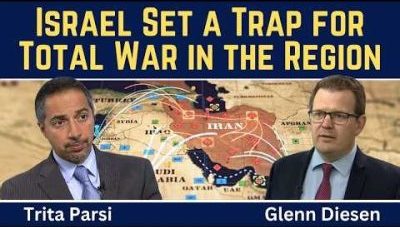
Trita Parsi: Israel Set a Trap for Total War in the Region
or go to
Aletho News Archives – Video-Images
From the Archive
Zionism’s Violent Legacy
By Donald Neff | Washington Report On Middle East Affairs | January 1996
On January 4, 1948, Jewish terrorists drove a truck loaded with explosives into the center of the all Arab city of Jaffa and detonated it, killing 26 and wounding around 100 Palestinian men, women and children.[1] The attack was the work of the Irgun Zvai Leumi – the “National Military Organization,” also known by the Hebrew letters Etzel – the largest Jewish terrorist group in Palestine. The Irgun was headed by Revisionist Zionist Menachem Begin and had been killing and maiming Arabs, Britons and even Jews for the previous ten years in its efforts to establish a Jewish state.
This terror campaign meant that at the core of Revisionist Zionism there existed a philosophical embrace of violence. … continue
Blog Roll
 Aletho News
- Trita Parsi: Israel Set a Trap for Total War in the Region
- Trump’s Iran war is on an Israeli leash
- Saudi oil boss issues global supply warning
- Riyadh Says Its Oil System Is Intact. The Numbers Say Otherwise.
- Trump and Netanyahu Want to “Finish the Job” on Iran
- US ‘one-sided dictation’ not Iran’s beliefs makes rational talks impossible: Baghaei
- Iran’s Next Strike May Not Explode. It Could Shut You Down /Col Doug Macgregor
- Iran: US political targets legitimate if assassinations return
- Iraq shuts key border crossing with Iran under US pressure: Report
- Undersea Internet cables could be targeted in retaliation for attacks on Iran: IRGC deputy chief
- If Americans Knew
- The Israel Lobby’s Changing Fortunes
- AIPAC has become such a political liability that it’s shifting to a more “nimble” approach to buying politicians
- At least 160 Israeli settler attacks in 2 weeks
- Will Gaza’s Ancient Christian Community Disappear Forever?
- Israel’s vision of regional security rests on keeping Arab states weak
- Heidi Levine recounts how Palestinian youths helped save her in settler attack
- DAILY UPDATE: Latest essential news on Palestine, Israel, & region
- Trump’s Intensifying Sabotage of the ICC, for Israel’s Sake
- Israeli military detain US and UK volunteers in West Bank including Democratic NY politician Brad Lander
- Americans at National Conservatism Conference held in Israel this year criticize Israel
- No Tricks Zone
- E-Cars Reduce CO2 Emissions By Only 41% Compared To Internal Combustion Engine Vehicles
- Predictions Made By Renowned Climate Professor Over Past Decades Have Been Proven To Be Poor
- New Study Suggests Large Regions Of The Pacific Ocean Have Been Cooling For The Last 80 Years
- Germany’s Green Energy Debacle: High Energy Costs Force Kahla Porzellan to Close After 182 Years!
- New Study: 50 Years Of The Most Aggressive ‘Net Zero’ Policies Can Only Affect The Global Climate By 0.03°C
- US September “Heat” Was No Record…Many Records Set Decades Ago
- Latest European Green Energy Debacle; Portugal’s Largest Flagship Solar Park Insolvent!
- Green Energy Debacle: German Expert Professor Fritz Vahrenholt Warns Of Severe Economic And Social Consequences
- Two More Paleo Reconstructions Affirm Meters-Higher Sea Levels Across Ireland, Brazil 7000-6000 Years Ago
- New Study: Earth And Venus Surface Warmth Largely Explained By Convection And Lapse Rate, Not CO2 Or Radiation

