Every villain needs a safe house and the Islamic State (IS) is no exception. Luckily for IS, it has two, possibly three waiting for it, all of them courtesy of NATO and in particular the United States.
The war in Syria has been going particularly poor for IS. With Russian air power cutting their supply lines with Turkey and the Syrian Arab Army closing in, it may soon be time for them to shop for a new home.
If the war is going bad for IS, it is going even worse for the supporting powers that have armed and funded them. To understand where IS might go next, one must first fully understand those supporting powers behind them. The premeditated creation of IS and revelations of the identity of their supporters were divulged in a Department of Intelligence Agency (DIA) memo first published in 2012.
It admitted:
If the situation unravels there is the possibility of establishing a declared or undeclared Salafist principality in eastern Syria (Hasaka and Der Zor), and this is exactly what the supporting powers to the opposition want, in order to isolate the Syrian regime, which is considered the strategic depth of the Shia expansion (Iraq and Iran).
The DIA memo then explains exactly who this “Salafist principality’s” supporters are (and who its true enemies are):
The West, Gulf countries, and Turkey support the opposition; while Russia, China, and Iran support the regime.
Before the Syrian war, there was Libya…
The DIA memo is important to remember, as is the fact that before the Syrian conflict, there was the Libyan war in which NATO destroyed the ruling government of Muammar Qaddafi and left what one can only described as an intentional and very much premeditated power vacuum in its place. Within that vacuum it would be eventually revealed through the death of US Ambassador J. Christopher Stevens that from the Libyan city of Benghazi, weapons and militants were being shipped by the US State Department first to Turkey, then onward to invade northern Syria.
And it appears the terrorists have been moving back and forth both ways through this US-sponsored terror pipeline. IS has since announced an official presence in Libya, and Libya now stands as one of several “safe houses” IS may use when finally pushed from Syria altogether by increasingly successful joint Syrian-Russian military operations.
Before Libya, there was Iraq…
Iraq, devastated by a nearly decade-long US invasion and occupation, has teetered on the edge of fracture for years. Sectarian extremism is eagerly promoted by some of the US’ strongest regional allies, particularly Saudi Arabia. The US itself has been cultivating and encouraging the separatist proclivities of select Kurdish groups (while allowing Turkey to invade and torment others) in the north, while Wahhabi extremists seek to dominate the north and northwest of Iraq.
IS itself has made its way into all of these trouble spots, coincidentally. And should the terrorist organization be flushed for good from Syria, it may find these spots yet another “safe house” that surely would not have existed had the US not intervened in Iraq, divided and weakened it and to this day worked to keep it divided and weak.
Before Iraq there was Afghanistan..
Of course, and perhaps the most ironic of all of IS’ potential “safe houses,” there is Afghanistan. Part of the alleged reasoning the United States embarked on its war in Afghanistan, stretching from 2001 to present day, was its supposed desire to deny terrorists a safe haven there.
Yet not only are terrorists still using the country as a safe haven, as pointed out in great detail by geopolitical analyst Martin Berger, the US intervention there has created a resurgence of the illegal illicit narcotics trade, and in particular a huge resurgence of opium cultivation, processing and exporting. This means huge financial resources for IS and its supporters to perpetuate its activities there, and help them project their activities well beyond.
Berger’s analysis lays out precisely the sort of narco-terrorist wonderland the US intervention has created, one so perfect it seems done by design, a blazing point on a much larger arc of intentionally created instability.
Where Russian bombs cannot follow…
Libya, Iraq and Afghanistan would be ideal locations to move IS. Libya’s state of intentionally created lawlessness gives the US and its allies a fair degree of plausible deniability as to why they will be unable to “find” and “neutralize” IS. It will be far more difficult for Russia to organize military resources to effectively strike at IS there. Even in Iraq, Russia has significant hurdles to overcome before it could begin operating in Iraq to follow IS there, and only if the Iraqi government agreed.
Afghanistan would be problematic as well. The ghosts of Russia’s war in Afghanistan still linger, and the US is already deeply entrenched, allegedly fighting a terrorist menace that seems only to grow stronger and better funded by the presence of American troops.
But while IS will be safe from complete destruction in Syria, where it looks like finally Damascus and its allies have begun to prevail, relocating outside of Syria and its allies arc of influence in the Middle East will drastically reduce its ability to fulfill its original purpose for being, that is, the destruction of that very arc of influence.
Furthermore, its reappearance elsewhere may change regional geopolitical dynamics in unpredictable ways. It is very unlikely IS’ new neighbors will wish to sit idly by while it broods. Libya’s neighbors in Egypt and Algeria, Afghanistan’s neighbors in Pakistan, China and Iran, and Iraq itself along with Syria and Lebanon, all may find themselves drawn closer together in purpose to eliminate IS in fear that it may eventually be turned on any one of them as it was on Syria.
What is least likely is that those “supporting powers” realize this is a trick tried one time too many. While that is certainly true, it appears to be the only trick these powers have left. They will likely keep IS around for as long as possible, if for no other reason but to exhaust its enemies as they attempt to chase it to the ends of the earth.
Seyyed Hassan Nasrallah, the secretary general of the Lebanese resistance movement Hezbollah, says Israel seeks government change in Syria in order to undermine the resistance front against the Zionist regime.
Israel prefers the Daesh Takfiri terrorists and al-Qaeda militants to the Syrian government, Nasrallah said in a televised address to the Lebanese nation on Tuesday, the Martyr Leaders Day.
He said the government of the Syrian President Bashar al-Assad poses a danger to the interests of the Israeli regime.
Israel agrees with Saudi Arabia and Turkey that any solution to the crisis in Syria must not prolong the existence of the government in Damascus, Nasrallah said.
He added that Israel prefers the partition of Syria to a political settlement of the crisis in the Arab country.
Nasrallah rejected claims that the Syrian government will finally bow to pressures for the disintegration of the Arab country, saying Syrian forces are present everywhere across Syria, meaning that the government will not allow such partitioning and the “national will” is clearly against that.
He also slammed Turkey and Saudi Arabia for their active support of the militants in Syria, saying they have failed in their plots against the government of Assad.
Militants in Syria are suffering successive defeats, Nasrallah stated, pushing Saudi Arabia and Turkey to consider deploying ground troops into Syria under the banner of the so-called international coalition against the Takfiri Daesh terrorists.
The Hezbollah secretary general said the plan for sending troops into Syria is a plot by Ankara and Riyadh to maintain their position at the ongoing peace talks over Syria.
He said the resistance movement and their allied forces will not allow any country to determine the future of Syria.
‘Tel Aviv only sees own interests in region’
The Hezbollah chief said that the Israeli regime is also after the formation of an alliance with some Sunni states, warning the Arab countries that this would only serve the interests of the Israeli regime.
Israel only looks after its own interests, he warned.
Nasrallah drew the attention of Arab states to the Israeli crimes against Sunni states since its creation.
“How can any sane person in Sunni states consider Israel as a friend, ally or a protector?” he asked.
If Israel becomes an ally of Sunni states, “Palestine will be lost eternally,” he warned.
He added that Israel also sees Iran and the resistance movement in Palestine and Lebanon as threats.
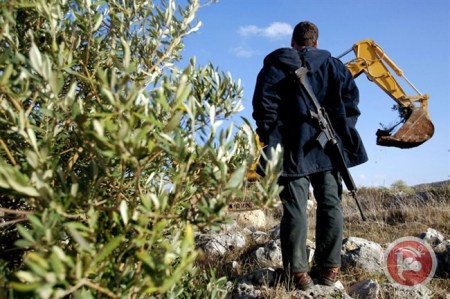
SALFIT – Israeli forces uprooted 100 olive trees in the Wadi Qana area west of the village of Deir Istiya in Salfit district on Tuesday amid ongoing efforts to push Palestinians out of the area, locals said.
Farmers from Deir Istiya told Ma’an the forces arrived in Wadi Qana and uprooted the trees without prior notice.
Soldiers then forced locals from the area in order to allow Israeli settlers to arrive there, the farmers said.
Ibrahim al-Hamad, director of the Palestinian Ministry of Agriculture’s Salfit branch, told Ma’an that soldiers removed the seven-year-old trees on the grounds that the area is a nature reserve, with planting prohibited in the area.
Al-Hamad added that Israeli soldiers also removed a water tank belonging to Palestinian locals.
A spokesperson for Israel’s Coordination of Government Activities in the Territories (COGAT) was not immediately available for comment.
Wadi Qana, a valley that has historically served agricultural and recreational purposes for local Palestinians who own land in the area, was declared a nature reserve by Israel’s Civil Administration in 1983.
Israel has used this designation for years to justify uprooting Palestinian crops and forcing Palestinians from the area, according to Israeli rights group B’Tselem.
Several Jewish-only Israeli settlements and outposts have been illegally established along the ridges of the valley since the 1970s.
Waste water dumped from the settlements has gradually polluted the river, forcing out Palestinians who have lived in and visited the valley for generations.
Palestinian owners of land in Wadi Qana and the village of Dir Istiya have meanwhile been prevented from building or planting in the area, the majority of which is in Area C, under the full civil and military control of Israel.
In a new multimedia production The New York Times is now offering us “The Roots of the Recent Violence Between Israelis and Palestinians,” a series of 13 images accompanied by brief notes. The title promises much, and the teaser adds that this new offering presents us with “the geography of the issues surrounding the ongoing violence.”
Here, it seems, the newspaper has an opportunity to provide the context so often missing from Times stories about Palestine and Israel. With such an introduction readers might hope to learn about the historical beginnings of the conflict and to perceive the effects of occupation on the face of the land.
It was not to be. In fact, this slick presentation distills the worst of the Times reporting on the issue. The text never once mentions the occupation; it provides no historical context of any kind, and it blindly follows the preferred narrative of Israeli propagandists.
The visuals never leave Jerusalem, and the text sticks to events there. The presentation opens with an image of the Dome of the Rock and the Al Aqsa Mosque, accompanied by the comment that the violence “was set off in part over a dispute over Al Aqsa Mosque compound.” Nothing more is said about this complex issue.
The images then move on to highlight Jewish “neighborhoods” in Palestinian East Jerusalem and Jewish homes dotting the Palestinian neighborhoods, and we learn that the “neighborhoods” are “considered illegal settlements by most of the world.” This is the Times’ usual formulation, which distorts the fact that the entire international community—outside of Israel—deems the settlements illegal.
There is no mention of the impact these settlements have on Palestinians’ lives. We get nothing but maps and terse comments about who lives where, but the Times does finally provide a motive for the recent attacks: It comes from “frustration” over the lack of basic city services.
We are set up for this trivial claim in the fourth visual, which shows us Shuafat Refugee Camp in East Jerusalem surrounded by a yellow line. “Israel built a barrier in response to Palestinian attacks from the West Bank in the early 2000s,” the text notes. “While effective at stopping suicide bombers, it cut off several East Jerusalem neighborhoods from the rest of the city, leaving them without basic services.”
In the following image the narrative continues, “Palestinians say these frustrations are at the root of the recent attacks. Israelis officials accuse Palestinian leaders of inciting violence.”
There we have it. Not a word about loss of land, the confiscation of resources, military incursions and all the many miseries associated with military occupation. So much for the “roots” of the conflict.
Although the Times attempts a show of balance, by referring to both sides, the text is heavily weighted toward the Israeli point of view. It twice mentions Israeli actions as “responses” to violence and never suggests that Palestinians are responding to oppression.
It repeats the Israeli claim that Palestinians who died in the recent uprising were all involved in attacks or “clashes” with troops, omitting the reports of human rights groups and others who charge Israel with “street executions” of Palestinians who pose no possible threat to security forces or civilians.
In addition, the Times gives a distorted account of the Separation Barrier. It fails to say that the 2004 International Court of Justice decision held that the wall is illegal and that its route (85 percent of it inside the West Bank) threatens “de facto annexation.” The newspaper also repeats the Israeli claim that the wall “effectively stopped suicide bombers.”
As an Israeli journalist recently observed in 972 Magazine, the recent assaults have demolished this facile claim. The latest attackers could have come with bombs instead of knives; the wall did not keep them out. The bombings ended when militants abandoned the tactic.
If the Times truly intended to illustrate the “geography of the issues surrounding the ongoing violence,” it could have shown some dramatic effects of the occupation on the landscape, such as:
The rows of dead parsley and spinach fields in Gaza, where Israel has deliberately sprayed herbicides on hundreds of acres
The contrast between lush West Bank settlements, with their lawns and swimming pools, and parched Palestinian villages nearby
The shrinking cantons of the West Bank, where Israel is illegally confiscating more and more Palestinian territory
The dead strip of land inside Gaza, where Israel has imposed a firing zone and has frequently entered to bulldoze crops and soil
Images such as these might provide a real sense of the “roots” of the recent violence. Instead, the Times has chosen to encapsulate Israeli propaganda in this latest presentation, perpetuating its ingrained bias in a package of misleading notes and slick visual effects.
A video released by a Palestinian, immediately after Israeli forces shot and critically injured a 14-year-old girl, shows Israeli forces assaulting bystanders.
In the video, an Israeli soldier pushes a disabled man in a wheelchair backwards, flipping the man and his wheelchair over. Two more Palestinians rush to the disabled man’s aide, while Israeli forces charge forward at other bystanders, setting off a stun grenade.
The video shows Israeli forces attacking and threatening Palestinians who were attempting to get near Yasmin al-Zarou, who was shot near an Israeli checkpoint in Hebron city, according to Ma’an.
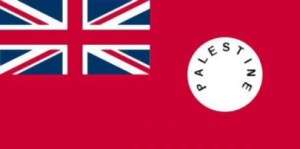
Public bodies in Britain are to be prevented from boycotting “unethical” goods, such as those from illegal Israeli settlements in Palestine, under a plan expected to be announced later Monday, local media reported.
Publicly funded institutions such as local municipalities and universities will face “stiff penalties” if they bar products from companies involved in the arms trade, fossil fuels, tobacco or West Bank settlements, The Independent newspaper reported, citing ministers.
The proposals – due to be announced by Cabinet Office Minister Matthew Hancock – are being put forward on the grounds that bans on products are harming community relations and fuelling anti-Semitism.
“The new guidance on procurement combined with changes we are making to how pension pots can be invested will help prevent damaging and counter-productive local foreign policies undermining our national security,” Hancock told The Independent.
Some public bodies around the U.K. have refused to buy goods from Israeli settlements in recent years and they would have to reverse those decisions under the plans.
In Leicester, a city in the East Midlands, elected officials agreed in 2014 that the municipality would not buy settlement produce. That year the devolved government in Scotland issued a notice discouraging trade and investment with settlements by Scottish councils.
The government’s plan was criticized as an attack on local democracy.
Amnesty International’s Economic Relations Program Director Peter Frankental said the proposal could encourage human rights abuses.
“All public bodies should assess the social and environment impacts of any company with whom they choose to enter into business relationships,” he told The Independent. “Where’s the incentive for companies to ensure there are no human rights violations such as slavery in their supply chains, when public bodies cannot hold them to account by refusing to award them contracts?”
Israeli settlements in the West Bank, East Jerusalem and the Golan Heights — lands occupied by Israel in 1967 — are considered illegal by the international community and a major impediment to peace with Palestinians.
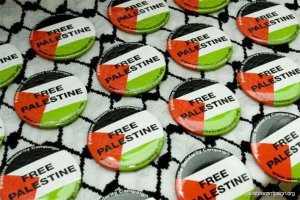
A schoolboy has been questioned by anti-terrorism police because he wore a “Free Palestine” badge to school, The Independent newspaper reported.
Rahmaan Mohammadi’s teachers at Challney High School for Boys in Luton referred him to police under Prevent – the controversial government anti-radicalisation programme.
The pupil was also wearing pro-Palestine badges and wristbands. He had previously requested permission to fundraise for children affected by the Israeli occupation.
Mohammadi said he had previously been warned by police not to talk about Palestine in school, and claimed that staff members approached his 14-year-old brother and pressured him to tell him to “stop being radical”.
Officials with the Israeli regime, which is already widely accused of supporting Takfiri militants wreaking havoc in Syria, have called for the partition of the Arab country along sectarian lines.
Ram Ben-Barak, the director general of Israel’s Intelligence Ministry, said the proposed breakup was “the only possible solution” to the conflict in Syria.
“I think that ultimately Syria should be turned into regions, under the control of whoever is there – the Alawites where they are, the Sunnis where they are,” Ben-Barak told Israel’s Army Radio on Sunday.
Israel’s Minister of Military Affairs Moshe Ya’alon, who was in Munich to meet with European counterparts and Jordan’s King Abdullah, also echoed Ben-Barak’s remarks.
“Syria as we have known it will not be united anew in the foreseeable future, and at some point I reckon that we will see enclaves, whether organized or not, formed by the various sectors that live and are fighting there,” he said in a statement on Sunday.
Ya’alon also voiced doubt that a ceasefire plan for Syria agreed upon recently would succeed.
After negotiations in Munich, diplomats from a working group of 17 countries, including the US, Russia, Turkey, Saudi Arabia and Iran, agreed Thursday to establish a temporary “cessation of hostilities” in Syria within a week.
The International Syria Support Group (ISSG) also called for rapid humanitarian access to besieged Syrian towns.
The Israeli officials’ statements come as reports say Israel has been supporting the militants fighting the government of Syria’s President Bashar al-Assad.
The Israeli regime has set up hospitals near the border with Syria to treat the injured militants coming in from the battlefield there. Locals in the occupied Golan Heights have also intercepted Israeli vehicles transporting injured militants on the road between al-Sheikh Mountain and the village of Majdal Sham.
The Israeli calls for dividing Syria was raised as Turkey and Saudi Arabia, two regional sponsors of militant groups in Syria, have in recent weeks voiced their interest in launching a ground operation inside the country.
On February 12, Saudi Foreign Minister Adel al-Jubeir told CNN that Riyadh is ready to deploy special forces to Syria if the US-led coalition, carrying out airstrikes in the country since September 2014, decides to take such a move.
The idea of a possible participation in ground operations in Syria was first raised on February 4 by Ahmed Asiri, a spokesman for the Saudi Defense Ministry.
Furthermore, Saudi Arabia has dispatched warplanes to the Incirlik Air Base in southern Turkey, claiming that the move is in line with the fight against Daesh terrorists in neighboring Syria.
Turkish Foreign Minister Mevlut Cavusoglu has said Ankara and Riyadh could launch a ground operation in Syria “if there is a strategy.”
The United States has welcomed the Saudi offer, while it has been met with strong criticism from Syria and its allies.
Syrian Foreign Minister Walid al-Muallem has said that any “ground intervention on Syrian territory without government authorization would amount to an aggression that must be resisted.” He has also warned that potential aggressors would return home in a “wooden coffin.”
Russia, Iran and Iraq have also warned against the deployment of foreign ground forces in Syria.
The foreign-sponsored conflict in Syria, which flared up in March 2011, has killed some 470,000 people and left 1.9 million injured, according to the so-called Syrian Center for Policy Research.
It is particularly ironic that the Zionist-controlled media are pushing the agenda of multiculturalism in Europe while insisting on the right of Israel, the world’s only racist, apartheid state, to exist. At the same time, the conditions for this artificial, dystopian form of multiculturalism involve the destruction of some of the world’s most successful multi-racial states such as Yugoslavia, Libya, Syria and, if they succeed, possibly Eritrea.
What we are witnessing here is a process of engineered acculturation where people are being uprooted, displaced and abandoned to the limitless tyranny of the market and commodity fetishism. The boats crossing the Mediterranean Sea are, to quote Freisleben again, ‘Rothshild’s slaughterships’, the slave-boats of Zionism’s New World Order.
Jacques Attali is one of France’s most respected Zionist penseur, and has been an advisor to successive French governments. He has referred to globalisation’s war against the nation-state as the ‘Somalisation of the world’. Attali has predicted that the Westphalian state will be destroyed during the epochal chaotic transition to a ‘gouvernement mondial’, a global state with Jerusalem as its capital. The idea might appear as utterly far-fetched to a reasonable person but Zionists are not reasonable people and it should be of deep concern that the world’s most powerful governments are being advised by such influential racist fanatics with overtly global ambitions.
At a meeting of World Jewish Congress in 2014, Attali referred to the Jews in France as a privileged class. Therefore, in order to prevent Muslim immigrants from developing resentment of this ethnocentric class rule, Attali suggested that rich Jews should help create a French Muslim petite-bourgeoisie. They should also, he argued, finance the Imams in order to prevent objections to Zionism. In other words, an elite of French Muslims should be groomed by Zionist Jews so that they can keep the proletarian Muslims driven from North Africa and the Middle East by Zionism from overthrowing their Jewish overlords, both at home and in their countries of exile.
As the mass media drum up Islamophobia while glorifying Al-Qaida terrorists in Syria in the service of Zion, the ancillary regimes of the Jewish state, namely Qatar and Saudi Arabia, are zealously implementing Attali’s suggestions. Giulio Meotti for the Israeli National News reports:
A few days ago, the president of the Sorbonne, Philippe Boutry, signed an agreement with the attorney general of the state of Qatar. Within the next three years, the Islamic monarchy will finance the studies of hundreds of Syrian immigrants at the Parisian academic jewel. The Sorbonne has accepted 600,000 euros per year for three years.
Jacques Attali is on record stating the he does not consider non-Jews as human beings. The view that non-Jews are subhuman comes from Talmudism and does not necessarily represent the views of secular or Orthodox Jews. There IS a difference.
In France, the rise of the Marine Le Pen’s Front National is increasing steadily. Le Pen’s party appears to have the backing of a considerable portion of Zionism, which may account for why Le Pen’s image and stature has dramatically improved in the French press. The Front National is now being courted by prominent public intellectuals as the party of the oppressed. Its reactionary agenda is being marketed as ‘left-wing’ and ‘anti-globalisation’. Although Marine Le Pen opposed the war against Libya-as opposed to the Trotskyite Jean Luc Melanchon, who supported it- Le Pen has supported all other French wars of aggression in Africa, such as the French bombing and invasion of Mali and the French invasion of the Central African Republic. Nor has Le Penn ever called into question the French financial control of many Francophone neo-colonies in Africa. Le Pen is a populist playing up to popular discontent, exploiting the despair of the masses with empty slogans and a hefty dose of xenophobia, adroitly eschewing any reference to the real problem in France: capitalism.
The Europe depicted by Michel Houellebecq in his nightmarish novel Soumission– submission- where a French Muslim community led by a Muslim Brotherhood political party faces Marine Le Pen, is inexorably becoming a reality.
The French and European political scene is being irrevocably set for a Huntingtonian ‘clash of civilisations’. The clichéd theory of the ‘Jewish conspiracy’ against all non-Jews appears so crude and essentialist, so simple and vulgar in its implications, as to pass for irrational, urban and ‘anti-Semitic’ folklore, which, of course, it is. But objective and rational analysis of the centrality of the “Jewish question” and Zionism in the context of the current, global power-configuration is more urgent than ever. For if we do not bring Zionism under control, Zionism will eventually control us. This also applies to Jews. As Professor Yoakov Rabkin in his book Comprendre L’Etat d’Israel: Ideologie, Religion et societe, argues:
Paradoxically, Jewish nationalism is conceptually compatible with anti-Semitics theories, for it also postulates the impossibility of the Jew becoming a full and equal member of European society. History shows that the attraction of Zionism augments with the intensity of anti-Semitism or of economic difficulties, which explains the fact that relatively few British, American or French Jews have accepted the Zionist project since its inception up to to today and rarely leave their countries to settle in Israel. (p. 49)
In 2013, the European Jewish Parliament was set up by Jewish Ukrainian billionaire and (ironically) neo-Nazi Ihor Kolomoyski. While the organisation claims to be an NGO, it functions according to the structures of a veritable parliament. Why does an ethnic minority in Europe have its own parliament? Will other ethnic minorities in Europe receive their own parliament too? Perhaps Jews deserve their own European parliament because they are officially recognised as ‘Europe’s chosen people’, as its ‘constitutive minority’. That is what was said in the opening remarks of a conference held in Israel in 2013, sponsored by the Konrad Adenhauer Foundation.
Since the counter-revolutions in Eastern Europe of 1989, Jewish supremacy has accompanied the triumph of neo-liberalism and globalisation in Europe and the United States. This racial supremacy is being stealthily enshrined in US law. In 1991, the 102nd US Congress passed a resolution on the Noahide Laws. These are seven laws which Jewish rabbis believe should rule the lives of non-Jews, while Jews are to be ruled by a special set of laws.
The aforementioned racist Rabbi Manachem Mendel Schneerson, of the Lubavitch Movement, is praised in the resolution.
In 1995 Professor Ernest S. Easterly of the Southern University Law Centre presented a paper entitled “The Rule of Law and the New World Order” to the Organisation for Security and Cooperation in Europe.
An expert in Jewish law, Easterly is a zealous proponent of the Noahide Laws. He referred to the passing of the laws by the US congress in 1991 as “the first rays of dawn” which “evidence the rising of a yet unseen sun”. According to Micheal A. Hoffman: The Jewish Encyclopedia envisages a Noahide regime as a possible world order immediately preceding the universal reign of the Talmud.
While it is possible to simply ignore these policy documents as aberrant and marginal manifestations of ruling class ideology, they nonetheless constitute a sinister form of racism and religious bigotry, one which has, to a large extent, been unperceived.
Belgian physicist Jean Bricmont was ostracized and branded an ‘anti-Semite’ by the French media after he argued that it is high time Zionism was discussed and debated by non-Jews. Pro-Zionist and ostensibly ‘anti-Zionist’ literature and discourse tends to be dominated by Jews. And many Jewish ‘leftists’ tend to ignore the primacy of the Jewish Lobby in the formulation of US foreign policy. Instead, they advance the theory that Israel is simply a colony of the US empire, a tool with which to control the Middle East. This is patent nonsense to anyone who has studied what sociologist James Petras refers to as the ‘Zionist power-configuration’ in the United States, a power-configuration that extends to Europe and beyond.
During the run-up to the Iraq war in 2003 Jewish ‘leftists’ blamed the US ‘neo-cons’ and their desire to control Iraq’s oil for the drive towards war. Little or no mention was made of the fact that the real driving force behind the propaganda campaign for the war on Iraq came from the Jewish Lobby. This is amply documented in James Petras’ book The Power of Israel in the United States.
The strategic imperatives of the Zionist entity require the division and conquest of all Arab lands, so as to clear the Middle East in preparation for expanded Israeli colonisation, as stipulated in the Yinon Plan and the project of Eretz Israel-Greater Israel. Yet we were being told by many Jewish leftists that the Iraq invasion was a ‘war for oil,’ in spite of the fact that Western corporations had already acquired as much Iraq oil as they could manage.
Most anti-imperialist intellectuals in the Middle East will tell you that the war against Syria is a proxy-war waged by the Jewish state in order to create the conditions of a ‘New Middle East’ a euphemism for Greater Israel. Yet, many Jewish critics of US policy in Syria insist that it is the United States (plus Israel). An historical analogy might be helpful here. For centuries Ireland was colonised by the British Empire. Irish farmers paid rent to British aristocrats who had dispossessed them. Ireland was impoverished from debt. Although some Irishmen played an important role in the British army and served in high office throughout the empire, no one could claim that it was the ‘Irish Lobby’ in London who persuaded the British to conquer India, Hong Kong or Kenya or that the Irish nation somehow benefited from those conquests. Empires exploit colonies. Colonies do no exploit empires. If Israel were a colony of the United States, then we would surely see the emergence of an Israeli national liberation movement from US exploitation and colonisation! No such movement exists.
Zionist and crypto-Zionist Jews, through their control of both the corporate and much of the ‘alternative’ media, have managed to play down the centrality of the Jewish state’s role in America’s foreign wars and the importance of Jewish ‘hasbara’-propagandists and ‘sayonim’- helpers in that war effort. They ignore the fact that the only state which is really benefiting from America’s wars is Israel.
One might object to the thesis of Israel’s power over US foreign policy by citing the very clear differences expressed by Washington and Tel Aviv regarding Iran’s nuclear programme. Here, surely, one might argue, the United States is not following Israel’s agenda. While Israel’s Likudniks oppose the deal with Iran, more ‘moderate’ Zionists agree with the compromise. For Israel and the United States, the deal with Iran is but a stepping stone towards an infiltration and destabilisation of the Islamic Republic. Diplomatic and business contacts with the West will inevitably facilitate greater ideological and intelligence penetration of Iran by the US and Israel, while the proxy- terrorist groups fighting against Iran in Yemen, and Syria will continue to receive support from the Mossad and the CIA. In fact, the Zionist destabilisation of Iran has already begun. The Kurdish social movement in Iran is supported by Israel.
The litmus-test for distinguishing the genuine anti-Zionist from the crypto-Zionist is the question of Israel’s relationship to the United States and Europe. As for the independent
media, one will often find that the bullying and derisive techniques of the corporate media to discredit dissidents are employed to discredit those who would dig too deeply into the Zionist machinations of US imperialism. The fallacy of reductio ad absurdum is a particularly common technique. This usually involves discrediting an anti-Zionist theory by falsely implying that the proponent of that theory believes in the supernatural, that he is a deranged simpleton who believes the world is run by goblins and such like. Another technique is the reductio ad Hitlerum, whereby those who discuss the problem of Jewish supremacy are compared to racists such as Adolf Hitler.
Jewish ‘anti-imperialist’ pundits regularly become ‘leaders’ and ‘gurus’ of ‘leftist’ movements and often use their credibility to police how issues of ethnicity, class and nationalism are conceptualized and discussed. Once people among their ‘ranks’ probe too deeply into Zionist intrigue, Zionist racial supremacy, warning signals are promptly sent out of a ‘far right’ and ‘fascist’ infiltration of the ‘movement’, this in spite of the fact that ‘fascism’ is precisely what genuine anti-Zionists are denouncing.
Such techniques sometimes work but more often than not, they only draw more attention to the suspicion among non Jewish critics of Zionism that an attempt is being made by ‘leftist’ Jews to deflect attention from the real sources of power in the capitalist world order, namely the Zionist power configuration.
It is therefore important for such individuals to occasionally re-emphasise their ‘opposition’ to Israel. In this sense, the Jewish ‘anti-imperialist’ bears a striking resemblance to the spokesmen of the Islamic State.
For what is the Islamic State or Da’esh other than the foreign legion of Israel. They have achieved in little time what no other Israeli proxy-force could have achieved. They have cleared vast territories of Iraq and Syria, have attacked Hamas in Gaza and have conveniently occupied the Sinai peninsula in Egypt. It is perhaps more apposite than ironic that security experts also refer to the Mossad as ISIS, Israel’s Secret Intelligence Service. It is hardly surprising, therefore, that official UN documents confirm Israel is covertly supporting Da’esh.
Like the Jewish pseudo anti-imperialists, the spokesmen of the Islamic State always refer to their hatred for “America” and the “freedoms of Americans” as the reason for their crusade. They do not seem to be too concerned about Israel, except, of course, when they miraculously manage to stage terrorist attacks on European soil, which often take place in formerly Jewish owned properties. Such attacks foment Islamophobia and the notion that Jews are hated and in danger, an agenda which serves Zionist regional and global hegemonic ambitions. In this sense one could argue that both the Islamic State and crypto-Zionists serve the same purpose: constantly deflecting attention from Zionism by blaming Israel’s giant, stultified Leviathan — the United States of America.
WASHINGTON — On Sunday, Bernie Sanders endorsed President Barack Obama’s violent, expansive foreign policy in an effort to distance himself from accusations of inexperience in matters of war.
Senator, while you were in New York, North Koreans launched a long range missile. As President, you’d face that kind of thing all the time, very often. And what Secretary Clinton is saying is that you don’t have the experience to be ready for those kinds of challenges on day one.
Sanders responded:
Well, that’s what she said about Barack Obama in 2008, and it turned out not to be true. I am impressed by the quality of his foreign policy.
Sanders also emphasized his vote against the Iraq War, which he said was “most important foreign policy issue in modern history.”
Under Obama, the U.S. military has expanded its presence throughout the globe, with bases or military advisors found in over 100 countries. Africa, in particular, has been transformed into what military scholar and journalist Nick Turse called a “laboratory for a new kind of war.”
In another echo of Obama’s foreign policy, Sanders made it clear during the interview that he won’t seek to end the wars in the Middle East, but rather would shift more of the burden of fighting them to foreign forces.
“We’ve got to learn the lessons of Iraq,” Sanders told Dickerson, “and that is that the United States of America cannot do it alone. We have to work in coalition with major countries and with Muslim countries whose troops will be on the ground.”
He added: “My main concern, in terms of the Middle East, is the United States does not get involved in perpetual warfare.”
The Obama administration aided local forces in the destabilization Libya, leading to the rise of extremism in that country. Last month, the Pentagon began laying the groundwork for new military actions in Libya, in order to quell the rise of Daesh (an Arabic acronym for the group commonly known in the West as ISIS or ISIL), which has flooded into the power vacuum left after the overthrow of the Gadhafi government.
And in Syria, U.S. aid has gone to so-called “moderate” rebels that were often allies of Daesh or al-Qaida. These rebel allies helped destabilize the nation, leading to one of the worst refugee crises the world has ever seen.
If it sounds like another term of Obama’s foreign policy, at least rhetorically, that’s because it is. Minus the inclusions of fair trade … it is nearly identical to the principles espoused by President Obama.
The US administration is preventing the country’s banks from doing business with Iran despite the lifting of sanctions on the Islamic Republic.
Washington says it has eased “secondary” sanctions targeting companies outside the US and Americans seeking certain businesses in Iran but most “primary” sanctions related to terrorism and rights accusations remain in place.
“Broadly, the US primary embargo on Iran is still in place,” John Smith, acting director of the Treasury Department’s Office of Foreign Assets Control (OFAC), told a congressional panel on Thursday.
That means the opening with Iran following the implementation of the nuclear accord “does not have any impact on us,” the AFP news agency quoted an official with one large New York bank as saying.
“We’re still very prohibited from engaging in just about any business activity with Iran except on very limited exceptions,” the official added.
US banks interested
According to AFP, several leading US banks, including Bank of America, JPMorgan Chase, Goldman Sachs and Morgan Stanley, are keen to enter the Iranian market.
They have reportedly turned to teams of lawyers and other specialists as they plumb the shifting legal terrain.
“We continue to monitor the developments in Iran,” Citigroup spokesman Kamran Mumtaz told the French news agency.
Several leading US banks are keen to enter the Iranian market, AFP says.
According to OFAC, all foreign banks operating in the US are forbidden from clearing US dollar-denominated transactions involving Iran through US banks.
Smith said non-US companies who provide support to Iranian entities “may face being cut off from the US financial system.”
Iranian officials say the Central Bank of Iran (CBI) has decided to carry out all foreign trade in euros to avoid any complications.
Meanwhile, non-US banks that work in both Iran and the US are reportedly isolating Iranian business from their US assets to avoid possible American punishments.
The US government has also freed banks to make loans in some specific businesses and activities involving Iran such as sales of airplane parts.
Banks can further provide financing to US companies that import Iranian foods or carpets, pistachio nuts and caviar.
However, the nuclear accord still faces threats from US presidential candidates who have pledged to undo it after President Barack Obama is gone.
‘Business as normal’
Those threats have only harmed American entities which are blocked from joining a rush by non-US companies to cash in on trade opportunities in Iran.
On Monday, the world’s largest independent oil trader Vitol Group said it’s “business as normal” with Iran after the end of economic sanctions.
Austria’s Raiffeisen Bank International (RBI) also said it wanted to open a branch in Tehran “as quickly as possible,” becoming the first foreign lender to set up shop in Iran after the lifting of sanctions.
Major companies from Asia to Europe are rushing to resurrect trade with the global energy superpower which sits on the worlds’ biggest oil and gas reserves combined as well as massive mineral deposits.
Italy and France signed initial deals worth more than $40 billion in a variety of fields — from oil and gas to car manufacturing, construction, health and agriculture and clean energy development — last month during President Hassan Rouhani’s visit to Europe.
Seeking to reassure, Paris unveiled an accord offering state guarantees to back French investments in Iran through credit management firm Coface in order to cover onsite non-payment risks.
Israel’s frantic cocoon-weaving entered a new phase last week, as Benjamin Netanyahu’s government stepped up efforts to stifle the last vestiges of dissent.
The military censor’s office, a draconian 70-year-old hangover from British rule in Palestine, extended its powers over Israeli press and TV to prominent blogs and social media.
The government has also threatened to revoke the press cards of “journalists and editors who are negligent in their work” – aimed at those who depart too obviously from the official line.
These moves follow culture minister Miri Regev’s announcement of a “loyalty law” that will deny state funding to artists and cultural institutions that are not sufficiently patriotic.
The education minister, settler leader Naftali Bennett, meanwhile, is reportedly preparing a raft of measures: a ban on access for pupils to literature and theatre not in line with government thinking, cuts to already very limited pluralism education and a new civics textbook vilifying the Palestinian minority.
In this atmosphere of inculcated ignorance and prejudice, it is easy for Mr Netanyahu to persuade public opinion that the recent wave of Palestinian protests and attacks, which have left more than 160 Palestinians and 29 Israelis dead, is solely the result of “incitement” from Palestinian officials and media. The Israeli right suggests that Palestinians who stab or drive cars at their oppressors, most often soldiers and settlers, are easily inflamed into action by words that appeal to ancient prejudice.
As the Israeli public discourse grows ever more detached from reality, Israel’s military commanders sound like an oasis of sanity – at least, by comparison.
The Israeli army actually has an operational interest in understanding what drives the Palestinian attacks – both to better counter them and to quieten growing government pressure for drastic responses, ones that could trigger the collapse of Mahmoud Abbas’s Palestinian Authority.
The military have sent intelligence officials into Israeli prisons to interview Palestinians who were not killed during their attacks, including children as young as 13.
What the army has found should surprise no one. Palestinians feel desperate and hopeless about a situation in which their own and their families’ freedoms are tightly restricted by a seemingly endless Israeli occupation.
The Palestinians behind the attacks – “lone wolves”, as Israelis call them – are often also facing extreme personal crises: suicidal thoughts, financial troubles or grief from a relative or friend’s death at Israel’s hands.
Few have had any experience of Israelis beyond the soldiers who mistreat them at checkpoints and during raids on their villages, and the settlers who lord it over them.
These findings have provoked a widening rift between the government and military.
Mr Netanyahu and his allies, drawing on the Israeli right’s traditional “iron wall” philosophy of ruthlessly crushing Palestinian dissent, have demanded greater privations for those under occupation to make them submit.
Last week, the government responded to an attack on a checkpoint by a Palestinian security official that injured three Israeli soldiers by locking down Ramallah, the Palestinians’ current economic and political capital.
The army effectively overruled that decision the next day. Gadi Eisenkott, the chief of general staff, has repeatedly warned that collective punishment will only fuel Palestinian anger and increase attacks.
He argues that more permits for Palestinian labourers to work in Israel, improving the Palestinian economy, is “an Israeli interest and a restraining factor”. He also prefers nurturing existing ties with the Palestinian security forces.
The military doves, however, are no less deluded than the political hawks.
The politicians want a collective stick to beat the Palestinians, one that will only intensify the conflict. The military, on the other hand, want individual perks for good behaviour to perpetuate the status quo a little longer.
What neither side wishes to talk about is the framework that creates Palestinian despair and anger: the occupation.
The personal crises identified by the military that spur Palestinians to violence – debt, depression and the killing of a friend or relative – are not a stroke of bad luck befalling individuals. They are an inevitable by-product of the systematic abuses inflicted on an entire occupied population.
Lawlessness from land-hungry Jewish settlers, severe movement restrictions, home demolitions and “policing” by a hostile army ensure Palestinians live as a subjugated people, slaves to ever harsher repression.
Anyone who challenges Israelis’ bubble of illusions faces the Israeli government’s wrath, as UN secretary-general Ban Ki-moon found last month. When he pointed out the obvious – that it was “human nature to react to occupation” – Mr Netanyahu accused him of “stoking terror”.
Worse vitriol rained down on Sweden’s foreign minister, Margot Wallstrom, when she made much the same point – and urged an investigation into the apparent executions of some of the Palestinians recently killed by the army. She was accused of “defamation” and officially barred from visiting Israel.
The blinkered assumptions of both Israel’s politicians and its generals mean neither can find a way out of the current mire.
Those who wish simply to perpetuate Palestinian suffering may triumph over those who would prefer to intensify it. Either way, Palestinians will continue to resist.
By Donald Neff | Washington Report On Middle East Affairs | January 1996
On January 4, 1948, Jewish terrorists drove a truck loaded with explosives into the center of the all Arab city of Jaffa and detonated it, killing 26 and wounding around 100 Palestinian men, women and children.[1] The attack was the work of the Irgun Zvai Leumi – the “National Military Organization,” also known by the Hebrew letters Etzel – the largest Jewish terrorist group in Palestine. The Irgun was headed by Revisionist Zionist Menachem Begin and had been killing and maiming Arabs, Britons and even Jews for the previous ten years in its efforts to establish a Jewish state.
This terror campaign meant that at the core of Revisionist Zionism there existed a philosophical embrace of violence. … continue
This site is provided as a research and reference tool. Although we make every reasonable effort to ensure that the information and data provided at this site are useful, accurate, and current, we cannot guarantee that the information and data provided here will be error-free. By using this site, you assume all responsibility for and risk arising from your use of and reliance upon the contents of this site.
This site and the information available through it do not, and are not intended to constitute legal advice. Should you require legal advice, you should consult your own attorney.
Nothing within this site or linked to by this site constitutes investment advice or medical advice.
Materials accessible from or added to this site by third parties, such as comments posted, are strictly the responsibility of the third party who added such materials or made them accessible and we neither endorse nor undertake to control, monitor, edit or assume responsibility for any such third-party material.
The posting of stories, commentaries, reports, documents and links (embedded or otherwise) on this site does not in any way, shape or form, implied or otherwise, necessarily express or suggest endorsement or support of any of such posted material or parts therein.
The word “alleged” is deemed to occur before the word “fraud.” Since the rule of law still applies. To peasants, at least.
Fair Use
This site contains copyrighted material the use of which has not always been specifically authorized by the copyright owner. We are making such material available in our efforts to advance understanding of environmental, political, human rights, economic, democracy, scientific, and social justice issues, etc. We believe this constitutes a ‘fair use’ of any such copyrighted material as provided for in section 107 of the US Copyright Law. In accordance with Title 17 U.S.C. Section 107, the material on this site is distributed without profit to those who have expressed a prior interest in receiving the included information for research and educational purposes. For more info go to: http://www.law.cornell.edu/uscode/17/107.shtml. If you wish to use copyrighted material from this site for purposes of your own that go beyond ‘fair use’, you must obtain permission from the copyright owner.
DMCA Contact
This is information for anyone that wishes to challenge our “fair use” of copyrighted material.
If you are a legal copyright holder or a designated agent for such and you believe that content residing on or accessible through our website infringes a copyright and falls outside the boundaries of “Fair Use”, please send a notice of infringement by contacting atheonews@gmail.com.
We will respond and take necessary action immediately.
If notice is given of an alleged copyright violation we will act expeditiously to remove or disable access to the material(s) in question.
All 3rd party material posted on this website is copyright the respective owners / authors. Aletho News makes no claim of copyright on such material.
 Public bodies in Britain are to be prevented from boycotting “unethical” goods, such as those from illegal Israeli settlements in Palestine, under a plan expected to be announced later Monday, local media reported.
 A schoolboy has been questioned by anti-terrorism police because he wore a “Free Palestine” badge to school, The Independent newspaper reported.
 Aletho News

