Internet Lovers! Know Your Enemy: Cass Sunstein
By C.J. Maloney | Lew Rockwell | March 2, 2011
Truth is the foundation on which the power of the press stands and falls, and our only demand of the press, also the foreign press, is that they report the truth about Germany.
~ Otto Dietrich, Reich Press Chief, 1934
Democracy is under assault! To the bulwarks! Quick, load the catapult with our freedom of speech and shoot it over at the enemy; it’s our only hope! So says Harvard professor Cass Sunstein in his On Rumors: How Falsehoods Spread, Why We Believe Them, What Can Be Done. More an 88-page gab session than a structured book, On Rumors makes me wonder if this is how Professor Sunstein sounds at the chalkboard…placid, scattershot and above all, repetitive. The villain of his piece is the Internet – a fertile breeding ground for “false” rumors – and his knight in shining armor the government censor.
The book starts off with, ends, and endlessly repeats a trumpet blast sure to grab the modern American ear – democracy is in peril. (Sunstein, 3, 10, 65, 85, etc.) The culprit? Free speech – a protective shield for the “false” rumors so hated by the author, all running amok and unfettered via the Internet highway, a regulatory void with no political infringements whatsoever. The Internet is, to the author, a dagger pointed at the very heart of democracy.
Sunstein puts forth two goals of his effort. First, to study how and why rumors spread, where he attempts to use social cascades and group polarization to paint the obvious with an intellectual varnish, a collegiate effort to erect something as earthy as “telegraph, telephone, tell a friend” into a three-month long lecture that costs $17,000 to hear at Harvard.
His second goal is the book’s main course – and the part of most interest to those in power itching for any excuse to regulate the Internet – where he grants some helpful suggestions as to “what we can do to protect ourselves against the harmful effects of false rumors.” (Sunstein, 4-5) His answer? Not censorship (heavens, no!) but the imposition of a “chilling effect” on such rumors; just the “false” ones, mind you.
Sunstein insists this is necessary as “False rumors…can threaten careers, policies, public officials, and sometimes even democracy itself.” (Sunstein, 3) Of course, no warning would be complete for post-9-11 America without pointing out how the Internet is “crucial in the process of radicalization.” (Sunstein, 41) He plays to the reader’s self-interest, as “rumors can harm the economy” (Sunstein, 3) and “fuel speculative bubbles, greatly inflating prices” (Sunstein, 8) as well as his self-conceit, since “all of us are potential victims of rumors, including false and vicious ones.” (Sunstein, 3)
A large concern of the author is the protection of the political elite, since with the spread of “false” rumors “people might lose faith…in their government itself.” (Sunstein, 10) Though he warns that “many rumors spread conspiracy theories” (Sunstein, 7) I’d advise him to read a copy of The Ideological Origins of the American Revolution by his fellow Harvard professor Bernard Bailyn, who helpfully points out that our Founders were rabid “conspiracy theorists” and, even more to the point, urge Sunstein to look at history and the innumerable times when “conspiracy” theories proved themselves to be absolutely true.
For all his learned sounding discourse, Sunstein freely admits he has no idea what exactly a rumor is, as “there is no settled definition of rumors, and I will not attempt to offer one here.” (Sunstein, 5) He has the mind of your standard American activist, her “progressives,” always on the look out for a social ill to cure via the application of political power. All he needs, in this case, is to assault the freedom of speech so he may stop something he can’t quite define but knows for certain is there.
The Censorship That Dares Not Speak Its Name
These points should not be taken as a plea for any kind of censorship…
~ Cass Sunstein, On Rumors, 2009
Most grating on the reader’s ear (and insulting to his intelligence) is Sunstein’s habit of softening every statement in an attempt to appear thoughtful and levelheaded about what he is proposing. This leads him to write in the same manner as an insecure teenage girl speaks, every sentence reads as if it should end with a question mark, as when “(the problem) seems to be increasing” (Sunstein, 10) and “rumors are nearly as old as human history.” (Sunstein, 3) Eventually his constant use of softeners make him appear not reasonable, but weak-kneed. This book lacks the courage of the author’s convictions.
Even his outright call for censorship arrives on stage with a timid limp – Sunstein is loath to come out and say what he means. He claims that “while old style censorship is out of the question” (Sunstein, 12) and “a chilling effect can be exceedingly harmful…let’s be careful about undue emphasis on the underlying risk…we should be able to agree that on occasion, the chilling effect is a very good thing.” (Sunstein, 72) As always with Sunstein, it comes back to the Internet. “It is not obvious that the current regulatory system for free speech – the current setting of chill – is the one that we would or should choose for the Internet Era.” (Sunstein, 78)
From back to the land crazes to imperialist designs on foreign lands to the atomic bomb, much bloodshed, misery, and inhumanity have flowed from America’s university system. Still I submit there is neither reason nor right to censure our universities and their free flow of ideas because much greatness, too, has come out of them. To obtain the good, we must put up with the bad. And, I suggest to Professor Sunstein, the Internet deserves the same consideration.
In this book’s most pertinent passage (for its author) Sunstein writes “Over the course of our lives, it is nearly inevitable that all of us will make or have made statements…that will seem to some members of the public a kind of smoking gun – proof of poor judgment.” (Sunstein, 64) On Rumors is indeed that, 88 pages of irrefutable proof of Sunstein’s exceptionally shoddy logic, intellectual arrogance and child-like trust in power.
For but one example of that last, while he points out (correctly) that “we lack direct or personal knowledge about the facts that underlie most of our judgments” (Sunstein, 5) he exempts whatever political gatekeepers he’d empower to enforce his “chilling” of “false” rumors from this shortcoming. Sunstein assumes that those in power will not only know what is true or false, but will use their power to “chill” what they claim to be false in a completely honest, benevolent manner. He has a trust in power, a trust in the political class, which neither human nature nor recorded history allows to any rational man.
It is best we remember J.S. Mill’s take on freedom of speech when he warned “the opinion which it is attempted to suppress by authority may possibly be true. Those who desire to suppress it, of course, deny its truth; but they are not infallible.” (Mill, 16)
And neither is Cass Sunstein; and On Rumors, a poorly written, blatant assault on our freedom of speech, proves my point.
Sources Cited
Mill, J.S. On Liberty. (Hackett Publishing Co., Inc., Indianapolis, IN, 1978)
Sunstein, Cass R. On Rumors: How Falsehoods Spread, Why We Believe Them, What Can Be Done. (Farrar, Straus, & Giroux, New York, 2009)
~
CJ Maloney [send him mail] lives and works in New York City.
Roger Waters: My Journey to BDS
By Roger Waters | AIC | March 7, 2011

In 1980, a song I wrote, “Another Brick in the Wall Part 2,” was banned by the government of South Africa because it was being used by Black South African children to advocate their right to equal education. That apartheid government imposed a cultural blockade, so-to-speak, on certain songs, including mine.
Twenty-five years later, in 2005, Palestinian children participating in a West Bank festival used the song to protest Israel’s apartheid wall. They sang “We don’t need no occupation! We don’t need no racist wall!” At the time, I hadn’t seen first-hand what they were singing about.
A year later in 2006, I contracted to perform in Tel Aviv.
Palestinians from the movement advocating an academic and cultural boycott of Israel urged me to reconsider. I had already spoken out against the wall, but I was unsure whether a cultural boycott was the right way to go. The Palestinian advocates of a boycott asked that I visit the occupied Palestinian territory, to see the Wall for myself before I made up my mind. I agreed.
Under the protection of the UN I visited Jerusalem and Bethlehem. Nothing could have prepared me for what I saw that day. The Wall is an appalling edifice to behold. It is policed by young Israeli Soldiers who treated me, a casual observer from another world with disdainful aggression. If it could be like that for me, a foreigner, a visitor, imagine what it must be like for the Palestinians, for the underclass, for the passbook carriers. I knew then that my conscience would not allow me to walk away from that Wall, from the fate of the Palestinians I met, people whose lives are crushed daily in a multitude of ways by Israel’s occupation. In solidarity, and somewhat impotently, I wrote on their wall that day: “We don’t need no thought control.”
Realizing at that point that my presence on a Tel Aviv stage would inadvertently legitimize the oppression I was witnessing, I canceled my gig at the football stadium in Tel Aviv and moved it to Neve Shalom an agricultural community devoted to growing chick peas and also, admirably, to cooperation between people of different faiths, where Muslim, Christian and Jew live and work side by side in harmony.
Against all expectations, it was to become the biggest music event in the short history of Israel. 60,000 fans battled traffic jams to attend. It was extraordinarily moving for me and my band, and at the end of the gig I was moved to exhort the young people gathered there to demand of their government that they attempt to make peace with their neighbors and respect the civil rights of Palestinians living in Israel.
Sadly in the intervening years, the Israeli government has made no attempt to implement legislation that would grant civil rights to Israeli Arabs equal to those enjoyed by Israeli Jews, and The Wall has grown, inexorably, illegally annexing more and more of The West Bank.
I had learned that day in Bethlehem in 2006 something of what it means to live under occupation, imprisoned behind a Wall. It means that a Palestinian farmer must watch olive groves centuries old, uprooted. It means that a Palestinian student cannot get to school because the checkpoint is closed. It means a woman may give birth in a car, because the soldier won’t let her pass to the hospital that’s a ten minute drive away. It means a Palestinian artist cannot travel abroad to exhibit work, or to show a film in an international film festival.
For the people of Gaza, locked in a virtual prison behind the wall of Israel’s illegal blockade, it means another set of injustices. It means that children go to sleep hungry, many chronically malnourished. It means that fathers and mothers, unable to work in a decimated economy, have no means to support their families. It means that university students with scholarships to study abroad must watch the opportunity of a lifetime slip away because they are not allowed travel.
In my view, the abhorrent and draconian control that Israel wields over the besieged Palestinians in Gaza, and the Palestinians in the occupied West Bank (including East Jerusalem), coupled with its denial of the rights of refugees to return to their homes in Israel, demands that fair minded people around the world support the Palestinians in their civil, nonviolent resistance.
Where governments refuse to act, people must, with whatever peaceful means are at their disposal. For some that meant joining the Gaza Freedom March, for others it meant joining the humanitarian flotilla that tried to bring much needed humanitarian aid to Gaza.
For me it means declaring my intention to stand in solidarity, not only with the people of Palestine, but also with the many thousands of Israelis who disagree with their governments racist and colonial policies, by joining a campaign of Boycott, Divestment, and Sanctions (BDS) against Israel, until it satisfies three basic human rights demanded in international law.
1. Ending its occupation and colonization of all Arab lands [occupied since 1967] and dismantling the Wall;
2. Recognizing the fundamental rights of the Arab-Palestinian citizens of Israel to full equality; and
3. Respecting, protecting and promoting the rights of Palestinian refugees to return to their homes and properties as stipulated in UN resolution 194.
My conviction is born in the idea that all people deserve basic human rights. My position is not anti Semitic. This is not an attack on the people of Israel. This is, however, a plea to my colleagues in the music industry, and also to artists in other disciplines, to join this cultural boycott.
Artists were right to refuse to play in South Africa’s Sun City resort until apartheid fell and whites and blacks enjoyed equal rights. And we are right to refuse to play in Israel until the day comes — and it surely will come — when The Wall of occupation falls and Palestinians live alongside Israelis in the peace, freedom, justice and dignity that they all deserve.
Khirbet Tana Water Confiscated By Israeli Army
By David Steele – International Middle East Media Center Editorial Group – IMEMC – March 7, 2011

The Ma’an News Agency reports that Israel has continued its campaign against Khirbet Tana by confiscating 20 portable water tankers on Monday morning.
The tankers were brought into the village after Israeli military forces blocked the village’s wells during a demolition. Khirbet Tana has been demolished six times recently. According to Ma’an, a group of military jeeps entered the village and removed all of the water carriers. These were used to provide drinking water for both residents and animals.
Israel has classified the land occupied by the village as ‘state land’ and refuses to issue building permits for the villagers. After a recent demolition, the United Nations Resident and Humanitarian Coordinator for the occupied Palestinian territory, Maxwell Gaylard, issued a statement condemning “the demolition of temporary tented structures sheltering families from the weather in Khirbet Tana”.
In a visit to the area, Gaylard noted that “under international law, Israel, as the occupying power in the oPt, is prohibited from destroying property belonging to individuals or communities except when absolutely required by military operations”. In 2010, the United Nations Office for the Coordination of Humanitarian Affairs (OCHA) noted at least 350 demolished structures in Area C.
More Jobs Mirage In February—BLS Continues To Overestimate Job Growth
By Paul Craig Roberts | VDARE | March 5, 2011
The announcement on March 4 that 192,000 new jobs were created in February was greeted with a sigh of relief. But the number is just more smoke and mirrors, as I will show shortly. First, let’s pretend the jobs are real. What areas of the economy produced the jobs?
According to the Bureau of Labor Statistics, 152,000 of the jobs or 79% are in private services, consisting of: 11,700 jobs in wholesale trade, 22,000 in transportation and warehousing, 36,400 in administration and waste services (of which 15,500 are temporary help services), and 36,200 in ambulatory health care services and nursing and residential care facilities. Entertainment, waitresses and bartenders accounted for 20,000. Repair and maintenance, laundry services, and membership associations accounted for 14,000.
As one who has often reported the monthly payroll jobs breakdown, I am struck by the fact that these categories are the ones that have accounted for job growth for year after year. How can this be? How can Americans, who have had no growth in their real incomes and who are foreclosed from their homes and maxed out on credit card debt, car payments, and student loans, spend more every month in bars and restaurants? How can a few service areas of the economy grow when nothing else is?
The answer is that there were not 192,000 new jobs. Statistician John Williams estimates the reported gain was overstated by about 230,000 jobs. In other words, about 38,000 jobs were lost in February.
There are various reasons that job gains are overstated and losses understated. One is the BLS’s “birth-death model.” This is a way of estimating the net of non-reported new jobs from business start-ups and job losses from business shut-downs. During recessions this model doesn’t work, because the model is based on good times when new jobs always exceed lost jobs. On the “death” side, if a company goes out of business because of recession and, therefore, doesn’t report its payroll, the BLS assumes the previously reported employees are still in place. On the “birth” side, the BLS adds 30,000 jobs to the monthly numbers as an estimate of new start-ups.
Williams estimates the “death” side is really reducing employment by about 200,000 per month, and the “birth” side is stillborn. Therefore, “the BLS continues regularly to overestimate monthly growth in payroll employment by roughly 230,000 jobs.” The benchmark revisions of payroll jobs bear out Williams. The last two benchmark revisions resulted in a reduction of previously reported employment gains of about 2 million jobs.
Another indication is that despite 10 years of population growth, there are 8 to 9 million fewer Americans employed today than a decade ago.
Some “New Economy” we have. If only we could have the old one back.
~
Paul Craig Roberts [email him] was Assistant Secretary of the Treasury during President Reagan’s first term. He was Associate Editor of the Wall Street Journal.
Notice to evacuate 15 Jersulem apartments
Ma’an – 07/03/2011

JERUSALEM — Israeli police and Jerusalem municipality workers handed out 15 eviction notices on Sunday afternoon, affecting families in the Ar-Rashid building of East Jerusalem’s Beit Hanina neighborhood.
Residents were told to be out of their homes within 10 days, neighborhood officials said, before the home would be demolished.
Apartment owners Fakhri Haj Muhammad Al-Laftawi and Mussa Al-Qawasmi told the Jerusalem Center for Social and Economic Rights on Monday that the building was home to 150 men, women and children.
They said the building was built in 1997, and lawyers were still working to get it permits. The Jerusalem center said the process was begun before construction commenced. Lawyers for the families said they were trying to convert the demolition orders into a fine, which would allow residents more time to appeal the decision, and seek retroactive permits for the property.
A representative of the Israeli-run municipality of Jerusalem could not be reached for comment by phone.
Venezuelans Commemorate Popular Uprising against Privatization
By Edward Ellis – Correo del Orinoco International – March 6, 2011
Thousands of Venezuelans from all over the South American country took to the streets last Sunday to commemorate the 22nd anniversary of the seminal uprisings that marked the beginning of the end of neoliberalism in the now socialist nation.
Speaking at a rally held in the Caracas neighborhood of Petare, Venezuelan President Hugo Chavez referred to the uprising, known as the Caracazo, as the day “when the people woke up”.
“[The Caracazo] opened the doors of a new history and here we are, 22 years later,” he said.
Understood to be the historical antecedent to Venezuela’s current Bolivarian Revolution, the street rebellions of February 27, 1989 swept across the country in defiance of a structural adjustment package implemented by the International Monetary Fund under the presidency of Carlos Andres Perez.
Spurred on by egregious price hikes in public transportation and scarcity of important consumer commodities, street riots, looting and spontaneous political protests rocked the poor areas of the capital Caracas and other urban centers throughout the national territory.
The protests lasted for more than two days as the Perez government implemented a curfew and sent the armed forces into the streets to put down the uprising.
Although the official death toll resulting from the massacre that ensued has been put at 300, experts and witnesses estimate the number of disappearances as a result of the repression to be closer to three thousand.
“Thousands of Venezuelans were massacred in 1989 by the so-called ‘democrats’ who today accuse me of being a tyrant and who today say they are the hope of the nation,” Chavez said, pointing out that neither the United Nations nor the Organization of American States came out against the Perez government after the bloodshed.
As part of the commemoration events on Sunday, the Venezuelan Public Attorney’s Office oversaw the burial of more than seventy cadavers determined by forensic anthropologists to be victims of state security forces during the Caracazo.
The cadavers, exhumed from a common grave, were laid to rest in the General de Sur cemetery in Caracas where a monument was erected in their honor and in remembrance of all those murdered during the uprising.
“These acts will never happen again in Venezuela… We will never allow an official or police force to act as they did during the Caracazo,” said Attorney General Luisa Ortega Diaz.
According to Diaz, the security bodies of the current government represent a drastic break with the past because they “respect life and understand what it means to respect human rights and love the Venezuelan people”, she said.
With respect to bringing those responsible for the violence of the Caracazo to justice, the Attorney General informed that the investigations are on-going. “We will continue with the investigative work. We already have some information to indict some people,” Diaz said.
As the first popular and widespread revolt against the free-market policies of the Washington Consensus, the importance of the Caracazo in relation to Venezuela and Latin America’s leftward turn cannot be understated. … Full article
Featured Video
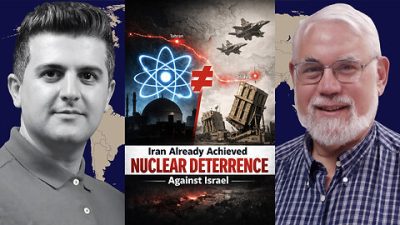
Prof. Ted Postol: Iran Already Achieved Nuclear Deterrence Against Israel
or go to
Aletho News Archives – Video-Images
From the Archives
How the occupied mentality syndrome works
Saudi Arabia on the American chessboard – Part 3
By B. J. Sabri | American Herald Tribune | June 27, 2016
Read part 2: “The occupied mentality Syndrome“
Previously I argued whether Saudi Arabia’s repeated involvements in U.S. interventions and wars stem from free national will or in response to a specific condition. For starters, in Saudi Arabia there is no national will. In Saudi Arabia, the national will is the will of the Al Saud clan. Still, when a major Arab state allies itself with a superpower that committed unspeakable crimes against humanity in almost every Arab country, then something is wrong. This fact alone should compel us to examine the U.S.-Saudi relation for one exceptional reason. As a result of the U.S.-Saudi wars, hundreds of thousands of people in Afghanistan, Iraq, Iran, Libya, Syria, Yemen, and Somalia have lost their lives. Millions became displaced in their own homelands. And millions more rendered refugees.
Attributing the Saudi policies to the bonds of “partnership” with the U.S. is frivolous. There are no bonds between these two thugs except those of business, military deals, secret plots, and wars. Proving this point, bonds such as these have no space for the American and Saudi peoples to share significant cultural or societal exchanges. If partnership is not the reason for the Saudi contribution to the U.S. strategy of empire and imperialism, then another reason must exist.
This leads to three possibilities. … continue
Blog Roll
 Aletho News
- Hezbollah hits Israeli warship off Lebanon’s coast, sets it aflame
- Iran slams US strikes on B1 bridge, Mahshahr petrochemical plants as ‘blatant acts of state terrorism’
- In letter to UN chief, Araghchi warns of dire consequences of US-Israeli attacks on Iran’s nuclear facilities
- Why the CIA conspiracy to invade Iran with Kurdish militias failed
- Why Are Upbeat US Claims About Mission to Rescue Pilot ‘Highly Questionable’?
- Aircraft destroyed during US ‘rescue’ of downed F-15 pilot cost more than $100 million each
- Washington University removes professor who condemned US-Israeli war on Iran
- Russia Warns of Retaliation as UK Authorizes Seizure of Vessels
- Serbia thwarts plot to bomb Russia-Hungary gas pipeline – Vucic
- Al Mayadeen voices solidarity with Dr. Marandi amid death threats
- If Americans Knew
- In Iran, Israel-US take aim at “reason, research, and freedom of thought” – Daily Update
- US loses planes over Iran, Israel downgrades Lebanon war goals – Daily Update
- Israel Is Blocking Palestinians from Easter at Church Where Jesus Resurrected
- Plot to assassinate Palestinian activist follows harassment campaign promoted by Zionist groups and elected officials
- Prominent New York synagogue hosts presentation on why U.S. Jews should support the ethnic cleansing of Gaza
- Tapper vs. Piker: Is the CNN Anchor Auditioning for David Ellison?
- Shouldn’t Democrats Be Able to Condemn Genocide?
- Israel-US kill negotiators, destroy civilian structures, but Iran’s military capabilities still largely intact – Daily Update
- ‘War crime’: Global condemnation as Israeli ministers celebrate death penalty law targeting Palestinian prisoners
- 7 Ways Israel Is Turning Lebanon Into Gaza
- No Tricks Zone
- An Inconvenient Tree: Uncovered In Alps… Europe Much Warmer Than Today 6000 Years Ago
- New Study Reports A 60% Slowdown In Greenland’s Ice Loss Rate In The Last Decade
- Low Intensity Tornado Wrecks Major Solar Farm, Creating A Potential Toxic Dump
- New Study Finds Warming Saves Lives…Cold Temperatures 12 Times More Deadly Than Excess Heat
- German Science Blog Accuses PIK Climate Institute Of Hallucinating Climate Tipping Points
- Devastating Assessment Of Comirnaty Vaccine By Former Senior Pfizer Europe Toxicologist
- New Study: CO2 Is ‘Effectively Negligible’ As An Explanatory Climate Change Factor Since 2000
- Former Pfizer Toxicologist Dr. Helmut Sterz Tells Bundestag Hearing Pfizer Vaccine Should Have Never Been Approved
- Energy Expert: Germany’s Nuclear Phaseout Was A “500 Billion Euro Mistake”
- New Research: South Australia’s Mid-Holocene Sea Surface Temperatures Were 4°C Warmer Than Today
 Aletho News