Edinburgh University Students Vote Overwhelmingly for Boycott of Israeli Goods
A motion to boycott Israel was overwhelmingly passed at the Edinburgh University Students Association (EUSA) General Meeting on Monday 14th March. In what was described as a ‘landslide’, the motion, ‘Boycott Israeli Goods in EUSA shops and supply chains’ received around 270 votes in favour, with only 20 students voting against.

Despite the meeting requiring over 300 students to attend for it to be quorate and for decisions taken to be binding, the huge level of student support for the motion means that EUSA will be under severe student pressure to adopt it as official policy.
Proposed by students from Edinburgh University Students for Justice in Palestine, the motion noted that Israel is an apartheid state and resolved to affiliate EUSA to the Boycott Divestment and Sanctions (BDS) movement, to boycott Israeli goods in EUSA supply chains and shops, and to mandate the EUSA executive to lobby the University to do the same.
After the motion was discussed for around 15 minutes, it was put to a vote and the result was so comprehensive that no count was required. The passing of the motion led to rapturous applause in the George Square Lecture Theatre, where the General Meeting was held, and was by far the most welcomed result of the night.
Similar motions have been passed at SOAS, Manchester, and Sussex Universities in recent years. This latest result seems a clear indication that students in the UK are continuing to play a prominent role in the campaign for a just peace in Palestine.
The motion came in the wake of recent protests against Israeli officials speaking at the University. In February, student activists shut down a talk by Ishmael Khaldi, advisor to Israeli foreign minister Avidgor Lieberman, and, two weeks ago, over 100 students protested against the invitation of Israeli ambassador Ron Prosor to the University.
The proposer of the motion, second year Maths and Music student Daniel Beesley said “I am overwhelmed with the outcome of the General Meeting. It is great to see students of Edinburgh University once again standing up against injustice, just as they did during Apartheid South Africa. EUSA represents that views of students and we are sure they they will take on board what was clearly the opinion of the vast majority who attended the GM, and endorse the boycott.”
The motion’s seconder, Liam O’Hare, a student of International Relations, said: “Israel has occupied, ethnically cleansed and practised apartheid against the Palestinians for 63 years. The BDS movement seeks to force Israel to abide by international law and is gathering huge momentum year on year. I think the General Meeting proved that the student population at Edinburgh University do not want goods from an Apartheid state on campus and, despite the meeting narrowly not being quorate, I fully expect EUSA to act upon this motion.”
After Itamar: Exploring the cynical logic that makes everyone a target
Everyone is rushing to condemn the gruesome murder of a family in the illegal Israeli settlement of Itamar. Even President Barack Obama felt compelled to offer his “unequivocal condemnation” of the murders. For what it’s worth (very little), I offer my own denunciation of the killings. Murdering kids can not be justified on any human level. However, even if the motives of the killer seem obvious to everyone, journalists covering the incident must be reminded there is no hard evidence that a Palestinian terrorist committed the crime. No viable armed faction has taken credit, and Israeli police are even treating Thai workers as suspects.
Itamar is heavily guarded, surrounded by an electrified fence, and monitored 24/7 by a sophisticated system of video surveillance. Yet there is no video of the killer. Like it or not, until the identity of the killer is confirmed, the murder can only be described by journalists as an “alleged terror attack.” Legitimate outrage is no excuse to flout the basics of journalism 101.
Given the amount of violence visited upon local Palestinians by the residents of Itamar and nearby settlements, I will not be surprised if the killer turns out to be a rogue Palestinian bent on revenge. In one instance documented in 2007, settlers from Itamar stabbed a 52-year-old shepherd named Mohammad Hamdan Ibrahim Bani Jaber to death while he tended to his flock. Routine attacks from Itamar have prompted the near-total evacuation of the village Izbat Al Yanoon, while settlers from nearby Jewish colony of Yitzhar have staged homemade rocket attacks on local Palestinians and torched their mosques. As I have reported, Yitzhar is home to Rabbi Yitzhak Shapira, author of the notorious “Torat Hamelech,” which uses rabbinical sources to justify the killing of non-Jewish civilians, including children, in combat situations.

Medical x-ray of live ammunition lodged in the skull of Ussayed Qadous, shot at point blank range by Israeli troops near Itamar in 2010
A year ago in nearby Palestinian farming villages Awarta and Iraq Burin, Israeli soldiers were accused of executing local youths during riots against settlement expansion. As Jesse Rosenfeld reported, despite the clear evidence of execution style killings, none of the soldiers who held the Palestinians in custody at the time they were shot were convicted of any crimes. And to my knowledge, no official American response followed. Thus the besieged villages near Itamar have been left without any recourse or legal means to redress their harassment and murder.
Israel’s method of occupation and its military rules of engagement — which are supported by the US in spirit and through acts like the recent UN settlement resolution veto — openly skirt international law, eliminating any outside mechanism for mediating conflict or redressing the grievances of civilians harmed by war. Under these terms, where distinctions between civilians and combatants are deliberately blurred in order to deepen Israel’s control over land gained through military conquest, horrific attacks like the kind allegedly witnessed in Itamar become all the more possible.
To establish an ethical basis for military operations aimed at consolidating the occupation, the Israeli army has turned to Zionist academics like Tel Aviv University philosophy professor Asa Kasher. In the service of the army, Kasher churned out elaborate manifestoes justifying Israel’s tactics during Lebanon II and Operation Cast Lead. Kasher’s concepts of warfare are best defined by his explicit justifications for killing unarmed civilians in any instance when an Israeli soldier believed that they were in danger. Kasher strained his logic to the point that he highlighted the 2004 US invasion of Fallujah in Iraq, when American troops fired white phosphorous shells into the city center and demolished hundreds of homes, to justify Israeli actions in Gaza. “If it’s between the soldier and the terrorist’s neighbor, the priority is the soldier,” Kasher said. “Any country would do the same.”
Another academic with close ties to the Israeli military-intelligence apparatus, Professor Arnon “the Arab Counter” Soffer of Haifa University, urged the army to massacre Palestinian civilians after the withdrawal from the illegal settlement of Gush Katif in Gaza. Soffer, who devised the separation wall policy in order to confine the Palestinians of the West Bank to what he called “three sausages,” reasoned that mass murder was the only way to maintain the security of the Southern Israeli perimeter communities while avoiding political concessions to the Palestinians of Gaza.

Prof. Arnon Soffer: “Kill, kill, kill.”
“When 2.5 million people live in a closed-off Gaza, it’s going to be a human catastrophe,” Soffer argued. “Those people will become even bigger animals than they are today, with the aid of an insane fundamentalist Islam. The pressure at the border will be awful. It’s going to be a terrible war. So, if we want to remain alive, we will have to kill and kill and kill. All day, every day.” And that is exactly what Israel did when it followed Soffer’s logic in Operation Cast Lead. (Note the use of the word “animal” in Soffer’s language and in the language of Israelis responding to the murders in Itamar; the word is essentially a signal to kill Palestinians indiscriminately).
While Soffer and Kasher have both served as outside consultants for Israeli governments and the army, another advocate for slaughtering Palestinian civilians, Yaakov Amidror, has been appointed to serve as Benjamin Netanyahu’s National Security Advisor. “That’s a totally illegal order,” Amidror once snapped at Israeli news anchor Haim Yavin, who had said that Israeli soldiers were instructed to avoid civilian casualties in Lebanon. “What should be said is ‘kill more of the bastards on the other side, so that we’ll win.’ Period.” Amidror has criticized Kasher for formalizing the army’s ethical code — “I said this should remain unwritten, so there wouldn’t be anything written, as [then] it would become technical,” he declared — and even called for the on-site execution of Israeli soldiers who refused to advance in battle. (Amidror also happens to be a religious settler who lives in the West Bank.)
Kasher, Soffer, and Amidror’s arguments relating to the killing of civilians are eerily similar to those advanced in a halakhic context by religious nationalist rabbis. Rabbi Yitzhak Shapira of Yitzar, a settlement that neighbors Itamar, has written in his book “Torat Hamelech” that non-Jews are “uncompassionate by nature” and should be killed in order to “curb their evil inclinations.” A guide for anyone pondering when killing goyim is permissible, the book has been described by Rabbi Dov Lior of the settlement Kiryat Arba as “very relevant, especially in this time.” Lior, who has said that “gentile sperm leads to barbaric offspring,” is also a firm advocate of slaughtering Palestinian civilians. In 2008, when the IDF’s chief rabbi, Brigadier General Avichai Ronski, brought a group of military intelligence officers to Hebron for a special tour, he concluded the day with a private meeting with Lior, who reveled the officers with his views on modern warfare: “no such thing as civilians in wartime.” (For his part, Ronski has urged Israeli troops to show Palestinian civilians “no mercy.”)

National Security Advisor appointee Yaakov Amidror: kill civilian “bastards” and shoot non-compliant soldiers on the spot
So what is the difference between rabbis like Lior and Shapira and secular academics like Kasher and Soffer? I put this question to a 20-something settler (he is the last guy I interviewed in this video) during a rally in defense of the publication of “Torat Hamelech.” “Well, the difference is that someone like Kasher is speaking from his kishkes [guts],” the settler told me. “But Yitzhak Shapira is speaking from Torah; he’s speaking from Hashem.” In other words, the philosopher and the rabbi share a philosophy that justifies killing non-Jewish civilians, but the ethicist uses rational arguments rooted in secular Enlightenment thought, while the rabbi claims to be translating for God from ancient documents. In the end, both are working to cultivate an environment in which legal and moral protections for civilians are discarded in order to advance the maximalist goals of Jewish nationalism.
During his opening statement in his debate against Judge Richard Goldstone at Brandeis University on November 5, 2009, former Israeli Ambassador Dore Gold claimed that the Goldstone Report was in fact an attack on Israeli society. In a section entitled “Maligning Israeli Society,” Gold and Lt. Col. Jonathan Dahoah Halevi wrote: “The language used by the UN Gaza report — and the gravity of its allegations about “deliberate” Israeli attacks on civilians — maligns Israeli society as a whole, for the Israel Defense Forces is a citizen’s army, an army which is made up of the people of Israel.”
In Gold’s own words, there is no difference between Israeli civilians and soldiers — the army is society. Without knowing it, Gold deployed the very same argument Palestinian militant factions have used to justify suicide attacks inside Israel and the murder of the children of settlers in the West Bank. Thus Gold revealed the extent to which the process of comprehensively militarizing Jewish Israeli society — a central goal of Zionism since the days of Joseph Trumpeldor — had obliterated the distinction between civilian and combatant, transforming every human being into a possible target.
In such an environment, horrific violence against the innocent is not only possible, but inevitable. Of course, most of the violence will be meted out against the Palestinians, who live under a seemingly permanent occupation with negligible deterrent capacity and no political rights. But Israelis must also live in this moral wasteland and face the depressing consequences. Having to someday accept that they were responsible for its creation might be the cruelest fate of all.
Assault on Collective Bargaining Illegal
Wisconsin Violated the Constitution
By JEANNE MIRER and MARJORIE COHN | CounterPunch | March 15, 2011
The International Commission for Labor Rights (ICLR) sent a notice to the Wisconsin Legislature, explaining that its attempt to strip collective bargaining rights from public workers is illegal.
Anyone who has watched the events unfolding in Wisconsin and other states that are trying to remove collective bargaining rights from public workers has heard people protesting the loss of their “rights.” The ICLR explained to the legislature exactly what these rights are and why trying to take them away is illegal.
The ICLR is a New York based non-governmental organization that coordinates a pro bono network of labor lawyers and experts throughout the world, www.laborcommission.org. It investigates labor rights violations, and issues reports and amicus briefs on issues of labor law.
The ICLR identified the right of “freedom of association” as a fundamental right and affirmed that the right to collective bargaining is an essential element of freedom of association. These rights, which have been recognized worldwide, provide a brake on unchecked corporate or state power.
In 1935, when Congress passed the National Labor Relations Act (also known as the NLRA, or the Wagner Act), it recognized the direct relationship between the inequality of bargaining power of workers and corporations and the recurrent business depressions. That is, by depressing wage rates and the purchasing power of wage earners, the economy fell into depression. The law therefore recognized as policy of the United States the encouragement of collective bargaining.
While the NLRA covered U.S. employees in private employment, the law protecting collective bargaining in both the public and private sectors has developed since 1935 to cover all workers “without distinction.”
The opening paragraph of the ICLR statement reads:
“As workers in the thousands and hundreds of thousands in Wisconsin, Indiana and Ohio and around the country demonstrate to protect the right of public sector workers to collective bargaining, the political battle has overshadowed any reference to the legal rights to collective bargaining. The political battle to prevent the loss of collective bargaining is reinforced by the fact that stripping any collective bargaining rights is blatantly illegal. Courts and agencies around the world have uniformly held the right of collective bargaining in the public sector is an essential element of the right of Freedom of Association, which is a fundamental right under both International law and the United States Constitution.”
The ICLR statement summarizes the development of this law from the Universal Declaration of Human Rights, through the International Labor Organization’s Conventions on Freedom of Association (that is, the right to form and join unions) and on Collective Bargaining. It cites court cases from the United States and around the world. All embrace freedom of association as a fundamental right and the right to collective bargaining as an essential element of freedom of association.
Some anti-union voices argue that since federal employees presently do not have the right to bargain collectively, neither should state workers. In fact, the argument should go the other way. The law cited in the ICLR statement means that denying Federal employees collective bargaining rights – which they have had over the years when presidents have recognized them by executive order – is just as illegal as denying collective bargaining rights to state public employees. President Obama should take this opportunity to reinstate the rights of Federal employees to collective bargaining.
~
Jeanne Mirer, who practices labor and employment law in New York, is president of the International Association of Democratic Lawyers.
Marjorie Cohn is a professor at Thomas Jefferson School of Law and past president of the National Lawyers Guild.
Guatemalans sue US over experiments
Press TV – March 15, 2011

Attorneys for a group of Guatemalans have sued top US officials, accusing them of “intentionally” experimenting on them in the 1940’s and infecting them with syphilis.
Hundreds of Guatemalan prisoners, psychiatric patients and orphans were infected in a program to study penicillin.
The lawsuit was filed on Monday by lawyers for seven Guatemalan plaintiffs. But there is a high possibility that the number of the plaintiffs could reach to hundreds.
Last year, the United States apologized for the “reprehensible” experiments, according to state-run BBC.
The Obama administration, however, has not yet responded to a request for an out-of-court compensation settlement.
The experiments took place between 1946 and 1948 and around 700 Guatemalan nationals were used to test the efficiency of penicillin as a treatment and a preventative agent.
Evidence of the program was exposed by Professor Susan Reverby at Wellesley College in the US.
Reverby believes the then Guatemalan government gave permission for the tests but the people infected were unaware they were being experimented on.
In the experiments, researchers bribed care workers to let them inject their charges, while prisoners were encouraged to sleep with infected prostitutes.
Awarta Village Under Full Closure Since Saturday; Scandinavian Activists Trapped
By Saed Bannoura – IMEMC News – March 15, 2011
Israeli forces have maintained a closure of the village of Awarta for the last three days, preventing all residents from leaving their homes, with no indication as to when the closure will end and the residents will be allowed out of their homes. Any person caught leaving their home for any reason has been abducted by Israeli troops.
The village closure began soon after the murder of an Israeli family, including a baby and two small children, on Friday night in Itamar settlement, located near the village of Awarta in the northern West Bank.
Since Awarta is the closest village to the settlement, Israeli forces searching for the assailant poured into the village in the early hours of Saturday morning, and have remained in Awarta since that time, searching and ransacking homes and maintaining a strict closure.
Three international non-violent activists with the International Solidarity Movement, Cinda, 23, Chad, 25, from Sweden, and Cissy, 53, from Norway, have been unable to leave the village, and have reported several incidents of soldiers beating local residents in their presence.
The activists also reported that around 100 men were rounded up and held for interrogation at a local school on Monday.
The Israeli army has made no statement as to the identity of the perpetrator of Friday night’s attack, although they have abducted around 30 Palestinians from nearby areas, including Awarta village, for interrogation.
~
Ma’an:
An early morning food delivery from the municipality of Nablus appears not to have been delivered to all residents of the town, which according to the Palestinian Central Bureau of Statistics has over 5,000 inhabitants.
Dutch journalist Lydia de Leew, traveling with medics from the Union of Health Care Committees, told Ma’an that they were waiting for permission to enter the village, after hearing reports that an Israeli sniffer dog had attacked a child.
Settler fires on Palestinian car from moving vehicle
Ma’an – March 15, 2011
BETHLEHEM — An Israeli settler gunned down a Palestinian car on the road near Bani Na’im village on Tuesday afternoon, causing severe damage to the car but no injuries, the victim reported.
The incident occurred north of Hebron, driver Muhammad An-Najjar from the town of Yatta told Ma’an.
“The settler car passed me and just opened fire,” he said, describing punctured tires and car doors riddled with bullets.
An-Najjar said he was contacted by Israel’s Civil Administration shortly after the incident, and asked for details on the attack.
He said he returned to the scene of the attack with police and gave several statements.
A representative of the Civil Administration could not be reached for comment.
The attack is just the latest in a stream of settler violence that has seen dozens injured as roving mobs of settlers enter Palestinian villages, throwing stones and bottles, spray painting property, burning fields and cars and launching Molotov Cocktails at civilians.
Villagers in Awarta, which has remained on an Israeli military lockdown since Saturday, reported hundreds of settlers protesting and throwing rocks at homes, elsewhere in the West Bank reports flooded in of settler attacks targeting Palestinians.
An estimated 200 settlers from the Kedumim settlement, five kilometers west of Nablus, demonstrated on the main road leading north, hurling stones at passing Palestinian cars.
To the east of Nablus, witnesses reported seeing settlers throwing stones from their parked cars at passing traffic.
Settlers reported stones thrown by Palestinians at Israeli traffic near Nablus and close to the Shiloh settlement, near Ramallah. No casualties were reported in any of the incidents.
Overnight, settlers torched two Palestinian cars just north of El-Bireh, also near Ramallah, residents said. They said the two vehicles, which were set alight before dawn near Beit El settlement, were totally gutted.
Both the Israeli military and the police say they remain on alert, fearing a wave of revenge attacks in response to the killings of five members of the Fogel family, residents of the illegal Israeli settlement of Itamar in the Nablus district.
Five out of eight members of the Fogel family were stabbed in their beds on Friday night, pictures of their bodies were widely circulated by settler leadership.
Amnesty International called on Israel to halt the settler attacks, which are posed as reprisal attacks against Palestinians, who Israeli officials blamed for the death of a settler family in Itamar, next to Awarta.
Bahrain declares state of emergency
“We say the United States has given them the green light. From the moment the US Secretary of Defense left Bahrain, we’ve seen the Bahraini government take the decision to invite the troops from the neighboring countries, and it’s been agreed to by the United States. This is an act of violence, an act of war, and we think these troops are not welcome in this country. People are very angry on what has been happening. It’s going to deteriorate… ”
– Nabeel Rajab, president of the Bahrain Center for Human Rights
Press TV – March 15, 2011
Bahrain’s King Hamad bin Isa Al Khalifa has declared a three-month state of emergency in the country as anti-government protests continue in the Persian Gulf state.
The decision comes as Bahraini Shia majority have voiced readiness to sacrifice their lives in defense of the people’s right to hold peaceful protests against Sunni Al Khalifa royal family.
The government’s violent crackdown on anti-government demonstrations has been stepped up by a military incursion by Saudi Arabia, Kuwait, the United Arab Emirates, Oman and Qatar who dispatched their armed forces to Bahrain.
The move has concerned UN Secretary General Ban Ki-moon, who has called for a meaningful and broad-based national dialogue.
He has also urged Bahrain’s neighbors and the international community to support a dialogue process and an environment conducive for credible reform in Bahrain.
At least seven people have been killed and hundreds of others injured in the Bahraini government’s violent crackdown on peaceful demonstrators.
On Tuesday, military helicopters were hovering over residential areas in Manama and randomly shot at people as reports of more mortality came from Bahraini medics and hospital sources.
Thousands of Bahraini anti-government protesters are still camping out in Manama’s Pearl Square — which has become the symbol of the popular drive for change. They say they will not abandon their ground unless their demands are met.
Inspired by the popular revolutions in Egypt and Tunisia, Bahraini protesters have been calling for freedom, a constitutional monarchy and a say in the government.
~
Hezbollah: Military Intervention Will Be in Vain
Commenting on Arab neighboring countries intervention in Bahrain, Hezbollah issued the following statement:
“In front of recent developments of Bahrain, featured by forces of neighboring Arab countries entering the Bahraini land, alongside with the use of violence which harvested many as martyrs and wounded, Hezbollah can only express his deep concern and strong condemnation of targeting peaceful civilians.
Hezbollah views that the military intervention and the use of violence against a peaceful popular movement will not only be in vain, but will also complicate issues and eliminate the solution opportunities.
Hezbollah considers that the U.S. stance toward those developments is very suspicious, and reflects the real policy of the U.S. administration towards movements of peoples.”
–End of Hezbollah Statement
Yemeni protesters take over two cities
Press TV – March 14, 2011
As anti-government protests escalate in Yemen, revolutionaries have taken control of two major cities in the north and east of the country.
The protesters reportedly took over al-Jawf, which borders Saudi Arabia in the northeast on Monday. Three soldiers were killed during clashes in the city.
Protesters also took control of Marib, east of the capital, Sana’a, where several oil and gas fields run by international companies are located.
Earlier reports said Marib Governor Ahmed Naji al-Zaidi was attacked and wounded during an anti-government protest outside the local government headquarters. He is currently receiving treatment in Sana’a.
Meanwhile, one of Yemen’s largest tribal federations, Baqil, joined the protesters in the capital’s Change Square.
Two high-ranking officers have also joined the protesters.
This comes as Yemeni police have intensified the crackdown on demonstrators. Security forces have surrounded a protest camp in Sana’a.
At least 40 people were injured in the capital after police opened fire on protesters on Monday.
One-hundred others were also wounded on Sunday after police on rooftops fired live rounds and teargas on people, camping near Sana’a University.
Heavily armed troops have also been deployed in the southern city of Aden.
Protesters are calling for President Ali Abdullah Saleh to step down after 32 years in power.
The Idiocy and Hubris of Engineers: Will GE Get Whacked for the Catastrophic Failure of its Nuke Plants in Fukushira?
By Dave Lindorff | This Can’t Be Happening | 03 – 14 – 201
GE, the company that boasts that it “brings good things to life,” was the designer of the nuclear plants that are blowing up like hot popcorn kernels at the Fukushima Dai-ichi generating plant north of Tokyo that was hit by the double-whammy of an 8.9 earthquake and a huge tsunami.
The company may escape tens or hundreds of billions of dollars in liability from this continuing disaster, which could still result in a catastrophic total meltdown of one or more of the reactors (as of this writing three of the reactors are reported to have suffered partial meltdowns, and all could potentially become more serious total meltdowns with a rupture of the reactor container), thanks to Japanese law, which makes the operator–in this case Tokyo Electric Power Co. (TEPCO) liable. But if it were found that it was design flaws by GE that caused the problem, presumably TEPCO or the Japanese government could pursue GE for damages.
In fact, the design of these facilities–a design which, it should be noted, was also used in 23 nuclear plants operating in the US in Alabama, Georgia, Illinois, Iowa, Massachusetts, Minnesota, Nebraska, New Jersey, New York, North Carolina, Pennsylvania and Vermont–appear to have included serious flaws, from a safety perspective.
The drawings of the plants in question, called Mark I Reactors, provide no way for venting hydrogen gas from the containment buildings, despite the fact that one of the first things that happens in the event of a cooling failure is the massive production of hydrogen gas by the exposed fuel rods in the core. This is why two of the nuclear generator buildings at Fukushima Dai-ichi have exploded with tremendous force blasting off the roof and walls of the structures, and damaging control equipment needed to control the reactors.
One would have thought that design engineers at GE would have thought about that fact, and provided venting systems for any hydrogen gas being vented in an emergency into the building. But no. They didn’t.

There goes the neighborhood: A second GE nuclear reactor building at Fukushima Dai-ishi suffers a hydrogen gas explosion.
There is a worse problem though. Probably in an effort to keep the problem of nuclear waste hidden from the public, these plants feature huge pools of water up in the higher level of the containment building above the reactors, which hold the spent fuel rods from the reactor. These rods are still “hot” but besides the uranium fuel pellets, they also contain the highly radioactive and potentially biologically active decay products of the fission process–particularly radioactive Cesium 137, Iodine 131 and Strontium 90. (Some of GE’s plants in the US feature this same design. The two GE Peach Bottom reactors near me, for example, each have two spent fuel tanks sitting above their reactors.)
As Robert Alvarez, a former nuclear energy adviser to President Bill Clinton, has written, if these waste containers, euphemistically called “ponds,” were to be damaged in an explosion and lose their cooling and radiation-shielding water, they could burst into flame from the resulting burning of the highly flammable zirconium cladding of the fuel rods, blasting perhaps three to nine times as much of these materials into the air as was released by the Chernobyl reactor disaster. (And that’s if just one reactor blows!) Each pool, Alvarez says, generally contains five to ten times as much nuclear material as the reactors themselves. Alvarez cites a 1997 Nuclear Regulatory Commission study that predicted that a waste pool fire could render a 188-square-mile area “uninhabitable” and do $59 billion worth of damage (but that was 13 years ago).
Another nuclear scientist agrees with Alvarez, quoted in an article in the Christian Science Monitor:
“There should be much more attention paid to the spent-fuel pools,” says Arjun Makhijani, a nuclear engineer and president of the anti-nuclear power Institute for Energy and Environmental Research. “If there’s a complete loss of containment [and thus the water inside], it can catch fire. There’s a huge amount of radioactivity inside – far more than is inside the reactors. The damaged reactors are less likely to spread the same vast amounts of radiation that Chernobyl did, but a spent-fuel pool fire could very well produce damage similar to or even greater than Chernobyl.”
Adding to that worry, Alvarez says photos of Reactor 3 seem to show white steam rising from the damaged facility, from a location where the spent fuel pond would likely be. (See photo below)

Steam appears to be billowing up from the damaged Reactor 3 at the Fukushima Dai-ishi plant, suggesting the pool containing spent fuel has been compromised
But it gets worse. According to news reports, the Reactor 3 unit was being fueled with a controversial mixed oxides fuel rod, which includes, in addition to uranium, a significant amount of plutonium–a far more dangerous element both chemically as a toxin, and in terms of its radioactivity.
You have to ask, what kind of numbskull would put a waste “pond” for spent fuel right above the reactor of a nuclear plant, thus insuring that in the event of a meltdown, not only would the core of the reactor blow up into the environment, but also all of the spent fuel from prior years? All that “Six Sigma” quality culture stuff at GE and they came up with this?
I don’t know. I heard about those waste “pools” in the past, and always assumed they were somewhere on the plant grounds away from the reactor itself, but now it turns out they put the damned things right in the line of fire of any meltdown. Boy, that’s just brilliant!
It’s as if you put the oil tank or propane tank for your furnace right above the burner in your basement, so that if there was some problem with the furnace it would ignite the tank, or as if you put the gas tank of your car right above the engine, so that if you had an engine fire, it would explode the gas tank!
This may explain why people in India are reportedly rethinking GE’s bid for a big piece of the country’s proposed market for $150 billion in new nuclear power plants in that country, and why it may not be so easy for GE and other nuclear plant builders to escape liability for their products in the future.
Back in November, President Obama was in India pushing that country’s government to pass legislation exempting GE from liability for nuclear “accidents.” That idea is probably not going to go very far now.
Jeffrey Immelt, the chairman and CEO of GE and a big friend of Obama’s (he was named to an unpaid post as “jobs czar” by the president earlier this year, despite the company’s long record of exporting US jobs to places like China and India), says it’s “too soon” to assess the impact on the company’s nuclear business prospects of the nuclear “accidents” in northern Japan.
He’s certainly right about that (though investors aren’t waiting: the stock was down 3.5% today alone by noon, following the second hydrogen gas explosion). At this point only two of the buildings housing the six troubled reactors has blown up, and TEPCO has only lost control of the cooling systems in three of the six, and also, so far, only three have suffered partial meltdowns. Things could get a lot worse if one or more goes into full meltdown, or if one or more of those waste “ponds” blows up.
GE may end up having to change its motto to: “GE brings death to things.”
Bil’in protest organizer Abdallah Abu Rahmah released from Israeli prison
Popular Struggle Coordination Committee | March 14, 2011
Abu Rahmah was released this evening, after having served the 16 months sentence imposed on him by the Israeli Military Court of Appeals for organizing demonstrations. Abu Rahmah was received by his family, friends and supporters at the prison’s gate and vowed to continue the struggle.
After much delay, Abu Rahmah who was supposed to have already been released yesterday, was finally released from the Ofer Military Prison this evening. He was received by hundreds who waited for him at the prison’s gate.
Abu Rahmah, who during his trial was declared a human rights defender by the EU and a prisoner of conscious by Amnesty International, vowed to continue struggling against the Occupation, despite his unjust imprisonment and the six-months suspended sentence still imposed on him. He said, “On my release, I have no intention to go back home and sit there idly. In fact, by imprisoning me they have silenced me long enough. Our cause is just, it is one striving for freedom and equality, and I intend to continue fighting for it just as I have before”.
Abu Rahmah, the coordinator of the Bil’in Popular Committee Against the Wall and Settlements, was arrested last year by soldiers who raided his home at the middle of the night and was subsequently indicted before an Israeli military court on unsubstantiated charges that included stone-throwing and arms possession. Abu Rahmah was cleared of both the stone-throwing and arms possession charges, but convicted of organizing illegal demonstrations and incitement.
An exemplary case of mal-use of the Israeli military legal system in the West Bank for the purpose of silencing legitimate political dissent, Abu Rahmah’s conviction was subject to harsh international criticism. The EU foreign policy chief, Catherine Ashton, expressed her deep concern “that the possible imprisonment of Mr Abu Rahma is intended to prevent him and other Palestinians from exercising their legitimate right to protest[…]”, after EU diplomats attended all hearings in Abu Rahmah’s case. Ashton’s statement was followed by one from the Spanish Parliament.
Renowned South African human right activist, Archbishop Desmond Tutu, called on Israel to overturn Abu Rahmah’s conviction on behalf of the Elders, a group of international public figures noted as elder statesmen, peace activists, and human rights advocates, brought together by Nelson Mandela. Members of the Elders, including Tutu, have met with Abu Rahmah on their visit to Bil’in prior to his arrest.
International human rights organization Amnesty International condemned Abu Rahmah’s conviction as an assault on the right to freedom of expression, and declared him a prisoner of conscious. Human Rights Watch denounced the conviction as well, pronouncing the whole process “an unfair trial”.
Israeli human rights organizations also criticized the conviction – including statements by B’Tselem, which raises the issue of questionable testimonies by minors used to convict Abu Rahmah, and The Association for Civil Rights in Israel (ACRI) which highlights the impossibility of organizing legal demonstrations for Palestinians in the West Bank.
Legal Background
Abu Rahmah, the coordinator of the Bil’in Popular Committee Against the Wall and Settlements, was acquitted of two out of the four charges brought against him in the indictment – stone-throwing and a ridiculous and vindictive arms possession charge. According to the indictment, Abu Rahmah collected used tear-gas projectiles and bullet casings shot at demonstrators, with the intention of exhibiting them to show the violence used against demonstrators. This absurd charge is a clear example of how eager the military prosecution is to use legal procedures as a tool to silence and smear unarmed dissent.
The court did, however, find Abu Rahmah guilty of two of the most draconian anti-free speech articles in military legislation: incitement, and organizing and participating in illegal demonstrations. It did so based only on testimonies of minors who were arrested in the middle of the night and denied their right to legal counsel, and despite acknowledging significant ills in their questioning.
The court was also undeterred by the fact that the prosecution failed to provide any concrete evidence implicating Abu Rahmah in any way, despite the fact that all demonstrations in Bil’in are systematically filmed by the army.
Under military law, incitement is defined as “The attempt, verbally or otherwise, to influence public opinion in the Area in a way that may disturb the public peace or public order” (section 7(a) of the Order Concerning Prohibition of Activities of Incitement and Hostile Propaganda (no.101), 1967), and carries a 10 years maximal sentence.
Featured Video
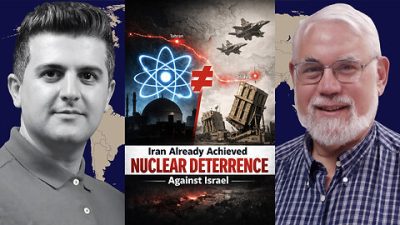
Prof. Ted Postol: Iran Already Achieved Nuclear Deterrence Against Israel
or go to
Aletho News Archives – Video-Images
From the Archives
How the occupied mentality syndrome works
Saudi Arabia on the American chessboard – Part 3
By B. J. Sabri | American Herald Tribune | June 27, 2016
Read part 2: “The occupied mentality Syndrome“
Previously I argued whether Saudi Arabia’s repeated involvements in U.S. interventions and wars stem from free national will or in response to a specific condition. For starters, in Saudi Arabia there is no national will. In Saudi Arabia, the national will is the will of the Al Saud clan. Still, when a major Arab state allies itself with a superpower that committed unspeakable crimes against humanity in almost every Arab country, then something is wrong. This fact alone should compel us to examine the U.S.-Saudi relation for one exceptional reason. As a result of the U.S.-Saudi wars, hundreds of thousands of people in Afghanistan, Iraq, Iran, Libya, Syria, Yemen, and Somalia have lost their lives. Millions became displaced in their own homelands. And millions more rendered refugees.
Attributing the Saudi policies to the bonds of “partnership” with the U.S. is frivolous. There are no bonds between these two thugs except those of business, military deals, secret plots, and wars. Proving this point, bonds such as these have no space for the American and Saudi peoples to share significant cultural or societal exchanges. If partnership is not the reason for the Saudi contribution to the U.S. strategy of empire and imperialism, then another reason must exist.
This leads to three possibilities. … continue
Blog Roll
 Aletho News
- NIAID/NIH and USDA Fund Bioengineered Chimeric Influenza Viruses Built Using Pandemic H1N1 Components: Journal ‘Science Advances’
- Hezbollah hits Israeli warship off Lebanon’s coast, sets it aflame
- Iran slams US strikes on B1 bridge, Mahshahr petrochemical plants as ‘blatant acts of state terrorism’
- In letter to UN chief, Araghchi warns of dire consequences of US-Israeli attacks on Iran’s nuclear facilities
- Why the CIA conspiracy to invade Iran with Kurdish militias failed
- Why Are Upbeat US Claims About Mission to Rescue Pilot ‘Highly Questionable’?
- Aircraft destroyed during US ‘rescue’ of downed F-15 pilot cost more than $100 million each
- Washington University removes professor who condemned US-Israeli war on Iran
- Russia Warns of Retaliation as UK Authorizes Seizure of Vessels
- Serbia thwarts plot to bomb Russia-Hungary gas pipeline – Vucic
- If Americans Knew
- In Iran, Israel-US take aim at “reason, research, and freedom of thought” – Daily Update
- US loses planes over Iran, Israel downgrades Lebanon war goals – Daily Update
- Israel Is Blocking Palestinians from Easter at Church Where Jesus Resurrected
- Plot to assassinate Palestinian activist follows harassment campaign promoted by Zionist groups and elected officials
- Prominent New York synagogue hosts presentation on why U.S. Jews should support the ethnic cleansing of Gaza
- Tapper vs. Piker: Is the CNN Anchor Auditioning for David Ellison?
- Shouldn’t Democrats Be Able to Condemn Genocide?
- Israel-US kill negotiators, destroy civilian structures, but Iran’s military capabilities still largely intact – Daily Update
- ‘War crime’: Global condemnation as Israeli ministers celebrate death penalty law targeting Palestinian prisoners
- 7 Ways Israel Is Turning Lebanon Into Gaza
- No Tricks Zone
- An Inconvenient Tree: Uncovered In Alps… Europe Much Warmer Than Today 6000 Years Ago
- New Study Reports A 60% Slowdown In Greenland’s Ice Loss Rate In The Last Decade
- Low Intensity Tornado Wrecks Major Solar Farm, Creating A Potential Toxic Dump
- New Study Finds Warming Saves Lives…Cold Temperatures 12 Times More Deadly Than Excess Heat
- German Science Blog Accuses PIK Climate Institute Of Hallucinating Climate Tipping Points
- Devastating Assessment Of Comirnaty Vaccine By Former Senior Pfizer Europe Toxicologist
- New Study: CO2 Is ‘Effectively Negligible’ As An Explanatory Climate Change Factor Since 2000
- Former Pfizer Toxicologist Dr. Helmut Sterz Tells Bundestag Hearing Pfizer Vaccine Should Have Never Been Approved
- Energy Expert: Germany’s Nuclear Phaseout Was A “500 Billion Euro Mistake”
- New Research: South Australia’s Mid-Holocene Sea Surface Temperatures Were 4°C Warmer Than Today
 Aletho News