Bahrain: Why Should the Media Care About One Man’s Fast?
By Preethi Nallu | Al Akhbar | April 21, 2012
Bahrain, with a total population of approximately 1.3 million, is smaller than most metropolitan cities in the world. But, over the past week the country has made headlines across global media. The fact that the Formula One Grand Prix is going to be held in the capital Manama this weekend while a majority of the island is besieged by protests, clashes, and arrests has become an ethical quandary with multiple dimensions.
The hunger strike of the country’s most well-known human rights activist, Abdulhadi al-Khawaja has finally “earned” the attention of worldwide media. Despite being in a prison cell, the hunger striker has become the beating pulse of protests in Bahrain, with his photos and posters splashed across the streets and banners calling for his immediate release. After months of torture and 70 days into a painfully prolonged “fast for freedom” al-Khawaja is finally “news.”
But long before the sporting event became an “angle” of focus, al-Khawaja and hundreds of thousands of people in Bahrain have been fighting for greater political rights with sparse attention from the media or the international community-at-large. Geopolitics, sectarian divides, and short attention spans overshadowed grave human rights abuses that have been ongoing for more than one year in Bahrain, without signs of near future reconciliation.
Here are reasons why Bahraini-Danish hunger striker al-Khawaja’s story has always been important, well before he entered this critical phase, where his time is now numbered in days or even hours.
As a man known to practically every household in Bahrain, he commands a mobilizing effect needed to carry on the pro-democracy protests that have been overshadowed by geopolitics involving the US and Iran. The Bahraini regime has taken away an important leader of the revolution because they are simply threatened by his singular presence on the streets that strengthens the voices of more than 70 percent of the population in the country. It is an act of cowardice.
Al-Khawaja has spent his entire adult life advocating for greater political rights for the majority population of Bahrain, starting as a university student in the United Kingdom.
This is not just al-Khawaja’s story. It is also the story of his two activist daughters, son-in-laws, brothers, and wife, all of whom have been persistently targeted by the government and arrested for their dissidence. His story is intertwined with hundreds of thousands of people who have been marching on the streets from Bahrain to London calling for his immediate release. Al-Khawaja’s story illustrates the powerful ties between the Al-Khalifa family in Bahrain and the Saudis, who would like to prevent a similar scenario in Saudi Arabia. The US government, that is in turn close allies with the Saudis, has been unabashedly silent on the issue while simultaneously calling for imminent action on Syria. His story is one that could cause a ripple effect in the Gulf States that continue to stifle protests with unhindered force.
The accusations against al-Khawaja of attempting “to overthrow the Government by force in liaison with a terrorist organisation working for a foreign country” have been unfounded. The “terrorist” organization in question is of course Hezbollah and the foreign country is Iran. The Shias of Bahrain do not wish to see Iranian/Hezbollah influence in their country. They do not wish to have an Islamic theocracy for a leadership. There has been no evidence, whatsoever, of exchanges between al-Khawaja or the February 14th coalition and Iranian/Hezbollah agents.
Al-Khawaja has spent his entire adult life advocating for greater political rights for the majority population of Bahrain, starting as a university student in the United Kingdom. He has been persistently targeted by the government of Bahrain even before he co-founded the Bahrain Center for Human Rights, formed not in Iran or Lebanon, but in Denmark, where al-Khawaja and his family sought political asylum for 11 years. He was repeatedly arrested and beaten for championing human rights and democracy, since his return to Bahrain in 2001, upon an official pardon from the king.
We, as a the media community, remained passive in the face of blatant injustice for a long time.
If the Bahraini government is looking for culpability, they should point toward Copenhagen where he received training as a human rights defender. But since al-Khawaja’s background hardly constitutes grounds for a life sentence based on “conspiring with foreign agents,” the al-Khalifa regime has sought the tried and tested strategy of manipulating sectarian divides. Based on al-Khawaja’s Shia identity and that of at least 70 percent of the population in Bahrain, whose voices have been stifled, they blame the Iranians and their purported aims to create a “Shia Crescent” across the Middle East.
Al-Khawaja must not be allowed to die.
His critical condition has already led to heightened tensions in a country, where protesters have been marching in tens of thousands for his immediate release. His death will lead to irreconcilable anger amongst the protesters who have been promised change again and again, but with no consequence. His death will create a fault line in the movement and minds of the youth who have been met only with resistance to change and oppression without accountability.
We, as the media community, have remained passive in the face of blatant injustice for a long time. We have failed to empower the tens of thousands in Bahrain by highlighting the story of one man’s plight. We have simply stood by until his penultimate moments.
But, It is not too late for us to look beyond the simple appeal of al-Khawaja’s hunger strike and render greater meaning to his struggle. We must learn to better decipher the current state of affairs in the Island Kingdom of Bahrain and the larger picture of how it affects the Gulf and beyond. We must maintain the momentum.
Preethi Nallu is a print and broadcast journalist with a special focus on human rights issues.
Related articles
- Another Bahraini killed by poisonous tear gas (alethonews.wordpress.com)
US Shelters Venezuelan Fugitive, Criticises Existence of “Drug Kingpins” in Venezuela
By Rachael Boothroyd | Venezuelanalysis | April 19th 2012
Caracas – A Venezuelan judge has fled to the United States after he was dismissed as a Supreme Court Magistrate on March 20th, when an investigation was launched into his links to Venezuelan drug lord Walid Makled. Venezuelan born Makled is currently on trial in the country for crimes including narco-trafficking and murder, after being extradited from Colombia to Venezuela in May last year.
According to the charges levelled at the ex-magistrate, Eladio Aponte, the judge granted a falsified identification document to Makled which named him as a member of the magistrate’s staff, permitting him free passage to anywhere in the country.
In an interview on Wednesday night for US television channel SOiTV, the ex-judge hit out at Venezuelan politicians and high ranking members of the army, accusing them of having intervened and manipulated the Venezuelan judicial system. He also added that he thought Makled to be a “reputable businessman”.
The government has categorically refuted the claims, which they say are an attempt to smear the Chavez administration.
“He is an ex-magistrate being prosecuted for his links to drug trafficking, and who has sold his soul to the devil,” said Venezuelan Foreign Minister, Nicolas Maduro, whilst defending the country’s judicial institutions as independent.
“We can say with total certainty that in the case of Aponte, the decisions taken by our public institutions were in total compliance with the law, demonstrating that there are laws in Venezuela, that here there or no privileges and that no one is protected by narco gangs”. “Aponte is a totally discredited man,” he added.
The minister also went on to criticise the role of the U.S.’s Drug Enforcement Agency (DEA) in engineering Aponte’s escape after it emerged that a DEA plane had transported the fugitive from Costa Rica to the United States.
“The DEA now takes away this man accused of being linked to drugs trafficking mafias to turn him into a spokesman against Venezuela… The United States continues to be a sanctuary for drug traffickers, the corrupt, traitors and terrorists,” he said.
Maduro’s sentiments have been echoed by other members of the Venezuelan government and armed forces, as well as by US- Venezuelan attorney and investigative journalist Eva Golinger, who said that Aponte’s claims were part of a “systematic” campaign by Washington to depict Venezuela as a “narco-state” using whatever means possible.
OFAC Criticises “Worrying Trend”
Aponte’s flight to the U.S. comes as the Director of the United States’ Office of Foreign Assets Control (OFAC), Adam Szubin, criticised a “worrying trend” in Venezuela, relating to the presence of “drugs kingpins” in the country.
In an interview with opposition newspaper El Universal earlier this week, Szubin stated that the organization was particularly concerned with individuals who were in violation of the “Kingpin Act,” which “goes after foreign persons” accused of financially aiding or supporting the international trafficking of narcotics. Several Venezuelan government officials have been controversially added to the organisation’s sanctions list since 2008.
“The designations made over the last two years,” said Szubin, “conform to the Kingpin Act and point towards a worrying trend in Venezuela.”
“Nobody is added to the list by mistake,” he continued, although conceding that 400 individuals had been removed from the list since 2009.
Szubin went on to cite current Venezuelan Defence Minister, Henry Rangel Silva, who was placed on the agency’s sanctions list in 2008 for allegedly attempting to increase cooperation between the Venezuelan government and Colombia’s FARC guerrillas as proof of this trend. To date, no evidence has been presented by the OFAC in support of these allegations.
As a division of the Treasury Department’s “Terrorism and Financial Intelligence” agency, the OFAC is responsible for administering and enforcing sanctions against states, individuals and groups accused of terrorism, such as those currently being enforced against Iran. The agency is described by the Washington Post as being an institution that “U.S. policymakers increasingly rely on to advance national security and foreign policy goals in the post-9/11 era”.
Since 2008, six other members of the Venezuelan government, including former Caracas mayor Freddy Bernal, have also been added to the OFAC sanction list.
Relations between the United States and Venezuela in the fight against the international drugs trade have been strained since the latter expelled the U.S.’s Drug Enforcement Agency (DEA) in 2005 for acts of espionage, with the Venezuelan government charging the agency with maintaining a consistent campaign against the left wing politics of the government, as opposed to focusing on counter-narcotics operations.
Western Journalist: Visa Denied
By Sharmine Narwani | Al Akhbar | 2012-04-21
Item number five on UN Envoy Kofi Annan’s 6-point plan for Syria is the following:
“(5) Ensure freedom of movement throughout the country for journalists and a non-discriminatory visa policy for them.”
At a delicate moment in the hard-fought Syrian conflict that could potentially destabilize the entire Middle East, the United Nations believes getting more journalists into Syria is one of the six most urgent actions to consider?
Why? Are foreign reporters trained in special “observer” skills – with unique truth-detecting abilities bubble-wrapped in bullet and mortar-proof goop? And what will they see that Syrians – who know Syria best – cannot observe for themselves?
What the UN is really demanding – let’s be honest here – is for the Syrian government to open up the country to “Western” journalists. Yet, in all the conflicts covered in recent years, I cannot recall one that has been more badly covered by the mainstream western media than this Syrian crisis.
Almost to a person, western journalists are blaming their substandard coverage on the fact that they have been denied entry into Syria. And also – to a person – they seem to think that the world needs them there to understand what is going on inside the country.
Paul Conroy, the Sunday Times freelance cameraman who was injured by an explosive in Homs in February, tells the BBC’s Hard Talk that Syrians need their events verified by people like himself and his now-deceased colleague, war correspondent Marie Colvin, in order to be believed:
“It is a sad state of affairs that it does need people to go in… and actually be Western and be official journalists to make it real in the public eye.”
Is that like a Western-journalist-verification-stamp of some sort? Does it come with a guarantee – for accuracy in reporting?
Because, right now, I honestly cannot think of a group of people less capable of verifying things in Syria than western journalists. And it is not because they aren’t physically there or can’t string together more than two words in Arabic. It is largely because they feast at the trough of their own governments’ narratives on All Things. Western journalists are heady with a sense of righteousness leached from the oxymoronic “western values” shoved down our collective throats. Those same western values that demand “accountability” and “transparency” from all nations – while offering cover for western governments to hack their way through Muslim and Arab bodies in endless “national security” wars.
Do tell… Which major mainstream western media outlet has ever fundamentally questioned their government’s narratives on these wars? Which major western journalist risked career for truth on affairs related to the Middle East? Give me the name of that brave western network reporter who disrupts press conferences regularly with inconvenient questions on weapons sales to Gulf dictatorships – and has his bosses go to the wall to ensure he remains in the White House press pool. Show me the western reporter at the Washington Post, New York Times, CNN, BBC, France 24 who has made a career of doggedly questioning Israel’s disproportionate use of force against civilian populations – a journalist who sticks a microphone under Sarkozy, Obama or Cameron’s nose and bellows: “What fucking Peace Process are you chaps banging on about?”
No? Not one? Come on!
“No Syrian Visa” is just a convenient excuse for the lazy and sloppy reporting of western media in this Syrian conflict. It is a handy sound bite these days – one that quite deliberately ignores the Arab League Monitors’ January 2012 Report that 147 foreign and Arab media organizations were operating in Syria during their month-long observations.
“No Syrian Visa” tries hard to distract from the reality that most western journalists never actually go out to the front lines of conflict when filing their stories. Increasingly, reporters are sent out in organized pools by host governments – or in the case of recent US-initiated wars in the Middle East – by the invading armies.
“No Syrian Visa” selectively forgets that entering US-foe Syria as a journalist today is no more difficult than waltzing into US-ally Saudi Arabia – or US-ally Bahrain, when Formula One cars are not racing there.
And “No Syrian Visa” will blush hard when recalling that there was no similar collective western media outrage when the government of Israel declared “No Gaza Entry” as it pounded Palestinian populations in 2009.
Glossy Journalists Seek Content Not Facts
No. The problem with western reporters is that they are past their due date – remnants of an industry we once believed brandished standards of objectivity we never actually witnessed.
They are news-as-entertainment professionals – packaging glossy corporate content for maximum distribution and big bucks. The goal is not objective reportage. Their targets are quantifiable and highlighted in a business plan somewhere. Success is based on a simple formula: stay within parameters “understandable” to a wide audience that devours sound bites and familiar storylines on the hour, every hour. Like trained seals whose every desire, instinct and buying pattern has been measured by corporate media’s marketing department for the consumption of its advertisers, the audience demands satisfaction – and western media delivers it.
With the exception of a few proud holdouts, western media has made a beeline for the sexy story in Syria – which is essentially the fairytale of the “Arab Spring” with a little twist: Bad regime, good activists – but kick out this dictator and it’s a three-for-one, with Iran and Hezbollah tossed in as a bonus.
There are only three guiding rules for most western journalists inside or outside of Syria: 1) only quote anti-regime populations, 2) do not seek out independent domestic opposition figures, 3) evidence is unimportant, as long as you loosely “source” it:
They head straight for the Syrian activist, the anti-regime demonstration, the man with the gun in a “hot spot.” These are one side of the Syrian story, for sure. But you will not find mainstream western journalism broadcasting a pro-regime rally of tens of thousands, the national flag painted on the faces of Assad supporters – young and old – waving posters of their president. Pro-regime Syrians, a majority of whom voted in a national referendum in February to adopt constitutional reforms, are never interviewed by these reporters.
You will not find western journalists side-stepping the NATO-friendly Syrian National Council (SNC) “opposition” to interview the dozens of domestic Syrian opposition figures – most who have spent years in regime prisons – but who also unanimously reject the militarization and internationalization of the conflict; i.e., “non-Syrians butt out.”
And most importantly, you will never find mainstream western journalism seeking out “evidence” to support the false narratives of their governments. Who is included in the daily death count reported around the world? Who has killed thousands of Syrian soldiers? Who is killing children in Syria? Who is killing journalists in Syria? Who stands to gain from these deaths? Who stands to gain from this video footage or still photo emailed to my desktop? How do I know that plume of smoke was caused by a regime mortar? Who is the sniper? Why do so many Syrians still support Bashar al-Assad?
Propaganda As a Weapon of War
The “Big Lie” is a propaganda technique used liberally by western governments in the Middle East. The Big Lie refers to “the repeated articulation of a complex of events that justify subsequent action. The descriptions of these events have elements of truth, and the Big Lie generalizations merge and eventually supplant the public’s accurate perception of the underlying events.”
Using Big Lie techniques in the Middle East are particularly easy because western media is so happily complicit in propagating one-dimensional stereotypes of Arabs and Muslims. These assumptions are programmed so deeply, that even after months of watching on our TV screens disparate populations of all backgrounds and political convictions rally to reshape their governing systems… we still see regional events only through the prism of a one-size-fits-all Arab Spring.
The US Military’s Special Forces Unconventional Warfare manual describes ways to overthrow a government outside of a conventional combat format. In a section headlined Will of the Population, the manual explains ways to overcome popular support for the existing national government and alter natural hostility to foreign intervention:
“Information activities that increase dissatisfaction with the hostile regime or occupier and portray the resistance as a viable alternative are important components of the resistance effort. These activities can increase support for the resistance through persuasive messages that generate sympathy among populations.”
The manual expounds on this in another area:
“The USG (US Government) begins to shape the target environment as far in advance as possible. The shaping effort may include operations to increase the legitimacy of U.S. operations and the resistance movement, building internal and external support for the movement, and setting conditions for the introduction of U.S. forces. … The population of a recently occupied country may already be psychologically ready to accept U.S. sponsorship, particularly if the country was a U.S. ally before its occupation. In other cases, psychological preparation may require a protracted period before yielding any favorable results.”
The Syrian crisis is not about reforms any longer – it has become a geopolitical battle for influence in the Middle East, with NATO, the GCC and BRIC nations taking sides. Western media fails to address this larger picture, so glaringly obvious to people in the region. Instead it focuses almost entirely on the “David vs Goliath” or “good vs evil” themes that appeal to a broad audience of dumbed-down media consumers. These populations in turn become perception “leaders” when they back foreign military adventures in opinion polls broadcast back to us by – you guessed it – western media. And in that neat trick, your western government checks off a tick-box called “citizen approval.”
But Syrians have approved no such thing. More than a year after the first anti-government protests – which have never grown into the hundreds of thousands and millions experienced elsewhere in the region – Syrians have not ejected their leader, nor is there any evidence that the majority of Syrians wish to do so. The constitutional referendum in February, which a small majority of Syrians approved in an excellent turnout, should have been some indication for the media that popular sentiment is not necessarily reflected in an unverifiable cellphone image.
The daily casualty statistics coming out of Syria are deliberately misrepresented as regime “kills,” satellite photos of alleged regime shelling contradict the dominant narratives, activists faking events begs the question “why would they need to falsify evidence if the regime is so brutal?” But western media hears and sees nothing that doesn’t suit their formulaic narrative.
There is no better example of how mentally embedded western media has become with the Syrian “opposition” (itself a very broad and mixed bag), than a recent incident with CNN in Homs. Correspondent Arwa Damon and her non-Arab crew were tipped off about a potential pipeline explosion, so they pre-positioned their camera in a window frame facing the exact location of the anticipated bombing. When the pipeline explodes some time later, Damon and her crew look exultant – almost drunk on their success. Scoop? Try complicity in an act of terrorism. Can you imagine them doing this if the target was an American installation in Iraq or a NATO depot in Afghanistan? They would never live it down.
Reality Check
A year after the first small protests in Syria, the Syrian government stands strong, bolstered by its many constituencies, and spared the mass defections experienced by other Arab leaders. It appears that propaganda is not enough to shake the foundations of all Arab states. Now is the time for western media to ask why they got it so wrong. And some are indeed questioning their information, sources and assumptions.
There are western journalists who are doing a more than creditable job of writing about Syria from outside the country – the Independent’s Patrick Cockburn and The Guardian’s Seumas Milne come to mind. Please feel free to list other responsible, professional western journalists in the comments section below – I am sure we all want to celebrate their courage and increase their page views.
As for the others, their arrogance and cowardice is dangerous. False narratives have emboldened Syrians and other regional actors to act incautiously, angrily, even euphorically, when they might have benefited from nuance and calculation. People have died in the spinning of this conflict.
It is clearly time to challenge the dated concept that mainstream western media is impartial, objective or professional in their coverage of Mideast affairs. But we shouldn’t just bemoan this injustice in yet another stream of impotent essays and editorials. We must drag this industry of disinformation into the public arena, and make them accountable throughout the region by acting to affect ratings and readership.
Kofi Annan needs to immediately drop item number 5 on his Syria plan. While freedom of speech is important to uphold – even more so in times of strife – today, mainstream western journalism is nothing more than another face of the “external intervention” he so gravely warns against. Toss those western journos out of Syria unless they can demonstrate independent, objective, responsible reporting of this conflict. False narratives are costing Arab and Muslim lives. And media “combatants” need not apply to practice their craft in this region any longer.
Sharmine Narwani is a commentary writer and political analyst covering the Middle East. You can follow Sharmine on twitter @snarwani.
Related articles
- Foolishly Ignoring the Arab League Report on Syria (alethonews.wordpress.com)
- Syrian opposition leader, in unprecedented interview with Israel Radio, says Syrians want peace with Israel (timesofisrael.com)
- UN ‘aid’ program to be used in establishing NATO ‘humanitarian corridors’ (activistpost.com)
US State Department condemns Argentine expropriation of YPF Oil Company
Press TV – April 20, 2012
The US has joined Spain and Britain in condemning Argentina’s expropriation of the Spanish-owned oil and gas company, YPF, Press TV reports.
US State Department spokesman Mark Toner condemned Argentina’s nationalization of the oil company, saying his country views the act with negativity.
Toner also warned that the move would ultimately hurt Argentina’s economy.
However, the Argentine government has responded firmly to the criticism, arguing that the decision was taken based on the country’s national interests.
“The project aims at certain states’ rules to lead a strategic company. We do not govern on behalf of the US and the Spanish people,” Argentine Interior Minister Florencio Randazzo said.
Argentine President Cristina Fernandez has slammed the company for failing to re-invest in local oil and gas production, which forced Buenos Aires to pay more than USD 9 billion to import fuel last year.
On Monday, Fernandez announced the decision to reclaim YPF, which was formerly a state-owned Argentine oil company, at a meeting with her cabinet and provincial governors. She said that Argentina had to take back the oil company since it is the only nation in Latin America “that does not manage its natural resources.”
The move to declare YPF Gas a public utility by taking 51 percent of its shares is an extension of the takeover of YPF Oil Company, the major subsidiary of Repsol.
Repsol President Antonio Brufau said on Tuesday that the company would take legal action against Argentina, seeking compensation of about $10 billion.
Meanwhile, the Spanish government has also criticized the move by claiming that Argentina is taking a risk of becoming “an international pariah” if it takes control of the YPF, in which Repsol has a 57.4 percent stake.
Related articles
- Argentina to nationalize Spanish owned oil firm (alethonews.wordpress.com)
- Argentina seeks Petrobras collaboration in YPF (theglobeandmail.com)
Proposed Amendments to #CISPA Don’t Protect Privacy
By Michelle Richardson | ACLU | April 19, 2012
Yesterday, the House Intelligence Committee released proposed changes to the Cyber Intelligence Sharing and Protection Act of 2011, also known as CISPA that, according to its sponsors, represent “huge progress” towards addressing the privacy and internet freedom community’s concerns.
But, many privacy advocates, including the ACLU, and groups including the Center for Democracy and Technology, Free Press, the Electronic Frontier Foundation and the Constitution Project still maintain their opposition. The changes are so underwhelming that even the Obama administration issued a statement yesterday that their privacy concerns persist.
Here are some of the main problems with CISPA:
1. CISPA still allows companies to share lots of sensitive and private information about our internet use with the government. The proposal amended the definition of what could be shared by taking out its explicit reference to stealing “intellectual property.” But it still allows the sharing of Internet use records or the content of emails for “cybersecurity purposes” and unlike proposals drafted by Sens. Joe Lieberman and Dianne Feinstein or the Obama administration, CISPA does not require companies to even make an effort to remove information that could be tied to a specific individual.
2. CISPA still lets military agencies such as the National Security Agency directly collect the Internet records of American citizens who use the public, domestic, civilian Internet. The proposed changes state that the Department of Homeland Security should be cc’d when companies share our private details with the military and others, but this is no substitute for ensuring that a civilian agency is put in charge of collecting Americans’ information.
3. CISPA still lets the government use the private information it collects about us for any purpose it deems fit outside of regulation. For four months, the draft bill has remained the same: the government can use information collected under this broad new program for “any lawful purpose” so long as a “significant purpose” of its use is a cybersecurity or national security one. But as former federal and FISA court judge James Robertson said at a congressional briefing this week, this “significant purpose” limitation is meaningless. The Patriot Act inserted this language into our foreign intelligence surveillance laws, and since then, in Judge Robertson’s words, they’ve had a “hole you could drive a truck through.”
Hard to see the progress here.
CISPA is still expected to hit the House floor for “Cybersecurity Week” next week. You can find out more about the bills in this memo, and more importantly, help us spread the word on Twitter and write to your Member of Congress today. Let Congress know that in spite of the minor changes floated by the House Intelligence Committee, you still oppose CISPA.
Related articles
- The Disturbing Privacy Dangers in CISPA (alethonews.wordpress.com)
- Worse than SOPA? CISPA to censor Web in name of cybersecurity (alethonews.wordpress.com)
- 5 Reasons the CISPA Cybersecurity Bill Should Be Tossed (techland.time.com)
- CISPA Lacks Protections for Individual Rights (usnews.com)
- Week of Action Against CISPA Begins, But Don’t Expect Web Blackouts (mashable.com)
A Slick Trick on the NDAA and Indefinite Detention; Don’t Be Fooled!
By Chris Anders | ACLU | April 19, 2012
It looks like there is slick little trick brewing in Congress. Supporters of locking people up without charge or trial are getting ready to play yet another trick on the American people.
Late yesterday, Congressman Scott Rigell and 26 other members of Congress introduced a bill, H.R. 4388, which he is trying to sell to the American people as a “fix” for the National Defense Authorization Act. But in fact, it is a useless bill that might actually end up causing harm.
That’s right. The plan in the House of Representatives seems to be to try to fool Americans into thinking that they are fixing the indefinite detention problems with the NDAA and the Authorization for the Use of Military Force, when in fact, they are doing nothing good.
Don’t be fooled!
Here’s how they hope their trick will work. H.R. 4388, which was sneakily mistitled as the “Right to Habeas Corpus Act,” states that no one in the United States will lose their habeas rights under the NDAA. That might sound like something good, but it’s meaningless.
The question with the NDAA was never whether habeas rights are lost. Instead, the question is whether and when any president can order the military to imprison a person without charge or trial. The NDAA did not take away habeas rights from anyone, but it did codify a dangerous indefinite detention without charge or trial scheme. And nothing in the proposed bill by Rigell would change it. The Rigell bill won’t stop any president from ordering the military lockup of civilians without charge or trial.
And there’s more. Not only is it a useless bill, but it could end up causing harm too. It doesn’t accurately and fully list who is entitled to habeas (for example, it doesn’t even mention American citizens traveling outside the country), which could end up causing confusion.
They are hoping you will fall for their trick and waste all your time and energy on something meaningless — and not fight for legislation that actually protects people from indefinite detention without charge or trial.
They are hoping you will ignore the bills that actually are first steps towards fixing the NDAA. Congressman Adam Smith and Sen. Mark Udall introduced H.R. 4192/S. 2175, which codifies a ban on the military imprisoning civilians without charge or trial or trying persons before military commissions within the United States, as well as repeals section 1022 of last year’s NDAA. Also, Congressman Ron Paul has sponsored H.R. 3785, which repeals section 1021 of the NDAA. Both are meaningful first steps towards fixing a problem.
Supporters of last year’s NDAA indefinite detention provisions hope you will fall for their trick. They want you to spend your time pushing for the Rigell bill, instead of working on something meaningful. For more information about our opposition to the bill, you can read the letter that we sent to congressional offices earlier this week. Retweet our tweet to Rigell to tell him to stop playing games with indefinite detention without charge or trial.
Related articles
- Letter to my Congressman About the NDAA (occupycentral.wordpress.com)
Israel’s Mental Illness
They Can’t Stop Building Walls
By FRANKLIN LAMB | CounterPunch | April 20, 2012
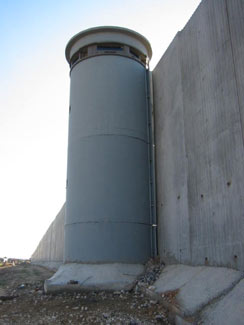 Beirut – It may be that researchers would want to examine as long ago as the period from the 3rd century BC until the beginning of the 17th century in order to find a regime so frenetically building walls and barriers in a hopeless quest to hold onto stolen lands as we in Lebanon may soon witness in the south of the country. It was back in 221 BC that in order to protect China from the land claims of the Xiongnu people from Mongolia, the Xiongnu tribe being China’s main enemy at that time who sought the return of lands they claimed the Chinese had stolen, that the emperor Qin Shi Huang ordered the construction of a wall to guard China’s territorial gains.
Lots of walls have been built throughout history to preserve occupied lands. The Romans built Hadrian’s Wall in England to keeep the Picts out and the East Germans built the Berlin wall to keep the people in. But no regime in history has built, in the span of six decades, the number of walls as the paranoid regime in Tel Aviv has erected. And it plans at least five more “anti-terrorist protective walls” including one slated to begin soon along the Lebanese-Palestine border at the Lebanese village of Kfar Kila. And that one may present a problem.
The decision to build a wall “to replace the existing Israeli technical fence” along the Blue Line near the town of Kfar Kila was announced last month by Tel Aviv. The announcement followed a meeting between the Israel military and UNIFIL and both are keeping fairly mum about what it knows about this latest wall but UNIFIL spokesman Neeraj Singh hinted to this observer that the first section will be about half a mile long and approximately 16 feet high.
Some south Lebanon residents are strongly objecting for among other reasons that the high wall will block the scenic views into Palestine. Others are ridiculing the reasons for the wall expressed by the US-Israeli lobby that will ask the American taxpayer to pay for it.
Israel firster, David Schenker, from the Washington Institute for Near East Policy, set up by AIPAC, told a Congressional hearing recently: “South Lebanon is obviously a very sensitive area [for Israel], being so close to Metula and the possibility of infiltration by Hezbollah and Palestinians is a legitimate concern. The Israeli government believes that this wall will prevent terrorists from launching direct line-of-sight firing of things like RPGs and mortars. Even the throwing of stones which some tourists visiting the area are in the habit of doing.”
Local observers, UNIFIL officials and experts like Timor Goksel, who worked as UNIFIL’s spokesman for 24 years along the blue line, expressed surprise at why Israel is claiming that Kfar Kila is a particularly dangerous area that needs a wall.
In point of fact the area has not been a particularly hazardous or “sensitive” one historically, even when the PLO controlled the area in the 1970’s. Goksel explained; “In my 24 years’ experience, there were never any attacks there because it’s adjacent to a Lebanese village, so any attack there will make life for the Lebanese difficult. I don’t think anybody has ever thought of doing anything there. Moreover, even if you cross into Israel at Kifa Kula there, you’re not going to come across an Israeli position for a long time, so it doesn’t make sense for anyone to attack from there. What are you going to attack? There’s no target.”
Some local observers are speculating that the real reason Israel wants the barrier in Kfar Kila might be to stop its troops from bargaining for drugs in exchange for weapons and classified military information, as the IDF’s drug problem among its “northern command” soldiers has escalated since the battering it took in the July 2006 war.
Israel’s newest frontier wall will follow the one being erected along the 150-mile boundary between the Sinai and Negev deserts. That wall building project is due to be completed by the end of this year of 2012. Once the Kfar Kila wall is finished, Israel will be almost completely enclosed by steel, barbed wire and concrete, leaving only the southern border with Jordan between the Dead and Red Seas without a physical barrier. But that too, may be walled in the future according to Shenker. He testified that the reason was due to the uncertainty in Jordan and its increasingly wobbly government.
Yet another wall, approximately seven miles from the Mediterranean along the southern border will meet the fence Israel has already been built around Gaza. This wall runs for 32 miles, with a buffer zone, which Palestinians are forbidden from entering, and extends close to 1,000 meters inside the narrow Gaza Strip, walling off more prime Palestinian agricultural land. This “security war” has caged Palestinians inside Gaza but did not prevent the cross-border capture of IDF soldier Gilad Shalit in 2006.
Along the Palestine-Lebanon border, a barrier built by Israel in the 1970s along the boundary was reconstructed, after Israel was forced out of Lebanon in 2000 following a 22-year occupation. This barrier did not prevent Hezbollah in a cross-border ambush in 2006, capturing two Israeli soldiers in order to negotiate a prisoner exchange. Nor did it prevent Hezbollah from firing of thousands of rockets during the ensuing 33-day war in retaliation for Israel bombing much of south Lebanon.
And the “protective walls” rise like mushrooms after a summer rain.
Further east from Lebanon, an Israeli barrier has been constructed on the ceasefire line drawn at the end of the 1973 Yom Kippur war, running between the Golan Heights, which Israel has illegally occupied for nearly 45 years, and Syria. It was here that hundreds of pro-Palestinian demonstrators entered occupied Palestine last May, in the Golan and along the Lebanese border. More than a dozen people were killed and scores injured when Zionist forces opened fire on the unarmed civilians.
A crossing at Quneitra, now operated by the UN, does allow some movement of UN personnel, truckloads of apples, a few Druze students and the occasional Syrian bride in white.
A few miles north of Quneitra is Shouting Hill, where Druze families in the Golan yell greetings across the barrier to relatives in Syria.
Moving south through heavily mined fields and hills, the 1973 ceasefire line is bordered by Israeli military bases and closed military zones, and shells of tanks from past battles, until it connects with the border with Jordan. It then joins with one of Israel’s first walls, constructed in the late 1960s, which now stretches almost from the Sea of Galilee down the Jordan Valley to the Dead Sea. Most of this line is not Israel’s border, but rather a barrier separating Jordan from the Israeli-occupied West Bank.
Around a third of the way down this stretch, the barrier joins the infamous huge steel-and-concrete West Bank wall. This runs along or inside the 1949 armistice line, swallowing up tracts of Palestinian agricultural land, slicing through communities and separating farmers from their fields and olive trees. As with its other 18 walls and barriers, the Zionist regime claims it is simply a security measure, but many believe it marks the boundaries of a future Palestinian state, consuming an additional 12 per cent of the West Bank. Approximately two-thirds of its 465-mile length is complete, mostly as a steel fence with wide exclusion zones on either side. According to the current route, 8.5 per cent of the West Bank territory and 27,520 Palestinians are on the “Israeli” side of the barrier. Another 3.4 percent of the area (with 247,800 inhabitants) is completely or partially surrounded by the barrier.
Two similar barriers, the Israeli Gaza Strip barrier and the Israeli-built 7-9 meter (23 – 30 ft) wall separating Gaza from Egypt (temporarily breached on January 23, 2008), which is currently under Egyptian control, are also widely condemned by the international community.
Returning to the subject of the latest wall project, increasingly the Zionist regime opposes discussions, hearings, visits, expressions of solidarity with Palestinians, and even the viewing its garrison state from south Lebanon. Cutting off a view that people throughout history have marveled at represents a continuation of its isolation and xenophobia.
Following the joint meeting at Kkar Kila noted above, UNIFIL Major-General Serra said: “The meeting was called to assist Israel in putting in place additional security measures along the Blue Line in the Kafr Kila area in order to minimize the scope for sporadic tensions or any misunderstandings that could lead to escalation of the situation.”
In fact, the opposite with likely happen. In a recent visit to Ahmad Jibril’s Palestinian camp in the Bekaa Valley, and in discussion with salafist groups in Saida, it’s plain the wall will likely become an object of target practice and further strain UNIFIL and Hezbollah efforts to keep the border calm.
In a scathing commentary in Yedioth Ahronoth, Israel’s biggest-selling newspaper, defense analyst Alex Fishman recently wrote: “We have become a nation that imprisons itself behind fences, which huddles terrified behind defensive shields.” It has become, he said, a “national mental illness”.
Franklin Lamb is doing research in Lebanon and is reachable c/o fplamb@gmail.com
Featured Video

Meet The Ellisons: Zionists, Technocrats, Moguls
or go to
Aletho News Archives – Video-Images
Frlom the Archives
The Doctrine of ‘Superior People’: The Bond between Israel and World Zionism
By James Petras :: 09.04.2015
Introduction
The single greatest feat of Israel and its overseas missions has not been material success, or the military conquest of millions of unarmed Palestinians, it has been ideological – the widespread acceptance in the US of a doctrine that claims ‘Jews are a superior people.’
Apart from small extremist rightwing sects who exhibit visceral anti-Semitism and denigrate everything Jewish, there are very few academics and politicians willing to question this supremacist doctrine. On the contrary, there is an incurable tendency to advance oneself by accepting and embellishing on it.
For example, in August 2015, US Vice-President Joseph Biden attributed ‘special genius’ to Jews, slavish flattery that embarrassed even New York’s liberal Jewish intellectuals.
Israel’s dominant role in formulating US Middle East policy is largely a product of its success at recruiting, socializing and motivating overseas Jews to act as an organized force to intervene in US politics and push Israel’s agenda.
What motivates American Jews, who have been raised and educated in the US to serve Israel? After all, these are individuals who have prospered, achieved high status and occupy the highest positions of prestige and responsibility. Why would they parrot the policies of Israel and follow the dictates of Israeli leaders (a foreign regime), serving its violent colonial, racist agenda?
What binds a majority of highly educated and privileged Jews to the most rabidly rightwing Israeli regime in history – a relationship they actually celebrate?
What turns comfortable, prosperous American Jews into vindictive bullies, willing and able to blackmail, threaten and punish any dissident voices among their Gentile and Jewish compatriots who have dared to criticize Israel?
What prevents many intelligent, liberal and progressive Jews from openly questioning Israel’s agenda, and especially confronting the role of Zionist zealots who serve as Tel Aviv’s fifth column against the interest of the United States?
There are numerous historical and personal factors that can and should be taken into account to understand this phenomenon.
In this essay I am going to focus on one – the ideology that ‘Jews are a superior people’. The notion that Jews, either through some genetic, biologic, cultural, historical, familial and/or upbringing, have special qualities allowing them to achieve at a uniquely higher level than the ‘inferior’ non-Jews.
We will proceed by sketching the main outline of the Jewish supremacist ideology and then advance our critique.
We will conclude by evaluating the negative consequences of this ideology and propose a democratic alternative. … continue
Blog Roll
 Aletho News
- Meet The Ellisons: Zionists, Technocrats, Moguls
- US failures in Iran reveal Russia is key to South Korea’s strategic security
- ‘All ports in Persian Gulf will be legitimate targets if Iranian ports are attacked’
- 40 Years of Endless War, Data Point by Data Point
- Department of War Using Palantir AI to Pick Targets in Iran
- American bases do not protect – they attack the peoples of the Persian Gulf
- ‘We’ve Obliterated Their Missiles’
- Syrian president vows ‘absolute support’ to disarm Hezbollah
- Ukraine attacking Russian gas pipeline to stop deliveries to Europe – Defense Ministry
- ‘Heinous crime’: Iran denounces Israeli assassination of 4 Iranian diplomats in Lebanon
- If Americans Knew
- Israeli strategic plans to “remake the Middle East” from the 1950s and since
- Honoring Gaza’s women who refused to let the world look away
- 97% of victims of war on Iran are Iranian, 98% of victims in war on Gaza are Gazans – Not a ceasefire Day 152
- Early Iran strikes cost $5.6 billion in munitions, Pentagon estimates
- Israel Decided the War, But Trump’s America Fights and Pays the Bill
- Conscientious Objector Group: Phone ‘Ringing Off Hook’ As Huge Mobilization Underway
- U.S. support for Israel continues to plummet, despite media’s best efforts
- Threats and missiles fly, death tolls soar in Iran, Lebanon, Gaza – Not a ceasefire Day 151
- Lebanon: Israel’s White Phosphorous Use Risks Civilian Harm
- Corporate Media Go All Out To Support The US-Israeli War On Iran
- No Tricks Zone
- Destructive Green New Deal: German Energy And Metal Group Warns Of Drastic Crisis
- New Study Documents A 20-Year Pause In Arctic Sea Ice Decline – Driven By Internal Variability
- Wake-up Call: Survey Shows Majority Of Germans Now Favor Postponing Climate Targets!
- Televised! Leading German Political Candidate Tells Schoolchildren CO2 Makes Sun Hotter!
- New Study: A Century Warming Of 1.1°C Is ‘Commonplace’ And ‘Not Unusual’ During This Interglacial
- New Study: ‘Internal Noise’ And Volcanic Forcing Can Trigger 10-15°C Warming Within Decades
- Glaciers Worldwide Are Suddendly Surging, Experts Blame Warming!
- Surprising Discovery: Sahara Is Greening…Billions Of Trees Where Once Thought To Be Barren
- New Research Reaffirms Clouds, Aerosols, And Surface Solar Radiation Are ‘Driving The Climate System’
- Germany: Electric Car Catches Fire At Charging Station, Sets Off Local “Inferno”, Widespread Damage
 Aletho News