Bomb blast rocks Syrian TV station, three people reported injured
RT | August 6, 2012
A bomb has detonated at a state-run television and radio building in the capital of Damascus, Syrian TV reported.
The explosion occurred on the third floor of the building, which houses administrative offices including the station director’s, RT Damascus correspondent Oksana Boiko said.
The station’s studios were frequently used by foreign journalists for live broadcasts from the city, she said. Three people were injured in the blast.
“It is clear that the blast was caused by an explosive device,” Syrian Information Minister Omran al-Zoabi said. “Several of our colleagues were injured, but there were no serious injuries, and no dead.”
“Nothing can silence the voice of Syria or the voice of the Syrian people,” al-Zoubi added while inspecting the damage at the TV building. “We have a thousand locations to broadcast from.”
The station continued to broadcast in the wake of the bombing.
The pro-government private Syrian TV station Al-Ikhbariya broadcast pictures of employees inspecting damage in the building and tending to a wounded colleague, the AP reported. [Photos]
Opposition forces mounted an assault on Aleppo’s main television and radio station on Saturday, August 4. The rebel gunmen failed to capture the building.
Seven journalists and workers were killed in June when an armed group attacked the headquarters of Syria’s al-Ikhbaryia TV.
Related articles
- Casualties reported after Syrian TV center blast (english.ruvr.ru)
8 injured as settlers stone bus carrying worshipers
Ma’an – 04/08/2012

Israeli settlers hurl stones toward Palestinians during clashes in the
village of Burin near Nablus (MaanImages/Rami Swidan, File)
NABLUS – Eight Palestinians sustained injuries late Friday when Jewish settlers pelted a bus with stones on the main road between Ramallah and Nablus, a Palestinian official said.
Ghassan Daghlas, a PA official who monitors settlement activity in the northern West Bank, told Ma’an that settlers from Shilo hurled stones at a bus carrying Palestinian worshipers on their way back from al-Aqsa Mosque.
The attack, he said, took place at 1:30 a.m. and eight people including men and women were injured. They were taken to Rafidia Hospital in Nablus, he said.
Daghlas highlighted that Israeli military forces closed the main road between Ramallah and Nablus for more than two hours after the incident to prevent further attacks.
The Israeli military confirmed receiving reports about the incident.
“Once the reports were received, IDF soldiers arrived at the scene and set up temporary checkpoints while searching for suspects,” a spokeswoman told Ma’an.
Settler violence against Palestinians and their property is systematic in the West Bank.
On Wednesday settlers vandalized Palestinian property in the Ramallah village of Sinjil.
A group of settlers from Givat Ariel outpost wrote “Palestinians should die,” and “Stay away from our lands,” on a wall in the village, Sinjil mayor Ayoub Swaied said.
Settlers also left an improvised explosive device made from chemicals under a car. A box containing ethylene, benzene and sulfur was found underneath a car in the village, Swaied added.
Related articles
- Palestinian stabbed, shot in settler attack near Nablus (alethonews.wordpress.com)
- Settlers enter Nablus village beat up a man, ransack his car, IOF arrests 5 Palestinians – No Settler (occupiedpalestine.wordpress.com)
Sudan, South Sudan agree on oil deal
Al Akhbar | August 4, 2012
Sudan and South Sudan have hammered out a deal on how to share their oil wealth, one of a series of disputes that brought the rivals to the brink of all-out war earlier this year, it was announced on Saturday.
“The parties have agreed on all of the financial arrangements regarding oil, so that’s done,” African Union (AU) mediator Thabo Mbeki said early on Saturday after talks in the Ethiopian capital.
The two countries had faced an August 2 deadline set by the United Nations to resolve their differences on oil and borders, and Mbeki said they would meet next month to try to find a compromise on the disputed region of Abyei, whose status was the most sensitive issue left unresolved before South Sudan’s independence.
The former South African leader said a timetable would now be drawn up for the resumption of oil production and exports, which are vital to the economies of both deeply impoverished countries.
“What will remain, given that there is an agreement, is to then discuss the next steps as to when the oil companies should be asked to prepare for resumption of production and export,” he said.
The AU has been mediating long-running talks to try to resolve a series of disputes that have flared since South Sudan became independent in July 2011 following a 2005 peace deal that ended one of Africa’s longest civil wars.
Landlocked South Sudan took with it three-quarters of the oil held by the previously united nation, but the pipelines and processing facilities remained in Sudan.
And the two sides were unable to agree on how much Juba should pay to export its crude through a northern pipeline and port, leading the South to shut down production in January after Khartoum began seizing the oil in lieu of payment.
Oil generates about 98 percent of South Sudan’s revenue and the move crippled the economies of both countries.
Ahead of the agreement announced by Mbeki, Sudan had lowered its demand for oil fees from South Sudan. Sudan had been seeking up to $36 a barrel in fees, but in a position paper released on Thursday said it was proposing $22.20 a barrel, compared with $7.61 offered by South Sudan.
Despite the oil agreement, South Sudan’s chief negotiator Pagan Amum accused Khartoum of violating a peace plan drawn up by the African Union in April urging both sides to reach a comprehensive deal on all outstanding issues.
“The government of Sudan continues to violate the road map and continues to bomb South Sudan,” Amum told reporters.
“The (AU) peace and security council in its road map and resolution decided that they would impose sanctions on Sudan if they fail to comply, Sudan has failed to comply,” he said.
Mbeki’s announcement came hours after US Secretary of State Hillary Clinton called on the two Sudans to strike an urgent compromise on outstanding issues such as oil revenue sharing, security, citizenship and border demarcation, saying the countries “remain inextricably linked”.
Clinton’s comments came after a meeting with South Sudan’s President Salva Kiir in Juba as part of her tour of Africa.
Sudan accuses South Sudan of supporting insurgents on its territory, a charge that analysts believe despite denials by Juba, which in turn accuses Khartoum of backing rebels south of the border.
The two countries fought along their undemarcated frontier in March and April, sparking fears of wider war and leading to a UN Security Council resolution that ordered a ceasefire.
Mbeki said an agreement had also been reached between Sudan, the United Nations, the AU and the Arab League to allow for humanitarian access in the conflict-wracked Blue Nile and South Kordofan states.
Prolonged clashes between Sudanese forces and rebel groups in the two disputed territories have left thousands in a “desperate state” and in need of emergency aid, according to the United Nations.
(AFP, Al-Akhbar)
Related articles
- Sudan, South Sudan reach oil deal (english.ruvr.ru)
Europe Already Has Draft Standard For Real-Time Government Snooping On Services Like Facebook And Gmail
From the not-that-we’d-ever-use-it department
By Glyn Moody | TechDirt | August 3, 2012
As the old joke goes, standards are wonderful things, that’s why we have so many of them. But who would have thought that ETSI, the European Telecommunications Standards Institute, has already produced a draft standard on how European governments can snoop on cloud-based services like Facebook and Gmail — even when encrypted connections are used?
ETSI DTR 101 567, to give it the full title, was pointed out to us by Erich Moechel, who has written an excellent exploration of its elements (original in German). Here’s the summary from the draft standard (Microsoft Word format):
The present document provides an overview on requests for handover and delivery of real-time information associated with cloud/virtual services. The report identifies Lawful Interception needs and requirements in the converged cloud/virtual service environment, the challenges and obstacles of complying with those requirements, what implementations can be achieved under existing ETSI LI [Lawful Interception] standards, and what new work may be required to achieve needed Lawful Interception capabilities. Cloud Services in whichever forms they take (Infrastructure, Software, Platform or combinations of these) are often trans border in nature and the information required to maintain Lawful Interception (LI) capability or sufficient coverage for LI support may vary in different countries, or within platforms of different security assurance levels. This work aims to ensure capabilities can be maintained while allowing business to utilise the advantages and innovations of Cloud Services and was undertaken cooperatively with relevant cloud security technical bodies.
As that makes clear, this is being presented as “maintaining” interception capabilities in a world where cloud computing makes previous approaches inapplicable. The new standard specifically mentions social networking, file sharing and video conferencing as new areas that need to be addressed.
One key section spells out how this is to be achieved:
If the traffic is encrypted, the entity responsible for key management must ensure it can be decrypted by the CSP [Communication Service Provider] or LEA [Law Enforcement Agency].
In order to maintain LI coverage the cloud service provider must implement a Cloud Lawful Interception Function (CLIF). This can be by way of Applications Programming Interface (API) or more likely ensuring presentation of information in a format recognisable to interception mechanisms. Deep packet inspection is likely to be a constituent part of this system.
As this makes clear, along with the intercepted information, the standard envisages encryption keys being handed over routinely. Just to make things complete, DPI — deep packet inspection — is also regarded as a likely element of the system.
Since this is currently a draft, the threat it represents might be seen as purely theoretical; but a recent article in the Guardian confirms that the UK government “quietly agreed to measures that could increase the ability of the security services to intercept online communication” — a reference to the ETSI draft. The Guardian also provides us with some explanation of why this draft just happens to be available at precisely the moment when the UK government is announcing a plan that seems likely to use it:
Etsi has faced criticism in the past for the pre-emptive inclusion of wiretapping capabilities, a decision that critics say encouraged European governments to pass their wiretapping laws accordingly. According to Ross Anderson, professor in security engineering at the University of Cambridge Computer Laboratory, the institute has strong links with the intelligence agencies and has a significant British contingent, along with a number of US government advisers.
It’s a classic case of policy laundering; here’s how it will probably work.
The British government insists now that it will “only” gather communications data, and not content. At the same time, it will require that ISPs adopt the new ETSI cloud interception standard (once it’s been finalized) in the “black boxes” that they must install under the proposed snooping legislation. That will put in place all the capabilities needed for accessing encrypted streams — since those providing cloud services will be required to hand over the encryption keys — and hence the content. The UK government may not intend accessing content today, but thanks to the wonders of function creep, when it decides to do it tomorrow the facility will be there waiting for it.
Meanwhile, European governments will be able to point to the UK’s adoption of the ETSI standard as just “good practice”; they will ask their own ISPs to implement it, while insisting that they too have no intention of accessing the contents of people’s Internet streams either. Until, that is, the day comes — probably in the wake of some terrorist attack or pedophile scandal — when the governments will note that since the capability is available, it would be “irresponsible” not to use it to tackle these terrible crimes. The US government will then bemoan the fact that Europe is taking better care of its citizens than it can, and will therefore pass laws requiring US ISPs to install similar real-time access to their systems, and for cloud-based services to hand over the encryption keys. Luckily, there will be a well-tried European standard that can serve as a model….
Follow me @glynmoody on Twitter or identi.ca, and on Google+
Related articles
- Skype stays silent on surveillance (stuff.co.nz)
- Is Skype snooping on your conversations? (zdnet.com)
The Employment Rate In The United States Is Lower Than It Was During The Last Recession
By Michael Snyder | BlackListedNews | August 4, 2012
Did you know that a smaller percentage of Americans are working today than when the last recession supposedly ended? But you won’t hear about this on the mainstream news. Instead, the mainstream media obsesses over the highly politicized and highly manipulated “unemployment rate”. The media is buzzing about how “163,000 new jobs” were added in July but the unemployment rate went up to “8.254%.” Sadly, those numbers are quite misleading. According to the Bureau of Labor Statistics, in June 142,415,000 people had jobs in the United States. In July, that number declined to 142,220,000. That means that 195,000 fewer Americans were working in July than in June. But somehow that works out to “163,000 new jobs” in July. I am not exactly sure how they get that math to add up. Perhaps someone out there can explain it to me. Personally, I find that the “employment rate” gives a much clearer picture of what is actually going on in the economy. The employment to population ratio is a measure of the percentage of working age Americans that actually have jobs. When it goes up that is good. When it goes down, that is bad. In July, the employment to population ratio dropped from 58.6 percent to 58.4 percent. Overall, the percentage of working age Americans that have jobs has now been under 59 percent for 35 months in a row.
The following is a chart of the employment to population ratio in the United States over the past 10 years:

The gray shaded bar in the chart represents the last recession as defined by the Federal Reserve. As you can see, the percentage of working age Americans with a job dropped sharply from nearly 63 percent at the start of 2008 to a little above 59 percent when the recession ended.
But the “employment rate” kept on dropping even further.
It finally bottomed out at 58.2 percent in December of 2009.
Since that time, it has stayed very steady. It has not fallen below 58 percent and it has not risen back above 59 percent.
This is very odd, because after ever other recession since World War II this number has always bounced back strongly.
But this has not happened this time.
In essence, it is starting to look like 4 percent of the working age population of the United States has been removed from the workforce permanently.
The good news in all of this is that things have at least not been getting any worse over the last couple of years. Even though things have been bad, at least we have had a period of relative stability.
The bad news is that the employment rate has not rebounded despite unprecedented borrowing and spending by the federal government and despite reckless money printing by the Federal Reserve.
Considering how desperately the federal government and the Federal Reserve have been trying to stimulate the economy, I truly did expect to see the employment rate bounce back at least a little bit by now.
Unfortunately it has not and now the U.S. economy is rapidly heading for another recession.
But Barack Obama is going to prance around over the next few days and talk about how wonderful it is that the economy created “163,000 new jobs” in July. … Full article
Related articles
- We’re Still 12 Million Jobs Away From Normal – Bloomberg (bloomberg.com)
- July Jobs Report Is Clear As Mud – Bloomberg (bloomberg.com)
British vessels prohibited from docking in Buenos Aires province
Press TV – August 4, 2012
Argentina has prohibited all ships sailing under the British flag from docking at any of the ports in the Buenos Aires province, Press TV reports.
The measure was adopted on Friday in a bill passed by the legislature of the province of Buenos Aires, the country’s largest province.
“We can’t have a colonial enclave affecting the region with NATO’s presence in our Malvinas Islands. We have to actively protest against those who explore and exploit our natural resources and violate our sovereignty,” said Remo Carlotto, an MP from the ruling party.
The bill prohibits vessels involved in “natural resources exploration and exploitation activities” in waters surrounding the Malvinas Islands, banning them from “mooring, loading or developing logistical operations” in the area”.
The move comes after months of political dialogue over the disputed archipelago between Argentina and Britain has failed to bear fruit.
“We have to keep moving forward using all the tools we have to defend our country’s sovereignty in the [Malvinas] islands. Argentina has taken significant steps. It has stood up and recovered its political and economic sovereignty,” said Martin Sabbatella, another lawmaker from the ruling party.
Earlier this year, Argentina took legal action against five British oil companies.
Argentina and Britain fought a 74-day war in 1982 over the islands.
Related articles
- OAS backs Argentina on Falklands (morningstaronline.co.uk)
FBI ‘Primer’ Instructs Interrogators to Break Detainees Through Isolation
By Kevin Gosztola | FireDogLake | August 2, 2012
A “primer” from the Federal Bureau of Investigation (FBI) seems to encourage the use of isolation to break down prisoners in overseas prisons. Published in 2011, it advocates the use of this coercive measure to break detainees ahead of interrogations, which violates or runs contrary to FBI policy.
The American Civil Liberties Union (ACLU) obtained the “primer” through a Freedom of Information Act (FOIA) request. Devon Chaffee, Legislative Council for the ACLU, says it is the first document she has seen “that’s written by an FBI agent” and “explicitly recommends that FBI agents recommend that detainees be put in isolation.”
Here is part of the primer that led the ACLU to be concerned:
…For the safety of other detainees in the facility, detainees fresh from the battlefield should be detained in individual cells until complete assessment can be made. The assessment can be considered to be complete when the decision has been made whether to release the detainee or send him to long term detention facility. Additionally, access to anything above the baseline level of treatment provided to all detainees should be strictly controlled by the assigned Interrogator. Granting this authority and control to the Interrogator places the Interrogator in a position of power that can provide an advantage when crafting an approach strategy.
Isolation of the detainee not only ensures the safety of other detainees but also prevents the individual detainee from drawing strength from the support and companionship of other detainees It also prevents collusion on cover stories between detainees. A large part of the Interrogators advantage is the natural fear of the unknown that the detainee will be experiencing. Exposure to other detainees will mitigate that fear. You may not be in a position to influence how your subject is held, but at a minimum you should know if he has been held in a communal cell prior to interrogation…
Chaffee considers this to be problematic because “isolation was component of many of the abusive interrogations that took place” after the September 11th attacks. Isolation can lead to serious abuses in interrogation. The FBI also has a policy that prohibits the “use of coercion in interrogation” and the FBI and Supreme Court have recognized that “isolation in interrogation is an indication of coercion.” [For these reasons, the ACLU sent a letter to FBI director Robert Mueller.]
The FBI would presumably contend the isolation is only done for so-called security purposes, however, additional language in the “primer” makes it clear the isolation is intended to inflict a psychological impact on detainees so they are essentially in a state of “learned helplessness” (like what the CIA has done to detainees in their custody whom they’ve tortured).
…[D]etainees should not be held in the clothing they are captured in. Detaining a subject in his own clothing could impact negatively on the health and safety of detention facility personnel and other detainees in the facility. Having the detainee change into hospital pajamas, or some other generic clothing, and flip flops has the added benefit of removing a potential source of comfort and an anchor to the world outside the detention facility. This is an important step in the process of detaching the detainee from the outside world and replacing his concern for his cause and his colleagues with a concern for his own fate…
…In order to create the optimum conditions for a productive interview, if the policy of the facility permits, consider having your detainee placed in an individual cell several days before you begin interrogation. If you are conducting law enforcement interviews in a DOD facility, a formal request from the FBI must be made to isolate a detainee. This request must be approved by the first O-6 in the chain of command.
Keep in mind that a thorough interrogation may be a multi-session, multi-day process. Having your subject return to a communal cell between sessions is completely counterproductive. A subject returning to a communal cell will feel pressure from fellow detainees based on the duration of his absence from the cell and the knowledge that he will be questioned by his peers upon his return. Isolation of your subject removes this intangible, but extremely powerful, influence from your subject. [emphasis added]
Chaffee notes, ”There are some legitimate administrative reasons why a detainee for a limited amount of time would need to be isolated, potentially at his request or for his protection from other detainees in the facility, for instance.” But, “the way that it is described and the language that is being used” suggests the isolation is being employed to “break a detainee’s will” and that to the ACLU “seems inherently coercive.”
Also, there is no need to “separate the detainee from the entire population” if collusion is suspected. Just separate the detainee from the detainee(s) he is suspected of colluding with. And, if a decision to separate detainees needs to be made, the head of the facility should make that decision. Why should an FBI interrogator be in a position to make this decision?
It is unclear if this encouragement for isolation is re-emerging in policy. However, Chaffee argues the FBI should not be asking foreign governments or other agencies to engage in conduct that the FBI agents are prohibited from engaging in, especially when this conduct could potentially lead to human rights abuses.
A final note: creating a state of “learned helplessness” in a prisoner, a concept developed by positive psychologist Martin Seligman, can deliberately make that prisoner ill.
This post by David Dobbs over at ScienceBlogs.com (a partner with National Geographic) explains that “some studies have shown ‘learned helplessness’ to be an apt model for major depression from both a behavioral and even a neurological perspective. In a sense, then, to intentionally produce it in someone by causing them pain and distress in a situation they are powerless to change is to inflict on them a mental illness.” Inducing a state of helplessness or depression in a person through isolation—which is torture—will likely make a human very ill.
Given this scientific reality, the FBI’s ‘primer’ unmistakably encourages the cruel and inhuman treatment of prisoners.
Related articles
- Pentagon: ‘Gitmo drugged prisoners for their sake… then interrogated’ (alethonews.wordpress.com)
- FBI Interrogation Primer Encourages Prisoner Isolation (aclu.org)
Is Iran “The Most Destabilizing Nation in the World”?
By Flynt Leverett and Hillary Mann Leverett | The Race for Iran | August 1st, 2012
Standing reality on its head—at least in the eyes of most Middle Easterners—presumptive Republican presidential nominee Mitt Romney declared during his recent visit to Israel that the Islamic Republic is “the most destabilizing nation in the world.” In fact, reputable surveys conducted by international and regional polling groups—see here and here—show that, by orders of magnitude, largely Sunni Arab populations see Israel and the United States as much bigger threats to their security and interests than Iran. Al Jazeera asked our colleague, Seyed Mohammad Marandi of the University of Tehran, to comment on Governor Romney’s remark; to see the segment, click here or on the embedded video above.
Mohammad’s observations that, given the record of American policy in the Middle East (and all the death and destruction it has caused), the United States is hardly in a position to “complain very much about Iran” and that, from an Iranian perspective, there is not a lot of difference between Romney and President Obama are well presented. His explanation why the “soft war” that the Obama Administration is currently conducting against the Islamic Republic is not that different from a “hot war” is especially eloquent. We, though, want to pick up on Mohammad’s response to the interviewer’s suggestion that it is Iranian intransigence which is blocking progress in the nuclear talks and prompting tougher sanctions:
“The Iranians have been talking. The Iranians are basically saying that ‘we are willing to negotiate.’ But the Western position is ‘you give up everything and then we’ll start talking.’ The Iranian right to enriching uranium is a right that all sovereign countries have. And the Iranian Revolution itself was partially about dignity and independence. The Iranians are not going to accept being a second-rate country. This is not the Saudi regime or the Jordanian regime. This is a country that is fiercely independent. So the Iranians will continue to enrich uranium within the framework of the NPT and international law. The United States cannot stop Iran from doing so. If the United States was reasonable and rational, if the Europeans were rational, then the Iranians would be willing to give further assurances to ease tensions. But the United States isn’t really after that, in the eyes of Iranians.”
We think that is an important statement, both of the Iranian position and of reality. We have long argued that, if Washington accepted the principle and reality of internationally safeguarded enrichment in Iran, it would become eminently possible—not to say relatively easy—to negotiate a satisfactory resolution to the Iranian nuclear issue. But the United States—even under the Obama Administration—does not want to do that, for recognizing Iran’s right to enrich implies recognizing the Islamic Republic as a legitimate political entity representing legitimate national interests. We think that is unlikely to change after the U.S. presidential election in November, regardless of whether Romney or Obama wins. … Full article
Related articles
- US Sanctions Policy on a Collision Course against Iran; Increasing Tensions with China (alethonews.wordpress.com)
- How the Obama Administration Is Stalling Its Way to War with Iran (alethonews.wordpress.com)
- Ron Paul: US obsessed with ‘act of war’ on Iran (presstv.ir)
Featured Video
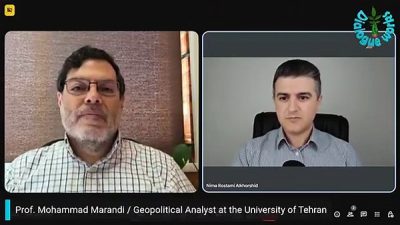
Seyed M. Marandi: U.S. Military DIVIDED? Iran’s Secret Defense EXPOSED
or go to
Aletho News Archives – Video-Images
From the Archives
‘Israel sees Iran as obstacle to its policies’
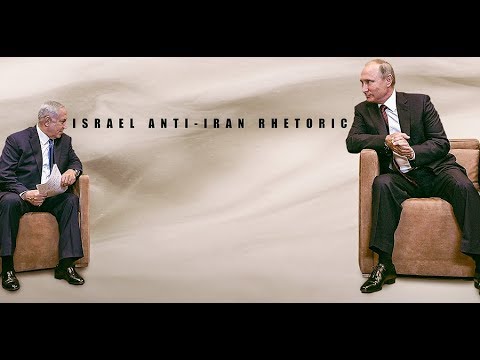
Press TV – August 25, 2017
Prime Minister Benjamin Netanyahu has said that Israel felt threatened by Iran’s growing influence in the Middle East. Netanyahu expressed his Iranophobic view in a meeting with Russian President Vladimir Putin in Russia’s Black Sea resort of Sochi on Wednesday. Press TV has asked Scott Rickard, former American intelligence linguist from Tampa, Florida, and Brent Budowsky, a columnist at The Hill from Washington, to give their thoughts on the issue.
Rickard said Tel Aviv is concerned about the fact that the regime could not carry out its old project to spread sectarian divisions and pave the way for dismemberment of the countries in the Middle East region because of the Iranian-led resistance against Israeli policies, not only in the occupied territories of Palestine but also in the whole region.
“Iran is not a threat to Israel whatsoever. The threat that Israel sees is the fact that their Oded Yinon Plan is being put to a hold by Iran,” the intelligence linguist said on Thursday night.
“They (the Israelis) look at Iran as a threat only because they have no influence on their governments and Iran is autonomous and is not under the Zionist influence,” he added.
Since the victory of the Islamic Republic of Iran in 1979, Tehran has been critical of Israel’s policies in the region, whereas “no leaders [of other states] even dared to speak out against Zionism,” Rickard argued. … continue
Blog Roll
 Aletho News
- Alberta Bill Would Fine Political Deepfakes $10,000 Without Satire Exemptions
- Iran declares ‘historic victory’ over US, says enemy forced to accept its proposal
- Trump Claims Ceasefire, Reopening of Strait of Hormuz Agreement with Iran
- Israeli tank fire killed UN peacekeeper in Lebanon, UNIFIL investigation finds
- Russia, China block Bahrain-sponsored UN resolution on Strait of Hormuz
- The US-Israeli War on Science is an Assault on our Future
- Trump’s Promise to Bomb Iran ‘Like Never Before’ Faces Brutal Logistics — Expert
- Germany seeks to restrict stays abroad for men of fighting age – Berliner Zeitung
- Evidence points to Ukraine being behind TurkStream attempted sabotage, but that should come as no surprise
- Sri Lanka secures supplies of Russia oil – minister
- If Americans Knew
- Thousands dead and neighborhoods razed to the ground: Aid agencies fear southern Lebanon is becoming the new Gaza
- The war the US is fighting for Israel could cost trillions
- ‘Cigarette Burns, Nail Wounds’: Toddler Tortured in Gaza to Coerce Father
- Trump Says US Sent ‘a Lot of Guns’ to Protesters in Iran
- Israeli forces destroy 17 UN peacekeeper cameras in south Lebanon
- US-Israeli strikes ‘completely destroy’ synagogue in Tehran
- Archbishop for US Military Says Iran War Is Unjust Under Catholic Teaching
- Iranian leaders’ Open Letters to the American People
- Trump says Iranians appreciate bombs, WHO warns of nuclear risks – Daily Update
- U.N. experts demand Israel release prominent Gaza doctor after reports of ‘severe torture’
- No Tricks Zone
- An Inconvenient Tree: Uncovered In Alps… Europe Much Warmer Than Today 6000 Years Ago
- New Study Reports A 60% Slowdown In Greenland’s Ice Loss Rate In The Last Decade
- Low Intensity Tornado Wrecks Major Solar Farm, Creating A Potential Toxic Dump
- New Study Finds Warming Saves Lives…Cold Temperatures 12 Times More Deadly Than Excess Heat
- German Science Blog Accuses PIK Climate Institute Of Hallucinating Climate Tipping Points
- Devastating Assessment Of Comirnaty Vaccine By Former Senior Pfizer Europe Toxicologist
- New Study: CO2 Is ‘Effectively Negligible’ As An Explanatory Climate Change Factor Since 2000
- Former Pfizer Toxicologist Dr. Helmut Sterz Tells Bundestag Hearing Pfizer Vaccine Should Have Never Been Approved
- Energy Expert: Germany’s Nuclear Phaseout Was A “500 Billion Euro Mistake”
- New Research: South Australia’s Mid-Holocene Sea Surface Temperatures Were 4°C Warmer Than Today
 Aletho News