The Energy Department’s Crazy Plan for Radioactive Scrap
Nuclear Weapons Waste in Your Water Bottle, Hip Replacement, Baby’s Toys, Jungle Gym?
By JOHN LaFORGE | CounterPunch | January 23, 2013
Even the deregulation-happy Wall St. Journal sounded shocked: “The Department of Energy is proposing to allow the sale of tons of scrap metal from government nuclear sites — an attempt to reduce waste that critics say could lead to radiation-tainted belt buckles, surgical implants and other consumer products.”
Having failed in the ‘80s and ‘90s to free the nuclear bomb factories and national laboratories of millions of tons of their radioactively contaminated scrap and nickel, the DOE is trying again. Its latest proposal is moving ahead without even an Environmental Impact Statement. Those messy EISs involve public hearings, so you can imagine the DOE’s reluctance to face the public over adding yet more radiation to the doses we’re already accumulating. It would be a pretty hard sell, what with dental X-rays, medical X-rays, mammograms, CAT scans, PET scans, radio-isotope “seeds” and cocktails, food irradiation, every-day releases of radioactive gases and water from 104 nuclear power reactors, major releases like Fukushima, radon from rocks, whole-body X-rays at airports (that you can refuse) and cosmic rays during flights.
Not long after Chernobyl spread radiation around the world in 1986, the National Council on Radiation Protection doubled its estimate of our annual radiation dose, from 170 millirems to 360. A few years ago it raised the estimate again, to 620 millirems per year. The agencies that both create radioactive waste and estimate the radiation doses it gives to us, say the latest increase is due mostly to rapid growth in the use of medical X-rays and radio-isotopes in medicine. Should the DOE be allowed to haphazardly add still more?
Still, the DOE wants to deregulate and actually sell 14,000 tons of radioactive scrap metal (both volumetrically and topically contaminated) from the nuclear war system — uranium enrichment, plutonium extraction, etc. — and “recycle” the waste to the commercial clean scrap metal industry. From there, according to the watchdog group Nuclear Information and Resource Service, the radioactive stuff “could be turned into anything from your next pants zipper to baby toys.”
The DOE claims that potential radiation exposures to men, women and children would amount to a “negligible individual dose.” But anyone with a scrap of understanding of DOE and the Atomic Energy Commission knows not to believe a word of their assurances. The DOE famously said that rainwater would take thousands of years to seep through Yucca Mountain to a deep waste repository; it ran through the mountain in 40 years.
Even Some in Congress Object
Rep. Ed Markey wrote to Energy Secretary Steven Chu Jan. 11, calling the deregulation proposal “unwise” and urging that it “should be immediately abandoned.” Rep. Markey warned that radioactive products could “ultimately be utilized by pregnant women, children and other vulnerable populations.”
The DOE has never officially acknowledged — in spite of the National Academy of Sciences’ 2006 findings — that the same radiation dose does far more harm to women than to men. The drastically increased vulnerability of fetuses and infants is well known, but the whole population is nevertheless treated as the same big, young, Caucasian male (“reference man”) in most radiation risk assessments.
The DOE’s assessment of the proposal’s risks neglects the fact that exposures can go on for years from a watch or from medical implants or tableware or other items, leading to many millirems for many years. A millirem per year over 30 or 70 years is 30 or 70 millirems which is not trivial, NIRS points out.
The DOE currently bans the release of its radioactive scrap under a moratorium that began in 2000. The ban must not be lifted, but should be made permanent and expanded to keep all radioactive waste — plastic, concrete, soil, asphalt, etc. in addition to all metals — under control, out of commercial recycling and managed as the deadly hazard it is. NIRS.org has more details.
You can tell the DOE to continue to keep its radioactive metal out of the commercial metal supply, commerce, and our personal items. You can demand a full environmental impact statement. Comment deadline is Feb. 9, 2013. Email to: scrap_PEAcomments@hq.doe.gov (with an underscore after “scrap_”). Snail mail to: Jane Summerson / DOE NNSA / PO Box 5400, Bldg. 401K. AFB East / Albuquerque, New Mexico 87185
John LaForge works for Nukewatch and edits its Quarterly newsletter.
Related article
- AUDIO USA Dept of Energy plans to put radioactive materials into products (nuclear-news.net)
Turkish protesters, angry at NATO missiles, attack German troops
Press TV – January 23, 2013
Turkish protesters have attacked German troops stationed in the Mediterranean port of Iskenderun to operate NATO’s Patriot missiles.
Members of the Turkish Youth Union (TGB), affiliated to the Turkey Workers’ Party, attacked the soldiers in the center of the city on Tuesday and tried to put sacks on their heads.
Turkish media quoted Iskendurun Prosecutors Office as saying that 14 activists have been arrested and 28 others charged with intentionally attempting to cause harm.
Also on Tuesday, Turkish protesters staged a rally in the capital Ankara to voice opposition to the deployment of NATO’s missile system and the presence of foreign troops in the country.
Over the past days, similar protests have been held in front of the German and US embassies.
German and Dutch missile batteries, as part of NATO’s mission, arrived in Turkey on Monday. The surface-to-air missiles will be deployed near the border with Syria.
The United States, another contributor to the NATO mission, has also begun deployment of two Patriot missile batteries at Incirlik Air Base in Turkey’s southeast.
Russia has frequently expressed opposition to the deployment of the missiles in Turkey, which Ankara claims is aimed to deterring any threat emanating from its southern neighbor, Syria.
Moscow says the threats facing Ankara have been exaggerated in order to justify NATO’s deployment of the advanced missiles along the Syrian border, adding that the measure would increase the “risk that these arms will be used.”
Related articles
- Turkish police arrest anti-Patriot missile protesters (alethonews.wordpress.com)
- Anti-Patriot protesters gather in front of German Embassy in Ankara (presstv.ir)
Judaization = Racism? Really?
By Paul Larudee | January 23, 2013
On Sunday, January 20, 2013, the “progressive” Israeli newspaper Haaretz published a short editorial titled “‘Judaization’ is racism”.
Before you get your hopes up, let me tell you that the editorial is a criticism of Shimon Gapso, the Jewish mayor of Upper Nazareth, a community intended to diminish the Arab character of Nazareth, the largest Palestinian Arab city inside what most of the world recognizes as Israel.
Founded in 1957, Upper Nazareth was given priority for development and expansion as part of a campaign by Yitzhak Rabin. The impetus was a trip that Rabin made to the Galilee in 1975. At one point he found himself in the Carmel valley. Looking around, he saw nothing but Palestinian farms and villages. “Am I in Israel or in Syria?” he uttered, whereupon he lent his weight to the mission to “judaize the Galilee”. Upper Nazareth is one of the Jewish communities that became an important of that mission. It was intended to limit the growth of Nazareth and ultimately marginalize or displace it.
Ironically, however, the “Jewish character” of Upper Nazareth is itself being compromised, as Palestinians from Nazareth find that there is no longer enough room in the older city to accommodate their growing population. In response, the mayor of Upper Nazareth has tried to make the city as unfriendly as possible to its non-Jewish residents, including opposition to Arabic language schools in the town and a much-publicized ban on Christmas trees. (Most of the Palestinians in Upper Nazareth are Christian.) The Haaretz editorial is a criticism of the “benighted racist position that sees the presence of Arabs in the Galilee or anywhere else as a national threat.”
Nice words, but is not the entire Zionist project one of “judaization”? Is that not how its founders conceived it? Is not Israel itself the product of “judaization”? What is different about Upper Nazareth? What about the expulsion of the Bedouin in the Naqab (“Negev”)? Is the confiscation and demolition of Palestinian homes in Jerusalem not merely an extension of the ethnic cleansing of 1948? How are the orders to evacuate and obliterate eight villages in the hills south of al-Khalil (“Hebron”) not consistent with the aims of Zionism?
If Haaretz wishes to oppose judaization, why not start with the judaization of 1948? Let them insist upon inviting all Palestinians back to their homes. Let them demand elimination of an immigration policy that is for Jews only. Let them call upon the Custodian for Absentee Property – who is responsible for the more than 80% of Israel that was confiscated from Palestinians in 1948 – to welcome the absentees back and return their property to them, with payment for damages and compensation for 65 years of unauthorized usage. Let them oppose a policy of separate states for Arabs and Jews (forgetting that many are both or neither).
Judaization is just another word for Zionism. And yes, it’s racism.
Related articles
- The Terror Lurking in a Christmas Tree (alethonews.wordpress.com)
- Israeli mayor: expel Palestinian citizens of “hostile” Nazareth to Gaza for opposing war (altahrir.wordpress.com)
- In Palestine, Peace is Not Just Absence of Violence, But Presence of Justice (alethonews.wordpress.com)
Israeli occupation forces kill woman near Hebron
Ma’an – 23/01/2013
HEBRON – Israeli forces shot and killed one person and injured another in the Hebron district on Wednesday, medics said.
Witnesses told Ma’an that Israeli soldiers traveling in a civilian car opened fire at a group of people at the entrance to al-Arrub refugee camp south of Bethlehem.
Lubna Munir Hanash, 22, was shot in the head and died from her injuries, medics said.
Suad Yusuf Jaara was shot in the hand and transported to Ahli hospital in Hebron.
Witnesses told Ma’an that after the shooting Israeli soldiers prevented an ambulance from arriving at the scene for around 10 minutes.
Locals said there were no clashes in the area at the time.
An Israeli army spokeswoman said that “soldiers were attacked by Palestinians who hurled multiple firebombs at them while they were traveling near al-Arrub. Soldiers returned fire and the circumstances of the incident are currently being reviewed.”
Israeli soldiers searched the area and found several firebombs ready for use, she said, adding that no soldiers were injured in the incident.
Related articles
- Israeli soldiers vandalise Hebron home and arrest a student (alethonews.wordpress.com)
- Family denies Hebron teen killed by Israel was carrying toy gun (alethonews.wordpress.com)
- Local activist detained in Hebron (alethonews.wordpress.com)
- Hebron families struggle for existence (palestinemonitor.org)
- Second group of journalists beaten in Hebron (alethonews.wordpress.com)
Greek metro workers defy court order to return to work
Press TV – January 22, 2013
Greek metro workers have defied a court order to return to work and have staged the sixth day of strikes over the government’s spending cuts.
Athens was without a metro service on Tuesday for four to five hours, which comes in continuation to the protest started on Thursday over the planned cuts to metro workers’ salaries.
A Greek court ruled against Athens Metro Workers’ Union’s planned strikes and permitted the government to use force to make personnel return to work.
Union officials call on the government to abolish the planned changes to the public sector’s pay scales, which comes as Athens implements measures to satisfy its eurozone creditors.
Reductions in public sector workers’ incomes have made it harder for Greeks to make ends meet.
“With these latest cuts, someone like me who earned 1,300 euros per month will end up clearing something like 700 euros,” Metro Workers’ Union Head Antonis Stamatopoulos said.
“We cannot live on what we earn,” he added.
Stamatopoulos said that apart from stopping the changes to the pay cuts, the only way the government could make them return to work would be through force.
“Civil mobilization? They can enforce it if they want. Maybe they should come here with tanks to force us back to work,” Stamatopoulos said.
Parliament introduced new austerity measures in December 2012, which eurozone finance ministers approved for bailout packages of 9.2 billion euros on Monday and 34.3 billion euros last month.
Europe plunged into financial crisis in early 2008. The worsening debt crisis has forced the EU governments to adopt harsh austerity measures and tough economic reforms, which have triggered massive protests in many European countries.
Mayoral Candidates Take Sides over St. Louis Veolia Contract
Saint Louis Palestine Solidarity Committee | January 22, 2013
On January 16, 2013 at City Hall in St. Louis, Missouri, a diverse group of 60 Palestinian rights organizers; environmental activists; workers; civil rights leaders; veterans; local business owners; students; members of the local Muslim, Christian, and Jewish communities; and other concerned citizens packed a meeting of the St. Louis Board of Estimate & Apportionment (E&A) to show opposition to a proposed city contract with Veolia Water. Two mayoral candidates on the 3-person board, which considers public contracts, took opposite sides over the contract, prompting the third member to call for a public hearing for testimonies from local citizens regarding Veolia.
Contract opponents lined the halls leading to the mayor’s office, citing Veolia’s abysmal record of poor environmental standards, labor abuses and involvement in human rights abuses in Palestine. Each held a sign stating “Say No to Veolia” followed by their personal reasons, which included: “I can’t ride their buses because I am Palestinian,” “I think all people deserve equal treatment,” “My tax dollars are not for corporate profit,” “They don’t have to drink our water,” “I love coffee.” The mayor’s office had to change the meeting venue at the last minute to accommodate the large public turnout.
The St. Louis Palestine Solidarity Committee (PSC) learned of the proposed $250,000 Veolia contract for a four-month consultation for the St. Louis Water Division in December 2012 after the story was leaked to the Riverfront Times. When the contract came up for approval, PSC organized in less than 24 hours a grassroots effort to tell the E&A Board, which is comprised of St. Louis City Mayor Francis Slay, Comptroller Darlene Green and President of the Board of Aldermen Lewis Reed (running for mayor against Slay), not to approve the contract without investigating Veolia’s record. At the December 19, 2012 meeting of the Board, the Board agreed they could not in good conscience vote to approve a contract with so many allegations outstanding.
Immediately, the PSC reached out to diverse communities to join the fight against Veolia, all under the coalition St. Louis Dump Veolia.
The contract was reintroduced last-minute to the January agenda by Mayor Slay, the contract’s chief proponent. Slay had received a trophy and award check for $15,000 from the President of Veolia Water in 2007, on behalf of the City. Following mass mobilization by the coalition, Mayor Slay decided one day before the January meeting to remove the contract from the agenda, delaying the vote for a second month.
In the presence of an uncharacteristically large audience and media presence, the two mayoral candidates Slay and Reed came head-to-head in tense disputes regarding agenda items, transforming the meeting into what some coined an “ad-hoc mayoral debate.” President Reed ended by praising the public showing and affirming his opposition to the Veolia contract, while Slay stressed that the public had misconceptions about the company.
Comptroller Green, who holds the deciding vote, said she hoped the public’s voices could be heard and asked for a public hearing. The PSC delivered and posted letters to Comptroller Green asking her to reject Veolia from the Palestinian Freedom Riders, Boycott from Within and the Civic Coalition for Palestinian Rights in Jerusalem.
Veolia has been a major focus of the global Boycott, Divestment and Sanctions (BDS) movement for Palestinian freedom and equality. The St. Louis campaign against Veolia may be the first time that a BDS campaign has entered mainstream political discourse and, perhaps, a mayoral race. Media coverage in the St. Louis Post-Dispatch, the Riverfront Times and St. Louis Public Radio acknowledge that Veolia’s contracts in Israel/Palestine have been instrumental in bringing the controversy out in the open.
The nationwide We Divest campaign targets Veolia for divestment from the holdings of financial services giant, TIAA-CREF. St. Louis-area resident and PSC member, Steve Tamari, is the lead filer for a nationwide, broad-based shareholders’ resolution calling for divestment from Veolia and other companies that profit from Israel’s human rights abuses. Individuals holding a CREF account are encouraged to sign on to the shareholders’ resolution and to vote in support of the resolution before or at the July 2013 annual meeting.
St. Louis Dump Veolia is committed to keeping up the pressure on City Hall until the Veolia contract is rejected once and for all. The PSC will be mobilizing residents to testify at the hearing, putting the Israeli occupation, and its corporate enablers, on trial for all to see.
The next E&A meeting will occur on Wednesday, February 20 at 2pm in St. Louis City Hall.
To follow developments and action items on the campaign, join the St. Louis Dump Veolia and Palestine Solidarity Committee Facebook pages, and follow@stlpsc on Twitter
Veolia Fact Sheet
December 18th, 2012 | Published in Latest News and Action Alerts, STL-PSC Blog
What is Veolia?
According to a story broken by the Riverfront Times, St. Louis city lawyers have been negotiating a contract with Veolia Water North America to guide cost-cutting. Veolia Water is a major subsidiary of Veolia Environnement, a Paris-based multinational corporation and the largest water privatization business in the world. Veolia is infamous for:
- Failure to make good on promised improvements
- Anti-labor practices
- Privatizing public resources
- Irresponsible to disastrous environmental practices
- Mismanagement
- Corruption, bribery, embezzlement, and fraud
- Supporting and profiting from segregation and discrimination in Palestine
Worldwide, consumers report that Veolia consistently charges high rates, provides poor service, causes staff turnover, discourages water conservation, and fails to implement promised improvements. Its history reveals consistent prioritization of private profit at the expense of the environment and public welfare.
Unless otherwise indicated, the following is based on extensive research and documentation on Veolia’s practices by Water for All, Polaris Institute, Global Exchange, Novato Friends of Locally Operated Wastewater, Public Citizen, Public Water Works, and Food & Water Watch (here, here, here, here, here).
What happened in Indianapolis?
In its proposal to the St. Louis Water Division, Veolia extensively references its work in Indianapolis as a successful model that could inform Veolia’s guidance in St. Louis. If Indianapolis is any indication of Veolia’s practices, then our city would do well to steer clear. Veolia claims that the contract was completed and “focused on building a collaborative environment with all of the project stakeholders (union, government and the community).” In fact the company’s 20-year contract with Indianapolis was terminated by the city less than halfway through, by which time the following had ensued:
- Non-union employees claimed that the company cut retirement plans, health care and other benefits, costing the workers more than $50 million over 25 years. Hundreds of employees, many organized under a strong union, found themselves in a pitched battle with the company to preserve benefits and hold Veolia to its promises.
- Veolia was sued for breaking state contract law, and for overcharging 250,000 residents.
- Because the company lacked proper safeguards, a typo by an employee caused a boil-water alert for more than a million people, closing local businesses and canceling school for 40,000 students.
- An independent review uncovered lax oversight of the city’s contract with Veolia.
- Consumer complaints more than doubled in the first 10 months of the contract.
- In a study of 100 large U.S. cities, Environmental Working Group ranked Indianapolis drinking water quality #90 (i.e. 11th-worst overall). St. Louis ranks #9 — among the best in the country.
In 2005, a federal grand jury subpoenaed four Veolia Indianapolis employees as part of an investigation into allegations that the utility falsified water quality reports. The probe began amid accusations by Indianapolis council members that the company had cut back on staffing, water testing, treatment chemicals and maintenance. Though Veolia was never charged, the corporation sustained multimillion-dollar losses and dug its way out of this hole by finagling concessions, including a 2007 contract amendment shifting at least $144 million in costs from Veolia to the city. Ignoring public outcry from consumers and state officials, the city then tried to raise rates by 35% to pay for these additional expenses and more expensive capital improvement projects.
In 2010, with infrastructure needs mounting and Veolia demanding more than the city could afford, Indianapolis canceled the contract more than 10 years early, for which they were forced to pay Veolia an additional $29 million. The nonprofit Citizens Energy Group took over, positioned to save the city more money than multinational Veolia was ever able to.
If Veolia gives Indianapolis as an example of a success story, what could a failure possibly look like?
New Orleans — an Environmental Disaster, and Other Cities
In 2001 in New Orleans, an electrical fire at a sewer treatment plant operated by Veolia caused operators to divert raw sewage into the Mississippi River for two hours. In 2001 and 2002, the plant released sewage into the river a total of 50 times, often violating water quality standards and resulting in more than $107,000 in fines. The city’s Sewerage and Water Board Director and staff made numerous, repeated and documented complaints about Veolia reducing staff to inadequate levels, neglecting preventive maintenance, failing to notify city officials of environmental violations, and other problems. Veolia has a long track record of failing to communicate with New Orleans in connection with the contract. In 2002, the board rejected Veolia’s bid for a new water/wastewater contract following public outrage.
In Richmond, CA in 2006, the city and Veolia were sued for dumping more than 17 million gallons of sewage into tributaries that empty into the San Francisco Bay. The Baykeeper watchdog group said Richmond had one of the highest spill rates in the state. The city had given a 20-year, $70 million contract to Veolia, which promised to cut costs and develop and implement an improvement plan for the sewer and storm water systems. By the time of the lawsuit four years later, the company had not even finished designing the plan, much less begun the renovations. Richmond settled the lawsuit out of court by agreeing to pay for multimillion-dollar improvements to reduce sewer spills. In addition, Richmond taxpayers had to shell out $500,000 annually for years to compensate residents and businesses for property damaged. Even after the lawsuits, the problem continues: Veolia’s Richmond plant had 22 spills dumping more than 2 million gallons of sewage during the first two months of 2008.
Lynn, MA ended a wastewater overflow plant contract with Veolia because the company failed to stay adequately bonded for the project. While company officials lauded the continuing contracts with water and wastewater treatment plants in the community, the town rapped the company for cutting costs by refusing to properly treat wastewater with chemicals. As a result, the town was blanketed in a stench.
Angleton, TX terminated a Veolia contract for non-performance and took the company to court, charging that it breached its contract by failing to maintain adequate staffing levels, not submitting capital project reports and charging improper expenses to the maintenance and repair tab picked up by the city.
In Atlanta, Veolia tried to maximize revenue simply by slashing the work force in half, contributing to boil-water orders, maintenance backlogs and other issue that ultimately led to dissolution of the contract.
In Sauget, IL, right across the river, a related Veolia subsidiary operated a hazardous waste incinerator for over 10 years without a clean air permit. In 2005, “the owners agreed to pay $150,000 for alleged air pollution violations.” As of 2008, the facility had been fined more than $3 million,” mostly related to small explosions and releasing toxic chemicals, including carcinogenic dioxins, into the air.
For more examples, see: Burlingame, CA; Wilmington, DE; Port Arthur, TX; Cranston, RI; and others.
Bribery, Corruption, Embezzlement, Fraud
Corruption, bribery, embezzlement, and fraud appear to part of Veolia’s corporate culture. The president of a Veolia subsidiary was convicted of bribing a New Orleans sewer board member to support renewal of its contract (see background above) in 2002. The same year, the mayor of Bridgeport, CT was convicted on 16 counts including taking kickbacks, bribes and extortion along with 8 other defendants a contract proposal from Veolia (then called Vivendi). A forensic audit in Rockland, MA led to contract termination amid embezzlement charges involving a sewer department official and a local company executive charged with embezzling more than US$300,000. Veolia disclosed accounting fraud in the U.S. from 2007-2010 amounting to $120 million. The scandal took place in their Gulf of Mexico Marine Services unit. These are small examples of a pattern of Veolia replicated around the country and world.
Would this contract privatize the city’s water? No — not yet. But the contract would position Veolia — which specializes in water privatization — as a “brain-trust” of management expertise in reducing costs. Many view Veolia and focusing on privatizing services through long-term monopoly contracts rather than through outright ownership. These types of “advisory” roles can serve as a backdoor avenue toward eventually privatizing municipal operations.
Supporting Apartheid and Segregation in Israel/Palestine
Veolia is involved in Israel’s systematic ethnic discrimination against the Palestinians in many ways:
An Israeli subsidiary, Veolia Water – Israel, operates a wastewater treatment plant located in an illegal Jewish-only settlement called Modiin Ilit, built on Palestinian land in the West Bank. The owners of the land on which this settlement was built have been violently driven out. Two unarmed Palestinians from the Palestinian village on which Modiin Ilit was built, have been killed as they protested nonviolently against the ongoing confiscation of their land and resources. Veolia continues to service the settlement.
An Israeli subsidiary of Veolia Transdev, Connex – Israel, operates buses on segregated roads through the occupied West Bank, including two bus lines that use road 443, which is built partially on confiscated land with portions closed entirely to Palestinians. A separate but unequal Palestinian road system is made up of low grade roads cut by checkpoints and physical barriers restricting Palestinian freedom of movement. Last year, Palestinian Freedom Riders attempted to board buses operating on their own land and were violently removed and arrested. Veolia is profiting from segregation and discrimination.
Another Israeli subsidiary, Veolia Environmental Services – Israel, supervises, consults for, and operates the Tovlan Landfill in the occupied Jordan Valley, collecting refuse from illegal settlements. Israel renders it almost impossible for Palestinians in the Jordan Valley to gain permits to build homes, toilets, wells, animal pens, or other vital infrastructure for local communities, which has forced almost all Palestinian families out, with those remaining living in dire conditions. Some are left with no alternative but to work on settlements that have taken their families’ land, for pay far below the minimum wage, unable to take bathroom breaks, and denied any rights to unionize. Veolia takes captured Palestinian land and natural resources to service the settlements exploiting or driving out Palestinians.
UN Special Rapporteur Richard Falk recently recommended that Veolia “should be boycotted, until they bring their operations into line with international human rights and humanitarian law and standards.” Veolia’s extensive profiting from Israel’s illegal practices have provoked global outcry, costing Veolia more than $12.5 billion in lost contracts to date. Recently, the Friends Fiduciary Corporation, which handles investments for hundreds of U.S. Quaker institutions, also divested from Veolia.
Veolia already in Financial Trouble
With public opinion shifting negatively around the world, Veolia is paying a price. After a 25-year contract, Veolia’s home city of Paris declined to renew its contract in 2009. Cities around the world have done the same. Veolia’s profit margin has plummeted since 2008 and the company lost more than half its market value in 2011. Veolia’s CEO pledged to sell $1.8 billion of assets and to stop operations in at least 37 countries. In September 2012, Veolia’s debt stood at more than $19.7 billion.
Now, Veolia is trying to bring its risky and immoral business to our backyard.
Related articles
- St. Louis Palestine Solidarity Committee Statement on Pending City Contract with Veolia Water (alethonews.wordpress.com)
- Veolia to end sponsorship of major UK photography exhibition (bdsmovement.net)
Alan Gross and his descent into hell
Along the Malecon | January 21, 2013
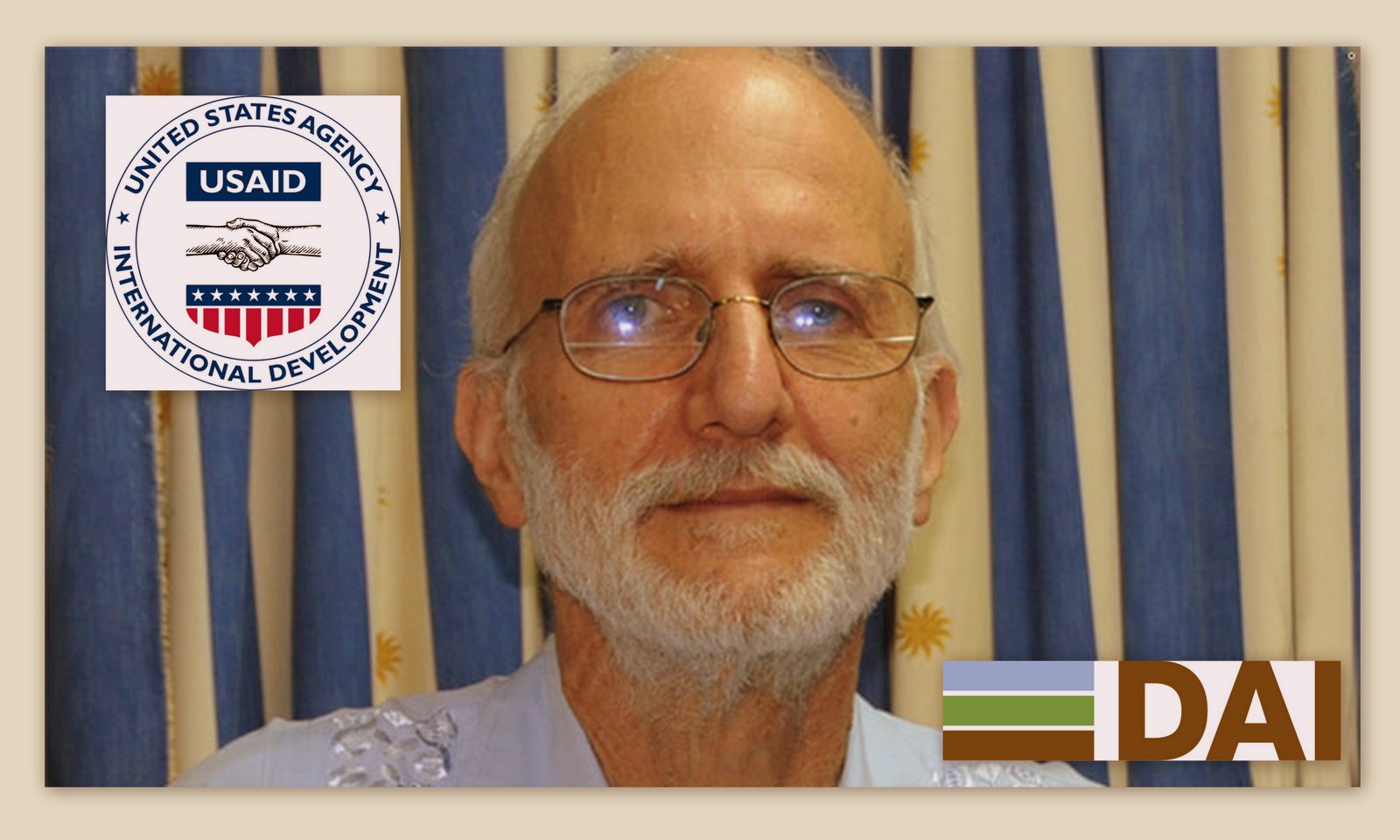
This isn’t “Everything You Wanted to Know About Alan Gross, But Were Afraid to Ask.” Unanswered questions about Gross abound more than three years after Cuban authorities nabbed him in Havana.
The Agency for International Development dispatched the American development worker to Cuba on a highly sensitive mission in 2009. Cuban authorities followed his movements at first, then arrested him and deposited him in jail. Discovering how he got there, ever so far from his home in Maryland, is a winding trail of money, bureaucracy and barely intelligible acronyms.
Below is a post aimed at answering some basic questions in the case and adding context to new details that emerged this month in court records, confidential memos and other documents (see links to source material at end of post).
Who hired Alan Gross?
A global development company, Development Alternatives Inc., or DAI, based in Bethesda, Md., and with offices in London, Islamabad and other cities. The company had revenue of nearly $300 million in 2012.
What’s DAI’s connection to USAID?
DAI is one of USAID’s top contractors. USAID has awarded more than $4 billion in contracts to DAI since 2000.
On Sept. 27, 2005, USAID signed a $25,000 contract with DAI as part of the agency’s “Instability, Crisis and Recovery Programs.”

The contract description shown in federal records is cryptic: CMM IQC.
What does that stand for?
CMM refers to the Office of Conflict Management and Mitigation in USAID’s Bureau for Democracy, Conflict, and Humanitarian Assistance. The office works with USAID and its partners, along with the State Department and the Pentagon. “These new partnerships,” USAID says, have boosted the U.S. government’s ability to fight the “Global War on Terror.”
IQC is Indefinite Quantity Contract, an agreement that delivers an unspecified quantity of products or services.
What was DAI supposed to do?
USAID hired DAI to conduct “conflict and fragility” assessments, which involved:
- A review of risk factors in specific countries or regions
- The development of work plans
- Research
- Fieldwork and reports
- Planning and implementation of meetings and other duties.
What does that have to do with Cuba?
Under the 2005 contract, DAI became one of USAID’s go-to contractors for a range of tasks. So when USAID wanted to assign a sensitive Cuba project in August 2008, it turned to DAI.
What was that project called?
The Cuba Democracy and Contingency Planning Program, or CDCPP.
How did Alan Gross get involved?
By 2008, Gross was in debt and had evidently been trying to land a Cuba-related contract for at least a year. He had been to the island before and knew key people who were handling U.S. government-financed projects in Cuba.
Key people? Any names?
Gross was in contact with Marc Wachtenheim, then director and founder of the Cuba Development Initiative at the Pan American Development Foundation, or PADF, another big USAID contractor.
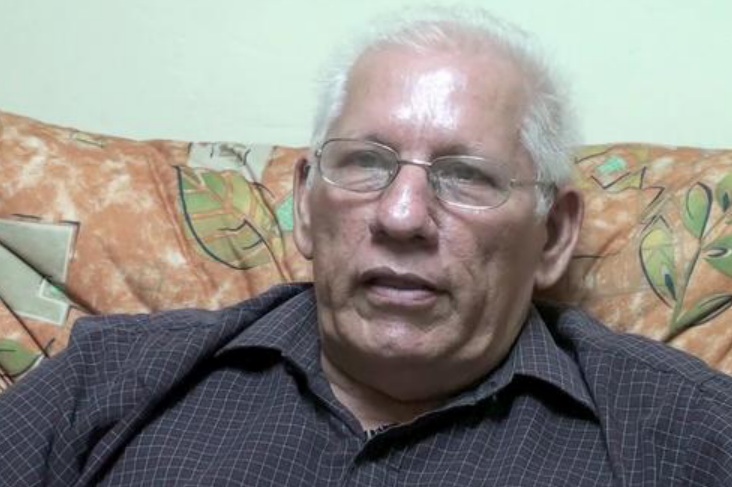
José Manuel Collera
In 2004, Wachtenheim had asked Gross to deliver a video camera and other items to José Manuel Collera, former head of the Freemasons fraternal organization in Cuba. Gross delivered the package and the PADF paid him $400.
What was Gross doing in Cuba in 2004?
At his 2011 trial, Gross testified that he went to the island as a tourist in 2004. He stayed at the four-star Hotel Raquel in Havana. It’s unclear if he traveled to Cuba again before 2009. His 2006 company tax records cited ongoing humanitarian work in Cuba.
Anything special about Collera?
Collera was an important contact for Wachtenheim, but turned out to be a spy. In 2011, Collera revealed that he was a state security agent known as “Agent Gerardo.”
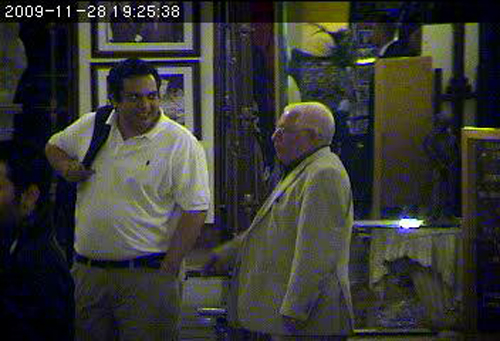
Wachtenheim, left, and Collera in surveillance video.
What became of Wachtenheim?
Cuban state security agents secretly caught Wachtenheim on surveillance video while he met with Collera and others. Presumably, agents could have detained Wachtenheim, but they did not interfere with his travels to the island.
Wachtenheim reached out to Gross again in 2007. He gave him $5,500 and asked him to buy a Hughes model 9201 satellite terminal that was to be taken to Cuba. The equipment allows users to send information over the Inmarsat Broadband Global Area Network, or BGAN, satellite network. It’s not clear who delivered it and how it was used. The equipment may have been tied to an unrelated PADF program. Raúl Capote, a Cuban professor who worked for Cuban state security, said James Benson, a U.S. official in Havana, delivered a portable BGAN terminal to him and said, “Marc Wachtenheim sends you this.”
That same year, Gross pitched a Cuba proposal to Wachtenheim. He called it “Information and Communications Technology for Cuba: A Pilot Project.”
Wachtenheim didn’t bite. Cuban authorities found out about the project because information about it was on a flash drive Gross had when he was arrested in December 2009.
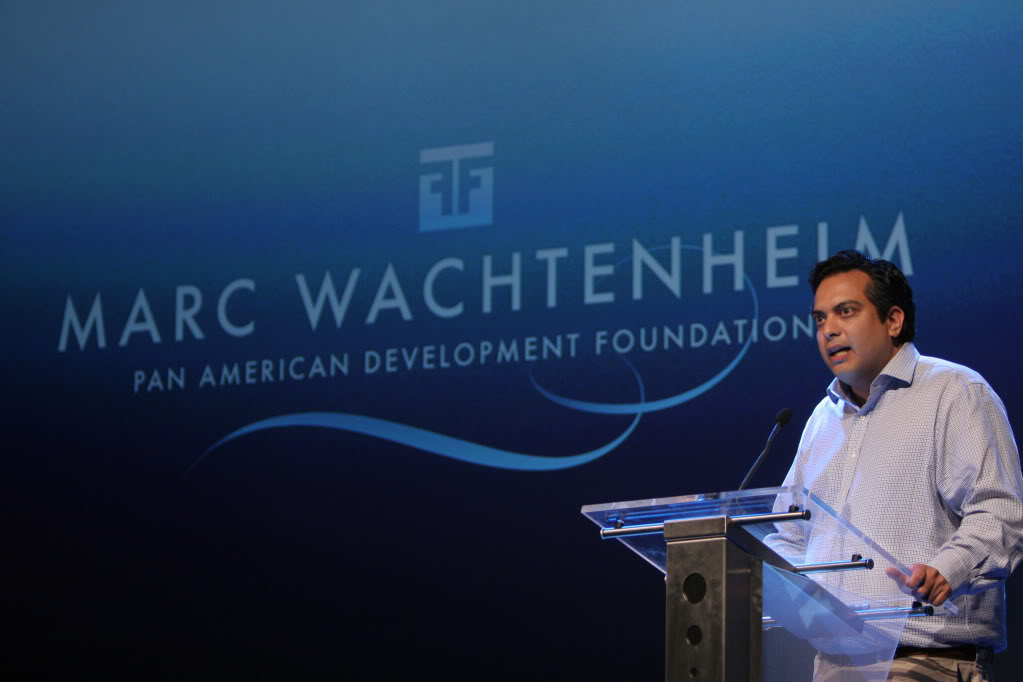
Marc Wachtenheim
How did Gross finally get the DAI subcontract?
In 2008, Gross learned that DAI had received a Cuba-related contract, described as a “Washington, DC-based project focused on promoting democratic governance in Cuba.”
One version of the story is that Gross then contacted John McCarthy, chief of party for the Cuba project at DAI, and told him he wanted in. Gross told a different story at his trial, saying DAI had asked him to submit a proposal for an upcoming project that he “knew nothing about.”
Whatever the case, Gross got the job even though he didn’t speak Spanish, was not a Cuba specialist and didn’t appear to have extensive experience on the island.
What happened to McCarthy?
He was promoted. He is now DAI’s Global Practice Leader.
So why did DAI hire Gross?
Gross’s connections certainly didn’t hurt. A DAI official who recommended him to USAID on Oct. 21, 2008, wrote:
I can comment on Alan Gross as a former colleague (we overlapped at Nathan from the late 1980s to the early 1990s) and general acquaintance (we stayed in touch over the years) with whom I have exchanged insights about economic development and new business opportunities in this arena every few months.
Alan is a very conscientious and trustworthy individual. He is particularly strong in situational and issues analysis, brokering of technologies and programmatic concepts, and the identification of business opportunities (and this last is a reference to business start-ups, pilots, and innovative ways of overcoming constraints to business growth). I cannot comment on JBDC, as I have never contracted services directly from his company.
Back up. What’s the reference to Nathan?
Gross was a senior partner at Robert R. Nathan Associates from 1987 to 1991.
What about JBDC?
Joint Business Development Center, Inc., was a business and economic development group that Gross founded and ran.

Who designed DAI’s Cuba project?
The project was “based entirely” on Gross’s Dec. 29, 2008, proposal. Gross called it the “ICTs Para La Isla Project.”

From an Alan Gross memo
How long was the project supposed to last?
The initial phase was set for 15 weeks: Feb. 10, 2009, to June 10, 2009.
How much was Gross paid?
The original subcontract amount was $258,274. Gross asked DAI for a project extension and $332,334 in additional funds. USAID agreed and Gross signed the deal on Oct. 26, 2009, bringing the subcontract amount to $590,608.
How much did Gross actually receive?
DAI paid the original $258,274. Neither USAID nor DAI has revealed how much more he received. The contractor has said Gross was paid for the “deliverables” he completed.
Under the contract terms, Gross would have gotten $65,132.80 before departing on his last Cuba trip.
Then he would have received $21,168 after returning to the U.S. and filing a trip report with DAI, but he was arrested before he could do that. So it is quite possible he received just $65,132.80, not the full $332,334.
Did Gross have to pay his own expenses out of that budget?
Yes. His proposed $332,334 budget, for instance, included at least $167,445 in expenses. That means Gross would have taken home only $164,889 if he had completed the contract.
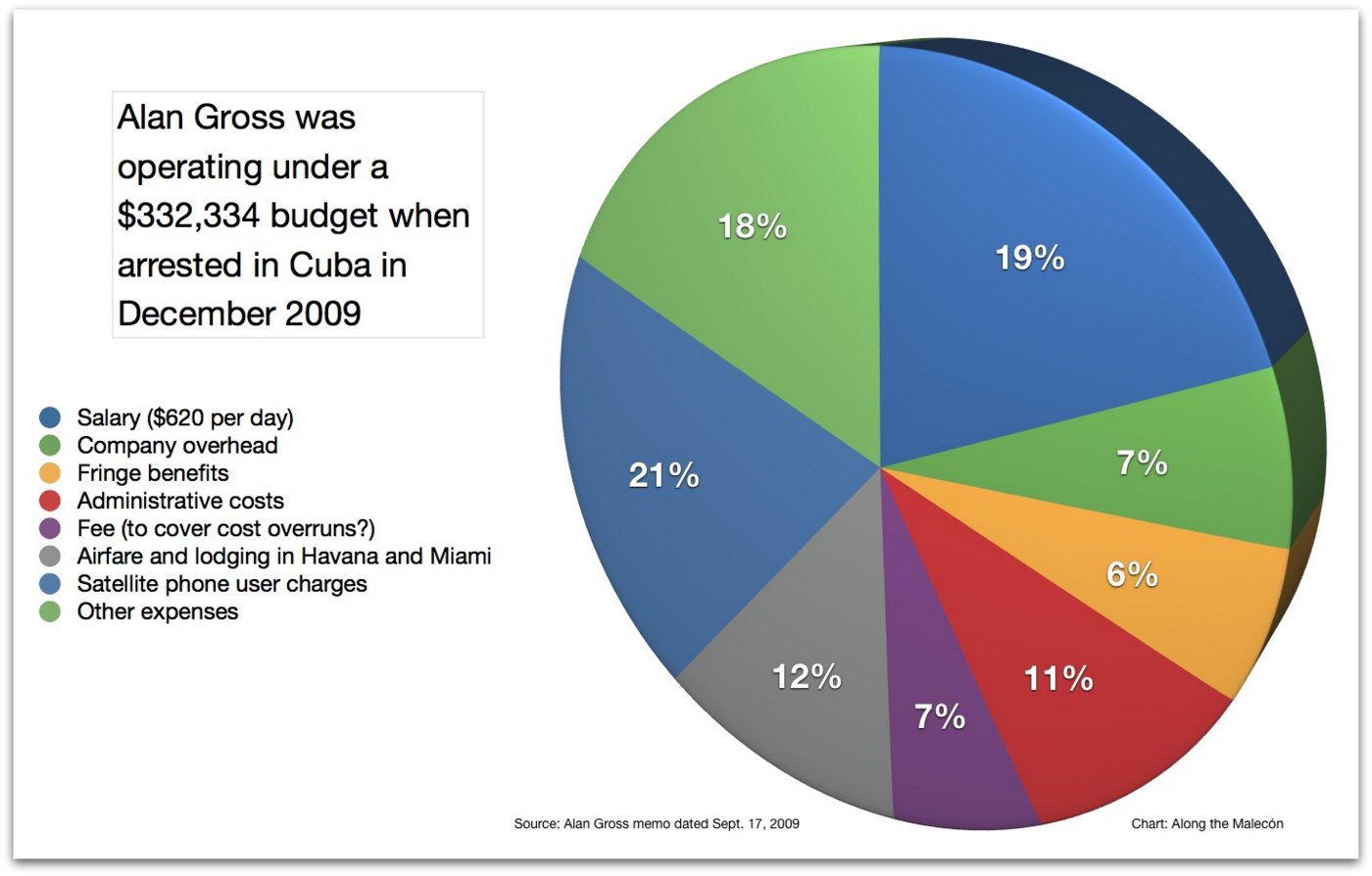
What were some of big costs that Gross expected to pay?
- Airfare and lodging in Havana and Miami, $40,112
- Satellite modem user charges for just four months, $68,640
What was his salary?
Gross charged DAI $620 per day. That came in just under USAID’s limit of $626.54, which was the agency’s maximum allowable salary without a waiver in 2009. Gross figured he’d collect that amount for 102 days under the contract extension, giving him $63,240.
So how could Gross have taken home $164,889?
Ah, therein lies the beauty of a federal contract. He threw in company overhead, $21,854; fringe benefits, $21,528; administrative costs, $35,081; and an expense that was simply described as his “fee,” a tidy $35,081, which may have been added to compensate for any cost overruns and other unexpected expenses.
What did Gross accomplish under the subcontract?
He installed three BGAN broadband Internet connections as part of a pilot project. The satellite modems were evidently placed at Jewish synagogues or offices in Havana, Camagüey and Santiago de Cuba. Gross wrote in a memo:
A wireless network where none previously existed was developed and made operational at 3 target group communities….The target group is now capable of receiving, transmitting, storing and conveying mass information through multi-modal means not previously available.
Gross said “activities initially developed” in Havana and the two other cities now “can be expanded to other identified target groups.”
He added:
Although not part of the Contractor’s initial scope of work, basic content was provided to each of the three communities. This includes three encyclopedias, pictures and video of each other’s communities (developed during three field visits), a significant array of music, and more than a terabyte of storage capacity at each site.
How many trips did Gross make to Cuba under the DAI subcontract?
Four during the initial phase, and one after the contract extension. He was arrested during the fifth trip.
How many trips did he plan under the contract extension, in addition to the five?
Seven, which would have brought the total to 12. His goals were to:
- Beef up security at the three Internet sites he had already established because he feared they’d be detected.
- Study and monitor usage at the sites.
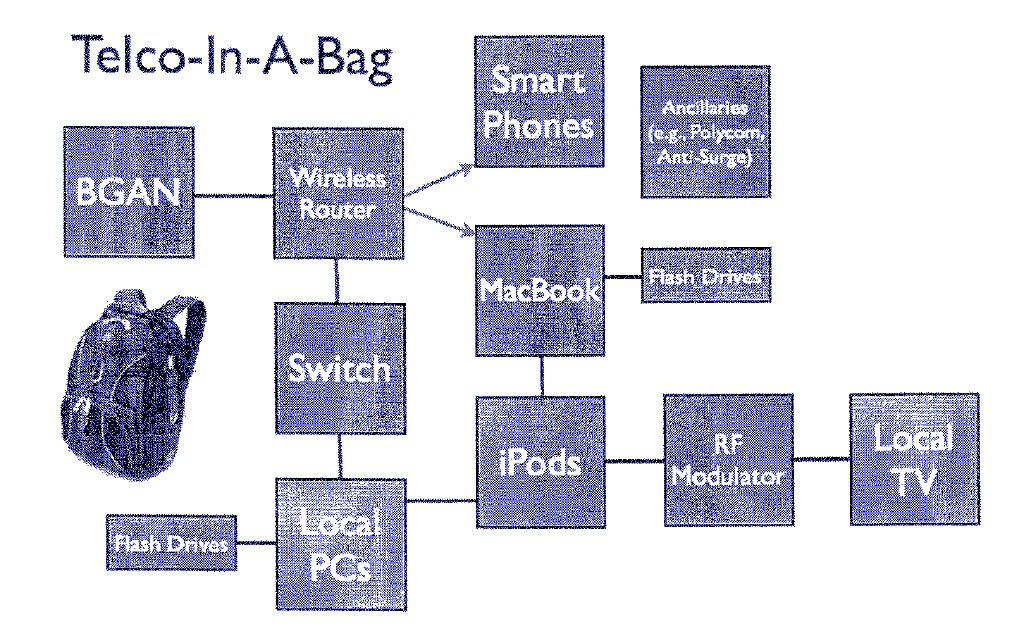
- Supply “up to three new beneficiaries” with telecommunications kits he called “Telco-in-a-Bag.” They were each to include a satellite modem, laptop and other equipment that would fit in a backpack.
When was Gross arrested?
Dec. 3, 2009.
Was anyone else jailed?
None of Gross’s Cuba contacts were reported jailed, but Wachtenheim was reportedly in Cuba around that time and was forced to leave the country in a hurry.
Capote, the professor who was also known as Agent Daniel, said Wachtenheim had traveled to Havana in December 2009 and had called him to arrange a meeting, but he didn’t show up.
Later he called to apologize. Capote recalled the conversation.
Wachtenheim: I had to urgently leave Cuba. Do you have your equipment with you? Do you have it?
Capote: I have it.
Wachtenheim: Make it disappear. Get rid of it quickly.
Cuban authorities had arrested an American who was “very awkward and naive,” Wachtenheim explained. He said Capote needed to get rid of his BGAN because having it would be “very dangerous” for Capote and for the American.
What were the charges against Gross?
In February 2011, Cuban authorities charged Gross with “actions against the independence or the territorial integrity of the state.” Prosecutors also accused him of taking part in a “subversive project aiming at bringing down the revolution.”
How did Gross explain his work?
In a statement given to the court, Gross said he saw the Cuba project as a way to help support his family and “pay off accumulated debts,” and improve Internet access for members of the Jewish community in Cuba.
Gross said:
Let me be absolutely clear and unambiguous: I have never, would never, and will never purposely or knowingly do anything personally or professionally to subvert a government or political system, or bring harm to anyone…I do deeply regret that my actions have been misinterpreted as harmful and a threat against the security and independence of Cuba. Surely, this runs counter to what I had intended.
How did the arrest impact DAI?
On Sept. 14, 2010, USAID modified its contract with DAI. The agency made changes to the scope of work, cut the funding amount from $28,310,630 to $6,857,817, and scheduled early termination of its agreement with the contractor.
Did USAID or DAI say how the contractor spent $6,857,817? Was there any accountability to taxpayers?
No and no. USAID has not made public any reports on the outcome of the Cuba Democracy and Contingency Planning Program. The agency said “due to the sensitive nature of content,” no reports on the program would be submitted to USAID’s huge online database, the Development Experience Clearinghouse.
Have auditors examined USAID’s Cuba programs?
Yes. USAID paid the DMP Group at least $1.47 million to audit the agency’s Cuba programs in 2009 and 2010.
However, USAID has refused disclose any meaningful audit results. In response to a Freedom of Information Act request, USAID in 2011 released a 10-page heavily redacted report that contained few details.
Who used the Internet connections that Gross set up?
Neither DAI nor USAID has reported usage details. Trusted Cubans who were vetted in some way evidently managed the sites, so access was limited. Gross’s subcontract required a usage analysis, but no documents on that have been make public.
Where are the BGAN modems, laptops and other equipment now?
Cuban authorities seized the gear.
How did the project advance the democratization of Cuba?
It is not clear the project had any impact in Cuba, despite its cost and the jailing of Our Man in Havana.
Sources:
- CDCCP Task Order
- DAI contract amendment
- Cuba judgment vs. Alan Gross
- DAI-CDCCP document
- DAI reply to Gross family lawsuit
- Alan Gross budget proposal
- August 2008 DAI meeting notes
- Cuba indictment vs. Alan Gross
- John McCarthy statement
- Vetting of Alan Gross
- Sept. 27 contract record
- Gross’s “Para La Isla” proposal
- DAI contract modification
- Subcontract
- Subcontract-1
- USAID salary memo
Related articles
- Cuba responds to unsubstantiated U.S. claims regarding the Alan Gross case (alethonews.wordpress.com)
- Documents Describe US “Transition Plans” for Cuba (alethonews.wordpress.com)
Mexico: US Plans to Train Commandos for “Drug War”
Weekly News Update on the Americas | January 20, 2013
Citing documents and interviews with several US officials, Kimberly Dozier of the Associated Press wire service reported on Jan. 17 that the US military’s Northern Command (Northcom) has a new special operations headquarters in Colorado, to be used “to teach Mexican security forces how to hunt drug cartels the same way special operations teams hunt al-Qaida.” A Dec. 31 memo signed by Defense Secretary Leon Panetta transformed the Northcom special operations group into the new command headquarters, which will be led by a general rather than a colonel. The staff will increase from 30 to 150.
According to Dozier, this is the latest effort by US Special Operations Command (SOCOM) head Adm. Bill McRaven “to migrate special operators from their decade of service in war zones in Iraq and Afghanistan to new missions.” SOCOM “has already helped Mexican officials set up their own intelligence center in Mexico City to target criminal networks, patterned after similar centers in war zones built to target al-Qaida in Afghanistan and Iraq,” Dozier wrote. Mexican military, intelligence and law enforcement officers have reportedly visited SOCOM facilities at Fort Bragg in North Carolina, and Mexican officials also visited a SOCOM targeting center at the Balad air base in Iraq before the US troop withdrawal in 2011, according to a former US official.
The Mexican government hasn’t expressed an opinion on Northcom’s plan to help with its “war on drugs,” but Agnes Gereben Schaefer of the California-based Rand Corporation intelligence group told Dozier that Mexican president Enrique Peña Nieto would probably support the plan. “He has talked about setting up a paramilitary force…made up of former military and police forces, which he has described as more surgical” than the current effort, Schaefer said. At least 50,000 Mexicans have died in the wave of violence that followed the militarization of anti-narcotics efforts that former president Felipe Calderón Hinojosa started at the beginning of his 2006-2012 administration. (Miami Herald 1/17/13 from AP)
NPR Examines One Side of Honduran “Model Cities” Debate
By Dan Beeton | CEPR The Americas Blog | January 15, 2013
Honduran newspaper El Heraldo reports that a plan for the creation of “model cities” was reintroduced in the Honduran congress yesterday, months after the Supreme Court declared earlier such plans to be unconstitutional. Congress President Juan Orlando Hernández said that he did not expect the plan to run into the same legal problems as last year because he had taken into account the Supreme Court’s arguments for its decision.
According to El Heraldo, the bill proposes the creation of the 12 special regimes of various kinds which “shall enjoy operational and administrative autonomy.” Among these are “ciudades autónomas.”
Earlier this month, NPR’s This American Life profiled the “model cities” or “charter cities” concept for Honduras in a report that only presented one side of the debate. The report follows reporters Chana Joffe-Walt and Jacob Goldstein’s previous account of the Honduran “model cities” concept for NPR’s Planet Money, and an early examination of the plans in The New York Times Magazine by Planet Money co-creator Adam Davidson.
There is much important context that the This American Life “model cities” profile left out. First, the proposed “model cities” could impact the land rights of Garifuna (Afro-indigenous) communities in the area. There was little mention of opposition to the “charter cities” idea inside Honduras, outside of lawyers and the Supreme Court decision. And crucially, Honduras has been in a state of relative chaos since the coup, with a breakdown of institutions and the rule of law leading to, among other things, Honduras having the highest murder rate in the world (now at 91 per 100,000 people, according to the UN) (a fact that the This American Life report does note).
As The Americas Blog readers know well, there is a strong political dimension to this violence. As human rights organizations from Human Rights Watch to Amnesty International to the International Federation for Human Rights have described, there has been political repression since the coup, targeting opponents of the coup and of the current Lobo government with assassination, forced disappearance, torture, rape, kidnapping, and other abuses. Journalists, lawyers, opposition party candidates, the LGBT community, and women have also been targets, with attacks against each of these groups spiking since the coup. The Garifuna communities are another targeted group, with, e.g., land barons in the Zacate Grande region attacking community groups and radio stations. Honduras is now widely recognized as one of the most dangerous countries to be a journalist, with some 23 journalists murdered since President Lobo took office in January 2010 according to the Committee to Protect Journalists.
A prominent attorney, Antonio Trejo Cabrera, who opposed the “model cities” plan and who represented campesino groups in another conflict area – the Aguan Valley – was assassinated in September in a case that received international media attention and was widely denounced.
NPR listeners might also be interested to know that Honduras had made economic progress under the Zelaya government prior to the 2009 military coup d’etat (the This American Life report does not mention the coup). As we described in a November 2009 report, poverty and inequality decreased significantly during the Zelaya administration, with economic growth of more than 6 percent during the first two years. The Zelaya government also used expansionary monetary policy to counter-act the global downturn in 2008. It did not need to construct libertarian utopias in order to do these things; indeed, they would not have had this progress had they tried.
Related article
Featured Video
No Threat Can Force Iran’s Surrender /Trita Parsi & Lt Cl Daniel Davis
or go to
Aletho News Archives – Video-Images
From the Archives
What is the Israeli Lobby in Australia Doing in Interfaith Dialogue?
By Ali Kazak | Dissident Voice | October 11, 2015
For years Israel and its lobby around the world have been trying to normalise their relations with Arabs and Muslims without solving the Palestine Question.
One of the methods they resorted to in the last few years is using human rights and community organizations such as interfaith dialogue and Multiculturalism to achieve this objective and to: isolate the Palestinians, marginalise the Palestine question, end Israel’s isolation, and prevent criticism of Israel, knowing that these organisations will be the first to stand against Israel’s violations, racial and religious discrimination.
The group responsible for this task in Australia is The Australia/Israel & Jewish Affairs Council (AIJAC); its Director of International & Community Affairs, Jeremy Jones is in charge of lobbying religious community organizations, specifically Muslims and Christians. Consequently he convened the Faith Communities for Reconciliation, founding participant in the Australian Partnership of Religious Organisations and the Australian National Dialogue of Christians, Muslims & Jews.
AIJAC is a private political propaganda group. It is recognised as the main Israeli lobby in Australia. It coordinates its activities and works intimately with the Israeli embassy in Canberra and different institutions in Israel. It is privately funded by some Jewish businessmen. It monitors closely Australian politicians, the media, ethnic and religious groups, (especially Arabs and Muslims), unions and academics on their stands towards Israel and the Palestine question. … continue
Blog Roll
 Aletho News
- The war of liberation of the Arab and Islamic peoples expands across the Gulf
- Envoy warns UN on Trump’s threat to ‘obliterate’ Iran’s civilian infrastructure
- The Larak Corridor: Iran’s Rial Gate With No US, No Israel, and No Way Around
- ‘Economic terrorism’: Steel facilities hit again in US-Israeli strike
- ‘War Crime’: Iran condemns attacks on Arak, Ardakan nuclear sites
- Two-thirds of Americans want quick end to Iran war even if goals unmet
- Trump to Give “Important Update on Iran” Wednesday in Prime-Time Speech
- Theodore Postol: Iran’s Missiles & Drones Were Underestimated
- Iran To Target Military Industrial-Tech Complex That Facilitated Gaza Genocide
- Collapsing Empire: The Resistance Disarms ‘Israel’
- If Americans Knew
- Israel wants US to bomb more of Iran’s civilian structures (113,000 is not enough) – Not a ceasefire Day 173
- Ann Coulter Rips Into Fox News for Iran War Coverage
- Joe Kent Urges Americans To Call White House and Congress To Object To Sending Troops Into Iran
- DNC Resolution to Reject AIPAC Funding Puts Democratic Leaders in the Hot Seat
- Swedish foundation to build 400 schools as over 650,000 Gaza children remain without education for 2 years
- Israeli army admits photshopping image of slain Lebanese journalist
- This is how Israel is systematically killing health workers under the cover of war in Lebanon
- Carrying life under fire: Israeli invasion of Lebanon leaves pregnant women facing deadly risks
- Champagne all around for the new death penalty (for Palestinians) law – Not a ceasefire Day 172
- Why are Palestinian books struggling to be seen on Amazon?
- No Tricks Zone
- New Study Finds Warming Saves Lives…Cold Temperatures 12 Times More Deadly Than Excess Heat
- German Science Blog Accuses PIK Climate Institute Of Hallucinating Climate Tipping Points
- Devastating Assessment Of Comirnaty Vaccine By Former Senior Pfizer Europe Toxicologist
- New Study: CO2 Is ‘Effectively Negligible’ As An Explanatory Climate Change Factor Since 2000
- Former Pfizer Toxicologist Dr. Helmut Sterz Tells Bundestag Hearing Pfizer Vaccine Should Have Never Been Approved
- Energy Expert: Germany’s Nuclear Phaseout Was A “500 Billion Euro Mistake”
- New Research: South Australia’s Mid-Holocene Sea Surface Temperatures Were 4°C Warmer Than Today
- Storing Green Energy To Last Germany 10 Days Would Require A 60-Million Tonne Battery
- New Studies: UK Sea Levels Were 4 Meters Higher Than Today During The Mid-Holocene
- Destructive Green New Deal: German Energy And Metal Group Warns Of Drastic Crisis
 Aletho News