What Did Samantha Power Say About Iraq Invasion?
By Peter Hart | FAIR | June 10, 2013

Samantha Power on Democracy Now!
Obama National Security Council adviser Samantha Power has been named the new U.S. ambassador to the United Nations. That news prompted a piece in the New York Times (6/9/13) headlined “A Golden Age for Intervention?” by Neil MacFarquhar. The article raises some of the usual issues surrounding Power’s work– most prominently the notion that the United States should use military intervention in the name of humanitarianism.
MacFarquhar writes that Power
wants the system to work. As flawed as the Security Council is, she has often said, its endorsement amplifies international approval for controversial action. She criticized the American invasion of Iraq because it lacked the council’s stamp, among other reasons.
But what did Samantha Power actually say about the Iraq War before it happened?
Power was prominent in elite foreign policy discussions at the time; her 2002 book A Problem from Hell: America and the Age of Genocide won a Pulitzer the following year.
MacFarquhar makes it sound like Power had multiple reasons she opposed the war. But it’s difficult to find such evidence.
On March 10, 2003, she appeared on MSNBC‘s Hardball to debate pro-war writer Jonathan Chait–whom she agreed with on a few points.
Indeed, it was somewhat difficult to say what Power’s position was overall:
An American intervention likely will improve the live of the Iraqis. Their lives could not get worse, I think it’s quite safe to say.
The issue, though, is whether the United States can be, in a sense, the unilateral guardian of human rights and whether the intervention itself won’t have destabilizing consequences, both in terms of our security, the very security in whose name we’re really launching this intervention, and in the name of international principles like human rights, international justice, international stability.
Power seemed especially concerned about how the ramifications of the war on U.S. standing in the world:
It legitimates the go-it-alone approach and it sort of reinforces the impression of us as an outlaw nation, which is ironic because, of course, Saddam’s regime is far more an outlaw nation than ours.
So Power certainly did not support the way the United States was launching the war. But that’s not really the same as opposing the war; it’s wishing for more effective management of the war.
And host Chris Matthews closed the segment trying to get Power to take a position:
MATTHEWS: Is this a just war, Samantha?
POWER: It will have a just result locally and probably a very unjust result…
MATTHEWS: Is it a just war?
POWER: I don’t think we can be the guardians of justice…
MATTHEWS: No, I–so it’s not a just war?
POWER: We haven’t fought it yet, Chris. I mean, you know, you can’t say whether…
MATTHEWS: Well, you have to decide about a war before you start it, not afterwards. Is this a just war…
POWER: No, you can’t weigh in on proportionality, on discrimination, on whether we actually follow through and actually look out for the rights of the Iraqis…
(CROSSTALK)
POWER: … after the war. We don’t know that now.
MATTHEWS: But in its outset, is it a just war?
POWER: It’s not being fought for human rights reasons. I don’t know who–why–I mean, it would be great if human rights were a necessary condition.
At that time, bonafide critics of the Iraq War were much clearer than that, and it’s hard to find much else that would suggest that Power had a particularly clear anti-war case she made publicly–though she did, like many others, come around to articulating a more forceful critique of the Bush administration by the time that administration was almost over.
Weeks after the war started, a Los Angeles Times article (4/10/03) on Power included this assessment of Iraq:
“That’s what’s so great about the fall of Saddam Hussein. Now we can actually put our money and power where our might has been so far. We can demonstrate what we have claimed all along, that this war is about them,” she said, referring to the Iraqi people.
“The hard work is just beginning, in Iraq and also in restoring U.S. credibility as a global actor. I hope the book provides the spirit in which that can be done.”
Some of Power’s most pointed critics–like writer and lawyer Chase Madar–have argued that Power does not forcefully critique U.S. policies that have encouraged and enabled massive crimes against humanity, preferring instead to talk about instances where the United States could have taken steps to intervene militarily in a given crisis and didn’t.
But in the case of Iraq, at a time when the themes of her celebrated book were very much a part of the debate over whether or not to go to war, it was hard to determine where Power stood.
US Gulf allies crack down on Internet freedoms
RT | June 10, 2013
Gulf Arab allies of the US have come under fire for introducing a series of draconian measures that limit Internet freedoms. The measures restrict content on social media sites, making “offending” posts punishable by extensive jail sentences.
Saudi Arabia, Qatar, the United Arab Emirates, Kuwait and Bahrain have tightened controls on Internet freedoms recently, targeting social media and phone applications alike in their communications crackdown.
Across the Gulf, dozens of journalists and social media users have been arrested since the beginning of the year for being in violation of the uncompromising national laws.
Punishments include deportation and lengthy prison sentences for crimes such as making derogatory comments about the government “in bad faith,” and offending religion and family values. In Saudi Arabia last month, top cleric Sheikh Abdul Latif Abdul Aziz al-Sheikh warned citizens against using Twitter, stating that those who use social media sites “have lost this world and the afterlife.”
Saudi Arabia
After threatening to ban messaging applications like Skype and WhatsApp, Saudi Arabia’s telecom regulator has chosen a new target: The web-based communication app Viber. The instant messaging application has been blocked since June 5.
“The Viber application has been suspended… and the [regulator] affirms it will take appropriate action against any other applications or services if they fail to comply with regulatory requirements and rules in force in the kingdom,” the Communications and Information Technology Commission (CITC) said in a statement.
Viber allows its users to text, call and send photos and video messages worldwide using a 3G or Wifi connection, and boasts over 200 million subscribers worldwide.
In March, the CITC warned mobile providers in the Kingdom that if they could not find ways to monitor encrypted messaging and VOIP applications, then they would be blocked, according to local media. The commission then issued a statement saying that “it would take suitable measures against these apps and services,” in its push for greater control over the Internet.
The Saudi government has also begun arresting Twitter users for posts to their accounts. Local media reports that the government is looking into ending anonymity for Twitter users in the country by making users register their identification documents.
Qatar
Despite its status as a regional media hub, the emirate state is considering a new cybercrime law that would widen government control over news websites and online commentaries.
If passed, the law would enable the government to punish websites or social media users for violating “the social principles or values,” or for publishing “news, photos, audio or visual recordings related to the sanctity of the private and familial life of persons, even if they were true, or infringes on others by libel or slander via the Internet or other information technology means,” Qatar News agency reported.
United Arab Emirates
At the end of 2012, the UAE passed a sweeping new cybercrime law: Anyone found guilty of criticizing the country’s rulers or institutions online may be jailed or deported. The law attracted widespread opposition, with legal consultants warning it is broad enough to penalize anyone caught posting allegedly offensive comments against the state.
This law has been used to jail citizens for Twitter posts over the past few months. In May, the UAE appeals court sentenced Abdullah Al-Hadidi to 10 months in jail for tweeting details of the trial of his father.
He was arrested on March 22 on charges of disseminating information on Twitter “in bad faith.” The court ruled that he wrote false details of a public hearing that, along with his father, involved 93 other people accused of plotting to seize power in the Gulf Arab state.
Kuwait
The government has arrested dozens of activists and at least six journalists in 2013 in the constitutional emirate, often described as the most liberal country in the region.
In March, Twitter user Hamed Al-Khaledi was sentenced to two years in prison for allegedly insulting the ruler of the Gulf nation. Others have been accused of “threatening state security” or “offending religion.”
In April, a Kuwaiti court sentenced former parliamentarian and opposition leader Mussallam al-Barrak to five years in prison for remarks deemed critical of the ruler of the state, which he made last year at a public rally.
Kuwait has been a member of the International Covenant on Civil and Political Rights (ICCPR) since 1996, which protects the right to freedom of expression, including peaceful criticism of public officials.
Bahrain
The Bahraini government has been trying to suppress an ongoing uprising by introducing stricter penalties. In April, the government passed a law making it illegal to insult the Gulf state’s King Hamad bin Issa al Khalifa, or its national symbols.
Recently, Bahraini blogger and activist Ali Abduleman was granted asylum in the UK after two years in hiding. Adbuleman claims he was persecuted by the government “for exercising the right to express his opinions” on his website. The Bahraini government claims he was tried for “inciting and encouraging continuous violent attacks against police officers” and conspired to spread “false and inflammatory rumors.”
In May, 62-year-old Bahraini protester Abdulla Sayegh was sentenced to three months in prison for hanging a national flag from his truck during a 2011 rally. The same month, six Twitter users were jailed for allegedly offensive comments about the country’s ruler deemed to be ‘abusing freedom of expression.’ According to prosecutors, they posted comments that undermined “the values and traditions of Bahrain’s society towards the king.”
One of the best-known human rights abuse cases in Bahrain is that of activist Nabeel Rajab, who was sentenced to three years in jail in August 2012 on charges of ‘participating in an illegal assembly’ and ‘calling for a march without prior notification.’ He openly criticized the country’s regime on RT for Julian Assange’s show The World Tomorrow.
The country has witnessed mass protests led by the kingdom’s majority Shiites against the minority Sunni-led government for two years. The Shiite demonstrators call for a transfer to a democratic system, and complain of discrimination in jobs and government. Their loyalty is in turn questioned by the ruling Al Khalifa monarchy, which has been in power for decades.
Related articles
Syrian rebels open fire on convoy carrying Russian journalists
RT | June 9, 2013
A Russian TV crew came under fire in Syria when a mainly civilian convoy taking the journalists to the Golan Heights was shelled by Syrian rebels.
The convoy shelled on Saturday was led by a Syrian army military vehicle, and consisted of several cars occupied by civilians, including one with Russian TV journalists.
The shelling started when the cars were about 5 kilometers away from their destination – ‘Checkpoint Charlie’ – the only crossing between Syria and the Golan Heights, disputed territory claimed by both Syria and Israel.
“The Syrian troops started to fight the rebels back, but the insurgents targeted the civilian cars,” said Evgeny Poddubny, the head of the Russian TV crew and special correspondent for Rossiya TV channel.
Throughout the fighting, a Russian cameraman kept filming; gunshots can be heard on the video for 15 minutes. The footage also features a Syrian army officer reporting to command that armed militants attacked first, that shelling was coming from both sides of the road.
“The convoy could not make it to the checkpoint, the rebels set an ambush on the road, fighting broke out, the military responded with heavy fire to cover the retreat of our TV crew, and then they retreated themselves. The militants were further confronted by the field artillery, which is deployed in the area,” Poddubny said.
No one was injured in the attack. A similar incident occurred recently in the Golan Heights buffer zone when Checkpoint Charlie was attacked and seized by rebels on Thursday, and quickly recaptured by government troops.
“The militants use the status of the territory; they hide in the buffer zone and are carrying out attacks like the one you’ve just witnessed. Then they retreat. And we cannot carry out special operations here – as that would be a breach of international agreements. Besides, the rebels are getting help from Israel – it supplies them with ammunition and even provides medical aid to terrorists in mobile hospitals,” Syrian army General Nasr Haidar, whose regiment is deployed in the area, told Rossiya.
Provocations by the insurgents are seen as major reason why international peacekeepers have been withdrawing from the area. Austrian troops, which accounted for 40 percent of the UN peacekeepers in the Golan Heights, have announced their withdrawal.
This week, Russia proposed to replace Austrian UN peacekeepers on the Israel-Syria border. However, the mandate of the UN mission would not allow Russia’s participation.
The NSA’s Favorite Weasel Word To Pretend It’s Claiming It Doesn’t Spy On Americans
By Mike Masnick | TechDirt | June 7th 2013
Well, well. In the aftermath of the revelations that the NSA is getting records of every phone call from Verizon, followed up by the news that most of the biggest tech companies are supposedly giving direct access to the NSA, the intelligence community is responding the same way it always does: with weasel words. First up, you can see Director of National Intelligence James Clapper’s statement about the spying, which we’ll be discussing again in a bit.
But, a bunch of folks have been reasonably pointing out that Clapper appears to have lied to Congress. Of course, it’s not like this wasn’t easily called. Two years ago, we wrote about Clapper’s answers to Senators Wyden and Udall, which we pointed out was a ridiculous answer that was clearly sidestepping the real questions. However, looking over that letter again now, and having become a bit more familiar with the weasel words the NSA likes to use, it’s easy to look at Clapper’s statement and explain why he can “stand by it” while the clear implication of it was the opposite of what he meant.
You asked whether communications of Americans have been collected… Section 702 of the FAA [FISA Amendments Act] explicitly prohibits the intentional targeting of persons reasonably believed to be located in the United States or United States persons located abroad. The Intelligence Community has put in place a variety of procedures, which have been approved by the FISA Court as required by law, to ensure that only persons reasonably believed to be located outside the United States are targeted and to prevent the intentional acquisition of any communications as to which the sender and all intended recipients are known to be located in the United States. Guidelines are also required by law to ensure compliance with other limitations on FAA collection, including the requirement that a U.S. person may not be intentionally targeted under section 702. If it is discovered that a target has entered the U.S. or is a U.S. person, he or she is promptly detargeted and reports are made as appropriate to the Department of Justice (DOJ), the Office of the Director of National Intelligence (ODNI) and the FISA Court. Moreover, when communications from persons located in the United States are collected because they are communicating with a lawful target, the privacy and civil liberty rights of U.S. persons are protected through the careful implementation of the procedures required under the FAA to “minimize the acquisition and retention, and prohibit the dissemination ‘of information about U.S. persons.’”
Most people would read this to be him saying that they do not spy on Americans. And that’s obviously what he’s trying to imply. But that’s not what he’s actually saying. He’s using the NSA’s favorite weasel word: “target.” Now, most people assume that means one of the people on the call must be outside the US. But, you could — if you were devious intelligence official trying to mislead Congress and the American public (hypothetically) — interpret the word “target” to mean “if we, in general are ‘targeting’ foreign threats, no matter what they might be like, and this information we’re collecting might help in that process, then we can snarf up this data.”
In other words, most people think that “target” would mean one of the people on the phone. But, the NSA means “this overall investigation is about targeting foreign threats, so we can take whatever data we want because the goal is to stop foreign threats with it — and therefore our mandate not to spy on Americans doesn’t apply.”
So, it shouldn’t be particularly surprising to see that the administration’s “response” to this is to highlight, yet again, that this only “targets” non-US persons:
Information collected through a U.S. government surveillance program that taps into the servers of internet companies targets only non-U.S. persons living outside the United States, a senior administration official said on Thursday.
The U.S. law that allows the collection of data under this program does not allow the targeting of any U.S. citizen or of any person located in the United States, the official said, speaking on condition of anonymity.
Right, but whether or not they’re “targeting” a person, is separate from whether or not they’re spying on the data of Americans. As long as it’s all part of a process that “targets” non-US persons, they can claim that they’re playing by the rules.
Given that, however, I don’t see how Clapper can reasonably standby the following statements:
Wyden: Does the NSA collect any type of data at all on millions or hundreds of millions of Americans?
Clapper: No sir.
Wyden: It does not?
Clapper: Not wittingly. There are cases where they could, inadvertently perhaps, collect—but not wittingly.
Clapper is insisting that he didn’t lie in his comments, but he then pretends that he was only talking about email:
What I said was, the NSA does not voyeuristically pore through U.S. citizens’ e-mails. I stand by that.
Except, that’s not what he was asked, nor was it what he said. He was specifically asked if the NSA collects any type of data at all, and he said no. Up above, he was using weasel words, but here it looks like he was flat out lying directly to Congress. Usually, Congress doesn’t like that.
Related article
- The “Congress knew” defense
- This abuse of the Patriot Act must end | Jim Sensenbrenner
- Confirmed: The NSA is Spying on Millions of Americans
- NSA memo pushed to ‘rethink’ 4th Amendment
- Boundless Informant: NSA’s complex tool for classifying global intelligence
- Government Says Secret Court Opinion on Law Underlying PRISM Program Needs to Stay Secret
Jewish settlers defile Aqsa Mosque courtyard this morning
Palestine Information Center – 09/06/2013
OCCUPIED JERUSALEM — Extremist Jewish settlers escorted by policemen desecrated the Aqsa Mosque courtyard on Sunday morning coming from Al-Maghariba Gate.
A female eyewitness told Safa news agency that three groups of settlers walked around the Aqsa Mosque courtyard and some of them performed Talmudic rituals.
She said that a large number of female and male religious students are also present in the courtyard protecting against any attempt by the settlers to enter the Mosque’s buildings.
She added that the Israeli police imposed restrictions on the entry of Palestinian worshipers to their Aqsa Mosque, checked their IDs and took photos of the Muslim religious sessions in the courtyard.
She noted that many Palestinian worshipers inside the Mosque are on alert as many extremist Jewish groups have declared their intentions to enter the Mosque, expecting that the next few hours could see the coming of more settlers and tourists.
Repeated storming of Aqsa mosque meant to impose new de facto situation
 Independent MP Dr. Jamal Al-Khudari has warned of the seriousness of the Israeli systematic storming of the Aqsa mosque.
He said in a press statement on Sunday that Israel wants to ease the reactions to the “seemingly ordinary” repeated storming of the Aqsa and to impose a new de facto situation.
The MP underlined that such storming is a flagrant violation and constitutes big dangers to the Aqsa mosque and to holy shrines.
Khudari hailed the Aqsa guards and all those who frequent the holy site to defend it in face of repeated storming attempts despite the difficult circumstances.
He pointed out that the Israeli occupation authority was continuing its excavations in and around the Aqsa mosque and is wantonly razing Jerusalemite houses on daily basis and at various pretexts with the main target of forcing Jerusalemites to abandon their homes and native hometown.
Khudari regretted that such conditions were prevailing at a time the Palestinian people are still divided.
Related articles
- Palestine: Zionist conference on dividing Aqsa,1518 children were killed since 2nd intifada & more land confiscated (realisticbird.wordpress.com)
- Jewish extremists call for storming al-Aqsa (occupiedpalestine.wordpress.com)
UK PM U-turns on transparency pledge
Press TV – June 9, 2013
British Prime Minister David Cameron is facing criticism for breaking his promise to lead a transparent government, after he refused to reveal what had been discussed at the secretive Bilderberg meeting.
Cameron’s presence at the shadowy meeting is provoking controversy as the Prime Minister’s spokesman claimed that he is still committed to lead a transparent government, even though he refused to discuss what was said in the secretive conference.
A member of the Alliance for Lobbying Transparency, Tamasin Cave, said that Cameron’s decision to attend the Bilderberg conference “drives a coach and horses” through his pledge of openness”.
This comes as on the Sky News channel, opposition Labour MP Michael Meacher demanded transparency over the Bilderberg meeting, which took place in a luxury hotel in Watford, Hertfordshire.
“If there is any conference which required transparency, it is the Bilderberg conference because this is really where the top brass of western finance capitalism meet”, Meacher said, adding that there will be no statement in the House of Commons about it.
“This is totally in contradiction to the government’s commitment to have greater transparency,” he added.
The Bilderberg Group, which is made up of senior politicians, business leaders and academics from around the world, commonly attracts conspiracy theories as its annual gatherings always take place in secrecy.
The “Congress knew” defense
left i on the news | June 07, 2013
President Obama defends his super-snooping program, claiming that “they’re not secret in the sense that when it comes to telephone calls, every member of Congress has been briefed on this program.” First of all, I note he also says that “the relevant intelligence committees are fully briefed on these programs,” which suggests that “every member of Congress”, to whom the word “fully” isn’t applied, may or may not know very much at all. But even if every member of Congress were in fact fully briefed, there’s a little problem with that. Because they were briefed in secret and unable to convey that information to their constituents. So if they wanted to, say, campaign for reelection on the grounds of supporting (or opposing) that policy, they couldn’t do so. Furthermore, no challenger could campaign against them on a platform of ending these policies, because no challenger would have known about the policies.
On a related issue, talking to FOX’s Shep Smith earlier today (actually being grilled by Smith, who was having none of his double-talk and evasions), the former deputy director of the NSA claimed that the program was ipso facto Constitutional because “all three branches of government” were involved with it. But the “FISA Court” is a special, secret court. Not only have they never denied a single government request, but no citizen can challenge a decision they make, because their decisions are all secret. Therefore the Constitutionality of the court itself, or of any decision it has made, is not subject to review by the Supreme Court, the only institution which can actually rule on the Constitutionality of a law.
~
Related video:
Related articles
- The NSA Black Hole: 5 Basic Things We Still Don’t Know About the Agency’s Snooping
- NSA Document Leak Proves Conspiracy To Create Big Brother Style World Control System
- DOJ launches criminal probe of NSA leaker
- US security officials said NSA leaker, journalist should be ‘disappeared’ – report
- Government Spying: Should We Be Shocked?
- Boundless Informant: NSA’s complex tool for classifying global intelligence
- The NSA’s Favorite Weasel Word To Pretend It’s Claiming It Doesn’t Spy On Americans
- NSA memo pushed to ‘rethink’ 4th Amendment
Featured Video
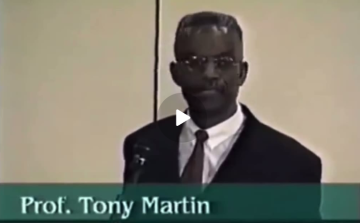
Dr. Tony Martin – The Jewish Role in the African Slave Trade
or go to
Aletho News Archives – Video-Images
In Memoriam
James Petras, In Memoriam
 02.13.2026
Professor James Petras, 89, world-renowned sociologist, public intellectual, and scholar of Latin American politics and global economics, died peacefully on January 17, 2026, in Seattle, WA, surrounded by family.
A prolific scholar and activist, he devoted his life to challenging power, imperialism, and inequality. … continue
Blog Roll
 Aletho News
- Lawyers ask police to investigate Elbit Systems UK for alleged war crimes complicity
- Israel ready to strike Iran-backed armed groups – media
- Behind US war drums against Iran: No goals, no plan, no off-ramp
- With Ukraine blamed for cutting oil flows to Hungary, Croatia also refuses to transfer Russian oil in violation of EU law
- Friedrich Merz’s Push to End Online Anonymity Has a Troubling Subtext
- Macron: French citizens fighting for Israel cannot be labeled ‘genociders’
- US eyes Gaza security force drawn from armed gangs
- The Only Motive Behind The ‘Imminent’ U.S. War With Iran Is The Zionist Lobby
- Trump eyes 350-acre US military base housing 5,000 troops in Gaza
- Israel Pushing US Toward a Big and Damaging War With Iran – Ex-Pentagon Analyst
- If Americans Knew
- ‘Christians Out’: Jerusalem Church Tagged With Hate Graffiti, Police Investigating
- Israeli Settlers Kill American Teen
- ‘We returned from hell’: Palestinian journalists recount torture in Israeli prisons
- No mercy for Gaza in Ramadan – Not a ceasefire Day 133
- The Israeli Government Installed and Maintained Security System at Epstein Apartment
- Tucker Carlson interrogated in Israel, has passport seized after interviewing US ambassador
- 6,000 Amputees in Gaza Face Impossible Recovery amid Israeli War Ultimatum
- The Lancet: Gaza death toll far higher than reported – Not a ceasefire Day 132
- Compliant aid: Who are the Israel-approved NGOs scaling up in Gaza?
- Why won’t Trump’s “Board of Peace” bring peace? – Not a ceasefire Day 131
- No Tricks Zone
- Coal Power Back In Trend As Globe Tries To Keep Pace With Growing Demand For Power
- New Study: A 4°C Warmer Beaufort Sea Had ‘No Sea Ice’ 11,700 – 8200 Years Ago
- Unfudging The Data: Dutch Meteorological Institute Reinstates Early 20th Centruy Heat Waves It Had Erased Earlier
- German Gas Crisis…Chancellor Merz Allegedly Bans Gas Debate Ahead of Elections!
- Pollen Reconstructions Show The Last Glacial’s Warming Events Were Global, 10x Greater Than Modern
- Germany’s Natural Gas Storage Level Dwindles To Just 28%… Increasingly Critical
- New Study Rebuts The Assumption That Anthropogenic CO2 Molecules Have ‘Special’ Properties
- Climate Scientist Who Predicted End Of “Heavy Frost And Snow” Now Refuses Media Inquiries
- Polar Bear Numbers Rising And Health Improving In Areas With The Most Rapid Sea Ice Decline
- One Reason Only For Germany’s Heating Gas Crisis: Its Hardcore-Dumbass Energy Policy
 Aletho News