War by another name in Syria
By Franklin Lamb | Al-Manar | June 19, 2013
Beirut – The Group of Eight leaders meeting in Lough Erne, Northern Ireland, having called for an international conference on the ongoing crisis in Syria to be held “as soon as possible” could not agree on much else that might end the civil war anytime soon there. The White House now is reportedly in private agreement with Russia and Iran that the Assad government will remain in power until next year’s election.
Consequently, an 18 month old US-led Plan B has been dusted off by the Obama administration according to Washington Congressional and Beirut diplomatic sources. If successful, there is growing confidence among pro-Zionist neocons in Congress that while Syrian regime-change has failed for several reasons that thwarted the Gulf funded military campaign, Syria can still be brought to heel through an economic campaign dressed to look, well, down right “humanitarian.”
The term “equivalent of the Marshall Plan” is being employed by some in the White House and Pentagon this month to describe a proposed large-scale “humanitarian rescue program” being prepared for Syria, according to some Western diplomats based in Lebanon.
However, the 1948 Marshall Plan (officially the European Recovery Program or ERP) was an American program to aid Europe, through which the United States provided $13 billion, in today’s monetary terms, approximately 100 billion dollars of economic support, to help rebuild European economies devastated by war.
With respect to Syria, the “equivalent of the Marshall Plan” currently being finalized is very different from what General George C. Marshall explained to his Harvard University audience, 66 years ago this month, when he announced the post WW II initiative.
The Syria project already amounts to 19th century economic imperialism as a means to achieve control of Syria by hijacking its economy while shielding Israel from the rising tide of protests in this region, as armed groups across the spectrum are beginning to focus on directly confronting the Zionist theft and continuing occupation of Palestine.
What Washington has in mind constitutes an attempt to gain control over Syria by controlling its economy via contracts for rebuilding the country and “lending” the hoped for post-Assad Syrian government as much as 300 billion dollars to be secured by Syrian assets. IMF economists estimate the value of the public sector in Syria, exceeds half a trillion dollars. Under the US-led pan, creditors can take control of ownership of the public sector, if Syria accepts the plan for pledges to secure debt. The buyers of the debt will be largely American and indirectly Israeli businessmen as well as from the Gulf. Qatar specifically is gambling on this plan, to work with “international parties”, to immerse Syria in debt, and then drive the country to sell [its public sector assets] to the private sector at a very small fraction of their true values.
Some who are warning against the scheme point out that Syrians are capable of rebuilding their own country and have the labor force and raw materials to do it. Foreign aid will be welcomed by the Syrian government but not at the price of ceding the Arab Syrian Republic to a new western crafted economic order. What is hidden in the war on Syria is reported to be much bigger than has been divulged to date, and involves winding down the military actions in favor of economic aggression against the Syrian population which the layers of US sanctions to date is just a harbinger.
In this context, according to Western Diplomatic sources, the US government and some Gulf countries have tried to bribe Rami Makhlouf, a cousin of Syria’s President, to break with the government and leave the country. Some other well-known figures have also been offered large sums of cash to break ranks. Last month, one prominent Syrian nationalist who works with the government told this observer of receiving a $ 50 million dollar offer to defect and leave Syria. The official rejected the bribe and ridiculed the government that made the offer by explaining that as proud Syrian nationalists, no amount of money would break the sacred bond between Syrians and their country.
With respect to Mr. Maklouf, he did not react to being placed on the US Treasury Department’s “Specially Designated Nationals” (SDN) list which blocks assets and prohibits, under severe penalties, U.S. citizens from dealing with them, nor did he dignify an American clemency offer with even a reply. Rather he has maintained his steadfast support for Syria in the face of several attempts to assassinate him as well as targeting him, as a leader of the Syrian business community, with American orchestrated Office of Foreign Assets Control (OFAC) defamatory media campaigns, to pressure him to break with President Bashar al-Assad. Rather than rejecting Syria for American offers of protection, Makhlouf channeled much of his assets for the benefit of domestic charities and rehabilitative projects, providing jobs for the unemployed and loans for small investors as well as “at cost” family housing for many of the internally displaced. This initiative continues. Makhlouf has provided his bourse shares in the largest telecommunications companies in Syria to charity associations in order to insure financial independence and resources that the Authority can rely upon, to ease somewhat, the devastating effects on the current crisis on the Syrian civil society.
According to analysts among the Western diplomatic corps in Beirut, many wealthy Syrian capitalists fell into the U.S. trap, wherein SDN economic sanctions prompted them to leave Syria and defect from the regime. The United States and its European partners continue to wage an economic war against Syria by imposing crippling sanctions which are affecting the lives of ordinary citizens in many ways from food and fuel costs to medical care.
Why Rami Makhlouf and other strong nationalists in Syria’s business community are being targeted as a prelude to fully launching the US-led “Syrian Marshall Plan” is that their bonds with Syria as well as their business acumen are blocking the Western scheme because they provide the Syrian government with much needed additional financial strength to rebuild Syria, in cooperation with other countries, but without being subject to the economically fatal conditions the US-led plan envisages. Many in the financial and academic community view the proposed SDN plan as nearly certain to hold the Syrian economy hostage to foreigners for scores of years.
The US Treasury Department considers Makhlouf and others like him in the Syrian business community as fully capable, if allowed, of helping Syria’s government to collect huge sums from international investors to help rebuild Syria without being subject to Western domination.
The anti-Mahhlouf black propaganda campaign, according to a Washington DC source familiar with the intensified preparations, was designed to include a wide ranging assault in the visual and written media, audio, as well as in the electronic media: “Qatar and Saudi Arabia, both of which like their western partners who are actually constructing the SDN project, view Makhlouf as a key obstacle to realizing their plans to hijack and control the Syrian economy as part of a soft war, whereby the US and its allies, western and middle eastern, control Arab economies while keeping US boots off the grounds of Arabia or spending more US treasure in this region.”
Targeting of Rami Makhlouf, and other Syrian businessmen by Qatari media and other Arabic paid media outlets, is designed to hit Syria economically, because weakening the Syrian economic security at its core, is a more certain path, than endless military campaigns, to quickly smash the state. Makhlouf and his colleagues are seen as preventing this.
The ultimate goal of Qatar and certain Gulf countries, with US complicity, is not just expanding their investments in this region, as much as Doha is intent on connecting the Arab world to the American-Zionist axis politically and economically. The speed with which Israeli, Gulf, and Western businessmen showed up at the Corinthian, Radisson, and Rixos hotels in Tripoli, Libya, literally within days of the murder of Moammar Qaddafi, “to help rebuild this country” is instructive on these same interests seeking to control a war damaged country by removing obstacles. Indeed, Russian intelligence reported at the time that the salafists who apprehended Qaddafi in Sirte on October 20, 2011, as he attempted to flee, received verbal instructions from a Gulf country (UAE) to kill him in order to eliminate competition for dominating the Libyan economy and to silence those who might torpedo their best laid plans.
The targeting of Mr. Rami Makhlouf and dozens of like-minded Syrian businessmen, who refused to abandon their country, continues. Yet today, like thousands of other Syrian volunteers including the approximately 10,000 who work with the Syrian Arab Red Crescent Society (SARCS) their time and resources serve their country in order to lessen the suffering of the civilian population. They have stood firm and did not flee, as did some corrupt former supporters and officials of the government.
This week, Syria’s President put the goal of the Marshall Plan for Syria succinctly, without identifying it, “What is happening in Syria is a project for those states to push a non-submissive state towards the brink and to look for a new president who says ‘yes’ (to their orders). They have not found and they will not find in the future,” Assad stressed while adding, “The interference is a blatant violation of international law and the sovereignty of this country; they (western states and their Gulf allies) want to destabilize the country and spread chaos and backwardness.”
Brazil: In The Eye Of The Storm
Michel De Souza · June 15, 2013
Durante os protestos essa semana no Rio eu fiz um registro do registro das minhas fotografias.
É um video que conta exatamente momentos antes de cada fotografia tirada, acho que além disso, conta a história de algo que parece estar marcando nosso país.
Confesso que me emocionei ao final.
Assistam, compartilhem, multipliquem.
Fotografias, imagens e edição por Michel de Souza
Trilha original “Changes” por Pedro Curvello
___________________________
Related articles
Nuclear weapon reductions will reduce risks, but prohibition treaty urgent
The International Campaign to Abolish Nuclear Weapons | June 19, 2013
The International Campaign to Abolish Nuclear Weapons (ICAN) welcomes President Obama’s announcement in Berlin today calling for a world without nuclear weapons and the readiness to pursue further reductions in the US and Russian nuclear arsenals. However, the humanitarian consequences of any nuclear weapon use, increasingly the focus of global engagement on these weapons, demands their prohibition and elimination.
The speech by President Obama contributes to a growing recognition that nuclear weapons are unusable weapons with no practical utility in today’s global security environment. Despite this, they threaten shocking humanitarian consequences if they were to be used. Nuclear weapons are the only weapons of mass destruction not subject to treaty prohibition and ICAN is calling for such a treaty to provide the framework for their elimination.
“The speech by Obama comes at a point where many other states, international organisations and civil society are focusing on the unacceptable humanitarian effects that the use of these weapons would create. The level of civilian harm that nuclear weapons threaten makes a treaty prohibiting their use, production and stockpiling urgent,” said Beatrice Fihn of ICAN’s International Steering Group.
2013 has already seen international discussions focused on the humanitarian impact of nuclear weapons, and broad cross regional support for this approach. Whilst the intended reductions announced by President Obama would contribute to a reduction in the risk posed by nuclear weapons, the announcement does not challenge the on-going modernisation programmes in most nuclear-armed states or the continued reliance on nuclear weapons in security doctrines.
A single nuclear weapon detonation in an urban area would kill hundreds of thousands immediately and leave hundreds thousands more in desperate need. A wider use of nuclear weapons could cause climatic changes that impair global crop production and result in people starving even in different continents from the conflict.
“The consequences of a nuclear weapon detonation will not stop at borders; it is truly a global concern no matter who possess these weapons,” says Akira Kawasaki, Executive Committee member of Peace Boat and Co-chair of ICAN. “This announcement should encourage action from all states, not only nuclear armed states and those with extended nuclear deterrence arrangements, but all non-nuclear weapon states as well. It is now time to take bold and tangible steps towards the goal of a world free of nuclear weapons by negotiating a ban.”
Related article
- Celebs push Obama to eliminate nuclear weapons (thehill.com)
Time to Raise Political Asylum Quotas for Americans?
US Should Top the List of the International Quota for Political Refugees
By Sybel Edmonds | Boiling Frogs Post | June 17, 2013
I don’t know how you feel about surveys, ranking or indexes, but whether you follow them or not, you must be aware of how we’ve been falling steadily as a nation. Those of you who follow lists-surveys and global indexes, let’s admit it- as a nation we have not been going up on most global ranking lists – in fact, just the opposite.
We have been going down on the list of the World’s Least Corruption Nations-way down. We have been dropping continuously when it comes to our ranking in the education arena. We have been dropping royally when it comes to Healthcare Systems. When it comes to World Press Freedom, we are embarrassingly low, behind Cape Verde, Cyprus, and even trailing Mali, Tanzania, El Salvador, Botswana and Comoros!! We didn’t even make it onto the ridiculous list of the top ten nations’ national happiness index.
All these competitive areas aside, there is one list we should be climbing steadily and rapidly. Even if you don’t care about all those other global lists you must care about this particular one; for your own good and even your survival. I am talking about a list pertaining to a nation’s status as to its need for acceptance of its political refugees by the global community.
 Please don’t laugh or shrug off this suggestion. Instead, pause and think about our whistleblowers in jail or those awaiting the results of their prosecutions. Remember the journalists and reporters being targeted and investigated by our national police. Recall our new laws recently put in place to secretly and indefinitely detain any American citizen (that is you and me)-without any warrant or even having to show any justification. Think about the still-growing national no-fly list. Remind yourself of torture as our government’s common practice; abroad and here at home. Take a look at your land line, cell, laptop, fax and I-Pad as tools used by our government to illegally-secretly-continuously spy on you.
Now you see what I am talking about.
If you still find the notion difficult to accept, then think of the dozens of Hollywood movie classics on the Stasi and KGB. Remember how people climbed the wall or crawled through tunnels to escape the constant surveillance and arbitrary detentions of their national police. Their national police cited national security and unity. Now consider how the NSA and dozens of mega-corporations have you under surveillance illegally; around the clock. Our national police have been citing national security.
How do you think our camps for our citizens to be detained under our new national law, NDAA, would be different than those set up by the Stasi, KGB and the like?
You remember how other western nations received the lucky escapees from the fascistic or communist regimes with open arms? Well, now they should be receiving us, our escapees; with open arms.
They have to. They must. Not doing it would be in violation of their laws and their international pledge:
Asylum is granted to people fleeing persecution or serious harm in their own country and therefore in need of international protection. Asylum is a fundamental right; granting it is an international obligation, first recognized in the 1951 Geneva Convention on the protection of refugees. In the EU, an area of open borders and freedom of movement, countries share the same fundamental values and States need to have a joint approach to guarantee high standards of protection for refugees. Procedures must at the same time be fair and effective throughout the EU and impervious to abuse. With this in mind, the EU States have committed to establishing a Common European Asylum System.
…
And here is the international law describing who qualifies for international protection-Based on UN Convention & Protocols[Emphasis Mine]:
Grounded in Article 14 of the Universal Declaration of human rights 1948, which recognizes the right of persons to seek asylum from persecution in other countries, the United Nations Convention relating to the Status of Refugees, adopted in 1951, is the centerpiece of international refugee protection today.(1)
A refugee, according to the Convention, is someone who is unable or unwilling to return to their country of origin owing to a well-founded fear of being persecuted for reasons of race, religion, nationality, membership of a particular social group, or political opinion.
…
Today, we, the citizens of the United States of America, face prosecution, persecution, torture, and possible assassination for engaging in certain journalistic or even Good Samaritan reporting of illegal-criminal-unconstitutional activities by those trusted with our nation’s health, wealth, and security.
Our government has been engaged in ongoing torture and human rights violations at home and abroad. Whether it is the globally recognized USA halls-of-shame in Guantanamo, Bagram and Abu Ghraib, or, secretly carried out atrocities in our government’s black cites around the globe, or, tortures inflicted on a citizen here at home who is guilty of exposing government criminalities, our government is now recognized and acknowledged as a Supreme Torturer.
This situation now is being extended to those of us who may have read or disseminated information originally gathered and distributed by others. Today our whistleblowers-truth tellers-Good Samaritans are thrown behind bars, while our criminals who engage in robbing our taxpayers of billions of dollars, or those who engage in torture and murder, are highly protected and handsomely awarded by our rulers.
We United States Citizens have been deprived of expressing collective dissent even through the most peaceful means and in the most pacifist manner. Our participation or membership in social groups or gatherings that challenge illegal wars or anti humanitarian practices land us on our government’s never-defined ‘enemy & terrorist’ list, with consequences ranging from being prohibited from traveling , to having our homes raided and families intimidated by armed government militia, to being persecuted and thrown before a federal grand jury to face possible incarceration for our beliefs.
We Americans, every single one of us, are treated as potential terrorists, are considered guilty with no way to prove otherwise. We all are subjected to round the clock warrantless-illegal surveillance , and degrading violation-probing-groping searches as mandatory requirements for our travel.
I believe, and you should as well, that we have more than enough cases of recorded atrocities, criminalities and violations inflicted upon us by our very own government to expect a substantial increase in our nation’s status-ranking for acceptance of our political refugees.
I know, and you do too, that there are many nations with governmental practices worse than ours. However, our bad government is much bigger than their bad governments, with much higher capabilities. When you have a huge government like ours, with incredible technological and weaponry capabilities as ours does, you risk far graver atrocities than with smaller bad governments with limited capabilities. That’s a fact. Our big bad government is far worse than their small bad government. And that should increase and elevate our nation’s ranking in the international community’s political refugee quota-status.
As for the so-called liberal nations: we urge you to remember the Stasi and the suffocating repression suffered by the East Germans, and then, go ahead and multiply that by a six-digit number of your choice. Any number will do, that is, as long as it has six digits. Our technology-enabled Stasis can tap, record, analyze and save billions of communications. Our rulers’ mega corporate collaborators can pull the plug on millions of us with no recourse available or even imaginable. Our mega military’s ferocious drones can pinpoint and turn us into ashes with a secret order issued on a simple letterhead.
We implore the international community to grant us, the Citizens of the United States of America, ‘High Priority Political Asylum’ status. At least consider a swapping arrangement whereby the international community’s highest-level criminals, con artists, professional swindlers, and or psychotic serial torturers are sent here where they can find an agreeable working-practicing environment and unlimited government protection and rewards, in exchange for those of us in search of peace, a reasonable degree of freedom and justice.
Sibel Edmonds is the Publisher & Editor of Boiling Frogs Post and the author of the Memoir Classified Woman: The Sibel Edmonds Story. She is the recipient of the 2006 PEN Newman’s Own First Amendment Award for her “commitment to preserving the free flow of information in the United States in a time of growing international isolation and increasing government secrecy”
Related article
Medical chief at Costa Rica state hospital arrested as part of organ trafficking investigation
InsideCostaRica | June 18, 2013
A chief doctor at a Costa Rican government-ran hospital was arrested today on suspicion of being part of an international organ trafficking network which specializes in selling kidneys to patients in Israel, according to the Attorney General’s Office.
Attorney General Jorge Chavarria told the press that the arrested is Francisco Mora Palma, head of Nephrology at Calderon Guardia Hospital, one of the largest state medical centers in the country.
“The patients who required the transplants were in Israeli territory, and some of the (trafficking) victims [had their kidney removed] here and others were transported to Israel. We have information that at least one person died after being operated on in Israel,” Chavarria said.
The prosecutor explained that the organization has branches in Israel and Eastern Europe, though did not elaborate, citing the ongoing investigation.
Authorities have identified at least three Costa Ricans who were paid in exchange for one of their kidneys.
In addition to Mora Palma, authorities have arrested a police officer identified by the last names Cordero Solano, who collaborated with the doctor to identify possible donors.
Besides the Calderon Guardia Hospital, authorities raided other locations, including two private clinics where transplants were conducted.
“This is extremely serious,” the prosecutor said, urging those who were trafficking victims to come forward to authorities without fear of losing the money they were paid. “What we need is information to dismantle this organization,” he said.
Related articles
- Organ trafficking & Israel – A message from Alison Weir (gilad.co.uk)
- Israeli arrested in Rome for organ trafficking (theuglytruth.wordpress.com)
- Israel police uncovers organ trafficking ring in north (theuglytruth.wordpress.com)
US senators question aid to Honduras, citing extrajudicial killings
Press TV – June 19, 2013
A number of US senators have questioned the Obama administration’s foreign aid to Honduras, pointing to growing reports of human rights atrocities in the Central American country that has long been regarded as a US-client state.
In a Tuesday letter to US Secretary of State John Kerry, 21 US senators cited “numerous recent killings and threats targeting [labor] union leaders, opposition figures, farmers, students, journalist and others,” emphasizing that officials of the US-backed government have been implicated in such criminal acts, which often go unpunished, The Los Angeles Times reports Wednesday.
“As the November 2013 [Honduran presidential] elections draw near, we are particularly troubled by reports of corruption and extrajudicial killings,” the senators wrote in the letter.
The development comes nearly four years after a US-sponsored military coup in Honduras, ousted its popular and democratically-elected President Manuel Zelaya, despite objections by many South American heads of state.
This is while many military and civilian officials involved in the brutal military coup still remain in power in the impoverished country, whose wealth and resources are almost entirely controlled by American corporations that operate under the protection of the country’s heavy-handed military and police forces, broadly trained by US instructors.
Honduras, according to the report, has one of the highest homicide rates in the Western Hemisphere due to a profound presence of drug traffickers, vicious gangs and brutal political killings in the country.
The growing violence has especially climbed since the US-backed military coup in the country, the report adds.
The ousted president’s wife, Xiomara Castro, was recently picked as an opposition candidate for president in the upcoming election, and “several people from her Free Party have been killed or attacked,” the report adds.
The senators further asked Kerry to submit to Congress a detailed analysis of whether the Honduran regime was doing something to “protect freedom of expression and association, the rule of law and due process” and to investigate death-squad-style killings involving government security forces.
According to the report, the United States suspended a portion of its aid to Honduras after the country’s top police commander was linked to numerous killings.
“All but about $10 million was resumed, but the Honduran government is supposed to meet a set of criteria that includes ensuring free speech, due process and the prosecution of authorities who commit human rights crimes,” it adds.
In their letter to the Secretary of State, however, the senators expressed doubts that such conditions were being met, urging Kerry to “ensure that no US assistance is provided to police or military personnel or units credibly implicated in human rights violations.”
Related articles
- State propaganda on NPR’s “Morning Edition” (alethonews.wordpress.com)
- The New York Times on Venezuela and Honduras: A Case of Journalistic Misconduct (alethonews.wordpress.com)
- Senator Menendez Meets with President Lobo to Discuss U.S. Funding for Honduras (alethonews.wordpress.com)
Erdogan at Home: Yes to Oppression, No to Rights
By Doha Shams | Al-Akhbar | June 18, 2013
Since the start of the protests and ensuing unrest in Turkey, a peculiar tradition has emerged in Istanbul. As the soon as the clock strikes 9 pm, a chorus of percussion – banging pots and pans – emanates from open windows in “pro-opposition” buildings. The cacophony lasts for about half an hour, sometimes more, depending on the day’s events. Its purpose: to show solidarity with the protesters in Taksim Square.
Istanbul – Aznur returned from the dentist disappointed and worried. She had an appointment, but the clinic was closed. She was not sure if this had something to do with the general strike called by Turkey’s trade unions.
The young woman, in her twenties, stood bemused, her face still swollen from yesterday’s tear gas. She then mumbled, “Maybe he is still detained. He was protesting with us last night.”
Though Aznur’s English is broken, this is nonetheless a “great achievement” in Turkey, where few people go on to master any foreign languages. In truth, the language barrier has made on-location coverage difficult for those who want to understand events beyond the news agencies.
Five Turkish trade unions declared the strike following the brutal police crackdown on protesters, which has claimed the lives of four activists and injured thousands since the protests began. Yesterday alone, 600 protesters were detained throughout Turkey, according to a source in the Turkish Bar Association who declined to be named.
The trade unions’ move also signals their rejection of the policies of Turkish Prime Minister Recep Tayyip Erdogan. Such policies have started to infringe alarmingly on individual freedoms, as many young men and women have told us.
Serttaş, a 30-year-old physical therapist, said, “Does Erdogan think Turkey is Gaza? The municipality of Ankara prohibited men and women from holding hands in public places and public transportation! Who does he think he is? All that is left for him to do is come with me to the bathroom! And why would he ban the sale of alcohol after 10 pm? I don’t understand.”
“We are here defending our way of life,” he added.
Yesterday was a momentous day. The repression of unarmed, peaceful protesters was unparalleled for a country not at war. Perhaps the explanation for Erdogan’s ham-fisted approach lies in his fear of catching the “Arab Spring” bug.
In its crackdown on the protesters, the government used a new type of tear gas, which could be a misnomer since the gas is blinding, as we were told by medical sources who said that 17 people have lost their sight because of the gas. The government has also shut down all communications, Internet access, and public transport like the subway and taxis. On top of it all, he has cut off power from Taksim Square to deter protesters from coming to the site.
These measures paralyzed the touristic capital. Thousands of tourists were stranded. We were able to spot some lost in the streets, unable to find their way back to their hotels.
We saw a Japanese tourist standing in front of a clerk at the bus station in Findikli Station on the Bosphorus. “I have a question,” she tried to tell the clerk. He looked at her said, “Yok yok” – Turkish for “there isn’t,” as in there isn’t anything operating. The tourist asked again, “Bus? Tram?”
“Bus yok, metro yok,” the clerk replied, making hand gestures to mimic someone walking. The girl, not quite sure what to do, followed his advice.
I, too, was stranded after witnessing the dispersal of a protest near Taksim using tear gas, water cannons, and batons. I ran away from the terrible smell in the direction of the waterfront along with some protesters. There, I encountered staggering traffic along the Bosphorus.
I learned afterwards that the legendary traffic was caused by Erdogan’s supporters, who came in from the Turkish provinces to meet his call to rally in the neighborhood of Zeytinburnu, where Erdogan delivered his speech.
“Most people left before Erdogan finished half of his speech,” a man in his fifties told us from where was he standing, in front of his café. I glanced at the Turkish television inside that was broadcasting Erdogan’s speech, and I saw the flag of the Syrian opposition.
During my long wait at the waterfront, I saw many large buses packed with women wearing the headscarf, and crammed taxis. Traffic was at a standstill. We asked one taxi after another, “Osmanbey?” to which the unanimous answer was “Kapali, kapali,” meaning “it’s closed.” The police reinforcements had closed it down.
Nearly an hour later, when Erdogan’s speech was over, traffic suddenly started rolling. In a matter of minutes, the street was completely empty, as though someone had blocked it at a faraway spot. I heard chants in the distance, and soon thereafter, a few-hundred-strong protest arrived in the area. Clearly, they came to protest against what Erdogan said during his speech.
Most of the protesters are young and middle class. There even are claims that most of the protesters are taking to the streets for the first time. Almost everyone was wearing a gas mask or goggles.
They looked at the choppers flying overhead and waved their fists at them in a challenging gesture. Passing boats in the Bosphorus sounded their horns, and people banged pots on balconies or applauded.
Şenol, a 40-year-old man who took part in the protests, said, “I do not blame the poor for backing Erdogan. They do not know their rights. They think that the handouts of the Justice and Development Party are something good. They don’t understand that his economic policies impoverish them.”
He continued, “Erdogan fools them with religious slogans while he sells public property, and expands the circle of cronies of businessmen and the nouveau riche. One day, they will understand. We too voted for him thinking he would rid us of the military, but he is worse than them.”
The time is nearly 8 pm. The sky is overcast. I tried to contact friends, but the phone lines are broken. Smartphones weren’t so smart either, because the Internet had been shut down.
Istanbul was nearly choking because of the fires and toxic gases that poisoned the air. Scores of hotel reservations and trips have been cancelled, much to the chagrin of workers who depend on tourism to make a living.
The clashes in Taksim and neighboring quarters continued throughout Saturday and Sunday. Street battles near the Osmanbey metro station led to a major confrontation on Sunday shortly after 4 pm.
It rained heavily, flash-flooding Istanbul’s streets. The rain washed away the toxic air, and forced some police officers to retreat. The protesters also took advantage of the rain to flee to their homes and wait for the next round of protests tomorrow.
Related articles
- Turkey will consider protesters staying at Taksim terrorists, official says (alethonews.wordpress.com)
- Turkish Unions Protest Erdogan Crackdown, Announce Strike (alethonews.wordpress.com)
Iran ready to halt 20% uranium enrichment, West must reciprocate – Lavrov
RT | June 18, 2013
Iran has confirmed it is prepared to halt its enrichment of 20-percent uranium, Russian Foreign Minister Sergey Lavrov said, urging Western nations to end their sanctions against Tehran.
“For the first time in many years, there are encouraging signs in the process of settlement of the situation with the Iranian nuclear program,” he said in the interview to Kuwait’s KUNA news agency, that was published on Russian Foreign Ministry’s website.
“Without going into details, the Iranians confirm the most important [point]: Their readiness to stop 20 percent uranium enrichment at its current levels,” Lavrov said.“This could become a breakthrough agreement, significantly alleviating existing problems, including concerns about the possibility of advanced uranium enrichment to a weapons-grade level.”
Such a move “implies significant reciprocal steps by the Six,” the minister added, referring to the group of world powers seeking to peacefully resolve the issue of Iran’s nuclear program.
“The international community must adequately respond to the constructive progress made by Iran, including gradual suspension and lifting of sanctions, both unilateral and those introduced by the UN Security Council. It would be a shame not to take advantage of this opportunity,” Lavrov concluded.
News of Iran’s possible concessions over its nuclear program comports with promises made by Iranian President-elect Hassan Rowhani, who vowed to make the program more transparent.
Still, the moderate cleric stressed on Monday that Tehran would not consider halting the country’s uranium enrichment activities entirely. Rowhani insisted that Iran’s nuclear activities are “within the framework of law,” and dubbed the international sanctions “baseless.”
Despite numerous accusations by Israel and the US that it is secretly conducting military nuclear research, Iran has maintained that its nuclear program is only for civilian purposes.
At his first media conference since winning the presidential elections, Rowhani – who previously headed Iran’s delegation during nuclear talks with the six world powers – said that Tehran’s nuclear activities “are already transparent,” but “the only way to end the sanctions is to increase the transparency and trust” between Iran and the international community.
Washington has been expecting changes in Iran’s hardline stance on the nuclear issue following the country’s presidential elections. White House Chief of Staff Denis McDonough said Sunday on ‘Face the Nation’ that Washington is ready to work with the new administration in Tehran, “If he lives up to his obligations under the UN Security Council resolution to come clean on this illicit nuclear program.”
But Israeli Prime Minister Benjamin Netanyahu remained unconvinced: “The international community must not become caught up in wishes and be tempted to relax the pressure on Iran to stop its nuclear program,” he said.
President-elect Rowhani will assume office in August. He believes that he can heal the “old wound” of troubled US-Iran relations if Washington stops interfering in Tehran’s internal affairs and permanently ends its “bullying” practices towards Iran.
Related article
- What Should be Expected From President Rowhani? (alethonews.wordpress.com)
UN statement on Israeli plan to relocate Palestinians to build houses for settlers
MEMO | June 17, 2013
A UN organisation has highlighted the plight of small Palestinian farming communities in the hills to the east of Jerusalem which are at risk of forced displacement due to a “relocation” plan advanced by the Israeli authorities. The UN Office for the Coordination of Humanitarian Affairs in Occupied Palestinian Territory (UNOCHA) said that the Israelis try to justify their plan on the grounds that the residents do not “possess title over the land”. Around 80 per cent of the people affected are refugees who were forced from their original lands in the south of the country in the early 1950s.
“A combination of measures adopted by the Israeli authorities has created a coercive environment for the communities,” said OCHA. They have restricted access to grazing land and markets to sell their produce. “These acts have undermined their livelihoods and increased their dependency on humanitarian assistance.”
In addition to demolition and the threat of demolition of homes, schools and animal shelters, as well as corresponding restrictions on obtaining building permits, the authorities have also failed to protect the communities from intimidation and attacks by Israeli settlers, alleges OCHA. “The communities have been told that they have ‘no choice’ but to leave.”
The UN organisation stated that the Israeli authorities have allocated public (state) land in two sites designated for the relocation, and prepared planning schemes, which are at final stages of approval. It added that this step raises cultural concerns as it threatens the traditional way of life for these people.
Israel’s plan includes the construction of thousands of housing units for illegal settlers in the E1 area, which creates a continuous built-up area between the Ma’ale Adumim settlement and Jerusalem. OCHA said that this plan has been frozen since the late 1990s, but the Israel government has recently reactivated it.
“The affected area is also planned to be surrounded by the Barrier [West Bank Separation Wall],” said OCHA. “If implemented, these plans will undermine Palestinian presence in the area, further disconnect East Jerusalem from the rest of the West Bank, and disrupt the territorial contiguity of the occupied territory.”
According to the OCHA report, “The UN Secretary General has stated that the implementation of the proposed ‘relocation’ would amount to individual and mass forcible transfers and forced evictions, prohibited under international humanitarian law and human rights law.”
The Secretary General based his statements on the following grounds:
- As an occupying power, Israel has an obligation to protect the Palestinian civilian population and to administer the territory for the benefit of that population.
- The destruction or confiscation of private property, including homes, as well as the transfer of settlers into occupied territory, is also prohibited.
OCHA pointed out that these residents are “calling for the international community to protect them and assist them in their current location and to afford adequate planning and permits for their homes and livelihood-related properties.”
Related articles
- Israel lawmakers approve plan to displace Negev Bedouins
- Israel threatens to demolish ‘illegal’ Bedouin school
- ISRAEL: Water being used to coerce Bedouin villagers, says NGO
- The Negev’s Hot Wind Blowing
- Palestinian Bedouins threatened with ethnic cleansing
- Israeli cabinet announces plan to forcibly displace tens of thousands of indigenous Bedouins
US deploys 1,500 Marines to Yemen: Yemeni official
Press TV – June 18, 2013
The United States has deployed 1,500 Marines with advanced arms and military equipment to Yemen, says a Yemeni military official.
Some 1,500 Marines were deployed to al-Anad military base in the country’s southern province of Lahij, al-Sharea daily quoted the official as saying on Monday.
Another 200 also arrived in the capital, Sana’a, to join the American forces already stationed in the capital’s Sheraton Hotel.
The official also said that American forces usually enter the country in small groups, but the recent large deployment could be in preparation for a possible imminent incident in the region.
The United States has stepped up its drone operations in Yemen over the past few years, killing many civilians in the Muslim country.
According to the Washington-based think tank, the New America Foundation, the US drone attacks in Yemen almost tripled in 2012.
Featured Video
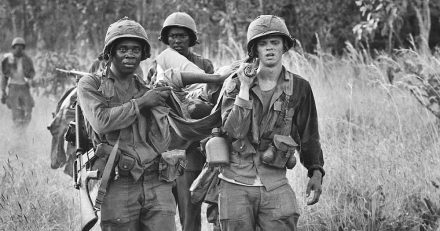
The First Pyrrhic Victory of the Vietnam War
or go to
Aletho News Archives – Video-Images
Frlom the Archives
The 52 Major Jewish American Organizations and Israel Celebrate Passover with the Slaughter of 25 Muslim, Christian and Secular Palestinians
By James Petras • Unz Review • April 8, 2018
Introduction
As of April 7, nearly three thousand unarmed Christian, Muslim and secular Palestinians have been wounded, over three dozen are in critical condition and at least twenty-five unarmed protestors, including children have been assassinated by hundreds of Israeli snipers and heavily armed troops shooting tank shells into crowds of civilians protesting their decades of incarceration by the racist Israeli state.
The Israeli government praised the ‘restraint and morality’ of the IDF, as did the fifty-two Major Jewish American Organizations (MJAO) who largely control the US Congress. These grotesque massacres began during the Christian Holy Week on Good Friday and Easter, coinciding with the Jewish Passover. The self-righteous officials of the MJAO and their relatives and friends broke matzos at joyful Seders as the blood of Palestinians soaked into ground at the fence containing the largest open-air prison camp in history, Gaza.
While tribal loyalties bonded the Israeli and Jewish American leaders, the politicians of the Western oligarchic electoral regimes refrained from criticizing the shocking display of brute force and even defended Israel’s cold blood mass killings of Palestinian civilians in their Gaza prison.
This paper will discuss and analyze the reasons for Israel’s willing Western accomplices and the centrality of its fifth column in the United States. … continue
Blog Roll
 Aletho News
- Iranian model of warfare bleeds US dry while Persian Gulf states watch and learn: Analyst
- IRGC orders ‘defeated’ US to evacuate industrial facilities in region
- Hegseth’s call for ‘no mercy’ to Iranians deemed war crime
- Iran War Exposes Limits of US Military Power – Journalist
- Even The Neo-Cons Admit The Iran War Is Failing
- Inside the Caucasus Drone Corridor Fueling Tensions With Iran
- ‘Not our war’: Trump’s naval coalition to reopen Strait of Hormuz dead in the water
- Iran declares support centers for USS Gerald R. Ford legitimate targets
- Moscow issues warning over Trump’s Golden Dome plan
- Brussels wants ‘our sons to die for Ukraine’ – Orban
- If Americans Knew
- ‘I Liked the House’: When Israeli Soldiers Turn Palestinian Homes into Barracks
- ‘They Were All I Had’: Lebanese Father Buries Parents, 4 Daughters Killed by Israeli Bombing
- Israel and its supporters are causing attacks on Jewish institutions. Case in point: Michigan synagogue tragedy.
- These are the casualties and cost of the war in Iran 2 weeks into the conflict
- Chicago Teachers Union accuses AIPAC of swaying elections with ‘dark money’
- Predictions of another 9/11, amid Israel-US killing spree – Not a ceasefire Day 157
- As US-Israel war on Iran rages, Gaza faces massive dust storm – Not a ceasefire Day 156
- No let-up in attacks on Gaza as Israel takes on Iran, Lebanon – Not a ceasefire Day 155
- ‘Of Course’: IDF Drops Case Against Soldiers Accused of Raping Palestinian Prisoner
- Don’t Fall for the Regime Change Talk. Israel Is ‘Mowing the Lawn’ in Iran
- No Tricks Zone
- Storing Green Energy To Last Germany 10 Days Would Require A 60-Million Tonne Battery
- New Studies: UK Sea Levels Were 4 Meters Higher Than Today During The Mid-Holocene
- Destructive Green New Deal: German Energy And Metal Group Warns Of Drastic Crisis
- New Study Documents A 20-Year Pause In Arctic Sea Ice Decline – Driven By Internal Variability
- Wake-up Call: Survey Shows Majority Of Germans Now Favor Postponing Climate Targets!
- Televised! Leading German Political Candidate Tells Schoolchildren CO2 Makes Sun Hotter!
- New Study: A Century Warming Of 1.1°C Is ‘Commonplace’ And ‘Not Unusual’ During This Interglacial
- New Study: ‘Internal Noise’ And Volcanic Forcing Can Trigger 10-15°C Warming Within Decades
- Glaciers Worldwide Are Suddendly Surging, Experts Blame Warming!
- Surprising Discovery: Sahara Is Greening…Billions Of Trees Where Once Thought To Be Barren
 Aletho News