Kerry: Geneva II peace conference on hold, “August is very difficult for Europeans”
Al-Manar | July 2, 2013
US Secretary of State John Kerry said Tuesday that the United States and Russia were committed to holding Geneva peace conference on Syria but that it would likely take place after August.
Kerry, speaking after talks with Russian Foreign Minister Sergei Lavrov at the annual regional forum of the 10-member Association of Southeast Asian Nations (ASEAN) in Brunei, said “we both agree that the conference should happen sooner rather than later” to find a peaceful solution to the Syrian war.
But he said that the conference, originally planned for June, could not happen this month due to US-Russian meetings and that “August is very difficult for Europeans and others,” a likely reference to summer vacations.
“It may be somewhere thereafter,” he said of the timing of the conference.
Kerry also said he did not have substantive discussions with Lavrov on US whistleblower Edward Snowden. The meeting between Kerry and Lavrov follows controversy surrounding Snowden, who leaked details of a US surveillance programme.
Related article
Iran Calls on Egypt Army to Play Its Role, Respect People’s Vote
Al-Manar | July 2, 2013
Iran urged the Egyptian armed forces on Tuesday to play their role in supporting national dialogue and respecting the people’s vote.
Deputy Foreign Minister for Arab and African Affairs Hossein Amir-Abdullahian said on Tuesday that Tehran saw the involvement of Egyptian people in the domestic affairs of the country as a national asset, and that paying attention to the popular vote contributed to stability in Egypt.
The Iranian official also commented on the fact that President Mohammad Mursi was chosen through national election, warning the Egyptian people against foreign plots.
“Mohammad Morsi is the incumbent president based on the people’s vote,” Abdollahian told the official IRNA news agency.
He warned against division within Egypt. “Dividing the Egyptian nation yields no gain,” Abdollahian said, adding that respecting people’s vote was of utmost importance for Egypt’s stability.
The Egyptian army on Monday issued an ultimatum to Mursi, the country’s first democratically elected president, threatening to intervene in 48 hours and impose its own “road map” if the Islamist did not meet the demands of the people.
The army’s warning came just a day after millions of protesters took to the streets across Egypt, calling for Mursi to step down.
The Egyptian presidency rejected the ultimatum, insisting that Mursi would continue on his own path towards national reconciliation.
Brazil: Rousseff Offers Protesters a Plebiscite

Weekly News Update on the Americas | July 1, 2013
On June 24 Brazilian president Dilma Rousseff began a week of meetings with various groups—youths, unionists, campesinos, political party leaders, state governors, congressional leaders and Supreme Court members—in response to the massive protests that broke out in the middle of the month [see Update #1181]. Rousseff initially proposed a plebiscite on holding a constituent assembly to reform the Constitution, but she quickly dropped the idea. Instead, she proposed a plebiscite that would allow voters to choose from various options in three areas: public financing of political campaigns, methods of electing legislators and voting by party list. The vote would be held by October.
In a note published on June 28, former president Luiz Inácio Lula da Silva (2003-2011) supported Rousseff’s proposal, which he said “has the merit of breaking the impasse on this decisive question, which for decades has entered and left the national agenda without accomplishing significant changes.” Rousseff and Lula are both members of the center-left Workers Party (PT). The opposition parties oppose the plan, which some analysts think could open the way to the sort of political transformation that center-left presidents have carried out in other Latin American countries. In the opposition’s counter-proposal, the National Congress would develop a reform plan and the government would then hold a referendum allowing voters to accept or reject the entire project. (El País (Madrid) 6/28/13 from correspondent; La Jornada (Mexico) 6/29/13 from AFP, DPA, Notimex)
For its own part, the National Congress responded to the protests with legislation, much of which had been stalled for months. On June 26 the legislators voted down a constitutional amendment that would have limited federal prosecutors’ authority to investigate crimes; many protesters considered the amendment an effort by politicians to stymie corruption investigations. In addition, the Senate passed a bill making corruption a crime as serious as murder or rape; the Chamber of Deputies is expected to pass it later. The Chamber passed a bill allocating 75% of revenues from oil production to education programs and the remaining 25% to healthcare.
Meanwhile, the protests continued, although on a smaller scale than the week before. On June 26 some 50,000 people demonstrated in Brazil’s third largest city, Belo Horizonte in the eastern state of Minas Gerais, while Brazil’s soccer team was playing the Uruguayan team; the allocation of funds to international sports competitions rather than education and health has been a major grievance in the demonstrations. Hooded youths threw rocks at the police, who used tear gas to keep the protesters 3 km away from the city’s Mineirão stadium. According to the authorities a young man was seriously injured and at least 24 people were arrested; looting was reported, along with two fires and damage to dozens of stores. In Brasilia, protesters kicked soccer balls towards the police line at the Congress building. (La Jornada 6/27/13 from Reuters, AFP, DPA, Xinhua)
One of the main triggers of the mass protests was a series of small demonstrations early in June by the Free Pass Movement (MPL), a São Paulo-based organization fighting an increase in transit fares. MPL was the first group scheduled to meet with Rousseff on June 24. Before the meeting, they issued an open letter to the president saying they were surprised by the invitation since “social movements in Brazil always suffered repression and criminalization…. We hope that this meeting will mark a change of position by the federal government that will extend to other social struggles: to the indigenous peoples, who, like the Kaiowá-Guaraní and the Munduruku, have suffered various attacks from large landowners and the public power; to the communities affected by evictions; to the homeless; to the landless; and to the mothers whose children were murdered by the police in the peripheral neighborhoods.” (Adital (Brazil) 6/24/13)
Related article
- Brazil protesters give Rousseff tenuous truce (thestate.com)
Boy’s Death in Drone Strike Tests Obama’s Transparency Pledge
By Cora Currier | ProPublica | July 1, 2013
On June 9, a U.S. drone fired on a vehicle in a remote province of Yemen and killed several militants, according to media reports.
It soon emerged that among those who died was a boy – 10-year-old Abdulaziz, whose elder brother, Saleh Hassan Huraydan, was believed to be the target of the strike. A McClatchy reporter recently confirmed the child’s death with locals. (Update: The London-based Bureau of Investigative Journalism today reported that there was “strong evidence” it was a U.S. drone strike, but it could not confirm the fact.)
It’s the first prominent allegation of a civilian death since President Obama pledged in a major speech in May “to facilitate transparency and debate” about the U.S. war on al Qaida-linked militants beyond Afghanistan. He also said “there must be near-certainty that no civilians will be killed or injured” in a strike.
So what does the administration have to say in response to evidence that a child was killed?
Nothing.
National security spokeswoman Caitlin Hayden would not comment on the June 9 strike or more generally on the White House position on acknowledging civilian deaths. She referred further questions to the CIA, which also declined to comment.
The president’s speech was the capstone on a shift in drone war policy that would reportedly bring the program largely under control of the military (as opposed to the CIA) and impose stricter criteria on who could be targeted. In theory, it could also bring some of the classified program into the open. As part of its transparency effort, the administration released the names of four U.S. citizens who had been killed in drone strikes.
An official White House fact sheet on targeted killing released along with the speech repeated the “near-certainty” standard for avoiding civilian casualties. Secretary of State John Kerry reiterated it a few days later, when he told an audience in Ethiopia: “We do not fire when we know there are children or collateral — we just don’t do it.”
But White House press secretary Jay Carney said in late May that “this commitment to transparency…does not mean that we would be able to discuss the details of every counterterrorism operation.”
The new White House statements don’t address what happens after a strike, even in general terms.
CIA Director John Brennan offered one of the few public explanations of how casualties are assessed during his nomination hearing in February. Before his confirmation, Brennan was the White House counterterrorism adviser, and is considered to be the architect of Obama’s drone war policy.
He told senators that, “analysts draw on a large body of information — human intelligence, signals intelligence, media reports, and surveillance footage — to help us make an informed determination about whether civilians were in fact killed or injured.”
Brennan also said the U.S. could work with local governments to offer condolence payments. As we’ve reported, there’s little visible evidence of that happening.
At the hearing, Sen. Ron Wyden, D-Ore., asked Brennan if the U.S. should acknowledge when it “makes a mistake and kills the wrong person.”
“We need to acknowledge it publicly,” Brennan responded. Brennan also proposed that the government make public “the overall numbers of civilian deaths resulting from U.S. strikes.”
Neither overall numbers nor a policy of acknowledging casualties made it into Obama’s speech, or into the fact sheet. Hayden, the White House spokeswoman, would not say why.
The government sharply disputes that there have been large numbers of civilian deaths but has never released its own figures. Independent counts, largely compiled from news reports, range from about 200 to around 1,000 for Pakistan, Yemen and Somalia combined over the past decade.
Researchers agree that the number of drone strikes and civilian deaths have dropped during the past year. (Before Obama’s speech, an administration official attributed this partly to the new heightened standards.) The London-based Bureau of Investigative Journalism, which generally has the highest tally of civilian dead, has found there were between three and 16 civilians reportedly killed in about 30 drone or other airstrikes in Yemen and Pakistan so far this year. No strikes have been reported in Somalia.
“Official” statistics might not be much help without knowing more about how they were compiled, said Sarah Holewinski, head of the advocacy group Center for Civilians in Conflict.
That’s because it’s still not clear how the U.S. distinguishes between civilians and “militants,” or “combatants.”
In so-called signature strikes, operators sometimes fire on groups of people who appear to be engaged in militant activity without necessarily knowing their identities. The newly instituted drone rules reportedly roll back the military’s ability to use signature strikes, but the CIA can keep firing in Pakistan under the old rules at least through the end of the year.
An administration official told ProPublica last year that when a strike is made, “if a group of fighting-age males are in a home where we know they are constructing explosives or plotting an attack, it’s assumed that all of them are in on that effort.”
The new White House fact sheet contradicts that, stating: “It is not the case that all military-aged males in the vicinity of a target are deemed to be combatants.”
From the outside, in a strike like the recent one in Yemen, it’s impossible to know how these things were determined. McClatchy reported that the target, Saleh Hassan Huraydan, had “largely unquestioned” ties to al Qaida. Yemeni officials said he arranged to bring money and fighters from Saudi Arabia to Yemen.
As for Huraydan’s young brother, “They may not have realized who was in the car. Or they may have realized it and decided collateral damage was okay,” Holewinski says.
The same questions dog the death of another boy that the administration has acknowledged: the 16-year-old son of Anwar al-Awlaki, a U.S.-born cleric tied to terror attacks. Awlaki and his son were killed in separate strikes in Yemen in the fall of 2011. The boy, Attorney General Eric Holder has said, was “not specifically targeted.”
Related article
- For Obama civilian deaths are O.K. because the enemy kill civilians also (alethonews.wordpress.com)
Report: 1,790 Palestinians Kidnapped, 16 Killed, In First Half of 2013
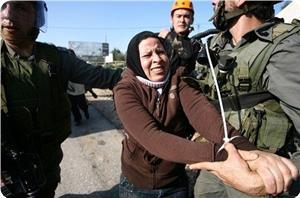
By Saed Bannoura | IMEMC & Agencies | July 1, 2013
The Ahrar Center for Detainees Studies and Human Rights have reported that Israeli soldiers kidnapped 1,790 Palestinians in the first six months of this year, including 300 who were kidnapped in June, and added that 16 Palestinians have also been killed by the Israeli military in six months.
The Ahrar Center said that dozens of women, children, elderly, legislators, intellectuals and journalists were among the kidnapped.
The center added that the arrests took place in every part of the occupied West Bank, including Jerusalem, in addition to 25 arrests in the Gaza Strip, including fishermen and five arrests at border terminals.
Most of the arrests have been carried out in the Hebron district, in the southern part of the West Bank. The second highest number of arrests was carried out in Jerusalem, followed by Nablus.
Ahrar said that February witnessed the largest number of arrests as the soldiers kidnapped 382 Palestinians, while 350 have been kidnapped in January, 300 in June, 263 in May, 259 in April and 236 in March.
The center further reported that the army also kidnapped 7 Palestinian legislators identified as Ahmad Attoun, Hatem Qfeisha, Abdul-Jabbar Foqaha, Imad Nofal, Basem Za’areer, Mahmoud Ramahi, and Mohammad Jamal An-Natsha.
Furthermore, Ahrar said that the army also kidnapped 33 women, including wives and relatives of political prisoners held by Israel, and that 17 of the kidnapped women are still imprisoned by Israel.
The Ahrar Center also said that 14 Palestinians, including 10 from the West Bank, and four from the Gaza Strip, have been shot and killed by the Israeli army since the beginning of this year, in addition to two Palestinian political prisoners who died in Israeli prisons.
Detainee Arafat Jaradat, 33, from Hebron, died of extreme torture by Israeli interrogators, and detainee Maisara Abu Hamdiyya, 64, died of an advanced stage of cancer resulting from the lack of medical treatment in Israeli prisons.
Four more Palestinians have been killed by Israeli military fire in the Gaza Strip.
Head of the Ahrar Center, Fuad Al-khoffash, stated that the center documented daily Israeli military invasions; daily arrests and assaults, and demanded the International Community to act against the ongoing and escalating Israeli violations.
Unattainable peace…
By JAMAL KANJ | Intifada-Palestine | June 30, 2013
But for the chap from Khan Younis refugee camp in Gaza who emerged earlier this week as the winner of the “Arab Idol,” the news from Palestine is grim.
The newly appointed Palestinian Prime Minister resigned and Israel still insist it should be able to negotiate over dividing the pie while it continues to eat it.
By the end of April, US Secretary of State John Kerry succeeded in tailoring another peace plan to entice Israel. Arab ministers supposedly agreed to amend a decade-old peace plan to satisfy Israeli demands for legalizing major illegal Jewish colonies in the West Bank.
In May 2009, Israel responded to the US mediated overture by issuing permits to build 296 illegal new homes in the Jewish-only colony of Beit El near Ramallah. This week the Secretary of State was scheduled to arrive for his fifth visit since February in an attempt to restart the Palestinian and Israeli negotiations.
The visit seems to be on hold to give time to Palestine’s President to consider a new US economic peace plan and for Israel to give Abbas face-saving cover to return to the negotiation table.
Israel is already sending mixed messages.
According to news reports that have appeared in Israeli daily Ma’ariv, Netanyahu is considering a token gesture of releasing a small number of Palestinian prisoners and to issue temporary freeze “outside the settlement blocks” in the West Bank.
The deceptive “freeze” may force Abbas to succumb to American pressure while Netanyahu can claim – and rightly so – that it is irrelevant as building inside the Jewish-only “settlement blocks” will continue.
Affirming its real intentions and to pre-empt Kerry’s renewed efforts – in what is becoming traditional embarrassment for visiting US officials – the Israeli government issued earlier this month plans to build more than 1,000 new Jewish-only homes in two West Bank colonies.
Instead of addressing Israel’s inflexibility, the US is tantalizing with an economic package worth $4 billion of private American and European investment.
In fact, the new American “economic peace” is a repackaged Netanyahu plan from the 1990s, which was intended to dodge tackling the most pressing issues in the peace talks.
In theory, the proposal would expand the Palestinian economy by 50 per cent over three years while granting Israel more time to finish eating the “pie”.
But in reality, past investments were undermined by Israeli closures and military checkpoints or even destroyed as was the case for Gaza’s air and sea ports, leaving Palestinians with false promises and the only measurable expansion was in the size of Jewish colonies.
To bolster Israel’s arrogance, the US House of Representatives passed, two weeks ago, the National Defense Authorization Act in which it delegated – for the first time in US history – the power to wage war to a foreign entity when it committed the US to avail “diplomatic, military, and economic support” to Israel should it decide to strike Iran.
Along with that vote and at a time when both sides of the isle wrangled over how much more to cut from the defense budget, the US Congress was united in tripling Obama’s request to finance Israeli missile defense from $96 million to $284m.
It is indisputable that this unqualified US subservient support is directly responsible for Israel’s intransigence and the failure of the peace process. This was exemplified last week when Polish descendent and Israeli Economy Minister Naftali Bennett – an ex US multimillionaire who renounced his US citizenship – declared on June 17 the death of the Palestinian state idea and that he wasn’t an occupier and the West Bank was his “home”.
Rejecting the Palestinian state, Danny Danon, the Israel’s Deputy Defence Minister, was quoted in the Times of Israel: “The international community can say whatever they want, and we can do whatever we want”. Israeli leaders can’t be more explicit in their rejection of a viable Palestinian state, making the talk about settlement “freeze” meaningless and peace unattainable.
Related articles
- Maximum Land with Minimum Palestinians: The Annexation of Area C (alethonews.wordpress.com)
- Palestinians dubious of Kerry’s “real progress” in peace plan (alethonews.wordpress.com)
Report: 100 Israeli attacks during June
Palestine Information Center – 01/07/2013
RAMALLAH — In its monthly report, the Information Center of the Wall and Settlement documented an escalation in Israeli attacks during June including demolition notices and settlement expansion.
The report issued on Sunday monitored 98 Israeli assaults during June including 23 demolition operations mostly in Jordan alley and Jenin.
The report also pointed out 57 demolition orders in al-Khalil, 11 demolition notifications in Jerusalem, and 6 others in Bethlehem.
During June, the Israeli authorities declared the establishment of 3,341 housing units in West Bank settlements, and approved the construction of a huge building in Wadi al-Hilweh, known as Giv’ati parking, as part of the Israeli Judaization schemes in occupied Jerusalem.
Israel’s Jerusalem District Committee for Planning and Building has prepared an outline to connect the Jewish quarter in the Old Town Square with Al-Buraq Square through building underground elevators and corridors, the report added.
For its part, the Israeli Municipality has established a new road to link between the occupied city of Jerusalem and Ma’aleh Adumim settlement.
The monthly report referred to Israeli settlers’ escalated attacks where 14 Palestinian citizens were assaulted, and 30 cars were burned, in addition to stealing Palestinian monuments in Bethlehem and closing main streets that connect Palestinian villages and cities.
The Information Center also documented several Israeli break-ins into al-Aqsa mosque during June.
Related articles
- Jewish settlers attack buses filled with children in Jerusalem (alethonews.wordpress.com)
- UN statement on Israeli plan to relocate Palestinians to build houses for settlers (alethonews.wordpress.com)
- Maximum Land with Minimum Palestinians: The Annexation of Area C (alethonews.wordpress.com)
- More Israeli settler-terrorism: Settlers attack two Palestinian buses in Jerusalem (altahrir.wordpress.com)
- Report: “1790 Palestinians Kidnapped, 16 Killed, In First Half of 2013” (imemc.org)
- Palestine: Al Aqsa mosque stormed, demolition orders & more lands confiscated (realisticbird.wordpress.com)
Featured Video
Seyed M. Marandi: U.S. Military DIVIDED? Iran’s Secret Defense EXPOSED
or go to
Aletho News Archives – Video-Images
From the Archives
‘Israel sees Iran as obstacle to its policies’
Press TV – August 25, 2017
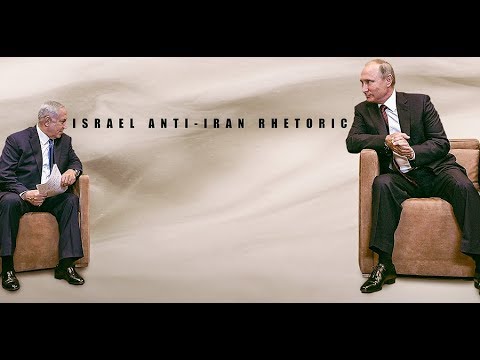
Prime Minister Benjamin Netanyahu has said that Israel felt threatened by Iran’s growing influence in the Middle East. Netanyahu expressed his Iranophobic view in a meeting with Russian President Vladimir Putin in Russia’s Black Sea resort of Sochi on Wednesday. Press TV has asked Scott Rickard, former American intelligence linguist from Tampa, Florida, and Brent Budowsky, a columnist at The Hill from Washington, to give their thoughts on the issue.
Rickard said Tel Aviv is concerned about the fact that the regime could not carry out its old project to spread sectarian divisions and pave the way for dismemberment of the countries in the Middle East region because of the Iranian-led resistance against Israeli policies, not only in the occupied territories of Palestine but also in the whole region.
“Iran is not a threat to Israel whatsoever. The threat that Israel sees is the fact that their Oded Yinon Plan is being put to a hold by Iran,” the intelligence linguist said on Thursday night.
“They (the Israelis) look at Iran as a threat only because they have no influence on their governments and Iran is autonomous and is not under the Zionist influence,” he added.
Since the victory of the Islamic Republic of Iran in 1979, Tehran has been critical of Israel’s policies in the region, whereas “no leaders [of other states] even dared to speak out against Zionism,” Rickard argued. … continue
Blog Roll
 Aletho News
- Evidence points to Ukraine being behind TurkStream attempted sabotage, but that should come as no surprise
- Sri Lanka secures supplies of Russia oil – minister
- Nations across Asia strike direct deals with Iran for Hormuz passage
- IRGC commander declares ‘new phase’ of reprisal attacks against aggressors
- Israel’s air defenses overwhelmed by cluster-warhead Iranian missiles: Reports
- Striking Iran’s Infrastructure Would Have Little Military Impact – Report
- What’s Behind U.S./Israeli Strikes On Iranian Pistachio Factories?
- Seyed M. Marandi: U.S. Military DIVIDED? Iran’s Secret Defense EXPOSED
- How I fell foul of the BBC thought police
- The End of NATO
- If Americans Knew
- Trump says Iranians appreciate bombs, WHO warns of nuclear risks – Daily Update
- U.N. experts demand Israel release prominent Gaza doctor after reports of ‘severe torture’
- Israel’s Latest Genocide Is Against the Shias of Lebanon. Why Is the World Silent?
- How Eliot Cohen’s influence over U.S. war-making paved the way for Trump’s war crimes in Iran
- Israelis don’t pay for the weapons we ‘sell’ to them — US taxpayers do
- While Distancing from AIPAC, Most 2028 Democratic Hopefuls Are Still Embracing Israel
- A brief history of the Israeli nuclear program, the open secret at the heart of the Iran war
- Israeli Settlers Killed a Palestinian Farmer on His Own Land, in Front of His Father. Yes, Again
- The US-Israeli War on Science is an Assault on our Future
- 100+ International Law Experts Say US Strikes on Iran Violate UN Charter, Could Be War Crimes
- No Tricks Zone
- An Inconvenient Tree: Uncovered In Alps… Europe Much Warmer Than Today 6000 Years Ago
- New Study Reports A 60% Slowdown In Greenland’s Ice Loss Rate In The Last Decade
- Low Intensity Tornado Wrecks Major Solar Farm, Creating A Potential Toxic Dump
- New Study Finds Warming Saves Lives…Cold Temperatures 12 Times More Deadly Than Excess Heat
- German Science Blog Accuses PIK Climate Institute Of Hallucinating Climate Tipping Points
- Devastating Assessment Of Comirnaty Vaccine By Former Senior Pfizer Europe Toxicologist
- New Study: CO2 Is ‘Effectively Negligible’ As An Explanatory Climate Change Factor Since 2000
- Former Pfizer Toxicologist Dr. Helmut Sterz Tells Bundestag Hearing Pfizer Vaccine Should Have Never Been Approved
- Energy Expert: Germany’s Nuclear Phaseout Was A “500 Billion Euro Mistake”
- New Research: South Australia’s Mid-Holocene Sea Surface Temperatures Were 4°C Warmer Than Today
 Aletho News