In a blow to New York City mayor’s claims regarding the effectiveness of stop-and-frisk practices by the NYC police, a federal judge ruled that the so-called crime-stopping tactic violates the constitutional rights of minorities.
U.S. District Judge Shira Scheindlin ruled Monday that by targeting racially targeted groups of citizens, the police had adopted an “indirect racial profiling” policy, that resulted in discriminatory stopping of tens of thousands of blacks and Hispanics, according to Reuters.
The judge ruled that the Mayor Michael Bloomberg’s administration, police commissioner and other city officials had “turned a blind eye” toward the injustice on city’s minorities.
“No one should live in fear of being stopped whenever he leaves his home to go about the activities of daily life,” Scheindlin wrote in her opinion.
The judge wrote in her 105-page decision that police personnel were under pressure to raise the number of stops by Mayor Bloomberg since he took office in 2002 and designated Raymond Kelly to be NYPD Commissioner.
As a result, officers stopped and searched young minority men without any reasons in violation of their constitutional Fourth Amendment rights that protects citizens against unreasonable searches and seizures.
The New York Civil Liberties Union demonstrated in a 2012 report that there had been a sharp increase in number of police stops over the period of Bloomberg’s three terms in office.
The number of searches rose from 160,851 stops in 2003 to 685,724 in 2011, while half of the 2011 searches included physical searches.
Scheindlin ordered the appointment of an independent monitor to oversee compliance with other remedies she ordered, including adopting written policy guideline specifying circumstances where stops are authorized. She also authorized to adopt a trial program requiring the use of body-worn cameras in one precinct in each of the city’s five boroughs; and to set up a community-based remedial process under a court-appointed facilitator.
Saudi Arabia, a major supporter of opposition forces in Syria, has increased crackdown on its own dissenters, with 30,000 activists reportedly in jail. In an exclusive interview to RT a Saudi prince defector explained what the monarchy fears most.
“Saudi Arabia has stepped up arrests and trials of peaceful dissidents, and responded with force to demonstrations by citizens,” Human Rights Watch begins the country’s profile on its website.
Political parties are banned in Saudi Arabia and human rights groups willing to function legally have to go no further than investigating things like corruption or inadequate services. Campaigning for political freedoms is outlawed.
One of such groups, which failed to get its license from the government, the Saudi Civil and Political Rights Association (ACPRA), was cited by AFP as saying the kingdom was holding around 30,000 political prisoners.
Saudi Prince Khaled Bin Farhan Al-Saud, who spoke to RT from Dusseldorf, Germany, confirmed reports of increased prosecution of anti-government activists and said that it’s exactly what forced him to defect from his family. He accused the monarchy of corruption and silencing all voices of dissent and explained how the Saudi mechanism for suppression functioned.
“There is no independent judiciary, as both police and the prosecutor’s office are accountable to the Interior Ministry. This ministry’s officials investigate ‘crimes’ (they call them crimes), related to freedom of speech. So they fabricate evidence, don’t allow people to have attorneys”, the prince told RT Arabic. “Even if a court rules to release such a ‘criminal’, the Ministry of Interior keeps him in prison, even though there is a court order to release him. There have even been killings! Killings! And as for the external opposition, Saudi intelligence forces find these people abroad! There is no safety inside or outside the country.”
The strong wave of oppression is in response to the anti-government forces having grown ever more active. A new opposition group called Saudi Million and claiming independence from any political party was founded in late July. The Saudi youths which mostly constitute the movement say they demand the release of political prisoners and vow to hold regular demonstrations, announcing their dates and locations via Facebook and electronic newspapers.
Human rights violations are driving people on to the streets despite the fear of arrest, according to activist Hala Al-Dosari, who spoke to RT from Jeddah, Saudi Arabia.
“We have issues related to political and civil rights, freedom of expression and freedom of assembly. These are the main issues that cause a lot of people to be at risk for just voicing out their opinions or trying to form associations, demonstrate or protest, which is banned by the government.”
The loudest voice of the Saudi opposition at the moment is a person called ‘Saudi Assange’. His Twitter name is @Mujtahidd, he keeps his identity and whereabouts secret and is prolific in online criticism of the ruling family, which has gained him over a million followers.
“The regime can destroy your credibility easily and deter people from dealing with you if your identity is public,” Mujtahid wrote to RT’s Lindsay France in an email.
The Twitter activist’s anonymity is understandable. The most recent example of what can happen to activists is the case of Raif Badawi, the founder of the Free Saudi Liberals website, who was found guilty of insulting Islam through his online forum and sentenced the activist to 600 lashes and seven years in prison.
In June, seven people were sentenced to up to 10 years in prison for ‘inciting protests’ via Facebook. The indicted denied charges and said they were tortured into confession.
“The government is obviously scared of the Arab revolutions. And they’ve responded as they usually do: by resorting to oppression, violence, arbitrary law, and arrest,” Prince Khaled says, adding that so far the tougher the measures the government took to suppress the dissent, the louder that dissent’s voice was.
“The opposition used to demand wider people’s representation in governing bodies, more rights and freedoms. But the authorities reacted with violence and persecution, instead of a dialogue. So the opposition raised the bar. It demanded constitutional monarchy, similar to what they have in the UK, for example. And the Saudi regime responded with more violence. So now the bar is even higher. Now the opposition wants this regime gone.”
There was a time, at the beginning of the Arab Spring movement in the region in 2011, when the government tried to appease opposition activists by a $60 billion handout program by King Abdullah, according to Pepe Escobar, a correspondent for the Asia Times. He calls that move an attempt to “bribe” the population. However there was also a stick with this carrot.
“The stick is against the Shiite minority – roughly 10 percent of Saudi Arabia – who live in the Eastern province where most of the oil is, by the way. They don’t want to bring down the House of Saud essentially. They want more participation, judiciary not answering to religious powers and basically more democratic freedoms. This is not going to happen in Saudi Arabia. Period. Nor in the other Gulf Cooperation Council [GCC] petro-monarchies”.
Escobar points out the hypocrisy of the Saudi Arabian rulers, who feel free to advise other regional powers on how to move towards democracy, despite their poor human rights record.
“They say to the Americans that they are intervening in Syria for a more democratic post-Assad Syria and inside Saudi Arabia it’s the Sunni-Shiite divide. They go against 10 percent of their own population.”
‘Buying favors from West’
Saudi Arabia’s crackdown on opposition has been strongly condemned by human rights organizations, but not by Western governments, which usually claim sensitivity to such issues.
“The White House certainly does maintain a long-standing alliance with the leaders of Saudi Arabia, cemented by common political, economic and military interests in the Middle East,” said Prince Khaled.
Germany came under fierce criticism last week over its arms sales to Saudi Arabia and other Gulf states, which have almost tripled in just two years, from 570 million euro in 2011 to almost one-and-a-half billion in 2012.
And Angela Merkel’s government has approved weapons exports of more than 800 million euro in the first half of this year – suggesting the level will continue to grow.
“With arms they [Gulf States] are also buying favors from the West. They are insuring the maintenance of their legitimacy on spending massive amounts of money that are pouring into Western economies,” Dr. Ahmed Badawi, co-executive director of Transform, which studies conflicts and political developments, told RT.
In 2012, Amnesty International claimed that German-made small firearms, ammunition and military vehicles were commonly used by Middle Eastern and North African regimes to suppress peaceful demonstrations.
“Small arms are becoming real weapons of mass destruction in the world now. There is absolutely no way to guarantee that the weapons that are being sold legally to countries like Saudi Arabia, even Egypt, do not fall into the hands of terrorists. The two important examples are German assault rifles found in the regions in Mexico and also in Libya. And there’s absolutely no way of knowing how these weapons ended up there,” Badawi said.
Former Israeli Prime Minister Ehud Barak has called for the “free world” to support Egyptian Defence Minister General Abdul-Fattah Al-Sisi and liberal leaders such as Mohamed ElBaradie, he told CNN on Monday. Barak alleged that President Mohamed Morsi was ousted by his people after he had attempted to change Egypt into a religious-communist state.
Asked whether Israel is silently happy about the coup, he said: “We do not consider ourselves among the main players in these incidents, through which we see a dramatic development for the Egyptians.”
Although Israel’s support may well “embarrass” Al-Sisi, Barak insisted that he and “other” liberal leaders such as Al-Baradei deserve the support of the free world. “There were free elections but they were tools that were used to change the democratic elections into an extremist communist regime based on the Islamic Sharia,” he claimed. “This led to the popular rejection of Morsi.”
Calling for the US to deal with Morsi as it dealt with other autocratic Sunni leaders in the region, the former Israeli prime minister pointed out that America “neglected them when their people moved against them”.
In closing, Barak said that in return for external support the people of Egypt should hold free, democratic elections within a year.
“If one thing has become clear in the wake of last week’s military coup d’état against Egyptian President Mohamed Morsi, it’s that democracy promotion is not a core principle of neoconservatism,” writes the astute commentator Jim Lobe. Lobe points out that a few neocons (he cites only Robert Kagan) did stick with the pro-democracy position but “[a]n apparent preponderance of neocons, such as Daniel Pipes, the contributors to the Wall Street Journal’s editorial board and Commentary’s Contentions’ blog,” tended to sympathize with the coup.
Even Kagan’s support for democracy was far less than an endorsement of Morsi’s right to govern, which he labeled “majoritarian” rather than democratic. Kagan wrote: “He ruled not so much as a dictator but as a majoritarian, which often amounted to the same thing. With a majority in parliament and a large national following, and with no experience whatsoever in the give-and-take of democratic governance, Morsi failed in the elementary task of creating a system of compromise, inclusiveness, and checks and balances.” (“Time to break out of a rut in Egypt,” “Washington Post,” July 5, 2013
It should be pointed out that if democracy required compromise, inclusiveness, and checks and balances, it is hard to believe that many countries conventionally regarded as democracies would pass the test. Certainly, Israel, as a self-styled Jewish State, would not. (The Founding Fathers of the United States in creating the Constitution took steps to try to prevent the liberty of individuals from being oppressed by a “tyranny of the majority” —democracy itself being negative term—but this has not been the case in all modern democracies.)
Instead of a military coup, Kagan held that a better approach would have been to leave Morsi in office but to rely on international pressure to compel his government to change its policies. Kagan contended that Morsi “deserved to be placed under sustained domestic and international pressure, especially by the United States, the leading provider of aid to Egypt. He deserved to have the United States not only suspend its bilateral aid to Egypt but also block any IMF agreement until he entered into a meaningful, substantive dialogue with his political opponents, including on amending the flawed constitution he rammed through in December as well as electoral law. He ought to have been ostracized and isolated by the international democratic community.” In short, Kagan advocated the use of international pressure to essentially prevent the democratically-elected Morsi government from enacting measures in line with its election mandate–and the fact of the matter is that in all of the elections Islamist parties won a significant majority of the overall vote–and force it to attune its actions to the demands of the “international democratic community,” that is, the Western nations aligned with the United States. (None of the previous statements should be considered an endorsement of Morsi’s policies but only a recognition that his government was far more attuned to the democratic process than has been the military junta, with its dissolution of a democratically-elected parliament, arbitrary rule, mass arrests, and killing of protestors against which the neocons would react with scathing moral outrage if committed by Assad or the Islamic Republic of Iran.)
It should be pointed out that while few, if any, neocons actually sought a restoration of the democratically-elected Morsi government, there were different degrees of sympathy for the coup. Max Boot, for example, viewed the coup largely in pragmatic terms, as opposed to democratic ideals. The danger was that the removal of the Muslim Brotherhood might cause them to turn to violence. “On the other hand,” Boot wrote, “if the military didn’t step in, there would have been a danger that the Brotherhood would never be dislodged from power,” which would seem to have been in his mind the greater danger even if the Muslim Brotherhood and other Islamist parties commanded the great majority of votes. (“America’s Egypt Policy After Morsi,” Contentions, Commentary, July 5, 2013,
More affirmative on the coup was Michael Rubin of the American Enterprise Institute: “I never thought I would celebrate a coup, but the Egyptian military’s move against President Muhammad Morsi and his Muslim Brotherhood regime is something the White House, State Department, and all Western liberals should celebrate.” Rubin put something of a positive spin on the military’s goals: “The military isn’t seizing power for itself — but rather seeking a technocratic body to ensure that all Egyptian communities have input in the new constitution, a consultative process that Morsi rhetorically embraced but upon which he subsequently turned his back.” (“What Obama should learn from Egypt’s coup,” July 3, 2013, http://www.aei-ideas.org/2013/07/what-obama-should-learn-from-egypts-coup/)
A similar interpretation was offered by Jonathan S. Tobin in his Contentions Blog for “Commentary Magazine” (July 7, 2013, http://www.commentarymagazine.com/2013/07/07/obamas-second-chance-on-egypt-coup/): “[T]he coup wasn’t so much a putsch as it was a last ditch effort to save the country from drifting into a Brotherhood dictatorship that could not be undone by democratic means.” Tobin continues: “[R]ather than setting deadlines or delivering ultimatums to the interim government that has replaced Morsi and his crew, the United States should be demonstrating that it will do whatever it can to help the military snuff out the threat of Islamist violence and then to proceed to replace Morsi with a more competent government.” This “more competent government,” however, did not mean democracy. “In the absence of a consensus about democratic values,” Tobin wrote, “democracy is impossible and that is the case in Egypt right now.”
David Brooks likewise wrote on July 4 in his piece “Defense of the Coup” in the “New York Times”: “Promoting elections is generally a good thing . . . . But elections are not a good thing when they lead to the elevation of people whose substantive beliefs fall outside the democratic orbit. It’s necessary to investigate the core of a party’s beliefs, not just accept anybody who happens to emerge from a democratic process.” But Brooks shows little optimism about democracy in Egypt, holding that the “military coup may merely bring Egypt back to where it was: a bloated and dysfunctional superstate controlled by a self-serving military elite. But at least radical Islam, the main threat to global peace, has been partially discredited and removed from office.” And contrary to the neocons’ nation-building: “It’s not that Egypt doesn’t have a recipe for a democratic transition. It seems to lack even the basic mental ingredients.”http://www.nytimes.com/2013/07/05/opinion/brooks-defending-the-coup.html?_r=0)
While many commentators have portrayed the neocons as naïve adherents of universal democracy, which would make it appear that their positive presentation of the Egyptian coup, or at least failure to strongly criticize it, constituted a complete reversal in their thinking, in actuality, they never adhered to the fundamental tenets of democracy without significant qualifications. As I pointed out in “The Transparent Cabal” (which devotes an entire chapter specifically to this issue), the idea of instant democracy would seem to have been simply a propaganda ploy to generate public support for war. When writing at length on exporting democracy to the Middle East, the neocons generally argued that it was first necessary for the United States to “educate” the inhabitants of the Middle Eastern states in the principles of democracy before actually implementing it. For instance, in September 2002, Norman Podhoretz, one of the godfathers of neoconservatism, acknowledged that the people of the Middle East might, if given a free democratic choice, pick anti-American, anti-Israeli leaders and policies. But he held that “there is a policy that can head it off,” provided “that we then have the stomach to impose a new political culture on the defeated parties. This is what we did directly and unapologetically in Germany and Japan after winning World War II.” (Quoted in “Transparent Cabal,” p. 215). Similarly, in the book, “An End to Evil: How to Win the War” (2004), David Frum and Richard Perle asserted that establishing democracy must take a back seat when it conflicted with fighting Islamic radicals: “In the Middle East, democratization does not mean calling immediate elections and then living with whatever happens next.” (Quoted in “Transparent Cabal,” p. 216)
Max Boot, in the “Weekly Standard” in October 2001, argued “The Case for Empire.” “Afghanistan and other troubled lands today,” Boot intoned, “cry out for the sort of enlightened foreign administration once provided by self-confident Englishmen in jodhpurs and pith helmets.” (Quoted in “Transparent Cabal,” pp. 216-217) David Wurmser supported the restoration of the Hashemites and the traditional ruling families in Iraq as a bulwark against modern totalitarianism “I’m not a big fan of democracy per se,” exclaimed Wurmser in an October 2007 interview. “I’m a fan of freedom and one has to remember the difference. Freedom must precede democracy by a long, long time.” (Quoted in “Transparent Cabal,” p. 218) Paul Wolfowitz was enraged by the Turkish military’s failure to sufficiently pressure the Turkish government to participate in the war on Iraq. “I think for whatever reason, they did not play the strong leadership role that we would have expected,” Wolfowitz complained. Presumably, Wolfowitz would have preferred a Turkish military coup over the democratic repudiation of American policy goals. (“Transparent Cabal,” p. 219)
Regarding Israel itself, it would seem that if democracy were the neoconservatives’ watchword, they would work to eliminate Israel’s undemocratic control over the Palestinians on the West Bank and try to make the country itself more inclusive—and not a state explicitly privileging Jews over non-Jews. The neoconservatives would either promote a one-state democratic solution for what had once been the British Palestine Mandate (Israel, Gaza, and the West Bank) or else demand that Israel allow the Palestinians to have a fully sovereign, viable state on all of the West Bank and Gaza. Instead of taking anything approaching such a pro-democracy stance, however, the neoconservatives have done just the opposite, backing the Israeli Likudnik Right, which takes an especially hostile position toward the Palestinians with its fundamental goal being the maintenance of the exclusivist Jewish nature of the state of Israel and its control of the occupied territories.
As Jim Lobe correctly points out, it is not democracy but rather “protecting Israeli security and preserving its military superiority over any and all possible regional challenges” that is “a core neoconservative tenet.” Thus, the neocons used democracy as an argument to justify the elimination of the anti-Israel Saddam regime. And the neocons saw the elimination of Saddam as the key to the elimination of Israel’s other Middle Eastern enemies. They currently support democracy as an ideological weapon in the effort to bring down the Assad regime and the Islamic Republic of Iran. To repeat, the obvious common denominator among these three targeted countries is that they have been enemies of Israel.
The Egyptian military, in contrast, has been quite close to Israel (about as close as possible given the views of the Egyptian populace), whereas the Muslim Brotherhood, like other Islamic groups, has expressed hostility toward Israel, even though Morsi had not taken a hostile position toward the Jewish state. The fact of the matter is that neocons took a tepid approach to the 2011 revolution against Mubarak, though most retained their pro-democracy credentials at that time by expressing the hope that he would be replaced by liberal democratic secularists, and expressed the fear of a possible Muslim Brotherhood takeover. (See Sniegoski, “Neocons’ Tepid Reaction to the Egyptian Democratic Revolution,” February 4, 2011, http://mycatbirdseat.com/2011/02/neocons%E2%80%99-tepid-reaction-to-the-egyptian-democratic-revolution/) Since that fear actually materialized, it was not really out of character for the neocons to support the military coup.
While there were definite harbingers for the current neocon support for the overthrow of a democratic government, however, what does seem to be novel is the tendency on the part of some neocons to openly express the view that democracy was not possible at the present time, at least when applied to Egypt. This was hardly a new idea among the Israeli Right where, as pointed out in “The Transparent Cabal,” it was held that most Middle Eastern countries were too divided to be held together by anything other than the force of authoritarian and dictatorial rulers. Oded Yinon in his 1982 article, “A Strategy for Israel in the Nineteen Eighties” (translated and edited by Israel Shahak in a booklet entitled, “The Zionist Plan for the Middle East”) recommended that Israel exploit this internal divisiveness by military measures in order to enhance its national security. War that would topple an existing authoritarian regime would render a country fragmented into a mosaic of diverse ethnic and sectarian groupings warring among each other. If applied on a broad scale, the strategy would lead to a Middle East of powerless mini-statelets totally incapable of confronting Israeli power. (“Transparent Cabal,” p. 50)
Lebanon, then facing divisive chaos, was Yinon’s model for the entire Middle East. He wrote: “Lebanon’s total dissolution into five provinces serves as a precedent for the entire Arab world including Egypt, Syria, Iraq, and the Arabian peninsula and is already following that track. The dissolution of Syria and Iraq later on into ethnically or religiously unique areas such as in Lebanon is Israel’s primary target on the Eastern front in the long run, while the dissolution of the military power of those states serves as the primary short-term target.” (Quoted in “Transparent Cabal,” p. 51)
The eminent Middle East historian Bernard Lewis, who is a right-wing Zionist and one of the foremost intellectual gurus for the neoconservatives, echoed Yinon in an article in the September 1992 issue of “Foreign Affairs” titled “Rethinking the Middle East.” He wrote of a development he called “Lebanonization.” “Most of the states of the Middle East—Egypt is an obvious exception—are of recent and artificial construction and are vulnerable to such a process,” he contended. “If the central power is sufficiently weakened, there is no real civil society to hold the polity together, no real sense of common identity. . . . The state then disintegrates—as happened in Lebanon—into a chaos of squabbling, feuding, fighting sects, tribes, regions, and parties.” (Note that Lewis held that Egypt, which some neocons have emphasized lacks any domestic consensus, was an “obvious exception” to this problem.)
David Wurmser, in a much longer follow-up document to the noted “A Clean Break” study, entitled “Coping with Crumbling States: A Western and Israeli Balance of Power Strategy for the Levant,” emphasized the fragile nature of the Middle Eastern Baathist dictatorships in Iraq and Syria, and how the West and Israel should act in such an environment. (“A Clean Break,” which included Wurmser and other neocons among its authors, described how Israel could enhance its regional security by toppling enemy regimes.) (“Transparent Cabal,” pp. 94-95)
While some neocons now maintain that Egypt lacked the necessary national consensus for viable democracy, they still take a pro-democracy stance toward Syria and Iran, as they had earlier taken toward Saddam’s Iraq. But as the neocons’ own expert on the Middle East, Bernard Lewis, indicated, these countries would tend to be less hospitable to democracy than Egypt. Why would neocons take a position contrary to that of their own expert? One can only repeat what was said earlier: an obvious difference would be that these countries are enemies of Israel—the fragmentation of these enemies would advance the security interests of Israel. In contrast, the replacement of the democratically-elected Muslim Brotherhood with military rule would improve Israeli-Egyptian relations; therefore, it is necessary to portray the role of democratic voting in Egypt in a negative light—that is, it would lead to chaos. Thus, it is not so much that the neocons are naïve democratic ideologues, but rather that they use ideas as weapons to advance the interests of Israel, as those interests are perceived through the lens of the Likudnik viewpoint. In summary, the current positions taken by the neocons confirm what I, Jim Lobe, and a few others have pointed out in the past.
Neocons swindle their constituents into believing that they want to spread American values throughout the world. They talk about things like “bringing stability,” yet only chaos has followed neocon-prescribed international interventions.
The cold hard truth is that what neocons really want is control. Everything else is just commentary.Let’s take recent events in Egypt for example. The unelected Hosni Mubarak, who the U.S. propped up financially for 30 years, was finally removed from power. The so-called “Arab Spring” ushered in Egypt’s first democratically elected president, Mohamed Morsi.
This should all sound good to the neocons, right? You would think that if a step backwards were to be taken (say a military coup), the neocons would throw a fit.
Ahh…but you would be wrong.
Jonathan Tobin tells us that, “There is more to democracy than voting.” If the military didn’t take over, he writes, “… there is little doubt that Morsi and the Brotherhood would never have peacefully relinquished power or stopped until they had remade Egypt in their own image.”
Tobin must have a crystal ball to see the future so clearly.
Tobin believes that it’s not only imperative for the Muslim Brotherhood to be ousted militarily, but they must never return to power again!
He writes that “any solution that risks giving Morsi another chance to consolidate power would be a disaster for Egypt and the United States.”
Americans might be asking themselves at this point: “Why is the U.S. involved in this at all?”
Tobin then gives his prescription: “Washington must be prepared to stick with the military no matter what happens in the streets of Cairo.”
No matter what happens? Is Tobin encouraging that the military use violence against peaceful protestors? Already dozens of protestors have been killed – does he condone this?
Why would Tobin be so comfortable making such an outlandish statement in the first place? Why is he so comfortable with the Egyptian military?
Well, Foreign Policy‘s John Reed gives an important clue. He points out that the U.S.:
“…largely built the modern Egyptian armed forces. In fact, the Egyptian Army — as the entire military is colloquially known there — may be one of the U.S. government’s best friends in the entire Arab world. American presidents have been encouraging stability in the region for more than 30 years by making the Egyptian military the muscle behind a regional superpower — one built and trained by Washington.
Whatever the U.S. builds (and continually funds) it effectively controls.
Control is the aim of neoconservatism, and what the whole disgusting endeavor in Egypt is all about.
The bad news is that an Israeli drone strike killed five Egyptians in Sinai last week; they were, it is alleged, “jihadists” who intended to launch a rocket against Israel. Even worse news is that the operation was coordinated with the Egyptian army. More disturbing still was the fact that both sides of the current polarised political situation tried to use the incident to their favour. The pro-Morsi camp gloated while the pro-coup supporters were sceptical about the whole thing as official statements flitted between denial and confirmation.
This confusion was evident in the statement from the Egyptian military spokesman. The borders, he claimed, are a “red line” which nobody can touch; the authorities, he added, are combing the area of the explosion.
The army’s confusing and confused statement came out when international news agencies were broadcasting confirmation that Israel had carried out a cross-border strike in Egypt. Israel’s Channel 1, Channel 2 and Channel 10 were unequivocal in their bulletins: an Israeli aircraft had launched a raid in Sinai. Channel 1’s primetime “Yoman” programme is presented by Ayala Hasson. Her conversation with guests Oded Granot, the Arab affairs commentator, and Amir Bar-Shalom, the military affairs commentator, went like this:
Ayala Hasson: “Mubarak’s regime cooperated with us [Israel] greatly and deeply. His chief of intelligence Omar Suleiman served as the channel of communication for coordination and cooperation in all fields. However, both Mubarak and Suleiman kept security cooperation a secret. On the other hand, General Abdel Fattah Al-Sisi cooperates with us openly and explicitly. How do you explain this?”
Amir Bar-Shalom: “If you ask any of the army leaders and the security establishment (in Israel), they will all answer that the security cooperation shown by the leadership of the Egyptian army at the moment is unprecedented and sudden. Egypt considers the cooperation as part of its relentless war on terror in Sinai. Further, the security cooperation keen with the Egyptian army is considered a message to the American officials who had been critical of the coup led by General Al-Sisi. It is an attempt to persuade supporters of Israel in the United States of the importance of moving and encircling the votes in Congress calling to criticise the coup led by the army, as Senator John McCain did during his recent visit to Egypt. On this occasion, it should be known to all that the Israeli government is very disturbed by the campaign waged by some Republicans against the new situation in Egypt. Israel believes it is important to continue to support the Egyptian army because it is the guarantor of stability in Egypt and the entire region”.
Oded Granot: “The raid carried out by Israel is considered an investment and employment of what is happening in the Arab world, especially the defections that have occurred to the waves of the Arab Spring. What is happening in Egypt and Syria represents an opportunity for Israel to ensure a large and influential margin of manoeuvre.”
At that point, Amir Bar-Shalom interrupted: “We must not forget that the Egyptian army is the one which provided Israel with the information that led to the temporary shutdown of Eilat Airport the day before the raid.”
Of course, any analysis and information emanating from Israel should be treated with caution, including praises and admiration for the military commanders in Egypt. However, what I do not understand is the Egyptian authorities’ reluctance to announce the raid in Sinai. I do not find anything wrong in admitting that this is an unacceptable assault on the sovereignty of Egyptian territory, even if it happens under the guise of combating terrorism. I believe that the Egyptian position would be more transparent and respectful when it demands of Israel an apology for what happened. It might also be an opportunity to demand the reconsideration of the security arrangements in Sinai.
Israel apologised to Egypt in August 2011, while the military were ruling the country, after it bombed a security facility in Alqontilla, killing and wounding 5 security personnel, including an officer. Israel explained then that it had been chasing jihadist groups but had to apologise because the Egyptian revolution was in its infancy and Egyptian demonstrators had attacked the Israeli embassy and forced its ambassador to flee under cover of darkness. If the latest raid was dealt with transparently it would be over and done with. Rallying behind the army against external threats is a public duty.
GAZA — The Hamas Movement strongly denounced a senior Egyptian army commander for claiming that the investigations revealed the involvement of Hamas individuals in the Sinai events.
This came in response to recent remarks made by the commander of Egypt’s second field army in Sinai Ahmed Wasif, in which he accused Hamas, without stating any evidence, of what had happened in Sinai.
Hamas spokesman Sami Abu Zuhri stressed that such accusations are blatant lies that include no numbers or names as usual.
“The Movement categorically denies that its members are involved in the Sinai events, and expresses its regret that such remarks were made in an attempt to reverse the equation and falsely convince the Egyptian people that the enemy is Hamas and not Israel,” Abu Zuhri underlined.
Fuad Al-Khoffash, head of the Ahrar Center for Detainees Studies and Human Rights, stated that not a single detainee from the Jerusalem and historic Palestine is included in the list of detained to be released by Israel, and that not all old detainees are included.
His statements came after Israel announced the names of 26 Palestinian detainees to be released as part of an American mediated agreement to ensure the resumption of direct peace talks between Tel Aviv and Ramallah.
“This list is very disappointing to the detainees, their families and the Palestinian people”, he said, “Israel was supposed to release old detainees who spent many years in prison”.
He also stated that the Palestinians are happy for the release of any detainee, and added that the release should have been based on real standards, instead of illusions, especially since Israel chose the names of the detainees without any coordination with the Palestinian Authority in the West Bank.
“The worst part of this list is that detainees from Jerusalem from Jerusalem and historic Palestine have been excluded”, Al-Khoffash said, “The list was concentrated on detainees from Gaza”.
He said that there are 57 old detainees from the West Bank and 23 from Gaza, and that Israel was supposed to release 15 detainees from Gaza and 11 from the West Bank.
Al-Khoffash also said that two detainees, members of Hamas, are slated to be release in a month.
“Detainee Samir Hussein Mortaji from Gaza, was kidnapped on October 29 1993, and was sentenced to twenty ears, he served his term and is supposed to be released next month anyways”, he stated, “Detainee Jamal Ambdul-Wahab Natsha was kidnapped on December 12 1992 and was sentenced to 21 years, he served his term, and was scheduled to be released in three months”.
Also on the list are four detainees who were supposed to be released anyways in less than a year, including three, from Gaza, who have been sentenced to 25 years, and one from the West Bank who was sentenced to 21 years and is supposed to be released anyway in six months.
“Nihad Yousef Jondiyya, from Gaza, was kidnapped on July 14 1989, Mohammad Mahmoud Hamdiyya, from Gaza, was taken prisoner on the same day, Mohammad Jaber Nabshat, from Gaza, was kidnapped on September 20 1990”, he said, “Also resident Taher Mahmoud Zyoud, from Jenin, was taken prisoner on February 6 1993, he was sentenced to 21 years, and was supposed to be released in six months”.
He also stated that detainee Ismael Abdul-Hafeeth Mansour, was kidnapped on October 26 1993; he was sentenced to 22 years and was scheduled to be released in two years.
In addition, detainee Atef Izzat Sha’ath, from Gaza, was kidnapped on March 13 1993, and spent 21 years of his 25-year term. Detainee Yousef Sa’id Abdul-‘Aal, from Gaza, was kidnapped on February 22 1994, and spent 20 years of his 22-year term.
Al- Khoffash further said detainee Borhan Sbeih will also be released despite the fact that he is not one of the long serving detainees as he was kidnapped on February 18 2001. He used to work as an officer of the Palestinian Preventative Security Forces.
He added that Israel will be releasing five detainees from Nablus, who were sentenced to life-terms, one from Bethlehem, three from Jenin, one from Ramallah and one from Hebron, and that the rest (15 detainees) are from Gaza, and 17 of the detainees who will be released are serving life terms.
“The reason behind this analysis is that the Palestinians need to clearly understand the nature of this deal, especially since the Palestinian negotiators had no input in it as the names have been chosen by Israel and were kept secret”, Al-Khoffash stated, “We need to understand that the mistakes that have been made in the past, are repeated now in this deal”.
He also said that all old detainees should have been released, including those who still have many years in their terms, and all of the detainees sentenced to life terms without any exceptions.
The release is part of an agreement reached between Israel and the Palestinian Authority, under direct supervision and mediation from U.S. Secretary of State, John Kerry, in an attempt to revive peace talks.
However, Israel was left to choose the names it wants and the criterion it wants to follow.
This past Tuesday, investigative journalist Glenn Greenwald testified before the Brazilian Senate’s Committee on Foreign Relations and National Defense (CRE) at a public hearing on the clandestine surveillance activities of the U.S. National Security Agency (NSA) in Brazil.
Greenwald, who has published many top-secret NSA documents leaked to him by whistleblower Edward Snowden, explained how the agency’s surveillance programs go far beyond gathering intelligence related to terrorism and other national security threats, as the U.S. government has suggested. According to Greenwald, NSA spying has focused on foreign business interests as a means for the U.S. government to gain a competitive advantage in negotiations. Greenwald mentioned that he has information regarding instances of NSA surveillance of the Organization of American States (OAS) and secret intelligence documents on economic agreements with Latin American nations. He explained that this type of surveillance has helped the U.S. to make the agreements appear more appealing to Latin American countries. Brazil’s concern about this economic espionage is particularly understandable given that it is the U.S.’s largest trading partner in South America.
During the hearing, Greenwald made reference to a 2009 letter wherein Thomas Shannon, the former Assistant Secretary of State for Western Hemisphere Affairs (from November 2005 – November 2009) and current U.S. Ambassador to Brazil, celebrated the NSA’s surveillance program in Latin America and how it has helped advance U.S. foreign policy goals in the region. Greenwald wrote a detailed account of his findings in an article entitled “Did Obama know what they were thinking?” in the Brazilian print magazine, Época. In this piece, Greenwald explains that Shannon’s letter, addressed to NSA Director Keith Alexander, discusses how the spy agency obtained hundreds of documents belonging to Latin American delegations detailing their “plans and intentions” during the summit. Shannon asserted that these documents were instrumental in helping the Obama administration engage with the delegations and deal with “controversial subjects like Cuba” and “difficult counterparts” like former President of Venezuela, Hugo Chávez, and Bolivian President, Evo Morales. In the same letter Shannon encouraged Alexander to continue providing similar intelligence as “the information from the NSA will continue to give us the advantage that our diplomacy needs,” especially ahead of an upcoming OAS General Assembly meeting in which he knew discussions on Cuba’s suspension from the OAS would ensue.
When asked by the current CRE President, Senator Ricardo Ferraço, what the international community should do if the U.S. continues its mass surveillance programs, Greenwald said that although many governments around the world have expressed indignation, it has been a “superficial indignation.” He called on foreign governments to put pressure on the U.S. by granting Snowden asylum, which would be most effective if many countries were to do so.
Thousands of people in Italy’s Sicily have staged a protest against the US military plans to build a satellite communication system on the Italian island.
The protesters marched on Saturday through the southern city of Niscemi opposing the construction of US military facility, which will include some large radar and tens of radio antennas. The city already hosts 46 US military satellites.
At least one officer was reported injured after police clashed with a number of protesters.
During the past two years, residents have repeatedly complained about an alleged rise in health problems caused by the radiation.
They are also concerned about the environmental consequences especially for the eco-system of the historic Sughereta cork forest as well as the effect on local agricultural produce.
The United States reportedly holds eight military bases in Italy, including its latest military installation in Europe Caserma Renato Del Din, which opened last month in the Italian city of Vicenza.
During the past few days, the Wall Street Journal and Boston Globe have published stories citing evidence that Tamerlan Tsarnaev was a 9/11 truth supporter. However, they failed to mention the obvious implication: Tsarnaev was an innocent patsy who was framed for a bombing he did not commit.
The Boston Globe said of Tsarnaev: “He believed that 9/11 was an inside job and that the government had pulled it off.” The source: Donald Larking, a friend of Tsarnaev and member of the Cambridge, Massachusetts Islamic community.
Why would a Muslim who knew that 9/11 was an anti-Islam PR stunt – and a disaster for Muslims – want to stage another 9/11-style attack on US civilians? (Especially since Islam prohibits attacks on civilians.) Obviously, Muslims, who are aware that 9/11 served the Zionist agenda, benefitted the military-industrial complex, and damaged the cause of Islam, wouldn’t stage such attacks.
The government-media narrative is that Tamerlan was a “radical Chechen Muslim.” But wait a minute – why would a “radical Chechen Muslim” want to attack the United States? The United States has supported and funded radical Chechen Muslims in their struggle against Russia.
Friends of Tamerlan Tsarnaev, including Donald Larking, say Tamerlan was a kind, gentle person. None of the Tsarnaev’s family and friends believes Tamerlan or Dzokhar committed the bombing. (Unless we count Uncle Ruslan the CIA asset.)
If Tamerlan had been a violent person, a “freedom fighter,” perhaps he might have attacked one of the Zionist Islamophobes he believed guilty of the slaughter of 3,000 Americans on 9/11. Or if he were a partisan of the Chechen freedom struggle, he might have accepted CIA money to fight against Russia, as so many Chechens have.
But the claim that a 9/11-truth supporting Chechen Muslim would bomb the Boston Marathon is ridiculous on its face. Saying a Chechen freedom-fighter would bomb America is like saying that Charles De Gaulle and the French Resistance would bomb the London subway during World War II.
Sadly, the mainstream media has failed to point out the absurdity of the US government’s preposterous and demonstrably false story about what happened at the Boston Marathon. According to the US media – which is largely owned and run by Zionist Islamophobes – Muslims are just violent, irrational individuals who engage in mass murder for no particular reason, against their own interests.
Since the Islamophobic mainstream media is dedicated to portraying Muslims as irrational and violent, it does not even bother to note the insanity of claiming that a Chechen freedom-fighter would bomb the US, a historic supporter of the Chechen struggle. “He was just a crazy Muslim,” the media says. “He would bomb anyone, even the country that supports his cause, because … well, Muslims just like to kill lots of people in precisely those ways that most damage their cause.”
And if anyone even asks the question, “Who benefits?” the media starts screaming “anti-Semite! Conspiracy theorist!”
The FBI, like the media, is determined to avoid asking the hard questions. That would explain why the FBI showed no interest whatsoever in Tamerlan’s 9/11 truth library.
The Boston Globe quoted Tamerlan’s neighbor, Harvey Smith, as saying that Tamerlan owned many 9/11 truth publications, some of them gifts from Donald Larking. But according to Smith, the FBI showed no interest in Tamerlan’s 9/11 truth material; they carted off all of his Islamic books as “evidence,” but left the 9/11 stuff.
Smith, puzzled by this oversight, told the Globe: “I think it’s interesting the FBI didn’t take them. Maybe it’s because it didn’t fit into their thinking about him.”
Indeed, 9/11 truth publications would not “fit into the FBI’s thinking” about Tamerlan. The FBI’s whole case is based on the absurd notion – accepted by Americans only due to ignorance and Islamophobia – that Tamerlan’s “radical Chechan Muslim” identity would somehow lead him to bomb the country that supported his struggle.
That ridiculous lie might be shoved down the throats of the American people, who know next to nothing about Chechnya, and who have been conditioned by the 9/11 inside job to hate and fear Islam.
But were the FBI to admit that Tamerlan (like his brother Dzokhar) was a 9/11-truth-supporting Muslim, their case might begin to look ridiculous even to the sheeple who graze on mainstream media loco-weed. Even the dumbest American could see that a Muslim who thought 9/11 was an anti-Islam psy-op would be the last person on earth to perpetrate ANOTHER anti-Islam psy-op!
So the FBI left all of Tamerlan’s 9/11 truth material in his apartment, assuming it would be lost to history.
But now the mainstream media is publicizing it, possibly in hopes of demonizing the 9/11 truth movement – especially the Muslim-sponsored Million American March Against Fear in Washington DC this coming September 11th.
The media are betting that the American people are too stupid to ask the obvious questions.
They assume that Americans are incapable of searching the Internet and finding the photographs that prove that Craft International, not the Tsarnaevs, perpetrated the Boston bombings.
Are they right? Are Americans really that stupid?
As H.L. Mencken said, “No one ever went broke underestimating the intelligence of the American people.”
Nor have any false-flag terrorists gone to jail for underestimating the intelligence of the American people.
Not yet, anyway.
But they say there is a first time for everything.
Well, my heart fell when I saw the recent BBC article which proudly proclaimed that the people of Kivalina were slated to become “America’s first climate change refugees” …
Figure 1. The Alaskan native village of Kivalina. SOURCE: BBC
My heart fell for three reasons. First, because once again we are being presented with natural, expected changes in a shifting, unstable barrier island that are falsely claimed to be the result of “climate change”. Folks, barrier islands are just a pile of sand, and they erode, change, and alter their shape with every change in the ocean that built them. As the residents of the barrier islands of the US East Coast regularly discover (although apparently to their infinitely renewed shock and never-lessening total surprise and outrage), when a storm wanders through their neighborhood, the ocean is more than happy to totally reshape any barrier island at any time. The ocean thinks nothing of cutting a barrier island in two, it’s an everyday occurrence around the planet. And the ocean particularly messes with a location like Kivalina, which as you can see from the article is right at the main channel … where all of the water goes through with every tide, where runoff from a huge storm has to force its way out to the ocean, and where as a result the erosive forces are both the strongest and the most unpredictable.
Second, I was bummed that they’d built such a joke of a seawall, because as the photo clearly shows and the article mentions, the seawall there is having unexpected effects which are not all beneficial. As is common with such amateur attempts to tame the sea, it’s building up sand at one end and being eaten away and undermined at the other. No surprise there, except that this was the Army Corps of Engineers and it was built in 2008 … as I discuss below, they are way, way behind the times if that’s their idea of how to protect Kivalina.
The third reason I was saddened was that I immediately suspected the fine hand of some melanin-deficient historical BIA (Bureau of Indian Affairs) official in the original location of the village. The BIA has been the cause of huge grief for just about all of the people under its jurisdiction, so why not Kivalina? Plus, I doubted greatly that any group of nomadic northern hunters would choose to live right there, they’re generally much smarter than that.
When you look at the location of Kivalina on Google Earth, you have to say, what on earth were the BIA thinking? Never mind, they weren’t.
Figure 2. Overview of the entire island on which Kivalina is located, in the winter, with ice on the ocean. Note the sediment being discharged out the channel by Kivalina, and the areas of reduced ice outside both channels through the barrier islands.
In my previous post on this subject, aptly titled the “Sixth First Climate Refugees“, it was pointed out that the Fifth First Climate Refugees in the Alaskan village of Shishmaref was located on a barrier island because they’d been moved to that spot by the US government. Years ago, there was a big push to stop the traditional residents from being nomads. Nomads drive governments nuts, you can’t control them. So the government very foolishly insisted the people settle in a terrible location, the barrier island where the town of Shishmaref is now located. Now, nomadic traditional people are far from stupid. You can assume that they were all too familiar with the fragility and changeability of barrier islands, because they only put temporary hunting camps on such islands, and wisely lived on the mainland behind the protection that such barrier islands until they were forced offshore. And the same forced resettlement was the story for the Sixth First Climate Refugees, those in Newtok, Alaska.
So when I saw the picture above, my first thought was, “BIA strikes again”. And sadly, my guess was right. The NANA, the Alaska Native Corporation of the northern peoples, tells the story of Kivalina on their web site:
HISTORY
For more than 1,500 years, the barrier reef where Kivalina is located has been a stopping-off place for seasonal travelers between the Arctic coastal areas and the Kotzebue Sound region. In 2009 human remains and artifacts were discovered near Kivalina representing the Ipiutak, a non-whaling Eskimo culture that was present in northwestern Alaska from the 2nd to 6th centuries A.D. The Ipiutak people inhabited the coastal region only in the spring and summer months, moving inland for the rest of the year.
According to elder knowledge, the original permanent settlement known as Kivalina was located on the coast of the mainland, a few miles north of Kivalliik Channel. The people of Kivalina, like the Ipiutak before them, utilized the barrier reef only as seasonal hunting grounds, making camp there in warm-weather months.The first recorded history of Kivalina occurred in 1847 when a Russian naval officer mistook a seasonal hunting camp at the north end of Kivalina Lagoon—a few miles from the location of modern-day Kivalina—as a permanent settlement, the name of which he logged as “Kivualinagmut.”
From 1896 to 1902, United States federal programs transported reindeer to the Kivalina area and funded the training of some residents as reindeer herders.
Kivalina was relocated to its current location in 1905 when the Bureau of Indian Affairs repeated the error of the Russian naval officer by mistaking a seasonal camp on the barrier reef for a year-round village. The BIA in short order built a school on the southern tip of the island and declared that any inhabitants of the barrier reef and surrounding region who did not enroll their children would be imprisoned. This order compelled the people of the original Kivalina as well as communities inland and north and south along the coast to migrate to the Kivalina created by the BIA.
Like I figured, the locals were far too smart to build permanent villages on a barrier island. They “utilized the barrier reef only as seasonal hunting grounds“. So the village is in such a dangerous, shifting location because white guys with guns threatened to throw anyone who didn’t move there in jail … charming.
Now, in response to the predictable erosion and change in the barrier island, the inhabitants of Kivalina sued ExxonMobil, claiming that CO2 was the cause of their problems … and wisely the Supreme Court threw it out.
The fact remains, however, that just as with Shishmaref and Newtok, the cause of the problems are human actions, although they have nothing to do with CO2. All three villages are in ridiculously unstable, shifting, dangerous locations for the same reason—they were rounded up by the BIA and forced to settle there.
So if I came from one of those villages, I’d want to bring suit as well … but I’d want to bring suit against the Bureau of Indian Affairs. Of course, I assume that in the usual Catch-22 fashion, you can’t do that, because the Feds are immune to most suits … grrr. I can see why the Kivalina folks are upset. I’m just afraid that they don’t have a lot of choices, and as a result they sued the wrong folks.
There is one possibility, however. Modern coastal engineering has progressed since the “just build a vertical wall” style of attempted protection represented in the picture above. The modern practice is to use cement-filled tubes of geotextile fabric that run perpendicular to the beach along the bottom of the ocean. These don’t attempt to stop the ocean, like the vertical seawall pictured above. Here’s the challenge.
Anyone wanting to change the shape of a barrier island first needs to realize that the lovely sand beach is not a solid object. It is a river of sand. Sand is constantly being picked up and moved by each and every wave, either up or down the beach. Now, if you put in a vertical seawall like the one shown in the picture, when the waves hit the seawall their energy is not dispersed. Instead, the energy is reflected down the beach. You can see the outcome in Figure 1.
First, note that in the more distant section of the island just beyond the far end of the seawall, the beach is much wider than after the start of the seawall. For the reason, look at the direction that the waves are striking. The problem is that instead of the wave energy being absorbed by the beach, it is being reflected to run parallel the seawall as a long-shore current. You can see how over time this long-shore current has scoured away the sand from the far end of the seawall, and it has deposited it at the near end.
And eventually, the seawall will be undercut entirely, because a vertical seawall also directs some of the wave energy straight downwards at the base of the wall. This scours the sand out directly under the seawall itself, and will eventually lead to its destruction and collapse. The people up in Shishmaref the Fourth First Climate Refugees, have exactly the same problem. There, a poorly designed seawall has shifted the wave energy to where it’s now eating away the town itself. Seawalls just move the wave energy parallel to the coast.
With the modern practice, however, no such vertical seawall is built. Here’s a picture of such an installation, just after construction:
Figure 3. Three concrete-filled tubes of geotextile fabric, two directly on the sand, and a third one on top of those two.
Note that instead of going along the shoreline, the concrete-filled tubes go perpendicular to the beach, straight offshore into deeper water. Now, remember that a beach is essentially a river of sand. Here’s the important fact—the amount of sand that can be picked up by the water depends entirely on the speed of the water. Fast-moving water can carry more sand than slow-moving water.
So as a corollary of that, if you can slow down the water that is moving the river of sand along parallel to the shore, it will drop its load of sand, and your beach will fill in and stabilize further out into the ocean. And that’s what the tubes full of concrete do. They don’t try to stop the water. They just slow it down a bit, as though the water stubs its toe whenever it goes over one of these tubes. When it slows, it drops its sand, filling in the area in between parallel tubes. A year or so after the picture above was taken, the concrete-filled tubes you see were totally buried in the sand, and the beach extended out well beyond the point of land. Counter-intuitive in a way, because there’s no seawall parallel to the coast at all … but it works like a champ, because it works with nature, not against it like a vertical seawall tries to do. Here’s a before-and-after picture of a larger project:
Figure 4. The waves were undercutting the bluffs, threatening the highway running along the top of the cliff. The system shown in Figure 3 was used all along the coastline. You can see parts of a couple of the concrete-filled tubes perpendicular to the land near the foot of the bluff at the lower right in the second picture.
So while the existing seawall is failing, that doesn’t mean that the folks in Kivalina are out of options. Here’s the link to a main company doing this type of installation, Holmberg Technologies. The pictures above are from their website. (I have no connection with them.) If I lived in Kivalina, I’d get all my ducks in a row tomorrow, and I’d have Holmberg’s on the phone tomorrow. I’d pitch it as Holmberg’s chance to a) get some great publicity, and b) to help to right a historical wrong. The Native Corporation might even be such that Holmberg could get a tax write-off for any contributions, I’d investigate that first. Then I’d call Holmbergs, and offer that the village would provide all the labor, and pay for the concrete, if Holmberg would do the coastal engineering and provide the special geotextile fabric tubes and oversee the project. I’d offer to put their name up all over the project, and mention them prominently in all of the publicity. Can’t hurt to ask … and if they say yes, then I’d hit up the nearest concrete company to provide the concrete as a donation for the same reason. Hey, why not? Could happen. You often don’t get what you ask for, I know that … but it’s rare to get something you don’t ask for, so it’s sure worth a few phone calls. Even if Holmberg says no, I’d get an estimate from them and a plan, asking them for their best possible rates for the reasons stated above, publicity and righting a wrong. Then I’d go out and raise the money, somewhere, somehow, to hire them to do it. See if Crowley Marine or another tug company might contribute towards barging the materials there. Looking at the beach in Figure 4, you can see that by Holmberg’s standards Kivalina would be a fairly small project … just in the middle of nowhere.
Now, the best option is still for the village to move, because no matter what they do to their island, it’s still just a bog-standard barrier island, which means a shifting pile of sand in an incredibly powerful ocean. There are no guarantees in that situation, even with the best coastal engineering advice on the planet.
For example, note in Figure 2 that at the ends of the island where Kivalina is located, both of the channels are located directly across from the main river outlet on the mainland. This is a common situation with barrier islands. Gaps in the islands across from the main rivers allow flood waters running of the land to go straight out to sea.
Now, look at all of the abandoned channels in the mainland … and consider that in the past those have been the main channel, and could be again. Not “if” but when that happens, it will likely cut through or greatly change Kivalina’s island. So staying is problematic in the long term.
But given the cost of moving the village all at once, If I Ran The Zoo I think what I’d do is first hustle up the donations and the $ to install the new concrete-filled tubes to build up the protective beach on the seaside of Kivalina. That will buy some time. Then I’d pick a good spot for the village on the mainland, maybe even the spot of the ancestral village if that’s a possibility. I’d do all of the necessary local ceremonies to bless the choice, get everyone involved so it’s a true community grassroots decision. I’d divide it up into lots based on what the locals say is fair, plenty of different ways to do that, and offer them to the villagers to move to. There’s got to be better land owned by the tribe or controlled by the BIA somewhere in the area. And that way, over the next decades the population could slowly shift to their new homes, without an immediate costs of millions of dollars.
But all in all, there’s no real good answer. Tragically, it’s more of the usual kind of pain and suffering that trails the actions of the BIA like a bad smell. They have been highly corrupt and totally inefficient since their inception. They’ve screwed their “wards” out of millions and millions of dollars. They’ve taken children from their parents and forced them to stop speaking their native languages. The list of their misdeeds is very long, broken treaties and false promises and government obfuscation and embezzlement at each new page in their sordid history. Every Indian or Eskimo I’ve ever known has said that the Bureau of Indian Affairs is nothing but a nest of crooks and thieves, and in my reading I’ve never found anything to contradict that in the slightest …
Anyhow, that’s the story of the Seventh First Climate Refugees. Turns out that they aren’t climate refugees at all, they are BIA refugees. Just another in a long parade of Alaskan and other tribes who have been shafted by the BIA, forcibly settled in a totally unsuitable location, and as a result left with few good options.
Best regards to all, and as a melanin-deficient person myself, other than my poor ideas about fixing the situation, all I have to offer to the good people of Kivalina are my apologies for the historical actions of people who looked like me, and my sincere wishes for success.
PS—BBC, your climate reporting is pathetic. Doesn’t anyone there think to check up on some dewy-eyed reporter gushing on about the tragic fate of the latest batch of pseudo-refugees? Missing the facts in this story would have been understandable a decade ago, but in 2013, you guys are a running joke. Something on the order of …
How many BBC climate editors does it take to change a light bulb?
No one knows, it appears their lights went out years ago and haven’t been replaced since …
As of April 7, nearly three thousand unarmed Christian, Muslim and secular Palestinians have been wounded, over three dozen are in critical condition and at least twenty-five unarmed protestors, including children have been assassinated by hundreds of Israeli snipers and heavily armed troops shooting tank shells into crowds of civilians protesting their decades of incarceration by the racist Israeli state.
The Israeli government praised the ‘restraint and morality’ of the IDF, as did the fifty-two Major Jewish American Organizations (MJAO) who largely control the US Congress. These grotesque massacres began during the Christian Holy Week on Good Friday and Easter, coinciding with the Jewish Passover. The self-righteous officials of the MJAO and their relatives and friends broke matzos at joyful Seders as the blood of Palestinians soaked into ground at the fence containing the largest open-air prison camp in history, Gaza.
While tribal loyalties bonded the Israeli and Jewish American leaders, the politicians of the Western oligarchic electoral regimes refrained from criticizing the shocking display of brute force and even defended Israel’s cold blood mass killings of Palestinian civilians in their Gaza prison.
This paper will discuss and analyze the reasons for Israel’s willing Western accomplices and the centrality of its fifth column in the United States.… continue
This site is provided as a research and reference tool. Although we make every reasonable effort to ensure that the information and data provided at this site are useful, accurate, and current, we cannot guarantee that the information and data provided here will be error-free. By using this site, you assume all responsibility for and risk arising from your use of and reliance upon the contents of this site.
This site and the information available through it do not, and are not intended to constitute legal advice. Should you require legal advice, you should consult your own attorney.
Nothing within this site or linked to by this site constitutes investment advice or medical advice.
Materials accessible from or added to this site by third parties, such as comments posted, are strictly the responsibility of the third party who added such materials or made them accessible and we neither endorse nor undertake to control, monitor, edit or assume responsibility for any such third-party material.
The posting of stories, commentaries, reports, documents and links (embedded or otherwise) on this site does not in any way, shape or form, implied or otherwise, necessarily express or suggest endorsement or support of any of such posted material or parts therein.
The word “alleged” is deemed to occur before the word “fraud.” Since the rule of law still applies. To peasants, at least.
Fair Use
This site contains copyrighted material the use of which has not always been specifically authorized by the copyright owner. We are making such material available in our efforts to advance understanding of environmental, political, human rights, economic, democracy, scientific, and social justice issues, etc. We believe this constitutes a ‘fair use’ of any such copyrighted material as provided for in section 107 of the US Copyright Law. In accordance with Title 17 U.S.C. Section 107, the material on this site is distributed without profit to those who have expressed a prior interest in receiving the included information for research and educational purposes. For more info go to: http://www.law.cornell.edu/uscode/17/107.shtml. If you wish to use copyrighted material from this site for purposes of your own that go beyond ‘fair use’, you must obtain permission from the copyright owner.
DMCA Contact
This is information for anyone that wishes to challenge our “fair use” of copyrighted material.
If you are a legal copyright holder or a designated agent for such and you believe that content residing on or accessible through our website infringes a copyright and falls outside the boundaries of “Fair Use”, please send a notice of infringement by contacting atheonews@gmail.com.
We will respond and take necessary action immediately.
If notice is given of an alleged copyright violation we will act expeditiously to remove or disable access to the material(s) in question.
All 3rd party material posted on this website is copyright the respective owners / authors. Aletho News makes no claim of copyright on such material.
 U.S. District Judge Shira Scheindlin ruled Monday that by targeting racially targeted groups of citizens, the police had adopted an “indirect racial profiling” policy, that resulted in discriminatory stopping of tens of thousands of blacks and Hispanics, according to Reuters.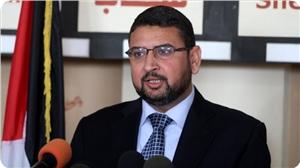




 Aletho News