Dr. Gill is a research associate at Barnard College and a former professor of conflict studies at The New School University. She is the founder and director of TRACK4, which runs negotiation simulations for diplomats, mediators, journalists, policy makers, students and community leaders.
A viable peace process does not require either party to embrace or even recognize the legitimacy of the other’s narrative. It requires that both have an informed and non-reductionist understanding of what this narrative consists of, come to terms with the fact that it cannot be wished away, and recognize that elements of it will make their way to the negotiating table and have to be addressed.
In his March 2013 Jerusalem speech, President Obama offered the Israelis an astonishing bargain: history for peace. In return for his personal endorsement of each detail of the standard Jewish/Zionist narrative, the Israelis were asked to acknowledge the Palestinians as human beings with some human rights. They were then called upon to reconsider the occupation and do the right thing so as to help renew the peace process.
Obama’s speech was in many ways a reflection of, and a response to, the prevailing view of the conflict in Israel today, a view supported by many of Israel’s friends in the United States of America. The events of the past few years have fuelled Israeli suspicions of the Arabs, and furthered their doubts over whether there is a partner for peace. One concomitant of this has been the reassertion of ideological and narrative-driven policies, including a demand that Israel be recognized as a Jewish state by its Palestinian interlocutors.
It appears the president hoped that by addressing and appeasing these fears, he might gain the trust of the Israelis and create a space within which a genuine peace process could be launched. However, rather than validate one side’s view of history — “the story of Israel,” as the President called it — he might have suggested that if the Israelis hope to achieve any part of their dream of peace and security, they need to accept that their enemies have their own story to tell: one that is not merely about human rights’ abuses in the West Bank, and one that is not going away anytime soon.
The purpose of such a presidential injunction would not have been to encourage the parties to get mired in debates about the past, or “recognize the others’ narrative.” The battle over history is raging more bitterly than ever and will never be settled at the negotiating table. But while it is neither necessary nor possible for parties to accept each other’s version of the causes of the conflict, it is necessary for all parties to have a minimal understanding of how their adversaries’ historical perspective influences their approach to the negotiations in the present: their willingness to come to the table, the kind of peace process they can trust and embrace, the conditions or preconditions they can or cannot accept, and, perhaps most importantly, the deals and trade-offs they can or cannot sell to their people. Without this understanding on the part of both the public and policy makers pushing for a renewed peace process, the president’s hopes, and Secretary Kerry’s tireless effort, will likely go the way of Camp David 2000.
IN THE BEGINNING THERE WAS THE NO
When it comes to the pro-Israel camp, the key issue that needs to be addressed is the blind spot regarding the pre-1948 origins of the Israel/Palestine conflict.
A remarkable number of Israel’s supporters from across the political spectrum share a common and unshakable article of faith: that the Israel/Palestine conflict was avoidable and unnecessary. If the Arabs of Palestine had accepted Zionism 130 years ago, there would never have been, and would not now be, any cause for bloodshed.
Arab rejectionism has thus served as the equivalent of a cosmological argument: “In the Beginning There Was the No.” The pro-Israel camp often traces the history of the conflict to 1947, when the Arabs said No to the UN partition plan, or to 1948, when the Arab countries said No by launching a war against the recently declared Jewish state. The underlying assumption is that the Arabs had no good reason to reject Zionism or the idea of Jewish self-determination in Palestine: rather, their rejection is interpreted as a consequence of their inherent anti-Semitism, natural tendency toward violence, or self-destructive intransigence. Recently this credo was succinctly articulated by Prime Minister Netanyahu: “The Palestinians’ lack of will to recognise the state of Israel as the national state of the Jewish people is the root of the conflict.”1
In one sense, Netanyahu is absolutely correct: the fact that the Palestinians have refused to recognize the moral right of the Jews to a state in Palestine is a source of conflict, even though the Palestinians may be ready to accept Israel’s de facto right to exist today. What is problematic about this view is that it mistakes the response for the cause. Palestinian rejection did not sprout Athena-like, fully formed from the head of Zeus, without reason or basis; and it is not the root cause of the conflict.
For over 70 years this credo has endured in the face of new thinking, new evidence and new circumstances. It has been sustained by a stunning lack of inquisitiveness about what caused the Original Arab No, and thus about the very nature of the conflict itself. It remains a mystery how otherwise critically-minded Jews and influential policymakers have repeated statements like Netanyahu’s for generations without asking why the Arabs refused to recognize the legitimacy of Zionism — engaging in a form of culpable ignorance that diminishes the quality of their arguments, weakens the credibility of their case, and creates a chasm between the public view of the conflict and the understanding needed in order to prepare the ground for a genuine peace process.
Admittedly, for loyal supporters of Israel, this journey into the origins of the origins — the period between the 1880s and late 1930 — is likely to be difficult. Even more than the thorny issue of the 1948 nakba and the refugee crisis, this early period poses elemental questions about the conflict that cannot be sidestepped via pre-prepared talking points on Palestinian rejectionism. These questions are not of merely historical interest; they expose the underlying patterns, mechanisms and impasses that define the conflict today, almost all of which were already in place by the late 1930s.
But while difficult, this kind of exploration into the core issues is unavoidable. Israel’s supporters can debate about the 1947 partition plan and the 1948 war ad nauseam, but without an understanding of the preceding 60 years they are barely talking about the conflict at all. By avoiding the early period they have denied themselves the knowledge and insight that would allow them to properly assess the positions of the Palestinians, effectively pursue their own people’s interests and recognize the opportunities for de-escalating the conflict if or when they arise. They have also ensured that the history and current state of the conflict will be increasingly articulated, and with greater persuasiveness, by Israel’s enemies.
In order to overcome these barriers and begin to build a space where genuine peacemaking might take place, the Jewish community and its allies must begin asking questions about the Original No: Why, in the period between the 1880s and 1948, did the Arabs of Palestine and the surrounding areas say No to Zionism? To what exactly did they say No? And how did they say No?
CONFRONTING THE ARAB NO
The Arabs of Palestine Said No to the Jewish Right of Return
What confusion would ensue all the world over if this principle on which the Jews base their “legitimate” claim were carried out in other parts of the world! What migrations of nations must follow! The Spaniards in Spain would have to make room for the Arabs and Moors who conquered and ruled their country for over 700 years…
— Palestine Arab Delegation, Observations on the High Commissioner’s Interim Report on
the Civil Administration of Palestine during the period 1st July 1920 – 30th June 1921
The Palestinian Arabs said No to the idea that in the 20th century a people who last lived in Palestine in large numbers over 2000 years ago could claim, on the basis of a religious text, rights to the land where the current inhabitants had been living for a millennium and a half.
They did not base their rejection on a denial of Jewish historical and religious ties to the Holy Land. Rather, they said No to the idea that highly secularized Jews arriving from Europe, who seemed to abjure religious life, manners and practices, could use the Bible to support a political project of a Jewish state in an already populated and settled land.
Nor did they deny the suffering of the Jews, or the pogroms and persecution they were experiencing in Western and Eastern Europe at the time. On the contrary, many of the most vocal critics of Zionism were extremely aware of Jewish suffering, as they were unsettled by the impact it was having on the British support for the project of the Jewish National Home. What they said no to was the idea that the Jews’ humanitarian plight granted them special political and national rights in Palestine, and that those Jewish rights should trump Arab rights. The Arabs said No to the idea that they should pay the price for longstanding Christian persecution of the Jews, and they expressed deep resentment at the hypocrisy of the Europeans, who were promoting a home for the Jews in Palestine as they closed their own doors to the victims of Christian/European anti-Semitism.
There is nothing shocking or strange about Arabs considering Zionist Jews coming from Europe an “alien implant” in Palestine, and resenting that.2 The logic of most national and proto-national movements — with Zionism hardly an exception — is that outsiders are a threat, and the definition of both “outsiders” and “threat” are influenced by the shifting needs and interests of each movement in its defining moments. In response to Zionism, the Arabs pointed out that the laws of territorial possession were accepted worldwide: had they not been, the Arabs could reconquer and reclaim Spain, a country they reigned over for longer and more recently than the Jews did Palestine. In the view of the Palestinian Arabs, regardless of whether Jews were genuinely attached to or had a history in Palestine, the appeal to the Bible was not strong enough to overturn the rules of a modern, secular world order.
The Arabs and Palestinians still today are taken to task for not having shown enough compassion for Jewish suffering and welcomed them to take refuge in Palestine. But while many Jews can make an intuitive connection between the predicament they faced between the turn of the century and the 1940s and their need for a state, there is no reason that for other parties compassion for Jewish suffering would naturally translate this into an acceptance of Zionism, either then or now. This is especially so in the case of the Arabs in the early years of the conflict, who knew that Zionism would negatively affect their lives in the future.
It is also difficult to sustain the view that opposition to Zionism in the early 20th century was by definition a form of anti-Semitism, given that the virtues of the movement were not always self-evident to the Jews themselves: not to Orthodox Jews, who considered it heretical and sacrilegious, arguing that a return to Eretz Israel could only be hastened by divine rather than human will; not to many Diaspora Jews, a good number of whom remained “non-Zionists” until the 1940s; not to Marxist Jews, who considered it to be a retrograde move away from internationalism; and not to the local Palestinian Jews, many of whom felt alienated from the incoming Ashkenazim from Europe, and initially pinned their hopes for communal well-being onto the Ottoman government. And while it is true that Hajj Amin al Husayni — the Mufti of Jerusalem — and some of his followers’ anti-Jewish rhetoric and support for the Axis powers before and during World War II are legitimate targets of criticism, this does not change the fact that the Palestinian National Movement itself was not fundamentally driven by anti-Semitism. It was driven by a series of responses to the concept, implementation and long-term implications of the Zionist movement for the lives and identities of Palestinian Arabs.
This is not to deny that there were Arab anti-Semites in the early period, or that there are many in the Arab world today: there are good reasons for Jews to fear that the line between anti-Zionism and anti-Semitism may be dangerously blurred. But it is in the Jews’ own interest to disentangle anti-Zionism and anti-Semitism, and find a way to address rather than circumvent legitimate critiques of Israel. Because so few have grappled with the primary reasons why the Arabs of Palestine opposed Zionism, they only have access to one interpretative framework, applicable to both past and present: the critique of Zionism has no reasonable basis but was then — and still is today — propelled primarily by anti-Semitism. This reductive formula does little to help supporters of Israel understand what truly motivates the Palestinians today, or determine how best to negotiate with them in pursuit of Israel’s interests.
The Palestinian Arabs Said No to Equating National Consciousness with Land Rights
There is not a single Arab who has not been hurt by the entry of Jews into Palestine: there is not a single Arab who does not see himself as part of the Arab race… In his eyes, Palestine is an independent unit.
— Moshe Shertok, Speech MAPAI Central Committee, June 9th 1936
Whether there was such a thing as a “Palestinian” is one of the most common yet irrelevant debates regarding the origins of the conflict. It does not matter if the Arabs living in Palestine in the late nineteenth and early twentieth centuries considered themselves to be a part of Palestine, southern Syria, a greater Arab federation, or Ottomans, Jerusalemites, members of a tribe or clan, or Muslims. Whether they were “a” people or just “people,” they lived in and had profound religious, historical, cultural and sentimental ties to a particular area of land known variously and for centuries as “Palestine” and the Holy Land. The Arabs said No then, and continue to say No today, to being represented as people who were accidentally living on Jewish land, rather than human beings — in their vast majority Arabic speaking and Muslim by faith — who inhabited Palestine and the surrounding areas long before the Zionists arrived.
The reluctance on the part of many Israel supporters to accept that a large majority of Arabs lived and thrived in Palestine before Zionism affects their whole approach to the conflict today. For example, Israeli offers to the Palestinians are often presented as painful but magnanimous concessions in recognition of the fact that there are currently (and rather inconveniently) some people who live nearby and whose needs must be attended to. Witness Prime Minster Netanyahu’s 2009 Bar Ilan speech, carefully crafted to imply that the Palestinian “population” “now” lives on the land, as though they somehow magically appeared recently. [emphasis added]
But, friends, we must state the whole truth here. The truth is that in the area of our homeland, in the heart of our Jewish Homeland, now lives a large population of Palestinians… These two facts — our link to the Land of Israel, and the Palestinian population who live here, have created deep disagreements within Israeli society. But the truth is that we have much more unity than disagreement.3
This view aligns well with the growing tendency on the Israeli side to argue for a pragmatic approach to peacemaking, one that eschews “harping on the past” — a view implied in the bargain that President Obama offered the Israelis: I accept that you can continue to deny that other people lived here in the past, if you take into account the feelings of those who live here in the present.” But a peace process where only one party has had their history acknowledged, and thus has the luxury of “letting go” of the past, is not likely to come to fruition; and demands or conditions wrapped in a package that reduces or denies the dignity of the party sitting at the other end of the table are not likely to bear fruit. Unless elements of the Palestinians’ narrative are present in public perceptions and at the negotiating table, they will have no reason to trust the premise of renewed talks, or risk making concessions. And if the Jewish community continues to insist on seeing all Palestinian assertions of their existence as a manifestation of anti-Semitism, they will be unable to find ways to articulate their needs in a manner that allows for compromise rather than demands submission.
They Said No to the Notion That Palestine Was Desolate and Empty
In our lovely country there exists an entire people who have held it for centuries and to whom it would never occur to leave…The time has come to dispel the misconception among Zionists that land in Palestine lies uncultivated for lack of working hands or the laziness of the local residents. There are no deserted fields.
— Yitzhak Epstein, “The Hidden Question,” 1907
The Palestinian Arabs rejected the concept that their land was uncultivated and uncared for, and that rights should be conferred on the Jews based on the latter’s superior technology agricultural methods. They said No to the idea that people do not love their land or have a special intimate connection with it because they do not cultivate it in the most modern ways. And they said No to the idea that newly-arrived Zionist Jews from Europe and elsewhere, for all their zeal and dedication, cared for the land more than the natives did.
Because of the power, persistence and harmful repercussions of the “desolate Palestine” refrain, the most disturbing (and utterly unnecessary) phrase of President Obama’s speech was his lauding the Israelis for making the “desert bloom.”
President Obama could have found many ways to express his appreciation for Israel’s many impressive achievements without recourse to that toxic phrase, laden with so many connotations. In conflict-speak it means that that the Arabs of Palestine did not exist in this wilderness when the Zionists began to arrive in the 1880s. Even if a small number of Arabs did exist, they lacked any real love for their land and thus did not deserve to keep it. And if either of these propositions were true, then the Jews deserved the land and should feel no remorse about taking it over then, or appropriating more of it now.
But most crucially, the desert-blooming imagery validates the notion that there is a moral link between means of cultivation and rights to ownership. In other words, the reason that the Israelis have a superior right to the land is that at the time they were, and still are today, more modern and technically advanced than the Palestinians.
This concept has for decades been uncritically embraced by a large number of otherwise liberal, socially and environmentally conscious Jews, people who in most other contexts would contest the idea that advanced technology imported from the West into a colonized land is naturally superior to local, indigenous means of cultivation; or that aggressive agricultural development is always positive as an end in itself. It is perfectly possible for the Israelis to be proud of their achievements while recognizing that these achievements are not relevant as a justification for Zionism from the point of view of those who previously lived in and were attached to this land. And it is long past time for U.S. policy makers to recognize that mindlessly repeating old tropes will only serve to widen the gap between parties, rather than build a foundation upon which a peace process can be launched.
They Said No to the Exchange of Political for Economic Rights
You say my house has been enriched by the strangers who have entered it. But it is my house, and I did not invite the strangers in, or ask them to enrich it, and I do not care how poor or bare it is if only I am master in it.
—1937 Royal Commission Report, paraphrasing the remarks of an Arab witness
The Palestinian Arabs said No to the idea that they should welcome Zionism because of the economic prosperity that the Jews were bringing to Palestine. They argued that economic benefits were not distributed equally among those residing in Palestine, and included policies that threatened the livelihood and undermined the rights of Arab peasants and workers. Even if benefits had been distributed more equally, as far as the Arabs were concerned economic prosperity would not have served as a compelling argument in favor of creating the Jewish National Home, or as the means to buy off their political rights.
It was for this reason also that Netanyahu’s 2009 vision of “Economic Peace” fell on deaf ears, as it was not matched with proposals that address Palestinians’ national and political aspirations. And the current U.S. attempt to pump money into the West Bank will be rebuffed if seen by Palestinians to be part of the Grand Bargain — your narrative for jobs, your political rights for economic prosperity. This bargain is likely to be seen as a re-packaged version of the original rationale for Zionism — that the project would be embraced by the Arabs because it would bring material prosperity to Palestine — which as far back as 1923 Vladimir Jabotinsky recognized as fallacious:
To think that the Arabs will voluntarily consent to the realization of Zionism in return for the cultural and economic benefits we can bestow on them is infantile. This childish fantasy of our “Arabo-philes” comes from some kind of contempt for the Arab people, of some kind of unfounded view of this race as a rabble ready to be bribed in order to sell out their homeland for a railroad network.4
Economic well-being in the West Bank and Gaza is of course desirable, but only widespread ignorance of the Original No can lead Israelis and third parties to repeat the same mistake time and again expecting different results. It would be more productive to learn why the Grand Bargain did not work in the first place, what it meant to the other side, why it is unlikely to work today and which alternative frameworks can be proposed that address the political and national aspirations of all sides, and search for realistic options for peacemaking.
The Arabs Said No to the Jewish Settlement Enterprise
Land is the most necessary thing for our establishing roots in Palestine. Since there are hardly any more arable unsettled lands in Palestine, we are bound in each case of the purchase of land and its settlements to remove the peasants who cultivated the land so far, both owners of the land and tenants.5
—Arthur Ruppin, 1930
Would the fellahin (Arab peasantry) have embraced Zionism because of the economic benefits the Jews were bringing to Palestine had they not been incited to the contrary by the educated and political classes? One cannot know this for sure, but this often-repeated claim is by and large another avoidance-argument that fails to pass the test of common sense. The fellahin might not have articulated their rejection of Zionism as did the elites, or expressed a clear sense of national consciousness. But they had many good reasons to say No to Zionist policy once it dispossessed tenant farmers of lands they had been cultivating, or after the institution of “Hebrew Labor” policies that refused jobs to local Arabs in difficult economic times.
Long before illegal outposts or settlement expansion in the West Bank, the Arabs said No to the idea that land in Palestine should be transferred from Arabs to Jews, whether by force, partition schemes, or sales by local or absentee landlords. The Arabs’ own complicity in land sales raises important questions that they have yet to address fully. But Arab land sales were only one part of a broader process whereby land and population transfers were implemented or supported by the Zionists and the British. Arabs who recognized the historical and religious links of Jews to Palestine nevertheless said No to the “Judaization” of a land that had been overwhelmingly Arab and Muslim for a millennium and a half.
Today, although so many liberal (and even not-so-liberal) Jews oppose settlements and settlement expansion, few appear to grasp the reasons behind the depth of international rage against settlements. One reason might be that they perceive settlement activities as an unfortunate wrong turn taken after 1967, one that can be remedied through peace talks. But for the Palestinians, modern day settlements represent tendencies that they argue were central to Zionism from its inception — in their experience, Zionism was and is expansionist, encroaching on Palestinian soil against the will of the local population and in contradiction with the partition or two-state compromises that Zionist and Israeli leaders publicly embraced.
Without knowing how some of the early mechanisms of Zionism manifested themselves on the ground, it is difficult for Israel’s supporters to understand the extent of visceral opposition to settlements. But while they don’t have to buy into the vision put forward by anti-Zionists — that Zionist immigration to and settlement in Palestine was unjustifiable in any form — they must understand why from the Palestinian perspective settlement expansion was always considered to be the driving force of the Zionist movement, and experienced as a form of aggression.
They Said No to the Reneging on Promises, and They Said No to the Incongruity Enshrined in the 1917 Balfour Declaration
There is not one nation in the world that would accept voluntarily and of its own desire that its position should be changed in a manner which will have an effect on its rights and prejudice its interests … We as a nation are human beings with our own culture and civilization and we feel as any other nation would feel. It will have to be imposed on us by force.
— Awni Abd al-Hadi, Testimony to Royal Peel Commission, 1937
After World War I, the Arabs of Palestine argued that they had been offered independence by the British as a reward for rising up against the Turks by dint of the McMahon–Husayn correspondence of 1915-1916 — a position contested by many Zionists then and now.
In the Arab view, these promises of independence were consistent with the spirit of their time, in particular President Woodrow Wilson’s principle of self-determination as later enshrined by the League of Nations. They said No to the idea that, in the wake of World War I, independence and self-determination would be applied around the world and to their neighboring Arab brethren, but that they would be uniquely denied in Palestine because of a conflicting British commitment to a Homeland for the Jews as articulated in the 1917 Balfour Declaration. And they said No to the idea that the fate of Palestine would or could be decided without the majority people who lived in the area being consulted.
Although the Balfour Declaration is seen by many Jews as the magna carta of the Zionist movement, few have actually read it carefully today or reflected on how it would have been perceived by the people who lived on the very land that the British were pledging to the Jews. For the Arabs, it was not only this pledge that was problematic: in 67 short words, the document set the terms by which Jews and Arabs were identified and perceived by third parties and each other, in ways that have remained seared in the public consciousness to this day. The Declaration identified the approximately 58,728 Jews living in Palestine at the time as a “people” and recognized their rights to a National Home, while granting only civil and religious (but not political or national) rights to the majority, the approximately 688,800 Arabs. The latter were referred to almost incidentally in the Declaration, as the “non-Jewish communities” in Palestine. Moreover, in the text of the Mandate itself, which refers to the Jewish people, the Jewish population in Palestine, the Jewish national home and Jewish institutions, the word “Arab” is avoided, replaced with a variety of terms such as “inhabitants of Palestine,” “other sections of the population,” “natives” and “respective communities.”6
The conviction, held by so many of Israel’s supporters, that the Arabs always resisted compromise, must be seen in the light of the terms set in this document and others that followed, and questions about what compromise was offered, by whom, and under which conditions. One of the reasons that the Arabs said No to most British and Zionist “compromise” proposals was that these included the demand that the they should accept the terms of the Balfour Declaration (and the Mandate in which they were incorporated) as a precondition, thus acceding to the idea that their land would be bequeathed to another people, and to the view of themselves as people defined by their negative status as “non-Jews” rather than their positive status as Arabs.
This interpretation of the past is not intended to suggest that the Arab response was determined — that they could under no circumstances have taken a different approach, or that there were not some individuals who, at various times, considered arrangements based on the terms that had been set. But if there is any serious revisionism to be done on this issue, it will be the business of the Palestinians in due course. What it does mean is that from the perspective of the Arabs compromise never appeared to be what it was for the Zionists then, or in the form it has been portrayed in the standard Jewish version of history since the founding of Israel; and there were always multiple and comprehensible reasons for the Palestinian Arabs to reject the underlying preconditions that defined the compromises that had been put forward.
A similar situation is replicated today, where the Palestinians are being asked not merely to accept Israel’s “right to exist in peace and security” — something they have already consented to — but to validate the Jewish character of the land (“Israel as the homeland of the Jewish people”), either as precondition for any renewed negotiations or as a condition for peace. One does not have to deny that the Palestinian approach to peacemaking can be, and often is, uncompromising and obstructive also to recognize that this demand will be perceived as a modern day reiteration of the British approach during the mandate: in order to be considered a partner for peace, the Palestinians must first abdicate their view of history, and also embrace the narrative of their enemies.
Whether intentional or not, this message was embedded in President Obama’s Jerusalem speech. But if his man on the ground, John Kerry, adopts this approach, he will be repeating the failed pattern whereby Palestinians are asked to convert to Zionism before being considered as peace partners — something that is by definition impossible and thus counterproductive. Secretary Kerry would do better to shape a renewed process around proposals that can be perceived as compromises by both parties.
Finally, the Palestinian Arabs Said No to the “Generous Offers” of Partition, Made by the Royal Palestine (Peel) Commission in 1937 and the UN in 1947.
This opposition [to partition] is based upon the unwavering conviction of unshakeable rights and a conviction of the injustice of forcing a long-settled population to accept immigrants without its consent being asked and against its known and expressed will; the injustice of turning a majority into a minority in its own country; the injustice of withholding self-government until the Zionists are in the majority and able to profit by it.
— Albert Hourani, Statement to the Anglo-American Commission of Inquiry, 1946
The most entrenched orthodoxy in the pro-Israel camp is that the Arabs said No to two perfectly legitimate partition plans — plans that could have secured a long lasting peace between two states living side by side. The origins of the conflict are often traced to these Nos, which are interpreted as signs of Arab intransigence, self-destruction, and disregard for international law.
This analysis is in great part based on an ignorance of what the partition plans looked like, an assumption that “compromise” solutions are always fair, desirable, and sustainable, and a retrospective analysis based on the view that the Arabs rejected much more land than they are bargaining for today.
But the very idea of truncating the land was anathema to the majority of Palestinian Arabs, the partition proposals were devised without their consent, and both had been drawn with little concern for the incongruities in land distribution and demographics. In 1937, the Jews owned no more than 6 percent of the land, but were offered 20 percent of Palestine; and, in 1947, Jews owned approximately 7 percent of the land and were offered 55 percent of the country. In 1937, the new Jewish state was to contain 396,000 Jews and 225,000 Arabs, with a proposition that those Arabs would be transferred, forcibly if necessary, to the new Arab state. In 1947, almost half of the Arab population was to come under Jewish sovereignty, so that 400,000 Palestinian Arabs would be forced to live in a Jewish state with a Jewish population of just over 500,000. And all this was to take place in the absence of any trusted mechanism of implementation, and with some prominent Zionists — who were well organized and had a superior military capacity — verbalizing their intention to move beyond the borders of partition in the future.
It is understandably difficult for anyone who considers Israel to be the homeland of the Jewish people to grasp the Arab rejection of the principle of partition. Given the urgent situation the Jews were facing at the time, their historical and religious ties to the land, the genuine passion with which they pursued their mission, and the relatively small amount of territory that the various partition plans offered them, it appears unreasonable at best, malicious at worst, for the Arabs to have refused the very concept of sharing the land.
However, it is quite incomprehensible that despite the importance attributed to the partition plans in justifying Israel’s perspective, an examination of both plans is so often neglected in favor of a simple reduction of the Arab response to an irrational No. One does not have to accept the Arab view (that the Zionists did not have the right to self-determination in Palestine) in order to recognize why they believed this at the time, and why the problem cannot be reduced simply to one of cartography — a map that in retrospect and from a purely visual point of view looks like a good deal for the Palestinians. The Israeli party line on this issue is repeated time and again by advocates, diplomats, academics, and policy makers — people who have an influence on how a peace process would be launched and run, and who are directly responsible for helping create parameters for a peace process today.7
Consider a statement from long-time presidential adviser to the Middle East, Dennis Ross, a person who still today is one of the key voices influencing the president’s approach to the conflict. In critiquing some revisionist histories, Ross offers the following understanding of the roots of the conflict:
Drawing from some of the revisionist histories on the origins of the Palestinian refugee problem, (Jerome) Slater basically ascribed full responsibility to Israel for the root of the conflict. That the Arabs and Palestinians simply rejected all possible compromises prior to the establishment of the state of Israel, including the Peel Commission Report of 1937, the Morrison-Grady proposal in 1946, and the UN partition plan in 1947 is basically immaterial to Slater.8
In response to critiques of Israel, Ross beats a swift retreat into the unexamined safety zone: Israelis might have made mistakes, but before these mistakes, there was The No. The idea is so universally absorbed and accepted by his audience that in order to defend this view Ross does not even feel the need offer any explanation beyond the mere mention that the Arabs “simply” said No to “all possible compromises.” One wonders if he knows which compromises were offered, what they included or why they were rejected. As one of the policy makers most devoted to the modern version of partition — the two-state solution — Ross and other influential U.S. advisers might learn more about why the Arabs rejected the plans then, and consider more carefully what conditions might be necessary for them to accept partition today.
HOW THEY SAID NO
Neither Jewish ethics nor Jewish tradition can disqualify terrorism as a means of combat. We are very far from having any moral qualms as far as our national war goes. We have before us the command of the Torah, whose morality surpasses that of any other body of laws in the world: “Ye shall blot them out to the last man.”…But first and foremost, terrorism is for us a part of the political battle being conducted under the present circumstances, and it has a great part to play: speaking in a clear voice to the whole world, as well as to our wretched brethren outside this land, it proclaims our war against the occupier.9
— Yitzak Shamir, 1943
While the first pillar of the pro-Israel view is that the Arab No was the cause of the conflict, the second pillar is that this No was expressed from the beginning through acts of unprovoked and unjustified violence. This is a crucial component sustaining the narrative, for all Israeli acts of violence are excused with recourse to Arab violence as the first action — “we would never have had to do this had they not started it, had we not been defending ourselves.”
That there was periodic brutal Arab violence against Jews in the early decades of the conflict is without doubt. Most took the form of spontaneous resistance to, and attacks on, Jewish settlers. Other more organized riots and assaults — especially the Hebron massacre in 1929 — randomly and ferociously targeted the old Jewish and non-Zionist community, reinforcing Jews’ fear that Arabs were new incarnations of previous oppressors, and shattering their belief that any non-violent solution to the conflict in Palestine was possible.
The Jews’ long experience of brutal and unprovoked persecution had taught them that these kinds of “causeless” acts of aggression against them were not only likely but possibly ubiquitous. This lesson was only reinforced by the betrayal of European nationalism, which rebranded Jews as outsiders at the very moment they believed their status as equal citizens would be validated. Thus, it is not surprising that many Jews in the 1920s and the 1930s, haunted by their experience of violent pogroms in Eastern Europe and escalating persecution in Western Europe, did not feel the need to interpret the behavior of the Arabs in Palestine, perceiving their words and actions to be an extension of the same type of causeless anti-Semitism: they hate us for who we are, not what we do.
But it would be false to claim that the Arabs said No through violent action without cause, in lieu of arguments and persuasion, or that violence was their predominant form of expression. The early Arab response to the Zionist challenge was largely characterized by a futile and repetitive attempt to appeal to Western conscience, law, and values. Between the late 1890s and the mid-1930s, this response was expressed in words rather than deeds: delegations were sent to Britain and Europe and hundreds of memoranda, petitions, articles and speeches attempted to explain the Arab case to the British, Americans and Europeans. Not unlike today, the Arabs believed that if the international powers truly fathomed what was happening on the ground, they would put a stop to it. These documents are often shocking to those who peruse them, as accustomed as they are to their inherited views that the Palestinian Arabs had no case to make, never made it to anyone, and were simply mindlessly and mechanically rejecting anything Jewish in their path.
Whether violence can be justified as a means to achieve a national struggle is a legitimate topic of debate, and one can condemn the Arabs’ response to Zionism then and to Israel after 1948 on many grounds. But understanding the multiplicity of Arab reactions to Zionism in the pre-1947/48 period should not be interpreted — and thus dismissed — simply as an attempt to justify whatever violence they did wage. Without an understanding of the context of both Arab and Jewish violence in Mandatory Palestine, or the other nonviolent means the Palestinian Arabs pursued in an attempt to achieve their aims, there is little in the way of a fruitful discussion that can be had about the origin of the conflict or its possible solution.
Nor is it helpful to place a universal ban on explaining what lies behind Palestinian violence today. Neither the Zionists in the early period, nor Israelis or Jews today, deny violence as a legitimate tool in the service of a national movement. They have used and glorified violence when it has suited their purposes, as in the early period when Jabotinsky’s Betar youth drew inspiration from quasi-fascist tropes of extreme nationalism about the purifying and liberating role of violence; or in the 1940s when terrorism against the British was considered a legitimate means to attain their goal of national self-determination. A puritanical approach to any violence that comes from “the other side” cannot substitute for real engagement with the reasons they pursue violence, the nature of their goals or demands, and a sober analysis of which of these are necessary to address if peace and security is the desired end.
IN THE BEGINNING THERE WAS… “NO SOLUTION!”
Everybody sees a difficulty in the question of relations between Arabs and Jews. But not everybody sees that there is no solution to this question. No solution! There is a gulf, and nothing can fill that gulf … I do not know what Arab will agree that Palestine should belong to the Jews — even if the Jews learn Arabic … And we must recognize this situation. If we do not acknowledge this and try to come up with “remedies,” then we risk demoralization … We, as a nation, want this country to be ours; the Arabs, as a nation, want this country to be theirs. The decision has been referred to the Peace Conference.
— Ben Gurion, Speech to Vaad Zmani, June 1919
What is missing in the logic of the pro-Israel view of the Palestinian No is the disturbing prospect, articulated by Zionist luminaries such as Vladimir Jabotinsky and David Ben Gurion in the 1920s, that a nonviolent or satisfactory solution to the Arab-Jewish confrontation in Palestine might not have been possible.
This poignant and chillingly lucid appraisal was proposed by many Jews and Arabs in the early years of the conflict and has been acknowledged by many more since, but it is still largely absent from the current mainstream debates about the conflict or peacemaking. And yet accepting the Israel/Palestine conflict as an elemental clash grounded in overlapping and irreconcilable aspirations, rather than a chimera that could have been avoided had one party acceded to the wishes of the other, is necessary for understanding both the limitations of and prospects for peacemaking today. For if the Zionists perceived Jewish self-determination as a natural response to their predicament, the implementation of this mission in Palestine, a land where an Arab majority lived, was almost certain to provoke hostility from the native population.
Given the urgency of their situation, it is understandable that the Jews were not concerned with the response of the Palestinian Arabs to their project. After a tragically failed attempt to identify spiritually, emotionally or intellectually with the cultures and nations within which they resided, the Jews learned the hard way that the modern world was increasingly defining self-determination in exclusionist, not liberal, terms. The pogroms and persecution of the late nineteenth and early twentieth centuries did even more to shape the tenor and nature of the Zionist movement than the brutality of the Holocaust; it was that predicament which gave birth to what might be called “The Original Never Again” — the determination on the part of the Jews never again to be supplicants, dependent on the kindness of strangers, or feeble bystanders to their own persecution, waiting pitifully for the world to evolve beyond prejudice. Influenced by the character and tenor of nationalism as it evolved in Europe, where blood and soil were the hallmarks of legitimate belonging, the Zionists had concluded that they could only overcome their outsider status by settling in Palestine — a land where their “insider” status could be unearthed, and their physical and spiritual links with the past revealed.
But while Zionism was more multidimensional than the reductive formulas provided by today’s anti-Zionists, it is neither surprising nor strange that the Arabs in the early part of the twentieth century would reject the reasoning and rationale behind Jewish nationalism. They were engaged in their own pursuit of national self-determination, inspired by Woodrow Wilson’s proclamations, their own cultural, linguistic and religious revival, and the trends toward territorial independence taking hold in neighboring countries. Despite the fact that the Arab response is incessantly represented as aberrant, it is unlikely that any people anywhere would have said Yes to the prospect of becoming a minority in their own home, or to their land being offered to those they considered foreigners, even if they recognized that the latter had a historical presence and religious ties to the area, or that they faced mortal danger in their countries of residence. It is even more unlikely that any people would say Yes to the manner in which the policy of the Jewish national home was implemented — without their consent, enforced by foreign powers, and in contradiction to what they believe they deserved and were promised.
Finally, although there is controversy over the extent to which the leaders of the Palestinian national movement represented the views of the masses, or whether the “opposition” parties considered taking another course, even if a minority of Arabs was ready to accept some form of Jewish national rights in Palestine, this should not be reason to impugn the majority Arab feeling that the creation of a Jewish state in Palestine was unjust and unacceptable. Jews should resist the temptation to parade Arab “super-moderates” in triumph as vindication of their cause; the Arabs will not accept this any more than Jews accept Palestinians justifying their own positions by appealing to the views of a minority of Israeli or Jewish anti-Zionists.
A POLICY STRIPPED OF ITS RATIONALE
Politically speaking it is a national movement…The Arab must not and cannot be a Zionist. He could never wish the Jews to become a majority. This is the true antagonism between us and the Arabs. We both want to be the majority.
— David Ben-Gurion, after the 1929 riots in Palestine
The appraisal of the early years of the conflict, advanced above, clashes fundamentally with the traditional pro-Israel view, which relies on the belief that the Arab opposition to Zionism was both immoral and unnecessary, and that the Jews had an absolute and incontestable right to create a Jewish state in Palestine: in other words, that Zionism was blameless in the creation of the Palestine problem and the Palestinians brought their nakba upon themselves.
To challenge this view is not to condemn the entire Zionist project as inherently sinful, but to recognize that it will always be seen as such from the Arab side, because from their perspective, Jewish Israel could only have come about at the expense of Arab Palestine. This common-sense view was the driving force behind Vladimir Jabotinsky’s rationale for the Iron Wall — a position grounded in the avowal that the Jews aimed to appropriate the land that the Arabs lived on, loved and believed was theirs. Jabotinsky maintained that it was only natural that the Arabs would resist Zionism, for “any native people — it is all the same whether they are civilized or savage — views their country as their national home, of which they will be always the complete masters.”10
Today, those who would be Jabotinsky’s heirs appropriate the Iron Wall as implicit policy, while abjuring Jabotinsky’s own rationale for that policy: his belief that Palestine was not an empty desert but that there were native inhabitants there who were deeply attached to their land, and therefore it was both reasonable and inevitable that they would resist Zionism, and resist violently. In contrast, today’s revisionists rally support for an Iron Wall policy while burying Jabotinsky’s interpretation under a now familiar if still peculiar specter: a people that did not exist on a land they never had and whose loss they resisted for no particular reason.
Despite its notable incoherence, this kind of reasoning still drives the standard pro-Israeli view of the conflict. The result is that those who wish to show their support for Israel have no tools to formulate their own response to Palestinian grievances or demands, or to properly interpret the growing opposition to Israel on the international scene. Thus, they risk marching blindly down a path that only aggravates their own dilemma and puts Israel itself in further jeopardy.
BREACHING THE BLOCKADE
There can be no settlement, no final settlement, until the Zionists realize that they can never hope to obtain in London or Washington what is denied them in Jerusalem.
— Albert Hourani, Testimony to Anglo-American Committee, 1946
The paradox of any potential peacemaking between Israelis and Palestinians is that neither side is likely to be satisfied with the possibility of attaining the tangible dividends of peace, even in the unlikely event that these were attainable. Each side continues to demand ideological conversion from the other, despite the fact that neither can recognize (in the sense of validate or embrace) the other’s narrative without by definition repudiating its own. This is not only the case for the Palestinians, who are being asked to deny their history and experience for the sake of being validated as partners for peace. The Israelis too cannot and will not embrace the anti-Israel camp’s notion that their national movement was born in sin. And notwithstanding the power of the United States of America or President Obama’s recent pronouncements in Jerusalem, no third party can, or has the right to, issue a verdict on history. But while neither side should be asked to recognize the legitimacy of their adversary’s view of the conflict, they will have to find a way to accept that this view cannot simply be wished away, and that it will manifest itself in various ways at the negotiating table and in any peace deal.
Thus, although supporters of Israel need not embrace the Palestinian view of the causes of the conflict, they should recognize that the Arab’s rejection of Zionism was not irrational and cannot be reduced to anti-Semitism: and they need to move beyond the long-obsolete mantras about the origins of the conflict that prevent them from identifying genuine points of impasse or making the best of opportunities. This does not mean Israel is the sole responsible party — Israelis are justified in questioning whether the Palestinians are able or willing to fulfill their own side of a negotiated bargain, prepare their public for a compromised settlement or recognize that the Jewish narrative cannot be eradicated by an act of will. But the Jewish community should not hide its own rejectionism behind the Palestinians’ No, or behind rabid circular debates that all slam into the STOP sign of 1947.
For while many Palestinians have (in various agreements and public commitments) been saying Yes to Israel’s de facto existence since 1988, they will continue to say No to Zionism itself. Condoning it would require Palestinians swallow whole the major tenets of the Jewish “narrative” and sign on the dotted line affirming that the creation of a Jewish state on land they considered as their own was a legitimate enterprise; that their own rejection of that enterprise was irrational or morally wrong; and that the Arab’s 1400-year history in Palestine should be seen as a brief and inconsequential interregnum between two more important eras of Jewish sovereignty.
This will never happen. The sooner the pro-Israel camp accepts this and stops trying to change the unchangeable, the sooner they can determine what steps might be taken in the interests of their own peace and security. Schoolyard choruses — “they started it” and “they are worse than us” — cannot serve as an interpretive framework for a 130-year-old conflict, or form the basis of national policy. The Jewish community must breach the blockade that currently stands between moribund talking points and the actual origins of the conflict. An encounter with the Original No might release them from their dependence on the interpretations provided by the salesmen of the Jewish world, who for decades have been pitching an obsolete product to hapless customers in search of certainty — the very opposite of what is required in order to “prepare the public for peace.” And it might provide supporters of Israel with the tools they need to construct their own interpretation of what took place In The Beginning, and formulate their own vision of what, if anything, can be done to address the fallout today.
1 “Netanyahu: Root of Palestinian Conflict Is Not Territory,” Daily Monitor, May 2, 2013. http://www.monitor.co.ug/News/World/Netanyahu–Root-of-Palestinian-conflict-is-not-territory/-/688340/1799320/-/itkl53/-/index.html.
2 Benny Morris, “Israel under Siege,” Daily Beast, July 31, 2012, http://www.thedailybeast.com/articles/2012/07/31/israel-under-siege.html.
3 ‘Full text of Netanyahu’s foreign policy speech at Bar-Ilan’, Haaretz, June 14, 2009, http://www.haaretz.com/news/full-text-of-netanyahu-s-foreign-policy-speech-at-bar-ilan-1.277922. (emphasis added).
4 Vladimir Jabotinsky, ‘The Iron Wall: We and the Arabs,” http://www.marxists.de/middleast/ironwall/ironwall.htm.
5 Rashid Khalidi, Palestinian Identity: The Construction of Modern National Consciousness (New York, 1997), 102.
6 In Article 22, the word “Arabic” appears in the context of a clause relating to the official languages of Palestine.
7 See, for example, Hillary Clinton’s 2012 statement: “The Palestinians could have had a state as old as I am if they had made the right decision in 1947.” http://www.jewishpress.com/indepth/analysis/rubin-reports/driving-in-neutral-hillary-clinton-explains-the-israel-palestinian-conflict/2012/12/05/
8 Dennis Ross and David Makovsky, Myths, Illusions and Peace: Finding a New Direction for America in the Middle East (New York, 2009), 116.
9 Ian S. Lustik, “Terrorism in the Arab-Israeli Conflict: Targets and Audiences,” ed. Martha Crenshaw in Terrorism in Context (Pennsylvania, 1995), 527.
10 Vladimir Jabotinsky, op. cit.
August 4, 2013
Posted by aletho |
Ethnic Cleansing, Racism, Zionism, Illegal Occupation, Timeless or most popular | Israel, Middle East Policy Council, Palestine, Zionism |
Leave a comment
 The non-governmental programme ‘Somos Defensores’ published a half-yearly report on Sunday showing a 27% increase in killings of human rights defenders and social leaders in Colombia.
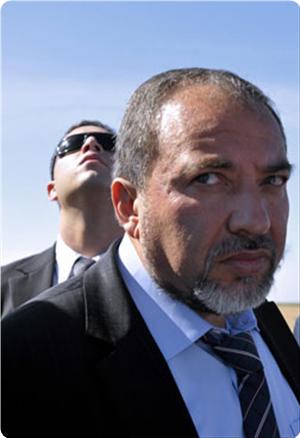 NAZARETH — Avigdor Lieberman, the former Israeli foreign minister, ruled out the possibility of reaching a political settlement with the Palestinians, affirming that the negotiations would be confined to limited security and economic agreements.
 Aletho News
 Aletho News