Yes, Syria and Hezbollah Will Hit Israel if US Strikes
By Sharmine Narwani | Al-Akhbar | 2013-09-06
Informed insiders have confirmed that Syria and Hezbollah plan to retaliate against Israel in the event of an American-led military attack on Syria. Says one: “if even one US missile hits Syria, we will take this battle to Israel.”
An official who spoke to me on the condition that neither his name or affiliation is published, says the decision to retaliate against Israel “has been taken at the highest levels within the Syrian state and Hezbollah.”
Why attack Israel after a US strike?
“Israel has been itching for a fight since their 2006 defeat by Hezbollah,” explains an observer close to the Lebanese resistance group. “They have led this campaign to draw the US into a confrontation with Syria because they are worried about being left alone in the region to face Iran. This has become an existential issue for them and they are now ‘leading’ from behind America’s skirts.”
The “Resistance Axis” which consists of Iran, Syria, Hezbollah and a smattering of other groups, has long viewed attacks on one of their members as an effort to target them all.
And Israeli aggression against this axis reached a new high in 2013, with missile strikes and airstrikes unseen for many years in the Levant.
Israel has reportedly conducted at least three separate, high profile missile strikes against Syria this year, effectively ending a 40-year ceasefire between the neighboring states. The last overt violation of this uneasy truce was in 2007 when the Jewish state destroyed an alleged nuclear site inside Syria.
Then two weeks ago, Israel launched its first airstrike in Lebanon since the 2006 war, bombing a Popular Front for the Liberation of Palestine–General Command (PFLP-GC) target in an entirely unprovoked attack. Earlier, four rockets had been launched into Israel from Lebanese territory, but an unrelated Al Qaeda-linked group took credit for that incident.
When asked whether Syrian allies Russia and Iran would participate in retaliatory strikes against Israel or other targets, the official indicated that both countries would back these efforts, but provided no information on whether this support would include direct military engagement.
The Russians have stated on several occasions that they will not participate in a military confrontation over Syrian strikes. Iran has not offered up any specifics, but various statements from key officials appear to confirm that strikes against Syria will result in a larger regional battle.
On Tuesday during an official visit to Lebanon, Iranian parliamentarian and Chairman of the (Majlis) Committee for National Security and Foreign Policy Alaeddin Boroujerdi told reporters: “The first party that will be most affected by an aggression on Syria is the Zionist entity.”
His comments follow a steady stream of warnings by senior Iranian officials, which have escalated in tenor as western threats to attack Syria have intensified.
“The US imagination about limited military intervention in Syria is merely an illusion, as reactions will be coming from beyond Syria’s borders,” said the Commander of the Islamic Revolution Guards Corps Major General Mohammad Ali Jafari last Saturday.
Even Iran’s Supreme Leader Ayatollah Ali Khamenei has stepped into the fray, warning the US and its allies: “starting this fire will be like a spark in a large store of gunpowder, with unclear and unspecified outcomes and consequences”.
Concurrent with these warnings, both Iran and Russia have been urging the West to avoid further confrontation and return to the negotiating table to resolve Syria’s 29-month conflict. But instead, western officials and diplomats in the Mideast have spent the past few weeks hitting up their regional sources for information on how Syria’s allies will react to a strike.
An unusual visit to Tehran by UN Under-Secretary-General for Political Affairs Jeffrey Feltman (a former senior US State Department official) was one such “feeler.”
According to several media outlets, the Iranians had a singular response to Feltman’s efforts to gauge their reaction to a US strike: if you are serious about resolving the Syrian crisis, you must first go to Damascus, and follow that by launching negotiations in Geneva.
Gunning for a fight
While Israel plays heavily in the background, by turns provoking and encouraging western military intervention in Syria, it publically denies any role in this business.
Just this week, Israeli President Shimon Peres attempted to distance the Jewish state from events in Syria by insisting: “It is not for Israel to decide on Syria, we are in a unique position, for varying reasons there is a consensus against Israeli involvement. We did not create the Syrian situation.”
He’s right about one thing. Any visible Israeli military intervention in Syria will likely raise the collective ire of Arabs throughout the region. But Peres is being disingenuous in suggesting that Israel hasn’t played a pivotal role in dragging the region to the brink of a dangerous confrontation.
In fact, since its establishment as a state, Israel has possibly never been more motivated to force a military confrontation in the Mideast:
The Arab uprisings, a shift in the global balance of power, increased isolation and the waning influence of Israel’s superpower US ally have all served to remind Israel that it stands increasingly alone in the Mideast in confronting its longtime adversaries – Iran, Hezbollah, Syria and various Palestinian resistance groups.
Before a US exit from the region becomes patently clear to one and all, Israel needs to disarm its foes – and it needs the Americans to do that. For years, the Israeli establishment has regularly threatened military strikes against Iran, in most part attempting to inextricably embroil Washington in this military venture.
Forcing ‘red line’ narratives into western political discourse – whether it be the use of chemical weapons in Syria or a civilian nuclear program in Iran – has become a clever way to commit allies to an Israeli military agenda.
When US President Barack Obama last week appeared to suddenly revise his plans to launch a strike on Syria by deferring the decision to Congress, Israel went into overdrive:
Two Israeli missiles were launched off the Syrian coast in the Mediterranean Sea to raise temperatures again. Whether this was meant to be veiled threat, a provocation, or an attempt to pin the deed on Syrians is unclear. What is certain is this: Russian early radar systems caught the activity and publicized it quickly to ward off misunderstandings that might trigger counterstrikes.
This quick reaction forced Israel – under US cover – to acknowledge it had participated in unannounced ballistic missile tests. The Iranians reacted very skeptically. Chief of Staff of the Iranian Armed Forces General Hassan Firouzabadi said the missiles were “a provocative incident” conveniently executed as western nations withdrew from plans to attack Syria, and called Israel “the region’s warmonger.” He further charged: “If the Russians had not traced the missiles and their origin, a Zionist liar would have alleged that they belonged to Syria in a bid to pave the way for breaking out a war in the region.
On an entirely different front, Israel has been amassing its considerable army of US supporters and lobbyists to ensure a compliant Congressional vote on strikes against Syria.
All its heavy hitters have now stepped up to push US lawmakers into backing military intervention, even though polls continue to show the majority of Americans rejecting strikes.
The Israeli lobbying effort has been particularly critical to ensure there is bipartisan consensus and that Obama’s Republican opponents join the bandwagon. To ensure this, the scope of the “surgical strikes” had to be expanded for GOP members opposed to a cursory punitive strike against Syrian government interests.
Key Republicans have since piled on, and already there are soundings of ‘mission creep.’ Obama told lawmakers on Tuesday that his plan “also fits into a broader strategy that can bring about over time the kind of strengthening of the opposition and the diplomatic, economic and political pressure required – so that ultimately we have a transition that can bring peace and stability, not only to Syria but to the region.”
This suddenly sounds remarkably like President George W. Bush’s plans to remake the Middle East. And it is everything Syria and its allies have both feared and suspected from the start.
Existential for you, existential for me
If ever there was a real ‘red line’ in the region, this is it. Any “limited” or “broad” military intervention in Syria is simply unacceptable to Syria, Iran, Russia, Hezbollah, China and a whole host of other nations that want to turn the page on US hegemonic aspirations in the region and beyond.
Washington has miscalculated in thinking that an attack in any shape or form would be palatable to its quite incredulous adversaries. They are all intimately familiar with the slippery slope of American interventionism and its myriad unintended consequences.
Israel, in particular, appears to be victim to a false sense of security. Analysts and commentators there seem to think that the lack of a Syrian military response to recent Israeli missile strikes is a trend likely to continue. Or that Hezbollah and Iran would have no ‘grounds’ to climb aboard a counterattack if Syria were attacked.
But the fact is that, to date, no member of the Resistance Axis has faced a collective western-Israeli-GCC effort to strike a blow at their core. This promised US-plus-allies strike against Syria makes their calculation an easy one: there is nowhere to go but headfirst into the fracas.
As Israeli warplanes pounded Lebanon during the 2006 war, then-US Secretary of State Condaleeza Rice got one thing right. Refusing to call for a ceasefire, Rice explained that battle was sometimes necessary to break free of the status quo and emerge with a new regional order. The carnage, in short, was simply “the birth pangs of a New Middle East” – something to endure in order to reach a desired outcome.
But in 2006, conditions were not yet ripe for an all-out confrontation on multiple fronts. Today’s confrontation, however, has all the ingredients to fundamentally shift the region in a clear new direction, depending on which side emerges victorious.
What Rice did not anticipate seven years ago was that a few thousand Hezbollah fighters could shake the region beyond Lebanon’s small borders in a mere 33 days – simply by emerging from battle with Israel, leadership and capabilities intact.
The US has never predicted outcomes successfully in the Middle East and is unlikely to do so this time given that its strategic and military objectives seem even more muddled than usual. What we do know is that Hezbollah Secretary-General Hassan Nasrallah has promised that the “next battle” will take place inside Israel’s borders and that he will fight proportionately this time – striking Israeli cities when Israel hits Lebanese ones.
On the Syrian front, Israel imagines a war-weary adversary. But the Syrian armed forces have the kinds of conventional weapons and ballistic missiles that can level a town in short shrift – that is not an outcome Israel has the capacity to endure.
In yet another corner is Iran, boasting a rare combination of military manpower, hardware, technology and tactical skills that Israel has never faced in any adversary on the battlefield. Russia looms large too – it may provide military intelligence to its allies or it may just use its clout in the UN Security Council to intervene at opportune moments in the fight. Either way, Moscow is a huge asset for the Resistance Axis – and will be joined by China to coach and calibrate responses to the fighting from the ‘international community.’
Meanwhile, as if unable to stop a ‘war trajectory’ once it starts, the US Senate’s Foreign Relations Committee has just voted to widen and deepen the scope of a US attack on Syria. The new goal? To “reverse the momentum on the battlefield” against the Syrian army and “hasten Assad’s departure.”
This is no different than Libya, Afghanistan or Iraq. Israelis and Americans need to understand that language and behavior threatening ‘regime-change’ gives their adversaries only one choice: to retaliate with all their capabilities and assets on all fronts. Washington just made this existential. No more games, no more rhetoric. Any strike on Syria will be ‘war on.’ In US military parlance: a ‘full-spectrum operation’ will be heading your way. And you can call it Operation “Tip of the Iceberg” out of sheer accuracy, for a change.
Sharmine Narwani is a commentary writer and political analyst covering the Middle East. You can follow Sharmine on twitter @snarwani.
Related articles
- The Israel Lobby and the Organized Jewish Community Want Regime Change in Syria (alethonews.wordpress.com)
- Israel concerned with US hesitation on Syria (alethonews.wordpress.com)
Against War in Syria: The Great Parliamentary Revolt of 2013
This video, introduced by journalist Joshua Blakeney, offers a selection of the best anti-war speeches delivered during the House of Commons debate on Syria that took place on August 29, 2013. The Con-Dem Coalition had proposed taking Britain into yet another war to help destabilize one of Israel’s adversaries, Syria. However, unlike in 2003 with the Iraq war, a sufficient number of British MPs were able to see through the war propaganda and voted to refrain from deploying UK forces to flight against the people of Syria.
Oded Yinon Plan: http://www.globalresearch.ca/greater-…
France cannot afford military operation in Syria
By Steven Elliot | RT | September 6, 2013
The G20 should be focusing on their flagging economies rather than planning a military operation in Syria they can’t afford, analyst, Alex Korbel, told RT. France, in particular, is at full stretch, with 16 military campaigns abroad and an ailing economy.
The Syrian conflict has eclipsed the G20 meeting in Saint Petersburg, as the international community is unable to come to an agreement over a possible military strike. Washington has put forward a plan for military intervention against the Assad regime, which it believes is responsible for a chemical attack in a Damascus suburb on August 21.
RT: If the UN team of inspectors finds that chemical weapons were used in the Damascus attack, do you believe military intervention could be justified?
Alex Korbel: I think there is no case for military intervention in Syria for several reasons. The first reason is that there is no national interest for France or the US to actually intervene in Syria. The regime of Bashar al Assad was not a problem in the past and it is not clear why it’s now a problem for France and the US. There is no clear objective in the military intervention as it is now presented. Is it about maintaining the credibility of the US? What credibility exactly? The credibility to intervene in unnecessary wars? Is it to ban the use of chemical weapons? Then why does the US have chemical weapons in its arsenal? Is it to weaken the Bashar al Assad regime? In that case you need to put boots on the ground. If it is a humanitarian way to help the civilians, then locking on cruise missiles is not the right solution.
For all of these reasons the US and France have decided to move ahead with limited military intervention. But still there is a danger of falling down a slippery slope. What if a military intervention has no effect? Are we going to see full war? What would be the consequences in the region? I am thinking about Iran and Lebanon and I am thinking about a war less than 1000 kilometers south of Russia.
There is no broad international support for this war. Germany is against it, the UK is against it, China and Russia are against it. The only countries that are in favor are France, which has not yet consulted parliament, US and Israel and Saudi Arabia. Finally, public opinion is clearly against it everywhere. We saw it in the UK and the public polls in the US and France that the public is massively against military intervention in Syria.
RT: Given the climate of economic crisis in the EU, can France feasibly participate in another military operation?
AK: The economic situation of the EU countries is really bad. We can see in France that public debt is higher than 90 per cent of GDP. We see economic growth is less than 1 per cent. We see across G20 countries on average that unemployment is at 9 per cent and growing, that public debt is 64 per cent and growing, that economic growth is 1 per cent and weakening. What needs to be done is not to intervene militarily in another country.
France is already intervening in 16 countries worldwide. Clearly we don’t have any money to finance a seventeenth operation. The purpose of France, the US and any western power is not to ‘play the cop’ around the world but actually to maintain a sound economic policy first and then maybe lead by example on the international scene.
The Most Awkward G20 Summit Ever
By Dan Beeton | CEPR Americas Blog | September 5, 2013
President Obama is in St. Petersburg, Russia to participate in the G20 Summit today and tomorrow, amidst a time of heightened tensions between the U.S. and several G20 member nations. Looming over the summit are the Obama administration’s plans for a possible military attack on Syria, while Russian President Vladimir Putin has said that a U.S. military response without U.N. Security Council approval “can only be interpreted as an aggression” and UNASUR – which includes G20 members Argentina and Brazil, issued a statement that “condemns external interventions that are inconsistent with the Charter of the United Nations.”
New revelations of NSA spying on other G20 member nation presidents – Dilma Rousseff of Brazil and Enrique Peña Nieto of Mexico – leaked by NSA whistle-blower Edward Snowden and first reported in Brazil’s O Globo, have also created new frictions. Rousseff is reportedly considering canceling a state visit to Washington next month over the espionage and the Obama administration’s response to the revelations, and reportedly has canceled a scheduled trip to D.C. next week by an advance team that was to have done preparations for her visit. The Brazilian government has demanded an apology from the Obama administration. In an interview with Reuters on Wednesday, an anonymous senior Brazilian official underscored the gravity of the situation:
[T]he official, who declined to be identified due to the sensitivity of the episode, said Rousseff feels “patronized” by the U.S. response so far to the Globo report. She is prepared to cancel the visit as well as take punitive action, including ruling out the purchase of F-18 Super Hornet fighters from Chicago-based Boeing Co, the official said.
“She is completely furious,” the official said.
“This is a major, major crisis …. There needs to be an apology. It needs to be public. Without that, it’s basically impossible for her to go to Washington in October,” the official said.
Other media reports suggest that Brazil may implement measures to channel its Internet communications through non-U.S. companies. But when asked in a press briefing aboard Air Force One this morning, Deputy National Security Advisor for Strategic Communications Ben Rhodes did not suggest that such an apology would be forthcoming:
Q The Foreign Minister said he wanted an apology.
MR. RHODES: Well, I think — what we’re focused on is making sure the Brazilians understand exactly what the nature of our intelligence effort is. We carry out intelligence like just about every other country around the world. If there are concerns that we can address consistent with our national security requirements, we will aim to do so through our bilateral relationship.
Such responses are not likely to go far toward patching things up with Brazil. It is conspicuously dishonest to suggest that the U.S. government “carr[ies] out intelligence like just about every other country around the world,” as no other country is known to have the capacity for the level of global spying that the NSA and other agencies conduct, and few countries are likely to have the intelligence budgets enjoyed by U.S. agencies – currently totaling some $75.6 billion, according to documents leaked by Snowden and reported by the Washington Post.
There are also signs that the Washington foreign policy establishment is troubled by the Obama administration’s dismissive attitude toward Brazil’s understandable outrage. On Tuesday, McClatchy cited Peter Hakim of the Inter-American Dialogue – essentially the voice of the Latin America policy establishment in Washington:
Peter Hakim, the president emeritus of the Inter-American Dialogue, a Washington-based policy group, noted that Secretary of State John Kerry had visited Brasilia last month to patch things up after the initial NSA leaks but “really did not do a very good job. He just brushed it off.”
Hakim said he believed the O Globo report, and he added that “snooping at presidents is disrespectful and offensive.”
Rousseff and Pena Nieto had to issue strong statements, Hakim said. “Both have to show they are not pushovers, that they can stand up to the U.S.,” he said.
The ongoing revelations made by Snowden have affected U.S. relations with other countries as well. As the Pan-American Post points out, Peña Nieto may continue to reduce intelligence sharing with the U.S.; he also said yesterday that “he may discuss the issue with President Barack Obama at the summit.” U.S.-Russian relations, of course, have also recently become tense following Russia’s granting of temporary political asylum to Snowden.
The G20 Summit also comes just after the IMF, at the direction of the U.S. Treasury Department, changed its plan to support the Argentine government in its legal battle with “vulture funds” – meaning that U.S.-Argentine relations may also be relatively cool.
Related article
Will 1000 American ‘Human Shields’ Stop Another Criminal War?
By Franklin Lamb | Intifada | September 4, 2013
Damascus – A sort of roller coaster atmosphere pervades Damascus these days with “good” and “bad” news rising and falling, often by the quarter hour. Much of the population is monitoring closely the news and quickly expressing their interpretations of the latest media reports and rumors as well as predicting the fairly precise timing of the now assumed American attack on their country.
In the very popular, and normally crowded Abaa Coffee House on the edge of the old city in what is called the Sarugha section, students and others enjoy the fine cool mist, as Damascenes have done for years, that is sprayed from ceiling pipes to provide welcome relief from the 37 degree Celsius (98 degrees F) outside temperatures. Many are glued to their laptops and/or in animated conversation analyzing the likely extent and timing of the soon believed to be arriving American missiles.
This observer often meets interlocutors in the Abaa because it’s very pleasant, large with dozens of tables, cheap and two blocks from my hotel. I have noticed that common greetings are changing from “kif hallack” ” (how are you?) and “Arak lahekan” (see you later) to “Get home safely” and “Good luck with the checkpoints.”
But there is also a distinct growing esprit de corps and a broad coming together of much of the population here as the countdown to the American attack on Syria begins. An evident rallying around the Assad regime, which one presumes is the opposite of what the White House was hoping would result from its threats.
A good friend from the Syrian Arab Red Crescent Society (SARCS) an humanitarian organization doing amazing rescue, and medical services for Syrians and Palestinians during this expanding crisis, described one way that her friends are preparing for the American attack. “We gathered our important documents, birth, marriage certificate and passport and made photo copies. Then we leave them with friends in “safe” areas or even bury them somewhere. No one knows how bad the Americans will bomb us. At work we have been told during our final practice drill last saturday that the next siren will be the ‘real thing’ and we will do as we have planned for.” She added, “Many of my friends and family are leaving but it’s not easy and is very expensive now to go to Lebanon and they don’t want us– and my family has decided to stay in our home no matter what happens in the coming days.”
One common topic being discussed is the reluctance of the American public to attack Syria and how Obama can ignore it. “What kind of Democracy do you have that your President can ignore the will of the American public?” this observer is frequently asked. One soldier who is stationed with his unit just outside my hotel seemed to speak from his heart: “You Americans claim you are trying to help the Syrian people. Every child knows, both here and in your country I think, that the coming attack will make things much worse for the Syrian people and many others. The American people are good and we hope they can control their government, but we are preparing for the worst and there will be consequences you will come to regret as with Afghanistan, Iraq and Libya.”
The government here is assuring the public that Syria is ready for the American attack and that public services will continue. TV channels show around the clock images of heroic Syrian army exploits with martial and patriotic music. Youngsters, students and workers are gathering at presumed targets offering themselves as Human Shields in solidarity with their countrymen while challenging President Obama to bomb their beloved Syria.
Interestingly, an International Human Shield movement is coalescing according to informed sources here and abroad. One initiative is to bring 1000 Americans and thousands of others, to Syria within the next ten days to guard likely bomb sites reminding one of the International Solidarity Movement volunteer’s efforts in Occupied Palestine in order to try to protect homes of Palestinians from Government bulldozing.
Some redacted specifics have been disclosed to this observer from an international organizing committee working around the clock on this Human Shield initiative.
Some descriptive excerpts:
International Human Shields are planning on coming to Syria in solidarity with the Syrian people and in an effort to send a global message and hopefully deter an American attack next week…
Timing – While moves can be made fast and with all other key elements in place, time is not in our favor. Ten mores days for preparation would be ideal. The HS initiative assumes that it must be done in such a way that very little time lapse from the official announcement of the action to the actual arrival of the Human Shields on the ground in Syria…
Impact – In order to achieve a significant impact having at least 1000 Americans and several thousand international Human Shields deployed in Syria is the objective. With ideally at least one representative from every UN Member State, as evidence of the true ‘international community’ opposing the American attack.
The US activist-based steering committee is quickly bringing together professionals in IT, marketing, logistical planning and implementation, spokesperson(s), public relations, accounting, documentarians, and experienced project managers. Ferries from European ports are to be arranged to carry significant numbers of Human Shields from Major European cities. Ideally, several jumbo jets will be chartered to carry human shields from some of the world’s major cities and use of land convoys are under consideration.
An excerpt:
HS/Government Relations – The first objective of the enemies of Syria will be to portray Human Shields as nothing more than pawns of President Bashar al-Assad. This was precisely what the mainstream media did in 2003, presenting Human Shields as pawns of Saddam. In order for the Human Shields to have power they must be seen as independent supporters of the people of Syria who represent the will of the vast majority of people around the world who oppose the pending US-led western attack. The HS should however work with prominent leaders in the civilian sector of Syrian society and great effort should be made to produce daily news stories of the Human Shields and Syrian people working together to protect Syria from the ongoing foreign instigated aggression. There are once again many details here and these would need to be discussed and agreed if any action will be able to reach its full potential.
Strategy – The sites that Human Shields deploy to must be very well publicized and these sites must be identified as protected sites under the Fourth Geneva Convention. The White House is saying that they are not going to attack infrastructure (as they did with Iraq in 2003), but they must attack the infrastructure as the goal is to drive Syria into the stone age and make it so weak that Israel will through its agents eventually take Syria over. They know that the Syrian people and military cannot be defeated without massive attacks on the infrastructure.
So it is absolutely vital that all power plants, water treatment facilities, bomb shelters (if they exist), civilian communications sites, food storage sites and other such sites that are critical to the civilian population are the primary if not sole focus of sites for the HS to deploy. They cannot deploy to military sites, although I personally feel this is morally defensible, it will neutralize the power of the HS in the public relations realm and intelligent public relations is absolutely critical.
A comprehensive list of protected sites is to be produced immediately and these sites will need to be verified by the most independent sources we can manage to obtain. UN representatives or former representatives would be great, human rights attorneys, legal experts and others of this type are very useful.
There will be room to deploy to sites not specifically listed in the Fourth Geneva Convention, such as with ethnic and religious minority communities who are deathly afraid of the foreign invaders/terrorists. Special emphasis should be placed on Christian populations as the western audience sadly has more sympathy for Christians than Muslims.”
Our goal is to personalize the people of Syria and show their suffering through the eyes of the HS with effective daily reports to be uploaded on the Internet and reported by legitimate news agencies such as Press TV, RT and Telesur. A massive effort must be made to educate the public about the reasons for the Fourth Geneva Convention (FGC) and the imperial powers undeniable record of knowingly destroying the lives of ‘protected persons’ as defined in the FGC. There must be high quality, well-spoken Arabic/English speaking spokespersons.
We should be ready to provide evidence of any attack on such sites the moment it happens and have legal briefs prepared to immediately charge the aggressors with war crimes. This is why it is critical that the HS are almost exclusively at sites that are protected by the FGC.
The Action Plan concludes:
We cannot necessarily stop them from doing what they intend to do, but we can make their aggression harm them far more than Syria and its people in the end. Herein lays the power, using the enemies momentum against him in the most powerful way possible.
Time will tell which Americans will arrive first in Syria, the military or the American public. Many Syrians are today praying it will be the latter and have pledged to join them to defeat the coming aggression.
Franklin Lamb can be reached c/o fplamb@gmail.com
Related video
- ‘Hands off’: Syrians form human shields outside possible US strike targets (alethonews.wordpress.com)
Historians will ask why Obama destroyed & torpedoed Syrian peace deal
RT | September 5, 2013
As the humanitarian crisis unfolds in the Syrian conflict, with suffering refugees reaching the two-million mark, RT’s contributor Afshin Rattansi says Obama actually destroyed the peace deal when it was on the table.
RT: First, let us just talk about where the countries are standing at the moment. France, for example, is saying “We won’t go ahead and strike unless US Congress sanctions military action”. And so, does that actually mean that this has got nothing to do with the UN Security Council; it all depends on what the US says?
Afshin Rattansi: That’s right. President Obama, that first African-American president in history, is presiding over what he presumably realizes is direct conflict with the UN, though it does have Ban-Ki Moon, a sanguine figure who doesn’t seem to care that much about the fact that it looks like it may suffer the same fate as the League of Nations. And President Francois Hollande cutting a suitably Napoleonic figure, saying “We feel very strongly about it, but we won’t do it, if President Obama doesn’t get his Congressional support”… I don’t know it’s not clear at the moment whether President Obama needs that Congressional support. But he has it anyway, if he gives away on Obama care maybe.
RT: It seems that he has got that support, because today the leaders have said they will support military intervention, and of course, this big vote is next week. But do you think there will be a definite vote in Congress for Obama to go ahead? The indications are there.
AR: I suppose when we first heard the Russian Defense Ministry talking about ballistic items being shot out of ships, it should drive home the point to people around the world that Obama can strike at any moment.
He has, after all, conducted joint strikes in the past 72 hours in Yemen and in Afghanistan. So, I don’t think he’ll wait for that approval; he is quite convinced he’ll get this approval definitely and there will be a few deals on things President Obama didn’t particularly want anyway, and was only doing to please his base. But no, I don’t think he needs Congressional approval, the exact vote, he was very clear to say he needed no timeline and there’s the fact that President Assad is threatening US national security, in which case there’s plenty of precedent for the United States President to act alone. The Congressional thing is a bit of window-dressing.
RT: Two million refugees now, a humanitarian crisis unfolding… What sort of repercussions does this have on neighboring countries?
AR: When one looks at those numbers of American destroyers, the number of missiles, and the cost of all of that… Historians in the future will be saying, “Why”, when there was a peace deal on the table to be discussed in Geneva, did Obama destroy and torpedo the peace deal and leave the plight of the refugees to get worse and worse?
One should add of course that while there are brilliant people working for NGO refugee agencies, they act as an arm of the American government. It might be incumbent on some of those refugee agency volunteers, and more so the people who are paid to work for them, to look at where their salaries are coming from – from the same people that are creating the refugee crisis. But, as you say, two million… When I was last in Syria, I was writing for CounterPunch and I was talking about the massive amount of care and concern President Assad’s government had for the results of the NATO invasion of Iraq, taking in the equivalent, proportionately, of twenty million refugees, if it was the United States.
RT: Just briefly, you’re there in London, Syria seems to be a long, long way away, but the refugee crisis, could it have some sort of impact on Europe?
AR: It was very recently that both parties here – Conservative and Labor – were ratcheting up pressure, saying “We don’t want asylum seekers”. The Labor party here often says, “We are swamped with asylum seekers”. I think they live on 7 dollars a day. Of course, the refugee crisis will lead to Syrians looking for succor. And I’m sure Britain and America will welcome all these refugees. Again, as you say, hundreds of thousands in that region, and there will be refugees on the streets of London, if Obama carries out his plans for war.
 Afshin Rattansi is a journalist, author of “The Dream of the Decade – the London Novels” and an RT Contributor. He can be reached at afshinrattansi@hotmail.com.
Related article
Israel expects Congress to approve strike on Syria
MEMO | September 4, 2013
Israelis initially criticized the Obama administration when he referred the approval of a military strike on Syria to the Congress last week.
Israeli officials are expecting that US President Barack Obama will get Congressional approval for a military strike on Syria next week when the Congress reconvenes.
Israeli media reports said that the Israel lobby is working hard to convince lawmakers to support this decision.
Israelis initially criticized the Obama administration when he referred the approval of a military strike on Syria to the Congress last week.
However former head of the Security and Foreign Affairs Committee in the Knesset Tzahi Hangbi told Israel’s military radio on Wednesday that calling the Obama administration “dead” was premature.
Hangbi, who is close to Israeli Prime Minister Benjamin Netanyahu, praised Obama’s decision to seek congressional support. He stated that Obama’s request would unite the administration and the congress, and the practical result of this step would be to widen the scope for any potential strike.
Related articles
- US Senate panel votes to authorize force in Syria (thehindu.com)
- White House to Congress: Help protect Israel (pakalertpress.com)
Jordan Invites US Targets for Syrian Retaliation
By Nicola Nasser | Alarabi | September 4, 2013
Located at the crossroads of several regional crises, including the Palestinian – Israeli and Iraqi conflicts, Jordan has been in the eye of the Syrian storm for more than thirty months, and managed to navigate safely so far, but the reportedly imminent US strike is pressuring the country between the rock and the hard place of the antagonists of the war on Syria.
Heavily burdened by the pressure of its strategic allies and financiers in the US and the GCC Arab states, who have been leading an unwavering bloody campaign for a “regime change” in Damascus, Jordan could not but yield to their demands for logistical facilities in the country, consequently shooting its self-proclaimed neutrality in the legs.
Thus, grudgingly or otherwise, Jordan has in practice invited potential US targets for Syrian retaliation on its territory if and when the Syrian government perceives that those facilities are used in any US-led strike, now expected.
Anthony Cordesman, an analyst at the Center for Strategic and International Studies, on August 29, interviewed by abcnews online, said that “Jordanian targets” could be targeted by Syria or by a Syrian allied “third party,” a possible development that could embroil the US in defense.
Should such a scenario develop, Jordan will evolve unwillingly into a war zone, to regret yielding to the prerogatives of its strategic alliance with the United States regardless of who emerges winner or loser in the war.
US Targets Invited
When the Eager Lion 2013 exercise ended in June this year, Jordan, inviting a US target for Syrian retaliation, asked the US military to leave behind some equipment, including some F-16s and a Patriot missile defense system.
Then, Jordan’s Prime Minister, Abdullah al-Nsour, indicated a second US target when he told reporters that some 900 U.S. military personnel were in the country, of whom 200 are experts training Jordanians to handle a chemical attack and 700 manning the Patriot system and reportedly 45 F-16 fighter jets.
On last August 14, Gen. Martin Dempsey, Chairman of the US Joint Chiefs of Staff, said that Jordan asked the United States to provide manned US surveillance aircraft to help keep an eye on its border with Syria; thus a third US target for Syrian retaliation was invited.
The USA embassy would be a fourth target should any planned US strike target Syrian non-military presidential or governmental headquarters.
However the Centcom’s Forward Command in Jordan, officially called Centcom Forward-Jordan (CFJ), remains the oldest and the most important US target for Syrian retaliation.
In mid-August, Gen. Martin Dempsey was in Amman to inaugurate the CFJ, which is manned by 273 US officers, with a closed section, which “houses CIA personnel who control the work of US agents going in and out of Syria,” and also a communications center, where “atop the underground facility is a large surface structure accommodating the American military and civilian offices dealing with Syrian issues from Jordan,” according to the Israeli http://www.debka.com on August 17, 2013, which confirmed a report two days earlier by The New York Times according to which “American correspondents were allowed to visit the site under ground rules that its location not be disclosed.”
However, on October 18 last year the Egyptian Al-Ahram Weekly reported that the location chosen to host the CFJ was “a Jordanian military base built in an abandoned quarry north of the Jordanian capital Amman, just 35 miles from the Syrian border,” which extends 300 miles along Jordan’s northern flank, and some 120 miles from the Syrian capital Damascus.
Al-Ahram explained that “the origins of the previously secret US deployment in Jordan” dated back to May the same year, “when the Pentagon sent American troops, including Special Forces units, to the country to participate in joint military exercises dubbed Operation Eager Lion. Some 100 military personnel stayed behind and were then joined by dozens more. The task force, according to the New York Times, is commanded by a ‘senior American officer’.”
Speaking to the media at the close of a two-day NATO defense ministers meeting at the time in Brussels, former US Defense Secretary Leon Panetta confirmed the existence of a “US task force that has been sent to Jordan this week after it was first reported in The New York Times,” Al-Ahram added. “The force would be tasked with ensuring the security of the chemical and biological weapons in Syria,” Panetta was quoted as saying. Al-Ahram’s report added: “the outpost near Amman could play a broader role should American policy change” and Washington decide to launch an intervention in Syria.
Denial in Doubt
The denial of the initial reports about the existence of the CFJ as “not true” by a spokesman from the country’s armed forces, quoted by the state-run news agency Petra, sheds doubt on a statement by Jordan’s PM al-Nsour, quoted by the London –based pan-Arab daily Al-Quds Al-Arabi on Monday, that his country knows nothing about the timing, track and targets of a US military strike in Syria, which the US President is now seeking an “authorization” from the Congress to launch.
Al-Nsour’s “lack of knowledge” sounds odd in view of the long established multi-faceted strategic ties between Jordan and the United States, which makes it the obligation of Washington to inform Amman in advance of at least the “timing” of the imminent US strike and makes it an obligation of the Jordanian government to ask for it, at least to be on equal footing with the other Israeli strategic “partner” of the US; it is public knowledge now that the US is committed to inform Israel in advance of any imminent US strike on Syria.
In comparison, at least logistically, if not militarily, especially as far as the Syrian conflict is concerned, Jordan is much more important to the US than Israel to deserve a US warning in advance of any imminent strike.
Moreover, Jordan is in the immediate danger of being flooded with more Syrian refugees who for sure will be an integral part of the humanitarian crisis that the US strike will inevitably exacerbate in Syria.
Unless Jordan is denying its “knowledge” to avert being accused by Syria of complicity with the US, al-Nsour’s “lack of knowledge” sounds more odd not only because his country hosts the CFJ.
Hosting and participating in the meetings of the US – led so – called “Friends of Syria,” as well as the military meetings of eleven chiefs of staff of “The Friends of Syria Core Group,” in addition to hosting the annual Eager Lion exercises, let alone the bilateral strategic ties between Jordan and the US and the anti-Syria members of the GCC, have all combined to posture the country as being an active member of what the Syrian government rename as the “Enemies of Syria,” who are party in the conflict and not part of its solution.
Moment of Truth Approaching
The Eager Lion exercises, from the start, focused on training to intervene and secure the purported Syrian chemical weapons if and when developments dictate such an intervention, which the imminent US strike is now turning into a matter of time.
Last June 18 the AP reported that the Eager Lion Drills “are focused on ground operations, involving commandos from Jordan … practicing offensive operations.” Although the Jordanian embassy spokeswoman in Washington D.C., Dana Zureikat Daoud, told The Center for Public Integrity earlier this year that those drills are “not mission-oriented,” reported recent involvement of Jordanian commandos in Libya and elsewhere in the region gives credence to the reports on their possible involvement anew in Syria.
US Secretary of State, John Kerry, during his testimony at the Congress on Tuesday, while confirming that the administration of President Barak Obama “has zero intention of putting troops on the ground,” he in practice retained the option of sending US “boots” to Syria.
“I don’t want to take off the table an option that might or might not be available to the president of the United States” in a scenario where “Syria imploded” and stockpiles of chemical weapons needed to be secured from extremists, he said.
It is public knowledge now that what Obama said will be a strike “limited in time and scope” aims at “degrading” Syrian chemical “capabilities;” the purported Syrian chemical weapons which are now very well secured will be far less secured after the strike and will demand immediate intervention to secure them.
So the moment of truth is around the corner for an intervention either from or with the participation of Jordan, where training in preparation for this moment has been going on by leaps and bounds for the past two years, expectedly inviting reciprocal Syrian preparations for retaliation.
A Syrian possible military clash with Jordan or with Jordanian – hosted US – led intervention units was only a postponed development and will most likely be accelerated by the US planned strike, which is expected to embroil Jordan militarily in the Syrian conflict, willingly or unwillingly.
Counterbalancing with Syrians
To counterbalance with the Syrians, who so far seem flexible enough or under too much pressure to open a diplomatic or non – diplomatic dispute with their southern Arab neighbor, Jordan kept the diplomatic and security channels of communication open with Damascus and went on record to offset its “enemy” posture, but only verbally, to make Jordan a place where words and deeds collide.
As recently as August 29, Jordan’s King Abdullah II after a meeting with Pope Francis, according to an official Vatican statement, reaffirmed that dialogue is the “only option” to end the conflict in Syria.
More than twenty two months ago, in comments in the Oval Office alongside President Obama, King Abdullah II was the first Arab leader to urge Syrian President Bashar al-Assad to step aside. “I believe, if I were in his shoes, I would step down,” he told BBC World News in an exclusive interview.
So far, Jordan declined to go public and on record in a clear-cut opposition to the imminent US strike; not excluding the military option, Information Minister Mohammad Momani said that “Jordan believes diplomatic efforts must be exhausted before Washington opts for military action,” but PM Al-Nsour said there will be “no strategic” benefit in insisting on striking Syria and he as well his Foreign Minister Nasser Judeh reiterated that the territory of the kingdom “will not be a launchpad for any military operation against Syria.”
Jordan’s noninterference in internal Syrian affairs is the officially declared policy, but the reported training in the country of Syrian opposition fighters, the recent visit to the country by the President of the Syrian National Coalition (SNC), Ahmad al-Jarba, the latter’s visit to southern Syria across the Jordanian borders and the reports about opening a SNC representative office in Amman after al-Jarba’s meeting with Nasser Judeh, and the reported infiltration of arms and “Jihadists” from Jordan into Syria are all indications that compromise Jordan’s officially declared policy of noninterference.
In April this year, Syrian President al-Assad said that Amman “is facilitating the passage of thousands of fighters into our country;” it was his first public warning to Jordan. His state TV told the Jordanians they were “playing with fire.” The Syrian newspaper Al-Thawra, also said in a front-page editorial that the Jordanian government “could not claim neutrality” anymore.
Al-Assad added that he had sent envoys to the kingdom during the preceding two months to remind Amman of the two countries’ shared goal of fighting the “terrorists.” “The fire does not stop at our border and everyone knows that Jordan is exposed to what Syria is exposed to.”
In November 2005, al-Qaeda mounted a series of devastating bomb attacks at three luxury hotels in the Jordanian capital, killing some 60 people. The attacks were said to be in retaliation for Jordan hosting training centers for the new Iraqi army and police, and for becoming a de facto logistical transit base in support of the US occupation of Iraq in 2003.
– Nicola Nasser is a veteran Arab journalist based in Birzeit, West Bank of the Israeli-occupied Palestinian territories. Contact him at: nassernicola@ymail.com.
Related article
- Jordan Prepares For Syrian Fallout; Places Air Force On High Alert (blacklistednews.com)
Featured Video
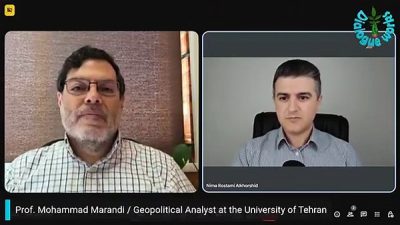
Seyed M. Marandi: U.S. Military DIVIDED? Iran’s Secret Defense EXPOSED
or go to
Aletho News Archives – Video-Images
From the Archives
‘Israel sees Iran as obstacle to its policies’
Press TV – August 25, 2017
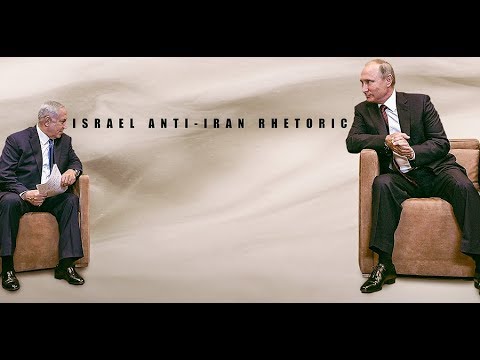
Prime Minister Benjamin Netanyahu has said that Israel felt threatened by Iran’s growing influence in the Middle East. Netanyahu expressed his Iranophobic view in a meeting with Russian President Vladimir Putin in Russia’s Black Sea resort of Sochi on Wednesday. Press TV has asked Scott Rickard, former American intelligence linguist from Tampa, Florida, and Brent Budowsky, a columnist at The Hill from Washington, to give their thoughts on the issue.
Rickard said Tel Aviv is concerned about the fact that the regime could not carry out its old project to spread sectarian divisions and pave the way for dismemberment of the countries in the Middle East region because of the Iranian-led resistance against Israeli policies, not only in the occupied territories of Palestine but also in the whole region.
“Iran is not a threat to Israel whatsoever. The threat that Israel sees is the fact that their Oded Yinon Plan is being put to a hold by Iran,” the intelligence linguist said on Thursday night.
“They (the Israelis) look at Iran as a threat only because they have no influence on their governments and Iran is autonomous and is not under the Zionist influence,” he added.
Since the victory of the Islamic Republic of Iran in 1979, Tehran has been critical of Israel’s policies in the region, whereas “no leaders [of other states] even dared to speak out against Zionism,” Rickard argued. … continue
Blog Roll
 Aletho News
- Alberta Bill Would Fine Political Deepfakes $10,000 Without Satire Exemptions
- Iran declares ‘historic victory’ over US, says enemy forced to accept its proposal
- Trump Claims Ceasefire, Reopening of Strait of Hormuz Agreement with Iran
- Israeli tank fire killed UN peacekeeper in Lebanon, UNIFIL investigation finds
- Russia, China block Bahrain-sponsored UN resolution on Strait of Hormuz
- The US-Israeli War on Science is an Assault on our Future
- Trump’s Promise to Bomb Iran ‘Like Never Before’ Faces Brutal Logistics — Expert
- Germany seeks to restrict stays abroad for men of fighting age – Berliner Zeitung
- Evidence points to Ukraine being behind TurkStream attempted sabotage, but that should come as no surprise
- Sri Lanka secures supplies of Russia oil – minister
- If Americans Knew
- Thousands dead and neighborhoods razed to the ground: Aid agencies fear southern Lebanon is becoming the new Gaza
- The war the US is fighting for Israel could cost trillions
- ‘Cigarette Burns, Nail Wounds’: Toddler Tortured in Gaza to Coerce Father
- Trump Says US Sent ‘a Lot of Guns’ to Protesters in Iran
- Israeli forces destroy 17 UN peacekeeper cameras in south Lebanon
- US-Israeli strikes ‘completely destroy’ synagogue in Tehran
- Archbishop for US Military Says Iran War Is Unjust Under Catholic Teaching
- Iranian leaders’ Open Letters to the American People
- Trump says Iranians appreciate bombs, WHO warns of nuclear risks – Daily Update
- U.N. experts demand Israel release prominent Gaza doctor after reports of ‘severe torture’
- No Tricks Zone
- An Inconvenient Tree: Uncovered In Alps… Europe Much Warmer Than Today 6000 Years Ago
- New Study Reports A 60% Slowdown In Greenland’s Ice Loss Rate In The Last Decade
- Low Intensity Tornado Wrecks Major Solar Farm, Creating A Potential Toxic Dump
- New Study Finds Warming Saves Lives…Cold Temperatures 12 Times More Deadly Than Excess Heat
- German Science Blog Accuses PIK Climate Institute Of Hallucinating Climate Tipping Points
- Devastating Assessment Of Comirnaty Vaccine By Former Senior Pfizer Europe Toxicologist
- New Study: CO2 Is ‘Effectively Negligible’ As An Explanatory Climate Change Factor Since 2000
- Former Pfizer Toxicologist Dr. Helmut Sterz Tells Bundestag Hearing Pfizer Vaccine Should Have Never Been Approved
- Energy Expert: Germany’s Nuclear Phaseout Was A “500 Billion Euro Mistake”
- New Research: South Australia’s Mid-Holocene Sea Surface Temperatures Were 4°C Warmer Than Today
 Aletho News