Exposing the complex system of Israel’s domination over Palestinians and Palestine
By Georgina Reeves | January 8, 2014
Unfree in Palestine: Registration, Documentation and Movement Restriction – Nadia Abu-Zahra Adah Kay, Pluto Press, 2013
The opening lines of Mahmoud Darwish’s poem Bitaqat Hawiyyah (identity card) are a poignant reminder of reality for Palestinians throughout the world:
“Register me!
I am an Arab
And my identity card number is fifty thousand”
And it is most fitting that Nadia Abu-Zahra and Adah Kay quote these powerful words within the first few pages of their book, Unfree in Palestine: Registration, Documentation and Movement Restriction.
Over the past few years’ there’s been a general increase in awareness of what’s happening in Palestine and Israel. The daily challenges of living under illegal occupation–the roadblocks and checkpoints, the ‘separation’ barrier, the illegal colonies, and the constant threat of violence, detention, abuse and attack from both the Israeli army and settlers–are far more visible and understood than ever before.
Activists and solidarity groups regularly visit, witnessing and experiencing the effects of the occupation. They return home to share what they’ve seen with others, helping to raise consciousness and understanding. But there is a hidden oppression, one only experienced by Palestinians, one that is rarely discussed but which has the most profound impact on them and them alone.
Whether they live inside Israel, within the West Bank and Gaza, or for the many millions more living in the Diaspora, Palestinians are at the mercy of complex systems that underpin their control and dispossession, and have done so since the 1930s. Unfree in Palestine meticulously exposes these systems to the reader, providing a detailed chronology of development, and the impact of the various methods used to control and strip Palestinians of any rights whatsoever. That this is all done in contravention of international law and United Nations resolutions that should provide protection to the Palestinian people is a potent reminder of the international community’s ongoing complicity in these crimes.
Unfree in Palestine may only be 183 pages long, but it packs quite a punch with its in-depth analysis and the unraveling of the many complex tactics and strategies used by Israel to dominate, dispossess, control and denationalize Palestinians. The authors have gone to great lengths to ensure their narrative provides a detailed explanation of not only of how the tactics are used against Palestinians, but also the irrevocable impact these tactics have. Included in the book are some harrowing testimonies of Palestinians who are constantly subject to harassment, violence, humiliation and detention, purely because of the system that is used to control them.
Despite such a complex subject, with many strands and layers, the authors have categorized the different aspects and impacts with great care. The book, naturally, starts with registration and denationalization: a process which began in the 1930s under the British Mandate but was subsequently used with deliberant intent from 1948 following the establishment of Israel as a state for Jews and not for its indigenous Arab population.
The book then concentrates on blacklisting, coercion and collaboration–all of which are used to devastating effect in Palestine. The impact of such tactics which, as well as serving an intelligence purpose for Israel’s security forces, also encourages mistrust and suspicion within Palestinian communities, causes great harm to individuals, and successfully prevents the natural development and progression of society as a whole.
The next chapter looks at movement restrictions and induced transfer from the post-1948 period, the efforts to control Palestinians within Israel, and the efforts to keep displaced Palestinians out. Palestinians who’d remained in what had become Israel were subject to martial law (until 1966) and extreme measures, such as curfews and military-issued permits to travel between one village and the next, were used to restrict and impede everyday existence. This system provided the blueprint for what was to come when Israel occupied the West Bank and Gaza Strip in 1967, following the Six-Day War.
The authors then bring us to the early 2000s, focusing on the direct social impacts of Israel’s mechanisms of control on healthcare and education in the occupied territories. These chapters in particular highlight the reality of day-to-day life under a military occupation. Health and education systems are on the verge of collapse, and access to services and centers delivery is severely obstructed. And there is the ever-present threat of personal danger in trying to access services. This has also created an environment in which there can be no effective development of the infrastructure or institutions to support health and education services serving Palestinians.
One of the most heartbreaking and distressing testimonies in the book concerns access to healthcare. Rula Ashtiya was in labor but soldiers refused her passage through Beit Furik checkpoint. She was forced to deliver in the dirt by the side of the road, with her husband helpless by her side, pleading with the soldiers in Hebrew: their baby died. This is not an isolated incident but the terrible reality that Palestinians have to face, alone.
The book is far from a cheery read, but the authors’ conclusions provide some hope for the future. Despite all the restrictions and control over their lives, Palestinians, inside and out, and with international support, continue to resist. They remind us that, while disempowered and denationalized, Palestinians are not immobilized. The fact that more people today than ever before know about the occupation of Palestine and are sympathetic to their plight tells us we must continue the struggle for justice and equality.
Through the belligerent and expansionist project of Zionism, which expelled hundreds of thousands of Palestinians from their homes, a highly complex, bureaucratic and racist system has been established. It has one goal: to deny Palestinians any and all of their rights. There are those who say that much of what happened in 1948 (and subsequently) was not part of a determined Zionist intention to expel Palestinians, that in times of war or conflict bad things happen that are beyond anyone’s control. Unfree in Palestine exposes this for the myth that it is: if there was never a premeditated or orchestrated plan to dispossess Palestine of its indigenous inhabitants, then why was so much energy expended by the Zionists, even in the 1930s, to catalogue and record with meticulous precision personal details of the Arab population? And why was the subsequent population register used explicitly to force Palestinians from their homes and to prevent others from returning?
The aims of Zionism have always been to take as much land and expel as many Palestinians as possible to create a state based on ethnic and religious exclusivity. Of all the tools, tactics and efforts used by Israel to achieve this, the use of registration, documentation and the restriction of movement have proved to be the most effective. Almost six million Palestinians live as refugees in the Diaspora. In Israel there are more than 1.6 million, and almost 4.5 million live in the West Bank and Gaza Strip. All of them have more than a national identity in common: they have all been systematically stripped of their rights.
Unfree in Palestine is required reading for anyone who is genuinely interested in the struggle for Palestine and what it means to be Palestinian. It goes beyond the headlines, beyond the solidarity and beyond the activism. It shines an uncomfortable light onto the world in which Palestinians have been forced to exist: one in which they have no control, no rights and no redress.
It is perhaps hard for some of us–who through virtue of our place of birth have the right of access to a passport, a nationality and relative freedom–to realise what being Palestinian actually means. Personally I feel no particular national allegiance to the country in which I was born, but I do understand and appreciate the privilege I have that grants me freedom of movement and the protection of my rights. Palestinians are not so ‘lucky’. Once you’ve read this book you’ll better understand why you will never experience the occupation in the way a Palestinian does.
– Georgina Reeves splits her time between Bethlehem and London, and is a co-founding trustee of Ahdaf, a British organization working with Palestinian students to support youth empowerment and community development. Visit: http://georgie.ripserve.com.

No comments yet.
Featured Video
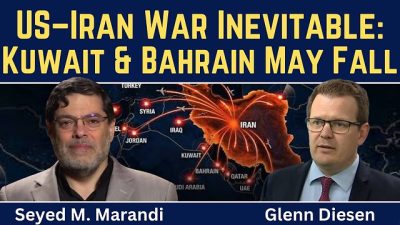
Seyed M. Marandi: US-Iran War Inevitable: Kuwait and Bahrain May Fall
or go to
Aletho News Archives – Video-Images
From the Archives
Oil and the Israel Lobby
Reknowned economist M. Shahid Alam offers this excellent critique of Noam Chomsky’s defective analysis of the relative influence of Oil versus the Israel lobby over US foreign policy: … continue
Blog Roll
 Aletho News
- ICC ignored ‘very well-documented’ NATO crimes – ex-Libyan minister
- SNSC secretary dismisses US response to Iran’s conditions as ‘inadequate’
- Sanaa says Taiz roads open, secure for residents, warns Saudi forces
- Iraqi resistance group urges Saudi leadership to admit defeat, lift Yemen siege
- Trump’s Retreat: How Al-Aqsa Flood Took Down the US Empire
- Israel’s Military Actions in Lebanon Grossly Violate International Law — Lavrov
- Seyed M. Marandi: US-Iran War Inevitable: Kuwait and Bahrain May Fall
- Leaders Condemn Ansarallah Attack on Saudi Arabia While Ignoring Illegal War Against Yemen
- Leaked: Britain’s Covert Iraqi Psyops Network
- Yemeni Armed Forces Warn Airlines Against Using Saudi Airports, Exempt Mecca and Medina
- If Americans Knew
- After Oct 7, IDF policy allowed civilian casualties for even the lowest-ranking targets
- Israel’s Destruction of Southern Lebanon Intensified After the Cease-Fire
- The Last-Minute Decision That Gave Israel Its Name
- The American Conservative: How Trump Made the World Go Nuclear
- Meet the US generals and admirals advancing Israeli policy
- Opinion: Why news organizations should boycott Israel
- The Israeli witch hunt of Sami Abu Shehadeh exposes the lie of the ‘Jewish and democratic’ state
- No state has a ‘right’ to exist – least of all Israel
- Testimonies about Gaza’s civilian death toll expose Israel’s atrocities – Daily Update
- How Israel Conquered the Latin American Right
- No Tricks Zone
- Germany’s Green Energy Debacle: High Energy Costs Force Kahla Porzellan to Close After 182 Years!
- New Study: 50 Years Of The Most Aggressive ‘Net Zero’ Policies Can Only Affect The Global Climate By 0.03°C
- US September “Heat” Was No Record…Many Records Set Decades Ago
- Latest European Green Energy Debacle; Portugal’s Largest Flagship Solar Park Insolvent!
- Green Energy Debacle: German Expert Professor Fritz Vahrenholt Warns Of Severe Economic And Social Consequences
- Two More Paleo Reconstructions Affirm Meters-Higher Sea Levels Across Ireland, Brazil 7000-6000 Years Ago
- New Study: Earth And Venus Surface Warmth Largely Explained By Convection And Lapse Rate, Not CO2 Or Radiation
- 2025 Nature Paper Claiming Worsening Global Drought Gets RETRACTED …Heavily Flawed
- New Study: ‘Global Drought Shows No Detectable Recent Acceleration Under Climate Warming’
- Economic Masterminds: German Socialists Suggest Taxing Productivity Gains Stemming From Using AI


Leave a Reply