The Act of Killing
As a major new documentary about the Indonesian genocide goes on national release, an AHRC film looks at the research behind ‘The Act of Killing’
To mark the national release of the film ‘The Act of Killing’, the AHRC is today releasing a film of an interview with Professor Joram ten Brink of the University of Westminster, Principal Investigator of the AHRC-funded Genre and Genocide research project, of which the new documentary is a major output.
‘The Act of Killing’ depicts a group of unrepentant former members of Indonesian death squads being challenged to re-enact some of their many murders in the style of the American movies they love. The film focuses particularly on one individual, Anwar Congo, whose initial enthusiasm for the re-enactments slowly gives way to outward expressions of unease and remorse.
When the government of Indonesia was overthrown by the military in 1965, Congo and his friends were promoted from small-time gangsters who sold movie theatre tickets on the black market to death squad leaders. They helped the army kill more than one million alleged communists, ethnic Chinese and intellectuals in less than a year. As the executioner for the most notorious death squad in his city, Congo himself killed hundreds of people with his own hands.
‘The Act of Killing’ is a journey into the memories and imaginations of the perpetrators, offering insight into the minds of mass killers. The film is a nightmarish vision of a frighteningly banal culture of impunity in which killers can joke about crimes against humanity on television chat shows, and celebrate moral disaster with the ease and grace of a soft shoe dance number.
The Act of Killing CLIP
The Act of Killing Director’s Cut — Clip 1
The Act of Killing Director’s Cut — Clip 2
The Act of Killing – final scene

Brookings Institution Calls on Obama to Support a Hypothetical Coup Against Venezuela’s Maduro
By Dan Beeton | CEPR Americas Blog | January 25, 2014
On Thursday, the Brookings Institution issued a memo to President Obama titled “Venezuela Breaks Down in Violence.” As might be expected from the title, the memo (and an accompanying video) depicts an alarming situation where
Venezuela is experiencing declining export revenues, accelerating inflation and widespread shortages of basic consumer goods. At the same time, the Maduro administration has foreclosed peaceful options for Venezuelans to bring about a change in its current policies.
But, contrary to the alarmist title, the violence is only a possibility in the future: “Economic mismanagement in Venezuela has reached such a level that it risks inciting a violent popular reaction,” and further on the reader learns that actually “[t]he risk of a violent outcome may still be low…”
The possibility of such chaos is troubling to the author, Harold Trinkunas since “it is in the U.S. interest that Venezuela remain a reliable source of oil,” while “[p]opular unrest in a country with multiple armed actors, including the military, the militia, organized crime and pro-government gangs, is a recipe for unwelcome chaos and risks an interruption of oil production.”
Trinkunas, who “previously served as an associate professor and chair of the Department of National Security Affairs at the Naval Postgraduate School in Monterey, California” urges the Obama administration to take action. At the top of his recommendations is for the U.S. to enlist Brazil – “whose interests are also at risk” – in an attempt “to convince the Maduro administration to shift course.”
Trinkunas makes clear what course he wants the U.S. government to take should a crisis result in Maduro being removed from power. While one might think that such a hypothetical scenario would indeed be one when the Inter-American Democratic Charter should be invoked (Trinkunas suggests that it be used against Maduro now), that would be naïve. Instead:
…we should also begin quiet conversations with others in the hemisphere on what steps to take should Venezuela experience a violent breakdown of political order. Such an event could potentially fracture the regional consensus on democracy on a scale much greater than that of the Honduran coup in 2009. Maduro’s allies in the region would most likely push for his immediate restoration, but in the absence of functioning democratic institutions, this would only compound Venezuela’s internal crisis. The United States would need to work with key states in the region—Brazil, Mexico, Chile, Peru and Colombia—on a regional consensus in favor of rebuilding democracy in Venezuela.
In other words, should a coup occur, Trinkunas wants the U.S. to “work with” the Latin American countries it is closer to politically – and also Brazil – to help it succeed. This is in fact what the Bush administration attempted to do during the short-lived 2002 coup against Hugo Chávez, and the Obama administration worked to ensure that the 2009 coup against the democratically-elected government of Honduras would succeed.
Of course Trinkunas seems to be unaware – despite a passing reference to “distance from the United States over NSA surveillance issues” – that in recent years Brazil’s government has not shied from challenging U.S. foreign policy on a variety of hot-button issues, including over Iran’s nuclear program, the FTAA, and a planned U.S.-Colombia military bases agreement. Brazil led the South American opposition to the Honduran coup and refused to recognize the new government of Pepe Lobo following the November 2009 elections in Honduras. Former president Lula da Silva – who has hinted at another presidential run in 2018 – was always vocal about his support for the Venezuelan government of Hugo Chávez and released a video in support of Maduro ahead of the April elections last year.
Perhaps Trinkunas can be forgiven if he isn’t aware of these things; they aren’t talked about much in Washington foreign policy circles, where Brazil is still often referred to as part of the “good left” – unlike Venezuela, Bolivia, Ecuador, Argentina and other bad apples.
Why is Trinkunas so concerned that Venezuela could soon collapse into violence? He cites a number of economic factors, some vague, some not. He frets, for example, about “declining” output by state oil company PDVSA, and that Venezuela had “the highest inflation rate in the world in 2013.” But as CEPR Co-Director Mark Weisbrot recently pointed out in a contribution to the Inter-American Dialogue’s Latin America Advisor:
inflation appears to have stabilized. Inflation data for November and December show a monthly rate of 4.8 percent and 2.2 percent, putting the three-month annualized rate at 60.6 percent; the annual rate for 2013 was 56.1 percent.
Further, citing an analysis by Bank of America, Weisbrot states:
BOA sees Venezuela’s current debt as sustainable. A devaluation would not likely have much effect on the economy, as previous devaluations did not. Nor is social unrest a likely prospect, as there are no elections for two years, and most opposition protests in Venezuela tend to focus on elections…
Trinkunas attempts to cast doubt on Venezuela’s electoral process (the same one that former president Jimmy Carter called “the best in the world” ahead of the October 2012 elections). He writes, “A now unified national opposition continues to emphasize elections as the solution, but the playing field is hardly level, and elections are not scheduled to take place again until 2015.” Venezuela observers know that the opposition has been relatively unified for some time now, coming together to support the presidential candidacy of Henrique Capriles in both October 2012 and April 2013. Capriles lost both times, and last month the opposition was dealt a blow by a poorer showing in municipal elections than it had hoped. Analysts and some members and supporters of the opposition now question Capriles’ status as an opposition leader, so if anything the opposition is probably now less unified than it was prior to these recent elections.
Ironically – perhaps unaware that Brookings’ website is available to the public, as is YouTube – Trinkunas writes, “Overt U.S. criticism of the Maduro administration or efforts to exert our limited economic leverage would be grist for the mill of the Venezuelan propaganda machine; we should avoid that.” Certainly if one of the most prominent Venezuelan think-tanks called for supporting the overthrow of the U.S. government, that would simply be ignored by the U.S. “propaganda machine,” right?
Related articles
Israeli militarism predicated on 9/11 deception
By Brandon Martinez | Press TV | January 26, 2014
No more than an hour after the World Trade Center Twin Towers collapsed on September 11, 2001, Israel’s leaders initiated a coordinated campaign to blame their enemies for the attacks.
Ehud Barak, the former Israeli prime minister, appeared live in studio at the [state-run] BBC on 9/11, wherein he described his desire for the United States and other major powers to lead a global campaign of annihilation against the Arab/Muslim world. “[T]his is the time to deploy a globally concerted effort led by the United States, UK, Europe and Russia, against all sources of terror,” the Israeli war criminal stated. Dubbing this campaign a “global war on terror,” Barak continued: “It’s a time to launch an operational, complete war against terror even if it takes certain pains from the routine activities of our normal society.” “Bin Laden sits in Afghanistan… Iran, Iraq, Libya, North Korea… these kinds of states should be treated as ‘rogue states,’” said Barak, in a call for the US to take pre-emptive actions against countries that Israel views as impediments to its domination of the Middle East.
Ariel Sharon, the Israeli prime minister on 9/11, duplicated Barak’s war cry against the Muslim world. “[The] war against terror is an international war,” Sharon said at a press conference in Israel shortly after the disaster, describing an impending global conflict as “a war of a coalition of the free world against all the terror groups and against whoever believes they can pose a threat to freedom.” The Israeli politician Shimon Peres forwarded an identical sentiment as his Likudnik compatriots. “The war against terror is an international war,” he said, adding: “This is a war between the good and the bad.” “The fight against terrorism,” Peres proclaimed, “is an international struggle of the free world against the forces of darkness who seek to destroy our liberty and our way of life.”
Later on the day, Ehud Barak and the Israel-first champion Richard Perle appeared on a [state-run] BBC program where they outlined what amounted to a Zionist war plan of quick, successive offensives against all of Israel’s enemies. Barak pointed fingers at Hezbollah, Hamas and Islamic Jihad as “rogue actors” that need to be dealt with. Richard Perle emphasized the need to deal with the “states that sponsor terrorism,” and not just disparate groups of armed rebels who reside in places like Afghanistan and Pakistan. The following day Benjamin Netanyahu added the Palestinian Authority to the list of enemies.
Nine days after the attacks Netanyahu expanded his list of foes that would be prime targets in the Zionist-devised “war on terror.” At a speech before the US House of Representatives’ Government Reform Committee on September 20, Netanyahu suggested that US vengeance in the face of 9/11 terrorism should be visited upon “Iran, Iraq, Syria, Taliban Afghanistan, Yasser Arafat’s Palestinian Authority, and several other Arab regimes, such as the Sudan.” Netanyahu also named “Osama bin Laden in Afghanistan, Hizbullah and others in Syrian-controlled Lebanon, Hamas, Islamic Jihad, and the recently mobilized Fatah and Tanzim factions in the Palestinian territories, and sundry other terror organizations based in such capitals as Damascus, Baghdad, and Khartoum” as legitimate targets. Netanyahu’s diatribe was no less than a declaration of war against the entire Arab/Muslim world with few exceptions.
The revealing statements of these Zionist warmongers were consistent with a broader Israeli strategy outlined by Benjamin Netanyahu and his Zionist associates in the 1980s. In 1979 and 1984 Netanyahu and other Israeli leaders organized two conferences to discuss terrorism under the auspices of the Jonathan Institute. The purpose of the two events was to seduce Western military, intelligence and political figures to join Israel’s crusade against the Muslim world, deceptively disguising their imperialist agenda as a “war against terrorism.” The second conference in 1984 produced a book edited by Netanyahu entitled Terrorism: How the West Can Win. “The two conferences organized by the Jonathan Institute, in Jerusalem in July 1979 and in Washington, D.C., in June 1984, were major events and highly effective for Israeli and Western propaganda,” wrote Edward S. Herman and Gerry O’Sullivan in their book The “Terrorism” Industry: The Experts and Institutions That Shape Our View of Terror.
It did not take long for Israeli leaders to inform us of how beneficial the 9/11 attacks were for Israel’s anti-Arab/Muslim agenda. On Sept. 12, 2001, the New York Times quoted a jubilant Benjamin Netanyahu. In reference to the 9/11 attacks, Netanyahu said: “It’s very good. … Well it’s not good, but it will generate immediate sympathy [for Israel].” “[The September 11 attack will] strengthen the bond between our two peoples, because we’ve experienced terror over so many decades, but the United States has now experienced a massive hemorrhaging of terror,” he said. The Israeli public, the New York Times reported, “took cold comfort in concluding that Americans now share more of their fears.” The article further reported that Israel’s political and military leaders were content the attacks “would awaken the United States to the threat of global terrorism” and have the effect of lessening American government pressure on Israel, giving the regime in Tel Aviv a free hand to suppress the Palestinians.
Netanyahu reiterated this sentiment in 2008 when he told an Israeli university audience that “We [Israel] are benefiting from one thing, and that is the attack on the Twin Towers and Pentagon, and the American struggle in Iraq,” adding that the atrocity “swung American public opinion in our favor.” Ariel Sharon and his inner circle of Likudniks and Mossadniks came to a similar conclusion, announcing that the 9/11 attacks were nothing less than a “Hanukkah miracle” of good fortune for Israel. “The Israeli political-security establishment is coming to the conclusion that the terror attacks on September 11 were a kind of ‘Hanukkah miracle’ for Israel, coming just as Israel was under increasing international pressure because of the ongoing conflict with the Palestinians,” reported Israel’s Haaretz newspaper. Aluf Benn, writing for Haaretz, further observed:
“Osama bin Laden’s September 11 attacks placed Israel firmly on the right side of the strategic map with the U.S., and put the Arab world at a disadvantage as it now faces its own difficult decisions about its future. That’s the impression left by the speeches given by Mossad chief Ephraim Halevy and National Security Council chairman Maj. Gen. Uzi Dayan, at this week’s Herzliya conference on national security.”
Ami Ayalon, a former chief of Israel’s internal security service Shin Bet, confirmed that Israel’s leadership was overjoyed. “Since September 11, our leaders have been euphoric,” Ayalon told France’s Le Monde newspaper. “With no more international pressures on Israel, they think, the way is open.” An Israeli professor named Ehud Sprinzak told the UK’s Telegraph newspaper: “From the perspective of the Jews, [the September 11 attack] is the most important public relations act ever committed in our favour.” Within hours of the event, pro-Israel analyst George Friedman, the director of Stratfor, announced that the “big winner” of the day was Israel. “The big winner today, intended or not, is… Israel,” wrote Friedman on his website, speculating that “The United States is obviously going to launch a massive covert and overt war against the international radical Islamic movement that is assumed to be behind this attack.” Friedman explained that the tragedy would have the effect of aligning “U.S. and Israeli interests [and it will also make] the United States dependent on the Israelis.” Friedman concluded: “The Israeli leadership is feeling relief. Given that pressures for Israel to restrain operations against the Palestinian Authority and other Palestinian groups will decline dramatically.”
Surprisingly, Efraim Halevy, the director of the Israeli Mossad intelligence agency on 9/11, also admitted that Israel benefitted exponentially from the attacks. In an interview on The Standard, a Canadian current affairs television program, Halevy was asked about the theories that Israel’s Mossad was involved in 9/11 for political gain. “Obviously Israel benefited,” Halevy capitulated. Predictably the Israeli spymaster denied any involvement, leading us to believe that 9/11 working out to Israel’s advantage is purely coincidental.
Coincidentally, one day before 9/11 the Washington Times reported on a 68-page study released by the Army School of Advanced Military Studies (SAMS), which contained some telling revelations about Israeli conduct. The study was geared towards devising a plan to enforce a Palestinian-Israeli peace accord. Acknowledging Israel’s penchant for ruthlessness and deception, the paper’s authors described the Israeli Army as a “500-pound gorilla … well armed and trained. Operates in both Gaza and the West Bank.” Israel is “known to disregard international law to accomplish mission” the authors added. In their assessment of the Mossad, the group of US Army strategists said the Israeli agency is a “wildcard” that is “ruthless and cunning” and has the “capability to target U.S. forces and make it look like a Palestinian/Arab act.”
Israel’s long history of false-flag terrorism includes events like the King David Hotel bombing in 1946, wherein Zionist terrorists from the Irgun militia (which later became the Likud Party) detonated bombs in the Jerusalem hotel to spur the British into relinquishing their control of Palestine. Ninety-one people died in the bombing. The Lavon Affair of 1954 saw Zionist terrorists explode firebombs in British and American-owned buildings in Egypt with the intention of having the attacks blamed on Muslims. Then there was the USS Liberty assault in 1967, where Israel deliberately attacked a US surveillance ship during the Six-Day War, killing 34 American servicemen. And those are just a few of the more well-known false-flag terror operations of… [Israel] against its perceived “allies.”
Did Israel pull off its grandest deception of all on 9/11? A clue into the whole matter was revealed by the Telegraph newspaper, which reported that in August of 2001 Israel’s Mossad warned the CIA that terror attacks on major US landmarks were imminent. The Mossad’s warning was unspecific as to where and how the attacks would occur, but related that a cell of 200 terrorists were present on American soil and were planning a major operation. The Israelis linked the plot to Osama bin Laden and told their American counterparts there were “strong grounds for suspecting Iraqi involvement.”
Even the Bush administration admits that Iraq had nothing to do with the attacks, so Israel’s attempt to link Iraq to the plot in their dubious “warning” is telling. Immediately after 9/11, Israel and its neocon partisans in the US initiated an intense campaign of innuendo to connect Iraq, as well as Arabs and Muslims generally, to the attacks. Aman, Israel’s military intelligence service, quickly disseminated disinformation asserting Iraq was involved in 9/11. Rafi Eitan, a veteran Israeli intelligence chief, duplicated Aman’s anti-Iraqi propaganda when he publicly proclaimed that Saddam Hussein was the “mastermind” of the attacks. Jewish neocons in Washington also spread the Israeli-contrived myth of Iraqi involvement with a determined passion. This deceitful Zionist campaign of disinformation was so intensive that polls later showed a large percentage of the naive American public believed Saddam Hussein and Iraq were involved in 9/11.
The Mossad’s August 2001 warning is evidence of manipulation on the part of the Israelis, considering that 200 suspicious individuals did happen to be in the United States in the months leading up 9/11, but they were not Arabs or Muslims. In December of 2001 Fox News aired a four part series detailing a “secretive and sprawling investigation” into Israeli espionage in the US. Fox News correspondent Carl Cameron reported that 200 Israelis had been arrested shortly before and after 9/11 in connection with the inquiry into the attacks. Some of the Israeli suspects, reported Cameron, belonged to electronic surveillance intercept and explosive ordinance units in the Israeli military. In the first part of the video series Cameron said: “A highly placed investigator said there are ‘tie-ins.’ But when asked for details, he flatly refused to describe them, saying, ‘evidence linking these Israelis to 9/11 is classified. I cannot tell you about evidence that has been gathered. It’s classified information.’”
The first and only people arrested on the very day of September 11, 2001, were not Arabs or Muslims with links to al-Qaeda or Iraq, but were Israelis with ties to the Mossad. Five Israelis were witnessed video taping the plane impacts into the WTC. A witness named Maria saw three of the Israelis on top of a white van in the parking lot of her apartment in New Jersey. Minutes after the first plane hit the tower she saw them celebrating, laughing and shouting with joy and mockery, as well as taking pictures of themselves smiling with the burning towers in the backdrop. Alarmed by what she saw, Maria called the police who later pulled over the five Israelis and arrested them. The driver of the van, Sivan Kurzberg, informed the police: “We are Israeli. We are not your problem. Your problems are our problems. The Palestinians are the problem.”
The Jewish daily newspaper, The Forward, confirmed that two of the five Israelis were Mossad agents whose names appeared in a national intelligence database. They worked for a New Jersey-based moving company called Urban Moving Systems whose Israeli owner, Dominik Suter, abruptly and suspiciously fled the US back to Israel days after 9/11, leaving his moving business in complete shambles. Journalist Christopher Ketcham revealed that Urban Moving Systems was a front for Israeli intelligence.
It is inconceivable that the five dancing Israelis didn’t know exactly what was going to happen on 9/11. Some reports suggested the Israelis had set up their cameras to film the attack prior to the first plane crash. The former CIA officer Robert Baer said they were in place to film before either plane hit the WTC. If that is so, then the Israelis must have had intimate prior knowledge of the time, place and nature of the attacks. It is indisputable that the five Israelis were indeed celebrating before the second plane hit the south tower. Most people thought the initial plane strike was just a terrible accident, but somehow the five Israelis knew it was a terrorist attack immediately.
While in custody the Israelis admitted they were happy because the attacks would benefit Israel. One of them reportedly said, “The United States will [now] take steps to stop terrorism in the world.” Another remarked: “Israel now has hope that the world will now understand us.” How did they know the attacks would benefit Israel unless they also knew beforehand who would be blamed for them? How would they have known any of this unless Israel was directly involved in bringing about this event and having it blamed on the designated patsies? All of the Israeli suspects, including the five dancing Israelis, were eventually released back to Israel due to Zionist pressure from the highest levels of the White House and Department of Justice.
Much like the Zionist-led campaign of innuendo against Iraq in the aftermath of the attacks, the allegations of Osama bin Laden’s involvement in 9/11 are likewise built upon an edifice of falsehood. Bin Laden’s name was continuously invoked by the talking heads of the mainstream media, but no evidence was proffered to support the notion that he planned or was in any way involved in the attacks. In 2006, the FBI admitted that the Bureau had no evidence connecting bin Laden to 9/11. “Bin Laden has not been formally charged in connection to 9/11,” the FBI’s Chief of Investigative Publicity Rex Tomb told journalist Ed Haas.
Former Pakistani spy chief Hamid Gul explained that the media’s obsession with blaming bin Laden was a pre-planned deception. In a September 2001 interview Gul told the Washington Times: “Within 10 minutes of the second twin tower being hit in the World Trade Center CNN said Osama bin Laden had done it. That was a planned piece of disinformation by the real perpetrators. It created an instant mindset and put public opinion into a trance, which prevented even intelligent people from thinking for themselves.” When asked who he believed sponsored the attacks, Gul replied: “Mossad and its accomplices.”
Veteran CIA officer Milt Bearden echoed a similar sentiment, telling CBS’s Dan Rather: “This was a tremendously sophisticated operation against the United States — more sophisticated than anybody would have ascribed to Osama bin Laden.” “Now I would go so far as to say that this group who was responsible for [the attacks], if they didn’t have an Osama bin Laden out there they’d invent one because he’s a terrific diversion for the rest of the world,” Bearden said.
Despite popular belief bin Laden did not “take credit” for the attacks.
The US invasion of Afghanistan, which was predicated on the unproven assertion that Osama bin Laden and al-Qaeda committed 9/11, was thus an illegitimate act of naked aggression. Further proof that the Bush regime had no evidence linking al-Qaeda to 9/11 was its refusal to provide the Taliban with the evidence. In October 2001, the Taliban offered the Bush regime a conditional agreement in which the Taliban would surrender bin Laden to a third party country if the US halted its bombing campaign against Afghanistan. All that the Taliban asked for was evidence that bin Laden was responsible for the crimes of 9/11 and upon receiving it they would immediately hand him over. The Bush regime angrily rejected the offer and continued its merciless offensive against the downtrodden country. “There’s no need to discuss innocence or guilt. We know [bin Laden’s] guilty,” Bush said.
Niaz Naik, a former top Pakistani diplomat, revealed that the US invasion of Afghanistan was pre-arranged. Naik told the [state-run] BBC’s George Arney that US officials informed him of their war plans against Afghanistan months prior to the invasion. “The US was planning military action against Osama Bin Laden and the Taliban even before last week’s [9/11] attacks,” he told [the state-run] BBC News. Naik asserted that the objective of the US invasion was not to capture bin Laden but rather to eliminate the Taliban. He explained that the US would not drop its war plans against Afghanistan “even if Bin Laden were to be surrendered immediately by the Taliban.”
NBC News confirmed Naik’s claims in a May 2002 report headlined “U.S. sought attack on al-Qaida: White House given plan days before Sept. 11.” The report detailed the contents of a formal National Security Presidential Directive, which “amounted to a game plan to remove al-Qaida from the face of the earth.” The plan is said to have “dealt with all aspects of a war against al-Qaida, ranging from diplomatic initiatives to military operations in Afghanistan.” The security directive, reported NBC News, “outlined essentially the same war plan that the White House, the CIA and the Pentagon put into action after the Sept. 11 attacks.” The NBC report talked about the “striking parallels” between the Bush regime’s foreign policy vis-à-vis Afghanistan after 9/11 and the one laid out in the pre-9/11 security directive: “[T]he security directive included efforts to persuade Afghanistan’s Taliban government to turn al-Qaida leader Osama bin Laden over to the United States, with provisions to use military force if it refused.” The NBC report concluded: “The couching of the plans as a formal security directive is significant […] because it indicates that the United States intended a full-scale assault on al-Qaida even if the Sept. 11 attacks had not occurred.” Bush was supposed to sign off on this aggressive plan two days before 9/11, but it is unlikely public opinion would have supported such a scenario prior to the attacks.
The evidence presented herein is by no means comprehensive. It is but a small fraction of the available evidence showcasing direct Israeli participation, if not orchestration, of 9/11 to bring about a “war of civilizations” between the West and Islamic world. In September of 2000 the neoconservative group called the Project for the New American Century spoke of a “new pearl harbour” that was needed to facilitate their militarist war plans. Shortly after 9/11, that same group — which was headed by Jewish neocons William Kristol and Robert Kagan — called on President Bush to use the 9/11 attacks as a pretext to depose Saddam Hussein in Iraq in order to protect Israel. Regime change in Iraq was described as an “important Israeli strategic objective” in a 1996 Israeli strategy paper written by leading Jewish neocons Richard Perle, Douglas Feith and David Wurmser, who all became high-ranking officials in the Bush administration in 2003, leading the drive for a war against Iraq alongside the Israel-first champion Paul Wolfowitz.
The neoconservative movement, which is widely held to be responsible for hijacking the Bush administration and pushing America into the disastrous wars against Iraq and Afghanistan, is at its core a Jewish-Zionist cabal. The movement was, since its inception… [was] led by Zionist inclinations. “If there is an intellectual movement in America to whose invention Jews can lay sole claim, neoconservatism is it,” writes Gal Beckerman in an article for the Jewish Forward newspaper. “As a political philosophy, neoconservatism was born among the children of [some] Jewish immigrants and is now largely the intellectual domain of those immigrants’ grandchildren.”
Not shy about their central role in shaping US foreign policy towards the Middle East, several of the leading neocons boasted about their takeover of the Bush administration. In a [state-run] BBC documentary titled “The War Party,” Richard Perle acknowledged that “the President of the United States on issue after issue has reflected the thinking of neoconservatives.” “George Bush’s current foreign policy is basically a neoconservative foreign policy,” gloated PNAC founder William Kristol. Meyrav Wurmser, the wife of neocon David Wurmser, admitted that the neocons are driven by Zionist ideology: “Yes, many of us [neocons] are Jewish… Most of us, all of us in fact, are pro-Israel.” “The war in Iraq,” wrote Israeli journalist Ari Shavit in a 2003 article that appeared in Haaretz, “was conceived by 25 neoconservative intellectuals, most of them Jewish, who are pushing President Bush to change the course of history.”
Through deception and subterfuge, Israel and its agents in the US conspired to engineer an endless civilizational conflict between the West and the Arab/Muslim world, for the benefit of Zionism and its expansionist objectives. Corrupted Americans assisted this diabolical scheme and will forever bear the shame of aiding and abetting evil.
Brandon Martinez is a freelance writer and journalist from Canada whose area of expertise is foreign policy, international affairs and 20th and 21st century history. His writing is focused on issues such as Zionism, Israel-Palestine, American and Canadian foreign policy, war, terrorism and deception in media and politics. Readers can contact him at martinezperspective@hotmail.com.
Related articles

Colonial Partners in Israel’s Crimes
By Vacy Vlazna | Intifada-Palestine | January 25, 2014
“Imperialism after all is an act of geographical violence” Edward Said
Is it just me, or do you also see a thread of colonial superiority and racism binding US, Australia, Canada to Israel?
Think about it. All are ex-British colonies and like Israel, have a shameful history of genocide committed against their respective Indigenous Peoples and all continue to treat their First Peoples as third class citizens.
I can’t speak for the US and Canada, but, apart from realpolitik and arms trade, an underlying colonial arrogance goes a long way to explain why my ‘civilised’ ‘democratic’ Australian government is complicit in granting Israel impunity to daily perpetrate war crimes and crimes against humanity against generations of Palestinian families.
The tragic past and near narratives of the suffering of unspeakable colonial atrocities against Indigenous Palestinians and Indigenous Australians bear close resemblance and are written in blood and great injustice.
Just as Israel’s Independence Day and the Palestinian Nakba Day (in remembrance of deportation and dispossession) have a bloody symbiosis, Australia Day or Invasion Day, on the 26th January, is celebrated or mourned according to the victors or the vanquished.
Both Israeli and British colonists took the ‘terra nullius’ doctrine – empty land’ approach to justify their brutal occupations and wholesale land theft of Palestine and Australia. Israel boasts it made the desert bloom though for centuries Palestine traded in olives, oil, quinces, pinenuts, figs, carob, cotton, dates, indigo, artichokes, citrus fruit, almonds, mint sumach and much more. In Australia the Aborigines maintained their food supply with a sophisticated management of the land with fire.
The island, named Australia by British invaders and colonists, was home to almost a million peoples of, at least, 200 nations that traced their ancestry back 60 millennia along spiritual songlines of the land to the Dreaming – to Creation.
The imperial genocidal wars and massacres (guns vs spears) such as those at Hawksbury, Nepean Richmond Hill, Risdon Cove, Appin, Bathurst, Port Phillip, Swan River (Battle of Pinjarra), Gravesend, Vinegar Hill, Myall Creek, Kinroy, Rufus R, Long lagoon, Dawson River, Kalkadoon, Cape Grim, The Black war, McKinley River, West Kimberely resisted by Aboriginal warriors like Pemulwuy, Winradyne, Multuggerah, Yagan, Jandamarra as well as starvation and western diseases decimated the dispossessed Aboriginal population to about 70,000 by 1920.
By then violent genocide was replaced by the more covert cultural genocide, or the genocide of indigeneity, through the government policy of assimilation intended to eradicate indigenous identity by cruelly and systematically destroying connections to family, the tribe and ancestral lands.
Australia’s First Peoples were marginalised onto reservations and missions, restricted entry into white towns, exploited as unpaid slave labour, their indigenous languages and sacred rituals forbidden, and mixed blood children (The Stolen Generations) were forcibly kidnapped from their parents for resocialisation – ie to be made ‘white’.
Assimilation is where Australia, USA and Canada differ with Israel. The assimilation of Palestinians for Israel is an anathema. The Zionist goal is a pure Jewish state, rid of all Palestinians from the river to the sea. The whole of historic Palestine, home to the Chosen People is a goal pursued with, ironically, an ideological fervour akin to Hitler’s Herrenrasse and Germanisation aspirations. Ergo, Israel perpetrates a slow motion brutal genocide and a relentless push of Palestinians over the exile cliff.
Until the 1967 Referendum, Aborigines were government property: “The right to choose a marriage partner, to be legally responsible for one’s own children, to move about the state and to socialise with non-Aboriginal Australians, were just some of the rights which Aboriginal people did not have.”
Sound familiar? Israel’s apartheid policies similarly impact on Palestinians. Israel has passed racist laws that impose severe movement restrictions dividing families, preventing family reunification and obstructing the marriage of couples who come from different zones. At least a third of Gazans have relatives in Israel and the West Bank. The personal pain of such enforced separations which deny Palestinians the shared and cherished moments we enjoy freely is immeasurable…grandparents have never seen their grandchildren who may live 5 kilometres away… adult children are denied the right to be with a dying parent…births…weddings…funerals ..are overshadowed by painful absences.
The Native Title Act, 1993, finally acknowledged that some Indigenous Australians ‘have rights and interests to their land that come from their traditional laws and customs.’ But, as mining boomed on resource rich indigenous lands, corporate colonialism reared its greedy head undermining this landmark act with the Northern Territory Intervention.
It was initiated by the Howard government in 2007 and maintained by successive governments including that of Kevin Rudd who made the historic apology to the Stolen Generations even though indigenous communities were suffering the humiliation of quarantined welfare payments and struggled to survive in third world conditions.
The Intervention was imposed “on the pretext that paedophile gangs were operating in Indigenous settlements. Troops were sent in; townships were compulsorily acquired and native title legislation ignored. Yet no prosecution for child abuse resulted, and studies concluded that there was no evidence of any systematic child abuse.” Marcus Waters, Review: Pilger’s Utopia shows us Aboriginal Australia in 2014
As the Prawer Plan was debated in the Israeli Knesset, the sound of the Australian government salivating with envy must have been deafening while imagining the power to evict, from their ancestral lands, 40,000 pesky Bedouins hindering Israel’s land expansion or the power to simply bulldoze Palestinian villages to build settlements for Zionist colonists.
Notorious for her death stare, Julie ‘Medusa’ Bishop, the Australian Foreign Minister, on January 15, speaking for her government, with colonial panache dismissed Israeli settlements as war crimes with this vacuous statement,
“I would like to see which international law has declared them illegal.”
Not a good look coming from the FM of a nation privileged to have a seat on the UN Security Council, when even the gardener at Parliament House has heard of the Geneva Conventions.
Like its mate, the rogue state of Israel, Australia doesn’t give a toss for honouring its obligations under international law.
It tossed aside its obligations to the Refugee Conventions with its inhumane offshore asylum seeker policy, forcing asylum seeker boats back to Indonesia, refusal to compensate people who have been held for prolonged periods in mandatory detention, ‘breached its international anti-race discrimination obligations by continuing for almost three years it’s intervention policies with indigenous communities of the Northern Territory.’ the high instance of Aboriginal deaths in custody, the breaching of the International Covenant on Civil and Political Rights in the matter of Guantanamo inmate, David Hicks, the unresolved allegations that Australian intelligence officers were complicit in the torture of Mamdouh Habib when he was held in Pakistan Egypt and Guantanamo Bay, the Queensland bikie laws that fail to meet international fair trial standards.
Then there is the present case in the International Court of Justice against Australia spying on Timor Leste during the oil and gas treaty negotiations in an alleged attempt to rip off the poorest nation in Asia.
Colonial terrorism, disguised as civilised democracy, is not only perpetrated by the hollow men and women in authority. They are the monsters for whom you and I vote and without us they are powerless.Until our moral conscience, intelligence and compassion determines how we vote, we too are their accomplices.
____________________________
– Dr. Vacy Vlazna is Coordinator of Justice for Palestine Matters. She was Human Rights Advisor to the GAM team in the second round of the Acheh peace talks, Helsinki, February 2005 then withdrew on principle. Vacy was coordinator of the East Timor Justice Lobby as well as serving in East Timor with UNAMET and UNTAET from 1999-2001.
Related articles
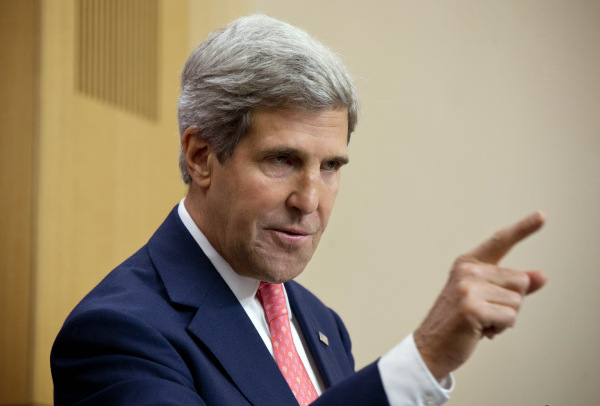
PLO official reveals full details of Kerry’s plan
MEMO | January 26, 2014
The secretary of the PLO Executive Committee has revealed the details of John Kerry’s plan for the Israel-Palestine negotiations. Yasser Abed Rabbo spoke to London’s Al-Hayat newspaper.
According to Abed Rabbo, the US Secretary of State’s proposal includes Palestinian recognition of Israel as a Jewish state; establishing part of East Jerusalem as the capital of Palestine; resolving the refugee problem in accordance with the vision of former US President Bill Clinton; maintaining Israeli control of major settlement blocs and leasing the others back to Israel; Israel’s control over border crossings and air space; and the presence of US-Israel-Jordan-Palestinian security forces on the border. “The Israelis would also have the right of ‘hot pursuit’ of fugitives or suspected criminals in the Palestinian state,” he revealed. “Israeli Prime Minister Benjamin Netanyahu rejected these ideas because he wants to carve out the land he wants and refuses to discuss the Jerusalem issue. He also refuses the intervention of any other party in security matters, even America.”
The PLO official pointed out that this way of thinking was essentially unacceptable. “We Palestinians have been more than clear when it comes to this matter. We have stated many times that we reject the concept of a so-called national homeland for Jews in historic Palestine or the concept of a ‘Greater Israel’. Netanyahu has expressed that he not only wants to legitimise the Zionist national narrative and the expulsion of Palestinians in 1948 but also Israel’s ongoing settlement projects, which aim to achieve the Zionist dream of a Greater Israel.”
Security arrangements
As for security arrangements, Abed Rabbo said that there is talk of potential security arrangements and the standards by which these arrangements will be run. “They will last for many years and are supposedly subject to improved Palestinian security performance. However, this will ultimately still be controlled by Israel, which will maintain control even though America has pledged that it will remain involved as these arrangements are made and see to it that Israel withdraws from certain areas including the Jordan Valley.”
Such security arrangements, he claimed, will maintain Israel’s security strongholds on mountain tops and in Palestinian airspace. Israel will maintain the right to fly over Palestinian land should it feel an impending security threat. “At this point, any semblance of Palestinian sovereignty or geographic unity has been completely torn apart”, warned Abed Rabbo.
Settlements, Jerusalem and refugees
He pointed out that there have been numerous discussions about Israel’s vast settlement blocs in the occupied West Bank. Rumours suggest that Israel wants to rent out settlement units to settlers in the event that a Palestinian state is established. What this means, he claims, is that the settlements will remain as they are and settlers will continue to live there as Israeli citizens with special status in the Palestinian state.
“According to Israel, Jerusalem is not up for negotiation and will remain under full Israeli control as its undivided capital,” he explained. “There is rather mysterious general talk about Palestinians establishing their future capital in Jerusalem but, from Israel’s point of view, Jerusalem extends from Ramallah to Bethlehem to the Jordan Valley border. Thus, it could easily be argued that Abu Dis or Kufr Aqab could be named as the future Palestinian capital.”
As far as Palestinian refugees are concerned, said the PLO official, there are four possible outcomes, as envisioned by President Clinton; one of them suggests the return of a limited number of refugees, as stated in Israel law.
The Palestinian Authority’s position
According to Abed Rabbo, the Palestinian Authority cannot accept any of these potential solutions, especially given that Netanyahu is believed to insist on there being no Arab presence in Jerusalem and rejects outright the refugees’ right of return.
“Netanyahu does not want the involvement of any third party, American or non-American, in any of his security arrangements in the Jordan Valley even if it remains under Israeli control. He wants all decisions to be Israeli decisions and judging by our previous attempts in the past, any of our attempts to abide by a plan or time table will be disrupted completely by Israel”, he noted. Israel and America claim that the Palestinian people will be able to get territory equivalent to the West Bank’s 1967 borders through land swaps. “I do not understand how this is possible with settlement blocs, Israeli security zones and the apartheid wall, which divides the eastern and western regions of the West Bank completely. We are supposed to believe that we can gain territory through land swaps? This is impossible.”
Population exchanges
The PLO veteran described those Israelis who suggest “people swaps” to accompany land swaps as “racist”, pointing out that the organisation would not accept any population exchanges.
“Palestinian Arabs living inside Israel are not settlers,” he stressed. “They did [not] come to Israel through an invasion or by migration. They are the owners of that land and no one can uproot them from their homes. Swapping settlers for Israeli-Arabs would mean swapping Israeli citizens for Israeli citizens; how is this possible?” For Abed Rabbo, this shows that the Israeli government does not consider Arabs to be true citizens of the state. “They regard them as second or third class citizens with no rights, which is absolutely racist. They seek to ethnically cleanse that territory more than they want to swap land.”
That is the framework under which most ideas were discussed, said Abed Rabbo. “We do not have any official documentation to prove it but the information gets leaked from Israel in one way or another.”
Reasons for Israeli refusal
He is not surprised that Israel rejects most proposals for the simple reason that it wants to carve out as much land as possible from the occupied West Bank and maintain absolute control, especially in security zones. This would give Israel the “right” to intervene to protect settlements, which would also mean that it has control of the road networks leading to them.
“We are being confronted with an ultimatum,” he added. “We are not standing in front of two different options with various formulas that we can accept or reject. However, any attempt to sweeten the language of these agreements instead of criticising their prejudices will lead us to disaster.”
He ruled out any blame being attached to the Palestinians should Kerry’s plan fail. “The blame game does not concern us and we do not take it in our political consideration. Who will blame us for wanting to have our country based on 1967 borders, and to have East Jerusalem as our capital, and to have a fair and agreeable resolution for the refugee issue?”
Although John Kerry has “done his best” to make proposals acceptable to both sides, argues Abed Rabbo, it seems that he has read the Israeli position at the beginning and accepted the verbal, generic, vague and ambiguous assurances that Netanyahu usually offers to whoever he meets. “He must have interpreted them in some form and when he looked at the fine print realised that there are two different Israeli positions.”
As such, he believes, Netanyahu lured Kerry to discuss the issue of security first and Kerry fell for it, thinking that it will lead to a big breakthrough for the negotiations and will open the way for discussion of other issues. “To his surprise, he discovered that the Israelis want to use security as an excuse to justify their ambitions for expansion,” concluded Abed Rabbo. “This explains how and why we have reached the current impasse.”
Source: Safa
Related articles


Fatah official: Negotiations will fail, it’s time to resume resistance
Ma’an – 26/01/2014
BETHLEHEM – A Palestinian state in the West Bank and the Gaza Strip will not be established within the coming 20 years, a member of the Central Committee of the Palestinian Authority’s ruling party Fatah said on Saturday.
Tawfiq Tirawi told Beirut-based al-Mayadeen satellite channel on Friday that “It is not possible under any circumstances that a Palestinian state will be established in the West Bank and the Gaza Strip 20 years from now.”
“Those who believe a state can be established are misled, as negotiations will bring nothing,” he added.
Tirawi urged the Palestinians to resume resistance in all aspects as a result.
“We have to resume action, as action can change many things. I mean resistance in all its aspects, but under a united Palestinian plan agreed by all factions including PLO factions and factions outside the PLO.”
The Fatah official highlighted that his movement had not dropped resistance as a choice including armed resistance. “That was reiterated in the movement’s sixth congress held in Bethlehem.”
The framework agreement which US secretary of state John Kerry is promoting will be refused by the Palestinians, added Tirawi.
Peace talks between Israelis and Palestinians were relaunched in July under the auspices of the US after nearly three years of impasse.
Israel’s government has announced the construction of thousands of housing units in illegal settlements since peace talks began.
Official: PLO committee agrees on steps for joining UN bodies
Ma’an – 26/01/2014
BETHLEHEM – A political committee of 12 members representing the Palestine Liberation Organization’s various factions convened in Ramallah and agreed on recommendations to take the Palestinian plight to the UN and its various bodies, a PLO official said on Saturday.
Hanna Amirah, a member of the Executive Committee of the PLO, told Ma’an on Saturday that the committee recommended addressing the United Nations regardless of whether the ongoing peace talks make any progress or not, although he added that a date had not been set.
The goal of these recommendations, he said, is to enhance the Palestinian position. However, Palestinian Authority president Mahmoud Abbas and the PLO Executive Committee need to approve them before they can be put into effect.
The Palestinian Authority is currently trying to counter demands made by the United States and Israel, added Amirah.
He asserted that the recent suggestions made by the US Secretary of State John Kerry were completely unacceptable to the Palestinians.
He highlighted that the proposals made related to Jerusalem, to Israeli settlements, and to Palestinian refugees were unacceptable in particular as well as the proposed Israeli military and civilian presence in the Jordan Valley.
Earlier this week, PLO official Wasil Abu Yousif, who is a member of the PLO’s political committee, said the committee agreed on prerequisites the PA needs to fulfill before signing international conventions and joining UN agencies and different bodies.
It is of great importance, he added, that the PA joins the International Criminal Court because that will enable the PA to sue the Israeli occupation over war crimes and crimes against humanity.
Related articles
Who Profits report: Corporations profit from Israeli prisons
Samidoun: Palestinian Prisoner Solidarity Network | January 26, 2014
 Who Profits released the following report on the involvement of Israeli and multinational corporations in the Israeli prison system:
On December 2013, the Israel Prison Service (IPS) responded to a freedom of information request by Who Profits, which was submitted three months earlier, regarding twenty-two corporations that provide services to Israeli prisons.
These companies mainly provide security equipment and services to incarceration facilities that hold Palestinian prisoners and detainees inside Israel and in the occupied West Bank. These incarceration facilities hold Palestinian political prisoners in violation of international law, and torture and systematic violations of human rights take place within their walls. According to Addameer’s latest monthly detention report (December 2013), there are 5033 Palestinian political prisoners in the Israeli prisons, 173 of whom are minors and 145 are administrative detainees.
The following table is an English translation of information provided by the Israel Prison Service to Who Profits, regarding twenty-two corporations that provide services to Israeli prisons and detention facilities.
| Company Name | Characteristics of Contract | End of Contract | Comments | Financial Scope |
| G4S | Maintaining supporting management systems, magnetometer gates, scanning machines and ankle monitors | During the fiscal year 2015 | According to an IPS tender | Tens of millions of shekels |
| 3M | Based on occasional bids | |||
| MOTOROLA SOLUTIONS ISRAEL | Maintaining wireless systems and lighting bridgesRepairing wireless devices | During the fiscal year 2016 | According to an IPS tender | Tens of millions of shekels |
| HEWLETT- PACKARD (HP) | PrintersMaintaining HP systems and central servers | During the fiscal year 2016 | Tenders by the Accountant General + tenders by the IPS | Tens of millions of shekels |
| MERKAVIM TRANSPORTATION TECHNOLOGIES | Based on occasional bids | |||
| MAYER’S CARS AND TRUCKS | Based on occasional bids | |||
| VOLVO GROUP | Based on occasional bids | |||
| Biosense | Supplying and maintaining a dog-bark identification system | During the fiscal year 2014 | According to an IPS tender | Hundreds of thousands of shekels |
| Myform | Based on occasional bids | |||
| MIRS COMMUNICATIONS | Purchase of battery servicesProviding wireless services | During the fiscal year 2016 | Tenders by the Accountant General + Tenders by the IPS | Hundreds of thousands of shekels |
| AFCON HOLDINGS | Installing, providing year-round service and maintaining fire detection systems | During the fiscal year 2015 | According to an IPS tender | Tens of millions of shekels |
| Contact | Based on occasional bids | |||
| SHAMRAD ELECTRONICS | Relocating communication infrastructureSupplying electronic equipmentRepairing sound system | During the fiscal year 2015 | According to an IPS tender | Tens of millions of shekels |
| B.G. ILANIT GATES AND URBAN ELEMENTS | Based on occasional bids | |||
| Dadash Hadarom Distribution | Purchase of canteen products | 31/07/14 | According to a tender | |
| Shekem | Based on occasional bids | |||
| Shiran | Based on occasional bids | |||
| S.I.R.N. | Based on occasional bids | |||
| Shekel | Based on occasional bids | |||
| ASHTROM GROUP | Based on occasional bids | |||
| Lymtech | Based on occasional bids |
Who Profits also provides documentation and research on several of these companies at the links below:
Related article
U.S. “Dismantling” Rhetoric Ignores Iran’s Nuclear Proposals
By Gareth Porter | IPS | January 25, 2014
Iran’s pushback against statements by Secretary of State John Kerry and the White House that Tehran must “dismantle” some of its nuclear programme, and the resulting political uproar over it, indicates that tough U.S. rhetoric may be adding new obstacles to the search for a comprehensive nuclear agreement.
Iranian Foreign Minister Mohammad Javad Zarif said in an interview with CNN’s Jim Sciutto Wednesday, “We are not dismantling any centrifuges, we’re not dismantling any equipment, we’re simply not producing, not enriching over five percent.”
When CNN’s Fareed Zakaria asked President Hassan Rouhani, “So there would be no destruction of centrifuges?” Rouhani responded, “Not under any circumstances. Not under any circumstances.”
Those statements have been interpreted by U.S. news media, unaware of the basic technical issues in the negotiations, as indicating that Iran is refusing to negotiate seriously. In fact, Zarif has put on the table proposals for resolving the remaining enrichment issues that the Barack Obama administration has recognised as serious and realistic.
The Obama administration evidently views the rhetorical demand for “dismantling” as a minimum necessary response to Israel’s position that the Iranian nuclear programme should be shut down. But such rhetoric represents a serious provocation to a Tehran government facing accusations of surrender by its own domestic critics.
Zarif complained that the White House had been portraying the agreement “as basically a dismantling of Iran’s nuclear programme. That is the word they use time and again.” Zarif observed that the actual agreement said nothing about “dismantling” any equipment.
The White House issued a “Fact Sheet” November 23 with the title, “First Step Understandings Regarding the Islamic Republic of Iran’s Nuclear Program” that asserted that Iran had agreed to “dismantle the technical connections required to enrich above 5%.”
That wording was not merely a slight overstatement of the text of the “Joint Plan of Action”. At the Fordow facility, which had been used exclusively for enrichment above five percent, Iran had operated four centrifuge cascades to enrich at above five percent alongside 12 cascades that had never been operational because they had never been connected after being installed, as the International Atomic Energy Agency (IAEA) had reported.
The text of the agreement was quite precise about what Iran would do: “At Fordow, no further enrichment over 5% at 4 cascades now enriching uranium, and not increase enrichment capacity. Not feed UF6 into the other 12 cascades, which would remain in a non-operative state. No interconnections between cascades.”
So Iran was not required by the interim agreement to “dismantle” anything. What Zarif and Rouhani were even more upset about, however, is the fact that Kerry and Obama administration spokespersons have repeated that Iran will be required to “dismantle” parts of its nuclear programme in the comprehensive agreement to be negotiated beginning next month.
The use of the word “dismantle” in those statements appears to be largely rhetorical and aimed at fending off attacks by pro-Israel political figures characterising the administration’s negotiating posture as soft. But the consequence is almost certain to be a narrowing of diplomatic flexibility in the coming negotiations.
Kerry appears to have concluded that the administration had to use the “dismantle” language after a November 24 encounter with George Stephanopoulos of NBC News.
Stephanopoulos pushed Kerry hard on the Congressional Israeli loyalist criticisms of the interim agreement. “Lindsey Graham says unless the deal requires dismantling centrifuges, we haven’t gained anything,” he said.
When Kerry boasted, “centrifuges will not be able to be installed in places that could otherwise be installed,” Stephanopoulos interjected, “But not dismantled.” Kerry responded, “That’s the next step.”
A moment later, Kerry declared, “And while we go through these next six months, we will be negotiating the dismantling, we will be negotiating the limitations.”
After that, Kerry made “dismantle” the objective in his prepared statement. In testimony before the House Foreign Affairs Committee December 11, Kerry said the U.S. had been imposing sanctions on Iran “because we knew that [the sanctions] would hopefully help Iran dismantle its nuclear programme.”
White House spokesman Jay Carney dismissed Zarif’s comment as “spin” on Iran’s commitments under the Joint Plan of Action “for their domestic political purposes”.
He refused to say whether that agreement involved any “dismantling” by Iran, but confirmed that, “as part of that comprehensive agreement, should it be reached, Iran will be required to agree to strict limits and constraints on all aspects of its nuclear programme to include the dismantlement of significant portions of its nuclear infrastructure in order to prevent Iran from developing a nuclear weapon in the future.”
But the State Department spokesperson, Marie Harf, was much less categorical in a press briefing January 13: “We’ve said that in a comprehensive agreement, there will likely have to be some dismantling of some things.”
That remark suggests that the Kerry and Carney rhetoric of “dismantlement” serves to neutralise the Israel loyalists and secondarily to maximise U.S. leverage in the approaching negotiations.
Kerry and other U.S. officials involved in the negotiations know that Iran does not need to destroy any centrifuges in order to resolve the problem of “breakout” to weapons grade enrichment once the stockpile of 20- percent enriched uranium disappears under the terms of the interim agreement.
Zarif had proposed in his initial power point presentation in October a scheme under which Iran would convert its entire stockpile of 20-percent enriched uranium into an oxide form that could only be used for fuel plates for the Tehran Research Reactor.
U.S. officials who had previously been insistent that Iran would have to ship the stockpile out of the country were apparently convinced that there was another way to render it “unusable” for the higher-level enrichment necessary for nuclear weapons. That Iranian proposal became the central element in the interim agreement.
But there was another part of Zarif’s power point that is relevant to the remaining problem of Iran’s stockpile of low-enriched uranium: Iran’s planned conversion of that stockpile into the same oxide form for fuel rods for nuclear power plants as was used to solve the 20-percent stockpile problem.
And that plan was accepted by the United States as a way of dealing with additional low-enriched uranium that would be produced during the six-month period.
An element included in the Joint Plan of Action which has been ignored thus far states:
Beginning when the line for conversion of UF6 enriched up to 5% to UO2 is ready, Iran has decided to convert to oxide UF6 newly enriched up to 5% during the 6 month period, as provided in the operational schedule of the conversion plant declared to the IAEA.
The same mechanism – the conversion of all enriched uranium to oxide on an agreed time frame — could also be used to ensure that the entire stockpile of low-enriched uranium could no longer be used for “breakout” to weapons-grade enrichment without the need to destroy a single centrifuge. In fact, it would allow Iran to enrich uranium at a low level for a nuclear power programme.
The Obama administration’s rhetoric of “dismantlement”, however, has created a new political reality: the U.S. news media has accepted the idea that Iran must “dismantle” at least some of its nuclear programme to prove that it is not seeking nuclear weapons.
CNN Anchor Chris Cuomo was shocked by the effrontery of Zarif and Rouhani. “That’s supposed to be the whole underpinning of moving forward from the United States perspective,” Cuomo declared, “is that they scale back, they dismantle, all this stuff we’ve been hearing.”
Yet another CNN anchor, Wolf Blitzer, who was an official of the American-Israel Public Affairs Committee before becoming a network journalist, called Zarif’s statements “stunning and truly provocative,” adding that they would “give ammunition” to those in Congress pushing for a new sanctions bill that is clearly aimed at sabotaging the negotiations.
The Obama administration may be planning to exercise more diplomatic flexibility to agree to solutions other than demanding that Iran “dismantle” large parts of its “nuclear infrastructure”.
But using such rhetoric, rather than acknowledging the technical and diplomatic realities surrounding the talks, threatens to create a political dynamic that discourages reaching a reasonable agreement and leaves them unresolved.
Iranian Officials Respond to John Kerry’s “Military Option” Threat
By Nima Shirazi | | Wide Asleep in America | January 24, 2014
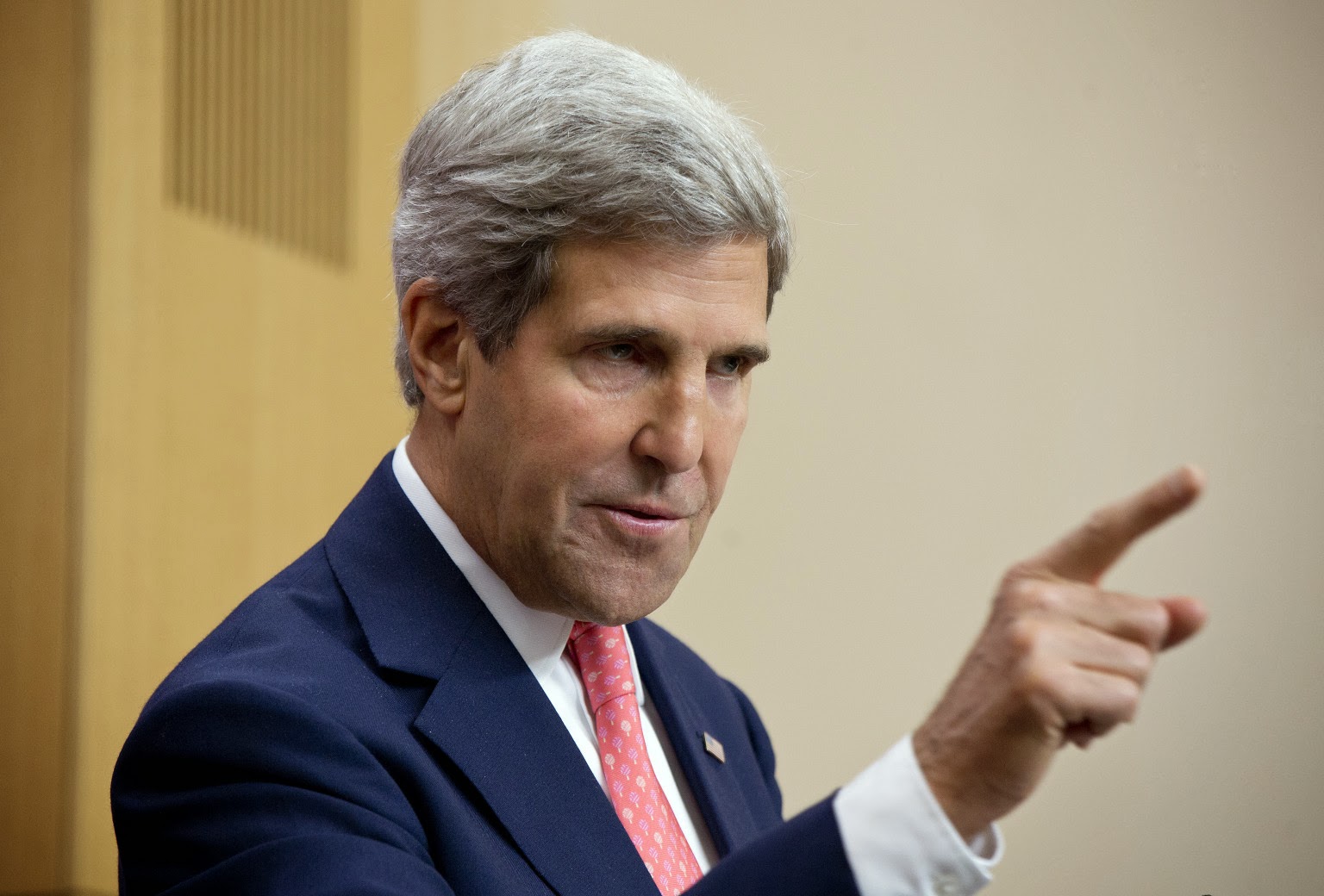
In response to recent comments by U.S. Secretary of State John Kerry regarding a potential military strike on Iran, Brigadier General Seyyed Masoud Jazayeri – Iran’s deputy chief of staff – said in an interview that, in the event of an attack, American interests in the region would be “completely destroyed.”
Speaking to Al Arabiya this week, Kerry defended the interim international deal over Iran’s nuclear program and the alleviating of some sanctions, but declared that if Iran were to back out of its commitments, “the military option of the United States is ready and prepared to do what it would have to do.”
Such rhetoric is par for the course for American officials focused on diplomacy, but still eager to appear bellicose and aggressive to certain influential communities and audiences.
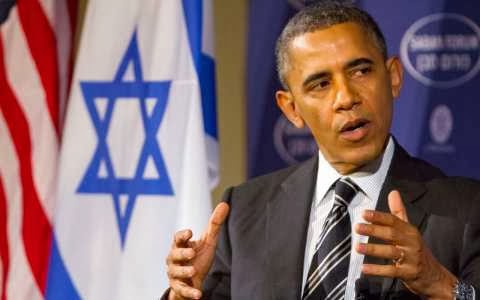 |
| President Barack Obama |
Last month, in a conversation at the Brookings Institution’s Saban Center, a pro-Israel think tank in Washington, DC, President Barack Obama said much of the same. “What I’ve consistently said is even as I don’t take any options off the table,” Obama told Haim Saban, the organization’s Israel-obsessed billionaire benefactor, “what we do have to test is the possibility that we can resolve this issue diplomatically.”
The president repeated this a number of times during the conversation. “The best way for us to prevent Iran from getting a nuclear weapons is for a comprehensive, verifiable, diplomatic resolution, without taking any other options off the table if we fail to achieve that,” he said, adding later that “when the President of the United States says that he doesn’t take any options off the table, that should be taken seriously.”
Following Obama’s own appearance, Secretary Kerry also addressed the Saban conference in December. He assured the attendees that “as we negotiate, we will continue to be perfectly clear that, for Iran, the price of noncompliance, of failing to satisfy international concerns about the nuclear program, will be that we immediately ratchet up new sanctions, along with whatever further steps are needed to prevent Iran from acquiring a nuclear weapon, including – as President Obama just made clear – a military option, if that were necessary.”
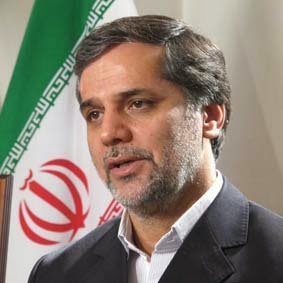 |
| MP Hossein Naqavi Hosseini |
In his own recent comments, General Jazayeri emphasized that the U.S. government is well aware that “the military option against Iran is not practical.”
Hossein Naqavi Hosseini, an Iranian parliamentarian and spokesman for the Majlis’ National Security and Foreign Policy Committee, reacted to Kerry’s new comments by saying, “These statements are indicative of the U.S. double standards and will bring about nothing but tarnishing the US image,” adding, “Definitely, we also announce that if the P5+1 (five permanent members of the UN Security Council plus Germany) commit the least breach of the Geneva agreement, we will also have all the options on our table.”
“Under pressures by the Zionist lobby, the U.S. adopts dual policies; on the one hand, they talk about agreement and positive relations with Iran, but on the other hand, they use an intimidating tone,” Hosseini said.
Related article

France to expand military presence in Africa
Press TV – January 25, 2014
French Defense Minister Jean-Yves Le Drian says the country is to expand its military presence in Africa’s Sahel region.
“This redeployment will cover about 3000 troops which we are about to reorganize and re-deploy all over the area,” Le Drian said in an address to the Center for Strategic and International Studies in Washington, D.C. on Friday.
The Sahel spans 5,400 kilometers from the Atlantic Ocean in the west to the Red Sea in the east.
“I wanted to say all this to you because we think that the intervention in Mali is not enough. We have to go beyond,” he added.
France began a major military intervention in its former colony in January, citing concerns about the growing influence of militants in northern Mali and a rebellion by Tuareg separatists that threatened the French-backed Malian government.
“We have to protect ourselves against different risks, new risks and especially, tomorrow, against the risk of a Libyan chaos,” said the French minister.
US-NATO War Crimes against Libya
By Ludwig Watzal | Dissident Voice | January 25, 2014
All the wars and attacks, which were started by the U. S. and its so-called allies in the wake of 9/11, have wreaked havoc. You name it, you got it: Afghanistan, Iraq, Libya, Syria, Yemen, Somalia and perhaps even Iran. The Islamic Republic is not yet off the hook. There are strong forces in the U. S. and in the Middle East that prefer war to peace at the expense of the U. S. Right now, there is a war going on in Libya against the Western installed puppet government, without notice of the corporate media.
Cynthia McKinney, a former African-American Congresswoman has edited a book, The Illegal War on Libya (Clarity Press, Atlanta 2012), on the illegal war on Libya fought by NATO members with the support of the Arab League and some despotic Arab regimes. As a member of the Democratic Party, she served six terms in the House of Representatives before she was defeated by Denise Majette in the 2002 Democratic primary. McKinney’s loss was attributed to her support of Arab causes and to her suggestion that George W. Bush had advance knowledge of the 9/11 attacks.
Those whom the Western powers and their fawning media wish to destroy must first be demonised. This was exactly what happened to Libya’s leader Muammar al Gaddafi. Just before France, Great Britain and the U.S. started the war against Libya, Nikolas Sarkozy, Silvio Berlusconi and other Western politicians courted Gaddafi. When the Libyan leader visited Paris in 2007, he struck his tent in front of the guest house of the French government. His bizarre conduct and much more were accepted by Sarkozy in order to promote lucrative business with Libya. A few years later, he rewarded him with and his country with a bombing spree.
As a candidate for the U.S. Presidency, Barack Hussein Obama had nice things to say in December 2007: “The President does not have power under the Constitution to unilaterally authorize a military attack in a situation that does not involve stopping an actual or imminent threat to the nation.” After he became U.S. President, he expanded drone attacks to an unprecedented scale. “As the U.S. fires its drones killing innocent Somalis, Pakistanis, Yemenis, Afghanis, and others around the world, it is my hope that this book will provide a rare prism of truth through which to view NATO’s illegal war in Libya, current and future events, and US foreign relations as a whole,” so McKinney in her introductory remarks.
In her book, Cynthia McKinney has gathered a large number of renowned authors who offer an alternative perspective of the events in Libya. Some authors even risked their life by reporting live during the war. Among them are Mahdi Darius Nazemroaya, Julien Teil, Stephen Lendman, Christof Lehman, Sara Flounders, Wayne Madsen, Bob Fitrakis, and many others. All of them illuminate the dark machinations of the U.S. in Libya and elsewhere. Their narrative reminds the readers of the overthrow of the Iranian, Guatemalan or Chilean democracy by the U.S. for corporate benefit. The same apparently held true for Libya.
The essays in McKinney’s anthology describe the horrors caused by the Western bombing campaign and the distorted picture of the events painted by mainstream media. Lizzie Phelan refers to a “full blown media war” and to the silence of Western journalists while Libya was “being bombed into extermination.” Although they witnessed these horrors, they found “all manner of justifications for their self and collective delusion.” Their behavior reminded the author of the riddle: “If a tree falls in a forest, and no one is around to hear it, does it still make a sound?” The Western media pundits played down the horrendous crimes against the Libyan people by cartooning Gaddafi as a “mad dog.”
Stephen Lendman designated the crimes committed by NATO against Libya as amounting to “a Nuremberg Level.” He added: “The US-led NATO war on Libya will be remembered as one of history’s greatest crimes, violating the letter and spirit of international law and America’s Constitution.” Whereas the “Third Reich criminals were hanged for their crimes. America’s are still free to commit greater ones.” Lendman invokes General Wesley Clark who was told at the Pentagon a few days after 9/11, that the Bush administration had already decided to attack seven countries in five years, starting with Iraq and finishing off with Iran. According to Lendman, the U.S. won’t tolerate democratic rule in Libya, for it needs a puppet regime that would follow the dictates of Washington. Beyond that, the U.S. generously used terror weapons in all its wars. Weapons of mass destruction, including depleted and enriched uranium munitions were widely used in the different Iraq wars, leading to miscarriages and severe deformities by newborn babies.
The anthology also reveals that Gaddafi bore no responsibility for the Lockerbie incident. Although he took the blame and had Libya pay millions of U.S. Dollars to the families of the victims in order to have sanctions lifted against his country, the west thanked him by overthrowing his regime. Mahdi Darius Nazemroaya suggests that Libya’s main “crimes” – as seen by the West – were “how (Libya L.W.) distributed and used its wealth, its lack of external debts, and the key role it was attempting to play in continental development and curtailing of external influence in Africa. Tripoli was a spoiler that effectively undermined the interests of the former colonial powers.”
Already at the International Security Conference in Munich, 2007, then President of The Russian Federation, Vladimir Putin, used the strongest possible language to warn the U.S., saying that “its aggressive expansionism has brought the world closer to a third world war than it has ever been before.” So far, Putin’s diplomacy prevented U.S. aggression against Syria and Iran.
The book contains, inter alia, a scathing speech by Gaddafi, delivered at the United Nations General Assembly on September 23, 2009. A chronology of the NATO-led assault on Libya completes the book.
This book is a must-read. It gives its readers a premonition of things that are yet to come.
Dr. Ludwig Watzal works as a journalist and editor in Bonn, Germany. He runs the bilingual blog “Between the lines.” He can be reached at: www.watzal.com.
Featured Video

Iran Is Not Our Enemy
or go to
Aletho News Archives – Video-Images
Frlom the Archives
The 52 Major Jewish American Organizations and Israel Celebrate Passover with the Slaughter of 25 Muslim, Christian and Secular Palestinians
By James Petras • Unz Review • April 8, 2018
Introduction
As of April 7, nearly three thousand unarmed Christian, Muslim and secular Palestinians have been wounded, over three dozen are in critical condition and at least twenty-five unarmed protestors, including children have been assassinated by hundreds of Israeli snipers and heavily armed troops shooting tank shells into crowds of civilians protesting their decades of incarceration by the racist Israeli state.
The Israeli government praised the ‘restraint and morality’ of the IDF, as did the fifty-two Major Jewish American Organizations (MJAO) who largely control the US Congress. These grotesque massacres began during the Christian Holy Week on Good Friday and Easter, coinciding with the Jewish Passover. The self-righteous officials of the MJAO and their relatives and friends broke matzos at joyful Seders as the blood of Palestinians soaked into ground at the fence containing the largest open-air prison camp in history, Gaza.
While tribal loyalties bonded the Israeli and Jewish American leaders, the politicians of the Western oligarchic electoral regimes refrained from criticizing the shocking display of brute force and even defended Israel’s cold blood mass killings of Palestinian civilians in their Gaza prison.
This paper will discuss and analyze the reasons for Israel’s willing Western accomplices and the centrality of its fifth column in the United States. … continue
Blog Roll
 Aletho News
- Israeli Journalist Demands Tucker Carlson and Candace Owens Be Placed in WWII-Style Internment Camps
- No Liability, No Studies, No Accountability: The Vaccine System Aaron Siri Exposed in Federal Court
- No time for losers: Why the war meant to save Israel may destroy it
- Top US Counterterrorism Official Resigns in Protest of Operation Against Iran
- Just Get Out! Now!
- Unpacking glaring contradictions in US-Zionist justifications for war against Iran
- Iranian model of warfare bleeds US dry while Persian Gulf states watch and learn: Analyst
- IRGC orders ‘defeated’ US to evacuate industrial facilities in region
- Hegseth’s call for ‘no mercy’ to Iranians deemed war crime
- Iran War Exposes Limits of US Military Power – Journalist
- If Americans Knew
- Trump’s counterterrorism chief, whose own wife was killed by ISIS, quits over Iran War saying Tehran posed ‘no imminent threat’
- Here’s what US could fund instead of Bibi’s war on Iran
- Israel Killed Over a Dozen Lebanese Paramedics in Three Days, Now Claiming That Ambulances Are “Hezbollah” Targets
- War on Iran: These are the heritage sites devastated by US and Israeli attacks
- Four news stories from Israeli media that illustrate Israeli “justice”
- CIA Prepares Criminal Referral of Tucker Carlson, as Israel and Its Loyalists Demand His Arrest
- Top US counterterror advisor resigns in protest of “war manufactured by Israel” – Not a ceasefire Day 157
- ‘I Liked the House’: When Israeli Soldiers Turn Palestinian Homes into Barracks
- ‘They Were All I Had’: Lebanese Father Buries Parents, 4 Daughters Killed by Israeli Bombing
- Israel and its supporters are causing attacks on Jewish institutions. Case in point: Michigan synagogue tragedy.
- No Tricks Zone
- New Research: South Australia’s Mid-Holocene Sea Surface Temperatures Were 4°C Warmer Than Today
- Storing Green Energy To Last Germany 10 Days Would Require A 60-Million Tonne Battery
- New Studies: UK Sea Levels Were 4 Meters Higher Than Today During The Mid-Holocene
- Destructive Green New Deal: German Energy And Metal Group Warns Of Drastic Crisis
- New Study Documents A 20-Year Pause In Arctic Sea Ice Decline – Driven By Internal Variability
- Wake-up Call: Survey Shows Majority Of Germans Now Favor Postponing Climate Targets!
- Televised! Leading German Political Candidate Tells Schoolchildren CO2 Makes Sun Hotter!
- New Study: A Century Warming Of 1.1°C Is ‘Commonplace’ And ‘Not Unusual’ During This Interglacial
- New Study: ‘Internal Noise’ And Volcanic Forcing Can Trigger 10-15°C Warming Within Decades
- Glaciers Worldwide Are Suddendly Surging, Experts Blame Warming!
 Aletho News