Israel kills 10 in UNRWA school as Netanyahu vows to keep up Gaza assault
Al-Akhbar | August 3, 2014
Updated at 4:41 pm (GMT+3): At least 10 people were killed Sunday in a fresh strike on a UN school in southern Gaza which was sheltering Palestinians displaced by a brutal Israeli military offensive, medics said.
Renewed Israeli shelling killed more than 30 people in Gaza on Sunday after Prime Minister Benjamin Netanyahu vowed to keep up pressure on Hamas even after the army destroys Gaza’s tunnel network.
Gaza emergency services spokesman Ashraf al-Qudra said dozens of people were wounded in the attack which took place in the southern city of Rafah, which straddles the border with Egypt.
Chris Gunness, spokesman for the UN agency for Palestinian refugees (UNRWA), said the school had been housing thousands of internally displaced people (IDPs) who had been forced to flee their homes by the ongoing violence in Gaza.
“Shelling incident in vicinity of UNRWA school in Rafah sheltering almost 3,000 IDP. Initial reports say multiple deaths and injury,” he wrote on his Twitter feed.
An AFP correspondent said there were scenes of chaos at the site, with rescuers trying to evacuate the wounded any way they could, while adults were seen sprinting frantically away through pools of blood, young children clutched in their arms.
It was the third time in 10 days that a UN school had been hit and came four days after Israeli tank shells slammed into a school in the northern town of Jabalia, killing 16 in an attack furiously denounced by UN chief Ban Ki-moon as “reprehensible.”
Robert Serry, U.N. Middle East Special Coordinator, said he was dismayed at reports of the school attack.
“It is simply intolerable that another school has come under fire while designated to provide shelter for civilians fleeing the hostilities,” he said.
Israeli shelling on Sunday pushed the Gaza death toll given by Palestinian officials to more than 1,766, the vast majority of them civilians. At least 9,320 Palestinians have been wounded by Israeli forces.
At least 398 Palestinians killed in Gaza are under the age of 18, but the surviving children also suffer in great numbers from injuries and psychological trauma. UNICEF estimates that 326,000 minors in Gaza are in need of psychological help.
Israel has confirmed that 64 soldiers have died in combat, while Palestinian shelling has also killed two Israeli civilians and one Thai laborer.
Fatah leader and Rafah resident Ashraf Goma said Israeli forces were bombarding the town from air, ground and sea and locals were unable to deal with the wounded and the dead.
“Bodies of the wounded are bleeding in the streets and other corpses are laid on the road with no one able to recover them.”
“I saw a man on a donkey cart bringing seven bodies into the hospital. Bodies are being kept in ice-cream refrigerators, in flower and vegetable coolers,” Goma told Reuters.
Israel redeploying ground troops in Gaza Strip
The attack came as an Israeli army spokesman said the Zionist state was redeploying troops across the Gaza Strip.
“We are removing some (forces), we are changing from within,” Lieutenant Colonel Peter Lerner told AFP on Sunday, describing it as “an ongoing mission.”
“We are redeploying within the Gaza Strip and taking out other different positions, and relieving other forces from within, so it won’t be the same type of ground operation,” he told AFP.
“But indeed we will continue to operate … (and) have a rapid reaction force on the ground that can engage Hamas if required,” he added.
“It’s changing gear but it’s still ongoing.”
His remarks came a day after the Israeli army gave a first indication it was ending operations in parts of Gaza, informing residents of Beit Lahia and al-Atatra in the north that it was “safe” to return home.
Witnesses in the north confirmed seeing troops leaving the area as others were seen pulling out of villages east of Khan Younis in the south.
It was the first time troops had been seen pulling back since the start of the Israeli operation which began on July 8.
Lerner confirmed troops had pulled out of Beit Lahia and al-Atatra, but refused to be drawn on whether the pullout would expand into other areas hit by heavy fighting.
“In the next 24 hours we will see the activity continued on the ground and the redeployment in parallel,” he said, without elaborating.
Israeli newspaper Haaretz confirmed that the Israeli Occupation Forces troops had withdrawn “most of its troops” from Gaza on Sunday, without marking an end to the Israeli offensive.
Israel snubs truce talks after death of captured soldier
In Cairo, a Palestinian delegation arrived for new truce talks. After accusing Hamas of breaching a US- and UN-brokered ceasefire on Friday, Israel said it would not send envoys as scheduled.
Exiled Hamas chief Khaled Meshaal insisted that the Palestinian side had not broken a short-lived ceasefire on Friday, putting the spotlight on Israel.
“A truce is a truce. but the presence of the Israeli forces inside Gaza and destroying the tunnels means it is an aggression,” he told CNN in an interview late Saturday.
A spokesman for the Islamist movement mocked Netanyahu’s statements as “confused”, and as testimony of the “real crisis” he was facing.
“We will continue our resistance till we achieve our goals,” Hamas spokesman Fawzi Barhum told AFP.
Israel intensified attacks in the area of Rafah along the border with Egypt, where an Israeli officer was thought to have been captured there on Friday.
Medics said at least 110 people were killed in Rafah in 24 hours. Meanwhile, Israeli air strikes and tank fire continued pounding huge areas of southern Gaza into rubble, killing scores more people on Saturday.
Hamas had claimed responsibility for the ambush that captured the army officer, but said the group has lost contact with the fighters involved in the operation, and suggested that they, along with their prisoner of war, may have been killed by Israeli shelling.
The talks in Cairo, without Israeli participation, were unlikely to produce any breakthrough, as Israel and Hamas’ positions remain far apart.
Israel argues that it must be allowed to act against Hamas’ rocket arsenal and tunnel network in the framework of any long-term truce.
Hamas demands Israel withdraw its troops and a lifting of the blockade that has choked Gaza’s economy.
Israeli Justice Minister Tzipi Livni, a member of Netanyahu’s decision-making security cabinet, said any agreement on the issue was still far off.
“You want to talk about lifting the blockade? Not with us, and not now,” she told the news website Ynet TV.
Crowded Gaza towns close to the Israeli border have seen destructive clashes and the flight of tens of thousands of Palestinians as tanks and troops swept in to confront dug-in guerrillas.
The Palestinian Center for Human Rights said 520,000 people had been displaced by the fighting – more than a quarter of Gaza’s population.
An “insufferable price”
Several Israeli newspapers reported that cabinet ministers have taken a decision not to seek a further negotiated ceasefire agreement with Hamas and were considering ending the military operation unilaterally.
But there appeared to be little further indication Israel was planning to wrap up its operations, with Netanyahu promising that Hamas would pay “an insufferable price” for cross-border rocket fire. There was no mention of the insufferable price paid by Palestinian civilians in the military offensive.
“We will take as much time as necessary, and will exert as much force as needed,” he said at a news conference.
Israeli troops were working on destroying a complex network of tunnels used by Palestinian fighters before the next security objectives would be decided, he said, warning that “all options” were on the table.
This statement contradicted earlier claims by Israel, which had said that the tunnels were its main objective in its deadly assault on Gaza.
(AFP, Reuters, Al-Akhbar)
Westinghouse moves forward with nuclear scheme in Bulgaria
World Nuclear News | August 1, 2014
Westinghouse plans to hold a competitive tender “within the next year” for construction of a seventh reactor at the Kozloduy nuclear power plant in Bulgaria. The AP1000 reactor is projected to be online by 2023.
The site is already home to two operating Russian-designed VVER-1000 pressurised water reactors, Kozloduy 5 and 6, as well as four shut-down VVER-440s.
Westinghouse, part of Japan’s Toshiba group, announced the target date following its signing today of a shareholder agreement for the Kozloduy nuclear power plant expansion project. A source close to the talks in Sofia told World Nuclear News the agreement decides the ownership of project company Kozloduy NPP – New Builds plc, of which Kozloduy NPP plc and Westinghouse will own, respectively, 70% and 30%.
The agreement followed consultations with all of Bulgaria’s political parties, Westinghouse said in a statement. This and subsequent agreements for the project will be subject to future government oversight, it said. Bulgaria will have an interim government for two months, following the resignation of prime minister Plamen Oresharski’s government last week and a snap election in October.
The agreement also formalizes the selection of an AP1000 design reactor by Bulgarian Energy Holding EAD (BEH EAD), Kozloduy NPP plc and Kozloduy NPP – New Build plc. These parties entered into exclusive talks with Westinghouse in December 2013, following a feasibility study conducted under a competitive tender. Westinghouse will provide all of the plant equipment, design, engineering and fuel for the new unit.
A tender for the plant’s construction will follow European Union and Bulgarian public procurement rules, Westinghouse said. This process is expected to involve Bulgarian and global construction companies.
Bulgaria’s council of ministers approved an economy and energy ministry report on the shareholder agreement on 30 July, BEH EAD said yesterday. The agreement – including the financing terms of an engineering, procurement and construction (EPC) contract for the project – will enter into force after approval by the next government, it said.
No guarantee
Today’s agreement does not in itself mean that Kozloduy 7 will be built, however.
“Any future build will be dependent on future agreements such as an EPC. It will also require mutual agreement on financing terms and conditions,” Westinghouse spokesman Hans Korteweg told World Nuclear News.
“This agreement does not identify any specific assumptions on state support of any kind. It allows both Westinghouse and Kozloduy to engage international finance entities to determine best conditions for both parties. If this is not realized, the project will not go forward,” Korteweg said.
“This agreement in no way creates a binding decision to proceed – by either party. What it does do is to provide a basis for the project to go forward through a working partnership in reaching the next key agreements and obtaining attractive financing,” he said.
Some commentators in Bulgaria have said discussion about the project had lacked transparency, but Korteweg said this assertion was false.
“The process is similar to those conducted in France and the UK, for instance, where a partner and a technology are selected from current viable alternatives,” he said. “Specifically, there are only three PWR reactor designs certified in Europe – AP1000, EPR and MIR.1200. The Westinghouse AP1000 meets the criteria of diversified technology from existing reactors and 1200 MW maximum in size due to Bulgarian grid limitations,” he said.
Prior to today’s announcement, Kozloduy NPP and Westinghouse were bound by confidentiality common in all industries before release of the parameters of an agreement, he said.
Bulgarian owner
Although he would not confirm the share ownership of the project company, Korteweg said Westinghouse will not remain an equity investor once the reactor has been completed.
“We believe this is a national asset for Bulgaria and do not wish to dictate or otherwise influence the decision-making of its owners and operators. Bulgaria will have 100% of the revenue and profits of this plant,” Korteweg said. “Westinghouse’s stake in the project company during construction incentivizes Westinghouse to build a plant that meets international and Bulgarian safety standards, on schedule and within budget,” he said.
Bulgaria has an oversupply of electricity, but supply will fall in the mid-2020s with changes in the country’s energy mix, including fossil fuel plant closures due to CO2 emission reduction requirements and relative competitiveness of renewable energy, he said.
Additional nuclear power capacity during this timeframe “can certainly be utilized domestically and in export growth,” he said. Kozloduy 7 also represents the “smooth and eventual” replacement of units 5 and 6 in the next 20-30 years, especially after units 1-4 were shut down as part of Bulgaria’s accession to the EU in 2007, he said.
Asked if there will be a guaranteed power price for the reactor once it comes online, Korteweg said today’s agreement does not mention this.
“While many EU countries will be utilizing this tool, such as the UK, this is the decision of the Bulgarian government and its energy regulator to decide. The most important point is that the project produces power at the most competitive price compared to alternatives. This is something we are confident will be achieved,” he said.
Korteweg would not comment on the cost to build Kozloduy 7, but said Westinghouse has “offered a commercially attractive price to Bulgaria to provide diverse energy security without greenhouse gas generation.”
The company has “full confidence” that the conditions of this and future agreements for the project will meet EU rules, he said.
Energy diversification
Korteweg referred to the European Commission’s publication in May of a Communication outlining its recommendations for the establishment of a European Energy Security Strategy.
“Central to that strategy is the urgent need for the EU to increase its indigenous energy production, reduce its dependence upon external suppliers, and encourage diversity in the energy mix in order to meet its energy needs,” he said.
A European Council decision in late June to diversify energy supplies from Russia is also consistent with the Kozloduy 7 project, he said, as currently Russian companies have a monopoly supply of fuel to the plant.
“Westinghouse is not an integrated vendor and must therefore contract with local suppliers,” Korteweg said. “A significant amount of the project will be done in Bulgaria and is expected to significantly boost local, regional and national Bulgarian economies. Bulgarian companies are currently heavily involved with other contracts that Westinghouse has with units 5 and 6,” he said.
At the height of construction of the new unit, close to 3500 local workers will be employed on site, with an additional 15,000 workers involved in the associated supply chain, he said. Regional unemployment around the construction site could be reduced to 9% from the current rate of 13%, he said. Once the reactor is completed, its operation will require between 500 and 800 highly-skilled specialists, he said.
Westinghouse is also prepared to integrate Bulgarian companies into other ongoing and prospective projects, such as in the UK, he said.
Westinghouse recently announced an agreement to supply three Westinghouse AP1000 nuclear reactors to the NuGeneration Limited’s Moorside project in West Cumbria, England, in partnership with Toshiba and GDF Suez.
MH17 Shoot-Down Mystery Deepens since July 17
By William Boardman | Reader Supported News | July 31, 2014
“Black Boxes Show Shrapnel Destroyed Malaysia Airlines Plane, Ukraine Says”
That headline in the Wall Street Journal of July 28 creates the immediate false impression that there is new information: shrapnel destroyed plane! Before the headline is over, the WSJ begins backtracking – “Ukraine Says” – a reference that yellow-flags a less than credible source. As the story continues, it reveals that there’s no actual news here, starting with the sub-head: “Older Flight Recorders on Plane Likely to Provide Limited Data” – so is there reliable data or not? Then the story reverses direction again, with this riddle-filled lede:
MOSCOW—Ukrainian authorities said Monday that data retrieved from the black boxes aboard Malaysia Airlines Flight 17 showed the plane was destroyed by “massive explosive decompression” caused by shrapnel from a missile.
Moscow? Nothing about the story relates to Moscow, except perhaps the location of the reporter. He does not say where the “Ukrainian authorities” are, and identifies only one: “Col. Andriy Lysenko, spokesman for Ukraine’s National Security and Defense Council.” The reporter says Lysenko “revealed” the evidence of a missile explosion, although there is little possibility Lysenko has any direct knowledge of the black box contents, since the black boxes have never been in the possession of Ukraine officials.
The reporter admits he has no news, since the black boxes are in the United Kingdom and the investigators have not confirmed Lysenko’s claim. In a sentence as slippery as it is empty, the reporter repeats the official American story: “The U.S. has blamed Russia for providing the Buk missile system to the rebels, a claim that Moscow denies.” This is a dog whistle to those who say pro-Russians shot down the plane, but the actual accusation here is only that Russia gave the rebels a Buk missile system, which proves nothing. The possibility of an air-to-air missile goes unmentioned.
The reporter also does not mention that the Ukraine government has the same or equivalent ground-to-air missile systems, provided by Russia when the countries had warmer relations. The reporter stops short of embracing the blame-Russia scenario, but offers no alternative. As a whole, his story illustrates what he fails to say: that almost two weeks after the shoot-down, there is less certainty than ever as to who was responsible.
Lacking anything like solid evidence, U.S. media just wing it and pray
The same day (July 28), Time links to the WSJ story as if it was fact. Under the headline – “Ukraine: MH17 Downed by ‘Massive Explosive Decompression’” – the report begins:
As U.N. human-rights chief suggests downing of the plane may be a “war crime” – Ukrainian authorities said Monday that black-box data from the downed Malaysia Airlines Flight 17 revealed shrapnel from a missile caused “massive explosive decompression” onboard, as the U.N. human-rights chief said the aircraft’s shooting down “may amount to a war crime.” [repetition in original]
Unlike the Journal, Time makes an effort to explain what a “massive explosive decompression” is – “Explosive decompression happens when the air inside an aircraft depressurizes at an extremely fast rate, with results similar to a bomb detonation.” Whatever happened, the plane and its 298 passengers came down in hundreds of pieces, from large to tiny, over a crash site of a dozen square miles or more.
Shrapnel, certainly, from any source, could create a condition leading very quickly to massive explosive decompression. So could 30 mm anti-tank weapons fire from a Ukrainian Su-25 jet fighter. This is the explanation for the downing of MH17 offered by a German pilot who examined a photo of the MH17 cockpit on the ground and determined that there were bullet holes, entry and exit, suggesting that MH17 was caught in a crossfire. The pilot’s argument is rational and straightforward, and subject to verification by an examination of the evidence. Circumstantially, his argument provides a credible motive for the apparent urgency of Ukrainian forces to secure the crash site before outside forensic investigators can get there.
German media have reported variations of this story, focusing on the one or two Su-25s flying near MH17. The evidence for an Su-25 close to MH17 comes from a July 21 briefing by the Russian military that was widely reported at the time, from the Wall Street Journal to Veterans Today. A week later Time, like the Journal, makes no mention of any Su-25 or of the potentially confirmatory satellite imagery still being withheld by the U.S.
Unlike the Journal, Time adds the gratuitous reference to “a war crime,” without meaningful context. Shooting down an airliner is pretty much, by definition, a war crime or a crime against humanity. Merely labeling it as such, as Time does, only repeats the obvious, with no indication of who might have committed the crime. Time allows for this thought only obliquely in a context that implicitly endorses the official story:
U.N. High Commissioner for Human Rights Navi Pillay said that “this violation of international law, given the prevailing circumstances, may amount to a war crime. It is imperative that a prompt, thorough, effective, independent and impartial investigation be conducted into this event.”
Time omits broad dimensions of Ukrainian crisis
While Time quotes accurately from and links to the UN human rights press release with this comment from Pillay, Time gives no hint that the subject of the release is a 65-page report from the Human Rights Commissioner’s office detailing the state of human rights in Ukraine as disastrous, with violations on all sides, but especially by “armed groups” who are among the separatists, but not identified as such:
A total breakdown of law and order and a reign of fear and terror have been inflicted by armed groups on the population of eastern Ukraine, according to a new report issued today….
The report documents how these armed groups continue to abduct, detain, torture and execute people kept as hostages in order to intimidate and “to exercise their power over the population in raw and brutal ways.” Well organized and well equipped militarily, these armed groups have intensified their challenge to the Government of Ukraine, the report says. In response, there has been an acceleration of Government security operations during July in the areas still under the control of the armed groups, with heavy fighting located in and around population centres, resulting in loss of life, property and infrastructure and causing thousands to flee….
“Both sides must take great care to prevent more civilians from being killed or injured,” [Pillay] added. “Already increasing numbers of people are being killed with serious damage to civilian infrastructure, which – depending on circumstances – could amount to violations of international humanitarian law. The fighting must stop.”
According to the human rights report, more than 100,000 people have fled their homes in eastern Ukraine (86%) and Crimea (24%). These people are now internally displaced persons (IDPs) who are the responsibility of the Ukraine government that can ill afford to take care of them. That government started coming apart July 24, when the prime minister resigned, saying in part: “because laws have not been passed, we now have no means with which to pay soldiers, doctors, police, we have no fuel for armored vehicles, and no way of freeing ourselves from dependence on Russian gas.”
The human rights report does not address estimates of as many as another 500,000 people from eastern Ukraine seeking shelter in Russia since April. Russia reported July 29 that it has given refugee status to 233,114 Ukrainians, including 34,503 children. Ukraine’s total population of more than 45 million has been declining for about two decades. (The BBC reports, without attribution: “The conflict has displaced more than 200,000 people, many of whom have fled east to neighbouring Russia.”)
As with Gaza, UN concern is with impunity for human rights crimes
The UN report is the fourth on human rights conditions in eastern Ukraine since mid-March, when the high commissioner deployed a 39-member Human Rights Monitoring Mission there. The mission had documented at least 1,129 killings, 3,442 wounded, and 812 abductions over a four month period ending July 15. The report points out that the armed groups in the Donetsk and Luhansk regions are able to commit human rights crimes with impunity, leading to “a collapse of the rule of law.” The report also includes allegations that the armed groups have forced detainees to dig trenches or fight on the front lines; and that there are cases of apparently illegal detention by the Ukrainian armed forces as well.
Elsewhere in Ukraine the UN mission found that most Ukrainians were relatively free, but saw worrisome trends:
… the level of hate speech has escalated dramatically, especially on social media, but also in demonstrations and protests and even in Parliament…. the level of ‘anti-Russia’ rhetoric has increased along with the physical targeting of Russian-owned banks and businesses on the grounds that they are ‘financing terrorism.’
Harassment, intimidation, manipulation, abductions, detentions and enforced disappearances of journalists have continued to occur in the east, and at least five journalists have been killed since the fighting began in April.
Since the end of period of the report, fist fights have erupted in Parliament at least twice. After two political parties dropped out of the ruling coalition, the prime minister resigned. Nevertheless, he remains in office pending a parliamentary vote to accept his resignation. That would presumably lead to the election of a new parliament in the fall.
Prime Minister Arseniy Yatsenyuk voiced deep anger at the parliament for failing to pass laws that would address the country’s need for liberalization. He accused members of betraying the goals and ideals of the Maidan that led to the overthrow of the elected government in March. President Petro Poroshenko welcomed the break-up of the ruling coalition, hoping it would lead to a purge of “Moscow agents” in parliament. The Poroshenko government routinely refers to separatists in the east as “terrorists,” reflecting the UN’s concern over hate speech.
Increased polarization may lead to deadly ethnic cleansing
Since July 15, the end of the UN reporting period, the Ukrainian armed forces have apparently made significant advances and may have the advantage over the “armed groups.” Reporting on this war is scant and unreliable. Claims of ethnic cleansing of pro-Russian Ukrainians are unverifiable. The fighting has been fierce and widespread enough in the region to prevent MH17 crash site investigators from reaching the crash site for days on end.
None of these developments bode well for the UN’s offer of a somewhat hopeful outlook, that its report:
… also discusses new legislation being introduced as part of the Government’s reform. It notes the recent signing of the trade agreement with the European Union that completes the Association process and the publication of the much anticipated new proposed amendments to the Constitution that provide for a degree of regional autonomy and the increased use of local languages. These latter two issues were at the centre of demands being made by the residents of eastern Ukraine and their not being addressed led to the current conflict….
The report notes that the Government “needs to address the wider systemic problems facing the country with respect to good governance, rule of law and human rights. This requires deep and badly needed reforms, especially as Ukraine seeks to fulfil its EU aspirations and establish a democratic and pluralistic society.
The Time report mentioned earlier omits virtually all of this context (Time mentions the continuing fighting as if it was a deliberate tactic to “block outside authorities” from investigating the site). Time ends its short report with the last paragraph of Human Rights Commissioner’s press release out of context, as if it related only to MH17:
“I would like to stress to all those involved in the conflict, including foreign fighters, that every effort will be made to ensure that anyone committing serious violations of international law including war crimes will be brought to justice, no matter who they are,” the High Commissioner added. “I urge all sides to bring to an end the rule of the gun and restore respect for the rule of law and human rights.”
Forensic investigators may finally get to crash site
As the Russian agency RT News put it July 29: “Ukraine’s President Petro Poroshenko said Kiev is finally ready for a cease-fire at the MH17 crash site after Russia’s numerous calls. Kiev continued its military offensive even after the UNSC [Security Council] urged a halt to fighting in the area last week.”
According to RT, reporting on a Ukrainian press service, Petroshenko promised, in a phone call with the prime ministers of Australia and the Netherland, that he would declare a unilateral ceasefire for a crash site zone with a 20 km radius (about 24 square miles). RT reported no date for the cease-fire to begin, but that Petroshenko said on the phone that Kiev “is making every effort possible to accelerate the international experts’ access of to the crash site.”
On July 30, the Organisation for Security and Cooperation in Europe (OSCE) announced that its observers had begun working at border crossings between Ukraine and Russia. The same day, forensic investigators again failed to reach the crash site because fighting continued in the area. According to the Canadian CTV News:
Even the rebels — who initially oversaw the collection of more than 200 of the 298 bodies in a disorganized, widely criticized effort — have stopped their work, saying attacks from the Ukrainian military have forced them to focus on defending themselves….
Recent offensives by the Ukrainian army have enabled it to take back swaths of territory from the rebels. But the fighting has edged ever closer to the crash zone.
The Ukrainian government is accusing the rebels of planting landmines around the crash site. The Ukrainians and the Russians continue to accuse each other of shelling each other’s territory.
Whatever the U.S. is doing isn’t having noticeable effect
As for the United States, if there’s nothing useful the U.S. can do, then it’s succeeding admirably. Summing up what seems to be the official American attitude, U.S. Ambassador to Ukraine, Geoffrey R. Pyatt, recently said, “Putin can end this with one phone call.”
That assumes the crisis is all Putin’s fault. That assumes Putin has operational control over enough of the Ukraine rebels to make a difference. That assumes that both Ukraine and the U.S. would take “Yes” for an answer.
Based on the record to date, all those assumptions are false. Ukraine and the U.S. won’t even implement a cease-fire to collect the dead. The Ukraine rebels do not seem to be a coherent entity, or answerable to anyone. And Putin is hardly responsible for 20 years of the U.S. and Europe holding a NATO dagger to Russia’s throat.
And besides, “one phone call”? Who is Putin supposed to call? The answer to that question might reveal the essence of American policy, assuming there is one. Suppose Putin calls Obama, does anyone think Obama has more control over Kiev than the Russians have over the Ukraine rebels? Or suppose Putin calls Poroshenko, does anyone think he is free to make peace, over objections by hardline Ukrainians or Americans?
Whomever Putin might call, what does Pyatt expect him to say? Would Pyatt or his imaginary surrogate accept anything other than something like Putin saying, “OK, you’re right, I’m wrong, I give up, dasvidaniya.”
Pyatt’s “one phone call” comment is just a polite lie. That’s his job. He made another, more trenchant remark that was, unintentionally probably, an example of his doing exactly what he was complaining about: missing the chance to “take this crisis as an opportunity to put things back on a diplomatic track – instead what we have seen from the Kremlin is the pouring of gasoline on the fire.”
Until the United States shows some sign of being willing to back off from 20 years of creeping aggression along Russia’s western border, the likelihood of the confrontation resolving itself peacefully seems slim to nil.
When Putin has his back to the wall, what does the U.S. expect?
Without the Russians as a mitigating factor, the United States in the past few years might well have found itself launching a war against Syria, or a war against Iran, or both. That’s a weird thought, but it’s real enough. What is American foreign policy about, if anything? Is there a U.S. faction that’s mad at Russia now for interfering with another American war or two in the Middle East? Does the United States have any principle at stake, or even any Machiavellian goal in mind as it dithers around the world seeming to make pretty much everything worse?
Veteran Intelligence Professionals for Sanity, a group of retired U.S. intelligence officers organized in 2003 in response to the abuse of intelligence to go to war on Iraq, see much the same manipulation and dishonesty happening now. On July 29, nine of these intelligence officers signed a lengthy letter to President Obama, responding directly to the administration’s mishandling of the MH17 shoot-down and explaining in detail why they are “troubled by the amateurish manner in which fuzzy and flimsy evidence has been served up – some of it via ‘social media.’”
The crux of the intelligence officers’ critique is simple: either provide credible evidence for blaming the Russians, or stop spreading lies that only make the confrontation more dangerous:
… your administration still has issued no coordinated intelligence assessment summarizing what evidence exists to determine who was responsible – much less to convincingly support repeated claims that the plane was downed by a Russian-supplied missile in the hands of Ukrainian separatists.
Your administration has not provided any satellite imagery showing that the separatists had such weaponry, and there are several other “dogs that have not barked.” Washington’s credibility, and your own, will continue to erode, should you be unwilling – or unable – to present more tangible evidence behind administration claims….
If the intelligence on the shoot-down is as weak as it appears judging from the fuzzy scraps that have been released, we strongly suggest you call off the propaganda war and await the findings of those charged with investigating the shoot-down. If, on the other hand, your administration has more concrete, probative intelligence, we strongly suggest that you consider approving it for release, even if there may be some risk of damage to “sources and methods.” Too often this consideration is used to prevent information from entering the public domain where, as in this case, it belongs.
We reiterate our recommendations of May 4, that you remove the seeds of this confrontation by publicly disavowing any wish to incorporate Ukraine into NATO and that you make it clear that you are prepared to meet personally with Russian President Putin without delay to discuss ways to defuse the crisis and recognize the legitimate interests of the various parties. [emphasis added]
The president did not respond to the May 4 letter from these intelligence professionals, who requested the courtesy of a reply to this one. Somewhere in the middle of this one is a single sentence that gives perspective to all the other details, small or large:
In our view, the strategic danger here dwarfs all other considerations.
Being intelligence professionals, they don’t spell out a strategic danger that is obvious to anyone who can conceive of a logical, worst-case scenario. Without addressing strategic danger, the president’s nominee for Ambassador to Russia, John Tefft, told a Senate hearing July 29 that the United States would “never accept” Russia’s annexation of Crimea. Apparently for this 40-year foreign service officer and hardliner, Crimea dwarfs the strategic danger. Forever?
At the Nation on July 30, the question is framed more directly: “Why is Washington Risking War With Russia”?
Tesco: the boycott that wasn’t
By Therezia Cooper | Corporate Watch | July 31, 2014

The illegal settlement Beqa’ot in the occupied Jordan Valley. Photo by Corporate Watch, February 2013
Earlier this week, the Irish Sun published an article which claimed that Tesco’s Irish stores are to stop stocking fruit grown in Israeli settlements and that the chain’s UK stores will follow suit. In the article a Tesco spokesperson said that the chain currently has one kind of own brand dates which is “grown in Israel, but packed in the West Bank”, and that Tesco “plan to stop using that facility in September”. The news spread quickly amongst Palestine activists on the internet, with many congratulating Tesco’s decision boycott settlement produce. It seems, however, that the victory call was premature. In fact, there is no evidence that Tesco’s policy regarding trade with Israel has changed and campaigners should not become complacent.
Firstly, the changes do not refer to all produce but only to Tesco’s own brand, in this case one line of dates, and when Corporate Watch contacted Tesco for a clarification on practice its press office was less than forthcoming. After several attempts, we finally received a short reply from Alasdair Gee which stated “I’d like to point out that the Irish article is highly misleading. There has been no sourcing policy change. Any sourcing arrangements are purely for commercial reasons”. The statement failed to answer any of the questions we had posed, including whether Tesco will continue to source from the Israeli company Mehadrin, which operates in several settlements in the occupied Jordan Valley, as well as in the Golan. A follow up question regarding this has gone unanswered. As Corporate Watch has previously exposed, Mehadrin frequently mislabels produce from illegal settlements as Israeli. By continuing to trade with Mehadrin Tesco is complicit in aiding the settler economy.

Mislabelled Mehadrin produce in the illegal settlement Beqa’ot in the occupied Jordan Valley. Photo by Corporate Watch, February 2013
There is of course a possibility that the “commercial reasons” Tesco gives for its decision to no longer have any of its own lines packaged in a settlement packinghouse have come about because of the consumer boycott of produce with a settlement label, hence making this kind of trade less profitable. According to the Jewish Chronicle two health and beauty product suppliers have been asked by Tesco to list all their products and ingredients from Israel and the West Bank, indicating that pressure from the growing number of consumers who are campaigning for Boycott, Divestment and Sanctions (BDS) is working on some level.
There is no doubt that the boycott movement is now firmly on the supermarket’s radar, but so far the steps Tesco has taken are no cause for celebration, but rather increased action. As a minimum, BDS activists should continue to push all supermarkets to adopt a similar position to the Co-op, who became the first UK chain to act on settlement produce when it dropped four suppliers known to operate in settlements in 2012, including Mehadrin. This is the campaign strategy of the Sainsbury’s Campaign, which has monthly pickets outside Sainsbury’s shops nationwide.
Some of MSNBC’s Most Prominent Journalists Are Ignoring Gaza — Why?
By Michael Tracey | MediaIte | August 1, 2014
 As Israel continues to inflict mass death and trauma on Gaza, influential liberal media figures are mostly staying silent.
MSNBC reporter Adam Serwer has said conspicuously little since the offensive began over three weeks ago. Because the causes of this conflict are so deeply bound up with US political conditions — American taxpayers supply the Israeli government $3.1 billion in annual military aid, and the Obama administration has just authorized shipping over an additional round of munitions — Serwer’s near-total avoidance of the topic seems curious. Having first rose to prominence as a “civil liberties blogger” at the now-defunct American Prospect magazine, there are a multitude of angles from which Serwer might cover Gaza that would accord with his longstanding beat.
Asked to explain this confounding editorial judgement — in the past two weeks he has written at least four pieces on Obamacare — Serwer told me the following:
I’m proud to say msnbc has featured plenty of in-depth coverage of this issue, but I haven’t written about it except on weekend duty (http://www.msnbc.com/msnbc/netanyahu-hamas-rejected-violated-ceasefires) because I typically don’t cover foreign affairs. I haven’t written about important developments in West Africa, Libya, Ukraine, Iraq or Syria at all.
This doesn’t square with a review of Serwer’s record. Since arriving at MSNBC from Mother Jones in 2013, Serwer has written on issues pertaining to the Afghanistan war, the aborted US military intervention in Syria, Barack Obama’s drone strike program, the international fallout from Edward Snowden’s NSA disclosures, the ongoing turmoil in Iraq, and more — all subjects with clear “foreign affairs” dimensions.
And anyway, the premise that one need have some special expertise to comment on the political implications of Israel’s current attack is manifestly absurd; no one suggested such during the Iraq War or Libyan intervention. Both were stories with obvious import relative to domestic U.S. discourse.
Accordingly, a political reporter like Serwer could explicate the Gaza crisis for MSNBC’s audience in all manner of ways. Democratic Party stars like Elizabeth Warren, Hillary Clinton, Andrew Cuomo, Nancy Pelosi, Cory Booker, and many others have declared their unflinching support for Israel – certainly a major political story. Why do putatively “progressive” politicians so fervently back a foreign government’s bombardment of its besieged, blockaded neighboring territory? Maybe that’s worth exploring.
Similarly, Serwer’s fellow MSNBC journalist Irin Carmon has been quiet on the topic, limiting her Twitter analysis thus far to musings about her Israeli family’s “bomb shelter selfies,” as well as this bit of incisive commentary: “Basically the solution is for Israelis and Palestinians to leave nice reviews of each other’s beachfront properties.”
A third MSNBC colleague, Benjy Sarlin, has also virtually ignored Gaza — except to tweet out the odd defense of Israel’s conduct. (In the first weeks of the assault, Sarlin approvingly referred his Twitter followers to analyses by neoconservative pundits Jeffrey Goldberg of The Atlantic — a former Israel Defense Forces prison guard — and Philip Klein of the Washington Examiner.)
On the other hand, MSNBC anchor Chris Hayes isn’t generally regarded as a foreign affairs specialist; his professional work focuses largely on domestic and economic policy. Nevertheless, Hayes has produced far-and-away the network’s best coverage of the Gaza conflict, exclusively interviewing an American teen beaten by Israeli police, allowing former contributor Rula Jebreal to voice on-air criticisms regarding MSNBC’s alleged lack of Palestinian perspectives, and so forth.
Worst of all, perhaps, has been Rachel Maddow, who’s ignored Gaza to the point of absurdity, engendering widespread scorn on Twitter and elsewhere.
Despite her reputation as an astute analyst of U.S. foreign policy (she wrote an entire book on it) Maddow has allocated substantial airtime over the past 25 days to such topics as “Impeachment threat electrifies Dem base,” but almost none to Gaza. Between July 26 and July 31 — the period of Israel’s most intense escalation yet — she covered the conflict not even once, according to her MSNBC show page. Wondering if Maddow could ever be impelled to scrutinize Israel, Twitter user Jonathan Cohn sardonically asked, “What if the siege on Gaza were really just a major traffic jam caused by Chris Christie?”
A plausible theory as to why Maddow has so studiously avoided mentioning Israel’s assault is because the story doesn’t quite “electrify Democrats” — in fact, it amplifies huge, glaring divisions among Democrats. Countless self-described “progressives” are fervently committed to backing Israel’s every action, no matter how many hundreds of children it kills, because they have a pre-existing devotion to the Jewish state.
Broaching the subject would likely create fissures among Maddow’s viewership, so rather than delve into bothersome complexities, or emulate the approach of British television anchors — who sometimes actually challenge the Israeli government’s spurious talking points — she instead opts to continue dishing out the standard “look over there at how crazy the GOP is” red meat.
Israeli occupation carried out 72 attacks on journalists in Gaza

Relatives of journalist Halid Ahmed (25), who died during the Israeli attack, mourn near his funeral on 20 July, 2014. His camera is put on his body during the funeral.
MEMO | August 2, 2014
Israel’s occupation army has carried out 72 attacks on journalists in the Gaza Strip during its latest war on the territory which started on 7 July, Palestinian information ministry in Gaza said on Friday.
The number of violations rose after the death of journalists Sameh al-Arian and Mohamed Daher on Thursday. They died from injuries sustained during an Israeli attack.
On Wednesday, Ramy Rayyan and Ahed Zaqqout were also killed while covering an Israeli massacre near a crowded market in the centre of the Gaza city, where 17 civilians were killed, including the journalists and three firefighters.
During the first three weeks of the war, four male and one female journalist were killed.
The ministry documented the following violations: nine journalists killed, 16 wounded, two vehicles with press and TV signs were targeted, and 16 homes of journalists and 15 media offices were destroyed. It also said that 14 cases of hacking were recorded.
According to the ministry, the Israeli occupation deliberately stepped up its attacks against media staff and media organisations despite clear signs showing their professional identities.
NEOCON PROPAGANDA: ‘ISRAELIS TAKE PRISONERS BUT HAMAS KIDNAPS ISRAELI SOLDIERS’
By Damian Lataan | August 2, 2014
Writing in Commentary today, Israeli apologist and neocon propagandist Jonathan Tobin said: “…the Netanyahu government decided to accede to the [ceasefire] proposal put forward by the United States and the United Nations. But that decision has been rendered moot by the decision of Hamas to use the cover of the cease-fire to launch a suicide attack on Israeli forces that led to the possible kidnapping of a soldier.”
Not mentioned by Tobin was the ‘kidnapping’ of almost 300 Palestinians who had been taken by the Israelis during the first days of their invasion of the Strip, nor did Tobin mention that many of them had been ‘interrogated’ by Shin Bet, the Israeli security service who are notorious for their use of ‘enhanced interrogation techniques’, a Western euphemism for torture.
Tobin forgets that it is the Israelis that have invaded the Gaza Strip and that the Gaza people have a right at all times to defend themselves against any aggression and also have the right, as do the Israelis, to take prisoners of war.
Tobin argues that, rather than a truce, Israel should go all out to destroy Hamas and demilitarise the Gaza Strip. To ‘demilitarise’ the Gaza Strip will involve a prolonged occupation and who knows what horrors Tobin has in mind when he says ‘Hamas should be destroyed’.
Israel bombs mosque, university, homes as Gaza death toll hits 1,654
Al-Akhbar | August 2, 2014
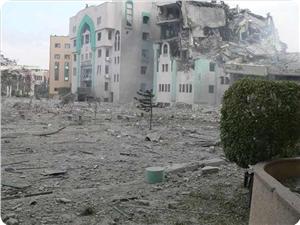 Updated 3:00 pm: Israeli war jets on Saturday bombed a mosque in the northern Gaza town of Jabalia, a major university in Gaza City and flattened houses in a beach side neighborhood, bringing the Palestinian death toll to 1,654 as the US-backed assault enters day 26.
Saturday’s killings come a day after Israeli forces committed horrifying massacres in the southern town of Rafah, slaughtering about 150 men, women and children after the killing of two Israeli soldiers and the capture of a third by Palestinian commandos.
Hamas claimed responsibility for the ambush of the Israeli army officer, but said the group has lost contact with the fighters involved in the operation, and suggested that they may have been killed by Israeli shelling along with their prisoner of war.
“We lost contact with the (Hamas) troops deployed in the ambush and assess that these troops were probably killed by enemy bombardment, including the soldier said to be missing — presuming that our troops took him prisoner during the clash,” the Brigades said in a statement issued in Arabic and English.
“The Qassam Brigades has no information as of this time about the missing soldier, his whereabouts, or the circumstances of his disappearance.”
Palestinian health officials say 1,654 Palestinians, the overwhelming majority of them civilians, have been killed, including a muezzin who died in an Israeli strike on a northern mosque on Saturday.
Sixty-three Israeli soldiers have been killed, and Palestinian shelling has killed two Israelis and a Thai workers.
Air strikes and tank fire have pounded huge areas of Gaza into rubble, rendering much of it unrecognizable to one Palestinian who returned home after spending years in an Israeli jail.
“It was my dream to return to Gaza but it is a real shock,” said 30-year-old Osama who comes from the central town of Deir al-Balah.
“Everything has been destroyed.”
Since Friday, more than 400 houses have been leveled across Gaza, mostly by air strikes, Palestinian officials said.
UN figures show that up to 25 percent of Gaza’s population of 1.8 million may have been forcibly displaced, with more than a quarter of a million people now seeking safety in shelters belonging to UNRWA, the UN agency for Palestinian refugees.
(Reuters, AFP, Al-Akhbar)
Obama to Hamas: Release Israeli soldier
Press TV – August 2, 2014
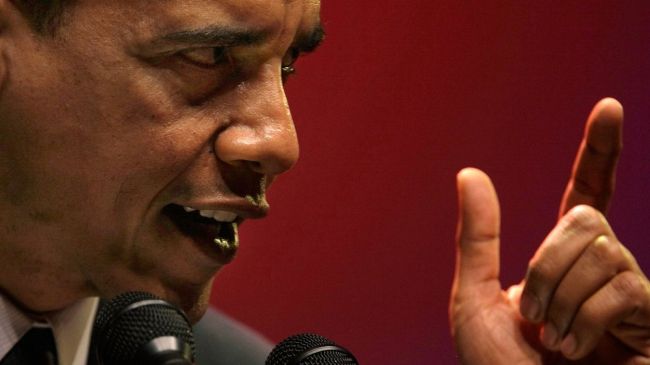
US President Barack Obama has called on the Palestinian resistance movement Hamas to “unconditionally” release an Israeli soldier captured in the Gaza Strip.
“If they are serious about trying to resolve this situation, that soldier needs to be unconditionally released as soon as possible,” Obama told a news conference on Friday.
On Friday, the Israeli military confirmed that one of its soldiers was captured by Palestinian fighters in the Gaza town of Rafah.
Obama framed the release of 23-year-old Hadar Goldin as a precondition for a possible ceasefire.
“A ceasefire was one way in which we could stop the killing, to step back and try to resolve some of the underlying issues,” he said.
Obama also characterized the relentless Israeli aerial and ground attacks on Gaza– in which more than 1,650 Palestinians have been killed– as self defense.
“No country can tolerate missiles raining down on its cities… no county can or would tolerate tunnels being dug under their land,” the president stated.
The United Nations says over 80 percent of the fatalities in Gaza have been civilians. Some 9,000 people have also been injured in 26 days of Israel’s onslaught on the besieged coastal enclave.
The military wing of the Palestinian resistance movement Hamas, the Ezzedine al-Qassam Brigades, has been firing retaliatory rockets into Israel, killing dozens of its soldiers.
The American Aggression Enablement Act and the US’ Eurasian Thrust (II)
By Andrew KORYBKO | Oriental Review | August 1, 2014
Part II: Destabilization by Design
The second thrust of the US’ aggression in Eurasia is the purposeful destabilization of Russia’s interests in the Near Abroad. Specifically, the AAEA’s provisions would lead to an endangered security situation for Belarus, mayhem in Moldova, and an aggravation of the Nagorno-Karabakh situation between Azerbaijan and Armenia. All of these work against Russian interests and place Moscow on the strategic defensive.
Bunkering in Belarus:
One of the US’ designs is to bunker Belarus in and surround it with offensive NATO military capabilities. American aggression against Belarus is old news, going back most sensationally to the mid-2000s when Condoleeza Rice declared the country to be the “last dictatorship in Europe”, thereby putting its head on the chopping block for regime change. Although unsuccessful in overthrowing the government via a Color Revolution, Washington still pumps millions of dollars into the country to support “democracy” (likely in the same vein and with the same intended result as it did in Ukraine with its $5 billion investment). If the AAEA’s goal of placing permanent NATO bases in Poland and the Baltics comes to fruition, as well as the goal of Shadow NATO integration of Ukraine, Belarus could very well find itself almost surrounded by hostile forces pressuring it to accede to their demands. Making the situation even more high-risk, Belarus and Russia have a mutual security agreement via the CSTO, meaning that any act of force against Belarus will be treated as an act against Russia itself. This remarkably raises the stakes of NATO’s power play and increases the chance of direct conflict with Russia.
Moldovan Meltdown:

Flying largely under the radar of most analysts, Moldova is prime for a full-scale meltdown as it is rushed into Western institutions. First and foremost, the country already signed the EU Association Agreement in late June and, for the first time in its history, will be sending a representative to the upcoming NATO summit in September. Although nominal neutrality is a hallmark of the country’s constitution, this does not mean that it cannot enter Shadow NATO via major non-NATO ally designation or potentially enact a ‘referendum’ to change this statute.
What is critical here is that there are two ticking time bombs in Moldova that will likely go off as Western ‘integration’ proceeds at record speed; Transnistria and the lesser-known Gagauzia. The former is the renowned frozen conflict from the 1990s where Russia still has over a thousand troops stationed. It voted to join the Russian Federation in 2006 but to no avail. In May, Deputy PM Dmitry Rogozin was harassed by Moldovan security after he visited Transnistria to collect signatures in favor of reunification with Russia. His plane was forced to land in Chisinau after Ukrainian and Moldovan authorities restricted their airspace to him, creating a diplomatic incident which would be unthinkable to do to a Western politician, let alone of such stature. Moreover, the territory is currently experiencing a blockade by both Moldova and Ukraine. Transnistria does not accept the authority of Chisinau and sees no attraction to the EU, instead preferring the Russian-led Eurasian Union. These radically divergent paths, coupled with NATO’s ambitions and Russia’s existing military position, place Moldova on the brink of destabilization.
Not only that, but Gagauzia is also a simmering issue waiting to boil over. Ari Rusila conducted research on this relatively unknown entity back in April and found that, just like Transnistria, it too is moving closer to Russia. Just as fast as Moldova is moving westward, Gagauzia appears to be moving eastward, and it is asserting its self-determination with every step of the way. He writes that it held a February 2014 referendum to join the Customs Union and that it also voted to place independence on the table if Moldova loses or surrenders its sovereignty. These two options could be taken to mean joining the EU or merging with Romania, and if Gagauzia officially moves away from the centralized Moldovan state, it could lead to military reprisals by Chisinau. All that it takes to set off the two Transnistrian and Gagauzian time bombs is to shove Moldova into the EU and NATO, both of which are already being fast-tracked by the West.
Asphyxiating Armenia:
Lost in the mix of the more headline-grabbing aspects of the AAEA, the legislation also mandates that the US increase its military cooperation with Azerbaijan and provide the same amount of security assistance to it, in league with NATO, as it would to the major non-NATO allies and Balkan states. This is an exceptionally important detail that mustn’t be overlooked by any observer. Armenia, Azerbaijan’s bitter rival, made the fateful decision to turn its back on the EU and move towards the Eurasian Union, much to the ire of Brussels. Hillary Clinton, speaking on behalf of the State Department in late-2012, made known her country’s intention to “figure out effective ways to slow down or prevent” Eurasian integration, signaling that Armenia, after having made its decision to move in this direction, will now be targeted just like Ukraine was.
 Azerbaijan and Armenia are locked in the Nagorno-Karabakh conflict which, although frozen, threatens to heat up at any moment. By throwing its hat squarely behind Azerbaijan, the US is showing that it is not a neutral party to the conflict and cannot be trusted within the OSCE Minsk Group. The move for a more clearly defined and open US-Azeri military alliance has been a long time in coming, however. The US has been using Azerbaijan as a geostrategic energy outpost between Russia and Iran since the 1990s, and the creation of the BTC pipeline only increased its significance in the eyes of Western decision makers. Baku is also close friends with Israel, supplying about 40% of its oil, and it has been rumored to host Israeli drone bases for use against Iran. The Jerusalem Post also reports that Israel sells “hundreds of millions of dollars worth of arms” to the country, further cementing their military-strategic relationship.
Armenia, on the other hand, has a mutual security guarantee with Russia through the CSTO, just like Belarus does. It is a traditional Russia ally and even hosts the 102nd military base outside the capital of Yerevan. Armenia has been blockaded by both Turkey and Azerbaijan since the early 1990s, and the vast majority of its foreign trade must move through Georgia before going to Russia or to other countries via port. With Georgia trying to join the EU, the scenario could arise where costly tariffs are enacted against outside (Armenian) goods entering the Union, even if they are only transiting through, further strangling the already weakened Armenian economy and promoting social unrest. To put things into perspective, Azerbaijan’s defense budget is larger than the entire state budget of Armenia, and Azeri President Aliyev has a track record of threatening military force to retake Nagorno Karabkah.
In sum, any renewed outbreak of war between Azerbaijan (now close to becoming a US military ally) and Armenia (protected under Russia’s defense umbrella) would be a de-facto US-Russian proxy war that could quickly draw in both powers. What’s more, Azerbaijan closely cooperates with Turkey, with whom it has close ethnic, cultural, and linguistic ties, and Ankara’s involvement in any future conflict could quickly draw in the entire NATO alliance. By cozying up so closely with Azerbaijan and working to asphyxiate Armenia, the US is pushing itself closer to a direct conflict with Russia.
Concluding Thoughts
It has been definitively established that the US’ so-called ‘Russian Aggression Prevention Act’ is nothing more than Orwellian Doublespeak for an American Aggression Enablement Act. Aside from the more well-known aspects of the proposal, the lesser-known ones are just as significant in throwing America and its NATO clique closer to war with Russia. By rabidly expanding NATO at all costs via indirect means, the US is plainly showing that it does not care whatsoever for Russia’s security concerns. In fact, it wants to push the envelope and expand NATO in as many simultaneous directions as it can. The swallowing of the Balkans, the staging ground of Russia’s strategic South Stream project, and the movement to incorporate Sweden and Finland into NATO are Washington’s way of imposing full dominance over the continent’s last nominally neutral areas, a move which will surely lead to a determined Russian push back, especially as regards the defense of Serbia and NATO expansion into Finland.
Furthermore, the AAEA aims to threaten Russian interests in Belarus, Moldova, and Armenia, three countries where Moscow has deployed troops and two of which are mutual security partners. This is a calculated attempt at weakening Russia’s position in the Near Abroad and continuing to place it on the strategic defense. All together, everything within the American Aggression Enablement Act clearly shows that the US has strapped up its boots and is eager to go on the offensive against Russia. The ‘Reset’ was nothing more than an underhanded way to buy the necessary time to organize this campaign against all of Russia’s interests on its western flank, and it appears to be in full swing. If it passes into law, the bill will be seen in hindsight as the one action which single-handedly ushered in the ‘New Cold War’ and could quite possibly revert Europe back to the powder keg that it once was 100 years ago.
Featured Video
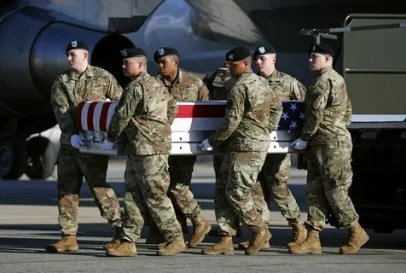
American Military Failure in Afghanistan
or go to
Aletho News Archives – Video-Images
Frlom the Archives
Iran War: United States Military Versus Israel Firsters
By James Petras | November 27, 2007
Why must Jewish organizations be and be seen as the loudest drum-beaters of all? Why can we not bring ourselves to say that military intervention is not on the table at all? Why not stash it under the table, out of sight and mount instead a diplomatic assault? – Leonard Fein, Forward
Introduction
As the White House and Congress escalate their economic sanctions and military threats against Iran, top military commanders and Pentagon officials have launched a counter-offensive, opposing a new Middle East War. While some commentators and journalists, like Chris Hedges (Truthdig, November 13, 2007), privy to this high stakes inter-elite conflict, attribute this to a White House cabal led by Vice President Cheney, a more stringent and accurate assessment puts the Zionist Power Configuration (ZPC) in the center of the Iran war debate.
There is a great deal riding in this conflict – the future of the American empire as well as the balance of power in the Middle East. Equally important is the future of the US military and our already heavily constrained democratic freedoms. The outcome of the continuous and deepening confrontation between top US military officials and the Israel Firsters over US foreign policy in the Middle East has raised fundamental questions over self-determination, colonization, civilian primacy and military political intervention, empire or republic. These and related issues are far from being of academic interest only; they concern the future of the United States. … continue
Blog Roll
 Aletho News
- Hezbollah Returns: It Didn’t Start a War, It Is Ending One
- EU states seek ‘talks’ with Iran for access to Strait of Hormuz: Report
- Trump on Hormuz: “Others must take care of it” after US falters
- Who Is closer to collapse?
- A War that Backfired: Why the US-Israeli Campaign Is Strengthening Iran
- How Zionist Control Is Hurting US Interests
- Iran warns it may target US missile launch sites in UAE cities
- American Military Failure in Afghanistan
- Friendly Skies of Georgia: Are Israeli-Linked Drones Launching False Flags from Georgian Territory?
- The Three Big Lies about Mammography Screening
- If Americans Knew
- No let-up in attacks on Gaza as Israel takes on Iran, Lebanon – Not a ceasefire Day 155
- ‘Of Course’: IDF Drops Case Against Soldiers Accused of Raping Palestinian Prisoner
- Don’t Fall for the Regime Change Talk. Israel Is ‘Mowing the Lawn’ in Iran
- Will Israel and the US wreck the Gulf States along with Iran?
- US so far burned through ‘years’ of munitions in Iran war: Report
- How the Israeli Tail Wags the American Dog
- Outdated intel likely led to deadly U.S. strike on Iranian elementary school, sources say
- Pentagon insider says high U.S official Douglas Feith reported to Netanyahu
- In fond memory of Walid Khalidi, the historian of Palestine
- 6 more Americans killed, as Israel ‘mows the lawn’ in Iran – Not a ceasefire Day 154
- No Tricks Zone
- Storing Green Energy To Last Germany 10 Days Would Require A 60-Million Tonne Battery
- New Studies: UK Sea Levels Were 4 Meters Higher Than Today During The Mid-Holocene
- Destructive Green New Deal: German Energy And Metal Group Warns Of Drastic Crisis
- New Study Documents A 20-Year Pause In Arctic Sea Ice Decline – Driven By Internal Variability
- Wake-up Call: Survey Shows Majority Of Germans Now Favor Postponing Climate Targets!
- Televised! Leading German Political Candidate Tells Schoolchildren CO2 Makes Sun Hotter!
- New Study: A Century Warming Of 1.1°C Is ‘Commonplace’ And ‘Not Unusual’ During This Interglacial
- New Study: ‘Internal Noise’ And Volcanic Forcing Can Trigger 10-15°C Warming Within Decades
- Glaciers Worldwide Are Suddendly Surging, Experts Blame Warming!
- Surprising Discovery: Sahara Is Greening…Billions Of Trees Where Once Thought To Be Barren
 Aletho News