Jewish Israeli students receive 10 times higher funding than Arab Israelis
MEMO | January 28, 2015
Israeli authorities used details of students’ religious and ethnic backgrounds to decide how much funding each pupil would receive, a report by Child Safety Council has said.
The findings of the report were published by Arab48 yesterday. The report showed that the budget of a Jewish Israeli student reaches 14,500 shekels per year ($3,675), while the budget of an Arab Israeli student is only 1,500 shekels per year ($380).
In addition to official school classes, Israeli students have access to a number of extracurricular activities such as enrichment lessons, preparations for exams, etc. while Arab students are unable to access these.
According to the report, which was issued by an Israeli organisation, some essential education programmes are cancelled for Arab students.
God Promised Antisemitism to the Zionists
My personal reflections on the Campaign Against Antisemitism survey, by Aaron Dover – January 25, 2015
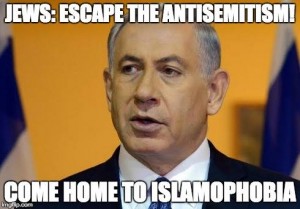
In order to say what some might consider the un sayable I first need to deconstruct some mythical terms so let me just wade into some taboo territory as though I don’t even see the no-entry signs.
What is anti-Semitism?
“Antisemitism” is a word and a political construct. It has been loaded with meaning and importance like no other word in the English language. This is no exaggeration, it is not meant as hyperbole, if you want evidence of this you need look no further than the UK National Curriculum. I had a look at the core curriculum for secondary school History, and have quoted a section of it below.
– challenges for Britain, Europe and the wider world 1901 to the present day
In addition to studying the Holocaust, this could include:
Examples (non-statutory)
women’s suffrage
the First World War and the Peace Settlement
the inter-war years: the Great Depression and the rise of dictators
the Second World War and the wartime leadership of Winston Churchill
the creation of the welfare state
Indian independence and end of Empire
social, cultural and technological change in post-war British society
Britain’s place in the world since 1945
Now take a look closely at it. It does not say that the Holocaust is a mandatory subject, but it is implied, which is interesting in itself; the optional subjects follow and are clearly marked as such. The Holocaust is the only mandatory subject in this area. Not just any holocaust; there are so many to choose from by now; with new ones happening frequently; this is the Holocaust and is a proper noun with a capital.
The most important things being said here are those that are unsaid. What is unsaid? The Holocaust is the important holocaust i.e. the Jewish one. The Holocaust is exceptional. Not just important; nobody is here to argue with that; but exceptional. The other ideas suggested are important, and many, many ideas that would never appear on that list at all are also very important. The Holocaust is unique, and all students must know about it, and laws in place that criminalise Holocaust denial ensure not just that the topic is covered, but that it will be covered with the broadly accepted narrative. Every child educated in UK schools will be told about the Holocaust and they will be told the same things you were told.
Other holocausts might match it in terms of any particular respect; the brutality of the methods; the nature of the target population; the body count; the ideals of the perpetrators; their propaganda; their moral failings; and so on. But irrespective of any of those things, the proper noun Holocaust retains an exceptional and unique position in the prevailing historical narrative of all Western society.
As a result, a fully-educated Brit will certainly know that Hitler ran the Nazi party in Germany, unless he skipped class a great deal and his parents and friends never mentioned it, but may well be unaware that the British royal family are of German origin.
One of the implications of this is that every child in the UK will learn about Jew-hatred, termed anti-Semitism. No child will be left behind on this subject. They may not hear about other racial prejudices, other holocausts, they may not know how they got what remains of a welfare state around them, but they will know about anti-Semitism and Holocaust. This then becomes the common currency in discussions as the high water mark of evil throughout history, and this is the explanation for the existence of Godwin’s law (or Godwin’s Rule of Nazi Analogies).
The reason people reach for Nazi analogies so frequently is a result of it being this global common currency of an ultimate evil narrative. People wouldn’t write articles in the global press saying “so-and-so is behaving like Ceaucescu” the way they say so-and-so is behaving like Hitler. They know they would lose the majority of their readers on that remark, because no matter how nasty Ceaucescu is, he is just not as famous. Obviously there are countless other examples. This is quite simply because everyone knows about Hitler, and – crucially – everybody knows that everybody knows about Hitler. It’s a given. The Nazis are the one-stop-shop for evilness yardsticks.
The Nazi Holocaust of the Jews (and other victims of that same holocaust) therefore enjoys the same educational status as, say, basic math. In the same way you expect people to be able to do a bit of arithmetic, you can be confident that they have covered these educational subjects. They will know that 6×7=42 and also that the Jews have always suffered persecution throughout their history and were brutally slaughtered at the hands of a maniacal German tyrant who we stopped. They will not necessarily have heard of Zionism, nor have any awareness of the Nakba in Palestine that followed the war. Nor, for that matter, will they necessarily have any knowledge of any holocaust in Armenia for example.
So it follows that you can go and do a survey of people’s views about attitude towards Jews, and that isn’t weird to anyone, because of the Holocaust. They will know the various tropes and stereotypes associated with antisemitism, if they were listening in class, the hook noses, the greed, the blood libels and so on. Therefore if you ask someone in a survey or focus group do you think people perceive Jews to be more interested in money than other people? What will happen is that they will recognise that this view is a view that was held by antisemites, such as the Nazis. You will also know that these tropes have persisted over the ages, because you were taught that. These are ideas about Jews that wax and wane across time and society but never vanish; that is what we are taught. So to enquire as to whether these tropes that you may have first heard about during Holocaust lessons are present today and to be asked if you agree with them is a fair question, if we accept the previous fact.
Hitler was a maniac. But he was not a maniac for his antisemitic views, because these were things he found already lying around him in German society to repurpose to his ends. The antisemitism was there, it is there now, it is here, it is all around us, always, like a field. The field is stronger and weaker in places, but nowhere in space and time is it absent.
A survey therefore is simply a way to measure the field strength at a specific location and time. The questions will reflect the set of tropes that we understand to comprise antisemitism. We don’t ask, in a survey; what do you think about Jews? Open questions are not suited to surveys. So instead we must create a survey based on a set of preconceptions of how to measure the antisemitism field. We ask people about their own feelings in respect of the attitudes we suspect they may hold. This method is fundamentally flawed if we seek an objective answer, because the questions are leading.
If I ask; do you think Jews are more interested in money than most people? I might also ask; do you think Jews are more interested in motorsports than most people? But I do not ask the latter. Of course, you can only ask a limited number of questions so you have to stay focused; and that means discarding anything which could be used as a control for any other questions you are asking. What if we asked that second question and 99% of people responded positively? Thinking “bloody Jews, all into bloody motorsports” would not be the kind of antisemitism we are probing for. It does not fit our preconceived opinion-fingerprint of an antisemite. That’s not to say a dedicated Hasbarist wouldn’t try to make capital of such a statement, but it isn’t one of the statements that sets off a buzzer.
What are these tropes? The stereotyped view of a Jew by an antisemite, we learn, is made up from a number of parts. The hook nose. The evil, the clasped hands, the leering grin, the rubbing of hands in glee at either massive financial gain or the death of Christian babies. That’s your antisemitic stereotype. There’s plenty more to it than that, it extends from this to encompass more. The blood libels, the Jew hungry for the blood of Christians; that’s a blood libel.
What do each of these tropes provide to the ever-eager antisemite hunters? A wealth of opportunity for allegations.
What is antisemitism? Antisemitism poses a very real and very present danger in the UK and Europe, and around the world. On that I will agree with CAAS and their ilk. That is by now one of the most politically powerful ilks in human history. That ilk has made it on the one hand compulsory to learn the Holocaust; but on the other hand has made it criminal to deny or belittle the Holocaust. It has achieved this dual success in many of the developed nations.
Antisemitism is a danger not to the purported victims of said antisemitism, but to the actual victims; those accused of it. Everyone lives in the antisemitism minefield. It is not necessary for me to spell out the consequences for anyone who falls foul of the various bodies of antisemite-hunters that span the globe. Socially, professionally, step on an antsemitism mine, and you’re toast. You could be anyone; you can be the President of the United States, you are in the same minefield. You can even be a Jew, in which case the antisemite-hunter reaches into the bag for a self-hater label instead, it’s not a great substitute but it’s all they’ve got to work with. I’m not going to go into the self-hating Jew mythology here, there are more worthwhile subjects to address.
How do we fight antisemitism? In terms of containing antisemitic sentiment, we gag people and ban things from being said, and we keep everyone in fear of stepping on an antisemitism mine by making examples of public figures on a frequent basis. If people keep seeing careers destroyed by a misplaced remark on Gaza or similar, others will not become too emboldened, even if they harbour such antisemitic thoughts, to vocalise them.
To fight antisemitism, do we also stop the large scale killing of Jews by a monstrous machine of fascist brutality? No. Why? Because we did that decades ago.
How do we fight Islamophobia? In terms of containing Islamophobic sentiment, not very well at all, that’s how. We could try to restrain the media from trying to link individual incidents to all Muslims, through their overt and covert propaganda. But we don’t.
To fight Islamophobia, do we stop the large scale killing of Muslims by a monstrous machine of fascist brutality? No. Why? Because we are the machine. The Western killing machine has run on a fuel of Islamophobic sentiment for over a century.
But the media are focused more on the rise of antisemitism, or a perception of a rise. A survey of this kind signals simply by the fact that it is done, let alone the results, that antisemitism is something we should fear. The minefield is something we should fear.
But the fear of antisemitism is unrelated to incidents of antisemitism. The fear-to-incident ratio has never been higher; the perception of antisemitism and fear of that antisemitism has been boosted as hard as possible by the scaremongers of CAAS. They don’t even care if their survey methodology is a joke. If they send out their survey so literally anyone can fill it in and question 1 is “are you Jewish” and question 2 is “are you British” and you fill it in from any web browser… and take the answers in good faith… allowing literally anyone to contribute to the results… well then you cannot be taking the methodology very seriously. But CAAS doesn’t need to, because they know with their network they can churn out the intended results infographic and get the whole world media singing their song. It’s a song of victimhood that’s had so many re-heatings and re-releases that even Bob Geldof would blush.
It’s a song about the poor Jews feeling scared. Not being actually murdered or gassed or blown to pieces but worrying that they might at some point. Whereas the Muslims victimhood song doesn’t even chart, when they are being massacred day in day out by our stormtroopers and hired guns.
The world is tired of the Jewish victimhood song, and tired of this victimhood being used as a weapon, as a means to bully people into observing Zionist taboos.
Antisemitism is a terrorist weapon. It is used to terrify the world into observing Zionist taboos through fear of losing social standing, being labeled a racist, being fired, exiled, diminished, hounded. This terror is being escalated by CAAS and all the other antisemite-hunters.
I’m Jewish; It takes Jewish privilege to be able to say this. It should not. But to actually question the dogma around antisemitism itself, is one of the ultimate taboos. It’s at the very foundations of the Zionist enterprise.
I don’t think there is any special exceptional Jew-hatred, a special antisemitism field existing all around us throughout time. People are really very pissed off with Israel though.
That’s why the public perception of antisemitism has to be cranked up now, because the gagging needs to be cranked up, because people are waking up, smelling the bullshit and calling out Israel for its actions. Now that is the kind of antisemitism emergency that calls for a total propaganda war. Expect more assaults on free speech, the mines in the minefield are going to be increasingly sensitive. Expect increased casualties of public figures. Expect people to become more reticent about saying stuff; expect media and social media to clamp down on any anti-Israel sentiment.
Because otherwise, you know at this rate, we European Jews will all be going to the gas soon. Yawn.
New Greek govt furious over EU ‘unequivocal’ anti-Russia statement
RT | January 28, 2015
The new Greek government has spoken out against the EU partners over the statement that lays the blame for Saturday’s fatal attack on the Ukrainian city of Mariupol on Russia. Hungary, Slovakia, and Austria voiced similar objections earlier.
The government, headed by Prime Minister Alexis Tripras, said in a press release on Tuesday that “the aforementioned statement was released without the prescribed procedure to obtain consent by the member states, and particularly without ensuring the consent of Greece.”
“In this context, it is underlined that Greece does not consent to this statement,” Tsipras added.
He voiced his “discontent” in a phone call to EU foreign relations chief Federica Mogherini.
The EU statement was published on Tuesday morning, saying that all 28 EU leaders had agreed that Russia bears “responsibility” for a rocket attack on the city of Mariupol that left 30 people dead on Saturday.
Brussels objected that the Greek government had been informed about the statement on Russia and Ukraine, but no one had contradicted it until Tuesday.
European Council President Donald Tusk initiated the EU statement, and claimed he had called Tsipras and the “sherpas” – top officials taking care of EU issues in each leader’s office.
One EU diplomat reportedly said that Greece had attempted to remove the line blaming Russia for the Mariupol killing. Also, Austria, Hungary, and Slovakia tried, and failed, to “water down” the communiqué, the EU Observer website stated.
It’s the first time that such a situation – a retroactive abjuration of an EU line – has happened, EU Council official stressed.
Foreign affairs analyst Serja Trifkovich told RT that other countries might follow suit and oppose Brussels’ policies on the Ukrainian crisis.
“It’s very difficult in the EU to break the ranks. Now that Greece has made a move, I confidently expect that the Hungarians in particular, but perhaps also Slovakia and Cyprus, will [find] the courage to say no to the dictate from Brussels.”
The EU statement on Russia and Ukraine also urged for more sanctions, for considering “any appropriate action” against Moscow.
One of the measures being mulled is to block Russia from the global interbank SWIFT payment system.
Economist Max Fraad Wolff told RT that this would be a drastic measure.
“Let’s be fair and honest here: if you’re cut off from SWIFT, your ability to have any kind of normal business flow with the global commerce community is hampered.”
However, what he envisages is that “cooler heads will prevail” and that “we won’t see Russia cut off from the SWIFT system,” as it is “in very few parties’ long-term interests.”
Iran to pursue Golan raid through ‘diplomatic channels’
Press TV – January 28, 2015
Iran has condemned as “state terrorism” Israel’s recent airstrike that killed a top Iranian commander in Syria’s Golan Heights, saying the Islamic Republic will pursue the matter through diplomatic channels.
Speaking at her weekly press conference on Wednesday, Foreign Ministry Spokeswoman Marzieh Afkham dismissed as an instance of state terrorism the Israeli raid that killed six Hezbollah members as well as Iranian commander Brigadier General Mohammad Ali Allahdadi.
“We will pursue the matter through diplomatic means and political channels,” Afkham said.
The Iranian official said that the world is witnessing a wave of state terrorism, calling on countries to recognize the real threat facing the globe and work toward restoring security.
On January 17, an Israeli military helicopter fired two missiles into Amal Farms in the strategic southwestern Syrian city of Quneitra, close to the line separating the Syrian part of the Golan Heights from the Israeli-occupied sector.
The air assault killed six Hezbollah members and the Iranian commander. Following the attack, Israel claimed that it was unaware of the presence of an Iranian commander in the area where the attack happened.
Nuclear Talks
Regarding the ongoing nuclear talks between Iran and the P5+1 group, Afkham said the Islamic Republic seeks to reach an agreement with the six countries “as soon as possible, but not at any price.”
She said that Iran is using every possible opportunity to contribute to the negotiations.
Iran has presented certain “initiatives and proposals” to the other side to lead the talks out of stalemate, Afkham said.
She described the talks as “complicated, tough and sensitive” and said gaps have been narrowed to a little extent and that the two sides are now discussing details and technical issues.
Afkham reiterated that a nuclear deal is possible if more good faith and political will is demonstrated to work out details.
Iran and the P5+1 countries – the US, France, Britain, China, Russia and Germany – are in talks to secure a final comprehensive deal over Tehran’s nuclear work.
Since an interim deal was agreed in Geneva in November 2013, the negotiating sides have missed two deadlines to ink a final agreement.
Tehran and the six countries now seek to reach a high-level political agreement by March 1 and to confirm the full technical details of the accord by July 1.
Israel Attacks Southern Lebanon After Hezbollah Targets Army Convoy
Al-Akhbar | January 28, 2015
Israel hit Lebanon with a number of rockets after an anti-tank missile was fired at an Israel Occupation Forces (IOF) convoy near the Lebanon border on Wednesday.
The Israeli army said on its Twitter feed that an “initial reports indicate a military vehicle was hit, apparently by an anti-tank missile in the area of Har Dov,” using Israel’s term for the Shebaa Farms which is also close to the ceasefire line with Syria.
Lebanon’s Hezbollah resistance movement claimed the attack.
“At 11:25 (0925 GMT) this morning, the Quneitra martyrs of the Islamic Resistance (Hezbollah) targeted an Israeli military convoy in the Shebaa Farms composed of several vehicles which was transporting several Zionist soldiers and officers,” Hezbollah said in a statement broadcast on the group’s Al-Manar television channel
Al-Manar said nine Israeli vehicles were targeted in the attack. Al-Mayadeen news channel’s Director Ghassan Ben Jeddo, said at least 15 Israeli soldiers have been killed.
There were conflicting reports on whether an Israeli soldier was abducted during the attack. Al-Akhbar English could not independently confirm the information at this time.
The Shebaa Farms area is a mountainous, narrow sliver of land rich in water resources measuring 25 square kilometers (10 square miles). It has been occupied by Israel since the 1967 Middle East war.
An Israeli security source, meanwhile, said a number of people were wounded in the incident after their vehicles came under “very heavy fire at close range,” saying the incident was still ongoing.
He said it was not clear whether the vehicles had been hit by an anti-tank missile, a rocket or a mortar, but said Israeli forces had returned fire, hitting targets across the border.
Israeli newspaper the Jerusalem Post said the Israeli army fired at the southern Lebanese village of Kfar Shouba.
Two sources told AFP that more than a dozen shells had been fired on Lebanese border villages and that Israeli warplanes were flying over the area.
A spokesperson for the United Nations Interim Force in Lebanon (UNIFIL), which monitors the Lebanese-Israeli border, reported that one of its soldiers, a Spanish citizen, was killed after sustaining serious wounds by Israeli shelling in the border village of Abbasieh.
“At least 15 shells have been fired against five villages in the south,” one security source said, adding that the village of Majidiyeh was hardest hit.
Another security source said the Israeli army was firing a new shell into the area about every two minutes, and was also firing artillery.
The Lebanese army is deployed in all five villages that were shelled, but it was unclear whether Hezbollah had a presence there.
Al-Mayadeen said the Israeli strikes were ongoing.
Israeli newspaper Haaretz reported that mortar shells had hit the village of Ghajar, which straddles the border between Lebanon and the Israeli-occupied Golan Heights.
Images broadcast from the scene showed large plumes of white smoke billowing across the area and police sealed off several roads close to the border in northern Israel.
Commenting on the attack, Israeli Prime Minister Benjamin Netanyahu said Israel was ready to act “with force” following the border attack.
Referring to the bloody Israeli assault on the Gaza Strip this summer, Netanyahu added: “I suggest that all those who are challenging us on our northern border, look at what happened in Gaza, not far from the city of Sderot.”
“Hamas suffered the most serious blow since it was founded this past summer and the [IOF] is prepared to act on every front.”
Retaliation for Israeli attacks in Syria
The attack came hours after Israeli aircraft struck alleged Syrian army artillery positions early on Wednesday, and one day after rockets were launched at the Israeli-occupied Golan Heights.
On January 18, an Israeli airstrike on the Syrian city of Quneitra killed six fighters of Lebanon’s resistance movement Hezbollah, including a commander and the son of assassinated senior commander Imad Mughniyeh, as well as Iranian Revolutionary Guards General Mohammad Ali Allahdadi.
The Hezbollah brigade which carried out the attack, the Quneitra martyrs of the Islamic Resistance, was named in reference to the deadly strike in Quneitra, indicating that Wednesday’s attack was in retaliation for the killing of its members.
Hezbollah Secretary-General Hassan Nasrallah had previously warned Israel against any “stupid” moves in Lebanon and Syria, vowing to retaliate and make sure Israel pays the price for any aggression against the neighboring countries.
Israeli airstrikes on Syria “target the whole of the resistance axis,” Nasrallah said in reference to Syria, Iran and his government, who are sworn enemies of Israel.
“The repeated bombings that struck several targets in Syria are a major violation, and we consider that any strike against Syria is a strike against the whole of the resistance axis, not just against Syria,” he said, adding the “axis is capable of responding” anytime.
Since the airstrike, troops and civilians in northern Israeli-occupied territories of Palestine and the occupied Golan Heights have been on heightened alert and Israel has deployed an Iron Dome rocket interceptor unit near the Syrian border.
The last Israeli war on Lebanon in the summer of 2006 killed more than 1,200 Lebanese, most of them civilians, and 160 Israelis, most of them soldiers.
Nasrallah is expected to deliver a speech on January 30 regarding the Israeli strikes.
(Al-Akhbar, AFP, Reuters)
Two Rockets Fired from Syria Hit Israeli-Occupied Golan Heights
Al-Akhbar | January 27, 2015
At least two rockets fired from Syria hit the Israeli-occupied Golan Heights on Tuesday, prompting Israeli forces to return fire, the Israeli army said.
There were no immediate reports of casualties on the Israeli side.
Israeli army spokesman Peter Lerner claimed in a text message to AFP that the Syrian fire was “intentional, not spillover from the Syrian civil war,” as has sometimes been the case in the past.
A source from within the Syrian foreign ministry told Al-Akhbar English that the rockets were not fired by the army, claiming that they had been launched from rebel-held areas.
In September, Israeli Occupation Forces (IOF) fired at a Syrian military position after what it said was stray fire from fighting between soldiers and Islamist rebels close to the armistice line on the Golan.
There has been repeated fire across the ceasefire line since the uprising in Syria erupted in March 2011, not all of it stray.
In August, five rockets fired from Syria hit the Israeli-occupied sector of the Golan Heights and, in July, Israel shelled Syrian army positions when a rocket struck territory it occupies.
Tensions have soared along the ceasefire line since a January 18 an Israeli airstrike killed six Hezbollah fighters and an Iranian general near Quneitra on the Syrian-held side of the strategic plateau.
Defense Minister Moshe Yaalon said Friday that Israel was prepared for any retaliation by Lebanon’s Hezbollah resistance movement.
“Israel will hold responsible governments, regimes and organizations on the other side of our northern borders over any violation of Israel’s sovereignty, or an attack on soldiers or civilians,” he said during a tour of the Golan and the nearby border with Lebanon.
Nasrallah said in an interview with Al-Mayadeen last week that Israeli airstrikes on Syria “target the whole of the resistance axis,” in reference to Syria, Iran and Lebanon.
“The repeated bombings that struck several targets in Syria are a major violation, and we consider that any strike against Syria is a strike against the whole of the resistance axis, not just against Syria,” he said, adding the “axis is capable of responding” anytime.
Israel has deployed its Iron Dome missile defense system in the north, where local media say it is amassing tanks and infantry reinforcements.
Israel seized 1,200 square kilometers (460 square miles) of the Golan from Syria in the Six-Day War of 1967 and annexed it in 1981 in a move never recognized by the international community.
Syria and Israel are still officially in a state of war.
Observers from the United Nations Disengagement Observer Force (UNDOF) confirmed in a report published in December documenting cooperation and coordination between the Israeli army and militant groups in Syria.
The report revealed ongoing communication between armed groups’ leaders and Israeli army officers.
(AFP, Al-Akhbar)
Kiev takes path of war, selective approach to condemning civilian deaths – Churkin
RT | January 27, 2015
Ukrainian authorities are not making any efforts to hold a national dialogue, and are instead opting for military pressure and the isolation of eastern regions, Russia’s UN envoy said, accusing Kiev of being selective over which civilian deaths to mourn.
“This whole time Kiev was preparing for war. And they didn’t even hide it,” Vitaly Churkin told the UN Security Council on Monday. Since September, while evading any direct dialogue on the implementation of the Minsk agreement, Kiev has been strengthening its military positions in southeastern Ukraine.
“Along the frontline they deployed forces and equipment, including heavy weaponry; new mobilizations were announced, they put in new orders to military factories. At the same time, instead of measures for the economic reconstruction of Donbass, a policy of suppressing the uncontrolled region has been conducted,” Churkin said.
In his speech, Churkin repeated Moscow’s call for Western partners – especially Washington – to “stop egging on the Ukrainian hawks and covering their inhuman deeds.”
“The only thing that will lead to is an even greater catastrophe,” Churkin warned.
Meanwhile, US Ambassador to the United Nations Samantha Power accused Moscow of plotting to annex neighboring Ukraine.
“Russia’s end goal remains… to seize more territory and move the line of Russian-controlled territory deeper and deeper into Ukraine,” she said.
“This offensive is made in Moscow,” Power added. “It is waged by Russian-trained and Russian-funded separatists, who use Russian missiles and Russian tanks, who are backed up by Russian troops.”
British Ambassador Mark Grant took the anti-Russian rhetoric a bit further, accusing Moscow of transferring weapons to rebels in the east of Ukraine.
Churkin however, pointed out that Kiev has not made “a single step” towards constitutional reforms or an inclusive national dialogue with representatives of the rebel regions. Instead, Kiev has “chosen [the] course of suppressing the southeast of Ukraine with military means.”
“Apparently, peace in Donbass is not in [the] interest of Kiev’s ‘party of war’ in the first place,” according to Churkin, as representatives from Kiev did not attend the Minsk contact group meeting on January 16.
“Official Kiev is sabotaging another meeting of the contact group in Minsk, laying ungrounded claims to the level of representation of [Donbass] militias. The most important thing now is holding this meeting, not arguing about the level of representation.”
At the same time, Churkin assured that Russia is compliant with the Minsk agreement to settle the Ukraine crisis. “We are in contact with the sides, the leadership of Ukraine, and the rebels and representatives of interested countries, including in the Normandy format,” Churkin said.
The Russian envoy reminded the 15-nation Security Council of the hundreds of deaths that have occurred as a result of the Ukrainian military’s “indiscriminate shelling” of civilian areas.
Over the last week, over 100 people have been killed in the town of Gorlovka alone, and the Western media chose to ignore it, the Ambassador said, instead selectively focusing on two incidents – the shelling of a bus in Volnovakha and an assault on a neighborhood in Mariupol last week.
“And it’s quite clear why – both cities are being controlled by Kiev’s forces,” Churkin said. A similar tragedy in Donetsk, when 13 people were killed in the shelling of a bus stop, was not followed by mourning marches in Kiev, nor was an urgent meeting of the Security Council called, the Russian envoy said.
“We always condemn all attacks on civilians. And we mourn all civilian victims – unlike Kiev, which declares mourning and commemorations for civilian victims while picking which civilian victims in which regions to mourn,” Churkin said. “Are the people of the self-proclaimed Donetsk and Lugansk Republics some kind of second-class citizens?”
“It is impossible to ignore the fact that the tragedies of last few days are quite traditionally being used by Kiev to fan the flames of hysteria,” Churkin said. The accusations against militias pop up instantaneously, giving an impression they are being “prepared in advance,” he said, accusing Kiev of using any tragedy to call for more financial and military assistance from the US and its allies and to exert pressure on Russia.
“But as soon as the propaganda trick has come to an end, the interest in it falls very rapidly. After some time has passed, very often one finds that the information is very far from what was said initially,” Churkin said.
In light of this, Russia, according to Churkin, is urging an objective investigation into all of the January incidents in Volnovakha, Donetsk, and Mariupol, as well as earlier crimes – including the Maidan and Odessa tragedies.
Taking the floor at an emergency Security Council meeting, UN Under Secretary-General Jeffrey Feltman told the session that a rocket attack on the Ukrainian city of Mariupol that killed 30 people on Saturday is a violation of international humanitarian law.
“Mariupol lies outside of the immediate conflict zone. The conclusion can thus be drawn that the entity which fired these rockets knowingly targeted a civilian population,” said Feltman, revealing the crater analysis by the Organization for Security and Co-operation in Europe.
“We must all send an unequivocal message: The perpetrators must be held accountable and brought to justice,” he said.
The Ukrainian conflict began last April when Kiev launched a military operation in the southeastern Donetsk and Lugansk regions, after the regions refused to recognize the country’s new coup-imposed authorities. The death toll in the Ukraine conflict has exceeded 5,000 people. Over 10,000 have been injured, according to UN estimates.
READ MORE:
US plays ‘instigator’s role’ in Ukraine crisis – Russian UN envoy
Mariupol spotter ‘confession’ another fake by Kiev – Russian Defense Ministry
FOIA Documents Reveal Massive DEA Program to Record American’s Whereabouts With License Plate Readers
By Bennett Stein & Jay Stanley | ACLU | January 26, 2015
The Drug Enforcement Administration has initiated a massive national license plate reader program with major civil liberties concerns but disclosed very few details, according to new DEA documents obtained by the ACLU through the Freedom of Information Act.
The DEA is currently operating a National License Plate Recognition initiative that connects DEA license plate readers with those of other law enforcement agencies around the country. A Washington Post headline proclaimed in February 2014 that the Department of Homeland Security had cancelled its “national license-plate tracking plan,” but all that was ended was one Immigrations and Customs Enforcement solicitation for proposals. In fact, a government-run national license plate tracking program already exists, housed within the DEA. (That’s in addition to the corporate license plate tracking database run by Vigilant Solutions, holding billions of records about our movements.) Since its inception in 2008, the DEA has provided limited information to the public on the program’s goals, capabilities and policies. Information has trickled out over the years, in testimony here or there. But far too little is still known about this program.
In 2012, the ACLU filed public records requests in 38 states and Washington, D.C. seeking information about the use of automatic license plate readers. Our July 2013 report, You Are Being Tracked, summarized our findings with regard to state and local law enforcement agencies, finding that the technology was being rapidly adopted, all too often with little attention paid to the privacy risks of this powerful technology. But in addition to filing public records requests with state agencies, the ACLU also filed FOIA requests with federal agencies, including the DEA.
The new DEA records that we received are heavily redacted and incomplete, but they provide the most complete documentation of the DEA’s database to date. For example, the DEA has previously testified that its license plate reader program began at the southwest border crossings, and that the agency planned to gradually increase its reach; we now know more about to where it has grown. The DEA had previously suggested that “other sources” would be able to feed data into the database; we now know about some of the types of agencies collaborating with the DEA.
The documents uncovered by our FOIA request provide additional details, but their usefulness is limited by the DEA’s decision to provide only documents that are undated or years old. If the DEA’s collection of location information is as extensive as the agency has suggested in its limited comments to legislatures, the public deserves a more complete and comprehensive explanation than the smattering of records we have obtained can provide.
These records do, however, offer documentation that this program is a major DEA initiative that has the potential to track our movements around the country. With its jurisdiction and its finances, the federal government is uniquely positioned to create a centralized repository of all drivers’ movements across the country — and the DEA seems to be moving toward doing just that. If license plate readers continue to proliferate without restriction and the DEA holds license plate reader data for extended periods of time, the agency will soon possess a detailed and invasive depiction of our lives (particularly if combined with other data about individuals collected by the government, such as the DEA’s recently revealed bulk phone records program, or cell phone information gleaned from U.S. Marshals Service’s cell site simulator-equipped aircraft ). Data-mining the information, an unproven law enforcement technique that the DEA has begun to use here, only exacerbates these concerns, potentially tagging people as criminals without due process.
Some major findings from the documents
The National License Plate Recognition Initiative includes a massive database containing data from both DEA-owned automatic license plate readers and other readers. Among the findings from the FOIA documents:
- At the time of an undated slideshow, the DEA had deployed at least 100 license plate readers across the United States (eight states are identified: California, Arizona, New Mexico, Texas, Florida, Georgia, and New Jersey). A 2010 document also explains that the DEA had by then set up 41 plate reader monitoring stations throughout Texas, New Mexico, and California.
- The DEA is also inviting federal, state, and local law enforcement agencies around the country to contribute location information to the database. For example, the documents show that local and regional law enforcement systems in Southern California’s San Diego and Imperial Counties and New Jersey all provide data to the DEA. The program was “officially opened” to these partners in May 2009. Other agencies are surely partnering with the DEA to share information, but these agreements are still secret, leaving the public unable to know who has their location information and how it is being used.
- Customs and Border Patrol (CBP) is one of the federal agencies that has shared information with the DEA. An undated Memorandum of Understanding explains that the agencies will, “at regular intervals,” provide each other license plate reader data. It also authorizes the two agencies to further share each other’s data with other federal, state, and local law enforcement and prosecutors as well as to “intelligence, operations, and fusion centers.” This is a lot of location points. CBP collects “nearly 100 percent of land border traffic,” which amounts to over 793.5 million license plates between May 2009 and May 2013, according to CBP’s response to our FOIA request.
- Additionally, any federal, state, or local law enforcement agent vetted by the DEA’s El Paso Intelligence Center can conduct queries of the database, located in Merrifield, Va.
- The same undated slideshow suggests that there were over 343 million records in the database at the date of the slide’s publication (due to redactions, it is impossible to confirm that date from this document).
- The unredacted parts of the documents and news reports suggest that the DEA recently changed its retention policy to six months for non-hit data. While this is an improvement from previous statements of DEA retention policy, it is still far too long. The government should not collect or retain information revealing the movements of millions of people accused of no crime. But even that long retention period is only meaningful if it comes with strict rules limiting data use, sharing, and access. Like its retention policy, the DEA should make these policies public.
- The DEA says that the National License Plate Recognition Initiative targets roadways that the agency believes are commonly used for contraband transport. But it’s not clear what this means or what it is based on. Every highway in the United States must be regularly used for contraband transport. Is the DEA using this undefined mandate to target people of color? Without more information from the DEA, we have no idea.
- One DEA document references steps needed to ensure the program meets its goals, “of which asset forfeiture is primary.” Asset forfeiture has been in the news a lot lately, criticized as a widely abused law enforcement tactic that doesn’t advance public safety but simply enriches police and federal agencies.
- The program also apparently data mines license plate reader data “to identify travel patterns.” The extent of this data mining is unknown. Is the DEA running all of our license plate reads through a program to predict our likelihood of committing a crime? Are we all suspects if we drive on a certain road? What else does the DEA think it knows about us just from the collection and analysis of our locations via license plate reader data?
More answers are needed
The DEA’s license plate reader programs raise serious civil liberties concerns, and the agency should be open about what it is doing so that those activities can be subject to public debate. Among other questions, the agency should answer these:
- How many license plate readers does DEA currently own and operate? In which states? And, how much did it spend on these license plate readers?
- Which policies govern the use of the license plate readers? Which policies govern the use of the license plate reader database? Has the agency done a Privacy Impact Assessment on these programs?
- How many license plate reader hits have resulted in arrest and prosecution of a serious crime? How many license plate reader hits have not correlated to an alert upon further investigation (a “mis-hit”)?
- From which local, state, and tribal law enforcement agencies does the DEA receive license plate reader data?
- Which additional agencies does the DEA partner with? How many people have been approved to conduct queries of the DEA database?
- Has the DEA used or attempted to use Vigilant Solution’s National Vehicle Location Service or a similar privately-run license plate reader database? Does DEA combine information from its own database with records in Vigilant’s, creating a mega-database in a public-private surveillance partnership?
As is the case with most police and federal law enforcement spy technologies, license plate tracking programs have flown under the radar of courts and legislators for far too long, silently collecting records about ordinary Americans in the cover of secrecy. When programs are secret, we have no way of challenging them or ensuring they conform with our values and the law. Before accountability comes transparency. Over the coming weeks, we will continue to release records documenting the federal government’s significant investment in automatic license plate readers and its unregulated and largely unseen location tracking programs.
Featured Video
Pentagon insider says high US official Douglas Feith reported to Netanyahu
or go to
Aletho News Archives – Video-Images
Frlom the Archives
The Fiction of the Jewish History in Palestine
By Hasan Afif El-Hasan | The Palestine Chronicle | April 8, 2011
Prime Minister Benjamin Netanyahu told NNC Pierce Morgan on March 18, 2011 that he might agree to a Palestinian state through negotiations. And he added, “We will make territorial concessions although it is very painful to do that in our ancestral land.” Netanyahu was not talking about Poland where his ancestors lived. He was talking about Palestine where generations of its indigenous population ancestors lived, cultivated the land and are buried.
By the end of the nineteenth century, Zionism created a new Jewish identity of blood and soil. To mobilize their followers and supporters and appeal to their emotions, the Zionists created myths. Zionism started as a tribal religion without god, but in order to fulfill its function as a unifying force, Zionism required external religious and race symbols, not inner content. Its leaders regarded metaphysical religious belief and purity of race as having value in itself. They created a divine paradisiacal state of merger with the gods. Despite his non-religious ideology, Herzl’s writings were replete with religious references. The Jews should settle in Palestine because, in his words, “the Temple will be visible from long distance, for it is only our ancient faith that has kept us together”.
The Zionists and their supporters have invested tremendous financial and scholarly resources to work within the Hebrew Bible historical narratives to affirm the links between the intrusive Zionist population and the ancient Israelite past, and by doing so assert the right of that population to the land. The political end-game shaped the investigation and the outcome. Tracing the roots of Israel’s ethnic state in biblical antiquity is effectively to silence the indigenous Palestinian claim to the past and therefore to the land. The Biblical scholarship employs a bewildering array of terms for the region: “the Holy Land”, “the Land of the Bible”, “Eretz Israel”, “the Land of Israel”, or “Judah and Samaria.” To the casual reader these names appear interchangeable, but they all imply connection to ancient Israel.
Biblical narratives or poems that cannot be supported by archeology and common sense are treated by the Zionists and their supporters as historical language. … continue
Blog Roll
 Aletho News
- Pentagon insider says high US official Douglas Feith reported to Netanyahu
- The Sludging of Rural America
- Lawyers’ groups demand end to British military bases in Cyprus
- CIA Assessment: The Resistance Cannot Be Crushed
- Hezbollah Returns: It Didn’t Start a War, It Is Ending One
- EU states seek ‘talks’ with Iran for access to Strait of Hormuz: Report
- Trump on Hormuz: “Others must take care of it” after US falters
- Who Is closer to collapse?
- A War that Backfired: Why the US-Israeli Campaign Is Strengthening Iran
- How Zionist Control Is Hurting US Interests
- If Americans Knew
- As US-Israel war on Iran rages, Gaza faces massive dust storm – Not a ceasefire Day 156
- No let-up in attacks on Gaza as Israel takes on Iran, Lebanon – Not a ceasefire Day 155
- ‘Of Course’: IDF Drops Case Against Soldiers Accused of Raping Palestinian Prisoner
- Don’t Fall for the Regime Change Talk. Israel Is ‘Mowing the Lawn’ in Iran
- Will Israel and the US wreck the Gulf States along with Iran?
- US so far burned through ‘years’ of munitions in Iran war: Report
- How the Israeli Tail Wags the American Dog
- Outdated intel likely led to deadly U.S. strike on Iranian elementary school, sources say
- Pentagon insider says high U.S official Douglas Feith reported to Netanyahu
- In fond memory of Walid Khalidi, the historian of Palestine
- No Tricks Zone
- Storing Green Energy To Last Germany 10 Days Would Require A 60-Million Tonne Battery
- New Studies: UK Sea Levels Were 4 Meters Higher Than Today During The Mid-Holocene
- Destructive Green New Deal: German Energy And Metal Group Warns Of Drastic Crisis
- New Study Documents A 20-Year Pause In Arctic Sea Ice Decline – Driven By Internal Variability
- Wake-up Call: Survey Shows Majority Of Germans Now Favor Postponing Climate Targets!
- Televised! Leading German Political Candidate Tells Schoolchildren CO2 Makes Sun Hotter!
- New Study: A Century Warming Of 1.1°C Is ‘Commonplace’ And ‘Not Unusual’ During This Interglacial
- New Study: ‘Internal Noise’ And Volcanic Forcing Can Trigger 10-15°C Warming Within Decades
- Glaciers Worldwide Are Suddendly Surging, Experts Blame Warming!
- Surprising Discovery: Sahara Is Greening…Billions Of Trees Where Once Thought To Be Barren
 Aletho News