Avaaz describe themselves as a ‘global web movement to bring people-powered politics to decision-making everywhere’, and are fairly well known within human rights and development circles.
They had previously used their reach and status to drum up support for a ‘no-fly zone’ over Libya (a call which was ultimately realised, to disasterous effect), and this isn’t the first time they’ve called for a ‘no-fly zone’ over Syria either.
Their work within Syria itself has attracted controversy, with Jillian C. York accusing them of being ‘naive’, among other things (lacking transparency, taking credit for work they haven’t carried out, potentially endangering lives, etc).
They’ve now reiterated their call for a ‘no-fly zone’ over Syria, in response to alleged chlorine gas attacks carried out by Syrian regime forces.
I just want to quickly outline why I think their call is misguided at best.
From their appeal:
‘The US, Turkey, UK, France and others are right now seriously considering a safe zone in Northern Syria. Advisers close to President Obama support it, but he is worried he won’t have public support. That’s where we come in.
Let’s tell him we don’t want a world that just watches as a dictator drops chemical weapons on families in the night. We want action’.
(Emphasis mine)
What is this if it’s not an open admission that – at least in this case – Avaaz see their role as helping to drum up public support for U.S. foreign policy?
And will they be publicising the fact that U.S. led bombing has already caused at least 100+ civilian deaths in Syria? Will these deadly raids, which themselves have shattered far too many ‘little bodies’, be prohibited under the ‘no-fly zone’ as well?
Realistically of course, they won’t be. Because it’s the people who have caused these deaths that are being entrusted with enforcing the ‘no-fly zone’ by Avaaz.
And that enforcement will almost certainly require a significant escalation in airstrikes, with all the risks to civilians on the ground that this entails.
General Carter Ham, the head of AFRICOM when the ‘no-fly zone’ over Libya was being enforced, has said for example:
‘We should make no bones about it. It first entails killing a lot of people and destroying the Syrian air defenses and those people who are manning those systems. And then it entails destroying the Syrian air force, preferably on the ground, in the air if necessary. This is a violent combat action that results in lots of casualties and increased risk to our own personnel’.
While Philip Breedlove, the senior General within NATO, has said:
‘ I know it sounds stark, but what I always tell people when they talk to me about a no-fly zone is . . . it’s basically to start a war with that country because you are going to have to go in and kinetically take out their air defense capability’.
Indeed, the U.S. themselves have openly said that ‘rules meant to temper the civilian death toll from unmanned U.S. drones won’t apply in the fight against terrorists in Iraq and Syria’, which doesn’t exactly inspire confidence in their ability or willingness to avoid civilian casualties.
Nor does their history of committing, facilitating and supporting almost continuous mass murder and repression around the globe for the last 70 years.
Which is why I for one won’t be joining Avaaz’s campaign to drum up public support for more predatory U.S. led mass murder disguised as ‘humanitarianism’ a ‘no-fly zone’ in Syria.
March 20, 2015
Posted by aletho |
Deception, Mainstream Media, Warmongering | Avaaz, Syria, United States |
Leave a comment
Groups like IS, which could be behind the Bardo Museum shootings, have a long history of collaborating with the West and may have attacked tourists just to maintain their anti-Western façade, says independent political analyst Dan Glazebrook.
RT: Do you think that the Western tourists were targeted on purpose?
Dan Glazebrook: Yeah, I think so. The thing is with ISIS and these groups – they have a long history of collaborating with the West. It’s fundamental to their appeal that they kind of try to present themselves as anti-Western. If you look over the last several years, they’ve been singing from the same song-sheet – whether it’s on Libya, the fight against Gaddafi; Syria, the fight against Assad. We’ve had revelations about fighters’ passage to Syria to go and fight against Assad being facilitated by MI5, by British intelligence. This all came out in the hearings in Mozambique last year. So these guys are on the same page, they are helping to fulfill the West strategic aims of destabilization in the area. … The thousands and thousands people they’ve killed, the vast majority of them have been other Muslims and non-white people. From time to time they have to kill some Europeans and some Westerners in order to maintain this façade of somehow being opposed to the West, whilst they continue to carry out and facilitate the West’s strategic aims.
RT: A large number of Islamic State fighters reportedly come from Tunisia. Why is that?
DG: It was estimated at one point that the actual majority of foreign fighters in Syria were of Tunisian origin, over 3,000… They’ve also fought in Libya; they’ve fought in terrorist campaigns in Algeria. There are many different reasons; part of it is a kind of extremist backlash against the extremist secularism of the previous President [Zine El Abidine] Ben Ali and his predecessor [Habib Bourguiba]. But I think a lot of it is just simply to do with the economics and finances. There is very high unemployment in Tunisia. It is rumored that you can get up to $27,000 a year for going to fight for ISIS… Billions of dollars were put into these sectarian militias to build up these groups by Saudi Arabia and the USA as a bulwark against the resistance axis of Syria, Iran, and Hezbollah. These billions of dollars are still slushing around.
‘Attack might be publicizing Ansar al-Sharia’s merger with ISIS’
Brian Levin, director of the Center for the Study of Hate and Extremism, also commented on the Tunis museum attack.
RT: No one has claimed responsibility for the attack yet. Who in your view is most likely to be behind it?
Brian Levin: The most likely would probably be Ansar al-Sharia which is a radical Salafist terrorist group which started in Tunisia shortly after the Tunisian revolution in January, 2011. It was formed three months later by a fellow named Abu Ayadh. That is the most likely suspect, although, ISIS affiliates are present in neighboring Libya as well.
RT: Do you think the attackers were pursuing any particular goal with this terrible assault?
BL: Yes, I would think that if it is Ansar al-Sharia or if Ansar al-Sharia is using this to publicize some kind of merger with ISIS – this would be the time and the place to do it. Tunisia, as I said, in an area where ISIS has been exporting its brand of radicalism. That is one thing – Tunisia is Western friendly and it has got a strong economy.
RT: Earlier, a warning for tourists had been issued calling on them not to visit certain areas. Is this kind of attack in Tunisia a rare event and just how dangerous is the country for travelers?
BL: There have been advisories put out about travel to Tunisia. Its biggest industries are in fact tourism and minerals. It is a democratic society and it is Western friendly. Its economy is strong [but] it relies on these exports and tourism. And an attack like this could really hurt the economy in a place where there is fragility with respect to the economic situation. Remember again, Tunisia was the success story of the Arab Spring. This is the time and the place where groups like ISIS and Ansar al-Sharia are trying to make radicalism an imprint there and in the neighboring countries as well.
RT: The EU foreign policy chief Federica Mogherini has said that IS was behind the attack. Do you believe that that is likely?
BL: It could be in a sense to the extent that these actors had the same goal… Ansar Al-Sharia is allying itself with the al-Qaeda affiliates in North Africa. The fact of the matter is it very well could be ISIS. ISIS does have an imprint in North Africa. One of the things that ISIS had wanted to do even when it was just AQI [al-Qaeda in Iraq] back in 2004, they wanted to export their terrorism to places like Jordan, and now has an imprint in places like Libya which neighbors Tunisia.
17 tourists, 2 locals slain in Tunis museum attack
March 20, 2015
Posted by aletho |
Aletho News | Africa, al-Qaeda, Arms, Globalization, Human rights, Iraq, Libya, Military, Syria, Terrorism, Tunisia, USA, Violence, War |
Leave a comment
Giza Criminal Court acquitted former Interior Minister Habib al-Adly of corruption and squandering public funds worth LE181 million, the state-owned EgyNews website reported on Thursday.
The court also annulled a decision to freeze his personal assets and those of his family.
The Illicit Gains Authority referred Adly to court in 2011, after investigations showed that he had accumulated wealth that was over and above his income. The authority alleged Adly had acquired state-owned lands in 6 October City, despite legal restrictions on the possession of such land by public officials. He used his position to accumulate illicit gains worth over LE6.5 million, the authority claimed.
Investigations also showed that Adly bought four properties for his sons and daughters in violation of the law.
He was previously cleared of similar corruption charges in the “license plates” case, in which Adly and former prime minister Ahmed Nazif were accused of squandering public funds worth LE97 million.
He was also accused of killing January 25 revolution protesters, along with former President Hosni Mubarak and other security aides, but these charges were also dropped. The verdict drew widespread condemnation both locally and internationally, and was hailed as a strong return of Mubarak-era regime officials to public life.
Adly was convicted and sentenced to three years for using central security officers as forced labor on land he owned in 6 October City.
Security sources told Al-Masry Al-Youm that Adly would probably be released from prison, as the period he has already served pending investigations in various cases is equal to the sentence he was given in the “forced labor” case.
If this happens, Adly will be the last Mubarak-era official to be released from prison for corruption charges.
March 19, 2015
Posted by aletho |
Corruption | Egypt |
Leave a comment

Britain has sent military personnel to Ukraine to help its army fight against pro-Russian militias in the country’s volatile east.
British media reports say the 35 military trainers are based in Mykolaiv, in the south of the country and they are expected to be there for the next two months.
Last month, Defense Secretary Michael Fallon announced plans to send up to 75 troops and military staff to the war-torn country. That’s under a deal Prime Minister David Cameron signed with the Ukrainian leadership.
“The UK is committed to supporting Ukraine’s sovereignty, independence and territorial integrity in the face of Russia’s aggression”, an MoD spokeswoman said.
It is the first time a Western nation has conducted a long-term military training program in Ukraine since its war against pro-Russian militias that began last year. A London-based analyst says the UK’s policy will aggravate the situation further.
“I think the situation is very fragile and certainly the civilians will suffer the most. Everything has got to be done in order to support them, but the solution is not going to be and is not a military solution and I think there’s got to be a diplomatic solution”, Andrew Smith of Campaign Against Arms Trade (CAAT), told Press TV.
The UK has already supplied Kiev with non-lethal aid including first aid kits, sleeping bags and night-vision goggles. However, the latest move has angered Russia.
“The deployment would not relax tensions in the conflict zone”, Dmitry Pveskov, press secretary to the Russian president has been quoted as saying.
Pveskov said that the presence of foreign instructors in Ukraine cannot facilitate the settlement of the conflict there.
The United States has already said it is also planning to send a battalion to train three Ukrainian battalions.
“I think it (arming and training Ukrainian troops) probably gives them an excuse and every chance to be used”, Smith concluded.
‘Ceasefire continues’
The fighting that broke out in eastern Ukraine claimed over 6,000 lives but clashes have reduced since a ceasefire was declared.
The deal that was orchestrated by Germany, France and Russia and signed by pro-Russian militias and Kiev in Minsk, Belarus, came into effect on February 15.
Under the deal, warring sides have already pulled back their heavy weapons from the frontline. However, sporadic shelling continues with two sides blaming each other for incidents.
‘Power game’
The West has, for long, accused Russia of having a hand in the crisis in eastern Ukraine that followed after the ouster of President Viktor Yanukovich.
Moscow calls Yanukovich’s ouster an “armed plot by the West with Americans as the true puppeteers”.
“The US helped armed groups in western Ukraine, in Poland and to some extent in Lithuania”, President Vladimir Putin labeled the accusation in a recent interview.
Russia’s reunification of the Black Sea peninsular region of Crimea on March 17, last year was a turning point in its relations with the West.
The move sparked angry reactions from the US and the European Union, with both imposing “punitive measures,” against Russian and Crimean officials.
The North Atlantic Treaty Organization, NATO also expanded its military presence in Eastern Europe. In 2014, the western military alliance held some 200 war games. NATO also formed command and control units in a number of east European countries.
In a tit-for-tat move, Russia has also conducted a number military drills in the regions. Earlier this week, the Defense Ministry reported a maneuver ranging from the Arctic to the Pacific Ocean and involving tens of thousands of troops.
Reports say Russia is also planning to station state-of-the art missiles in its westernmost Baltic enclave amid bitter tensions with the West over Ukraine. The Kremlin has also said that it will not hesitate to deploy nuclear-capable missiles in Crimea.
March 19, 2015
Posted by aletho |
Militarism | NATO, Russia, UK, Ukraine, United States |
Leave a comment
In reopening the investigation into the mysterious plane crash that killed UN Secretary General Dag Hammarskjold in 1961, the United Nations is appealing to member states to release long-secret files related to this cold case from a tense moment in the Cold War in Africa, which Lisa Pease examined in 2013.
More than a half century ago, just after midnight on Sept. 18, 1961, the plane carrying UN Secretary-General Dag Hammarskjöld and 15 others went down in a plane crash over Northern Rhodesia (now Zambia). All 16 died, but the facts of the crash were provocatively mysterious.
There have been three investigations into the crash: an initial civil aviation Board of Inquiry, a Rhodesian Commission of Inquiry, and a UN Commission in 1962. Not one of them could definitively answer why the plane crashed or whether a deliberate act had been responsible.
While a few authors have looked into and written about the strange facts of the crash in the years since the last official inquiry in 1962, none did a more thorough reinvestigation than Dr. Susan Williams, a Senior Fellow at the Institute of Commonwealth Studies at the University of London, whose book Who Killed Hammarskjöld? was released in 2011, 50 years after the crash.
Her presentation of the evidence was so powerful it launched a new UN commission to determine whether the UN should reopen its initial investigation. “It is a fact,” the current Commission wrote in its report, “that none of these inquiries was conducted to the standard to which a modern inquiry into a fatal event would be conducted….”
The Commission was formed by Lord Lea of Crondall, who assembled a group of volunteer jurists, solicitors and others from the Netherlands, South Africa, Sweden and elsewhere to tabulate and review the evidence the Commission collected from past investigations, Williams’s book, and independent witnesses, such as myself.
I was one of the 28 witnesses (and one of only three Americans) who provided testimony to the Commission, based on information gathered in the course of my research into the assassinations of the Sixties.
“It is legitimate to ask whether an inquiry such as this, a full half-century after the events with which it is concerned, can achieve anything except possibly to feed speculation and conspiracy theories surrounding the crash,” the most recent Commission wrote in its report.
“Our answer, and the reason why we have been willing to give our time and effort to the task, is first that knowledge is always better than ignorance, and secondly that the passage of time, far from obscuring facts, can sometimes bring them to light.”
The Congo Crisis
The report summarized the historical situation Hammarskjöld was faced with in 1961. In June of 1960, under pressure from forces in the Congo as well as from the United Nations, Belgium had relinquished its claim to the Congo, a move which brought Patrice Lumumba to power.
Lumumba faced a near civil war in his country immediately. The military mutinied, the Belgians stepped back in to protect Belgian settlers, and local leader Moise Tshombe declared Katanga, a mineral-rich province, an independent state.
As the Commission’s report noted, “Katanga contained the majority of the Congo’s known mineral resources. These included the world’s richest uranium and four fifths of the West’s cobalt supply. Katanga’s minerals were mined principally by a Belgian company, the Union Minière du Haut Katanga, which immediately recognised and began paying royalties to the secessionist government in Elisabethville. One result of this was that Moise Tshombe’s regime was well funded. Another was that, so long as Katanga remained independent of the Congo, there was no risk that the assets of Union Minière would be expropriated.”
The U.S. government feared that Katanga’s rich uranium reserves would fall under Soviet control if the nationalist movement that brought Lumumba to power succeeded in unifying the country. Indeed, rebuffed by Western interests, Lumumba did reach out to the Soviets for help, a move that caused CIA Director Allen Dulles to initiate CIA plans for Lumumba’s assassination. Lumumba was ultimately captured and killed by forces of Joseph Mobutu, whom Andrew Tully called “the CIA’s man” in the Congo just days before President Kennedy’s inauguration.
On the southern border of Katanga lay Northern Rhodesia, where Hammarskjöld’s plane would eventually go down, Sir Roy Welensky, a British politician, ruled as prime minister. Welensky, too, pushed for an independent Katanga. Along with the resources, there was also the fear that an integrated Congo and Katanga could lead to the end of apartheid in Rhodesia which might spread to its larger and more prosperous neighbor South Africa.
The British situation was divided, with the Under-Secretary of State for Foreign Affairs, Lord Landsdowne, backing the UN’s efforts at preserving a unified Congo, while the British High Commissioner to the Rhodesian Foundation, Lord Alport, was upset with the UN’s meddling, saying African issues were “better left to Europeans with experience in that part of the world.”
Similarly, U.S. policy appeared split in 1961. Allen Dulles and possibly President Dwight D. Eisenhower had worked to kill Lumumba just before President John F. Kennedy took office. But President Kennedy had been a supporter of Lumumba and fully backed the UN’s efforts in the Congo.
As the report notes, “There is evidence … of a cleft in policy between the US Administration and the US Central Intelligence Agency. While the policy of the Administration was to support the UN, the CIA may have been providing materiel to Katanga.”
So British, Belgian and American interests that weren’t always representative of their official heads of state had designs on Katanga, its politics and its resources. What stood in their way? The UN, under the firm leadership of Dag Hammarskjöld.
The UN forces had been unsuccessful in unifying the Congo, so Hammarskjöld and his team flew to Leopoldville on Sept. 13, 1961. Hammarskjöld planned to meet Tshombe to discuss aid, contingent on a ceasefire, and the two decided to meet on Sept. 18 in Ndola in Northern Rhodesia (now Zambia).
On Sept. 17, the last day of Hammarskjöld’s life, Neil Ritchie, an MI6 officer, went to pick up Tshombe and the British consul in Katanga, Denzil Dunnett. He found them in the company of a high-level Union Minière employee.
That night, Hammarskjöld embarked on the Albertina, a DC6 plane, and flew from Leopoldville to Ndola, where he was to arrive shortly after midnight. Lord Landsdowne, the British leader opposing a unified Congo, flew separately, although the report goes out of its way to say there was nothing sinister in them flying in separate planes and that this was “diplomatically and politically appropriate.”
A large group of diplomats, Africans, journalists and at least three mercenaries waited for Hammarskjöld’s plane at the Ndola airport. The Commission found the presence of mercenaries there strange as a police inspector was on duty specifically “to ensure nobody was at the airport who had no good reason to be there.”
The Crash
Hammarskjöld’s plane deliberately circumvented Katanga, fearing interception. The pilot radioed Ndola 25 minutes before midnight with an estimate that they plane was about 45 minutes from landing. At 12:10 a.m., the pilot notified the Ndola airport “Your lights in sight” and requested confirmation of the air pressure reading (QNH). “Roger QNH 1021mb, report reaching 6000 feet,” the airport replied. “Roger 1021,” the Albertina responded. That was the last communication received from Hammarskjöld’s plane. It crashed within minutes.
The Commission found the airport gave the plane correct information, that there was no indication the plane’s altimeter had been tampered with, that the landing gear had been lowered into the proper position and locked, and that the wing flaps had been correctly set. In other words, pilot error — the verdict of the initial Rhodesian inquiry into Dag Hammarskjöld’s death in 1962 — did not seem to be the likely cause.
At the crash site, several of the crash victims had bullets in their bodies. In addition, the Commission found “evidence from more than one source…that holes resembling bullet-holes were observed in the burnt-out fuselage.”
The Commission’s two aviation experts concluded the most likely cause of the crash seemed to be a “controlled flight into terrain,” meaning, no in-air explosion. This suggests someone deliberately or mistakenly drove the plane right into the ground. However, the report notes, this does not rule out some form of sabotage that could have distracted or injured the pilots, preventing a successful landing.
And the Commission noted contradictory evidence from a few eyewitnesses who claimed they saw the plane explode in mid-air. Another eyewitness, a member of the flight crew, found alive but badly burned, told a police inspector that the plane “blew up” and that “There was a lot of small explosions all around.”
The Commission interviewed African eyewitnesses who had feared coming forward years ago. One of them described seeing the plane on fire before it hit the ground. Another described seeing a “ball of fire coming on top of the plane.” Still another described a “flame … on top of the plane … like a ball of fire.”
Several witnesses saw a second plane near the one that crashed. One witness saw a second, smaller plane following a larger one, and told the Commission, “I saw that the fire came from the small plane…” And another witness also recalled seeing two planes in the sky with the larger one on fire. A third witness noted that he saw a flash of flame from one plane strike another. Several witnesses reported two smaller planes following a larger one just before the larger one caught fire.
A Swedish flight instructor described in 1994 how he had heard dialog via a short-wave radio the night of the crash. He recalled hearing the following from an airport control tower at the time of the crash: “He’s approaching the airport. He’s turning. He’s leveling. Another plane is approaching from behind — what is that?”
In one of the more bizarre elements of the case, Hammarskjöld’s body was not burnt, yet the other victims of the crash were severely burnt. The Commission concluded the most likely explanation, though not the sole one, was that Hammarskjöld’s body had been thrown from the plane before it caught fire.
And even more strangely, the commission found the evidence “strongly suggests” that someone moved Hammarskjöld’s body after the crash and stuck a playing card in his collar before the photographs of his body were taken. (The card “or something like it” was plainly visible “in the photographs taken of the body on a stretcher at the site.”)
Given the proximity of the plane to the airport, the Commission had a hard time explaining the nine-hour delay between the time of the crash and the Rhodesian authorities’ acknowledgement of its discovery of the wreckage.
While the Commission found a “substantial amount of evidence” that Hammarskjöld’s body had been “found and tampered with well before the afternoon of 18 September and possibly very shortly after the crash,” they also stated the evidence was “no more consistent with hostile persons assuring themselves that he was dead than with bystanders, or possibly looters, examining his body.” But the Commission also noted that “The failure to summon or send help, however, remains an issue.”
The Commission tried very hard to find the autopsy X-rays, as there were reports that a bullet hole had been found in Hammarskjöld’s head. But the X-rays appear lost forever.
Was Hammarskjöld deliberately assassinated?
Former President Harry S. Truman was convinced Hammarskjöld had been murdered. A Sept. 20, 1961 New York Times article quoted Truman as having told reporters, “Dag Hammarskjöld was on the point of getting something done when they killed him. Notice that I said ‘When they killed him.’”
Years later, when the CIA was revealed to have been engaged in assassination plots, reporter Daniel Schorr speculated that the CIA may have been involved in Hammarskjöld’s death.
The report references the report of David Doyle, the chief of the CIA’s Elizabethville base in Katanga who wrote in a memoir how three armed Fouga planes were being delivered to Katanga “in direct violation” of U.S. policy. Doyle doubted this was an official CIA operation, since he had not been notified of the delivery.
Bronson Tweedy, the head of the CIA’s Africa division, questioned Doyle about the possibility of a CIA operation to interfere with Hammarskjöld’s plane. The report notes that this could indicate a lack of CIA involvement in Hammarskjöld’s death, “unless, conceivably, Tweedy was simply trying to find out how much Doyle knew.”
It is the essence of CIA operations that they are highly compartmentalized and often kept secret between people even within the Agency itself. Meaning, Allen Dulles or someone high up the chain could easily have ordered a single operator to take out Hammarskjöld’s plane without using any official CIA channels. Indeed, that is what one would expect were so sensitive an operation as the assassination of a UN head contemplated.
After Lumumba’s death, in early 1961, the UN passed resolution 161, which urged the immediate removal of Belgian forces and “other foreign military and paramilitary personnel and political advisors not under the United Nations Command, and mercenaries” from the Congo.
Confession from a CIA operative
When I heard such a commission was forming, I reached out to Lord Lea of Crondall to offer some evidence of my own. John Armstrong, a fellow researcher into the JFK assassination, had forwarded me a series of Church Committee files and correspondence to and from a CIA operative named Roland “Bud” Culligan.
Culligan claimed the CIA had set him up on a phony bank fraud charge, and his way out of jail appears to have been to offer the Church Committee information on CIA assassinations (which he called “executive actions” or “E.A.’s”). Culligan was asked to list some “E.A.’s” that he had been involved in. Culligan mentioned, among high-profile others, Dag Hammarskjöld.
“Damn it, I did not want the job,” Culligan wrote to his legal adviser at Yale Law School. Culligan described the plane and the route, he named his CIA handler and his contact on the ground in Libya, and he described how he shot Hammarskjöld’s plane, which subsequently crashed.
As I testified, and as the Commission quoted in its report: “You will see from the correspondence that Culligan’s material was referred to an Attorney General, a Senator, and ultimately, the Senate investigation of the CIA’s activities at home and abroad that became known as the Church Committee after its leader, Senator Frank Church. Clearly, others in high places had reasons to believe Culligan’s assertions were worthy of further investigation.”
Culligan’s claims fit neatly with a broadcast allegedly heard by Navy Cmdr. Charles Southall, another Commission witness. The morning before the crash, Charles Southall, a naval pilot and intelligence officer, was stationed at the NSA’s facility in Cyprus.
At about 9 p.m. that night, Southall reported he was called at home by the communications watch officer and told to get down to the listening post because “something interesting” was going to happen that night. Southall described hearing a recording shortly after midnight in which a cool pilot’s voice said, “I see a transport plane coming low. All the lights are on. I’m going to make a run on it. Yes, it’s the Transair DC6. It’s the plane.”
Southall heard what sounded like cannon fire, then: “I’ve hit it. There are flames. It’s going down. It’s crashing.” Given that Cyprus was in the same time zone as Ndola, the Commission concluded it was possible that Southall had indeed heard a recording from Ndola. Southall was certain that what he heard indicated a deliberate act.
Bullets
Several witnesses described seeing bullet holes in the plane before it burnt. The report described one witness’s account that the fuselage was “’riddled with bullet-holes’ which appeared to have been made by a machine-gun.”
This account was disputed by AP journalist Errol Friedmann, however, who claimed no bullet holes were present. However, bullets were definitely found embedded in the bodies of several of the plane crash victims, which tends to give the former claim more credence.
The same journalist Friedmann also noted to a fellow journalist that the day after the crash, in a hotel, he had heard a couple of Belgian pilots who had perhaps had too much to drink discussing the crash. One of the pilots claimed he had been in contact with Hammarskjöld’s plane and had “buzzed” it, forcing the pilot of the Albertina to take evasive action. When the pilot buzzed the plane a second time, he forced it towards the ground.
A third-party account allegedly from a Belgian pilot named Beukels was investigated with some skepticism by the Commission. Beukels allegedly gave an account to a French Diplomat named Claude de Kemoularia, who evidently first relayed Beukels’s account to UN diplomat George Ivan Smith in 1980 (not long after Culligan’s 1975 account, I would note).
Smith’s source, however, appeared to be a transcript, about which the Commission noted “the literary quality of the narrative suggests an editorial hand, probably that of one or both of the two intermediaries.” Allegedly, Beukels fired what he meant to be warning shots which then hit the tail of the plane.
While Beukels’s alleged narrative matched several known facts, the Commission wisely noted, “there was little in Beukels’s narrative, as reported, that could not have been ascertained from press coverage and the three inquiries, elaborated by his experience as a pilot.” The Commission wrote of other elements which invited skepticism of this account, but did concede it’s possible this account was self-serving, designed to excuse a deliberate shooting down by Beukels.
The Commission’s recommendation
While the Commission had no desire to place blame for the crash, the report states: “There is persuasive evidence that the aircraft was subjected to some form of attack or threat as it circled to land at Ndola, which was by then widely known to be its destination,” adding “we … consider that the possibility that the plane was in fact forced into its descent by some form of hostile action is supported by sufficient evidence to merit further inquiry.”
The key evidence that the Commission thinks could prove or disprove a deliberate act would be the Ndola airport’s radio traffic that night. The Commission reported “it is highly likely that the entirety of the local and regional Ndola radio traffic on the night of 17-18 September 1961 was tracked and recorded by the NSA, and possibly also by the CIA.”
The Commission filed a Freedom of Information request for any such evidence with the National Archives but did not appear hopeful that such records would be released unless pressure was brought to bear.
In its discussion of Culligan, the Commission felt there were no leads there that could be pursued. But if any of Culligan’s many conversations with his legal adviser was captured on tape, and if tapes of the radio traffic cited above could be obtained, a voice match could be sought.
Based on its year-long investigation, the Commission stated that the UN “would be justified” in reopening its initial 1962 inquiry in light of the new evidence “about an event of global significance with deserves the attention both of history and of justice.”
[Regarding President Eisenhower’s possible role in ordering the assassination of Lumumba, Robert Johnson, a National Security Council staff member, told the Church Committee he heard Eisenhower give an order that Lumumba be killed. He remembered being shocked to hear this. Under questioning, however, Johnson allowed that may have been a mistaken impression, that perhaps Eisenhower was referring to Lumumba’s political, not physical, removal.]
March 19, 2015
Posted by aletho |
Deception, Timeless or most popular, War Crimes | Belgium, Congo, Dag Hammarskjöld, Patrice Lumumba, UK, United States |
Leave a comment
In effort to boost its intelligence gathering, France is pushing for a law to allow authorities to spy on the digital and mobile communications of anyone linked to a “terrorist” enquiry without any judicial authorization.
The government presented the draft law to parliament on Thursday.
“Facing an increasing jihadist threat, we have to further enhance the effectiveness of the surveillance against terrorists,” Prime Minister Manuel Valls said at a news conference two months after 17 people died in a series of terrorist attacks in Paris.
“Today, one of the two people who arrived in Syria has been detected before his departure, so we have to … tighten the net of surveillance of radicalized and dangerous individuals.”
Valls said the text of the draft provided the intelligence services the means enough to fight terrorism, yet respecting individual freedoms – a view, not supported by many human rights organizations and lawyers.
The draft law would give the intelligence services the right to perform “security interceptions” of e-mails and phone conversations, to install radio beacons in a suspect’s cars, as well as microphones and cameras in their home. It could also be able to track what a suspect types on a computer keyboard with the use of special software, and also force internet service providers to hand over data to the security services.
However the prime minister underlined that the draft “is not a French-style Patriot Act,” referring to the anti-terrorism laws introduced in the US after the 9/11 tragedy in 2001 that strengthened security controls. The future law only legitimizes the actions, already common among the intelligence services, so Valls added that “There will be no more grey zone,” as cited by Reuters.
Human rights watchdogs and lawyers have slammed the project as “devastating” for individual freedom. The Paris Bar Association also expressed their disapproval over the “text made without any prior coordination with the judiciary.”
Nils Muiznieks, human rights commissioner of the Council of Europe, said on Thursday, “I am concerned about the strict security approach that characterizes the discussions and the text of the legislation aimed at intensifying the fight against terrorism.”
Amnesty International stated that it “is concerned that several of these measures may pave the way for violations of international and regional human rights standards that are binding on France, in particular those regarding the rights to freedom of expression and to private life.”
In January, following the attacks in Paris where 17 people were killed, Manuel Valls revealed plans to boost anti-terrorism strategies. The prime minister announced that France will employ 2,680 extra anti-terror operatives with a €425 million increase in funding.
March 19, 2015
Posted by aletho |
Civil Liberties, Full Spectrum Dominance | France, Human rights, Law |
Leave a comment
Reprieve | March 19, 2015
The body tasked with investigating British abuses in Iraq has said it will not request as evidence the US Senate’s report on CIA torture, in the case of two Pakistani men tortured and rendered by the UK and the US.
Yunus Rahmatullah and Amanatullah Ali were captured and tortured by British operatives in Iraq in 2004, before being rendered to the US-run Bagram prison in Afghanistan. They were held incommunicado for a further decade before their release to Pakistan in 2014.
The Iraq Historic Allegations Team (IHAT), which is investigating the men’s allegations, has refused a request from human rights organization Reprieve that it obtain a full copy of the US Senate’s report on CIA torture. Mr Rahmatullah and Mr Ali were rendered on a CIA flight, and it is believed that the full report would contain evidence of the two men’s physical condition after UK troops handed them over to US forces, as well as the timing of their rendition; information that could corroborate the men’s claims.
IHAT has claimed that its decision not to request a copy of the CIA report is a private ‘operational’ matter. Reprieve, which is assisting the two men, has initiated a challenge to that decision, amid concerns that the body is failing properly to investigate the men’s ordeal.
The controversial executive summary of the CIA torture report, published late last year, revealed wide-ranging torture and rendition activities by the US and its allies in the initial years of the ‘War on Terror’.
Kat Craig, legal director at Reprieve, which is assisting the two men, said: “Yunus Rahmatullah and Amanatullah Ali suffered a horrific, 10-year ordeal of torture and detention at the hands of the UK and US. These men deserve answers and justice – and the CIA torture report is a crucial piece of evidence in that effort. IHAT’s refusal to request a copy of that report is therefore inexplicable. Who should the victims of torture and rendition look to for accountability, if they are let down like this at every turn?”
March 19, 2015
Posted by aletho |
Deception, Subjugation - Torture | Human rights, Iraq, UK, United States |
Leave a comment

The popular French comedian Dieudonne has been found guilty by a French court of ‘defending terrorism,’ making the comic one of dozens convicted of the Orwellian speech offence since the Charlie Hebdo shooting.
The charges stem from a Facebook comment Dieudonne made in the aftermath of the shooting, saying “I feel like I am Charlie Coulibaly,” a play on the ludicrous catch phrase “I am Charlie.”
Haaretz reports that the Paris court sentenced Dieudonne to a suspended sentence of two months in jail.
The French state has been criticized for its blatant double standards as it relates to free speech. Government ministers voiced support for Charlie Hebdo’s right to publish anti-Muslim cartoons, but concurrently issue orders for the arrest of people critical of Jews and Israel.
France’s President Manuel Valls is said to be under Jewish influence. Valls says he is “eternally linked” with Israel because his wife is Jewish.
Copyright 2015 Non-Aligned Media
March 19, 2015
Posted by aletho |
Civil Liberties, Full Spectrum Dominance | France, Human rights |
Leave a comment
Freshman US Senator Tom Cotton already has two claims to fame. First he wrote a letter to Iran in an effort to sabotage his own President’s diplomatic efforts and start a war. And then he set an all-time record by invoking Hitler in less than one minute during his first Senate speech.
Sen. Cotton thus stands condemned under Godwin’s Law, which states that whoever mentions Hitler first automatically loses the debate. “Playing the Hitler card” is widely reviled. Yet people like Cotton cannot resist the temptation.
Why has the demonization of Hitler—and of anybody one wants to demonize through comparisons to Hitler—become such a massively overused, utterly shopworn cliché?
In Western culture, Hitler is everybody’s favorite villain. And while the German dictator’s transformation from historical figure to avatar of ultimate evil is partially based on fact, it is primarily the product of a mythological process. Scholars who study the creation of myths, legends and folktales can easily see the distortions in mainstream Western accounts of World War II, “the Good War,” enshrined in the collective imagination as a struggle of pure goodness against diabolical evil.
Today, as Senator Cotton and his neoconservative colleagues push for World War III, it seems increasingly likely that the West’s self-serving World War II mythology will lead us into a war far more destructive than anything humanity has yet experienced. For that reason, everyone who supports peace should be working to demythologize World War II.
The so-called “Good War” was not a metaphysical good-versus-evil battle. It was a power struggle between empires. The British ruled the most powerful empire of the first half of the twentieth century, and they orchestrated World War I in an effort to pre-empt the rise of the number two power, Germany. World War II was really just unfinished business from World War I. So in effect, there was only one World War with two distinct phases (1914-1919 and 1939-1945) and the British, not the Germans, were the primary instigators.
Other imperial potentates, including leaders in the US, Russia, Austria-Hungary, Italy, Japan and China, also played self-serving, power-seeking roles. There were no good guys, except maybe the pacifists like Eugene Debs, who was sentenced to ten years imprisonment (and ran for President from prison) for opposing US involvement in World War I; or those like Robert Maynard Hutchins and Charles Lindberg, who bravely stood against the treasonous deceptions that pushed the US into World War II.
Western schoolchildren are taught that World War II was the supreme example of a just and necessary war. Yet in his book Churchill, Hitler, and the Unnecessary War, Patrick Buchanan offers strong evidence debunking this notion.
Leaders lionized as heroes by the Western mythographers—people like Winston Churchill and Franklin D. Roosevelt—were, in reality, less than heroic. A case could be made that Churchill, Roosevelt and Stalin, alongside Hitler and Mussolini, stand as the worst mass murderers in human history. (Stalin’s crimes against his own people dwarfed Hitler’s.)
Churchill and Roosevelt were responsible for firebombing German and Japanese cities and roasting alive their civilian populations. The ISIL video of a Jordanian pilot being burned to death, presented to the world as proof of terrorist villainy, gives a hint of what was done to more than one million innocent civilians in such cities as Hamburg, Dresden and Tokyo. Imagine more than a million people suffering the fate of the pilot in the ISIL video! The British-American campaign to mass murder civilians by firebombing had no military purpose. It was sheer sadism.
Even worse were the American, British and Russian rapes and massacres of Germans after the war. Tom Goodrich’s book Hellstorm offers bone-chilling, nausea-inducing descriptions of the shameful holocaust the occupiers perpetrated against a defeated and helpless German population. Millions of German women were raped—not just by Russians on the Eastern front, but also by Americans on the Western front. (The de facto US official policy of mass-raping the women of defeated and helpless populations is probably the single biggest reason why most American World War II veterans would maintain shame-faced silence when asked by family members about their experiences in the war—a phenomenon well known to all Americans who have had fathers, uncles or grandfathers who fought.)
When we hear the phrase “World War II death camps” most of us think of Hitler. But what about those of US General Dwight David Eisenhower? The American General, who later served as President, massacred more than a million German prisoners of war by herding them into huge barbed-wire enclosures, providing no food, water, or shelter, and allowing them to die of exposure and starvation. By contrast, Hitler’s treatment of American and British prisoners-of-war was scrupulous and humane.
The Allies’ ethnic cleansing of the German Reich was conducted with similar brutality. Millions of German civilians were murdered, forced from their homes and driven to their inevitable deaths through deprivation of food, fuel and shelter.
All in all, more than 70 million human beings were murdered during World War II, the vast majority of them civilians. Virtually all of the 50 million civilians slaughtered during the “Good War” were killed purely because they belonged to a particular ethnicity. Germans were roasted alive in Dresden because they were Germans; Japanese were firebombed in Tokyo, and incinerated with nuclear weapons in Hiroshima and Nagasaki, because they were Japanese. The whole war, not just the Nazi crimes against Jews and Gypsies, was a holocaust—an episode of mass ethnocide.
The above descriptions cannot even come close to doing justice to the evil and brutality of World War II. Yet Americans, Westerners, and even Russians (who have somewhat better reasons, given Hitler’s plans for the “Slavic races”) all remember World War II as a heroic episode in their history. Western leaders use World War II myths, inflated on the Hollywood big screen, as justification for pursuing policies of murderous aggression. In their eyes, anyone who gets in their way is “another Hitler.”
Since World War II the US has murdered roughly 60 million innocent people all over the world, and ruined the lives of hundreds of millions more, in CIA and military “interventions.” (The 60 million figure comes from Chomsky and Vltchek’s book On Western Terrorism; for some of the details, read William Blum’s book entitled Killing Hope.) This so-called American Holocaust of post-World War II crimes, like the holocaust of African slaves and the holocaust of Native Americans, dwarfs the Nazi holocaust against Jews, gypsies and communists.
We Westerners are free to grossly underestimate the number of victims of our own holocausts. But anyone who argues that significantly fewer than six million Jews were killed by the Nazis risks imprisonment. Is “holocaust denial” illegal because the revisionist arguments cannot be successfully countered using logic and evidence? Or are these laws and prosecutions simply the neurotic symptom of a West that demonized the Nazis in order to cover up its own crimes, and conceal its own guilt?
Whatever the merits or demerits of holocaust revisionism, it is clear that we need something much larger in scale: We need an epic wave of World War II revisionism to sweep away the whole self-congratulatory feel-good myth written by the victors, and reveal the horrific truth.
If we are bamboozled by myth, we cannot know history. And as Santayana suggested, those who don’t know history are condemned to repeat it.
March 18, 2015
Posted by aletho |
Ethnic Cleansing, Racism, Zionism, Mainstream Media, Warmongering, Militarism, Timeless or most popular | Hitler, UK, United States, World War II |
Leave a comment
A US citizen, who was put on a no-fly list, declared a threat to national security and tortured in an UAE prison after refusing to become an FBI informant, is having a hard time proving it happened at the behest of the US authorities, his lawyer told RT.
Yonas Fikre is an Eritrean born American citizen who immigrated as a refugee to the US when he was 13 from neighboring Sudan. He became a US citizen and in 2006 settled in Portland, Oregon. His problems began soon after 2010 when he went back to Khartoum, where he still had relatives, to start an electronics import business.
In Sudan he was summoned to the US Embassy on false pretenses and was told by two FBI agents from Oregon that they wanted to ask him a few questions about his mosque in Portland. When Fikre demanded a lawyer and hesitated to answer questions about people he had prayed at the mosque with but barely knew – the agents told him he was placed on a no-fly list. Although there was “absolutely no factual justification” for that, his lawyer, Thomas Nelson, told RT.
Fikre was told he would be taken off the list if he agreed to work for the FBI as an informant. He eventually agreed to answer their questions, but not work for the feds. A couple of weeks later, Fikre says he received a letter from one of the FBI agents, telling him threateningly: “While we hope to get your side of issues we keep hearing about, the choice is yours to make. The time to help yourself is now.”
Taking threats into account, he still managed to fly to his relatives in Sweden. He concluded that he was not in fact deemed a serious threat and the FBI agents had been bluffing, although he wondered whether had he flown to a close US ally such as Britain that this would also have been the case.
He got a chance to find that out after he went to the UAE, one of the US’s closet allies in the Middle East, and was suddenly arrested by the local police.
Fikre was held and tortured in UAE prison for 106 days from June to September 2011. During this time he was continually beaten and repeatedly asked about events in Portland, Oregon – the same questions that the FBI asked him earlier.
“During the torture he was always blindfolded, and so he could not see who was doing the interrogating and who else was in the room, although he was aware that there were others. With the exception that he could occasionally look underneath the blindfold and see pants, trousers, shoes and dress of that sort. Sometimes there was Western dress, sometimes there was Arabic dress,” his lawyer explained to RT.
After eventually being released – without any charges – Fikre managed to return to Sweden and over the next three years managed to prove that he had been tortured while in custody in the UAE, although he and his legal team are convinced they can not prove that this was at the behest of the US authorities.
“During the course of 3 years there, the Swedish authorities investigated what happened to him and they came to a conclusion that Yonas indeed had been tortured. Their problem was that they had a hard time proving that it was the FBI or the American authorities that instigated and performed the torturing. It was not a question of whether the torture occurred, it was a question of whether they can prove that the Americans were behind it,” he explained.
Although there is overwhelming circumstantial evidence, Thomas Nelson says they are having hard time proving the US authorities took part in the torture.
“It’s one of those difficult things because when the most powerful nation on earth wants to hide something, it can do it very easily. We have litigation going on here where, we’re going to try and chase down those avenues and to prove who was involved, what they did and how they did it,” Nelson said.
The lawyer added that legally one of the major problems lawyers face in issues like this is that it’s very difficult to bring a foreign state as a defendant into the United States court system. He also said that another reason that litigation against the US authorities has been unsuccessful is because the US has been “very effective in scaring and creating fear both in the judiciary and in the general public about Muslims.”
March 18, 2015
Posted by aletho |
Civil Liberties, Islamophobia, Subjugation - Torture | FBI, Human rights, Law, Middle East, UAE, USA |
Leave a comment
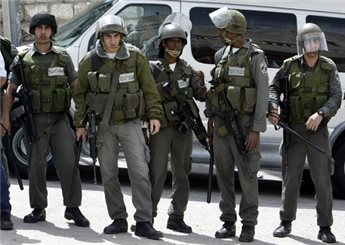
NABLUS – A Palestinian family has accused Israeli forces of stealing money and jewelry from their family home near Nablus during a military raid Sunday.
Family members of Wisdam Nassar from the village of Madama south of Nablus told Ma’an they realized Tuesday that 5,000 shekels ($1,200) and jewelry worth 12,000 shekels ($3,000) were gone after Israeli forces raided the home.
Israeli forces raided the village at 2 a.m. early Sunday and ransacked several homes for inspection, according to the family.
The family said they had notified the Palestinian security services of the robbery.
An Israeli army spokeswoman told Ma’an she was not aware of any theft that might have occurred and would look into the incident.
Israeli forces confiscated an estimated $2.9 million worth of cash and property from Palestinian homes, charities, and businesses during Operation Brother’s Keeper in the summer of 2014, according to a report by Geneva-based human rights organization Euro-Mid Observer.
The operation involved a three-week campaign of mass arrests throughout the occupied West Bank by Israeli forces, allegedly searching for those responsible for the deaths of three Israeli teenagers killed while hitchhiking in a Jewish settlement near Bethlehem.
Spokespople for the Israeli government justified confiscations during this time by claiming their planned use to fund or support terrorism.
The Euro-Mid Observer reported, however, that Israeli authorities neither provided evidence nor judicial permission for the confiscations.
March 18, 2015
Posted by aletho |
Ethnic Cleansing, Racism, Zionism | Human rights, Israel, Palestine, West Bank, Zionism |
Leave a comment
With the situation in the Middle East seemingly spinning out of control, many political observers are left wondering what it all means. The war in Syria has been at the forefront of the news since 2011, and rightly so, as Syria has become the epicenter of a larger regional conflict, particularly with the ascendance of ISIS in the last year.
Undoubtedly, the mainstream acceptance of the ISIS threat has changed the strategic calculus vis-à-vis Syria, as the US prepares to launch yet another open-ended war, ostensibly to defeat it. And, while many in the West are willing to buy the ISIS narrative and pretext for war, they do so with little understanding or recognition of the larger geopolitical contours of this conflict. Essentially, almost everyone ignores the fact that ISIS and Syria-Iraq is only one theater of conflict in the broader regional war being waged by the US-NATO-GCC-Israel axis. Also of vital importance is an understanding of the proxy war against Iran (and all Shia in the region), being fomented by the very same terror and finance networks that have spread the ISIS disease in Syria.
In attempting to unravel the complex web of relations between the terror groups operating throughout the region, important commonalities begin to emerge. Not only are many of these groups directly or tangentially related to each other, their shadowy connections to western intelligence bring into stark relief an intricate mosaic of terror that is part of a broader strategy of sectarianism designed to destroy the “Axis of Resistance” which unites Iran, Syria, and Hezbollah. In so doing, these terror groups and their patrons hope to internationalize the war in Syria, and its destructive consequences.
Terrorism as a Weapon in Syria and Iraq
In order to understand how these seemingly disparate groups fit into the regional destabilization, one must first recognize how they are connected both in terms of ideology and shared relationships. On the one hand you have the well known terror outfits operating in the Syria-Iraq theater of this conflict. These would include the ubiquitous ISIS, along with its Al Qaeda-affiliated ally Jabhat Al-Nusra.
However, often left out of the western narrative is the fact that the so called “moderate rebels,” such as the Al Farouq Brigade and other similar groups affiliated with the “Free Syrian Army,” are also linked through various associations with a number of jihadi organizations in Syria and beyond. These alleged “moderates” have been documented as having committed a number of egregious war crimes including mutilation of their victims, and cross-border indiscriminate shelling. And these are the same “moderates” that the Obama Administration spent the last three years touting as allies, as groups worthy of US weapons, to say nothing of the recent revelations of cooperation with US air power. But of course US cooperation with these extremist elements is only the tip of the iceberg.
A recent UN report further corroborated the allegations that Israeli military and/or Mossad is cooperating with, and likely helping to organize, the Jabhat al-Nusra organization in and around the Golan Heights. Such claims of course dovetail with the reports from Israeli media that militant extremists fighting the Syrian government have been treated in Israeli medical facilities. Naturally, these clandestine activities carried out by Israel should be combined with the overt attacks on Syria carried out by Tel Aviv, including recent airstrikes, which despite the inaction of the UN and international community, undeniably constitute a war crime.
Beyond the US and Israel however, other key regional actors have taken part in the destabilization and war on Syria. Turkey has provided safe haven for terrorists streaming into Syria to wage war against the legally recognized government of President Assad. In cooperation with the CIA and other agencies, Turkey has worked diligently to foment civil war in Syria in hopes of toppling the Assad government, thereby allowing Ankara to elevate itself to a regional hegemon, or so the thinking of Erdogan and Davutoglu goes. Likewise, Jordan has provided training facilities for terrorists under the guidance and tutelage of “instructors” from the US, UK, and France.
But why rehash all these well-documented aspects of the destabilization and war on Syria? Simple. In order to fully grasp the regional dimension and global implications of this conflict, one must place the Syria war in its broader geopolitical context, and understand it as one part of a broader war on the “Axis of Resistance.” For, while Hezbollah and certain Iranian elements have been involved in the fighting and logistical support in Syria, another insidious threat has emerged – a renewed terror war against Iran in its Sistan and Baluchestan province in the east.
Rekindling the Proxy War against Iran
As the world’s attention has been understandably fixed upon the horrors of Syria, Iraq, and Libya, a new theater in the regional conflict has come to the forefront – Iran; specifically, Iran’s eastern Sistan and Baluchestan province, long a hotbed of separatism and anti-Shia terror, where a variety of terror groups have operated with the covert, and often overt, backing of western and Israeli intelligence agencies.
Just in the last year, there have been numerous attacks on Iranian military and non-military targets in the Sistan and Baluchestan region, attacks carried out by a variety of groups. Perhaps the most well known instance occurred in March 2014 when five Iranian border guards were kidnapped – one was later executed – by Jaish al-Adl which, according to the Terrorism Research and Analysis Consortium is:
an extremist Salafi group that has since its foundation claimed responsibility for a series of operations against Iran’s domestic security forces and Revolutionary Guards operating in Sistan and Balochistan province, including the detonation of mines [link added] against Revolutionary Guards vehicles and convoys, kidnapping of Iranian border guards and attacks against military bases… Jaish al-Adl is also opposed to the Iranian Government’s active support of the Syrian President Bashar al-Assad, which they regard as an attack on Sunni muslims… Jaish ul-Adl executes cross border operations between the border of Iran and Pakistan and is based in the Baluchistan province in Pakistan.
It is important to note the centrality of Iran’s support for Syria and the Syrian Arab Army (and of course Hezbollah) in the ideological framework of a group like Jaish al-Adl. Essentially, this terror group sees their war against the Iranian government as an adjunct of the war against Assad and Syria – a new front in a larger war. Of course, the sectarian aspect should not be diminished as this group, like its many terrorist cousins, makes no distinction between political and religious/sectarian divisions. A war on Iran is a war on Shia, and both are just, both are legitimate.
Similarly, the last 18 months have seen the establishment of yet another terror group known as Ansar al-Furqan – a fusion of the Balochi Harakat Ansar and Pashto Hizb al-Furqan, both of which had been operating along Iran’s eastern border with Pakistan. According to the Terrorism Research and Analysis Consortium:
They characterize themselves as Mujahideen aginst [sic] the Shia government in Iran and are linked to Katibat al Asad Al ‘Ilamiya; Al-Farooq activists; al Nursra Front (JN), Nosrat Deen Allah, Jaysh Muhammad, Jaysh al ‘Adal; and though it was denied for some time, appears to have at least personal relationships with Jundallah… The stated mission of Ansar al Furqan is “to topple the Iranian regime…”
Like its terrorist cousin Jaish al-Adl, Ansar al-Furqan has claimed responsibility for a number of attacks against the Iranian Government, including a May 2014 IED attack on a freight train belonging to government forces. While such attacks may not make a major splash in terms of international attention, they undoubtedly send a message heard loud and clear in Tehran: these terrorists and their sponsors will stop at nothing to destroy the Islamic Republic of Iran.
Two inescapable facts immediately come to the fore when examining these groups. On the one hand, they are Sunni extremists whose ultimate goal is the destruction of the Iranian state and all vestiges of Shia dominance, political, military or otherwise. On the other hand, these groups see their war against Iran as part and parcel of the terror wars on Syria and Iraq.
And then of course there’s Jundallah, the notorious terror organization lead for decades by the Rigi family. Anyone with even cursory knowledge of the group is undoubtedly aware of its long-standing ties to both US and Israeli intelligence. As Foreign Policy magazine reported in 2012, Israeli Mossad and US CIA operatives essentially competed with one another for control of the Jundallah network for years. This information of course directly links these agencies with the covert war against Iran going back years, to say nothing of the now well-known role of Israeli intelligence in everything from assassinations of Iranian scientists to the use of cyberweapons such as Stuxnet and Flame. These and other attacks by Israel and the US against Iranian interests constitute a major part of the dirty war against Iran – a war in which terror groups figure prominently.
It should be noted that a number of other terror outfits have been used through the decades in the ongoing “low-intensity” war against Iran, including the infamous Mujahideen-e-Khalq, a terrorist group hailed as heroes by the US neocon establishment. Thanks to Wikileaks, it is also now documented fact that Israel has long since attempted to use Kurdish groups such as PJAK (Iraqi Kurdish terror group) to wage continued terror war against Iran for the purposes of destabilization of the government. Additionally, there was a decades-long campaign of Arab separatism in Iran’s western Khuzestan region spearheaded by British intelligence. As Dr. Kaveh Farrokh and Mahan Abedin wrote in 2005, “there is a mass of evidence that connects the British secret state to Arab separatism in Iran.”
These and other groups, too numerous to name here, represent a part of the voluminous history of subversion against Iran. But why now? What is the ultimate strategy behind these seemingly disparate geopolitical machinations?
Encircling the Resistance in Order to Break It
To see the obvious strategic gambit by the US-NATO-GCC-Israel axis, one need only look at a map of the major conflicts mentioned above. Syria has been infiltrated by countless terrorist groups that have waged a brutal war against the Syrian government and people. They have used Turkey in the North, Jordan in the South, and to a lesser degree Lebanon and, indirectly, Israel in the West. Working in tandem with the ISIS forces originating in Iraq, Syria has been squeezed from all sides in hopes that military defeat and/or the internal collapse of the Syrian government would be enough to destroy the country.
Naturally, this strategy has necessarily drawn Hezbollah into the war as it is allied with Syria and, for more practical reasons, cannot allow a defeated and broken Syria to come to fruition as Hezbollah would then be cut off from their allies in Iran. And so, Hezbollah and Syria have been forced to fight on no less than two fronts, fighting for the survival of the Resistance in the Levant.
Simultaneously, the regional power Iran has made itself into a central player in the war in Syria, recognizing correctly that the war could prove disastrous to its own security and regional ambitions. However, Tehran cannot simply put all its energy into supporting and defending Syria and Hezbollah as it faces its own terror threat in the East. The groups seeking to topple the Iranian government may not be able to compete militarily with the Iranian Revolutionary Guards, but they can certainly create enough destabilization through terrorism to make it more difficult for Tehran to effectively aid in the fight in Syria.
The US-NATO-GCC-Israel alliance has not needed to put its own boots on the ground to achieve its strategic objectives. Instead, it is relying on irregular warfare, proxy terror wars, and small-scale destabilizations to achieve by stealth what it cannot achieve with military might alone.
But it remains paramount for all those interested in peace to make these connections, to understand the broad outlines of this vast covert war taking place. To see a war in Syria in isolation is to misunderstand its very nature. To see ISIS alone as the problem is to completely misread the essence of the conflict. This is a battle for regional hegemony, and in order to attain it, the Empire is employing every tool in the imperial toolkit, with terrorism being one of the most effective.
March 18, 2015
Posted by aletho |
Militarism, Wars for Israel | Iran, Iraq, Israel, Lebanon, Middle East, Pakistan, Syria, Turkey, United States |
Leave a comment


 Aletho News