Texas Representative Proposes Bill to Make Filming the Police Illegal for Everyone But MSM
By Jay Syrmopoulos | The Free Thought Project | March 12, 2015
Austin, Texas – On Tuesday, a bill was filed by Texas Representative Jason Villalba (R-Dallas), HB 2918, which would turn private citizens who film police into criminals.
The bill attempts to usurp citizens of the ability to hold law enforcement accountable for their actions by negating people’s ability to create an accurate and impartial record of police interactions.
If passed, the bill would amend the current “INTERFERENCE WITH PUBLIC DUTIES” statute (Sec. 38.15), to include language that only allows filming of police (within 25ft) by “news media.”
The term “news media” is then defined as such:
(A) a radio or television station that holds a license issued by the Federal Communications Commission;
(B) a newspaper that is qualified under Section 2051.044, Government Code, to publish legal notices or is a free newspaper of general circulation and that is published at least once a week and available and of interest to the general public in connection with the dissemination of news or public affairs; or
(C) a magazine that appears at a regular interval, that contains stories, articles, and essays by various writers, and that is available and of interest to the general public in connection with the dissemination of news or public affairs.
Notice that private citizens, and internet based sites are not listed as qualifying as “news media,” thus allowing the marginalization of anyone that is not part of the old corporate media structure. This also means that a citizen wouldn’t be able to record their own interaction with an officer.
The law is intentionally structured in this manner as a means of controlling the narrative of police-involved incidents. Traditional news outlets often rely almost solely on police talking points when running a story involving the police. It’s extremely rare for them to allow the victim’s version of events to be part of the narrative, especially when conflicting with that of the police.
If not for the alternative media on the ground in Ferguson, much of what was transpiring there would have never seen the light of day as corporate media would have just buried the story altogether.
The proposed legislation also ignores legal precedent, established in Glik v Cunniffe, where the court held that “a private citizen has the right to record video and audio of public officials in a public place.”
In that case the court went on to say:
“…we have previously recognized that the videotaping of public officials is an exercise of First Amendment liberties,” affirming Glik’s constitutional right to videotape public officials in public places.
The court went on to state that the right to film public officials in public places was clearly established a decade prior to the case, which would mean it was already established as early as 1997.
For some reason, Representative Villalba thinks that his authoritarian “wisdom” should replace that of the Founding Fathers.
What’s clear is that filming law enforcement in the commission of their duties has been established as “free speech” under the 1st Amendment of the Constitution.
The ability of citizens to hold officers accountable for their actions is not only protected “speech,” it’s also a necessary check on an out of control law enforcement apparatus. … Full article
CSIS operative linked to ISIS recruiting of British schoolgirls
By Brandon Martinez | Non-Aligned Media | March 13, 2015
The Ottawa Citizen has reported that an individual who authorities believe helped three British schoolgirls travel to Syria to join ISIS is linked to Canada’s intelligence agency, CSIS.
The Citizen noted that, “Turkish news agencies reported Thursday that a foreign intelligence agent detained in that country on suspicion of helping the girls travel to neighbouring Syria to join ISIL was working for the Canadian government.”
Turkey’s foreign minister Mevlut Cavusoglu said that the suspect in question was working for an intelligence agency that is part of the US-led coalition fighting ISIS, adding that it wasn’t the US or an EU member.
Turkish media reports later identified the suspect as a CSIS agent, citing sources close to the Turkish government.
Ottawa issued a prototypical denial that one of their operatives was involved.
The story confirms what many analysts have been saying all along, which is that ISIS is an elaborate Western intelligence operation.
Thousands of Western citizens have joined ISIS over the past year, but who is arranging their safe travel out of their countries of origin and into Syria without being nabbed by authorities?
As this case demonstrates, these individuals are being safely escorted to Syria by Western operatives.
The idea that Western intelligence agencies don’t have the resources to track these people is absurd. Russia Today ran a report showing how a Canadian open source intelligence research group called iBRABO geo-tracked a Canadian woman who joined ISIS through her Twitter account. Every tweet she posted revealed her exact location. Intelligence agencies have far more resources at their disposal than a private research group, so the suggestion that these people just slip under the radar doesn’t hold up.
Analysts contend that Western intelligence agencies are trolling for young, impressionable, and disenfranchised people to send off to fight and die in Syria. This is done in accordance with the West’s ‘regime change’ policy in Syria.
US Senator Rand Paul recently told CNN that the United States is “allied” with ISIS in Syria as Washington aims to depose the secular government of Bashar al-Assad. Former US General Wesley Clark said that America’s allies (and by extension America itself) funded ISIS to weaken the Shia arc of resistance consisting of Syria, Iran and Hezbollah.
While the West fights an artificial ‘fake war’ against ISIS officially, it continues to clandestinely support the group as it beheads its way to Damascus, and on to Beirut and Tehran.
Copyright 2015 Non-Aligned Media
Iraqi govt coalition party calls for probe into killing of 22 soldiers, blames US-led airstrikes
RT | March 13, 2015
Iraqi authorities are being urged to investigate the killing of 22 Iraqi soldiers in the western province of Anbar in what they claim was a US-led airstrike. The government coalition party, which urges the probe, says the findings should be made public.
The soldiers were killed on Wednesday when an airplane bombed the HQ of an army company near Ramadi, a city in central Iraq, about 110 kilometers west of Baghdad, an Iraqi military officer and a police source said, as cited by Reuters.
“The aviation of international coalition repeatedly carried out air strikes on the positions of the national militia forces and the armed forces, who are leading a fierce war against terrorists of ISIL [also formerly known ISIS, currently the Islamic State (IS)],” said a statement from Al-Moaten bloc, a member party in the government coalition.
No one has yet admitted responsibility for the deaths. Iraqi forces have blamed the killing of 22 soldiers on the US-led coalition. A military source told Reuters that a missile was launched from a foreign aircraft. However, coalition spokesman Lieutenant Colonel Thomas Gilleran said that the alliance fired the only strike in the province and it didn’t result in any “friendly casualties.”
US military officials also told Reuters on condition of anonymity that Iraqi security force planes were operating in targeted area and that US are discussing with Iraqi the reports of a friendly fire incident among Iraqi forces.
The head of the Anbar provincial council, Sabah Karhout, has suggested that the blast was caused by explosives planted in an underground tunnel beneath the military headquarters.
According to one of US officials, the strike was 33 kilometers from the site where Iraqi soldiers were killed.
In the meantime, Iraqi officials deny that their country forces were responsible for that friendly fire. “We don’t have any Iraqi war planes carrying out combat duties in Anbar,” an Iraqi military source said.
Kevork Almassian, an academic and political analyst focusing on the Middle East, told RT that he“ doesn’t buy the reports” that the attack in Anbar province was not carried out by the coalition or was carried out by mistake against the Iraqi forces.
“The equation for me is very clear in Iraq: the strong ISIS and other strong terrorist organizations have a price.”
American forces are working covertly to slow down the advances of the Iraqi forces in Tikrit and elsewhere against ISIS, Almassian said.
“If the Iraqi forces succeeded in crushing and eliminate these terrorist elements from that area, the Iraqi government will empower its position and the Iranians will empower their position in the Middle East,” he told RT.
Since the US-led offensive against the Islamic State began several months ago, Secretary of State John Kerry said that nearly 2,000 airstrikes have helped ground forces retake 700 square kilometers (270 square miles) of territory, kill 50 percent of IS commanders and choking off some of the group’s oil revenue.
According to US officials, approximately 6,000 Islamic State members in Iraq and Syria have died since the strikes began.
White House petition on ‘47 GOP traitors’ draws 260,000 signatures

US Senate Majority Leader Mitch McConnell (left), Senator Ted Cruz (center) and Senator John Cornyn
Press TV – March 13, 2015
A petition to the White House demanding treason charges against 47 Republican senators who attempted to sabotage US President Barack Obama’s efforts to reach a nuclear accord with Iran has garnered more than 260,000 signatures.
The petition, on whitehouse.gov, was filed on Monday and had 263,312 signatures as of early Friday morning, well above the threshold of 100,000, which requires the White House to respond.
In an unprecedented move on Monday, a group of Republican senators ignored protocol and sent a letter to Iran, warning that whatever agreement reached with Obama would be a “mere executive agreement” that could be revoked “with the stroke of a pen and future Congresses could modify the terms of the agreement at any time.”
The letter appears at a time when US negotiators are preparing to return to Switzerland to participate in the nuclear talks between Iran and the P5+1 countries – the US, Britain, France, China, Russia, and Germany, which have entered a sensitive final stage.
According to the petition, the 47 Republican lawmakers “committed a treasonous offense when they decided to violate the Logan Act, a 1799 law which forbids unauthorized citizens from negotiating with foreign governments.”
The US federal law prohibits unauthorized American citizens from interfering in relations between the United States and foreign governments. Violation of the Logan Act is a felony.
“At a time when the United States government is attempting to reach a potential nuclear agreement with the Iranian government, 47 Senators saw fit to instead issue a condescending letter to the Iranian government stating that any agreement brokered by our President would not be upheld once the president leaves office,” the petition states.
“This is a clear violation of federal law. In attempting to undermine our own nation, these 47 senators have committed treason,” it adds.
In an interview with Press TV on Wednesday, Mark Dankof, former US Senate candidate, said, “The 47 Republican senators in all likelihood had violated the Logan Act, which, if understood properly, would suggest very strongly that there may be a legal case against these Republican senators in regard to having committed treason.”
Tom Cotton, a freshman senator from Arkansas, drafted the much-criticized letter. He claimed that the letter has more support in the US Congress than the Republican senators who have signed it.
On Tuesday, the New York Daily News denounced the 47 Republican senators as “traitors” for writing the letter to Iran. The Manhattan-based newspaper used its front page to condemn the Republicans for sending the letter to Iran’s leaders.
The tabloid’s front page prominently featured Senate Majority Leader Mitch McConnell and Senators Ted Cruz, Tom Cotton and Rand Paul.
Here are the names of 47 Republican senators who signed the Iran letter:
Signatories
Richard Shelby (Ala.)
Jeff Sessions (Ala.)
Dan Sullivan (Alaska)
John McCain (Ariz.)
John Boozman (Ark.)
Tom Cotton (Ark.)
Cory Gardner (Colo.)
Marco Rubio (Fla.)
Johnny Isakson (Ga.)
David Perdue (Ga.)
Mike Crapo (Idaho)
Jim Risch (Idaho)
Mark Kirk (Ill.)
Chuck Grassley (Iowa)
Joni Ernst (Iowa)
Pat Roberts (Kansas)
Jerry Moran (Kansas)
Mitch McConnell (Ky.)
Rand Paul (Ky.)
David Vitter (La.)
Bill Cassidy (La.)
Roger Wicker (Miss.)
Roy Blunt (Mo.)
Steve Daines (Mont.)
Deb Fischer (Neb.)
Ben Sasse (Neb.)
Dean Heller (Nev.)
Kelly Ayotte (N.H.)
Richard Burr (N.C.)
Thom Tillis (N.C.)
John Hoeven (N.D.)
Rob Portman (Ohio)
Jim Inhofe (Okla.)
James Lankford (Okla.)
Pat Toomey (Pa.)
Lindsey Graham (S.C.)
Tim Scott (S.C.)
John Thune (S.D.)
Mike Rounds (S.D.)
John Cornyn (Texas)
Ted Cruz (Texas)
Orin Hatch (Utah)
Mike Lee (Utah)
Shelley Moore Capito (W.V.)
Ron Johnson (Wis.)
Mike Enzi (Wyo.)
John Barrasso (Wyo.)
WaPo, Owned by CIA’s Webmaster, Blasts Venezuela’s ‘State-Financed’ News
By Jim Naureckas | FAIR | March 12, 2015
Venezuelans are worried because US President Barack Obama declared a “national emergency” that called Venezuela “an unusual and extraordinary threat to the national security and foreign policy of the United States.”
But there’s no need for them to get upset, the Washington Post’s Nick Miroff and Karen DeYoung (3/11/15) reassure. The Obama administration explained that it just wanted to impose sanctions on some of Venezuela’s top officials because “it wanted to send a strong message in defense of human rights and democracy”:
The “emergency” declaration and labeling of Venezuela as a “security threat” are legal formalities used in many other instances when sanctions are applied, administration officials said. The language does not represent a more severe assessment of the Maduro government, they said.
Ah–the administration is just pretending there’s an “unusual and extraordinary threat” because it wants to invoke powers that it’s only legally allowed to use in an actual emergency. No biggie. Thanks for clearing that up, Washington Post !
Unfortunately, Venezuelans don’t have Washington-savvy publications like the Post to set them straight. Or, as Miroff and DeYoung put it:
Such nuances stood little chance in the meat grinder of Venezuela’s rough political culture, where state-financed and pro-government broadcasters dominate the airwaves.
Hmm–so we should be wary of “state-financed and pro-government” media outlets, huh?
The Washington Post, as it happens, is owned by Jeff Bezos, the 15th richest person in the world, who derives his fortune from his position as the main owner of Amazon.com, with an 18 percent share of the company.
You probably know Amazon as an online bookseller; less famously, they’re also in the online data storage business, and one of their top clients is the US intelligence community, which paid Amazon Web Services $600 million for a “cloud” to store and process information for the CIA, NSA and other US spy agencies. As the Atlantic (7/17/14) noted at the time, this is far from Amazon’s only government contract; other agencies they store data for include NASA, the FDA, the CDC and HealthCare.gov.
Amazon “is rapidly becoming the leading supplier of cloud services to the federal government,” the trade publication EnterpriseTech (8/22/14) reported. When the Defense Department looked to spend $10 billion on cloud services, Amazon didn’t bid directly for the contract–but it will partner with five of the 10 companies who won pieces of the contract, allowing it to get more than the $1 billion each direct contractor is limited to (FCW, 8/28/13).
Is this serious money for Bezos? Well, he paid $250 million for the entire Washington Post in 2013, so it’s more than walking-around money. Suffice it to say that it’s very unlikely any Venezuelan broadcaster gets as much state funding as the Bezos empire.
As for “pro-government”–the Post may be more or less friendly to any particular administration, but it’s never going to lose its allegiance to the DC’s permanent government. As Keane Bhatt (Extra!, 3/14) pointed out, it’s the Post’s proximity to Washington’s imperial power that makes it more than just another mid-size daily like the Denver Post.
And part of the job of being Washington’s official court paper, apparently, is explaining to the inhabitants of lesser nations that they shouldn’t take it personally when the US labels them “an unusual and extraordinary threat.”
Indigenous Languages Gaining Space in Ecuador
teleSUR | March 12, 2015
Ecuador is working to rescue and promote the use of indigenous languages.
As reparation for historical injustices and as a means to strengthen the nation’s intercultural identity, the Ecuadorean government and citizens are prioritizing the recuperation of the country’s 14 indigenous languages.
Human migration and societies stigmatization of their tounge are two factors which have led to the near disappearance of some languages in recent years. Studies have shown that in 1950 14 percent of the population spoke an indigenous language, with that number plummeting to be 3.7 percent in 1990.
Director of the Center for Economic and Social Rights Eduardo Pichilingue told teleSUR English, “I think that language is fundamental for creating a group, so that it has identity. I work with the Waorani indigenous group, the Waorani thankfully have a relatively healthy language still, they were contacted not too long ago, this makes the change in their language not as drastic as in other nationalities.”
Giving a space to those previously excluded and ignored indigenous voices is the Ecuador Educational Coordination of Popular Radio. With the objective of democratizing communication, it allows Kichwa-speaking producers to design their own programs, and report on both national and international events.
“On behalf of the government I think there has been an effort above all else to strengthen processes of cultural exchange. I believe the government is working hard in communication processes between people and nationalities. 18 community radios have been implemented at a national level to strengthen processes of communication between people from distinct nationalities,” said Sandy Chavez, the Coordinator of Networks at CORAPE.
She went on to say, “From us as an institution, a great success has been incorporating producers, young people who did not speak Kichwa, into our educational initiative and transmit in the Kichwa language. So our first success has been that these young people are not embarrassed to speak in the language, but that they are part of this initiative to rescue indigenous languages, and this has been the first.”
A country with more than 10 indigenous nationalities, the 2008 constitution of Ecuador declares it a plurinational and intercultural state. The Foreign Ministry has expressed that it is willing to foster diplomatic relationships with these distinct nationalities within Ecuador, as a way to strengthen national identity as the country continues working to save and further the use of indigenous languages.
Monsanto’s Deep Legacy of Corruption and Cover-Up
By Barbara Minton | Natural Society | March 6, 2015
Monsanto is now instantly recognized as the company dominating the global food supply with its more than 7000 current worldwide patents. But today’s Monsanto is not a corporate newcomer. Although its literature heralds the company as having a clear and principled code of conduct and a pledge to demonstrate integrity, respect, ethical behavior, and honesty in everything they do, the truth is that this company has a legacy of contamination and cover-up that dates back more than a century.
The Rise of one of ‘The Worst Corporations in the World’
At the turn of the 19th century, John Queeny founded Monsanto Chemical Works to produce such nefarious products as saccharin, synthetic vanillin, and laxative and sedative drugs. The company was well positioned as a leading force in the dawning American chemical industry.
From the 1920’s until the late 1960’s, Queeny’s son, Edgar Monsanto Queeny, expanded the company into a global franchise, and changed its name to Monsanto Chemical Company in 1933. He added sulfuric acid, PCBs, DDT, synthetic fibers, and an array of plastics that included polystyrene to the product line.
During this time, Monsanto also created Agent Orange, one of the herbicides and defoliants used by the U.S. military as part of its herbicidal warfare program, Operation Ranch Hand, during the Vietnam War from 1961 to 1971.
Agent Orange was a combination of equal parts of two herbicides, 2,4,5-T and 2,4-D. The 2,4,5-T used to produce Agent Orange threw off dioxin as a byproduct, a compound the World Health Organization classes as highly toxic. Dioxin can cause reproductive and developmental problems, damage to the immune system, hormone disruption, and the initiation of cancer. Dioxin persists in the environment and accumulates in the body, even at minimal exposure.
In areas where Agent Orange was used, the concentration of dioxin was hundreds of times greater than the levels considered safe by the Environmental Protective Agency (EPA). This resulted in a host of terrible health consequences for anyone exposed. and led to decades of litigation during which Monsanto fought tooth and nail to avoid paying for the horrific damage military personnel suffered from. The class action case that followed was settled out of court in 1984 for $180 million, reportedly the latest settlement of its kind at the time.
More than 60 years of Contamination and Cover Up
Dioxin Leak at Nitro – $93 Million Settlement
 From 1929 until 1995, Monsanto operated a chemical plant in the small town of Nitro, West Virginia, where it manufactured Agent Orange. In 1949, a pressure valve blew on a tank of the herbicide, sending plumes of smoke and vapors containing dioxin throughout the town, coating residents and the homes they lived in with powdery residue.
In a short time, some people developed skin eruptions and were diagnosed with an enduring and disfiguring condition known as chloracne. Others had prolonged pain extending from their chest to their feet. According to a medical report following the explosion, “It caused a systemic intoxication in the workers involving most major organ systems.”
Monsanto’s reaction? The company down-played it, claiming the chemical was slow-acting and just a minor irritant.
To get rid of the dioxin, the company dumped it into storm drains, streams and sewers, and stored it in landfills. Dioxin persisted in waterways and in the fish that lived in them. When residents sued for damages, they were told by Monsanto that their allegations had no merit and that the company would defend itself vigorously.
The residents of Nitro or their descendants finally received $93 million from Monsanto in 2012.
PCBs Contaminate the Town of Anniston, Alabama
PCBs (polychlorinated biphenyls) are used in many industries as hydraulic fluids, sealants, and lubricants. These chemicals have been demonstrated to cause cancer, as well as a variety of other adverse health effects on the immune, reproductive, nervous, and endocrine systems.
Monsanto’s plant in Anniston, Alabama produced PCBs from 1929 to 1971. Since then, tons of contaminated soil have been hauled away from the plant, but the site continues to be one of the most highly polluted areas in the country.
Why was it such a mess? During its production years, waste PCBs were dumped into a nearby open landfill, poured into a creek that ran alongside the plant, or just allowed to run off the property during storms. During those years, the townspeople drank from their wells, ate fish they caught, and swam in the creeks, oblivious of the PCBs. When public awareness began to mount, authorities found high levels of PCBs all over the place, and in the bodies of those people, where it will remain forever.
In 1966, a Monsanto biologist testing waterways near the Anniston plant found that when live fish were added to the water, “All 25 fish lost equilibrium and turned on their sides in 10 seconds and all were dead in 3 1/2 minutes.”
In 1970, the FDA found high levels of PCBs in fish near the Anniston plant, and Monsanto jumped into cover-up mode. A leaked internal memo from a company official outlined steps for the company to take to limit disclosure. The strategy called for engaging public officials to fight the battle for them. “Joe Crockett, Secretary of the Alabama Water Improvement Commission will try to handle the problem quietly without release of the information to the public at this time,” the memo promised.
A statement eventually released from Monsanto’s world headquarters in St. Louis stated, “Quoting both plant management and the Alabama Water Improvement Commission, the PCB problem was relatively new, was being solved by Monsanto and, at this point, was no cause for public alarm.”
The class action suit for Anniston was finally settled in 2003, when Monsanto was forced to pay $700 million.
More PCBs Dumped into the Environment
In 1977, Monsanto closed its PCB plant in Whales, but not before dumping thousands of tons of waste into the quarry of the town of Groesfaen. Authorities there say the site is still one of the most contaminated in Britain.
Internal papers indicate that Monsanto knew about the PCB dangers as early as 1953, when toxicity tests on the effects of PCBs killed more than 50% of the lab rats subjected to them. In 2011, Monsanto reluctantly agreed to help in the clean up after an environmental agency found 67 chemicals at the quarry site that were exclusively manufactured by Monsanto. Yet that effort remained underfunded and the quarry remains contaminated.
The Guardian reported that Monsanto wrote an abatement plan in 1969 which admitted “the problem involves the entire United States, Canada, and sections of Europe, especially the UK and Sweden.”
Navy Rejects Monsanto Product Because it was ‘Too Toxic’
Monsanto tried to sell its hydraulic fluid, known as Pydraul 150, to the navy in 1956, and supplied test results in their sales pitch. But the navy decided to do its own testing, and the company was informed that there would be no sale because the product proved to be too toxic. In an internal memo divulged during a court proceeding, Monsanto’s medical director stated that “no matter how we discussed the situation, it was impossible to change their thinking that Pydraul 150 is just too toxic for use in submarines.”
Monsanto Moves into Food, Biotechnology
Monsanto’s move into biotech began in the 1970’s, and in 1983 the first genetic modification of a plant cell had been achieved. Synthetic bovine growth hormone (rBST) was on the horizon. Monsanto’s public relations department portrayed GM seeds as a panacea for alleviating poverty and feeding the hungry. In 1985, the company bought NutraSweet artificial sweetener, a branded version of aspartame – the compound responsible for 75% of the complaints reported to the FDA’s adverse reaction monitoring system.
Monsanto Seeks Clean Image, Creates Solutia
In the late 1990’s, Monsanto created a new company known as Solutia, and off-loaded its chemical and fiber businesses. L. Bartlett and James B. Steele, chronicling the rise of Monsanto for Vanity Fair magazine, noted the reason for the spinoff was to channel the bulk of Monsanto’s mounting chemical lawsuits and liabilities into the spun-off company, thereby creating a clean image for Monsanto. Solutia became Monsanto’s solution!
As the company, now known simply as Monsanto, moves through the 21st century, it has a ‘new cleaned-up image,’ and a fine sounding mission statement. It refers to itself as a relatively new company that promotes sustainable agriculture and delivering products that support farmers around the world.
Except Monsanto is the 3rd most hated company in the world.
Monsanto’s legacy of contamination and cover-up should be a wake up call for you to run from the GMOs they have spawned. Remember the old adage that says leopards can’t change their spots?
Intimidation in Puerto Rico?
By Carlos Borrero | CounterPunch | March 12, 2015
The significance of a recently divulged plan of the Pentagon to carry out military exercises in Puerto Rico under the name “Operation Borinquen Response” between the 14th and 21st of this month must not be underestimated. On the pretext of the need to prepare for a natural disaster, US imperialism has cynically prepared a series of military maneuvers for Puerto Rico in which more than 1,000 troops from the island, National Guard troops from West Virginia, Washington, Tennessee, Vermont and Nebraska, as well as international observers from Honduras and the Dominican Republic are slated to participate.[1]
This military deployment does not represent an isolated phenomenon. Rather, it is an extension of the policy of increased militarization of US society to its colony in anticipation of an intensification of mass discontent. In the past several years there have been a number of similar military simulations based on urban warfare scenarios carried out in US cities such as Houston, Miami and Minneapolis-St. Paul. These exercises have included the deployment of military aircraft such as Blackhawk helicopters as well as heavily armed paratroopers into residential areas. Indeed, Obama added a key piece to the legal architecture for this militarization of US society with the signing of the National Defense Authorization Act of 2012, which essentially repealed what remained of the Posse Comitatus statute that made the deployment of US armed forces on US soil illegal during times of peace. In this way, this Nobel Peace laureate has expanded the militarist policies of the previous administration both domestically and abroad.
Another critical component of this militarization of US society in recent years has been the supply of military grade equipment and weapons to urban police forces through the Department of Homeland Security. The brutal repression unleashed upon protesters in Ferguson, Missouri last year, as well as the recent revelations by The Guardian of the existence of secret prisons or ‘black sites’, such as the now infamous Homan Square[2], maintained by the Chicago Police in which the torture of civilians has been carried out are just two patent examples of this tendency.
In an age of the historical decline of its system, the only solution proposed by the capitalist class is war, both against the working masses within national borders and foreign rivals abroad. In fact, the practice of domestic military exercises is consistent with the recommendations made in a recent Pentagon study[3] that warns of the need to revise military doctrine in preparation for the eventuality of future interventions by the US Army in large urban areas. According to military theorists, the social and economic crises within so-called megacities, which they describe as ‘petri dishes’ for radicalism, will be particularly acute. The incipient wave of working class resistance, which is evidenced by recent strikes by west coast longshoremen and US refinery workers, coupled with the massive protests within working class communities of color subjected to brutal police repression, appear to be just the beginning of a new phase of intense class struggles within the center of world imperialism. As such, despite their rhetoric to the contrary, the strategists of US capitalism know very well that they are not immune to the type of social convulsions that have recently rocked other countries.
The objective conditions for popular opposition to the system have become particularly acute in Puerto Rico. Massive structural unemployment as well as economic stagnation over the past 8 years has highlighted the complete bankruptcy of the economic solutions imposed by the capitalists and their acolytes in the colony. In a recent report by the US Bureau of Labor Statistics it was revealed that in 2014 Puerto Rico registered the lowest labor participation rate in last 22 years, seeing a reduction of 37,000 people employed. It is a well known fact that this prolonged unemployment crisis has provoked a massive exodus of Puerto Ricans from the island, many of which are highly skilled, in what can only be described as brain drain. All of this is taking place within the context of a $70 Billion public debt, which represents almost 70% of GDP, and serves as a pretext for a campaign of austerity measures carried out against the mass of working class Puerto Ricans. And in an effort to guarantee the steady transfer of wealth to the financial parasites of Wall Street as well as their junior partners in the colony, the colonial administration has recently proposed an increase to the consumption tax as part of what it cynically calls ‘tax reform’.
This panorama of social and economic crises increasingly provokes a popular questioning of all the political institutions within the colony. As such, the planned military exercises represent a policy of psychological intimidation being carried out in anticipation of a new wave of popular protests within a colonial society that is crumbling from within. From the perspective of US imperialism and its defenders within the colony, there is a concern that any political change that takes place within its colony be carried out under terms that are acceptable and consistent with its strategic interests.
Notwithstanding, the military exercises planned for Puerto Rico cannot only be understood within the context of a response to the deepening of the social crisis in the colony. It must also be understood as an imperative of US imperialism within the context of the sharpening of geopolitical conflicts. Undoubtedly, the recent rapprochement between Washington and Havana as well as the destabilizing campaign carried out against Venezuela form part of the same strategy of the US ruling class to reassert its hegemony in the hemisphere against the threat of emerging rivals like China.
There exists in recent Puerto Rican history a powerful precedent for popular opposition to US militarism in the struggle to remove the US Navy from the island of Vieques. The task of assessing the strengths and weaknesses of this experience now falls upon those popular forces most committed to the working masses. Their capacity to foster the reorganization of popular resistance and international solidarity against this most recent example of US militarism is more urgent than ever.
Carlos Borrero is a New York-based writer.
Notes
[2] http://www.theguardian.com/us-news/2015/feb/27/chicago-abusive-confinment-homan-square
How the US Funds Dissent against Latin American Governments
teleSUR | March 12, 2015
“A lot of what we do today was done covertly 25 years ago by the CIA.”
NED founding father, Allen Weinstein
The U.S. government and military have a long history of interfering in the affairs of numerous countries in Latin American and the Caribbean.
By the end of the 19th century, there had been at least 10 U.S. military interventions across the hemisphere including Argentina (1890), Chile (1891), Haiti (1891), Panama (1895), Cuba (1898), Puerto Rico (1898) and Nicaragua (1894, 1896, 1898 and 1899).
From this time onward, successive U.S. administrations applied different strategies and tactics for involvement in the region as a means to secure and protect its geopolitical and economic interests. However, only recently has there been wider acknowledgement about the role that U.S. funding to nongovernmental organizations, or NGOs, particularly from the National Endowment for Democracy (NED) and the United States Agency for International Development (USAID), plays in furthering U.S. foreign policy. For example, in 2012 governments of the Bolivarian Alliance for the Peoples of Our America (ALBA) collectively signed a resolution to expel USAID from each of the signing countries. Those countries included Bolivia, Cuba, Ecuador, Dominica, Nicaragua, and Venezuela.
The National Endowment for Democracy (NED)
Created by the administration of former U.S. President Ronald Reagan in 1983, the NED operates as a foundation that provides grants for “democracy promotion.” The foundation is structured as an umbrella with an almost corporatist flavor, housing four other organizations reflecting U.S. sectoral and party interest: the U.S. labor affiliated American Center for International Labor Solidarity (ACILS) and Chamber of Commerce linked Center for International Private Enterprise (CIPE), along with the National Democratic Institute for International Affairs (NDI) and the International Republican Institute (IRI), both of which reflect Democrat and Republican affiliations, respectively.
In many ways the NED resembles previous CIA efforts in the 1950s, 60s and 70s to provide mostly public money for secret operations aimed to bolster pro-U.S. governments and movements abroad. In South America for example, between 1975 and 1978 the U.S. helped with the creation and implementation of Operation Condor. The U.S. provided right-wing dictatorships in Argentina, Bolivia, Brazil, Chile, Paraguay, Uruguay, Colombia, Peru, Venezuela and Ecuador with technical and military support for the goal of hunting down and killing political opponents. Some estimate that Operation Condor killed between 60,000 and 80,000 people.
In 1986, then president of the NED Carl Gershman explained to the New York Times, “We should not have to do this kind of work covertly … It would be terrible for democratic groups around the world to be seen as subsidized by the C.I.A. We saw that in the 60s, and that’s why it has been discontinued. We have not had the capability of doing this, and that’s why the endowment was created.”
U.S. citizens unknowingly fund the NED with public money. The U.S. government allocates part the budget of the United States Agency for International Development (USAID) under the U.S. State Department to the NED – which is most of the NED’s funding source. Although it receives practically all of its funding from the U.S. government, the NED is itself an NGO headed by a Board of Directors. The current board includes:
- Political economist, author and free market universalist Francis Fukuyama,
- Elliott Abrams, former deputy assistant and deputy national security adviser on Middle East policy in the administration of President George W. Bush,
- Moises Naim, Venezuelan Minister of Trade and Industry during the turbulent early 1990s and former Executive Director of the World Bank, and
- Former Deputy Secretary of State under George W. Bush (2005 – 2006) and Vice Chairmanship at Goldman Sachs Group, Robert B. Zoellick.
The scope of activity of the NED is truly impressive. According to the NED website, it supports more than 1,000 NGO projects in more than 90 countries.
At its inception in the early 1980s, its funding allocation was set at US$18 million and reached its peak in the late 1990s and early 2000s. Allocations for 2014 and 2015 have been approved for US$103.5 million, while over US$7 million was directed primarily to opposition organizations in Ecuador, Bolivia, Venezuela and Cuba in 2013.
Within the U.S. State Department Justification of Request documents which outline the reasons for funding requests, it is clear that funding priorities in Latin America and the Caribbean reflect the NED’s modern strategy of overtly carrying out old covert objectives.
Michel Chossudovsky, a professor emeritus of economics at the University of Ottawa in Canada, sees this funding as an element in “manufacturing dissent” against governments that the U.S. government dislikes. However, these funders do not work alone. “The NED (and USAID) are entities linked with the U.S. state department, but they operate in tandem with a whole of other organizations,” said Chossudovsky.
In May 2010 the Foundation for International Relations and Foreign Dialogue released their report Assessing Democracy Assistance in Venezuela which revealed that in addition to NED and USAID funding, a broad range of private and European based foundations funded opposition-aligned NGOs in the country with between US$40-50 million annually.
According to Dan Beeton, International Communications Director at the Center for Economic and Policy Research (CEPR) in Washington, D.C., NED funds in Latin American have been directed at “a lot of what are kind of the old guard political entities that are now kind of discredited,” such as the Trade Union Confederation of Venezuela (CTV), which was instrumental in the 2002 coup in Venezuela, as well as older political parties that are now marginal forces in their country’s political landscapes in spite of their considerable outside funding.
The United States Agency for International Development
Created in 1961 as a foreign assistance program under President John F. Kennedy, USAID commands a much larger budget and broader scope than NED. While U.S. diplomats continue to stress that USAID funding does not have a political basis, USAID documents nonetheless acknowledge its role in “furthering America’s interests” while carrying out “U.S. foreign policy by promoting broad-scale human progress at the same time it expands stable, free societies, creates markets and trade partners for the United States.” But critics are skeptical of USAID’s missionary work, noting how their strategy has changed over time.
“(USAID’s) mandate is to provide development aid and historically it has provided development aid, tied into debt negotiations and so on. Subsequently with the evolution of the development aid program it has redirected its endeavours on funding NGOs,” said Chossudovsky.
While the range of activities undertaken by NGOs can be broad and some of these programs may not have political intentions, Beeton nonetheless argues that this funding “ultimately can and often does serve a political end when the U.S. wants these grantees to help it fulfill its goals in these countries.”
The extent of U.S. political ambitions recently came into the international spotlight with the revelation that USAID had secretly spent US$1.6 million to fund a social messaging network in Cuba called ZunZuneo, with the stated purpose of “renegotiat(ing) the balance of power between the state and society.” The project was headed up by Joe McSpedon of the USAID’s Office of Transition Initiatives (OTI).
Other USAID officials accused of active political meddling in the affairs of sovereign countries include regional head Mark Feierstein. According to Venezuelan investigative journalist Eva Golinger, in 2013 Feierstein met Venezuelan opposition figures including right-wing politicians Maria Corina Machado, Julio Borges and Ramon Guillermo Avelado as well as political strategist Juan Jose Rendon to devise a plan to undermine the Venezuelan government.
At the State Department budgetary hearing, Feierstein also confirmed “a long-standing program in place to support those who are advocating and fighting on behalf of democracy and human rights in Venezuela … and we are prepared to continue those under any scenario.”
State Department cables revealed by WikiLeaks also brought to light previous activities by USAID/OTI in Venezuela, including the development of a five point, anti-government strategy for U.S. embassy activities, as well as the confirmation that grantees had been active in promoting street demonstrations in 2009.
Machado, a former anti-Chavista National Assembly member, was among the signatories of the Carmona decree following the Venezuelan coup in 2002, which abolished the legislative and judiciary powers, as well as the constitution. She was also among the most prominent promoters of last year’s opposition violence that claimed the lives of 43 people.
In Bolivia, local rural workers’ groups and the government expelled the U.S.-based Chemonics International Inc. after their US$2.7 million USAID-funded “Strengthening Democracy” program was accused of financing destabilization attempts against the government. Chemonics operates in approximately 150 countries, offering various technical services and “consulting.”
The Bolivian government publicly outlined what they argued was proof of USAID-funded programs to mobilize the indigenous population against the government, in particular an indigenous march protesting the construction of a highway. USAID funded programs were active in these areas, and had funded some of the leading organizations such as the Eastern Bolivia Indigenous Peoples and Communities Confederation (CIDOB).
“USAID refused to reveal who it was funding and the Bolivian government had strong reasons to believe that it had ties and coordination with opposition groups in the country which at the time was involved in violence and destructive activities aimed at toppling the Morales government,” said Beeton. “Now we know through WikiLeaks that that’s what really was going on.”
President Evo Morales also revealed transcripts of phone calls between the anti-highway march organizers and U.S. embassy officials. The U.S. embassy confirmed the calls, but explained that they were merely trying to familiarize themselves with the country’s political and social situation.
Officials also denounced the lack of accountability to the Bolivian government or to the recipient constituencies of USAID funds.
The head of the Eastern Bolivia Indigenous Peoples and Communities Confederation (CIDOB), Lazaro Taco, confirmed that they had received “external support for our workshops,” but would not identify the source.
These and other USAID activities led Bolivian President Evo Morales to claim that the agency was conspiring against his government. The government expelled USAID from the country in May 2013, while USAID denied any wrongdoing.
In June of 2012, an Ecuadorian daily revealed that 4 NGOs based in Ecuador were recipients of over US$1.8 million for a project called Active Citizens, whose political bend was critical of the Correa government.
Shortly afterwards, the Technical Secretariat for International Cooperation (Seteci) of Ecuador announced it would also investigate the “Costas y Bosques” (Coasts and Forests) conservation project, which received US$13.3 million in funding from USAID. The project, based in the provinces of Esmeraldas, Guayas and Manabí, was also being undertaken by the Chemonics International Inc, the same organization expelled from Bolivia.
Mireya Cardenas, National Secretary of Peoples, Social Movements and Citizen Participation, said that “there is every reason to consider USAID a factor of disturbance that threatens the sovereignty and political stability (of Ecuador)”. While the U.S. Ambassador in Ecuador Adam Namm tried to reassert that USAID did not fund political parties, he did confirm that certain opposition groups such as Fundamedios was funded “indirectly.”
In November 2013 the Ecuadorean government sent a letter to the U.S. embassy in the country’s capital Quito, ordering that “USAID must not execute any new activity” in Ecuador. USAID canceled its aid shortly after.
For Beeton, “lack of transparency is probably the biggest problem (with USAID) in that it really prevents the governments in the host countries from finding something objectionable, or even coordinating better”. This was in large part the principle concern from the Ecuadorian Seteci, who questioned the extent of expenditures on certain project and the lack of coordination.
In the wake of the devastating 2010 earthquake, CEPR conducted an extensive evaluation of USAID funding to Haiti, including the history of funding, and found transparency and coordination with local government to be a significant problem, especially when the local government experienced tensions with U.S. foreign policy.
“The U.S. government has been perfectly happy to not coordinate with governments, and that has a lot to do with politics… it was under [former Haitian President] Aristide really saw a lot of assistance bypass the Haitian government and go to NGO, including violent opposition groups and so called democratic opposition groups much like what you are seeing recently in Venezuela and Bolivia,” said Beeton.
For 2013, the combined NED and USAID allocations for Cuba, Venezuela, Ecuador and Bolivia alone totaled over US$60 million, with the bulk of these funds destined to Cuba and Ecuador. For the government and progressive social movements of these countries, there is a growing concern that these funds could be used to undertake what Chossudovsky qualified as a “consistent process of destabilizing government as part of non-conventional warfare, meaning you don’t send in the troops but you destabilize the government through so called colored revolutions or infiltrations.”
Neocons Guided Petraeus on Afghan War
By Robert Parry | Consortium News | December 19, 2012
Even after the Iraq War disaster and Barack Obama’s election in 2008, neoconservatives retained their influence over U.S. war policies in Afghanistan through their close ties to George W. Bush’s national security holdovers, such as Gen. David Petraeus who partnered with neocon war hawks in escalating the Afghan War.
How tight Petraeus’s relationship was with two neocons in particular, Frederick and Kimberly Kagan, was explored in a Washington Post article by war correspondent Rajiv Chandrasekaran who described how Petraeus installed the husband-and-wife team in U.S. offices in Kabul, granted them top-secret clearances and let them berate military officers about war strategy.
Though the Kagans received no pay from the U.S. government, they drew salaries from their respective think tanks which are supported by large corporations, including military contractors with interests in extending the Afghan War. Frederick Kagan works for the American Enterprise Institute, and Kimberly Kagan founded the Institute for the Study of War [ISW] in 2007 and is its current president.
According to ISW’s 2011 annual report, its original supporters were mostly right-wing foundations, such as the Smith-Richardson Foundation and the Lynde and Harry Bradley Foundation, but it was later backed by national security contractors, including major ones like General Dynamics, Northrop Grumman and CACI, as well as lesser-known firms such as DynCorp International, which provides training for Afghan police, and Palantir, a technology company founded with the backing of the CIA’s venture-capital arm, In-Q-Tel. Palantir supplies software to U.S. military intelligence in Afghanistan.
In her official bio at the ISW’s Web site, Kimberly Kagan touts her work “in Kabul for fifteen months in 2010 and 2011 as a ‘directed telescope’ to General David H. Petraeus and subsequently General John Allen, working on special projects for these commanders of the International Security Assistance Force.”
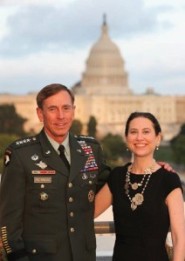 In the ISW’s 2011 annual report, Petraeus praises Kagan as “a barracuda at some times,” hails her leadership and poses with her for several photographs, including one in his dress uniform with the U.S. Capitol in the background.
The Post article noted that “For Kim Kagan, spending so many months away from research and advocacy work in Washington could have annoyed many donors to the Institute for the Study of War. But her major backers appear to have been pleased that she cultivated such close ties with Petraeus, who went from Kabul to head the CIA before resigning this fall over his affair with [biographer Paula] Broadwell. …
“On Aug. 8, 2011, a month after he relinquished command in Afghanistan to take over at the CIA, Petraeus spoke at the institute’s first ‘President’s Circle’ dinner, where he accepted an award from Kim Kagan. … ‘What the Kagans do is they grade my work on a daily basis,’ Petraeus said, prompting chortles from the audience. ‘There’s some suspicion that there’s a hand up my back, and it makes my lips talk, and it’s operated by one of the Doctors Kagan.’ …
“At the August 2011 dinner honoring Petraeus, Kagan thanked executives from two defense contractors who sit on her institute’s corporate council, DynCorp International and CACI International. The event was sponsored by General Dynamics. All three firms have business interests in the Afghan war.
“Kagan told the audience that their funding allowed her to assist Petraeus. ‘The ability to have a 15-month deployment essentially in the service of those who needed some help — and the ability to go at a moment’s notice — that’s something you all have sponsored,’ she said.”
Earlier Warning Signs
Though the Post article provides new details about Petraeus’s coziness to Washington’s neocons, there have been warning signs about this relationship for several years. In 2010, I wrote articles describing how Petraeus and other holdovers from George W. Bush’s administration, such as Defense Secretary Robert Gates, had trapped the inexperienced Obama into expanding the Afghan War.
On Sept. 27, 2010, I noted that “after his solid victory in November 2008, Obama rebuffed recommendations from some national security experts that he clean house by installing a team more in line with his campaign pledge of ‘change you can believe in.’ He accepted instead the counsel of Establishment Democrats who warned against any disruption to the war-fighting hierarchy and who were especially supportive of keeping Gates. …
“Before Obama’s decision to dispatch [an additional] 30,000 troops [in an Afghan War ‘surge’ in 2009], the Bush holdovers … sought to hem in the President’s choices by working with allies in the Washington news media and in think tanks. …
“For instance, early in 2009, Petraeus personally arranged for Max Boot [a neocon on the Council on Foreign Relations], Frederick Kagan and Kimberly Kagan to get extraordinary access during a trip to Afghanistan. … Their access paid dividends for Petraeus when they penned a glowing report in the Weekly Standard about the prospects for success in Afghanistan – if only President Obama sent more troops and committed the United States to stay in the war for the long haul. …
“‘Fears of impending disaster are hard to sustain, … if you actually spend some time in Afghanistan, as we did recently at the invitation of General David Petraeus, chief of U.S. Central Command,’ they wrote upon their return.
“‘Using helicopters, fixed-wing aircraft, and bone-jarring armored vehicles, we spent eight days traveling from the snow-capped peaks of Kunar province near the border with Pakistan in the east to the wind-blown deserts of Farah province in the west near the border with Iran. Along the way we talked with countless coalition soldiers, ranging from privates to a four-star general,’ the trio said.”
Update 2015: (Frederick Kagan is the brother of Robert Kagan, a co-founder of the neoconservative Project for the New American Century, which began the drive in 1998 for invading Iraq. Robert Kagan, now with the Brookings Institution and a columnist for the Washington Post, is married to Assistant Secretary of State for European Affairs Victoria Nuland, who oversaw last year’s coup in Ukraine. For more on the outsized influence of the Kagans, see Consortiumnews.com’s “Obama’s True Foreign Policy ‘Weakness.’”)
Trapping the President
How Obama was manipulated by Bush’s holdovers – with the help of the neocons – was chronicled, too, in Bob Woodward’s 2010 book, Obama’s Wars, which revealed that Bush’s old team made sure Obama was given no option other than to escalate troop levels in Afghanistan. The Bush holdovers also lobbied for the troop increase behind Obama’s back.
Woodward’s book notes that “in September 2009, Petraeus called a Washington Post columnist to say that the war would be unsuccessful if the president held back on troops. Later that month, [Joint Chiefs of Staff Chairman, Adm. Mike] Mullen repeated much the same sentiment in Senate testimony, and in October, [Gen. Stanley] McChrystal asserted in a speech in London that a scaled-back effort against Afghan terrorists would not work.”
This back-door campaign infuriated Obama’s aides, including White House chief of staff Rahm Emanuel, Woodward reported. “Filling his rant with expletives, Emanuel said, ‘Between the chairman [Mullen] and Petraeus, everyone’s come out and publicly endorsed the notion of more troops. The president hasn’t even had a chance!’” Woodward reported.
According to Woodward’s book, Gates, Petraeus and Mullen refused to even prepare an early-exit option that Obama had requested. Instead, they offered up only plans for their desired escalation of about 40,000 troops.
Woodward wrote: “For two exhausting months, [Obama] had been asking military advisers to give him a range of options for the war in Afghanistan. Instead, he felt that they were steering him toward one outcome and thwarting his search for an exit plan. He would later tell his White House aides that military leaders were ‘really cooking this thing in the direction they wanted.’”
Woodward identified Gates, Petraeus and Mullen as “unrelenting advocates for 40,000 more troops and an expanded mission that seemed to have no clear end.”
The Bush holdovers even resisted passing along a “hybrid” plan that came from outside their group, from Vice President Joe Biden who had worked with JCS vice chairman, Gen. James Cartwright. The plan envisioned a 20,000 troop increase and a more limited mission of hunting Taliban insurgents and training Afghan government forces.
Woodward reported, “When Mullen learned of the hybrid option, he didn’t want to take it to Obama. ‘We’re not providing that,’ he told Cartwright, a Marine known around the White House as Obama’s favorite general. Cartwright objected. ‘I’m just not in the business of withholding options,’ he told Mullen. ‘I have an oath, and when asked for advice I’m going to provide it.’”
Rigged War Game
Later, Obama told Gates and Mullen to present the hybrid option as one possibility, but instead the Bush holdovers sabotaged the idea by organizing a classified war game, code-named Poignant Vision, that some military insiders felt was rigged to discredit the hybrid option, Woodward reported.
According to Woodward’s book, Petraeus cited the results of the war game to Obama at the Nov. 11, 2009, meeting as proof the hybrid option would fail, prompting a plaintive question from a disappointed President, “so, 20,000 is not really a viable option?” Without telling Obama about the limits of the war game, Mullen, Petraeus, Gates and then-field commander McChrystal asserted that the hybrid option would lead to mission failure.
“Okay,” Obama said, “if you tell me that we can’t do that, and you war-gamed it, I’ll accept that,” according to Woodward’s book.
Faced with this resistance from the Bush holdovers – and unaware that their war game may have been fixed – Obama finally devised his own option that gave Gates, Petraeus and Mullen most of what they wanted – 30,000 additional troops on top of the 21,000 that Obama had dispatched shortly after taking office.
Obama did try to bind the Pentagon to a more limited commitment to Afghanistan, including setting a date of July 2011 for the beginning of a U.S. drawdown. Though Obama required all the key participants to sign off on his compromise, it soon became clear that the Bush holdovers had no intention to comply, Woodward reported.
Backstabbing
The incoming Obama administration was warned of this possibility of backstabbing by Gates, Petraeus and other Bush appointees when it was lining up personnel for national security jobs.
As I wrote in November 2008, “if Obama does keep Gates on, the new President will be employing someone who embodies many of the worst elements of U.S. national security policy over the past three decades, including responsibility for what Obama himself has fingered as a chief concern, ‘politicized intelligence.’ … It was Gates – as a senior CIA official in the 1980s – who broke the back of the CIA analytical division’s commitment to objective intelligence.”
More than any CIA official, Gates was responsible for the agency’s failure to detect the collapse of the Soviet Union, in large part because Gates had ridden roughshod over the CIA analysts on behalf of the Reagan administration’s desire to justify a massive military buildup by stressing Soviet ascendance and ignoring evidence of its disintegration.
As chief of the CIA’s analytical division and then deputy CIA director, Gates promoted pliable CIA careerists to top positions, while analysts with an independent streak were sidelined or pushed out of the agency.
“In the mid-1980s, the three senior [Soviet division] office managers who actually anticipated the decline of the Soviet Union and Moscow’s interest in closer relations with the United States were demoted,” wrote longtime CIA analyst Melvin A. Goodman in his book, Failure of Intelligence: The Decline and Fall of the CIA.
Instead of heeding these warnings, Obama’s team listened to Establishment Democrats like former Rep. Lee Hamilton and former Sen. David Boren, who were big fans of Gates. [For more on Gates’s role, see Robert Parry’s America’s Stolen Narrative.]
Petraeus was much the same story. A favorite of Official Washington and especially the influential neocons, he was credited with supposedly winning the war in Iraq by implementing the “surge” in 2007, which was advocated strongly by Frederick Kagan and other key neocons.
However, in reality, all Petraeus did was extend that misguided war for another few years – at the cost of nearly 1,000 more U.S. dead and countless more dead Iraqis – thus giving President Bush and Vice President Dick Cheney time to get out of Washington before the ultimate failure of the mission became obvious. The last U.S. troops were forced to leave Iraq at the end of 2011.
Begging Boot
Petraeus had such close ties to the neocons that he relied on them to pull him out of difficult political spots. In one embarrassing example in 2010, e-mails surfaced showing the four-star general groveling before Max Boot, seeking the neocon pundit’s help heading off a controversy over Petraeus’s prepared testimony to Congress which contained a mild criticism of Israel.
The e-mails from Petraeus to Boot revealed Petraeus renouncing his own congressional testimony in March 2010 because it included the observation that “the enduring hostilities between Israel and some of its neighbors present distinct challenges to our ability to advance our interests” in the Middle East.
Petraeus’s testimony continued, “Israeli-Palestinian tensions often flare into violence and large-scale armed confrontations. The conflict foments anti-American sentiment, due to a perception of U.S. favoritism for Israel. … Meanwhile, al-Qaeda and other militant groups exploit that anger to mobilize support.”
Though the testimony was obviously true, many neocons regard any suggestion that Israeli intransigence on Palestinian peace talks contributed to the dangers faced by American soldiers in Iraq and Afghanistan – or by the U.S. public from acts of terrorism at home – as a “blood libel” against Israel.
So, when Petraeus’s testimony began getting traction on the Internet, the general turned to Boot at the high-powered Council on Foreign Relations, and began backtracking on the testimony. “As you know, I didn’t say that,” Petraeus said, according to one e-mail to Boot timed off at 2:27 p.m., March 18. “It’s in a written submission for the record.”
In other words, Petraeus was saying the comments were only in his formal testimony submitted to the Senate Armed Services Committee and were not repeated by him in his brief oral opening statement. However, written testimony is treated as part of the official record at congressional hearings with no meaningful distinction from oral testimony.
In another e-mail, as Petraeus solicited Boot’s help in tamping down any controversy over the Israeli remarks, the general ended the message with a military “Roger” and a sideways happy face, made from a colon, a dash and a closed parenthesis, “:-)”.
The e-mails were made public by James Morris, who runs a Web site called Neocon Zionist Threat to America. He said he apparently got them by accident when he sent a March 19 e-mail congratulating Petraeus for his testimony and Petraeus responded by forwarding one of Boot’s blog posts that knocked down the story of the general’s implicit criticism of Israel.
Petraeus forwarded Boot’s blog item, entitled “A Lie: David Petraeus, Anti-Israel,” which had been posted at the Commentary magazine site at 3:11 p.m. on March 18. However, Petraeus apparently forgot to delete some of the other exchanges between him and Boot at the bottom of the e-mail.
~
Investigative reporter Robert Parry broke many of the Iran-Contra stories for The Associated Press and Newsweek in the 1980s. You can buy his latest book, America’s Stolen Narrative, either in print here or as an e-book (from Amazon and barnesandnoble.com).
Jewish hate preacher issues ruling for prayers inside Al-Aqsa
MEMO | March 12, 2015
An extreme right-wing Jewish hate preacher has issued a ruling which urges Jews to hold their prayers inside Al-Aqsa Mosque. Rabbi Dov Lior is one of the most influential of the hard-line national-religious rabbis. He served as chief rabbi of the Kiryat Arba settlement near Hebron, home to mass-murderer Baruch Golstein, who massacred 29 Muslims while they were praying in Hebron’s Ibrahimi Mosque in 1994.
 Following Lior’s ruling, another extremist, Rabbi Jacob Heydimann, performed the Purim prayer inside the mosque compound with police protection. The mosque guards were removed by the Israeli police. The latest declaration encourages extremist Jewish groups who have increased their calls to enter Al-Aqsa by force and hold more prayers within the Noble Sanctuary.
Lawyer Aviad Visoli, who represented US-born Jewish extremist Yehuda Glick when he was banned by the police from entering Al-Aqsa Mosque, claimed that every Jew has the right to pray on the “Temple Mount” [Al-Aqsa Mosque compound]. “Praying there is no longer considered a legal violation after the Israeli Supreme Court ordered Glick to be paid half a million shekels in compensation for removing him from the Temple Mount [sic] for performing his biblical prayers there,” said Visoli. “The police must act to allow Jews to pray on the Temple Mount [sic] freely.”
It is on that basis, he added, that Lior has issued his latest ruling.
Featured Video
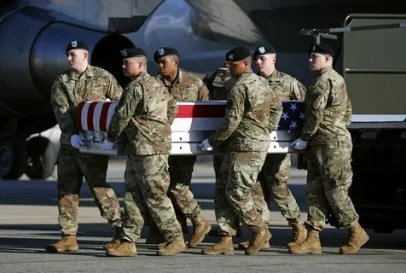
American Military Failure in Afghanistan
or go to
Aletho News Archives – Video-Images
Frlom the Archives
The Fiction of the Jewish History in Palestine
By Hasan Afif El-Hasan | The Palestine Chronicle | April 8, 2011
Prime Minister Benjamin Netanyahu told NNC Pierce Morgan on March 18, 2011 that he might agree to a Palestinian state through negotiations. And he added, “We will make territorial concessions although it is very painful to do that in our ancestral land.” Netanyahu was not talking about Poland where his ancestors lived. He was talking about Palestine where generations of its indigenous population ancestors lived, cultivated the land and are buried.
By the end of the nineteenth century, Zionism created a new Jewish identity of blood and soil. To mobilize their followers and supporters and appeal to their emotions, the Zionists created myths. Zionism started as a tribal religion without god, but in order to fulfill its function as a unifying force, Zionism required external religious and race symbols, not inner content. Its leaders regarded metaphysical religious belief and purity of race as having value in itself. They created a divine paradisiacal state of merger with the gods. Despite his non-religious ideology, Herzl’s writings were replete with religious references. The Jews should settle in Palestine because, in his words, “the Temple will be visible from long distance, for it is only our ancient faith that has kept us together”.
The Zionists and their supporters have invested tremendous financial and scholarly resources to work within the Hebrew Bible historical narratives to affirm the links between the intrusive Zionist population and the ancient Israelite past, and by doing so assert the right of that population to the land. The political end-game shaped the investigation and the outcome. Tracing the roots of Israel’s ethnic state in biblical antiquity is effectively to silence the indigenous Palestinian claim to the past and therefore to the land. The Biblical scholarship employs a bewildering array of terms for the region: “the Holy Land”, “the Land of the Bible”, “Eretz Israel”, “the Land of Israel”, or “Judah and Samaria.” To the casual reader these names appear interchangeable, but they all imply connection to ancient Israel.
Biblical narratives or poems that cannot be supported by archeology and common sense are treated by the Zionists and their supporters as historical language. … continue
Blog Roll
 Aletho News
- Lawyers’ groups demand end to British military bases in Cyprus
- CIA Assessment: The Resistance Cannot Be Crushed
- Hezbollah Returns: It Didn’t Start a War, It Is Ending One
- EU states seek ‘talks’ with Iran for access to Strait of Hormuz: Report
- Trump on Hormuz: “Others must take care of it” after US falters
- Who Is closer to collapse?
- A War that Backfired: Why the US-Israeli Campaign Is Strengthening Iran
- How Zionist Control Is Hurting US Interests
- Iran warns it may target US missile launch sites in UAE cities
- American Military Failure in Afghanistan
- If Americans Knew
- As US-Israel war on Iran rages, Gaza faces massive dust storm – Not a ceasefire Day 156
- No let-up in attacks on Gaza as Israel takes on Iran, Lebanon – Not a ceasefire Day 155
- ‘Of Course’: IDF Drops Case Against Soldiers Accused of Raping Palestinian Prisoner
- Don’t Fall for the Regime Change Talk. Israel Is ‘Mowing the Lawn’ in Iran
- Will Israel and the US wreck the Gulf States along with Iran?
- US so far burned through ‘years’ of munitions in Iran war: Report
- How the Israeli Tail Wags the American Dog
- Outdated intel likely led to deadly U.S. strike on Iranian elementary school, sources say
- Pentagon insider says high U.S official Douglas Feith reported to Netanyahu
- In fond memory of Walid Khalidi, the historian of Palestine
- No Tricks Zone
- Storing Green Energy To Last Germany 10 Days Would Require A 60-Million Tonne Battery
- New Studies: UK Sea Levels Were 4 Meters Higher Than Today During The Mid-Holocene
- Destructive Green New Deal: German Energy And Metal Group Warns Of Drastic Crisis
- New Study Documents A 20-Year Pause In Arctic Sea Ice Decline – Driven By Internal Variability
- Wake-up Call: Survey Shows Majority Of Germans Now Favor Postponing Climate Targets!
- Televised! Leading German Political Candidate Tells Schoolchildren CO2 Makes Sun Hotter!
- New Study: A Century Warming Of 1.1°C Is ‘Commonplace’ And ‘Not Unusual’ During This Interglacial
- New Study: ‘Internal Noise’ And Volcanic Forcing Can Trigger 10-15°C Warming Within Decades
- Glaciers Worldwide Are Suddendly Surging, Experts Blame Warming!
- Surprising Discovery: Sahara Is Greening…Billions Of Trees Where Once Thought To Be Barren
 Aletho News