RAMALLAH – The Palestinians in 1948 Occupied Palestine have been on general strike since the morning hours on Tuesday protesting the Israeli government policy of the demolition of Palestinians’ houses.
This followed a decision made by the higher follow up committee for Arabs in 1948 Occupied Palestine. The strike includes educational institutions and commercial shops.
The Israeli radio announced that the Palestinians are going to take to the streets in Tel Aviv at 5 p.m. in the first national demonstration of its kind. Such marches were previously arranged in cities and towns inhabited by Arabs only.
The Israeli authorities adopt displacement campaigns aiming at expelling the Palestinians in 1948 Occupied Palestine through demolishing their houses under false pretenses.
The national secular religion of this country consists of a cluster of rarely questioned premises, usually inculcated in childhood, comparable to the articles of a real religious creed.
The first proposition is the idea that we live in a “free” country, as symbolized by the Statue of Liberty idol that towers over New York City’s harbor. The system absolutely insists on this point, incessantly hammering it in. It’s its basic tenet. Indeed it’s presented as “self-evident.” You’re in this country, ergo, you are FREE.
It’s inflicted by osmosis. Every institution transmits it. Those who doubt it are encouraged to think they must be mentally ill. (Of course you’re free, you’re told. And so fortunate to be so! How can anyone question that?)
“Freedom” is emblazoned on our coinage and many state automobile licenses. It’s proclaimed each school day morning by tens of millions of otherwise innocent children obliged to recite religiously that they live in a nation “with liberty and justice for all.”
This particular component of the national creed is perhaps comparable to the opening article of the Apostles’ Creed, which alludes to belief in “God the Father Almighty.” Because belief in the U.S.A. as the global headquarters of “Freedom” is as central to what some call “Americanism” as monotheism is to Christianity.
The Pledge of Allegiance expresses the belief, not just in the goodness of “freedom” in itself, but in the idea that we actually live in a free country. (How often people protest, when someone criticizes their thoughts or behavior, “Well hey, it’s a free country!” And they usually truly believe this.)
“I’m proud to be an American,” country crooner Lee Greenwood boasts, “where at least I know I’m free.” He knows this, without any religious doubt. “Cause the flag still stands for freedom, and they can’t take that away.” (Whoever they are. Presumably people who “hate our freedoms” and are actively conspiring somewhere to invade and enslave us.)
Actually, I suspect that the people of Sweden or Denmark are freer than Lee Greenwood is, or imagines himself to be. But do they know they’re free, with the confidence he exudes?
The second article of the national creed is that the U.S. military (commonly referred to as “our troops”)–wherever and whenever they fight–fight for us, somehow, to “defend our freedoms.” Whenever you attend a ball game (as I do regularly in Fenway Park) you’re told that everyone in the stadium is proud to honor the “servicemen and servicewomen” present–the “heroes” who are “defending our freedoms” in Afghanistan, Iraq, or wherever. We’re expected to applaud them, even in liberal Boston, and indicate our gratitude for whatever it is they did. And if we read in the morning Boston Globe about these heroes killing civilians we should just put it out of mind.
The ball park MC never considers the possibility that there are Red Sox fans there just for the game, who do not see how U.S. troops’ actions in invaded countries defend their freedoms in any way, and who find this insertion of patriotic content into the program really annoying.
Still the crowd rises to its feet on demand, showing deference, accepting the adulation of the troops as a matter of faith. If you just sit there sullenly, refusing to participate, some drunken patriot might hassle you for your traitorous non-enthusiasm. So in this free country it’s best to just stand up to honor the troops and try to maintain your self-respect by being as nonchalant as possible.
Every cable news viewer has seen that endlessly repeated USAA Military Auto Insurance TV commercial, “Thank you Dad.”
“Thank you, Daddy, for defending our country,” says the cute little Latina girl, in one version.
“Thank you for your sacrifice, and thank you for your bravery,” says an African-American women, to her spouse perhaps.
“Thank you, colonel,” says the young white man to his former superior officer.
“Thank you, Daddy,” says the little black girl.
It’s a movingly multi-ethnic crowd, thanking Daddy for his martial valor. Trace Adkin’s “Till the Last Shot’s Fired” is in the background, urging us to “say a prayer for peace” even as the song glorifies the warrior and places priority on his (as opposed to his victims’) peace.
I’m in the fields of Vietnam,
the mountains of Afghanistan
and I’m still hopin’ waitin’
prayin’ I did not die in vain.
Say a prayer for peace for every fallen son.
Set our spirits free. Let me lay down my gun.
… We can’t come home until the last shot’s fired.
It doesn’t seem to make any difference to Adkins what the cause is, or how many people these soldiers killed. They’re heroes–just for doing the unquestionable right thing and firing that last shot (against whoever) as ordered.
The fact is, those who fought in Vietnam and Afghanistan did “die in vain.” Certainly their deaths produced no good for this world. But as suffering servants who sacrifice their lives as commanded, the U.S. military vets occupy the position of Christ in the secular religion. Just as in Christian theology, Jesus is God in human flesh, “our troops” are our (mythical) Freedom personified.
St. Paul writes in his Epistle to the Galatians, “For freedom Christ has set us free.” In the U.S. civic doctrine, the dead troops are the sacrifice necessary to keep us free.
The third proposition in the official state faith is that we live in a democracy, in which the people decide the nation’s fate through exercising their awesome right to vote. This, in the official civic belief system, is the equivalent of the Holy Spirit in Christianity.
Through the ritual of casting a ballot in the hallowed privacy of a voting booth, citizens fulfill their highest civic duty. One is supposed to stand there in that box, in solitude, but in intimate spiritual communication with the benevolent, all-embracing, fatherly state. One is supposed to be grateful to the state for the opportunity to enjoy the right to help determine the future, perhaps by choosing Jed Bush over Hillary Clinton. Or Hillary Clinton over Jed Bush.
One is supposed to leave that sacred space feeling pure and righteous, having performed the highest duty of citizenship. It’s not so important to vote for either one of the two of the viable corporate-sponsored parties (which are really like two factions of a single party, in a one-party dictatorship of the 1%). No. What’s important is to simply vote and, having participated, thereby voted for the system itself.
You’re supposed to leave the ballot box, proud to be an American, because at least you know you voted. You made a difference! You exercised your right. The only downside is that hereafter–whatever happens–you share responsibility. Because you, after all, elected your leaders, didn’t you?
So if you voted for a warmonger who attacks Iran, with hellish consequences, you’ll have to call the inevitable ensuing conflict “our” war, right? Rather than calling it “their” war–the war of the imperialists, from whom you might have appropriately dissociated yourself–just by politely declining the invitation to attend their unpleasant party and play their game.
Voting is fundamentally a statement of faith in the god of Freedom. And in the Christ-like qualities of the divinized warrior who, in this mythology, dies for your precious right to engage in this vapid ritual. Casting a vote in this “democracy” is rather like receiving Holy Communion in the presence of the Holy Spirit.
In the latter rite one reverentially receives and consumes the wine and wafer; in the U.S. civil rite one religiously casts the ballot and swallows the myth.
These three beliefs constitute the Holy Trinity of the national doctrine. They’re indeed all articles of faith, hardly based on reason. After all, how “free” is a country with the world’s highest incarceration rate, with over 700 in jail or prison out of every 100,000?
Almost 7 million adults in this country–nearly 3% of the adult population–are under what’s called “correctional supervision.” With 5% of the world’s population, this free country boasts fully one-quarter of the planetary prison population. 40% of these prisoners are African-American. There are more young black men in prison in this country than in college.
How can anyone speak with a straight face about “freedom” here?
“I wish I knew how it would feel to be free,” sang Nina Simone–quite heretically, in bold opposition to the state faith–in 1967, before fleeing the U.S. in 1970 and ultimately settling in France, which she (among other African-American and other exiles) found somewhat freer at that time.
How “free” are we now really–when all citizens are under electronic surveillance (at a level of sophistication that puts East Germany’s fabled Stasi to shame); while young men of color are routinely harassed by police, while police murders have–if only due to cell phone camera video exposure–become almost daily news stories; while government whistle-blowers are jailed for revealing such phenomena as state-sponsored torture?
And how do U.S. soldiers fight “for us” or “defend our freedoms” by invading countries in wars based on lies?
In my own state of Massachusetts there have been what I suppose can be termed some modest advances in freedom in recent times. (Sunday alcohol sales were allowed in 2004, gay marriage was legally recognized in 2004, marijuana possession was decriminalized in 2008). These changes have a meaningful impact on my community. But none of them had anything at all to do with U.S. troops’ actions abroad. And in fact the U.S. war (based on lies) in Iraq set women’s rights far back in that tortured, mutilated country.
The Democrats and Republicans pretend to have real differences with one another. (Rather like pro wrestlers pretend to truly despise one another before the big fight. It’s all for show.) But seriously: how democratic is a country in which two parties sharing a common faith in capitalist imperialism trade the presidency every so often–always vowing to effect change, even while nothing dramatically changes–while the one percent at the top of society (especially the cancerous tenth of that one percent) relentlessly increases its share of the national wealth?
The recent (2014) empirical study by Princeton professor Martin Gilens and Stanford professor Benjamin Page declares that the U.S. is not in fact a democracy but an oligarchy in which individuals and even mass-based interest groups cannot prevail over the tiny elite that makes decisions. “Average citizens and mass-based interest groups have little or no independent influence” on policy, they conclude. “Democracy” in this country is a joke.
The national secular creed also entails support for a foreign state which has nothing to do with U.S. freedom, and has not been a battlefield of U.S. blood sacrifice, but which does significantly impact the sacrament of voting. Whereas belief in the trinity of Freedom, Our Troops, and Voting is formally non-religious, this support is rooted deeply in religion.
I refer of course to the role of Israel in the national belief system.
Members of Congress have been known to cite Genesis 12:3, in the Old Testament, to explain their votes in favor of Israel under any circumstances whatsoever. This is the passage in which Yahweh (God) tells Abraham, “I will bless those who bless you, and whoever curses you I will curse.” Just the other day Congressman Louis Gohmert (R-TX) declared, “There are many who have been aware of Scripture, and it has been a guide in our relations with Israel.” Enough said!
This sort of ass kissing is politically feasible in a country where, a recent poll showed, 55% of the population believes that God (the Maker of everything) gave what’s now the land of Israel to the Jews in perpetuity. It’s amazing. It would be amusing if the potential ramifications weren’t so horrifying.
President Obama and repeated Congressional resolutions refer to the U.S.’s “eternal support” for Israel. (Notice how such language is never applied to other countries. Despite the “special relationship” U.S. politicians never use such effusive language in referring to ties with the U.K. And recall how France, the U.S.’s oldest ally that gifted it the Statue of Liberty, was vilified as an “enemy” not so long ago–when it refused to support the war on Iraq, based, as that criminal war was, wholly on lies.)
This religious support for Israel in fact produces some amusement in Israel itself, where about a third of the Jewish population considers itself non-religious and takes those Bible fables with a grain of salt. But the support of Christian evangelicals is the key to the U.S.-Israeli relationship. Israeli prime ministers are received like rock stars at Christian events held in support of Israel. Christian Zionist organizations play a major role in the American Israel Public Affairs Committee (AIPAC), the powerful lobby group that serves as a virtual agency of the Israel state.
In his May 2011 speech to Congress, Prime Minister Binyamin Netanyahu received 29 standing ovations–including one when he declared, “Israel will not return to the indefensible boundaries of 1967.” Never mind that no country in the world recognizes Israel’s right to any land (on the West Bank, or in Gaza, Syria, or Lebanon) occupied during that “pre-emptive” war of aggression. Never mind that it is official U.S. policy to demand, along with the rest of the world, for Israel to withdraw to the 1967 borders. The bought-and-paid-for Congress rose to applaud Netanyahu’s insistence of the Jewish right to permanently annex more Arab land.
In his March 3, 2015 address to Congress, by invitation of the Republican leaders in the Senate, Netanyahu devoted all of his time to one topic: the G5+1 talks in Switzerland with Iran, and the need for the Congress to oppose any plans for President Obama’s State Department to sign onto any deal on Iran’s nuclear program. Again, incessant standing ovations!
Not surprising. Sen. Lindsey Graham, Republican from South Carolina and head of the Senate’s Foreign Appropriations Committee, had already told Netanyahu publicly that on Iran “Congress will follow your lead.” How to make sense of such fawning stupidity?
Netanyahu has direly predicted that Iran is close to the production of nuclear weapons since 1992, since before today’s college sophomores were born. He’s been a Chicken Little crying that the sky is falling–that Israel is in imminent, existential danger from Iranian nukes. He will not of course talk about Israel’s nuclear weapons, which the Jewish state has possessed since 1979, when it conducted a joint test with its close ally, the racist apartheid regime in South Africa. (In Israel it is a crime for anyone with knowledge about this to reveal what they know; the nuclear scientist Mordechai Vanunu spent 18 years in prison for revealing details about it to the British press.)
Israel is the only state in the Middle East with nuclear weapons. Its leaders think they have the right to have them, since (for some reason) Israel faces so much hostility from its refugee-flooded neighbors in this harsh world. And they decline to submit their nuclear facilities to UN inspection, while demanding that the world prevent Iran from developing any sort of nuclear program. Even a program like that which Brazil or Argentina might boast of, quite legally.
There is amazingly little discussion in this country of the actual history of the modern state of Israel. About how 33 of the UN ambassadors in 1947 (59% of the total at the time) voted for a plan to partition the British Mandate of Palestine that favored the Jewish immigrants over the 65% Arab majority, allotting the Zionist settlers over half the land.
They don’t realize how unrepresentative the UN was at that time, when half the world remained under colonial occupation.
They don’t know that in 1948 many prominent Jewish rabbis in the world opposed the formation of a specifically Jewish-Zionist state in Palestine.
They don’t realize how the entire Muslim world opposed the unfair partition; how major countries that were not majority Muslim (India, Greece, Cuba) voted against it; and how many others (China, Argentina, Ethiopia, Mexico, Yugoslavia, even the United Kingdom) abstained, feeling queasy about the deal and its potential blowback.
They don’t necessarily know that Zionists in the Irgun brown shirt paramilitary group along with the Stern Gang implemented a strategy of terror to produce mass panic and flight that produced 750,000 Palestinian Arab refugees between April 1948 and January 1949. They’ve never been told about the Deir Yassin massacre in April 1948.
They certainly don’t realize that many of these Palestinians may be the direct descendents of the Judeans of the Roman province where Jesus lived. It’s not like there was ever really a Diaspora in which the wicked Romans drove out all the Jews. They drove out some, while others remained. Of those who stayed, many became Christians over time and stopped self-identifying as Jewish. Later many converted to Islam. Meanwhile Judeans outside Judea, who numbered in millions even before the birth of Jesus, intermarried with others and for a couple centuries there was actually significant conversion to Judaism by gentiles in both the Roman and Parthian empires.
The Jewish Zionist community in contemporary Israel, which officially represents itself as a people who have “returned” to their ancestral land to which they have some sort of “birthright,” may in fact have less DNA in common with the Judeans of Jesus’ time than with modern European populations. The whole business of Abraham talking with the Supreme Being and being told his direct descendents would possess the Land of Israel forever (and so, who cares what happens to the Arabs?) is mythology. The “call of Abraham” is supposed to have occurred around 1000 years before there even was a written Hebrew language.
Christians in this country, who are prone to be much more literalistic in their reading of the Bible than those in Europe, tend to accept (as real historical phenomena) the story of Noah’s Ark, the bondage in Egypt and parting of the Red Sea. They believe that Moses was given the Law by God himself on Mount Sinai, and that during the conquest of Canaan, the walls of Jericho fell miraculously when the Hebrew “chosen people” blew their trumpets. They believe that the sun once remained stationary in the sky to give Joshua the upper hand in a battle for control of Jerusalem (Joshua 10:13).
The Israeli government and Israel Lobby which serves as its unlicensed agent (de facto exempt from U.S. legal oversight) knows that the U.S. public–largely brainwashed by the secular national religion and its own delusions about being itself a Chosen People inhabiting a Promised Land–is extremely receptive to Israel’s incessant religious pitch. They know that politicians competing for votes know they need to show maximum deference to Israel.
In his March 3 address to Congress, as his mesmerized audience sat imbibing his wisdom, Binyamin Netanyahu sermonized:
We’re an ancient people. In our nearly 4,000 years of history, many have tried repeatedly to destroy the Jewish people. Tomorrow night, on the Jewish holiday of Purim, we’ll read the Book of Esther. We’ll read of a powerful Persian viceroy named Haman, who plotted to destroy the Jewish people some 2,500 years ago. But a courageous Jewish woman, Queen Esther, exposed the plot and gave for the Jewish people the right to defend themselves against their enemies.
The plot was foiled. Our people were saved.
The legislators present rose to applaud this allusion to the Bible story, which immediately segued into the claim that “Today the Jewish people face another attempt by yet another Persian potentate to destroy us. Iran’s Supreme Leader Ayatollah Khamenei spews the oldest hatred, the oldest hatred of anti-Semitism with the newest technology…”
The fact is, the story of Queen Esther is a myth. Set in the fifth century BCE but composed around the second century BCE, it describes a situation in which numerous Judeans reside in the city of Babylon in the Persian Empire. The exiles had in fact been permitted to leave by 530 BCE, and to rebuild the Temple in Jerusalem, by the Achaemenid founder Cyrus the Great–a Persian (Iranian) who is actually identified in the Old Testament as “the Lord’s anointed one” (Isaiah: 45:1-7).
This validation as an “anointed one” was, by the way, an honor shared by no other non-Jew in the Bible. Not that you’d expect Netanyahu to point out the positive aspects of the very long relationship between Jews and Iran, which (as you know) has the largest Jewish population outside of Israel in the Middle East. The Jewish minority has representation in the Iranian parliament, and maintains synagogues, Hebrew schools and kosher restaurants. (If you don’t know these facts, thank the U.S. mainstream media.)
In the Book of Esther story, the Persian emperor Ahasuerus (commonly identified with Xerxes, a real person who ruled from 486 to 465 BCE and the fifth in the Achaemenid line) becomes dissatisfied with his current wife. He casts her aside unceremoniously and looks for a new spouse, choosing Esther, a Jew, who conceals her background. She finds favor with the ruler. However, her kinsman Mordecai offends Xerxes’ prime minister, Haman (to whom Netanyahu alluded in his speech) by refusing to bow down before him.
Haman learns that both the queen and Mordecai are Jews. Energized by petty pique, he organizes a plot to massacre all the Jews in the land and seize their property. He tells Xerxes there is a “certain unassimilated nation… throughout the provinces of your realm” whose laws so differ from those of other nations that “it is not in the king’s interest to tolerate them” (Esther 3:8-9). He persuades him to agree to an annihilation campaign.
Again, this is pure fantasy. It never happened. But in the story, a huge pogrom is planned, Mordecai heroically organizes mass prayer and resistance, and Queen Esther at the decisive moment reveals her identity as a Jew to the ruler, and defends her people. Xerxes, egged on by his spouse, has Haman hanged and gives the Jews license to exact revenge on their enemies. Indeed, according to this novelette, Jews during the Feast of Purim slaughter 75,000 Persians (Esther 9:15-16). (None of this is supported by contemporary Persian sources.)
Having observed that this is pure fiction, one can ask why Netanyahu wanted to use it last month in his fiction-riddled presentation to Congress. He must have known that anyone present with a little knowledge of Jewish-Iranian history might have asked: “Excuse me, but doesn’t the Esther story actually tell us that Jews have been in Persia (Iran) for 2,500 years, and that Persian rulers were regarded favorably by ancient Judeans as allies–even ‘God’s anointed’ rather than foes?”
And couldn’t one ask, “How did the Jewish Queen Esther ‘give the right’ to the Jews ‘to defend themselves against their enemies’?” The Jews were allowed to kill the 75,000 Persians in the story because the Persian ruler had given them the right. Netanyahu might not have read the text carefully. But one must suppose that even if he had, he wasn’t trying to give the U.S. audience a rigorous textual exegesis. He was presenting his Likud Party program of continued confrontation with Iran (as a supporter of Palestinian and Lebanese resistance movements) in biblical gift-wrap.
Just by citing an Old Testament work familiar to some Christians–such as those who dominate Congress–Netanyahu plugged into that chord of commonality that many adherents of the national civic religion like to reference when the trinity of Freedom, Holy War, and Voting alone doesn’t quite do the job.
When you’re a U.S. leader and need to get the people on board a new campaign for Mideast war, you can’t just say, “We’re free. But we have to fight to stay free. And we have to vote for the strongest, who will fight hardest for our freedom.” You also need to exploit the religious element and add, “We have to side with Israel, because God said, he would bless those who blessed it, and curse those who didn’t.”
Again, the first three articles in the national civic religion are actually irreligious; they don’t require belief in deities, souls, and afterlives. But the belief in Israel as the Promised Land of a certain bloodline, granted to it in perpetuity by a certain deity in conversations four millennia ago, is an explicitly religious conviction.
Unfortunately these four creedal myths–that we really enjoy freedom; that this countries wars are for freedom; that the act of voting really means “democracy;” and that the U.S. must always as a matter of principle back Israel–constitute a doctrinal whole.
You can presumably lose faith in the fourth while maintaining adherence to the first three, since the latter don’t involve specifically religious beliefs. But polls suggest that the majority of people in this country still accept all four points in the Creed. They would, in the event of an Israeli nuclear strike on Iran–while prizing their freedom, heroic military and parliamentary system–also applaud any Israeli actions in putative defense of the Jews’ “God-given” land.
Even if the Israelis were to deploy nuclear weapons, out of their known arsenal (which U.S. politicians, for some reason, never ever mention) against an Iran which has none, these people would bless rather than curse them. They would see in the action affirmations of “freedom,” heroic military action, and “democracy” alongside adherence to the unquestionable Word of God.
How can one possibly challenge the U.S. state religion–this nonsensical mass of concepts in the service of the 1% including an inordinate share of billionaire Iran-baiting Zionists? Six media corporations (GE, News-Corp, Disney, Viacom, Time Warner, and CBS) control the “news” consumed by the great majority of people in this country. They all promote the national belief system.
Freedom. Our troops. The beauty of the ballot box. God and Israel.
They all instruct their reporters, in the event of a Ferguson-style situation, to spin the story away from any radical critique of systemic police brutality victimizing the non-white poor. Of course they all uphold the freedom of the abused people to demonstrate (“peacefully”); they have to confirm the national creed that the people are somehow, basically, “free” under the existing system.
“Journalists” and talking heads from Lou Dobbs to Al Sharpton unite in urging the people to respond properly, responsibly to events that disturb them (whether it’s war, economic injustice, or police brutality) by registering to vote!
Off the streets and into the polling booth! To elect more Obamas, more saviors! (Even though–let me repeat–Martin Gilens and Benjamin Page have concluded empirically that in the U.S. your vote means very little.)
They all resist criticism of war, and investigative journalism before the next war-based-on-lies occurs. They all get critical as the U.S. enters a morass, and belatedly might even question the premises for a particular war. But they will always, culturally, uphold the warrior as the soul of the nation. Even after a war has itself been discredited, clearly exposed as based on lies, the warrior is upheld as a freedom fighter and social role model.
How to disabuse people of those doctrinal premises? How to persuade them to see Israel rationally–free of religious baggage–as a normal, oppressive settler-state surrounded by neighbors who are (most understandably) indignant about its aggressions since 1948?
It may well be impossible. State religions are hard to crack. Still, the petering out of state faiths in Europe and the collapse of State Shinto in Japan after 1945 suggest that the U.S. secular national religion might also eventually (as that old Persian expression goes) “fade from the page of time.”
I’m hopeful there will come a time when our youth–frustrated with job prospects and housing issues, fed up with police brutality, burdened with student debt, disgusted with wars based on lies, nauseated by the Stasi-like NSA surveillance of their private lives, shocked by the raw statistics showing how wealth is apportioned in this “free” country, disillusioned by their own engagement with the “American dream”–will rebel big time.
Understanding through experience that this is NOT a free country, and that humanity can do much, much better, they will observe matter-of-factly that U.S. military personnel deployed in imperialist wars are NOT heroes.
They will recognize that elections in this society are a ritual to legitimate the status quo, an ideological trap, not the best means to effect real change.
And they will realize that the mystical hold of Israel over the U.S. polity, which does not advantage the individual citizen at all, is rooted in a mythological misreading of the past.
In today’s world that interpretation of past reality necessarily dovetails with anti-Arab racism and ignorant Islamophobia. Senators and Congressmen will tell you quite frankly they’d be happy to “give” Israel the whole West Bank because the Bible tells them that “the Jews” should ultimately have it.
These fine Christian Zionists have no problem with Palestinian dislocation and disenfranchisement. But maybe their day is ending. The day of the U.S. state religion may be ending. The day that the Israeli prime minister citing biblical fairy tales can dictate U.S. policy in the Mideast may be ending as Bibi reaps the whirlwind of his Bible-thumping address to Congress.
A tsunami of disillusionment is, if not inevitable, at least very likely. It’s good to be disabused of illusions or delusions, religious, patriotic or both. May our youth shuffle off the Zionist coil, seeing it for what it is: the ideological prop for more war that has nothing to do with freedom.
Press TV has conducted an interview with Soraya Sepahpour Ulrich, an independent researcher and writer, in Irvine, to get her take on the stance of Iran and other countries over the Non-Proliferation Treaty (NPT).
The following is a rough transcription of the interview.
Press TV: Mohammad Javad Zarif’s spokes of fairness and equity when it comes to the implementation of the NPT, has that been like that ever since this treaty came into effect?
Sepahpour: Regrettably, not at all and under the international law there ought to be no discrimination whatsoever. In fact, scholars have argued that the only time that discrimination if he wants to be called that is acceptable in international law is to elevate the status of a state to be on par with the rest. But right now as we said the international law has been hijacked and we see that powerful states are doling out favors to those that are pariah states, especially Israel in the region, and in fact, rewarding them for violating international law, while again themselves violating international law by not rendering assistance to those who are signatories to this treaty.
Press TV: How imperative is this for this NPT treaty to remain relevant to be able to bring Israel’s nukes under its control or supervision and also compel nations like the United States to clamp down on their own arsenals?
Sepahpour: I think if the former director general of the IAEA Mr. ElBaradei had listened to Mr. Zarif and perhaps he has, he would have applauded him. In 2004, Dr. ElBaradei, in fact, said that we need to talk seriously to Israel about its nuclear weapons whether it wants to admit to having them or not. And in fact, he called on a Middle East free of nuclear weapons. So, Mr. Zarif is right on the point in calling out, Israel is not a signatory to the NPT, is being rewarded for having nuclear weapons. And as far as the other states are not abiding by the NPT, again I’d like to quote Mohamed ElBaradei, he was the IAEA chief for three terms and he was a recipient of the Nobel Peace Prize together with the IAEA, and he said of nuclear powers, it is like them having it, “dangling a cigarette in their mouth while telling others not to smoke”. You can not violate international law and expect others to comply. This will create total chaos, disorder and it is a threat not just to the Middle East but to the entire world.
Press TV: When you speak of international law, so let’s not forget Iran is a signatory to the NPT and yet it has faced multiple sanctions regarding its peaceful nuclear energy program. That in itself is another violation, would not you agree?
Sepahpour: It is absolutely a violation. The whole purpose of the IAEA, when it was established in 1957 as a body of the United Nations, was to enable peaceful nations, those there were party, there was no treaty at that time, but to spread nuclear technologies, peaceful use around the world and NPT which was presented in 1968 for signature, in fact the whole spirit of the NPT was not only to render assistance in peaceful nuclear technology to the signatories but to ultimately eliminate all nuclear weapons, total disarmament and stop proliferation none of that has happened, in fact, Iran is a victim of policies here. There are nations that would want to use this law, this international treaty as a tool to dole out favors to the nations to that their working with and to those that are demanding their rights under the international law. So, it is very hypocritical, it is very dangerous and I think that this was a good occasion for the world to listen to a representative of 120 nations. And I just want to add that Iran has asked in numerous occasions for there to be total nuclear disarmament in the Middle East and even in 2009 the Arab League had said they could no longer tolerate Israel’s nuclear weapons without it is being subjected to… become a part of the NPT and have its nuclear facilities inspected. So, the vast majority of the world understands what is going on and what needs to happen. It is for more powerful nations that have hijacked the NPT that are keeping it as hostage to come on-board and be law abiding.
As soon as the framework for a comprehensive nuclear deal between Iran and six world powers was announced in Lausanne, Switzerland on April 2, Vox.com content manager Max Fisher came out strongly in favor of the agreement’s reported details. While his optimism is certainly welcome, his understanding of some key details leaves something to be desired.
Unfortunately, for someone who writes about the Iranian nuclear program as much as he does, Fisher seems not to have a very solid grasp on certain basic facts about the program. Sure, this is tricky, complex stuff, but if you’re in the business of producing what you refer to as “explanatory journalism” – and your entire reporting model is based upon providing clear analysis to a presumably less knowledgeable public – you should probably know what you’re talking about.
Here are just a few of his most recent errors.
‘Covert Nuclear Facilities’
In his “plain English” guide to the framework parameters, as described by the United States State Department, Fisher notes that facilities at Natanz and Fordow will continue to operate, with uranium enrichment continuing at Natanz and non-uranium enrichment and research occurring at Fordow.
Fisher concludes that this is a good deal for those worried about Iranian nuclear capabilities. “International inspectors will have access [to these facilities],” he writes, “so they won’t really function as covert nuclear facilities anymore.”
But, apparently unbeknownst to Fisher, neither Natanz nor Fordow ever actually functioned as secret nuclear enrichment facilities. Ever.
Natanz
While much is often made of the 2002 revelation of Iran’s supposedly clandestine enrichment plant at Natanz, rarely do we hear that the pilot facility was still under construction when it was declared by Iran to the IAEA. Per Iran’s safeguards agreement with the IAEA at the time, however, “Iran did not have to declare that it was building a pilot plant until 180 days before it expected to introduce nuclear material into the plant,” explained a May 2003 article in the Bulletin of the Atomic Scientists. Furthermore, as pointed out at the time by a research analyst at the Arms Control Association, Iran “is not required to allow visits to the Arak and Natanz sites under its current agreements with the IAEA.”
In effect, the United States has long been proud of discovering a construction site that Iran was under absolutely no obligation to announce to the IAEA. Natanz was not operational until June 2006, at which which point it had already been under IAEA safeguards for over three years. Not a single atom of enriched uranium has ever been produced at Natanz outside the purview of IAEA inspectors. Nevertheless, in a separate article published the same day, Fisher claims Natanz “was once used for covert enrichment.”
Fordow
Similarly, the site at Fordow was never a functional enrichment site outside IAEA monitoring. As with Natanz, it was “clandestine” only to the effect that it wasn’t officially declared by Iran to the IAEA before the US intelligence agencies said they already knew about it.
The site was announced by Iran to the IAEA on September 21, 2009, well in advance of the 180 days prior to the introduction of nuclear material as required by Iran’s Safeguards Agreement. At the time, the facility was still under construction and did not actually begin uranium enrichment until early January 2012, roughly 28 months after it had been declared to the IAEA. Upon visiting the facility six weeks after it was announced, then-IAEA Secretary General Mohammed ElBaradei described Fordow as “a hole in a mountain” and “nothing to be worried about.”
When the plant began operation, the IAEA confirmed that “all nuclear material in the facility remains under the agency’s containment and surveillance.” This was the case well before the November 2013 interim deal between the P5+1 and Iran and this remains the case to this day.
While Fisher has written elsewhere that both the Natanz and Fordow “sites are now publicly declared and will be monitored as part of any deal,” meaning “their value (and threat) as covert facilities is gone,” he appears to insinuate that recent negotiations – and namely Iranian concessions extracted by determined American negotiators – are responsible for this positive state of affairs. Natanz has been safeguarded, monitored and inspected by the IAEA for over a decade, Fordow for over four years.
‘Plutonium Plant at Arak’
If you read Vox.com, you’d really think Iran has something called a “plutonium plant at Arak.” The main reason you’d probably think that is because that’s exactly what Max Fisher and other explainers at the site claim as fact over and over again. Here’s Fisher from the other day:
There is so much wrong with Fisher’s understanding of Iran’s Arak facilities it’s difficult to know where to begin. Fisher even changed the original words of the State Department’s “fact sheet” on the deal framework to match his misunderstanding before allowing himself to explain things to his readers. Basically none of Fisher’s sentences in this section make any sense.
What Fisher routinely refers to as Iran’s “plutonium plant” is actually the IR-40 heavy water research reactor, a nuclear reactor at the Arak complex that is still under construction and not yet operational. The half-built reactor is under IAEA safeguards and is visited regularly by inspectors. Nevertheless, it has long been used by Israel and its contingent of hawkish American supporters as an alternate way to fear-monger about Iran’s nuclear program.
In simple terms, heavy water reactors are fueled by natural, rather than enriched, uranium. Heavy water, a non-nuclear form of water, acts as both a moderator and coolant in the fuel process. These reactors are said to pose a potential proliferation threat due to the amounts of plutonium produced as a byproduct of their spent nuclear fuel, material that could then be separated from the irradiated fuel and further processed to weapons-grade levels.
So, to be clear, Iran has not been building a “plutonium plant,” let alone a facility “for making and storing potentially weapons-grade plutonium.” Rather, it has been building a certain type of nuclear reactor that happens to produce plutonium as a byproduct in its spent fuel.
Still, the Arak reactor is not in itself a proliferation risk. Even though plutonium is produced as a byproduct of running the reactor, it must first be separated out from irradiated fuel and reprocessed to weapons-grade material before it poses any actual danger. Iran has no reprocessing plant, and has long agreed not to build one.
Reading Fisher’s explanation, it’s clear he thinks that, once operational, the facility at Arak would have somehow made “weapons-grade plutonium,” but now will only “make nuclear fuel” to power a reactor. He is wrong. The relevant facility at Arak is a reactor; it doesn’t make fuel, it runs on fuel. Whenever it is eventually commissioned, it will be used for medical, scientific and agricultural research.
Beyond this, even before Iran’s current negotiating team was in place following the election of President Hassan Rouhani in June 2013, “Iran encouraged United Nations nuclear monitors to use powerful new detection technologies to dispel international concern that the Persian Gulf country is seeking to build atomic weapons,” reportedBloomberg News.
“We always welcome the agency to have more sophisticated equipment, to have more accuracy in their measurements, so that technical matters will not be politicized,” Iranian Ambassador to the IAEA Ali Asghar Soltanieh told the press in Vienna at the time, adding that Iran “won’t object to IAEA monitors using new technologies to determine whether plutonium is being extracted from spent fuel at its new reactor in Arak.”
In his guide to the nuclear framework, Fisher went to weird lengths to confuse his readership about Arak. The State Department’s own fact sheet notes, “Iran has agreed to redesign and rebuild a heavy water research reactor in Arak, based on a design that is agreed to by the P5+1, which will not produce weapons grade plutonium, and which will support peaceful nuclear research and radioisotope production.” Fisher changed the mention of “a heavy water research reactor” to “plutonium plant,” which appears to be a deliberate decision to make Iran’s safeguarded nuclear program sound undoubtedly nefarious.
Fisher also writes that, under the agreement, Iran “is barred from heavy-water reactor use.” That’s not true. Even though IR-40’s reactor core will be redesigned and rebuilt, it will still be a heavy water reactor. What the framework fact sheet says, however, is specifically that “Iran will not build any additional heavy water reactors for 15 years.” (emphasis mine)
‘Inspections’
As part of the Joint Plan of Action (JPOA) agreed to in November 2013, Iran has granted IAEA inspectors regular access to non-safeguarded, non-nuclear sites such as centrifuge assembly workshops, centrifuge rotor production workshops and storage facilities, and uranium mines and mills at Gchine, Saghand, and Ardakan. Fisher is pleased with this development, explaining that, “Inspectors, by gaining access to not just the core nuclear sites but also secondary things like uranium mills and centrifuge plants, will be in a really good position to make sure Iran isn’t cheating on a deal or trying to build another secret facility somewhere.”
Fisher’s sentence construction here is both curious and revealing. He notes that “by gaining access” to “core nuclear sites” as well as other, non-nuclear sites, inspectors have a clearer picture of the entire Iranian supply chain for its nuclear program. But the nuclear sites in question have always been under safeguards and open to routine inspections since they were declared years ago, prior to any actual nuclear work being done there. This is nothing new; it is not a virtue of the JPOA or any other recent negotiated terms. You wouldn’t know this by reading Fisher’s work.
Even before the JPOA was negotiated, Iran’s was the most heavily-scrutinized nuclear program on the planet and had been for years. Though the IAEA has even deeper access as a result of the interim deal (which will presumably continue for the foreseeable future as part of any final deal), the regular inspection regimen was itself quite intensive and intrusive. Rarely is this noted in mainstream media reports, leading many to the outrageously incorrect conclusion that, prior to the current nuclear talks, Iran operated a wholly unmonitored, clandestine and opaque nuclear program. (This is actual an apt description of Israel’s own nuclear arsenal.) Nothing could be further from the truth.
Nuclear expert Mark Hibbs has explained, “There are IAEA safeguards personnel in Iran 24/7/365,” pointing out that inspectors enter and examine enrichment sites “frequently and routinely,” where they carry out “two kinds of inspections: ‘announced inspections’ and ‘short-notice announced inspections.'” The “announced inspections” are conducted with “24-hour notification” given to Iran, while “Iran’s subsidiary arrangements in fact permit the IAEA to conduct a short-notice inspection upon two hours’ notice.” Each of Iran’s enrichment facilities was already subject to two regular inspections every month. Additionally, two unannounced inspections were conducted every month at both Natanz and Fordow.
Former Iranian nuclear negotiator Seyed Hossein Mousavian, now a lecturer at Princeton University, has noted that, between 2003 and 2012, “the International Atomic Energy Agency (IAEA) has implemented the most robust inspections in its history with more than 100 unannounced and over 4000 man-day inspections in Iran.” In 2012 alone, IAEA investigators spent 1,356 calendar days in Iran, conducting 215 on-site inspections of the country’s 16 declared nuclear facilities, and spending more than 12% of the agency’s entire $127.8 million budget on intrusively monitoring the Iranian program, which includes only a single functional nuclear reactor that doesn’t even operate at full capacity.
IAEA inspectors have also had consistently open access to the gas conversion facility at Esfahan and the light water reactor at Bushehr, despite these facilities not being explicitly covered by Iran’s Safeguards Agreement with the IAEA.
The agency has continued to verify – four times a year for the past dozen years – that Iran has never diverted any nuclear material for military purposes and has also affirmed “it has all the means it needs to make sure that does not happen with Iran’s enriched uranium, including cameras, physical inspections and seals on certain materials and components.”
And that was before the increased scrutiny provided by the JPOA.
‘Breakout Time’
In his post on why the newly-announcement framework – as described by the State Department’s own fact sheet – is such a good deal, Fisher explains the oft-used term “breakout time” to his readers this way:
If Supreme Leader Ayatollah Ali Khamenei woke up tomorrow morning and decided to kick out all of the inspectors and set his entire nuclear program toward building a nuclear warhead — to “break out” to a bomb — right now it would take him two or three months. Under the terms of the framework, his program would be so much smaller that it would take him an entire year to build a single nuclear warhead.
Fisher is wrong about this. “Breakout time” – an arbitrary measure in itself – is not the time it takes to build one nuclear bomb. Rather, it is the time it would hypothetically take Iran to acquire enough highly-enriched uranium (HEU) for one nuclear bomb. As Gary Sick has succinctly explained:
Note that “breakout” does not mean Iran will have a nuclear device. It is the starting point to build a nuclear device, which most experts agree would require roughly a year for Iran to do–and probably another two or more years to create a device that could be fit into a workable missile warhead. Plus every other country that has ever built a nuclear weapon considered it essential to run a test before actually using their design. There goes bomb No. 1.
So when officials, pundits, and interested parties talk about a one-year breakout time for Iran, what they are really saying is that if Iran decides to break its word and go for a bomb, it will take approximately one year to accumulate 27 kilograms of HEU. The hard part follows.
As is common in Fisher’s reporting, uranium enrichment is presented as nearly synonymous with nuclear bomb-making. Fisher essentially conflatesthe two, thereby drawing conclusions that neither the IAEA nor Western and Israeliintelligence agencies have made. Acquiring uranium enriched to high enough levels for a nuclear bomb is only one component of manufacturing a nuclear weapon, which includes the mastery of the detonation process, requisite missile technology, and making a bomb deliverable.
For over a decade, it has been acknowledged that, in addition to the nine nuclear weapons states (Britain, China, France, Russia, the United States, Israel, India, Pakistan, and North Korea), perhaps “40 countries or more now have the know-how to produce nuclear weapons,” according to former IAEA chief Mohammad ElBaradei.
Nuclear physicist Yousaf Butt had also noted that, “if a nation has a developed civilian nuclear infrastructure—which the NPT actually encourages—this implies it has a fairly solid nuclear-weapons capability. Just like Iran, Argentina, Brazil, and Japan also have a nuclear-weapons capability—they, too, could break out of the NPT and make a nuclear device in short order. Capabilities and intentions cannot be conflated.”
‘Modified Code 3.1’
Fisher writes that, under the proposed deal, “Iran has finally agreed to comply by a rule known as Modified Code 3.1 of the Subsidiary Arrangements General Part to Iran’s Safeguards Agreement, shorthanded as Modified Code 3.1. It says that Iran has to notify inspectors immediately on its decision to build any new facility where it plans to do nuclear work — long before construction starts.”
This is true and Fisher should have left it at that. Instead, he went on to smugly editorialize about Iran’s behavior and it’s here that he revealed his misunderstanding of the actual issues at stake. He writes:
Iran in the past has either rejected this rule or stated that it would only notify inspectors a few months before introducing nuclear material at a facility — a “cover your ass” move in case the world caught them building a new nuclear site. Tehran’s promise to comply may signal that it intends to stop building such covert facilities.
In truth, what Fisher refers to as “a ‘cover your ass’ move” is actually a legally binding stipulation of the original Code 3.1 under Iran’s Subsidiary Arrangements to its Safeguards Agreement with the IAEA, which was implemented in 1976, two years after the initial safeguards.
In 1992, the IAEA modified the code to read that member states would have to notify the agency and provide design information at the planning stage for new facilities, rather than the previously obligatory “no later than 180 days before the introduction of nuclear material to the site.” While most countries accepted the modified code, Iran did not and the original Code 3.1 remained legally in place until February 26, 2003, when Iran agreed to voluntarily implement the modified code, pending ratification by the Iranian parliament. The modified code remained in place for over four years, though it was never ratified.
Days after the adoption of an illegal sanctions resolution by the UN Security Council on March 24, 2007, an outraged Iran suspended its voluntary implementation of the modified code, and reverted to re-implementing the 1976 version of Code 3.1.
While the IAEA disputes Iran’s legal authority to unilaterally revert to the original code, Iran isn’t randomly rejecting official protocol and making up rules as it goes along, despite what Fisher would have his readers believe.
As to Fisher’s claim about Iran building “covert facilities,” that was already addressed above.
Obfuscatory Journalism
Two years ago, researchers at the University of Maryland’s Center for International and Security Studies (CISSM) released the findings of an extensive examination of mainstream media’s coverage of the Iranian nuclear program between 2009 and 2012. “The manner in which news media frame their coverage of Iran’s nuclear program is critically important to public understanding and to policy decisions that will determine whether the dispute can be resolved without war,” the report’s authors wrote.
Among other things, the study found that when media “coverage did address Iranian nuclear intentions and capabilities, it did so in a manner that lacked precision, was inconsistent over time, and failed to provide adequate sourcing and context for claims,” which in turn “led to an inaccurate picture of the choices facing policy makers.”
It also found that “coverage generally adopted the tendency of U.S., European, and Israeli officials to place on Iran the burden to resolve the dispute over its nuclear program, failing to acknowledge the roles of these other countries in the dispute” and that such coverage often “reflected and reinforced the negative sentiments about Iran that are broadly shared by U.S., European, and Israeli publics,” leading to “misunderstandings about the interests involved and narrowed the range of acceptable outcomes.”
Unfortunately, Fisher’s coverage of the Iranian nuclear program and the current negotiations are hardly any different. For a media venture dedicated to “explanatory journalism,” this is even more troubling.
With two months to go before the June deadline for a comprehensive nuclear accord between Iran and the P5+1, Fisher and his Vox colleagues will inevitably publish more articles about the Iranian nuclear program.
Still, here’s hoping that, before he explains anything else about the Iranian nuclear program, Max Fisher finally gets his facts straight.
Amid constant shelling by the Saudi-led coalition, Yemen is struggling to import even essentials such as food and water, with a UN-imposed arms blockade on Houthi fighters interrupting any deliveries to the country.
Speaking at UN Security Council closed-door consultations on the crisis in Yemen, the United Nations envoy to Yemen warned that UN arms embargo targeting the Houthis is having a collateral impact on aid deliveries.
“Implementation of the new targeted arms embargo … could inadvertently restrict the flow of much-needed commercial goods and humanitarian assistance to Yemen, including food, fuel and medical supplies,” Jamal Benomar told reporters after the briefing.
Around 10 vessels containing food supplies for Yemen are still waiting to enter the country’s ports, as many Yemeni sea outlets are now being cut off by Saudis who refuse to allow any international vessels to dock in Houthi-controlled areas.
According to the UN, the number includes three ships awaiting clearance at Hodeida, with one carrying 13,500 tonnes of rice. Another six ships carrying fuel, corn and construction products are awaiting clearance from the coalition to dock at the nearby Salifa port.
Yemen which imports more than 90 percent of its food, mainly by sea, has been struggling to feed the population for weeks. Earlier this month, Reuters reported that at least five merchant ships were not allowed to pass. Only two or three of those vessels have been able to offload their cargo, ship tracking data and shipping sources told Reuters.
“Ships with wheat need to wait up to five days for permission to enter. Several seem to be delayed,” a German commodities trade source told the news agency.
Aid deliveries have also been hindered by the Saudis who have now been engaging the Houthi forces from the air for over a month now.
Two Iranian cargo planes headed for Yemen were forced to turn back by Saudi Arabia last week. On Friday Iran’s Foreign Ministry summoned Saudi Arabia’s chargé d’affaires in Tehran to express its protest over the move.
“We consider all options for helping the Yemeni people and immediate dispatch of humanitarian aid and transfer of the injured,” Iran’s Deputy Foreign Minister for Arab and African Affairs Hossein Amir-Abdollahian said on Sunday.
The food that does eventually enter the war-torn country is being moved slowly around Yemen as shortages of fuel continues, United Nations’ World Food Programme said.
With a price tag of $10 per liter of petrol, hospitals are suffering the worst, with the UN humanitarian agency OCHA warning that fuel supplies to generate powers will dwindle for one more week before running out in two weeks time.
Prices for wheat products have also skyrocketed in the country and have risen by more than 40 percent since February. Medicine prices have risen by more than 300 percent, the UN said.
The humanitarian situation in Yemen has become catastrophic, humanitarian agencies said on Monday, as over 12 million people need help, according to UN figures.
“It was difficult enough before, but now there are just no words for how bad it’s gotten,” said International Committee of the Red Cross (ICRC) spokeswoman Marie Claire Feghali. “It’s a catastrophe, a humanitarian catastrophe.”
The lack of safe drinking water supply is also becoming a widespread problem in Yemen, a country of vast sand dunes and dessert.
“There’s a consensus on water sharing across the Middle East – since water is generally pretty scarce there. President Hadi cut the water budget by 70 percent and that was one of the many decisions that created the sentiment against him,” Danny Makki of the Syrian Youth Movement, told RT.
Meanwhile Yemen’s exiled government of President Ali Abdullah Saleh declared three areas in Yemen as “disaster” zone. Yemeni Human Rights Minister Izzedine al-Asbahi proclaimed that fighting in the country has “turned Yemen back 100 years,” due to the destruction of infrastructure. Provinces of Aden, Dhalea and Taiz, have suffered the most, al-Asbahi told a news conference in the Saudi capital Riyadh.
Since the Saudi-led bombings started on March 26, more than 1,000 people, including an estimated 551 civilians have been killed, the United Nations said last week. UNICEF said at least 115 children were among the dead.
“The impact on civilians is the major concern – a bombing campaign has been happening for over a month, and a hundred of killed civilians are children,” Joe Stork from Human Rights Watch told RT.
Commenting on Monday’s UN Security Council meeting, Russia’s UN envoy, Vitaly Churkin said that the warring parties have agreed on some measures in resolving the conflict.
“They [the warring parties in Yemen] agreed on a whole series of arrangements for settling the political crisis. The only remaining issue was the way the collective leadership would be structured,” Churkin told reporters.
Last Tuesday, Saudi Arabia said the first phase of the campaign, codenamed operation Decisive Storm, had achieved all of its goals and was concluded. The new phase, operation Restoring Hope, was announced with a focus on diplomacy, but didn’t rule out new airstrikes. Less than 24 hours later, airstrikes resumed with fighting continuing until this day.
If our wars in the Greater Middle East ever end, it’s a pretty safe bet that they will end badly — and it won’t be the first time. The “fall of Saigon” in 1975 was the quintessential bitter end to a war. Oddly enough, however, we’ve since found ways to re-imagine that denouement which miraculously transformed a failed and brutal war of American aggression into a tragic humanitarian rescue mission. Our most popular Vietnam end-stories bury the long, ghastly history that preceded the “fall,” while managing to absolve us of our primary responsibility for creating the disaster. Think of them as silver-lining tributes to good intentions and last-ditch heroism that may come in handy in the years ahead.
The trick, it turned out, was to separate the final act from the rest of the play. To be sure, the ending in Vietnam was not a happy one, at least not for many Americans and their South Vietnamese allies. This week we mark the 40th anniversary of those final days of the war. We will once again surely see the searing images of terrified refugees, desperate evacuations, and final defeat. But even that grim tale offers a lesson to those who will someday memorialize our present round of disastrous wars: toss out the historical background and you can recast any U.S. mission as a flawed but honorable, if not noble, effort by good-guy rescuers to save innocents from the rampaging forces of aggression. In the Vietnamese case, of course, the rescue was so incomplete and the defeat so total that many Americans concluded their country had “abandoned” its cause and “betrayed” its allies. By focusing on the gloomy conclusion, however, you could at least stop dwelling on the far more incriminating tale of the war’s origins and expansion, and the ruthless way the U.S. waged it.
Here’s another way to feel better about America’s role in starting and fighting bad wars: make sure U.S. troops leave the stage for a decent interval before the final debacle. That way, in the last act, they can swoop back in with a new and less objectionable mission. Instead of once again waging brutal counterinsurgencies on behalf of despised governments, American troops can concentrate on a humanitarian effort most war-weary citizens and soldiers would welcome: evacuation and escape.
Phony Endings and Actual Ones
An American president announces an honorable end to our longest war. The last U.S. troops are headed for home. Media executives shut down their war zone bureaus. The faraway country where the war took place, once a synonym for slaughter, disappears from TV screens and public consciousness. Attention shifts to home-front scandals and sensations. So it was in the United States in 1973 and 1974, years when most Americans mistakenly believed that the Vietnam War was over.
In many ways, eerily enough, this could be a story from our own time. After all, a few years ago, we had reason to hope that our seemingly endless wars — this time in distant Iraq and Afghanistan — were finally over or soon would be. In December 2011, in front of U.S. troops at Fort Bragg, North Carolina, President Obama proclaimed an end to the American war in Iraq. “We’re leaving behind a sovereign, stable, and self-reliant Iraq,” he said proudly. “This is an extraordinary achievement.” In a similar fashion, last December the president announced that in Afghanistan “the longest war in American history is coming to a responsible conclusion.”
If only. Instead, warfare, strife, and suffering of every kind continue in both countries, while spreading across ever more of the Greater Middle East. American troops are still dying in Afghanistan and in Iraq the U.S. military is back, once again bombing and advising, this time against the Islamic State (or Daesh), an extremist spin-off from its predecessor al-Qaeda in Iraq, an organization that only came to life well after (and in reaction to) the U.S. invasion and occupation of that country. It now seems likely that the nightmare of war in Iraq and Afghanistan, which began decades ago, will simply drag on with no end in sight.
The Vietnam War, long as it was, did finally come to a decisive conclusion. When Vietnam screamed back into the headlines in early 1975, 14 North Vietnamese divisions were racing toward Saigon, virtually unopposed. Tens of thousands of South Vietnamese troops (shades of the Iraqi army in 2014) were stripping off their military uniforms, abandoning their American equipment, and fleeing. With the massive U.S. military presence gone, what had once been a brutal stalemate was now a rout, stunning evidence that “nation-building” by the U.S. military in South Vietnam had utterly failed (as it would in the twenty-first century in Iraq and Afghanistan).
On April 30, 1975, a Communist tank crashed through the gates of Independence Palace in the southern capital of Saigon, a dramatic and triumphant conclusion to a 30-year-long Vietnamese struggle to achieve national independence and reunification. The blood-soaked American effort to construct a permanent non-Communist nation called South Vietnam ended in humiliating defeat.
It’s hard now to imagine such a climactic conclusion in Iraq and Afghanistan. Unlike Vietnam, where the Communists successfully tapped a deep vein of nationalist and revolutionary fervor throughout the country, in neither Iraq nor Afghanistan has any faction, party, or government had such success or the kind of appeal that might lead it to gain full and uncontested control of the country. Yet in Iraq, there have at least been a series of mass evacuations and displacements reminiscent of the final days in Vietnam. In fact, the region, including Syria, is now engulfed in a refugee crisis of staggering proportions with millions seeking sanctuary across national boundaries and millions more homeless and displaced internally.
Last August, U.S. forces returned to Iraq (as in Vietnam four decades earlier) on the basis of a “humanitarian” mission. Some 40,000 Iraqis of the Yazidi sect, threatened with slaughter, had been stranded on Mount Sinjar in northern Iraq surrounded by Islamic State militants. While most of the Yazidi were, in fact, successfully evacuated by Kurdish fighters via ground trails, small groups were flown out on helicopters by the Iraqi military with U.S. help. When one of those choppers went down wounding many of its passengers but killing only the pilot, General Majid Ahmed Saadi, New York Times reporter Alissa Rubin, injured in the crash, praised his heroism. Before his death, he had told her that the evacuation missions were “the most important thing he had done in his life, the most significant thing he had done in his 35 years of flying.”
In this way, a tortured history inconceivable without the American invasion of 2003 and almost a decade of excesses, including the torture and abuse at Abu Ghraib, as well as counterinsurgency warfare, finally produced a heroic tale of American humanitarian intervention to rescue victims of murderous extremists. The model for that kind of story had been well established in 1975.
Stripping the Fall of Saigon of Historical Context
Defeat in Vietnam might have been the occasion for a full-scale reckoning on the entire horrific war, but we preferred stories that sought to salvage some faith in American virtue amid the wreckage. For the most riveting recent example, we need look no further than Rory Kennedy’s 2014 Academy Award-nominated documentary Last Days in Vietnam. The film focuses on a handful of Americans and a few Vietnamese who, in defiance of orders, helped expedite and expand a belated and inadequate evacuation of South Vietnamese who had hitched their lives to the American cause.
The film’s cast of humanitarian heroes felt obligated to carry out their ad hoc rescue missions because the U.S. ambassador in Saigon, Graham Martin, refused to believe that defeat was inevitable. Whenever aides begged him to initiate an evacuation, he responded with comments like, “It’s not so bleak. I won’t have this negative talk.” Only when North Vietnamese tanks reached the outskirts of Saigon did he order the grandiloquently titled Operation Frequent Wind — the helicopter evacuation of the city — to begin.
By that time, Army Captain Stuart Herrington and others like him had already led secret “black ops” missions to help South Vietnamese army officers and their families get aboard outgoing aircraft and ships. Prior to the official evacuation, the U.S. government explicitly forbade the evacuation of South Vietnamese military personnel who were under orders to remain in the country and continue fighting. But, as Herrington puts it in the film, “sometimes there’s an issue not of legal and illegal, but right and wrong.” Although the war itself failed to provide U.S. troops with a compelling moral cause, Last Days in Vietnam produces one. The film’s heroic rescuers are willing to risk their careers for the just cause of evacuating their allies.
The drama and danger are amped up by the film’s insistence that all Vietnamese linked to the Americans were in mortal peril. Several of the witnesses invoke the specter of a Communist “bloodbath,” a staple of pro-war propaganda since the 1960s. (President Richard Nixon, for instance, once warned that the Communists would massacre civilians “by the millions” if the U.S. pulled out.) Herrington refers to the South Vietnamese officers he helped evacuate as “dead men walking.” Another of the American rescuers, Paul Jacobs, used his Navy ship without authorization to escort dozens of South Vietnamese vessels, crammed with some 30,000 people, to the Philippines. Had he ordered the ships back to Vietnam, he claims in the film, the Communists “woulda killed ‘em all.”
The Communist victors were certainly not merciful. They imprisoned hundreds of thousands of people in “re-education camps” and subjected them to brutal treatment. The predicted bloodbath, however, was a figment of the American imagination. No program of systematic execution of significant numbers of people who had collaborated with the Americans ever happened.
Following another script that first emerged in U.S. wartime propaganda, the film implies that South Vietnam was vehemently anti-communist. To illustrate, we are shown a map in which North Vietnamese red ink floods ever downward over an all-white South — as if the war were a Communist invasion instead of a countrywide struggle that began in the South in opposition to an American-backed government.
Had the South been uniformly and fervently anti-Communist, the war might well have had a different outcome, but the Saigon regime was vulnerable primarily because many southern Vietnamese fought tooth and nail to defeat it and many others were unwilling to put their lives on the line to defend it. In truth, significant parts of the South had been “red” since the 1940s. The U.S. blocked reunification elections in 1956 exactly because it feared that southerners might vote in Communist leader Ho Chi Minh as president. Put another way, the U.S. betrayed the people of Vietnam and their right to self-determination not by pulling out of the country, but by going in.
Last Days in Vietnam may be the best silver-lining story of the fall of Saigon ever told, but it is by no means the first. Well before the end of April 1975, when crowds of terrified Vietnamese surrounded the U.S. embassy in Saigon begging for admission or trying to scale its fences, the media was on the lookout for feel-good stories that might take some of the sting out of the unremitting tableaus of fear and failure.
They thought they found just the thing in Operation Babylift. A month before ordering the final evacuation of Vietnam, Ambassador Martin approved an airlift of thousands of South Vietnamese orphans to the United States where they were to be adopted by Americans. Although he stubbornly refused to accept that the end was near, he hoped the sight of all those children embraced by their new American parents might move Congress to allocate additional funds to support the crumbling South Vietnamese government.
Commenting on Operation Babylift, pro-war political scientist Lucien Pye said, “We want to know we’re still good, we’re still decent.” It did not go as planned. The first plane full of children and aid workers crashed and 138 of its passengers died. And while thousands of children did eventually make it to the U.S., a significant portion of them were not orphans. In war-ravaged South Vietnam some parents placed their children in orphanages for protection, fully intending to reclaim them in safer times. Critics claimed the operation was tantamount to kidnapping.
Nor did Operation Babylift move Congress to send additional aid, which was hardly surprising since virtually no one in the United States wanted to continue to fight the war. Indeed, the most prevalent emotion was stunned resignation. But there did remain a pervasive need to salvage some sense of national virtue as the house of cards collapsed and the story of those “babies,” no matter how tarnished, nonetheless proved helpful in the process.
Putting the Fall of Saigon Back in Context
For most Vietnamese — in the South as well as the North — the end was not a time of fear and flight, but joy and relief. Finally, the much-reviled, American-backed government in Saigon had been overthrown and the country reunited. After three decades of turmoil and war, peace had come at last. The South was not united in accepting the Communist victory as an unambiguous “liberation,” but there did remain broad and bitter revulsion over the wreckage the Americans had brought to their land.
Indeed, throughout the South and particularly in the countryside, most people viewed the Americans not as saviors but as destroyers. And with good reason. The U.S. military dropped four million tons of bombs on South Vietnam, the very land it claimed to be saving, making it by far the most bombed country in history. Much of that bombing was indiscriminate. Though policymakers blathered on about the necessity of “winning the hearts and minds” of the Vietnamese, the ruthlessness of their war-making drove many southerners into the arms of the Viet Cong, the local revolutionaries. It wasn’t Communist hordes from the North that such Vietnamese feared, but the Americans and their South Vietnamese military allies.
The many refugees who fled Vietnam at war’s end and after, ultimately a million or more of them, not only lost a war, they lost their home, and their traumatic experiences are not to be minimized. Yet we should also remember the suffering of the far greater number of South Vietnamese who were driven off their land by U.S. wartime policies. Because many southern peasants supported the Communist-led insurgency with food, shelter, intelligence, and recruits, the U.S. military decided that it had to deprive the Viet Cong of its rural base. What followed was a long series of forced relocations designed to remove peasants en masse from their lands and relocate them to places where they could more easily be controlled and indoctrinated.
The most conservative estimate of internal refugees created by such policies (with anodyne names like the “strategic hamlet program” or “Operation Cedar Falls”) is 5 million, but the real figure may have been 10 million or more in a country of less than 20 million. Keep in mind that, in these years, the U.S. military listed “refugees generated” — that is, Vietnamese purposely forced off their lands — as a metric of “progress,” a sign of declining support for the enemy.
Our vivid collective memories are of Vietnamese refugees fleeing their homeland at war’s end. Gone is any broad awareness of how the U.S. burned down, plowed under, or bombed into oblivion thousands of Vietnamese villages, and herded survivors into refugee camps. The destroyed villages were then declared “free fire zones” where Americans claimed the right to kill anything that moved.
In 1967, Jim Soular was a flight chief on a gigantic Chinook helicopter. One of his main missions was the forced relocation of Vietnamese peasants. Here’s the sort of memory that you won’t find in Miss Saigon, Last Days in Vietnam, or much of anything else that purports to let us know about the war that ended in 1975. This is not the sort of thing you’re likely to see much of this week in any 40th anniversary media musings.
“On one mission where we were depopulating a village we packed about sixty people into my Chinook. They’d never been near this kind of machine and were really scared but they had people forcing them in with M-16s. Even at that time I felt within myself that the forced dislocation of these people was a real tragedy. I never flew refugees back in. It was always out. Quite often they would find their own way back into those free-fire zones. We didn’t understand that their ancestors were buried there, that it was very important to their culture and religion to be with their ancestors. They had no say in what was happening. I could see the terror in their faces. They were defecating and urinating and completely freaked out. It was horrible. Everything I’d been raised to believe in was contrary to what I saw in Vietnam. We might have learned so much from them instead of learning nothing and doing so much damage.”
What Will We Forget If Baghdad “Falls”?
The time may come, if it hasn’t already, when many of us will forget, Vietnam-style, that our leaders sent us to war in Iraq falsely claiming that Saddam Hussein possessed weapons of mass destruction he intended to use against us; that he had a “sinister nexus” with the al-Qaeda terrorists who attacked on 9/11; that the war would essentially pay for itself; that it would be over in “weeks rather than months”; that the Iraqis would greet us as liberators; or that we would build an Iraqi democracy that would be a model for the entire region. And will we also forget that in the process nearly 4,500 Americans were killed along with perhaps 500,000 Iraqis, that millions of Iraqis were displaced from their homes into internal exile or forced from the country itself, and that by almost every measure civil society has failed to return to pre-war levels of stability and security?
The picture is no less grim in Afghanistan. What silver linings can possibly emerge from our endless wars? If history is any guide, I’m sure we’ll think of something.
The recently resigned UN envoy to Yemen says Yemeni political factions were on the verge of a power-sharing deal when Saudi Arabia launched its military aggression against Sana’a.
Jamal Benomar told The Wall Street Journal on Sunday that Riyadh’s military campaign derailed the negotiations between Yemeni warring parties aimed at forming a unity government, which would have included Houthi Ansarullah fighters.
“When this campaign started, one thing that was significant but went unnoticed is that the Yemenis were close to a deal that would institute power-sharing with all sides, including the Houthis,” said Benomar, who spearheaded the negotiations until he resigned last week.
Benomar resigned on April 15 due to sharp criticism from Saudi Arabia and its allies for what they called his little success in influencing the political scene in Yemen in their favor.
Saudi Arabia launched its air campaign against Yemen on March 26 – without a United Nations mandate – in a bid to undermine the Houthi Ansarullah movement and to restore power to former fugitive President Abd Rabbuh Mansur Hadi, a staunch ally of Riyadh.
Hadi stepped down in January and refused to reconsider the decision despite calls by the Houthi Ansarullah movement.
However, the Ansarullah movement later said Hadi had lost his legitimacy as president of Yemen after he escaped the capital, Sana’a, to Aden in February.
On March 25, the ex-president fled the southern city of Aden, where he had sought to set up a rival power base, to the Saudi capital, Riyadh, after popular committees, backed by Ansarullah revolutionaries, advanced on Aden.
The Ansarullah fighters took control of the Yemeni capital in September 2014. The revolutionaries said Hadi’s government was incapable of properly running the affairs of the country and containing the growing wave of corruption and terror.
Benomar said that Houthi fighters had agreed to withdraw from the cities they were controlling under the deal that had been taking shape, and that the UN had worked out details of a new government force to replace them.
In exchange, Western-backed fugitive former President Abd Rabbuh Mansur Hadi would have been part of an executive body that would run the country temporarily, Benomar said.
The Houthis had agreed to that reduced role for Hadi until Riyadh launched its military aggression against Yemen, he said, adding this led to the Houthis’ opposition to any role for Hadi in government.
“A very detailed agreement was being worked out, but there was one important issue on which there was no agreement, and that was what to do with the presidency,” Benomar said, adding “We were under no illusion that implementation of this would be easy.”
Benomar is scheduled to address the UN Security Council behind closed doors on Monday and to report on the suspended political talks in Yemen.
On Friday, former Yemeni dictator Ali Abdullah Saleh urged all sides involved in the conflict in the impoverished country, including the Ansarullah fighters and forces loyal to Hadi, to “return to dialogue,” adding that he was ready to reconcile with all Yemeni political factions.
The 73-year-old former Yemeni leader, who stepped down in February 2012, further called on the army and security forces to come under the control of local authorities in each province.
Meanwhile, Saudi Arabia pushes ahead with its deadly air raids against neighboring Yemen.
According to latest figures released by the World Health Organization, the death toll from the violence in Yemen since late March has exceeded 1,000.
Members of the OSCE mission in Ukraine have been questioned about their nationality by Kiev troops and volunteer battalion militiamen looking for Russian nationals. Vehicles have been illegally searched and lives threatened.
Russia’s Foreign Ministry has expressed concern over the questioning of members of the Organization for Security and Co-operation in Europe (OSCE) mission to Ukraine and illegal checks of their transport. On Monday it issued a special communique on the violation of the observers’ rights.
The release claims multiple violations of observers’ status have been registered at a number of checkpoints and settlements under the control of pro-Kiev forces. The communique mentions incidents in five villages. In a sixth case, a Ukrainian soldier openly threatened Russian-national OSCE members with death.
“These facts cause resentment and are categorically inexcusable. The coordination of the actions of the Ukrainian military and volunteer units leaves no place for doubt that the order on checking OSCE observers has come from a single center,” the document says.
Such actions by the Ukrainian forces run contrary to Kiev’s obligations to ensure safety and freedom of movement of the OSCE monitors overseeing the implementation of the Minsk peace deal and UN Security Council’s resolution 2202, the ministry said.
The leaders of Ukraine and the self-declared Donetsk and Lugansk People’s Republics, together with their colleagues from Russia, France and Germany, agreed on a new peace deal at a February meeting in the Belarusian capital, Minsk, after a previous ceasefire agreement had failed.
The new deal implies pullout of heavy weapons by both sides of the conflict, with the OSCE monitoring the ceasefire and security at border crossings between Ukraine and Russia.
The OSCE deployed its observers to Ukraine in March 2014 at the request of the Kiev government. A month later, in April 2014, Kiev launched a military operation against the rebels in Donbass.
In early March 2015 the OSCE decided to extend the mandate of the Special Monitoring Mission in Ukraine for one year, as well as increase the potential number of its observers to up to 1,000 people.
The Department of Defense (DOD) refuses to detail what it did with $1.3 billion that was supposed to be used on urgent humanitarian and reconstruction projects.
A report (pdf) from Special Inspector General for Afghan Reconstruction (SIGAR) John Sopko pointed out that $2.26 billion had been put into the Commander’s Emergency Response Program (CERP). That funding is meant to be used primarily for small projects estimated to cost less than $500,000 involving such issues as transportation, electricity and education. This year, most of the money will be used for condolence payments when civilians are killed or injured or property is damaged by U.S. forces and to increase security for communities that happen to be located near active U.S. military bases.
However, according to the SIGAR report, the Defense Department is given “broad authority to spend CERP funds notwithstanding other provisions of law. As a result, projects supported by CERP funds are not bound by procurement laws or the Federal Acquisition Regulation.”
The Army’s official guidance on CERP projects is “CERP is a quick and effective method that provides an immediate, positive impact on the local population while other larger reconstruction projects are still getting off the ground. The keys to project selection are: Execute quickly; Employ many people from the local population; Benefit the local population; Be highly visible.”
But the SIGAR report said “DOD could only provide financial information relating to the disbursement of funds for CERP projects totaling $890 million (40%) of the approximately $2.2 billion in obligated funds at that time.” The other $1.3 billion of the CERP money that has been sent to Afghanistan has been spent on projects classified as “unknown.”
What’s worse is that according to the Pentagon’s response to the report, some of the money went to war-fighting instead of helping Afghan civilians. “Although the report is technically accurate, it did not discuss the Counter Insurgency (COIN) strategies in relationship to CERP. In addition, the 20 users [sic] of CERP funds, it was also used as a tool for COIN. CERP funds were, and continue to be used to build goodwill between the people of Iraq and/or Afghanistan and the United States in an effort to gain their support in fighting the insurgency. In many cases CERP’s main effort was the COIN aspect verse the actual project being procured.”
So, from the part of that statement that makes any sense, it would appear that the money was siphoned off from approved uses and into counter insurgency, which is not among the 20 approved uses for CERP funds.
Iran’s Foreign Minister Mohammad Javad Zarif says Israel is the main impediment to the universality of the Treaty on the Non-Proliferation of Nuclear Weapons (NPT) and the single violator of the accord.
“Unfortunately, Israel’s possession of nuclear weapons and its refusal to engage with the international community has become the greatest impediment to the universality of this treaty,” Zarif told Press TV correspondent in New York upon the arrival of Iran’s delegation of nuclear negotiators in the city to attend the 2015 Review Conference of the Parties to the NPT.
Israel is widely believed to be the sole possessor of a nuclear arsenal in the Middle East with up to 400 undeclared nuclear warheads. Tel Aviv has rejected global calls to join the NPT and does not allow international inspectors to observe its controversial nuclear program.
“Israel is the single most violator of this international regime (NPT) which is the requirement of the international community,” Zarif stressed.
The top Iranian diplomat further underlined the need for the establishment of a nukes-free zone in the Middle East.
“Since [the] 1970s, the General Assembly of the United Nations has been calling for the establishment of a nuclear weapons free zone in the Middle East, he said.
He underlined that the call for such a nuclear-free zone is not something new.
“In 1995, when the NPT was renewed, there was a declaration on the need for the universality of the NPT as well as the need for the establishment of the nuclear weapons free zone in the Middle East. This request, or requirement and demand of the international community and member states of the NPT was again repeated in 2010 in the last review conference,” Zarif said.
“One of the most important issues in the NPT review process is to look into ways and means of bringing about universality and bring about the Israeli compliance with NPT,” he added.
He also elaborated on the function of the NPT, stressing that the treaty “rests on three pillars: nuclear disarmament, non-proliferation and the peaceful use of nuclear energy.”
He also said that the issue of Israeli compliance with the NPT will top the agenda in the 2015 Review Conference.
Zarif further noted that he will probably have a meeting with US Secretary of State John Kerry on the sidelines of the event during which the will discuss the issues surrounding negotiations on Iran’ nuclear program. The meeting will be the first time since the groundbreaking talks on Iran’s nuclear program in the Swiss city of Lausanne earlier in the month.
The top Iranian diplomat said he will also hold separate meetings with EU foreign policy chief Federica Mogherini and some foreign ministers of the P5+1– the United States, Russia, China, France, Britain, and Germany, engaged in talks with Iran over its nuclear program.
Zarif also said that he will make a speech on behalf of the Non-Aligned Movement countries as Iran is the movement’s current chair. The countries of the Non-Aligned Movement represent nearly two-thirds of the United Nations members and contain 55 percent of the world population.
He further stressed that he will also sit for talks with foreign ministers of the countries in the region to discuss the ongoing crisis in Syria, Iraq, and especially in Yemen.
The NPT review conference, slated to be held from April 27 to May 22 at the UN headquarters, will address issues such as nuclear disarmament, nuclear non-proliferation, safeguards measures and the peaceful use of nuclear energy.
A recent article by Jorge Elbaum, the former executive director of DAIA (Delegation for Argentine Jewish Associations), the principle Argentine Jewish umbrella groups, published in the Buenos Aires daily Pagina 12, provides a detailed account of the damaging links between the State of Israel, US Wall Street speculators, and local Argentine Zionists in government and out. Elbaum describes how their efforts have been specifically directed toward destabilizing the incumbent center-left government of President Cristina Fernandez, while securing exorbitant profits for a Zionist Wall Street speculator, Paul Singer of Elliott Management as well as undermining a joint Iranian-Argentine investigation of the 1994 terrorist bombing of the Jewish Community Center in Buenos Aires.
Elbaum’s article was written in response to the death of Alberto Nisman, a Zionist zealot and chief government prosecutor in the terrorist bombing investigation for over 20 years.
The serious issues raised by the political use and gross manipulation of the horrors of the bombing of the Argentine Jewish Community Center shows how Tel Aviv (and its political assets in Argentina and the US) further Israeli power in the Middle East, in particular, by isolating and demonizing Iran. This is important at two critical levels, which this article seeks to highlight.
First of all, Israel attempted to sidetrack the Argentine investigation, by involving some of its powerful Wall Street assets and influential pro-Israel lobbies (the Anti-Defamation League and AIPAC among others). Their purpose was to fabricate ‘evidence’ in order to implicate Iran in the crime and to manipulate their influential assets in Argentina, especially in this case, chief prosecutor Nisman and many of the leaders of DAIA, to accuse the Argentine government of complicity in an ‘Iranian cover-up’.
The second issue, raised by Israel’s intervention in Argentina’s investigation into the bombing, has wider and deeper implications: How Israel promotes its foreign policy objectives in various countries by grooming and manipulating local influential Jewish officials and community organizations. This furthers Tel Aviv’s goal of regional hegemony and territorial aggrandizement. In other words, Israeli political reach extends far beyond the Middle East and goes ‘global’, operating without any consideration of the dangers it inflicts on Jews in the ‘target countries’. To this end, Israel has been creating a worldwide network of Jews, which calls into question their loyalty to the polity of their home countries where they have resided for generations.
The nefarious impact, which Israel’s intervention has on the sovereignty of its ‘target countries’, presents a danger to innocent and loyal Jewish citizens who are not acting as agents of Tel Aviv.
For these reasons it is important to critically analyze the specific characteristics of Israel’s dangerous meddling in Argentina.
The Crisis of the Argentine Justice System: Unsolved Terrorist Crimes and Israeli Intervention
After the anti-Semitic bombing of the Jewish Community Center in Buenos Aires, the Argentine judicial and legal system seriously bungled the investigation, despite collaboration from the US FBI and Israel’s Mossad. Argentina’s then President Carlos Menem was an ardent neo-liberal, unconditional backer of US foreign policy and strong supporter of Israel. His regime was still heavily infested with high-ranking police, military, and intelligence officials deeply implicated in the seven-year bloody military dictatorship (1976-83) during which 30,000 Argentine citizens were murdered. Among the victims of this ‘dirty war’ were hundreds of Argentine Jews, activists, intellectuals and militants who were tortured and murdered to the anti-Semitic taunts of their military and police assassins. During this same horrific ‘pogrom’ of Argentina’s committed Jewish activists, the state of Israel managed to sell tens of millions of dollars in arms to the junta, breaking a US-EU boycott. Notoriously, the conservative leaders of the DAIA and AMIA (Argentine-Israel Mutual Association) failed to defend the lives of Jewish activists and militants. After attending meetings with the junta, many conservative Jewish leaders would dismiss the concerns of the families of the disappeared and tortured Argentine Jews, saying: ‘They must have done something…’
The bungled investigation into the 1994 bombing included the arrest of right-wing police officials who were later released and the mysterious loss of vital forensic evidence. Accusations against various foreign regimes and organizations shifted according to the political needs of the US and Israel: First, the Lebanese group, Hezbollah, Israel’s main military adversary during its bloody occupation of southern Lebanon in 1990’s was touted as the responsible party. A few years later, Iraqi President Saddam Hussein, prior to the Israeli-backed US invasion of Iraq; then the Palestinians were trotted out, followed by Syria’s Baathist intelligence forces. After the total destruction of Iraq by the US ‘coalition’ and the decline of influential Arab states in the Middle East, the Israelis have settled on Iran as the ‘prime suspect’, coinciding with Tehran’s rise of as a regional power – challenging Israeli and US hegemony.
With the 2001 collapse of Argentina’s version of a kleptocratic, neo-liberal, pro-US bootlicking regime, and in the midst of a dire economic depression, there was a popular upheaval and the subsequent election of President Kirchner bringing a new center-left government to power.
The new government, defaulting on its murderous foreign debt, oversaw Argentina’s economic recovery and a vast increase in social spending which stabilized capitalism. Kirchner also promoted greater independence in foreign policy and sought to enhance Buenos Aires relations with Israel by re-opening the investigation into the bombing and retaining Alberto Nisman, as chief prosecutor.
Nisman, the Mossad, and the US Embassy Connection
In his article, ‘Vultures, Nisman, DAIA: The Money Route’ (Pagina 12, 4/18/15), Jorge Elbaum, points out that chief prosecutor, Alberto Nisman, opened a secret bank account in New York. As Elbaum told prominent figures in Argentina’s Jewish community, Nisman’s campaign to discredit the government’s joint investigatory commission with Iran and demonize the Argentine government was financed, at least in part, by New York’s vulture fund head, Paul Singer, who stood to make hundreds of millions in profit. According to documents, cited by Elbaum, US embassy personnel and leading US Zionist organizations, including the Foundation for Defense of Democracies, led by Mark Dubowitz, as well as Abe Foxman of the Anti-Defamation League, fed Nisman fabricated ‘evidence’ and corrected numerous substantive and grammatical flaws in his report purporting to ‘demonstrate’ Argentine’s cover-up of the Iran’s role in the 1994 bombing. However, forensic and legal experts in Argentina have determined that Nisman’s claims lack any legal basis or credibility.
The entire ‘Operation Nisman’ appears to have been orchestrated by Israel with the goal of isolating Iran via fabricated evidence supposed to ‘prove’ its role in the 1994 bombing. The recruitment of Nisman, as a key Israeli operative, was central to Israel’s strategy of using the DAIA and other Argentine – Jewish organizations to attack the Argentine-Iran memo of understanding regarding the investigation of the bombing. Israel pushed US-Zionist organizations to intensify their intervention into Argentine politics via their networks with Argentine-Jewish organizations. The vulture-fund speculator, Paul Singer, who had bought defaulted Argentine debt for ‘pennies on the dollar’, was demanding full payment through sympathetic New York courts. He had funded a special speculators’ task force on Argentina joining forces with Israel, US Zionist organizations and Alberto Nisman in order to manipulate Argentina’s investigation and secure a bountiful return. Nisman thus became a ‘key tool’ to Israel’s regional military strategy toward Iran, to New York speculator Singer’s strategy to grab a billion dollar windfall and to the Argentine right wing’s campaign to destabilize the center-left government of Kirschner-Fernandez.
By acting mainly in the interest of Israel and US Zionists, Nisman sacrificed the Argentine-Jewish community’s desire for a serious, truthful investigation into the bombing leading to identification and conviction of the perpetrators. Moreover, Nisman compromised himself by being a tool for Israel’s foreign policy against the interest of the Argentine government, which he was sworn to serve, and endangered the status of the Argentine Jewish community among Argentines in general by raising questions about their loyalty to their home country.
Fortunately, Argentina has sophisticated, prominent Jewish leaders who see themselves as Argentine citizens first and foremost, including leaders like Foreign Secretary Hector Timmerman who proposed the joint investigation with Iran as well as the former DAIA Executive Director Jorge Elbaum who has played a major role in denouncing Israel’s intervention in Argentine politics. It is citizens, like Elbaum, who have exposed the Israeli government’s role in recruiting and manipulating local leading Argentine-Jews to serve Tel Aviv’s foreign policy interests.
This is in stark contrast to the United States where no major American-Jewish leader has dared to denounce the role of leading Zionist organizations as Israel’s conduit. Furthermore, unlike Argentina, where a sector of the liberal press (Pagina 12) has published critical accounts of Nisman’s fabrications and Israel’s destabilization campaign, newspapers in the US, like the New York Times, the Wall Street Journal, and the Washington Post, have continued to present Nisman’s discredited report as a serious investigation by a courageous, ‘martyred’ prosecutor. The US media continues to portray the entire Argentine judicial system as corrupt and argue that Nisman’s death must have been a state-orchestrated crime. The US public has never been presented with the fact that the leading critics of Nisman’s report and his own behavior were prominent Argentine Jews and that Argentina’s foreign minister, Hector Timmerman, organized the Argentine-Iran commission.
Conclusion
That Israel was willing to derail any serious the investigation into the 1994 bombing, which killed and maimed scores of Argentine Jews, in order to further its campaign against Iran, demonstrates the extent to which the self-styled ‘Jewish State’ is willing to sacrifice the interests and security of world Jewry to further its narrow military agenda.
Equally egregious is the way in which Tel Aviv recruits overseas Jews to serve Israel’s interests against that of their own countries, turning them into a ‘fifth column’, operating inside and outside of their governments. That Israeli intelligence has been exposed and denounced in the case of Nisman, has not forestalled nor prevented Israel from continuing this long-standing, practice of dangerous meddling. This is especially evident in the ‘Israel-first behavior’ of leading Jewish American organizations and political leaders who have pledged their total allegiance to Netanyahu’s war agenda against Iran an bought the US Congress to scuttle the peace accord.
It merits repetition: Israel’s widespread practice of recruiting Jewish citizens and officials of other countries to serve as vehicles of Israeli policies has the potential to foment a new and possibly violent backlash, once the greater population has been made aware of such treasonous activities. In this regard, Israel does not represent a bastion of security for world Jewry, but a cynical, manipulative and deadly threat. Perhaps that is Israel’s ultimate strategy – create a backlash of generalized anger against overseas Jews and precipitate massive flight to Israel from countries like Argentina, while the few who remain can be better manipulated to serve Tel Aviv.
Epilogue
A few days ago, on April 23, a crowd of several hundred Argentine Jews met to repudiate the arrogant claims of the established leaders of the DAIA and the AMIA that they represent ‘all Argentine Jews”. This overflow crowd in the auditorium of the telephone workers union proposed to create a ‘collective and democratic space, based on links of solidarity over and above commercial connections.’ The Jewish community in the US would be wise to pay close attention to Argentina’s example.
Long Beach, CA– On Thursday afternoon, April 23, at 2:45 pm, the life of 19-year-old Hector Morejon was tragically stolen. He was shot and killed after someone called the police to report a man trespassing in an abandoned building and spray painting.
Morejon was inside the vacant apartment building close to his home with four friends when police arrived and saw him standing by a wall through a broken window.
Likely alarmed by the police arriving and pointing to warn his friends, the teenager reportedly turned towards the window, bent his knees and extended his arm “as if pointing an object which the officer perceived was a gun.”
The police then fired an “unknown” number of bullets at Morejon and arrested the four people he was with for trespassing. No weapons were found at the scene.
According to a video made by a witness, after the teen was shot, he climbed out the window in a desperate attempt to have his life saved by the monster who had just fatally injured him.
“He was saying, ‘my stomach… my stomach…’ and the cop said, ‘so what?’” the witness explained.
The witness also stated that Morejon was allowed to bleed to death, despite paramedics being only a block and a half away from the scene.
His mother, Lucia Morejon, heard the shots and commotion echo from the alley behind her home and when she went outside to investigate what was going on she saw swarms of police, and her teenage son in an ambulance.
“When he saw her, he propped himself partially up and cried to her, “Mommy, Mommy, please come, please come!” She walked towards the ambulance, identified herself as his mother, expecting to ride with him to the hospital, but was pushed back by a man in a blue uniform. She asked what happened and was told that no one knew.” R. Samuel Paz, the lawyer representing the Morejon family wrote in a statement.
When his mother arrived at the hospital, she was not permitted to see her son until he was dead.
After taking this young life, the police went on the offensive, as usual, assassinating the character of their victim and claiming that the graffiti was gang related. There has been no indication that it was, and his family insists that he was a sweet teenager who had no gang affiliation.
She is requesting that people join her to demand justice and accountability from the Long Beach Police and that the U.S. Department of Justice investigate the killing of her son and release the name of the officer who killed him.
You can contact the Long Beach Police Department here.
The department claims that they are investigating the shooting. The Los Angeles County district attorney’s office is also conducting a separate investigation, which is customary in all officer-involved shootings, the LA Times reported.
Just over a year before killing Morejon– at 2:45 pm on April 27, 2014, the Long Beach Police executed a fleeing man on a beach in a horrifying scene that was caught on camera. The man had allegedly shoplifted from a Target store and attempted to flee his vehicle as he was gunned down from behind.
2:45 pm seems to be a very deadly time with the Long Beach PD.
The man exits the vehicle around the 1:50-minute mark:
The Correlation of Armed Forces: U.S. goods and services trade with China totaled an estimated $634.8 billion in 2019. Exports were $163.0 billion; imports were $471.8 billion. The U.S. goods and services trade deficit with China was $308.8 billion in 2019. Trade in services with China (exports and imports) totaled an estimated $76.7 billion in 2019. Services exports were $56.5 billion; services imports were $20.1 billion. The U.S. services trade surplus with China was $36.4 billion in 2019.
There is talk within the Washingtoniat of a possible war with China. Steve Bannon, who apparently was dropped on his head as a child, actually favors such a war. We hear the usual shoo-the-boobs alarm about how the Chinese are doing something terrible and we must gird our loins and American values and show them what for, bow wow, woof. The danger is that the current game of who-blinks-first in Asian waters might actually provoke a shooting war. You know the kind of thing: One warship refuses to get out of the way of another, a collision ensues, some retard lieutenant who signed up on waivers opens fire, and we’re off and running. It is not a good idea to let children play with matches.
The said war is discussed either in emotional terms by idiots or in purely naval terms by those familiar with such things, so we hear of the First Island Chain and the Second Island Chain and whose missiles against the other’s missiles and so on. This would be appropriate if we were fighting World War Two again. Which we aren’t. Let’s take a quick-and-dirty look at how such a war might go.
To begin the war, America would overestimate itself and underestimate China. This is doctrine in the Pentagon. … continue
This site is provided as a research and reference tool. Although we make every reasonable effort to ensure that the information and data provided at this site are useful, accurate, and current, we cannot guarantee that the information and data provided here will be error-free. By using this site, you assume all responsibility for and risk arising from your use of and reliance upon the contents of this site.
This site and the information available through it do not, and are not intended to constitute legal advice. Should you require legal advice, you should consult your own attorney.
Nothing within this site or linked to by this site constitutes investment advice or medical advice.
Materials accessible from or added to this site by third parties, such as comments posted, are strictly the responsibility of the third party who added such materials or made them accessible and we neither endorse nor undertake to control, monitor, edit or assume responsibility for any such third-party material.
The posting of stories, commentaries, reports, documents and links (embedded or otherwise) on this site does not in any way, shape or form, implied or otherwise, necessarily express or suggest endorsement or support of any of such posted material or parts therein.
The word “alleged” is deemed to occur before the word “fraud.” Since the rule of law still applies. To peasants, at least.
Fair Use
This site contains copyrighted material the use of which has not always been specifically authorized by the copyright owner. We are making such material available in our efforts to advance understanding of environmental, political, human rights, economic, democracy, scientific, and social justice issues, etc. We believe this constitutes a ‘fair use’ of any such copyrighted material as provided for in section 107 of the US Copyright Law. In accordance with Title 17 U.S.C. Section 107, the material on this site is distributed without profit to those who have expressed a prior interest in receiving the included information for research and educational purposes. For more info go to: http://www.law.cornell.edu/uscode/17/107.shtml. If you wish to use copyrighted material from this site for purposes of your own that go beyond ‘fair use’, you must obtain permission from the copyright owner.
DMCA Contact
This is information for anyone that wishes to challenge our “fair use” of copyrighted material.
If you are a legal copyright holder or a designated agent for such and you believe that content residing on or accessible through our website infringes a copyright and falls outside the boundaries of “Fair Use”, please send a notice of infringement by contacting atheonews@gmail.com.
We will respond and take necessary action immediately.
If notice is given of an alleged copyright violation we will act expeditiously to remove or disable access to the material(s) in question.
All 3rd party material posted on this website is copyright the respective owners / authors. Aletho News makes no claim of copyright on such material.
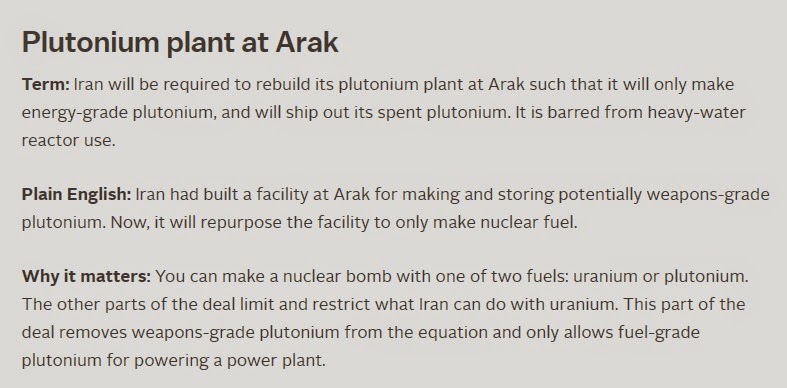




 Aletho News