Solar Fossil Fueled Fantasies
By Willis Eschenbach | Watts Up With That? | June 15, 2015
Sometimes when I’m reading about renewable technologies, I just break out laughing at the madness that the war on carbon has wrought. Consider the Ivanpah solar tower electric power plant. It covers five square miles in Southern California with mirrors which are all focusing the sun on a central tower. The concentrated sunlight boils water that is used to run a steam turbine to generate electricity.

Sounds like at a minimum it would be ecologically neutral … but unfortunately, the Law of Unintended Consequences never sleeps, and the Ivanpah tower has turned out to be a death trap for birds, killing hundreds and hundreds every year:
“After several studies, the conclusion for why birds are drawn to the searing beams of the solar field goes like this: Insects are attracted to the bright light of the reflecting mirrors, much as moths are lured to a porch light. Small birds — insect eaters such as finches, swallows and warblers — go after the bugs. In turn, predators such as hawks and falcons pursue the smaller birds.
But once the birds enter the focal field of the mirrors, called the “solar flux,” injury or death can occur in a few seconds. The reflected light from the mirrors is 800 to 1,000 degrees Fahrenheit. Either the birds are incinerated in flight; their feathers are singed, causing them to fall to their deaths; or they are too injured to fly and are killed on the ground by predators, according to a report by the National Fish and Wildlife Forensics Laboratory.”
– David Danelski, Solar: Ivanpah Solar Described as Deadly Trap for Wildlife,” Riverside-Press Enterprise, April 8, 2014.
But of course, that’s not what made me laugh. That’s a tragedy which unfortunately will be mostly ignored by those good-hearted environmentally conscious folks suffering from chronic carbophobia.
The next oddity about Ivanpah is that despite being powered by light, it is light-years away from being economically viable. Like the old sailors say, “The wind is free … but everything else costs money”.
But being totally uneconomical doesn’t matter, because despite costing $2.2 billion to build, Google is a major shareholder, so at least they could afford to foot the bills for their high-priced bird-burner …

… get real. Google would much rather use taxpayer dollars to burn birds alive than foot the costs themselves. Being good businessmen and women they sought and got a $1.6 billion dollar taxpayer funded loan, presumably because no bank on the planet would touch the project. And if the banks wouldn’t touch it, why should you and I?
But that’s not enough for these greedy green pluted bloatocrats. Now, they are applying for a $539 million dollar GIFT of your and my taxpayer money in order to repay the money that you and I already lent them … we should give them the money to repay ourselves? Give an unimaginably wealthy company money to repay us what we have loaned them? Have I wandered into a parallel universe? This is GOOGLE, folks, and they’re trying to poor-mouth us?
And of course, that’s not what made me laugh either. That is another tragedy which unfortunately will be ignored by those who wish to see electricity prices rise … you know, folks like President Obama, who famously said:
Under my plan of a cap and trade system, electricity rates would necessarily skyrocket …
Of course, such an electricity price rise would mean nothing to him, like every recent President he’ll leave office a multi-millionaire. And such an energy price rise means nothing to the Google execs who are burning birds alive … but for those of us here on the ground, causing the electricity rates to skyrocket is not the moral high ground, it is a crime against the poor.
So that is no laughing matter at all.
No, the part that I didn’t know about Ivanpah (and other solar steam plants), the part that got me smiling, was that there is a problem with a solar tower that is generating steam. This is that steam turbines don’t do well at all with half a head of steam. For full efficiency a turbine needs full pressure steam in order to operate. And it has to have full pressure, not when the valves are closed to let the pressure build up, but when the turbine is actually using the steam.
And since you can’t store steam, that in turn means that Google can’t start up their you-beaut solar tower until fairly late in the morning.
Well, the solution that the good engineers hired by Google came up with was simple.
Start the sucker up using natural gas. That way, first you can heat the cool boiler water before the sun comes up. Then, as more and more solar energy comes online during the morning, you can taper off on the natural gas.
But having a solar plant that runs on natural gas, although funny, wasn’t the best part … it gets better:
One big miscalculation was that the power plant requires far more steam to run smoothly and efficiently than originally thought, according to a document filed with the California Energy Commission. Instead of ramping up the plant each day before sunrise by burning one hour’s worth of natural gas to generate steam, Ivanpah needs more than four times that much help from fossil fuels to get plant humming every morning. MARKETWATCH
These good folks have underestimated the amount of fossil fuels that the plant would need by a factor of four, and they want us to follow their lead in reorganizing the world’s energy supply? And of course, in the familiar refrain, the taxpayer is expected to foot the bill for their ignorance and their inept calculations.
So now, I find out that the Ivanpah plant runs on natural gas four hours a day, and I gotta say, I did find that funny. But in the most ironic twist of all, the above link goes on to say:
Another unexpected problem: not enough sun. Weather predictions for the area underestimated the amount of cloud cover that has blanketed Ivanpah since it went into service in 2013.
And that brought the joke all the way around. I found that hilariously ironic. Because of alarmism based on computer model predictions of rising temperatures in 100 years, we’ve built a fossil-fuel fired solar plant which is already in trouble because of failed computer model predictions of the clouds over the next few years … don’t know about you, but that cracked me up.
Now, even the best solar energy conversion devices don’t operate 24 hours a day, or even 12 hours a day. Generally, eight hours a day or even less is the norm. And that has been cut down by clouds … so at present, dreaded fossil fuels are likely providing a third of the energy to fuel the plant.
Gotta say, I don’t know whether to laugh or cry about things like the natural-gas powered Ivanpah solar power plant fiasco. On the whole I have to favor laughter … but dear heavens, the damage that environmentalists are doing in the name of the environment is appalling. Burning birds alive in the name of making energy prices skyrocket? Have we sunk this low? Really?
In any case, my best guess is that this is a self-limiting problem, or it would be without subsidies. The “levelized cost” of solar thermal is horrendous. It is the only technology which is more expensive than offshore wind, and it is the most expensive of the commonly analyzed grid-scale renewable choices. It won’t work without the kind of multi-million dollar taxpayer subsidies that the Google folks think that they deserve … me, I would never have given them the loan of taxpayer money in the first place, that’s the bank’s job, not the government’s job. More to the point, I think they deserve to pay the damn loan back themselves.
Let me close on a more optimistic note. The referenced article says:
Bird carnage combined with opposition by Native American tribes to industrial projects on undeveloped land has made California regulators wary of approving more. Last September, Abengoa and BrightSource abandoned their quest to build a solar-thermal project near Joshua Tree National Park when the state regulator told them the plant’s footprint would have to be cut in half.
In March the Board of Supervisors of Inyo County, a sparsely populated part of California that is home to Death Valley National Park, voted to ban solar-thermal power plants altogether. “Ivanpah had a significant effect on the decision making,” said Joshua Hart, the county’s planning director.
If the final end of Ivanpah is the end of any further Ivanpahs ever, I suppose that I’d say that Ivanpah was worth whatever it cost … although I’m sure the birds would have preferred a different path to that outcome. As long as Ivanpah is in operation birds will continue to be burned alive in the name of driving up electricity prices … and these monomoniacal carbophobes still think that they have the high moral ground regarding fossil fuels?
Because I rather suspect that neither the birds nor the poor would agree …
Journalists blast Israeli government cartoon mocking Gaza news coverage
RT | June 17, 2015
Israel’s Foreign Ministry has produced a 50-second cartoon mocking foreign reporting on Gaza, urging people to see that “terrorism rules” there. Apart from arguably lacking comedic value, the clip was slammed as being in poor taste by international media.
The animated short shows a blond, presumably American reporter in Gaza talking about how it’s a modern society where “ordinary people” are just trying to live their lives – “no terrorists here.” As the reporter’s praise for the locals continues, Hamas member can be seen in the back launching rockets.
The underground tunnels Hamas is building are seen by the reporter as “a fascinating attempt by Hamas to build a subway system… which will bring Gaza’s transportation system into the 21st century.”
This continues until a female reporter places a pair of glasses on the male reporter’s face so he could “see the reality of life under Hamas rule,” causing him to faint in shock.
The cartoon culminates with the woman’s upbeat, receptionist-like tone as she declares: “Open your eyes. Terrorism rules Gaza.”
The Foreign Press Association (FPA) has struck out at the decision to produce the cartoon in a statement, insisting that this is not what Israel needs if it wants to be taken seriously by the international community.
“The Foreign Press Association is surprised and alarmed by the Israeli Foreign Ministry’s decision to produce a cartoon mocking the foreign media’s coverage of last year’s war in Gaza,” the statement reads.
“At a time when Israel has serious issues to deal with in Iran and Syria, it is disconcerting that the ministry would spend its time producing a 50-second video that attempts to ridicule journalists reporting on a conflict in which 2,100 Palestinians and 72 Israelis were killed.
“Israel’s diplomatic corps wants to be taken seriously in the world. Posting misleading and poorly conceived videos on YouTube is inappropriate, unhelpful and undermines the ministry, which says it respects the foreign press and its freedom to work in Gaza,” the FPA said.
Israel’s Foreign Press Association is a nonprofit representing about 500 international journalists reporting from Israel, the West Bank and Gaza Strip.
Meanwhile, the Israeli government has denied UN human rights envoy Makarim Wibisono entry into Gaza for a second year in a row, just as a UN report on the war last year is about to be made public.
Israeli Foreign Ministry spokesman Emmanuel Nahshon believes Israel is within its rights to deny entry, as it “cooperates with all the international commissions and all rapporteurs, except when the mandate handed to them is anti-Israeli and Israel has no chance to make itself heard.”
Wibisono is attached to the UN Human Rights Council (UNHRC), which is about to release its findings from an investigation into alleged war crimes Israel may have committed during last year’s war in Gaza.
Israeli forces raid homes in Qaryut to intimidate local activists
International Solidarity Movement | June 17, 2015
Qaryut, Occupied Palestine – In the early hours on Tuesday 16th of June Israeli occupation forces raided several Palestinian homes in the village of Qaryut, near Nablus. The soldiers invaded the homes in search of the Palestinian activist Bashar al-Sadiq Yusuf Moammar (Bashar Qaryouti).
The incident is possibly sparked by the fact that villagers of Qaryout have recently taken up weekly demonstrations, arranged by the PSCC, which Bashar Qaryouti is part of. These are demonstrations against the illegal Israeli settlements that surround the city and continue to annex Palestinian land.
Soldiers invaded at least five different houses in order to find Bashar, and trashed the family homes in the process. Abdullah Qaryouti, whose family fell victim to one of these raids, explained how this included the soldiers locking up the family in one room whilst ransacking the rest of their house using K9’s.
According to Abdullah Qaryouti this is common behaviour for the occupation forces, who invade and ruin Palestinian homes on a regular basis.
The local activists presume the most recent house raids to be part of the ongoing efforts of Israeli forces to intimidate and threaten any resident that participates in non-violent resistance.
 Bashar Qaryouti


Credit to PSCC for the photos, they do not belong to ISM.
Palestinian cabinet to be dissolved, formed in several days
Ma’an – June 16, 2015
RAMALLAH – An attendee of the 15th Fatah Revolutionary Council conference led by President Mahmoud Abbas told Ma’an Tuesday that the council will form an entirely new unity cabinet rather than pursuing efforts to reform the existing government.
Abbas announced that the government would resign within the next 24 hours, several senior Fatah officials attending the conference told AFP, with the new government formation expected to be carried out in a matter of several days.
The announcement comes as Palestinian leadership in the West Bank and Gaza Strip have struggled to maintain a unity government pieced together in June 2014.
The move materialized after the Fatah-led PLO and Hamas announced a national unity deal a few months prior intended to end seven years of political division between the largest two Palestinian parties.
The division between Fatah and Hamas began in 2006, when Hamas won Palestinian legislative elections.
In the following year, clashes erupted between Fatah and Hamas, leaving Hamas in control of the Strip and Fatah in control of parts of the occupied West Bank.
While last year’s reconciliation aimed to pave the way for a general election by the end of 2014, an Israeli arrest campaign in the West Bank during early summer as well as a war between Israel and Hamas in the Gaza Strip in July-August derailed the timeline.
Hamas has since blasted the Fatah-led PA in the West Bank for failing to follow through on promises to Palestinians in the Gaza Strip.
Deputy head of Hamas Ismail Haniyeh said earlier this month that there had been no humanitarian or economic progress in the coastal enclave since the national consensus government was formed a year ago, referring to swathes of the strip that remain devastated from last summer’s war, as well the nearly one year that has passed since Gaza’s civil servants have received salaries.
Prime Minister Hamdallah pledged during a March visit to Gaza that Palestinian factions would “work fast” to find solutions to crises in Gaza, however the visit largely deteriorated into factional fighting.
The failure of the unity government to address the needs of Gazans was addressed by the Revolutionary Council’s secretary general who told AFP prior to Tuesday’s meeting that the government would step down within 24 hours over its inability to act in the Gaza Strip.
“The government will resign in the next 24 hours because this one is weak and there is no chance that Hamas will allow it to work in Gaza,” said secretary-general Amin Maqbul.
But Ihab Bseiso, spokesman for the consensus government, told AFP he was unaware of the matter.
“We had a meeting today and we didn’t discuss this issue,” he said
As elections haven’t been held in the Palestinian territories since 2006, Tuesday’s decision to dissolve and reform the government is the latest of Abbas’ attempts to create a functioning unity government, in light of a year of setbacks.
Cycles of Oppression, Cycles of Liberation: The Nasa People of Colombia Are Dispossessed Once Again

By Natalia Fajardo | Toward Freedom | June 8, 2015
An intense struggle for dignity and the right to land is being waged right now in the green mountains of south western Colombia, and chances are, you haven´t heard of it. While the scant mainstream media coverage of the country focuses on soccer or peace talks between government and armed guerrilla groups, it ignores that same government’s attacks against communities defending their territory.
On May 28th, one thousand riot police officers entered a sugar cane plantation called La Emperatriz in the municipality of Caloto, in the state of Cauca, to evict nearly 300 members of the Nasa indigenous people. The indigenous community members had peacefully replaced the sugar monocrop for beans and corn, as part of the process they call the Liberation of Mother Earth. This follows other recent evictions in the nearby town of Corinto, which left many civilians wounded, and clashes since February that resulted in the killing of Nasa youth Guillermo Pavi.
These confrontations occur in the midst of the community’s historic effort to defend their right to a dignified life by recovering land stolen from them – land which has been falsely promised to be returned.
Why Liberation? Why These Lands?
The Nasa people inhabited a large portion of southwestern Colombia long before the Spanish invasion. However, over decades of deceit and violence, the most fertile areas were taken over by wealthy landowners and the Nasa were displaced to higher elevations. Seferino Zapata, an elder from Caloto, explains, “We were taken to the mountain, but we fought. I took part in the struggles in the 80s, when we had to pay to work the land for food. We recovered this very land where I now sit.”
But these land takeovers have cost lives. According to Arcadio Mestizo, a leader of the indigenous reserve Huellas Caloto, on a night in 1991 the police and paramilitaries carried out the massacre known as El Nilo, killing 20 adults and children. While the slaughter occurred about 4 kilometers from the plantation, it was planned the night before at La Emperatriz.
The largehacienda of La Emperatriz, once used to raise livestock and grow rice, now hosts the exclusive cultivation of sugarcane by the transnational company Incauca, owned by the millionaire emporium Ardila Lule and currently under investigation for price fixing. Cane production has significant environmental impacts, such as biodiversity loss and toxic residues. La Emperatriz is just a sample of the economic reality of a region which has been transformed into a ‘green desert’ where sugarcane grown to produce biofuels replaced subsistence crops that fed thousands.
Following a ruling in 2000 by the Inter-American Commission on Human Rights, the Colombian state accepted its responsibility in the 1991 El Nilo massacre and agreed to transfer 15,600 hectares of land, including La Emperatriz, to the Huellas Caloto indigenous community. Trusting the agreement, the Nasa people suspended land takeovers. But time went by and the land promised by the government did not come through.
The Huellas Caloto indigenous leader Arcadio Mestizo explained, “In 2005, we re-started this struggle, now calling it Liberation of Mother Earth, and we began with La Emperatriz.”
Although in 2010 the government completed the transfer of the number of hectares of land promised, they are not the lands agreed upon, and much of it is not suitable for agriculture. So the Nasa vowed to “liberate” La Emperatriz hacienda.
The latest wave of liberation began in March, with the Nasa occupation of land, cultivation of maize, beans and cassava, and the construction of basic structures.
However, community leader Emer Pinzón said that in the morning this past May 28, the owner of La Emperatriz ordered their removal: “Riot police came in with their full war machinery ” and encountered 300 Nasa members armed with courage, shovels and stones to defend their efforts and dreams.
“The police brought, tanks, tractors and tear gas, and in four hours destroyed over two months of work,” Pinzón added. In addition to the constant threats by paramilitary groups, Pinzón reported that, during the eviction, riot police warned through megaphones, “this one will be worse than El Nilo.”
Mestizo added, “There is the 1991 precedent, and now we see us going in circles, but today the oppression happens in broad daylight, and fully institutionalized. [A massacre] can certainly happen again.”
This violence against civilians comes amid peace negotiations between the government and the FARC guerrillas.
Constanza Cuetia, a member of the Nasa community´s communications team, reflected, “The war is very much present in our communities. Targeted assassinations and recruitment of civilians continued during the ceasefire. In addition, the peace talks do not get to the heart of the conflict. The government’s delegate to the talks said that the [neoliberal] economic model will not be challenged in the negotiations.” Indeed, the government has justified the violent evictions defending the right to private property of a few, while ignoring the right of many for a dignified life.
However, resistance is strong. “These lands, as taught by our grandparents, belonged to our ancestors,” Pinzón said. “We will take it back for our youth, at any cost.”
Liberation as a Cure
The spokespeople of this community make it clear that the main reason for the liberations is not unfulfilled land agreements; this is only one ingredient in the recipe of reasons for why the Nasa struggle. “We do this to reclaim our land, but also to defend our social rights,” Mestizo explained.
Abel Coicué, a community leader, added, “we liberate these lands, both of the mountains and the lowlands, because they are ancestral and we have a right to them.”
‘’Everything done on the land sickens the earth further, and this disease is treated [by] liberating Mother Earth,” Paulina, a Nasa leader from nearby Corinto, noted. “It is about sowing spaces of freedom and life that allow us to live in balance and harmony.”
This strategy of liberation becomes even more urgent in light of the many “diseases” these territories face. “We have a major threat coming: mining, for which we must prepare,” Mestizo said. “Mining creeps in more quietly than sugarcane, and sometimes the community does not see it, but we have learned that mining companies, such as [South African] Anglogold Ashanti, have requested mining permits over our land, regardless if it is on a protected area or an indigenous reserve.’’
The Nasa people invite us to understand that their struggle is everyone’s struggle, and to take our part in it. ‘’This is not an issue for indigenous people in Cauca, Colombia, but it is a fundamental issue for all of humanity, whose main battlefield is here,” Mestizo explained. “We must understand and own this struggle, putting pressure on the capitalist who dispossess and abuses, and on the government that supports it.”
Click here to view a slideshow of this community and its struggle
Turkey supplies Syria militants with Libya arms: Report
Press TV – June 15, 2015
Turkey has been involved in a covert arms trade between Libya and the Takfiri militant groups operating in Syria, a report has revealed.
Turkish Nokta weekly news magazine published its findings after examining the markings on the ammunition and casings in photos recently released by Turkish daily Cumhuriyet of intercepted Syria-bound Turkish trucks, English-language Turkish newspaper Today’s Zaman reported on Monday.
The magazine discovered that the weapons and ammunition came originally from Libya and ended up in the hands of ISIL militants in Syria.
Last January, authorities stopped and searched a convoy of trucks belonging to Turkey’s National Intelligence Organization, also known as the MIT, loaded with arms and ammunition near the Syrian border in the southern provinces of Hatay and Adana.
The Turkish government at the time claimed that the vehicles had been transporting humanitarian aid to Syria and denounced the interception as an act of “treason and espionage.”
However, the Cumhuriyet newspaper afterwards released photos and footage that showed steel containers filled with mortar shells and ammunition underneath boxes of medicine, saying they were transferred to Syria in trucks operated by the MIT.
The daily said the trucks had been carrying 1,000 artillery shells, 1,000 mortar shells, 50,000 machine gun bullets, and 30,000 heavy arms bullets.
After investigating the pictures, Nokta found out that in one photo, the words “Tripoli Socialist People”, which was written on one of the wooden boxes, should be read as “Tripoli Socialist People’s Libya.” It added that the word “Libya” could not be seen in the photo because it was on the wooden panel taken off by those examining its content.
The magazine also cited the sand in the boxes as another indication that they came from Libya.
Nokta further said that apparent mortar shells with blue tips and markings of “FULL CHARGE, UOF-412, 100mm G” were found among the items. This kind of mortar shells are used in the D-10 type Soviet-made tanks or similar models such as the T-54 and T-55 battle tanks.
Only the Syrian army and the ISIL terrorist group have tanks that are capable of using these mortars, the weekly said, noting that since ISIL has purportedly seized some Syrian army tanks in areas under their control, they would need ammunition to be able to use the tanks.
Nokta magazine stated that numerous videos and photos have emerged on social media platforms showing how ISIL, the al-Nusra Front and other extremist groups are using these kind of tanks and mortar shells.
The report also pointed to many pictures from ISIL terrorists with boxes of weapons and ammunition similar to those discovered in the intercepted trucks.
The militancy in Syria started in March 2011. The Western powers alongside their regional allies, including Saudi Arabia, Turkey, and Qatar, have been supporting the militants financially and militarily.
Policing and Defending Then and Now
The military and police have become two sides of the same coin
By Philip Giraldi • Unz Review • June 16, 2015
Inevitably the debate over issues that relate to both national security and domestic law enforcement often become mired down in wrangling over legal or constitutional niceties, which the public has difficulty in following as it fixates instead on the latest twist in the Bruce Jenner saga. That means that the punditry and media concentrate on easily digestible issues like potential bureaucratic fixes, budgeting, equipment and training, which presumably are both simpler to understand and also more susceptible to possible remedies. But they ignore some basic questions regarding the nature and viability of the actual threat and the actual effectiveness of the response even as the dividing line between military and law enforcement functions becomes less and less evident.
There has been a fundamental transformation of the roles of both police and the armed services in the United States, a redirection that has become increasingly evident since the 1990s when the conjoined issues of national security and crime rates became political footballs. Response to terrorism and “tough on crime” attitudes frequently employ the same rhetoric, incorporating both political and social elements that place police forces and the military on the same side in what might plausibly be described as a version of the often cited clash of civilizations.
A nation’s army traditionally exists to use maximum force to find and destroy enemies that threaten the homeland. A police force instead serves to protect the community against criminal elements using the minimum force necessary to do the job. Those roles would appear to be distinct but one might reasonably argue that the armed forces and the police in today’s America have become the two major constituents of the same organism more-or-less connected by a revolving door, dedicated to combating a new type of insurgency that comprises both global and domestic battlefields and is no respecter of borders. This has meant at its most basic that there has been a major shift in perception on the part of the security community. Community policing and national defense have abandoned relatively reactive interactions with the community and world for more assertive preemptive roles that see their areas of operation as theaters of conflict analogous to war zones, suggesting to some law enforcement officers that Baltimore is at least occasionally somewhat like Fallujah.
That means that some police forces have allowed considerable space to develop between themselves and the communities they are supposed to guard. Many now see themselves less as crime solvers and protectors of the public, instead increasingly embracing their role as a first line of defense against terror and social unrest. As a consequence, police in today’s America are inevitably tasked with maintaining public order in a fashion that once upon a time would have likely been the responsibility of the military equipped and trained as well as far more numerous National Guard.
This tendency to expand and redirect the police role gained momentum in the early 1990s, when law enforcement began to focus on terrorism in the wake of Oklahoma City and the first World Trade Center bombing. After 9/11 it picked up speed when the Bush Administration rushed to adopt a preemptive foreign policy that fit in nicely with a more assertive role by police. Special Weapons and Tactics (SWAT) teams were symptomatic of the change. Originating in Los Angeles in the 1960s, SWAT units spread to nearly every major and many minor police departments whether there was or is any need for them or not. Police departments, embracing having an exciting new weapon and looking for excuses to use it, began to allocate tasks that normally had been the responsibility of beat or patrol officers, including serving warrants. SWAT delivery of what are described as “no-knock” warrants that are frequently issued without any real justification and sometimes based on faulty intelligence has consequently become a bete noire for critics of police overreach. The warrants are sometimes served in the middle of the night by heavily armed officers and might well be preceded by the use of battering rams and “flashbang” grenades, resulting in numerous tragedies for those on the receiving end. With SWAT teams attracting the elite police officers, community policing inevitably has suffered, frequently being assigned to new and less experienced officers.
Police and the military now share equipment, training and doctrine. The equipment, most of which is useful for fighting a war but of marginal utility for police work, is frequently highly visible and changes both how local law enforcement is perceived and how it operates. Arizona alone has received 29 armored personnel carriers, 9 military helicopters, 800 M-16 automatic rifles, 400 bayonets, and 700 pairs of night-vision goggles.
Morven, Georgia, population 600 and blessed by a low crime rate, has received over $4 million worth of military equipment. This led to the formation of a SWAT team supported by a Humvee and an armored personnel carrier. Boats and scuba gear came together to form a dive team, even though Morven city limits incorporate no body of water deep enough to exploit that capability. The Morven police chief boasts that the equipment would enable him to “shut this town down” and “completely control everything.”
The direct transfers of $5.4 billion worth of surplus equipment from the Pentagon through program 1033 and the purchase of additional hardware by way of grants from the Department of Homeland Security operate with almost no oversight over the actual need for the equipment and little accountability afterwards regarding where it winds up. It has spawned what some have described as a police-industrial complex, which is frequently justified by the alleged terrorist threat even though the equipment is in fact almost never used in response to terrorism related situations.
Today’s police approach every potential conflict situation with overwhelming force because that is what the military does, considering “force protection” as its number one priority. The army and law enforcement also share employees, guaranteeing that the mindsets within the two organization will be highly compatible. There are no national figures compiled on how many policeman have been in the military, but anecdotal evidence from various departments suggest that the percentage is somewhere between 20 and 60 per cent, many of whom also continue to serve in the Reserves or National Guard. A veterans’ placement service called Hire Heroes estimates that fully twenty per cent of all ex-soldiers seeking civilian employment look for work in law enforcement as a first choice.
The Federal government also encourages police departments to hire veterans through its Community Oriented Policing Services (COPS), which has provided $114.6 million in incentive grants to 220 cities nationwide. There is frequently a comfortable fit psychologically. The transition from military to police is particularly smooth currently because their self-perceptions as “forces for peace and security” working in environments where they are not appreciated or even welcomed is nearly identical.
On the plus side when turning soldiers into cops, former military are accustomed to operating in a highly disciplined and rule-driven top-down organization, but on the negative side veterans who actually experienced significant combat are much more accustomed to rely on their weapons than are policemen in most working environments, a predilection that sometimes produces avoidable fatal consequences. The window of aggression acceptable to a soldier on a combat patrol is and should be radically different than that of a policeman in an American city.
Returning soldiers who experienced significant combat sometimes come home with mental health issues to include Post Traumatic Stress Disorder (PTSD), with many veterans conceding that after discharge from the service there are sometimes numerous psychological issues that have to be worked through. Police departments do their best to manage that issue through psychiatric screening, but detection of problems is not always that easy, particularly if the job applicant wants the job and is not being particularly forthcoming. Many concede that for ex-soldiers thus afflicted leaving one environment full of “violence, tension, stress [and] anxiety” and landing into something similar would not exactly be therapeutic.
Law enforcement in the United States has also benefited not only from the surplus weapons it receives from the Pentagon but also from training grants and logistical support from the Department of Homeland Security. Many SWAT teams are trained by and often include former or current Special Forces soldiers. Some departments even use both public and private grant money to send officers to Israel to train with the Israeli National Police and that country’s Defense Force. The training inevitably focuses on counter-terrorism, anti-riot procedures, intelligence gathering and crowd control, reinforcing the impression that such activities that once upon a time might have been regarded as peripheral to police work are now the first priority. There are also reports that some American police forces are interested in buying an Israeli high tech export called “Skunk,” which is a liquid that can be sprayed from water cannons that allegedly smells like raw sewage and putrefying flesh. It has been used on Palestinian protesters.
But perhaps the biggest unanswered question is “Does terrorism in its many guises actually threaten the United States and will that threat be diminished by more equipment and training as well as a more militarized police force here at home?” Addressing the threat issue is critical as it presents a steady drumbeat for action “to defend the nation” and actually provides much of the popular support for an increasingly robust police response. To be sure, there undoubtedly exists a growing critical consensus that the terrorist threat is largely phony, having been inflated by both political parties for political reasons. Certainly the record of terrorism related arrests suggests that the danger is minimal and those detained in the process are often the product of what many would call law enforcement entrapment. There is actually no evidence that a more militarized police has thwarted terrorist attacks or led to any significant arrests, which rather suggests that the real motive for the increasingly assertive profile for law enforcement might just be to have the tools on hand to intimidate or even put down domestic dissent. If that is so, every American should be concerned about what might be coming down the road.
Palestinian Poverty, Israeli Affluence: Deciphering The NY Times
By Barbara Erickson | TimesWarp | June 15, 2015
It takes some attention and a bit of math, but readers of The New York Times now have the means to discover just how great the chasm is between Israelis and Palestinians—not just in politics but in hard cash.
In an article and follow-up editorial concerning a report by the RAND Corporation, an establishment think tank, the Times informs us that if the adversaries negotiated a two-state peace deal, both Palestinians and Israelis would gain financially. Over 10 years, RAND says, Israel would gain $123 billion and Palestine $50 billion.
We learn that in terms of annual per capita income this breaks down to a 5 percent increase, or $2,200, for Israelis and a 36 percent increase, or $1,000, for Palestinians.
Readers are apt to take that in with little pause, but if we do the calculations, this tells us that current incomes average $44,000 for Israelis and $2,778 for Palestinians. This puts Israel far above the World Bank standard of $12,746 for high-income countries. It places Palestine barely over the low-income level.
This means Palestinians make less than their neighbors in Egypt, Jordan or Iraq. It places Palestine in the same World Bank grouping as Guatemala, South Sudan and others with per capita incomes from $1,046 to $4,125.
Israel rates with the economic stars, not only in the high-income category but in the elite of that group. On average, its citizens earn yearly incomes very near those in Germany, New Zealand and the United Kingdom. [The World Bank lists Israel’s per capita income as $32,030, but this includes occupied Palestine, which is given no separate economic status. The RAND report distinguishes between Israel and Palestine.]
The Times would have done its readers a favor by untangling the data and revealing the stark difference between Israeli and Palestinian earnings, but the story and editorial give a sense that the two sides are on an even playing field. A two-state solution, the Times editorial states, “makes both sides winners.”
The article, by Jodi Rudoren, puts emphasis on how much the occupation costs Israel in support for settlements and security. It is seen, she writes, as a “self-imposed economic burden.” There is no mention of the burden on the Palestinian side.
The think tank, however, does better than the Times by stating outright that “A singular feature of the Israeli-Palestinian relationship is the power imbalance between the two parties: Israel dominates the region both militarily and economically.”
The report makes clear that Israeli policy has harmed Palestinian commerce with regulations favoring Israeli companies, restrictions on movement and the confiscation of water and land. It also points up the devastating impact of Israel’s policy of demolishing housing and infrastructure in Gaza and the West Bank.
None of this appears in the Times, which sticks to the dry numbers of the RAND report, but this data has provided clues to a reality the Times obscures—the scandalous inequality between Israelis and Palestinians.
This disparity should inform the paper’s reporting on relations between the two sides, yet we read of the peace talks as if they involve two equal parties, both asked to make concessions. Likewise, in reports on Gaza, we read of the threat of rockets but learn almost nothing about the overwhelming military might of Israel’s arsenal and army.
Readers should not have to take to their calculators to discover the huge imbalance that underlies every aspect of Israeli-Palestinian relations. Our newspaper of record should have revealed that reality long before now and not in hidden ciphers.
Male and killed in Gaza – you’re a combatant
By Jonathon Cook | The Blog From Nazareth | June 16, 2015
Experience should have proved that one has to be credulous in the extreme – or brainwashed by Zionism – to take seriously “rebuttals” by the Israeli army of evidence of its abuses and war crimes. But for any who still harbour suspicions that claims by the Israeli army aren’t simply self-serving deceptions, take a look at its latest report into last year’s attack on Gaza.
The number of Palestinian civilians killed during Operation Protective Edge, says the Israeli army, was 761 – or 36 per cent of the total of 2,125 fatalities it registered. The UN has recorded 95 more Palestinian deaths and has twice as many civilians killed by Israel: 1,483, or 67 per cent of the total. Both can’t be right.
Let’s break down the Israeli numbers. According to the army, of those killed, 369 were children under the age of 15 (Israel’s redefinition of childhood for Palestinians) and 284 were women. That’s a total of 653.
That means of the 1,364 boys and men aged between 15 and 100 who were killed according to Israel’s estimates, only 108 are accorded the status of “civilian”. In other words, only 8 per cent of all males over the age of 15 who were killed in Israeli attacks were not suspected by Israel of being actively engaged in combat at the time of their death.
Comfortingly for Israelis, that means that, if you were Palestinian and male and a missile or bomb hit you, or a targeted building collapsed on you, you were almost certainly a combatant.
And if you believe that, I’ve got a bridge to sell you.
Israel’s Race to Economic (and Moral) Bankruptcy
By Jonathan Cook | Dissident Voice | June 16, 2015
Two recent reports suggest that Israel could face catastrophic consequences if it fails to end the mistreatment of Palestinians under its rule, whether in the occupied territories or in Israel itself.
The Rand Corporation’s research shows that Israel could lose $250 billion over the next decade if it fails to make peace with the Palestinians and violence escalates. Ending the occupation, on the other hand, could bring a dividend of more than $120 billion to the nation’s coffers.
Meanwhile, the Israeli finance ministry predicts an even more dismal future unless Israel reinvents itself. It is likely to be bankrupt within a few decades, the finance ministry report says, because of the rapid growth of two groups who are not productive.
By 2059, half the population will be either ultra-Orthodox Jews, who prefer prayer to work, or members of Israel’s Palestinian minority, most of whom are failed by their separate education system and then excluded from much of the economy.
Both reports should be generating a tidal wave of concern in Israel but have caused barely a ripple. The status quo – of occupation and endemic racism – still seems preferable to most Israelis.
The explanation requires a much deeper analysis than either the Rand Corporation or Israel’s finance ministry appears capable of.
The finance ministry report points out that with a growing population not properly prepared for a modern, global economy, the tax burden is falling increasingly heavily on a shrinking middle class.
The fear is that this will rapidly create a vicious cycle. Wealthier Israelis tend to have second passports. Overwhelmed by the need to make up the revenue shortfall, they will leave, plunging Israel into irreversible debt.
Despite this doomsday scenario, Israel seems far from ready to undertake the urgent restructuring needed to salvage its economy. Zionism, Israel’s official ideology, is predicated on core principles of ethnic separation, Judaisation of territory and Hebrew labour. It has always depended on the marginalisation at best, exclusion at worst, of non-Jews.
Any effort to dismantle the scaffolding of a Jewish state would create a political crisis. Reforms may happen, but they are likely to take place too slowly and incrementally to make much difference.
The Rand report also raises the alarm. It notes that both peoples would benefit from peace, though the incentive is stronger for Palestinians. Integration into the Middle East would see average wages rise by only 5 per cent for Israelis, compared to 36 per cent for Palestinians.
But, while its economists may have found it easy to quantify the benefits of ending the occupation, it is much harder to assess the costs in shekels and dollars.
Over the past six decades, an economic elite has emerged in Israel whose prestige, power and wealth depends on the occupation. Career military officers earn large salaries and retire in their early forties on generous pensions. Nowadays many of these officers live in the settlements.
The army top brass are the ultimate pressure group and will not release their grip on the occupied territories without a fight, one they are well placed to win.
Backing them will be those in the hi-tech sector who have become the engine of the Israeli economy. Many are former soldiers who realised the occupied territories were the ideal laboratory for developing and testing military hardware and software.
Israel’s excellence in weaponry, surveillance systems, containment strategies, biometric data collection, crowd control, and psychological warfare are all marketable. Israeli know-how has become indispensable to the global appetite for “homeland security”.
That expertise was on show this month at a Tel Aviv armaments expo that attracted thousands of security officials from around the world, drawn by the selling point that the systems on offer were “combat proven”.
To end the occupation would be to sacrifice all this and revert to the status of a tiny anonymous state with no resources or notable exports.
And finally the settlers are among the most ideologically committed and entitled sector of Israel’s population. Were they moved out, they would bring their group cohesion and profound resentments back into Israel.
No Israeli leader wants to unleash a civil war that could rip apart the already-fragile sense of unity among the Jewish population.
The reality is that most Israelis’ perception of their national interests, both as a Jewish state and as military superpower, are intimately tied to a permanent occupation and the exclusion of Israel’s Palestinian minority from true citizenship.
If there is a conclusion to be drawn from these two reports it may be a pessimistic one.
Israel’s internal economy is likely to grow gradually weaker, as the ultra-Orthodox and Palestinian labour forces are under-utilised. As a result, the focus of Israel’s economic interests and activity is likely to shift even more towards the occupied territories.
Far from Israelis rethinking their oppressive policies towards the Palestinians, the ideological blinkers imposed by Zionism could push them to pursue the benefits of the occupation even more aggressively.
If the watching world really wants peace, economic wishful thinking will not suffice. It is past the time simply for carrots. Sticks are needed too.
Featured Video
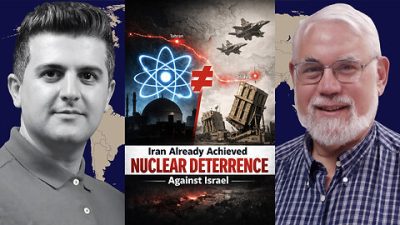
Prof. Ted Postol: Iran Already Achieved Nuclear Deterrence Against Israel
or go to
Aletho News Archives – Video-Images
From the Archives
How the occupied mentality syndrome works
Saudi Arabia on the American chessboard – Part 3
By B. J. Sabri | American Herald Tribune | June 27, 2016
Read part 2: “The occupied mentality Syndrome“
Previously I argued whether Saudi Arabia’s repeated involvements in U.S. interventions and wars stem from free national will or in response to a specific condition. For starters, in Saudi Arabia there is no national will. In Saudi Arabia, the national will is the will of the Al Saud clan. Still, when a major Arab state allies itself with a superpower that committed unspeakable crimes against humanity in almost every Arab country, then something is wrong. This fact alone should compel us to examine the U.S.-Saudi relation for one exceptional reason. As a result of the U.S.-Saudi wars, hundreds of thousands of people in Afghanistan, Iraq, Iran, Libya, Syria, Yemen, and Somalia have lost their lives. Millions became displaced in their own homelands. And millions more rendered refugees.
Attributing the Saudi policies to the bonds of “partnership” with the U.S. is frivolous. There are no bonds between these two thugs except those of business, military deals, secret plots, and wars. Proving this point, bonds such as these have no space for the American and Saudi peoples to share significant cultural or societal exchanges. If partnership is not the reason for the Saudi contribution to the U.S. strategy of empire and imperialism, then another reason must exist.
This leads to three possibilities. … continue
Blog Roll
 Aletho News
- NIAID/NIH and USDA Fund Bioengineered Chimeric Influenza Viruses Built Using Pandemic H1N1 Components: Journal ‘Science Advances’
- Hezbollah hits Israeli warship off Lebanon’s coast, sets it aflame
- Iran slams US strikes on B1 bridge, Mahshahr petrochemical plants as ‘blatant acts of state terrorism’
- In letter to UN chief, Araghchi warns of dire consequences of US-Israeli attacks on Iran’s nuclear facilities
- Why the CIA conspiracy to invade Iran with Kurdish militias failed
- Why Are Upbeat US Claims About Mission to Rescue Pilot ‘Highly Questionable’?
- Aircraft destroyed during US ‘rescue’ of downed F-15 pilot cost more than $100 million each
- Washington University removes professor who condemned US-Israeli war on Iran
- Russia Warns of Retaliation as UK Authorizes Seizure of Vessels
- Serbia thwarts plot to bomb Russia-Hungary gas pipeline – Vucic
- If Americans Knew
- In Iran, Israel-US take aim at “reason, research, and freedom of thought” – Daily Update
- US loses planes over Iran, Israel downgrades Lebanon war goals – Daily Update
- Israel Is Blocking Palestinians from Easter at Church Where Jesus Resurrected
- Plot to assassinate Palestinian activist follows harassment campaign promoted by Zionist groups and elected officials
- Prominent New York synagogue hosts presentation on why U.S. Jews should support the ethnic cleansing of Gaza
- Tapper vs. Piker: Is the CNN Anchor Auditioning for David Ellison?
- Shouldn’t Democrats Be Able to Condemn Genocide?
- Israel-US kill negotiators, destroy civilian structures, but Iran’s military capabilities still largely intact – Daily Update
- ‘War crime’: Global condemnation as Israeli ministers celebrate death penalty law targeting Palestinian prisoners
- 7 Ways Israel Is Turning Lebanon Into Gaza
- No Tricks Zone
- An Inconvenient Tree: Uncovered In Alps… Europe Much Warmer Than Today 6000 Years Ago
- New Study Reports A 60% Slowdown In Greenland’s Ice Loss Rate In The Last Decade
- Low Intensity Tornado Wrecks Major Solar Farm, Creating A Potential Toxic Dump
- New Study Finds Warming Saves Lives…Cold Temperatures 12 Times More Deadly Than Excess Heat
- German Science Blog Accuses PIK Climate Institute Of Hallucinating Climate Tipping Points
- Devastating Assessment Of Comirnaty Vaccine By Former Senior Pfizer Europe Toxicologist
- New Study: CO2 Is ‘Effectively Negligible’ As An Explanatory Climate Change Factor Since 2000
- Former Pfizer Toxicologist Dr. Helmut Sterz Tells Bundestag Hearing Pfizer Vaccine Should Have Never Been Approved
- Energy Expert: Germany’s Nuclear Phaseout Was A “500 Billion Euro Mistake”
- New Research: South Australia’s Mid-Holocene Sea Surface Temperatures Were 4°C Warmer Than Today
 Aletho News