It’s always interesting for me to observe the reaction of Americans and Western Europeans when they learn where I’m from. Many just don’t say anything. Many regurgitate something incoherent about Putin’s “imperial” ambitions, “the Boeing” that was shot down over Eastern Ukraine last year, and “that politician guy that got killed in Moscow.” Finally, there are those (unfortunately, a minority) who tell me that things must be more complicated than they are portrayed in the news and genuinely want to know what I think.
Things are definitely much more complicated than they’re portrayed in the news. I’ve had a chance to observe mainstream American, Canadian, and British media for quite some time now, and I’m amazed that so few people are appalled by the crudeness of propaganda that is fed to them, no matter whether the source is Fox News, CNN, or the BBC. Just like that Wal-Mart truck driver that stopped to help a stranded motorist doesn’t make Wal-Mart a great place to shop, the Pentagon Papers don’t make The New York Times a progressive newspaper. Neither does covering the Snowden case make The Guardian a source you should now trust and worship.
When I can hear explosions in the background in the middle of a phone conversation with my relatives who are hunkering down with their young children in the hallway of their apartment (“safe” because it’s away from the windows) while being shelled by Ukrainian artillery, and the “progressive” sources mentioned above pontificate about Russia’s “aggression” in Ukraine, call for more sanctions, and do not say a word about the massive devastation and suffering the US- and Europe-backed regime in Kiev has caused in just one year in one of the most urbanized parts of Europe, I feel disappointment and helplessness. Do these talking heads have no shame? Do those who listen to them have no brain? Opportunities to question, explore, and learn are all around you. Why not use them?
How many of you know that the cities of Donetsk (once home to over one million people) and Gorlovka (Horlivka; once home to more than 300 thousand people) have been shelled by the Ukrainian military pretty much daily throughout the month of May and in the first half of June – despite the so-called ceasefire?
How many of you know that American soldiers are actually in Ukraine training the Ukrainian National Guard – the troops that are then deployed to the East of the country? (Do a quick search, and even your “trustworthy” mainstream sources will confirm that – in a non-intrusive sort of way, of course.)
How many of you remember the context of Victoria Nuland’s “Fuck the EU” comment in her conversation with the US ambassador to Ukraine Geoffrey Pyatt?
How many of you know that John Brennan, director of the CIA, visited Ukraine in April of last year, immediately after which Ukraine’s “counter-terrorist operation” began in the rebellious East of the country? (Do another quick search, and your “trustworthy” mainstream sources will again confirm that – also in a non-intrusive sort of way.)
How many of you can imagine Russia putting its navy ships in the Gulf of Mexico, installing an anti-American regime in Canada, and holding military exercises just south of the US-Mexican border? How many of you can imagine what the American reaction to that would be? How ridiculous would the EU look if it imposed sanctions on the US? (Well, the EU looks just as ridiculous with all its current posturing and double standards.)
How many of you can imagine US and European sanctions against Saudi Arabia for its actions in Yemen? How many of your “trustworthy” sources use the word “aggression” when describing Saudi Arabia’s actions?
It took crash investigators a few days to learn what was going on in and around the cockpit of Germanwings Flight 9525, which crashed over the Alps less than three months ago. How many of you wonder what ever happened to the black boxes of the Malasia Airlines Flight 17 now that almost a year has passed since the plane was shot down over Ukraine? (It seemed so clear whom to blame back then, didn’t it?)
You most definitely heard about “that politician guy that got killed in Moscow.” How many of you know about a whole number of “politician guys” that have “committed suicide” in Ukraine? Other than stumbling on an occasional blurb, you’d really have to look to see what’s going on.
How many of you know about Oles Buzina, a pro-Russian journalist, who got murdered in Kiev just two months ago?
Finally, have you ever wondered who actually benefits from this war in Ukraine? Do you really think it’s Russia, now stuck with hundreds of thousands of refugees from Ukraine, a rabidly russophobic regime next door, and NATO bristling with all its fancy glory literally on Russia’s borders? Is it the “separatists” (or Ukrainians alike), whose most industrialized region is now in ruins? Or is there perhaps another party that’s meddling in all this? Use your imagination. May curiosity be your friend.
On June 2, the United States announced that 180 Marines would be deployed to Honduras as a preventative measure primarily concerning the upcoming hurricane season. Both the U.S. Marines and the White House affirmed that the military mobilization will be temporary and that its functions will only be used to protect the local populace in the case of a natural disaster.[1]
Regional specialists, however, fear that the presence of sophisticated U.S. military and surveillance equipment, as well as the sheer number of Marines that the United States brought to the Soto Cano Base Area in Palmerola, signal that this mobilization is the beginning of a new round of expansion of the United States’ presence in Central America reminiscent of Washington’s pro-contras and anti-sandinistas practices during the 1980s. These assumptions are based on how the United States has favorably supported the new Honduran government, despite it being established by the illegitimate removal of former Honduran President Manuel Zelaya from office by military troops on June 28, 2009.
Countries in the Americas have been almost universally skeptical about the authenticity of the 2009 coup d’état and the statements made by President Barack Obama regarding this issue. In fact, according to the journalist Michael Parenti, certain indicators suggest that the 2009 Honduran coup was sponsored by the United States.[2] In her book Hard Choices, former Secretary of State Hillary Clinton admitted “that she used the power of her office to make sure that Zelaya would not return to office.”[3] It was later revealed that the cadre of influential lobbyists hired to galvanize support in Washington for the coup have strong ties to both Hillary and Bill Clinton.[4] Additionally, many Latin Americans have made definitive links between the United States and the movement that overthrew President Zelaya in 2009, and President Obama shied away from promptly denouncing the military coup in Honduras.
On the other hand, according to a 2009 column written by Noel Brinkerhoff for AllGov, many of the accusations of past U.S. complicity with the military moves in Honduras are based on the fact that, at that moment, and still today, a large segment of the Honduran military receives U.S. training and supplies.[5] This suggests that the military coup that overthrew President Zelaya would not have succeeded if Washington had not conferred the adequate training. However, what is most disquieting about this situation is that, despite knowing how extensively U.S. military training affects the behavior of Honduran troops, the United States agreed to continue providing strategic help to the Honduran armed forces. Washington thus continues to be targeted with accusations regarding the 2009 coup that overthrew President Zelaya. Most notably, the plane carrying Zelaya out of the country stopped and was refueled at the U.S. military base at Palmerola. U.S. authorities, however, insist that they had no knowledge of Zelaya being on the plane.[6]
The allegations of U.S. involvement in the coup are not the only reason for the regional skepticism regarding the recent military deployment in Honduras. According to a LatinNews article on Honduras, the fact that the United States is considering a military expansion to attack regional drug cartels could not only worsen the U.S. reputation in Latin America but also at the international level, because the failure of this mission would be disconcerting for its regional efforts. [7]
According to Heather Gies, it is not the recent military expansion that is most concerning to Hondurans, but rather the fact that neither the United States nor Honduran police have been particularly effective in combating the high index of criminality in the region.[8] In fact, some analysts find that the reason why the Honduran public views the recent U.S. military expansion as ominous is because they do not understand how the deployment of 180 Marines for six months will improve what thousands of police and military have failed to bring about in six years of fighting impunity and crime in the Central American country. [9]
Others take issue with the justification behind the military expansion, arguing that the geographic distance between Honduras and the United States is short enough that the deployment is not necessary, and that, if a natural disaster does occur, immediate collaboration and rapid deployment can be provided. Gies asserts, however, that hurricane protection is simply an excuse used by the United States to justify deploying its troops and thus expanding its military penetration through Latin America.[10]
What is central in this debate is not whether or not the United States should collaborate with Honduras, but rather why the United States is willing to collaborate with Honduras today, despite the fact that the Honduran government’s policy fundamentally contradicts the United States’ stance, specifically in regards to human rights. This controversy, according to Gies, will only result in growing scrutiny and criticism of the hypocrisy of U.S. policy toward Honduras and elsewhere in Latin America.[11]
In fact, according to Gies, what is most surprising about this situation is seeing how the United States applies its international policy selectively, isolating some nations like Venezuela, while supporting other countries such as Honduras, where levels of crime are exorbitant and there is very limited freedom of expression. What is most unnerving about the situation, according to recent declarations of former Salvadoran President Mauricio Funes, is that there is no exact science determining what the United States is looking for in Honduras, nor is there a way to tell whether it is supporting the rule of law or rather the dictatorship. [12] The U.S. State Department’s annual Human Rights Report published this week condemns the cycle of impunity, human trafficking, and domestic violence that pervade Honduras, concluding that, “The [Honduran] government took some steps to prosecute and punish officials who committed abuses, but corruption, intimidation, and the poor functioning of the justice system were serious impediments to the protection of human rights.”[13] Contrary to this stance, it is the government’s ardent militarization of Honduras that has proved to be a most detrimental impediment to promoting human rights.
Although it is stipulated that the U.S military expansion in Honduras will solely be allowed during the strict period corresponding to the hurricane season, there is growing uneasiness among the Honduran population. Recent political and social events in the region give credence to the idea that the U.S. troops will prolong their stay in Honduras. In fact, logic indicates that if the troops are meant to battle drug cartels in addition to possibly providing hurricane relief, then they will need much longer than six months.
Under these circumstances, it would also be important for the U.S. government to issue statements that explain its military support for the Honduran government, given the passage of the “Leahy Law” in 1997, which prohibits U.S. military support to countries with records of human rights violations and with continued impunity. It is therefore unclear as to why the United States is providing military support to Honduras. It is also not clear what characteristics a regime must have to receive such acquiescent treatment from the U.S. government.
It is also of crucial relevance to define the time frame that the U.S. troops will be deployed in order to determine their success in countering the drug cartels and other factors contributing to elevated levels of crime and violence in Honduras. Finally, it would also be interesting to know what the repercussions of the next U.S. presidential elections will have in this process due to the fact that many of the top contenders are running on interventionist ideals, and, if elected, they could cause the military expansion in Honduras to be prolonged or even intensified.
[2] Parenti, M. “The Honduras Coup: Is Obama Innocent?”. Michael Parenti Political Archieves. May 2009. Accesed on June 24th 2015. http://www.michaelparenti.org/Honduras.html
Imagine being falsely accused of terrorism for nothing more than the books you have read. Well that’s exactly what has happened to a Florida man named Marcus Dwayne Robertson.
The U.S. government composed “snippets of information from various sources, out of context, to weave together a narrative of terrorist ideation,” according to a Florida judge.
That judge just ordered the release of Robertson, also known as “Abu Taubah,” an Orlando, Florida resident and Islamic scholar. Abu Taubah was accused of “supporting terrorism,” but the “evidence” against him amounted to nothing more than the books on his bookshelf.
Robertson, also known as “Abu Taubah,” was incarcerated from 2011. The charges he faced, however, were tax fraud and illegal gun possession. Not exactly “terrorism.”
But following his arrest and conviction stemming from these charges, prosecutors added what they termed “terrorism enhancement” to the sentence.
There seems to be no rationale for this other than ABu Taubah’s religious orientation… that and his book collection.
This sentencing guideline modification would have locked Robertson up for 20 years.
But the judge’s recent rejection of this bizarre, Orwellian sentencing “enhancement”, led to the Islamic scholar being released immediately.
Robertson’s sentence was argued as justifiable by prosecutors who said the contents of his Islamic book collection were sufficient “evidence” that he was connected to terrorism.
Approximately two dozen eBooks that Robertson downloaded were presented as “evidence” of his “terrorist connections.”
Prosecutors highlighted passage after controversial passage, as though this could serve as legitimate evidence that someone is a terrorist. They didn’t seem to understand that the contents of a book someone owns cannot be used as evidence against them.
A memorandum obtained by First Look was issued along with Judge Gregory A. Presnell decision. That memorandum strongly rejected the government’s argument that eBook passages could be used as “evidence” of “terrorism.”
“[T]here was no evidence produced that Robertson ever accessed these particular documents, much less that he took their extremism to heart,” Presnell argued.
He made it clear that even if the Islamic scholar admitted to having read the eBooks in question, this would not and could not be used as evidence of terrorism.
“The government has never disputed Robertson’s claim of being an Islamic scholar,” he added. “It is not at all remarkable for an Islamic scholar to study, among many, many others, the writings of Islamic extremists.”
He said that beyond this, the prosecutors did “not even come close to proving… Robertson’s relatively minor income tax fraud was intended to promote a federal crime of terrorism.”
The judge noted that he received “hundreds of emails” over the last few weeks that urged him to lock up the man for no reason other than because he was a Muslim. These emails amount to little more than racism and bigotry in most cases, and fear-mongering and ignorance in the rest.
“In America, everyone has a right to say and believe what they want, within the bounds of the law,” Presnell said before declaring that Robertson would have to be released immediately.
Robertson’s lawyer Daniel Broderson agreed that “at no point did the government ever have any actual evidence [Robertson] advocated terrorism, so they attempted to use his library of books as a backhanded way of branding him as a terrorist. He spent four years in prison, two years of it in isolation, over a prosecution that was both unfounded and that completely ran afoul of the first amendment.”
Speaking to The Intercept after he was released, Robertson said, “they’re trying to find an indirect way to sentence people with non-terrorism charges as though they’d committed terrorism offenses, without having to provide the preponderance of evidence that is normally required in such cases. You own a few books and some guy tells an informant you said something, and suddenly that is legal basis enough to sentence you to prison for decades.”
He added that he “lost all those years, in jail, in terrible conditions, away from my family. After all that, they couldn’t produce one single statement from me that supported terrorism.”
Ramallah – On July 2, 2015, in honor of the first anniversary of the murder of Muhammad Abu Khdeir, Palestinian activists with international supporters blocked a settlers-only road leading to the illegal Adam settlement. Demonstrators cited this road as the road that the murderers took in their search for a Palestinian victim. Journalists, Palestinian and international activists, suffered from pepper spray burns and several were hospitalized.
“This is the first in a week of demonstrations for Muhammad Abu Khdeir. One of the murderers, Yosef Haim Ben-David, is from the Adam settlement. This is why the demonstration was held at this settlers-only entrance,” said Abdullah Abu Rahmah, the coordinator of Popular Committee Against the Wall and Settlements in Bil’in.
Demonstrators blocked the road to settler traffic in both directions until the Israeli Army and Border Police dispersed the non-violent demonstrators and journalists by pepper-spraying indiscriminately. Three Palestinian activists, four journalists, and two International ISM volunteers were pepper sprayed in the eyes and mouth by a masked Army officer. An ISM co-founder as well as journalists from Roya TV Channel, Reuters, and Palestine TV were severely pepper sprayed in the eyes requiring hospitalization.
The soldiers threw sound percussion grenades at demonstrators and chased people. In addition to the pepper spray, they shoved journalists and Palestinian activists to the ground.
After the soldiers and border police chased the demonstrators off the road and down a hill, they continued to throw percussion grenades even as the demonstrators stood at a distance waiting to find fellow demonstrators.
Protests erupted north of Kabul on Monday after U.S. forces raided a local residence in search of a weapons cache—revealing that U.S. troops might not play as “limited” a role in Afghanistan as the Pentagon claims.
It’s been months since President Obama declared an official end to the combat mission in Afghanistan. At present, the U.S. mission is ostensibly limited to advising Afghan forces and counterterrorism strikes targeting the Taliban—at least, according to the military’s stated role. However, troops descending from a helicopter in the pre-dawn hours to raid the house of a local commander who has no connection to al-Qaeda—or even the Taliban—certainly muddies the definition of “adviser.”
In fact, Jan Ahmad, who was targeted in the raid, fought against the Taliban in the past and the Soviets before that. Charikar locals, who felt the matter should not have involved foreign forces, hastily closed shops and took to the streets in outrage, shouting, “Death to America!”
“The protesters burned a lot of tires to show their rage,” said local resident Mahmood Hamidy, according to the New York Times, “and that, if the issue is not taken seriously, they are ready for violence.”
Colonel Brian Tribus, spokesperson for General John Campbell, who commands U.S. forces in Afghanistan, said the purpose of the raid was “to destroy a cache of munitions that could be used to conduct attacks against Afghans and coalition forces.” After a thorough search, the cache was blown up.
With hundreds of millions of dollars spent to disarm the numerous militias that lack ties to either al-Qaeda or the Taliban, the motivations of the U.S. military seem somewhat questionable. Elders and other former commanders suspected the raid was political retribution for Ahmad’s support of Abdullah Abdullah in the last presidential election.
A similar raid in March comprised of U.S. drones and troops cooperating with Afghan forces left three people dead—but not the person targeted, who suffered only minor injuries.
Questions further surround the U.S.’ role in Afghanistan—including yet another example in a seemingly endless supply of official statements that lack credibility.
One week ago, Tunisian student Seifeddine Rezgai opened fire on tourists near Sousse, Tunisia, killing 38 people. On the same day, a man was beheaded in France and a bomb detonated in a Shia mosque in Kuwait killing 27. ISIS claimed responsibility for all three.
Amidst the media coverage that follows terrorist attacks such as these, two schools of thought generally emerge: one asserts that terrorists are driven by religious ideology and the other that they are driven by political motives, principally western foreign policy. “All the evidence suggests that this is deeply political,” says Richard Jackson, Deputy Director of the National Centre for Peace and Conflict Studies at the University of Otago in New Zealand. “It’s the conclusion of all the serious scholars I’m aware of that, in particular, the invasion of Iraq was the single most radicalising event for militants across the Middle East and in European and Western countries.”
“That makes complete sense,” he continues. “Because if we look at this kind of terrorism it wasn’t around in the same form and the same level or even close to the same extent 20, 30, 40, 50 years ago. Islam’s been around for hundreds of years… but this is a very modern phenomenon and it’s very, very connected to the politics of the Middle East, particularly to the invasions to Guantanamo, to Abu Ghraib torture, to drone strikes and so on.”
“What you’ve got to remember is that the west has killed 1.3 million people in Iraq. That’s likely to drive any reasonable person into a rage and cause immense grievance.”
The Tunisian government responded to last Friday’s attacks by issuing an order to close more than 80 mosques. Jackson, who is also Chief Editor of Critical Studies on Terrorism and runs a blog on the subject, explains that one of the oldest precepts of theories on terrorism states that isolated acts of violence push the state to respond by cracking down, which in turn intensifies grievances against the state and mobilises support.
The theory, he says, “is that you provoke the power to respond in a disproportionate way, which then creates grievance, which then gives terrorists more support and leads eventually to a broader, deeper movement that can perhaps consider moving to the next stage, which would be a kind of a civil war or an insurgency and then eventually overthrowing [the] regime.” […]
Last year, Jackson took a break from writing academic books to pen Confessions of a Terrorist, a fictional account of a dialogue between a wanted terrorist and a British intelligence officer. Jackson says he has always wanted a novel to give to his students but only found literature that painted terrorists out to be Hollywood-style villains.
Confessions of a Terrorist questions the taboo of talking to terrorists and the fear many have that doing so will lead to understanding and sympathising with their behaviour. “I think that it’s really important that we talk to them so we know what we really want and so that we understand what they’re trying to achieve and why they think they have to use violence… and whether if the situation was reversed we would do the same thing… [T]he reality is in many ways we go and commit a lot of violence overseas and then when people react against that and fight back we get all shocked and surprised. So we need to talk to them.”
“If you look at the academic research, you find out that actually most terrorist groups are not defeated through military means, but a much higher proportion of them stop their terrorism through political dialogue,” he continues. “So once you start talking to them and once you bring them into the political process, once you listen to what their grievances are and try and address them terrorism subsides.”
One of the consequences of not talking to terrorists, believes Jackson, is that we have dehumanised them which allows us to take away their human rights and justifies acts such as killing them with drones. “As a consequence countless innocent people have been killed… Countless innocent people have been tortured; have been kidnapped and taken to these horrible, secret prisons around the world. All kinds of human rights abuses have been carried out and as a result we in many ways have betrayed our own values and that’s because we’ve dehumanised the terrorists and that’s why I think it’s really important to re-humanise them.”
The language of terrorism is thus a way of defining the “other” and drawing a distinction between us and them, good versus evil, freedom lovers against freedom haters and soldiers and patriots against terrorists, says Jackson: “You can look through history – recent and long in the past –and realise that actually governments commit exactly the same acts as so-called terrorists. They use violence to try and terrify groups of people and intimidate groups of people. Sometimes, they plant bombs in public places or blow up or hijack planes. There are so many examples.”
A lot of terrorist scholars argue, therefore, that if the definition of terrorism is applied objectively a lot of state violence can be classified as state terrorism. “But again, that’s a very difficult narrative to make and to be accepted in public because we like to have these clear lines between our good legitimate violence which comes out of the authority of the state and illegitimate, illegal violence,” says Jackson.
“The problem is that when those two forms of violence look identical and you can’t tell the difference between them; [then] there comes to be a question over [whether] our violence [is] actually that legitimate.”
Israeli forces have detained 550 Palestinians, including women and children, in the occupied West Bank since the beginning of 2015.
The detainees, who were arrested in the southern city of al-Khalil (Hebron), included seven women and 105 teenagers, Amjad Najjar, the head of the Palestinian Prisoners Society (PPS) in al-Khalil, said on Thursday.
The Palestinian official added that 225 of the detainees received sentences through the Israeli practice of the so-called administrative detention, under which Palestinians are kept behind bars without charge or trial for months or even years.
According to Najjar, 78 Palestinian patients “who faced a real life threat as a result of detention” were among the inmates in Israeli jails, where they receive no “medical treatment.”
He noted that Israeli forces treat the Palestinian detainees in a “savage and inhuman way during detention.”
The PPS report pointed out that many of those detained during the six-month period were from the town of Beit Ummar, where over 60 residents, mostly minors, were arrested between January and March.
Earlier reports by the PPS showed that Israel detained 383 Palestinians across the West Bank in December 2014.
Over 7,000 Palestinians are reportedly incarcerated in 17 Israeli prisons and detention camps.
Horace M. Kallen, the social philosopher best known in American intellectual history for his theory of cultural pluralism, adopted Zionism in 1903 as a secular mode of retaining Jewish identity, an alternative to the Jewish religious tradition which seemed to him to be incompatible with twentieth century America. He had come to Zionism primarily through the influence of two of his Harvard professors, literary historian Barrett Wendell, who interpreted the Hebraic spirit of prophetic social justice as the inspiration for the American founding fathers, and William James, whose philosophy of Pragmatism emphasized the reality of meanness.
Kallen extended Wendell’s identification of Hebraic tradition with American idealism; he defined Zionism, the movement to renationalize the Jewish people, as an opportunity to found a model democracy based on the same concepts of liberty and equality, which, for him, symbolized America. At the same time he applied James’s concept of pluralism to the ethnic group; among them the Jews, who were beginning to become prominent in the United States, and argued that preservation of differences constituted the true measure of equality the Declaration of Independence had set forth. Zionism, thus, was able to fulfill two functions for Kallen- it allowed him to retain his Jewish identity and to become, thereby, a better American.
In 1911 Kallen became an instructor of philosophy and psychology at the University of Wisconsin. When he moved to the Middle West, he left his familiar environment. Lonely, and somewhat out of place in Madison; he felt the need to assert his Jewish identity more strongly and stepped up his pace of Zionist involvement. Finding little understanding within the official Federation of American Zionists for an expression of his own, philosophically oriented, ideas on Zionism, and quite some antagonism for his demand that the Zionist organization concentrate its activities on obtaining statehood for the Jewish nation in line with the 1896 Basle Platform which had sought “a home in Palestine secured by public law,” Kallen decided to form an organizational instrument through which he could effectively channel his own Zionist activity. On August 18,1913, therefore, Kallen founded a secret Zionist society which he called The Parushim, the Hebrew word which means both “the Pharisees” and “separate”.[1]
The Pharisees had flourished as a separate sect during the time of the second Jewish Temple, goading the Jewish Establishment into making the traditional “written law” more relevant to the times by adding to it the interpretations of the “oral law.” Kallen saw much the same role for his group of Parushim, whose purpose he defined as “advancement by deed and word of the cause of autonomous Jewish nationality in the interest of Hebraism.” As Kallen recalled, “The Parushim was a group much like the Peace Corps, young men and women who saw the Utopian opportunity that existed for the Jewish people in Palestine and who were willing to devote themselves to an ideal.”[2]
The Parushim was a very unusual Zionist group, organized both as a secret fraternity and as a reform movement. Unlike other social groups at the time, both men and women were eligible; “there was ascertain definite interest on desegregation of the sexes.” Enrollment was by an oath of initiation, and there was a probationary period for up to three years, during which time the initiate was to give exclusive and specific service to the cause.” Kallen invited no one to become a member until the candidate had given specific assurances regarding devotion and resolution to the Zionist cause, and each initiate had to undergo a rigorous analysis of his qualifications, loyalty, and willingness to take orders from the Order’s Executive Council. The motto of the group was the response traditionally attributed to the Jewish people on receipt of the Ten Commandments-“Nasseh V’Nishmah”-“we will do and we will hear.”[3]
A member swearing allegiance to the Parushim felt something of the spirit of commitment to a secret military fellowship. At the initiation ceremony the head of the Order informed him:
You are about to take a step which will bind you to a single cause for all your life. You will for one year be subject to an absolute duty whose call you will be impelled to heed at any time, in any place, and at any cost. And ever after, until our purpose shall be accomplished, you will be fellow of a brotherhood whose bond you will regard as greater than any other in your life-dearer than that of family, of school, of nation. By entering this brotherhood, you become a self-dedicated soldier in the army of Zion. Your obligation to Zion becomes your paramount obligation… It is the wish of your heart and of your own free will to join our fellowship, to share its duties, its tasks, and its necessary sacrifices.
The initiate responded by swearing:
Before this council, in the name of all that I hold dear and holy, I hereby vow myself, my life, my fortune, and my honor to the restoration of the Jewish nation, -to its restoration as a free and autonomous state, by its laws perfect in justice, by its life enriching and preserving the historic speech, the culture, and the ideals of the Jewish people.
To this end I dedicate myself in behalf of the Jews, my people, and in behalf of all mankind.
To this end I enroll myself in the fellowship of the Parushim. I pledge myself utterly to guard and to obey and to keep secret the laws and the labor of the fellowship, its existence and its aims. Amen.[4]
It is clear both from the wording of these vows, which paralleled Kallen’s published phrases on Zionism, and from the handwriting on the original copy of this induction ceremony, that Kallen was its author. For him, the organization of the Parushim had many implications. It demonstrated his overriding commitment towards working for the realization of the Zionist ideal, and his need to create, if necessary, an educated militant group that would join him in the cause. It was indicative of his desire to stimulate Zionist activity beyond that of the official Zionist organization, which tended to devote its time to polemic and debate, rather than towards effecting substantial productive achievement. It showed Kallen’s trust in an elite Zionist cadre, a vanguard for the Zionist army that was to come. Most important, perhaps, it reflected his own need for a Zionist community with which he could feel comfortable, a substitute both for his own family, and for the Harvard fellowship of congenial minds that he had left behind when he moved to the Mid-West.
The kind of people Kallen considered worthy of invitation to the Parushim is indicated in a memorandum he prepared on “Signatories to the Zionist Pledge.” The list includes, among others, Alexander Dushkin, an authority on Jewish education; Dr. I. L. Kandel, an educator then with the Carnegie Foundation and Teacher’s College of Columbia University; Israel Thurman, a lawyer and “Harvard man,” who would be used to propagandize among young lawyers; and Nathan C. House, a “Columbia man” and high school teacher, who could work out plans for training Jewish high school boys “along the lines of Zionist sentiment coupled to physical development and Boy Scout discipline.”[5]
It seems from the replies to Kallen’s invitations to join the Parushim that he had hit on the kind of organization that would meet thee needs of others besides himself. The few people he invited to join the Order, all well educated, all Zionist leaders in their own communities, answered enthusiastically. I. J. Biskind, a doctor in Cleveland, who during World War I was to go to Palestine as a medical missionary, responded:
In behalf of Zion, in behalf of Hebraism I will accept a membership of the Parushim- if elected-unconditionally and for life. I want to work, work, work and not sing ”Hatikvah.” I want to be a soldier of the ranks and do actual work. We have been sleeping too long; we have been dreaming and golden opportunities have slipped by us.[6]
Henrietta Szold, founder of Hadassah, the Women’s Zionist Organization, was another early member of the Parushim. She wrote Kallen, “If … I may state the difficulties we [Hadassah] are encountering in our educational work, and so secure instructive advice from the hidden source, it will cause an increase not only in the results but also in the strength and zeal of the workers.” Her reference to “the hidden source” was, no doubt, tongue in cheek, for she continued, “If ever I emerge from under the … routine work in which I am now enveloped, I am going to devote myself to the reading you have prescribed for such as I am, and attempt to make myself more effective than I have been.”[7]
In 1913 Kallen, aware of the moribund condition of the Zionist organization, felt that the way in which he and the Parushim would-be most influential was through a program of education. His focus. was on “the play of ideas-it had to be more theoretical than practical, imaging a program or an action without doing it.” One of his first requests to Henrietta Szold, for instance, was that she provide literature for Zionist courses to be given in Temples and Sunday Schools, a request to which she readily acquiesced. Within a few months, however, Kallen was looking further afield, and by April1914 was writing to Max Nordau, a political Zionist who had been Herzl’s first and most loyal colleague and closest adviser, of his desire to internationalize his secret order.
. .. [l]t happens to be my turn to head the secret organization here in America, which is aiming to turn the Zionist movement in a political direction, from within.
Our order is called Parushim. It is the outcome of the prolonged association of a number of young men in “academic” life who observing the general trend of events in the Zionist movement decided that the higher ideals would fail unless a check were set … Members must alba of distinguished character and trained minds … Our present purposes one of quiet propaganda and education in the “political idea.” We aim to make the masses consciously “political.”
… It is our desire and plan to organize brotherhoods all over the world . . .. We hope if all goes well in a few years quietly to turn the Zionist movement back into its proper channels…. [8]
There is no written record of Nordau’s reply to Kallen, nor of his evaluation of a world-wide Zionist brotherhood, bent on secret activity and influence. Kallen recalls that Nordau “wouldn’t cotton to it. He didn’t think … a vow would be of any use.” The matter was shortly to become moot, however, for four months later war broke out in Europe, forcing the dislocation of the World Zionist headquarters from Berlin. From 1914 until1920, European Zionists lost their influence as the center of Zionist activity shifted first to the United States, then to England. Kallen’s plan for a secret world-wide Zionist society became one of the war’s casualties. But as the United States became more prominent on the Zionist stage, Kallen and his vision of Jewish renationalization were to receive an opportunity for expression wider in scope and more vast in influence than anything he had ever imagined.
On August 30, 1914, an “Extraordinary Conference of representatives of American Zionists” met in New York and organized a “Provisional Executive Committee for General Zionist Affairs” with Louis D. Brandeis, the famous “People’s Attorney,” as its Chairman. Kallen had played an important part in persuading Brandeis to become a Zionist and to take an active role in Zionist affairs, by applying the reasoning of his cultural pluralist argument to the then prevalent contention that Zionist membership implied the unpatriotic condition of “dual loyalty.” Just prior to the August 30 conference, Kallen had presented Brandeis with his own plans for a Jewish State based on the same ideals of liberty and justice for all, which the American Declaration of Independence had enunciated.[9]
Kallen then argued that a commitment to Zionism, instead of being detrimental to American loyalty, actually increased it, for Zionists and Americans shared the same values and traditions, and, therefore, were working towards the same ends. Brandeis, who late in life had felt a sudden emotional pull to the Jewish people, found that Kallen’s reasoning provided him with an intellectual rationale for Zionist activism. Thereafter he looked to Kallen as one of his mistrusted advisers, and used him as his right-hand man both in formulating ideas and proposals and in carrying out schemes of an intricate or delicate nature.
Soon after Brandeis assumed the active leadership of the Provisional Executive Committee Kallen invited him to become an honorary member of the Parushim. Brandeis accepted, and began to assign the Parushim to carry out special “missions” for him.[10] In particular the Parushim were to serve as a school for leaders, and under Kallen’s direction its members initially became the leading activists of the reorganized American Zionist movement. Excerpts from several letters to and from Kallen in late 1914 show clearly that new energies were flowing through the Zionist movement; they show, also, the roles Kallen’s Parushim were assuming in leading the way.
1. To Stephen S. Wise; Prominent Reform Rabbi and leader in the Jewish Community:
Madison, Wisconsin
September 25, 1914
Dear Mr. Wise,
. . . I hope you will bear in mind what I told you about the Order [the Parushim]. We want most of all disciplined and well-trained young men and young women who have vision as well as executive ability, and spirituality, as well as force. In New York there are a good many who might be trained for leadership under proper direction, and I feel that you could play a very powerful and ideal part in the making of such leaders .
. . . As for your feeling about the secrecy of the work, it is, after all, no more secret than any important work has to be … (A)n organization which has the aims which we have must be anonymous, must work silently, and through education and infection rather than through force and noise, and can gain results only insofar as its standards are made to live in the lives of the people to whom they’re brought. But no thing could be more suicidal than the announcement of such an object, so that the secrecy is inevitable. I hope that you will join with us and take your place in our executive committee together with Mr. Brandeis.[11]
2. From Henry Hurwitz, President of the Intercollegiate Menorah Association:
Dorchester, Mass.
October 5, 1914
Dear Harry [Kallen’s favorite nickname for “Horace”],
I got your letter the other day while I was in New York. I went chiefly to attend a meeting of the Provisional Committee. The meeting was rather routine. Chiefly on how to raise the fund. Coming very slow. Brandeis anxious to have done with it in order to have energies free for the bigger problems-also before general appeal for relief floods us. Brandeis put it up to [Judah] Magnes and [Stephen] Wise to raise money among their people [rich congregants].
So far, the mass meetings seem to be little successful, except the Boston meeting…. That was really an extraordinary night for Boston Jews. Surging mob at Symphony Hall when doors opened at 7.At 7:10 necessary to open Jordan Hall for overflow meeting. Still a couple of thousand turned away from both halls. … Brookline [established well-to-do Jews] came down as well as Roxbury and West End [Jewish immigrant communities], to hear and to join. Brandeis spoke over an hour, simply but with suppressed emotion; seemed to hook the subject and reluctant to leave it. Got great ovation both before and after speech. Tremendously different attitude towards Zionism in Boston now along all classes.
I saw Oscar Straus … on a Menorah matter. Incidentally, we talked Zionism. He declared himself strongly in favor of Jewish colonization in Palestine … but only under political guarantees of one or more powers…. He is greatly impressed with Brandeis as leader; expressed a desire to meet him and talk over the problems of Zionism with him…. Wise will arrange a meeting between them.[12]
3. To Richard Gottheil, former President of the Federation of American Zionists:
Madison, Wisconsin
Oct. 14, 1914
Dear Prof. Gottheil:
… My reports from New York are disquieting. I hear of a good deal of restlessness on the part of Federation [of American Zionist] officials, who think they are being displaced…. I hope that, insofar as possible, [Louis] Lipsky, [Shemaryahu] Levin al).d Co. will be given as much kouad [honor] as possible. I am told that they feel “snuffed out”; and I fear very much that they may develop obstructionist tactics which will disgust Mr. Brandeis, and perhaps lead him to cut himself off from the organization. I am particularly concerned about the movement of the I.A.C. [World Zionist Inner Actions Committee] toward the re-opening of offices in Berlin, and the meeting in Stockholm. The situation seems to me to be very delicate, and I hope that you, Wise, Miss Szold, Brandeis and Hurwitz can find some way of suppressing what I feel will be-knowing the character of the Federation [of American Zionists] as I do-very unwise action.
Finally, there is this matter, which seems to me now to be of prime importance. I do not find in any of the foreign periodicals any recognition of the significance of Brandeis’ leadership. I think that it is necessary to make this very clear by a statement of Brandeis’ position and importance in this country, written by a number of people, e.g., you, Wise, Oscar Straus. . and sent to such papers as the Jewish Chronicle of London, the Zionist, etc. The Chronicle is ominously silent about the activities in America, and I regard that as a dangerous thing. Will you kindly put this matter also to our group [Parushim]? We shall have to depend upon ourselves, I forsee almost exclusively, if we are to save Brandeis for the -great work of the movement, without being involved in much unnecessary quarreling and personalities.[13]
4. From I.J. Biskind, a Cleveland surgeon:
Oct. 19, 1914[14]
Dear Dr. Kallen,
Your letter received . . .
We have done all in our power to make the Brandeis meeting a success. Mr. Brandeis arrived here [Cleveland] at about noon. Several of our people and one of the Uptown Jews (as you call them) met him at the station. After a few introductions we turned him over to the Germans [“uptown” German Jews] who had a luncheon waiting for him. He spoke at the luncheon and made a very good impression. None of our people was present, as our uptown Jews did not want to have a Zionist luncheon. … Towards evening 30-40 of our people had Mr. Brandeis to a luncheon of our own, where he gave us a nice talk . . .
I think, that now is the time for us to start to round public opinion and influence it in our favor. People like Mr. Brandeis, youself and Dr. Gottheil should come out openly in the big newspapers and magazines and tell the world what we want and demand…[15]
5. To Henrietta Szold: My dear Miss Szold:
Madison, Wisconsin
October 28, 1914
I am glad to hear from you at last. I have been wondering what turn matters were taking in New York . . ..
I have been in communication with Maurice Browne of The Little Theater of Chicago. He has enthusiastically agreed to organize a company of Jewish players who will present nationalistic plays all over the country…. I have undertaken the writing of one play, but we need two more, one of which must be a comedy…. If you know of any mss. already in existence or of any persons who have real dramatic power, will you kindly put them into immediate communication with me . . ..
As for the status of the Provisional Committee, I do not despair. The chief good of its organization lies not in whether its authority is forthcoming from the [World Zionist] Central Actions Committee or not, but in the fact that it has placed Brandeis definitely at the head of the movement in this country and as a member of the movement, and that has brought out the enthusiasm and practical cooperation of the student bodies everywhere-in short, that it has injected into the movement a new spirit and a new personnel, and promises, I hope, to put an end forever to Ghetto methods and petty Ghetto ideas and personalities that has marked the history of the Federation.[16]
6. To Stephen S. Wise:
Indianapolis
Oct. 25, 1914
Dear Dr. Wise:
I am writing from Indianapolis. Last night I spoke in the local reformed synagogue here-naturally on Zionism. Today I am to meet a number of members of the congregation and to urge upon them a practical allegiance to the cause. I am told … that you are to occupy the same pulpit next Friday, and I am venturing to suggest that it would be very advantageous to the cause here if you also spoke on Zionism and urged practical allegiance. The community here, impressed me all in all as being unconscious Jews and rather materialistic, but they have their possibilities and if awakened, may become potent for much good….[17]
7. To Henry Hurwitz:
Madison, Wisconsin
Nov. 7th, 1914
Dear Henry: Madison,
… We have now the difficult problem of suggesting that the Jews as a whole are rather pro-Allies, but that there is a distinct anti-Russian feeling among them that must not be confused with a pro-German sentiment. . . It becomes necessary, therefore, to write to the daily and weekly press stating why and how it is natural for the Jews to be anti-Russian and still for the Allies. I have asked [Marvin] Lowenthal and [Alexander] Sachs [two members of the Parushim] to write to the Nation. Will you get a couple of your men to write to the Times and the Sun, and write yourself, if possible. Now that Turkey is in [World War I], it is very necessary … to consider the possible alternatives before us . . .. It is absolutely necessary that we should have a dossier containing plans for meeting each of [the]. . possible emergencies, and that practical steps be taken to safeguard our own interests as nearly as possible from all sides at once .
. .. When Brandeis will be in Chicago … we could then have a meeting of “פ” [Parushim] and consider the problems of national organization in this country and many other things. Brandeis writes that he feels this to be most important, and I am feeling pleased as Punch that he realizes its importance so soon.[18]
8. To Alexander Sachs, a graduate student in economics at Columbia University:
Madison, Wisconsin
Nov. 7, 1914
Dear Mr. Sachs:
I have yours of the 3rd inst. You will take note of these two things.
1. Let me know as fully as possible just what the situation is in the P.C. [Provisional Committee) office.
2. Please report on the progress you have made with the list of candidates for “פּ ” [Parushim] which you had sent for approval to the Executive Committee.
3. In order to show that the Jews are not unanimously against the allies, it has become necessary to publish letters stating the Jewish position from the Zionist point of view. This letter should cover the following points:
(a) That the Jews are engaged equally on all sides (b) That in the order of their treatment, their sympathies are as follows: England, France, Austria, Germany, Russia (c) That they have suffered terribly at the hands of Russia, and that they are naturally anti-Russian rather than pro-German (d) That their stake in the war is perhaps as great as that of Belgium, and that. . the great mass of them are suffering just as much (e) That the way out would lie in nationalization … (f) That. .. the attitude and feeling of the Jews independent entirely on the kind of treatment that.. . is being accorded to their helpless brethren in that region, so that their sympathies are divided between the love of England and France and the hatred of Russia.
You are directed to write such a letter and to submit it through me to the [Parushim] Council before offering it for publication. Many thanks for your personal appreciation, and please regard it as reciprocated.[19]
9. To Stephen S. Wise:
Madison, Wisconsin
November 18, 1914
Dear Wise:
.. . I have been wondering since Turkey has gone into the war whether we could not through Mr. Crane [former U.S. Senator, interested in the rights of small nations] and other Americans and Gentiles get options, or perhaps buy outright, all the… government land in Palestine. In this respect, Turkey’s need is distinctly our opportunity, and action at this moment may save us a great deal of embarrassment and difficulty later on. The thing, if it is done at all, will of course have to be done through Gentiles, and would involve a double transfer, as I am quite sure the Turks would not be willing to sell to the Jews. There are many other things that ought to be talked through; and I imagine that sooner or later our particular group [the Parushim] will need to meet and canvass the whole actual situation with its possibilities, and form plans to meet them all.[20]
10. To Mrs. Maurice Leon, Richard Gottheil’s daughter:
Madison, Wisconsin
Oct. 28th, 1914
Dear Miss [sic] Leon:
I have to acknowledge the receipt of the additional documents ….I shall have abstracts made of them and filed ….
. . . [D]o not despair. We have been badly off many times before, but we have always managed to come clear. What we need most is loyalty and discipline; and so long as we work together like true soldiers, I have no fear for the result-no matter what may stand in the way …[21]
—
As these excerpts make clear, Kallen, though in Wisconsin, half a continent removed from New York, was, as head of the Parushim, in reality at the center of all Zionist activity. His Parushim wrote him faithfully of all that was going on; sometimes several people wrote him of the same event, giving him a unique multifaceted perspective. Kallen’s Wisconsin address was the terminal of a wide-spread communications system and, as the leader of an intimate inner circle, he sifted, channeled, and commented on his information in ways that he felt would produce the most effective results.
The image that emerges of the Parushim is that of a secret underground guerilla force determined to influence the course of events in a quiet, anonymous way. Indeed, the repetition of military terminology in these letters is striking. “We [must] work together like true soldiers,” Kallen wrote Mrs. Leon, and he deployed his Parushim like members of an army. Like any underground leader he demanded of his followers discipline, obedience, and whole-hearted devotion to the cause; the inefficient and slipshod Federation received only his scorn and approbation. Surprisingly, perhaps, the members of the Parushim, each of whom was a leader of the highest caliber in his own right, consented to Kallen’s demands. No doubt, the secret organization dramatized the potential for effective Zionist actions. Additionally, Kallen provided constant encouragement to flagging spirits, and held out the promise, through concrete action, of tangible Zionist accomplishment.
Kallen’s constant use of military terminology was no accident. Seeking, in the words of his mentor, William James, “a moral equivalent for war,” Kallen had found one in the possibilities for action within the Zionist movement, possibilities that had become viable by Brandeis’ assumption of leadership. As leader of the Parushim, Kallen was commanding his army in the ways he felt would do the most good. A good Pragmatist, he was putting his insights about Zionism to the test of experience.
The commitment to, and insistence on, a well-run organization colored all of Kallen’s directives to the Parushim. Even more important, however, were the plans he suggested and the actions he initiated. Letter writing campaigns, both here and abroad, a Zionist Theatre group, plans for purchase of land in Palestine, the insistence on political action contingency plans, schemes-for influence of foreign diplomats- Kallen was overflowing with ideas to hasten the achievement of the Zionist goal. These were not the schemes of a dreamer, however; always practical, Kallen outlined each plan in all its details, and assigned it to the most suitable person. As leader of the Parushim Kallen was the very model of the “Messianic pragmatist”; first he defined a goal in theory, and then he proceeded to suggest its means of implementation. His followers did carry out his directions-Henrietta Szold, for instance, procured the manuscript she requested-and the Zionist organization began to function more efficiently, to receive attention, and to attract more widespread support. In turn the members of the Parushim began to experience a sense of behind-the-scenes power and influence.
Kallen’s correspondents, it is clear, ascribed to him a special relationship with, and influence on, Brandeis. He had more intimate access to the new Chairman than they and, therefore, the opportunity for recognition as one of Brandeis’ principal advisers. Kallen, however, apparently did not wish to advance his own personal interests or career through Brandeis. The letters show his concern with protecting Brandeis and with providing for him an optimal climate in which to become a successful leader. Certainly Kallen wished to “instruct” Brandeis; perhaps, covertly, even to manipulate him. But Kallen’s preference was for the role of anonymous string-puller. He knew that Brandeis could accomplish for the Zionist cause things of which he and the Parushim only dreamed, and was content to channel all his insights and energies through Brandeis. This is one of the reasons that, to now, little has been known about the Parushim.
One of the more interesting projects that the Parushim considered was the establishment of a Parushim College which would give supplementary training in leadership for members of the Order, collect data and material to be used especially for propaganda, and provide for research into Zionist problems. Students would take courses in economics, psychology, philosophy, Jewish history, Zionism, Hebrew language and literature, and read certain prescribed books. Their activity would be both leadership training and a means to keep the Parushim interested and motivated towards Zionist activity.[22]
A prototype for the Parushim College had been the School of Zionism run by Jesse Sampter, a colleague of Henrietta Szold and one of the first members of the Parushim. Various members of the Parushim taught courses in Jewish history, Zionism and Bible interpretation at the New York Young Women’s Hebrew Association and also conducted a “correspondence school” for groups and individuals unable to attend the formal classes. Miss Sampter, a writer and poetess, compiled an original syllabus (published in 1920 as Guide to Zionism) which was used extensively in education programs of groups like Hadassah.[23]
Unlike the successful New York school, however, plans for the national college never went much beyond the outline stage. Particularly disappointed were Parushim members outside of New York, like David Shapiro, an agricultural student at the University of California, who felt isolated from mainstream Zionist activity. Shapiro’s note of regret to Kallen is of special interest, for it provides succinct description of the goals Kallen and his followers had: “If our Jewish State is to be founded on justice, elimination of crushing competition, and abolishment of human exploitation,” Shapiro wrote, “these principles should become a part and parcel of the consciousness of our men…. Discipline will work much better when the men are not only trained in the habit of obedience but also to be conscious of their work.”[24]
Kallen’s inability to successfully organize the Parushim College is symptomatic of the problems he began to have with his organization by late 1915. Though he continued to receive reports from his followers, they were becoming less frequent and less detailed as the Zionist workers concentrated on projects of their own and scattered to other commitments. Henrietta Szold, for example, was the moving force, through the Hadassah women’s organization, which she had founded, behind a plan to send to Palestine a completely equipped medical ship and to recruit doctors and nurses for work in Palestine. Stephen Wise concentrated on developing his own “Free Synagogue,” and on cultivating a role as Jewish liaison with the Wilson administration.
Kallen’s leadership, particularly his neglect of Jewish tradition, irritated some members of the Parushim; they resented, instance, his calling meetings for the Jewish Sabbath. “Since I understand that ours is not a separatist Order in the sense that it does not exclude any Jew who has proved his complete devotion to the Zionist cause,” wrote Jesse Sampter, “it would be unkind, unfair• and unjust to call a meeting at this particular time [Friday evening].” Henrietta Szold concurred, “I entered into an engagement about thirty-five hundred years ago on Mount Sinai upon which the Jewish ages have put a certain interpretation. The rule of my life is to accept this interpretation and that prevents me from making my way [to the Parushim meeting].”[25]
In addition, there developed a conflict between Brandeis’ moderate position in approaching non-Zionists and Kallen’s more radical stance. Brandeis, showing the same talents for organization that had earned him his reputation as a leading lawyer and reform leader, had begun by late 1915 to make contacts and judgments of his own. Interested in broadening support for the Zionist movement, Brandeis preferred to back away from confrontations, which might upset established Jewish communities and interests. Kallen, however, despite Brandeis’ disapproval, continued to define the policy of the Parushim as “militant and aggressive”; “we must constantly, with pen and tongue, attack that part of Reform Judaism which …attacks Zionism and the leaders of Zionism,” he directed new recruits.[26]
When Kallen instructed economist Alexander Sachs, one of the original Parushim, to “counter-attack” speeches of two prominent Reform Rabbis, Sachs consulted Brandeis, who advised against it. Sachs began to feel that the separatism of the Parushim questioned the sovereignty of Brandeis, and declined to follow Kallen’s instructions. Further, he implied that his work for the New England Zionist Bureau super ceded his commitment to the Parushim, thus questioning his oath of discipline and obedience.[27]
Brandeis confirmed his difficulty in working through the Parushim. By November 1915 he was writing to Kallen of his disappointment in the group’s performance. At the same time other Zionist factions scorned the Parushim. “I understand that [Louis]Lipsky and some others call the Group פרושי�? thinking that it is a term of opprobrium, in the sense of snobs, separatists or highbrows,” reported one of the Parushim, Alexander Dushkin, to Kallen.[28]
Elisha Friedman, President of the Collegiate Zionist League, though loyal to Kallen’s leadership, was another member of the Parushim who began to question the group’s validity. Though acknowledging that members of his group were engaged in studying educational, industrial and economic conditions in Palestine, and that this would provide the basis for useful planning for the future, Friedman felt that the non-secret University Zionist Society (which Kallen had also helped to found) could just as effectively perform this research.[29]
Kallen was unyielding in his demands for secrecy, and, despite these signs of unrest, stood firm. He replied to Friedman,
“The bond which unites its [Parushim] members is … of a delicate and psychological sort, very different from the kind of formal organization involved in the University Zionist Society . . . . The society naturally does not bind itself by a sort of pledge to an unquestioning leadership as the group does. In point of fact, it might become the task of the group .. . to join the society and to direct its activities. But some form of separateness it must maintain.”
And he reassured Dushkin, “I am delighted that Lipsky and others call the group ‘Parushim‘ in scorn. The thing for us to do now is to turn that scorn into astonished admiration by the highest degree possible of effectiveness.”[30]
The correspondence with the Parushim, however, dropped off sharply after early 1916, though there are random letters dated1917 and 1918, confirming that the group continued to exist. Indeed, its greatest achievement was to come in 1918, when the Parushim helped to formulate the principles of the famous “Pittsburgh Program.” Yet there is no doubt that despite the fact that Kallen felt that the need for a close-knit “community” like the Parushim hadn’t diminished, the difficulty inherent in sustaining, long-distance, the loyalty and discipline of a group of intelligent individuals with minds and leadership qualities of their own, became too great an obstacle. As Kallen wrote shortly before his death,
It [the Parushim] never became as practical as perhaps it could have been and as I thought it might be .. : I was troubled by so much of the luftmenschlichkeit, the rhetoricism among Zionists . .. and I thought that a group organized as a “guided” democracy .. . might turn interest and action toward vital change. The expressions of this notion that I drafted were to be points of departure for rules of teaming up .. . . [31]
But the “teaming up” became impossible with a leader so geographically removed from the center of power, a leader so dependent upon the cooperation of his followers, both for news and for self-sustained activity.
Though Kallen felt some disappointment that his dream of a vanguard army for Zionism was not to be, he seemed never to have lost hope. In early 1918, shortly after the publication of the Balfour Declaration, Kallen called his Parushim together once again to confront the problem of how Palestine might be developed into a Jewish State, grounded on the principles of economic and social justice, which Kallen and his followers so highly valued. According to Kallen’s account in his 1921 Zionism and World Politics, the eight or nine men and women who participated in the discussion were of all shades of opinion and of all schools of economic thought. By common consent, however, “they determined to leave doctrine as nearly as possible to the doctrinaires” and to face the realistic problem of developing Palestine into a free Jewish commonwealth. On the basis of their discussions Kallen formulated “A Memorandum on the Principles of Organization of the Jewish Commonwealth in Palestine”; the core of this memorandum, somewhat refined, became the seven statements of the so-called “Pittsburgh Program.”[32]
The Pittsburgh Program was a series of basic principles that the delegates to the 1918 Convention of the Zionist Organization of America adopted as their credo. It represented the crowning achievement by Kallen, and by the “Americanized” Zionists like Brandeis whom he had influenced, to express their faith and vision in reordering Palestine as a model democratic Jewish nationality. Like other of Kallen’s ideas, however, it was a formulation for the elite; the Zionist masses never really understood it and the American Yiddish press of the period ignored it.
Nevertheless its contents reflected well the kinds of emphases that Kallen and the Parushim envisioned for Palestine. Included in the Pittsburgh Program were provisions for political and civic equality for all of Palestine’s inhabitants, including women and Arabs; ownership and control of the land and national resources by “the whole people”; the use of “the cooperative principle” in all agricultural, industrial, commercial and financial undertakings; and a system of universal public education using Hebrew as the language of instruction.[33]
These principles appear rather commonplace today, and, as a matter of fact, the State of Israel has incorporated most of them. In 1918, however, when the Parushim presented them, the majority of Zionists considered these proposals to be the expressions of a radical group. English Zionist theoretician Leon Simon, for example, wrote Kallen criticizing his principles for being “far off; . .. in relation to the present and the future the Program simply doesn’t face facts.”[34]
The discrepancy lay primarily in Kallen’s assumption that the purpose of Zionism, and the goal of his Parushim, was to work for the immediate establishment of a Jewish Commonwealth rather than to concentrate efforts, as the European Zionists were doing, on the stimulation of a Diaspora Zionist consciousness. As he wrote to one of his Parushim, the General Secretary of the Associated Jewish Charities of Omaha, Nebraska, “The English declaration has made it important for us … to make every preparation to meet the responsibility of administration and development of Palestine that the end of the war will put upon us.”[35]
The Pittsburgh Program seems to have been the last of the projects of the Parushim. By the end of World War I, its early members had scattered-several of them to Palestine-and the American Zionist organization had grown so large, mostly with the addition of the newly arrived immigrant masses, that a small elite cadre could no longer make much impact. Perhaps it was unrealistic from the start to expect a small group devoted to anonymous activity to exert much influence on a disorganized movement of many parts, movement growing rapidly, with new leaders and new problems. Certainly Kallen’s demand for separatism did not make it easy to bead member of the Parushim, once the initial drama wore off. As Kallen recalled in 1964, “The thing didn’t function very well. …What you could do with young Italy [in the days of the nationalist leader Mazzini] you couldn’t do with young Jewry, or old …. “[36]
Yet, though the Parushim failed, its organization stands as an interesting chapter in early American Zionist history for what it attempted to do-for its ideals of disciplined leadership, for its plans for a just, perhaps Utopian state, for its implied criticism of the methods and priorities of the formal Zionist movement. Had it succeeded, the course of the development of American Zionism, and of the Palestinian Jewish community, might have been different. That it did not is a comment not only on the gap between Kallen’s ideals and those of the rest of the Zionist movement, but also on the readiness of the Zionist membership to accept the discipline implicit in assuming responsibility for nationhood. It was to take another generation, after the tragic events of the 1930’s and 1940’s in Europe, before that: American Jewish community was willing to face up to the challenge of helping to create a living embodiment of the Jewish nationality. By then Kallen and the other Parushim had long forgotten their secret organization; today the story of the Parushim remains a fascinating footnote in the annals of “what might have been.”
[1] Memorandum, in Kallen’s handwriting, concerning the organization of Parushim, in the Horace M. Kallen Collection at the American Jewish Archives, Cincinnati, Ohio (hereafter referred to as KC-AJA).
[2] Ibid; Kallen’s recollections are all from an interview with the author, July, 1972.
[3] Memorandum and Interview. Ibid.
[4] “Induction Ceremony into the Order of the Parushim,” with corrections and annotations in Kallen’s handwriting, and marked by him “Strictly Confidential,” KC•AJA.
[5] “Memorandum of Signatories to the Zionist Pledge, Sunday, April 4th, 1915,” KC-AJA.
[6] I. J. Biskind to Kallen, Oct. 4, 1913, KC-AJA.
[7] Henrietta Szold to Kallen, Nov. 9th, 1913, KC-AJA.
[8] Kallen to Max Nordau, April 7th, 1914, Central Zionist Archives, Jerusalem, File A119/50/8/8.
[9] H.M. Kallen, “The International Aspects of Zionism,” an unpublished memorandum with Kallen’s handwritten notation, “Copy submitted to Mr. Brandeis August 29th, 1914, KC-AJA.
[10] Kallen to Brandeis, September 21st, 1914; Brandeis to Kallen, March 4th, 1915; Brandeis Papers, Zionist Archives, New York.
[11] Kallen to Stephen S. Wise, Sept. 15th, 1914. Stephen S. Wise Collection, AJA.
[12] Henry Hurwitz to Kallen, Oct. 5th, 1914. KC-AJA.
[13] Kallen to Richard Gottheil, Oct. 14th, 1914. KC-AJA.
[14] This Hebrew letter was often used as a heading on the reports of Parushim members.
[15] Biskind to Kallen, Oct. 19th, 1914, KC-AJA.
[16] Kallen to Szold, Oct. 28th, 1914, KC-AJA.
[17] Kallen to Wise, Oct. 25th, 1914, KC-AJA.
[18] Kallen to Hurwitz, Nov. 7th, 1914. KC-AJA.
[19] Kallen to Alexander Sachs, Nov. 7th, 1914. KC-AJA.
[20] Kallen to Wise, Nov. 18th, 1914. Stephen S. Wise Collection, KC-AJA.
[21] Kallen to Mrs. Maurice Leon, Oct. 28th, 1914, KC-AJA.
[22] “Tentative Outline of the פּ (Parushim) College,” Dec. 25th, 1915. KC-AJA.
[23] Jesse Sampter, “Report פּ , Zionist Work from Nov. 1914 to Jan. 1915,” KC-AJA.
[24] David Shapiro to Kallen, Nov. 22nd, 1915, KC-AJA.
[25] Sampter to Kallen, Dec. 26th, 1915; Szold to Henry Hurwitz, (Kallen’s chief link with the Parushim in New York,) Dec. 31st 1915, KC-AJA.
[26] Kallen to Brandeis, Feb. 23rd, 1915, Brandeis Papers, Zionist Archives, New York; Brandeis to Kallen, Mar. 4th, 1915, KC-AJA: Report of Meeting of Parushim, Dec. 31st, 1915, KC-AJA.
[27] Alexander Sachs to Henry Hurwitz, Dec. 30, 1915, KC-AJA.
[28] Brandeis to Kallen, Nov. 29th, 1915, KC-AJA; Alexander Dushkin to Kallen, Feb. 8th, 1916, KC-AJA.
[29] Elisha Friedman to Kallen, Mar. 1st, 1916, KC-AJA.
[30] Kallen to Friedman, Mar. 6th, 1916; Kallen to Dushkin, Feb 15, 1916, KC-AJA.
[31] Kallen to author, June 8, 1973, commenting on some of the findings of this article.
[32] Kallen, Zionism and World Politics (New York: 1921), p. 300; “A Memorandum on the Principles of Organization of the Jewish Commonwealth in Palestine,” KC-AJA.
[33] Kallen, Zionism, cites the Pittsburgh Program in its entirety, p. 301-302.
[34] Leon Simon to Kallen, Aug. 3rd, 1919, KC-AJA.
[35] Kallen to Jacques Bieur, Nov. 20th, 1917, KC-AJA.
[36] Kallen, Interview with Milton Konvitz and Dorothy Oko, 1964.
Dr. Sarah Schmidt is senior lecturer in modern Jewish history and Zionist history at the Rothberg International School of the Hebrew University of Jerusalem, where she also teaches an honors seminar, “The American Jew and the Israeli Jew: A Comparative Analysis.”
Despite the Israeli authorities’ claims that the seizure of a Freedom Flotilla boat was ‘uneventful’, footage has emerged that indicated that they tasered a Swedish aid worker.
The boats making up Freedom Flotilla 3 (FF3) have been prevented from reaching the besieged people of Gaza and deliver humanitarian aid. The flotilla’s flagship Marianne was boarded by the Israeli military and taken to the Israeli port of Ashdod earlier in the week. By now, some of the crew members have been released, while others remain detained.
Meanwhile, the boat I was meant to be on has not yet left a Greek port. It will head to Gaza at some point. I have been asked not to publish the details. But we will go.
The Israeli authorities claim that their soldiers were ‘non-violent’ as they took over the Marianne, which amounted to an illegal act of piracy, as the vessel was in international waters at the time it was intercepted. The Israeli authorities claimed that there were no injuries when they seized the boat which they had no right to do, legally or morally. The illegal act has been described as ‘uneventful’.
Unsurprisingly though, footage has emerged which shows that the opposite is true. The video shows Arab member of the Israeli Knesset (parliament) Basel Ghattas, who I had long conversations with on my trip, first addressing the Israeli Navy before the soldiers boarded the Marianne. The footage then shows Israeli Navy thugs repeatedly tasering Swedish activist and humanitarian aid worker Charlie Andreasson.
Charlie has spent much time in Gaza. He’s a really nice guy and a genuine individual, the kind of selfless character you meet when preparing for a campaign like this. I had the pleasure of talking with him many times as we prepared for Freedom Flotilla 3, and ate dinner with him just a few days ago.
I watched the video of Charlie being tasered and knew it was him before I even read the article.
It was a sickening feeling. According to Oxford dictoniaries.com a taser is ‘a weapon firing barbs attached by wires to batteries, causing temporarily paralysis’. In reality though, tasering is an extremely violent act which can even cause death. There are campaign groups which lobby against the use of tasers by police for this very reason.
But this is how Israel routinely behaves. In typical fashion the Israeli leadership has sought to distract attention from its own crimes. Netanyahu wrote a letter published in the press and delivered to the activists on the boat. He says they must have gotten lost and perhaps should have headed to Syria. He exploits one tragedy to cynically justify another.
And here he does it again, suggesting that Israel is a beacon of light, justice, surrounded by hostile neighbors in the Middle East trying valiantly to uphold those oh so cherished values we hold dear. You can almost hear the harps playing and the angels singing when you read the letter his press office wrote for him on his behalf. He invites the readers to be “Impressed by the only democracy in the Middle East”.
Well Benjamin, we invite you to go to Gaza and to see what Israel’s democracy looks like if you happen to be a Palestinian and born in Gaza. He says that the leadership in Gaza is “using children as human shields.” Perhaps this comment is written by Netanyahu’s office to deflect attention from the fact that Israel killed hundreds of Palestinians last year including many children, and has done so since 1948.
Netanyahu claims that the people on the flotilla were bringing weapons to Gaza. This is false and nothing but an attempt by Israel to save face in the wake of yet another act of piracy committed at sea. They have to say that we are terrorists, because as it is, the world forming a much clearer picture as to the true extent and nature of Israel’s war crimes.
I’ll end here with a story that Charlie told me once when we were sitting down talking, in the company of two other activists.
Charlie told of a time he was in Gaza, and saw a young man shot by an Israeli soldier, possibly a sniper, as they found themselves under attack as is routine in Gaza.
Charlie and whoever else was there couldn’t help the Palestinian man as they were still being shot at. They had to watch him die, unable to reach him as he lay just a few feet away. They then had to inform the father that his son was dead-while the body of his son still lay in the road, unable to be recovered. The boys’ father thanked them.
I’ve never even seen the image of this happening, but yet I can’t shake it from my mind. Charlie is a brave person and didn’t deserve the treatment he got by the Israeli navy.
The Israeli soldiers are brainwashed and carrying out the work of Netanyahu’s war criminal regime. The sooner people wake up to this the better.
Richard Sudan, is a London based writer, political activist, and performance poet. Follow him on Twitter.
For five years now Europe has been troubled by the problem of the Greek debt. It all began with a relatively modest sum estimated at 15-20 billion euros, though at the time coping even with this debt seemed beyond the country’s capacity. Instead of simply writing off the debt, the “Troika” consisting of the European Commission, the European Central Bank (ECB) and the International Monetary Fund (IMF) offered Greece a program of economic assistance in exchange for carrying out “urgent reforms”.
The results of this program, and of the help it provided, speak for themselves. Greece’s economy contracted by 27 per cent, and the debt rose to 320 billion, despite a partial write-off. From an original 60 per cent of GDP, the debt thus reached 175 per cent. Meanwhile, neither the Troika nor the previous Greek government acknowledged the obvious failure. The Troika not only insisted on continuing and even radicalising its clearly pointless actions, but also proposed treating the economic ills of other eurozone countries (Italy, Spain and Portugal) on the basis of the Greek model.
The actions of the Troika seem far less absurd if we reflect that the billions of euros intended to “save Greece” never reached that ill-fated country but were deposited immediately in German and French banks. Under the pretext of servicing the Greek debt a huge financial pyramid was created, analogous to a Ponzi scheme or to the MMM and GKO pyramids in 1990s Russia, but on a much greater scale. Meanwhile, part of the money that finished up in the banks was sucked directly out of Greece, while a further part came from the pockets of West European taxpayers. For decisions made effectively in Berlin and Brussels, with the approval of Paris, the citizens of other Eurozone countries were forced to pay. The victims included even the inhabitants of Spain and Italy, as well as of countries such as Austria and Finland that had no relation whatever to the events concerned. A sort of all-European pipeline was constructed, and used to siphon off state funds for the benefit of German and French financial capital.
With the coming to power of the left-wing government formed by the SYRIZA party and headed by Alexis Tsipras, hopes arose in Greece that the endless series of large and small economic, social and moral catastrophes which the country had suffered since 2008 would finally come to an end. Even if the situation did not improve, things would at least proceed differently. SYRIZA had been elected with a clear mandate to end the policies of economic austerity, to put a stop to the privatisation and commercialisation of the public sector, and above all, to give Greeks back their self-respect by conducting tough, principled negotiations with the creditors who in recent years had behaved toward the country as though they were an occupation administration. SYRIZA, moreover, was considered in Europe to be pro-Russian; during the election campaign representatives of the party had repeatedly voiced disagreement with EU policy toward Russia, criticising the imposition of sanctions and condemning the new political order imposed in Ukraine following the political overturn of February 2014.
The first agreements concluded by the new Greek government with its creditors showed, however, that in practice everything was turning out quite differently. The representatives of Athens made heated declarations, and then, after securing only minimal amendments, proceeded to sign the next agreement dictated by the creditors. In part, this inconsistency resulted from the contradictions of the mandate obtained by Tsipras and his colleagues. They had promised to put an end to the economic austerity that was killing demand and production. But they also pledged to keep the country within the Eurozone and the EU, stressing that a default on foreign debts had to be avoided. This way of formulating the question handed Greeks over to the mercy of their creditors.
To pay off the debts is simply impossible.
Moreover, a re-launching of the economy is technically inconceivable unless the harsh rules imposed by the ECB are rejected, along with its insistence on a dramatic increase in competitiveness unaided by a lowering of the exchange rate. Since it has been understood from the outset that the ECB will not agree to sharply lower the euro exchange rate solely in order to save Greece, it is clear that in technical terms there is not the slightest chance of a successful exit from the dilemma without Greece quitting the Eurozone and returning to the drachma. The only real question has been whether this exit will be planned, organised and prepared in advance, or whether it will be chaotic and disastrous. The situation is very similar to the one in Argentina in 2001, when after a default the peso had to be decoupled from the dollar if economic growth was to resume.
Nevertheless, even discussing this sole realistic scenario, let alone making preparations to carry it out, has been banned; if such a course were followed, the German and French banks would stand to suffer, along with the reputations of the EU leaders. So long as the Greek government accepts these conditions, it is in the situation of a doctor who undertakes to treat a cancer sufferer without infringing on the “lawful interests” of the tumour and without placing obstacles in the way of its growth. Or, it is like a person who negotiates with vampires on how much of his or her blood they will drink. In each case, the prior interests recognised are those of the vampires.
For the sake of fairness, it should be acknowledged that to a certain degree the contradictions of SYRIZA’s position reflect those of Greek society itself. On the one hand, many Greeks are outraged and want changes, while on the other, people are afraid to risk their middle-class comforts, even though these comforts are diminishing by the day. So long as substantial numbers of the population still have savings in euros, these people are paralysed by fear that their money will be lost or devalued. It is one thing to attend demonstrations demanding that the creditors “respect the country”, and quite another to be ready, right now, to accept particular sacrifices and risks for the sake of one’s own future. It is true that there is no other way out, but both the authorities and society need to think and talk about this openly. Through making statements that try to satisfy everyone, the Tsipras government has instead driven itself into a trap.
The problem is not so much that drastic and humiliating conditions have repeatedly been imposed on Greece by its creditors, as that these agreements are not solving the dilemma but exacerbating it. The debt crisis is worsening, and the sum owed is increasing – both in absolute terms and in relation to the size of the economy as the latter shrinks under the impact of the crisis. Consequently, any new agreement simply assumes that a new crisis will arise after a few months. Each time, this new crisis is more destructive.
While lacking the resolve to answer the EU leaders with an emphatic “no”, Alexis Tsipras and his finance minister, the economist Giannis Varoufakis (an import from the University of Texas), cannot fail to understand that agreeing with the Troika will also turn out disastrously for them. Before their eyes, just such a capitulation only two years ago transformed the powerful social democratic party PASOK from the country’s leading political force into an outsider.
Tsipras has sought to manoeuvre, doing his best to please everyone. He has reassured the creditors, indulged the petty-bourgeois illusions of voters, and delivered radical speeches to meetings of left activists. While promising everyone the maximum possible, his government in practice has tried to sabotage some of the agreements signed with the Troika, particularly in cases where the signatures were affixed by earlier administrations. But the ministers have lacked the courage even to suggest that these agreements might be abrogated, or that the government might openly refuse to carry out their stipulations. A notable example of the Greek government’s diplomatic approach is the position it has taken on the question of sanctions against Russia. Under the rules of the EU, Greece could simply block these sanctions in the summer of 2015. This demand was raised by members of the SYRIZA party itself, when they voted en bloc in the European Parliament against anti-Russian resolutions. But in the heat of the next round of negotiations between the Troika and the Greeks, at a time when Tsipras himself was in St Petersburg explaining to Russian colleagues the prospects for the development of special relations with Athens, his representatives in the EU gave their backing to the sanctions. Addressing the public, Greek diplomats then stated that they had fought like lions on behalf of Russian interests, and that it was only because of their persistence and principled character that the sanctions had been extended for a mere six months, instead of twelve months as the Germans had demanded.
Tsipras’s policy of compromise can be explained in part by a desire to win time in expectation of the elections in Spain, where the left coalition headed by the Podemos party had a serious chance of success. Spain is a far more influential country than Greece, with a far stronger economy, but is suffering from a very similar if less severe crisis. If Podemos were to come to power, Athens would be able to escape from its international isolation. In addition, the Left Bloc in Portugal has a definite chance of success. In other words, an opportunity has appeared to establish an international coalition of Mediterranean countries opposing Berlin and Brussels. But among the public in Spain and Portugal, Tsipras’s own actions and his evident weakness have raised questions about the advisability of placing trust in the left alternative, thus weakening the hopes of the left in those countries.
Within the European left milieu, sympathy nevertheless remains for SYRIZA as a party that finds itself in extremely difficult circumstances. Against the background of many years of setbacks for the European left, Tsipras’s initial successes inspired hopes which people are reluctant to abandon. The SYRIZA leader’s principle, of first making radical speeches and then of giving way to the superior forces of his opponents, seemed to be justified. Not only in other parts of Europe but in Greece as well, the popularity of Tsipras’s government increased. People not only refrained from condemning him, but pitied him as the hostage of vampires against which he was time and again proving powerless.
To fool pseudo-lefts and provincial petty bourgeois is not particularly difficult, but financial vampires do not fall for such tricks. The sabotage aroused righteous indignation in the creditors, who steadily increased the pressure. The agreements which the Greeks signed with the creditors after SYRIZA came to office were no better than those endorsed by the previous government, and had the same results.
In June, when the next round of payments fell due, there turned out to be no money in the budget.
A further restructuring of the debt was essential. In exchange, the Troika demanded the acceptance of a new “reform package”, by comparison with which all the preceding austerity measures seemed mere warm-up exercises. At one and the same time wages and pensions would have to be cut, taxes would need to be raised, and all concessions would have to be stripped from tourism, which amid the destruction of industry and the decline of agriculture remained the only relatively stable sector of the economy. The country would sink inevitably into a new spiral of recession. For SYRIZA, this would mean not only abandoning all its election promises, but also submitting to public humiliation, with the obvious prospect of defeat at the next elections. This, indeed, was what the creditors were seeking.
On June 22 Greece effectively capitulated. The government agreed to extract more revenue from the Value Added Tax, raising it to 0.93 per cent of GDP, and to increase taxes on shipping companies (in other words, to make trips between Greek islands and the mainland more expensive). A cut to pensions was also promised, though the Athens authorities asked to be allowed to introduce the changes involved over time rather than immediately.
The only point on which the Greek negotiators demurred, in order to save face, was a demand that the Value Added Tax be raised to 1 per cent of GDP. In other words, the extent of their resistance was a whole 0.07 per cent. The Greek side meanwhile agreed that company tax should be levied at the rate of 28 per cent, instead of 29 per cent as it had initially suggested to the Troika. The Greeks also asked to be allowed to keep defence spending at its former level; this matched the general requirements of the NATO bloc, of which Greece is part.
The game, it might have seemed, was over. The world financial press celebrated, and prices rose on the share markets. In Athens, there was even a demonstration by members of right-wing parties supporting the creditors. Well-dressed citizens gathered in the central Syntagma Square, calling for pensions to be reduced. True, there were not many of these demonstrators, only about 1500, but the television managed to make the picture so impressive that even the well-known American commentator Paul Craig Roberts, a sharp critic of the policy of the financial institutions, expressed puzzlement at the way Greeks had apparently been brainwashed to the point of agreeing to their own country’s humiliation.
Then the unexpected happened. German representatives declared their dissatisfaction at the speed with which the European Commission welcomed the new offers from Athens. Under pressure from Berlin, Tsipras’s offers were rejected. The Greeks had surrendered, but as it turned out, the Germans were not taking prisoners.
The Eurocrats not only refused to agree to the symbolic concessions needed by Tsipras and Varoufakis if they were to save face, but like gangsters with a client who is behind in paying protection money, began making new demands. With its back to the wall, the Greek government suddenly displayed a courage born of despair. Tsipras delivered a fiery speech to the people, and called a referendum. Greeks would decide for themselves whether to agree to the demands of the creditors. The last PASOK prime minister, George Papandreou, had planned to do something generally similar, but the creditors applied pressure to him, and he renounced his attempt. The upshot was that Papandreou lost his reputation, his job as premier, and even his position at the head of his own party. Knowing the fate of his predecessor, Tsipras showed more consistency. A further inducement for him was the fact that even before the eurocrats had rejected the “compromise” he had offered, a revolt had broken out in the SYRIZA ranks, and it was clear that if the agreement with the Troika was to get through parliament, it would only be with the votes of the rightists.
This time, the deputies of the conservative New Democracy party tried to block the vote on the referendum. But eventually they returned to the chamber, and the resolution was adopted. On July 5 Greeks are to decide on whether or not to agree to the conditions of the financial vampires.
It is significant that the Troika characterised the use by the Greeks of this democratic procedure as a rejection of the agreement. Troika representatives then called off the talks and declared that “aid” to Greece would cease from June 30. This means that regardless of the outcome of the referendum, a technical default from July 1 is inevitable, and this in turn will lead almost automatically to Greece’s exit from the eurozone and return to the drachma.
The chance that the supporters of austerity would win the referendum, illusory in any case, has now vanished completely.
What was bound to occur has now actually happened, just as in Argentina in 2001, where all political forces tried desperately to avoid a default and exit from the dollar zone (the Argentinian peso was tied to the US dollar), but where this occurred anyway. In both Argentina and Russia, financial collapse was followed by a few dramatic and chaotic months, after which an economic recovery began. The situation in Greece is somewhat more complex, but in Greece as well the shift to an inevitably devalued drachma opens a range of possibilities. Cheap resorts will attract the tourists who are now in critically short supply (Russian tourism alone in Greece has shrunk this year by 70 per cent). New prospects will open up for tourism and shipbuilding. Relations with Russia could also be placed on a more solid footing.
The situation has turned out to the benefit of Greece, but despite the actions of the country’s present leaders rather than because of them. It should, though, be recognised that Tsipras, even if he dragged out his decision until the very last moment, has nevertheless shown that he has a better claim to the role of national leader than his predecessors. The Greeks were forced to bend, but they were not broken.
What, though, can have motivated the Berlin leaders, when they refused to accept the Greek capitulation? It is possible, of course, that the German leaders simply made a mistake. The situation ran out of control because each side failed to anticipate the reaction of the other. The Greeks overestimated the rationalism of the Germans, and the Germans, the opportunism of the Greeks. The more acute a crisis becomes, the more mistakes are made; this is the general logic of the historical process. It is not excluded that the leaders in Berlin misjudged the likely results of the talks between Russia and Greece, and hoped that the Russians would supply Tsipras with money that the Greeks could use to pay off the creditors. But Tsipras left St Petersburg without having received any money, though with an agreement to build a gas pipeline that for technical reasons will be impossible to implement before 2018 (it should be noted that the Russian gas corporation Gazprom then and there announced that gas transit through Ukraine would continue after 2019, placing the profitability of the highly expensive Greco-Turkish pipeline in question).
Nor can the possibility be excluded that Berlin consciously provoked the crisis.
German analysts may have calculated that the debt bubble would burst in any case, and have decided to deflate it themselves, without waiting for events to develop spontaneously. Even if agreement had been reached on the conditions set down by the Troika, new crises would not only be “predictable with mathematical certainty” (as Varoufakis stated), but much more importantly, the proportion of the funds pumped by the German banks out of Greece would diminish with every new cycle, while the share coming from the German taxpayer would increase. In other words, political risk would be added to the risk that the debt pyramid would crumble. Members of the public in northern Europe are beginning to grasp that under the pretext of “saving Greece”, they themselves are being robbed by “their own” side. Even if northern Europeans fail to understand this, they will still mount resistance, out of reluctance to part with their money. It is also worth noting the publication of the sadly notorious Charlie Hebdo issue that came out with the headline “Drown the Greek to save Europe”.
So – was it evil intent, or a collective miscalculation?
These two explanations, though logically counterposed, may in reality serve to reinforce one another. There was a degree of ill-intent, but there were also miscalculations on both sides. We may recall that it was in precisely this fashion that war broke out in 1914. All the various parties had prepared for a war, had planned it and wanted it, but events nevertheless unfolded in a fashion completely different from what they had counted on. Control over the situation had been lost.
It appears that the same happened this time. Even if the Troika intended something along the lines of “drowning the Greek”, things will now proceed in a way distinctly different from what they anticipated. The referendum called by Tsipras is sharply altering the psychological landscape not just in Athens, but throughout Europe. Willingly or otherwise, SYRIZA has raised the banner of resistance. For the other crisis-wracked countries of the eurozone, this will provide a signal that the financial vampires of the EU are not all-powerful. The vampires themselves will be forced to undertake even harsher measures, in an effort to halt the growing collapse of the neoliberal regime installed in the EU by the Maastricht and Lisbon talks. As history teaches us, such measures ultimately serve only to exacerbate a crisis, provoking more and more active resistance. This is now occurring in the countries of the European “centre” – Italy, France, and even Austria and Germany. In the present situation, however, no other road remains open to the ruling groups in Berlin and Brussels. And before the light appears at the end of the tunnel, we are bound to plunge still further into the depths of the crisis.
All of our countries will feel the direct effects, including Russia.
Translation: Renfrey Clarke.
Boris Kagarlitsky is the director of the Institute of Globalization Studies.
Fluoridation, Americans are told, is necessary for the prevention of tooth decay. We must drink it and we must give our children fluoridated water in order for everyone to have a healthy smile — or so we have been advised for the last 60 years.
A whopping 43 studies have linked fluoride ingestion with a reduction in IQ. A study out of the Harvard School of public Health concluded, “children in high-fluoride areas had significantly lower IQ scores than those who lived in low-fluoride areas.”
Dozens more studies show the ineffectiveness of fluoride ingestion in preventing dental caries; they actually show an increase in dental fluorosis instead of a reduction in decay.
Approximately 1.2 grams of sodium fluoride will kill an adult human being. That was the low estimate that Dominic Smith ingested when he died from an overdose of fluoridated water at Hooper Bay, Alaska on May 23, 1992. Approximately 200 mg will kill a small child.
Approximately 72% of all water supplies in the United States have fluoride dumped into them
Most fluoride additives used in the United States are produced from phosphorite rock. Phosphorite is mainly used for manufacturing phosphate fertilizer. Phosphorite is refluxed (heated) with sulfuric acid to produce a phosphoric acid-gypsum (calcium sulfate-CaSO4) slurry.
The heating process releases hydrogen fluoride (HF) and silicon tetrafluoride (SiF4) gases, which are captured by vacuum evaporators. These gases are then condensed to a water-based solution of approximately 23% FSA.
Approximately 95% of FSA used for water fluoridation comes from this process. The remaining 5% of FSA is produced in manufacturing hydrogen fluoride or from the use of hydrogen fluoride to etch silicates and glasses when manufacturing solar panels and electronics.
In other words, instead of fertilizer and electronic companies paying to dispose of their wasteful byproducts in a responsible manner, they are given your tax dollars and this once toxic waste is magically transformed into a benefit for your teeth.
If the fact that fluoride lowers your IQ, is linked to ADHD, is an endocrine disrupter, is poisonous, is a hazardous bi-product of phosphate fertilizer production, and is being given to you without your consent, doesn’t get you riled up, then maybe the fact that the most highly regarded group of scientists in the world in assessing the effectiveness public health policies putting out a study showing that fluoridating the water supply “does not reduce cavities to a statistically significant degree in permanent teeth,” will help to change your mind.
“From the review, we’re unable to determine whether water fluoridation has an impact on caries levels in adults,” says study co-author Anne-Marie Glenny, a health science researcher at Manchester University in the United Kingdom.
According to Newsweek, the authors also found only two studies since 1975 that looked at the effectiveness of reducing cavities in baby teeth, and found fluoridation to have no statistically significant impact here, either.
Newsweek reports:
“Frankly, this is pretty shocking,” says Thomas Zoeller, a scientist at UMass-Amherst uninvolved in the work. “This study does not support the use of fluoride in drinking water.” Trevor Sheldon concurred. Sheldon is the dean of the Hull York Medical School in the United Kingdom who led the advisory board that conducted a systematic review of water fluoridation in 2000, that came to similar conclusions as the Cochrane review. The lack of good evidence of effectiveness has shocked him. “I had assumed because of everything I’d heard that water fluoridation reduces cavities but I was completely amazed by the lack of evidence,” he says. “My prior view was completely reversed.”
There is no evidence supporting the purported benefits of fluoridating the water supply, but its use continues
This study is yet another blow to the unethical and immoral process of forcing individuals to consume a deadly product against their will.
The fact that fluoridation is still happening with the mounds of evidence against speaks to the incompetent nature of the state and the special interests lining their pockets in order to dump their toxic waste into the US water supply.
Even more upsetting, is the fact that when you tell people about the negative effects of consuming fluoride you are somehow labeled a conspiracy theorist; as if the mountain of evidence backing up your claims is non-existent.
Many people have no idea that their toothpaste has a poison warning!
They’ve ignored the Harvard study and the many like it, they’ve ignored the thousands of dental professionals who’ve come out against it, and they have ignored the unethical significance associated with mass medication without consent. Will the government and the naysayers finally come to their senses and stop ignoring this problem now that the Cochrane Collaboration, which is widely regarded as the gold standard of scientific rigor in assessing effectiveness of public health policies has confirmed that it’s pointless? We remain optimistic.
Governments should support brave humanitarian voyagers and back their play in future.
Welcome to the latest chapter in a long tale of unspeakable cruelty.
Israel’s military are once more raiding mercy ships on the high seas in an effort to prevent humanitarian aid reaching the 1.8 million souls in shattered Gaza.
The Jerusalem Post reports that the Swedish boat Marianne with 18 passengers has been “interdicted” by Israeli commandos 85 miles from the Gaza coast and towed to Ashdod. The three other vessels in the flotilla turned back and another big-hearted mission ended “with a whimper”.
Defence Minister Moshe Ya’alon called his operation to deprive desperate, poverty stricken Gazans a “success”. The Marianne‘s passengers would be be deported. “There is no humanitarian crisis in Gaza,” he added.
Israel’s Prime Minister Netanyahu said: “This flotilla is nothing but a demonstration of hypocrisy and lies that is only assisting Hamas and ignores all of the horrors in our region”, and he added that a panel established by UN Secretary-General Ban Ki-moon determined that Israel’s blockade of Gaza is lawful.
“Israel is a democracy that defends itself in accordance with international law.” He stressed there was no “siege” of Gaza,
There’s no siege of Gaza, no humanitarian crisis? Anyone who’s been there knows Netanyahu and Ya’alon are liars.
The Freedom Flotilla Coalition said on Monday that at around 2:00am the Marianne reported that she was surrounded by three Israel Navy boats in international waters some 100 nautical miles from the Gaza coast. Radio contact was then lost. In a statement they said:
We have no reason to believe that Marianne’s capture was ‘uneventful’, because the last time the IDF said something like that, in 2012, the people on board the Estelle were badly tasered and beaten with clubs. Back in 2010, ten passengers of Mavi Marmara were murdered by the IDF during a similar operation in international waters.
“Reckless to travel to Gaza”
Britain has ‘form’ when it comes to disregarding international law and keeping the Israeli blockade going. Back in July 2009, I received a letter from the office of Britain’s then foreign secretary, David Miliband, in reply to questions about Israel’s hijacking of the mercy ship Spirit of Humanity on the high seas and the outrageous treatment of six peace-loving British citizens including the skipper. They were en route to Gaza, not Israel, had their gear stolen or damaged and were thrown into Israeli jails. The letter said:
All those on board, including six British nationals, were handed over to Israeli immigration officials. British consular officials had good access to the British detainees and established that they were treated well.
That’s not the story the peaceful seafarers told. They were assaulted, put in fear for their lives and deprived of their liberty for fully a week – a long time in a stinking Israeli jail – for committing no offence whatsoever.
The letter continued:
The Foreign Secretary said in the House of Commons on 30 June that it was ‘vital that all states respect international law, including the law of the sea’… We regularly remind the Israeli government of its obligations under international law on a variety of issues, including with respect to humanitarian access to Gaza as well as Israel’s control of Gazan waters…
Our Travel Advice makes clear that we advise against all travel to Gaza, including its offshore waters; that it is reckless to travel to Gaza at this time…
So, instead of keeping the seaways open, it seems the British Government was colluding with Israel to keep part of the Holy Land off-limits to British pilgrims, humanitarians and businesspeople and implicating itself in the collective punishment inflicted by the Israeli regime on the citizens of Gaza.
A year later the Mavi Marmara was the target for armed assault on the high seas by Israeli commandos, who left 9 passengers dead and dozens injured. The vessel was part of the Free Gaza flotilla. When reports were coming in that Israeli gunboats had “intercepted” the flotilla 90 miles out to sea and threatened humanitarian workers that they would be boarded and towed to an Israeli port, I emailed Britain’s then deputy prime minister Nick Clegg: “Where is the Royal Navy when it’s needed to protect life and limb of the 30-odd British nationals?”
Ministers had themselves received advanced warning of Israel’s intention to stop the flotilla “by any means”, and the British people wanted their government to do them proud and provide real protection for those brave souls in their peaceful mission to bring relief to Palestinians whose lives were made a living hell by the bully-boys of the Middle East.
They were, after all, only doing the right thing… doing what the West’s cowardly leaders wet their pants at the very thought of doing.
Blockade “unacceptable and unsustainable”. So why is it still in place 9 years later?
A few months earlier, in the run-up to the general election, Clegg had written in The Guardian:
…And what has the British government and the international community done to lift the blockade? Next to nothing. Tough-sounding declarations are issued at regular intervals but little real pressure is applied. It is a scandal that the international community has sat on its hands in the face of this unfolding crisis.
But Clegg, now in power and able to act, was as wimpy as every senior minister before him when put to the test:
The Government was very clear in its disapproval of the Israeli actions which ended in such heavy and tragic loss of life.
We have underlined the need for a full, credible, impartial and independent investigation into the events… Israel’s announcement of an inquiry headed by former Supreme Court judge Yaakov Tirkel is an important step forward….
These events… arose from the unacceptable and unsustainable blockade of Gaza…. It has long been the view of the Government that restrictions on Gaza should be lifted – a view confirmed by UN Security Council Resolution 1860, which called for the sustained delivery of humanitarian aid and called on states to alleviate the humanitarian and economic situation persisting there.
It is essential that there is unfettered access – not only to meet the humanitarian needs of the people of Gaza, but to enable the reconstruction of homes and livelihoods and permit trade to take place.
It was then — and still is now — pointless calling for the blockade to be lifted. Israel’s repeated promises to “ease it” are purely cosmetic. In 2010 incoming goods to Gaza rose by a miserable 7 or 8% while the block on exports remained. That’s all the West’s feeble hand-wringing achieved.
UN Security Council Resolution 1860 (America abstained on Israel’s orders, according to former prime minister Ehud Olmert) called for the reopening of crossing points on the basis of the 2005 Agreement on Movement and Access. To this day there is no sign of Israeli compliance.
The following year, 2011, MP Caroline Lucas quizzed foreign secretary William Hague in the Commons, as recorded by Hansard (29 June)….
Caroline Lucas (Brighton, Pavilion): Earlier today, Palestine solidarity groups, politicians, teachers and others marked the anniversary of the attacks on the Free Gaza flotilla last year by sailing down the river outside Parliament and marking the launch of a new Free Gaza flotilla. As the Foreign Secretary has previously said that the situation in Gaza is unacceptable and unsustainable, will he tell us what further action he is taking to help get the siege lifted, and will he do everything that he can to get guarantees that this new flotilla will be safe from attack?
Mr Hague: We have continued to take the action that I set out in the House last year. We have urged Israel greatly to improve access to Gaza. It has taken some steps, but those steps have not been as fruitful as we had hoped when they were set out. Egypt has now opened an important crossing into Gaza, which may also provide some relief. The answer relies on the general lifting of a blockade of Gaza and on a negotiated two-state solution in the middle east. However, embarking on new flotillas is not the way in which to bring that about. We advise against all travel to Gaza by British nationals, which includes people who may be thinking of boarding a flotilla to go there. We hope that Israel will make only a proportionate response to any such flotilla, but it is, none the less, not the way in which to sort out the problems of the middle east. Such problems require negotiations in good faith by the parties concerned.
Hague’s answer might have been written by Israeli speech writers. He insisted that flotillas were “not the way”. Well, what is? The proper way to break a siege, which the UN itself calls “illegal and contrary to Article 33 of the Fourth Geneva Convention”, is surely for the UN to apply sanctions. Failing that, the right thing would be for UN warships to break the siege… or for international civil society to do it escorted by UN warships or by warships belonging to the nation(s) of the flagged humanitarian vessels threatened with piratical aggression.
The proper way for Israel to avoid trouble would be to end its illegal blockade of Gaza and its illegal occupation of the rest of Palestine, and not interfere with humanitarians going about their lawful business.
As for “negotiations in good faith”, when did they ever happen?
A year after Israel’s murderous assault on the Mavi Marmara Hague was making more daft remarks in the House of Commons:
• “Our clear advice to British nationals is not to travel to Gaza.” Music to Israel’s ears, of course, as Hague helped to legitimize the illegal sea blockade..
• “Their welfare [meaning the British nationals on board] is our top priority.” Hague knew of Israel’s intention to go to any lengths, including the use of lethal force, to stop the mercy ships but took no precautionary action.
• He referred to “individuals who are allegedly involved in violence against Israeli servicemen during the boarding”, but failed to grasp that the violence was committed by Israeli storm-troopers dropping from helicopters with guns blazing under cover of darkness in international waters.
• “Restrictions on Gaza should be lifted – a view confirmed in United Nations Security Council resolution 1860.” Bravo, he gets that bit right. But Resolution 1860 goes much further and calls for the sustained reopening of crossing points on the basis of the 2005 Agreement on Movement and Access, which provides for:
– the reduction of obstacles to movement within the West Bank
– bus and truck convoys between the West Bank and Gaza
– the building of a new seaport in Gaza
– re-opening of the airport in Gaza
When did we see any of that happen?
Hague was challenged by Sir Gerald Kaufman, the straight-talking Jewish MP, who pointed out that any one of the 37 UK citizens might have been killed when the Israelis “committed a war crime of piracy in international waters, kidnapping and murder—and all in pursuit of upholding an illegal blockade on Gaza that amounts to collective punishment…” He asked Mr Hague for his assurance that further steps would be taken if the Israelis failed to comply with the modest request that had been made.
But Hague sidestepped, saying: “It is our strong advice to British nationals, as it has been in the past and will be in the future, not to travel to Gaza — let me make that absolutely clear — as they would be going into a dangerous situation, but it is absolutely wrong to maintain the blockade.”
MP Jeremy Corbyn asked if it wasn’t time for sanctions such as revoking the EU-Israel trade agreement. Hague replied that he did not think imposing sanctions was the right policy either – but gave no reason.
MP Frank Dobson suggested that Britain and the other European members of NATO should give naval protection if another flotilla were to set off for Gaza, with the Royal Navy reverting to its traditional role of protecting the freedom of the seas. Hague dismissed this too.
As usual, no consequences for Israel’s crimes were contemplated. And the Government chicken coop happily clucked its approval as Hague handed the Israelis total victory. Today, five years on, Israel is making the same threats and committing the same acts of piracy against the latest flotilla.
Legal or not?
Israel’s naval blockade is illegal and so was Israel’s interception of the Mavi Marmara and other Gaza-bound vessels in international waters in May 2010. So said the United Nations fact-finding mission set up by the Human Rights Council.
The Mission’s team, chaired by Karl T. Hudson-Phillips, QC, a retired Judge of the International Criminal Court, reported they were “satisfied that the blockade was inflicting disproportionate damage upon the civilian population in the Gaza Strip and that as such the interception could not be justified and therefore has to be considered illegal…
The Mission considers that one of the principal motives behind the imposition of the blockade was a desire to punish the people of the Gaza Strip for having elected Hamas. The combination of this motive and the effect of the restrictions on the Gaza Strip leave no doubt that Israel’s actions and policies amount to collective punishment as defined by international law… No case can be made for the legality of the interception and the Mission therefore finds that the interception was illegal.
That wasn’t all. The naval blockade was implemented in support of the overall closure regime.
As such it was part of a single disproportionate measure of armed conflict and as such cannot itself be found proportionate. Furthermore, the closure regime is considered by the Mission to constitute collective punishment of the people living in the Gaza Strip and thus to be illegal and contrary to Article 33 of the Fourth Geneva Convention.
Intercepting the Mavi Marmara on the high seas was “clearly unlawful” and could not be justified even under Article 51 of the Charter of the United Nations [the right of self-defence].
The Centre for Constitutional Rights also concluded that the Israeli blockade was illegal under international law:
Due both to the legal nature of Israel’s relationship to Gaza – that of occupier – and the impact of the blockade on the civilian population, amounting to ‘collective punishment’, the blockade cannot be reconciled with the principles of international law, including international humanitarian law. It is recalled that the international community, speaking through both the United Nations and individual States, has repeatedly and emphatically called for an end to the blockade of the Gaza Strip.
The flotilla did not seek to travel to Israel, let alone ‘attack’ Israel. Furthermore, the flotilla did not constitute an act which required an ‘urgent’ response, such that Israel had to launch a middle-of-the-night armed boarding… Israel could also have diplomatically engaged Turkey, arranged for a third party to verify there were no weapons onboard and then peacefully guided the vessel to Gaza.
Craig Murray was Head of the Maritime Section of the Foreign and Commonwealth Office and responsible for giving political and legal clearance to Royal Navy boarding operations in the Persian Gulf following the Iraqi invasion of Kuwait, in enforcement of the UN authorised blockade against Iraqi weapons shipments. He is therefore an internationally recognized authority on these matters. Referring to the participation of an American boat he said:
Right of free passage is guaranteed by the UN Convention on the Law of the Seas, to which the United States is a full party. Any incident which takes place upon a US flagged ship on the High Seas is subject to United States legal jurisdiction. A ship is entitled to look to its flag state for protection from attack on the High Seas…
Israel has declared a blockade on Gaza and justified previous fatal attacks on neutral civilian vessels on the High Seas in terms of enforcing that embargo, under the legal cover given by the San Remo Manual of International Law Applicable to Armed Conflicts at Sea. There are however fundamental flaws in this line of argument. It falls completely on one fact alone. San Remo only applies to blockade in times of armed conflict. Israel is not currently engaged in an armed conflict, and presumably does not wish to be. San Remo does not confer any right to impose a permanent blockade outwith times of armed conflict, and in fact specifically excludes as illegal a general blockade on an entire population.
Sporadic attacks from Gaza did not come close to reaching the bar of armed conflict that would trigger the right to impose a naval blockade, he said. When the UK suffered continued terrorist attack from the IRA (Irish Republican Army), sustaining many more deaths than anything Israel has suffered in recent years from Gaza, it would have been ridiculous to argue that the UK had a right to mount a general naval blockade of the Republic of Ireland.
The EU Commission declared that “all those wishing to deliver goods to Gaza should do so through established channels”. The “established channel” for delivering goods to Gaza is, of course, the time-honoured route by sea, which is protected by maritime and international law. Flotilla organizers have offered their cargoes for inspection and verification by a trusted third party to allay Israel’s fears about weapon supplies. They should not have to deal direct with the belligerent regime that’s cruelly turning the screws on civilians with an illegal blockade. Anyone suggesting they must hand over their cargo to the aggressor seeks to legitimize the blockade, which we all know to be illegal and a crime against humanity.
Quite simply, an attack on civilian ships carrying humanitarian assistance to Gaza cannot be justified by the existence of a blockade that violates international law. So Israel doesn’t have a leg to stand on. Nor does the cowardly British Government. Nor do the 80 percent of Conservative MPs and MEPs who, for whatever dark reasons, love and adore the abhorrent Israeli regime and the war criminals who run it. Therefore “all good men and true” should rally to support those brave humanitarian voyagers and ensure their governments back their play in future.
ICAN urges the IACC to actually study infant vaccines and autism
By Aaron Siri | Injecting Freedom | March 16, 2026
On behalf of ICAN, we just sent a copy of chapter 11 of Vaccines, Amen to the newly appointed members of the federal Interagency Autism Coordinating Committee (IACC).
If you haven’t already read this chapter, you can read the whole thing in the attached letter. I trust that after you read it, you’ll see why the statement “vaccines do not cause autism” is a belief, not science!
This site is provided as a research and reference tool. Although we make every reasonable effort to ensure that the information and data provided at this site are useful, accurate, and current, we cannot guarantee that the information and data provided here will be error-free. By using this site, you assume all responsibility for and risk arising from your use of and reliance upon the contents of this site.
This site and the information available through it do not, and are not intended to constitute legal advice. Should you require legal advice, you should consult your own attorney.
Nothing within this site or linked to by this site constitutes investment advice or medical advice.
Materials accessible from or added to this site by third parties, such as comments posted, are strictly the responsibility of the third party who added such materials or made them accessible and we neither endorse nor undertake to control, monitor, edit or assume responsibility for any such third-party material.
The posting of stories, commentaries, reports, documents and links (embedded or otherwise) on this site does not in any way, shape or form, implied or otherwise, necessarily express or suggest endorsement or support of any of such posted material or parts therein.
The word “alleged” is deemed to occur before the word “fraud.” Since the rule of law still applies. To peasants, at least.
Fair Use
This site contains copyrighted material the use of which has not always been specifically authorized by the copyright owner. We are making such material available in our efforts to advance understanding of environmental, political, human rights, economic, democracy, scientific, and social justice issues, etc. We believe this constitutes a ‘fair use’ of any such copyrighted material as provided for in section 107 of the US Copyright Law. In accordance with Title 17 U.S.C. Section 107, the material on this site is distributed without profit to those who have expressed a prior interest in receiving the included information for research and educational purposes. For more info go to: http://www.law.cornell.edu/uscode/17/107.shtml. If you wish to use copyrighted material from this site for purposes of your own that go beyond ‘fair use’, you must obtain permission from the copyright owner.
DMCA Contact
This is information for anyone that wishes to challenge our “fair use” of copyrighted material.
If you are a legal copyright holder or a designated agent for such and you believe that content residing on or accessible through our website infringes a copyright and falls outside the boundaries of “Fair Use”, please send a notice of infringement by contacting atheonews@gmail.com.
We will respond and take necessary action immediately.
If notice is given of an alleged copyright violation we will act expeditiously to remove or disable access to the material(s) in question.
All 3rd party material posted on this website is copyright the respective owners / authors. Aletho News makes no claim of copyright on such material.
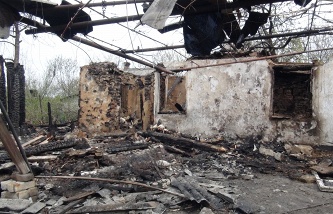
 The detainees, who were arrested in the southern city of al-Khalil (Hebron), included seven women and 105 teenagers, Amjad Najjar, the head of the Palestinian Prisoners Society (PPS) in al-Khalil, said on Thursday.


 By Aaron Siri | Injecting Freedom | March 16, 2026
 Aletho News
 Aletho News