Number of administrative detainees doubles in Israeli jails
Palestine Information Center – July 27, 2015
RAMALLAH – The number of Palestinian administrative detainees held in Israeli jails without charge or trial has doubled within a year, Haaretz (Hebrew) newspaper reported Monday.
Since the kidnapping and killing of three Israeli soldiers in al-Khalil last summer, Israeli authorities notably intensified the use of administrative detention policy against Palestinians “due to the Military Advocate General’s decision to lower the requirements in such cases for holding people involved in terrorism.”
Israeli administrative detention order, based on a secret file which neither the detainee nor his lawyer are allowed to see, can be renewed more than once.
More than 1,000 administrative detainees were documented in 2003. The number had fallen significantly to 134 in August 2013, only to rise again to reach 473 in 2014 after the kidnapping and killing of three Israeli soldiers.
There are currently 391 administrative detainees in Israeli jails … twice as many as were being held before the kidnapping process.
Choctaw medicine man, civil rights activist dies after being booked into historically infamous Mississippi jail
PrivacySOS | July 26, 2015
 Just weeks after Sandra Bland died in a Texas jail cell after having been arrested during a traffic stop, another activist is dead in eerily similar circumstances. The day after Bland died, long-time Choctaw civil rights activist Rexdale Henry was found dead in a jail cell in Neshoba County Jail in Philadelphia, Mississippi, after a traffic stop that also led to his arrest.
Henry’s family and friends, including Student Non-Violent Coordinating Committee (SNCC) co-founder Diane Nash, have raised money to pay for an independent autopsy.
The Jackson Free Press reports that this isn’t the first time an activist has died after being booked into Neshoba County Jail:
Henry’s arrest came one day after 39-year-old Jonathan Sanders died after a police stop in nearby Clarke County…. Information from a SNCC email listserv states of Henry: “His family wants to know what or who caused their healthy, fifty-three year old loved one to die in that cell.”
Activists also point to the death of Michael Deangelo McDougle, also in the Neshoba County Jail, less than a year ago, in November 2014, and invoke the Mississippi Burning murders that took place during Freedom Summer of 1964.
On June 21 of that year, local authorities took three civil-rights activists—James Chaney, Andrew Goodman and Mickey Schwerner—to the Neshoba County Jail (it has since been moved) on minor charges before the trio disappeared; the activists’ bodies were discovered in an earthen dam 44 days after they went missing.
According to Newsone, a site catering to Black Americans, Native Americans “are killed by police at a higher rate than any other demographic in this country.”
Do We Need to Bring Back Internment Camps?

By Ron Paul | July 27, 2015
Last week, Retired General Wesley Clark, who was NATO commander during the US bombing of Serbia, proposed that “disloyal Americans” be sent to internment camps for the “duration of the conflict.” Discussing the recent military base shootings in Chattanooga, TN, in which five US service members were killed, Clark recalled the internment of American citizens during World War II who were merely suspected of having Nazi sympathies. He said: “back then we didn’t say ‘that was freedom of speech,’ we put him in a camp.”
He called for the government to identify people most likely to be radicalized so we can “cut this off at the beginning.” That sounds like “pre-crime”!
Gen. Clark ran for president in 2004 and it’s probably a good thing he didn’t win considering what seems to be his disregard for the Constitution. Unfortunately in the current presidential race Donald Trump even one-upped Clark, stating recently that NSA whistleblower Edward Snowden is a traitor and should be treated like one, implying that the government should kill him.
These statements and others like them most likely reflect the frustration felt in Washington over a 15 year war on terror where there has been no victory and where we actually seem worse off than when we started. The real problem is they will argue and bicker over changing tactics but their interventionist strategy remains the same.
Retired Army Gen. Mike Flynn, who was head of the Defense Intelligence Agency during the US wars in Afghanistan and Iraq, told al-Jazeera this week that US drones create more terrorists than they kill. He said: “The more weapons we give, the more bombs we drop, that just … fuels the conflict.”
Still Washington pursues the same strategy while expecting different results.
It is probably almost inevitable that the warhawks will turn their anger inward, toward Americans who are sick of the endless and costly wars. The US loss of the Vietnam war is still blamed by many on the protesters at home rather than on the foolishness of the war based on a lie in the first place.
Let’s hope these threats from Clark and Trump are not a trial balloon leading to a clampdown on our liberties. There are a few reasons we should be concerned. Last week the US House passed a bill that would allow the Secretary of State to unilaterally cancel an American citizen’s passport if he determines that person has “aided” or “abetted” a terrorist organization. And as of this writing, the Senate is debating a highway funding bill that would allow the Secretary of State to cancel the passport of any American who owes too much money to the IRS.
Canceling a passport means removing the right to travel, which is a kind of virtual internment camp. The person would find his movements restricted, either being prevented from leaving or entering the United States. Neither of these measures involves any due process or possibility of appeal, and the government’s evidence supporting the action can be kept secret.
We should demand an end to these foolish wars that even the experts admit are making matters worse. Of course we need a strong defense, but we should not provoke the hatred of others through drones, bombs, or pushing regime change overseas. And we must protect our civil liberties here at home from government elites who increasingly view us as the enemy.
Hansen’s backfire
By Judith Curry | Climate Etc. | July 26, 2015
Jim Hansen’s new paper, and his PR strategy, are raising a whole host of issues that are arguably a backfire for his objectives.
Last week, several media articles appeared about an alarming new paper by Jim Hansen, that was just being submitted to a journal and was not yet publicly available:
- Washington Post : The world’s most famous climate scientist just outlined an alarming scenario for our planet’s future
- National Observer : 2-degree target may still cause catastrophic sea level rise, James Hansen warns
- The Daily Beast : Climate Seer James Hansen Issues His Direst Forecast Yet
My first reaction was this: Why, of all the major news outlets, is only the Washington Post carrying this? No AP, etc.? Why haven’t I received a copy of this paper (usually a reporter or one of the skeptical news outlets would send me a copy). I figured the press release and paper were sent to only a few favored journalists?
The ‘favored journalists’ hypothesis quickly evaporated as articles like this then started to appear:
- The Conversation : Study predicts multi-meter sea level rise this century but not everyone agrees
- Mashable : The godfather of global warming’s frightening prediction is getting the cold shoulder
The paper is now available online, for all to evaluate:
Ice Melt, Sea Level Rise and Superstorms: Evidence from Paleoclimate Data, Climate Modeling, and Modern Observations that 2°C Global Warming is Highly Dangerous.
J. Hansen, M. Sato, P. Hearty, R. Ruedy, M. Kelley, V. Masson-Delmotte, G. Russell, G. Tselioudis, J. Cao, E. Rignot, I. Velicogna, E. Kandiano, K. von Schuckmann, P. Kharecha, A. N. Legrande, M. Bauer, and K.-W. Lo
Abstract. There is evidence of ice melt, sea level rise to +5–9 m, and extreme storms in the prior interglacial period that was less than 1 C warmer than today. Human-made climate forcing is stronger and more rapid than paleo forcings, but much can be learned by combining insights from paleoclimate, climate modeling, and on-going observations. We argue that ice sheets in contact with the ocean are vulnerable to non-linear disintegration in response to ocean warming, and we posit that ice sheet mass loss can be approximated by a doubling time up to sea level rise of at least several meters. Doubling times of 10, 20 or 40 years yield sea level rise of several meters in 50, 100 or 10 200 years. Paleoclimate data reveal that subsurface ocean warming causes ice shelf melt and ice sheet discharge. Our climate model exposes amplifying feedbacks in the Southern Ocean that slow Antarctic bottom water formation and increase ocean temperature near ice shelf grounding lines, while cooling the surface ocean and increasing sea ice cover and water column stability. Ocean surface cooling, in the North Atlantic as well as the Southern Ocean, increases tropospheric horizontal temperature gradients, eddy kinetic energy and baroclinicity, which drive more powerful storms.We focus attention on the Southern Ocean’s role in aecting atmospheric CO2 amount, which in turn is a tight control knob on global climate. The millennial (500–2000 year) time scale of deep ocean ventilation aects the time scale for natural CO2 change, thus the time 20 scale for paleo global climate, ice sheet and sea level changes. This millennial carbon cycle time scale should not be misinterpreted as the ice sheet time scale for response to a rapid human-made climate forcing. Recent ice sheet melt rates have a doubling time near the lower end of the 10–40 year range.We conclude that 2 C global warming above the preindustrial level, which would spur more ice shelf melt, is highly dangerous. Earth’s energy imbalance, which must be eliminated to stabilize climate, provides a crucial metric.
The paper is in Atmospheric Chemistry and Physics Discussions, the discussion forum of the European Geosciences Union journal Atmospheric Chemistry and Physics [link]
Andy Revkin has two superb posts on the paper, which I will be referencing in m discussion below:
- Whiplash warning: when climate science is publicized before peer review and publication
- A rocky first review for a climate paper warning of a stormy coastal crisis
Reviews of the science
While the paper has not yet undergone formal peer review by the journal, journalists have elicited numerous reviews/comments from scientists. From the Washington Post,
Michael Mann “Their climate model scenario wherein Greenland and Antarctic meltwater caused by warming poles, leads to a near total shutdown of ocean heat transport to higher latitudes, cooling most of the globe (particularly the extratropics), seems rather far-fetched to me.” “Whether or not all of the specifics of the study prove to be correct, the authors have initiated an absolutely critical discussion.”
Kevin Trenberth, called the paper“provocative and intriguing but rife with speculation and ‘what if’ scenarios.” Trenberth objected in particular to the climate modeling scenarios used to study freshwater injection as ice sheets melt. “These experiments introduce a lot of very cold fresh water in various places, and then they see what happens.” “The question is how relevant these are to the real world and what is happening as global warming progresses? They do not seem at all realistic to me.” “There are way too many assumptions and extrapolations for anything here to be taken seriously other than to promote further studies.”
Richard Alley,“Many parts of the new paper are likely to stimulate much technical discussion and further research in our community, as we try to weave together the deep-time and recent history to provide useful projections for the future.” “This new paper is not ‘the answer,’” “Particularly, replacing the simple assumptions about doubling times of ice loss with physically based insights is a major focus of our field, but is not yet done and not likely to be ready really quickly.” Alley acknowledged that the IPCC’s sea level rise estimate “is well on the optimistic low-rise side of the possible outcomes,” and added that “the estimates in the new paper of freshening, and discussion of stabilization of the southern ocean and influences on precipitation, are interesting and important.”
From Revkin’s second post:
Tad Pfeffer: If you look at this from the point of view of somebody who’s trying to use this information for anything other than scientific satisfaction, whether or not these very, very rapid rates of sea level rise happen in the next few decades or the next few centuries makes all the difference in the world. The question of when does this start is not really addressed in this paper that I can find, and has been addressed only peripherally in most of the papers about ice sheet instability that I have seen. Ian Joughin made some statements recently [context] that I thought were pretty solid about it being a few centuries before this kind of very rapid sea level rise can take place and that makes sense to me because there are some very important things that you have to do in order to turn on the rapid response of the Antarctic ice sheet – you have to get rid of a couple of big ice shelves for starters. And it’s going to take a few centuries to do that. From a strictly geophysical, glaciological, point of view, a few centuries may not make much difference. But from the point of view of a planner, a policymaker, again these are the people who care about what exactly we’re saying. It makes all the difference in the world. And that’s the part I find missing in this paper. They have to say something about when this is going to occur. They may not be able to say with any great precision, but they have to say something. Because if this is something that’s going to happen in the next few decades, yeah, it’s something we’ve really got to wake up and pay attention about. If it’s something that’s going to happen in the next few centuries then there are a lot of other issues that we have to sort out first.
Without going into any details here, Revkin’s second post provides scientists’ comments that shows the whole section on Eemian superstorms appears to be without basis.
JC comments on the science
This is an intriguing and wide-sweeping paper that has put together a multi-disciplinary team to examine the possibility of near term catastrophic sea level rise.
For context, Hansen et al. present a much more extreme scenario than the last report from the Intergovernmental Panel on Climate Change and the most recent assessment in 2014 “Expert assessment of sea-level rise by AD 2100 and AD 2300.”
Should we only pay attention to UN and NAS sanctioned assessments by expert teams? Absolutely not (note I will have a follow on post in a day or two that delves into this issue). As stated in my previous post What is the plausible ‘worst scenario’ for climate change?, we should be putting extreme scenarios out there and assess whether they are plausible, possible, or essentially impossible.
The biggest issue raised by Hansen is the potential (plausible? possible?) for a catastrophic >5 m sea level rise in the 21st century. Hansen et al. have proposed a a new mechanism for faster sea level rise – can we falsify this? The collapse of the West Antarctic ice sheet (WAIS) is arguably the most alarming potential impact of global warming. WAIS has collapsed before during previous interglacials, and will undoubtedly collapse again (with or without AGW), with a ~5 m sea level rise. The issue is whether the WAIS can collapse on timescales of decades to a century. Based on what we know (summarized by Tad Pfeffer above), this is a process that would take centuries.
I am not an expert on sea level rise or ice sheets, but here are a few things that frame my own understanding, including some recent research:
- Sea level has been rising for millennia. I am not convinced that there is a significant acceleration of sea level rise that can be attributed to human caused global warming (see this previous post).
- Recent research from Scripps finds that the Greenland ice sheet did not melt as much as expected during the Eemian but that may mean Antarctic ice sheets melted more than expected.
- A new paper summarized by Cato that found that the size of the Greenland ice sheet—especially the best observed portions covering the west and southwestern parts of Greenland—during the mid-Holocene was smaller than it is today—but not by a whole lot.
- Study finds surprisingly high geothermal heating beneath west antarctic ice sheet [link]
So it looks like we should be more worried about WAIS than about Greenland, and it seems that natural processes (natural climate change and geothermal processes) have caused large sea level changes in the past during interglacial periods (albeit not rapid ones) and will continue to cause sea level to changes in the future. Human contribution so far to sea level rise does not seem particularly significant, given the early 20th century rate of sea level rise is about the same as the current rate. Our ways of inferring future rates of sea level rise from ice sheet melting is crude – we can speculate but not with much confidence. The danger posed by sea level rise is a function of the rate of change far more than the actual sea level itself.
Does Hansen et al. make any contribution to all this? Well their proposed mechanism with feedbacks is of interest and should be explored further. But their conclusions regarding an alarming rate of sea level rise are at best possible (and not plausible).
Policy relevance
The policy relevance of the Hansen et al. paper is the articulation of a possible worst case scenario of sea level rise. In robust decision making, the plausible worst case scenario informs decision making but does not necessarily dominate the decision making process.
What role does a ‘possible’ worst case scenario play, apart from clarifying what is plausible? Well, to alarm people and to help build political will to ‘act’ on emissions reductions, particularly for forthcoming Paris COP.
Regarding the policy relevance of the paper, Science Insider writes:
Whether this paper will become a key point of reference in the ongoing climate talks isn’t clear. In advance of the Paris meetings, negotiators from nearly every country in the world have provisionally agreed to the 2°C target. That there is even such an agreement in the offing seems like a victory, but whether it will be reached is still up in the air. Recognizing this, 24 academic and professional institutions in the United Kingdom yesterday issued a sternly worded joint communiqué that called on the international community to take immediate action on reducing emissions. The statement suggested that to have a chance of reaching that 2°C goal, Earth must become a zero-carbon world by the second half of the century. . . But how influential this paper will be is unclear, given its flaws.
Hansen has previously suggested that scientists are often too hesitant to say just how dire the situation is. A 2007 paper he co-authored, titled “Scientific Reticence and Sea Level Rise,” suggested that scientists felt constrained from sounding a full-fledged alarm on how high the waters will get, in part because of the cautious nature of scientific inquiry and the scientific method. But, he says in that paper’s abstract, “there is a danger in excessive caution.” The new paper, he told reporters yesterday, is “significantly more persuasive than anything previously published about just how dangerous 2°C warming would be.”
Hansen’s political agenda is evident as per Revkin’s post:
The new paper, which Hansen told me he’s been working on for eight years, was being rushed into public view with the hope of influencing negotiations at the December round of talks in Parisaimed at crafting a new global climate change agreement. You can hear from Hansen on the reasoning in the recording of his phone conference call with some reporters on Monday.
Also from Revkin regarding a passage apparently in the press release:
The paper got attention in advance because of this passage:
We conclude that continued high emissions will make multi-meter sea level rise practically unavoidable and likely to occur this century. Social disruption and economic consequences of such large sea level rise could be devastating. It is not difficult to imagine that conflicts arising from forced migrations and economic collapse might make the planet ungovernable, threatening the fabric of civilization. This image of our planet with accelerating meltwater includes growing climate chaos and storminess, as meltwater causes cooling around Antarctica and in the North Atlantic while the tropics and subtropics continue to warm. Rising seas and more powerful storms together are especially threatening, providing strong incentive to phase down CO2 emissions rapidly.
The backfire
The cited criticisms of the paper all make valid points. The criticisms of Mann and Trenberth are somewhat surprising to me, since I have seen them support papers that are at least as dubious as Hansen et al. Apart from the paper’s flaws, I suspect some of the backlash from these scientists is associated with the fact that this paper has not yet been peer reviewed, and is an integrative, interdisciplinary assessment that challenges the IPCC and other established assessment reports. Revkin cites Tad Pfeffer: “One of the things that troubles me most is that the rapid-fire publication of unsettled results in highly visible venues creates the impression that the scientific community has no idea what’s going on.” There is clearly a concern that such independent assessments, especially by well known and/or reputable scientists, can undermine the authority and messaging of ‘establishment’ assessment and scientists.
Revkin provides some interesting insights into their publicity push and the media response:
But by late Tuesday, as other coverage built, so did questions about the way the study was released, and the quality of its analysis. Another sign of trouble was that, despite the publicity push, the Associated Press, The New York Times, the BBC and The Guardian (despite its yearlong push for climate action blending advocacy and reporting) were among those who steered clear of the study. Listen to the taped call to get a visceral sense of the concerns of Seth Borenstein, the longtime climate reporter at the A.P.
That portentous section above — which in many ways is the only part of the paper that is news given how it centers on the “likely” inundation of most coastal cities in this century without aggressive emissions cuts — is not in the version the journal has posted. It’s in a shorter version, lacking references, that a publicist at Glover Park told me was going into more of a lay publication.
The final draft posted for discussion has more nuanced language, in line with what those arguing for more near-term climate and coastal risk have already articulated.
Maybe we’ll all be a little slower on the draw next time when work is promoted before it is publicized or peer reviewed. There are other merits to slowing down a bit in examining an issue that will be with us for generations — long past Paris. This is a marathon, not a sprint.
I think part of the backfire is associated with having Glover Park handle the media push. Glover Park provides strategic communications campaigns for corporations, non-profit organizations and industry associations. The Group is also involved in lobbying, but it definitely seems to be non-partisan (i.e. open to pretty much all paying customers – I wonder how much Hansen paid for their services and where the funds came from).
I’m not sure I’ve ever seen publicity for a research paper being handled by such a group (Glover doesn’t seem to have prior experience with this, since they rather bungled it for Hansen). Press releases are usually issued by universities, journals or funding agencies. Advocacy groups and think tanks also issue press releases for their own reports. But what about retired or independent scientists? And for scientists whose universities won’t issue a press release? E.g., Georgia Tech declined to issue a press release on Lewis and Curry; the paper was publicized on my blog and by the GWPF. In Hansen’s case, presumably NASA or Columbia could have issued the press release. But probably not including Hansen’s most alarming statements.
In any event, it is refreshing to see the maturity shown by some journalists in handling this issue. They seem to be well trained re the ‘sanctity’ of peer reviewed papers. I am also wondering whether Hansen’s explicit policy advocacy, coupled with a scientific research paper (esp one that had not undergone peer review), contributed to distrust of the research? You would hardly expect Jim Hansen to write a paper saying AGW is less alarming than we thought.
A combination of weak/speculative science, issuing the press release prior to peer review or at least public availability of the paper, a direct challenge to establishment assessment reports, policy advocacy, and use of a professional publicity/marketing/lobbying group to handle the publicity seems to have contributed to the backfire. I doubt that this paper will have any serious influence on the Paris deliberations.
The marketing of perpetual war

By BlackCatte | offGuardian | July 10, 2015
… The war is not meant to be won – it is meant to be continuous.…” – George Orwell, 1984
David Kilcullen has a message for us over at the Guardian, and this is it:
We’re living in an era of persistent conflict…”
Which is sadly, true. You might think the next thing to be discussed on that topic would be – why? Why are we now living in an era of endless war? What forces are behind this development? Who, if anyone, is profiting from the same? But, no, David doesn’t think any of this is worthy of our attention. He simply wants us to understand that “perpetual conflict” is absolutely and inescapably the new reality.
… you can read it in the latest concept documents of half a dozen western militaries. But it doesn’t seem to have hit home, for the public or some policymakers, that the notion that this can all end, that we can get back to some pre-9/ 11 “normal,” is a fantasy.
Do we get that? Is it hitting home? Peace is now a “fantasy”. It’s official. And in case you are still harbouring some smidgen of doubt, Dave is going to say it again in different words:
This – this instability, this regional conflict surrounded by networked global violence, this convergence of war and crime, of domestic and international threats, this rise of a new aggressive totalitarian state from the rubble of the last war – is the new normal, and it’s not going to change for a very, very long time. There are no quick solutions: we need to settle in for the long haul.
Ergo….
That being the case, we have to figure out methods of dealing with persistent conflict.
and…
I see no alternative to a larger, more intense, conventional war against Isis than the one currently being contemplated…
Do you see that children? That’s called “paradigm-creation.” The topic for discussion is evidently intended to be “how do we deal with persistent conflict?” The question of why the persistent conflict is happening, or who is funding these “aggressive new totalitarian states” is NOT part of the agenda, and is being excised from our collective conscious. All we need to know is:
Isis is an escalating threat that’s growing and worsening.
We do not need to worry our little heads about what this entity called “ISIS” actually is, how plausible the clownish stories of its super-villain powers are. Nor are we supposed to waste a single moment asking who is picking up its not inconsiderable tab. What matters is that Syria and Iraq are “problems” (never mind why or how) and that “greater western involvement would mitigate all these problems” (because that is what western involvement does – ask Libya). Most importantly, the US needs to get over its scruples and do more:
…US passivity and reluctance to target Assad (though his regime kills more people than Isis) makes many Syrians wary of joining the “moderate” rebels.
“US passivity and reluctance”? Really, Dave? What about the article in the Washington Times claiming the US state department lied about Syrian chemical attacks in order to fabricate a reason for attacking Assad? And what about this article at Global Research which alleges the US is actually targeting the Syrian government- not ISIS – with its current air strikes.
I’m left wondering – is Assad really any worse than the dreadful and medieval Saudis? He certainly seems to be pretty popular in Syria, where they apparently have a different take on things (but Dave doesn’t bother to tell us that). If we in the west have no problem with murderous tyrants, why do we have a problem with Assad? Is it because he isn’t our murderous tyrant?
Is the US really out there in Syria trying (but inexplicably failing) to defeat ISIS? Or is it happy to aid and abet ISIS in doing the dirty work it tried and failed to do itself? If Dave gets his way and we launch a “more intense conventional war” in Syria, will our soldiers’ lives and our taxes really be spent on defeating ISIS or is that just a shallow ruse to enable the US to finally go in and get Assad?
Is “perpetual conflict” really something we should all just accept as inevitable and leave it to people like Dave to sort out? Or is it something we should be resisting and interrogating at every level and at every opportunity?
Nah. Never mind. None of this matters. Let’s just keep it simple. The message is:
1. Persistent conflict is the new normal
2. There is no need to ask why.
Everyone got that?
(Un)solving Ukraine’s conflict
What is exactly stopping a solution to the crisis in eastern Ukraine?
By Mikhail Molchanov | Open Democracy | July 16 2015
By this time, it should be obvious that the west does not want a conflict in Ukraine to be resolved any time soon. If that were the case, it would apply pressure to both parties of the conflict: the government in Kiev and the separatists in Donbas. Instead, the west applies pressure to the third party: the Russian government, admittedly the separatists’ best friend and supplier, but not the one that has direct stakes in the conflict at hand.
Let us recount those stakes. For Kiev: territorial integrity, full sovereignty over Donbas, and the right to determine its foreign policies independently from external influences (or so the government spokespersons in Kiev say).
For Donbas: linguistic and cultural autonomy, elements of a robust home rule, the right to preserve a privileged relationship with the Russian Federation, and amnesty to the local separatist leaders and militiamen.
Does Russia have stakes separate from any of these? Not that I know of. Putin keeps repeating the separatists’ demands: an amnesty, local autonomy; full implementation of the Minsk agreements. In spite of what we hear so often in the west, there are no separate demands presumably infringing on Ukraine’s sovereignty; Russia says nothing about whether Ukraine should or should not join the EU, should or should not claim Donbas as its own, should or should not be friendly with Russia itself. Yes, the Kremlin would be extremely disappointed were Ukraine to join NATO. Even so, the Kremlin has more than once assured the world it did not claim to have a veto over Ukraine’s foreign policy choices.
All the same, demanding that Russia seal the border and stop the influx of volunteers into the conflict zone is extremely unrealistic. Putin staked his reputation on support of Russia’s so-called compatriots in the near abroad; his abandoning those compatriots to the gallows would sink his presidency.
What is, then, the solution and is it even possible?
It seems the solution is possible, and it has been clearly defined in the Minsk agreements. The problem is, Kiev does not want to implement them, and therefore protracts the conflict.
Firstly, the promised amnesty to the separatists has never been announced. Ukraine’s pundits are musing over who should be pardoned and who should not. Those with blood on their hands should not be pardoned, seems to be the common wisdom. Not a word about the blood of civilians in Donbas killed in the process of carrying out Kiev’s so-called Anti-Terrorist Operation. With such an attitude, the choice facing the Donbas militia leaders seems to be simple: continue fighting or face imprisonment (or worse) at the hand of the Ukrainian authorities. Why are we surprised they keep fighting?
Secondly, the Minsk agreements called for extensive home rule provisions for Donbas, and for a requisite change in the Constitution of Ukraine.
None of this seems to be in the works. The latest proposal on changes to the Constitution of Ukraine, dated July 1, 2015, has nothing about a special status for the affected regions of Donbas beyond a fuzzy promise – in the law, not in the Constitution itself – that the ‘special modalities of local governance in separate regions of Donetsk and Luhansk oblasti will be determined by a separate law’. This is not what the Government of Ukraine promised its partners when talking about the implementation of the Minsk Agreements.
Thirdly, the Minsk Agreements call for the ‘linguistic self-definition’ of the affected regions or, in short, the right to continue using Russian as the language of daily communication and local governance. Official Kiev keeps quiet on the issue.
Finally, according to the Minsk agreements, Ukraine should support social and economic development of the affected regions of Donetsk and Luhansk regions. In the meantime, since November 2014, no pensions have been paid to the retired Ukrainian citizens living in the self-proclaimed Donetsk and Luhansk People’s Republics.
Although Kiev has not begun implementing even the first basic point of the Minsk agreements (the ‘immediate and comprehensive cease-fire’ in Donbas), the west seems to be fully okay with that. Well, the separatists fire on Ukraine’s positions, the Ukrainian army should return fire, so goes the conventional explanation.
What if the Ukrainian army didn’t return fire? Would it risk losing an inch more territory? The answer is far from obvious, yet the the regular army continues using heavy artillery in densely populated civilian areas in Donbas (and killing unarmed civilians in the process). This fact alone should have moved Ukraine’s western sponsors to an obvious course of action: press the Ukrainian government to stop abusing human rights of its own citizens in eastern Ukraine.
It is almost exactly a year since Human Rights Watch, in an open communication to President Poroshenko, lamented the actions of the Ukrainian army and the pro-government militias, in particular the shelling of a hospital in Krasny Liman and air strikes in the villages of Luhanskaya and Kondrashevka.
In January and February 2015, government forces (and the separatists) used widely banned cluster munitions to attack rebels; earlier, the use of incendiary weapons in densely populated areas was documented. By July 2015, more than 6,500 people have died as a result of the conflict; close to 3,500 of them civilians. More than 16,000 have been wounded; close to 1.4 million people internally displaced. At least 660,000 Ukrainian refugees came to Russia.
The civil war in Ukraine has generated a humanitarian catastrophe that can only be resolved with the joint efforts of all parties concerned, the USA and the EU included. It goes without saying, Kiev should be prepared to sit together at the same table with separatist leaders and offer them some concessions before any deal can be reached.
Instead, Kiev promises an amnesty after the elections, and a law on the status of territories after Ukraine’s full control over its eastern borders is restored. To many an observer inside and outside, this must look like deceiving one’s opponent and negotiating in bad faith. Yet western powers stand firm in their resolve to lay all the blame for the failure of the Minsk agreement at Russia’s feet.
Last month, at the G-7 meeting in Garmisch-Partenkirchen, Germany, western powers agreed to keep sanctions against Russia in place until the Minsk agreements are implemented in full. The Canadian government went further than the rest of the G-7 nations, having decided not only to keep, but to expand the sanctions with the blacklisting of Gazprom, its oil subsidiary Gazprom Neft, Russia’s state-owned Transneft and a major oil producer Surgutneftegaz. In addition, Canada decided to sanction a conservative nationalist philosopher Alexander Dugin and Eurasian Youth Union, a non-governmental organization known for its pro-Putin views.
All of this looks more than somewhat one-sided given a recent revelation that Canada’s embassy in Kiev was used as a base for anti-government protesters to re-group and re-cuperate during the Maidan uprising that toppled former president Viktor Yanukovych.
As for Canada’s big brother, the United States, it has publicly admitted spending $5.1 billion to support democracy-building programs in Ukraine since 1992. While western champions of democracy have proudly claimed their right to interfere in internal affairs of a sovereign country for the sake of a regime change when it suited their interests, they do surprisingly little to stop continuing human rights abuses committed by Ukraine government troops and far-right militias in the pro-Russian Donbas.
If the Minsk agreements are ever to be implemented in full, there is no other way but for all sides to follow the agreed-upon commitments.
This includes, first and foremost, the immediate cessation of artillery barrages targeting Donbas cities and villages; further, the unequivocal and unconditional declaration of an amnesty for the Donbas fighters; and finally, a provision for Donbas autonomy enshrined into the Constitution of Ukraine before – not after – any local elections will be allowed to happen.
Only such a range of measures will ensure full withdrawal of Russian volunteers from Donbas, and Russian regular forces from the Russo-Ukrainian borderlands.
Only such a gambit will restore peace and a hope of prosperity to the whole of Ukraine. It is not Moscow, or Donetsk, or Luhansk that should make a first move. It is fully up to Kiev to choose between war and peace in Ukraine’s south east.
The American Nightmare: The Tyranny of the Criminal Justice System
By John W. Whitehead | Rutherford Institute | July 21, 2015
How can the life of such a man
Be in the palm of some fool’s hand?
To see him obviously framed
Couldn’t help but make me feel ashamed to live in a land
Where justice is a game.
—Bob Dylan, “Hurricane”
Justice in America is not all it’s cracked up to be.
Just ask Jeffrey Deskovic, who spent 16 years in prison for a rape and murder he did not commit. Despite the fact that Deskovic’s DNA did not match what was found at the murder scene, he was singled out by police as a suspect because he wept at the victim’s funeral (he was 16 years old at the time), then badgered over the course of two months into confessing his guilt. He was eventually paid $6.5 million in reparation.
James Bain spent 35 years in prison for the kidnapping and rape of a 9-year-old boy, but he too was innocent of the crime. Despite the fact that the prosecutor’s case was flimsy—it hinged on the similarity of Bain’s first name to the rapist’s, Bain’s ownership of a red motorcycle, and a misidentification of Bain in a lineup by a hysterical 9-year-old boy—Bain was sentenced to life in prison. He was finally freed after DNA testing proved his innocence, and was paid $1.7 million.
Mark Weiner got off relatively easy when you compare his experience to the thousands of individuals who are spending lifetimes behind bars for crimes they did not commit. Weiner was wrongfully arrested, convicted, and jailed for more than two years for a crime he too did not commit. In his case, a young woman claimed Weiner had abducted her, knocked her out and then sent taunting text messages to her boyfriend about his plans to rape her. Despite the fact that cell phone signals, eyewitness accounts and expert testimony indicated the young woman had fabricated the entire incident, the prosecutor and judge repeatedly rejected any evidence contradicting the woman’s far-fetched account, sentencing Weiner to eight more years in jail. Weiner was only released after his accuser was caught selling cocaine to undercover cops.
In the meantime, Weiner lost his job, his home, and his savings, and time with his wife and young son. As Slate reporter journalist Dahlia Lithwick warned, “If anyone suggests that the fact that Mark Weiner was released this week means ‘the system works,’ I fear that I will have to punch him in the neck. Because at every single turn, the system that should have worked to consider proof of Weiner’s innocence failed him.”
The system that should have worked didn’t, because the system is broken, almost beyond repair.
In courtroom thrillers like 12 Angry Men and To Kill a Mockingbird, justice is served in the end because someone—whether it’s Juror #8 or Atticus Finch—chooses to stand on principle and challenge wrongdoing, and truth wins.
Unfortunately, in the real world, justice is harder to come by, fairness is almost unheard of, and truth rarely wins.
On paper, you may be innocent until proven guilty, but in actuality, you’ve already been tried, found guilty and convicted by police officers, prosecutors and judges long before you ever appear in a courtroom. Chronic injustice has turned the American dream into a nightmare. At every step along the way, whether it’s encounters with the police, dealings with prosecutors, hearings in court before judges and juries, or jail terms in one of the nation’s many prisons, the system is riddled with corruption, abuse and an appalling disregard for the rights of the citizenry.
Due process rights afforded to a person accused of a crime—the right to remain silent, the right to be informed of the charges against you, the right to representation by counsel, the right to a fair trial, the right to a speedy trial, the right to prove your innocence with witnesses and evidence, the right to a reasonable bail, the right to not languish in jail before being tried, the right to confront your accusers, etc.—mean nothing when the government is allowed to sidestep those safeguards against abuse whenever convenient.
It’s telling that while President Obama said all the right things about the broken state of our criminal justice system—that we jail too many Americans for nonviolent crimes (we make up 5 percent of the world’s population, but our prison population constitutes nearly 25% of the world’s prisoners), that we spend more money on incarceration than any other nation ($80 billion a year), that we sentence people for longer jail terms than their crimes merit, that our criminal justice system is far from color-blind, that the nation’s school-to-prison pipeline is contributing to overcrowded jails, and that we need to focus on rehabilitation of criminals rather than retribution—he failed to own up to the government’s major role in contributing to this injustice in America.
Indeed, while Obama placed the responsibility for reform squarely in the hands of prosecutors, judges and police, he failed to acknowledge that they bear the burden of our failed justice system, along with the legislatures and corporations who have worked with them to create an environment that is hostile to the rights of the accused.
In such a climate, we are all the accused, the guilty and the suspect. As I document in my book Battlefield America: The War on the American People, we’re operating in a new paradigm where the citizenry are presumed guilty and treated as suspects, our movements tracked, our communications monitored, our property seized and searched, our bodily integrity disregarded, and our inalienable rights to “life, liberty and the pursuit of happiness” rendered insignificant when measured against the government’s priorities.
Every American is now in jeopardy of being targeted and punished for a crime he did not commit thanks to an overabundance of arcane laws. Making matters worse, by allowing government agents to operate above the law, immune from wrongdoing, we have created a situation in which the law is one-sided and top-down, used as a hammer to oppress the populace, while useless in protecting us against government abuse.
Add to the mix a profit-driven system of incarceration in which state and federal governments agree to keep the jails full in exchange for having private corporations run the prisons, and you will find the only word to describe such a state of abject corruption is “evil.”
How else do you explain a system that allows police officers to shoot first and ask questions later, without any real consequences for their misdeeds? Despite the initial outcry over the shootings of unarmed individuals in Ferguson and Baltimore, the pace of police shootings has yet to slow.
For those who survive an encounter with the police only to end up on the inside of a jail cell, waiting for a “fair and speedy trial,” it’s often a long wait. Consider that 60 percent of the people in the nation’s jails have yet to be convicted of a crime. There are 2.3 million people in jails or prisons in America. Those who can’t afford bail, “some of them innocent, most of them nonviolent and a vast majority of them impoverished,” will spend about four months in jail before they even get a trial.
Not even that promised “day in court” is a guarantee that justice will be served.
As Judge Alex Kozinski of the Ninth Circuit Court of Appeals points out, there are an endless number of factors that can render an innocent man or woman a criminal and caged for life: unreliable eyewitnesses, fallible forensic evidence, flawed memories, coerced confessions, harsh interrogation tactics, uninformed jurors, prosecutorial misconduct, falsified evidence, and overly harsh sentences, to name just a few.
In early 2015, the Justice Department and FBI “formally acknowledged that nearly every examiner in an elite FBI forensic unit gave flawed testimony in almost all trials in which they offered evidence against criminal defendants over more than a two-decade period…. The admissions mark a watershed in one of the country’s largest forensic scandals, highlighting the failure of the nation’s courts for decades to keep bogus scientific information from juries, legal analysts said.”
“How do rogue forensic scientists and other bad cops thrive in our criminal justice system?” asks Judge Kozinski. “The simple answer is that some prosecutors turn a blind eye to such misconduct because they’re more interested in gaining a conviction than achieving a just result.”
The power of prosecutors is not to be underestimated. Increasingly, when we talk about innocent people being jailed for crimes they did not commit, the prosecutor plays a critical role in bringing about that injustice. As The Washington Post reports, “Prosecutors win 95 percent of their cases, 90 percent of them without ever having to go to trial…. Are American prosecutors that much better? No… it is because of the plea bargain, a system of bullying and intimidation by government lawyers for which they ‘would be disbarred in most other serious countries….’”
This phenomenon of innocent people pleading guilty makes a mockery of everything the criminal justice system is supposed to stand for: fairness, equality and justice. As Judge Jed S. Rakoff concludes, “our criminal justice system is almost exclusively a system of plea bargaining, negotiated behind closed doors and with no judicial oversight. The outcome is very largely determined by the prosecutor alone.”
It’s estimated that between 2 and 8 percent of convicted felons who have agreed to a prosecutor’s plea bargain (remember, there are 2.3 million prisoners in America) are in prison for crimes they did not commit.
Clearly, the Coalition for Public Safety was right when it concluded, “You don’t need to be a criminal to have your life destroyed by the U.S. criminal justice system.”
It wasn’t always this way. As Judge Rakoff recounts, the Founding Fathers envisioned a criminal justice system in which the critical element “was the jury trial, which served not only as a truth-seeking mechanism and a means of achieving fairness, but also as a shield against tyranny.”
That shield against tyranny has long since been shattered, leaving Americans vulnerable to the cruelties, vanities, errors, ambitions and greed of the government and its partners in crime.
There is not enough money in the world to make reparation to those whose lives have been disrupted by wrongful convictions.
Over the past quarter century, more than 1500 Americans have been released from prison after being cleared of crimes they did not commit. These are the fortunate ones. For every exonerated convict who is able to prove his innocence after 10, 20 or 30 years behind bars, Judge Kozinski estimates there may be dozens who are innocent but cannot prove it, lacking access to lawyers, evidence, money and avenues of appeal.
For those who have yet to fully experience the injustice of the American system of justice, it’s only a matter of time. America no longer operates under a system of justice characterized by due process, an assumption of innocence, probable cause, and clear prohibitions on government overreach and police abuse. Instead, our courts of justice have been transformed into courts of order, advocating for the government’s interests, rather than championing the rights of the citizenry, as enshrined in the Constitution.
Without courts willing to uphold the Constitution’s provisions when government officials disregard them, and a citizenry knowledgeable enough to be outraged when those provisions are undermined, the Constitution provides little protection against the police state.
Philly Cop Punches Handcuffed Suspect in Face, Social Media Catches Officer Planting Weapon

By Cassandra Fairbanks | PINAC | July 24, 2015
Social Media is ablaze with allegations that a Philadelphia police officer can be seen planting a weapon on a man he had just punched in the face while handcuffed.
Philly cops charged the suspect with a firearms violation in 2010 but it was dismissed in 2013.
The pair of officers were well aware that they were being filmed, as they proceeded to punch the detained man, twice.
The video shown below was originally posted to social media in 2010, but has resurfaced with people claiming that the officer can be seen pulling a weapon from his pocket approximately 30 seconds into the video- before waving it before the camera and telling the witness to get that on film.
“Watch very carefully from seconds 32 to 36 the officer reaches into his right pocket and pulls out a small silver handgun. Watch it in slow motion. Planted it right on him. I shared this to my wall the other day but I just noticed that a few minutes ago,” Facebook user Tony Soto wrote.
“Did I just watch that cop pull a small gun out of his pocket, then try to act like he found it???” Another user, Meredith Goerlich asked.
Those commentators are referring to a portion of the video where it appears that the officer wearing a tie is trying to plant the weapon and the man yells.

Philly Cop rests his plant weapon on partner’s back
While the suspect’s hands are bound behind his back by the first officer’s cuffs, the Philly cop wearing his black tie can be seen sucker punching the suspect.
At the sudden noise, his partner tosses him to the ground.
That’s when the dandy officer in his black tie pulled a weapon from his police pants pocket and began rubbing it all over his partner’s back to keep balance.
The weapon then vanishes behind his partner conducting the collar on the suspect.
Magically, the gun conspicuously reappears at that moment and if you weren’t sure what was happening, even longtime cop watchers at PINAC were shocked by the brazen move the officer in the black tie pulled next.
The officer in question then waves the gun around and shows the weapon to the camera guy, “like he caught a fish in a barrel,” PINAC editor Grant Stern noted.
Following the resurfacing of the video, the Philadelphia Police Department issued a statement, which reads in full:
“Many citizens have sent our department inquires about the attached video (screenshot below), and we do appreciate the concern regarding the video.
We would just like to inform all concerned citizens that this video was originally posted on April 19, 2010, involving an incident in which a male was arrested for Violation of Uniforms Firearm act- VUFA (illegal .22 caliber handgun).
Five (5) years ago when this video was posted, our department was notified and conducted an Internal Affairs investigation into the incident. Internal Affairs sustained the allegations of verbal and physical abuse against the Officer.
In accordance with the collective bargaining agreement between the City and the FOP; the department’s Internal Affairs Unit sent this case to the Police Board of Inquiry with the recommendation for disciplinary action against the officer.
Once this case was heard before the PBI, they concluded that no disciplinary action should be given. The original arrest against the male was dismissed in July 2013.
This department maintains the commitment to address these types of incidents. We will continue to educate our officers to conduct themselves in a professional manner and provide them with the training to treat all citizens fairly and impartially.”
If there was no wrong-doing on the part of the officers, why were charges dismissed against the man who allegedly had an illegal weapon?
Colombia’s President Orders Halt to Bombing of Rebel Positions
Sputnik – 26.07.2015
Colombian President Juan Manuel Santos ordered to suspend air strikes on positions of the Revolutionary Armed Forces of Colombia (FARC), he said via his Twitter microblog.
On Monday, FARC ordered all their units to observe a ceasefire and released a Colombian soldier it had captured earlier this month as a gesture of goodwill.
“I have ordered to suspend airstrikes on FARC camps starting today. They will be carried out only in the case of an explicit order of the president,” Santos said Saturday.
He added that the sides were able to revive the peace talks and “are closer than ever to put an end to the war.”
Colombian armed forces have been fighting FARC, the country’s largest rebel group, since 1964. The two sides have been holding peace talks in Cuba since 2012.
Recent progress in peace talks between FARC and the government was achieved in June with an agreement on the creation of a joint Truth Commission.
The commission is tasked with gathering testimony from victims and witnesses of Colombia’s civil war. However, it is unable to use the information to bring up criminal charges against FARC members, government troops or other fighters.
As many as 220,000 people have been killed as a result of the armed conflict in Colombia.
30 Reasons Why Saying “Don’t Want to Get Hurt By Cops? Don’t Break the Law” is an EPIC FAIL
By Matt Agorist | The Free Thought Project | July 26, 2015
… In an attempt to break through to the apologist crowd, we have gathered 30 stories from our archives of examples in which police hurt innocent people, who never broke the law. Tragically, some of those hurt or killed were children; some were even disabled and mentally ill.
Jonathan Sanders had broken no law before he was chased down by a Mississippi cop who threw him to the ground and strangled him to death in front of family members.
Esmeralda Rossi was getting into the shower when two Arizona cops illegally entered her home, pulled her towel off, assaulted and arrested her as she screamed in horror — completely naked. Rossi had broken no law.
Eric Wilson was on his way home from his job at Lighthouse for the Blind when he was stopped by two Little Rock Police officers alleging he “fit the description” of a suspect. The fact that Wilson is legally blind did not stop these officers from assaulting a man who could not even see them.
Dillon Taylor had just walked out of a convenience store after purchasing a drink when police mistook him for a suspect. Taylor, who had in headphones at the time, did not hear the officer’s commands clearly. Officer Bron Cruz murdered then this innocent man, in broad daylight, despite Dillon Taylor not having committed a crime.
Daniel Chong was kidnapped by police and held in a pitch black cell for five days without food or water. He had broken no law and the officers who nearly killed him simply said that he had been at the wrong place at the wrong time.
Floyd Dent, a retired grandfather, was pulled over by cops who alleged he was a drug dealer. He was pulled from his vehicle and severely beaten on the side of the road by multiple cops. Video evidence later showed him to be innocent as well as implicating an officer for planting drugs on his vehicle.
Antonio Martinez was 22-years-old when he was brutally attacked, pepper sprayed and arrested by officer Jeffrey Guy. Martinez, who has down syndrome and the mental capacity of a 7-year-old, had committed no crime. After realizing their idiocy, the Sheriff offered his family a frozen turkey as compensation.
Sureshbhai Patel was left paralyzed after officer Eric Parker brutalized this 57-year-old grandfather who was in America to visit his children. He had committed no crime. Days after this thug was seen on video attacking an innocent man, apologists set up a fundraiser for officer Eric Parker.
Parker Mansell Jr. is in a wheelchair due to health complications. When police came to his house to serve a warrant to his son, they deployed a taser into the stomach of this immobile senior citizen, on purpose.
Dustin Theoharis was asleep in his bed when two cops busted into his bedroom and began to unload their pistols on this unarmed man. It is estimated that the two officers fired over 20 rounds of which 16 landed in Mr. Theoharis. Theoharis was not the man police were looking for and had committed no crime.
Sharod Kindell was on his way home from delivering baby formula to a relative when he pulled over to answer a cell phone call. He was not committing any crime. When police saw this “suspicious activity,” they pulled Kindell out of his vehicle before he could put it in gear. Instead of telling Kindell to put the vehicle back into park, an officer opened fire. Kindell received inadequate treatment for his gunshots and was held in torturous conditions for weeks, still bleeding out.
Roger Carlos was photographing a building of what was soon to be home to his wife’s medical practice when all of the sudden he was ransacked by an undercover drug task force officer and two SAPD SWAT members. He was beaten to the point of hospitalization after cops mistook him for another suspect, who happened to already be in police custody when Carlos was beaten.
Chad Chadwick was completely innocent when he was shot, tasered, brutally beaten, and had stun grenades thrown at him by vicious and incompetent SWAT officers. Then, those same officers tried to cover up their mistake by charging him with six criminal offenses including felony assault on a police officer.
David Hooks was killed by police as he lay face down in his own home. Police mistakenly raided the home of Hooks based on a bogus tip from a car thief about methamphetamine. This beloved father and grandfather never broke the law.
Akai Gurley was walking to his apartment with his girlfriend when he startled a pair of rookie cops. Instead of saying, “hello” or “hi,” NYPD officer Peter Liang put a bullet through this young father.
Maria Fernada Godinez was having a night out at an Orlando club when a cop fired his weapon at someone outside the club, instantly killing Godinez inside. The police charged the man who never fired a shot with her murder.
Henry Davis was mistaken by incompetent police for another man. He was then brutally beaten by Ferguson cops. Despite being completely innocent, the Ferguson PD charged him with property damage for getting his blood on their uniforms.
Jody Kozma is a 25-year-old woman who is mentally impaired. Police accused this innocent woman of shoplifting before assaulting her and throwing her to the ground. After they had reviewed the tapes, they discovered that Kozma hadn’t stolen anything.
Jerry Waller was asleep in his bed when incompetent police mistakenly burst into his home. Thinking he was being robbed, Waller went for his gun. This senior citizen was gunned down in his own bed and the officers responsible for his death were never disciplined.
Spencer Koptis was a toddler, who was suffering from inoperable brain cancer. A selfless medicinal marijuana grower was dialing in a strand of cannabis that was actually improving Koptis’ condition and giving it to him for free. However, police raided the medicinal grow farm and arrested the owner. Koptis, unable to get the medicine he needed, died months later.
Juan Ortiz, who is a 4′ 11″ Hispanic teen with down syndrome, was mistaken by two veteran cops for a 5′ 8″ white man. In front of his parents, police violently assaulted this young man in his front yard. He had harmed no one.
Najee Rivera was run over by two criminal officers after they pulled him over, leaving him severely injured. Police lied and said Rivera attempted to run away from them and that he “went for their batons.” However, months later, a surveillance tape from a nearby store showed that everything the officers said was a lie.
Robert Saylor was a young man with down syndrome who threw a bit of a tantrum after watching a movie and refused to leave the theater. Three off-duty cops, moonlighting as security, killed him. Saylor had not committed a crime, and the officers were never charged with one.
Gilberto Powell is another down syndrome man who was beaten within an inch of his life after cops saw a “bulge in his pants.” Incompetent cops mistook his colostomy bag for an erection and severely beat him.
Kelly Thomas was a schizophrenic homeless man whose case became widely known. He was detained by several officers who then beat him to death, on camera. Thomas had not committed a crime.
Luis Rodriguez was an innocent man who was killed by multiple officers after leaving a movie theater with his wife and daughter. The heart-wrenching murder was captured on video.
Douglas Zerby was finishing up watering his lawn when neighbors, completely brainwashed by the police state, called the cops because they saw Zerby holding what they thought was a gun. It was actually a water hose nozzle. Officers approached the position of Doug Zerby and without any warning whatsoever, fired upon Zerby, fatally wounding him with 12 rounds that entered his chest arms and lower legs.
Tamir Rice is another famous case of a child being gunned down by police. Rice was playing with a BB gun at a park when officer Timothy Loehmann pulled up and immediately shot the boy, without ever giving him a chance.
John Crawford was looking to purchase a BB gun at an Ohio Walmart when multiple officers rushed in and shot him on sight. He committed no crime and harmed no one.
Lastly is the innocent Baby Bou, whose face was blown apart after officers threw a stun grenade into his crib as he slept.
Featured Video
US Marines Seized Panama in 1903
or go to
Aletho News Archives – Video-Images
From the Archives
Precedents for Pizzagate
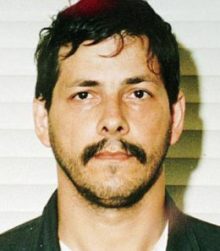
Marc Dutroux, Belgian pedophile, sadist, and serial killer with friends in high places
By Aedon Cassiel | Counter – Currents | December 23, 2016
To reiterate a point that should be clear to the more astute reader, my goal in this series (part 1, part 2) has not been to defend “Pizzagate” as such. My goal has been to defend the people who want to investigate it against specific accusations levied against them by people who think Pizzagate has revealed no intriguing information at all—for a specific reason, which I will be honing in and focusing on much more directly in this closing entry.
Whereas the mainstream critics of Pizzagate would have you believe that the dividing line is between paranoid conspiracy theorist followers of “fake news” and level-headed people who follow trustworthy news sources and rely on cold, hard reason to determine the truth, my goal has been to show that—whatever is or is not happening with Pizzagate itself—this framing of the issue is arrogant, insulting, and the product of extremely narrow tunnel vision. … continue
Blog Roll
 Aletho News
- The U.S. Sanctions Cuban Journalist For Reporting On The U.S. Blockade
- Israeli firms transform cars into intelligence devices: Reports
- Zionist-controlled companies to surveil British citizens
- THE CHILDREN GAMBIT
- A note on comment posting at Alethonews
- Trump stalls over Iran strike plan, Iran holds all the aces
- Zelensky’s Ceasefire for Elections is Strategic Gambit, Not Democratic Move
- US and Dutch pilots flying F-16s for Ukraine – Western media
- West’s Claims of Non-Involvement in Ukraine Conflict ‘Epitome of Hypocrisy’ – Expert
- Putin aide urges retaliation to ‘Western piracy’
- If Americans Knew
- Israel’s Favorite American President
- Israel’s “Yellow Line” Is a Death Trap for Palestinians. We Drove Into It.
- Why Israel’s expanding occupation in Syria presents a critical legal test
- Gaza is not a natural disaster. It is the victim of genocide enabled by global inaction
- Netanyahu’s plan to “end” US aid to Israel is to give even more money under a different name
- Israel ceased firing on Gaza for just 15 days of the “ceasefire” – Not a ceasefire Day 130
- In Gaza, “rats run over our faces” – Not a ceasefire Day 129
- Israel-backed border guards, GHF-linked aid – Not a ceasefire Day 128
- Israel battles Palestinian right of return, one Palestinian at a time – Not a ceasefire Day 127
- Noor’s short life of unimaginable suffering
- No Tricks Zone
- New Study: A 4°C Warmer Beaufort Sea Had ‘No Sea Ice’ 11,700 – 8200 Years Ago
- Unfudging The Data: Dutch Meteorological Institute Reinstates Early 20th Centruy Heat Waves It Had Erased Earlier
- German Gas Crisis…Chancellor Merz Allegedly Bans Gas Debate Ahead of Elections!
- Pollen Reconstructions Show The Last Glacial’s Warming Events Were Global, 10x Greater Than Modern
- Germany’s Natural Gas Storage Level Dwindles To Just 28%… Increasingly Critical
- New Study Rebuts The Assumption That Anthropogenic CO2 Molecules Have ‘Special’ Properties
- Climate Scientist Who Predicted End Of “Heavy Frost And Snow” Now Refuses Media Inquiries
- Polar Bear Numbers Rising And Health Improving In Areas With The Most Rapid Sea Ice Decline
- One Reason Only For Germany’s Heating Gas Crisis: Its Hardcore-Dumbass Energy Policy
- 130 Years Later: The CO2 Greenhouse Effect Is Still Only An Imaginary-World Thought Experiment
 Aletho News