US Media: Building Newspaper Curtain Against A Fabled Foe
“Now we do not have an Iron Curtain, we have a newspaper curtain.”
Evgeny Yevtushenko (a prominent Russian poet)
– RT interview, Sept 2009.
Though Russia went through significant domestic changes since 1991, the extent of Russia’s domestic achievements had rarely been acknowledged in the United States. Instead, Russia has been continuously criticized for not democratizing fast enough. American media ignores positive developments in Russia and concentrates on the negative. Russia made significant changes from the Soviet totalitarian system, but instead of acknowledging this progress, Russia is characterized by exploiting misleading historical analogies as ‘closed’, associated with the KGB, the Soviet Union, ‘relentless propaganda’, ‘government control’. The opinions of the Russian citizens on their political system or their president as well as the actions by the Russian state that do not fit the description of ‘dictatorial power’ are typically omitted from Western media coverage. The result of this “selection bias” builds up over time to construct a negative overall image of the country and its president.
Creating an external threat perception in the eyes of the Americans and Europeans becomes an instrument of uniting the public on foreign policy issues, as expressed by Zbigniew Brzezinski in his text, The Grand Chessboard: “As America becomes an increasingly multi-cultural society, it may find it more difficult to fashion a consensus on foreign policy issues, except in the circumstance of a truly massive and widely perceived direct external threat.” (p.211)
The news on Russia became consistently negative after 2000. Positive developments inside Russia, or news regarding Russia’s positive international involvements, were ignored while the negative news received immediate attention. A few examples from the period will illustrate this phenomenon:
William Safire’s article in The New York Times in 2004 concluded: “NATO must not lose its original purpose: to contain the Russian bear.” In 2006, the Wall Street Journal editorial described Russian foreign policy as “openly, and often gratuitously, hostile to the U.S.” and therefore it concluded that “it’s time we start thinking of Vladimir Putin’s Russia as an enemy of the United States.”
In July 2007, US Neoconservative Richard Pipes, who has been for decades a fierce critic of Russia, declared to Corriere della Sera that “For Europe, Russia could be even more dangerous than the threat of Islam, more hazardous than Bin Laden”. According to Pipes, Russia is trying to regain its superpower status and will use economic tools as pressure on the European or even global economy to achieve its goals. Pipes insisted that Russia has always been hostile to the West, and that the best policy that the West should adopt toward Russia is to avoid any contact. Oil companies should stop making contracts with Russia, and banks should cut out any investments. Not surprisingly, Pipes has been a fervent supporter of the missile defense shield in Eastern Europe, which hides behind the pretense of avoiding the spread of Russian influence there.
Similar to Pipes’ Russophobic stance, Vice President Dick Cheney frequently characterized Russian foreign policy as threatening to the United States and therefore has been advocating a policy of isolating Russia. Other officials in the George W. Bush administration who helped to inflate anti-Russian rhetoric are the Deputy Secretary of Defense Paul Wolfowitz, Senator Joe Lieberman (D-Conn.), and Senator John McCain (R-Ariz.).
David Kramer is particularly descriptive of Russia’s sins: “With this renewed sense of pride comes an arrogance, cockiness, assertiveness, self-confidence, and even aggressiveness that is combined at the same time with paranoia, insecurity, and hypersensitivity.” And journalist Michael Bohn sees Moscow acting out of stubbornness, and as a ‘spoiler’: “Now Moscow has trouble projecting its power…one way it can still project its strength globally and particularly vis-à-vis the United States is to be the spoiler in international affairs, a modern-day version of ‘Mr. Nyet.’” One must ask: What precisely is Moscow ‘spoiling’, and why? Said answers are tellingly avoided in much of this predominantly Western-based anti-Russian commentary.
The commentators, politicians and media personalities consistently portray a negative picture of Russia: ‘aggressive’, ‘non-cooperative, ‘imperialist’ are very common descriptions in the mainstream Western media. Negative media on Russia became especially intense after the brief Russo-Georgian War of 2008, which lasted only five days due in large part to Russia.
Without an investigation of the sources of the conflict, Western media nonetheless immediately took the side of the Georgian President Mikheil Saakashvili in the conflict and disregarded any evidence that Russia submitted to the United Nations, calling Russia the “aggressor”. While the Russian State’s account of the event did not receive any Western media coverage, nonetheless Saakashvili’s pleas for ‘protection’ were afforded front page positioning in major Western newspapers.
After Joe Biden visited Georgia and Ukraine in 2009, he expressed his predictions in The Wall Street Journal that Russia will collapse in no less than 15 years, given its “withering economy” and shrinking population base. Biden dismissed any Russian goodwill on nuclear disarmament, attributing it to Russia’s inability to maintain commitment to such a policy: “All of sudden, did they have an epiphany and say: ‘Hey man, we don’t want to threaten our neighbors?’ No. They can’t sustain it.”
Russian analyst, Sergey Roy, expressed the feeling in Russia toward the negative remarks by Biden on Russia:
“Biden’s harangues have done more good than harm. Russia’s leaders, starting with Mikhail Gorbachev, have been too gullible in their dealings with the United States and the West generally. Biden’s Dick Cheney-like stance shows only too clearly the kind of “partner” with whom we are supposed to enter “a new era of mutual respect and improved relations,” as promised by Obama.
Walter Isaacson, the former Chairman of the Broadcasting Board of Governors (BBG), which oversees US media coverage directed at foreign audiences, was very open at calling Russia an enemy. Thus, in October 2010, Isaacson called for even more money for the BBG to combat America’s “enemies,” which he identifies as Iran, Venezuela, Russia, and China. “We can’t allow ourselves to be out-communicated by our enemies,” Isaacson bluntly, indiscreetly stated.
The Foreign Affairs journal ran an article by Charles Kupchan, where Russia is listed among other US enemies: Iran, North Korea, Cuba, Syria, and Myanmar. According to the article, Russia is an adversary, “a rivalry that Washington hopes to tame,” it is “on the wrong side of history.” Kupchan compares “recalcitrant autocrats” Putin and Medvedev to Iranian president Ahmadinejad, and Cuban President Raul Castro in their use of anti-Americanism in order to bolster domestic Russian support.
In 2011, The Economist published an article entitled, “The mood of Russia: Time to Shove Off,” where the publication concluded that the most educated and successful Russians are ready to emigrate as a response to Russia’s domestic ‘situation’. The article was based on the statistics provided by Levada-Center stating that 22% of Russians are interested in emigrating out of the country. What The Economist piece forgot, however, was to compare this figure to similar figures from other nations, such as Great Britain, where said figure would be closer to 33%, or to those from Chile, where the number of people wishing to emigrate is 35%, according to a Gallup poll. Mark Adomanis from Forbes responded: “The Economist does have a quite nasty habit of excluding evidence and limiting perspective when it serves its own interests, and the publication has long made clear that it considers Mr. Putin to be a figure of extreme, if not unique, malevolence.”
Russia’s efforts to restore its national pride are misread in Washington as somehow Russia’s efforts toward the restoration of the old USSR. Since most Russians appreciate the increased stability and security prevalent since Putin first assumed the Office of President, the ongoing criticism of Russia from Washington makes Russians wonder: “When we hear US criticism of what’s going on here, it sounds to Russians as if Americans want us to be weak. They want to provoke chaos – not to democratize, but to destroy.”
President Putin’s oft quoted phrase regarding the collapse of the USSR as “the biggest geopolitical catastrophe,” got misquoted numerous times by politicians, analysts, and the media. To those who quote it, the phrase apparently signals Putin’s dreams of rebuilding the Russian Empire. What Putin actually said carried a different meaning than that which is usually attached to the quote:
“The demise of the Soviet Union was the greatest geopolitical catastrophe of the century. Whoever does not miss the Soviet Union has no heart. Whoever wants it back has no brain. I see that not everyone in the West has understood that the Soviet Union has disappeared from the political map of the world and that a new country has emerged with new humanist and ideological principles at the foundation of its existence.”
American media’s assault on Russia started right after Putin came to power, yet it took on new heights during the Winter Olympic Games in Sochi, which coincided with the protests in Ukraine at the end of 2013. The distortions and twisting of facts to create an image of Russia as an enemy is achieved best by using the technique of ‘personalization of a threat’. In Russia’s case, the whole focus of attention is concentrated on the personality of Putin and his role in conducting Russia’s foreign policy. ‘Personalization of a threat’ leads to downplaying substantive discussions of events and the role of the United States in provoking Russia’s foreign policy responses.
Newsweek, in its August 1st, 2014 issue, featured a cover page with a picture of Putin alongside huge letters stating: ” Putin’s Ukraine Mistakes Have Made Him a Pariah” The article, written by Owen Matthews gave a summary verdict of Putin’s involvement in the crash of the Malaysian airline, despite no formal investigation of the accident having even taken place.
One of the more recent examples of a ‘shaper’ of media messages about Russia in the West is that of writer and foreign investment fund manager Bill Browder. In 2003, when Browder was still making billions in Russia, he backed Putin’s decision to arrest former Russian oligarch Mikhail Khodorkovsky, saying, “A nice, well-run authoritarian regime is better than an oligarchic mafia regime — and those are the choices on offer.” After Khodorkovsky’s arrest, Browder said: “People will forget in six months that Khodorkovsky is still sitting in jail.” During Khodorkovsky’s trial in 2005, Browder attacked the oligarch for the same asset-stripping behavior which Browder supported and profited from, telling the BBC: “Mr. Khodorkovsky is no martyr. He has left in his wake aggrieved investors too numerous to count and is widely credited with masterminding much of the financial trickery that plagued the Russian capital markets throughout the 1990s.” Browder tried to encourage Westerners to invest in Russia by writing in the New York Times : “Putin cares about foreign investors; he just doesn’t care about them enough to allow one oligarch to use his ill-gotten gains to hijack the state for his own economic purposes.” After Browder became unwelcome in Russia, he completely changed his narrative and started demonizing Putin and Russia as a state.
Examples of negative media are too many to mention, but the main victim of this negative media coverage of Russia is U.S. foreign policy itself. Instead of trying to understand complex issues, Russian foreign policy actions and internal developments are presented in a caricatured, black and white dichotomy, resulting in mistrust and making continuing reasonable dialogue between the two nations quite difficult.
Angela Borozna is pursuing a Ph.D in political science, writing her dissertation on Russian foreign policy.
September 1, 2015 -
Posted by aletho |
Mainstream Media, Warmongering, Timeless or most popular | Cold War 2.0, Russia, United States
No comments yet.

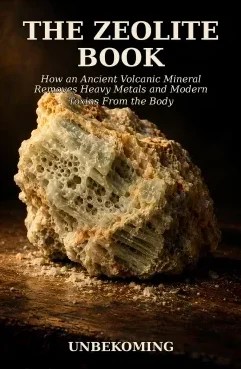 Zeolite is old. It is in Roman concrete that has held for two thousand years. It’s in the water filters of ancient cisterns. It’s in the stomachs of Pacific livestock whose keepers knew, somehow, that this grey crumbling rock made the animals healthier. It’s in Soviet clinical protocols from the 1960s. It’s in the standard emergency response to the Chernobyl explosion.
 Aletho News


Leave a Reply