US Treasury imposes new ballistic missile sanctions on Iran
RT | January 17, 2016
The US Treasury says it is imposing new ballistic missile sanctions on Iran after Tehran released five American prisoners. The move also comes less than a day after some of the sanctions imposed on Iran over its nuclear program were removed by the US and EU.
Washington has imposed sanctions on 11 companies and individuals for helping to supply Iran’s ballistic missile program, the Treasury Department stated.
“Iran’s ballistic missile program poses a significant threat to regional and global security, and it will continue to be subject to international sanctions,” Adam J. Szubin, acting Under Secretary for Terrorism and Financial Intelligence, said in a press release.
“We have consistently made clear that the United States will vigorously press sanctions against Iranian activities outside of the Joint Comprehensive Plan of Action – including those related to Iran’s support for terrorism, regional destabilization, human rights abuses, and ballistic missile program.”
The Treasury’s Office of Foreign Assets Control says it will also block the assets of Mabrooka Trading, a company based in the United Arab Emirates, for providing Iran with parts used in their ballistic missiles. Others sanctioned include companies and individuals involved in the program, which supervised testing of two ballistic missiles in 2015.
President Barack Obama’s administration delayed implementing the sanctions for more than two weeks, while negotiations to release two US prisoners being held in Iran were taking place, Reuters reported, citing its sources.
Obama is also expected to make a statement later on Sunday, regarding the Iran deal and the release of five prisoners.
AIPAC Claims Iran Nuclear Deal Represents a Threat to… America
Sputnik – 17.01.2016
According to the American Israel Public Affairs Committee, the implementation of the Iran Nuclear Deal represents a “dangerous moment” for America.
The implementation of the Iran Nuclear Deal represents a “dangerous moment” for America, and it is essential to make Iran meet the commitments it made when it accepted the JCPOA (Joint Comprehensive Plan of Action), the American Israel Public Affairs Committee (AIPAC) said Sunday.
“This is a dangerous moment for America and our allies. We need to hold Iran to the commitments it made when it accepted the JCPOA,” AIPAC, America’s most influential pro-Israel lobbying organization, stated following the implementation of the Iran deal.
The statement stressed that “Congress and the executive branch must also live up to their own commitments,” which means it has to respond to Iranian violations of the JCPOA “with certain, swift and severe penalties.” The organization also noted it is necessary to shut out the possibility of Iran building up “its ability to pursue regional dominance” as a “terrorist state”.
“Iran can repatriate tens of billions of dollars from frozen foreign accounts, fueling its efforts to expand its reach across the region. The international community will dismantle its elaborate sanctions regime, and Iran will start down the path to legitimize its illicit nuclear program,” the statement reads.
AIPAC also asserted that Iran demonstrated its irresponsibility in the past when it violated mandatory United Nations Security Council resolutions by conducting prohibited ballistic missile tests.
Israel’s Prime Minister Benjamin Netanyahu made skeptical comments on the implementation of the Iranian nuclear deal as well, saying that Iran hasn’t yet abandoned its ambitions to possess nuclear weapons.
Iran and six major international powers (the US, Russia, China, the UK, France and Germany) reached an agreement on Tehran’s nuclear program in July 2015. The deal entailed Iran agreeing to ensure that its nuclear program is of a peaceful nature.
Hillary Clinton calls for new Iran sanctions due to missile test
RT | January 17, 2016
Democratic presidential candidate Hillary Clinton has called for new sanctions on Iran over its recent ballistic missile test. Her comments come as earlier economic sanctions are being partly lifted, after Iran fulfilled measures set by the nuclear deal.
“Iran is still violating UN Security Council resolutions with its ballistic missile program, which should be met with new sanctions designations and firm resolve,” Clinton said in a statement.
The former US secretary of state stressed that if she is elected president this year, she will take on Iran with a “distrust and verify” attitude.
Clinton also applauded Iran’s release of US citizens. “I am greatly relieved by the safe return of American prisoners from Iran.”
Latest media reports indicated that a detained American student, Matthew Trevithick, has already left Iran, while “logistical steps” are in process to send four other prisoners, including the jailed Tehran bureau chief for the Washington Post, Jason Rezaian, home.
While lashing out at Iran for its missile tests, Clinton has apparently been fine with weapons being sent to some of its Middle Eastern neighbors, despite them being criticized for dismal human rights records.
Amid Clinton‘s presidential campaign, media reports have surfaced claiming that regional players, including Saudi Arabia and Qatar, have donated billions of dollars to the Clinton Foundation. At the same time, those same nations had weapons deals approved by the US State Department when it was headed by Clinton.
“Algeria, Saudi Arabia, Kuwait, the United Arab Emirates, Oman and Qatar all donated to the Clinton Foundation and also gained State Department clearance to buy caches of American-made weapons even as the department singled them out for a range of alleged ills, from corruption to restrictions on civil liberties to violent crackdowns against political opponents,” International Business Times wrote in May 2015, citing a review of available records.
Meanwhile, US Democratic Senator Richard Blumenthal joined Clinton’s call for more sanctions on Iran on Saturday, arguing its missile tests violated UN resolutions.
“Without delay, the United States should enforce sanctions on Iran for its ballistic missile program,” Blumenthal said.
Both Clinton’s and Blumenthal’s statements come as international economic sanctions imposed on Iran earlier due to suspicions that its nuclear program was being used to develop atomic weapons were formally lifted after the UN nuclear watchdog – the International Atomic Energy Agency (IAEA) – released a statement saying Iran has fulfilled all of the measures required under its deal with six world powers.
“The report was submitted to IAEA board of governors and to the United Nations Security Council,” IAEA director general Yukiya Amano said on Saturday, adding that “it was issued after agency inspectors on the ground verified that Iran has carried out all measures required under the JCPOA to enable implementation day to occur.”
The JCPOA, known as the Iran nuclear deal, was signed between Tehran and six world powers (the so-called P5+1 group comprised of China, France, Russia, the UK, the US and Germany) on July 14, 2015. The deal entailed Iran shrinking its atomic program in return for the US, EU and UN lifting economic sanctions.
Did a Major US Union Overrule Members on Palestine Solidarity?
teleSUR | January 16, 2015
Members of a local Californian branch of United Auto Workers said Friday they were appealing a controversial decision by the larger union to overrule a pro-Palestine resolution backed by rank and file members.
The United Auto Workers Local 2865 (UAW 2865) made history in late 2014 when its members voted overwhelmingly to support a boycott of corporations accused of involvement in Israel’s occupation of Palestinian territories. The vote was one of the most well attended in UAW 2865’s history, and came after months of intense discussion among union members. The union’s boycott resolution was framed as part of the international Boycott, Divestment and Sanctions (BDS) movement, which has sought to use economic pressure to push Israel to end what human rights groups say are widespread human rights abuses in the occupied Palestinian territories. Supporters of the movement say their campaign is modeled on the 1980s anti-apartheid boycott of South Africa.
UAW 2865 was the first major union in the United States to endorse BDS through a vote put directly to ordinary members. Since then, the United Electrical Workers union has followed suit, endorsing BDS during its 2015 conference.
Internationally, BDS has also been backed by COSATU of South Africa and the Unite the Union in the U.K.
International UAW Steps In
However, in December 2015, UAW 2865’s parent union, International UAW surprised workers by nullifying the pro-Palestine vote, claiming the decision discriminated against Jewish union members.
Now, a group of UAW 2865 members have told teleSUR they have begun an appeals process against the International UAW board’s decision. The members said they are seeking to overturn the nullification through the union’s public review board, after filing an appeal Thursday.
They have argued the original UAW 2865’s BDS resolution was reached democratically by ordinary members, and said the larger union leadership should respect the demands of ordinary members.
teleSUR has obtained union documents that some members of UAW 2865 say indicate some of the fiercest supporters of BDS within UAW 2865 were rank and file members identifying as Jewish – calling into question the International UAW’s primary reason for overruling the vote. There is also evidence of at least one multinational firm weighing in on the union’s decision.
Speaking to teleSUR, UAW 2865 President Robert Cavooris said he firmly disagreed with the International UAW board’s decision to overrule the BDS resolution, stating, “Many Jewish members of our own local, like myself, took part in the campaign for BDS.”
He argued the board’s decision “conflates the state of Israel with a diverse global diaspora of Jewish people.”
Not all union members appear to agree. During the appeal hearing in December 2015, one union member alleged the BDS campaign was “rampant” with “anti-Semitism and active promotion of hate.”
In a complaint submitted to the International UAW’s board, another UAW 2865 member said, “The … local union (2865) pledged that it would not discriminate against members who are Israelis and stated that the academic boycott was aimed at ‘institutions’ and not individuals.”
“But this is a distinction without a difference: boycotting Israeli academic institutions can only be carried out by discriminating against individuals associated with those institutions,” the member argued.
However, internal union documents show the board was also contacted by a group of Jewish UAW 2865 members who firmly supported the BDS resolution.
“As an injustice anywhere is an injustice everywhere and none of us are free until all of us are free. As Jews, we understand from our own experiences with discrimination and our own history of resistance to oppression that standing on the right side of history necessitates standing in solidarity with Palestinians,” a petition in favor of BDS directed at the board stated.
The petition was signed by more than 40 UAW 2865 Jewish members who said, “We affirm our right and responsibility as Jews to oppose the state of Israel’s actions and policies that we believe to be unjust.”
The final International UAW’s decision also noted the UAW 2865 carried out its internal vote in a democratic matter, and “made an earnest effort” to engage all members in months of pre-vote discussions, but found the BDS resolution anti-Semitic nonetheless. The decision was based on the board’s conclusion that the BDS resolution unduly focused on Israeli policy and actions when discussing “atrocities against Palestinians.”
“Thus, the local union’s platform is apparent in its unfavorable stance against the state of Israel, Israelis and, invariably, Jewish union members,” the board said in its conclusion.
However, Cavooris said Israel hasn’t been singled out by his branch at all, pointing to an extrensive list of resolutions related to human rights issues from Mexico to China.
“For example, our local passed a resolution condemning the disappearance of 43 Mexican students at Ayotzinapa in 2014, and last fall we made a statement of support for South African students fighting against racism and for better university conditions. Just last week we signed a letter to condemn the repression of Chinese labor activists in Guandong,” he explained.
Cavooris continued, “We have also criticized political institutions in the U.S. for their repression of protests in Ferguson and elsewhere.”
“A brief scan of our political record shows that we are proud to stand against injustice against working people and others wherever it occurs,” he said.
Enter Caterpillar
Yet disagreements over the board’s decision to label the BDS resolution as anti-Semitic aren’t the only concerns raised by rank and file UAW 2865 members.
Also included in a collection of documents handed to teleSUR was a letter from industrial vehicle manufacturing giant Caterpillar. Caterpillar armored tractors have been used by Israeli forces to demolish Palestinian homes, sparking the ire of BDS activists and human rights advocates. Dated August 20, 2015, the letter from the firm’s labor relations head Jonathan Ginzel was addressed to International UAW Vice President Norwood Jewell. The letter denied allegations Caterpillar is “engaged in or complicit in human rights violations,” and warned BDS advocacy was viewed as an “attack on our business and our customers.”
“The actions taken by UAW Local 2865 are without merit and set a dangerous precedent in our relationship,” Ginzel wrote to Jewell.
The letter also included a paragraph supporting an appeal against UAW 2865’s resolution.
The International UAW’s final conclusion expressed similar concerns to those raised in Ginzel’s letter, stating the BDS resolution could have blow back on union members employed by companies like Caterpillar.
The UAW 2865’s rank and file BDS Caucus has accused the International UAW of effectively prioritizing the interests of companies like Caterpillar over the interests of union members.
“The (board of the International UAW) support for the profits of these companies – their prioritization of the so-called “flow of commerce” – trumps their support for other labor unions, such as the Palestinian labor unions that initiated the call for BDS, and their own members, like the 65 percent of affirmative voters from UAW 2865,” the caucus said.
The International UAW was invited to respond to these complaints, but didn’t respond by the time of publication.
The UAW 2865’s president, Cavooris described the International UAW board’s decision to “consider” Caterpillar’s input in internal union matters as “rather amazing.”
“When the (International UAW board) listens to executives at Caterpillar Inc. instead of workers in one of its locals, I think there is a clear breach of democracy and autonomy,” he said.
Cavooris continued, “This sort of deference to employers definitely raises the question: Who is the union supposed to represent? Are we an organization that fights for the rights of working people worldwide or are we an organization that makes sure our employers are happy?”
“When workers at Caterpillar demand a wage increase in their next contract, is the UAW (international board) going to ensure that this demand is okay with Caterpillar management as well? Because we held a democratic vote on BDS – and the (board) acknowledges that it was completely democratic – we know we are representing the views and interests of our members. I wonder if the (board) can say the same, given their deference to Caterpillar management,” he said.
Rank and file members of UAW 2865 that spoke to teleSUR likewise said they felt the International UAW was undermining local union democracy.
“I believe this decision not only calls into question the autonomy of local chapters, but it also exposes the contradictions that arise among labor unions that in theory are committed to social justice of those disenfranchised (ie: workers), but in practice are easily swayed by corporate interest and threats by oppressive powers,” said Jennifer Mogannam, UAW 2865 member and Ethnic Studies PhD candidate at University of California, San Diego.
“As stated, our efforts were transparent, honest and a two thirds vote in favor is telling of the commitment to justice that our generation of academic laborers upholds,” she said.
The dispute between UAW 2865 pro-BDS members and the International UAW leadership may not end anytime soon, with the appeals process only just beginning. Members that spoke to teleSUR said that irrelevant of the board’s decision, they will continue to push for greater support for Palestine solidarity.
“The struggle for Palestine is one symbol of struggle that we must continue to fight for and endure the repercussions of, alongside other struggles for true justice and liberation, because it is this commitment that may guide us to a new, just and better world,” Mogannam said.
Another rank and file UAW 2865 member, Beezer de Martelly, from the University of California Berkeley music department said, “The UAW 2865 BDS caucus will continue its work to educate students and union members about ongoing human rights violations, the intensifying climate of Islamophobia, and the Palestinian-led struggle for democracy.”
However, some members said the International’s decision could be a step backwards for workers’ and student rights.
“I am worried about the ramifications of this decision on the democratic spirit of Unionism, and this struggle is far from over,” said Irene Morrison, southern vice president of UAW 2865.
“It won’t end until Palestine is free,” she said.
Four shelters and one water tank destroyed in Tubas
Jordan Valley Solidarity | January 16th 2016
Tubas, Occupied Palestine – At 6 am on 14th January 2016 the Israeli occupation army entered Tubas area, with twelve jeeps and two bulldozers, destroying four shelters and a water tank.
In December 2015 the army gave the order for demolition of the shelters, obliging the owners to restore the land to the condition it was in before the construction, within the following 45 days.
While the court process was ongoing and the deadline has not expired yet, the army raided the area and destroyed the shelters. Two of the four shelters were owned by Ali ‘Amabusi and Mahmoud Alidib Mashamani, both of them living in Tubas.
Military forces claimed the area as closed military area, but by law they are not permitted to enter Tubas and give demolition orders as it is Area A under the Oslo accords, and therefore under full control of Palestinian Authority.
In the morning a water tank was also destroyed. It was supplying water to the village of Yarza. The demolition left 100 people without water and with them farms and plantations, which are the main economy of the families.
The water tank was built with the fund of the Italian Christian Solidarity and the volunteers of Jordan Valley Solidarity in 2013-2014. Its purpose was a development project for the area, allowing people to return and help the ones who don’t have access to the water to grow plants and animals.
The water was provided from the city of Tubas and the village of Alibkea, but the pipe going from the tank to the village of Yarza was previously confiscated by the occupation army 8 months ago.

Israeli forces raid area with bulldozers to demolish shelters and destroy water tank.
MH-17’s Unnecessary Mystery
By Robert Parry | Consortium News | January 15, 2016
As the whodunit mystery surrounding the shoot-down of Malaysia Airlines Flight 17 nears the 1½-year mark, the Obama administration could open U.S. intelligence files and help bring justice for the 298 people killed in eastern Ukraine on July 17, 2014. Instead, a separate mystery has emerged: why has the U.S. government clammed up since five days after the tragedy?
Immediately after the crash, senior Obama administration officials showed no hesitancy in pointing fingers at the ethnic Russian rebels who were then resisting a military offensive by the U.S.-backed Kiev regime. On July, 20, 2014, Secretary of State John Kerry appeared on TV talk shows claiming there was a strong circumstantial case implicating the rebels and their Russian backers in the shoot-down.
After mentioning some information gleaned from “social media,” Kerry said on NBC’s “Meet the Press”: “But even more importantly, we picked up the imagery of this launch. We know the trajectory. We know where it came from. We know the timing. And it was exactly at the time that this aircraft disappeared from the radar.”
Two days later, the Office of the Director of National Intelligence released a “Government Assessment,” also citing “social media” seeming to implicate the rebels. Then, this white paper listed military equipment allegedly supplied by Russia to the rebels. But the list did not include a Buk missile battery or other high-powered anti-aircraft missiles capable of striking MH-17, which had been flying at around 33,000 feet.
The DNI also had U.S. intelligence analysts brief a few select mainstream reporters, but the analysts conveyed much less conviction than their superiors may have wished, indicating that there was still great uncertainty about who was responsible.
The Los Angeles Times article said: “U.S. intelligence agencies have so far been unable to determine the nationalities or identities of the crew that launched the missile. U.S. officials said it was possible the SA-11 [the designation for a Russian-made anti-aircraft Buk missile] was launched by a defector from the Ukrainian military who was trained to use similar missile systems.”
That uncertainty meshed somewhat with what I had been told by a source who had been briefed by U.S. intelligence analysts shortly after the shoot-down about what they had seen in high-resolution satellite photos, which they said showed what looked like Ukrainian military personnel manning the battery which was believed to have fired the missile.
There is also an important distinction to make between the traditional “Intelligence Assessment,” which is the U.S. intelligence community’s gold standard for evaluating an issue, complete with any disagreements among the 16 intelligence agencies, and a “Government Assessment,” like the one produced in the MH-17 case.
As former CIA analyst Ray McGovern wrote: “The key difference between the traditional ‘Intelligence Assessment’ and this relatively new creation, a ‘Government Assessment,’ is that the latter genre is put together by senior White House bureaucrats or other political appointees, not senior intelligence analysts. Another significant difference is that an ‘Intelligence Assessment’ often includes alternative views, either in the text or in footnotes, detailing disagreements among intelligence analysts, thus revealing where the case may be weak or in dispute.”
In other words, a “Government Assessment” is an invitation for political hacks to manufacture what was called a “dodgy dossier” when the British government used similar tactics to sell the phony case for war with Iraq in 2002-03.
Demonizing Putin
Yet, despite the flimsiness of the “blame-Russia-for-MH-17” case in July 2014, the Obama administration’s rush to judgment proved critical in whipping up the European press to demonize President Vladimir Putin, who became the Continent’s bete noire accused of killing 298 innocent people. That set the stage for the European Union to accede to U.S. demands for economic sanctions on Russia.
The MH-17 case was deployed like a classic piece of “strategic communication” or “Stratcom,” mixing propaganda with psychological operations to put an adversary at a disadvantage. Apparently satisfied with that result, the Obama administration stopped talking publicly, leaving the impression of Russian guilt to corrode Moscow’s image in the public mind.
But the intelligence source who spoke to me several times after he received additional briefings about advances in the investigation said that as the U.S. analysts gained more insights into the MH-17 shoot-down from technical and other sources, they came to believe the attack was carried out by a rogue element of the Ukrainian military with ties to a hard-line Ukrainian oligarch. [See, for instance, Consortiumnews.com’s “Flight 17 Shoot-Down Scenario Shifts” and “The Danger of an MH-17 Cold Case.”]
But that conclusion – if made public – would have dealt another blow to America’s already shaky credibility, which has never recovered from the false Iraq-WMD claims in 2002-03. A reversal also would embarrass Kerry, other senior U.S. officials and major Western news outlets, which had bought into the Russia-did-it narrative. Plus, the European Union might reconsider its decision to sanction Russia, a key part of U.S. policy in support of the Kiev regime.
Still, as the MH-17 mystery dragged on into 2015, I inquired about the possibility of an update from the DNI’s office. But a spokeswoman told me that no update would be provided because the U.S. government did not want to say anything to prejudice the ongoing investigation. In response, I noted that Kerry and the DNI had already done that by immediately pointing the inquiry in the direction of blaming Russia and the rebels.
But there was another purpose in staying mum. By refusing to say anything to contradict the initial rush to judgment, the Obama administration could let Western mainstream journalists and “citizen investigators” on the Internet keep Russia pinned down with more speculation about its guilt in the MH-17 shoot-down.
So, silence became the better part of candor. After all, pretty much everyone in the West had judged Russia and Putin guilty. So, why shake that up?
The Ukrainian Buks
Yet, what has become clear after the initial splurge of U.S. blame-casting is that U.S. intelligence lacked key evidence to support Kerry’s hasty judgments. Despite intensive overhead surveillance of eastern Ukraine in summer 2014, U.S. and other Western intelligence services could find no evidence that Russia had ever given a Buk system to the rebels or introduced one into the area.
Satellite intelligence – reviewed both before and after the shoot-down – only detected Ukrainian Buk missile systems in the conflict zone. One could infer this finding from the fact that the DNI on July 22, 2014, did not allege that Buks were among the weapons systems that Russia had provided. If Russian-supplied Buks had been spotted – and the batteries of four 16-foot-long missiles hauled around by trucks are hard to miss – their presence surely would have been noted.
But one doesn’t need to infer this lack of evidence. It was spelled out in a little-noticed report by the Netherlands’ Military Intelligence and Security Service (MIVD) that was made public last October when the Dutch Safety Board issued its findings on the causes of the doomed MH-17 flight. (Since the flight had originated in Amsterdam and carried many Dutch passengers, Netherlands took a lead role in the investigation.)
Dutch intelligence, which as part of NATO would have access to sensitive overhead surveillance and other relevant data, reported that the only anti-aircraft weapons in eastern Ukraine – capable of bringing down MH-17 at 33,000 feet – belonged to the Ukrainian government.
MIVD made that assessment in the context of explaining why commercial aircraft continued to fly over the eastern Ukrainian battle zone in summer 2014. MIVD said that based on “state secret” information, it was known that Ukraine possessed some older but “powerful anti-aircraft systems” and “a number of these systems were located in the eastern part of the country.”
But the intelligence agency added that the rebels lacked that capacity: “Prior to the crash, the MIVD knew that, in addition to light aircraft artillery, the Separatists also possessed short-range portable air defence systems (man-portable air-defence systems; MANPADS) and that they possibly possessed short-range vehicle-borne air-defence systems. Both types of systems are considered surface-to-air missiles (SAMs). Due to their limited range they do not constitute a danger to civil aviation at cruising altitude.”
MIVD noted that on June 29, 2014, “the Separatists captured a Ukrainian armed forces military base in Donetsk [where] there were Buk missile systems,” a fact that was reported in the press before the crash and attracted MIVD’s attention.
“During the course of July, several reliable sources indicated that the systems that were at the military base were not operational,” MIVD said. “Therefore, they could not be used by the Separatists.”
In other words, it is fair to say – based on the affirmative comments from MIVD and the omissions from the U.S. DNI’s “Government Assessment” – that the Western powers had no evidence that the ethnic Russian rebels or their Russian allies had operational Buk missiles in eastern Ukraine, but Ukraine did.
It also would have made sense that Ukraine would be moving additional anti-aircraft systems close to the border because of a feared Russian invasion as the Ukrainian military pressed its “anti-terrorism operation” against ethnic Russians fighters. They were resisting the U.S.-backed coup of Feb. 22, 2014, which had ousted elected President Viktor Yanukovych, whose political base was in the east.
According to the Dutch Safety Board report, issued last October, a Ukrainian warplane had been shot down by a suspected air-to-air missile (presumably from a Russian fighter) on July 16, 2014, meaning that Ukrainian defenses were probably on high alert. The Russian military also claimed that Ukraine had activated a radar system that is used to guide Buk missiles.
Gunning for Putin?
I was told by the intelligence source that U.S. analysts looked seriously at the possibility that the intended target was President Putin’s official plane returning from a state visit to South America. His aircraft and MH-17 had similar red-white-and-blue markings, but Putin took a more northerly route and arrived safely in Moscow.

A side-by-side comparison of the Russian presidential jetliner and the Malaysia Airlines plane.
Other possible scenarios were that a poorly trained and undisciplined Ukrainian squad mistook MH-17 for a Russian plane that had penetrated Ukrainian airspace or that the attack was willful provocation designed to be blamed on the Russians.
Whoever the culprits and whatever their motive, one point that should not have remained in doubt was where the missile launch occurred. Remember that just three days after the crash, Secretary Kerry had said U.S. intelligence detected the launch and “We know where it came from.”
But last October, the Dutch Safety Board still hadn’t pinned down anything like a precise location. The report could only place the launch site within a 320-square-kilometer area in eastern Ukraine, covering territory then controlled by both Ukrainian and rebel forces. (The safety board did not seek to identify which side fired the fateful missile).
By contrast, Almaz-Antey, the Russian arms manufacturer of the Buk systems, conducted its own experiments to determine the likely firing location and placed it in a much smaller area near the village of Zaroshchenskoye, about 20 kilometers west of the Dutch Safety Board’s zone and in an area under Ukrainian government control.
So, with the firing location a key point in dispute, why would the U.S. government withhold from a NATO ally (and investigators into a major airline disaster) the launch point for the missile? Presumably, if the Obama administration had solid evidence showing that the launch came from rebel territory, which was Kerry’s insinuation, U.S. officials would have been only too happy to provide the data.
A reasonable conclusion from the failure to share this information with the Dutch investigators is that the data does not support the preferred U.S. government narrative. If there’s a different explanation for the silence, the Obama administration has failed to provide it.
Amid the curious U.S. silence, the most significant public finding by Western intelligence is that the only powerful and operational anti-aircraft-missile systems in eastern Ukraine on July 17, 2014, belonged to the Ukrainian military.
Nevertheless, the mainstream “conventional wisdom” remains that either the ethnic Russian rebels or the Russians themselves shot down MH-17 and have sought to cover up their guilt.
Some of this certainty comes from the simpleminded game of repeating that Buk missiles are “Russian-made,” which is true but irrelevant to the issue of who fired the missiles, since the Ukrainian military possesses Russian-made Buks.
But much of this “group think” can be credited to the speed with which the Obama administration got its narrative out immediately citing dubious “social media” and exploiting the West’s disdain toward Russian President Putin. He was a ready-made villain for the story.
Lying First
A similar case occurred in 1983 when Korean Airlines Flight 007 penetrated deeply into Soviet territory and was pursued by a Soviet fighter that – after issuing warnings that were ignored – shot the plane down believing it was an enemy military aircraft. Though the Soviets quickly realized they had made a terrible mistake, the Reagan administration wanted to use the incident to paint the “evil empire” in the evilest of tones.
So, Reagan’s propagandists edited the ground-control intercepts to make it appear that the Soviets had committed willful murder, a theme that was presented to the United Nations and was gullibly lapped up by the mainstream U.S. news media.
The fuller story only came out in 1995 with a book entitled Warriors of Disinformation by Alvin A. Snyder, who had been director of the U.S. Information Agency’s television and film division. He described how the tapes were edited “to heap as much abuse on the Soviet Union as possible.”
In a boastful but frank description of the successful disinformation campaign, Snyder noted that “the American media swallowed the U.S. government line without reservation. Said the venerable Ted Koppel on the ABC News ‘Nightline’ program: ‘This has been one of those occasions when there is very little difference between what is churned out by the U.S. government propaganda organs and by the commercial broadcasting networks.’”
Snyder concluded, “The moral of the story is that all governments, including our own, lie when it suits their purposes. The key is to lie first.”
In the case of MH-17, however, the falsehoods and deceptions are not simply some spy-vs.-spy propaganda game of gotcha, but rather obstruction of justice in a mass murder investigation. Whatever evidence the Obama administration has, it should have long since been made available to the investigators, but – so far – the official Dutch reports have indicated no such assistance.
While the U.S. government maintains its official silence, the Russian manufacturer has tried to provide details about the functioning of various generations of Buks and challenged the conclusion from the Dutch Safety Board of precisely which model likely brought down MH-17. The Dutch Safety Board cited a 9M38M1 missile using a 9N314M warhead that dispersed “butterfly or bow-tie” fragments that ripped through MH-17’s fuselage.
But Almaz-Antey reported that only older warheads and missiles of the 9M38 type have that signature. “The 9M38M1 missile has no H-shaped striking elements,” Almaz-Antey executive Yan Novikov said. According to the manufacturer, the Russian army had phased 9M38 missiles out years ago, but they remained part of Ukraine’s arsenal.
On Jan. 14, the Russian aviation agency issued its own report critical of the Dutch Safety Board’s understanding of the Buk models, saying that “the strike elements” in the 9N314M warhead did not match the composition of what was recovered from MH-17. Yet, the Dutch-led criminal investigation, which is being partly run by the Ukrainian government, has shown little interest in the Russian information.
‘Citizen Journalists’
The inquiry has been much more welcoming of leads from Bellingcat, a group of “citizen journalists” led by British blogger Eliot Higgins.
Despite having made significant mistakes in an earlier investigation of the Syria-sarin case in 2013 – including misstating the range of suspect missiles – Higgins has been treated as something of a savant on the MH-17 case, basing his analysis on photographs that popped up the Internet purportedly showing a Buk missile system heading eastward from Donetsk shortly before MH-17 was shot down.
Although one of the first lessons anyone learns about the Internet is to be cautious about what you find there, Higgins and Bellingcat relied on the images to conclude that this battery was dispatched from Russia under the command of Russian forces. The bloggers went so far as to send a list of Russian soldiers’ names as suspects to the MH-17 criminal investigators.
There are, of course, problems with this sort of theorizing. First, it assumes that the photos on the Internet are genuine and not cleverly photo-shopped fakes. The Internet can be a devil’s playground for both amateur and professional disinformationists.
But even assuming that the photos are real, there is the question of why – if this cumbersome weapons system was lumbering around eastern Ukraine apparently for weeks – did Western intelligence services not detect it from overhead surveillance either before or after the shoot-down? From Bellingcat’s Internet photos, it appears there was no effort to conceal the Buk system, which curiously was headed eastward toward Russia, not westward from Russia.
Higgins also directed an Australian TV film crew to the supposed site in Luhansk where the Buk battery, minus one missile, supposedly made its getaway back into Russia. However, the location that the Australian crew filmed clearly was the wrong place. None of the landmarks matched up, but this journalistic fraud did nothing to diminish Bellingcat’s sterling reputation with mainstream Western news outlets which routinely repeat the group’s allegations. [See Consortiumnews.com’s “A Reckless Stand-upper on MH-17.”]
It turns out that it is an excellent business model for “citizen” bloggers to find “evidence” on the Internet to reinforce whatever the U.S. government’s propagandists are claiming. Since the U.S. government’s credibility is shaky at best, young hip Internet readers are more inclined to trust what they hear from bloggers – and when the bloggers echo what Washington claims, the mainstream media and well-funded think tanks will join in the applause.
Latest Speculation
Earlier this month, Bellingcat’s speculation identifying Russian soldiers as MH-17 suspects based on their assignment to a Buk battery was splashed across the international press, including Dutch television, London’s Telegraph and the British Guardian. The U.S.-funded Radio Free Europe/ Radio Liberty headlined its story, “Russian Soldiers Said Involved in Downing of MH17 Airliner,” complete with photos of Russian soldiers with their eyes blacked out, courtesy of Bellingcat.
“The Britain-based Bellingcat group said it had identified up to 100 Russian soldiers who may have knowledge of the movements of the Buk missile launcher that destroyed the Boeing 777 on July 17, 2014, killing all 298 on board,” RFE/RL reported, citing a quote that Higgins gave to the Telegraph : “We have the names and photos of the soldiers in the June convoy who traveled with the MH17 Buk, their commanders, their commanders’ commanders, etc.”
Higgins told Dutch TV channel NOS that Belligcat believed that at least 20 soldiers in an air-defense unit based in Kursk “probably” either fired the missile or know who fired it.
The Dutch-led prosecution team, which collaborates with the Ukrainian government and nations that suffered large numbers of deaths from the crash including Australia and Malaysia, welcomed the Bellingcat information and promised to “seriously study it.”
Not that the prosecution team has asked or appears interested, but one could also give the sleuths a list of Americans who almost certainly have knowledge about who fired the missile and from exactly where: CIA Director John Brennan, DNI James Clapper, Secretary of State John Kerry and President Barack Obama.
Any one of those officials could end the strange silence that has enveloped the U.S. government’s knowledge about the MH-17 shoot-down since five days after the tragedy and – by doing so – perhaps they could finally bring some clarity and justice to this mystery.
Investigative reporter Robert Parry broke many of the Iran-Contra stories for The Associated Press and Newsweek in the 1980s. You can buy his latest book, America’s Stolen Narrative, either in print here or as an e-book (from Amazon and barnesandnoble.com).
Featured Video
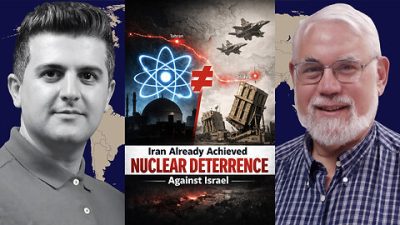
Prof. Ted Postol: Iran Already Achieved Nuclear Deterrence Against Israel
or go to
Aletho News Archives – Video-Images
From the Archives
How the occupied mentality syndrome works
Saudi Arabia on the American chessboard – Part 3
By B. J. Sabri | American Herald Tribune | June 27, 2016
Read part 2: “The occupied mentality Syndrome“
Previously I argued whether Saudi Arabia’s repeated involvements in U.S. interventions and wars stem from free national will or in response to a specific condition. For starters, in Saudi Arabia there is no national will. In Saudi Arabia, the national will is the will of the Al Saud clan. Still, when a major Arab state allies itself with a superpower that committed unspeakable crimes against humanity in almost every Arab country, then something is wrong. This fact alone should compel us to examine the U.S.-Saudi relation for one exceptional reason. As a result of the U.S.-Saudi wars, hundreds of thousands of people in Afghanistan, Iraq, Iran, Libya, Syria, Yemen, and Somalia have lost their lives. Millions became displaced in their own homelands. And millions more rendered refugees.
Attributing the Saudi policies to the bonds of “partnership” with the U.S. is frivolous. There are no bonds between these two thugs except those of business, military deals, secret plots, and wars. Proving this point, bonds such as these have no space for the American and Saudi peoples to share significant cultural or societal exchanges. If partnership is not the reason for the Saudi contribution to the U.S. strategy of empire and imperialism, then another reason must exist.
This leads to three possibilities. … continue
Blog Roll
 Aletho News
- NIAID/NIH and USDA Fund Bioengineered Chimeric Influenza Viruses Built Using Pandemic H1N1 Components: Journal ‘Science Advances’
- Hezbollah hits Israeli warship off Lebanon’s coast, sets it aflame
- Iran slams US strikes on B1 bridge, Mahshahr petrochemical plants as ‘blatant acts of state terrorism’
- In letter to UN chief, Araghchi warns of dire consequences of US-Israeli attacks on Iran’s nuclear facilities
- Why the CIA conspiracy to invade Iran with Kurdish militias failed
- Why Are Upbeat US Claims About Mission to Rescue Pilot ‘Highly Questionable’?
- Aircraft destroyed during US ‘rescue’ of downed F-15 pilot cost more than $100 million each
- Washington University removes professor who condemned US-Israeli war on Iran
- Russia Warns of Retaliation as UK Authorizes Seizure of Vessels
- Serbia thwarts plot to bomb Russia-Hungary gas pipeline – Vucic
- If Americans Knew
- In Iran, Israel-US take aim at “reason, research, and freedom of thought” – Daily Update
- US loses planes over Iran, Israel downgrades Lebanon war goals – Daily Update
- Israel Is Blocking Palestinians from Easter at Church Where Jesus Resurrected
- Plot to assassinate Palestinian activist follows harassment campaign promoted by Zionist groups and elected officials
- Prominent New York synagogue hosts presentation on why U.S. Jews should support the ethnic cleansing of Gaza
- Tapper vs. Piker: Is the CNN Anchor Auditioning for David Ellison?
- Shouldn’t Democrats Be Able to Condemn Genocide?
- Israel-US kill negotiators, destroy civilian structures, but Iran’s military capabilities still largely intact – Daily Update
- ‘War crime’: Global condemnation as Israeli ministers celebrate death penalty law targeting Palestinian prisoners
- 7 Ways Israel Is Turning Lebanon Into Gaza
- No Tricks Zone
- An Inconvenient Tree: Uncovered In Alps… Europe Much Warmer Than Today 6000 Years Ago
- New Study Reports A 60% Slowdown In Greenland’s Ice Loss Rate In The Last Decade
- Low Intensity Tornado Wrecks Major Solar Farm, Creating A Potential Toxic Dump
- New Study Finds Warming Saves Lives…Cold Temperatures 12 Times More Deadly Than Excess Heat
- German Science Blog Accuses PIK Climate Institute Of Hallucinating Climate Tipping Points
- Devastating Assessment Of Comirnaty Vaccine By Former Senior Pfizer Europe Toxicologist
- New Study: CO2 Is ‘Effectively Negligible’ As An Explanatory Climate Change Factor Since 2000
- Former Pfizer Toxicologist Dr. Helmut Sterz Tells Bundestag Hearing Pfizer Vaccine Should Have Never Been Approved
- Energy Expert: Germany’s Nuclear Phaseout Was A “500 Billion Euro Mistake”
- New Research: South Australia’s Mid-Holocene Sea Surface Temperatures Were 4°C Warmer Than Today
 Aletho News