Egypt builds more prisons
MEMO | January 14, 2016
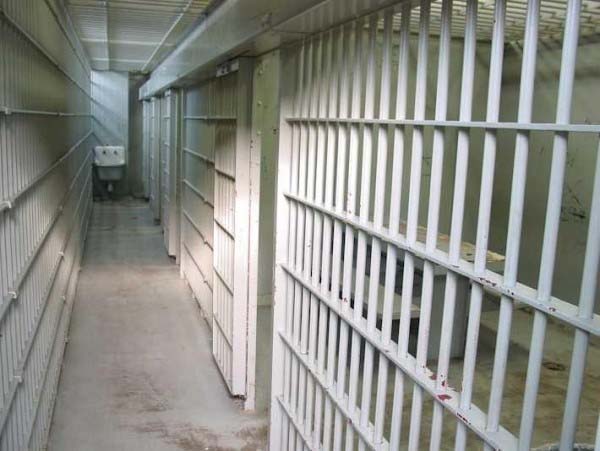
Instead of fulfilling his promises to improve the country’s deteriorating economy, provide new job opportunities for thousands of unemployed youth and build at least one million housing units to accommodate young couples, Egypt’s President, Abdel Fatah Al-Sisi has only managed to build more prisons and detention centres to accommodate the growing number of opposition activists.
Less than two months after his election in June 2013, Al-Sisi opened the first maximum security prison in the Dakahlia Governorate.
As many as five new prisons have been constructed since 2013.
Yesterday, the president issued a decree to allocate a plot of state-owned land that spreads over more 103.22 acres to construct a new central prison in Giza.
With the new prison, Egypt will have 42 prisons as well as 382 detention centres in police stations.
A report by the Arab Organisation for Human Rights revealed that the cost of building Gamasa prison was 750 million Egyptian pounds ($95.8 million), adding that the interior ministry did not publish the costs incurred during the construction of the other prisons because they probably cost billions of Egyptian pounds.
According to the organisation, Egypt does not need to build more detention centres to solve a capacity crisis; the problem is imprisoning tens of thousands of innocent people without justification.
Authorities have increased arbitrary arrests because of political opinion and the number of detainees has reached more than 41,000 prisoners, the human rights group said.
Over 700 Shias missing after Nigeria army raids: Shia group
Press TV – January 14, 2016
A Nigerian Shia group says more than 700 of its members are still unaccounted for a month after the deadly attacks by Nigerian forces against Shia Muslims in the northern city of Zaria.
In a statement released on Thursday, Ibrahim Musa, the spokesman for the Islamic Movement of Nigeria (IMN), whose leader Sheikh Ibrahim al-Zakzaky is in police custody, said about 730 people have gone missing since December 12, 2015.
“These missing people were either killed by the army or are in detention” but their “whereabouts are still unknown and undisclosed,” Musa said.
He further noted that some 220 IMN members were in a prison, located in the city of Kaduna, the capital of the state with the same name, while others were in military custody elsewhere across the African state.
On December 12 last year, Nigerian soldiers attacked Shia Muslims attending a ceremony at a religious center in the northern city of Zaria, accusing them of blocking the convoy of the army’s chief of staff and attempting to assassinate him. The Shias have categorically denied the allegations.
The following day, Nigerian forces also raided Zakzaky’s home and arrested him after reportedly killing those attempting to protect him, including one of the IMN’s senior leaders and its spokesman.
Both incidents led to the deaths of hundreds of members of the religious community, including three of Zakzaky’s sons. There has been no official death toll in the violence, but rights activists have put the number at over 1,000.
Musa said no Nigerian family had received a body for burial in the weeks since the Zaria violence.
The Shia cleric is said to have been charged with “criminal conspiracy and inciting public disturbances.”
The IMN has called for Zakzaky’s unconditional release and for Abuja to respond to the “unjustifiable atrocities committed by the army.”
Netanyahu to downgrade diplomatic representation in Brazil
MEMO | January 14, 2016
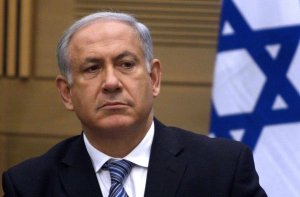 Israeli Prime Minister Benjamin Netanyahu yesterday decided to downgrade diplomatic representation in Brazil over the latter’s refusal to approve settler leader Dani Dayan as Israeli ambassador, local media reported.
The Jerusalem Post newspaper reported Netanyahu saying: “If Brazil won’t approve former settler leader Dani Dayan as its ambassador, Israel won’t offer another diplomat.”
The Israeli PM’s decision came one week after reports surfaced that Netanyahu would withdraw Dayan’s name as an ambassador to Brazil and give him another diplomatic position in the US.
Arabic news website Arab48.com reported officials from the Israeli foreign ministry accusing Brazil of a “personal boycott” of Dayan; however, a group of 40 retired Brazilian diplomats signed a statement against the appointment of Dayan.
Dayan has previously said: “To be an ambassador or not, it is not the question for me, but if this was not, will 700,000 Israeli [settlers] be banned from working in embassies?”
He added: “As it has objecting to the labelling of Israeli products, Israel must object to the labelling of people.”
Are Terrorist Attacks in Turkey State-Sponsored?
By Stephen Lendman | January 14, 2016
Blaming recent terrorist attacks in Turkish cities on ISIS (or other non-state actors) is dubious at best. Erdogan supports Daesh. Why would it target a valued ally?
The latest incidents happened this week following earlier ones. An alleged suicide bomber killed 10 tourists in Istanbul’s historic district, mostly German nationals. At least 15 others were injured.
Erdogan’s “condemn(ation)” of what happened rang hollow. Angela Merkel blamed “international terrorism.”
Former Obama State Department counterterrorism coordinator Daniel Benjamin claimed ISIS is “determined to target more soft targets outside their areas… in Syria and Iraq” – without explaining what it could hope to gain strategically.
On Thursday, a huge blast largely destroyed a police headquarters building in Turkey’s Diyarbakir province. At least five deaths were reported, dozens injured.
Kurdish PKK militants were blamed despite no evidence proving it. Reports claimed eight “terrorists” were killed in clashes with police following the bombing.
What’s going on? Is Turkey especially vulnerable to terrorist attacks given their frequency in recent months? Or does responsibility lie elsewhere?
Were high-profile attacks in its cities state-sponsored? Erdogan supports terrorist groups while claiming to combat them.
He heads a fascist police state. He’s an international criminal with megalomaniacal aims, wanting political opponents eliminated, waging war on freedom, tolerating no internal critics, charging them with treason.
Putin calls him an “accomplice of terrorists” – aiding ISIS, Al Qaeda and other groups complicit with Washington, waging war without mercy on Turkish Kurds, hugely responsible for regional violence and instability.
He seeks unchallenged tyrannical powers under the mantle of presidential rule, wanting Ankara’s constitution rewritten to oblige him.
Turkey has enjoyed nearly 140 years of parliamentary governance – despite four military coups and execution of a prime minister. It has never taken steps to shift to iron-fisted one-man presidential rule.
Fear-mongering is longstanding US policy. Erdogan appears to be following the same strategy, aiming to overcome parliamentary opposition to his power-grabbing scheme – using alleged terrorist attacks to enlist support for iron-fisted presidential rule on the pretext of protecting national security.
As long as Erdogan remains Turkey’s leader, tyranny will substitute for democratic freedoms. His next moves to solidify power remain to be seen.
Stephen Lendman can be reached at lendmanstephen@sbcglobal.net.
His new book as editor and contributor is titled “Flashpoint in Ukraine: US Drive for Hegemony Risks WW III.”
Pyongyang Lawyers Condemn Washington for Refusal to Sign Peace Deal
Sputnik — 14.01.2016
A committee of North Korean lawyers classified Washington’s unwillingness to sign a peace deal with Pyongyang as “an international crime,” local media reported Thursday.
The committee added that the peace deal was essential to peace and security both in North Korea and in the whole world. However, it warned that if Washington did not change its approach to Pyongyang, North Korea would ensure its safety by producing nuclear weapons.
“US policy aimed at persistent refusal to sign [North] Korean-US peace treaty and at military suppression of us is extremely dangerous international crime and wrongful act, which contradicts the establishment of peace,” Yonhap news agency reported, citing the North Korean committee.
The Korean War of 1950-1953 ended with an armistice agreement, signed by the United States and North Korea. The agreement was meant to ensure a cessation of hostilities on the Korean Peninsula until a final peace deal had been reached.
Hillary Clinton flip flops, attacks Sanders on healthcare
RT | January 13, 2016
Former first daughter Chelsea Clinton joined her mother, presidential candidate Hillary Clinton, on the campaign trail this week to attack the single-payer healthcare plan proposed by opponent Bernie Sanders.
Even though Hillary asked “since when do Democrats attack one another on universal health care?” during a 2008 speech in response to a mailer from her opponent at the time, Barack Obama, she called the Sanders plan to cover everyone regardless of their ability to pay as a “risky deal”.
The Sanders plan would destroy private insurance and drug companies, who have donated millions of dollars to Hillary’s campaigns for senate and president.
Clinton famously told candidate Obama “shame on you” in 2008, but now she’s defending his legacy healthcare program dubbed Obamacare, which delivered millions of new customers to for-profit insurance companies through its mandatory coverage clause.
Mother Jones described the new attacks as “an abrupt shift” with just a few weeks before the Iowa caucuses and New Hampshire primary.
Chelsea falsely claimed that millions of people would lose coverage under the Sanders plan during a campaign stop on Tuesday in New Hampshire, where Sanders is now leading in the polls.
“Senator Sanders wants to dismantle Obamacare, dismantle the CHIP program, dismantle Medicare, and dismantle private insurance,” she said. “I worry if we give Republicans Democratic permission to do that, we’ll go back to an era – before we had the Affordable Care Act – that would strip millions and millions and millions of people off their health insurance.”
In fact, not only would those Americans currently covered by Obamacare continue to be protected by the Sanders plan, but it would also cover the millions of Americans who still can’t afford insurance under the so-called “Affordable Care Act”.
Sanders believes healthcare should be a human right and available to all, regardless of wealth or income.
Chelsea, on the other hand, married a former Goldman Sachs investment banker, lives in an expensive New York City condo, serves on several boards including her father’s controversial Clinton Foundation and Clinton Global Initiative, and previously worked at a hedge fund.
Sanders voted for Obamacare, but believes it has not gone far enough to provide adequate care for all.
“Deductibles remain much too high for people,” Sanders explained on the MSNBC program Morning Joe. “The question we have to ask is, why are we paying almost three times more per capita than the folks in the UK, 50 percent more than the French, and they guarantee health care to all of their people?”
Sanders proposes Medicare for all, which he says will save taxpayers about $500 billion per year including the initial costs of transitioning from Obamacare.
He also wants to tackle pharmaceutical companies who have been accused by doctors of letting patients die for the sake of profit and donated more money to Clinton’s campaign than any other candidate from either party.
READ MORE:
Bernie gains double-digit lead on Hillary in New Hampshire – poll
Turkey blockades Syrian Kurdish areas surrounded by ISIS
RT – January 13, 2016
Turkey has established a strict blockade of the Kurdish regions in Syria surrounded by Islamic State (IS, formerly ISIS/ISIL), depriving Syrian Kurds of essential supplies and shooting people trying to enter Turkey from Syria, RT’s Murad Gazdiev reports.
The Turkish border with the Kurdish territories in the northern Syria, which stretches for 750 kilometers, has been fitted with two layers of barbed wire, a huge minefield, and sniper towers at regular intervals. It has only two border crossings that are closed most of the time.
“They [Turks] do not let anything across: neither food, nor humanitarian aid, nor medicine. They only let returning refugees cross,” Hadir Mustafa, the head of one of the border crossings on the Syrian side, told RT.
“The Turkish soldiers do not cooperate, they are aggressive and hostile. They push, hit people and tell them to never come back,” he added.
Murad Gazdiev reported from the border that Turkish border guards had refused to let an ambulance cross the border that was transporting a man critically injured in a terrorist act in a nearby Syrian Kurdish town, saying they needed to receive permission from Turkish provincial authorities first.
Apart from maintaining the blockade, Turkish snipers on towers also target civilians on the Syrian side. They recently shot and killed a Kurdish schoolboy, who was trying to cross the border in order to find work in Turkey.
“The Turks shot him 70 meters from the border, on the Syrian side. I saw the place myself,” the boy’s father told RT.
On Sunday, a 16-year-old girl was also shot dead as she was trying to get to Turkey from Kurdish territories in Syria, while others from her group were injured and had to be treated for gunshot wounds.
The Turkish blockade of Syrian Kurdistan is “total,” Gazdiev reports citing the locals.
“The large part of what we grow here we throw away because we can’t sell it outside,” a Kurdish fruit and vegetable seller named Beze told RT, adding that it is easier to smuggle goods through IS-controlled territories than to transport them through the Turkish border.
“Things that do not grow here also have to be smuggled in. By the time they get here they cost ten times as much,” Beze added.
At the same time, the Turkish border with jihadist-controlled territories in Syria remains open. Weapons, fighters and goods flow freely through checkpoints manned by Islamic militants.
‘Trump is blaming Bill Clinton for 9/11, that’s partly true, the full truth is that bin Laden was a US asset’
Press TV – January 13, 2016
American scholar Dr. Kevin Barrett says the full truth about the 9/11 Zionist coup d’état in the United States is probably too politically explosive for Donald Trump to ever tell since it would destabilize the US political system.
Dr. Barrett, a founding member of the Scientific Panel for the Investigation of 9/11, told Press TV on Wednesday that if the Republican presidential front-runner did that he would be immediately shut down and taken out physically or attacked quite brutally in the media.
The author of Questioning the War on Terror made the remarks when asked to comment on Trump’s recent statement in which he blamed former US President Bill Clinton for the September 11, 2001 attacks.
The New York billionaire said Clinton could have prevented the death of thousands of American people had he authorized Osama bin Laden’s assassination.
“Donald Trump started a big controversy in the Republican Party when he blamed George W. Bush for 9/11 – quite correctly. He didn’t go so far as to point out that the Bush administration itself was actually complicit in the attack on the World Trade Center and the Pentagon, which it was, but he implied that perhaps Bush allowed 9/11 to happen through incompetence,” Dr. Barrett said.
“Now he is blaming Bill Clinton for 9/11, and that’s partly true too. Of course, Trump is basically seeking political gains from these remarks. I don’t think that Donald trump is a truth teller by any means, but he is letting a little bit of truth to seep out as he seeks political gains,” he added.
“He did gain enormously by blaming Bush for 9/11. He essentially destroyed the candidacy of Bush’s brother, Jeb. And now he is doing what many Republicans and Conservatives have been telling him to do which is shift the blame toward Clinton. And that’s not entirely wrong.”
CIA had 10 opportunities to capture or kill bin Laden
Dr. Barrett said, “We do know that according to Michel Scheuer, the former chief of the CIA’s ‘Get bin Laden Unit’, that Scheuer and his unit had ten opportunities to capture or kill bin Laden during the run-up to 9/11, and every single one of them was nixed by higher-ups. So clearly bin Laden was a protected asset of the United States, or whoever is really in charge of the United States, from 1996 to 1999, when Scheuer was the head of that unit.”
“We also have a number of other indications suggesting that bin Laden was under protection not only during the Clinton administration but also during the early days of the Bush administration prior to 9/11, and perhaps even thereafter,” he stated.
Bin Laden was treated in American Hospital in Dubai
Dr. Barrett said that” bin Laden met with the CIA station chief when bin Laden was being treated in the American Hospital in Dubai in July 2001. He was treated there by Dr. Terry Callaway, an American kidney specialist. And of course bin Laden had fatal kidney disease.”
“He was apparently such a valuable asset that the CIA – the real CIA, not the division that Scheuer headed, because they apparently were not in the loop – was keeping bin Laden alive and protecting him for a reason, and that reason became clear on the night of 9/11 itself when bin Laden was under treatment once again for his fatal kidney disease in the military hospital in Rawalpindi, Pakistan, under the watchful eyes of the Pakistan military and intelligence people who themselves were very closely linked to American military intelligence,” he noted.
“So the upshot here is that Donald Trump is getting at little bits and pieces of truth, but the full truth probably is too politically explosive for Donald Trump to ever tell – not that it would help him politically to tell it, because he would be immediately shut down and taken out—whether physically, by being killed, which certainly could happen, or by being attacked quite brutally in the media.”
Full truth about 9/11
The American analyst said, “The full truth is that bin Laden was a US asset, an undeniable American asset, since the days he was recruited by the CIA and the Saudi leadership to fight the Russians in Afghanistan, and he continued to play that role right up until his death in 2001.”
“He almost certainly died in December 2001, but the American neoconservative faction that engineered the 9/11 Zionist coup d’état in America needed bin Laden to play the role of a pasty, the big bad wolf, the villain with which they were trying to scare the American people into submission to their plans for perpetual war for Israel and the shredding of their constitutional rights,” he argued.
“So they kept bin Laden, blew him up into a myth, and the myth of Osama bin Laden lived on. We have also these stories about how Obama finally killed him and threw him in the ocean according to Islamic custom, the story which had been completely proven ridiculous and false by none other than Seymour Hersh among others,” he stated.
“I don’t know that Donald Trump even would consider telling this full horrible truth, but it would be nice if somebody would, because the American people are being taken for a ride – we’re losing our rights, we’re losing our economy, and we’re dragged into this endless cycle of wars to destroy Middle Eastern countries for the benefit of Israel,” the scholar concluded.
Venezuela’s Upcoming Double-Confrontation
By Gregory Wilpert | teleSUR | January 13, 2016
Venezuela is heading for two confrontations, each reinforcing the other – a political and an economic one. The future is very uncertain.
Following the Venezuelan opposition’s recent electoral victory in the Dec. 6 parliamentary elections, the opposition seems to be more determined than ever to steer towards an outright confrontation with the president. The goal is to destabilize the government as much as possible, with the aim of achieving his ouster before the end of the year.
The new National Assembly president said that his aim is to have a plan in place for president Maduro’s ouster within the first six months of 2016. Ramos Allup furthered this confrontation Jan. 6, when he swore in three opposition members as representatives, whose election the Supreme Court had previously put on hold due to electoral irregularities. On Monday, January 11, the Supreme Court thus declared that the National Assembly president had acted in defiance of the Court and that from now on all laws that the National Assembly passes are null and void, since the assembly had incorporated members into its body that should not be there.
The political confrontation between the legislature and the executive is thus programmed. The next conflict will be about the amnesty law, by which the opposition intends to free all so-called political prisoners, that is, all opposition figures who have been involved in violent protest of one kind or another, many of whom have been held responsible for deaths of innocent bystanders. Ramos Allup already warned Maduro that if he and the Supreme Court do not implement the amnesty law, he will begin removing ministers from Maduro’s cabinet: “Whether or not he accepts [the amnesty law] will not matter, to which we will say, ‘We do not accept his naming of ministers.’”
The options for the new opposition-dominated National Assembly to get rid of Maduro are several. As mentioned above, it can remove not only the ministers and the vice-president (though this could lead to new National Assembly elections if the vice president is removed three times in a row), remove the heads of other branches of government, such as the Supreme Court, the attorney general, or the National Electoral Council (with prior approval from either the Supreme Court or the attorney general), amend or reform the constitution (which then has to be submitted to a referendum), or call for a constitutional assembly (followed by a referendum).
Also, there is a lot of speculation that the opposition might try to organize a recall referendum against Maduro, but doing so would require the collection of 20 percent of registered voters’ signatures, which amounts over 3.8 million signatures. This latter course is a difficult undertaking. In comparison, when the opposition organized the recall referendum against president Chávez in 2004, it had to collect only 2.5 million signatures because the electorate was substantially smaller.
Aside from the project to remove Maduro and to give amnesty to its law-breaking supporters, the oppositional National Assembly also plans to introduce a number of laws that could undermine the Maduro presidency. A populist measure that the opposition has wanted to pass for a long time is to give ownership titles to the beneficiaries of the housing mission. Over the past five years the government has constructed one million public homes, which it has essentially leased to families in perpetuity, but without giving them a title that can be bought and sold. The reasoning behind this is to avoid the development of a speculative housing market of homes built with public funds. The opposition is betting that most public housing beneficiaries would prefer a saleable ownership title, so that they can sell the home and thereby possibly make a profit from it.
Another law that would probably get the president into trouble is a rumored project to dollarize the economy. It is obvious to everyone in Venezuela that the current economic situation of high inflation, frequent shortages of basic goods, long lines at supermarkets, and a massive black market for price-controlled products, is not sustainable. One “solution” to these problems that some opposition leaders have favored it to simply get rid of the local currency, the bolivar, and base the entire economy on dollars, just as Ecuador did in 2001. Aside from undermining the country’s economic sovereignty, such a move would also almost definitely mean major painful displacements for economy, leading to increased inequality and unemployment. No doubt the opposition would then try to blame Maduro for this, but it is possible of course that they themselves would end up carrying a large part of the blame, which is why the opposition will enter into this project neither unambiguously nor unanimously.
Other major projects on the opposition docket include the repeal of a wide variety of progressive laws that were passed during the Chavez and Maduro presidencies, beginning with the land reform, re-privatization of key industries, and the dismantling of price controls, among other things.
Finally, the opposition has also announced that it will convoke special investigation commissions. Among these are commissions to investigate corruption within the executive and another to investigate the credentials of newly appointed Supreme Court judges. The investigation of the judges could lead to the removal of several of these because the Supreme Court law allows for the removal of judges who do not meet the fairly tough requirements for appointment.
On the Chavista side of the confrontation the options for maneuvering are even tougher. Here the foremost issue for the government is how to deal with the on-going economic crisis, which is bound to get worse especially since the price of oil is tumbling. While the price of an average Venezuelan barrel of oil reached a high of US$55 per barrel in early 2015, the most recent figures point to half that amount, at US$27 per barrel. Unless this price recovers, this could be devastating for Venezuela, especially since 95 percent of the country’s export earnings and 50 percent of its fiscal budget come from the sale of oil.
The 50 percent collapse in the price of oil over the past eight months, however, means a far larger collapse in revenues because a large proportion of Venezuela’s oil is extra-heavy oil that is expensive to extract, reaching a high of around US$20-$25 per barrel, leaving relatively little to no profit at such low prices. In other words, a 50 percent drop in the price of oil represents a far larger than 50 percent drop in revenues for the state.
Maduro recently named a new cabinet, reshuffling many positions, but in the key position of vice president for the economic area, Luis Salas, Maduro appointed someone considered to be a proponent of the same policies as before, who says that price controls and the currency control must be maintained and that the government’s main weakness has been in the area of enforcement of existing policies. In other words, even though the country is now waiting for the announcement of a promised “economic emergency plan,” it seems doubtful that this plan will signal a significant departure from the economic policies so far.
The drop in revenues, combined with an inflationary spiral that the economic war of smuggling, hoarding, and speculation and that the black market for dollars have inflicted on Venezuela, signal a very difficult near-term future for Venezuela’s economy and everyone in it. Some economists warn of possible hyperinflation and of an inability to pay its foreign bills (balance of payments crisis).
In short, Venezuela is heading towards two confrontations simultaneously, where each threatens to exacerbate the other: one economic and the other political. What the prospects are for overcoming these confrontations is impossible to predict at this moment. Within the chavistasocial movements and the governing party, the PSUV (United Socialist Party of Venezuela), more and more voices are calling on the government to organize a massive consultation process with the grassroots, which is something that Maduro has endorsed, but it remains an open question whether these will happen in time and if it does, whether it will be able to provide solutions that will allow the Bolivarian Revolution to move forwards, despite the reinvigorated opposition in parliament.
Featured Video
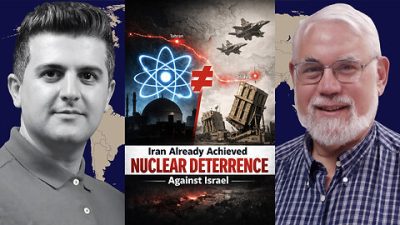
Prof. Ted Postol: Iran Already Achieved Nuclear Deterrence Against Israel
or go to
Aletho News Archives – Video-Images
From the Archives
How the occupied mentality syndrome works
Saudi Arabia on the American chessboard – Part 3
By B. J. Sabri | American Herald Tribune | June 27, 2016
Read part 2: “The occupied mentality Syndrome“
Previously I argued whether Saudi Arabia’s repeated involvements in U.S. interventions and wars stem from free national will or in response to a specific condition. For starters, in Saudi Arabia there is no national will. In Saudi Arabia, the national will is the will of the Al Saud clan. Still, when a major Arab state allies itself with a superpower that committed unspeakable crimes against humanity in almost every Arab country, then something is wrong. This fact alone should compel us to examine the U.S.-Saudi relation for one exceptional reason. As a result of the U.S.-Saudi wars, hundreds of thousands of people in Afghanistan, Iraq, Iran, Libya, Syria, Yemen, and Somalia have lost their lives. Millions became displaced in their own homelands. And millions more rendered refugees.
Attributing the Saudi policies to the bonds of “partnership” with the U.S. is frivolous. There are no bonds between these two thugs except those of business, military deals, secret plots, and wars. Proving this point, bonds such as these have no space for the American and Saudi peoples to share significant cultural or societal exchanges. If partnership is not the reason for the Saudi contribution to the U.S. strategy of empire and imperialism, then another reason must exist.
This leads to three possibilities. … continue
Blog Roll
 Aletho News
- REWRITING THE RISK? INSIDE THE GOVERNMENT’S VACCINE SAFETY MESSAGING
- “Davos Can Really Replace the UN”
- NIAID/NIH and USDA Fund Bioengineered Chimeric Influenza Viruses Built Using Pandemic H1N1 Components: Journal ‘Science Advances’
- Hezbollah hits Israeli warship off Lebanon’s coast, sets it aflame
- Iran slams US strikes on B1 bridge, Mahshahr petrochemical plants as ‘blatant acts of state terrorism’
- In letter to UN chief, Araghchi warns of dire consequences of US-Israeli attacks on Iran’s nuclear facilities
- Why the CIA conspiracy to invade Iran with Kurdish militias failed
- Why Are Upbeat US Claims About Mission to Rescue Pilot ‘Highly Questionable’?
- Aircraft destroyed during US ‘rescue’ of downed F-15 pilot cost more than $100 million each
- Washington University removes professor who condemned US-Israeli war on Iran
- If Americans Knew
- In Iran, Israel-US take aim at “reason, research, and freedom of thought” – Daily Update
- US loses planes over Iran, Israel downgrades Lebanon war goals – Daily Update
- Israel Is Blocking Palestinians from Easter at Church Where Jesus Resurrected
- Plot to assassinate Palestinian activist follows harassment campaign promoted by Zionist groups and elected officials
- Prominent New York synagogue hosts presentation on why U.S. Jews should support the ethnic cleansing of Gaza
- Tapper vs. Piker: Is the CNN Anchor Auditioning for David Ellison?
- Shouldn’t Democrats Be Able to Condemn Genocide?
- Israel-US kill negotiators, destroy civilian structures, but Iran’s military capabilities still largely intact – Daily Update
- ‘War crime’: Global condemnation as Israeli ministers celebrate death penalty law targeting Palestinian prisoners
- 7 Ways Israel Is Turning Lebanon Into Gaza
- No Tricks Zone
- An Inconvenient Tree: Uncovered In Alps… Europe Much Warmer Than Today 6000 Years Ago
- New Study Reports A 60% Slowdown In Greenland’s Ice Loss Rate In The Last Decade
- Low Intensity Tornado Wrecks Major Solar Farm, Creating A Potential Toxic Dump
- New Study Finds Warming Saves Lives…Cold Temperatures 12 Times More Deadly Than Excess Heat
- German Science Blog Accuses PIK Climate Institute Of Hallucinating Climate Tipping Points
- Devastating Assessment Of Comirnaty Vaccine By Former Senior Pfizer Europe Toxicologist
- New Study: CO2 Is ‘Effectively Negligible’ As An Explanatory Climate Change Factor Since 2000
- Former Pfizer Toxicologist Dr. Helmut Sterz Tells Bundestag Hearing Pfizer Vaccine Should Have Never Been Approved
- Energy Expert: Germany’s Nuclear Phaseout Was A “500 Billion Euro Mistake”
- New Research: South Australia’s Mid-Holocene Sea Surface Temperatures Were 4°C Warmer Than Today
 Aletho News