Venezuela: Right-Wing Politicians Accept Supreme Court Ruling
teleSUR | January 13, 2016
The Venezuelan Supreme Court had declared the leadership of the right-wing dominated National Assembly in contempt over their defiance.
Three right-wing Venezuelan politicians have finally decided to follow the rule of law and accept the Supreme Court ruling that suspended their election victories until an investigation into allegations of vote buying is concluded.
During National Assembly’s session Wednesday, the Supreme Court ruling was read aloud inside the chamber.
National Assembly President Henry Ramos Allup then affirmed that the leadership of the assembly would “abide by the ruling of the Supreme Court.”
Socialist lawmakers, who had been demanding the Supreme Court’s ruling be respected, responded with vehement applause.
The three suspended lawmakers wrote to the leadership of the National Assembly Tuesday seeking that their swearing-in be reversed. The majority MUD coalition swore in the lawmakers despite the court order in a defiant provocation last week.
Ramos Allup told CNN that he had received a letter from the three suspended politicians Tuesday evening.
Julio Ygarza, Nirma Guarulla and Romel Guzamana, representing the right-wing MUD coalition, were elected in the state of Amazonas during parliamentary elections held last month. But the electoral chamber of the Supreme Court accepted a challenge to the results over allegations of vote-buying and electoral irregularities.
The court ordered that all candidates elected in the state of Amazonas be temporarily suspended while an investigation is conducted.
However, the MUD coalition defied the Supreme Court and had the three suspended candidates sworn in. In response, socialist PSUV lawmakers went before the Supreme Court to protest the MUD’s violation of the constitution.
The Supreme Court agreed and ruled Monday that the leadership of the National Assembly were in contempt and any decisions made by the National Assembly would be void after the right-wing MUD alliance swore in the three legislators.
A fourth candidate from the state of Amazonas, a socialist from the PSUV, was also suspended, but he did not attempt to take his seat in the assembly.
The MUD won a two-thirds supermajority in the Dec. 6 elections, granting it powers to make sweeping changes, including overhauling the constitution and calling a recall referendum on the presidency of President Nicolas Maduro.
Turkey’s ‘Sunni-Only’ Refugee Camps Worsen Crisis
Sputnik – January 12, 2016
Part of the problem with Turkey’s refugee policy is the establishment of discriminatory policies for non-Sunnis in an attempt to craft a new Syrian state, according to Turkish human rights activist Ozturk Turkdogan.
Turkey’s attempts to use refugees as a political bargaining chip have hurt both the refugees and the situation in Syria, President of the Turkish Human Rights Association (IHD) Ozturk Turkdogan told Sputnik Turkiye.
Turkey recently made a 3 billion euro settlement with the European Union to keep refugees from leaving through smugglers.
“I must note that accepting refugees into ‘its’ camps, Turkey acts selectively, giving priority to Sunni Arabs. This discriminatory approach is part of Ankara’s erroneous Syrian strategy, the goal of which is to create a new state in Syria, propped up with Sunni Muslims.”
According to Turkdogan, the refugee agreement between Turkey and the EU does not solve the refugee problem, and Turkey should have appealed to the UN for aid instead.”Today’s refugee issues are the result of wrong-headed policy on Syria,” Turkdogan added.
Refugee smuggling in Turkey has previously been linked to organized crime groups, which make as much as 1 billion euros per year from smuggling.
4 journalists sentenced to 3 years for disseminating false news, belonging to banned group
Mada Masr | January 12, 2016
In what appears to be an ongoing security crackdown on media personnel, four journalists were sentenced to three years in prison by the Sayeda Zeinab Criminal Court on Sunday. They were convicted of disseminating false information and belonging to a banned organization.
 Electronic Media Syndicate chairperson Abu Bakr Khallaf was the only defendant present in the courtroom for the sentencing — the three other journalists were tried in absentia.
Khallaf allegedly made his LE1,200 bail on Monday, defense lawyer Hany al-Sadeq told the local rights group Journalists Against Torture Observatory, but it is unclear whether he has yet been released from detention. The first hearing in his appeal has been scheduled for March 17.
Khallaf was arrested on July 21 after the state-run Egyptian Trade Union Federation summoned him to their headquarters for interrogation on charges of operating the Electronic Media Syndicate (which was established in 2011) without a license. He was also accused of affiliation with the Muslim Brotherhood.
The other journalists in the case — Mohamed Adly of the privately owned Al-Tahrir newspaper, Hamdy Mokhtar of the privately owned Al-Shaab newspaper and videographer Sherif Ashraf — were arrested while reporting outside the Zeinhom morgue on July 1. The journalists say they were there to report on the deaths of nine Muslim Brotherhood leaders fatally shot by police forces in a 6th of October City apartment on that day.
Rights organizations including the New York-based Human Rights Watch have questioned whether police claims of a “shootout” with the nine men were covering up a case of “extrajudicial execution.”
The Journalists Syndicate’s Liberties Committee will hold a session on Tuesday to discuss the three prison sentences issued in absentia, according to a statement posted to the syndicate’s official website. In that meeting, the committee also plans to discuss the referral of six journalists — including three chief editors — to judicial hearings at the request of Justice Minister Ahmed al-Zend.
The committee will seek to resolve these cases in favor of the journalists, as well as five other lawsuits that have been filed against media workers, the syndicate said.
On Monday, the prosecutor general ordered investigations into charges that high-profile journalist and editor Ibrahim Eissa and his colleague Ahmed Samer insulted the judiciary. The investigations were ordered after a lawsuit was filed against the two men for defamation.
Samer was targeted for his article, “The state that spurns itself,” published in the privately owned Al-Maqal newspaper, which is edited by Eissa. The article discussed the recent prison sentence levied against reformist preacher Islam al-Beheiry for religious commentary on his talk show.
As of last month, at least 32 journalists were in detention across Egypt, the Liberties Committee said, of whom 18 were arrested while reporting in public space.
Ankara Vows to Press Academics Calling to Stop War Against Kurds’ PKK
Sputnik – 13.01.2016
Turkey’s top higher education authority vowed to take measures against academics who signed a letter calling to stop military operations against Kurdish militants, local media reported Wednesday.
Turkish President Recep Tayyip Erdogan has sharply criticized the so-called Academicians for Peace group, accusing them of undermining Turkey’s national security after their declaration was read at press conferences in Istanbul and Ankara on Monday.
After an urgent meeting, Turkey’s Higher Education Board issued a statement saying that the institution would do whatever it took regarding the academics, Today’s Zaman newspaper reported. The body does not have the authority to directly punish the academics, but could pressure university administrations to do so, according to the paper.
Over 1,000 academics from 89 Turkish universities have signed a declaration urging to end the ongoing fighting between Ankara forces and the Kurdistan Workers’ Party (PKK) militants.
The declaration calls on the government to restore a peace process with the PKK that was abandoned in July 2015.
The Kurds, Turkey’s largest ethnic minority, have been striving to gain independence from Turkey. The PKK, founded in the late 1970s to promote the self-determination for the Kurdish community, is designated as a terrorist group by Ankara.
Severe clashes between Ankara forces and PKK militants have been arising sporadically since a July terror attack in the city of Suruc, which killed over 30 people, most of them Kurds. As Kurds killed two Turkish policemen in what has been said to be a retaliation strike, Ankara launched a military campaign against the group.
Yemen: A very British war
By Dan Glazebrook | RT | January 11, 2016
Britain is at the heart of a humanitarian disaster of epic proportions unfolding in the Yemen.
At least 10,000 people have been killed since the Saudi bombing campaign against Yemen began in March 2015, including over 630 children. There has been a massive escalation in human rights violations to a level of around 43 per day and up to ten children per day are being killed, according to UNICEF. Seventy-three percent of child casualties are the direct result of airstrikes, say the UN.
Civilian targets have been hit again and again. Within days of the commencement of airstrikes, a refugee camp was bombed, killing 40 and maiming over 200, and in October a Medicins San Frontier [Doctors Without Borders] hospital was hit. Schools, markets, grain warehouses, ports and a ceramics factory have all been hit. Needless to say, all of these are war crimes under international law – as is the entire bombing campaign, lacking, as it does, any UN mandate.
Beyond their immediate victims, the airstrikes and accompanying blockade – a horrendous crime against a population which imports 90 percent of its basic needs – are creating a tragedy of epic proportions. In August 2015, Oxfam warned that around 13 million people were struggling to find enough to eat, the highest number of people living in hunger it had ever recorded. “Yemen after five months looks like Syria after five years,” the head of the International Red Cross commented in October. The following month, the UN reported that 14 million now lacked access to healthcare and 80 percent of the country’s 21 million population are dependent on humanitarian aid. “We estimate that over 19 million people lack access to safe water and sanitation; over 14 million people are food insecure, including 7.6 million who are severely food insecure; and nearly 320,000 children are acutely malnourished,” the UN’s Humanitarian Coordinator told reporters in November. He estimated that around 2.5 million have been made refugees by the war. In December, the UN warned that the country was on the brink of famine, with millions at risk of starvation.
Statements from British government ministers are crafted to give the impression of sympathy for the victims of this war, and opprobrium for those responsible. “We should be clear” said Foreign Secretary Philip Hammond in September 2014, “the use of violence to make political gains, and the pointless loss of life it entails, are completely unacceptable. Not only does the recent violence damage Yemen’s political transition process, it could fuel new tensions and strengthen the hand of al-Qaeda in the Arabian Peninsula – threatening the security of all of us…Those who threaten the peace, security or stability of Yemen, or violate human rights, need to pay the price for their actions.”
Indeed. So presumably, one might have thought, when the Saudis began their massive escalation of the war six months after Hammond made this statement, the British government must have been outraged?
Not quite. The day after the Saudis began ‘Operation Decisive Storm’, David Cameron phoned the Saudi king personally to emphasize “the UK’s firm political support for the Saudi action in Yemen.”
Over the months that followed, Britain, a long-term arms dealer to the Saudi monarchy, stepped up its delivery of war materiel to achieve the dubious honor of beating the US to become its number one weapons supplier. Over a hundred new arms export licenses have been granted by the British government since the bombing began, and over the first six months of 2015 alone, Britain sold more than £1.75 billion worth of weapons to the Saudis – more than triple Cameron’s usual, already obscene, bi-annual average. The vast majority of this equipment seems to be for combat aircraft and air-delivered missiles, including more than 1000 bombs, and British-made jets now make up over half the Saudi air force. As the Independent has noted, “British supplied planes and British made missiles have been part of near-daily raids in Yemen carried out by [the] nine-country, Saudi Arabian led coalition.”
Charities and campaign groups are unanimous in their view that, without a shadow of a doubt, British patronage has greatly facilitated the carnage in the Yemen. “The [British] government is fuelling the conflict that is causing unbearable human suffering. It is time the government stopped supporting this war,” said chief executive of Oxfam GB, Mark Goldring. The director of Amnesty International UK, Kate Allen, said: “The UK has fuelled this appalling conflict through reckless arms sales which break its own laws and the global arms trade treaty it once championed…. legal opinion confirms our long-held view that the continued sale of arms from the UK to Saudi Arabia is illegal, immoral and indefensible.”
For Edward Santiago, Save the Children’s country director in Yemen, the UK’s “reluctance to publicly condemn the human cost of conflict in Yemen gives the impression that diplomatic relations and arms sales trump the lives of Yemen’s children,” whilst Andrew Smith from Campaign Against the Arms Trade, has written that “UK fighter jets and UK bombs have been central to the humanitarian catastrophe that is being unleashed on the people of Yemen.” Leading lawyers including Philippe Sands have argued that Britain is in clear breach of international law for selling weapons which it knows are being used to commit war crimes.
Now it has emerged that it is not only British weapons being used in this war, but British personnel as well. According to Sky News, six British military advisors are embedded with the Saudi air force to help with targeting. In addition, there are 94 members of the UK armed forces serving abroad “carrying out duties for unknown forces, believed to be the Saudi led coalition,” according to The Week – although the government refuses to state exactly where they are.
Indeed, even British airstrikes in Syria may have been motivated in part by a desire to prop up the flagging war effort in Yemen. Questioning of Philip Hammond in parliament recently led him to admit that there had been a “decrease in air sorties by Arab allies” in Syria since Britain’s entry into the air campaign there due to the “challenges” of the Yemen conflict.
For Scottish Nationalist MP Stephen Gethins this suggests that, by stepping up bombing in Syria, Western countries were effectively “cutting them [Arab states] a bit of slack to allow them to focus on the Yemen conflict,” especially needed given that support for the Yemen campaign has been flagging from states such as Jordan, Morocco and Egypt. It is particularly ironic that British MPs’ supposed commitment to destroying ISIS in Syria is actually facilitating a war in Yemen in which ISIS is the direct beneficiary.
Finally, it is worth considering British support for the Saudi bid for membership of the UN Human Rights Council. The Council’s reports can be highly influential; indeed, it was this Council’s damning (and, we now know, fraudulent) condemnation of Gaddafi that provided the ‘humanitarian’ pretext for the 2011 NATO war against the Libyan Jamahiriya. And the Yemeni government’s recent expulsion of the UN Human Rights envoy shows just how sensitive the prosecutors of the Yemeni war are to criticism. It would, therefore, be particularly useful for those unleashing hell on Yemen to have the UN Council stacked with supporters in order to dampen any criticism from this quarter.
Britain, then, is the major external force facilitating the Saudi-fronted war against the people of Yemen. Britain, like the Saudis, is keen to isolate Iran and sees destroying the Houthis as a key means of achieving this. At the same time, Britain seems perfectly happy to see Al-Qaeda and ISIS take over from the Houthi rebels they are bombing – presumably regarding a new base for terrorist destabilization operations across the region as an outcome serving British interests.
Dan Glazebrook is a freelance political writer. His first book “Divide and Ruin: The West’s Imperial Strategy in an Age of Crisis” was published by Liberation Media in October 2013. It featured a collection of articles written from 2009 onward examining the links between economic collapse, the rise of the BRICS, war on Libya and Syria and ‘austerity’. He is currently researching a book on US-British use of sectarian death squads against independent states and movements from Northern Ireland and Central America in the 1970s and 80s to the Middle East and Africa today.
How Obama Went From the Anti-Bush to a Bush on Steroids

Sputnik – January 12, 2016
In a recent article for independent German magazine Zeiten Schrift, contributor Klaus Faissner reflected on the US president’s journey from an electrifying candidate with a savior-like quality to a tired leader tarnished by drone strikes, mass surveillance, and a relationship with the media reminiscent of the worst days of the Nixon administration.
In his article, republished and translated by foreign media translation service WhatTheySayAboutUSA.com, Faissner recalled that in the run-up to his presidency, while he was still a candidate, Barack Obama “was presented as the savior of the world – almost a Messiah.”
“He was rapturously greeted by a crowd of over 200,000 in Berlin in 2008 – even before he had been officially crowned as President of the USA. “Yes, We Can!” was the campaign slogan that electrified the crowd, even before he began speaking. The American presidential candidate gathered bigger crowds in Germany than even the Pope, rock stars, or a football game with the national team. He promised to liquidate nuclear arms, reestablish good relations with Russia, pull American troops out of Iraq and Afghanistan – and to close the US’s nefarious concentration camp at Guantanamo Bay.”
“As the US’s first black president,” Faissner reflected, “Barack Obama ought to have become the antithesis of everything that George ‘Dubya’ Bush had stood for – a president whose wars had run through the world like cancer, whilst clamping down on basic freedoms for his own people. This was the way the media presented the incoming President Obama – and the world believed the simulacrum they’d been given.”
Unfortunately, the journalist recalled, “what the press wasn’t reporting, however, was that [by the end of his first term], Obama signed more orders for drone assaults than Bush Jr. had done in the entire eight years of his presidency. These were drone strikes which caused catastrophic levels of non-combatant casualties, which America simply wrote-off under the euphemism of ‘collateral damage.'””Like his predecessor, Obama threw all his weight behind GMO agriculture; he didn’t give the slightest thought to his promises to close Gitmo; he showed no interest whatsoever in improving relations with Russia, and he worked actively on destabilizing the situation in the Middle East.”
A ‘Tense’ Relationship With Journalists
“In 2009,” Faissner recalled, “the incoming president declared his intentions for a previously unprecedented level of transparency in government and the apparatus of national administration. ‘Openness will strengthen our democracy,’ as he stressed in subsequent legislation.”
However, “now that Obama has been at the helm for nearly seven years, it’s clear that all these promises were empty piffle. No president after Richard Nixon has been so aggressively opposed to the media, as was highlighted in a piece written by the former Washington Post chief editor Leonard Downie, published in 2013 – about freedom of speech in the United States. Downie suggested the Obama administration was operating a misinformation policy, used electronic snooping on journalists, and was behind a ratcheted-up campaign of persecution against whistleblowers and journalists involved in investigation.”
“An atmosphere of fear pervaded the work of journalists, Downie wrote, with their investigations permanently occluded in secret observation by the state. Despite the administration’s promises to end the ‘unreasonable secrecy’ that typified the Bush era, Obama has in fact continued to expand it. Often entirely irrelevant documents are systematically classified ‘top secret’ to deny reporters access to them.””On top of this,” Faissner laments, “Obama administration staffers frequently take personal offense to articles criticizing government policy. To ward off the increasing frequency of such articles, the Obama administration is increasingly reaching out for the 1917 Espionage Act. Although it had only been employed three times in the first 90 years of its existence, over the period between 2009 to 2013… eight different government officials were arraigned with it, charged with passing governmental information to journalists, putting out a powerful resonance on Capitol Hill. One of those thus charged was Edward Snowden, who blew the whistle on government snooping on the whole world’s population by the National Security Agency. Bob Woodward, who broke the news of the Watergate scandal in the Nixon era, warns that any fight against critical journalists only leads in the long term to weaken the nation’s national security.”
A Unique and Powerful Surveillance System
“In reality,” Faissner warned, “Obama has set up a unique system of surveillance. It was done in such a way that people around the world have no idea that Obama’s policies are a continuation, or even a worsening of those of George W Bush. Since October 2011 government staffers in every branch of the administration have been encouraged to snitch on their colleagues. Staff in Federal departments have been obliged since 2012 to report all their contacts with the media, and moreover to report on suspicious colleagues. Michael Hayden, the former head of the CIA, said the program had been incepted to ‘block all contact.’ Even staffers of new agencies who are remote from revolutionary activities, such as Associated Press or Fox News have come under the crosshairs of the Obama administration.”
“One such journalist has been James Rosen of the Fox News television channel, who came under observation from the Justice Department, for using information he had received from a highly-placed government official. The information referred to the international community ratcheting up sanctions against Pyongyang over new nuclear weapons testing by North Korea. The Washington Post notes that the FBI monitored Rosen’s phone calls, and even screened his private email correspondence.”Moreover, Faissner suggests, “the situation worsened drastically in 2015. In a document entitled ‘Law on War’ [a set of instructions on the legitimate warfare practices approved by the US military], the Pentagon stated that journalists could be treated as ‘unprivileged belligerents,’ a status which, according to a representative from the Committee for the Protection of Journalists, ‘gives U.S. military commanders across all services the purported right to at least detain journalists without charge, and without any apparent need to show evidence or bring a suspect to trial.'”
“If the Pentagon is putting spying in the same basket as journalism, the New York Times noted, then this is a step in the same direction as totalitarian regimes. It’s hardly surprising that in the World Press Freedom Index for 2015, the USA is rated at 49 place – on a par with El Salvador, Burkina Faso and the Republic of Niger.”
Spanish council joins boycott of Israel
MEMO | January 12, 2016
Spain’s United Left party has adopted the call for the global boycott of Israel (BDS), with the support of the Spanish Socialist Workers’ Party, as members of the Castrillon City Council in the Asturias province voted in favour of the campaign.
Having reviewed the reasons for adopting the BDS campaign, the general coordinator of the Unified Left, Jose Luis Garrido, called on other Spanish cities to take the same action and to boycott Israel at all levels until it withdraws from the occupied territories and respects international law and the rights of the Palestinian people to independence and freedom.
In his speech before members of the municipal council he highlighted international laws and United Nations resolutions that Israel has not implemented. He also mentioned the illegality of the settlements and the Separation Wall, in addition to the issue of refugees, Israel’s racist policies and the suffering of the residents of the Gaza Strip.
This move comes in light of similar decisions to boycott Israeli which were made by other Spanish institutions, the most recent being the University of Barcelona.
‘Don’t let people die’: Turkish TV show investigated after caller’s plea for end to violence
RT | January 12, 2016
A TV show in Turkey has been accused of “terrorist propaganda” and faces an investigation after a caller lamented the deaths of civilians, including children, who have been killed in the on-going conflict between Kurdish forces and the Turkish army.
The prosecutor’s office in Bakirkoy district, Istanbul, said it was checking the recording of Friday night’s Beyaz Show broadcast on Kanal D. It is also investigating the caller, the host and those responsible for the program, according to leading Turkish newspaper Milliyet.
On January 8, well-known Turkish host Beyazit Ozturk, who had never previously brought politics into his show, received a call from a woman identifying herself as Ayse Celik, a teacher from the southeastern Diyarbakir province.
“Are you aware of what is happening in the southeast?” she asked, as quoted by newspaper Today’s Zaman.
She continued, saying that what is being shown on Turkish TV “is very different from what we are experiencing [in the region].”
“Do not remain silent. Please have some kind of sensitivity as a human. See us, hear us and please extend a helping hand to us. It is a pity. Don’t let people die, don’t let children die and don’t let mothers cry,” she said.
Ozturk initially thanked the woman for her remarks and the audience applauded.
“We have been trying to get people to hear about what is happening as much as we can. What you said has taught us a lesson. We will continue to do more. I hope your wishes for peace come true as soon as possible,” he said.
But later he backtracked and apologized for the remarks.
Following the incident Kanal D, a nation-wide Turkish television channel and part of Dogan Media Group, said they had been subjected to provocation.
“The Kanal D administration will launch all necessary legal action against this person in the face of this provocation,” the statement read.
In the meantime, the Education Ministry released a statement claiming that Celik, the caller, was not a teacher in Diyarbakır.
Turkey has repeatedly been accused of increasing censorship and a media crackdown. In December the authorities fined Twitter 150,000 Turkish lira (US$51,000) for not removing content allegedly containing “terrorist propaganda, encouraging public acts of violence and hatred,” sources in Turkey’s communication technology watchdog told media outlets.
Ankara also previously temporarily blocked Twitter, YouTube and Facebook for failing to remove content deemed illegal or banned.
In November a Turkish prosecutor asked a court to imprison the editor-in-chief of Cumhuriyet newspaper, pending trial for espionage and treason. The outlet had published photos of weapons it said were then transferred to Syria by Turkey’s intelligence agency.
Israel receives fifth German nuclear-capable submarine
Press TV – January 12, 2016
The Israeli regime has received of a fifth submarine from Germany, amid pressure on Berlin to halt the delivery of the state-of-the-art weaponry that is capable of being armed with nuclear warheads.
Israeli Prime Minister Benjamin Netanyahu on Tuesday welcomed the delivery of the advanced Dolphin-class submarine at the Haifa port north of the occupied Palestinian territories.
The submarine, said to be capable of remaining submerged for up to seven days, can be equipped with missiles armed with nuclear warheads.
The Tel Aviv regime pursues a ‘policy of ambiguity’ over its nuclear arsenal, which is widely believed to contain up to 400 nukes.
The new submarine has cost Israel about 500 million euros (USD 540 million), with the German government paying one third of the cost. Berlin is also to deliver a sixth submarine in two or three years.
Many have criticized Germany for the sales of the modern military equipment to Israel.
The administration of German Chancellor Angela Markel claims Germany has an obligation to guarantee the security of Israel.
German media say the delivery of the four previous Dolphin-class submarines have cost German taxpayers over 1 billion euros (USD 1.12 billion).
Israel’s ministry of military affairs announced in May 2015 that it had reached a deal with a German shipbuilding company to have four major warships built for the Tel Aviv regime. It said the government in Berlin would pay for one fourth of the deal, which was reported to be more than 400 million euros.
MADAYA: LETTER OF COMPLAINT TO CBC OMBUDSMAN
wallwillfall | January 12, 2016
Letter written to the CBC ombdusman by an informed member of the public in Canada, enraged by the blatant anti Syrian stance in the CBC reporting of the Madaya “starvation” situation.
“Hello,
I have counted The Current and CBC news as among the most reliable sources of news and information we have. I consider myself an informed listener and I consult with many and diverse news sources to get the fullest and clearest understanding of world affairs possible.
That’s why it is disappointing, and sometimes infuriating when I hear the CBC reduced to an echo chamber and propaganda conveyance when it comes to news from the Middle East.
The CBC’s use of unreliable and unverified sources and information that presents and thus promotes only one side of events, and a distorted one at that, is shocking to me. Is it due to cutbacks that you are unable to have investigative reporting from conflict areas that reports on all sides of an event, or is there something more sinister going on exercising editorial control over what Canadians are allowed to hear from the Middle East via our national broadcaster?
Specifically, I was very upset to hear The Current’s Jan 8th report with Lyse Doucet on the situation in Madaya, Syria that gave a completely distorted and misinformed picture of the siege of this town (and several others that are getting zero news coverage).
The presenter relied on only one source, a citizen journalist named Rami Jarrah who works for the George Soros funded ANA Press, and is a self-avowed advocate and spokesperson for the terrorist factions, disingenuously called “the opposition” by uncritical media, that has the town of Madaya and several others in the West and North of Syria under militant siege. It is these Islamist militants–Ahrar al Sham and al Qaeda– that seized the food aid delivered by the ICRC last October–meant to last for 2 months–and is keeping the towns people on starvation rations, stockpiling the food then trying to sell it to the towns people for obscene prices.
Why isn’t that being reported on?
It is the militants that are refusing to let the townspeople leave to find refuge in safe zones. It is these militants who are starving and killing them. These Islamist militants, “the opposition” as propagandists call them, are using the starving people under their control to deceive the world, including the use of now exposed deceptive pictures of starving people stolen from the internet to foment outrage–pictures that are uncritically and irresponsibly used by media outlets like the CBC as some kind of “proof” that the Assad regime is responsible for this suffering.
While these areas of conflict are surrounded by government forces, it is the terrorists occupying the villages that are not surrendering and continue to use people as human shields ad for propaganda. Did The Current or is the CBC news desk presenting any of this balance at all to your stories on Syria? No. You are being played, and worse are a willing participant in a one-sided, anti-Syrian government, pro-Syria destruction campaign.
Why Madaya?
Why now?
Why fake pictures?
These are the questions you should be asking. The answer is because Jarrah and these “humanitarian interventionists” are using and abusing these civilians to enlist more western involvement.
You are not listening to any of the voices coming from inside Syria because you seem to value those minority voices outside Syria that are vying for overthrow of the government and seek to grasp power for themselves in lockstep with western hegemonic agendas.
Thus you are not doing your job.
What you are promoting, maybe inadvertently, maybe not, is for Syria to be devastated by NATO the way Iraq and Libya were, and not for the human rights of the people of Syria.
So shame on you.
This is despicable and my respect for the CBC has diminished significantly.
I urge the CBC to return to it’s roots of unbiased investigative journalism and be committed to the truth so that I can feel confidence again to tune into CBC news and trust we are getting the best information.
Balance your blatantly biased sources with “the other side”– the Syrian government that is backed by the vast majority of Syrian people, and the Syrian doctors and activists that are actually working to free their country from the terrorists!! Listen to the Syrians INSIDE SYRIA!
Why would you NOT do that?
Sincerely,
Annette Lengyel
~~~
Metadata Comes Home With New ‘Threat Score’ Policing Tools
Law enforcement agencies rolling out technology that lets them dig into metadata to determine a citizen’s potential for violence

New software like “Beware” calculates a “threat score” using metadata, which critics say threatens civil liberties and privacy rights. (Photo: Jeffrey Smith/flickr/cc)
By Nadia Prupis | Common Dreams | January 11, 2016
Police in the U.S. are rolling out new technology that gives them “unprecedented” power to spy on citizens and determine their “threat score” based on metadata, the Washington Post reported on Monday.
Fresno, California’s police department was one of the first to adopt the software, known as “Beware,” which allows officers to analyze “billions of data points, including arrest reports, property records, commercial databases, deep Web searches and… social-media postings” to calculate an individual’s alleged potential for violence, the Post explained.
Officers say the tool, made by a company called Intrado, can help them thwart mass shootings and other attacks like the ones that took place in Paris and San Bernardino last year. But critics say it’s just another weapon in the mass surveillance arsenal, one that further threatens privacy and civil liberties and fuels police overreach.
Journalist D. Brian Burghart, who operates FatalEncounters.org, a searchable database of police killings of citizens, told Common Dreams that the swell of surveillance technology was an “outgrowth” of post-9/11 fear-mongering. “I’m not sure what’s new about this except they put a name on it,” Burghart said. “I don’t think it’s going to get any better. Nobody ever puts away technology.”
Jennifer Lynch, an attorney with the Electronic Frontier Foundation, told the Post, “This is something that’s been building since September 11. First funding went to the military to develop this technology, and now it has come back to domestic law enforcement. It’s the perfect storm of cheaper and easier-to-use technologies and money from state and federal governments to purchase it.”
Rob Nabarro, a civil rights lawyer in Fresno, added, “It’s a very unrefined, gross technique. A police call is something that can be very dangerous for a citizen.”
The Post continues:
Nabarro said the fact that only Intrado — not the police or the public — knows how Beware tallies its scores is disconcerting. He also worries that the system might mistakenly increase someone’s threat level by misinterpreting innocuous activity on social media, like criticizing the police, and trigger a heavier response by officers.
A potential threat that comes from an individual should not be addressed by a machine, he said.
In addition to Beware, police departments are equipping officers with tools like Media Sonar, which analyzes social media for “illicit activity,” among other technology, the Post reported.
Others criticized the implementation of such law enforcement tools while police brutality remains widespread and activists continue to call for an overhaul of the policing system.
Matt Cagle, an attorney for the ACLU of Northern California, told the Post, “We think that whenever these surveillance technologies are on the table, there needs to be a meaningful debate. There needs to be safeguards and oversight.”
The Post described one incident in which the Fresno police department demonstrated Beware at a town hall meeting following constituent complaints about the use of invasive surveillance technology:
[One] council member referred to a local media report saying that a woman’s threat level was elevated because she was tweeting about a card game titled “Rage,” which could be a keyword in Beware’s assessment of social media.
Councilman Clinton J. Olivier, a libertarian-leaning Republican, said Beware was like something out of a dystopian science fiction novel and asked [Fresno Chief of Police Jerry] Dyer a simple question: “Could you run my threat level now?”
Dyer agreed. The scan returned Olivier as a green, but his home came back as a yellow, possibly because of someone who previously lived at his address, a police official said.
“[Beware] has failed right here with a council member as the example,” Olivier said.
As Burghart added, “I spend eight hours a day researching police violence, so I don’t know how many times I’ve typed the words ‘police killed.’ I imagine I’d probably score pretty good on this thing. Most journalists would.”
Featured Video
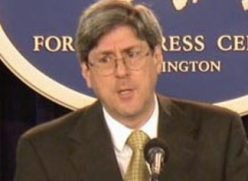
Pentagon insider says high US official Douglas Feith reported to Netanyahu
or go to
Aletho News Archives – Video-Images
Frlom the Archives
Who’s to blame for the Iraq war?
A not-so-trivial quiz
By Maidhc Ó Cathail | 14 March 2010
Maidhc Ó Cathail names and shames the top 19 politicians, academics and policy makers – all con men and all Zionist Jews – who lied and conspired to steer the US toward aggression against the Iraqi people. … continue
Blog Roll
 Aletho News
- Iranian model of warfare bleeds US dry while Persian Gulf states watch and learn: Analyst
- IRGC orders ‘defeated’ US to evacuate industrial facilities in region
- Hegseth’s call for ‘no mercy’ to Iranians deemed war crime
- Iran War Exposes Limits of US Military Power – Journalist
- Even The Neo-Cons Admit The Iran War Is Failing
- Inside the Caucasus Drone Corridor Fueling Tensions With Iran
- ‘Not our war’: Trump’s naval coalition to reopen Strait of Hormuz dead in the water
- Iran declares support centers for USS Gerald R. Ford legitimate targets
- Moscow issues warning over Trump’s Golden Dome plan
- Brussels wants ‘our sons to die for Ukraine’ – Orban
- If Americans Knew
- Israel and its supporters are causing attacks on Jewish institutions. Case in point: Michigan synagogue tragedy.
- These are the casualties and cost of the war in Iran 2 weeks into the conflict
- Chicago Teachers Union accuses AIPAC of swaying elections with ‘dark money’
- Predictions of another 9/11, amid Israel-US killing spree – Not a ceasefire Day 157
- As US-Israel war on Iran rages, Gaza faces massive dust storm – Not a ceasefire Day 156
- No let-up in attacks on Gaza as Israel takes on Iran, Lebanon – Not a ceasefire Day 155
- ‘Of Course’: IDF Drops Case Against Soldiers Accused of Raping Palestinian Prisoner
- Don’t Fall for the Regime Change Talk. Israel Is ‘Mowing the Lawn’ in Iran
- Will Israel and the US wreck the Gulf States along with Iran?
- US so far burned through ‘years’ of munitions in Iran war: Report
- No Tricks Zone
- Storing Green Energy To Last Germany 10 Days Would Require A 60-Million Tonne Battery
- New Studies: UK Sea Levels Were 4 Meters Higher Than Today During The Mid-Holocene
- Destructive Green New Deal: German Energy And Metal Group Warns Of Drastic Crisis
- New Study Documents A 20-Year Pause In Arctic Sea Ice Decline – Driven By Internal Variability
- Wake-up Call: Survey Shows Majority Of Germans Now Favor Postponing Climate Targets!
- Televised! Leading German Political Candidate Tells Schoolchildren CO2 Makes Sun Hotter!
- New Study: A Century Warming Of 1.1°C Is ‘Commonplace’ And ‘Not Unusual’ During This Interglacial
- New Study: ‘Internal Noise’ And Volcanic Forcing Can Trigger 10-15°C Warming Within Decades
- Glaciers Worldwide Are Suddendly Surging, Experts Blame Warming!
- Surprising Discovery: Sahara Is Greening…Billions Of Trees Where Once Thought To Be Barren
 Aletho News