Who is Responsible for the Suffering of Yemen?
By Martin Berger – New Eastern Outlook – 22.01.2016
 As noted by numerous commentators on the Middle East, the situation in Yemen remains very grave. The country has been devastated by the armed conflict being waged between the Houthis and the troops of ousted President Mansour Hadi, which in turn are being heavily supported by the air forces of the so-called Arab coalition led by Saudi Arabia.
The ongoing airstrikes claim civilians lives, leave districts in ruin, and destroy the country’s infrastructure. Earlier this month at least three people were killed in an air raid on the hospital of Doctors Without Borders in the governorate of Saada. It’s been reported that hospitals are closing their doors, unable to operate under the current circumstances.
This is not the first medical facility to be bombed in Yemen – the so-called Arab coalition has even destroyed the Center for Care and Rehabilitation of the blind in the Yemeni capital Sana’a. Moreover, the international Human Rights Watch organization reported that the coalition was using cluster bombs to destroy certain facilities in Sana’a back in January.
One should note that massive civil unrest began in Yemen in 2011 as the direct result of so-called the Arab Spring, orchestrated by the US and its allies. In 2014, Shia tribesmen that are known today as the Houthis started fighting government forces and consequently managed to capture a significant part of the country due to the massive support that was shown for them by the Yemeni population. In March 2015, Saudi Arabia launched its first airstrikes against the Houthis, which were, according to various human rights organizations, badly coordinated and resulted in massive civilian casualties.
Concerned by the grave state of affairs in Yemen, the UN High Commissioner for Human Rights Zeid Ra’ad al Hussein announced at a meeting of the UN Security Council back in December that it is the so-called Arab coalition that is responsible for the absolute majority of attacks on residential areas and civilian targets in Yemen. According to Reuters, the UN High Commissioner announced that he:
“observed with extreme concern heavy shelling from the ground and air in areas of Yemen with a high concentration of civilians and the destruction of civilian infrastructure, such as hospitals and schools.”
It is curious to note that in pursuit of its criminal goals in Yemen, Saudi Arabia has been using weapons that were bought from the UK in 2012. Moreover, it keeps on restocking its supply of deadly British-made weapons. For this reason, at the end of last year, leading British diplomats and lawyers warned David Cameron that he was running the risk of facing an international tribunal for war crimes due to the fact that the weapons that his government supplies to Saudi Arabia are being extensively used against civilian targets in Yemen.
According to The Independent :
“Advisers to Philip Hammond, the Foreign Secretary, have stepped up legal warnings that the sale of specialist missiles to the Saudis, deployed throughout nine months of almost daily bombing raids in west Yemen against Houthi rebels, may breach international humanitarian law…
… thousands of Yemeni civilians have been killed, with schools, hospitals and non-military infrastructure hit. Fuel and food shortages, according to the United Nations, have brought near famine to many parts of the country.
Amnesty International, Human Rights Watch (HRW) and other NGOs, claim there is no doubt that weapons supplied by the UK and the United States have hit Yemeni civilian targets. One senior Foreign and Commonwealth Office (FCO) legal adviser told The Independent: “The Foreign Secretary has acknowledged that some weapons supplied by the UK have been used by the Saudis in Yemen. Are our reassurances correct – that such sales are within international arms treaty rules? The answer is, sadly, not at all clear.”
Yet, The Guardian notes that Saferworld and Amnesty released a legal opinion from Professor Philippe Sands QC and a number of other lawyers, according to which the sales of British arms to Saudi Arabia in the light of its military intervention and bombing of Yemen violate national, European and international laws. The lawyers are pointing out that in the period of 9 months before July 2015 the UK supplied 9 million pounds worth of rockets and bombs, while in the next three months this number hit a staggering one billion pounds. Additionally, there’s clear evidence that those weapons were used against hospitals, schools, markets, warehouses, ports, and camps for displaced persons, turning Yemen into a nightmare. The Saferworld human rights organization is convinced that there’s a direct link between the increase in sales of ammunition and bombings in Yemen.
Many British observers, including those from The Guardian, have been pointing out that days after David Cameron’s statements about his attempt to “initiate a political process in Yemen,” and remarks that “there could be no military solution in Yemen,” the data released by the government showed that UK officials approved the sale of a billion pounds worth of bombs to Saudi Arabia.
Under these circumstances the only natural question is: Will international human rights organizations and the international community as a whole, all those who failed to say a resounding “NO” to Western military interventions in Iraq, Syria, Libya, Afghanistan, that were only profitable for arms sellers, carry on watching silently the destruction of Yemen? How many Yemenis do we need to see die before we start solving conflicts within a political framework? How many lives should be spared? Do we ever bring to justice those responsible for such massacres? Or will we rather allow politicians, the likes of Cameron, to call for peace, while selling huge amounts of deadly weapons behind our backs with impunity?
Martin Berger is a Czech-based freelance journalist and analyst.
Britain had more motivation to kill Aleksandr Litvinenko than Russia, brother claims
RT | January 22, 2016
The brother of Aleksandr Litvinenko says the UK government had more motivation to kill him than Russia did, despite a British public inquiry which concluded that President Putin “probably” approved the assassination.
Maksim Litvinenko, Aleksandr’s younger brother who lives in Rimini, Italy, responded to the Thursday report by saying it was “ridiculous” to blame the Kremlin for the murder of his brother, stating that he believes British security services had more of a motive to carry out the assassination.
“My father and I are sure that the Russian authorities are not involved. It’s all a set-up to put pressure on the Russian government,” Litvinenko told the Mirror, adding that such reasoning is the only explanation as to why the inquiry was launched 10 years after his brother’s death.
He called the British report a “smear” on Putin, and stressed that rumors claiming his brother was an enemy of the state are false. He added that Aleksandr had planned to return to Russia, and had even told friends about the move.
Litvinenko went on to downplay his brother’s alleged role as a spy, working for either Russia or MI6, adding that the Western media is to blame for such characterization.
“The Russians had no reason to want Alexander dead,” he said. “My brother was not a spy, he was more like a policeman… he was in the FSB [Russian Federal Security Service] but he worked against organized crime, murders, arms trafficking, stuff like that.”
Litvinenko was murdered in London in 2006, when assassins allegedly slipped radioactive polonium 21 into his cup of tea at a hotel. But his brother Maksim cast doubt on whether that was actually the poison used, saying he believes it could have been planted to frame the Russians.
“I believe he could have been killed by another poison, maybe thallium, which killed him slowly, and the polonium was planted afterwards,” he said. He added that requests to have his brother’s body exhumed, in order to verify the presence of polonium, have been ignored by Britain.
“Now after 10 years any trace [of polonium or thallium] would have disappeared anyway, so we will never know,” he said, adding that British authorities had not collaborated with Russian investigators on the case.
“This case became a big PR campaign against the Russian government and its president in particular,” Maksim Litvinenko told RT in an interview in 2014. “The West is pressuring Russia very hard now. The MH-17 crash, Crimea, the war in Ukraine, sanctions against Moscow and now this inquiry – I’m not buying that this is a coincidence.”
When asked why Aleksandr Litvinenko’s widow Marina continues to maintain that the Kremlin is responsible for the murder, he said: “She lives in London, to survive she has to play the game and take this point of view. She can’t say anything else.”
Meanwhile, the Russian Foreign Ministry has also dismissed the British report, blaming London for politicizing the “purely criminal” case of Litvinenko’s death.
Russia’s UK ambassador, Alexander Yakovenko, told RT that the inquiry’s conclusion was “not justified,” and that the investigation was “very politicized” and “biased.”
“In order to prove something, you have to present the facts. As soon as the British side proves…their conclusions, we will be ready to consider [them],” the ambassador said, adding that the Russian side “did not even have a chance to study the documents [of the investigation].”
Kerry Pressed for MH-17 Evidence
By Robert Parry | Consortium News | January 21, 2016
The father of Quinn Schansman, the only American citizen to die in the 2014 shoot-down of Malaysia Airlines Flight 17 over eastern Ukraine, has asked Secretary of State John Kerry to release the U.S. data that Kerry cited in claiming precise knowledge of where the suspected anti-aircraft missile was fired.
One of the mysteries of the MH-17 case has become why the United States – after asserting that it possessed information implicating ethnic Russian rebels and the Russian government – has failed to make the data public or apparently even share it with Dutch investigators who are leading the inquiry into how the plane was shot down and who was responsible.

Quinn Schansman (Photo from Facebook)
Quinn Schansman, who had dual U.S.-Dutch citizenship, boarded MH-17 along with 297 other people for a flight from Amsterdam to Kuala Lumpur on July 17, 2014. The 19-year-old was planning to join his family for a vacation in Malaysia.
In a letter to Kerry dated Jan. 5, 2016, Thomas J. Schansman, Quinn’s father, noted Kerry’s remarks at a press conference on Aug. 12, 2014, when the Secretary of State said about the Buk anti-aircraft missile suspected of downing the plane: “We saw the take-off. We saw the trajectory. We saw the hit. We saw this aeroplane disappear from the radar screens. So there is really no mystery about where it came from and where these weapons have come from.”
Yet, where the missile launch occurred has remained a mystery in the MH-17 investigation. Last October, when the Dutch Safety Board issued its final report on the crash, it could only place the launch site within a 320-square-kilometer area in eastern Ukraine, covering territory then controlled by both Ukrainian and rebel forces. (The safety board did not seek to identify which side fired the fateful missile).
Meanwhile, Almaz-Antey, the Russian arms manufacturer of the Buk systems, conducted its own experiments to determine the likely firing location and placed it in a much smaller area near the village of Zaroshchenskoye, about 20 kilometers west of the Dutch Safety Board’s zone and in an area under Ukrainian government control.
In the days immediately after the shoot-down, Kerry and other senior U.S. officials pointed the finger of blame at ethnic Russian rebels who were resisting a military offensive by the U.S.-backed regime in Kiev. The Russian government was faulted for supposedly giving the rebels a powerful Buk anti-aircraft system capable of downing a civilian airliner flying at 33,000 feet.
But – in more than 18 months since the tragedy – the U.S. government has never made public its alleged evidence, while Russia has denied supplying the rebels a Buk system and the rebels have asserted that they did not possess functioning Buk missiles.
An Anguished Father
Thomas Schansman, who lives in The Netherlands, wrote to Kerry, noting that “celebrating Christmas and New Year without my son Quinn Schansman, was difficult for my family and myself” and then pressing the Secretary of State to release U.S. information about the case.
“It is my understanding, that neither the Dutch government nor the Dutch Safety Board [DSB] have officially received the radar information from the US that you referred to. It is not included in the [DSB] report and it is not in the public domain,” Schansman wrote.
“On behalf of the bereaved parents and to assist in the pursuit of justice, I would like to request that the United States provides the DSB with the radar data you referred to at the press conference and all other available and relevant information (like satellite data and infrared satellite data) that is in your government’s possession.
“I would be most grateful if the United States either directly or through NATO would publicly hand over to the Dutch Safety Board radar and satellite data of the minutes before and after the crash. … This would enable the DSB to reopen the investigation and include a chapter with this information, which is essential for a successful criminal prosecution. I count on the support of the government of the United States to find and prosecute those responsible for my son and your citizen’s death.”
Kerry has yet to reply although a U.S. consular official, Pamela J. Hack, sent Schansman a letter dated Jan. 14, expressing condolences for his son’s death and saying “We expect that you will receive a separate response … from Washington.”
A Rush to Judgment
In the days after the shoot-down, Kerry took the lead in accusing the ethnic Russian rebels (and implicitly their supporters in Moscow) of shooting down MH-17. Just three days after the tragedy, Kerry made the rounds of the Sunday talk shows to leave little doubt that the rebels and Russians were at fault.
After mentioning information gleaned from “social media,” Kerry said on NBC’s “Meet the Press”: “But even more importantly, we picked up the imagery of this launch. We know the trajectory. We know where it came from. We know the timing. And it was exactly at the time that this aircraft disappeared from the radar.”
Two days later, on July 22, 2014, the Office of the Director of National Intelligence released a “Government Assessment,” also citing “social media” seeming to implicate the rebels. Then, this white paper listed military equipment allegedly supplied by Russia to the rebels. But the list did not include a Buk missile battery or other high-powered anti-aircraft missiles.
The DNI also had U.S. intelligence analysts brief a few select mainstream reporters, but the analysts conveyed much less conviction than their superiors may have wished, indicating that there was still great uncertainty about who was responsible.
The Los Angeles Times article said: “U.S. intelligence agencies have so far been unable to determine the nationalities or identities of the crew that launched the missile. U.S. officials said it was possible the SA-11 [the designation for a Russian-made anti-aircraft Buk missile] was launched by a defector from the Ukrainian military who was trained to use similar missile systems.”
The analysts’ uncertainty meshed somewhat with what I had been told by a source who had been briefed by U.S. intelligence analysts shortly after the shoot-down about what they had seen in high-resolution satellite photos, which they said showed what looked like Ukrainian military personnel manning the battery believed to have fired the missile.
The source who spoke to me several times after receiving additional briefings about advances in the investigation said that as the U.S. analysts gained more insights into the MH-17 shoot-down from technical and other sources, they came to believe the attack was carried out by a rogue element of the Ukrainian military with ties to a hard-line Ukrainian oligarch. [See, for instance, Consortiumnews.com’s “Flight 17 Shoot-Down Scenario Shifts” and “The Danger of an MH-17 Cold Case.”]
Creating a Pariah
But, officially, the U.S. government never retracted or refined its initial claims. It simply went silent, leaving in place the widespread belief that the ethnic Russian rebels were responsible for the atrocity and that the Russian government had been highly irresponsible in supplying a powerful Buk system to the rebels.
That Western conventional wisdom convinced the European Union to join the U.S. government in imposing economic sanctions on Russia and treating President Vladimir Putin as an international pariah.
As the U.S. government clammed up and hid the evidence that it claimed to possess, it became clear that U.S. intelligence agencies lacked evidence to support Kerry’s initial rush to judgment blaming the rebels and the Russians.
Despite intensive overhead surveillance of eastern Ukraine in summer 2014, U.S. and other Western intelligence services could find no proof that Russia had ever given a Buk system to the rebels or introduced one into the area. Satellite intelligence – reviewed both before and after the shoot-down – only detected Ukrainian miltary Buk missile systems in the conflict zone.
One could infer this finding from the fact that the DNI on July 22, 2014, did not allege that Buks were among the weapons systems that Russia had provided. If Russian-supplied Buks had been spotted – and the batteries of four 16-foot-long missiles hauled around by trucks are hard to miss – their presence surely would have been noted.
But one doesn’t need to infer this lack of evidence. It was spelled out in a little-noticed Dutch intelligence report from last October citing information from the Netherlands’ Military Intelligence and Security Service (MIVD). Dutch intelligence, which as part of NATO would have access to sensitive overhead surveillance and other relevant data, reported that the only anti-aircraft weapons in eastern Ukraine – capable of bringing down MH-17 at 33,000 feet – belonged to the Ukrainian government.
MIVD made that assessment in the context of explaining why commercial aircraft continued to fly over the eastern Ukrainian battle zone in summer 2014. MIVD said that based on “state secret” information, it was known that Ukraine possessed some older but “powerful anti-aircraft systems” and “a number of these systems were located in the eastern part of the country.”
But the intelligence agency added that the rebels lacked that capacity, having only short-range anti-aircraft missiles and a few inoperable Buk missiles that had been captured from a Ukrainian military base. “During the course of July, several reliable sources indicated that the systems that were at the military base were not operational,” MIVD said. “Therefore, they could not be used by the Separatists.”
Ukrainian Motives
In other words, it is fair to say – based on the affirmative comments from the Dutch MIVD and the omissions from the U.S. “Government Assessment” – that the Western powers had no evidence that the ethnic Russian rebels or their Russian allies had operational Buk missiles in eastern Ukraine, but the Ukrainian government did have several batteries of such missiles.
It also would have made sense that Ukraine would be moving additional anti-aircraft systems close to the border because of a feared Russian invasion as the Ukrainian military pressed its “anti-terrorism operation” against ethnic Russians fighters, who were resisting the U.S.-backed coup of Feb. 22, 2014, which had ousted elected President Viktor Yanukovych, whose political base was in the east.
According to the Dutch Safety Board report, a Ukrainian warplane had been shot down by a suspected air-to-air missile (presumably from a Russian fighter) on July 16, 2014, meaning that Ukrainian defenses were probably on high alert. The Russian military also claimed that Ukraine had activated a radar system that is used to guide Buk missiles.
I was told by the intelligence source that U.S. analysts looked seriously at the possibility that the intended target was President Putin’s official plane returning from a state visit to South America. His aircraft and MH-17 had similar red-white-and-blue markings, but Putin took a more northerly route and arrived safely in Moscow.
Other possible scenarios were that a poorly trained and undisciplined Ukrainian squad mistook MH-17 for a Russian plane that had penetrated Ukrainian airspace or that the attack was willful provocation designed to be blamed on the Russians.
Whoever the culprits and whatever their motive, one point that should not have remained in doubt was where the missile launch occurred. Kerry said repeatedly in the days after the tragedy that U.S. intelligence had detected the launch and knew where it came from.
So, why did the Dutch Safety Board have to scratch its head about the missile coming from somewhere in a 320-square-kilometer area, with the Russian manufacturer placing the launch site about 20 kilometers further west? With the firing location a key point in dispute, why would the U.S. government withhold from a NATO ally (and investigators into a major airline disaster) the launch point for the missile?
Presumably, if the Obama administration had solid evidence showing that the launch came from rebel territory, which was Kerry’s insinuation, U.S. officials would have been only too happy to provide the data. That data also could be the only precise radar evidence available. Ukraine claimed that its principal radar systems were down at the time of the attack, and the Russians — while they asserted that their radar screens showed another plane closing on MH-17 — did not save the raw data.
Thomas Schansman noted in his letter to Kerry: “the DSB [Dutch Safety Board] stated that it did not receive the (raw) primary radar data from any State. …. The UN Security Council Resolution 2166 explicit[ly] requested Member States to provide any requested assistance and cooperate fully with the investigation. The (raw) primary radar data is crucial for determining cause, and for identifying and prosecuting those responsible for this heinous act.”
Conventional Wisdom
Despite the strange evidentiary gaps and the U.S. failure to present the proof that it claims to possess, the West’s “conventional wisdom” remains that either the ethnic Russian rebels or the Russians themselves shot down MH-17 and have sought to cover up their guilt. Some of this certainty comes from the simpleminded game of repeating that Buk missiles are “Russian-made,” which is true but irrelevant to the issue of who fired the missiles, since the Ukrainian military possesses Russian-made Buks.
Despite the lack of U.S. cooperation in the investigation – and the failure of Western intelligence to detect Russians or ethnic Russian rebels with a Buk battery in eastern Ukraine – the Dutch criminal prosecutors who are working closely with the Ukrainian government say they are taking seriously allegations by bloggers at a British Web site called Bellingcat who have identified Russian soldiers assigned to a Buk missile battery as prime suspects in the shoot-down.
So, the possibility remains that this Dutch-led investigation – in coordination with the Ukrainian government – will indict some Russian soldiers even as the U.S. government withholds its data that could resolve such key questions as where the fateful missile was fired.
An indictment of Russian soldiers would make for more useful anti-Putin propaganda and would be sure to produce another chorus of denunciations against Moscow from the mainstream Western media. But such a development might do little to resolve the mystery of who really shot down MH-17, killing Quinn Schansman and 297 other people aboard MH-17.
Investigative reporter Robert Parry broke many of the Iran-Contra stories for The Associated Press and Newsweek in the 1980s. You can buy his latest book, America’s Stolen Narrative, either in print here or as an e-book (from Amazon and barnesandnoble.com).
US Role as State Sponsor of Terrorism Implied in US Congressional Research Service Report on Syria Conflict
By Stephen Gowans | what’s left | January 10, 2016
The implication of a report written for the US Congress is that the United States is a state sponsor of terrorism in Syria. At the same time, the report challenges widely held beliefs about the conflict, including the idea that the opposition has grass-roots support and that the conflict is a sectarian war between Syrian president Bashar al-Assad’s Alawite sect and the majority Sunnis.
Written in October 2015, the report was prepared by the Congressional Research Service, an arm of the United States Library of Congress. The Congressional Research Service provides policy and legal analysis to committees and members of the US House and Senate.
Titled “Armed Conflict in Syria: Overview and US Response,” the report reveals that:
1. The Syrian conflict is between Islamists and secularists, not Sunnis and Alawites.
Media reports often emphasize the dominant Sunni character of the rebels who have taken up arms against the Syrian government, while depicting the Syrian government as Alawite-led. What is almost invariably overlooked is that the largest Sunni fighting force in Syria is the country’s army. Yes, the rebels are predominantly Sunni, but so too are the Syrian soldiers they’re fighting. As Congress’s researchers point out, “most rank and file military personnel have been drawn from the majority Sunni Arab population and other (non-Alawite) minority groups” (p. 7). Also: “Sunni conscripts continue to fight for Assad” (p. 12). Rather than being a battle between two different sects, the conflict is a struggle, on the one hand, between Sunni fundamentalists who want to impose their version of Islam on Syrian politics and society, and on the other hand, Syrians, including Sunnis, who embrace a vision of a secular, non-sectarian government.
2. The Syrian Opposition Coalition is dominated by Islamists and is allied with foreign enemies of Syria.
According to the report, the Syrian National Council (whose largest member is the Syrian Muslim Brotherhood) is the “largest constituent group” of the Syrian Opposition Coalition (SOC). The SOC is based “in Turkey and considered to be close to foreign opponents of Assad.” (p. 14) The Muslim Brotherhood seeks to base political rule on the Quran, which it sees as divinely inspired, rather than on a secular constitution.
3. “Political opposition coalitions appear to lack…grass roots support” (p. 27).
This is consistent with the findings of a public opinion poll taken last summer by a research firm that is working with the US and British governments. That poll found that Assad has more support than the forces arrayed against him.

Syrians rally for Assad, October, 2011.
The survey, conducted by ORB International, a company which specializes in public opinion research in fragile and conflict environments, found that 47 percent of Syrians believe that Assad has a positive influence in Syria, compared to only 35 percent for the Free Syrian Army and 26 percent for the SOC. [1]An in-country face-to-face ORB poll conducted in May 2014 arrived at similar conclusions. That poll found that more Syrians believed the Assad government best represented their interests and aspirations than believed the same about any of the opposition groups. [2]
According to the poll, only six percent believed that the “genuine” rebels represented their interests and aspirations, while the ‘National Coalition/transitional government,” a reference to the SOC, drew even less support, at only three percent.
Assad has repeatedly challenged the notion that he lacks popular support, pointing to his government surviving nearly five years of war against forces backed by the most powerful states on the planet. It’s impossible to realistically conceive of his government’s survival under these challenging circumstances, he argues, without its having the support of a sizeable part of its population. [3]
4. A moderate opposition doesn’t exist. The United States is trying to build one to act as its partner.
The report refers to US efforts to create partners in Syria, a euphemism for puppets who can be relied upon to promote US interests.
“Secretary of Defense Carter described the ‘best’ scenario for the Syrian people as one that would entail an agreed or managed removal of Assad and the coalescence of opposition forces with elements of the remaining Syrian state apparatus as U.S. partners ….” (emphasis added, pp. 15-16).
Also: The Pentagon “sought to…groom and support reliable leaders to serve as U.S partners…” (emphasis added, p. 23).
To create partners, the United States is engaged in the project of building a “moderate” opposition. According to the report:
“On June 18, Secretary of Defense Carter said, ‘…the best way for the Syrian people for this to go would be for him to remove himself from the scene and there to be created, difficult as it will be, a new government of Syria based on the moderate opposition that we have been trying to build…” (emphasis added, footnote, p. 16).
In the report summary the researchers write that US strategy seeks to avoid “inadvertently strengthening Assad, the Islamic State, or other anti-U.S. armed Islamist groups” (emphasis added.) What’s left unsaid is that armed Islamist groups that are not immediately anti-U.S. may be looked upon favorably by US strategy. However, that “political opposition coalitions…appear to lack grass-roots support,” and that Washington can’t rely on an already-formed moderate opposition but needs to build one, shows that the set of rebels on which the US can rely to act as US partners who will rule with elements of the existing Syrian state in a post-Assad Syria is virtually empty. The conclusion is substantiated by the failure of a now-abandoned Pentagon program to train and equip vetted rebel groups. Gen. Lloyd J. Austin III, the top American commander in the Middle East, told the Senate Armed Services Committee that despite the Pentagon spending $500 million training and equipping “moderate” rebels, only “four or five” were “in the fight.” [4] As the Wall Street Journal observed in late December, moderate rebels don’t exist. They’ve either been absorbed into Jabhat al-Nusra, Ahrah al-Sham and ISIS—the extremist terrorist groups which dominate the opposition—or were Islamist militants all along. [5]
5. The United States is arming sectarian terrorists indirectly and possibly directly and covertly.
The report points out that not only has the Pentagon openly trained and equipped rebels, but that the United States has also covertly armed them. According to the Congress’s researchers:
“Then Secretary of Defense Chuck Hagel said in a September 2013 hearing before the Senate Foreign Relations Committee that the Administration was taking steps to provide arms to some Syrian rebels under covert action authorities” (p. 23).
Also:
“Secretary Hagel said, ‘it was June of this year that the president made the decision to support lethal assistance to the opposition….we, the Department of Defense, have not been involved in this. This is, as you know, a covert action’” (footnote, p.23).
If the United States was prepared to overtly arm some rebel groups, why is it covertly arming others? A not unreasonable hypothesis is that it is arming some rebel groups covertly because they have been designated as terrorist organizations. To be sure, a number of press reports have revealed that rebels who have received training and arms from the United States are operating with terrorist groups in Syria. According to the Wall Street Journal, “insurgents who have been trained covertly by the Central Intelligence Agency…are enmeshed with or fighting alongside more hard-line Islamist groups, including the Nusra Front, Al Qaeda’s Syria affiliate” [6]. Another report from the same newspaper notes that “al-Nusra has fought alongside rebel units which the U.S. and its regional allies have backed” [7]. A third report refers to collaboration between “CIA-backed Free Syrian army factions and extremist elements such as Nusra Front and Ahrar al Sham” [8]. Let’s be clear. Anyone who is enmeshed with and fighting alongside Al-Qaeda is a terrorist.
 According to Congress’s researchers, weapons the US furnished to selected groups have made their way to jihadists. “Some Syrian opposition groups that have received U.S. equipment and weaponry to date have surrendered or lost these items to other groups, including to extremist groups such as Jabhat al-Nusra” (p. 23).
When you consider that, as The Washington Post reported, “the CIA has trained and equipped nearly 10,000 fighters sent into Syria over the past several years” [9] and that, at best, there are 700, and more likely only 70 “moderate” rebels in Syria [10], then the bulk of the large rebel force the CIA has trained and equipped is very likely made up of Islamist extremists. Concealing this shameful reality from the US public is probably the principal reason the program is covert.
6. Washington wants to contain ISIS, but not eliminate it, in order to maintain military pressure on the Syrian government.
Based on the US coalition’s less than vigorous air campaign against ISIS, many observers have questioned whether the United States is at all serious about eliminating ISIS just yet, and is simply trying to contain it, to keep pressure on the Syrian government. For example, veteran Middle East correspondent Robert Fisk says: “I don’t think the U.S. is serious. Very occasionally, you can hear the rumble of American bombs. But they’re certainly not having much effect.” [11]
One day, soon after Russia began air operations in Syria, journalist Patrick Cockburn noted that “Russian planes carried out 71 sorties and 118 air strikes against Islamic fighters in Syria over the past two days compared to just one air strike by the US-led coalition – and this single strike, against a mortar position, was the first for four days.” [12] After ISIS captured Palmyra, and pushed into Aleppo, the US coalition did nothing to push back the ISIS advance, leading even rebels to question “the U.S.’s commitment to containing the group.” [13] Assad too has expressed scepticism about whether the United States is serious about destroying ISIS, pointing to the terrorist organization’s continued successes in Syria, despite the US coalition’s presumed war against it. “Since this coalition started to operate,” observed the Syrian president, “ISIS has been expanding. In other words, the coalition has failed and it has no real impact on the ground.” [14]
A tepid approach to fighting ISIS in Syria would fit with US president Barack Obama’s stated goal of degrading the Al-Qaeda offspring organization. Destroying it may be an ultimate goal, to be achieved after ISIS has served the purpose of weakening the Syrian government. But for now, the United States appears to be willing to allow ISIS to continue to make gains in Syria. The Congressional Research Service report concurs with this view: It concludes that “U.S. officials may be concerned that a more aggressive campaign against the Islamic State may take military pressure off the” Syrian government (p. 19).
By contrast, Moscow has pursued a more vigorous war against ISIS, and for an obvious reason. Unlike Washington, it seeks to prop up its Syrian ally, not give ISIS room to weaken it. It should be additionally noted that Russia’s military operations in Syria are legal, carried out with the permission of the Syrian government. By contrast, the US coalition has brazenly flouted international law to enter Syrian airspace without Damascus’s assent. It has, in effect, undertaken an illegal invasion and committed a crime of aggression, compounded by its training and arming of terrorists.
Conclusion
The report says that in the absence of grass-roots support for political opposition coalitions in Syria, the United States is relying on a number of tactics to pressure the current government in Syria to step down, including:
• Keeping ISIS alive as a tool to sustain military pressure on Damascus.
• Arming jihadist groups indirectly and (we can assume) directly (albeit covertly) to pressure Assad.
• Seeking to create a moderate opposition that will act as a US partner.
• Trying to co-opt parts of the existing Syrian state to take a partnership role in governing a post-Assad Syria.
The implication of points 1 and 2 is that the United States—as the trainer of, and supplier of arms, to rebels who are enmeshed with and fighting alongside Al-Qaeda in Syria, and in keeping ISIS alive, in order to use these terrorist organizations to achieve its political goal of installing a US-partner government in Syria—is a state sponsor of terrorism.
1. http://www.opinion.co.uk/perch/resources/syriadata.pdf
2. http://www.opinion.co.uk/perch/resources/syriadatatablesjuly2014.pdf
3. “President al-Assad: Russia’s policy towards Syria is based on values and interests, the West is not serious in fighting terrorists,” Syrian Arab News Agency, December 11, 2015, http://sana.sy/en/?p=63857
4. Philip Shishkin, “U.S. weighs talks with Russia on military activity in Syria,” The Wall Street Journal, September 16, 2015.
5. Stuart Rollo,“Turkey’s dangerous game in Syria,” The Wall Street Journal, December 28, 2015.
6. Anne Barnard and Michael R. Gordon, “Goals diverge and perils remain as U.S. and Turkey take on ISIS,” The New York Times, July 27, 2015.
7. Farnaz Fassihi, “U.N. Security Council unanimously votes to adopt France’s counterterrorism resolution,” The Wall Street Journal, November 20, 2015.
8. Sam Dagher, “Syria’s Bashar al-Assad Tries to Force the West to Choose Between Regime, Islamic State,” The Wall Street Journal, October 9, 2015.
9. Greg Miller and Karen DeYoung, “Secret CIA effort in Syria faces large funding cut,” The Washington Post, June 12, 2015.
10. Robert Fisk, “Is David Cameron planning to include al-Qaeda’s Jabhat al-Nusra in his group of 70,000 moderates?”, The Independent, December 1, 2015.
11. Thomas Walkom, “Journalist Robert Fisk explains why Canada should abandon ISIS war,” The Toronto Star, September 25, 2015.
12. Patrick Cockburn, “Russia in Syria: Air strikes pose twin threat to Turkey by keeping Assad in power and strengthening Kurdish threat,” The Independent, October 28, 2015.
13. Raja Abdulrahim, “Islamic State advances further into Syria’s Aleppo province,” The Wall Street Journal, June 1, 2015.
14. “President Assad’s interview with Russian media outlets, Syrian Arab News Agency, September 16, 2015 http://sana.sy/en/?p=54857
Prominent Chavista Journalist Assassinated in Caracas
By Z.C. Dutka – Venezuelanalysis – January 20, 2016
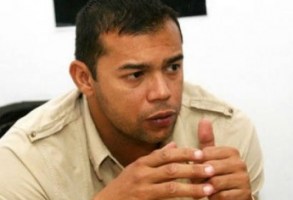 Santa Elena – Journalist Ricardo Duran, official Press Secretary for Venezuela’s socialist government, was shot dead in the early hours of Wednesday morning while arriving at his Caracas home.
Upon leaving his vehicle in the residential neighborhood of Caricuao, Duran was shot with a single bullet by an assailant evidently trained to kill, authorities say.
“They didn’t take anything from him; not his wallet nor cash, not his cell phone or regulatory weapon, he had a gun permit, and much less his car,” said Caracas Chief of Government Daniel Aponte, indicating that the crime is being treated by investigators as an assassination.
“We are simply dismayed,” said Aponte, calling Duran an “example of revolutionary journalism.”
The slain journalist was well-known as a former anchorman of VTV state television, and has been described as one of the key figures in authentically reporting the 2002 coup d’état against Hugo Chavez, which many private media outlets presented as a resignation.
Duran received a National Prize for Journalism in 2009 in recognition of his work in radio, and previously held the post of Director of Communications for the National Assembly.
A Drone Protestor Heads to Jail
Reporting by Gail Ablow and John Light | Moyers & company | January 20, 2016

(Video still from Mary Anne Grady Flores’ press conference before reporting to jail. Via YouTube.)
Mary Anne Grady Flores is in jail today and American citizens everywhere can surely breathe a sigh of relief that we are safe from her criminal behavior at least for the next six months.
That’s the length of the sentence this 59-year-old peace activist in upstate New York began on Tuesday — one day after the United States honored Dr. Martin Luther King, Jr., for his commitment to nonviolent civil disobedience. If he were here today, the martyred Dr. King would surely be shaking his head that America still has a problem with peaceful dissenters of conscience.
And what exactly did Grady Flores do to warrant spending the next six months in jail? She photographed a peaceful protest outside Hancock Field Air National Guard Base near Syracuse, New York. The base is where the US trains pilots to launch drone strikes in the Middle East, particularly in Afghanistan, Pakistan and Yemen. It wasn’t a crime for her to be taking pictures of the demonstration, but when she briefly and unintentionally — yes, unintentionally — stepped onto a road that belongs to the base, she violated what authorities called “an order of protection,” which had been issued in 2012 to forbid protesters from approaching the home or workplace of Col. Earl Evans, a commander of the 174th Attack Wing of the Air National Guard. She had never met Evans, never threatened him, never showed any intention of harming him.
Nonetheless, a town justice, David Gideon, issued the order to “protect” the Colonel from the activists. That’s right — the commander of a major military operation, piloting drones on lethal missions half-way around the world, requested a court order of protection against a group of mostly gray-haired demonstrators whom he had never met. In stepping briefly on the roadway at the base, Grady Flores violated that order, despite the fact that, as she says, “We weren’t at the security gate. We were out at the roadway.”
Now get this: The order issued by Judge Gideon was of the sort commonly used against victims of sexual or domestic abuse. “The legal terms ‘victim’ and ‘witness’ have been expanded in this case in a way that’s new and unique in the state of New York,” said attorney Lance Salisbury at a press conference yesterday before Grady Flores was hauled off to jail.
Grady Flores had protested outside the base before. She belongs to The Upstate Coalition to Ground the Drones and End the Wars, which has criticized the drone program since 2010, calling for a change in policy to uphold life and law.
President Obama and the Pentagon insist that using drones in pursuit of terrorists causes minimal civilian casualties and protects American troops, but Grady Flores takes issue with that justification. She told us she had been moved, in particular, by reports of the staggering numbers of civilians killed by US drones, and she says her fears were confirmed by documents recently leaked to journalists at The Intercept revealing that during one five-month stretch, 90 percent of those killed in one part of Northeastern Afghanistan were not the intended target.
Grady Flores says she was also shaken by the 2013 testimony before Congress of a family from Pakistan that had suffered a drone strike in North Waziristan. A grandmother of three herself, Grady Flores listened as Rafiq ur Rehman recounted his mother’s death in the presence of her grandchildren. “She was out in the fields picking okra with the kids around and a drone strike happened, and she was sent to four winds… now the kids live in terror,” Grady Flores recalls.
“That’s why citizens are at the gates of Hancock,” says Grady Flores. “That’s why we’re there.”
Grady Flores was arrested in 2012, when she and 16 others blocked the entrance to the base, prompting the request from the military for the order of protection. When she was arrested again a year later — not for protesting herself but for stepping on the road outside the base and taking pictures of others who were protesting — she was found to be in violation of that protection order. And the protestors she was photographing? They were acquitted.
Justice David Gideon threw the book at her. He sentenced her to a year, claiming in his five-page ruling that he didn’t buy her First Amendment argument. Instead, he thought she “was willing to ‘break the law’ to seek publicity for her cause.” After an appeal, her sentence was shortened to six months.
Before she went to jail yesterday she told us: “I asked my grandchildren, ‘Do you know where I’m going?’ and they said, ‘yeah, you’re going to jail, Nana.’” She told us that it is difficult to leave her 88-year-old mother who is ailing, but that her mother appreciates her carrying on in the tradition of Dr. Martin Luther King and the iconic Catholic activist Dorothy Day, with whom her mother once worked. Day famously said, “No one has a right to sit down and feel hopeless. There is too much work to do.”
Grady Flores says her mother’s good-bye shared that sentiment, “Mom said to me, ‘I’ll pray for you, I’ll be with you in that cell.’ She said it in a whisper, but she’s grateful that I’m continuing the work.”
Obama regime moves to suppress Gitmo force-feeding footage
Reprieve – January 21, 2015
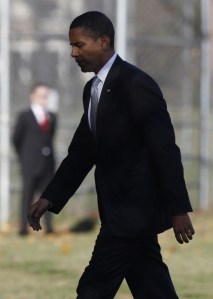 The U.S. Government has moved to suppress footage of a Guantanamo detainee being force-fed, appealing against a US federal judge’s order to release the tapes.
Solicitor General Donald Verrilli filed the appeal today, January 21st, just one day before the seven year anniversary of President Obama’s signing of the Executive Order to close Guantanamo. Judge Gladys Kessler ordered the tapes be released in October 2014, after sixteen major US media organizations, including the New York Times, AP, and McClatchy newspapers, asked for the tapes to be made public under the First Amendment of the US Constitution.
The tapes show the force-feeding and ‘forcible cell extraction’ of Abu Wa’el Dhiab, who has since been released. Mr Dhiab is represented by international human rights NGO Reprieve. Reprieve lawyers are virtually the only people outside government to have seen the footage and have described it as ‘disturbing’, but are forbidden under classification rules from revealing its contents.
Eric Lewis, attorney and Chair of Reprieve US, said: “It is wrong to hide behind national security concerns when the Government wants to hide its mistaken actions from public view. Our national security requires the release of these tapes, and accountability for the cruel treatment imposed on men trying to call attention to their endless and lawless detention without trial.”
Cori Crider, Reprieve attorney for Guantanamo detainees, said: Make no mistake – the force-feeding tapes would make your blood run cold. One assumes that is why they have fought so hard to keep it secret. We’ll keep pushing for the truth in the Court of Appeals.”
Featured Video
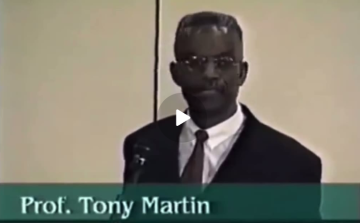
Dr. Tony Martin – The Jewish Role in the African Slave Trade
or go to
Aletho News Archives – Video-Images
In Memoriam
James Petras, In Memoriam
 02.13.2026
Professor James Petras, 89, world-renowned sociologist, public intellectual, and scholar of Latin American politics and global economics, died peacefully on January 17, 2026, in Seattle, WA, surrounded by family.
A prolific scholar and activist, he devoted his life to challenging power, imperialism, and inequality. … continue
Blog Roll
 Aletho News
- Lawyers ask police to investigate Elbit Systems UK for alleged war crimes complicity
- Israel ready to strike Iran-backed armed groups – media
- Behind US war drums against Iran: No goals, no plan, no off-ramp
- With Ukraine blamed for cutting oil flows to Hungary, Croatia also refuses to transfer Russian oil in violation of EU law
- Friedrich Merz’s Push to End Online Anonymity Has a Troubling Subtext
- Macron: French citizens fighting for Israel cannot be labeled ‘genociders’
- US eyes Gaza security force drawn from armed gangs
- The Only Motive Behind The ‘Imminent’ U.S. War With Iran Is The Zionist Lobby
- Trump eyes 350-acre US military base housing 5,000 troops in Gaza
- Israel Pushing US Toward a Big and Damaging War With Iran – Ex-Pentagon Analyst
- If Americans Knew
- ‘Christians Out’: Jerusalem Church Tagged With Hate Graffiti, Police Investigating
- Israeli Settlers Kill American Teen
- ‘We returned from hell’: Palestinian journalists recount torture in Israeli prisons
- No mercy for Gaza in Ramadan – Not a ceasefire Day 133
- The Israeli Government Installed and Maintained Security System at Epstein Apartment
- Tucker Carlson interrogated in Israel, has passport seized after interviewing US ambassador
- 6,000 Amputees in Gaza Face Impossible Recovery amid Israeli War Ultimatum
- The Lancet: Gaza death toll far higher than reported – Not a ceasefire Day 132
- Compliant aid: Who are the Israel-approved NGOs scaling up in Gaza?
- Why won’t Trump’s “Board of Peace” bring peace? – Not a ceasefire Day 131
- No Tricks Zone
- Coal Power Back In Trend As Globe Tries To Keep Pace With Growing Demand For Power
- New Study: A 4°C Warmer Beaufort Sea Had ‘No Sea Ice’ 11,700 – 8200 Years Ago
- Unfudging The Data: Dutch Meteorological Institute Reinstates Early 20th Centruy Heat Waves It Had Erased Earlier
- German Gas Crisis…Chancellor Merz Allegedly Bans Gas Debate Ahead of Elections!
- Pollen Reconstructions Show The Last Glacial’s Warming Events Were Global, 10x Greater Than Modern
- Germany’s Natural Gas Storage Level Dwindles To Just 28%… Increasingly Critical
- New Study Rebuts The Assumption That Anthropogenic CO2 Molecules Have ‘Special’ Properties
- Climate Scientist Who Predicted End Of “Heavy Frost And Snow” Now Refuses Media Inquiries
- Polar Bear Numbers Rising And Health Improving In Areas With The Most Rapid Sea Ice Decline
- One Reason Only For Germany’s Heating Gas Crisis: Its Hardcore-Dumbass Energy Policy
 Aletho News