Palestinians face severe restrictions during Jewish holiday
Ma’an – March 23, 2016
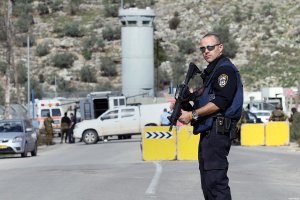 BETHLEHEM – Palestinians faced severe movement restrictions on Wednesday, as Israeli authorities shut down all movement through checkpoints in and out of the occupied West Bank and Gaza Strip ahead of the Jewish holiday of Purim.
An Israeli army spokesperson said that beginning at 1 a.m. on Wednesday and lasting until midnight Saturday, the checkpoints would be closed to all Palestinians with the exception of humanitarian cases.
Palestinian citizens of Israel, as well as holders of foreign passports, would still be allowed to pass through the checkpoints, she said, noting: “They’re only closed for Palestinians.”
She said Palestinians could seek to arrange “special circumstances” with Israel’s Coordination of Government Activities in the Territories (COGAT).
Sources inside the Palestinian liaison department confirmed the measures would be extended to the Kerem Shalom and Erez crossings into the Gaza Strip, with only humanitarian cases and a limited number of Palestinian Christians allowed to leave the blockaded coastal enclave.
Israeli police spokesperson Luba al-Samri said there would be heightened security measures, including a number of police patrols, across occupied East Jerusalem and the West Bank throughout the holiday.
Palestinian access has also been restricted to the Al-Aqsa Mosque compound, with all Palestinian men younger than 50 denied entry to the site, which is the third holiest in Islam.
Access restrictions to the mosque compound during a succession of Jewish holidays last September played a major role in triggering a wave of unrest that has since left more than 200 Palestinians and nearly 30 Israelis dead.
Tensions were running high in the West Bank on Wednesday morning after Israeli forces escorted hundreds of Israelis, including settlers, to holy sites there, with clashes breaking out nearby Joseph’s Tomb near Nablus.
The Jewish holiday of Purim, which commemorates the Biblical account of the saving of the Jewish people from Haman, an ancient Persian vizier, begins Wednesday evening and ends late Thursday this year.
Netanyahu equates intifada with terrorism
MEMO | March 23, 2016
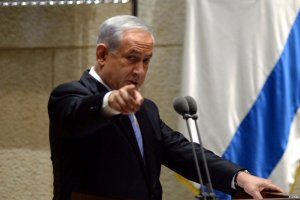 Israeli Prime Minister Benjamin Netanyahu accused the Palestinians of making their way to statehood through knives, Israeli newspaper Maariv reported.
During his speech at the AIPAC conference in Washington yesterday, Netanyahu branded all attacks as terrorist activity, including the Palestinian resistance attacks against the Israeli occupation carried out in the occupied West Bank and East Jerusalem.
“What is happening is a continuous attack against all of us,” Netanyahu said. “What is enough for them is eradicating us and imposing their absolute domination over us. But, this will not happen my friends.”
“The only solution is cooperation and unity in the war against them… Political and moral unity.”
Banks still too afraid of US fines to process Iran deals
Press TV – March 23, 2016
Despite the January removal of economic sanctions against Iran, global enterprises are complaining that trade with the country is still difficult as a result of lingering fears of US punitive actions.
Reuters in an exclusive report has quoted business leaders as saying that a key obstacle which is specifically affecting business with Iran is the unwillingness of international banks to process transactions with the country.
US banks are still forbidden to do business with Iran and while lenders based elsewhere are not covered by this ban, major problems remain, emphasized the report. Chief among these are rules prohibiting transactions in dollars from being processed through the US financial system, it added.
The Iranian business community believes the United States has failed to spell out exactly what is permitted and what is not, leading to the uncertainty that makes international banks reluctant to process Iranian-linked transactions, wrote Reuters.
Iranians based in Dubai, historically one of Iran’s main trading partners, complain they cannot get letters of credit to finance deals with their home country, while others have even had their company bank accounts closed in recent weeks.
The problems are also complicating Iran’s plans to sell more oil, as well as recover up to $100 billion in assets that had been frozen by the sanctions in foreign bank accounts, the report added.
The failure by European banks to play their due role in business with Iran has already provoked reactions from several EU leaders and business leaders.
British Prime Minister David Cameron in early March rebuked Barclays for hampering companies trying to export to Iran.
In a strongly worded letter to the bank, Cameron said that Barclays appeared to be operating “in opposition to the policy of the UK government”.
Also, Airbus which sealed an agreement with Iran in January to sell over 100 new planes to the country, has called on EU banks to dispel fears of doing business with Iran.
Iranian officials have also taken their own initiative to urge European banks to open their doors to transactions relating to Iran.
Mohammad Nahavandian, the chief of staff of President Hassan Rouhani, in a visit to London earlier this month called for the facilitation of banking transactions with Iran now that the sanctions against the country have been lifted.
Israeli Minister Facebook Rant Blames Brussels Bombing on EU Labeling of Illegal Settlement Goods
21st Century Wire – March 23, 2016
Now here’s another interesting take on the Brussels Attacks.
There are three possible angles you could read this story from:
1. This Israeli minister is essentially saying that because the EU chose to worry about the Palestinian plight, it reaped the scourge of Islamist terror on its capital.
2. This Israeli minister is a few cards short of a full deck.
3. And finally there’s this option: by blaming the EU for accurately labeling its food products that come from from illegal settlements, is this Israeli minister somehow inferring that the Brussels bombing was a retaliation for that EU regulation?
It’s hard to know for sure, but at the very least, the Israeli minister’s off-hand comments are very revealing about the current schizophrenic political mindset in Tel Aviv…
Middle East Monitor – March 22, 2106
The EU’s labeling of goods from illegal Israeli settlements led to the bombing in Belgium, Brussels, today, The New Arab reported an Israeli minister saying.
Minister of Science, Technology and Space, Ofir Akunis, said Europeans lost sight of “terrorism of extremist Islam” by focusing on boycotting Israeli goods instead allowing the attacks to take place.
“Many in Europe have preferred to occupy themselves with the folly of condemning Israel, labeling products, and boycotts. In this time, underneath the nose of the continent’s citizens, thousands of extremist Islamic terror cells have grown,” Akunis wrote on Facebook.
“There were those who repressed and mocked whoever tried to give warning. There were those who underestimated. To our sorrow, the reality has struck the lives of dozens of innocent people.”
EU Urges UN to Join Anti-Russia Sanctions
By Alex GORKA – Strategic Culture Foundation – 23.03.2016
The European Union called on March 18 for more countries to impose sanctions on Russia over Crimea joining the Russian Federation two years ago.
In a statement issued on the anniversary of Crimea’s formal accession to Russia, the EU said it will maintain its sanctions that ban European companies from investing in Russian Black Sea oil and gas exploration.
«The European Union remains committed to fully implementing its non-recognition policy, including through restrictive measures», the European Council, which represents EU governments, said. «The EU calls again on UN member states to consider similar non-recognition measures».
Separately, NATO Secretary-General Jens Stoltenberg urged the EU and United States to maintain their broader economic sanctions against Russia over its support for self-declared republics in the eastern part of Ukraine. «It is important that we continue the economic sanctions», Stoltenberg told an event in Brussels.
The Crimean Peninsula became a part of the Russian Federation on March 18, 2014 after the referendum carried out on March 16 showed 97 percent of voters supported joining Russia.
The Kremlin responded by saying that the issue of Crimea could not be «a matter of negotiations or international contacts». «Our position is known: this is a region of the Russian Federation. Russia has not discussed and will never discuss its regions with anyone», President Vladimir Putin’s spokesman Dmitry Peskov said in a teleconference with reporters.
«In this case we should treat with respect the expression of the will of Crimean residents and the decision which was taken two years ago», he emphasized.
The 28-nation EU imposed its Crimea sanctions in July 2014 and then tightened them in December 2014, banning EU citizens from buying or financing companies in Crimea. The United States, Japan and some other major economies, including Australia and Canada, also imposed sanctions on Russia, whereas many other economically developed nations, like, for instance, China and Brazil, refused to join.
It should be noted that the extension of anti-Russian sanctions is a very much divisive issue inside the European Union.
Hungary and Italy said last week they would not agree to extend the EU’s toughest economic sanctions on Russia, the EU’s major energy supplier, without discussions before the summer.
Germany’s Economy Minister Sigmar Gabriel called on March 17 for the EU to try to create conditions by this summer to lift sanctions.
France’s Minister for the Economy, Industry and Digital Affairs Emmanuel Macron said in January that Paris will look to assist in the lifting of Western backed sanctions on Russia by the summer.
Serbia, a nation in talks on joining the EU, has firmly rejected the idea of joining the sanctions regime.
US Republican Senator John McCain has the reputation of hawk calling for getting tough on Russia. But even he had to admit the fact that the sanctions are becoming increasingly unpopular inside the EU. «I think there is clearly a lot of conversation amongst the Europeans about lifting the sanctions… There are many countries that are looking for the exit sign», the Senator said in February. «I have been hearing it for months, that there is enormous pressure in a lot of countries, particularly Germany, to lift the sanctions», he noted.
At that the prominent US politician believes it is up to Washington if and when the sanctions are eventually lifted, saying that the final decision will «to some degree depend on American leadership». Actually, the US right-wing politician openly stated the EU decision on the sanctions is made under US pressure.
Indeed, the EU is following the US. President Obama announced American sanctions against Russia are to be prolonged for another year on March 2.
The EU obediently chimed in 16 days later.
The attempts of the EU to influence other countries into joining the anti-Russia sanctions regime look especially ridiculous against the organization’s failure to make the tiny nation of San Marino, an enclaved microstate surrounded by Italy, comply with the EU’s demands. The republic is not officially part of the European Union and does not face Russia’s food embargo. According to Rossiyskaya Gazeta, a Russian government daily newspaper of record which publishes the official decrees, statements and documents of state bodies, San Marino and Russia signed an export agreement on March 18 during the International Economic Forum of CIS countries.
San Marino’s Minister of Regional Development and International Economic Cooperation Antonella Mularoni attended the forum. Now this European country will export to Russia a range of products, including Parmesan cheese and premium meat products like local Parma type ham. «There are 24 dairies in the republic, and a lot of enterprises engaged in meat smoking», the executive director of the national wholesalers association Vladimir Lishchuk told Rossiyskaya Gazeta. According to him, imports will take the place of illegal goods bypassing the Russian food embargo. Russia’s food safety watchdog Rosselkhoznadzor said it would monitor food imports from San Marino to prevent re-exports of sanctioned products from neighboring EU countries. Russia introduced the food embargo in August 2014 in response to Western sanctions. The ban applied to meat, poultry and fish, cheese, milk, fruit and vegetables from the United States, the EU, Australia, Canada, Norway, Japan and a number of other countries. According to Russia’s Ministry of Economic Development, the import of banned products has fallen by nearly half to $6 billion in the first six months of 2015. Overall imports from the EU have fallen by 45 percent.
Evidently, the EU’s call for UN members to join the sanctions is an effort doomed to go down the drain. The European Union has no leverage strong enough to make world nations comply.
The organization itself is not in a strong position. Looks like it has seen its best days. Brussels is facing a host of acute problems. Many of them seem to be a tall order, for instance: the flows of migrants, the economic inequality of the Union’s members, debt problem and the conflicting views of the UK and Germany on European integration, to name a few.
Doing away with the divisive issue of anti-Russia sanctions could provide an impetus to making progress in other fields, but Brussels prefers a different approach.
The EU statement shows the Union’s leadership is adamant in its desire to go down the slippery slope risking a revolt among the member-states with tensions running already high inside «the European family».
The Colossal Costs of Building UK’s Monster Surveillance Network
Sputnik – 22.03.2016
The UK will have to build a mammoth network of Internet surveillance centers if the government passes its Investigatory Powers Bill – dubbed the the Snoopers’ Charter – into law.
The proposal, which the Home Office wants to rush through the House of Commons just after Easter, will cost the country billions of pounds. The centers will be required to keep large databases of all the connections made by UK Internet users for one year — and to share them automatically with the UK’s government and intelligence agencies.
The government is bracing itself for the vote as the news arrives that the only other country in the world to have ever tried a similar approach — Denmark — has just decided to abandon the plan, for the second time in ten years.
The first Danish “session logging” system was put into place in 2007, but was abandoned in 2013 after the country’s police and security services found it to be practically useless — besides being very expensive for Internet providers to install and operate.
Another attempt to build an improved system, carried out by the Danish Ministry of Justice at the start of March 2016 also appears to have foundered.
Before the final decision was taken, the Danish government asked accounting firm Ernst & Young to ascertain how much the new surveillance network would cost.
The experts found that total expenses would be around one billion Danish Krone (US$150 million). The Danish government decided that the costs were too high for the country and its tech sector.
In the UK, the costs are likely to be much-much higher. If in Denmark — a country of 5.6 million people — the government estimated that each citizen would produce about 62,000 records every year, in Britain, whose population is about ten times the size of Denmark’s, the final annual database would have to include about four trillion a year.
Other estimates suggest that the sheer amount of records could even hit tens of trillions every year. That is because each of those records, as per the law, would have to contain: a customer account reference or device identifier; the date and time of the event; the duration; the source and destination IP and port number of each session; the domain name or linked URL; the volume of data; and the name of Internet service you connected to.
The UK will have to find a way to store an enormous amount of information every day — even if each record’s weight was brought down to 100 bytes, on a yearly level, we are talking exabytes (thousands of petabytes).
The only surefire way to deal with this information is by building new massive data centers, which will need at least US$140 million in equipment to handle each exabyte. Add the building, as well as cooling and electricity management and you have only started understanding the eventual costs of the UK’s new monster surveillance plans.
Israeli forces raid, confiscate items from Jenin-area university
Ma’an – March 22, 2016
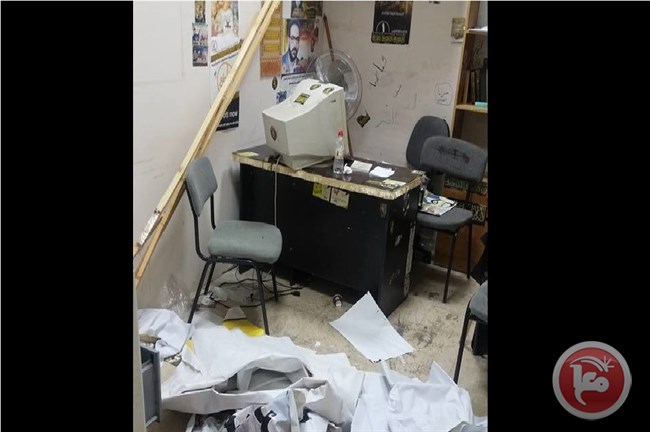
JENIN – Israeli forces overnight Monday raided the campus of the Arab American University in the occupied West Bank city of Jenin and confiscated items — including computers and flags — from student union offices.
The university’s public relations department told Ma’an that 11 Israeli military vehicles stormed the campus grounds at 1 a.m. and broke into the office of the Dean of Students, as well as a number of offices belonging to the student union.
The Israeli soldiers broke down doors and destroyed property in the offices before seizing flags of student union blocs as well as two computers and paper documents, the department said.
The university’s administration released a statement denouncing “Israel’s aggressive policy which violates the sanctity of university campus.”
Palestinian Prime Minister Rami Hamdallah immediately condemned the raid.
“This is not the first time that the Arab American University and other Palestinian educational institutions have been subjected to arbitrary Israeli raids,” the PM said, citing raids on Birzeit University and the Kadoorie Institute in recent months.
“I reiterate our call for international protection,” Hamdallah said. “Israel should not be allowed to continue to act above the law. The international community witnessed yet another violation of the sanctity of Palestinian educational institutions, and it should not remain silent.”
The Israeli army said in a statement that Israeli forces had “uncovered and confiscated inciting propaganda materials linked to multiple terror organizations including Hamas” inside the university, adding that the operation was “based on intelligence information.”
“In the recent wave of terror we’ve witnessed how incitement fuels acts of violence and terrorism,” the statement said. “Efforts as this prevent future attacks.”
In addition to the statement, the army released what it said were “visuals from the overnight activity” — photographs of an Islamic Jihad flag and a Hamas one, as well as a poster depicting three recently slain Palestinian attackers, referred to as “martyrs.”
Political flags and posters are commonly found items across the occupied West Bank, with posters of martyrs appearing throughout every West Bank town and village.
Palestinian universities and their students in the occupied West Bank are frequently targeted by Israeli military forces, and campuses have come under increased military presence since an increase in violence in October.
Earlier this month Israeli forces raided the Khadoorie Institute — also known as Palestine Technical University — twice in an 18-hour period.
The Tulkarem-area campus has seen heavy military presence in the past. Student-organized marches in October to protest Israeli violations and raids onto the campus eventually resulted in Israeli forces positioning themselves at a temporary base on university property.
Dozens of university students have been injured by Israeli military forces since.
Birzeit University near Ramallah meanwhile has reported dozens of student detentions, while Abu Dis’ al-Quds Open University has often found itself a focal point of violent clashes between Palestinian students and Israeli soldiers.
Surprise: Flying Nuclear Bombers Overhead Tends to Increase Tensions
Sputnik – 22.03.2016
The recent and historical record on US nuclear “signaling,” or flying nuclear armed aircraft over opposition nations, shows that it increases the risk of conflict and war.
 In an editorial this week, military defense experts Adam Lowther and Chris Winklepleck argue that the strategic aircraft arm of the US nuclear triad provides unique “nuclear signaling” and serves a critical deterrence role in US military strategy.
Recent and historical evidence, however, shows that their claim lacks merit, as brandishing nuclear weapons only serves to exacerbate tensions and heighten the risk of conflict, former nuclear weapons expert at Los Alamos National Lab Jim Doyle writes for Defense News.
South Korea saw nuclear flyovers by the US in 2013 and 2016 using B-2 and B-52 aircraft, but the maneuvers have done nothing to diminish tensions on the Korean peninsula nor have they been a corrective to Pyongyang’s militaristic brinksmanship.
Recent North Korean missile launches and nuclear tests show that nuclear signaling does not achieve its desired effect. Reports out of Pyongyang suggest that US nuclear flyovers have been used instead by the Kim regime to increase domestic support for the dictatorship by confirming that a threat exists.
Specifically, the 2013 “long-range show of presence missions” by the US on the Korean peninsula was followed by North Korea’s restart of its Yongbyon nuclear reactor one month later. Following the second show of presence mission in 2016, DPRK conducted a fourth nuclear test explosion and expedited ballistic missile production and testing.
While military experts may write off aggressive North Korean military response as an anomaly, citing the country’s sometimes incoherent foreign policy, history points to the ineffectiveness of similar missions elsewhere.
On October 27, 1969, Doyle writes, the Nixon administration attempted to “signal” to the Soviet Union and the Viet Cong, in what became known as the “madman nuclear alert,” that Nixon was aggressive enough to launch a nuclear attack against North Vietnam if Moscow did not pressure the Hanoi government to seek peace. In that effort, 18 B-52s approached the USSR from the arctic. The posturing failed, heightening tensions with the Soviet Union, and doing nothing to resolve the Vietnam quagmire.
History shows that nuclear deterrence by means of mutually assured destruction is not an effective way to keep the peace, especially when global economic and political interests seek to end the threat of nuclear weapons. Research illustrates heightened tensions and conflict in the use of nuclear signaling. Nations seeking peace have no need to wield a larger club.
Photo – © Flickr/ Christopher Ebdon
Saudi regime detains top Shia scholar in Eastern Province
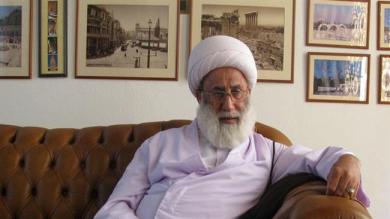
Senior Saudi cleric Ayatollah Hussein al-Radhi
Press TV – March 22, 2016
The Saudi regime’s security forces have arrested a prominent Shia cleric over his anti-regime comments as Riyadh continues its crackdown on the minority sect.
Media reports said on Tuesday that security forces arrested Ayatollah Hussein al-Radhi shortly after he led prayers in the al-Ahsa oasis region of Eastern Province.
The detention came after the senior cleric wrote an article in which he criticized the House of Saud for jailing and executing critics and dissidents, including Sheikh Nimr Baqir al-Nimr who was beheaded in January.
Al-Radi had also infuriated the monarchy by denouncing the ongoing deadly Saudi airstrikes which have claimed lives of more than 8,000 civilians in Yemen.
Riyadh has been under fire from international organizations and rights groups over the rising number of civilian casualties in Yemen. The United Nations Human Rights Council (UNHRC) has recently said that Saudi Arabia and its allies may be committing crimes against humanity due to their indiscriminate killing of civilians in Yemen.
The senior cleric had also strongly denounced a decision by the Saudi-led [Persian] Gulf Cooperation Council to brand Lebanon’s resistance movement Hezbollah as a terrorist organization.
Saudi Arabia has been denounced by rights groups for its grave human rights abuses and harsh crackdown on all forms of dissent.
The Shia-dominated Eastern Province has been the scene of peaceful demonstrations since February 2011.
Protesters have been demanding reforms, freedom of expression and the release of political prisoners. They want an end to economic and religious discrimination against the region.
Reports on protests in Qatif are scant, as Saudi authorities allow foreign news media to visit the region only if accompanied by government officials, claiming it is to ensure journalists’ safety.
Shia Muslims have long complained of entrenched discrimination in a country where the semi-official Wahhabi school condones violence against them. They face abuse from Wahhabi clerics, rarely get permits for places of worship and seldom get senior public sector jobs. Shia religious centers have also been target of a series of terror attacks across the region over the past few months.
Those basic complaints have over the years been aggravated by what residents across the Shia-majority call heavy-handed security measures against their community. They accuse the authorities of unfair detentions and punishments, shooting unarmed protesters and torturing suspects.
‘Non-negotiable’: Clinton attacks Trump at AIPAC for ‘neutrality’ remarks about Israel
RT | March 21, 2016
In a speech to the annual policy conference of the American Israel Public Affairs Committee, Democratic front-runner Hillary Clinton took Republican front-runner Donald Trump to task for voicing a “neutral” position on Israeli-Palestinian talks.
“We need steady hands,” Hillary Clinton, a former secretary of state, told thousands of attendees at the AIPAC conference in Washington, DC on Monday. “Not a president who says he’s neutral on Monday, pro-Israel on Tuesday, and who-knows-what on Wednesday, because everything’s negotiable.
Israel’s security, she proclaimed to loud applause, “is non-negotiable.”
Clinton’s criticism of Trump, while not naming him directly, stemmed from remarks he made during a CNN-hosted Republican debate on February 26, when all of the candidates were asked about their stances on Israel and a peace agreement between the Jewish State and Palestine.
Trump said he supported Israel but added, “As president there is nothing I wouldn’t do to bring peace to Israel and its neighbors. It is probably the toughest negotiation in the world. I am pro-Israel. It doesn’t do any good to take sides against the neighbors,” said Trump. “If I could bring peace it would be one of my greatest achievements.”
Clinton told AIPAC about her long ties to Israel, having first visited the country 35 years ago. Then she moved on to highlight her work as a New York senator and as secretary of state, all of which led to a “deepening and strengthening the US ties to Israel” and supporting a “secure and democratic homeland for the Jewish people,” according to Clinton.
The Democratic presidential hopeful said the US couldn’t be neutral when “rockets rain down on residential neighborhoods, when civilians are stabbed in the street, when suicide bombers target the innocent. Some things aren’t negotiable, and anyone who doesn’t understand that has no business being our president.”
A new president from day one, Clinton told conference goers, will immediately face a world of “both perils and opportunities.”
“The next president… [will] start making decisions that will affect the lives and livelihoods of Americans and the security of our friends around the world, so we have to get this right,” Clinton said.
“Candidates for president who think the United States can outsource Middle East security to dictators, or that America no longer has vital, national interests at stake in this region are dangerously wrong,” said Clinton. “It would be a serious mistake for the United States to abandon our responsibilities or cede the mantel of leadership for global peace and security to anyone else.”
Clinton pointed to three evolving threats in the Middle East: “Iran’s continued aggression, a rising tide of extremism across a wide arc of instability, and the growing effort to de-legitimize Israel on the world stage,” which she noted make the “US-Israel alliance more indispensable than ever.”
“We have to combat these trends with even more security and diplomacy,” said Clinton.
While Trump was due to address AIPAC later on Monday, Clinton also referred to his proposal to temporarily ban all foreign Muslims from entering the US and “playing coy with white supremacists.”
“We’ve had dark chapters in our history before,” Clinton said, pointing to America’s refusal to allow a ship packed with Jewish refugees to dock in the US in 1939.
“But America should be better than this, and I believe it’s our responsibility as citizens to say so. If you see bigotry, oppose it. If you see violence, condemn it. If you see a bully, stand up to him,” Clinton said, receiving a standing ovation from the group.
AIPAC bills itself as nonpartisan and has never endorsed a candidate, but the organization does play a big role in partisan political debates over issues of interest to Israel.
A group of rabbis and other pro-Israel leaders were planning to protest Trump’s speech. Clinton’s comments were well-received, as the audience of Israel supporters loudly cheered throughout her address, not just when she was taking swipes at Trump.
Featured Video

The Most Important Bet You’ve Never Heard Of
or go to
Aletho News Archives – Video-Images
From the Archives
Wars for Israel: A reminder of who’s giving the marching orders
By Damian Lataan | February 7, 2012
As the West prepares to march off to yet another war in the Middle East, we should perhaps remind ourselves of who is giving the West their marching orders.
In February 2003, just weeks before the US and their allies launched their attack on Iraq and her peoples, a delegation of US congressmen, together with the US Ambassador to the United Nations, John Bolton, a well known pro-Zionist and neoconservative war-hawk, were in Israel at the invitation of the Israeli government then led by Israeli Prime Minister Ariel Sharon.
Addressing the congressmen, Sharon told them ‘that Iran, Libya and Syria should be stripped of weapons of mass destruction after Iraq’. Later, Sharon told John Bolton ‘that Israel was concerned about the security threat posed by Iran, and stressed that it was important to deal with Iran even while American attention was focused on Iraq’. … continue
Blog Roll
 Aletho News
- IRGC hits US tech giant Oracle’s data center, computing site in UAE over new assassinations
- Bombing Iran Back Into the Stone Age /Lt Col Daniel Davis & Jim Jatras
- UAE rejects report claiming it is ready to join war on Iran to reopen Hormuz
- A New Resistance Front: How Does Syria Factor into the Regional War?
- Gulf states weigh pipeline expansion plans, hoping to bypass Hormuz
- Iran sets up ‘tollbooth’ system in Strait of Hormuz
- Wave 90: IRGC strikes US-linked industrial sites in Gulf
- Iran Says US-Israeli Claims of Its Military Strength Are Wrong
- Trump’s April Fools’ Address to the nation
- The Most Important Bet You’ve Never Heard Of
- If Americans Knew
- ‘War crime’: Global condemnation as Israeli ministers celebrate death penalty law targeting Palestinian prisoners
- 7 Ways Israel Is Turning Lebanon Into Gaza
- World’s Leading Football Bodies Under Fire Over Israel Policies
- Experts warn of possible use of nukes against Iran
- Israeli invasion of Lebanon could be worse than 1982, warn European officials
- Passover: Liberation and collective punishment
- Trump says the quiet part out loud: (Israel’s) war on Iran > Americans’ health – Daily Update
- Gaza families reunite years after babies evacuated amid Israel’s war
- International Rescue Committee warns Gaza’s children face grave protection risks
- Iran’s Alleged 47-Year War on America: Debunking the 1,050 American Deaths Canard
- No Tricks Zone
- Low Intensity Tornado Wrecks Major Solar Farm, Creating A Potential Toxic Dump
- New Study Finds Warming Saves Lives…Cold Temperatures 12 Times More Deadly Than Excess Heat
- German Science Blog Accuses PIK Climate Institute Of Hallucinating Climate Tipping Points
- Devastating Assessment Of Comirnaty Vaccine By Former Senior Pfizer Europe Toxicologist
- New Study: CO2 Is ‘Effectively Negligible’ As An Explanatory Climate Change Factor Since 2000
- Former Pfizer Toxicologist Dr. Helmut Sterz Tells Bundestag Hearing Pfizer Vaccine Should Have Never Been Approved
- Energy Expert: Germany’s Nuclear Phaseout Was A “500 Billion Euro Mistake”
- New Research: South Australia’s Mid-Holocene Sea Surface Temperatures Were 4°C Warmer Than Today
- Storing Green Energy To Last Germany 10 Days Would Require A 60-Million Tonne Battery
- New Studies: UK Sea Levels Were 4 Meters Higher Than Today During The Mid-Holocene
 Aletho News