Instilling fear in the minds of the public has been a powerful tool of social control since the dawn of human civilization. Today, it is clear that the Western elite are using fear and terror as a means of ushering in totalitarian control. The mainstream media has been force-feeding the Western public a steady diet of war, fear and terror since the neocons “new Pearl Harbor event” in 2001.
After the latest terror attack in Belgium, the media is playing its usual role of amplifying the incident beyond any rational comprehension. The majority of the public are caught up in the vortex of emotive propaganda and sensationalist rhetoric. Images of terror; horror; fear; and panic dominate the news landscape. The main message is that you should be afraid.
The only solution to latest crisis (in the eyes of the elite) is for even greater spying powers and totalitarian control. Hillary Clinton, the political prostitute par excellence, called for more surveillance and an expansion of the police state in response to the attacks in Belgium. Both Ted Cruz and Donald Trump support a further erosion of civil liberties and have called for increasing surveillance of Muslims (Trump even advocated torturing terror suspects).
Yet not one political figure has called for prosecuting CIA and other US officials for war crimes, after years of the West openly funding and arming terrorists in Syria. Accountability is what is needed, not authoritarianism.
Every terror attack produces the same response by the elite: more surveillance, more state power, more war, more barbarism and more control. It’s frankly boring. You know what the puppets are going to say prior to them opening their mouths. It was the same response after the Charlie Hebdo attacks in Paris, when David Cameron was pushing for greater surveillance powers in the UK and leading the charge for an insane ban on all encryption.
We know that NSA spying has nothing to do with stopping terrorism, and everything to do with controlling the domestic population. In the words of the high-level NSA whistleblower, William Binney: “The ultimate goal of the NSA is total population control.”
We know that Western intelligence agencies and their regional allies were instrumental in supporting the rise of ISIS (and other terror groups), by funding and arming these factions in a failed attempt to topple al-Assad. In the words of the former US military intelligence chief, Michael T. Flynn, the Obama administration took the “willful decision” to support the rise of these radical forces.
The criminal Western elite have no intention of winning the ‘war on terror,’ as the ‘war on terror’ was always designed to be perennial. The elite create the terror groups because without the faux ‘war on terror,’ the surveillance state loses the entire pretext on which it was built.
For any totalitarian elite, it is essential that “a state of war should exist,” as Orwell wrote in 1984:
“It does not matter whether the war is actually happening, and since no decisive victory is possible, it does not matter whether the war is going well or badly. All that is needed is that a state of war should exist… The consciousness of being at war, and therefore in danger, makes the handing-over of all power to a small caste seem the natural, unavoidable situation of survival” (2008 edition: p.200 & p.201).
As the elite create a perpetual state of war, chaos, fear and terror, the people of the West increasingly allow more power to be concentrated in the hands of the ‘superclass.’ If the Western public continues to be duped into believing that this phony ‘war on terror’ is real, the elite will use this as a pretext to completely destroy civil liberties and any semblance of freedom in the West.
War is Peace
Freedom is Slavery
Ignorance is Strength
April 3, 2016
Posted by aletho |
Civil Liberties, Full Spectrum Dominance, Timeless or most popular | France, ISIS, NSA, Syria, UK, United States |
Leave a comment
Beholden to special interests; complicit in US war crimes across the globe; held top secret information on an unsecured home server; incessantly lies (like most politicians); and is married to a man who has been accused by multiple women of sexual assault: the fact that Hillary Clinton is even remotely capable of becoming President of the US is symptomatic of how corrupt and screwed up the US political system actually is.
Puppet on a String
Clinton is the walking, talking definition of a political prostitute, completely controlled by special interests, Israel and the shadow establishment. Since the beginning of 2013, Clinton has received at least $21.7 million for 92 speeches she has given to private organizations and groups. This includes $225,000 from Morgan Stanley; $225,000 from Deutsche Bank; $225,000 from Bank of America; and $675,000 from the Goldman Sachs Group (for three separate speeches). George Soros, the investor, billionaire and regime change extraordinaire, has also put millions into Clinton’s campaign.
Hillary is controlled by the parallel US government, the Council on Foreign Relations (CFR). In 2009, she revealed her relationship with the CFR when she addressed the council at their newly opened outpost in Washington D.C.:
“I have been often to the mother ship in New York City, but it’s good to have an outpost of the council right here down the street from the State Department. We get a lot of advice from the council, so this will mean I won’t have as far to go to be told what we should be doing and how we should think about the future.”
A look at the corporate membership of the council reveals the level of power vested in such a small amount of hands, with approximately 200 of the most influential corporate players belonging to the group, including: Exxon Mobil Corporation; Goldman Sachs Group; JPMorgan Chase; BP plc; Barclays; IBM; Google Inc; Facebook; Lockheed Martin; Raytheon; Pfizer; Merck & Co; Deutsche Bank AG; Shell Oil Company; and Soros Fund Management.
War Criminal in Chief
Hillary is complicit in numerous crimes and atrocities perpetuated by the US when she was Secretary of State from January, 2009 to February, 2013. One of the most notable examples of this was the belligerent war in Libya in 2011. Clinton played a pivotal role in the NATO intervention which led to the toppling of the Libyan leader, Muammar al- Qaddafi, the destabilization of the country and the exacerbation of “humanitarian suffering.”
As Alan J. Kuperman, an Associate Professor of Public Affairs at the University of Texas, wrote in his 2013 policy brief for the Belfer Center for Science and International Affairs, Harvard Kennedy School, titled:Lessons from Libya: How not to Intervene:
“NATO’s action magnified the conflict’s duration about sixfold, and its death toll at least seven-fold, while also exacerbating human rights abuses, humanitarian suffering, Islamic radicalism, and weapons proliferation in Libya and its neighbors. If Libya was a ‘model intervention,’ then it was a model of failure.”
NATO has been repeatedly accused of committing war crimes in Libya, but as we know, there is no accountability for Western imperialism. Many have accused NATO of deliberately bombing civilian targets, including Libya’s water infrastructure. To Hillary (the war hawk) Clinton however, the intervention in Libya was a triumph. She famously remarked that “we came, we saw, he died” (before demonically laughing).
Arming Al-Qaeda
Clinton was also the Secretary of State during the 2012 Benghazi attack, when militants attacked a US compound in Benghazi, Libya, and a CIA facility nearby, killing four US personnel, including US Ambassador to Libya, Christopher Stevens. The failure to protect the compound has been widely written about, but the real story is what the compound was actually involved in. Numerous journalists – including Seymour Hersh – have reported that the compound was a key outpost for a covert operation that involved shipping weapons from Libya to the Syrian rebels who were fighting against Bashar al-Assad. Many reports have accused the US and their allies of covertly sending heavy weapons from the North African country to Syria.
A formerly classified document released by Judicial Watch from the Defense Intelligence Agency (DIA) reveals that the White House was at least aware of arms shipments from Libya to Syria, although the document does not disclose who was shipping the weapons (parts of the document are redacted however):
“Weapons from the former Libya military stockpiles were shipped from the port of Benghazi, Libya to the Port of Banias and the Port of Borj Islam, Syria. The weapons shipped during late-August 2012 were Sniper rifles, RPG’s, and 125 mm and 155mm howitzers missiles… The numbers for each weapon were estimated to be: 500 Sniper rifles, 100 RPG launchers with 300 total rounds, and approximately 400 howitzers missiles [200 ea – 125mm and 200ea – 155 mm]” (DIA Doc).
Clinton was a strong supporter of the ludicrous and nefarious strategy of arming the Syrian rebels, even though US military intelligence was reporting in August 2012 that: “The Salafists, the Muslim Brotherhood and AQI [(al-Qaeda in Iraq)], are the major forces driving the insurgency in Syria.” In 2015, Clinton also called for the creation of a no-fly zone in Syria, which as we saw in Libya, would result in the US bombing the Syrian army in a bid to oust al-Assad.
It’s impossible to document Hillary’s crimes without briefly discussing the allegations made against her husband, Bill Clinton. It’s highly ironic that Hillary’s platform for President is largely based on her (supposed) support for women’s rights, yet her husband has been accused by multiple women of sexual assault – Capitol Hill Blue documented some of these allegations. In 1998, Bill even paid Paula Jones $850,000 in an out-of-court settlement to drop a sexual harassment lawsuit against him. Juanita Broaddrick, who accused Bill of raping her in 1978, also accused Hillary of threatening her if she spoke out.
It’s hard to think of any political figure that has been plagued by so many scandals in recent years. If Hillary is installed as President by the shadow elite, it will not just be catastrophic for the US, but for the entire globe as well.
April 3, 2016
Posted by aletho |
Corruption, Timeless or most popular, War Crimes | Hillary Clinton, Libya, Syria, United States |
Leave a comment
Over 100 girls from a province in the Central African Republic claim they were sexually abused by UN peacekeepers, the AIDS-Free World’s campaign Code Blue reported. Co-founder of Code Blue Paula Donovan told Radio Sputnik that the reports are just the tip of the iceberg.
According to Donovan, the United Nations has been deliberately concealing the information about sex crimes committed by peacekeepers for the sake of its reputation, leaving ‘thousands’ of victims without hope.
“The United Nations by being so slow and so secretive and so careful about their reputation, they’re actually culpable in these crimes,” she argued.
Donovan said that documents in the recent case were leaked to her organization by an insider, and that the data they received included correspondence and notes from meetings that imply that the victims were interviewed two weeks before the information was released and that the UN was notified but — for unknown reasons — never informed the civilian population or the governments involved.
“Despite the fact that the Secretary General is saying that he is going to be more transparent, that just doesn’t ring true when he holds back this information and his staff holds back this information for such a long time,” Donovan said.
She accused the UN of creating a culture of impunity where the perpetrators never come to justice and are being released back to the community like there was no crime.
UN spokesman Stephane Dujarric said earlier that the UN Secretary-General Ban Ki-moon was “shocked to the core” over the allegations.
“Why in the world would Secretary General Ban Ki-Moon respond to these latest allegations with ‘shock’?” Donovan wondered. “It doesn’t shock any of us who’s been following these stories for the past ten years.”
She asserted that accusations by girls from the Central African Republic, which include such horrible abuses as forced bestiality, are the tip of the iceberg. In fact, UN peacekeepers commit similar crimes in other countries like Liberia or Democratic Republic of Congo, and there are not even hundreds but “thousands” of women and girls who say that “their only interaction with the United Nations has been transactional sex or forced sex by peacekeepers”.
There’s documented evidence of that happening over the past two decades, Donovan claims, and expert teams sent by the Secretary General to assess the situation informed superiors about ‘low morale’ in peacekeeping missions, but the issue was silenced and nothing was done to help the victims and persecute the criminals.
“We’re reading about the Central African Republic because the media… has been shining a spotlight on that one country, and this is indicative of what we would here from other peacekeeping countries if the attention were turned in that direction,” Donavan said.
Dujarric said last week that a UN team was sent to gather data regarding recently reported allegations of sexual assault and exploitation by UN and non-UN forces as well as civilians in Kemo prefecture in past two years.
April 3, 2016
Posted by aletho |
Corruption, Deception, Timeless or most popular | Africa, United Nations |
Leave a comment
Al-Akhbar newspaper revealed that France has been involved in spying on the internet cable that transmits the cyber services from the French city of Marseille to Lebanon, passing through Egypt.
The Lebanese daily explained that the French intelligence services monitor all the telecommunications operated in Lebanon, knowing that Orange company that is very close to the Zionist entity also supervises the entire process.
Accordingly, the experts urged the Lebanese to take extreme cyber security measures to secure their telecommunication activities.
April 2, 2016
Posted by aletho |
Ethnic Cleansing, Racism, Zionism, Full Spectrum Dominance | France, Human rights, Israel, Lebanon |
Leave a comment

Four prisoners’ advocacy organizations in Palestine (Palestinian Prisoners’ Society, Addameer Prisoner Support and Human Rights Association, Prisoners Affairs Commission and Al Mezan Center for Human Rights – Gaza) issued a report on Israeli occupation arrests and imprisonment of Palestinians in March 2016. The following is a translation of their report:
647 Palestinians were arrested in the West Bank and Gaza in March 2016, including 128 children and 16 women and girls. This raises the number of arrests since the beginning of the popular uprising in October 2015 to more than 4,767 Palestinians arrested.
The highest number of arrests was in Jerusalem area, with 149 arrests, followed by 110 in Al-Khalil, 88 in Jenin, 87 in Ramallah, 63 in Bethlehem, 62 in Nablus, 30 in Qalqilya, 24 in Tulkarem, 10 in Jericho, 10 in Tubas, 9 in Salfit and 5 from the Gaza Strip.
192 administrative detention orders were issued in March; 95 of those were new orders and 97 of them were renewals of previous administrative detention orders. There are now over 750 Palestinians held without charge or trial under administrative detention in Israeli jails.
There are 68 women and girls imprisoned in Israeli jails, 18 of whom are girls under 18, including the youngest prisoner, Dima Wawi, who is 12 years old. There are over 400 child prisoners in Israeli jails, and 700 ill prisoners.
Repression of Journalists
Over seven Palestinian journalists have been arrested since the beginning of 2016; the offices of satellite channel Palestine Today and Trans Media company were closed by occupation soldiers at dawn in Ramallah on Friday, 11 March. Their equipment was confiscated and bureau chief Farouk Elayyat and journalist Mohammed Amer and camera operator Shabib Shabib were arrested; Amer and Shabib were released after interrogation. On 13 March, journalist Ibrahim Jaradat, also with Palestine Today, was arrested at a mobile military checkpoint. After 20 days of imprisonment, Elayyat and Jaradat were released on 31 March on bail of 2,000 NIS each. Journalist Musab Kufaisheh, 24, was arrested in March as was Mohammed Zaghloul, radio presenter.
Under pressure from the Occupying Power, the French satellite, Eutelsat, removed Palestinian channel Al-Aqsa TV from its broadcast on charges of “incitement.” Palestinian journalists inside Palestine received threats stating that they are under surveillance and threats to “Israeli security.”
The Israeli occupation in November 2015 closed Radio Al-Khalil and Radio Dreams; these closures by occupation forces against media organizations and the ongoing harassment of Palestinian journalists is a continuation of the occupation policy of repressing Palestinians’ expression of their cause and the crimes of the occupation before the world. The occupation is persecuting Palestinian human rights defenders and journalists in an attempt to empty the media and human rights organizations of experienced voices and silence their work, obscure the reality of war crimes and crimes against humanity committed by occupation forces against Palestinian civilians.
Administrative and military actions by the occupation forces against Palestinian journalists and human rights defenders violate international humanitarian law and serve only the purpose of attempting to intimidate Palestinian civilians and pushing them to give up their rinalienable rights. The arrest of journalist violates the Universal Declaration of Human Rights and the International Declaration on Human Rights Defenders. The organizations call on the international community to work and take action to stop these violations.
There are currently 16 Palestinian journalists imprisoned; the longest imprisoned journalist is Mahmoud Issa, serving a life sentence, who was a reporter before his arrest in 1993.
Hunger Strikes in Israeli Prisons
During March a number of prisons engaged in open hunger strikes for various periods against administrative detention without charge or trial, and against solitary confinement, including Yazan Hanani of Beit Furik, Nablus; Daoud Habboub of Ramallah; Mahmoud Al-Fasfous; Alaa Rayyan; and Karam Amer.
Other prisoners are continuing their hunger strikes against administrative detention: Sami Janazrah, Imad Batran, Abdel-Rahim Sawayfeh and Abdul-Ghani Safadi.
Abdullah al-Mughrabi, Nahar al-Saadi, Issam Zeineddine are on hunger strike against solitary confinement, as was Zaid Bseisi. Mohammed Daoud of Dheisheh refugee camp near Bethlehem has launched a hunger strike against his re-imprisonment after his release in the Wafa al-Ahrar prisoner exchange.
Arrest and imprisonment for Facebook posts
The Israeli government has, in recent months, formed a so called “cyber unit” in order to surveil, investigate and prosecute Palestinian social media use, in particular focusing on Facebook. Since October 2015 through mid-March, 148 Palestinians have been arrested due to Facebook posts, with many charged with “incitement;” others have been ordered to administrative detention without charge.
These arrests have focused especially on Jerusalem, and in many cases come in response to written statements of solidarity or support for Palestinian martyrs or prisoners, including publishing their photos. This attempt to suppress Palestinian expression on social media has not only been carried out through arrests and imprisonment, but also official attempts to force Palestinian youth, especially in Jerusalem and Occupied Palestine ’48, to be fired from their jobs over Facebook posts, or forcible transfer them from their homes, especially in Jerusalem.
Donya Musleh, 19, a student at Palestine National University, was arrested on 15 November 2015. Her home in Dheisheh camp was invaded by occupation soldiers and ransacked. She is a student activist, but the military court indictment against her was composed of three items, all of which related to Facebook postings, including comments on photos of wounded and killed Palestinians.
The Israeli indictment in the military courts stated that Musleh published a photo of a Palestinian demonstrator throwing stones with lines of Palestinian poetry about stones; the same indictment said that she published a photo of Moataz Zawahreh, Palestinian youth activist shot dead in Dheisheh while attending a demonstration, again with lines of poetry.
She was also accused of membership in a prohibited organization for posting photos of Palestinian martyrs who were part of the same political party, and on the basis of these postings accused of membership in the organization. The indictment also noted that she received numerous “Likes” on Facebook. The military court held that she “encouraged Palestinians to carry out operations against the security of Israel” by these facebook postings which “disturb public order.”
192 administrative detention orders in March
192 administrative detention orders were issued in March by the Israeli military, including 95 new orders, including orders against two women, six children, two members of the Palestinian Legislative Council and a journalist.
Among the most prominent cases of administrative detention in March were those of Mohammed Amarneh, 17 of Jenin, and Hamza Hammad, 15 of Silwad near Ramallah, ordered imprisoned without charge or trial.
Amarneh was interrogated and denied all accusations, yet administrative detention was used to arbitrarily imprison him. On 16 March 2016 an administrative detention order against him for three months was imposed by the occupation military court, alleging that he is a danger to the security of the area. When inquired as to the specifics by Amarneh’s lawyer, references were made to his Facebook account despite the admission of the prosecution that there was no evidence of any particular Facebook post.
Hammad, 15, was ordered to administrative detention for six months. He was earlier arrested in August 2015 and interrogated for 23 days, during which he was interrogated for lengthy periods and beaten, and was released without indictment. When he was arrested, the soldier arresting him told his mother that he “should be in prison” because his father, Mo’ayyad Hammad is serving a life sentence in Israeli jails, accused of participating in the Palestinian resistance and killing soldiers.
Arrests of Palestinians from Gaza
In March 2016, five Palestinians from the Gaza Strip, including three ill patients seeking treatment, were arrested. One of these was Fadi Al-Sharif, 28, a Palestinian football player with the Al-Hilal Football Club in Gaza City, arrested at Beit Hanoun crossing; he had been issued a permit for treatment at Al-Makassed hospital in East Jerusalem. He was then arrested when attempting to return to Gaza. These arrests came as part of the continuing land and sea blockade on Gaza imposed by the occupation, and its absolute authority over borders and the waters of Gaza, depriving the population of basic human rights. The Beit Hanoun/Erez crossing is used as a trap to arrest Palestinians, especially those who are ill. Palestinians’ need to travel through the crossing is exploited, including being issued a permit to pass and then being detained when arriving at the crossing. In addition, ill people in Gaza are vulnerable to deteriorating health conditions caused by procrastination and delays by occupation forces in requests for permits.
Photo: Tal King (Archive photo)
April 2, 2016
Posted by aletho |
Ethnic Cleansing, Racism, Zionism, Full Spectrum Dominance, Subjugation - Torture | Human rights, Israel, Palestine, Zionism |
Leave a comment
The Turkish government has agreed to restore the historic San Stefano Russian monument in Istanbul, Hurriyet Daily News reported.
According to the newspaper, the Turkish parliament’s national defense commission said it would build the monument to commemorate fallen Russian soldiers in return for the construction of five similar monuments in Russia.
The agreement was initially discussed in 2012 and now it would be brought back up at the Turkish parliament. According to the 2012 document, the two countries decided to honor soldiers who died during historic wars on each other’s soil.
The San Stefano monument in Istanbul was initially built at the end of the 19th Century to commemorate 15,000 Russian soldiers who died on Turkish soil during the 1877-1878 Russo-Ottoman war.
However, in 1914 Turkey decided to demolish the monument, calling it a “national shame,” according to the source.

The demolition of the Russian commemorative monument in San Stefano in November 1914 © Wikipedia/ Fuat Uzkınay
Hurriyet also informed that a special joint commission will be set up to discover soldiers’ grave sites in both Turkey and Russia and to help oversee the application of the 2012 treaty.
Relations between Moscow and Ankara have been strained after the Turkish Air Force shot down a Russian bomber above Syria in November 2015, resulting in the death of a Russian pilot. Will the mutual agreement to commemorate each other’s soldiers be the first step to warm relations between the two countries?
April 2, 2016
Posted by aletho |
Militarism | Russia, Turkey |
Leave a comment
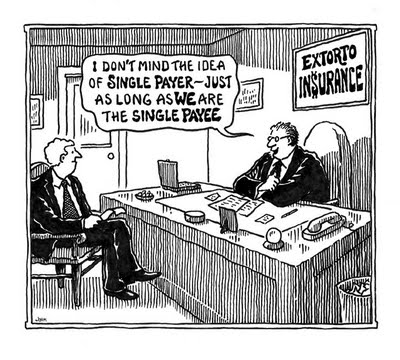
What would happen if the media lifted the curtain on Clinton’s healthcare platform and introduced any level of scrutiny to her proposed improvements on the Affordable Care Act?
In an extraordinary magic trick, performed on a national scale, Hillary Clinton’s healthcare platform has been disappeared. While policy analysts, news anchors, and columnists have been engaged in an intense debate over Bernie Sanders’s “Medicare for All” proposal, Clinton’s incremental alternative has escaped almost all scrutiny – even among those who say they prefer it.
Combining the election-season writings of our most prolific, liberal-leaning columnists at the New York Times, Huffington Post, Vox, Mother Jones, Politico, The American Prospect, etc. you’ll find dozens of articles critiquing Sanders’s single-payer plan. None have mentioned a single Clinton healthcare proposal as a point of comparison – merely that she supports a philosphy of incremental reform.
Take Paul Krugman, a high-profile advocate of Clinton’s approach to healthcare reform. Krugman has published two op-eds in the New York Times and five additional blog posts arguing that “[progressives] should seek incremental change on health care… and focus their main efforts on other issues – that is… Bernie Sanders is wrong about this and Hillary Clinton is right.” In all seven pieces, Krugman focuses exclusively on Sanders’s single-payer proposal and fails to mention even a single Clinton policy.
The disappearance of the Clinton healthcare platform has even been carried out by pollsters. The Kaiser Health Tracking Survey included a bizarre question in its February 2016 poll, which was widely cited in the press. Respondents were asked to pick one of four possible directions for the future of U.S. healthcare. Among the choices were “The U.S. should establish guaranteed universal coverage through a single government plan” and “Lawmakers should build on the existing health care law to improve affordability and access to care.” Thirty-three percent of Democrats chose the single-payer option, while fifty-four percent chose the incremental option. The questions were clearly intended as stand-ins for the Sanders and Clinton healthcare proposals, but note that the single-payer option is a policy, whereas the incremental option mentions no actual policies, but asks respondents whether they support the (universally desirable) outcomes of improving affordability and access.
What would happen if the media lifted the curtain on Clinton’s healthcare platform and introduced any level of scrutiny to her proposed improvements on the Affordable Care Act? They would find two categories of Clinton proposals: some that are so vague they’re difficult to evaluate, and other more concrete plans that follow in the footsteps of one of Congress’s most practiced healthcare incrementalists: Senator Bernie Sanders.
For example, one of Clinton’s clearest incremental proposals is to repeal the Affordable Care Act’s poorly named “cadillac tax” on health plans with high premiums. She announced this proposal on September 29, drawing the ire of White House spokespeople. The move, however, followed in the footsteps of a Senate bill to repeal the Cadillac tax introduced by Bernie Sanders and seven Democratic Senators just a few days previously on September 24. Clinton’s position was correctly seen by reporters as necessary if she didn’t want to lose labor union support to Sanders.
“Because Clinton’s healthcare platform has received zero public scrutiny, she has had the luxury of floating other policy ideas in broad outlines, too vague to evaluate.”Many of Clinton’s well-defined healthcare proposals are rolled into a package of prescription drug reforms, which she released on September 22, 2015. They bear a striking resemblance to the Sanders prescription drug plan announced on September 1, filed as legislation on September 10. Both would legalize importation of prescription drugs from Canada, where costs for identical drugs are much lower due to Canada’s single-payer healthcare system. Sanders was a pioneer of importation, and in 1999 started driving busloads of American patients who couldn’t afford breast cancer drugs across the Canadian border. Both candidates call for empowering Medicare to negotiate drug prices – even Donald Trump jumped on board in January. Both would ban “pay-for-delay” deals between brand-name and generic drug makers, and increase prescription drug rebates for Medicaid and/or Medicare.
Because Clinton’s healthcare platform has received zero public scrutiny, she has had the luxury of floating other policy ideas in broad outlines, too vague to evaluate. Take the proposal to expand the use of Accountable Care Organizations. How? According to Clinton’s December policy brief: “In the coming months, [Clinton] will provide full detail on her plans for delivery system reforms that drive down costs.” With the primaries drawing to a close, no such details have been released. The same could be said of another proposal to “create a fallback process” to review insurance premium rate hikes in states that don’t already review rates. There has been no explanation of how such a plan would work, or whether it would require new legislation.
This is the double standard at work in almost all national coverage of Clinton and Sanders on healthcare reform: Clinton has been taken at her word that her incremental plans will be politically feasible, succeed in improving affordability and access to care, and are not shared by her opponent. Sanders on the other hand received intense public pressure to release details of his single-payer healthcare proposal, and when he did the proposal was subject to an avalanche of public analysis and scrutiny.
This double standard is all the more remarkable because single-payer healthcare is an established policy, practiced in one form or another in almost every developed nation in the world. Incremental reforms that work within the market-based healthcare system of the U.S. are far more uncertain, and deserve greater scrutiny. They are easier to enact but dramatically more likely to fall short of their goals. This is because incremental reforms in the United States usually focus on expanding access to care, without significant cost controls, in order to avoid opposition from the healthcare industry. The resulting policies are often unsustainable; make little headway against national trends of rising costs and eroding access; or simply move costs around (e.g. from premiums to deductibles and co-payments, or vice versa).
Previous national trends in incremental healthcare reform – from managed care through pharmacy benefit management, chronic disease management, narrow networks, and beyond – have often created lucrative new industries, but had dubious impacts on underlying healthcare costs or access to care. Most of Clinton’s healthcare platform falls exactly into these danger zones, and should be received with a critical eye.
The national discussion of single-payer healthcare reform is long overdue. However, when the full range of national media outlets force one candidate to run on real policies, while allowing another to run on values and aspirations, we aren’t having a real discussion of systemic vs. incremental reform, we are merely aiding the corrosion of informed democracy.
Benjamin Day is the Executive Director of Healthcare-NOW.
April 2, 2016
Posted by aletho |
Deception, Economics, Mainstream Media, Warmongering | Bernie Sanders, Hillary Clinton, Huffington Post, Mother Jones, New York Times, Paul Krugman, Politico, The American Prospect, Vox |
Leave a comment
US backing for the overthrow of Syrian president Bashar al-Assad was supposed to be all about democracy. As Washington tells it, the people took to the street demanding democratic reforms and Assad did not listen, so he lost his legitimacy and needed to be overthrown. The US helped facilitate that overthrow by shipping in tons of weapons (much of which ended up in the hands of al-Qaeda and ISIS).
What Syrians were supposed to get in Assad’s place was a bright new future where they could vote for whoever they pleased to lead their government. That is what Washington told us was the noble goal of its regime change operation in Syria.
But just as in other US “democratization” operations overseas, that turns out to be not the case at all.
Syrians are free to choose their leaders as long as they choose the leaders Washington has chosen for them.
Over and over again the White House has reiterated its position that the Syrian people are forbidden from choosing Assad as their president after ISIS and al-Qaeda are defeated. The latest example of Washington’s anti-democratic “democracy promotion” came today, after Assad signaled his flexibility in forming a transitional government that might include the opposition, independents, and loyalists.
Obama’s spokesman flatly rejected any such proposal, saying, “I don’t know whether (Assad) envisioned himself being a part of that national unity government. Obviously that would be a non-starter for us.”
So Syrians, your “democracy” is being given to you by a United States deeply opposed to the idea of allowing any vote that is not pre-approved by Washington’s regime-changers.
Shorter Washington to Syrian people: “OK, you can vote, but we will hand you the approved candidate list.”
Hmmm…don’t they do that in US-condemned Iran?
April 2, 2016
Posted by aletho |
Civil Liberties, Full Spectrum Dominance, Progressive Hypocrite | Syria |
Leave a comment
KHARTOUM — The sanctions imposed on Khartoum by Washington hinder the development of cooperation between Russia and Sudan, Russian Ambassador to the African country Mirgayas Shirinskiy said Friday.
In 1997, Washington imposed economic, trade and financial sanctions against Khartoum on the ground of supporting terrorism, destabilizing neighboring states and violating human rights. The sanctions regime was extended in 2007, because of the violence in the Sudanese region of Darfur.
“The sanctions imposed on Sudan by the United States are significant hindrance [for the development of relations],” Shirinskiy told RIA Novosti, answering a question about the factors impeding the development of bilateral ties.
He added that the United States had imposed restrictions on deliveries of certain military equipment to Sudan, as well as on cooperation with Sudanese banking system that complicated business relations with country’s international partners.
In 2016, Moscow and Khartoum marked the 60th anniversary of establishment of diplomatic relations. Russia and Sudan have maintained a strong economic and political partnership for years. In 2014, the parties agreed to promote cooperation in a wide range of areas, including health care, mineral prospecting and the financial sector.
April 2, 2016
Posted by aletho |
Economics, Full Spectrum Dominance, Timeless or most popular | Africa, Russia, Sudan, United States |
Leave a comment
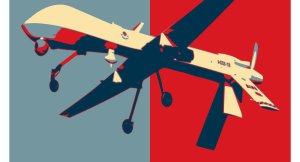 Barack Obama campaigned on a promise to scale back US military engagement in the Middle East and to keep America’s soldiers from getting bogged down in never-ending regional civil wars. President Obama has kept park of that campaign promise, with America’s troop presence abroad reduced. But US military engagement, as a whole, has increased significantly, through the use of unmanned drones and the deployment of troops in combat and security situations in more countries than in 2009.
Obama’s White House ended the previous administration’s Operation Iraqi Freedom and Operation Enduring Freedom — combat missions in Iraq and Afghanistan that continued to fester following George W. Bush’s attempts at regime change in Baghdad and the bombing of mountains into submission around Kabul. Today, despite recent reports that the Defense Department has understated the US troop presence in Iraq, troop levels in each country are down.
Nonetheless, Obama followed up his acceptance of the Nobel Peace Prize by expanding US military actions to nearly every country in the Middle East and North Africa, while reviving a Cold War posture toward Russia and China.
For instance, during the so-called Arab Spring, the US undertook a military campaign against Libyan dictator Muammar al-Qaddafi, leading to the leader being deposed and killed in the streets. The ousting of Qaddafi turned the once thriving country into a hotbed for Daesh extremists and today Libya is largely considered a failed state.
Under Obama, the US has expanded drone wars in Pakistan, Somalia, Yemen, Afghanistan, Libya and Syria with limited results and many civilian deaths.
Reports by the Bureau of Investigative Journalism suggest that the majority of US drone strikes result in civilian casualties, but under Obama these casualties have been defined away by invoking a macabre redefining of the “kill box” – anybody within a certain proximity to targeted victim is deemed a combatant.
The US today now finds itself performing aggressive joint military exercises with the South Koreans, seen as dress rehearsals for a full-scale invasion of North Korea — a nuclear capable country. American and NATO forces are posted along the Russian border in Norway to prepare for potential offensive actions against Moscow justified by the fantasy of Russian military aggression in Europe. US forces are now fighting in not only Iraq and Afghanistan, but also in Syria, Libya, and Yemen.
The paradox of the Obama Administration is how a president who campaigned on getting us out of war in Iraq and Afghanistan has now committed the US to the escalation of several recent wars.
Obama is no dove, and the world is no safer. With unmanned drone use increasing overseas, perpetual war has never been rebranded so effectively.
April 2, 2016
Posted by aletho |
Militarism, Progressive Hypocrite, Timeless or most popular, War Crimes | Afghanistan, Africa, Libya, Middle East, Obama, Pakistan, Somalia, Syria, United States, Yemen |
Leave a comment
Hillary Clinton’s signature project as Secretary of State – the “regime change” in Libya – is now sliding from the tragic to the tragicomic as her successors in the Obama administration adopt increasingly desperate strategies for imposing some kind of order on the once-prosperous North African country torn by civil war since Clinton pushed for the overthrow and murder of longtime Libyan ruler Muammar Gaddafi in 2011.
The problem that Clinton did much to create has grown more dangerous since Islamic State terrorists have gained a foothold in Sirte and begun their characteristic beheading of “infidels” as well as their plotting for terror attacks in nearby Europe.
There is also desperation among some Obama administration officials because the worsening Libyan fiasco threatens to undermine not only President Barack Obama’s legacy but Clinton’s drive for the Democratic presidential nomination and then the White House. So, the officials felt they had no choice but to throw caution to the wind or — to mix metaphors — some Hail Mary passes.
The latest daring move was a sea landing in Tripoli by the U.S./U.N-formulated “unity government,” which was cobbled together by Western officials in hotel rooms in Morocco and Tunisia. But instead of “unity,” the arrival by sea threatened to bring more disunity and war by seeking to muscle aside two rival governments.
The sea landing at a naval base in Tripoli became necessary because one of those rival governments refused to let the “unity” officials fly into Libya’s capital. So, instead, the “unity” leaders entered Libya by boat from Tunisia and are currently operating from the naval base where they landed.
With this unusual move, the Obama administration is reminding longtime national security analysts of other fiascos in which Washington sought to decide the futures of other countries by shaping a government externally, as with the Nicaraguan Contras in the 1980s and the Iraqi National Congress in 2003, and then imposing those chosen leaders on the locals.
(When I heard about the sea landing, I flashed back on images of Gen. Douglas MacArthur splashing ashore as he returned to the Philippines in World War II.)
Making the Scheme Work
But the new mystery is how this Libyan “unity government” expects to convince its rivals to accept its legitimacy without the military muscle to actually take over governance across Libya.
The Obama administration risks simply introducing a third rival government into the mix. Though the “unity government” drew participants from the other two governments, U.S. resistance to incorporating several key figures, including Gen. Khalifa Haftar, a military strongman in eastern Libya, has threatened to simply extend and possibly expand the civil war.
The U.S. scheme for establishing the authority of the “unity government” centers on using the $85 billion or so in foreign reserves in Libya’s Central Bank to bring other Libyan leaders onboard. But that strategy may test the question of whether the pen – poised over the Central Bank’s check book – is mightier than the sword, since the militias associated with the rival regimes have plenty of weapons.
Besides the carrot of handing out cash to compliant Libyan politicians and fighters, the Obama administration also is waving a stick, threatening to hit recalcitrant Libyans with financial sanctions or labeling them “terrorists” with all the legal and other dangers that such a designation carries.
But can these tactics – bribery and threats – actually unify a deeply divided Libya, especially when some of the powerful factions are Islamist and see their role as more than strictly political, though the Islamist faction in Tripoli is also opposed to the Islamic State?
I’m told that another unity plan that drew wider support from the competing factions and included Haftar as Libya’s new commander-in-chief was rejected by U.S. officials because of fears that Haftar might become another uncontrollable strongman like Gaddafi.
Nevertheless, Haftar and his troops are considered an important element in taking on the Islamic State and, according to intelligence sources, are already collaborating with U.S. and European special forces in that fight.
After the sea landing on Wednesday, the “unity government” began holding official meetings on Thursday, but inside the heavily guard naval base. How the “unity” Prime Minister Fayez Sirraj and six other members of the Presidency Council can extend their authority across Tripoli and then across Libya clearly remained a work in progress, however.
The image of these “unity” officials, representing what’s called the Government of National Accord, holed up with their backs to the sea at a naval base, unable to dispatch their subordinates to take control of government buildings and ministries, recalls how the previous internationally recognized government, the House of Representatives or HOR, met on a cruise ship in Tobruk in the east.
Meanwhile, HOR’s chief rival, the General National Congress, renamed the National Salvation government, insisted on its legitimacy in Tripoli, but its control, too, was limited to several Libyan cities.
On Wednesday, National Salvation leader Khalifa Ghwell called the “unity” officials at the naval base “infiltrators” and demanded their surrender. Representatives of the “unity government” then threatened to deliver its rivals’ names to Interpol and the U.N. for “supporting terrorism.”
On Friday, the European Union imposed asset freezes on Ghwell and the leaders of the rival parliaments in Tripoli and in Tobruk. According to some accounts, the mix of carrots and sticks has achieved some progress for the “unity government” as 10 towns and cities in western Libya indicated their support for the new leadership.
Shortly after being selected by U.S. and U.N. officials to head the “unity government,” Sirraj reached out to Haftar in a meeting on Jan. 30, 2016, but the move upset U.S. officials who favored isolating Haftar from the new government.
Political Stakes
The success or failure of this latest Obama administration effort to impose some order on Libya – and get the participants in the civil war to concentrate their fire on the Islamic State – could have consequences politically in the United States as well.
The continuing crisis threatens to remind Democratic primary voters about Hillary Clinton’s role in sparking the chaos in 2011 when she pressured President Obama to counter a military offensive by Gaddafi against what he called Islamic terrorists operating in the east.
Though Clinton and other “liberal interventionists” around Obama insisted that the goal was simply to protect Libyans from a possible slaughter, the U.S.-backed airstrikes inside Libya quickly expanded into a “regime change” operation, slaughtering much of the Libyan army.
Clinton’s State Department email exchanges revealed that her aides saw the Libyan war as a chance to pronounce a “Clinton doctrine,” bragging about how Clinton’s clever use of “smart power” could get rid of demonized foreign leaders like Gaddafi. But the Clinton team was thwarted when President Obama seized the spotlight when Gaddafi’s government fell.
But Clinton didn’t miss a second chance to take credit on Oct. 20, 2011, after militants captured Gaddafi, sodomized him with a knife and then murdered him. Appearing on a TV interview, Clinton celebrated Gaddafi’s demise with the quip, “we came; we saw; he died.”
However, with Gaddafi and his largely secular regime out of the way, Islamic militants expanded their power over the country. Some were terrorists, just as Gaddafi had warned.
One Islamic terror group attacked the U.S. consulate in Benghazi on Sept. 11, 2012, killing U.S. Ambassador Christopher Stevens and three other American personnel, an incident that Clinton called the worst moment of her four-year tenure as Secretary of State.
As the violence spread, the United States and other Western countries abandoned their embassies in Tripoli. Once prosperous with many social services, Libya descended into the category of failed state with the Islamic State taking advantage of the power vacuum to seize control of Sirte and other territory. In one grisly incident, Islamic State militants marched Coptic Christians onto a beach and beheaded them.
Yet, on the campaign trail, Clinton continues to defend her judgment in instigating the Libyan war. She claims that Gaddafi had “American blood on his hands,” although she doesn’t spell out exactly what she’s referring to. There remain serious questions about the two primary incidents blamed on Libya in which Americans died – the 1986 La Belle bombing in Berlin and the bombing of Pan Am Flight 103 over Lockerbie, Scotland, in 1988.
But whatever Gaddafi’s guilt in that earlier era, he renounced terrorism during George W. Bush’s presidency and surrendered his unconventional military arsenal. He even assisted Bush’s “war on terror.” So, Gaddafi’s grisly fate has become a cautionary tale for what can happen to a leader who makes major security concessions to the United States.
The aftermath of the Clinton-instigated “regime change” in Libya also shows how little Clinton and other U.S. officials learned from the Iraq War disaster. Clinton has rejected any comparisons between her vote for the Iraq War in 2002 and her orchestration of the Libyan war in 2011, saying that “conflating” them is wrong. She also has sought to shift blame onto European allies who also pushed for the war.
Though her Democratic rival, Sen. Bernie Sanders, hasn’t highlighted her key role in the Libya fiasco, Clinton can expect a tougher approach from the Republicans if she wins the nomination. The problem with the Republicans, however, is that they have obsessed over the details of the Benghazi incident, spinning all sorts of conspiracy theories, missing the forest for the trees.
Clinton’s ultimate vulnerability on Libya is that she was a principal author of another disastrous “regime change” that has spread chaos not only across the Middle East and North Africa but into Europe, where the entire European Union project, a major post-World War II accomplishment, is now in danger.
Clinton may claim she has lots of foreign policy experience, but the hard truth is that much of her experience has involved making grievous mistakes and bloody miscalculations.
Investigative reporter Robert Parry broke many of the Iran-Contra stories for The Associated Press and Newsweek in the 1980s. You can buy his latest book, America’s Stolen Narrative, either in print here or as an e-book (from Amazon and barnesandnoble.com).
April 2, 2016
Posted by aletho |
Militarism, Timeless or most popular, War Crimes | Bernie Sanders, Hillary Clinton, Libya, United States |
Leave a comment
Now that the Syrian armed forces have liberated Palmyra, President al Assad has thanked Vladimir Putin and the Russian people for the substantial support they provided to his country. Side by side, Syria and Russia have been fighting against the ISIS and other terrorist groups operating in the region – mainly the implants from the staunch allies of the West: Saudi Arabia, Qatar and Turkey.
After recent victories in Syria, the myth of invincibility of the terrorism has collapsed, smashed to pieces. It has become clear that if fought honestly and with full determination, even the most fanatical ones can be defeated.
It has also become obvious that the West has very little interest in defeating these groups. First: they were invented in the Western capitals, at least conceptually. Second: they serve numerous purposes and in many different parts of the world; they brutalize rebellious countries in the Middle East, and they are spreading fear and frustration amongst the European citizens thus justifying increasing ‘defense’ and intelligence budgets, as well as grotesque surveillance measures.
It is so obvious that the West is unhappy about the marvelous success of both the Syrian and Russian forces in the Middle East. And it still does all it can to undermine it, and it is belittling and even smearing it using its propaganda apparatus.
*
Now that the ISIS has been pushed away, further and further from all key strategic locations inside Syria, the question comes to mind: if finally defeated, where is it going to go next? Its fighters are, of course, in neighboring Iraq, but Baghdad has also been forging a closer and closer alliance with Russia, and the terrorist groups may soon not be safe there, either. By all accounts, the easiest place for the ISIS to expand is Lebanon.
Because the ISIS is already there! Its dormant cells are spread across the entire country, from Bekaa Valley, and even to some of the posh (and not necessarily Muslim) neighborhoods of Beirut.
Historically, Syria and Lebanon are a single entity. The movement of people between these two countries is substantial and constant. After the war in Syria began, hundreds of thousands of refugees, poor and rich, entered tiny Lebanon, some settling in the makeshift camps in Bekaa Valley, others renting lavish apartments on the Corniche in Beirut.
Officially, Lebanon (a country with only 4.5 million inhabitants) is “hosting” around 1.5 million refugees, mostly Syrians, but also those from Iraq and elsewhere. That is in addition to approximately 450,000 ‘permanent Palestinian refugees’ who are living in several large camps administered by UNRWA.
On some occasions, when the fighting got too vicious, the number of Syrian refugees in Lebanon spiked (unofficially) to over 2 million. For many years, the border between Lebanon and Syria has been porous, and even checks at the border crossings were relatively lax. It began to change, but only recently.
With the refugees (mostly families escaping from battles and from the extreme hardship caused by the conflict), came a substantial number of jihadi cadres – fighters from the ISIS, Al Nusrah and other pro-Saudi and pro-Turkish terrorist groups. They took full advantage of the situation, infiltrating the flow of legitimate émigrés.
Their goal has been clear and simple: to regroup in Lebanon, to create strong and effective cells, and then to strike when the time is ripe. The ‘dream’ of the ISIS is a mighty Caliphate in the north of Lebanon, preferably with full access to the Mediterranean Sea.
In recent history, Lebanon has become an extremely weak state, divided along the sectarian lines. For almost two years it has been unable to elect a President. To date, the government has been dysfunctional, almost paralyzed. The country is suffering from countless lethal ailments: from never-ending ‘garbage crises’ to constant electricity shortages, and problems with water supply. There is no public transportation, and public education is underfunded, inadequate and serves only the poorest part of the population. Corruption is endemic.
From time to time, Israel threatens to invade. It has attacked Lebanon on at least 5 separate occasions; the last time was as recent as in 2006. In the northeast of the country, on the Syrian border, both Lebanese military and Hezbollah are engaged in fighting the ISIS.
But the Lebanese military is under-staffed, badly armed and terribly trained. In the end it is Hezbollah, the most prominent military, social and ideological force in Lebanon, which is holding the line. It is fighting a tremendous, epic battle, in which it has already lost more men than it did when combating the most recent Israeli invasion in 2006.
So far, Hezbollah’s combat against the terrorist groups is successful. But in addition to providing defense, it is now the only political force in Lebanon that is willing to reach across the sectarian divides. It is also offering much needed social support to hundreds of thousands of poor Lebanese citizens.
In Lebanon and in fact all over the Middle East, Hezbollah is deeply respected. But it is Shi’a; it has been closely linked with Iran and Syria, and it is known to be fiercely critical of the West and its murderous actions in the Middle East and the Gulf. It is fighting precisely those terrorist groups that are armed and supported by Saudi Arabia, Qatar and Turkey. Therefore, it is antagonized.
The Lebanese government persistently refuses to place Hezbollah on the ‘terrorist list’, something that has already been done by many Western countries and by most of the pro-Western members of the Arab League. To the dismay of Saudi Arabia, both Iraq and Lebanon refused to vote in favor of declaring Hezbollah a terrorist organization. Syria would also refuse, but predictably it was not invited to vote.
Lebanon is increasingly critical of the West, of the international organizations and of the Arab League countries. It is outraged over the double standards related to the so-called ‘refugee crisis’. It is also unusually outspoken. One of Lebanon’s major newspapers, the Daily Star, reported on March 26th, 2016:
“Foreign Minister Gebran Bassil Saturday accused the international community of approaching the Syrian refugee crisis with a double standard; hours after U.N. chief Ban Ki-moon departed Beirut following a two-day visit.
Bassil pointed to the inconsistency of countries that back Syria’s armed insurrection to call on Lebanon to put human rights first, noting that many of those states were removing refugees by force – a move Beirut has not taken.
“They create war, and then call on others to host refugees in line with human rights treaties,” he said in a televised news conference from his residence in Batroun.”
The Foreign Minister Gebran Bassil and his party are in fact in a coalition with Hezbollah. He was extremely critical of the top ranking visitors who are lately overwhelming Lebanon: U.N. chief Ban Ki-moon, World Bank Group President Jim Yong Kim and EU foreign policy chief Federica Mogherini. Mr. Bassil even refused to meet Ban Ki-moon in person.
One of my sources that attended the closed-door meeting of Ban Ki-moon, Jim Yong Kim and the heads of the U.N. agencies in Beirut, commented: “almost nothing new, concrete or inspiring was discussed there.”
In Beirut, it is often mentioned that while Turkey and Jordan are able to negotiate billions of dollars for hosting the refugees on their soil, Lebanon is only given empty promises from the EU and the rest of international community. It is also being threatened with legal consequences, in case it were to decide to remove the refugees by force (the West’s allies like Thailand regularly remove refugees by force, often even killing them, but there are never any substantial threats delivered. Several European countries are also forcing refugees to leave).
How a country of 4.5 million will manage to cope with 1.5 million immigrants is uncertain. What is clear is that Lebanon’s infrastructure is collapsing or, as some say, is already gone.
*
It appears that there is a plan, a reason for choking Lebanon. Several Beirut-based experts are claiming that the country will soon become indefensible. The Saudis cancelled more than U$4 billion in aid earlier promised to the Lebanese military forces. Robert Fisk wrote for the Independent on March 2nd, 2016:
“Now Saudi Arabia, blundering into the civil war in Yemen and threatening to send its overpaid but poorly trained soldiers into Syria, has turned with a vengeance on Lebanon for its unfaithfulness and lack of gratitude after decades of Saudi largesse.
After repeatedly promising to spend £3.2bn on new French weapons for the well-trained but hopelessly under-armed Lebanese army, Saudi Arabia has suddenly declined to fund the project – which was eagerly supported by the US and, for greedier reasons, by Paris. Along with other Gulf states, Riyadh has told its citizens not to visit Lebanon or – if they are already there – to leave. Saudi Airlines is supposedly going to halt all flights to Beirut. Lebanon, according to the Saudis, is a centre of “terror”.”
The fact that last year Lebanon dared to arrest a Saudi Prince at Rafik Hariri International Airport, as he was trying to smuggle two tonnes of Captagon amphetamine pills bound for Saudi Arabia on a private jet, did not help. The Prince was also smuggling cocaine, but that was, most likely, for his personal consumption. Captagon amphetamine is also called the ‘combat drug’, and was, most likely, destined for pro-Saudi fighters in Yemen.
So what will happen if the Lebanese military gets no new weapons? Maybe Iran could help, but if not? Then Hezbollah would be the only force facing the ISIS that will soon be pouring out of the liberated cities in Syria in all directions, particularly towards the coast of Lebanon. But Hezbollah is ostracized, choked and demonized by the West and the Gulf.
One tiny new Israeli invasion and almost all Hezbollah forces would be tied up in the south, the ISIS would attack from the north, the dormant cells would be activated in Beirut, Tripoli and other cities, and Lebanon would collapse within few days. Is this a plan? After all, Israel and Saudi Arabia are two close allies, when it comes to their ‘Shi’a enemies’.
Then this tiny, proud and creative country would basically cease to exist.
The Gulf States (their rulers, not the people) would rejoice: another bastion of tolerance gone. And one more Shi’a stronghold – Hezbollah areas inside Lebanon – would be plundered and destroyed.
The West might be officially expressing its ‘concern’, but such a scenario would fit into its master plan: one more rebellious country would be finished, and Syria would for years be threatened from the western direction. After all, Damascus is only 30 minutes drive from the Lebanese border.
The “Paris of the Middle East” as Beirut used to be called, would then be ‘decorated’ with those frightening black flags of the ISIS. Lebanon as a whole would experience total collapse, year zero, the end.
This is not some phantasmagoric scenario. All this could happen within one year, even within a few months.
Right now, Lebanon has only two places from which to ask for help, for protection: Teheran and Moscow. It should approach both of them, without any delay!
Andre Vltchek is philosopher, novelist, filmmaker and investigative journalist, he’s a creator of Vltchek’s World an a dedicated Twitter user.
April 2, 2016
Posted by aletho |
Militarism, Timeless or most popular, Wars for Israel | Hezbollah, Human rights, ISIS, Israel, Lebanon, Middle East, Saudi Arabia, Syria, Turkey, Zionism |
Leave a comment

 Aletho News
 Aletho News
