Guardian Cites Terrorist Leader to Claim No Terrorists Are in Aleppo
ANTIMEDIA | October 21, 2016
On Wednesday, the Guardian released an article titled “U.S. and U.K. reject Russian offer of ‘pause’ in airstrikes on Syria.” Aside from the fact it’s riddled with the outlet’s usual pro-U.S.-U.K. and anti-Russian propaganda, the article sank to the lowest of possible lows in an attempt to present the Russian military as an aggressor in Aleppo in which there are allegedly no terrorist groups — only moderate fighting forces.
How? By citing the leader of a terrorist group.
Al-Farouk Abu Bakr, an Aleppo commander in the “powerful Islamist group” Ahrar al-Sham said, speaking from Aleppo:
“‘When we took up arms at the start of the revolution to defend our abandoned people we promised God that we would not lay them down until the downfall of this criminal regime,’ he said, referring to President Bashar al-Assad’s government.”
“There are no terrorists in Aleppo.” [emphasis added]
There are many issues with the Guardian’s publication of this statement. First, in the Guardian’s latest apparent attempt to see how gullible its readers are, the outlet neglects to explain the ideological leanings of Ahrar al-Sham (which is not surprising when you analyze it). Ahrar al-Sham is heavily affiliated with Jabhat Fatah al-Sham (formerly known as Jabhat al-Nusra, al-Qaeda’s official Syrian branch) and has conducted numerous operations together with the al-Qaeda affiliate. The group also used to work with ISIS until January 2014 and only parted ways after ISIS killed one of their members — not because the groups shared any noticeable differing ideologies.
The group has at least 20,000 members, and its stated goal is to establish a Sunni Islamic state within Syria (what would happen to all of the sects of Syrian society?). In 2013, Human Rights Watch reported they massacred 190 civilians and seized over 200 civilians simply because the villagers were from an Alawite-dominated part of Latakia.
If they are not a terrorist group, then what are they?
Further, one cannot ignore that these media outlets are so quick to interview or quote fanatical jihadists yet won’t even lend the same respect to Russian, Iranian, or Syrian military officials. The aforementioned are, after all, fighting against the same fanatical jihadists the Western powers have claimed to be fighting for decades.
The most intellectually damaging aspect of this report is that the same article prefaces the above terrorist leader’s statement with the following paragraph, effectively canceling out its own narrative:
“The Russians appear to be trying to work round both Britain and France by attempting to win the support of Saudi Arabia, Turkey and Qatar for a ceasefire that will put pressure on al-Nusra front fighters to leave Aleppo. Estimates of the number of al-Nusra fighters in the city vary between 400 and 900. In Moscow, Shoigu explained Russia is ‘asking the countries wielding influence with the [Syrian] rebels … to persuade their leaders to end fighting and leave the city.’
“Russia has improved its relations with Turkey, and neither Turkey or Saudi Arabia say they want al-Nusra to remain in Aleppo. America has also condemned the al-Nusra presence, saying despite a name change the group remains ideologically affiliated to al-Qaida.” [emphasis added]
So, there are no terrorist groups in Aleppo? But even the Americans have condemned their ‘non-existence?’ Why condemn something that isn’t there?
Confused?
The Guardian has been the recipient of the British National Newspaper of the Year four times (including as recently as 2013), the Bevins Prize for investigative journalism, and the Best Newspaper category three years running between 2005-2007, among others.
But Bob Dylan just won the Nobel Prize for literature following a career of writing no literature, so maybe this really is great journalism and we are the morons for not being able to understand it.
If EU leaders can be so wrong on Russia & Syria, no wonder the bloc is in crisis
By Finian Cunningham | RT | October 21, 2016
Russophobic rants by some European Union leaders and their willful distortion of events in Syria is a reflection of why the 28-member bloc is careering toward disaster. We are witnessing a crisis of appallingly inept leadership.
German, British and French leaders were among the most hawkish voices at the EU leaders’ summit in Brussels this week, denouncing what they claimed were Russian “war crimes” in Syria and calling for additional economic sanctions on both Moscow and Damascus.
German Chancellor Angela Merkel said Russian-backed Syrian air strikes were “inhumane and cruel,” while Britain’s Prime Minister Theresa May took the “most shrill prize” with her condemnation of Moscow’s “sickening atrocities.”
French President Francois Hollande echoed their calls for the EU to slap more sanctions on Russia – in addition to those the bloc has implemented over the Ukraine conflict.
This came only days after Belgian F-16 fighter jets reportedly killed six civilians in the Aleppo countryside, adding to a catalog of illegal aggression committed in Syria by French, British and American warplanes bombing the country without any legal mandate.
In the end, good sense among certain member states prevailed, and the EU summit concluded without imposing additional punitive measures. As the Financial Times reported: “Italy’s Renzi forces a retreat from new sanctions on Russia… Germany, France and UK rein in demand for fresh EU sanctions over Aleppo bombardment.”
Italy, Spain, Austria, Hungary, Greece, Malta and Cyprus were some of the EU members wary of escalating economic and political problems already incurred from loss of trade with Russia over the Ukraine debacle.
Britain’s premier May gave a particularly asinine speech in Brussels. She called for a “robust and united European stance in the face of Russian aggression.” This from the leader of a government currently embroiled in bitter rows over its divorce from the EU.
So, the British leader wants to bequeath even more tension and economic hardship between the people of Europe and Russia, just before she packs up Britain’s membership.
In the Russophobic rousing, European Council President Donald Tusk also excelled. Despite the EU summit rejecting the adoption of more sanctions against Russia over Syria, Tusk was later threatening that such measures remained an option. Tusk had regaled the summit with a list of alleged Russian “misdemeanors” including “air-space violations, disinformation campaigns, cyber-attacks, interference in the EU’s political processes and beyond. Hybrid tools in the Balkans, to developments in the MH17 investigation.”
Then he declared: “Given these examples, it is clear that Russia’s strategy is to weaken the EU.”
Please note that Tusk is supposed to be a leading light for the EU as it negotiates a raft of existential problems, from intractable international trade deals, migration and border disputes, anti-EU political parties, and ongoing economic stagnation for 500 million citizens.
But if Tusk and other EU leaders like Merkel and Hollande can come out with such inane views on Russia, what chance has the bloc got in dealing effectively with other challenging issues? No wonder, EU citizens are losing respect and faith in political leaders when they are seen to be so utterly incompetent and detached from reality.
Yet to make matters even worse, Tusk and his Russophobic ilk turn around and blame the imploding EU crisis on alleged Russian plots to “weaken and divide.”
Just ahead of the EU leaders’ summit in Brussels, Merkel and Hollande met Russian President Vladimir Putin in Berlin for a conference on the Ukraine crisis. The Kiev regime’s President Petro Poroshenko was also in attendance.
The Berlin meeting did not result in any progress toward resolving the Ukraine dispute. While the German and French leaders wanted to penalize Russia over alleged violations in Syria, they seemed oblivious to hundreds of attacks by Kiev’s armed forces on civilian centers in breakaway eastern Ukraine. The assassination of a military commander in the self-declared Donetsk People’s Republic last week by suspected Kiev agents has heightened fears of a return to all-out war.
Where are Merkel and Hollande’s condemnations and calls for sanctions on the Kiev authorities whom they patronize with billions of dollars in financial aid and NATO military support?
Also, Merkel, Hollande and Britain’s May have little to say about recorded “cruel, inhumane, sickening” massacres in Yemen committed by the Saudi coalition bombing that country. Their silence no doubt is owing to the fact that their governments sell billions of dollars worth of weapons to the Saudi regime even as it slaughters women and children in Yemen.
And, indeed, let’s talk about Syria and the besieged northern city of Aleppo.
The crimes that European leaders allege against Russia and its Syrian ally are based on unverified claims issued by dubious networks evidently under the control of the anti-government militants. The militants besieging east Aleppo are dominated by head-chopping terrorist groups like the internationally proscribed Jabhat Al-Nusra.
When Russia unilaterally implemented a temporary ceasefire this week in Aleppo, an innovative live-streaming broadcast from the appointed humanitarian corridors proved once again the real nature of the violence.
Civilians trapped in the militant-held areas were shown to be held as “human shields” by the insurgents. While buses and other vehicles were waiting to ferry civilians out of the conflict zone, video footage recorded militants shelling and sniping at the humanitarian aid effort.
Those violations corroborated what citizens in east Aleppo have been saying for a long time – that they are being held against their will by the gunmen. Besieged people are even calling on the Syrian and Russian forces to continue in their operations to break the hostage situation and liberate that part of the city.
All across Syria, hundreds of villages and towns have been liberated by the Syrian army and its Russian allies since Putin ordered his air force to intervene in the stricken country at the end of last year.
One of the recent successes was the town of Qudsaya near the capital Damascus. Last week, thousands of residents rallied in the main square cheering President Bashar Assad, the Syrian army and Russia for their “liberation” after the foreign-backed mercenaries were routed from the town.
The foreign backers of the mercenary army that has plunged Syria into horror since March 2011 – with perhaps half a million dead – include the supposedly leading EU members Britain and France. Hollande is on record for admitting that France supplied weapons to insurgents in Syria as far back as 2012, when the siege of Aleppo began, and in breach of a European arms embargo.
What is going on in Syria is a military victory over a foreign-sponsored terrorist war on that country. Russia’s role in the liberation of Syria is principled and commendable.
Those who should be facing prosecution for war crimes include pious, pompous government leaders, past and present, in London and Paris.
If such prominent EU governments can be so wrong and distorting about something so glaringly obvious as Syria and Russia’s support, then no wonder the EU is in free-fall over so many other pressing matters. With criminally incompetent politicians in power, the EU is a bus with its driver slumped at the wheel.
Duterte’s China visit a ‘turning point’
The BRICS Post | October 21, 2016
Philippine President Rodrigo Duterte has made good on a promise he made in August to steer relations with China toward mutual benefit and bilateral cooperation.
During his visit to Beijing on Thursday Duterte said that he was still committed to discussing the South China Sea territorial dispute in a bilateral fashion with his Chinese counterparts.
Chinese President Xi Jinping welcomed the Philippine initiative and warmly shook hands with Duterte saying that both countries had emerged from a relationship of “winds and rains”.
As the first country to visit outside ASEAN since he took office in June the Philippine president is committed to continuously engaging China in a diplomatic dialogue rather than anger officials there.
Relations between the two countries recently took a downturn after the International Court of arbitration in The Hague ruled that China’s historic claims to most of the South China Sea were invalid.
China called the ruling a farce and at the time Xi said he would not accept any proposition or action based on the ruling issued unilaterally, and initiated by the former Philippine government.
Xi described the new turn in their ties as the springtime of our relationship.
In addition to discussing the South China Sea issue the two countries signed 13 agreements and deals worth more than $13 billion.
China also pledged financial support for infrastructure projects in the Philippines and said it would lift travel advisories for Chinese tourists visiting the islands.
Chinese media hailed the visit as a turning point and a welcome U-turn in the two countries’ ties.
Israel looks to buy three new nuke-capable subs
Palestine Information Center – October 21, 2106
OCCUPIED JERUSALEM – Israel is seeking to buy three more advanced submarines from Germany at a combined price of $1.3 billion, an Israeli newspaper reported Friday
The planned purchase aims to replace within the next decade the oldest submarines in its existing Dolphin fleet, which began entering service in 1999, the Maariv daily reported.
Contacted by AFP, the “Defense Ministry” declined to comment on the report.
Israel already has five of the state-of-the-art German submarines, with a sixth due for delivery in 2017.
Foreign military sources and governments say the Dolphins can be equipped with missiles armed with nuclear warheads.
They believe Israel has between 100 and 200 warheads and missiles capable of delivering them.
The new submarines are said to be more advanced, longer, and equipped with better accessories, the newspaper added.
“No Palestinians during the holiday”: Palestinian man harassed during Sukkot

International Solidarity Movement | October 21, 2016
Hebron, Occupied Palestine – Late Thursday morning, as Palestinian schools in the Old City of occupied al-Khalil (Hebron) were dismissing their students early due to enhanced settler activity, Israeli forces harassed a Palestinian man and denied him his right of movement through the large parking lot near the base of al-Ibrahimi Mosque. The reason for this incident, as well as the increase in settler activity, was due to the week-long Jewish holiday of Sukkot, the Feast of the Tabernacles. Throughout this entire week, Israeli Forces have increased their numbers stationed around the Mosque, and it was one of these members of the occupation forces that decided to harass this Palestinian civilian.
The man, a local tour guide in the Old City of al-Khalil, entered the parking lot in order to reach a group of Turkish tourists who had just arrived. Upon setting foot in the lot, two members of the Israeli Border Police approached him, with one using his hands to physically shove him away from the cordoned off entrance. As he tried to explain that he merely wanted to pass through to reach the tourists, the border policeman raised his voice and shouted at him to get back. When the man asked why he was not allowed to pass through when so many tourists were permitted to, the answer he received was, “You are Palestinian. No Palestinians pass through here during the holiday.” The man had no choice but to turn around and walk around the parking lot.
The denial towards Palestinians of their right to movement by Israeli forces is a fundamental weapon of the occupation. By preventing Palestinians from entering historical and religious sites, and working to minimize their presence around Jewish festivities, Israel uses the excuse of the holidays to continue its process of ethnically cleaning al-Khalil of its indigenous Palestinian population. On Wednesday, Israeli Forces came out in force to block off a road in the so-called Palestinian controlled H1 area to allow settlers from the illegal Israeli settlements to have access to a supposed prayer site in the city. This is merely one of the many examples of how Jewish holidays act as a cover for forceful intimidation of Palestinians.
The harassment of this man this morning is symptomatic of the devaluation of Palestinian life under the Israeli occupation across the land of Palestine.
Hebron Occupation Captured – October 2016
CPT | October 21, 2016
|

|
|
|
|

|
|
|
|

|
|
|
|

|
|
|
|

|
|
|
|

|
|
|
|

|
Latvia detains, deports chief producer of Russian news agency
RT | October 21, 2016
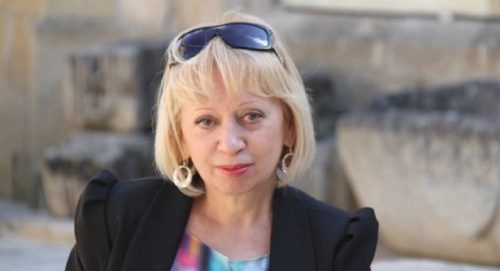
Latvian border guards have detained Ella Taranova, a chief producer for Russia’s Rossiya Segodnya international information agency, who arrived for the Baltic Forum in Riga. According to RIA Novosti, she was deported late Friday.
It appears Taranova had been blacklisted by the country’s authorities in August 2014 but was never informed about it.
Taranova, who has a valid Schengen visa, arrived in the country by plane on Friday morning, alongside other Russian journalists, and “had no problems when passing border control,” she said.
However, several hours after she checked in to a hotel, she was summoned to the registration desk where two Latvian border guards told her she was on a blacklist and must leave the country, TASS reports.
“It seems from 5 August 2014, I have been on a security services list of undesirable people,” Taranova told RIA Novosti. “I knew nothing about this, only that I had been invited to a conference of the Baltic Forum.”
“I was asked several times with suspicion whether I knew I was on the list, before being told that in theory, I should know,” she added. “It was explained to me that the people on this list pose a threat and security risk to the Republic of Latvia. This is disgusting. I was not and am not involved in any political activity.”
The director of the Baltic Forum, Aleksandr Vasilyev, said Taranova is at a border guards station in Jurmala and will be put on a plane to Moscow later on Friday. He added that a Russian Embassy member of staff and a forum representative are with her.
The Baltic Forum is an annual conference held since 1998. It is due to be held on Saturday in Jurmala. Participants will discuss the nature of the Russia-EU relationship and will include diplomats, experts and politicians from EU countries, Russia, Ukraine, China and the US. Taranova has a long-term partnership with the Forum and had attended several times prior to 2014.
RT’s editor-in-chief, Margarita Simonyan, expressed her dismay.
“It is an outrage,” she wrote on Twitter.
The Russian Foreign Ministry condemned the incident, saying the incident contradicts Latvia’s international obligations regarding freedom of speech.
“This regrettable event completely fit into the fabric of the anti-Russian actions aimed at suppressing dissent and restricting freedom of expression, of the Latvian alternative media,” an official statement read. “The existence of blacklists, the criterion for inclusion in it, which is being a professional journalist, is unacceptable in a democratic state, and contrary to all international commitments to ensure freedom of speech.”
Meanwhile the Russian State Duma is going to demand an official explanation for Latvia’s actions from the EU, the Council of Europe and the OSCE, Sergey Zheleznyak, a member of the Russian Parliament Foreign Affairs Committee, told reporters. This is just the latest in a series of attempts to “put pressure on the Russian media, which has become the ‘new normal’ of European policy,” he said, as quoted by RIA Novosti.
Latvian MP Janis Urbanovics, who belongs to the center-left Harmony party, has warned that expelling Taranova is not good for Latvia’s image. “I don’t know why it happened that a person with a Schengen visa could arrive in any other country of the European Union, but turned out to be unwelcome in Latvia,” Urbanovics said, RIA Novosti reported.
Venezuelan Supreme Court Orders New Inquiry into Disappeared During Fourth Republic
By Lucas Koerner | Venezuelanalysis | October 20, 2016
Caracas – Venezuela’s Supreme Court (TSJ) issued a ruling Tuesday ordering the country’s the public prosecution to reopen investigations into the case of a law student disappeared in 1966.
Andres Pasquier Suarez, a law student at the Central University of Venezuela, was detained by Venezuela’s national guard on October 10, 1966 and subsequently handed over to the now defunct Armed Forces Information Service.
According to military records, the youth was transferred two days later to the Urica Anti-Guerrilla Camp from which he never returned.
A Maracaibo military tribunal charged with investigating the incident declared the case closed on March 15, 1968, finding that “no crime has been committed in any moment”.
Writing on behalf of the high court, TSJ President Gladys Gutierrez struck down the prior ruling as “contrary to the elemental principles of law and justice”, concluding that the military court had failed to conduct an impartial investigation of the disappearance.
The justice ordered the public prosecutor’s office to reopen the investigation and identify those responsible as mandated under article 19 of Venezuela’s Law to Prosecute Crimes, Disappearances, Tortures, and Other Human Rights Violations for Political Reasons during the Period 1958-1999.
Over the last 17 years, numerous inquiries have brought to light the magnitude of human rights violations committed under Venezuela’s pacted, two-party system known as the Fourth Republic.
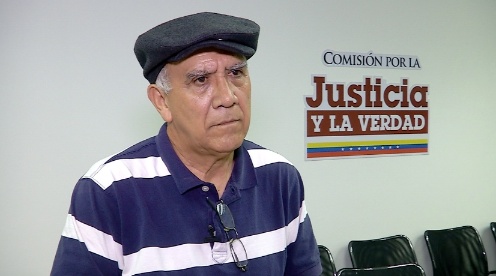
This past July, the country’s official Truth and Justice Commission revealed that it had registered a total of 11,043 cases of torture, assassinations, and political disappearances between 1958 and 1998.
Pro-Clinton Ad Compares Trump to Chavez, Venezuela Responds

teleSUR | October 20, 2016
The U.S. Democratic Party showed its true colors in a new ad that the Venezuelan government blasted as “racist arrogance” that puts the late Hugo Chavez in the same category as fascist dictators Benito Mussolini and Adolf Hitler in an effort to cast Republican presidential rival Donald Trump as a dictator-in-waiting.
The Spanish-language ad, aimed at U.S. Latino voters ahead of the Nov. 8 election, features comments by Trump that Clinton should be jailed and his vow to sue media that spread “purposely negative, horrible and false” articles.
“Remind you of anyone?” the video asks before flashing images of the popular socialist Venezuelan leader Chavez.
The clips are selectively edited to portray Chavez as authoritarian but deliberately fail to mention that Chavez and his Bolivarian Revolution won support at the ballot box in over a dozen elections which former Democratic President Jimmy Carter called “the best in the world.”
“It is an expression of racist arrogance and irrationality from a party that does not serve its constituents,” Venezuela’s Foreign Minister Delcy Rodriguez said in a statement late Wednesday.
“Chavez is a leader who transcended our time for his democratic nature, his fight for the poor and universal feeling for humanity,” she added.
The video also compares Trump and Chavez, who died in 2013, with European dictators Mussolini and Hitler, and concludes by urging voters to “protect” U.S. democracy. The ad was paid for by the Democratic National Committee in support of Clinton, and was not made by her campaign.
The clip nonetheless serves to show that the U.S. Democratic Party, despite efforts to portray their party as more reasonable than their Republican counterparts, are not beneath manipulation to help their candidate get elected.
The U.S. Department of State, under the leadership of then-Secretary of State Clinton, publicly praised the results of the 2012 Venezuelan presidential elections that saw Hugo Chavez re-elected to a third term.
In statements to the press, then-State Department spokesperson Victoria Nuland said they “congratulated the Venezuelan people for the high turnout and for the generally peaceful manner in which the election was carried out.”
But while Clinton publicly welcomed improved relations with Venezuela as secretary of state, she privately ridiculed the country and continued to support destabilization efforts.
Venezuela, whose economy is heavily dependent on oil exports and has suffered due to the dramatic drop in the price of oil, has been the subject a vicious media campaign which has portrayed the country as being on the brink of collapse. The ad is an effort to piggyback off that negative press to win support from the Latino community.
However, the effort may backfire as Venezuela’s socialist government enjoys support throughout Latino communities in the United States and even reached out directly to low-income people in the United States through discounted home heating oil.
In the Democratic Party primary race, both Clinton and her opponent Bernie Sanders also tried to tie Chavez into the race, with the latter calling the Venezuelan leader a “dead communist dictator.”
South Africa announces decision to quit International Criminal Court
Press TV – October 21, 2016
South Africa has joined Burundi in officially announcing its withdrawal from the International Criminal Court (ICC), saying its laws are incompatible with obligations under the ICC.
The South African government gave a formal notice of its intention to pull out of the ICC on Friday.
South Africa “found that its obligations with respect to the peaceful resolution of conflicts at times are incompatible with the interpretation given by the International Criminal Court,” the document, signed by International Relations Minister Maite Nkoana-Mashabane, read.
Meanwhile, Justice Minister Michael Masutha told a media conference in the administrative capital, Pretoria, that the ICC’s obligations are inconsistent with laws giving sitting leaders diplomatic immunity.
“The Implementation of the Rome Statute of the International Criminal Court Act, 2002, is in conflict and inconsistent with the provisions of the Diplomatic Immunities and Privileges Act, 2001,” Masutha said.
South Africa says a bill over the matter, i.e. the withdrawal from ICC, will soon go to the country’s parliament.
The decision comes amid a dispute over last year’s visit by Sudanese President Omar Hassan al-Bashir to attend an African Union summit in Johannesburg. Bashir is wanted by the ICC over alleged war crimes. South Africa, however, said he had immunity as the head of a member state.
Nevertheless, the ICC criticized the South African government for its failure to arrest Bashir.
The announcement of the decision by South Africa to withdraw from the ICC sparked rapid criticism from the New York-based Human Rights Watch (HRW).
South Africa’s proposed withdrawal “shows startling disregard for justice from a country long seen as a global leader on accountability for victims of the gravest crimes,” HRW said in a statement. “It’s important both for South Africa and the region that this runaway train be slowed down and South Africa’s hard-won legacy of standing with victims of mass atrocities be restored.”
South Africa is the second African country to declare its withdrawal from the ICC. Earlier this week, Burundi’s President Pierre Nkurunziza signed a decree to quit the court’s jurisdiction.
Namibia and Kenya have also raised the possibility of withdrawal from the ICC.
Some African governments say the ICC has shown a post-colonial bias against the continent’s leaders.
Obama Ridicules Trump’s Call for Good Relations With Russia
Sputnik – 21.10.2016
Republican presidential nominee Donald Trump’s call for improved relations with Russia during his third debate with rival Hillary Clinton was sneered at as having a “bromance” with Russian President Vladimir Putin, US President Barack Obama said in a speech.
“Your [Republican] party’s nominee for president was kissing up to [Russian President Vladimir] Putin, the former KGB officer,” Obama said while campaigning for Clinton at Miami Gardens in Florida on Thursday.
Obama ridiculed Republicans for supporting a presidential candidate who had repeatedly advocated having good relations with Russia and its leader.
“You [Republicans] are OK with your nominee having a bromance with Putin,” he added to cheers from his audience.
In his debate with Clinton on Wednesday night, Trump said he had never met Putin and repeated his previously expressed opinion that good relations between the United States and Russia were desirable. Trump has also called for cooperation with Russia in fighting the Islamic State terror group.
Featured Video

Meet The Ellisons: Zionists, Technocrats, Moguls
or go to
Aletho News Archives – Video-Images
Frlom the Archives
Who Rules America?
The Power Elite in the Time of Trump
By James Petras | Axis of Logic | September 6, 2017
Introduction
In the last few months, several competing political, economic and military sectors – linked to distinct ideological and ethnic groups – have clearly emerged at the centers of power.
We can identify some of the key competing and interlocking directorates of the power elite:
- Free marketers, with the ubiquitous presence of the ‘Israel First’ crowd.
- National capitalists, linked to rightwing ideologues.
- Generals, linked to the national security and the Pentagon apparatus, as well as defense industry.
- Business elites, linked to global capital.
This essay attempts to define the power wielders and evaluate their range of power and its impact. … continue
Blog Roll
 Aletho News
- Sorry, The New Republic, Climate Change Isn’t Causing Somali Migration. Blame Civil Strife and Poverty.
- Expert Guts Claims That HPV Vaccine Reduces Cancer Risk
- No evidence Russia sabotaged Baltic cables – Finnish intel
- The Strategic Folly of a (Serious) US Ground Invasion of Iran
- US-Israeli war of aggression on Iran meant to reshape region: Omani FM
- Iran Does Not Consider Israel Party to Talks to Need Mediators With It – Ambassador
- Macron’s aircraft carrier and warplanes to the Persian Gulf is a dangerous vanity project
- Meet The Ellisons: Zionists, Technocrats, Moguls
- US failures in Iran reveal Russia is key to South Korea’s strategic security
- ‘All ports in Persian Gulf will be legitimate targets if Iranian ports are attacked’
- If Americans Knew
- Are we on the precipice of World War III?
- ‘Catastrophic,’ Says UNICEF: 1,100+ Children Killed or Wounded in Mideast Since US-Israel Launched Iran War
- The Unbelievable Madness of Our War With Iran
- World Council of Churches calls on govts to hold Israel accountable for violations of intl law
- How to end the war on Iran that costs US taxpayers $1M per minute – Not a ceasefire Day 153
- Israeli strategic plans to “remake the Middle East” from the 1950s and since
- Honoring Gaza’s women who refused to let the world look away
- 97% of victims of war on Iran are Iranian, 98% of victims in war on Gaza are Gazans – Not a ceasefire Day 152
- Early Iran strikes cost $5.6 billion in munitions, Pentagon estimates
- Israel Decided the War, But Trump’s America Fights and Pays the Bill
- No Tricks Zone
- Destructive Green New Deal: German Energy And Metal Group Warns Of Drastic Crisis
- New Study Documents A 20-Year Pause In Arctic Sea Ice Decline – Driven By Internal Variability
- Wake-up Call: Survey Shows Majority Of Germans Now Favor Postponing Climate Targets!
- Televised! Leading German Political Candidate Tells Schoolchildren CO2 Makes Sun Hotter!
- New Study: A Century Warming Of 1.1°C Is ‘Commonplace’ And ‘Not Unusual’ During This Interglacial
- New Study: ‘Internal Noise’ And Volcanic Forcing Can Trigger 10-15°C Warming Within Decades
- Glaciers Worldwide Are Suddendly Surging, Experts Blame Warming!
- Surprising Discovery: Sahara Is Greening…Billions Of Trees Where Once Thought To Be Barren
- New Research Reaffirms Clouds, Aerosols, And Surface Solar Radiation Are ‘Driving The Climate System’
- Germany: Electric Car Catches Fire At Charging Station, Sets Off Local “Inferno”, Widespread Damage
 Aletho News