Tillerson Caves, Will Appoint Special Anti-Semitism Envoy Who Monitors Criticism of Israel

Anti-Semitism Envoy Hannah Rosenthal adopted a new Israel-centric definition of anti-Semitism and used it to train American diplomats.
By Alison Weir | If Americans Knew | August 29, 2017
After continuing pressure, Secretary of State Rex Tillerson has announced that he will name a special envoy and maintain an office to monitor alleged anti-Semitism.
All three previous anti-semitism envoys have been fervent Israel partisans, two of them working for AIPAC. The first envoy endorsed a new definition of the word “anti-Semitism” to include criticism of Israel; the second adopted the new, Israel-centric definition; and the third helped to disseminate the definition world-wide.
This was part of an international campaign to expand the definition of anti-Semitism and embed this in governments and law enforcement agencies, potentially criminalizing support for Palestinian rights.
When it appeared in June that Trump might eliminate the office in a cost-cutting measure, he and Tillerson came under immediate attack by Jewish organizations and some others, including the Southern Poverty Law Center.
According to a letter from Tillerson to the Senate released yesterday, a number of similar special envoys and ambassadorships will be maintained, including the Special Envoy for Israeli-Palestinian Negotiations (currently filled by Frank Lowenstein), the Special Envoy as well as the Special Advisor for Holocaust Issues (which, among other things, works with Israel and supports the anti-Semitism envoy; currently the Special Advisor is Stuart E. Eizenstat), and the Ambassador-at-Large for International Religious Freedom; Kansas Governor Sam Brownback, a strong supporter of Israel despite its record of religious discrimination, has been nominated for the position.
Dozens of other special envoy positions are being eliminated or combined, including ones concerned with Tibet, disabilities rights, global food security, cyber issues, global youth issues, conflict diamonds, the closing of Guantanamo, and a number that focus on the environment.
Netanyahu’s Sudden Trip to Russia: What’s Israel Worried About?
By Dmitry MININ | Strategic Culture Foundation | 29.08.2017
The stated purpose of Israeli Prime Minister Benjamin Netanyahu’s sudden Aug. 23 trip to Sochi and meeting with the Russian president was to update him about the «scale of Iran’s military footprint in Syria». However, this is something Tel Aviv does with enviable regularity, and since Russia already has a presence on the ground in Syria, Israel would be hard-pressed to be able to offer Moscow any new information on this. Moreover, according to the Israeli press, a less prominent Israeli delegation presented a similar report some time ago in Washington that failed to make much of an impression there.
However, the director of Mossad, Yossi Cohen, and the head of Israel’s National Security Council, Meir Ben-Shabbat, also made the trip to Sochi, in addition to the prime minister, which indicates the particular significance of the meeting for Netanyahu. And DEBKAfile reports that the powwow lasted a full three hours, despite the Russian president’s tight schedule that day.
Israeli analysts surmise that Netanyahu is not only worried about the presence of Iranian volunteer squadrons in Syria, but also about how a quick end to the civil war in that country would not, on the whole, work in Israel’s favor. For example, the joint Lebanese-Syrian operation to rout the last major Islamic State (IS) contingent on the border between the two countries in the western Qalamoun region, 20 km. north of Israel, will soon be winding down. One might expect that once the Syrian Arab Army (SAA) units and their allies are freed up there, they would next turn their attentions to clearing terrorists from the areas bordering Israel, particularly in the region of Quneitra.
Israel, therefore, faces a serious dilemma. The Israelis don’t want to let Damascus re-approach their border near the occupied Golan Heights, for then it will become apparent that Netanyahu’s entire strategy of supporting the Syrian opposition and renouncing Assad has failed. That moment of truth could deal the final blow to his cabinet’s rather precarious position. It would also prove awkward to actually be fighting on the side of al-Qaeda militants from HTS. Even the US gave that idea a very cool reception. Hence this explanation: the «terrifying» country of Iran is on the verge of capturing all of Syria with the help of «Shi’ite militias,» and Israel is firmly drawing «lines in the sand» against Tehran and Lebanon’s pro-Iranian «Hezbollah». If those lines are crossed, that will necessitate the use of all of Israel’s military might.
The problem is compounded by the fact that Russian monitors and peacekeepers (two squadrons of military police from Ingushetia are currently on duty) are stationed at 10 roadblocks, 13 kilometers from what would be the battlefield on the western borders of the southern «de-escalation zone» in Syria. Those peacekeepers have been awarded international recognition, even in accordance with an agreement with the United States. There’s a good reason Israel was not terribly pleased by either the creation of this «de-escalation zone» or by the appearance of the Russian peacekeepers there. It will be quite easy for them to see if Iran’s Revolutionary Guards or agents from Hezbollah are moving in Israel’s direction. Gone are the days when the survival of Damascus largely depended on foreign volunteers. New military divisions and even SAA corps have already emerged, made up of Syrians. Assad has no need to use Iranians or Lebanese to take control of the Israeli border – he has his own units for that. That’s why Netanyahu is so insistent in his attempts to convince Moscow that the Iranians are bound to attack them for some reason. Of course the Iranian divisions in Syria theoretically don’t even possess the heavy weaponry that would make it possible for them to do such a thing. That is entirely in the hands of the SAA and lately also within the Russian advisors’ zone of interest.
Moscow is telling the truth when it claims that it is not only concerned about Israel’s security, it is also prepared to guarantee it. But that security has to be real, not pretend. Both sides need to call a spade a spade. It’s already clear to any unbiased observer that the outcome of the war in Syria is a foregone conclusion. And the victors won’t only be individual politicians like Assad, but also the entire Syrian nation. Clear-sighted politicians should have accepted reality long ago and adjusted their strategy accordingly, without attempting to turn back the hands of time. Only thus will they be in a position to ensure stability, both for themselves and for the region as a whole.
The future evolution of this conflict will largely depend on the US stance. Israeli pundits acknowledge that Netanyahu, despite all his threats, is unlikely to launch a serious military operation in Syria unless he gets some sort of nod from Washington. That’s what would also demonstrate whether the White House is prepared to cross the rickety bridge toward reconciliation in Syria or whether it wants to plunge that country back into total chaos, which, given the current power dynamics, would bode ill for itself. IS is on the verge of total collapse in Syria. Next in line could be America’s allies from the Free Syrian Army.
Maariv, a prominent Israeli newspaper, regretfully observes that the Aug. 23 meeting in Sochi «will not change the sad fact that when it comes to Iran, Israel has no true allies on the international stage». And that publication puts the blame for this on Netanyahu himself, who – when it came down it – proved unable to secure the support of those politicians he is so proud to call his friends – the presidents of the US and Russia.
However, does «friendship» include indulging anything one’s «friend» does, even if what he’s doing is a mistake? After all, it has more than once been explained to Prime Minister Netanyahu that the Iranian troops will depart once the war in Syria ends. That’s even what Tehran is saying. And perhaps it would be better, before it’s too late, to play a role in events on the winner’s side? Even in the absence of diplomatic relations, it’s not so hard to find a way. This would be the most intelligent policy.
Inflating the Russian Threat
By Jonathan Marshall | Consortium News | August 28, 2017
Readers of the New York Times have more to sweat about than hot summer weather in the Big Apple. The paper’s chief military correspondent, Michael Gordon — co-author of the infamous 2002 story about Saddam Hussein’s “quest for A-bomb parts” — has all but warned that war in Europe could break out at any minute with the mighty Russian army.
“Russia is preparing to send as many as 100,000 troops to the eastern edge of NATO territory at the end of the summer,” he reported last month with Eric Schmitt. Sounding like speechwriters for Sen. John McCain, they called the long-planned military exercises with Belarus — known as “Zapad” (Russian for “west”) — “one of the biggest steps yet in the military buildup undertaken by President Vladimir V. Putin and an exercise in intimidation that recalls the most ominous days of the Cold War.”
Gordon and Schmitt added that this latest and greatest example of “Mr. Putin’s saber-rattling,” represents “the first time since the collapse of the Soviet Union that so much offensive power has been concentrated in a single command.”
Many other Western news organizations have echoed this story, albeit with less alarmist rhetoric. NBC News warned that “another military challenge may be on the horizon” as “thousands of Russian troops and tanks are preparing to take part in what may be the country’s largest military exercise since the Cold War.”
Reciting the same talking points almost verbatim, the London Guardian reported days ago that “Russia is preparing to mount what could be one of its biggest military exercises since the Cold War.” Like the Times, it cited estimates by “Western officials and analysts” that “up to 100,000 military personnel and logistical support could participate” in the war games next month.
Meanwhile, the Defense Minister of Estonia predicted that “Russia may use large-scale military exercises to move thousands of troops permanently into Belarus later this year in a warning to NATO.” Two Polish military officials speculated darkly that “Having created such a military build-up under the pretext of such exercise, Russia could launch a limited or provocative military hybrid operation to see what happens and further test the waters on NATO’s eastern flank, or in Ukraine, where the Russo-Ukrainian conflict remains in full swing.”
The Missing Context
The average reader would never know that U.S. and NATO forces themselves engaged this summer in “their largest military exercises since the end of the Cold War,” to quote NPR. Nor would they know that NATO collectively spends 12 times more than Russia on its military, or that its European members alone field nearly 75 percent more military personnel than Russia.
And only the most attentive reader, reaching the bottom of the long New York Times story, would have learned that “Russian officials have told NATO that the maneuvers will be far smaller than Western officials are anticipating and will involve fewer than 13,000 troops.”
The anti-Putin director of the Centre for Strategic and Foreign Policy Studies in Minsk points out that only 3,000 Russian military personnel will take part in the exercises in Belarus from September 14 to September 20. “Based on these figures, the military drills are practically the same as the previous Zapad-2013,” he said.
He also noted that Belarus has invited no fewer than 80 international observers to calm fears:
“In addition to the accredited military attaches of Western embassies, special delegations from the UN, the International Red Cross . . . and NATO will be invited. This, by the way, is the first time when NATO observers are invited to such exercises. Separately, Belarus arranged for the presence of delegations from Sweden, Norway and Estonia.”
NATO has complained — possibly with justification — that Russia and Belarus have not fully complied with their obligations under the Vienna Document of 2011 to provide detailed briefings, progress reports, and opportunities to interview soldiers about the exercise.
NATO and Russia undertook after the Cold War to provide greater transparency about their military exercises to minimize the threat of conflict. In recent years, particularly following the Ukraine crisis, growing political tensions have put a strain on such cooperative measures.
A number of reasonable analysts warn that Russia may sidestep its reporting obligations by dividing its exercises into smaller units, below the threshold of 13,000 personnel that gives members of the Organization for Security and Co-operation in Europe the right to observe.
‘Probably Exaggerated’
For example, Russia claimed that its Western exercises four years ago kept just within that threshold. But two experts writing for the conservative Jamestown Foundation in Washington, D.C. argued that “if one takes a broader view of what elements constituted a part of the Zapad 2013 exercise, then the total participants number approximately 22,000 men, of which 13,000 exercised on Belarusian territory and more than 9,500 on Russian territory.”
The Guardian quotes an expert on Russia’s military as saying of Zapad-17, “you can’t trust what the Russians say. One hundred thousand is probably exaggerated but 18,000 is absolutely realistic.”
Even if true, such numbers hardly support viewing the upcoming exercises as an “ominous” threat to the West. A British expert, remarking on the “mythology” that often accompanies such events, noted that “Much of the Western coverage said that the 2009 exercise ended with a simulated nuclear attack on Warsaw, Poland, even though there is no evidence at all from unclassified sources to suggest this was the case.”
Michael Kofman, a fellow at the Woodrow Wilson Center’s Kennan Institute, has debunked many of the unfounded estimates of Zapad-17’s size and potential threat to Europe.
“The Russian Ministry of Defense itself likely hopes Western media will report exaggerated figures,” he says. “Such headlines help validate the scale and success of the exercise to national leadership in Moscow. In this respect, the entire affair is an exercise in co-dependency and is self-affirming.”
Russia unquestionably wants to impress NATO with its military capabilities, Kofman acknowledges, but that’s for deterrence.
“Throughout the exercise, Russian armed forces will try to signal that they have the ability to impose substantial costs on a technologically advanced adversary, i.e. the United States,” he writes. “Russian thinking is founded on the belief that its military can raise costs for the West such that they will grossly outweigh the potential gains for sustaining hostilities, particularly if the fight is over Belarus.”
Threat Inflation Nothing New
The steady drumbeat of warnings about Russian military capabilities and intentions recalls the perennial use of “threat inflation” since the earliest days of the Cold War to sell bigger military budgets and a permanent warfare state.

Former NATO Commander Philip M. Breedlove
One of the acknowledged masters of threat inflation was NATO Supreme Commander Gen. Philip Breedlove. Hacked emails exposed his undercover campaign to “leverage, cajole, convince or coerce the U.S. to react” to Russia during the Obama years.
Two years ago, the West German news magazine Der Spiegel, ran a lengthy article on Breedlove’s reckless disregard for facts. Following the Minsk ceasefire agreement, at a time of relative quiet in Ukraine between government and pro-Russian forces, Breedlove held an inflammatory press conference to announce that Vladimir Putin had sent Russian armed forces with “well over a thousand combat vehicles, . . . some of their most sophisticated air defense, battalions of artillery” to Eastern Ukraine. The military situation he warned was “getting worse every day.”
German political leaders and intelligence officials were “stunned,” according to the magazine. Their information didn’t match his claims at all.
The same thing had happened soon after the start of the Ukraine crisis in early 2014, triggered by an anti-Russia coup that ousted President Viktor Yanukovych. Breedlove warned of an imminent invasion by 40,000 Russian troops massed on the border — when intelligence officials from other NATO member states had ruled out such an invasion and put the total number of Russian troops at about half that number.
“For months,” the magazine observed, “Breedlove has been commenting on Russian activities in eastern Ukraine, speaking of troop advances on the border, the amassing of munitions and alleged columns of Russian tanks. Over and over again, Breedlove’s numbers have been significantly higher than those in the possession of America’s NATO allies in Europe. As such, he is playing directly into the hands of the hardliners in the US Congress and in NATO.”
Russian troop advances . . . the massing of forces . . . it all sounds familiar. Sure enough, although now retired, Breedlove was one of the first to sound the alarm this year about the Zapad exercise, telling a Senate hearing that it could involve as many as 200,000 troops.
Two years ago, members of the German government condemned Breedlove’s warnings as “dangerous propaganda.” They told Der Spiegel, “The West can’t counter Russian propaganda with its own propaganda, ‘rather it must use arguments that are worthy of a constitutional state.’”
The same stricture should surely apply today, as unsupported rhetoric foments unnecessary and dangerous military tensions between the world’s two nuclear superpowers.
Moldova Presses Russia over Transnistria: What Next?
By Alex GORKA | Strategic Culture Foundation | 28.08.2017
The government of Moldova has called on the United Nations to discuss the withdrawal of Russian peacekeepers from the breakaway Transnistria region at the upcoming 72nd session of the General Assembly to open on September 12. A letter from the Permanent Representative of Moldova to the UN, Victor Moraru, was forwarded on August 22, calling the presence of Russian troops in Transnistria «a threat to international peace and security».
The Russian Federation has stationed about 1,200 troops in Transnistria in accordance with the «Agreement on the Principles for a Peaceful Settlement of the Armed Conflict in the Transnistrian Region of the Republic of Moldova» signed on July 21, 1992 by the presidents of Russia and Moldova in the presence of Transnistria’s leader. Transnistria, a largely Russian-speaking region, broke away from Moldova following the collapse of the Soviet Union in 1991. Its relations with Moldova’s central government in Chisinau have been tense ever since. In 1992, a bloody armed conflict sparked, with civilian casualties estimated in hundreds on both sides. The truce ended a war between pro-Russian forces and the Moldovan military.
Besides the peacekeepers, there are also around 800 Russian military personnel who guard ammunition depots near Kolbasna settlement left over from the days of the USSR. Their scrapping and removal started in 2001, but was blocked by Transnistria’s residents in 2004 amid deteriorating relations with Chisinau.
In 2008, NATO’s Parliamentary Assembly adopted a resolution urging Russia to «withdraw its illegal military presence from the Transnistrian region of Moldova in the nearest future». Since 2014, after conflict erupted in Ukraine, Moldova has banned Russian military from crossing its territory and the Russian Aerospace Forces from landing at the airport in Chisinau.
In November 2016, the defense ministers of Moldova and Ukraine concluded an agreement on the organization of a «green corridor» for the withdrawal of Russian troops, together with weapons, from the territory of the Transnistrian Republic. It was perceived by Moscow as a provocative move as neither Russia nor Transnistria had been consulted.
On May 2, the Constitutional Court of Moldova declared unconstitutional the presence of Russian soldiers on the territory of the Transnistrian region of the republic. On July 30, the Government of Moldova called the Russian peacekeepers «a factor in the freezing of the Transnistrian conflict».
In July, Moldova’s parliament adopted a declaration, asking Russia to withdraw its troops from Transnistria. The move came a day after the Moldovan Foreign Ministry warned the military aircraft with Russia’s Deputy Prime Minister Dmitry Rogozin on board was not allowed to land in Chisinau for a visit to mark the 25th anniversary of the Russian peacekeeping mission in Transnistria. Andrei Neguta, the Moldovan ambassador to Russia, was invited to the Ministry of Foreign Affairs. Deputy Foreign Minister Grigory Karasin expressed a firm protest against the Moldovan government’s decision to declare Deputy Prime Minister Dmitry Rogozin a persona non-grata.
The official emphasized that Russia has been consistently working to develop good relations with Moldova in the past few years. In contrast, Chisinau’s irresponsible steps are aimed at deliberately undermining bilateral relations.
Moldova’s President Igor Dodon condemned the declaration on withdrawal of Russian peacekeepers adopted by the parliament, accusing the pro-Western lawmakers of trying to worsen relations with the Russian Federation. He also claimed that such a decision could only come from «outside Moldova», presumably referring to Romania. Romania’s Prime Minister Mihai Tudose and several Romanian ministers were in Chisinau on July 21 – the day the resolution was passed – for a joint government meeting with the Moldovan executive.
The parliamentary resolution was not approved unanimously. «This is a serious violation of common sense. At least allow us to look at it properly», Socialist MP Vlad Batrancea said in parliament. «We believe this is a geopolitical provocation», he added. The lawmakers from the opposition Socialist Party left the parliament’s meeting in protest.
Transnistria’s legislators condemned the declaration, adopted by the Moldovan parliament. The Transnistrian authorities also strongly oppose the Moldova’s plan to withdraw Russian peacekeepers. During 25 years, the peacekeeping mission has been a success. There have been no clashes. After all, nobody else but Moldova insisted on an international peacekeeping force in 1992.
Russia considers Moldova’s letter to the United Nations requesting the withdrawal of Russian peacekeepers from Transnistria as another hostile action. Russia’s ambassador to the United Nations, Vasily Nebenzya, has objected to the Moldovan government’s call for the UN to discuss withdrawing Russian troops at the next month’s General Assembly session. He believes the «sudden move» was «not very friendly», especially in view that Moscow had not been warned in advance of this request. The Russian representative to the UN also said that this initiative of Moldova would not contribute to the 5 + 2 talks on Transnistrian settlement.
There is a very important aspect of the problem to be mentioned here. Chisinau puts forward the argument that the 1999 OSCE Istanbul summit included the commitment by the Russian Federation to withdraw from Transnistria by December 31, 2002. It fails to mention the fact that the agreement was linked to the provisions of the 1990 Treaty on Conventional Armed Forces in Europe (CFE) that limited NATO and Warsaw force disposition in Europe. The treaty was never fully observed by NATO as it kept on expanding. In 2007, Russia suspended its participation in the treaty, and on 10 March 2015, citing NATO’s de facto breach of the CFE, Russia formally announced it was completely halting its participation in it as of the next day. The treaty has become history today, it’s not effective anymore. It’s worth to emphasize that the Istanbul document does not rescind the 1992 truce accord.
There is no doubt that the Moldovan letter is an element of the propaganda war to be used by the West in its effort to paint Russia as an «aggressor». Ukraine will use the opportunity for attacks against Russia.
And now, last but not least. Neither the Moldovan government, excluding the president, nor the parliament has mentioned the need to take into account the opinion of Transnistrian people. After all, they have the right for self-determination. The Moldovan letter to the United Nations includes everything but the right of the Transnistrian people to decide their own fate. Should Russia abandon them?
Is there any guarantee there will be no armed conflict sparked right after the Russian military personnel’s withdrawal? If Russia leaves and innocent people die again, will Moldova take on responsibility? Will it be ready to admit its guilt? Is there any other OSCE member but Russia willing to dispatch peacekeepers to Transnistria and shoulder the expenditure? Is there any progress on finding a solution to the problem through talks? Finally, is Moldova ready to provide answers to all these questions at the United Nations General Assembly’s session in September?
Speech by Syrian President Bashar al-Assad on August 20, 2017 to the Syrian Diplomatic Corps
Full transcript:
Ladies and gentlemen, diplomats and administrators of the Ministry of Foreign Affairs,
I am pleased to meet with you on this day of the inauguration of your congress, which offers an important opportunity to share perspectives and experiences, discuss future State policies and propose innovative ideas that would push this Ministry to fulfill its missions even more effectively.
This meeting is important because of the acceleration of the dynamics of events in the world and in the region, particularly in Syria, especially since traditional or modern means of communication cannot replace these direct meetings aimed at configuring unified visions and formulating adopted positions. It is also a particularly important meeting given the complexity of the current situation in Syria.
Several parallel wars are taking place on Syrian soil
Indeed, this war that we have been living for years has proved that several parallel wars are taking place on Syrian soil. World and regional wars carried out by Syrian, Arab and foreign hands; which does absolutely not mean that it is by chance that the belligerents came to confront each other on this land. Throughout its history, Syria has been a target, the one who controls it gaining an important influence on the world stage or the international balance.
In order not to give in boasting as some might believe, let us recall once more the Battle of Qadesh about the year 1274 BC. It culminated in the first peace treaty drafted between the Pharaohs and the Hittites who met southwest of Homs. From this time on, the Pharaohs believed that the security of their kingdom passed through the domination of this region. Many other examples of this struggle for the control of Syria extend throughout the period of the Ottoman occupation and that which followed the departure of the French occupant. And, today, we are part of this struggle.
This is why it is very superficial to say that this war is the consequence of the positions taken by Syria, the West having decided to correct the Syrian state. Although this is absolutely true, it is only part of a wider reality related to the international conflict and attempts to change, or stabilize, international balances, through military or political ways and according to their economic or geographical consequences. In other words, by the creation of new States, the disappearance of other States or the modification of their borders.
For the West, this conflict is a valuable opportunity to settle its accounts and to subject many countries that have rebelled against its hegemony in recent decades. Among these countries: Syria, Iran, the Democratic People’s Republic of Korea, Belarus, etc. Even Russia, a superpower and not an emerging country, is not allowed to revolt against Western hegemony.
The political West and the global conflict between two forces
When I speak of “the West” it is in the political sense of the term. I will not name the States that constitute it, we all know who runs it, as we know that much of this “political West” – with probably states located in extreme Asia – has nothing to do with politics, but walk with it. It is therefore about this West that I shall speak in my speech today.
This West is today experiencing an existential struggle, not because an enemy would seek to demolish it – such an enemy does not exist at all – but because he thinks that the pleasurable period of his hegemony since the dismantling of the Soviet Union is on the decline. A decline that accelerates every time States rebel against its hegemony. A hegemony that he believes can be prolonged indefinitely by the repression of the rebel states.
And today, the West lives a state of hysteria whenever it feels that a state wants to be a partner in making an international decision, in any field and anywhere in the world. This indicates its lack of self-confidence. But a lack of confidence that results in even more use of force and, therefore, less politics, less reason or no reason at all.
Because for the West, partnership is refused wherever it comes from. Dependence is the only option. In this case, the United States are not even the partner of their Western allies. They designate roles for them, specify the orientations, each step being strictly laid in the wake of the American line. And as a reward, the United States throws them economic crumbs.
Add to the scene that in the United States, the President is not the maker of policies, but the executor; which seems even more evident today. The real policy makers are lobbies, banks, large weapons manufacturers, big oil, gas and technology companies, and other lobbies, which run the state through democratically elected officials but who govern in the interest of the ruling elite. So the lobbies, the State or the regime, and here I will talk about “the US regime” rather than the State – which we are accused of – because the State respects the values of its people, fulfills its obligations, respects international law, respects the sovereignty of nations, respects the principles of humanity, and finally respects itself; while the “regime” does not respect any of this, but works only for the ruling elite, whether it is a financial elite or something else.
Therefore, the “deep State” in the United States does not govern in partnership with the President, but leaves him a small margin; the President and his administration do not work in partnership with the Europeans, but leave them a small margin; and the united Europeans are not partners of their agents and clients in our region and in the world, they leave them just a margin, while not themselves being partners for the rest of the world.
Hence, at present, a conflict between two forces. The former works for the interests of the ruling elites, even if it leads to violations of all international laws and norms, as well as the Charter of the United Nations, even if it leads to the murder of millions of people anywhere in the world. The latter confronts it and works to preserve the sovereignty of States, international law and the Charter of the United Nations, seeing in it its own interest and stability for the World.
Such is the result of the present forces. And if we were to speak of the Arab situation within this resultant, we would say that its weight is zero and that it is non-existent on the international political scene. That’s why I do not see any need to talk about it.
The Western project failed, but war continues
Apart from the strengths and balances of the moment, and apart from the winner and the loser, it is always the smallest countries that pay the price in this type of conflict. In Syria, we paid dearly for this war, but the counterpart is the failure of the Western project in Syria and in the world.
As far as we are concerned, this “Western project” obviously has several aspects, but its essence was that the Muslim Brotherhood governs our Arab region and the Middle East. Because they are representatives of religion, they were supposed to use it as a cover to dominate a believing society and street and lead them in the direction of western interests; which has always been the role of this brotherhood.
However, talking about the failure of the Western project does not mean that we have won the victory. In reality and without exaggeration: they have failed, but the war continues. Where will it take us and when can we talk about victory? That’s another topic. That is why we must remain precise: they have failed so far and we have not yet triumphed, the signs of victory being one thing and victory something else.
Some would say that they still achieved their goal because they destroyed Syria. I am simply saying that their aim was not the destruction of Syria. Their purpose was to seize it intact but subordinate and submissive, so that it was doomed to disintegrate and disappear. And that’s why, with regard to losses and profits, I repeat what I said in 2005: the price of resistance is much lower than the price of capitulation.
At the time, they were talking about the tree bending before the storm to straighten out once it’s gone. I told them that when it is not a storm, not a storm, but a bulldozer rushing through the ground to strike the roots, bending is useless. The only solution is that the roots are strong enough to break the bulldozer.
To our great regret, twelve years have passed and some people still use the same language without having learned the lessons, although the so-called storm did not flare up with the Iraq war but with the Iran-Iraq war in 1980, followed by the entry into Kuwait, and then the invasion of Iraq in 2003, and is still blowing over our region and Syria.
Therefore, it is not a storm, not a tree, nor a bulldozer. In fact, it is a guillotine erected above all the heads in our region, a guillotine that has already worked and harvested millions of souls. In this case, folding is therefore unnecessary. It is necessary either to remove the heads from below the guillotine, or to destroy it. There is no other solution.
Such a language repeated in the manner of parrots is not fitting here. Events proved it. I will give a simple example: in 2002, when we took a stand against the Iraq war, it was not only a position of principle against its invasion, but against what was preparing and was even more dangerous from the point of view of sectarianism and federalism that we find today in Syria.
The sectarian weapon
From that time on we had seen that what was happening in Iraq was not a mere invasion of the country or a temporary storm, but a different plan, which had been going on for at least three decades and was soon to reach the fourth. In the face of sectarian and federalist slogans, we had understood that to submit ourselves by “political pragmatism” was to place our head under the guillotine. That is why we opposed this war.
Now, if we compare the current repercussions of the Iraq war with those who immediately followed it, we would find that they are far more dramatic. They are growing, not the other way around, because it’s a plan. When we understand this image, we will understand that tactics and superficial pragmatism, suggested by some, have no place in our current reality.
I would like us to understand that what we are experiencing is not an isolated stage, but linked to those that have preceded it for several decades. We have lost the best of our young people and an infrastructure that has cost us a lot of money and sweat over several generations. But in return, we have gained a healthier and more harmonious society. It is the truth, not mere words said to please one and the other. This harmony is at the foundation of national cohesion, regardless of beliefs, ideas, traditions, customs, conceptions and opinions. Harmony does not imply their homogeneity, but the complementarity between them. It is this complementarity that leads to a single national color, which forms the unifying national union of all the children of the same country.
Some might reply: “What national union are we talking about when we always hear a sectarian discourse?” I would tell them that this is a speech already heard following the crimes of the Muslim Brotherhood in the eighties and that it did not last. The important thing is not what is said but what resides in the soul. Indeed, if this “separatist dimension” of a language heard in different circles of our society resided in souls, Syria would have fallen a long time ago and the so-called civil war harped on about by the Western media would be a fait accompli.
It was the first year of war that was the most dangerous because a “sectarian dimension”, although limited, was somewhere present in souls like fire under ashes. If it could have spread among the Syrians a few more years after the outbreak of this war, we might have lived an even more dangerous reality.
Therefore, the cohesion of society as we see it is our reality today. Society plays the essential role, a cumulative role throughout history. As for truths and the State, they undoubtedly have a role to play in the light of the lessons we have learned from the war. Nevertheless, if society had not been anti-sectarian, by nature, Syria would not have resisted as it did.
In this context, what happens is therefore a temporary situation, and we must distinguish between reactions and convictions. There is a confessional reaction, it is true, but there is no conviction in this matter and the difference is great between the first and the second.
The best example of this war is the reaction to a draft Constitution that speaks of a Syrian Republic and no longer of the Syrian “Arab” Republic. Now, how often has Arabism been insulted during this war, because some Arabs, and even a large part of the Arabs, have betrayed, while others were not of a great help. It was enough that the media talked about the removal of the word “Arab” so that these same Arabs would make a whole fuss about it. This confirms that most of the time we are dealing with reactions and that you, as diplomats and administrators of the Ministry of Foreign Affairs, must remain vigilant about the terminology used and not be deceived by appearances.
The tactics and turn-arounds of the West
The result of this resistance (of Syria) and the price we paid (for it) is (also) the shifts that have occurred recently in Western statements, which did not occur because their human conscience awoke and regained its health, or because they have (finally) felt that Syria is oppressed or anything like that. (The West) made this change because of the resistance of the people, of the state and of the armed forces (of Syria). And of course because of the support of our allies.
(The West) did not make this change because it has ethics or morality, because we have never seen any such thing, even before the war. But it is the reality on the ground in Syria, and the reality on the ground in their own countries (which imposed this turnaround on them). And today, a week or a month do not go by without an event (terrorist attack) occurring which is the direct result of their stupidity in their decision making and support for terrorism in the region. It is these realities that have forced them to change their positions, even partially, in a shy manner and without conviction,but these shifts were imposed on them.
This change of position does not mean a change of policy. The West, like the snake, changes its skin depending on the situation. At first they talked about supporting the popular movement, the popular movement that has never exceeded, in the best case, 200,000 people paid (by the West and the Gulf) throughout Syria, a country of 24 million inhabitants.
And after having tried their best, with weapons being present on the stage but in a hidden way, to perpetrate massacres and foment sedition, they have failed, and passed to the open support given to armed groups but they gave them the name of “opposition” as a cover, that is to say they presented them as political (factions), giving them a political color, and they were presented as “moderate”, that is to say, as not extremists. Or the political denomination “opposition” was to (suggest) that they are not terrorists.
When this project failed and they were exposed for what they are (terrorists) in the eyes of the world public opinion, and in the eyes of the regional and local public opinion in their own countries, they switched to another version, the humanitarian pretext. We are currently at this stage. To summarize, it consists in keeping absolute silence as the terrorists advance or whatever, and perpetrate massacres and killings against civilians, but when it’s the (Syrian) Army that is advancing at the expense of terrorists, then suddenly we begin to hear cries, lamentation and intercession to stop us, with the pretext of humanitarian slogans to stop the effusion of blood, to escort humanitarian aid, and other excuses that we Syrians know well. Their real goal is to provide an opportunity for armed groups to reform their ranks, to motivate, to bring equipment and to send reinforcements to help them, so they can continue their terrorist acts.
In truth, all these various tactics they employed during these stages could never deceive us in any case. From day one, we recognized terrorism, and on the first day, we hit terrorism, during the first stage, the second and third, and will continue to do so, as long as there is any terrorist anywhere in Syria. As for the media and the psychological war they conducted during the last several years, it could never, not a single moment, influence us to be distracted from this goal, namely combating terrorism, or to push us towards fear or hesitation.
Initiatives stemming from bad intentions and traitors
This objective of combating terrorism has never been an obstacle to political action. Any action, initiative or proposal that does not base itself on this objective has no value. Therefore, the fight against terrorism is the objective and, at the same time, the basis of each of our actions. And as long as it is, this base will be the reference and the compass that guide us. This means that all their maneuvers had no effect.
That is why, based on this foundation and conviction, we have treated with great flexibility the various initiatives proposed since the first day of the crisis, although we already knew that most of them were based on bad intentions.
The aim of these initiatives was to achieve specific results that they could not achieve through terrorism. And, as everyone knows, they have resulted in modest results or, if we speak in non-diplomatic language, non-existent. Why? Because our interlocutors were either terrorists, either agents (working for foreign powers), or both. They receive money from their masters, and every word that comes out of their mouths is approved by them, and maybe even stamped on their tongue.
In other words, in practice, we engaged in dialogue with slaves. What could we expect from such a dialogue? What could we hope for when, at every meeting and dialogue, direct or indirect, they proposed everything that corresponded to the interests of foreign states, enemies of Syria, and went against the interests of the Syrian people and against the territorial unity of the homeland ?
These groups paid for by foreigners – today I speak very frankly, because after almost seven years, there is no longer any way to use diplomatic language, even if this is a meeting of diplomats. Naturally, we know this truth. We know that these characters and these groups are imaginary ghosts that do not exist and do not weigh – they have recently discovered that they do not weigh much and that they are simple instruments intended to be used only once before being thrown into the trash. That is to say, they are like single-use medical equipment, which is opened, used and thrown, with the essential difference that they are not initially sterilized but are contaminated to the point of not being recyclable.
What is charming is that recently they began to talk about the errors of the revolution. During the past year, articles and declarations have spoken of this pure and immaculate revolution, themselves being pure and immaculate, but sometimes stained by the militarization of the revolution, sometimes because they have opened their space to extremists, and so on.
I disagree with them on this point and I think you agree with me. They were not mistaken. They did their duty. They were tasked to collaborate and fulfilled their collaborative role. In this field they have almost achieved infallibility in terms of discipline, dedication and loyalty, with irreproachable professionalism. But they made some mistakes: the first when they believed that the master attaches importance to his slave, I mean their masters. The second when they believed that a people who is his own master, such as the Syrian Arab people, would agree to submit to collaborators and traitors of their kind. The third error is when they said that the revolution had failed.
The truth is that the revolution has not failed. It has been a model of success and we are proud of it. But I am not talking about their revolution. I am talking about the revolution of the Syrian Army against the terrorists and the revolution of the Syrian people against the collaborators and the traitors.
They thought they had monopolized the term “revolution”, which had become a title that had been stuck to other titles and whose use was forbidden to anyone: the Revolutionary Professor so-and-so, the Revolutionary Doctor so-and-so, and so on. Faced with this, many Syrian patriots took this term in aversion, just because they had monopolized it. No… The term “revolution” is part of our language, we are always proud of it and we have not given it to anyone. That they have been called revolutionary, does not mean that they are and does not change anything of what they really are. How many people wear the names of Prophets, peace and blessings be upon them, without possessing anything of faith? The same applies to them. To be presented as revolutionary does not mean that they are. We are telling them now: the real revolutionaries are the patriotic elite, the human elite and the moral elite; but you, humanly, morally and patriotically, are no more than garbage.
The initiatives of Astana, Erdogan and de-escalation zones
Just as we have responded flexibly to promote dialogue initiatives, we welcomed positively those on the cessation of fighting, even if we had no doubt that terrorists would benefit from these initiatives to fool us (betraying their commitments), as they have done repeatedly. But our forces were on alert.
Hence the question: if the results of the meetings are non-existent and if they do not honor their agreements, why waste our time? Because since the beginning of the crisis, we have not missed any opportunity to stop the bloodshed without strive to grasp it, even when hope was minimal, in order to preserve the innocent.
From there, we attended the Astana meetings, starting from a clear national vision, and great trust in our friends, Iran and Russia. But what about the third partner Turkey?
We do not view it as guarantor or partner in the peace process and, of course, we do not trust it. It supports terrorists. It guarantees nothing but for terrorists. And the real reason for the participation of Turkey in Astana Congress is that Erdogan has no other options before him. Terrorists fall everywhere, successive defeats, scandals also because of his relations with terrorists. Therefore, to enter the process of Astana is on one hand a kind of cover, and also allows him to protect terrorists. That is what he did and, as you know, the blocking of a number of sessions took place to protect the terrorists.
On the other hand, the participation of Erdogan in the Astana meetings gives it a role in Syria, a role it seeks in order to legitimize its role and the presence of Turkish units in Syria, that is, to legitimize the occupation, whereas our position was straight away clear: any Turkish individual present on Syrian soil without the consent of the Syrian government is an occupier.
This means that Erdogan has practically become a kind of political beggar on the roadside, begging for any role, because he feels the imbalance in Turkey and the scandal of his relationship with terrorists that is clearly discovered throughout the world.
And indeed, if he remains in power, it is not for his wit and wisdom as some try to present it, but because he still has a role to play in supporting terrorists in Syria. But if the Syrian situation were to end in favor of terrorism or other forces supporting terrorism, he would become useless and no one would support his maintenance. He therefore remained in power because of his role of the moment in Syria: a destructive role.
One of Astana’s results corresponds to “de-escalation zones”. They have given rise to many questions. Do they correspond to a fait accompli in the direction of partitioning Syria? Will they benefit terrorists? Would they be equivalent to secured areas?
The truth is that, in general terms, they are not fundamentally different from previous initiatives concerning the cessation of hostilities. The differences are in form and concern geography, formulation and, to a certain extent, procedures, slightly different compared to previous initiatives, but their essence is the same: (they are meant) to stop the bloodshed, to allow the return of the displaced, channel humanitarian aid, give terrorists a chance to leave the terrorist strand and settle their situation so that they can return to the fold of the State. Such are the general aspect and the ultimate aim, which naturally includes national reconciliation, the restoration of the authority of the State, the exit of the terrorists who would lay down their arms; in other words, the return to normal status throughout the territory.
Concerning the “fait accompli”: there is no fait accompli as long as we do not stop the fight. We are talking about a single arena, the same terrorism, regardless of its different bases moving from one group to another and from one gang to another. As long as we continue to hit terrorism in this same arena, it will only weaken everywhere else. We strike him in one place, he weakens in all the others. And as long as the fighting continues, the situation remains limited in time, not the other way around. This means that there is no fait accompli and there is no question that as a Syrian government we accept a partition proposal under any title. This in the event that such a proposal had been advanced, which is not the case.
As to whether de-escalation areas will benefit terrorists, there is no need to worry about this. They have already tried, but our armed forces were on the lookout and crushed them more than once.
Finally, “secured areas” mean that US-led coalition aviation creates an area of air coverage for terrorists, allowing them to travel and expand, even hitting anyone who advances to fight them. The situation is different for “de-escalation zones”, because overflight of these areas is prohibited for all parties, but terrorists will be hit in case they move in any direction, and if they violate the agreement, as Syrian government, we have the right to make them the targets of our military operations.
And now what will happen? In practice, we are merely participating in the formation of dialogue committees representing the Syrian State, other committees will be formed by the parties residing in these [de-escalation] zones, in order to discuss the points of agreement referred to above, with the ultimate aim of achieving national reconciliation; which can only be realized by the departure of the terrorists and the restoration of the authority of the State throughout the territory. Nothing less, because it would mean that we have not achieved our goal.
That is why it is in our interest that this initiative be a success, and we will do all we can to make it successful. But it also depends on the capabilities and sincerity of the other parties, whether they are inside these areas or outside the Syrian borders, as foreign parties can negatively or positively affect the local parties.
What History will remember about ourselves, our brothers and our friends
Ladies and gentlemen,
Despite more than 6 years of this ferocious war against Syria and despite the fact that the Syrian army, with at its side the popular forces and our allies, leads the fiercest battles against the most formidable terrorist groups, supported by the most powerful and richest countries in the world, despite this, these forces, our forces made achievements and victories, week by week and day by day, crushing terrorists and purifying areas contaminated by (their presence), and they go on on this path.
What has been achieved by the heroes of the Syrian Arab Army, the armed forces and popular and allied forces, indeed heroic acts and sacrifices during the past war years, shows an example in the History of wars throughout History. And what they have accomplished in terms of sacrifices is a beacon for future generations, in the sense of commitment to national dignity, patriotism and sacrifices for the homeland and for the people. And the truth… [Applause]
And the truth is that it is these achievements that were the real lever to the march of national reconciliation that began 3 years ago, and it is they who have pushed many undecided (among armed groups) to come back in the lap of the nation. That is to say, to speak clearly and far from any embellishment, these military achievements of our armed forces were the very war and the very policy. Alongside the Army exploits, were it not for the endurance of the Syrian people, every citizen in his place, the student, the teacher, the worker, the civil servant, the diplomat,the employee, and so on in all layers and components of Syrian society, it would not have been possible that Syria resists to this day.
As for our friends and allies, they were a very important part of these achievements and successes.
Hezbollah, which needs no introduction and who willingly evades recognition and thanks, his fighters were no less attached to (the defense of) Syrian land than their brothers in arms in heroism of the Syrian armed forces. And when we talk about them, we speak with great pride, exactly the same as when we speak of any Syrian who defended his homeland. The same goes for their martyrs, their wounded and their heroic families.
As for Iran, it has not wavered in its presence with us since day one. It supplied weapons and quantities (of money, equipment and men) without any limit. It sent military advisers and officers to help us plan (the defense and offensive). It supported us economically, through the extremely difficult conditions we experienced. It led the political battles with us in all international issues and proved in each instance that it is sovereign and sole master of its decisions,true to its principles and its commitments, in which one can have full confidence.
Likewise for Russia. She used her veto several times in succession in her policy, in defense of the unity and sovereignty of Syria,and in defense of the UN Charter and international law. China did the same. And Russia has not limited herself to support the Syrian Army and provide everything it needed for its anti-terrorist operations. She later sent its air force and was directly involved in the fight against terrorism, offering martyrs on Syrian soil.
Thus, if the successes on the field have been made thanks to the determination of the heroes of the armed forces, Army and popular forces, the direct support of our allies, political, economic and military has greatly strengthened our capabilities to gain ground in the field, and narrowed losses and burdens of war. And therefore, they are now our true allies in these achievements, in the way of striking and completely annihilating terrorism and restoring security and stability in Syria.
And if the Syrian Arab people and with it the armed forces today are writing a new history for Syria and the region in general, there will also be volumes that will be written about our friends. About Iran and Imam Khamenei. About Russia and President Putin. About Hezbollah and Sayed Hassan Nasrallah. [Applause] These volumes will be written about their principles, their ethics, their virtues, for future generations to read.
What are the future directions of the Syrian policy? We begin with the traditional rule that we adopted since the early days of the war,which rests on two points. The first: to continue to fight and crush the terrorists wherever they are, in cooperation with the Allied Forces and friends.
The second: to pursue national reconciliation, wherever necessary, as it has demonstrated its effectiveness in different ways, and that is for us a chance to stop the bleeding and rebuild the country.
The third point is the improvement of our external contacts. The fact is that Western public opinion has changed. And you, in the Foreign Ministry, you are best placed to monitor the details. It is not only Western public opinion that has changed, but the world public opinion, especially Western. It changed mainly because (people) have discovered, after years, that the story (propaganda) was not well put together. For seven years, the same lie was told about the state that kills its people, about the world that supports the people against the state, which remained standing. This is an inconsistent speech doomed to fail and illogical even for children.
People have discovered that their leaders were lying and that their traditional media were also associated with the lies of the officials and state. Today, people have discovered that the story told is false, but it does not necessarily mean they know the real story; this task is up to you and your hard working diplomats. Now that the doors of the truth are open, we have to present it to the world public opinion and especially that of the West.
The fourth point is the promotion of the economy, especially as your congress coincides with the Damascus International Fair, which gives a great signal in this direction. Promoting economic opportunities already available and those that might be in the near future. At this point, let me say that the Syrian economy has entered a recovery phase, slowly but surely, although we are in a state of almost total siege. This too is part of the essential missions of the Syrian diplomacy.
The fifth point is very important: we must move politically, economically and culturally to the Orient (the East). The East is mostly taken in the political sense, and also in part in the geographical sense. This East today, without specifying the countries that comprise it, which as diplomats you know perfectly, the East has all the elements of development. It is no longer in the “Second World” as in the past, but is part of the “First World” in every sense of the term,at least in regard to our needs as a developing country. It is not necessary to look for the latest in science, but for all that is essential, the East has for sure all the goods and all the capabilities we need.
This East therefore has the elements of science and economy, it has the elements of civilization (that are lacking in the West), treats us as equals and with respect, without dictates, without pride or arrogance. All these behaviors are virtually absent from the side of the West, which never offered us anything even in the best times. The simplest things, such as scientific missions (were refused to us). Thus, when he thinks that such specialization could have a significant impact on development in Syria, he forbids us to enroll our students in it. Therefore, we must not rely on the West. I speak of an experience of over four decades, and especially since the October War in 1973.
The West today is suffering from paranoia. If he speaks of international community, he speaks of himself, and in their eyes, the world is probably made of livestock herds and not (human) societies. If he cut his relations with us, he thinks he has cut us the oxygen. And if he closes his embassy, he says that we are isolated even though we kept our relationship with dozens of other countries. So we are an isolated country (according to the West), but how many of our ambassadors abroad are now present in this room, and how many foreign ambassadors in Syria? We are not isolated as Westerners think. But their arrogance leads them to think that way.
Lately we have started to hear about the possibility of reopening the embassies of some western countries who behaved as enemies of Syria and who sided with the terrorists. Some say they will open their embassies in exchange for our security cooperation, or claim that we would accept security cooperation only if they open their embassies; despite the fact that they have not asked us if we would accept the reopening of the embassies. This discourse suggests that we expect this day forward, as if we were sitting on the side of the road waiting for the day of deliverance where these foreign embassies would open their doors; and if not all of them, at least some. So maybe we might feel in our being, perhaps we might feel our legitimacy lost due to their absence, and more, maybe we would experience the feeling of having found our honor and national dignity when they reopen their embassies in Syria. This is how they think.
The truth is that we never talked about it this way. We never said that we accept security cooperation in exchange for the opening of embassies. We said that no relationship is possible, including security, in case of “political cover”, which requires a sound political relationship, rendered impossible as these countries support terrorism. That is why we will be clear: there will be no security cooperation, not reopening embassies, or even any role for some countries who have recently started saying they would participate in the resolution of the problem in Syria, as long as they will not cut their relations with terrorism and terrorists, in a clear, explicit and unambiguous way. Only then will it be possible to talk about the opening of embassies.
This Western stupidity is not new. I still remember the subject of desertions that I never mentioned in my speeches and which has just been evoked to me in a question to which I replied. This subject is now forgotten, so it is good to remember it, especially as we had said that it was not of great importance for us, but it truly is. Indeed, (conceive that) dozens – some say hundreds, whatever – of people devoid of national feeling or paid from abroad, were hidden in the various services of the State, that we knew nothing about them, and could not distinguish those who were attached to their country and those who were not, without our having the slightest clue. Imagine that all these years, these people were at the heart of (State) organizations, acting as a fifth column and plotting for the interests of these foreign states. So what was the situation? In all certainty, the situation was very difficult. How could we tell them, you are unpatriotic and untrustworthy, get out (of our services) of the State so that we can work correctly (since we did not know their identity)?
Well, these Western leaders in their stupidity did so. (These traitors) did not just come out of the State services, but of the whole country. That is, they made a cleaning operation, unprecedented, that we would have been unable to carry out. That is to say, whatever the points of difference between people and between countries, there are always points of convergence. Therefore I can say that the West supported these desertions, and we also stood by them and converged with him on that! We do not diverge on everything, and we agreed on this point.
Of course, there are also sanctions against Syria, even if they are secondary. The West also wanted to punish Russia with sanctions, but lost more than Russia has lost. In the end, this great power immediately compensated for its losses by its relations with other countries and increased its local production thanks to its diversified economy, with its vast territory and variety of natural resources. It is Russia who won. Thus, for at least twenty years, the West has continued to show its stupidity, as a consequence of the arrogance that characterizes it. The West has enormous resources and excellent capabilities in every area, but because of his lack of wisdom, it does not take advantage of them. That’s why it goes from one mistake to another, from one problem to another, from one dead end to another, and covers them with lies. It seems that the Western political system is no longer able to produce (true) statesmen.
As for Western society, it is undeniable that it is rich and advanced in all aspects of life. It is a fact that we do not deny. And it is capable of producing (even more). But its political system only allows those serving political, economic, financial or other elites to access the controls. Hence the results we see today.
What are the foundations on which rests the Syrian political situation and particularly at that stage, the stage of the war?
First: Everything about the fate and future of Syria depends 100% on the Syrians, not 99% and some cents, 100%. Even our friends clearly adopt this discourse.We accept the advice wherever they come from, but the final decision may only be Syrian.
Second: The territorial unity of Syria is one of the evidences that absolutely admits no debate or discussion.
Third: The Syrian national identity is indisputable, but the essence of this identity is Arabism in its civilizational unifying meaning of all children of the country and all sectors of society.
Fourth: We will not allow under any circumstances to enemies, adversaries or terrorists to get through the politics, what they could not accomplish on the ground through terrorism.
The last point: The war will not change our principles. The Palestinian cause stills remains essential to us, Israel is still the enemy who occupies our territories and we always support any resistance in the region as long as it is true and not falsified, as is the case of some resistance movements.
Ladies and gentlemen,
In this war we are fighting on many fronts and in several areas in order to defeat the terrorist plot and restore peace and security in Syria. We must realize that its extension is, on a certain side, due to the fear of our enemies and adversaries to see Syria become much stronger than it was before the war. This is why we must now seriously work to build Syria’s future on solid foundations: a Syria free, strong, independent, where terrorism, extremism, traitors and foreign agents do not have their place. And that is why we must realize that the work done will be the guarantee of our fidelity to the values, traditions and interests of Syria and the Syrians.
I wish you every success in your missions and your conference.
Peace be upon you.
Translation: http://sayed7asan.blogspot.fr
Putin and Netanyahu: The World’s Most Powerful President Meets the World’s Most Powerful Liar
By Adam Garrie | Global Research | August 28, 2017
There is no doubt that Vladimir Putin is the world’s most powerful President. By comparison, while China’s Xi Jinping is highly powerful and intelligent, China’s leadership retains a collective element while in Russia, Vladimir Putin maintains an unwritten but obvious veto power over all major decisions. In the United States, the very idea that Donald Trump is an all-powerful President is now laughable even to most Americans, including those who support Donald Trump.
By the same extrapolation it is abundantly clear that Benjamin Netanyahu, the Israeli leader is the world’s most powerful liar. His power comes from the fact that he is in charge of the highest portion of weapons of mass destruction in the Middle East, including nuclear weapons.
His dishonesty is immediately revealed by his statements about Iran. When speaking in front of the Russian President, Netanyahu said, “… where the defeated Islamic State (Daesh) group vanishes, Iran is stepping in”.
This statement is disingenuous on many levels. First of all, Netanyahu stated to Putin that he felt that Iran is a danger and secondly, that this danger is tantamount to that of Daesh.
Iran has not invaded a country in its modern history and there is no evidence to indicate that this will change. By contrast, Israel occupies Syria and Palestine and formerly occupied Lebanon and Egypt. During the course of Syria’s struggle against Takfiri terrorism, Israel repeatedly bombed Syria illegally. Inversely, Iran’s presence in Syria, like that of Russia, is legal according to international law as it is at the behest of the Syrian government.
Secondly, to equate a state like Iran with Daesh is preposterous. Iran is first of all far more powerful than Daesh has ever been. Daesh is a terrorist group which is quickly crumbling in both Syria and Iraq. Iran is a large state with a professional and highly trained armed forces.
Iran however, uses its military and political influence to fight Takfiri terrorism whose methods, and sinister ideology is anathema to the Iranian Constitution and to the values of the Islamic Revolution.
If one is even slightly interested in fighting Daesh, it logical to thank Iran for its valiant efforts against the wicked group which along with Russia are the only two major non-Arab countries which are combatting a group which has set up base across the Arab world.
During his meeting with Vladimir Putin, Netanyahu also said, “Iran is already well on its way to controlling Iraq, Yemen and to a large extent is already in practice in control of Lebanon”.
This again is a lie. Iran controls Iran and no one else. Iran does not have puppet states in the region in the way that America has had and continues to have puppet states and client states throughout the world. What Iran does have and what it has increasingly, is respect in the Arab world. Iranian forces are in Syria because the Syrian government asked for their assistance in fighting Takfiri terrorism and Iran agreed. Russia finds itself in the same position.
Iran has many supporters and admirers in Baghdad and Iran has helped train Iraqi volunteer units which are fighting and winning the battle against Daesh in Iraq. In Lebanon, Hezbollah is of course a pro-Iranian political party, one which holds two Cabinet level ministers in the Lebanese government. Hezbollah’s military aims are defensive. Their primary goal is to prevent further occupations of Lebanon by Israel. Hezbollah also has worked with the Syrian government to fight Daesh and al-Qaeda.
Israel is a country that has fought wars with all of its neighbours and has occupied most of them. Iran by contrast has occupied none of its neighbours but in the 1980s was the victim of a war that Iraq started with western support. The two situations are objectively incomparable.
One does not have to be ‘pro-Iranian’ to realise this fact. It is a fact that the world acknowledges, including elements of the Arab world which are hostile to Iran.
Vladimir Putin wisely refrained from responding to Netanyahu’s anti-Iranian tirade. The nature of modern Russian diplomacy is to quietly execute its objectives without needlessly entering into arguments with extremists.
Previously, when Netanyahu told historical untruths about Iran, Vladimir Putin did intervene, telling Netanyahu that it is best to focus on modern events rather than ancient history.
Israel’s anti-Iranian rhetoric is increasingly unpopular in the wider world. Even in Europe, most companies and many countries would rather do business with Iran rather than enter into an ideological struggle on Israel’s terms.
Only the United States, Saudi Arabia and Saudi’s client states share Israel’s stance about Iran and none of the Arab countries have the ability or in reality the nerve to start a war with Iran that they would clearly not win.
The great pity is not that Netanyahu continues to tell provocative lies about Iran and the wider region, the pity and the danger is that anyone could still believe him. Iran does not threaten any nation with aggressive war, but if Netanyahu’s impassioned rhetoric foments a war, Iran will defend itself. Those interested in peace ought to ignore Netanyahu and work instead for the important cause of greater peace, cooperation and dialogue, not just in the Middle East but in the wider world.
Copyright © Adam Garrie, Global Research, 2017
The Charlottesville Psy Op
By Cat McGuire | American Herald Tribune | August 28, 2017
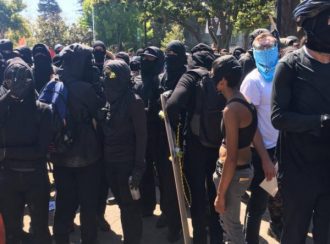 The Deep State manufacturing of an elaborately engineered clash of civilizations at Charlottesville is a text book example of a divide-and-conquer psychological operation. The commonalities of the 99% are far greater than our differences. We all want economic security and jobs with dignity. We all want a single payer health care system. We all want free education. We all want an end to the permanent wars and orwellian surveillance. We all want a clean environment. We all want virtuous leaders.
The oligarchal marionetteers stoke our differences to distract us from looking up and seeing how they infiltrate both the left and the right with informants, agents provocateurs, and thought police. Sadly, on knee-jerk cue, we all keep falling for the same old playscripts over and over again.
Instead of the Southern Poverty Law Center looking in every nook and cranny for divisiveness and hate (if not fomenting it themselves), we need organizations dedicated to bringing us together as a united front opposed to the lies, corruption, wars, and inequality. The 1% and their politician/NGO puppets are the actual hate groups, not ragtag outliers whose miniscule numbers don’t demographically represent America — or the world! — at all.
Due to the increasingly heavy-handed censorship by the mainstream media and internet gatekeepers, one can excuse the average person for not knowing there are vibrant alternative ideas afoot.
Simonyan Slams Reporters Without Borders for Calling RT ‘Enemy of Journalism’

© Flickr/ Marieke Guy
Sputnik – August 28, 2017
RT Editor-in-Chief Margarita Simonyan struck back at Reporters Without Borders, which called the channel “an enemy of journalism” allegedly exploiting the EU parliament resolution against Russian media outlets comparing them to Daesh terrorist group propaganda.
RT and Sputnik Editor-in-Chief Margarita Simonyan said Monday that Reporters Without Borders (RSF) is discrediting the work of advocacy groups by calling the broadcaster “an enemy of journalism.”
“Following such horrific remarks Reporters Without Borders should quietly self-dissolve, so as not to disgrace true human rights defenders,” Simonyan told the RT commenting on Deloire’s remarks.
On August 26, RSF Secretary General Christophe Deloire in an interview with Telerama magazine cited Simonyan’s appeal for protection against the European parliament’s 2016 resolution on countering alleged Russian anti-EU propaganda and media, including RT and Sputnik, as an example of how “enemies of journalism are exploiting the principles adopted to protect it.”
In November 2016, the European Parliament passed a resolution where it described the two media outlets as a threat to Europe’s unity and drew a parallel between them and propaganda disseminated by Daesh terrorist group. The document calls for extra European Commission funding for counter-propaganda projects.
Sputnik responded by calling the move a direct violation of media freedom and human rights, while Russian President Vladimir Putin commented on the matter by pointing out that the document indicates a degradation of democracy in the West.
Sputnik contacted RSF for the organization’s comments on the resolution, only to be told that the organization had taken a decision to no longer give interviews to Rossiya Segodnya.
Cambodia Exposes, Expels US Network
By Joseph Thomas – New Eastern Outlook – 27.08.2017
The government of Cambodia has exposed and expelled a US network attempting to interfere in the nation’s political processes. The US National Democratic Institute (NDI) was reportedly ordered to end its activities in the country and remove all of its foreign staff.
In a statement, the foreign ministry accused the National Democratic Institute (NDI) of operating in Cambodia without registering, and said its foreign staff had seven days to leave. Reuters in an article titled, “Cambodia orders U.S.-funded group to halt operations, remove staff,” would claim:
Authorities were “geared up to take the same measures” against other foreign NGOs which fail to comply with the law, the ministry added.
The article also noted that:
Prime Minister Hun Sen, who has ruled Cambodia for more than three decades, on Tuesday ordered the English-language The Cambodia Daily newspaper to pay taxes accrued over the past decade or face closure. The paper was founded by an American.
He also lashed out at the United States and non-governmental organizations (NGOs) and accused them of funding groups attempting to overthrow his government.
The American-owned Cambodia Daily newspaper in its own article titled, “NDI Ordered to Halt Operations, Foreign Staff Face Expulsion,” would note that:
The announcement comes less than a week after documents leaked on Facebook and circulated on government-affiliated media appeared to show political cooperation between NDI and the opposition party, amid increased tension in recent weeks between the government and U.S.-backed NGOs and media outlets.
NDI could not immediately be reached for comment.
Radio Free Asia and Voice of America have also both been accused of not fulfilling tax and registration obligations. The Cambodia Daily, whose publisher is a U.S. citizen, was hit with a $6.3 million unaudited tax bill and threatened with imminent closure if it is not paid by September 4.
Reuters would cite NDI’s own website in an attempt to inform readers about what its role is in Cambodia claiming, “the NDI works with political parties, governments and civic groups to “establish and strengthen democratic institutions.””
NDI is a US government and US-European corporate-funded organisation chaired by representatives from America’s business and political community. Of the 34 listed members of NDI’s board of directors, virtually all of them either have direct ties to US corporations and financial institutions, are members of corporate-funded policy think tanks or previously were employed by the US State Department, or a combination of the three. Yet, even a cursory investigation of NDI and the media and political organisation in its orbit and the very nature of even its proposed role in Cambodia’s political process indicates impropriety and subversion. Reuters is intentionally failing to convey to readers.
What NDI Really is and What it Really Does
Directors with particularly prominent conflicts of interest include:
Madeleine Albright: Albright Stonebridge Group and Albright Capital Management LLC
Harriet Babbitt: Council on Foreign Relations
Thomas Daschle: The Daschle Group
Robert Liberatore: former senior vice president of DaimlerChrysler, an NDI financial sponsor
Bernard Aronson: former Goldman Sachs adviser
Howard Berman: senior advisor at Covington & Burling
Richard Blum: chairman of Blum Capital Partners
NDI director Thomas Daschle, for example, actually has foreign political parties as paying clients through his “Daschle Group,” including VMRO DPMNE based in Macedonia as revealed by The Hill. NDI is likewise active in Macedonia, providing support directly to VMRO DPMNE, even co-hosting events in the country according to NDI’s own social media account on Facebook.
In Southeast Asia, Freedom House, yet another subsidiary of NED, would provide extensive aid to opposition groups in Thailand led by ousted former prime minister Thaksin Shinawatra, with Freedom House director Kenneth Adelman (PDF) concurrently providing paid-for lobbying services to Thaksin Shinawatra himself.
It appears that such conflicts of interests are not the exception, but the rule indicating that NED and its subsidiaries including NDI pursue the collective corporate and financial interests of their boards of directors merely behind the guise of “strengthening democratic institutions.”
An examination of NDI’s corporate sponsors casts further doubts upon its alleged mission statement. Its financial sponsors, according to NDI’s 2005 annual report (PDF), include:
- British Petroleum
- Bell South Corporation
- Chevron
- Citigroup
- Coca Cola
- DaimlerChrysler Corporation
- Eli Lilly & Company
- Exxon Mobil
- Honeywell
- Microsoft
- Time Warner
Donors also include convicted financial criminal George Soros’ Open Society Foundation as well as the National Endowment for Democracy (NED) of which NDI is a subsidiary of, as well as the US Agency for International Development (USAID) and the US State Department itself.
Corporations like BP, Chevron, Citigroup, Coca Cola, Exxon, defence contractor Honeywell and IT giant Microsoft are not interested in promoting democracy. They are using democracy promotion as a means behind which to create conditions more conducive to expanding markets and increasing profits. This includes undermining governments impeding foreign corporate control of national resources and markets, or entirely removing and replacing governments with more obedient client regimes.
The contemporary history of American foreign wars and its practice of “regime change” and “nation building” provides self-evident confirmation of the motives and means used to expand US hegemony and clearly illustrates where organisations like NDI fit into the process.
In Cambodia’s case, a much larger, overarching agenda is in play than merely national resources and markets. US activities in Cambodia to coerce or replace the current government in Phnom Penh is done specifically to encircle and contain China through a united front of client states assembled by the United States across Southeast Asia.
Cambodia, along with the rest of Southeast Asia, has begun strengthening ties with Beijing economically, politically and militarily. Large infrastructure programmes, weapon acquisitions, joint-training exercises and trade deals are all on the table between Beijing and Phnom Penh.
The US, conversely, has provided few incentives beyond its failed Trans-Pacific Partnership scheme and coercion through networks like NDI and the myriad media and political proxies they fund and operate in Cambodia.
With NDI shuttered, its foreign staff expelled and the organisations and publications it was funding facing similar closures and evictions, it appears what little the US had on the table has been swept away. Cambodia’s particularly bold move may be replicated across Southeast Asia where similar US networks are maintained to manipulate and coerce the political processes of sovereign states.
“Democracy Promotion” From Abroad is a Contradiction
The notion that NDI is “promoting democracy” is at face value an absurdity. Democracy is a means self-determination. Self-determination is not possible if outside interests are attempting to influence the process.
A political party funded and directed by US interests through organisations like NDI, supported by media outfits and fronts posing as nongovernmental organisations likewise funded from abroad preclude any process of self-determination and is thus not only in no way, shape, or form “democracy promotion,” it is a process that is fundamentally undemocratic.
In the US where it is widely understood that money dominates campaigns and wins elections, it is difficult to perceive the US pouring money into opposition parties abroad for any other reason besides skewing electoral outcomes in favour of US interests.
Additional irony is provided by the fact that should any other nation attempt to pursue similar programmes aimed at America’s domestic political process, those involved would be quickly labelled foreign agents and their activities halted immediately.
The mere allegations that Russia attempted to interfere with America’s domestic political processes resulted in sanctions and even threats of war. Cambodia is a nation that cannot afford nor effectively impose sanctions upon the United States nor wage war against it, but shuttering a flagrant example of foreign interference in its internal political affairs is something Cambodia and its neighbours in Southeast Asia can and are beginning to do.
Cambodia’s use of existing laws regarding taxation and the registration of foreign entities has been effectively used to deal with these organisations. Neighbouring nations may begin to require foreign-funded organisations to register as foreign lobbyists, subject them to taxation and more stringent regulations and taking away from them the smoke screen of “democracy promotion” and “rights advocacy” they have cloaked their activities behind for decades.
Joseph Thomas is chief editor of Thailand-based geopolitical journal, The New Atlas.
Featured Video

Rewriting the risk? Inside the government’s vaccine safety messaging
or go to
Aletho News Archives – Video-Images
Book Review
“Davos Can Really Replace the UN”
Inside the book that maps the architecture behind global governance — from the Epstein files to the Pact for the Future
Lies are Unbekoming | April 1, 2026
On June 13, 2019, the United Nations and the World Economic Forum signed a partnership deal to “accelerate the implementation of the 2030 Agenda for Sustainable Development.” That same evening, WEF president Börge Brende — Norway’s former Foreign Minister — had dinner with Jeffrey Epstein at Epstein’s Manhattan townhouse. The Epstein files, released January 2026, contain an exchange between the two from the previous year. Epstein to Brende: “Davos can really replace the UN. C21, cyber, crypto . genetics… intl coordination.” Brende back to Epstein: “Exactly — we need a new global architecture. World Economic Forum (Davos) is uniquely positioned — public private.”
The next day, the UN General Assembly adopted the framework for restructuring global governance.
That sequence — the partnership signing, the Epstein dinner, the candid admission about replacing the UN with a public-private architecture, and then the formal adoption — opens Jacob Nordangård’s The Digital World Brain. Pages two and three. Footnoted to the UN resolution number, the Epstein files, and the General Assembly record.
I keep coming back to it because it captures what this book does that almost nothing else in the independent research space manages. I’ve followed Jacob’s work for years now and interviewed him about his research. Each book peels back another layer of the same institutional architecture, and each time I think he’s reached the limit of what can be documented, the next one goes further. Nordangård doesn’t speculate. He doesn’t editorialize much. He lays institutional actions next to each other in chronological order and lets the pattern announce itself. … continue
Blog Roll
 Aletho News
- How I fell foul of the BBC thought police
- The End of NATO
- 37 days of war on Iran cost US staggering $42bln, tracker shows
- Baghdad tells Asian refiners, traders to begin loading Iraqi crude amid Iranian exemption
- Under fire, Moscow and Tehran close ranks
- Iran, US receive Pakistan-mediated plan for ceasefire then final deal
- Iran submits demands for end to war as mediators scramble ahead of Trump deadline
- Iran Threatens Retaliatory Strike on Stargate AI Project in UAE
- US sent ‘a lot’ of arms to Iranian protesters – Trump
- Barak Ravid Launders Deception To Allow Trump To Back Off Of His Power Plant Threat – Again
- If Americans Knew
- Trump poised to “blow everything up” (ie. commit war crimes) in Iran – Daily Update
- In Iran, Israel-US take aim at “reason, research, and freedom of thought” – Daily Update
- US loses planes over Iran, Israel downgrades Lebanon war goals – Daily Update
- Israel Is Blocking Palestinians from Easter at Church Where Jesus Resurrected
- Plot to assassinate Palestinian activist follows harassment campaign promoted by Zionist groups and elected officials
- Prominent New York synagogue hosts presentation on why U.S. Jews should support the ethnic cleansing of Gaza
- Tapper vs. Piker: Is the CNN Anchor Auditioning for David Ellison?
- Shouldn’t Democrats Be Able to Condemn Genocide?
- Israel-US kill negotiators, destroy civilian structures, but Iran’s military capabilities still largely intact – Daily Update
- ‘War crime’: Global condemnation as Israeli ministers celebrate death penalty law targeting Palestinian prisoners
- No Tricks Zone
- An Inconvenient Tree: Uncovered In Alps… Europe Much Warmer Than Today 6000 Years Ago
- New Study Reports A 60% Slowdown In Greenland’s Ice Loss Rate In The Last Decade
- Low Intensity Tornado Wrecks Major Solar Farm, Creating A Potential Toxic Dump
- New Study Finds Warming Saves Lives…Cold Temperatures 12 Times More Deadly Than Excess Heat
- German Science Blog Accuses PIK Climate Institute Of Hallucinating Climate Tipping Points
- Devastating Assessment Of Comirnaty Vaccine By Former Senior Pfizer Europe Toxicologist
- New Study: CO2 Is ‘Effectively Negligible’ As An Explanatory Climate Change Factor Since 2000
- Former Pfizer Toxicologist Dr. Helmut Sterz Tells Bundestag Hearing Pfizer Vaccine Should Have Never Been Approved
- Energy Expert: Germany’s Nuclear Phaseout Was A “500 Billion Euro Mistake”
- New Research: South Australia’s Mid-Holocene Sea Surface Temperatures Were 4°C Warmer Than Today
 Aletho News