How ‘Regime Change’ Wars Led to Korea Crisis
By Robert Parry | Consortium News | September 4, 2017
It is a popular meme in the U.S. media to say that North Korean leader Kim Jong Un is “crazy” as he undertakes to develop a nuclear bomb and a missile capacity to deliver it, but he is actually working from a cold logic dictated by the U.S. government’s aggressive wars and lack of integrity.
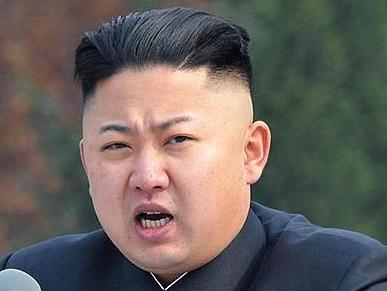
North Korean leader Kim Jong Un
Indeed, the current North Korea crisis, which could end up killing millions of people, can be viewed as a follow-on disaster to President George W. Bush’s Iraq War and President Barack Obama’s Libyan intervention. Those wars came after the leaders of Iraq and Libya had dismantled their dangerous weapons programs, leaving their countries virtually powerless when the U.S. government chose to invade.
In both cases, the U.S. government also exploited its power over global information to spread lies about the targeted regimes as justification for the invasions — and the world community failed to do anything to block the U.S. aggressions.
And, on a grim personal note, the two leaders, Saddam Hussein and Muammar Gaddafi, were then brutally murdered, Hussein by hanging and Gaddafi by a mob that first sodomized him with a knife.
So, the neoconservatives who promoted the Iraq invasion supposedly to protect the world from Iraq’s alleged WMDs — and the liberal interventionists who pushed the Libya invasion based on false humanitarian claims — may now share in the horrific possibility that millions of people in North Korea, South Korea, Japan and maybe elsewhere could die from real WMDs launched by North Korea and/or by the United States.
Washington foreign policy “experts” who fault President Trump’s erratic and bellicose approach toward this crisis may want to look in the mirror and consider how they contributed to the mess by ignoring the predictable consequences from the Iraq and Libya invasions.
Yes, I know, at the time it was so exciting to celebrate the Bush Doctrine of preemptive wars even over a “one percent” suspicion that a “rogue state” like Iraq might share WMDs with terrorists — or the Clinton Doctrine hailed by Secretary of State Hillary Clinton’s acolytes enamored by her application of “smart power” to achieve “regime change” in Libya.
However, as we now know, both wars were built upon lies. Iraq did not possess WMD stockpiles as the Bush administration claimed, and Libya was not engaged in mass murder of civilians in rebellious areas in the eastern part of the country as the Obama administration claimed.
Post-invasion investigations knocked down Bush’s WMD myth in Iraq, and a British parliamentary inquiry concluded that Western governments misrepresented the situation in eastern Libya where Gaddafi forces were targeting armed rebels but not indiscriminately killing civilians.
But those belated fact-finding missions were no comfort to either Saddam Hussein or Muammar Gaddafi, nor to their countries, which have seen mass slaughters resulting from the U.S.-sponsored invasions and today amount to failed states.
There also has been virtually no accountability for the war crimes committed by the Bush and Obama administrations. Bush and Obama both ended up serving two terms as President. None of Bush’s senior advisers were punished – and Hillary Clinton received the 2016 Democratic Party’s nomination for President.
As for the U.S. mainstream media, which behaved as boosters for both invasions, pretty much all of the journalistic war advocates have continued on with their glorious careers. To excuse their unprofessional behavior, some even have pushed revisionist lies, such as the popular but false claim that Saddam Hussein was to blame because he pretended that he did have WMDs – when the truth is that his government submitted a detailed 12,000-page report to the United Nations in December 2002 describing how the WMDs had been destroyed (though that accurate account was widely mocked and ultimately ignored).
Pervasive Dishonesty
The dishonesty that now pervades the U.S. government and the U.S. mainstream media represents another contributing factor to the North Korean crisis. What sensible person anywhere on the planet would trust U.S. assurances? Who would believe what the U.S. government says, except, of course, the U.S. mainstream media?
Remember also that North Korea’s nuclear program had largely been mothballed before George W. Bush delivered his “axis of evil” speech in January 2002, which linked Iran and Iraq – then bitter enemies – with North Korea. After that, North Korea withdrew from earlier agreements on limiting its nuclear development and began serious work on a bomb.
Yet, while North Korea moved toward a form of mutual assured destruction, Iraq and Libya chose a different path.
In Iraq, to head off a threatened U.S.-led invasion, Hussein’s government sought to convince the international community that it had lived up to its commitments regarding the destruction of its WMD arsenal and programs. Besides the detailed declaration, Iraq gave U.N. weapons inspectors wide latitude to search on the ground.
But Bush cut short the inspection efforts in March 2003 and launched his “shock and awe” invasion, which led to the collapse of Hussein’s regime and the dictator’s eventual capture and hanging.
Gaddafi’s Gestures
In Libya, Gaddafi also sought to cooperate with international demands regarding WMDs. In late 2003, he announced that his country would eliminate its unconventional weapons programs, including a nascent nuclear project.
Gaddafi also sought to get Libya out from under economic sanctions by taking responsibility for the 1988 bombing of Pan Am 103 over Scotland, although he and his government continued to deny carrying out the terror attack that killed 270 people.
But these efforts to normalize Libya’s relations with the West failed to protect him or his country. In 2011 when Islamic militants staged an uprising around Benghazi, Gaddafi moved to crush it, and Secretary of State Clinton eagerly joined with some European countries in seeking military intervention to destroy Gaddafi’s regime.
The United Nations Security Council approved a plan for the humanitarian protection of civilians in and around Benghazi, but the Obama administration and its European allies exploited that opening to mount a full-scale “regime change” war.
Prominent news personalities, such as MSNBC’s Andrea Mitchell, cheered on the war with the claim that Gaddafi had American “blood on his hands” over the Pan Am 103 case because he had accepted responsibility. The fact that his government continued to deny actual guilt – and the international conviction of Libyan Abdelbaset al-Megrahi was a judicial travesty – was ignored. Almost no one in the West dared question the longtime groupthink of Libyan guilt.
By October 2011, Gaddafi had fled Tripoli and was captured by rebels in Sirte. He was tortured, sodomized with a knife and then executed. Clinton, whose aides felt she should claim credit for Gaddafi’s overthrow as part of a Clinton Doctrine, celebrated his murder with a laugh and a quip, “We came; we saw; he died.”
But Gaddafi’s warnings about Islamist terrorists in Benghazi came back to haunt Clinton when on Sept. 11, 2012, militants attacked the U.S. consulate and CIA station there, killing Ambassador Christopher Stevens and three other Americans.
The obsessive Republican investigation into the Benghazi attack failed to demonstrate many of the lurid claims about Clinton’s negligence, but it did surface the fact that she had used a private server for her official State Department emails, which, in turn, led to an FBI investigation which severely damaged her 2016 presidential run.
Lessons Learned
Meanwhile, back in North Korea, the young dictator Kim Jong Un was taking all this history in. According to numerous sources, he concluded that his and North Korea’s only safeguard would be a viable nuclear deterrent to stave off another U.S.-sponsored “regime change” war — with him meeting a similar fate as was dealt to Hussein and Gaddafi.
Since then, Kim and his advisers have made clear that the surrender of North Korea’s small nuclear arsenal is off the table. They make the understandable point that the United States has shown bad faith in other cases in which leaders have given up their WMDs in compliance with international demands and then saw their countries invaded and faced grisly executions themselves.
Now, the world faces a predicament in which an inexperienced and intemperate President Trump confronts a crisis that his two predecessors helped to create and make worse. Trump has threatened “fire and fury” like the world has never seen, suggesting a nuclear strike on North Korea, which, in turn, has vowed to retaliate.
Millions of people on the Korean peninsula and Japan – and possibly elsewhere – could die in such a conflagration. The world’s economy could be severely shaken, given Japan’s and South Korea’s industrial might and the size of their consumer markets.
If such a horror does come to pass, the U.S. government and the U.S. mainstream media will surely revert to their standard explanation that Kim was simply “crazy” and brought this destruction on himself. Trump’s liberal critics also might attack Trump for bungling the diplomacy.
But the truth is that many of Washington’s elite policymakers – both on the Republican and Democratic sides – will share in the blame. And so too should the U.S. mainstream media.
Investigative reporter Robert Parry broke many of the Iran-Contra stories for The Associated Press and Newsweek in the 1980s.
Cambodia’s US-Backed Opposition Leader Charged With Treason
By Joseph Thomas – New Eastern Outlook – 04.09.2017
US and European media decried in unison the arrest of Kem Sokha, leader of the Cambodian opposition party, Cambodia National Rescue. Sokha is charged with treason amid an alleged plot to overthrow the current Cambodian government with foreign assistance.
The Guardian in its article, “Cambodia’s strongman PM digs in with arrest of opposition leader,” would report:
The Cambodian opposition leader, Kem Sokha, has been arrested accused of treason, according to the government, in the latest of a flurry of legal cases lodged against critics and rivals of the strongman prime minister, Hun Sen.
The surprise arrest raises the stakes as Hun Sen’s political opponents, NGOs and the critical press are smothered by court cases and threats ahead of a crunch general election in 2018.
The Guardian would also note:
On Saturday night a pro-government website – Fresh News – alleged that Kem Sokha had discussed overthrowing Hun Sen with support from the United States.
The Guardian would conclude by stating:
Last week the US expressed “deep concern” over the state of Cambodia’s democracy after the government there ordered out an American NGO and pursued a crackdown on independent media.
Among the media in the firing line is the well-respected Cambodia Daily, which often criticises the government.
It faces closure on Monday if it fails to pay a US$6.3m tax bill, a threat it says is a political move to muzzle its critical reporting.
The Guardian fails to mention that the Cambodia Daily is owned by an American and that the “American NGO” ordered out of Cambodia was the National Democratic Institute (NDI), an organisation notorious for its role in subverting and overthrowing the governments of sovereign nations.
The Guardian and other American and European media platforms have collectively failed to dive into Kem Sokha’s background. Had they, charges of treason would seem less far fetched and contrived as they have been presented to the public.
Kem Sokha, Made in America
Before taking to politics, Kem Sokha founded a US-European funded front posing as an independent nongovernmental organisation called the Cambodian Center for Human Rights (CCHR).
CCHR on its webpage titled, “History,” states:
Human rights activist Kem Sokha launched and registered CCHR in November 2002. In December 2005 he was arrested and detained with others activists accused of criminal defamation for comments written by an unknown individual on banners displayed at Human Rights Day celebrations. The activists were released following international pressure and a campaign for freedom of expression led by CCHR’s then Advocacy Director, Ou Virak. In early 2007 Kem Sokha left CCHR to pursue a career in politics.
On a page titled “Welcome Message,” CCHR claims to be:
… a leading non-aligned, independent, non-governmental organization that works to promote and protect democracy and respect for human rights – primarily civil and political rights – in Cambodia. We empower civil society to claim its rights and drive change; and through detailed research and analysis we develop innovative policy, and advocate for its implementation.
Yet, according to its own financial disclosures, there is nothing “independent” or “non-aligned” about the organisation.
On its webpage titled, “Donors and Partners,” it lists the Australian and British embassies, the US State Department, the European Union, USAID, Freedom House and Open Society among many other foreign government-funded and corporate-funded foundations as its financial sponsors.
Under “Affiliations and Cooperation,” it lists Human Rights Watch, Amnesty International, Article 19 along with many other primarily US and European-based, organised and funded fronts that leverage human rights advocacy in pursuit of politically-motivated agendas.
Ironically, on this same page, activists are shown demanding the release of then-imprisoned Myanmar politician Aung San Suu Kyi who has recently run afoul with advocacy groups due to her role in ongoing genocide against that nation’s Rohingya minority.
CCHR is clearly not “independent” if it is in fact dependent entirely on US and European cash to operate. Nor is it “non-aligned” if it is clearly aligned unequivocally with US and European-led interference across Southeast Asia through fronts they collectively fund to undermine one government in favour of another.
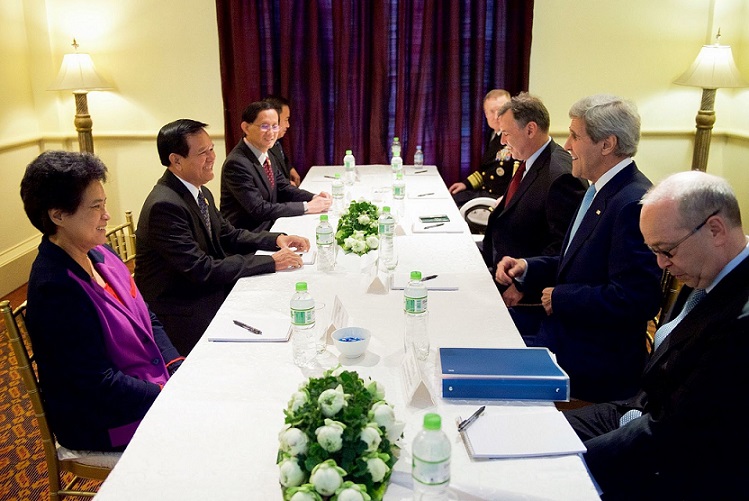
Since taking to politics, Kem Sokha and his opposition party have regularly met with the sponsors of CCHR, including the US Secretary of State John Kerry in 2016.
The aforementioned American-owned Cambodia Daily would report in a 2016 article titled, “Kerry to Meet With Civil Society, CNRP in Visit,” that:
U.S. Secretary of State John Kerry will meet with the CNRP and at least one NGO leader when he visits Phnom Penh next week, in addition to Prime Minister Hun Sen and Foreign Affairs Minister Hor Namhong, as was previously announced.
Kem Monovithya, a spokeswoman for the CNRP and the daughter of CNRP Vice President Kem Sokha, said Mr. Sokha planned to meet with Mr. Kerry, although she declined to give further information.
The director of the Cambodian Center for Human Rights, Chak Sopheap, also said she would meet with Mr. Kerry in a meeting she described as being facilitated by the U.S. Embassy.
The Cambodia Daily would also quote Sopheap, who openly desired the US to pressure her own government in regards to political changes she and her organisation sought:
“I especially wish to inform Secretary Kerry about civil society’s grave concerns regarding the draft trade union law, the proposed cyber crime law, and the implementation of the LANGO,” Ms. Sopheap wrote in an email, adding that she hoped Mr. Kerry would continue to “apply diplomatic pressure” during the U.S.-Asean summit in California next month.
Diplomats meeting with and supporting opposition groups in a host state constitutes clear interference in the host state’s internal political affairs and is beyond the scope of legitimate diplomatic relations.
Those in the opposition hosting foreign diplomats and accepting assistance are clearly engaged in what Merriam Webster defines as treason: “the offense of attempting by overt acts to overthrow the government of the state to which the offender owes allegiance…”
US Interference Poses Direct Threat to National Security
This sort of support provided by the United States in Cambodia has in other nations resulted in the usurpation of governments and even war. Examples include Ukraine, Libya, Syria and Yemen.
The nation of Myanmar is also currently led by a political party propelled into power by extensive US and European support provided over a period of decades.
In neighbouring Thailand, US support for opposition groups has resulted in a protracted political conflict, recently culminating in the fleeing abroad of ousted ex-prime minister Yingluck Shinawatra. Continued US support for Shinawatra and opposition networks will likely lead to further conflict in the near future.
Current Cambodian prime minister, Hun Sen, has repeatedly noted the threat to national security such foreign interference poses.
The Phnom Penh Post, in a 2016 article titled, “US policy destabilised Middle East, says Hun Sen,” stated:
Prime Minister Hun Sen yesterday lauded his own government’s efforts of bringing “peace” to Cambodia without “foreign interference” while calling out the US for destabilising the Middle East, where he said American policy had given rise to destructive “colour revolutions”.
The article would also report:
“Please look at the Middle East after there was inteference by foreigners to create colour revolutions such as in Libya, Syria, Yemen, Egypt and Iraq, where Sadam Hussein was toppled by the US,” the premier said.
“Have those countries received any achievement under the terms of democracy and human rights? From day to day, thousands of people have been killed. This is the result of doing wrong politics, and America is wrong.”
Considering this, the facts regarding Cambodia’s opposition and its ties to US and European interests, it should come as no surprise that foreign-funded organisations posing as NGOs are being shuttered and opposition leaders openly colluding with foreign interests are being arrested for treason.
Cambodia’s style of dealing with what is overt foreign interference lacks subtly, diplomacy and discretion. However, Phnom Penh may calculate that strengthening ties with other nations fighting off foreign interference in the region and its growing political and economic ties with Beijing may be enough to prepare Cambodia for any measures the US and Europe take in retaliation to uprooting their networks.
If left unchecked, the millions of dollars in US and European money and assistance provided to Cambodia’s opposition will continue allowing it to build its capacity to manipulate and win elections. While the opposition will cite election victories as the foundation of its growing legitimacy, the fact that these victories come as a result of foreign sponsorship, on behalf of foreign interests, undermines the opposition’s legitimacy entirely.
Democracy as a means of self-determination does not exist in a system manipulated by foreign interests. In fact, a process infected by foreign interference is fundamentally undemocratic. … Full article
M1 Abrams tanks, heavy armor arrive in Georgian port for Agile Spirit drills

© Minisrty of Defence of Georgia
RT | September 3, 2017
The US military has sent a number of M1 Abrams tanks as well as heavy armored vehicles for a massive multinational exercise, Agile Spirit 2017, which is kicking off in the former Soviet republic of Georgia.
Some 500 US troops along with M1 Abrams main battle tanks and LAV armored fighting vehicles have arrived in the former Soviet republic of Georgia for the Agile Spirit 2017 exercise.
Georgia’s Defense Ministry has released a video that showed the unloading of the tanks – painted in desert camouflage – at the port of Poti.
US heavy armor will then be transported by train to Vaziani, where the main stage of the war games will begin.
The war games are expected to take place at the Georgian military’s Vaziani training center, involving US soldiers as well as approximately 1,000 troops from Georgia, Armenia, Azerbaijan, Bulgaria, Latvia, Romania and Ukraine.
“This is the seventh [edition] of the annually scheduled multilateral exercise designed to enhance US, Georgian and regional partner interoperability and strengthen understanding of each nation’s tactics, techniques and procedures,” the Pentagon said in a press release.
Georgia, an active contributor to NATO deployments, has long planned to join the bloc, while Russia has long criticized the alliance for coming closer to its borders.
In a June interview with film director Oliver Stone, Russian President Vladimir Putin described NATO as an instrument of American foreign policy, and said the alliance’s members inevitably become US “vassals.”
“Once a country becomes a NATO member, it is hard to resist the pressures of the US. And all of a sudden, any weapons system can be placed in this country. An anti-ballistic missile system, new military bases and if need be, new offensive systems,” Putin said, adding that Russia was forced to take countermeasures over the ever-increasing NATO threat and armed military build-up on Russia’s borders.
BBC Peddle Fake Claims About India Monsoon

http://www.bbc.co.uk/iplayer/episode/b0938tj7/victoria-derbyshire-01092017
By Paul Homewood | Not A Lot Of People Know That | September 2, 2017
Just when you thought the BBC could not get any worse.
Standing in for Victoria Derbyshire on her current affairs programme yesterday morning, Matthew Price ran a report on the heavy floods this summer in Nepal and Bangladesh.
After telling us this had been one of the heaviest monsoons on record, he went on to interview Mark Pierce, Save the Children’s Director in Bangladesh, and Francis Markus of the International Red Cross in Nepal. (About 32 minutes in).
It did not take long for him to blame climate change for the floods.
He first directly asked Pierce :
“In a place like Bangladesh, do people start to say things are getting worse, it is something to do with climate change?”
Pierce unsurprisingly agreed, and said that even farmers could see climate change everyday, and see their land either flooded every year or facing drought.
Price then asked a similar question of Markus:
“In Nepal, do people at the sharp end relate this to climate change?”
In reply, Markus talks of immense changes in climate, and states “All the farmers in Nepal are kind of noticing that yields are less and less from year to year”, and goes on to tell us there has been nothing but nothing but droughts and floods in recent years.
Well, as you will all know by now, the UN Food and Agricultural Organisation publish data which tells us exactly what is going on.
First, Bangladesh.
We can see that both yields and production of cereals has been steadily rising since the 1980s. Also, the prevalence of undernourishment has halved since the 1990s, despite a large increase in population:


http://www.fao.org/faostat/en/#country/16
And we find exactly the same story in Nepal:


http://www.fao.org/faostat/en/#country/149
Clearly neither the Red Cross nor the Save The Children representatives were telling us the truth, which does not surprise me. Meanwhile the naive BBC presenter has been so indoctrinated by global warming propaganda, that he never even thought for a second that he was being lied to.
As for “one of the heaviest monsoons on record”, this year’s has so far been perfectly normal, with 3% less rain than normal.

http://hydro.imd.gov.in/hydrometweb/(S(stqraz451440dcbecbun0x55))/PdfPageImage.aspx?imgUrl=PRODUCTS\Rainfall_Graphs\Monsoon\Monsoon_BARGRAPH_CUMULATIVE_RAINFALL_COUNTRY_INDIA_c.JPG&landingpage=landing
As for the East and North East, where the rainfall has been heaviest, rainfall is bang on average:

http://hydro.imd.gov.in/hydrometweb/(S(stqraz451440dcbecbun0x55))/PdfPageImage.aspx?imgUrl=PRODUCTS\Rainfall_Graphs\Monsoon\Monsoon_BARGRAPH_CUMULATIVE_RAINFALL_REGION_CODE_EAST%20AND%20NORTH%20EAST%20INDIA_c.JPG&landingpage=landing
And what about the longer trends, and claims of floods and droughts?
Well, the whole history of Indian monsoons is one of recurrent floods and droughts.

http://www.tropmet.res.in/~kolli/MOL/Monsoon/Historical/air.html
Drought conditions were particularly prevalent between 1900 and 1920, and again in the 1960s to 1980s, when the world was cooling down.
Conversely, the worst of the flooding took place in the late 19thC and 1940s and 50s.
Drought conditions prevailed in 2015 and 2016, but this was because of strong El Nino conditions. Indian scientists are well aware of this connection, which has nothing to do with global warming.
In short, the whole story reported by the BBC is a pack of lies. Indian monsoons are not becoming more extreme. If anything, the opposite is true.
Even Madhav Khandekar, IPCC lead author on extreme weather, accepts that there is nothing unusual about recent flooding in India. In a 2014 paper, he concluded that:
The floods and unfortunate deaths of several dozen people in the Kashmir region of India in September 2014 reignited the debate about increasing human emissions of carbon dioxide and their putative linkage to extreme weather events such as floods, droughts and heat waves. What is missing from many of the media reports and scientific publications on this subject is critical analysis of past weather extremes to determine if there has been an increase in recent years.
In this brief report, past floods and droughts in the Indian monsoon are examined carefully and it is shown that such events have occurred throughout the excellent 200-year-long summer monsoon rainfall dataset. It is further documented that such floods and droughts are caused by natural variability of regional and global climate, and not by human carbon dioxide emissions.
In fact, if Price had bothered to check with the BBC Delhi correspondent, he would have discovered that the heavier the monsoon rainfall is , the better it is for India’s economy and many other things:

They are finally here, the monsoons, India’s most important weather phenomenon.
After days of speculation about the date, the Indian Meteorological Department (IMD) announced on Wednesday that the monsoons had arrived in Kerala. India receives 80% of its annual rainfall during the monsoon season, which runs between June and September.
The monsoon will gradually spread across India by 15 July, bringing cheer, hope, insects, relief from the heat, better farm output, GDP growth and lower inflation.
The arrival of the monsoons is like finding a river after crossing a desert. This year, a deluge is predicted. Weather forecasters expect at least 5-6% more rainfall than usual. This will affect things ranging from bank interest to the fortunes of the fertiliser industry. It will also alleviate the drinking water crisis in many parts by replenishing ground water.
But the joy doesn’t last long.
The hot summer gives way to complaints of “It’s not the heat it’s the humidity”. Meanwhile insects and mosquitoes multiply, bringing diseases in their wake.
As the Indian farmer sows a new crop, the city folk face water-logging that makes it difficult to get out. Sometimes it rains so much, especially in the financial nerve centre of Mumbai, that the city is flooded.
Russia-gate’s Totalitarian Style
By Robert Parry | Consortium News | September 2, 2017
It is a basic rule from Journalism 101 that when an allegation is in serious doubt – or hasn’t been established as fact – you should convey that uncertainty to your reader by using words like “alleged” or “purportedly.” But The New York Times and pretty much the entire U.S. news media have abandoned that principle in their avid pursuit of Russia-gate.
When Russia is the target of an article, the Times typically casts aside all uncertainty about Russia’s guilt, a pattern that we’ve seen in the Times in earlier sloppy reporting about other “enemy” countries, such as Iraq or Syria, as well Russia’s involvement in Ukraine’s civil war. Again and again, the Times regurgitates highly tendentious claims by the U.S. government as undeniable truth.
So, despite the lack of publicly provided evidence that the Russian government did “hack” Democratic emails and slip them to WikiLeaks to damage Hillary Clinton and help Donald Trump, the Times continues to treat those allegations as flat fact.
For a while, the Times also repeated the false claim that “all 17 U.S. intelligence agencies” concurred in the Russia-did-it conclusion, a lie that was used to intimidate and silence skeptics of the thinly sourced Russia-gate reports issued by President Obama’s intelligence chiefs.
Only after two of those chiefs – Director of National Intelligence James Clapper and CIA Director John Brennan – admitted that the key Jan. 6 report was produced by what Clapper called “hand-picked” analysts from just three agencies, the Times was forced to run an embarrassing correction retracting the “17 agencies” canard.
But the Times then switched its phrasing to a claim that Russian guilt was a “consensus” of the U.S. intelligence community, a misleading formulation that still suggests that all 17 agencies were onboard without actually saying so – all the better to fool the Times readers.
The Times seems to have forgotten what one of its own journalists observed immediately after reading the Jan. 6 report. Scott Shane wrote: “What is missing from the public report is what many Americans most eagerly anticipated: hard evidence to back up the agencies’ claims that the Russian government engineered the election attack. … Instead, the message from the agencies essentially amounts to ‘trust us.’”
However, if that was the calculation of Obama’s intelligence chiefs – that proof would not be required – they got that right, since the Times and pretty much every other major U.S. news outlet has chosen to trust, not verify, on Russia-gate.
Dropping the Attribution
In story after story, the Times doesn’t even bother to attribute the claims of Russian guilt. That guilt is just presented as flat fact even though the Russian government denies it and WikiLeaks founder Julian Assange says he did not get the emails from Russia or any other government.
Of course, it is possible the Russian government is lying and that some cut-outs were used to hide from Assange the real source of the emails. But the point is that we don’t know the truth and neither does The New York Times – and likely neither does the U.S. government (although it talks boldly about its “high confidence” in the evidence-lite conclusions of those “hand-picked” analysts).
And, the Times continues with this pattern of asserting as certain what is both in dispute and lacking in verifiable evidence. In a front-page Russia-gate story on Saturday, the Times treats Russian guilt as flat fact again. The online version of the story carried the headline: “Russian Election Hacking Efforts, Wider Than Previously Known, Draw Little Scrutiny.”
The Times’ article opens with an alarmist lede about voters in heavily Democratic Durham, North Carolina, encountering problems with computer rolls:
“Susan Greenhalgh, a troubleshooter at a nonpartisan election monitoring group, knew that the company that provided Durham’s software, VR Systems, had been penetrated by Russian hackers months before. ‘It felt like tampering, or some kind of cyberattack,’ Ms. Greenhalgh said about the voting troubles in Durham.”
The Times reported that Greenhalgh “knew” this supposed fact because she heard it on “a CNN report.”
If you read deeper into the story, you learn that “local officials blamed human error and software malfunctions — and no clear-cut evidence of digital sabotage has emerged, much less a Russian role in it.” But the Times clearly doesn’t buy that explanation, adding:
“After a presidential campaign scarred by Russian meddling, local, state and federal agencies have conducted little of the type of digital forensic investigation required to assess the impact, if any, on voting in at least 21 states whose election systems were targeted by Russian hackers, according to interviews with nearly two dozen national security and state officials and election technology specialists.”
But was the 2016 campaign really “scarred by Russian meddling”? For instance, the “fake news” hysteria of last fall was actually traced to young entrepreneurs who were exploiting the gullibility of Donald Trump’s supporters to get lots of “clicks” and thus make more ad revenue. The stories didn’t trace back to the Russian government. (Even the Times discovered that reality although it apparently has since been forgotten.)
‘Undermining’ American Democracy
The Jan. 6 report by those “hand-picked” analysts from CIA, FBI and the National Security Agency did tack on a seven-page appendix from 2012 that accused Russia’s RT network of seeking to undermine U.S. democracy. But the complaints were bizarre if not laughable, including the charge that RT covered the Occupy Wall Street protests, reported on the dangers of “fracking,” and allowed third-party presidential candidates to state their views after they were excluded from the two-party debate between Republican Mitt Romney and Democrat Barack Obama.
That such silly examples of “undermining” American democracy were even cited in the Jan. 6 report should have been an alarm bell to any professional journalist that the report was a classic case of biased analysis if not outright propaganda. But the report was issued amid the frenzy over the incoming Trump presidency when Democrats – and much of the mainstream media – were enlisting in the #Resistance. The Jan. 6 report was viewed as a crucial weapon to take out Trump, so skepticism was suppressed.
Because of that – and with Trump continuing to alarm many Americans with his erratic temperament and his coy encouragement of white nationalism – the flimsy Russian “hacking” case has firmed up into a not-to-be-questioned groupthink, as the Times story on Saturday makes clear:
“The assaults on the vast back-end election apparatus [i.e. voting rolls] … have received far less attention than other aspects of the Russian interference, such as the hacking of Democratic emails and spreading of false or damaging information about Mrs. Clinton. Yet the hacking of electoral systems was more extensive than previously disclosed, The New York Times found.”
In other words, even though there has been no solid proof of this “Russian interference” – either the “hacking of Democratic emails” or the “spreading of false or damaging information about Mrs. Clinton” – the Times reports those allegations as flat fact before extending the suspicions into the supposed “hacking of electoral systems” despite the lack of supporting evidence and in the face of counter-explanations from local officials. As far as the Times is concerned, the problem couldn’t be that some volunteer poll worker screwed up the software. No, it must be the dirty work of Russia! Russia! Russia!
The Times asserts that “Russian efforts to compromise American election systems … include combing through voter databases, scanning for vulnerabilities or seeking to alter data, which have been identified in multiple states.” Again, the Times does not apply words like “alleged”; it is just flat fact.
Uncertainty Acknowledged
Yet, oddly, the quote used to back up this key accusation acknowledges how little is actually known. The Times cites Michael Daniel, the cybersecurity coordinator in the Obama White House, as saying:
“We don’t know if any of the [computer] problems were an accident, or the random problems you get with computer systems, or whether it was a local hacker, or actual malfeasance by a sovereign nation-state. … If you really want to know what happened, you’d have to do a lot of forensics, a lot of research and investigation, and you may not find out even then.’”
Which is exactly the point: as far as we know from the public record, no U.S. government forensics have been done on the Russian “hacking” allegations, period. Regarding the “hack” of the Democratic National Committee’s emails, the FBI did not secure the computers for examination but instead relied on the checkered reputation of a private outfit called Crowdstrike, which based much of its conclusion on the fact that Russian lettering and a reference to a famous Russian spy were inserted into the metadata. Why the supposedly crack Russian government hackers would be so sloppy has never been explained. It also could not be excluded that these insertions were done deliberately to incriminate the Russians.
Without skepticism, the Times accepts that there is some secret U.S. government information that should bolster the public’s confidence about Russian guilt, but none of that evidence is spelled out, other than ironically to say what the Russians weren’t doing.
The Times cited the Jan. 6 report’s determination that “The Russians shied away from measures that might alter the ‘tallying’ of votes, … a conclusion drawn from American spying and intercepts of Russian officials’ communications and an analysis by the Department of Homeland Security, according to the current and former government officials.”
But this seems to be the one U.S. government conclusion that the Times doubts, i.e., a finding of Russian innocence on the question of altering the vote count.
Again accepting as flat fact all the other U.S. government claims about Russia, the Times writes: “Apart from the Russian influence campaign intended to undermine Mrs. Clinton and other Democratic officials, the impact of the quieter Russian hacking efforts at the state and county level has not been widely studied.”
There’s, of course, another rule from Journalism 101: that when there is a serious accusation, the accused is afforded a meaningful chance to dispute the allegation, but the Times lengthy article ignores that principle, too. The Russian government and WikiLeaks do not get a shot at knocking down the various allegations and suspicions.
Deep-seated Bias
The reality is that the Times has engaged in a long pattern of anti-Russia prejudice going back a number of years but escalating dramatically since 2013 when prominent neoconservatives began to target Russia as an obstacle to their agendas of “regime change” in Syria and “bomb-bomb-bombing” Iran.
By September 2013, the neocons were targeting Ukraine as what neocon National Endowment for Democracy president Carl Gershman deemed the “biggest prize” and an important step toward an even bigger prize, neutralizing or ousting Russian President Vladimir Putin.
When neocon U.S. officials, such as Assistant Secretary of State Victoria Nuland and Sen. John McCain, encouraged a coup that overthrew Ukraine’s elected President Viktor Yanukovych, the Times served as a cheerleader for the coup-makers even though the violence was spearheaded by neo-Nazis and extreme Ukrainian nationalists.
When ethnic Russians in eastern Ukraine and Crimea resisted the Feb. 22, 2014 coup, the Times collaborated with the State Department in presenting this rejection of an unconstitutional transfer of power as a “Russian invasion.”
For instance, on April 21, 2014, the Times led its print editions with an investigative story using photos provided by the coup regime and the State Department to supposedly show that fighters inside Ukraine had previously been photographed inside Russia, except that the two key photographs were both taken inside Ukraine, forcing the Times to run a half-hearted retraction two days later.
Here is the tortured way the Times treated that embarrassing lapse in its journalistic standards: “A packet of American briefing materials … asserts that the photograph was taken in Russia. The same men are also shown in photographs taken in Ukraine. Their appearance in both photographs was presented as evidence of Russian involvement in eastern Ukraine.
“The packet was later provided by American officials to The New York Times, which included that description of the group photograph in an article and caption that was published on Monday. The dispute over the group photograph cast a cloud over one particularly vivid and highly publicized piece of evidence.”
In other words, U.S. officials hand-fed the Times this “scoop” on a Russian “invasion” and the Times swallowed it whole. But the Times never seems to learn any lessons from its credulous approach to whatever the U.S. government provides. You might have thought that the Times’ disgraceful performance in pushing the Iraq-WMD story in 2002 would have given the newspaper pause, but its ideological biases apparently win out every time.
Two Birds, One Stone
In the case of the Russian “hacking” stories, the anti-Russia bias is compounded by an anti-Trump bias, a two-fer that has overwhelmed all notions of journalistic principles not only at the Times but at other mainstream news outlets and many liberal/progressive ones which want desperately to see Trump impeached and view Russia-gate as the pathway to that outcome.
So, while there was almost no skepticism about the Jan. 6 report by those “hand-picked” analysts – even though the report amounts only to a series of “we assess” this and “we assess” that, i.e,, their opinions, not facts – there has been a bubbling media campaign to discredit a July 24 memo by the Veteran Intelligence Professionals for Sanity.
The memo, signed by 17 members of the group including former NSA technical director for world geopolitical and military analysis William Binney, challenged the technological possibility of Russian hackers extracting data over the Internet at the speed reflected in one of the posted documents.
After The Nation published an article by Patrick Lawrence about the VIPS memo (a story that we re-posted at Consortiumnews.com ), editor Katrina vanden Heuvel came under intense pressure inside the liberal magazine to somehow repudiate its findings and restore the Russia-gate groupthink.
Outside pressure also came from a number of mainstream sources, including Washington Post blogger Eric Wemple, who interviewed Nation columnist Katha Pollitt about the inside anger over Lawrence’s story and its citation by Trump defenders, a development which upset Pollitt: “These are our friends now? The Washington Times, Breitbart, Seth Rich truthers and Donald Trump Jr.? Give me a break. It’s very upsetting to me. It’s embarrassing.”
However, in old-fashioned journalism, our reporting was intended to inform the American people and indeed the world as fully and fairly as possible. We had no control over how the information would play out in the public domain. If our information was seized upon by one group or another, so be it. It was the truthfulness of the information that was important, not who cited it.
A Strange Attack
But clearly inside The Nation, Pollitt and others were upset that the VIPS memo had undercut the Russia-gate groupthink. So, in response to this pressure, vanden Heuvel solicited an attack on the VIPS memo by several dissident members of VIPS and she topped Lawrence’s article with a lengthy editor’s note.
Strangely, this solicited attack on the VIPS memo cites as its “first” point that the Jan. 6 intelligence report did not explicitly use the word “hack,” but rather “cyber operation,” adding: “This could mean via the network, the cloud, computers, remote hacking, or direct data removal.”
That uncertainty about how the emails were extracted supposedly undercut the VIPS argument that the download speeds prohibited the possibility of a “hack,” but this pretense that the phrase “cyber operation” isn’t referring to a “hack” amounts to a disingenuous word game. After all, senior U.S. intelligence officials, including former FBI Director James Comey, have stated under oath and in interviews with major news outlets that they were referring to a “hack.”
These officials also have cited the Crowdstrike analysis of the DNC “hack” as support for their analysis, and Clinton campaign chairman John Podesta has described how he was the victim of a “spear-phishing” scam that allowed his emails to be hacked.
After all these months of articles about the Russian “hack,” it seems a bit late to suddenly pretend no one was referring to a “hack” – only after some seasoned experts concluded that a “hack” was not feasible. Despite the latest attacks, the authors of the VIPS memo, including former NSA technology official Binney, stand by their findings.
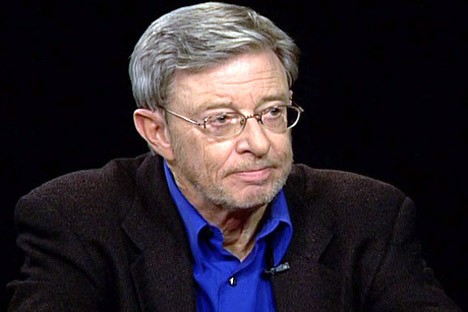
Russia scholar Stephen Cohen.
However, when the cause is to demonize Russia and/or to unseat Trump, apparently any sleight of hand or McCarthyistic smear is permissible.
In Post blogger Wemple’s article about The Nation’s decision to undercut the VIPS memo, he includes some nasty asides against Russia scholar Stephen Cohen, who happens to be Katrina vanden Heuvel’s husband.
In a snide tone, Wemple describes Cohen as providing “The soft-glove treatment of Russian President Vladimir Putin,” calling it Cohen’s “specialty.”
Wemple also repeats the canard about “a consensus finding of the U.S. intelligence community” when we have known for some time that the Jan. 6 report was the work of those “hand-picked” analysts from three agencies, not a National Intelligence Estimate that would reflect the consensus view of all 17 agencies and include dissents.
What is playing out here – both at The New York Times and across the American media landscape – is a totalitarian-style approach toward any challenge to the groupthink on Russia-gate.
Even though the Obama administration’s intelligence chiefs presented no public evidence to support their “assessments,” anyone who questions their certainty can expect to be smeared and ridiculed. We must all treat unverified opinions as flat fact.
Investigative reporter Robert Parry broke many of the Iran-Contra stories for The Associated Press and Newsweek in the 1980s. You can buy his latest book, America’s Stolen Narrative, either in print here or as an e-book (from Amazon and barnesandnoble.com).
Featured Video
No Threat Can Force Iran’s Surrender /Trita Parsi & Lt Cl Daniel Davis
or go to
Aletho News Archives – Video-Images
From the Archives
What is the Israeli Lobby in Australia Doing in Interfaith Dialogue?
By Ali Kazak | Dissident Voice | October 11, 2015
For years Israel and its lobby around the world have been trying to normalise their relations with Arabs and Muslims without solving the Palestine Question.
One of the methods they resorted to in the last few years is using human rights and community organizations such as interfaith dialogue and Multiculturalism to achieve this objective and to: isolate the Palestinians, marginalise the Palestine question, end Israel’s isolation, and prevent criticism of Israel, knowing that these organisations will be the first to stand against Israel’s violations, racial and religious discrimination.
The group responsible for this task in Australia is The Australia/Israel & Jewish Affairs Council (AIJAC); its Director of International & Community Affairs, Jeremy Jones is in charge of lobbying religious community organizations, specifically Muslims and Christians. Consequently he convened the Faith Communities for Reconciliation, founding participant in the Australian Partnership of Religious Organisations and the Australian National Dialogue of Christians, Muslims & Jews.
AIJAC is a private political propaganda group. It is recognised as the main Israeli lobby in Australia. It coordinates its activities and works intimately with the Israeli embassy in Canberra and different institutions in Israel. It is privately funded by some Jewish businessmen. It monitors closely Australian politicians, the media, ethnic and religious groups, (especially Arabs and Muslims), unions and academics on their stands towards Israel and the Palestine question. … continue
Blog Roll
 Aletho News
- ‘War Crime’: Iran condemns attacks on Arak, Ardakan nuclear sites
- Two-thirds of Americans want quick end to Iran war even if goals unmet
- Trump to Give “Important Update on Iran” Wednesday in Prime-Time Speech
- Theodore Postol: Iran’s Missiles & Drones Were Underestimated
- Iran To Target Military Industrial-Tech Complex That Facilitated Gaza Genocide
- Collapsing Empire: The Resistance Disarms ‘Israel’
- Suicide Should Not Be a Government Service
- Rethinking America’s greatest threat: Iran vs. Israel-Firsters
- Iran accuses adversaries of false flags to strain Turkey ties
- Poland rules out sending Patriot missiles to US/Israel amid war on Iran
- If Americans Knew
- Ann Coulter Rips Into Fox News for Iran War Coverage
- Joe Kent Urges Americans To Call White House and Congress To Object To Sending Troops Into Iran
- DNC Resolution to Reject AIPAC Funding Puts Democratic Leaders in the Hot Seat
- Swedish foundation to build 400 schools as over 650,000 Gaza children remain without education for 2 years
- Israeli army admits photshopping image of slain Lebanese journalist
- This is how Israel is systematically killing health workers under the cover of war in Lebanon
- Carrying life under fire: Israeli invasion of Lebanon leaves pregnant women facing deadly risks
- Champagne all around for the new death penalty (for Palestinians) law – Not a ceasefire Day 172
- Why are Palestinian books struggling to be seen on Amazon?
- The Line Between Affinity and Conspiracy
- No Tricks Zone
- New Study Finds Warming Saves Lives…Cold Temperatures 12 Times More Deadly Than Excess Heat
- German Science Blog Accuses PIK Climate Institute Of Hallucinating Climate Tipping Points
- Devastating Assessment Of Comirnaty Vaccine By Former Senior Pfizer Europe Toxicologist
- New Study: CO2 Is ‘Effectively Negligible’ As An Explanatory Climate Change Factor Since 2000
- Former Pfizer Toxicologist Dr. Helmut Sterz Tells Bundestag Hearing Pfizer Vaccine Should Have Never Been Approved
- Energy Expert: Germany’s Nuclear Phaseout Was A “500 Billion Euro Mistake”
- New Research: South Australia’s Mid-Holocene Sea Surface Temperatures Were 4°C Warmer Than Today
- Storing Green Energy To Last Germany 10 Days Would Require A 60-Million Tonne Battery
- New Studies: UK Sea Levels Were 4 Meters Higher Than Today During The Mid-Holocene
- Destructive Green New Deal: German Energy And Metal Group Warns Of Drastic Crisis
 Aletho News

