I was invited to write a Foreword to the essay, which provides context for the essay:
While the nations of the world met in Bonn to discuss implementation of the Paris Climate Agreement, the Trump administration was working to dismantle President Obama’s Clean Power Plan and to establish a climate “red team” to critically evaluate the scientific basis for dangerous human-caused climate change and the policy responses.
The mantra of “settled science” is belied by the inherent complexity of climate change as a scientific problem, the plethora of agents and processes that influence the global climate, and disagreements among scientists. Manufacture and enforcement of a “consensus” on the topic of human-caused climate change acts to the detriment of the scientific process, our understanding of climate change, and the policy responses. Indeed, it becomes a fundamentally anti-scientific process when debate, disagreement, and uncertainty are suppressed.
This essay by Rupert Darwall explores the expressions of public certainty by climate scientists versus the private expressions of uncertainty, in context of a small Workshop on Climate organized by the American Physical Society (APS). I was privileged to participate in this workshop, which included three climate scientists who support the climate change consensus and three climate scientists who do not—all of whom were questioned by a panel of distinguished physicists.
The transcript of the workshop is a remarkable document. It provides, in my opinion, the most accurate portrayal of the scientific debates surrounding climate change. While each of the six scientists agreed on the primary scientific evidence, we each had a unique perspective on how to reason about the evidence, what conclusions could be drawn and with what level of certainty.
Rupert Darwall’s essay provides a timely and cogent argument for a red/blue team assessment of climate change that provides both sides with an impartial forum to ask questions and probe the other side’s case. Such an assessment would both advance the science and open up the policy deliberations to a much broader range of options.
Excerpts
Here are some highlights from the full essay (but you’ll want to read the whole thing!):
Introduction. How dependable is climate science? Global warming mitigation policies depend on the credibility and integrity of climate science. In turn, that depends on a deterministic model of the climate system in which it is possible to quantify the role of carbon dioxide (CO2) with a high degree of confidence. This essay explores the contrast between scientists’ expressions of public confidence and private admissions of uncertainty on critical aspects of the science that undergird the scientific consensus.
Instead of debating, highlighting and, where possible, resolving disagreement, many mainstream climate scientists work in a symbiotic relationship with environmental activists and the news media to stoke fear about allegedly catastrophic climate change, providing a scientific imprimatur for an aggressive policy response while declining to air private doubts and the systematic uncertainties.
Two Statements, Two Perspectives. Two statements by two players in the climate debate illustrate the gap between the certainty that we are asked to believe and a branch of science shot through with uncertainty. “Basic physics explains it. If global warming isn’t happening, then virtually everything we know about physics is wrong,” states Jerry Taylor, president of a group that advocates for imposing a carbon tax on the United States. In so many words, Taylor says that the case for cutting carbon dioxide emissions is incontrovertible: Science demands conservatives support a carbon tax.
The second statement was made by an actual climate scientist, Dr. William Collins of the Lawrence Berkeley National Laboratory. Speaking in 2014 at an American Physical Society climate workshop, Collins, who was a lead author of the chapter evaluating climate models in the 2013 Intergovernmental Panel on Climate Change’s (IPCC) Fifth Assessment Report, talked of the challenges of dealing with several sources of uncertainty. “One of them is the huge uncertainties even in the historical forcings,” he said. Commenting on the “structural certainty” of climate models, he observed that there were “a number of processes in the climate system we just do not understand from basic physical principles. … We understand a lot of the physics in its basic form. We don’t understand the emergent behavior that results from it.”
The 2014 APS Climate Workshop: A Perfect Venue for Open Debate. Things are different when climate scientists are on the stand alongside their peers who know the science as well as they do, but disagree with the conclusions they draw from the same body of knowledge. Such open debate was on display at the 2014 American Physical Society climate workshop, which took place in Brooklyn and lasted just over seven hours. A unique event in the annals of the climate debate, it featured three climate scientists who support the climate change consensus and three climate scientists who do not. That format required an unusual degree of honesty about the limitations of the current understanding of the climate system. For the most part, circumspection, qualification, and candid admissions of lack of knowledge were the order of the day.
The IPCC’s Use and Abuse of Climate Models. The discussion in Brooklyn shows that putting the words “gold standard” and “IPCC” in the same sentence demonstrates a serious misunderstanding of the reliability of IPCC-sanctioned climate science.
“It’s clouds that prevent us from fundamentally in some reductive fashion understanding the climate system,” Princeton Atmospheric and Oceanic Sciences Professor Isaac Held, senior research scientist at the National Oceanic and Atmospheric Administration’s (NOAA) Geophysical Fluid Dynamics Laboratory, declared from the IPCC climate consensus bench. Collins made a similar point toward the end of the session. “My sense, to be honest with you, is that, and I think this all makes us a little bit nervous,” he said; “climate is not a problem that is amenable necessarily to reductionist treatment.”
Yet the IPCC’s top-line judgment in its Fifth Assessment Report—that it is “extremely likely” that the human emissions of greenhouse gases are the dominant cause of the warming since the mid-20th century—was described by Dr. Ben Santer of the Lawrence Livermore National Laboratory as likely to be conservative. The basis for this claim? General circulation models.
Santer’s claim would have sounded impressive if earlier in the day Collins had not presented charts showing GCMs performing poorly in reproducing temperature trends in the first half of the 20th century. Lindzen asked, what in the models causes the 1919-1940 warming? “Well, they miss the peak of the warming,” Held replied. While the IPCC is extremely certain that the late 20th century warming is mostly man-made, to this day it cannot collectively decide whether the earlier warming, which is of similar magnitude to the one that started in the mid-1970s, is predominantly man-made or natural. “It actually turns to be very hard to use the past as prologue,” Collins conceded before explaining: “We do not have a first principles theory that tells us what we have to get right in order to have an accurate projection.” And, as Held noted, over the satellite era from 1979, GCMs over- estimated warming in the tropics and the Arctic.
Steven Koonin, chairing the APS workshop, read an extract from chapter 10 of the IPCC’s Fifth Assessment Report. Model-simulated responses to forcings—including greenhouse gas forcings—“can be scaled up or down.” To match observations, some of the forcings in some of the models had to be scaled down. But when it came to making the centennial projections, the scaling factors were removed, probably resulting in a 25 to 30 percent over-projection of the 2100 warming, Koonin said. Only the transcript does full justice to the exchange that followed.
Dr. Koonin: But if the model tells you that you got the response to the forcing wrong by 30 percent, you should use that same 30 percent factor when you project out a century.
Dr. Collins: Yes. And one of the reasons we are not doing that is we are not using the models as [a] statistical projection tool.
Dr. Koonin: What are you using them as?
Dr. Collins: Well, we took exactly the same models that got the forcing wrong and which got sort of the projections wrong up to 2100.
Dr. Koonin: So, why do we even show centennial-scale projections?
Dr. Collins: Well, I mean, it is part of the [IPCC] assessment process.
“It is part of the assessment process” is not a scientific justification for using assumptions that are known to be empirically wrong to produce projections that help drive the political narrative of a planet spinning toward a climate catastrophe.
Climate Science and Falsifiability. A lively exchange developed between Christy and Santer. Georgia Tech’s Dr. Judith Curry, the third member of the critics’ bench, had crossed swords with Santer on whether the IPCC’s statement that more than half the observed warming was anthropogenic was more than expert judgment. In subsequent testimony to the House Science, Space, and Technology Committee, Curry explained:
Science is often mischaracterized as the assembly and organization of data and as a collection of facts on which scientists agree. Science is correctly characterized as a process in which we keep exploring new ideas and changing our understanding of the world, to find new representations of the world that better explain what is observed. … Science is driven by uncertainty, disagreement, and ignorance—the best scientists cultivate doubt.
Curry’s approach to science stands firmly on the methods and philosophical standards of the scientific revolution—mankind’s single greatest intellectual achievement.
Politicized Science vs. Red/Blue Team Appraisals. The APS workshop provides the strongest corrective to date to the politicized IPCC process. It revealed the IPCC’s unscientific practice of using different assumptions for projecting future temperature increases from those used to get models to reproduce past temperature. One need not be a climate expert to see that something is seriously amiss with the near certainties promulgated by the IPCC. “I have got to say,” Koonin remarked to climate modeler William Collins, “that this business is even more uncertain than I thought, uncertainties in the forcing, uncertainties in the modelling, uncertainties in historical data. Boy, this is a tough business to navigate.”
Koonin came away championing Christy’s idea of a red/blue team appraisal, a term drawn from war-gaming assessments performed by the military rather than from politics, which EPA Administrator Scott Pruitt has since adopted.
A revealing indicator of its potential value is the response to it. A June 2017 Washington Post op-ed, condemned calls for red/blue team appraisals as “dangerous attempts to elevate the status of minority opinions.”
Conclusion: Climate Policy’s Democratic Deficit. Open debate is as crucial in science as it is in a democracy. It would be contrary to democratic principles to dispense with debate and rely on the consensus of experts. The latter mode of inquiry inevitably produces prepackaged answers. But, as we have seen, relying on “consensus” buttresses erroneous science rather than allow it to be falsified.
The IPCC was created to persuade, not provide objectivity and air disagreement. By contrast, the APS workshop gave both sides an impartial forum in which they could ask questions and probe the other side’s case. In doing so, it did more to expose the uncertainty, disagreement, and ignorance—to borrow Judith Curry’s words—around climate science than thousands of pages of IPCC assessment reports.
EPA Administrator Scott Pruitt’s proposal for red/blue team assessment is a logical progression from the workshop. The hostile reaction it elicited from leading consensus advocates strongly suggests that they fear debate. Climate scientists whose mission is to advance scientific understanding have nothing to fear and much to gain. Those who seek to use climate science as a policy battering ram have good reason to feel uncomfortable at the prospect. The biggest winner from a red/blue team assessment will be the public. If people are to buy into policies that will drastically alter their way of life, they should be fully informed of the consequences and justifications. To do otherwise would represent a subversion of democracy.
JC reflections
I’m very pleased to have this opportunity to revisit the APS Workshop on Climate Change, and am delighted to see that a journalist of Darwall’s caliber interpreting this. Drawl’s essay provides an eloquent argument in support of a climate red team, perhaps more so than what I, Steve Koonin or John Christy have provided.
The thing that really clicked in my brain was this statement by Bill Collins:
We understand a lot of the physics in its basic form. We don’t understand the emergent behavior that results from it.
Trying to leverage our understanding of the infrared emission spectra from CO2 and other ‘greenhouse’ gases into a ‘consensus’ on what has caused the recent warming in a complex chaotic climate system is totally unjustified — this is eloquently stated by Bill Collins.
My key take away conclusion from the APS Workshop is that the scientists on both sides are considering the same datasets and generally agree on their utility (the exception being the 2 decade debate between Santer and Christy on the uncertainties/utility of the satellite derived tropospheric temperature data). There is some disagreement regarding climate models, although I can’t say that I disagreed with much if anything said by Held and Collins in this regard.
The real issue is the logics used in linking the varied and sundry lines of evidence into drawing conclusions and assessing the uncertainties and areas of ambiguity and ignorance. I don’t think that any of the 6 scientists were using the same chain of reasoning about all this, even among scientists on the same ‘sides’.
Darwall’s essay deserves to be widely read. Here’s to hoping that it will reignite the discussion surrounding the climate red team.
We are all too familiar with graphs showing how much global temperatures have risen since the 19thC.
The HADCRUT version above is typical, and also very precise, with fairly tight error bars even in the early part of the record.
One wonders where they got the data to work all this out, because it certainly could not have come from thermometers.
All of the major global temperature datasets rely heavily on the Global Historical Climatology Network (GHCN). Yet as the “Overview of the Global Historical Climatology Network-Daily Database”, published by Matthew Menne et al in 2012, rather inconveniently showed, most of the world had little or no temperature data in the 19thC, and even up to 1950.
Density of GHCN-Daily stations with daily maximum and minimum temperature
Prior to 1950, there were no more than a couple of hundred or so of GHCN stations outside of North America:
There are many competent scientists and statisticians who believe that even now it is not possible to measure the Earth’s average temperature, indeed that it is a meaningless concept.
Whether they are right or not, no serious scientist would claim to know the global temperature a century or more ago.
Honduras was in a state of limbo on Tuesday as presidential election results began to trickle in after a 24-hour delay, with a TV host’s surprise lead suddenly starting to plunge, prompting him to claim that electoral fraud was taking place.
President Juan Orlando Hernandez, who won US praise for helping tackle the flow of migrants and deporting drug cartel leaders, was favored to win before the Sunday vote in the poor Central American nation with one of the world’s highest murder rates.
But a delayed, partial count on Monday morning pointed toward an unexpected victory for TV entertainer Salvador Nasralla, 64. Inexplicably, election authorities then stopped giving results for more than 24 hours.
When, under mounting criticism from international election monitors over a lack of transparency, the electoral tribunal began updating its website again, the tendency rapidly began to change.
In a television interview on Tuesday evening, an angry Nasralla said the election was being stolen from him and asked his supporters to flock to the capital, Tegucigalpa, to protest.
“We’ve already won the election,” he said. “I’m not going to tolerate this, and as there are no reliable institutions in Honduras to defend us, tomorrow the Honduran people need to defend the vote on the streets.”
Nasralla accused the conservative president of plotting to rig the vote, saying his “survival instinct” was hijacking democracy.
He also said Hernandez was colluding with the army and the electoral authorities to forge new result sheets and give himself the edge in the Sunday presidential election.
“He controls the media. He’s going to have the result sheets he wants validated and change the will of the people.”
“He’s trying to sow chaos so he can declare a state of emergency and take control with the help of his people and the army.”
The Electoral Observation Mission of the Organization of American States (EOM/OAS) in Honduras urged people to remain calm and wait for official results, which it said should be delivered as quickly and transparently as possible.
“The credibility of the electoral authorities and the legitimacy of the future president depend on this,” it said in a statement.
On Tuesday evening, Nasralla’s original five-point lead had thinned to under 2 percentage points, with nearly 71 percent of ballots counted, according to the election tribunal.
Nasralla said in a later television interview that the election tribunal was only counting ballots from regions where Hernandez had won, skewing the results and giving the false sense that the president was heading for victory. He asked the tribunal to include ballots from regions where he was stronger.
The election in this poor, gang-plagued country has turned into a drawn-out showdown between Nasralla, 64, and Hernandez, 49, who is going for four more years in office despite a constitutional limit of just one term.
Both candidates have declared victory, but the results are far from clear.
Hernandez’s conservative National Party — which controls the executive, legislative and judicial branches of government — contends that a 2015 Supreme Court ruling allows his re-election.
Nasralla and his coalition, the Opposition Alliance Against the Dictatorship, have denounced the incumbent’s bid, saying the court does not have the power to overrule the 1982 constitution.
Difficult negotiations
On Tuesday, Hernandez reiterated that he had won, and refused to concede, telling supporters they should wait for final results.
“The result is more than clear,” he said at the presidential residence. “It is important for everyone to be patient, for everyone to be considerate with Honduras.”
After Hernandez spoke, thousands of his blue-clad supporters gathered outside the presidential residence to celebrate his supposed victory.
“We won the election with Juan Orlando Hernandez, and we won’t let them remove him from power,” said 35-year-old housewife Maria Aguirre, who hailed from a rough neighborhood on the outskirts of Tegucigalpa.
Meanwhile, two European diplomats who spoke on condition of anonymity said the election tribunal’s delay was due to difficult negotiations between Hernandez’s National Party and Nasralla’s alliance. Behind closed doors, the parties were discussing immunity from prosecution for current officials and how to carve up positions in government, the diplomats said.
But in an interview on Tuesday, Nasralla denied he was in talks with the National Party.
He vowed to review whether to keep US troops stationed at a base in the country if he wins the election but also promised to deepen security cooperation with the US.
Hernandez’s National Party appears set to retain control of Congress in the election, giving it the second-most important perch in the country.
The European Union’s chief observer for the election, Marisa Matias, urged election officials to maintain an open channel of communication as they finalized the results.
The electoral body had been so certain Hernandez would win that it showed unprecedented transparency during the contest, one of the diplomats said. That left the body with little room to maneuver when Nasralla came from nowhere to take a strong lead.
Nasralla is backed by former president Manuel Zelaya, who was ousted in 2009 after he proposed a referendum on his re-election. The possible return to a position of influence for one-time leftist Zelaya risks fueling concern in Washington.
Situated in the heart of Central America’s “Northern Triangle,” where gangs and poverty are rife, Honduras has one of the highest murder rates in the world Hernandez was credited with lowering the murder rate and boosting the economy, but he was also hurt by accusations of ties to illicit, drug-related financing that he denies.
The United States Air Force’s 59th Medical Wing’s molecular biology branch recently was revealed to have been collecting specifically Russian RNA and synovial (connective) tissue samples, prompting fears in Russia of a possible US directed ethnic-specific bioweapons program.
Russia has raised its concerns over attempts by the U.S. military to collect DNA samples from Russian nationals, noting the potential use of such biological samples for the purpose of creating new genetic warfare weaponry.
The U.S. Air Force has sought to calm the Kremlin’s concerns, noting that the samples would only be used for so-called “research” purposes rather than for bioterrorism.
Addressing Russian reports, U.S. Air Education and Training Command spokesperson Captain Beau Downey said that his center randomly selected the Russian people as a source of genetic material in its ongoing research of the musculoskeletal system.
The report would also state that:
However, the usage of Russian tissue samples in the USAF study fed the long-brewing suspicion that the Pentagon is continuing in its hopes to develop an alleged “biological weapon” targeting specifically Russians.
Russian President Vladimir Putin would be quoted as stating:
Do you know that biological material is being collected all over the country, from different ethnic groups and people living in different geographical regions of the Russian Federation? The question is – why is it being done? It’s being done purposefully and professionally.
And while the US military attempted to brush off the notion that any sort of ethnic-specific bioweapon was being researched, the notion of such a weapon is not far fetched at all.
US policy papers have included them in America’s overall long-term geopolitical and military planning for nearly two decades, and the US Air Force itself has produced papers regarding the various combinations such weapons could manifest themselves as.
There is also the disturbing history of Western-aligned nations having pursued ethnic-specific bioweapons in the past, including the Apartheid regime in South Africa which sought to use its national vaccination program as cover to covertly sterilize its black population.
US Policy Papers Have Discussed Ethnic-Specific Bioweapons
In the Neo-Conservative Project for a New American Century’s (PNAC) 2000 report titled, “Rebuilding America’s Defenses” (.pdf) it states (emphasis added):
The proliferation of ballistic and cruise missiles and long-range unmanned aerial vehicles (UAVs) will make it much easier to project military power around the globe. Munitions themselves will become increasingly accurate, while new methods of attack – electronic, “non-lethal,” biological – will be more widely available. (p.71 of .pdf)
It also stated:
Although it may take several decade for the process of transformation to unfold, in time, the art of warfare on air, land, and sea will be vastly different than it is today, and “combat” likely will take place in new dimensions: in space, “cyber-space,” and perhaps the world of microbes. (p.72 of .pdf)
And finally:
And advanced forms of biological warfare that can “target” specific genotypes may transform biological warfare from the realm of terror to a politically useful tool. (p.72 of .pdf)
The JASON group, composed of academic scientists, served as technical advisers to the U. S. government. Their study generated six broad classes of genetically engineered pathogens that could pose serious threats to society. These include but are not limited to binary biological weapons, designer genes, gene therapy as a weapon, stealth viruses, host-swapping diseases, and designer diseases.
The paper discusses the possibility of a “disease that could wipe out the whole population or a certain ethnic group.” While the paper claims its purpose is to study such weapons as a means of developing defenses against them, America’s history as a global military aggressor and the sole nation on Earth to have ever wielded nuclear weapons against another nation-state suggests a high likelihood that if such weapons can be produced, the US has already stockpiled them – if not already deployed them.
There was some interaction between Roodeplaat Research Laboratories (RRL) and Delta G [biological and chemical weapon laboratories respectively], with Delta G taking on some of RRL’s biochemistry projects and RRL doing animal testing of some Delta G products. One example of this interaction involved anti-fertility work. According to documents from RRL [Roodeplaat Research Laboratories], the facility had a number of registered projects aimed at developing an anti-fertility vaccine. This was a personal project of the first managing director of RRL, Dr Daniel Goosen. Goosen, who had done research into embryo transplants, told the TRC that he and Basson had discussed the possibility of developing an anti-fertility vaccine which could be selectively administered—without the knowledge of the recipient. The intention, he said, was to administer it to black South African women without their knowledge.
At the time, the technology appears not to have been sufficiently mature to realize the Apartheid regime’s ambitions. However, the technology not only exists today, there are examples of it being used to spectacular effect – so far for good – but could just as easily be used for bad.
The above mentioned US Air Force paper would go into detail regarding each weapon it listed, including one called gene therapy:
Gene therapy might just be the silver bullet for the treatment of human genetic diseases. This process involves replacing a bad gene with a good gene to normalize the condition of the recipient. Transfer of the “healthy” gene requires a vector to reach its target. Vectors commonly used are “viruses that have been genetically altered to carry normal human DNA” such as “retroviruses, adenoviruses, adeno-associated viruses, and herpes simplex viruses.”
Doctors in Europe used gene therapy to grow sheets of healthy skin that saved the life of a boy with a genetic disease that had destroyed most of his skin, the team reported on Wednesday in the journal Nature. This was not the first use of the treatment, which adds gene therapy to a technique developed to grow skin grafts for burn victims. But it was by far the most body surface ever covered in a patient with a genetic disorder: nine square feet.
One could imagine a malicious weapon used in reverse to knock out the genes that maintain healthy skin, causing a victim’s skin to blister and fall off.
In utilizing gene therapy as a weapon, the US Air Force report would note:
Gene therapy is expected to gain in popularity. It will continue to be improved upon and could unquestionably be chosen as a bioweapon. The rapid growth in biotechnology could trigger more opportunities to find new ways to fight diseases or create new ones. Nations who are equipped to handle biotechnology are likely to consider gene therapy a viable bioweapon. Groups or individuals without the resources or funding will find it difficult to produce this bioweapon.
Regarding “stealth viruses,” a variation of the weaponized gene therapy technique, the report states:
The basic concept of this potential bioweapon is to “produce a tightly regulated, cryptic viral infection that can enter and spread in human cells using vectors” (similar to the gene therapy) and then stay dormant for a period of time until triggered by an internal or external signal. The signal then could stimulate the virus to cause severe damage to the system. Stealth viruses could also be tailored to secretly infect a targeted population for an extended period using the threat of activation to blackmail the target.
With gene therapies already approved for sale in the European Union and the United States, and with more on the way, it is not beyond the realm of possibility that covert, weaponized gene therapies are also either already developed and waiting, or already deployed as “stealth viruses.”
Developing and Deploying
The US maintains a global network of military medical laboratories and research centers.
In addition to the 59th Medical Wing involved in collecting Russian genetic material, the US covers the entire Southeast Asian region from Bangkok, Thailand with its Armed Forces Research Institute of Medical Sciences (AFIRMS).
While it publicly claims it exists to, “to conduct state of the art medical research and disease surveillance to develop and evaluate medical products, vaccines, and diagnostics to protect DOD personnel from infectious disease threats,” its personnel, equipment, and research could easily be used for dual purposes in creating any of the above stated, so-far “theoretical” ethnic-specific bioweapons.
The US Embassy in Thailand website states that AFIRMS is the largest of a global network of military medical laboratories, claiming:
AFRIMS is the largest of a global network of US Defense Department Overseas Medical Research Laboratories—with sister laboratories in Peru, Kenya, Egypt, and the Republics of Georgia and Singapore. USAMD-AFRIMS has nearly 460 staff members (predominantly Thai and US) and an annual research budget of approximately $30-35 million.
With labs in South America, Europe, Africa, and Asia – and through the use of subcontractors – the US military has access to a variety of genetic materials and facilities to conduct research and develop all of the weapons its own policy papers have described.
Through US State Department-funded programs, the US could easily create “vaccine” campaigns and “clinics” to deliver the above described bioweapons in a variety of ways.
Fighting in the Dark and Shedding Some Light
The US Air Force’s paper would also point out:
Biological warfare attacks may resemble a natural disease outbreak phenomenon and it would be very difficult to trace back to the source, thereby discounting the perpetrator’s actions.
And indeed, nations without the ability to independently sequence, detect, and react to ethnic-specific genetic bioweapons could already have been targeted, or could be targeted at any moment without any means of even knowing, let alone reacting.
On the other hand, nations with not only a well-developed biotech industry, but also with military labs focused on both detecting and launching biological warfare with such weapons – it would be like fighting a war against a blindfolded enemy.
To remove the blindfold, governments and military institutions around the world, as well as communities and local institutions, would need to develop and have access to a quick and efficient means to sequence DNA, spot abnormalities, and develop possible corrective gene therapies to repair or “patch” malicious weaponized DNA introduced into a population.
Biological warfare surveillance would need to be done not only across a nation’s population, but also across its food and water supply as well as its livestock, wildlife, and insect populations. Genetically modified crops have been designed to target and turn off genes in insects and could just as easily be used to target human genes.
Plants are among many eukaryotes that can ‘turn off’ one or more of their genes by using a process called RNA interference to block protein translation. Researchers are now weaponizing this by engineering crops to produce specific RNA fragments that, upon ingestion by insects, initiate RNA interference to shut down a target gene essential for life or reproduction, killing or sterilizing the insects.
Studies are still ongoing to determine what harm genetically modified organisms (GMOs) – in their current state – are doing to human health. Spotting and reacting to subtle, weaponized GMOs will be even harder.
The use of genetically engineered mosquitoes to deliver “vaccines” presents another possible vector for weaponized biotech. The increasingly “global” nature of many vaccination programs is also a looming danger – particularly since these programs are directed by primarily Western powers – many of whom protected, cooperated with, and even aided and abetted the South African Apartheid regime, including with its various weapons programs.
Biotech is not merely a matter of economics. It is a matter of national security. Allowing foreign corporations representing compromised or nebulous foreign interests to produce vaccines for human or veterinary uses or to alter the genomes of a nation’s agricultural crops for whatever perceived benefits cannot outweigh the possible and actualized threats.
In a world where warfare extends into cyber and genetic space, nations that lack independent human healthcare systems capable of producing their own vaccines or managing their own biodiversity find themselves as defenseless as nations without armies, navies, or air forces. However impressive a nation’s conventional military capabilities are, lacking proper planning and defenses regarding this new and expanding biotech threat mitigates all possible advantages and maximizes this fatal weakness.
If genetics is a form of living information, then concepts familiar to IT security experts may prove useful in explaining how to safeguard against malicious “code” introduced into our living systems. The ability to “scan” our DNA and spot malicious code, to remove or patch it, and to develop safeguards against it, including “backing up” individual genomes biologically and digitally will not entirely prevent biological weapons from creating damage, but will mitigate their impact – transforming a possible extermination of an entire ethnicity or race to a containable, relatively minor outbreak.
Unlike nuclear weapons, research and development of these biotech tools is accessible to virtually any national government and even to many private institutions. Integrating biotech into a nation’s national security planning and implementation is no longer optional or speculative. If the tools to manipulate and target genes for good already exist, then the tools to abuse them also exist.
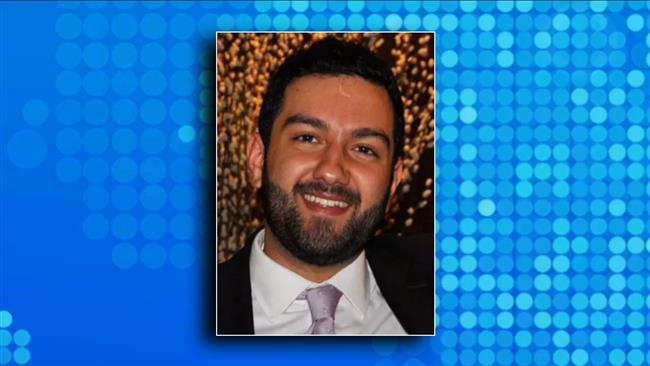
Iran’s Foreign Ministry Spokesman Bahram Qassemi has condemned the “brutal” murder of an Iranian man by the US police in the state of Virginia.
“The Foreign Ministry is seriously pursuing the issue to immediately restore the rights of Iranian citizens through existing official channels,” Qassemi said on Wednesday.
He also offered condolences to the family of the slain man, Bijan C. Ghaisar, who was shot by the United States Park Police on the evening of November 17. The police alleged that the 25-year-old man had been involved in a hit-and-run accident. He died Monday night after 10 days on life support.
Ghaisar’s family said in a statement that he was shot three times in the head and suffered irreversible brain damage, adding that he had no weapons in his vehicle when shot.
“The reason for the murder of our son has yet to be determined,” the family said, adding, “though no reasoning could possibly justify the actions of the one or more Park Police officers involved in this unthinkable act.”
A witness told The Washington Post last week that she saw two officers approach the young man’s vehicle and open fire at close range.
The Post added that the officers’ names and the reason for the shooting had not been released. It is also unclear whether the shooting was justifiable.
Bijan Ghaisar was an American-born citizen of Iranian heritage.
Meanwhile, Iran’s High Council for Human Rights has condemned the violent act, saying, “The US government should be held accountable for the murder and answer to the world’s public opinion.”
The council added that via an official letter, it would call on UN Secretary General Antonio Guterres and the UN High Commissioner for Human Rights to follow up on the killing and provide a report.
The Iranian rights council also noted that according to the principles of international law, especially Article I of the International Covenant on Civil and Political Rights, “Every human being has the inherent right to life. This right shall be protected by law. No one shall be arbitrarily deprived of his life.”
The council also called on the Swiss Embassy in Tehran, which represents the US interests in Iran, to convey Tehran’s concerns over the issue to the US government.
A former Israeli soldier was deported from Colombia for alleged links to a criminal network suspected of drug trafficking, child prostitution and tax offenses that spanned across several countries in Latin America.
Forty-three-year-old Assi Moosh was expelled by Colombia and returned to Tel Aviv under escort by immigration officers last weekend. In a statement confirming the deportation, security officials said: “Police in Santa Marta, capital of the Magdalena department, hereby announce the removal of an Israeli citizen who owns a spa hotel frequented by many foreign tourists. Deportation procedures have been commenced as per law and will be carried out due to the Israeli’s conduct, which has harmed Colombia’s national security.”
Colombian news agencies reporting on the deportation revealed details surrounding the expulsion of Moosh who was exposed as being part of a group of ex-Israeli soldiers that had turned a small fishing village in Taganga into a “sex and drug den” from their base in a luxury resort that was known to locals as “little Israel”.
El Heraldo, a regional newspaper, revealed Moosh as the head of an “international network of human trafficking, micro-trafficking and sex tourism”. The Israeli gained a reputation locally for organising private parties in a room within his hotel. From their base in “little Israel” Moosh is reported to have run similar clubs exploiting drugs and children in Cartagena, Bogotá, Medellín, Ecuador, Mexico and Brazil.
Local sources reported that Moosh was arrested when he arrived in the immigration office in Santa Marta accompanied by a group of armed men. It’s believed that he had been trying to obtain Colombian citizenship.
According to the national police, Moosh had raised suspicion after it was discovered that his permits for tourism and hotel operation were obtained through a third party, enabling him to carry out criminal activities undetected for a decade.
Locals are said to be “relived” by the arrest. Residents told journalists that Moosh “had been one of those who destabilised the social order of the people.” Many felt he should have been arrested long ago.
The mystery for many locals, according to El Heraldo, was the Benjamin hotel. Residents of Taganga described the resort as a “bunker” run by Moosh “exclusively for Jews”. While it’s unlikely that many of the locals would have actually seen the inside of the luxury resort, the feeling that it was an unwelcome place for non-Israelis has even been reported by visitors on TripAdvisor. “Not Israeli? Forget about it” wrote one visitor who had given the hotel two stars in the review. “First off this is a good hotel/hostel but if you are not from Israel I wouldn’t go there, my wife and I were made to feel very uncomfortable even had people come up to us and say ‘are you from Israel?’ I said ‘no’ to their reply ‘then why would you come here’.”
Reports of how “ex-soldiers turned a Colombia fishing town into a sex and drug den” had been on the media’s radar for a while. In February Colombia Reports uncovered the tension within the popular tourist region caused by the Benjamin hotel. The report found that “Benjamin [hotel] employs and accommodates almost exclusively Israeli citizens, and was officially opened by 20 rabbis brought over especially from Israel”.
Security in the hotel is reportedly coordinated by a Willington Vasquez, who, according to the report is also known as “Manuel, a former member of a paramilitary death squad”. Locals from Taganga complained that the Israeli “tourism entrepreneurs” were running a drug trafficking network and prostitution business.
The friction between locals in Taganga and the Israelis was also reported in 2012. “Four Israeli ex-soldiers are the new ‘masters’ of Taganga” was the headline in the El Tiempo. The paper alleged that the Israeli “businessmen” were selling cocaine and sexually exploiting young girls.
A journalist from El Tiempo investigating the allegations spoke with local officials, residents and the Israeli businessmen who pleaded innocence saying that “the community is wrong, everything is false”.
But the report proved otherwise. The authorities said that they were clear “several Israeli ex-soldiers who arrived in that village” were “leaders of criminal gangs”. The authorities complained that the Israelis took over social premises, violated rules on tax payments and permits and were involved in selling drugs and sexually exploiting children.
The ex-Israeli soldiers became known as “the untouchables”. El Tiempo journalists travelled to the area and established that some of them were living in a concrete mass, guarded by eight security cameras. Others carry arms and move in 4×4 trucks with the Israeli flag.
Testimonies from villagers and local authorities, who, El Tiempo said requested anonymity for fear of reprisals, exposed the drug and prostitution industry that had blighted the small fishing village.
Their standoff with the ex-Israeli soldiers led locals to create a committee and to request help from the Santa Marta administration.
Mayor of Santa Marta at the time, Carlos Caicedo, told El Tiempo that the situation in Taganga is serious and that he will ask the Israeli embassy and the Ministry of Foreign Affairs to review the legal status of the ex-military personnel settled in the Benjamin hotel.
Residents of Taganga appealed to their government to end the criminal activity in their village and a request was also made to the Israeli embassy, according to El Tiempo, to sanction the criminal behaviour of its nationals.
As for Moosh, it’s reported that Colombian authorities have imposed sanctions on him which prevent him from returning to country for at last ten years.
In May this year the Carnegie Endowment for Peace assessed that “The security environment in Afghanistan is still precarious… the government remains heavily dependent on foreign aid… the combination of a weakening Afghan regime and an unchecked Taliban resurgence could lead to the catastrophic collapse of the Afghan government and state…”
It is essential that a policy be constructed in order to move the country towards security, peace and prosperity, and this, so far, has involved an increase in US combat troops and expansion of the aerial bombing campaign.
According to the US Air Force, 3,554 bombs and rockets were directed at targets in the first ten months of 2017, including 653 in October, the greatest number since November 2010. Some of the most recent strikes were on 10 supposed drug-production facilities in Helmand Province, and the complexity and expense of the operation were considerable.
The commander of foreign forces in Afghanistan, US General John Nicholson, told the media that the attacks were “a demonstration of our new authorities… And specifically, in striking northern Helmand and the drug enterprises there, we’re hitting the Taliban where it hurts, which is their finances.”
According to Nicholson there are 400-500 opium production facilities in Afghanistan, so there is some way to go before the drug evil is eradicated at the factory stage, and if the effort to destroy them is confined to air power, the cash cost is going to be prodigious.
The bombing included strikes by some Afghan air force Tucano aircraft, but the main assault was by the US Air Force which for the first time in Afghanistan used its F-22 Raptor aircraft, flown from the United Arab Emirates, and B-52 strategic nuclear bombers based in Qatar. F-16s joined in from the Bagram base near Kabul, and the operation also involved KC-10 and KC-135 refuelers, surveillance aircraft and command and control aircraft.
General Nicholson explained that the Raptor aircraft was used “because of its ability to deliver precision munitions, in this case a 250-pound bomb, small-diameter, that causes the minimum amount of collateral damage.”
It has been calculated that the Raptor “costs $68,362 an hour to fly” and thus the expense of its excursion, including tankers, “could have approached $400,000” exclusive of bombs. The Pentagon’s budget for 2015 show that 246 of these bombs cost 219.1 million dollars. This means that the US taxpayer pays $890,000 for each one, which makes the cost of the Raptor strike a remarkably expensive operation. Then General Nicholson said that one of his B-52s dropped “six 500-pound, low-collateral-damage, precision-guided munitions” in order “to keep the collateral damage to an absolute minimum, and we did.”
While it is laudable that General Nicholson wants to minimise collateral damage by using 500 pound bombs, he appeared to veer off course slightly and showed a video of “another B-52 strike on another Taliban narcotics production facility. Now, this particular facility was the largest one we struck last night [November 19], with over 50 barrels of opium cooking at the time of the strike… So this was a B-52 strike, several 2,000-pound bombs, and it completely obliterated the facility.” Presumably the 2000 pound bombs were also precision-guided, in order to avoid collateral damage in accomplishment of complete obliteration.
The general noted that in Afghanistan “We’ve dropped more munitions this year than in any year since 2012. These new authorities give me the ability to go after the enemy in ways that I couldn’t before” and he intends to expand the bombing campaign next year.
The “new authorities” are the orders of President Trump to increase the intensity of the war because “I took over a mess, and we’re going to make it a lot less messy,” and General Nicholson is pleased that “we’re hitting the Taliban where it hurts, which is their finances,” although he did say “we are not going after the farmers that are growing the poppy.”
Of course the US air force should not target Afghan farmers — but bombing opium factories will not result in financial ruin of the Taliban. The heroin industry is extremely lucrative, and in Afghanistan the beneficiaries include very many more people other than Taliban adherents. It is, after all, the eighth most corrupt country in the world.
After the Helmand blitz, Reutersreported a poppy farmer, Mohammad Nabi, as saying that “The Taliban will not be affected by this as much as ordinary people. Farmers are not growing poppies for fun. If factories are closed and businesses are gone, then how will they provide food for their families?” Has General Nicholson got an answer to that?
The Voice of Americareported in May 2017 that “Since 2002, the US has spent more than $8.5 billion on counternarcotics in Afghanistan — about $1.5 million a day” while “only 13 of the country’s 34 provinces were reported poppy-free in 2016, and this number has dropped into single digits this year.” The UN Office on Drugs and Crime published its Afghanistan Opium Survey on November 15, and observed that “many elements continue to influence farmers’ decisions regarding opium poppy cultivation. Rule of law-related challenges, such as political instability, lack of government control and security, as well as corruption, have been found to be main drivers of illicit cultivation.”
What a shambles. And Washington’s solution is to bomb it.
Nicholson said that farmers “are largely compelled to grow the poppy and this is kind of a tragic part of the story.” Of course the farmers are “compelled to grow” a crop for sale. And it’s more than “kind of tragic.” It’s a catastrophe, because Afghanistan remains the world’s leading producer of opium.
The farmers would stop producing poppy if there were markets for other crops whose cultivation would provide them a decent living. As long ago as 2004 the US Assistant Secretary for International Narcotics, Robert Charles, told Congress that “To destroy Afghanistan’s opium economy, alternatives to the pernicious cycle of opium credit, cultivation and harvest must be available to rural communities.” So billions of dollars were poured into anti-narcotics campaigns and the result is that after twelve years “the level of opium poppy cultivation is a new record high.”
In March 2012 Donald Trump tweeted that “Afghanistan is a total disaster. We don’t know what we are doing. They are, in addition to everything else, robbing us blind.” Little has changed, except that 45 percent of Afghanistan’s districts are controlled or contested by the Taliban, and General Nicholson acknowledges that “we are still in a stalemate.” But Trump has been persuaded to declare that the US will “fight to win”. So the campaign of airstrikes will continue, and Afghanistan will be bombed towards peace and prosperity.
By Yassir Al Zaatara |The New Khalij | November 27, 2017
Leaked information about Donald Trump’s “deal of the century” varies in some details, but the one thing that is consistent is that there will be no more on offer than autonomy for parts of the West Bank, without Jerusalem. There will be no Palestinian sovereignty and no return of the refugees, not even compensation for them, although there will be talk about linking autonomous areas with Jordan in a federal arrangement. In the meantime, relations between Israel and Arab states will be formalised.
What will be discussed when marketing the “deal”, of course, is that this solution is not the end product, and that the so-called “final status” issues, especially Jerusalem, will be left for another time after the neighbours are more reassured about each other’s intentions. Meanwhile, everyone knows that the plan is based on making the status quo permanent in due course, because no one in Israel wants to give up Jerusalem, nor allow the return of any Palestinian refugees.
This reminds me of the paradox of former minister Tzipi Livni’s response to Saeb Erekat mentioned in the well-known negotiation leaks, when the Palestinian official told Livni that the then Israeli Prime Minister Ehud Olmert had agreed to the return of 10,000 refugees in what were called, rather euphemistically, “reunions”. She insisted that this was Olmert’s personal opinion and that the number of people who will return to Israel is nil.
The details of the deal are of no concern, but what is, is that those involved in marketing and supporting such a proposal — and pressing for its acceptance by Palestinians and Arabs — are in more need of advice than the others for two reasons. The first is that such an agreement will be practically impossible to pass, even though it might seem possible to get through some of its early stages; and second, their position will be harmful to them.
In the first context, keep in mind what Netanyahu said a few days ago about it being the Arab people who reject normalisation of relations with Israel, not the regimes; this is true to a large extent. The people generally do not approve of Israel’s existence in principle, even if they accept the Arab Initiative, which proposed giving the Israelis 78 per cent of historic Palestine. Things will get more difficult when discussing a much worse proposal which involves the effective abandonment of Jerusalem and Al-Aqsa Mosque.
The people’s position on normalisation means that the new game will not pass. The stance of the Egyptian people after nearly four decades of the Camp David Treaty is the best evidence of this; there is also the position of the Jordanians 25 years after signing the Wadi Araba peace deal with Israel.
That is not all. The Palestinian people will not be silent about eradicating their cause in such a miserable way, and they will rise again, and the Jordanians will not accept the federalism being spoken of. It all, in any case, assumes that the Palestinian resistance forces will agree to the new proposal, which they won’t, or at least the majority of them won’t. Those in the Arab world who try to market the Trump deal will clash with their people if they go ahead and back a proposal to wipe out the Palestinian cause.
As a backdrop to all of this, it is clear that America and Israel will continue to be keen on keeping the regional conflicts going so that only Israel will remain as a strong and cohesive state, which everyone then seeks to befriend. Will those involved in supporting the Trump plan reconsider their positions? I hope so.
The events currently occurring in the Palestinian arena, specifically the American vision for the Palestinian issue, are similar to a huge marketing campaign, as well as the sanctions that will be imposed on anyone who refuses the marketed product. This is despite the important fact that the product being marketed is not even ready yet.
The Israelis want to market a new idea, or rather, a new old idea. This idea suggests that there are various forms of sovereignty and that this could be proposed to the Palestinians. This is reminiscent of the Israelis’ past proposal of what they called functional sovereignty.
The American team responsible for the peace process is composed of a group of Zionists supporting settlements in the occupied West Bank. Therefore, it is not surprising that since the formation of the American administration we have been witnessing efforts to empty the settlement process of any content that includes any Israeli withdrawal or settlement dismantlement. Hence, this team is doing three things: buying time for the Israeli occupation and its settlement expansion, marketing ideas requiring the Palestinians to back down from the idea of an independent state, and thirdly, marketing the division of peace in the Middle East into two tracks: Arab-Israel peace and Palestinian-Israeli peace.
According to Al-Monitor, which operates mainly from Lebanon and publishes material in Arabic, Hebrew and English, the American Ambassador (a Jewish Zionist) to Tel Aviv, David Friedman, the American consulate in Jerusalem, in cooperation with the US Special Representative for International Negotiations, Jason Greenblatt, are making great efforts to propose a vision that has a regional context. What Benjamin Netanyahu is doing is trying to achieve normalised relations, as well as economic, political and military relations with Arab countries allowing him to establish Israeli influence in the region in the future. Of course, there is no reference or hints of this goal, but any amateur researcher in international relations who reads the Israeli theories, especially those of the Likud Party, and is familiar with the basics of international relations, especially the realism theory, would realise these are their goals.
Instead of announcing these goals, they announce the importance of an Arab-Israeli alliance against terrorism and Iran. According to Al-Monitor, which quoted Israeli diplomats, Netanyahu is currently looking into how he can pay the lowest price to market the idea of Arab-Israeli normalisation, along with other basic ideas, such as not withdrawing from the West Bank and maintaining full security control over it. Therefore, he proposed the idea of autonomy, but called it a different name, considering it another kind of sovereignty.
If the American initiative is ever announced, it will basically say: The Palestinians must accept the status quo in return for some facilitations in their living conditions and formal changes. The Palestinians declare their state on paper, and they can declare similar things, but will not have Israeli recognition, nothing will change on the ground, and it must be within restrictions that do not include requesting international recognition or prosecuting the Israelis in the International Criminal Court.
The Israelis raised the idea of ”functional sovereignty” in Jerusalem, during the Camp David and Taba negotiations of 2000 and 2001. It can basically be called “extensive administrative powers”, and nothing more. Nowadays, similar ideas are being marketed, but only in the West Bank.
We are not certain the Americans will reach the stage of declaring an initiative. If they do announce an initiative, it will be recognition of the Likud and Israeli initiatives for autonomy, as proposed in ideas raised in the 1970s during the Egyptian-Israeli negotiations.
Even if, for the sake of argument, we assume there are some Arab states that would accept these new ideas of an entity less than a Palestinian state and the return of the refugees, which is not yet certain, it will be the Palestinians who make the decision, specifically Palestinian President Mahmoud Abbas. Based on all past experiences, the Palestinians will not agree to any solution that does not include a Palestinian state, and Abbas will reject such a proposal.
There is much room for speculation about future scenarios, including holding the Palestinians responsible for the failure, reaching a temporary agreement (Oslo 2) that involves the beginning of Arab-Israeli normalisation and making minor changes to the status of the Palestinians, or new negotiations (which the Palestinians have rejected with[out] freezing settlement expansion). However, despite this, we are certain that the majority of the world superpowers are dealing with the possibility of reaching a final agreement as something far-fetched.
The Palestinians, more than anyone else, need a strategy that includes a hint to their alternative plan if a solution is not reached.
Egyptian authorities have criticised the Israeli Minister of Social Equality Gila Gamliel over her recent statements, in which she called for an alternative Palestinian state to be established in the Sinai Peninsula.
Egypt’s foreign minister, Sameh Shoukry, denounced today Gamliel’s statements stressing that Egypt firmly rejects any kind of “talk or thoughts” that undermine Egypt’s territorial sovereignty.
“The Egyptian domestic affairs should not be included in any statements by foreign parties most importantly when these statements touch Egyptian sovereignty,” Shoukry said in a press conference.
Shoukry noted that the Egyptian authorities have conveyed Cairo’s rejection on Gamliel’s statements to the Israeli ambassador in Cairo, adding that her comments “were made a long time ago.” He also denied summoning the Israeli ambassador.
“The Egyptian land in Sinai, which was watered with the blood of our sons and martyrs, is not something that can be given away or allowed to be attacked,” the Egyptian minister added.
An official source at the Egyptian foreign ministry told Quds Press that officials believe that the recent mosque attack is an Israeli attempt to empty Sinai from its original residents to build a Palestinian state in as an alternative for the two-state solution in the West Bank.
The Egyptian official noted that the Egyptian Embassy in Tel Aviv has asked Israel for clarifications on Gamliel’s comments, noting that the Israeli government had stressed that the statements “were personal comments and did not represent government policy.”
On his part, the Egyptian MP, Mostafa Bakry, told Quds Press that the Israeli statements were linked to the recent terrorist attack in Sinai.
Last week, Gamliel said during her visit to Cairo that “it is impossible to create a Palestinian state except in Sinai.”
Rejecting a Palestinian state in the West Bank, she noted that “a Palestinian State is a dangerous idea for the State of Israel,” she explained, stressing: “Between the River Jordan and the [Mediterranean] sea there cannot, and must not, arise a Palestinian state.”
“This call could be unacceptable to the international community and the Arab countries, which are neighbours to Israel, but it is based on our primary and historic right to the land of Israel,” the Israeli minister reiterated.
Now that Syria and its allies in the Axis of Resistance have done the world a favour by destroying most of the West’s terror proxies in Syria, the Canadian narrative is falling apart.
In 2016, Prime Minister Trudeau described the terrorists in this manner:
“The so-called Islamic State are terrorists, criminals, thugs, murderers of innocents and children and there’s a lot of labels for them.”[1]
He was right that there are a lot of labels for them. But some labels have been conspicuously absent from the Canadian narrative, and these are the most accurate of all: “proxies”, “assets”, “strategic assets”, “allies”.
These “criminals, thugs, and murderers” are also Canada’s proxies in the Middle East and beyond, and the Canadian government needs to take ownership for its criminality.
Canada’s Public Safety Minister, Ralph Goodale, for his part, recently claimed that chances for rehabilitating these people are “pretty remote”, and that pursuing charges against these people is “difficult”.[2]
Conspicuously absent from Goodale’s explanation of why it is difficult to prosecute these individuals is the previously mentioned stumbling block. If the terrorists are Canada’s assets, as they are, then prosecuting them would necessarily reveal the government’s guilt.
Consider the case of Swedish national Bherlin Gildo.[3] In 2015, Gildo’s terror trial in the U.K. collapsed because the British intelligence agency M16 was supporting the same terrorists that Gildo was reportedly fighting for.
The Canadian government’s web of criminal war propaganda is unraveling at the seams. If the press was free, and not an appendage of the government’s criminal apparatus of deception, more Canadians might be aware of this.
While accusations of student anti-Semitism at McGill draw international headlines, the university administration’s open association with the Jewish National Fund has been ignored.
In the latest iteration of a multi-year smear campaign against Palestine solidarity activists at the university, Canadian Jewish Political Affairs Committee activist Noah Lew cried “anti-Semitism” after he wasn’t voted on to the Board of Directors of the Students’ Society of McGill University (SSMU). At a General Assembly last month Democratize SSMU sought to impeach the student union’s president Muna Tojiboeva. The ad-hoc student group was angry over her role in suspending an SSMU vice president and adopting a Judicial Board decision that declared a Boycott, Divestment and Sanctions resolution unconstitutional.
(After two close votes, in February 2016 a motion mandating the student union support some BDS demands passed the union’s largest ever General Assembly, but failed an online confirmation vote after the university administration, Montreal’s English media and pro-Israel Jewish groups blitzed students. The resolution’s constitutionality was subsequently challenged.)
At the recent General Assembly Democratize SSMU’s effort to impeach the president failed. While they couldn’t muster the two thirds of votes required to oust the non-Jewish president of the student union, Democratize SSMU succeeded in blocking the re-election of two Board of Directors candidates who supported the effort to outlaw BDS resolutions.
After failing to be re-elected to the Board of Directors Noah Lew claimed he was “blocked from participating in student government because of my Jewish identity and my affiliations with Jewish organizations.” His claim was reported on by the National Post,Montreal Gazette, Global Television, as well as Israeli and Jewish press outlets. McGill Principal Suzanne Fortier sent out two emails to all students and faculty concerning the matter while the SSMU Board of Directors established a committee to investigate anti-Semitism. The affair was even mentioned in the House of Commons.
While a great deal has been written about alleged student anti-Jewish attitudes, the McGill administration’s open association with an explicitly Jewish supremacist organization passes with nary a comment. On November 28 McGill’s Associate Vice-Principal Innovation Angelique Mannella is scheduled to participate in a Jewish National Fund networking event called Tech Shuk, which connects Jewish capitalists with Montreal start-ups in a “Dragon’s Den” style competition. But, the JNF is a racist organization. Owner of 13 per cent of Israel’s land, it systematically discriminates against Palestinian citizens of Israel, who make up a fifth of the population. According to a UN report, Jewish National Fund lands are “chartered to benefit Jews exclusively,” which has led to an “institutionalized form of discrimination.” The JNF oversees discriminatory land use policies in Israel outlawed in this country 60 years ago.
In 2004 long-time McGill Principal Bernard Shapiro was the honoured guest at JNF Montréal’s annual fundraising dinner (two years later the then former University Principal was master of ceremonies at the event). The current president of JNF Montréal, Michael Goodman, was a member of the advisory board of McGill ASD (Autism spectrum disorder). In 2014 McGill gave an honorary degree to Marvin Corber. The University’s press releaseannouncing its two honorary degree recipients cited an award Corber received from the JNF. Corber has been a JNF Montréal campaign advisor and chair of its annual fundraising dinner.
While the university administration’s ties to the JNF are a stark example of its racial bias, McGill is also entangled in other more subtle forms of anti-Palestinianism. The Montréal university has a memorandum of understanding with Tel Aviv University, which claims to be on “the front line of the critical work to maintain Israel’s military and technological edge.” McGill also has a partnership with Technion, which conducts “research and development into military technology that Israel relies on to sustain its occupation of Palestinian land.”
In 2012 the estate of Simon and Ethel Flegg contributed $1 million to McGill’s Jewish Studies department partly for an “education initiative in conjunction with McGill Hillel.” But, the cultural organization turned Israel lobby group refuses to associate with Jews (or others) who “delegitimize, demonize, or apply a double standard to Israel; support boycott of, divestment from, or sanctions against the state of Israel.”
Imagine the outcry if a McGill department accepted a large donation to work with an organization that openly excluded Jews and others who “delegitimize, demonize, or apply a double standard to Palestine and fail to recognize Palestinians’ UN enshrined rights.”
It’s time to discuss the McGill administration’s support for Jewish supremacy in the Middle East.
President Donald Trump scrapped the nuclear deal with Iran and continued to risk war with Iran based on Israeli Prime Minister Benjamin Netanyahu’s claim to have proven definitively that Iran was determined to manufacture nuclear weapons. Netanyahu not only spun Trump but much of the corporate media as well, duping them with the public unveiling of what he claimed was the entire secret Iranian “nuclear archive.”
In early April 2018, Netanyahu briefed Trump privately on the supposed Iranian nuclear archive and secured his promise to leave the Joint Comprehensive Plan of Action (JCPOA). That April 30, Netanyahu took the briefing to the public in a characteristically dramatic live performance in which he claimed Israel’s Mossad intelligence services had stolen Iran’s entire nuclear archive from Tehran. “You may well know that Iran’s leaders repeatedly deny ever pursuing nuclear weapons…” Netanyahu declared. “Well, tonight, I’m here to tell you one thing: Iran lied. Big time.”
However, an investigation of the supposed Iranian nuclear documents by The Grayzone reveals them to be the product of an Israeli disinformation operation that helped trigger the most serious threat of war since the conflict with Iran began nearly four decades ago. This investigation found multiple indications that the story of Mossad’s heist of 50,000 pages of secret nuclear files from Tehran was very likely an elaborate fiction and that the documents were fabricated by the Mossad itself. … continue
This site is provided as a research and reference tool. Although we make every reasonable effort to ensure that the information and data provided at this site are useful, accurate, and current, we cannot guarantee that the information and data provided here will be error-free. By using this site, you assume all responsibility for and risk arising from your use of and reliance upon the contents of this site.
This site and the information available through it do not, and are not intended to constitute legal advice. Should you require legal advice, you should consult your own attorney.
Nothing within this site or linked to by this site constitutes investment advice or medical advice.
Materials accessible from or added to this site by third parties, such as comments posted, are strictly the responsibility of the third party who added such materials or made them accessible and we neither endorse nor undertake to control, monitor, edit or assume responsibility for any such third-party material.
The posting of stories, commentaries, reports, documents and links (embedded or otherwise) on this site does not in any way, shape or form, implied or otherwise, necessarily express or suggest endorsement or support of any of such posted material or parts therein.
The word “alleged” is deemed to occur before the word “fraud.” Since the rule of law still applies. To peasants, at least.
Fair Use
This site contains copyrighted material the use of which has not always been specifically authorized by the copyright owner. We are making such material available in our efforts to advance understanding of environmental, political, human rights, economic, democracy, scientific, and social justice issues, etc. We believe this constitutes a ‘fair use’ of any such copyrighted material as provided for in section 107 of the US Copyright Law. In accordance with Title 17 U.S.C. Section 107, the material on this site is distributed without profit to those who have expressed a prior interest in receiving the included information for research and educational purposes. For more info go to: http://www.law.cornell.edu/uscode/17/107.shtml. If you wish to use copyrighted material from this site for purposes of your own that go beyond ‘fair use’, you must obtain permission from the copyright owner.
DMCA Contact
This is information for anyone that wishes to challenge our “fair use” of copyrighted material.
If you are a legal copyright holder or a designated agent for such and you believe that content residing on or accessible through our website infringes a copyright and falls outside the boundaries of “Fair Use”, please send a notice of infringement by contacting atheonews@gmail.com.
We will respond and take necessary action immediately.
If notice is given of an alleged copyright violation we will act expeditiously to remove or disable access to the material(s) in question.
All 3rd party material posted on this website is copyright the respective owners / authors. Aletho News makes no claim of copyright on such material.




 Aletho News
 Aletho News