Israeli police close probe into January killing of Palestinian teacher

Palestinian women in Umm al-Hiran mourn death of Abu al-Qian in January
Ma’an – December 30, 2017
The Israeli Police Investigations Division (PID) has decided to close its probe into the January police killing of Palestinian math teacher Yaqoub Abu al-Qian, and to not hold any officers responsible for his death, Adalah – The Legal Center for Arab Minority Rights in Israel, said in a statement on Thursday.
Abu al-Qian, a 50-year-old math teacher from the Bedouin village of Umm al-Hiran in southern Israel’s Negev desert, was shot dead by Israeli police in January while he was driving at night, causing him to spin out of control and crash into Israeli officers, killing one policeman.
Abu al-Qian was driving through the village as dozens of Israeli forces were preparing for a large-scale home demolition in Umm al-Hiran. Israeli forces at the time claimed he was attempted to carry out a vehicular attack, though witness testimonies and video footage of the incident proved contradictory to police accusations.
Israeli police footage appeared to show police officers shooting at al-Qian as he was driving at a very slow pace, and only several seconds after the gunfire does his car appear to speed up, eventfully plowing through police officers.
The killing of Abu al-Qian sparked widespread outrage amongst Palestinian civilians and politicians, who claimed he was “extrajudicially executed.
After demands from his family and the community for police to conduct a probe into his killing, Adalah filed a request demanding the PID open an investigation into the death of Abu al-Qian.
“The closure of this investigation means the PID continues to grant legitimacy to deadly police violence against Arab citizens of Israel,” Adalah said in it’s statement.
“Though it was clear from day one that officers opened fire on a civilian without justification and in contravention of the police’s own open-fire regulations, it appears as if the PID is again whitewashing the most serious incidents. Just as the PID failed to hold any officers responsible for the October 2000 killings and the subsequent police killings of more than 50 Palestinian Arab citizens of Israel, this latest decision is further indication of the systemic failure of the PID.”
“The Israeli police and public security minister continue to propagate the same lie they initially promoted the day of the killing, according to which the incident was an intentional vehicular ramming attack against Israeli police officers. This lie was repeatedly refuted by multiple sources and video documentation of the incident,” Adalah added.
Abu al-Qian’s hometown of Umm al-Hiran is one of 35 Bedouin villages considered “unrecognized” by the Israeli state, and more than half of the approximately 160,000 Negev Bedouins reside in unrecognized villages.
The unrecognized Bedouin villages were established in the Negev soon after the 1948 Arab-Israeli war following the creation of the state of Israel.
Now more than 60 years later, the villages have yet to be recognized by Israel and live under constant threats of demolition and forcible removal.
Israeli Psychosis on Full Display

By Gilad Atzmon | December 29, 2017
In his attack on BDS activist Justine Sachs, Ynet writer Asaf Wohl performs every tribal morbidity. Sachs is apparently a Jewish pro-Palestinian woman who helped convince New Zealand singer Lorde to cancel her performance in Israel. Wohl accuses her of inciting ‘violence,’ ‘auto-anti-Semitsm,’ ‘siding with terrorists,’ effectively everything except child molesting.
Among my sins I am critical of some aspects of cultural BDS, but to interpret BDS as a violent act is rather over the top. If anything, BDS was designed to dilute Palestinian militant resistance. Furthermore, boycotting is a very Jewish practice, known as excommunication or herem in Hebrew. You would expect Wohl, an ardent Zionist, to be slightly more familiar with his own culture.
If you ever wonder what is the meaning of Judeo-centrism, Wohl provides the full scope. The Israeli settler really believes that he is the centre of this universe. “The difference between you and me, Justine, is that I’m an Israeli Jew and you’re a Jew. That’s it. You have no nationality. You live in a negligible, insignificant sheepfold stuck somewhere at the end of the universe (New Zealand).” For Wohl, Israel is the world’s capital and Israeliness is the ultimate embodiment of human as well as of Jewish existence.
Sachs is accused of “auto-anti-Semitism” which in Wohl’s words is a “drive towards human self-destruction.” And I wonder whether Wohl really thinks that Sachs persuading a singer not to perform in Tel Aviv points at self destructive or even suicidal inclinations?
Wohl writes that he feels “no need to take the side of a culture which hasn’t brought anything to the world apart from terror. The confidence I am given by the Israeli nationality allows me to pick the democratic, free side.” For Wohl, so it seems, Arabs and Muslims contributed nothing to the world but ‘terror’ yet Israel pretty much invented democracy and the Western ethos in general. Someone should remind this Israeli caricature that democracy is from Athens while state terror against the indigenous people of the land is actually Israel’s official policy.
Wohl seems to believe that the Jewish state is an exponent of Western values. Seemingly, Wohl doesn’t grasp that loving your neighbours is at the core of the Western civilisation’s ethos. Look how Wohl refers to his Palestinian neighbours. They are “the side which hijacks planes, the side which hangs gay people on electric poles, the side which rips out girls’ throats in honor killings, the side which has failed to establish any state or society which isn’t totalitarian, chauvinist, primitive and/or murderous.” Not a lot of Western compassion on Wohl’s part. And you may be left wondering: which side is Wohl on? The side of ardent Zionist Harvey Weinstein? Or maybe the side of people who plundered other people’s land and dropped white phosphorus on schools in Gaza? Wohl clearly sides with the people who made that strip of land into the biggest open air prison known to man. It is easy to grasp why Justine Sachs and a few other Diaspora Jews side with the Palestinians and oppose Israel. It is far more depressing to admit that the majority of them probably side with Wohl.
Making the 2018 Elections a Struggle for Peace, Jobs and Justice
Voters’ search for political revolution continues
By Wayne Nealis | Dissident Voice | December 28, 2017
As we head into a pivotal mid-term election year, it is clear the Democratic Party establishment has not learned a key lesson from the 2016 election. That is, that many of the party’s former and current constituents reject the party’s establishment leadership and its lackluster program. These voters are looking for alternatives. In 2016, en masse they deserted the party for a new kind of politics they found in Bernie Sanders and some saw in Donald Trump.
Voters passed judgment on the leading figures of both parties. Distrust and discontent disrupted politics as usual. The opportunity to fill this void with left-of-center electoral initiatives abound. It starts with building on the momentum of Bernie Sanders’s campaign that resonated with tens of millions. In some fashion or another, ready or not, the 2018 midterm elections must become an arena of struggle for peace, economic security and racial justice.
Sanders’ leadership in 2016, and still today, falls short in two key areas to meet this challenge. First, during his campaign he did not offer Americans a bold new foreign policy. To start with, a plan to end the war on terrorism and the foreign military adventures that have made us less safe and destabilized and laid waste to a dozen nations. Secondly, after November, instead of calling for discussion on forming a new political party he and his advisors chose to form yet another 501c entity, Our Revolution, primarily as a vehicle to move the Democratic Party to the left. It would behoove Sanders to reconsider both choices. The Democratic Party’s electoral structure is certainly a vehicle for advancing progressive and even left candidates, but the party’s owners are not likely to hand over its bank accounts to Sanders, labor unions and people’s organizations.
Months after the elections the Clinton-Obama-Pelosi centrists still hold the reins and drive a shameless hubris as they scramble to blame someone for the party’s declining appeal and its 2016 losses. No, it was not Obama and Clinton’s support of the Trans Pacific Partnership (TPP) or Bill Clinton’s betrayal of labor unions on NAFTA. It was not due to Hillary’s use of the term “super predators” in 1996 to describe black youth involved in criminal activity. No, it was not the shortcomings of the bureaucratic, insurer-friendly Obamacare.
No, it was the Russian television network Russia Today brainwashing its 8 million American viewers. No, it was Russian cyber meddling in the election, for which months later we have zero evidence. Same goes for alleged Russian collusion with the Trump campaign. No, the loss was due to FBI director James Comey’s late in the game letter to congress about Clinton’s emails. No, it was WikiLeaks alleged release, in collaboration with Russia, of emails showing the Democratic National Committee (DNC) sought to derail Bernie Sanders’ campaign. Which, as we learned was the case.
After a full-court media campaign to convince Americans of Russian meddling, many remain skeptical. In a May 2017 CBS poll, 55 percent of Americans considered the allegations a distraction that “get in the way of getting things done.” In October, 41 percent still agree they were a distraction.1
Clinton again blamed Bernie Sanders in her post-election book tour, dubbed by some The Denial Tour. “His attacks caused lasting damage, making it harder to unify progressives in the general election….” Not exactly the kind of message designed to heal and unify the party going into 2018 elections. Since polls show Bernie is the most admired politician in America, topping 70 percent, to say her grumbling is a political misstep for the party is an understatement.
Yet, even as Clinton’s own poll ratings dropped to 30 percent, she continued to maintain the loss was due to something other than an uninspiring campaign and the neo-liberal, anti-working class politics the Democratic Party’s centrist leadership has pedaled for 30-plus years. Clinton even blamed the Democratic National Committee (DNC), led by a loyal Clinton supporter, Debbie Wasserman Schulz, saying it “…was on the verge of insolvency. Its data was mediocre to poor, nonexistent, wrong.”2
A crisis of legitimacy
Both Sanders and Trump’s campaigns rode on a crisis of legitimacy in the two parties. Today, only 18 percent of voters consider themselves strong Democrats. The no longer Grand Old Party is slightly worse off at 15 percent. So far, Trump maintains most of his loyal voter support, which we should keep in mind, is only around 25 percent of the total electorate.
The attendant political volatility arising from the 2016 election combined with numerous international crises, presents an opportunity for demagogic appeals to patriotism, xenophobia and racism to deepen and spread. At the same time, it is an opening to advance a working-class political and economic program to provide meaningful, concrete solutions to address people’s grievances and discontents. A program, we might call a Sanders plus program, the plus being a plan for peace.
The Sanders wing of the Democrats is hesitant, waiting. Will Sanders break with the party? Be sidelined? Clearly, Sanders is taking on the establishment, pushing his economic program of social benefits, but it appears his aim is to reform or take over the party. A tough job when those hanging on to power, did not mention Sander’s program until September, when 15 Democratic senators finally endorsed single-payer national health insurance. In the House, progressive Democrats have signed on Bernie’s program for free post-secondary education, paid parental leave and expanding social security. However, there is little evidence of serious actions being taken on the part of the leadership to rally Americans behind the legislation. After Sanders introduced his single-payer bill, Hillary Clinton and other Democratic leaders, notably Rep. Nancy Pelosi and Sen. Chuck Schumer, told voters they do not support single-payer. Again, the failure of the leadership to learn the lessons of 2016.
Understandably then, Americans give the leadership low marks when it comes to presenting alternatives to Trump’s reactionary program. A Washington Post – ABC News poll in late October this year found only 28 percent of voters thought the Democrats were offering real alternatives.3 Nearly one half of Democratic responders and 65 percent of independents said the leadership was just criticizing Trump. One attempt to launch an alternative program failed miserably.
The Democrats “Better Deal” falls flat
In July, a Pelosi–Schumer road show unveiled the party’s alternative to the Trump-GOP program: “A Better Deal: Better Jobs, Better Wages, Better Future.” In a Washington Post, Op-ed, Pelosi said the Deal, “represents a renewed Democratic commitment to the hard-working men and women across the United States who have been left out and left behind for too long.” It rained hard in Berryville, Virginia that day, the site of show. Reviews rained even harder on the Democrat’s proposal. It made no mention of Sanders’ far-reaching social benefit program that would lift up the left out. Their effort to make a splash with the working class was drowned in empty words, rhetorical promises and contrived apologies for abandoning working-class voters.
If Schumer, Pelosi, Clinton et al wanted to rebuild the party they only need reach out to the millions who responded to Sanders program for expanding social benefits at the expense of the billionaire class. Instead all we hear is Russia, Russia, Russia. Some pundits allege the Democratic leadership is tone-deaf to political reality, but their silence is due to an unwillingness to break with their corporate sponsors any more than are the masters of the once Grand Old Party. Instead both parties, and institutions in their orbits, are worried Americans are losing faith in the long-standing institutions of the limited “democracy of the few” embodied by the two-party capitalist system.
In January, Linda Chavez, a former Reagan cabinet member turned media pundit, put it this way in her New York Post column: “Democracy can only exist as long as the people trust its institutions. The greatest calamity of this election cycle has been the weakening of that trust.” Another reading of her statement is both Sanders and Trump upset the well painted façade of democratic governance. Neither candidate could be trusted to be loyal administrators of the bi-partisan imperialist foreign policy and neo-liberal economic program of capitalism.
While Chavez may lament this decline, those seeking a more just, peaceful society have an opportunity to step into this vacuum and begin building a new political party responsive to, and with, our nation’s multi-national working class, white and blue collar, youth and students. The massive discontent with politics as usual offers fertile ground. The first step is to agree on a working-class program for economic security, peace and racial justice. The next is to bring it into the 2018 mid-term election and beyond.
Resolutions at the AFL-CIO Convention in October showed emerging sentiment among labor union leaders for independence from the two parties and for renewing the idea of a Labor Party. A resolution calling for a pro-worker agenda and “an independent political voice,” stated: “The time has passed when we can passively settle for the lesser of two evils.”4
According to the People’s World reporting from the convention, 50 delegates met for a discussion on the idea of a Labor Party.5 Postal Workers President Mark Dimondstein led a convention floor discussion and roused an applause when he said: “The Democratic Party was not delivering anything even when it had control of the White House, the Congress and the Senate.” This echoed the position of another resolution on electoral politics that concluded that: “continuing to follow the same model, expecting different results, is not an effective strategy for labor.”6
Help wanted: political leaders who stand for something
Propelling the urgency for bold alternatives in 2018 and beyond is that another capitalist economic crisis is looming on the horizon. Absent an alternative such a crisis will enlarge the opening for demagogic solutions like those offered by Trump’s GOP, as well as, austerity measures authored by the corporate allies of both parties. Might it be possible that Our Revolution will find an independent political footing to meet this challenge? Might progressive labor unions unite with people’s movements and Our Revolution to meet this challenge? These possibilities deserve urgent attention if we are to prevent Trump’s new GOP from consolidating power.7
Single-payer advocates welcomed senate Democrats finally getting behind Medicare for all legislation, but there is a steep hill to climb to win over skeptical workers fed up with just about every establishment Democrat. Democratic Representative Tim Ryan of Ohio said, in a New York Times interview in June, following the loss of Jon Ossoff in Georgia, that the party had become “toxic” in much of the country as voters see Democrats as “not being able to connect with the issues they care about.”8
In the same article D. Taylor, the president of the union Unite Here, representing hospitality workers across the country said, “Millions of Americans are desperate to be led by political leaders who stand for something, are willing to take risks, and are willing to tell the truth and engage Americans where they live. That just isn’t happening.” Labor unions and people’s movements who wait for the Democratic Party to make it happen will still be waiting in 2024. Now is the time to build and organize the mass sentiments revealed by the Sanders’ campaign. It’s no time to hesitate or go slow. It is time to take bold risks with confidence and trust that people will respond.
Although the Tim Ryans of the Democratic Party are not likely to call their own foreign policy “toxic,” 2016 showed millions of voters were concerned about Hillary Clinton’s aggressive support of military interventions. Sanders’ repeated criticism of her record resonated broadly with young people, progressives and among the working class. In the fall, Trump even told his voters at rallies that a vote for Hillary would be a vote for more war.
Yet, since the election the Democratic leadership has lent tacit support to Trump’s military budget increases and his ratcheting up of aggression against Venezuela, Iran, North Korea and China. Particularly egregious is the support of both parties’ leaders, for Saudi Arabia’s murderous war against the people of Yemen. Aggression that began with support from the Obama Administration. Not a word of criticism, except for a handful of progressive Democratic officials.
An electoral counter to such dangerous jingoism requires fielding dozens of congressional candidates on a program for peace. This is the glimmer of rationality that peace-loving, oppressed and war-torn peoples around world desperately await U.S. activists to initiate in the citadel of imperialism. Left and progressive organizations that avoid this work shirk their international responsibilities.
A good place to start is to press candidates and incumbents to support a new direction in foreign policy as advanced by AFL-CIO resolution: War is not the Answer.9 It calls on the president and congress “to bring the war dollars home and make our priority as a nation rebuilding this country’s crumbling infrastructure, creating millions of living wage jobs and addressing human needs such as education, health care, housing, retirement security and jobs. Furthermore, it calls “for a foreign policy based on international solidarity of all workers, mutual respect of all nations and national sovereignty…”
If candidates won’t sign on, challenge them. Pressure them. Americans are tired of war. The AFL-CIO resolution reflects this sentiment. Make 2018 a struggle for peace. General election and primary challengers running on a plan for peace may not win, but such a presence is urgently needed to elevate the struggle for peace, economic security and racial justice.
- “Americans worried about Russian influence on elections,” October 30, 2017. SurveyMonkey poll conducted from October 23 to October 26
- CNN, Chris Cillizza, Editor-at-large. “In election blame game, it’s time for Hillary Clinton to take her share,” June 1, 2017.
- Washington Post. “Trump’s approval rating remains historically low and confidence has declined.” Washington Post-ABC News poll, October 29-November 1, 2017. November 13, 2017.
- Resolution 2: “An independent political voice.” Resolutions, 2017 AFL-CIO Convention.
- John Wojcik and Mark Gruenberg. People’s World, “AFL-CIO calls for a break with “lesser of two evils” politics,” October 25, 2017.
- Resolution 48: “Exploring new directions for labor in electoral politics.”
- See my analysis of this danger in the December 2017, Adonde Press pamphlet, “The 2016 Election: Analysis, Lessons and Task Ahead.”
- Alexander Burns and Jonathan Martin. New York Times. “Democrats Seethe After Georgia Loss: ‘Our Brand Is Worse Than Trump.’”, June 21, 2017.
- Resolution 50: “War is not the Answer.” Resolutions, 2017 AFL-CIO Convention.
Mattis: US will send more ‘diplomats’, contractors to Syria
Press TV – December 29, 2017
Defense Secretary Jim Mattis says he is expecting to see a larger US civilian presence in Syria, where there are already 2,000 American troops without the authorization of the Syrian government.
Mattis said Friday that the US would deploy more contractors and diplomats to the war-torn country, with which Washington has suspended diplomatic relations.
“What we will be doing is shifting from what I would call an offensive, shifting from an offensive terrain-seizing approach to a stabilizing… you’ll see more US diplomats on the ground,” Mattis told reporters at the Pentagon.
“Well when you bring in more diplomats, they are working that initial restoration of services, they bring in the contractors, that sort of thing,” he added.
“There is international money that has got to be administered, so it actually does something, it doesn’t go into the wrong people’s pockets.”
He also claimed that the diplomats and contractors might train local forces in parts of the country retaken from Daesh to clear improvised explosive devices (IEDs) and hold territory to help ensure that Daesh does not take back territory.
“It is an attempt to move towards the normalcy and that takes a lot of support,” said Mattis.
He did not give any specific information about the number of US diplomats who would serve in Syria and when.
Daesh unleashed a campaign of bloodshed and destruction in Syria in 2014, overrunning considerable expanses of territory.
The same year saw the United States launch a so-called campaign against the terrorists together with a coalition of its allies.
The military alliance had done little in the fight against Daesh, and has instead been repeatedly accused of targeting and killing civilians and hampering Syrian government operations against the Takfiri group.
The so-called Syrian Observatory for Human Rights (SOHR) reported on November 23 that 2,759 civilians, including 644 minors and 470 women, had been killed in US-led aerial attacks against civilian areas in Syria over the past 38 months.
The American forces support the anti-Damascus Kurdish militants in the north, who have, according to Syria, been seeking to gain more territory under the pretext of fighting terror.
MI5 plotted assassination of Irish PM in 1985 – Ulster Volunteer Force
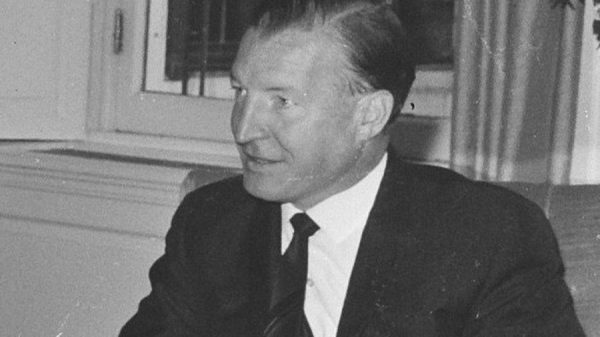
Charles Haughey © Joost Evers / The Netherlands National Archive
RT | December 29, 2107
Former Irish Prime Minister Charles Haughey was warned by loyalist paramilitaries that they were once tasked with murdering him in an assassination plot purportedly dreamt up by the British secret service.
The sensational disclosure was sent in a letter to the Irish government, newly released under the Public Records Act, which requires documents of historical value to be published by the National Archives within 30 years.
Written on Ulster Volunteer Force (UVF) signature paper, the warning claims the terrorist organization was asked by an MI5 operative about the prospect of carrying out an attack on Republic of Ireland leader Haughey in 1985.
At the time, Haughey would have been in opposition as head of political party Fianna Fáil, but details of the solicitation did not become known to Irish authorities until 1987.
“In 1985 we were approached by a M15 officer attached to the Northern Ireland Office and based in Lisburn, Alex Jones was his supposed name,” the letter reads, according to the Irish Times. “He asked us to execute you.”
Prominent during the period known as the ‘Troubles’ in Northern Ireland, the UVF operated on the loyalist side of the political divide, which also saw the Irish Republican Army, another illegal militant organization, carry out violent attacks.
The UVF letter claims it was given information on Haughey’s home, his modes of transport, as well as his holiday island Inishvickillane, off the southwest coast of Ireland. However, the person behind the letter, which is signed by a Capt W Johnston, says the request was declined.
“We refused to do it. We were asked would we accept responsibility if you were killed. We refused. We have no love for you but we are not going to carry out work for the Dirty Tricks Department of the British,” the letter continues, according to the Irish Mirror.
The tentative assassination plot appears to have been hatched in-between Haughey’s second and third terms in office. Haughey was known for his preference to broker an agreement with Britain that would bring about a united Ireland.
All Is Not Quiet on the Syrian Front: US to Launch Another War
By Alex GORKA | Strategic Culture Foundation | 29.12.2017
This is a classic example of flip-flop policy. In November, the US promised Turkey to stop arming Kurdish militias in Syria after the Islamic State was routed. Brett McGurk, the US Special Presidential Envoy to the Global Coalition to Defeat Islamic State, explained that after the urban fighting in Raqqa was over “adjustments in the level of military support” would be made. “We had to give some equipment – and it’s limited, extremely limited – all of which was very transparent to our NATO ally, Turkey,” he said during a special briefing on December 21. In June, the US told Turkey it would take back weapons supplied to the Kurdish the People’s Protection Units (YPG) militia in northern Syria after the defeat of Islamic State.
But sophisticated weapons will continue to be sent to Syria in 2018, including thousands of anti-tank rocket launchers, heat seeking missiles and rocket launchers. The list of weaponry and equipment was prepared by US Department of Defense as part of the 2018 defense budget and signed by Trump of Dec. 12. It includes more than 300 non-tactical vehicles, 60 nonstandard vehicles, and 30 earth-moving vehicles to assist with the construction of outposts or operations staging areas. The US defense spending bill for 2018 (“Justification for FY 2018 Overseas Contingency Operations / Counter-Islamic State of Iraq and Syria Train and Equip Fund”) includes providing weapons worth $393 million to US partners in Syria. Overall, $500 million, roughly $70 million more than last year, are to be spent on Syria Train and Equip requirements. The partners are the Kurds-dominated Syria Democratic Forces (SDF). The YPG – the group that is a major concern of Turkey – is the backbone of this force.
The budget does not refer to Syrian Democratic Forces (SDF) but instead says “Vetted Syrian Opposition”. According to the budget list, there are 25,000 opposition forces supported as a part of the train and equip program in Syria. That number is planned to be increased to 30,000 in 2018. The arming of Kurdish militants with anti-tank rockets is a sensitive topic because of Turkey’s reliance on its armored Leopard tanks in northern Syria.
Talal Sillo, a former high-ranking commander and spokesperson of the US-backed SDF, who defected from the group last month to go to Turkey, divulged details of the US arming the Kurdish group.
The list does not detail which vetted Syrian groups will receive certain pieces of equipment. In northern Syria, there is the SDF, including the YPG, and the Syria Arab Coalition — a group of Arab fighters incorporated into the SDF. The Maghawir al-Thawra and Shohada al-Quartayn groups are operating in the southeastern part of Syria. They are being trained by US and British instructors at the al-Tanf border crossing between Syria and Iraq.
Besides the SDF and the groups trained at al-Tanf, the US is in the process of creating the New Syria Army to fight the Syrian government forces. The training is taking place at the Syrian Hasakah refugee camp located 70 kilometers from the border of Turkey and 50 kilometers from the border of Iraq.
Around 40 Syria opposition groups on Dec. 25 rejected to attend the planned Sochi conference on Syria scheduled to take place in January. They said Moscow, which organizes the conference, was seeking to bypass the UN-based Geneva peace process, despite the fact that UN Syria envoy Staffan de Mistura said that Russia’s plan to convene the congress should be assessed by its ability to contribute to and support the UN-led Geneva talks on ending the war in Syria. If fighting starts, these groups are likely to join the formations created by the US.
So, the United States not only maintains its illegal military presence in Syria and creates new forces to fight against the Syrian government, it appears to be preparing for a new war to follow the Islamic State’s defeat. The continuation of arming and training Kurdish militias will hardly improve Washington’s relations with Ankara, while saying one thing and doing another undermines the credibility of the United States as a partner.
Clean Break II: Iran Hawks Decide to Burn It All Down
By Derek Davison and Jim Lobe | LobeLog | December 27, 2017
The 20th century was rife with partitions, many of them involving European powers carving up colonial possessions in Africa and the Middle East with what often appears to have been little or no concern for local realities. Perhaps the most famous of these free-hand attempts at state creation is the Sykes-Picot Line, whose legacy is very much still with us (and not for the better). But Sykes-Picot is far from the only example of European colonial borders that are still causing problems decades after they were drawn.
But who cares about all of that? It doesn’t seem to be an issue for at least some of America’s anti-Iran hawks. In response to Iran’s rising profile in the Middle East, fueled mostly by a war those neocons ardently championed and the striking ineptitude of the hawks’ new favorite Persian Gulf monarchy, the intellectual heirs to the men who drew those ill-fated borders are proposing, long after it might have done any good, to re-draw them.
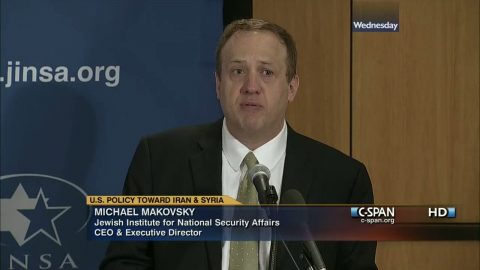
Writing for Fox News on December 25, Michael Makovsky—who is no fringe figure, being CEO of the neoconservative Jewish Institute for National Security Affairs (JINSA)—suggests just such a strategy for countering Iranian influence in the Middle East:
Maintaining Syria, Iraq, Lebanon and Yemen in their existing forms is unnatural and serves Iran’s interests. There is nothing sacred about these countries’ borders, which seem to have been drawn by a drunk and blindfolded mapmaker. Indeed, in totally disregarding these borders, ISIS and Iran both have already demonstrated the anachronism and irrelevance of the borders.
Syria, Iraq, Lebanon and Yemen are not nation-states as Americans understand them, but rather post-World War I artificial constructs, mostly created out of the ashes of the Ottoman Empire in a colossally failed experiment by western leaders.
With their deep ethno-sectarian fissures, these four countries have either been held together by a strong authoritarian hand or suffered sectarian carnage.
It is astonishing to read neoconservatives, who have done little else since the 1970s but lobby for exerting American hegemony in the Middle East, decry the results of the exertion of European hegemony in the Middle East. It reads like an artificial intelligence that just briefly verges on full self-awareness before pivoting and falling back to safer ground. It’s particularly rich for Makovsky, whose JINSA predecessors promoted the ouster of two of those “strong authoritarian hands” in former Iraqi leader Saddam Hussein and former Yemeni President Ali Abdullah Saleh, to bemoan one result of their ouster.
But let’s focus on the proposal Makovsky makes: redrawing borders in the Middle East, creating what he calls “loose confederations or new countries with more borders that more naturally conform along sectarian lines,” in order to counter Iran. The proposal strongly resembles recommendations found in “A Clean Break: A New Strategy for Securing the Realm,” a 1996 publication of the Jerusalem-based Institute for Advanced Strategic and Political Studies that was prepared in collaboration with several other neoconservative think tanks—including JINSA.
“A Clean Break,” the conclusion of a task force that included such Likudnik geniuses as Richard Perle, Douglas Feith, and David Wurmser, argued in part that Israel should work with friendly governments in Turkey and Jordan to contain regional threats, particularly coming from Syria. It concluded, among other things, that Israeli leaders should pursue “removing Saddam Hussein from power in Iraq-an important objective in its own right-as a means of foiling Syria’s regional ambitions.” “Syria” in this context serves as a stand-in for “Iran.” Long-term, the report envisioned the formation of a “natural axis” of Israel, Turkey, Jordan, and a “Hashemite” Iraq serving as “the prelude to a redrawing of the map of the Middle East, which could threaten Syria’s territorial integrity.”
Even a cursory glance at the state of the Middle East since the end of the Iraq War shows that ousting Saddam Hussein achieved the opposite of the report’s stated goals. The idea of a Hashemite restoration in Shia-majority Iraq was ridiculously far-fetched, and Iraq’s democratically-elected government has–justifiably–greatly improved the Baghdad-Tehran relationship. Makovsky, who wants to reverse this trend, argues that the United States should “declare our support and strong military aid for an eventual Iraqi Kurdish state, once its warring factions unify and improve governance. We could support a federation for the rest of Iraq.”
In Makovsky’s imagination, the new Kurd-less Iraqi federation would presumably wish Erbil well and send it on its way. In reality, another serious Kurdish move toward independence would probably lead to a civil war, as it nearly did in October over the status of Kirkuk. Iraqi Prime Minister Haider al-Abadi’s first foreign trip after his dramatic capture of Kirkuk was… to Iran. If the United States were to come out in full support of an independent Kurdistan, it would almost certainly push the rest of Iraq more firmly into Iran’s orbit. Speaking of Kirkuk, does Makovsky imagine that independent Kurdistan would be given the city and its surrounding oil fields? If yes, then that only increases the chances of a war with Baghdad. If no, then there are serious questions about whether that hypothetical Kurdish state would be economically viable.
For Syria, Makovsky says that “we could seek a more ethnically coherent loose confederation or separate states that might balance each other – the Iranian-dominated Alawites along the coast, the Kurds in the northeast, and the Sunni Arabs in the heartland.” He might want to check a recent map of Syria, because while “heartland” is obviously a subjective term, by almost any definition Syria’s “heartland” now belongs to President Basher al-Assad and his Russian and Iranian allies. This includes the country’s five largest (pre-war) cities: Aleppo, Damascus, Homs, Latakia, and Hama. How does Makovsky propose any of that territory be taken from Assad so as to be turned over to “Sunni Arabs,” even in a confederate sense? If the answer is “war,” then his Fox News thinkpiece is burying the lede to say the least.
Makovsky then recommends that the U.S. strengthen relations with Shia-majority Azerbaijan, in order to “demonstrate we are not anti-Shia Muslim.” Yes, that should do the trick. Of course, that’s not the only reason:
An added potential benefit of this approach could be a fomenting of tensions within Iran, which has sizable Kurdish and Azeri populations, thereby weakening the radical regime in Tehran.
You might even say that it could threaten Iran’s territorial integrity. Make a Clean Break, if you will.
The dangers of the United States trying to redraw Middle Eastern borders—Makovsky graciously allows that America “cannot dictate the outcomes” but should instead “influence” them—should be obvious. For one thing, there’s the immediate likelihood that attempting to draw new borders would intensify regional instability. For another, there’s little reason to expect that the United States would get the new borders any more “right” than Britain and France did a century ago, particularly not when the process is being managed by the same people who brought us the invasion of Iraq. For still another, the most recent example of such Western “influenced” partitioning isn’t exactly a positive one.
But we can’t leave Makovsky’s piece without mentioning its most jaw-dropping paragraph (emphasis ours):
Artificial states have been divided or loosened before with some success, such as the Soviet Union, Yugoslavia and Czechoslovakia, which are all post-WWI formations. Bosnia and Herzegovina have also managed as a confederation.
Czechoslovakia divided peacefully of its own accord. The Soviet Union more or less did likewise, though that dissolution hasn’t been quite so peaceful in recent years. As for Yugoslavia—well, maybe Dr. Makovsky’s definition of “success” is a bit different from most other people’s. To be fair, though, if the breakup of Yugoslavia is his template for the future of the Middle East, this piece makes a lot more sense.
But if Makovsky believes in federalizing existing Middle Eastern states along “ethno-sectarian” lines, why not start with Israel and the Occupied Territories, a notion that would seem logical to any 21st century mapmaker? After all, occupation of one people by another via a “strong authoritarian hand”—in this case the IDF—would seem to be a prescription for a “colossally failed experiment,” no? Perhaps Makovsky’s experience as a former West Bank settler may make it difficult for him to see the relevance.
Russia again offers US to seal pact on mutual non-interference in each other’s affairs
RT | December 28, 2017
US Ambassador to Russia, Jon Huntsman, has been handed a proposal for Washington and Moscow to exchange guarantees of non-interference in each others internal affairs, Russia’s Foreign Ministry spokeswoman has said.
The memorandum, in which Russia’s “readiness to exchange letters or other forms of guarantees of mutual non-interference into electoral and other internal political processes, was again confirmed,” and forwarded to Huntsman on December 21, Zakharova said. “The matter now lies with the American side,” she stated, adding that the media should engage US officials for further comment.
Russia underlined “the long-standing and systematic aspirations of Washington to influence what is happening in our country in its own interests,” Zakharova said of the proposal.
It is not the first attempt by Moscow to formalize non-interference between the US and Russia. Similar suggestions were voiced repeatedly after “absolutely groundless accusations of a certain Russian influence in the presidential election in the US in 2016 began to unravel,” the spokeswoman told journalists at a briefing in Moscow.
The non-interference provision was also contained “in the draft of the joint statement by Russian and the US presidents, prepared for the G20 summit in Hamburg in July 2017. However – and I think you won’t need a second try to guess this right – the Americans refrained from adopting such a document,” Zakharova said.
“Washington showed that they don’t want to make any commitments. Of course, it looks like a desire to reserve the right to interfere in the affairs of others,” she added. The foreign ministry spokesman slammed the US over recent claims that Russian authorities were “pressuring potential presidential candidates” in the election, scheduled for March 18.
Earlier this week, US State Department spokesman, Noel Clay, told TASS that Washington was “concerned” by the decision of the Russian Central Elections Commission to reject the application of anti-corruption activist, Aleksey Navalny. Russian law, explicitly bars people with unserved lengthy prison sentences from participating in presidential polls. Navalny was handed a five-year suspended sentence for embezzlement in 2014, and another five-year suspended sentence in 2013 for fraud.
“Such statements by the State Department are a direct interference into the electoral process, the internal affairs of a sovereign state,” she said. “It remains unclear on what grounds US officials believe that they are entitled to assess the internal political processes of other countries,” said Zakharova.
Featured Video

The 1964 Coup in Brazil
or go to
Aletho News Archives – Video-Images
Frlom the Archives
70 Neocons Petition Congress To Effectively Allow Israel To Say When The US Should Attack Iran
By Damian Lataan | January 10, 2014
Seventy senior Israeli-centric neoconservatives have written an open letter to Congress imploring them to do more to ensure Iran complies with the conditions of any agreement finally reached with the P5+1 over Iran’s nuclear program.
While the neocons are ostensibly asking Congress to ensure compliance, it is clear that their real aim is to convince members of Congress to support the bill currently passing through the Senate which calls for tighter sanctions against Iran in the event of any waywardness on Iran’s part.
The neocons are eager to see the bill currently passing through the Senate with enough support to make it veto-proof, not so much because they are concerned about Iran’s so-called nuclear weapons program – there’s still not a skerrick of hard evidence that Iran has a nuclear weapons program – but, rather, because embedded within the bill is this clause:
… if the Government of Israel is compelled to take military action in legitimate self-defense against Iran’s nuclear weapon program, the United States Government should stand with Israel and provide, in accordance with the law of the United States and the constitutional responsibility of Congress to authorize the use of military force, diplomatic, military, and economic support to the Government of Israel in its defense of its territory, people, and existence…
Essentially, the clause is an automatic trigger for the US to attack Iran at any time the Israelis choose to launch a first strike – regardless of whether President Obama is in favour or not.
Partial list… continue
Blog Roll
 Aletho News
- Aramco CEO warns ‘catastrophe’ imminent if Strait of Hormuz remains shut
- What If Iran Says No?
- Trump Threatens to ‘Hit’ Iran ‘Twenty Times Harder’ Over Strait of Hormuz Oil Flows
- Spare the hypocrisy: Baghaei slams Ursula’s support for US
- Iran War Supporters Invent a New and Absurd Justification: It Is All About China
- Corporate Media Go All Out To Support The US-Israeli War on Iran
- Trump press conference reveals a man who wants out of war
- When Tel Aviv decides, Washington fights
- Top official: Iran ready for a long war with US, no more diplomacy
- How Iran’s Toxic Rain Reveals US-Israel Discord
- If Americans Knew
- Threats and missiles fly, death tolls soar in Iran, Lebanon, Gaza – Not a ceasefire Day 151
- Lebanon: Israel’s White Phosphorous Use Risks Civilian Harm
- Corporate Media Go All Out To Support The US-Israeli War On Iran
- US-Israel war on Iran is creating a steady growing number of amputees
- Israel planned this war on Iran for 40 years. Everything else is a smoke screen
- The wrong question about the war in Iran
- ‘Your Tax Dollars Being Used to Raise Your Gas Prices’: US-Israel Bomb Major Iranian Oil Depots
- ‘Bogus Evidence’: Former Nuclear Watchdog Head Debunks US Justification for Iran War
- EXPLAINER – Dimona: What to know about Israel’s nuclear site
- Fires and toxic air in Iran (thanks, Israel) – Not a ceasefire Day 150
- No Tricks Zone
- Wake-up Call: Survey Shows Majority Of Germans Now Favor Postponing Climate Targets!
- Televised! Leading German Political Candidate Tells Schoolchildren CO2 Makes Sun Hotter!
- New Study: A Century Warming Of 1.1°C Is ‘Commonplace’ And ‘Not Unusual’ During This Interglacial
- New Study: ‘Internal Noise’ And Volcanic Forcing Can Trigger 10-15°C Warming Within Decades
- Glaciers Worldwide Are Suddendly Surging, Experts Blame Warming!
- Surprising Discovery: Sahara Is Greening…Billions Of Trees Where Once Thought To Be Barren
- New Research Reaffirms Clouds, Aerosols, And Surface Solar Radiation Are ‘Driving The Climate System’
- Germany: Electric Car Catches Fire At Charging Station, Sets Off Local “Inferno”, Widespread Damage
- New Study: Canada’s New Brunswick Was 1°C Warmer Than Today During The Medieval Warm Period
- Coal Power Back In Trend As Globe Tries To Keep Pace With Growing Demand For Power
 Aletho News