Argentina: Fernandez Brands ‘Iranian Pact’ Allegations ‘Arbitrary,’ Demands Immediate Trial
teleSUR | February 20, 2018
Argentine senator and former president Cristina Fernandez de Kirchner has requested a public trial be held “immediately” to “expose the arbitrariness of the accusation (against her) to the whole society.” Fernandez is being prosecuted for an alleged cover-up of Iranian officials and citizens accused of perpetrating a terror attack in 1994.
In July 1994 the Asociacion Mutual Israelita Argentina (AMIA), a Jewish community center, was attacked with a car bomb killing 85 people and injuring 300 more.
In a legal recourse sent Monday to judge Claudio Bonadio by Fernandez’s lawyers, Alejandro Rua and Graciana Peñafort, they demand the investigation be elevated to a public trial.
Judge Bonadio prosecuted the former head of state and other former government officials, including Minister of Foreign Affairs Hector Timerman, for concealment and treason.
The treason charge was dropped in a second instance hearing, but the National Chamber of Criminal and Correctional Appeals confirmed the prosecution of the defendants for concealment arguing they covered up Iranians accused of the AMIA attack through a Memorandum of Understanding with Mahmoud Ahmadinejad’s government.
The memorandum, which would have created a Truth Commission to investigate the case, was never applied because it wasn’t ratified by the Iranian parliament.
The case against Fernandez was opened after federal prosecutor Alberto Nisman formally accused her and other politicians in 2013 of covering up Iranian suspects. Nisman was found dead in 2015, before testifying.
A federal judge dismissed the case arguing the minimum conditions to launch a criminal investigation were not met. According to Pagina 12, a local newspaper, five prominent Argentine jurists agreed that there was no crime in Nisman’s accusation. However, the dismissal was revoked last year after an appeal by the Delegation of Israeli Argentine Associations.
In the document elevated to the court by Fernandez’s lawyers, they claim Bonadio’s conclusions “are false and are contradicted by the collected proof,” and clarify they will not request the dismissal because their client “does not expect Justice” from Bonadio’s court.
WSJ’s Epic Distortion of Colombian and Venezuelan Refugees
By Joe Emersberger | FAIR | February 18, 2018
A Wall Street Journal article by Juan Forero (2/13/18) ran with the headline “Venezuela’s Misery Fuels Migration on Epic Scale.” The subhead stated, “Residents Flee Crumbling Economy in Numbers That Echo Syrians to Europe, Rohingya to Bangladesh.”
Forero’s article quoted a UN official: “By world standards, Colombia is receiving migrants at a pace that now rivals what we saw in the Balkans, in Greece, in Italy in 2015, at the peak of [Europe’s] migrant emergency.” Further on, Forero says, “The influx prompted Colombian officials to travel to Turkey last year to study how authorities were dealing with Syrian war refugees.”
Two enormous problems with the way Forero and his editors have framed this article should immediately stand out:
- Colombia’s population of internally displaced people is about 7 million, and has consistently been neck and neck with Syria’s. According to the UNHCR, as of mid-2016, Colombia is also the Latin American country which has the most number of refugees living outside its borders: over 300,000, mainly in Venezuela and Ecuador. Forero and his editors picked the wrong country to compare with Syria.
- Greece and Italy do not share a border with Syria, nor do the Balkans as they are generally defined. Colombia and Venezuela, by contrast, share a very long border. Forero’s comparison, therefore, excludes states that border Syria. Three of those bordering states—Lebanon, Jordan and Turkey—collectively absorbed 4.4 million Syrian refugees by 2016; five years after war broke out in Syria, Turkey alone took in almost 3 million.
It’s very important to expand on the first point. Colombia is a humanitarian and human rights disaster, and has been for decades, in very large part due to its close alliance with the United States. Thanks to Wikileaks (CounterPunch, 2/23/12), we know that US officials privately acknowledged estimates that hundreds of thousands of people were murdered by right-wing paramilitaries, and that the killings have nearly wiped out some indigenous groups. Those genocidal paramilitaries have worked closely with the Colombian military that Trump Chief of Staff John Kelly praised in 2014 as a “magnificent” US partner. “They’re so appreciative of what we did for them,” raved Kelly.
Praise for Colombia’s government has also come from the liberal end of the US establishment, albeit with much more subtlety than from Kelly. In 2014, a New York Times editorial (9/21/14) stated that “Colombia, Brazil and other Latin American countries should lead an effort to prevent Caracas from representing the region [on the UN Security Council] when it is fast becoming an embarrassment on the continent.” So to Times editors, Colombia is a regional good guy that must lead its neighbors in shunning Venezuela.
Colombia’s current president, Juan Manuel Santos, was minister of Defense from 2006 to 2009. From 2002 to 2008, the Colombian military murdered about 3,000 civilians, passing them off as slain rebels. As human rights lawyer Dan Kovalik explained (Huffington Post, 11/20/14) , the International Criminal Court (ICC) “concluded that these killings were systemic, approved by the highest ranks of the Colombian military, and that they therefore constituted ‘state policy.’” The murders occurred with the greatest frequency between 2004 and 2008, which Kovalik observed “also corresponds with the time in which the US was providing the highest level of military aid to Colombia.”
If Colombian and US officials evade prosecution for all of this, it will be with the help of corporate media—as well as the severe limitations powerful governments impose on international bureaucracies like the ICC. Kovalik remarked:
You might say, no official of the US can be prosecuted by the ICC because the US has refused to ratify the ICC treaty. While this may appear to be true, this did not stop the ICC from prosecuting officials from the Sudan—also not a signatory to the ICC.
The closest Forero came in his article to even hinting at any of these gruesome facts was when he wrote that “Colombia has long had troubles of its own, including integrating former Communist guerrillas from a civil conflict that only ended recently.” The “conflict” has not exactly “ended,” given that 170 leftist political leaders and activists were assassinated in 2017.
Putting aside Forero’s epic distortions by omission regarding Colombia, what about his reporting about migration from Venezuela? He wrote:
Nearly 3 million Venezuelans—a tenth of the population—have left the oil-rich country over the past two decades of leftist rule. Almost half that number—some 1.2 million people—have gone in the past two years, according to Tomás Páez, a Venezuelan immigration expert at Venezuela’s Central University.
In April 2002, Páez signed his name to a quarter-page ad in the Venezuelan newspaper El Nacional that welcomed the dictatorship of Pedro Carmona, then head of Venezuela’s largest business federation, who was installed after a US-backed military coup briefly ousted the late President Hugo Chavez. I’ve written before (ZNet, 1/16/17) about Western outlets—New York Times (11/25/16), Reuters (10/15/14) and Financial Times (8/22/16)—citing Páez without disclosing his anti-democratic record.
The World Bank has compiled data over the years on the numbers of Venezuelan-born people living abroad. The numbers point to far smaller migrations than Páez has estimated:

During the years Chavez was in office (1999–2013), the World Bank’s figures tell us Venezuelans living abroad increased by about 330,000. By 2013, Páez was estimating that about 1.3 million had left—about 1 million more than World Bank estimates. Would journalists ignore data published by the World Bank in favor of estimates by Páez if he were a staunch supporter of the Venezuelan government?
During those 1999–2013 years, the World Bank figures also say that the number of Colombian-born people living in Venezuela grew by 200,000. Forero’s article implies that migration from Colombia to Venezuela ended in the “late 20th century.”
The World Bank has not updated migration data past 2013, but there is no doubt there was a huge increase in migration from Venezuela since its economy entered into a very deep crisis starting in late 2014. (For an overview of the important role of US policy in creating the crisis and now deliberately making it much worse, see my op-ed, “US Policy a Big Factor in Venezuela’s Depression”—Tribune News Service, 2/2/18.)
According to a Colombian university study of Venezuelan migration to Colombia, it averaged about 47,000 per year from 2011–2014, then increased to 80,000 per year in 2015–16.
US government data show migration from Venezuela to the United States increasing from about 7,000 per year before 2013 to 28,000 per year by 2015, including Venezuelans who have entered without authorization.

From 2000 to 2013, the United States was the destination for about 30 percent of Venezuelan-born people who left to live abroad, according to the World Bank figures. If the Colombian university study and US government data are accurate, then the United States has been the destination for about 20 percent of Venezuelan migrants after 2013. That would mean about 140,000 Venezuelans per year were leaving to live abroad by 2016.
That is not remotely comparable to the 5 million Syrians who fled the country in the first five years following the civil war—and that doesn’t include over a million per year who fled their homes inside Syria (the internally displaced).
That Forero would even try to force this comparison into his article speaks volumes. It’s not hard to guess why it was made, given that US has bombed Syria regularly and has had Venezuela’s government in its crosshairs for almost two decades.
More Gun Violence: Let’s Look Beyond Politics
By Ron Paul | February 20, 2108
Another terrible school shooting took place in Parkland, Florida last week and unfortunately many politicians and pundits have used the tragedy – as they often do – to push their own agenda. Many will use the tragedy to argue that Americans should be prohibited from owning guns. As if anti-gun laws would dissuade a disturbed or violent individual intent on causing harm. Those intent on mass murder don’t obey gun laws.
It’s unfortunate that while many are quick to demand that guns be taken away from peaceful Americans, they don’t seem to have much to say about guns when they’re in the hands of government authorities shooting innocent people. If we need any gun control, it is to get control of the guns in the hands of thousands of government employees who use them against innocent people with impunity.
For example, why do those calling for more gun control remain silent when armed federal agents raid Amish farms to stop them from selling raw milk? This shows the hypocrisy of those who call for restrictions on private firearms ownership while supporting the use of government violence as a means of controlling our lives.
Unfortunately there are many key questions lost in the race to score political points from the shooting.
Why does it always seem that the shooter in these mass killings has been on some kind of psychotropic drugs? As the New American magazine pointed out this week, at least ten high profile mass shootings have been committed by individuals who “were either on — or just recently coming off of — psychiatric medications.” The young killer in Florida was no different. According to his aunt, he had been on these medications to treat mental problems.
Why is no one questioning these medications – all of which come with labels warning of horrific side effects? Perhaps one reason they are ignored is that the pharmaceutical industry spends billions of dollars lobbying Congress.
Also, how is it possible that the FBI once again missed so many obvious clues that a violent person intent on causing massive harm to others was about to strike? Is the FBI actually this incompetent, or perhaps its focus was in other areas — like meddling in our own elections by presenting “evidence” they knew was flawed to the FISA court to get permission to spy on the Trump campaign?
We’ve heard many stories of how alert FBI field agents tried to alert their bosses before 9/11 that foreigners were taking flight lessons but were not interested in learning how to land the planes.
Is giving the federal government more power to spy on us – as they demand – the answer to stop these terrible crimes? Hardly!
Those who think that giving federal authorities greater surveillance powers might prevent mass shootings should consider that the FBI has been alerted that the latest school shooter had made Facebook posts and YouTube comments talking about his intention to be, as he put it, “a professional school shooter.” But the Bureau failed to properly investigate the tips. If the FBI fails to stop someone who openly boasts about their intentions on social media why should we believe that giving them the power to snoop on every American would increase our safety?
We cannot stop tragedies like this by banning guns. We need to look seriously into the psychotropic drugs that more and more Americans are being prescribed. We need to demand that our elected Representatives demand a real day of reckoning at the FBI. We need to keep focused and ignore those who politicize such events.
US-Russia rivalry surges in Syria
By M K Bhadrakumar | Indian Punchline | February 20, 2018
A major speech by Russian Foreign Minister Sergey Lavrov on Monday at an international conference on the Middle East turned into the strongest Russian denunciation to date of the shift in the US policies under the Trump administration towards Syria, where the Pentagon now intends to keep a military presence indefinitely. (here and here)
The overall impression Lavrov conveyed is three-fold. One, in immediate terms, a spurt in fighting in Syria can be expected, as the US attempts to create new facts on the ground by using local proxies — Kurdish militia plus al-Qaeda affiliates and ISIS fighters — as well as to push back at Russia, Iran and the Syrian government.
Two, Russia concludes that the shift in the overall US strategy aims at balkanizing Syria. (Later on Monday, while speaking to the media in Moscow, Lavrov also drew attention to the presence of mercenaries and the Special Forces of France and Britain in northeastern Syria working in league with the US forces in implementing the American agenda to create zones of influence.)
Three, the conversation between Moscow and Washington regarding Syria is at a dead end. Lavrov specifically warned Washington that it is “playing with fire” in Syria, implying that the US strategy will run into resistance.
Two other features of the Moscow conference in Moscow are that, first, Iran’s Foreign Minister Mohamad Javad Zarif took part in it, and, second, the event also talked up a Russian mediatory role to calm down the tensions between Iran and Saudi Arabia.
Zarif told Lavrov at a meeting in Moscow on Monday that Tehran seeks Russia’s help in resolving the intra-regional rifts in the Muslim Middle East. Later, Zarif posted on his official Tweeter account: “With Russia’s sober strategic perspective and its growing influence in West Asia, it can play an instrumental role to help a paradigm shift in the Persian Gulf to one based on dialogue and inclusion.”
The conference was attended by non-official delegates from several Middle East countries, including Saudi Arabia. Meanwhile, King Abdullah of Jordan had paid a ‘working visit’ to Moscow on February 15 and met Putin. On the previous day, Lavrov had spoken to his Egyptian counterpart Sameh Hassan Shoukry on phone. Yesterday, Putin also telephoned Turkish President Recep Erdogan. The focus was on Syria in all these exchanges.
The Russian strategy will be to persuade important regional states who have been the US’ key regional allies – Saudi Arabia and Jordan, in particular – not to rejoin the conflict in Syria by fueling a new round of fighting. If the approach succeeds, the US may find itself at a disadvantage in lacking regional support for pressing ahead with the military track.
However, although Russia’s ties with Saudi Arabia have appreciably strengthened in the recent years, Moscow’s capacity to mediate a Saudi-Iranian rapprochement remains to be seen. Syria continues to be a major source of rivalry between Saudi Arabia and Iran. And, the irony is that, finally, the Trump administration is doing what Saudi Arabia had wanted the previous Obama administration to do by pushing upfront the ‘regime change’ agenda in Syria through coercive methods.
In the Saudi perception, Russia suffered a series of setbacks in Syria recently. Summing up the Syrian situation, Ghassan Charbel, editor-in-chief of the influential Saudi establishment daily Asharq Al-Awsat wrote on Monday, “ Never before have all these flags, interests, dangers, armies, militias, internal divisions and regional and international clashes come together on its (Syria’s) territories. From the South to Idlib to Hmeimem to Afrin, Syria is like a powder keg. It is at the heart of a complex and vast geo-strategic conflict that is impossible to resolve with force and where losses and rewards will be difficult to predict… The regional and international circumstances do not appear ripe for… talks to happen. The Syrian tragedy is open to the most dangerous possibilities.”
The Saudi inclination will be to wait and watch which way the winds are blowing. On the other hand, the war in Yemen remains Saudi Arabia’s number one priority today and Riyadh seeks a Russian role in ending the war in Yemen by leveraging its influence with Iran.
Bear scare! Why the US Democrats desperately need a Russian bogeyman
By Robert Bridge | RT | February 20, 2018
Even before Donald Trump set foot in the White House, loveless liberals were busy pushing the narrative that Russia meddled in the elections. But could this claim be – just maybe – a dastardly ploy to hide some unsavory truths?
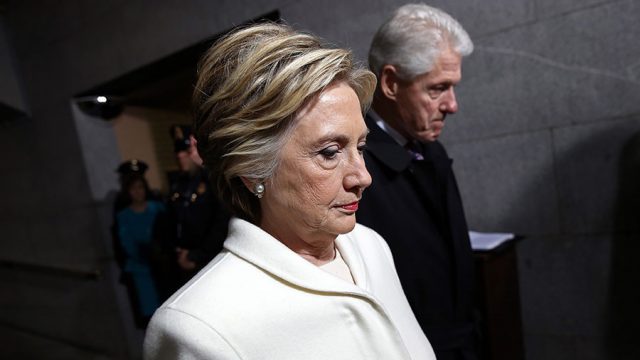
Pass the popcorn, the theater of the political absurd known as ‘Russiagate’ continues playing to disappointed audiences without so much as an intermission. And with the latest episode featuring an indictment against 13 Russian nationals without rhyme or reason, perhaps it’s a good time to pause and reflect on the question the mainstream media conspicuously ignores: was the real meddlesome actor in the 2016 presidential election not the perennial bogeyman known as ‘Putin’s Russia’, but the Democratic Party itself?
Indeed, some highly questionable moves on the part of the Democrats before, during and after the elections go far in exonerating the Russian fall guy from any and all charges. You be the judge.
The FISA fail
In a memo declassified by the White House and released to great fanfare by the House Intelligence Committee on February 2, it was alleged that on October 21, 2016, the FBI and the Department of Justice (DOJ) – armed with the notorious Trump dossier – secured a Foreign Intelligence Surveillance Act (FISA) warrant to conduct surveillance on Carter Page, a Trump campaign adviser.
But something looks rotten in Denmark. As it turned out, the explosive Trump dossier, compiled by former MI6 spy Christopher Steele, was bought and paid for by the Democratic National Committee (DNC) and the Clinton campaign. In other words, this represents – at the very least – a very big conflict of interest.
At the same time, in the their application for the FISA warrant, the FBI and DOJ “cited extensively” a Yahoo News article by one Michael Isikoff, which discusses Page’s July 2016 trip to Moscow.
As it turned out, however, there were serious problems with that article. As the Nunes memo states, Isikoff’s article “does not corroborate the Steele dossier because it is derived from information leaked by Steele himself…”
Indeed, Steele admitted that he met with Yahoo News “at the direction of Fusion GPS,” the firm that organized the dossier, in September 2016. Meanwhile, the mainstream media has largely played down these glaring violations of FISA protocol, as it continues to heap scorn on Russia.
“Putin’s KGB-inspired maneuvering of the United States via Donald Trump and the Republican Congress has all the earmarks of a carefully planned, professionally executed war game in which Trump, congressional Republicans and some in right wing media are his comrades,”wrote Cheri Jacobus in USA Today.
The specter of the Russian bogeyman is truly the gift that keeps giving.
Clinton’s email scandal
In March 2015, the news broke that Hillary Clinton, while serving as secretary of state, had used her home computer while handling classified government documents. An assortment of experts and politicians accused Clinton of violating State Department protocol.
On July 5, 2016, following an investigation, FBI Director James Comey said Clinton had been “extremely careless” in handling her email correspondences. He added that “no reasonable prosecutor would bring such a case.”
That statement did little to calm the critics, however, as Clinton was haunted by the ghosts of emails past right up to the eve of the elections.
On October 28, 2016, the FBI said it was reopening its investigation into Clinton’s private email server after messages were discovered on the computer of top aide Huma Abedin’s husband, Anthony Weiner, who was then embroiled in a sexting scandal. Comey announced just before the elections that nothing had changed in the Clinton case, which had been closed four months earlier without criminal charges.
However, the email saga refuses to go away as the DOJ once again reopened its investigation into Clinton’s email server in January.
To this day, Hillary Clinton has been able to divert attention away from the very serious charge of handling classified government emails over her private server thanks to a giant smokescreen known as Russia, the bogeyman that conveniently explains every transgression and setback by the Democratic Party.
Operation Sink Sanders
In July 2016, the DNC suffered a broadside after WikiLeaks released a batch of emails purporting to show that Debbie Wasserman Schultz, the chairwoman of the body, was actively conspiring against the campaign of Senator Bernie Sanders. Naturally, this news had a way of upsetting those donors who contributed funds to the Sanders campaign. Wasserman Schultz resigned in disgrace following the revelations.
Despite there being a deliberate effort to undermine the Sanders campaign, that disturbing news was sidelined by the conspiracy theory that a Russian army of apparatchiks hacked the DNC computers, turning over the information to Julian Assange. To this day, no evidence has been provided to support that claim.
Meanwhile, Wasserman Schultz was eventually cleared of rigging the Democratic primary in favor of Hillary Clinton, while Russia continues to suffer from mainstream media mudslinging.
Clinton cheated in debates
One of the most shocking revelations to come from the leaked/hacked DNC emails was the claim that Donna Brazile, interim chairperson of the DNC who once worked at CNN, used her inside connections to feed Hillary Clinton the questions to several of her public debates against Donald Trump.
Following the DNC debacle, Brazile hoped to cash in on the scandal by publishing a tell-all book entitled, ‘Hacks: The Inside Story of the Break-ins and Breakdowns that Put Donald Trump in the White House.’
In one particularly candid part, Brazile said she was secretly concerned about Clinton’s health as Election Day drew closer. This comment did not sit well with Brazile’s former colleagues. Clinton’s staffers published an open letter in response to the book, saying, “It is particularly troubling and puzzling that she would seemingly buy into false Russian-fueled propaganda, spread by both the Russians and our opponent, about our candidate’s health.”
Once again, Russia was used and abused as the convenient 11-time-zone Band-Aid that can cover any political wound, whatever the size. What is the most surprising about this tactic is that anybody still falls for it.
Regime change
Given Hillary Clinton’s past track record for advocating on behalf of military adventures, most memorably in Iraq and Libya, the tall tale of Trump-Russia collusion appears to have been a desperate effort on the part of the establishment to get their candidate into office and the military industrial complex into another war.
According to the Center for Public Integrity’s review of Federal Election Commission data, over a 14-month period (January 2015 through February 2016), Clinton and Sanders jointly received at least $765,049 from employees of major defense contractors – more than twice the $357,775 sum received by the Republican Party presidential candidates.
To prove the liberal media’s (and by extension, the establishment’s) apparent desire for military conflict, consider how it lavished praise on Trump after he attacked Syria’s Shayrat Airbase on April 7, 2017, America’s first unilateral military act aimed at the Syrian government forces (not the terrorists).
CNN analyst Fareed Zakaria waxed poetically, “I think Donald Trump became president of the United States,” he said dreamily. “I think this was actually a big moment.” On MSNBC, Nicholas Kristof, a regular Trump critic, said the Republican leader “did the right thing.” Elliott Abrams could barely contain his newfound enthusiasm for Trump: “… the Trump administration can truly be said to have started only now. The president has been chief executive since January 20, but this week he acted also as Commander in Chief. And more: He finally accepted the role of Leader of the Free World.”
Judging by such comments, had Trump continued bombing Syria, and thereby pacifying the hawks in Washington, there is a very good chance that Russiagate would have been quietly swept under the media’s carpet.
Impeach Trump
It would be difficult to name another US president who has suffered the slings and arrows of media scorn more than Donald J. Trump. And he’s only been in office for just over one year. Indeed, no sooner had his Inauguration finished there were already calls for him to be impeached. In fact, the subject has become so popular among the Democrats that there is even a special Wikipedia page dedicated to the relentless campaign.
Although the clamor to impeach the Republican leader has subsided of late, when the idea does raise its head, the empty claim that Russia influenced the elections ranks high among the reasons.
Clinton Foundation ‘pay to play’
Another reason why the Democrats would need to push the anti-Russia narrative is to protect the Clinton family from allegations that they personally profited from donations to the Clinton Foundation.
In January 2017, it was reported that the FBI opened an investigation into whether the Clinton Foundation accepted donations in exchange for political favors while Hillary Clinton served as secretary of state in the Obama administration, the Los Angeles Time reported, citing two anonymous sources.
“Critics have accused the Clinton family of using the foundation to enrich themselves and give donors special access to the State Department when Hillary Clinton was its head,” the article said.
The LA Times said that the Democrats have rejected the claims, saying that “Trump is trying to steer attention away from investigations examining…Russian attempts to influence the 2016 election.”
Nunes Memo, Part 2
If anybody thought the Trump administration would just release the Nunes memo and drop it, think again. In fact, Trump’s legal team backs the idea of a second special counsel to investigate the FBI and Justice Department
White House Deputy Press Secretary Raj Shah told reporters on Air Force One Monday that Trump’s attorneys have given the green light to starting the process of appointing a second special counsel to investigate the FBI and Justice Department’s behavior during the 2016 presidential campaign, according to a report by Axios.
In other words, expect a lot more anti-Russia outbursts from the Democrats in the days and weeks to come.
Read more:
Iran strongly rejects claims of delivery of missiles to Yemen
Press TV – February 20, 2018
Iran has once again rejected the allegations about the Islamic Republic’s provision of missiles to Yemeni forces, saying such claims are lies and a foolish scenario.
“Iran’s missile program is for defensive and deterrent [purposes] and claims about the dispatch of missiles to Yemen despite the all-out blockade on this country are lies and a foolish scenario designed to exonerate the aggressors,” Iranian Foreign Ministry Spokesman Bahram Qassemi said on Tuesday.
He added that Britain and France have expressed their concern over Iran’s defensive missile program without providing any reason or wise justification.
A group of so-called independent United Nations experts monitoring the sanctions on Yemen reported to the Security Council in January that it had “identified missile remnants, related military equipment and military unmanned aerial vehicles that are of Iranian origin and were brought into Yemen after the imposition of the targeted arms embargo.”
British Foreign Secretary Boris Johnson in a statement on Monday called on Iran to stop taking actions which could lead to further escalation of the Yemeni conflict.
“I call on Iran to cease activity which risks escalating the conflict and to support a political solution to the conflict in Yemen,” Johnson said.
His remarks came on the same day that the French foreign ministry also said in a statement that Paris was concerned about Iran’s ballistic missiles program and its activities in the region, mentioning its support for the Houthis in Yemen.
In reaction to the allegations, Qassemi said the Islamic Republic has designed its defensive missile program based on its military doctrine and valuable experience it obtained during the eight-year war imposed on it by Iraq backed by major global powers in the 1980s.
He added that Iran’s missile program aims to deter any aggression by extremist powers against the country.
“In this clear path that is completely in conformity with international principles, we will never accept other countries’ intervention and regard as irresponsible and suspicious the adoption of such unprincipled stance and strongly reject them,” Qassemi said.
He emphasized that the Yemeni army and people have no need for foreign countries’ weapons, saying the Yemenis’ defense of their country’s dignity with minimum facilities has led to the defeat of aggressors.
The chief commander of Iran’s Islamic Revolution Guards Corps (IRGC) in January dismissed the allegations leveled by the US and its allies about the Islamic Republic’s provision of missiles to Yemeni forces.
“Missiles fired at Saudi Arabia belong to Yemen which have been overhauled and their range have been increased,” Major General Mohammad Ali Jafari said.
Iran’s Parliament Speaker Ali Larijani also said in December that the Islamic Republic is not providing military assistance to Yemen and all claims to this effect are false.
“We are not a country that would deny providing military assistance to anybody,” Larijani said.
Qassemi further called for an immediate end to the sale of European and US arms to Saudi Arabia and other aggressors and warmongers who are killing innocent Yemeni people on a daily basis.
A Saudi Arabian-led coalition launched a war against Yemen in 2015 and has ever since been indiscriminately hitting targets in the country. Yemeni Houthi fighters have been firing missiles in retaliatory attacks against Saudi targets every now and then.
The US State Department in January approved a possible $500-million sale of missile system support services to Saudi Arabia in defiance of global calls for Washington to stop providing Riyadh with military support due to the regime’s war crimes in Yemen.
The potential sale follows a request by Saudi Arabia for continued technical assistance for Patriot Legacy Field Surveillance Program (FSP), the Patriot Advanced Capability 3 (PAC-3) and the Patriot Engineering Services Program (ESP).
During his first trip to Saudi Arabia last year, US President Donald Trump signed a $110 billion arms deal with the Saudis, with options to sell up to $350 billion over a decade.
Iranian Foreign Minister Mohammad Javad Zarif said in December the United States is complicit in Saudi war crimes in Yemen amid Washington’s baseless claim that Tehran is providing supply of ballistic missiles to Yemen’s Houthi Ansarullah movement.
“No amount of alternative facts or alternative evidence covers up US complicity in war crimes,” Zarif said in a post on his official Twitter account.
He added that the US has sold weapons to its allies enabling them to “kill civilians and impose famine,” in reference to Washington’s arms deal with Riyadh in its aggression against Yemen.
Rouhani Phones Erdogan, Highlights Necessity of Respecting Syria’s Sovereignty and Territorial Integrity
Al-Manar | February 20, 2018
Iran’s President Sheikh Hassan Rouhani reiterated the necessity of respecting Syria’s sovereignty and territorial integrity, underlining the need to restore security and stability to it as soon as possible and provide appropriate conditions that will enable all Syrian displaced people to return home.
Rouhani’s remark came during a phone call with his Turkish counterpart Recep Tayyip Erdogan on Monday.
The Iranian President added that talks between the leaders and officials of Iran, Russia and Turkey in Astana and Sochi have been promising in terms of enhancing security and stability in Syria.
He stressed that this constructive track should be further reinforced through the continuous consultations among the heads of the three states.
Rouhani said that fighting terrorism, cleansing Syria of terrorist organizations and countering separatist attempts in the region are among the common objectives of Iran and Turkey, adding that “We should not allow terrorist groups to regain strength and return again to the region.”
He pointed out to the US-Zionist conspiracies against the countries of the region, noting that Iran and Turkey have common objectives regarding the regional and international issues.
The Iranian President called for consolidating cooperation in line with implementing the decisions reached in Astana.
US baits Turkey in hopes of ending Ankara’s Russian dalliance
Leaving aside the issue of the Kurds in Syria, Washington is experienced in leveraging Turkish predicaments – and appears optimistic about doing so again
By MK Bhadrakumar | Asia Times | February 20, 2018
When the host country openly patronizes a Track 2 – or ‘backchannel’ – event, it becomes Track 1.5. The conference in Moscow on Monday under the rubric ‘Russia in the Middle East: Playing on Every Field,’ seemed firmly in this category.
However, just as the event was about to begin, Iran’s Foreign Minister, Mohammad Javad Zarif, joined Russia’s, Sergey Lavrov, on the podium, raising matters to the level Track 1.
Nonetheless, Turkey’s absence must be noted. The backdrop is the US-Turkish “thaw” following a two-day visit to Ankara last weekend by the US Secretary of State Rex Tillerson. The first authoritative comments by the Trump administration regarding Tillerson’s talks came from US Defence Secretary James Mattis, who said on Saturday:
“We concur with Turkey on the need for locals taking control of the liberated areas [in Syria], and we’re going to work with Turkey on the locals taking control, and with Turkey on every other irritant, or diversion or distraction, or every area. We have many areas of absolute concurrence, too. Remember that, they are an ally. We work with them… So this is not an all-one-way issue, but there are significant issues that the Secretary of State and his foreign minister counterpart agreed that we would work through… I can’t tell you that we’ve resolved them all. That means we’re going to work through them. We’re committed to them. That’s where we’re going.”
Mattis was donning a diplomatic hat in projecting such an optimistic assessment. Tillerson’s talks in Ankara were wide-ranging and there were exchanges on creating and jointly managing a zone of influence in northern Syria. But for Turkey, the vacation of the region to the west of the Euphrates by US-backed Kurdish militias is a non-negotiable demand. The Pentagon will be hard-pressed to jettison its alliance with those militias.
The US-Turkey reconciliation process will not be easy. But then again, it does not suit either side to allow the discussions to reach a dead end anytime soon. Turkey’s operation in Afrin is not going well and that puts future operations in doubt – which, in turn, gives time and space for both Ankara and Washington to negotiate. And for the US, while the Kurds may be regarded as useful (perhaps irreplaceable) footsoldiers, the resuscitation of an alliance with Turkey could be a game changer.
Washington senses that Turkish President Recep Erdogan is groping for a way forward. He has made an extra effort in recent weeks to mend ties with Germany, signaling that Turkey does not want isolation from the West. Make no mistake that Washington is greatly experienced in leveraging Turkish predicaments. Washington has shown time and again that it has a way of getting things done with Ankara, its time-tested cold war ally. Mattis’ optimism reflects that.
The big question is how the Russian-Iranian alliance will respond to a potential US-Turkey entente in northern Syria. Indeed, it will be a major setback for Moscow and Tehran if Ankara reverts to coordinating with the US. Events on the ground in recent weeks should leave Moscow in no doubt that eliminating the Russian presence in Eastern Mediterranean is as much a priority for the Pentagon as rolling back Iranian influence in Syria. Russian President Vladimir Putin telephoned Erdogan on Monday to discuss Syria.
Afrin may seem the immediate focal point, but the various protagonists are attempting to create new facts on the ground. Russia and Iran have a congruence of interests in opposing the expansion of the US presence in northern Syria. (Afrin is the gateway to Idlib, which is adjacent to the coastal province of Latakia, where the Russian bases are located.)
Lavrov on Monday warned today that the US should not play with fire. In a hard-hitting speech at the Moscow conference, he alleged that the US is using the Kurds as a proxy and also covertly encouraging extremist groups to “disintegrate Syria”. Meanwhile, the Tass news agency quoted Zarif as stressing to Lavrov that the flow of events “demonstrates the depth of strategic relations between Iran and Russia, which have been playing a very important role in maintaining security and stability in our region.”
However, neither Moscow nor Tehran has voiced any criticism of Turkey. They seem reasonably confident that Turkish-American reconciliation is improbable, since Syria is only the tip of the iceberg against which mutual trust between the two NATO allies crashed in the aftermath of a failed coup attempt against Erdogan in July 2016.
The Russian-Iranian strategy will be to keep Turkey constructively engaged even as Ankara is involved in back-to-back negotiations with Washington beginning in the first half of March. Zarif disclosed in Moscow that he and his Russian and Turkish counterparts propose to meet in Astana in a fortnight to prepare the ground for a trilateral summit meeting of the three presidents in Istanbul regarding Syria.
Iran summons Sweden envoy to protest naturalization of spy on death row
Press TV – February 20, 2018
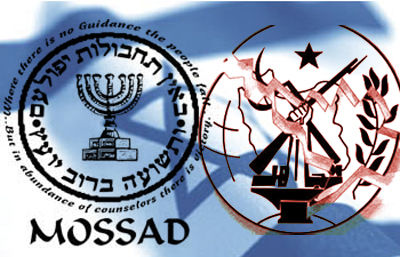
Iran has summoned Sweden’s ambassador to Tehran after Stockholm granted citizenship to an Iranian national found guilty of espionage for the Israeli spy agency, Mossad.
Foreign Ministry Spokesman Bahram Qassemi said the ministry called in Helena Sangeland on Monday and served her with a note, communicating the Islamic Republic’s “strong protest” over the Swedish government’s move.
Ahmad Reza Jalali was arrested in 2016 upon traveling to Iran. Based on his confession, he was convicted of spying for Mossad and complicity in murdering Iranian nuclear scientists.
Iran’s Supreme Court upheld Jalali’s death sentence last December.
On Saturday, however, Stockholm confirmed that the Iranian had been granted Swedish citizenship, a measure Qassemi slammed as “uncommon, questionable, and unfriendly.”
Qassemi said the Swedish envoy was notified that Tehran does not lend credit to the naturalization and still considers Jalali to be an Iranian national.
In no country, do they accord dual citizenship in this fashion to a criminal, who has confessed to murder, and is being held in detention, the Iranian official added.
“No country is allowed to interfere in the Islamic Republic’s internal affairs under any circumstances,” the spokesman asserted.
The Swedish ambassador said she would notify her respective government of Tehran’s protest.
The Israeli regime assassinated four Iranian nuclear scientists between 2010 and 2012.
Last March, Iran’s envoy to the United Nations atomic agency Reza Najafi said Israel had hired hitmen to assassinate nuclear scientists all over the Middle East, and yet, it continued to receive nuclear cooperation from certain countries.
In January, a book named Rise and Kill First: The Secret History of Israel’s Targeted Assassinations by Israeli investigative journalist Ronen Bergman recounted some 2,700 assassination operations by the regime, which, among others, targeted Iranian and German nuclear scientists.
Featured Video
John Mearsheimer: US Already lost Iran war – No off-ramp in sight
or go to
Aletho News Archives – Video-Images
Frlom the Archives
70 Neocons Petition Congress To Effectively Allow Israel To Say When The US Should Attack Iran
By Damian Lataan | January 10, 2014
Seventy senior Israeli-centric neoconservatives have written an open letter to Congress imploring them to do more to ensure Iran complies with the conditions of any agreement finally reached with the P5+1 over Iran’s nuclear program.
While the neocons are ostensibly asking Congress to ensure compliance, it is clear that their real aim is to convince members of Congress to support the bill currently passing through the Senate which calls for tighter sanctions against Iran in the event of any waywardness on Iran’s part.
The neocons are eager to see the bill currently passing through the Senate with enough support to make it veto-proof, not so much because they are concerned about Iran’s so-called nuclear weapons program – there’s still not a skerrick of hard evidence that Iran has a nuclear weapons program – but, rather, because embedded within the bill is this clause:
… if the Government of Israel is compelled to take military action in legitimate self-defense against Iran’s nuclear weapon program, the United States Government should stand with Israel and provide, in accordance with the law of the United States and the constitutional responsibility of Congress to authorize the use of military force, diplomatic, military, and economic support to the Government of Israel in its defense of its territory, people, and existence…
Essentially, the clause is an automatic trigger for the US to attack Iran at any time the Israelis choose to launch a first strike – regardless of whether President Obama is in favour or not.
Partial list… continue
Blog Roll
 Aletho News
- UK Parliament Plans ISP Blocking and Age Verification Powers
- World cannot remain silent as US and Israel attack ‘heritage of humankind’: Iran
- Emirati billionaire rebukes US senator over call for Gulf states to join war with Iran
- Op. True Promise 4: Iran’s missile blitzkrieg dismantles US war machine in West Asia
- Aramco CEO warns ‘catastrophe’ imminent if Strait of Hormuz remains shut
- What If Iran Says No?
- Trump Threatens to ‘Hit’ Iran ‘Twenty Times Harder’ Over Strait of Hormuz Oil Flows
- Spare the hypocrisy: Baghaei slams Ursula’s support for US
- Iran War Supporters Invent a New and Absurd Justification: It Is All About China
- Corporate Media Go All Out To Support The US-Israeli War on Iran
- If Americans Knew
- Israel Decided the War, But Trump’s America Fights and Pays the Bill
- Conscientious Objector Group: Phone ‘Ringing Off Hook’ As Huge Mobilization Underway
- U.S. support for Israel continues to plummet, despite media’s best efforts
- Threats and missiles fly, death tolls soar in Iran, Lebanon, Gaza – Not a ceasefire Day 151
- Lebanon: Israel’s White Phosphorous Use Risks Civilian Harm
- Corporate Media Go All Out To Support The US-Israeli War On Iran
- US-Israel war on Iran is creating a steady growing number of amputees
- Israel planned this war on Iran for 40 years. Everything else is a smoke screen
- The wrong question about the war in Iran
- ‘Your Tax Dollars Being Used to Raise Your Gas Prices’: US-Israel Bomb Major Iranian Oil Depots
- No Tricks Zone
- Wake-up Call: Survey Shows Majority Of Germans Now Favor Postponing Climate Targets!
- Televised! Leading German Political Candidate Tells Schoolchildren CO2 Makes Sun Hotter!
- New Study: A Century Warming Of 1.1°C Is ‘Commonplace’ And ‘Not Unusual’ During This Interglacial
- New Study: ‘Internal Noise’ And Volcanic Forcing Can Trigger 10-15°C Warming Within Decades
- Glaciers Worldwide Are Suddendly Surging, Experts Blame Warming!
- Surprising Discovery: Sahara Is Greening…Billions Of Trees Where Once Thought To Be Barren
- New Research Reaffirms Clouds, Aerosols, And Surface Solar Radiation Are ‘Driving The Climate System’
- Germany: Electric Car Catches Fire At Charging Station, Sets Off Local “Inferno”, Widespread Damage
- New Study: Canada’s New Brunswick Was 1°C Warmer Than Today During The Medieval Warm Period
- Coal Power Back In Trend As Globe Tries To Keep Pace With Growing Demand For Power
 Aletho News
