Seoul Proposes Pyongyang to Move DPRK Artillery Away From Border – Reports
Sputnik – 17.06.2018
Seoul has proposed Pyongyang to move North Korean long-range artillery away from the border between the two states in order to reduce tensions between them, South Korean media reported Sunday.
The Yonhap news agency reported citing government sources that on Thursday the two states held talks between high-ranking military officials within the framework of the agreements reached on April 27 between the leaders of the two Koreas.
According to the media outlet, during the meeting the South Korean side made a number of proposals including the relocation of the North Korean artillery to the positions located up to 40 kilometers (some 25 miles) from the line dividing the two Korean states.
The situation on the Korean Peninsula has been significantly improving within the last several months with North Korean Leader Kim Jong Un and South Korean President Moon Jae-in having held their first meeting on April 27.
During the meeting, the sides signed the Declaration for Peace, Prosperity and Unification on the Korean Peninsula. The document committed the two countries to a nuclear-free peninsula and talks to bring a formal end to the Korean War.
Houthis say Saudi-led forces bogged down outside Hudaydah
Press TV – June 17, 2018
Yemen’s Houthi fighters have dismissed reports that Saudi-led forces have seized the airport in the port city of Hudaydah, saying the aggressors are on the retreat on all front lines.
Militants and foreign mercenaries armed by Saudi Arabia and the United Arab Emirates are attempting to capture the well-defended city and push the Houthis out of their sole Red Sea port in the biggest battle of the war.
“A battle of attrition awaits the Saudi alliance which it cannot withstand. The Saudi coalition will not win the battle in Hudaydah,” Houthi spokesman Mohammed Abdulsalam told Lebanon-based al-Mayadeen TV.
Saudi Arabia on Sunday conducted airstrikes on the airport, to support forces attempting to seize it. The official SABA news agency said warplanes carried out five strikes on Hudaydah – a lifeline to millions of Yemenis.
Ground troops including Emiratis, Sudanese and Yemenis have surrounded the main airport compound.
Mohammed al-Sharif, deputy head of Yemen’s civil aviation, said images circulated online about the airport had been taken in October 2016.
A fence shown as proof of the airport’s capture is actually situated near the al-Durayhimi district, on a piece of land belonging to a Yemeni lawmaker, the official SABA news agency quoted him as saying.
Ahmed Taresh, the head of Hudaydah airport, also denied news of the airport’s capture, but said that it has been completely destroyed in airstrikes conducted by the Saudi-led coalition.
Abdulsalam warned that the Saudi-UAE offensive against the port city would undermine chances for a peaceful settlement of the Yemen crisis.
The rebuttals came after the media office of the Saudi-backed Yemeni forces loyal to ex-president Abd Rabbuh Mansur Hadi said on Twitter that they had “freed Hudaydah international airport from the grip of” the Houthis.
Reports on Sunday said Saudi-backed forces had been surrounded in the al-Durayhimi Bayt al-Faqih district and at least 40 Saudi mercenaries killed by Yemeni sniper fire over the past two days.
Al-Mayadeen, meanwhile, cited informed sources as saying that the invading forces had retreated from all fronts in Hudaydah’s west.
A Yemeni military source said clashes had left 50 Saudi-backed forces dead and destroyed 13 of their armored vehicles in southern Hudaydah.
Yemeni forces have also managed to confiscate a French or American ship off Hudaydah’s coast, president of the Houthi Revolutionary Committee Mohammed Ali al-Houthi tweeted.
The UAE, a key member of the Saudi-led coalition waging the war on Yemen, launched the Hudaydah assault on Wednesday despite warnings that it would compound the impoverished nation’s humanitarian crisis.
Le Figaro newspaper on Saturday reported that French special forces were present on the ground in Yemen supporting the operation.
According to the Houthis, British and French warships were also on standby on Yemen’s western coast to launch missile and aerial attacks on Hudaydah.
Fighting on Saturday closed off the city’s northern exit, blocking a key route east to Sana’a and making it harder to transport goods from Yemen’s biggest port to mountainous regions.
The UN World Food Program and the World Health Organization have both expressed concern over the situation.
More than 70 percent of Yemeni imports pass through Hudaydah’s docks and the fighting has raised fears of a humanitarian catastrophe in a country already teetering on the brink of famine.
On Saturday, the UN envoy for Yemen Martin Griffiths arrived in Sana’a to hold emergency talks on Hudaydah. He was believed to be pushing a deal for the Houthi fighters to cede control of the Red Sea port to a UN-supervised committee.
Blood Diamonds: Human Rights Campaigners Want ‘Kimberley Process’ to Suspend Israel

Palestine Chronicle | June 16, 2018
Human Rights campaigners say that Kimberley Process Certification Scheme (KPCS) must suspend Israel and ban Israeli diamonds exports.
A global coalition of organizations working for justice and peace in Palestine have called on the EU to seek the suspension of Israel from the Kimberley Process and a ban on Israel diamond exports at next week ’s meeting of the diamond regulatory body in Antwerp.
The KPCS is the process established in 2000 to prevent “conflict diamonds” from entering the mainstream rough diamond market by United Nations General Assembly Resolution 55/56 following recommendations in the Fowler Report.
The process was set up “to ensure that diamond purchases were not financing violence by rebel movements and their allies seeking to undermine legitimate governments.”
In the wake of the latest Israeli massacres in Gaza, which Human Rights Watch said “may amount to war crimes” and called on the international community to “impose real costs for such blatant disregard for Palestinian lives” it is imperative that diamonds which generate revenue used to fund the Israeli military are banned.
Israel is the biggest net beneficiary of the global diamond trade with exports worth US$11 billion net in 2014 when diamonds accounted for 30% of manufacturing exports.
Revenue from the Israeli diamond industry is a highly significant source of funding for the Israeli government and its violent settler-colonial project in Palestine.
Despite generating an estimated $1 billion per year in funding for Israeli occupation forces which stand accused of war crimes, crimes against humanity, the proliferation of unregulated nuclear weapons and the enforcement of a system of apartheid jewelers claim diamonds processed in Israel are conflict-free.
Diamonds that are a significant source of funding for violations of international humanitarian law or international human rights law are regarded as blood diamonds.
The jewelry industry refuses to ban all blood diamonds and limited the remit of the KPCS to “conflict diamonds” which are defined as rough diamonds used by rebel groups to fund violence against legitimate governments.
‘Occupation’: How Norway Was Scaremongered Into Doubling US Military Presence
Sputnik | June 16, 2018
Norwegian historian and Russia specialist Bjorn Nystad explains how his country’s political class, media, academics and filmmakers have artificially pumped up a fear of its eastern neighbor.
Oslo has opted to violate its own established practice of refusing to station foreign troops on the country’s soil during peacetime, and is more than doubling the number of US marines stationed in Norway from 330 to 700, and providing bases for US surveillance aircraft and fighter jets. The Marines will be moved from Trondheim, about 1,500 km from the Russian border, to the northern county of Troms, about 300 km from Norway’s border with Russia.
Opposition lawmakers slammed the government for failing to put the issue up for debate in parliament. Social Left Party leader Audun Lysbakken complained this week that more US troops would only “increase the tension,” in the region. “It’s sad that the government believes it is in Norway’s interest to say yes to whatever the US is asking for,” he said.
Speaking to Sputnik, Dr. Bjorn Nystad, a former University of Oslo professor who lost his job in 2010 over alleged “Russophilic views,” said that the growing US military presence is taking place against the background of a steady campaign of spreading anti-Russian sentiments in the Norwegian media.
The latest manifestation of this anti-Russian paranoia occurred this week, when the NRK and TV 2 broadcasters decided to head to the World Cup with brand new laptops and phones out of fear of being “monitored” or “cyberattacked” while in Russia.
Nystad believes these anti-Russian attitudes are being injected into the Norwegian consciousness from above. “It’s enough, for example, to write an article about Putin being a ‘dictator’, or something like that, and you will get a job at a university without any problems,” he said. The professor’s own 2016 biography on Putin was met with hostility, with Aftenposten’s editor describing it as a “dangerous rewriting of history.”
There are many in Norway who have a neutral attitude toward Russia, Nystad said, but they fear running into trouble with the established narrative. “Academics, experts, and journalists understand very well that if they say something ‘wrong’ about Russia, they could lose their jobs. Therefore everyone avoids running into conflict with authorities,” he noted.
Okkupert
Probably the “pinnacle” of the anti-Russian campaign is the widely publicized TV series Okkupert (Occupied), whose storyline features Russia occupying Norway in response to a Europe-wide energy crisis. The most expensive television series in Norway’s history, Okkupert has been picked up for a third season.
“For some part of the population, these kinds of series probably have an effect,” Nystad noted. But others understand that this is “stupidity and anti-Russian propaganda,” he added. “People are losing trust in the media and politicians. They are starting to think critically. Alternative media have appeared, along with popular bloggers. And our elite is now terrified of losing power,” the academic concluded.
White Helmets: A tool for ‘regime change’ in Syria that’s too important to stop funding?
RT | June 16, 2018
Washington’s decision to resume funding for White Helmets after a brief freeze highlights how important the controversial group is for the US-promoted regime-change agenda, journalists and Syrian conflict observers have told RT.
“The Pentagon planners have probably finally realized just how important the White Helmets are to the regime change operation,” Mike Raddie, co-editor of BSNews and an anti-war activist, told RT. “The fact that they have been so successful in proving fake imagery and fake evidence… just means that they can be relied upon whenever there is a need for a pretext for another missile attack or even a full-scale invasion.”
The anti-war activist recalled how the so-called Syria Civil Defence units, better known as the White Helmets, have been instrumental in the justification of the US strikes on Syria in April of 2017, and the trilateral strikes by the UK, France, and the US in April 2018.
The strikes, Raddie stressed, were all conducted as a hasty ‘retaliation’ against the Syrian government at times when the international community was horrified by fresh footage of alleged chemical incidents, conveniently provided by the likes of the White Helmets.
Calling the self-styled volunteer organization a clearly “belligerent party” with links to al-Qaeda terrorists, Raddie noted that the supposedly patriotic grassroots group has been actively calling for a “no-fly zone, which obviously means full invasion.” Thus, he believes, the State Department decided to release some $6.6mn in previously frozen funding for the group, just in case another pretext for a strike against Syria or a similar intervention is needed.
Meanwhile, Vanessa Beeley, an independent investigative journalist who has recently visited Syria, believes Washington never really intended to cut off the group’s funding. “The funding freeze largely was a fake funding freeze,” Beeley told RT. “The funding freeze, in my opinion, was actually a way to secure further and more diverse funding for the White Helmets.”
The investigative journalist pointed out that in April, after the US announced the freeze, Raed Al Saleh, Head of the Syria Civil Defence, the White Helmets, came to the US to receive an award at the Sedona Forum 2018, hosted by the McCain Institute for International Leadership. That event was attended by US top leadership, including Mike Pompeo, Director of the CIA, and John Mattis, Secretary of Defense.
While nothing official was announced, following that meeting the White Helmets were allegedly awarded contracts with Turkey and Qatar, Beeley said. Furthermore, she noted that British Prime Minister Theresa May pledged to maintain and even increase the funding for the White Helmets. “The British government has directly financed the White Helmets to the tune of almost 39 million pounds,” according to Beeley.
While the money is allegedly intended for the group to carry out its humanitarian work on the ground, Beeley, who has recently returned from East Aleppo and East Ghouta, says she could not find a single person to confirm that the White Helmets actually rescued civilians.
“I’ve heard that the White Helmets were there to work as agents for the terrorist groups, to help them when they are under attack by the Syrian Arab Army and their allies,” she stressed. Thus Beeley “strongly disputed” the State Department’s claims that the group saved some “100,000 lives” in Syria and has demanded proof to support that assertion.
Read more:
At least 10 dead as blast hits meeting of Taliban & Afghan forces during landmark ceasefire
RT | June 16, 2018
At least 10 people were killed as an explosion rocked a meeting of Taliban and Afghan security forces, which gathered during an unprecedented ceasefire for the Eid holiday, in the eastern province of Nangarhar, officials said.
Casualties include Taliban and civilians, Attaullah Khogyani, spokesman for the provincial governor of Nangarhar, said.
The timing of the bombing appears to be significant. On Saturday, Taliban members entered the Afghan capital, Kabul urging people to come forward and take selfies with them. The unusual move reportedly occurred elsewhere in the country, as photos and videos on social media showed Taliban fighters giving hugs to locals and Afghan forces across several provinces.
Afghan President Ashraf Ghani addressed the nation, saying the truce between the government and the Taliban will be extended.
The government freed at least 46 Taliban prisoners amid the ceasefire, the president’s office confirmed, as cited by Reuters. Ghani’s office urged the militant group to extend their ceasefire, saying that the government is waiting for their response.
Earlier in June, the Taliban made a surprising statement announcing the suspension of hostilities with the government forces for three days to mark the Muslim holiday of Eid. This is the first time that the Taliban has ever extended an offer of this kind to Kabul.
The ceasefire came two months after the group announced its annual spring offensive, as they vowed to target the “American invaders.” Heavy clashes repeatedly broke out across a number of Afghan provinces, with casualties inflicted among Afghan soldiers and police officers.
The militants attacked a number of cities across the country, seizing large quantities of weapons and equipment.
US to Leave ‘Foolish, Unworthy’ UN Human Rights Council Over Anti-Israel Bias
Sputnik – June 15, 2018
The United States’ demands regarding reforming the United Nations Human Rights Council (UNHRC) have failed to be met, and as such Washington is reportedly ready to pull out over what it calls anti-Israel bias and the inclusion of alleged rights abusers.
Diplomats told Reuters that it’s merely a matter of time before the US exits the council, which will convene Monday for a three week convention that will last until July 6. One US source who spoke anonymously said that an announcement looks “imminent.”
Another US official in Geneva, where the UNHRC will meet June 18, said, “we are still moving ahead with our engagement for the coming session.”
US Ambassador to the UN Nikki Haley has cast shade on the council since taking the job, while both the US State Department and US President Donald Trump himself found issue with it in 2017.
On June 6, 2017, Haley went to Geneva to give the council a series of ultimatums. At the meeting, she said, “It’s hard to accept that this council has never considered a resolution on Venezuela, and yet it adopted five biased resolutions in March against a single country: Israel. It is essential that this council address its chronic anti-Israel bias if it is to have any credibility.”
Later in the day, she expanded on her grievances against the council at a speech she gave to the Graduate Institute of Geneva, noting that the UNHRC had, by then, passed “more than 70 resolutions targeting Israel” since its inception in 2006, but “just seven on Iran.” The UNHRC has passed more resolutions against Israel than the rest of the world’s countries combined, according to the Geneva-based UN Watch.
“This relentless, pathological campaign against a country that actually has a strong human rights record makes a mockery not of Israel, but of the council itself.”
She also called on the body to do two things: “Act to keep the worst human rights abusers from obtaining seats on the council,” and remove permanent Agenda Item 7, which requires that the council address the “human rights situation in Palestine and other occupied Arab territories,” regularly when it meets.
Trump later echoed those demands in his speech to the United Nations General Assembly (UNGA) on September 19, 2017, calling the inclusion of governments with “egregious human rights records” in the UNHRC a “massive source of embarrassment to the United Nations.” He also singled out North Korea and Iran for their hostility to Israel.
After the UNHRC, a body of 47 nations, adopted five resolutions condemning Israel on March 23, 2018, Haley warned “our patience is not limited,” reminding the body that “The United States continues to evaluate our membership in the Human Rights Council.”
Those resolutions called on governments to stop selling weapons to Israel; for Palestinian self-rule according to Israel and the Palestinian territories’ pre-1967 borders; for Israel to remove itself from the Golan Heights, which it has illegally occupied since the 1967 Six Day War; and for an end to Israeli settlements and human rights abuses against Palestinians.
Haley called the council “foolish and unworthy of its name” for treating Israel “worse than North Korea, Iran and Syria.”
The US ambassador hasn’t only struggled with the Human Rights Council, but also with the UN General Assembly and Security Council. On Wednesday, she failed to prevent the assembly from condemning Israel’s use of deadly force against Palestinians demonstrating in the Great Return March after having vetoed a similar resolution in June. She fired back against the vote, saying that for some, “attacking Israel is their favorite political sport.”
More than 120 Palestinians have been killed and more than 13,000 injured, many by live ammunition, since the start of the protest on March 30, Sputnik News reported. Haley previously told the UN Security Council that Israel acted with “restraint” in the protests. One Israeli soldier was “slightly wounded” in the protests, according to an IDF spokesperson.
The US has boycotted the UNHRC before, as former President George W Bush and his Ambassador to the UN John Bolton — now Trump’s national security adviser — opposed it from its outset in 2006. The Bush administration refused to run in its first election and also declined to participate the following year.
The main points of opposition then were the “focus on Israeli human rights violations while failing to address human rights abuses in other parts of the world,” according to the US Congressional Research Service’s 2009 “Issues for Congress” report on the UNHRC.
However, former President Barack Obama began to work with the council after his election in 2008, believing it was better to work on human rights issues within the council than from the outside, according to a similar report from 2017.
Featured Video
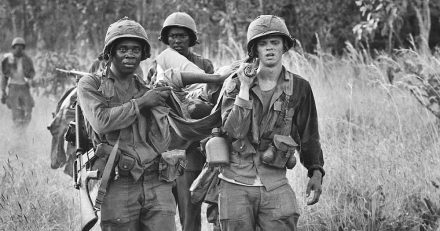
The First Pyrrhic Victory of the Vietnam War
or go to
Aletho News Archives – Video-Images
Frlom the Archives
The 52 Major Jewish American Organizations and Israel Celebrate Passover with the Slaughter of 25 Muslim, Christian and Secular Palestinians
By James Petras • Unz Review • April 8, 2018
Introduction
As of April 7, nearly three thousand unarmed Christian, Muslim and secular Palestinians have been wounded, over three dozen are in critical condition and at least twenty-five unarmed protestors, including children have been assassinated by hundreds of Israeli snipers and heavily armed troops shooting tank shells into crowds of civilians protesting their decades of incarceration by the racist Israeli state.
The Israeli government praised the ‘restraint and morality’ of the IDF, as did the fifty-two Major Jewish American Organizations (MJAO) who largely control the US Congress. These grotesque massacres began during the Christian Holy Week on Good Friday and Easter, coinciding with the Jewish Passover. The self-righteous officials of the MJAO and their relatives and friends broke matzos at joyful Seders as the blood of Palestinians soaked into ground at the fence containing the largest open-air prison camp in history, Gaza.
While tribal loyalties bonded the Israeli and Jewish American leaders, the politicians of the Western oligarchic electoral regimes refrained from criticizing the shocking display of brute force and even defended Israel’s cold blood mass killings of Palestinian civilians in their Gaza prison.
This paper will discuss and analyze the reasons for Israel’s willing Western accomplices and the centrality of its fifth column in the United States. … continue
Blog Roll
 Aletho News
- Iranian model of warfare bleeds US dry while Persian Gulf states watch and learn: Analyst
- IRGC orders ‘defeated’ US to evacuate industrial facilities in region
- Hegseth’s call for ‘no mercy’ to Iranians deemed war crime
- Iran War Exposes Limits of US Military Power – Journalist
- Even The Neo-Cons Admit The Iran War Is Failing
- Inside the Caucasus Drone Corridor Fueling Tensions With Iran
- ‘Not our war’: Trump’s naval coalition to reopen Strait of Hormuz dead in the water
- Iran declares support centers for USS Gerald R. Ford legitimate targets
- Moscow issues warning over Trump’s Golden Dome plan
- Brussels wants ‘our sons to die for Ukraine’ – Orban
- If Americans Knew
- ‘I Liked the House’: When Israeli Soldiers Turn Palestinian Homes into Barracks
- ‘They Were All I Had’: Lebanese Father Buries Parents, 4 Daughters Killed by Israeli Bombing
- Israel and its supporters are causing attacks on Jewish institutions. Case in point: Michigan synagogue tragedy.
- These are the casualties and cost of the war in Iran 2 weeks into the conflict
- Chicago Teachers Union accuses AIPAC of swaying elections with ‘dark money’
- Predictions of another 9/11, amid Israel-US killing spree – Not a ceasefire Day 157
- As US-Israel war on Iran rages, Gaza faces massive dust storm – Not a ceasefire Day 156
- No let-up in attacks on Gaza as Israel takes on Iran, Lebanon – Not a ceasefire Day 155
- ‘Of Course’: IDF Drops Case Against Soldiers Accused of Raping Palestinian Prisoner
- Don’t Fall for the Regime Change Talk. Israel Is ‘Mowing the Lawn’ in Iran
- No Tricks Zone
- Storing Green Energy To Last Germany 10 Days Would Require A 60-Million Tonne Battery
- New Studies: UK Sea Levels Were 4 Meters Higher Than Today During The Mid-Holocene
- Destructive Green New Deal: German Energy And Metal Group Warns Of Drastic Crisis
- New Study Documents A 20-Year Pause In Arctic Sea Ice Decline – Driven By Internal Variability
- Wake-up Call: Survey Shows Majority Of Germans Now Favor Postponing Climate Targets!
- Televised! Leading German Political Candidate Tells Schoolchildren CO2 Makes Sun Hotter!
- New Study: A Century Warming Of 1.1°C Is ‘Commonplace’ And ‘Not Unusual’ During This Interglacial
- New Study: ‘Internal Noise’ And Volcanic Forcing Can Trigger 10-15°C Warming Within Decades
- Glaciers Worldwide Are Suddendly Surging, Experts Blame Warming!
- Surprising Discovery: Sahara Is Greening…Billions Of Trees Where Once Thought To Be Barren
 Aletho News