UK Worried NATO to be Hurt if Trump Meets Putin Before Bloc’s Summit – Reports
Sputnik – 21.06.2018
US President Donald Trump may sit down for talks with Russia’s President Vladimir Putin during his trip to Europe next month.
The British government fears that the two presidents could meet before NATO’s upcoming summit in Brussels and Trump’s official visit to London.
“It’s unclear if this meeting is after or before the NATO and UK visit. Obviously after would be better for us,” the Times quoted a Whitehall source as saying.
“It adds another dynamic to an already colorful week,” the official added.
According to the newspaper, London is alarmed that the possible talks between the US and Russian presidents could have an impact on Trump’s commitment to NATO’s “shared goals” and the outcome of his July 13 visit to Britain.
The Times also quoted a Western diplomatic source as saying that if Trump and Putin meet before the July 11 NATO summit in Brussels, this would be viewed as a highly negative development.
On Friday, Donald Trump told reporters that it was possible that he would meet Vladimir Putin this summer.
Trump, who had two meetings with Putin during last year’s G20 summit in Germany, has shown keen interest in restoring Russia’s place in the international community.
At the G7 summit in Quebec earlier this month, he proposed that Russia should be re-admitted to the Group of Eight countries.
Here’s Why Pro-Migrant Protesters Changed US Policy While Anti-War Protesters Didn’t End America’s Recent Wars
By Adam Garrie | EurasiaFuture | June 20, 2018
Donald Trump has just signed an executive order reversing the Clinton era policy of separating children from their illegal migrant parents at the southern border of the United States. While this policy has been in operation since the 1990s, it was only in the last month that it caught the attention of American media and the political class.
Ultimately, the issue is one for the leaders of the US to decide and under immense media and political pressure, the US President has taken the matter into his own hands and changed a policy based entirely on a public pressure campaign rather than his own apparent line of thinking which favours an increasingly tough border policy.
What this proves is that on issues effecting the well being of humans who happen not to be US citizens, public pressure campaigns can in fact get policies changed, especially in an election year. When one thinks that George W. Bush illegally invaded Iraq just over a year before facing re-election while Tony Blair did the same only two short years before facing the UK electorate, it beggars belief that anti-war campaigns have been so ineffective at reversing policies that slaughter millions, destroy entire regions and all the while unleashing the most barbaric forms of terrorism in places where there once was little or none.
Irrespective of one’s views of America’s border policy, even those who believe it to be inhumane must admit that it did not result in the deaths, terrorism and destruction of the US led wars on Yugoslavia, Iraq, Libya and the hybrid war against Syria.
While millions of people marched against the Iraq war throughout the world in 2003, far more than have gone on demonstrations against the controversial child separation policy of the US border authorities, it nevertheless had no effect on US policy in the Middle East. In fact, the amount of wars and number of troops committed across the Middle East by the US and its partners only increased since 2003.
Why then did the anti-war marches fail while the pro-migrant movement accomplished its goal? The reason is simple. While masses of protesters can control the streets and non-corporate air waves, the corporate media in the United States that is willing to take a side on issues like migration is unwilling, unable or not wanting to go up against the pro-war factions of Washington. The same is true even for most so-called independent minded politicians in the US, almost all of whom lose their independent streak when it comes to war, with retired Congressman Dr. Ron Paul, his son Senator Rand Paul and Senator Bernie Sanders being exceptions in the wilderness.
While corporate media is losing viewership at a rapid pace among the wider public and the young in particular, among the policy making class, there is still a tendency to literally view the world through a bubble and refuse to look at non-corporate or non-western originated media for any other purpose than to mock, sneer and at times, attempt to censor.
It is because of this, that the kind of invisible connection between the narrative of mainstream media pundits and politicians can lead to meaningful policy change while this is not the case when it comes to anti-war issues that the mainstream media in the US tends to either ignore or berate (before ignoring).
In this sense, the political-media complex has worked to insure that the issues that are important to the boardrooms of CNN and MSNBC are those which are important to the politicians who can then pressure a reluctant President to change a policy he previously appeared to support.
It is only when politicians begin to take non-corporate western media sources at face value rather than look for conspiracies (aka Russian meddling) which do not exist, that the growing number of people opposed to war might be able to affect policy change. Until then, the anti-war voices of millions will be ignored, while the loud but comparatively quieter thousands of voices raised against America’s border policies will be heeded.
The solution for anti-war protesters is to not give up but to shame the part-time humanitarians who cried at the thought of strangers in a strange land being separated from their families, yet who say nothing when families living in their ancestral homes are separated from one another by the force of a bomb – never to be reunited. If you think that America’s long standing border policy was inhumane but do not feel similar things towards the families America’s military slaughters in their own home – then you do not have a heart after all… but you probably have a high definition television.
U.S. News Media Can’t Talk About Adelson Foreign Policy
By Eli Clifton | LobeLog | June 19, 2018
Over the past month, two mainstream news outlets have done in-depth reporting on the grip that Sheldon Adelson, President Donald Trump’s and the GOP’s biggest donor, holds over U.S. foreign policy in the Middle East. LobeLog has closely followed this important story, so it’s heartening to see The Guardian and CBC highlighting the apparent capture of U.S. foreign-policy decision-making by a billionaire donor.
But there’s a noticeable gap in the coverage of this topic. U.S. news outlets, which routinely “follow the money” when it comes to domestic issues, are almost completely avoiding any reporting on the clear link between Adelson’s campaign contributions and the administration’s pursuit of policies that hew closely to positions espoused by the billionaire casino magnate.
Adelson’s influence over the Trump administration’s foreign policy is hard to overlook. The Las Vegas-based billionaire, and currently the fourteenth wealthiest American, is outspoken about his political views. He has suggested using nuclear weapons against Iran, declared the “purpose of the existence of Palestinians is to destroy Israel,” promoted John Bolton for a senior foreign-policy post, directly lobbied Trump about moving the U.S. embassy from Tel Aviv to Jerusalem. Newt Gingrich, himself a recipient of Adelson’s financial support during his failed 2012 presidential big, said that his benefactor’s “central value” is Israel.
Mainstream Media Coverage
Deep in Adam Entous’s excellent New Yorker feature in this week’s issue, he briefly grapples with Adelson’s influence on U.S. Mideast policy. Entous writes:
No Republican candidate can easily afford to ignore him. Adelson considered Obama an enemy of Israel, and, in the 2012 election, he and his wife, Miriam, contributed at least ninety-three million dollars to groups supporting the G.O.P. Officials in the U.S. and Israel said that they learned from American Jewish leaders that Adelson had vowed to spend “whatever it takes” to prevent Obama from securing a peace agreement while in office.
Entous then returns to the thesis of his article—that Israel, Saudi Arabia and the United Arab Emirates are manipulating Trump’s foreign policy team. But the brief acknowledgement that one donor has leveraged legal political spending to control the foreign policy positions of the Republican Party deserves more attention.
Indeed, there’s ample evidence that Trump, who received $35 million in outside election spending from Adelson and his wife, Miriam, listens to what his biggest campaign supporter has to say.
Before winning the GOP’s nomination, Trump quipped that Adelson was seeking to “mold [Marco Rubio] into the perfect little puppet,” but he quickly came around and echoed Adelson’s hawkish positions on the Israeli-Palestinian peace process and moving the U.S. embassy to Jerusalem after winning the Republican nomination and securing Adelson’s financial backing.
Politico reported that the most threatening line in Trump’s October UN speech—that he would cancel Washington’s participation in the JCPOA if Congress and U.S. allies did not bend to his efforts to renegotiate it—came directly from John Bolton, now Trump’s national security advisor, and with the full weight of Trump’s biggest donor. The hawkish language was not in the original text prepared by Trump’s staff. Politico reported:
The line was added to Trump’s speech after Bolton, despite Kelly’s recent edict [restricting Bolton’s access to Trump], reached the president by phone on Thursday afternoon from Las Vegas, where Bolton was visiting with Republican megadonor Sheldon Adelson. Bolton urged Trump to include a line in his remarks noting that he reserved the right to scrap the agreement entirely, according to two sources familiar with the conversation.
That was the only mention of Adelson’s influence in the article.
The day after Trump’s violation of the Joint Comprehensive Plan of Action (JCPOA) last month, Adelson visited Trump in the White House. The week before, Adelson cut a $30 million check to the Congressional Leadership Fund, a super PAC exclusively dedicated to securing a GOP majority in the House of Representatives. That contribution made Adelson, again, the biggest contributor to the Republican Party in an election cycle.
Politico broke the story of the $30 million contribution but didn’t mention Adelson’s possible foreign policy motivations. In the mainstream news media, only McClatchy’s Peter Stone, reporting on May 14, dedicated an entire article to the obvious influence that the president’s biggest donor appears to hold over U.S. foreign policy. He wrote:
These are heady days for casino billionaire and megadonor Sheldon Adelson.
A passionate and hawkish advocate for Israel with close ties to its prime minister, Benjamin Netanyahu, Adelson was in Jerusalem today for a celebration of the U.S. embassy’s relocation to that city, a longstanding priority for the mogul. Similarly, Adelson had pushed hard for President Donald Trump to pull out of the Iran nuclear deal, which happened last week.
Stone went on to report on Adelson’s White House meeting the day after the JCPOA announcement.
And The New York Times only briefly touched on this issue in a February 23 article on the moving of the U.S. embassy from Tel Aviv to Jerusalem and Adelson’s controversial offer to pay for the new facility:
For years, Mr. Adelson, a Las Vegas casino mogul, has pushed the United States government to move its embassy to Jerusalem, the disputed capital that both Israelis and Palestinians claim as their own. With an estimated net worth of $40 billion, Mr. Adelson donated heavily to Mr. Trump’s campaign and gave $5 million to the committee organizing the president’s inauguration festivities, the largest such contribution ever.
Progressive Media Coverage
Progressive and left-leaning media have been equally silent about the special interest control over U.S. foreign policy decision-making.
Two days after Trump violated the JCPOA, MSNBC’s Chris Hayes devoted more than eight minutes to the $30 million contribution in which his panelists decried the outsized role of money in politics. Two minutes into the segment, they speculated about how much Adelson’s heirs might benefit from estate-tax reductions in the Republican tax bill, suggesting that Adelson’s contribution might be an investment in influencing tax policy in ways that would personally benefit him and his family.
At the end of the segment, with only two minutes remaining, Hayes said:
There’s also a foreign policy component here. The rich donors might have different foreign policy priorities. Sheldon Adelson has very intense foreign policy priorities as relate to Israel. You can imagine people having intense foreign policy priorities as to Brexit or NATO or Ukraine… You get a US foreign policy where you have to wonder what is guiding it.
None of Hayes’s panelists engaged with that explanation and Hayes did not return to it.
Vox’s Matt Yglesias also speculated about Adelson’s desire to reduce the estate tax and concluded:
Throw in the benefits of the other tax cut provisions and Adelson’s interest in maintaining a business-friendly National Labor Relations Board and the investment is very small and sensible. The same goes for even richer people like the Koch brothers, who are planning to spend even larger sums in the midterms.
There’s no actual evidence that Adelson feels particularly strongly about the estate tax. He hasn’t given public remarks about the estate tax, and he hasn’t contributed large sums of money to think tanks with an anti-estate tax agenda. In other words, Hayes and Yglesias are guessing about Adelson’s motives without acknowledging what Adelson publicly talks about as motivating his political and civic engagement.
ThinkProgress, a site for which I used to work, offers another insight into the progressive media landscape’s refusal to acknowledge Adelson’s capture of Washington’s Mideast policy. Adelson’s name hasn’t appeared in a TP headline for over two years. Housed at the Democratic-Party-aligned Center for American Progress, TP doesn’t shy away from writing about certain other right-wing donors. But it hasn’t put the Republican Party’s biggest donor’s name in a headline since five months before the 2016 presidential election.
By comparison, “Koch” has appeared in 20 ThinkProgress headlines in the same two-year span.
Foreign Media Coverage
It’s not as if mainstream, let alone left-wing, journalists and pundits don’t understand what’s happening. Half of the CBC’s May 20 segment is taken up by Wendy Mesley’s interview with Ken Vogel, a money-in-politics reporter for The New York Times.
Mesley: Why is Adelson so driven on these causes, these mostly Israeli causes?
Vogel: Yeah, he is a cause donor. It’s been really his animating political issue behind his donations for some time. People I’ve talked to trace it to his marriage to his wife Miriam Adelson in the early 1990s. Her parents fled the Holocaust, ended up in Israel where she was raised and so far that reason and others he’s really become a leading donor and a leading figure in this hawkish pro-Israel conservative sort of circle that is so influential in American politics.
Later, Vogel added:
I think what [Adelson] does is act as an enforcer. People are scared, to some extent, to cross him because they fear that if they anger him and fall out of favor with him that his funding, not only funding from him will dry up, funding from this larger circle of Jewish-American donors who give a lot of money in Republican politics.
Vogel’s description of Adelson’s influence was succinct and clearly backed up by Adelson’s own statements, his choice of causes and candidates to support, and the policy positions embraced by candidates who owe their political careers to Adelson’s largesse.
But this explanation was delivered to a Canadian television network instead of The New York Times.
Phil Weiss of the Mondoweiss blog writes that acknowledging Adelson’s motives and influence “smacks of assertions of outsize Jewish influence that were a hallmark of murderous, anti-Semitic campaigns in Europe.” Indeed, Weiss is accurate that discussing Adelson’s influence can often feed anti-Semitic tropes with no basis in facts.
If he’s correct, journalists are actively censoring themselves from discussing how an individual donor, whose views are shared by only a small minority of Jewish Americans, is advocating for foreign policy positions that isolate the U.S. from allies, such as those that supported the agreement to curb Iran’s nuclear program, in favor of a hawkish U.S. agenda in the Middle East.
At the bare minimum, news outlets are expected to report on the facts. In this case, the facts are that U.S. foreign policy is starting to look an awful lot like what Sheldon Adelson has encouraged over the past several years.
Perhaps it’s all a coincidence and Adelson is really engaged in a stealth campaign to reduce the estate tax and pass his $40-billion-plus fortune on to his children.
It makes more sense, however, to take the GOP’s biggest donor at his word. Foreign news outlets have done just that. But the U.S. media appears incapable of wrestling with the new role money is playing in steering Washington’s policy abroad.
South Korea wants railroad link to Russia through North Korea
RT | June 20, 2018
Seoul, Moscow and Pyongyang can implement several major trilateral infrastructure and energy projects if stability is reached on the Korean peninsula, according to South Korean President Moon Jae-in.
One such project could be a railway that will be able deliver goods from Russia to South Korea through North Korea. “Once the Trans-Korean Main Line is built, it may be connected to the Trans-Siberian Railway. In this case, it will be possible to deliver goods from South Korea to Europe, which would be economically beneficial not only to South and North Korea but to Russia as well,” Moon Jae-in said in an interview with Russian media ahead of his state visit to Moscow.
A gas pipeline coming from Russia to North Korea to be extended to the South is another possibility, he said. “We can also build a gas pipeline via North Korea, so that not only South Korea will receive Russian gas but we will also be able to deliver it to Japan,” the South Korean president said.
The project to unite the Korean Peninsula with a gas pipeline has been discussed for a long time, but official talks started in 2011. The negotiations were frozen after relations between Seoul and Pyongyang deteriorated. Last week, Russian energy major Gazprom announced it resumed talks with Seoul over the construction of a gas pipeline connecting Russia with North and South Korea.
The countries could also connect their electricity grids, Moon Jae-in said. “We can also establish a powerline that would allow us to receive electricity from Russia. It could also be delivered not only to South and North Korea but also to Japan.”
Immigration Divides Europe and the German Left
By Diana Johnstone | Consortium News | June 19, 2018
Freedom of movement is the founding value of the European Union. The “four freedoms” are inscribed in the binding EU treaties and directives: free movement of goods, services, capital and persons (labor) among the Member States.
Of course, the key freedom here is that of capital, the indispensable condition of neoliberal globalization. It enables international finance to go and do whatever promises to be profitable, regardless of national boundaries. The European Union is the kernel of the worldwide “Open Society”, as promoted by financier George Soros.
However, extended to the phenomenon of mass immigration, the doctrine of “free movement” is disuniting the Union.
A German Crisis
Starting in 2011, millions of Syrian refugees fled to neighboring Turkey as a result of the Western-sponsored war to overthrow the Assad regime. By 2015, Turkish president Erdogan was insisting that Europe must share the burden, and soon was threatening the European Union with opening the floodgates of refugees if his conditions were not met.
In August 2015, German Chancellor Angela Merkel announced that Germany would accept all genuine refugees. Germany had already taken in over 400,000 refugees, and another 400,000 were assumed to be on the way – if not more. Although addressed to Syrians, Merkel’s invitation was widely interpreted as an unlimited invitation to anyone who wanted to come Germany for whatever reason. In addition to a smaller number of refugee families, long lines of young men from all points east streamed through the Balkans, heading for Germany or Sweden.
The criminal destruction of the government of Libya in 2011 opened the floodgates to immigrants from Africa and beyond. The distinction between refugees and economic migrants was lost in the crowd.
Germans themselves were sharply polarized between those who welcomed the commitment to Christian charity and those who dreaded the probable effects. The differences were too highly charged emotionally, too subjective to be easily discussed in a rational way. Finally, it depends on whether you think of immigrants as individuals or as a mass. Concerning individuals, compassion reigns. You want to get to know that person, make a friend, help a fellow human being.
As a mass, it is different because you have to think also of social results and you do not know whom you are getting. On the one hand, there are the negative effects: labor market competition which lowers wages, the cost of caring for people with no income, the potential for antisocial behavior on the part of alienated individuals, rivalry for housing space, cultural conflicts, additional linguistic and educational problems. But for those whose ideal is a world without borders, the destruction of the oppressive nation state and endless diversity, unlimited immigration is a welcome step in the direction of their utopia.
These conflicting attitudes rule out any consensus.
As other EU countries were called upon to welcome a proportionate share of the refugee influx, resentment grew that a German chancellor could unilaterally make such a dramatic decision affecting them all. The subsequent effort to impose quotas of immigrants on member states has run up against stubborn refusal on the part of Eastern European countries whose populations, unlike Germany, or Western countries with an imperialist past, are untouched by a national sense of guilt or responsibilities toward inhabitants of former colonies.
After causing a growing split between EU countries, the immigrant crisis is now threatening to bring down Merkel’s own Christian Democratic (CDU) government. Her own interior minister, Horst Seehofer, from the conservative Bavarian Christian Social Union, has declared that he “can’t work with this woman” (Merkel) on immigration policy and favors joining together with Austria and Italy in a tough policy to stop migration.
The conflict over immigration affects even the relatively new leftist party, Die Linke (The Left).
A good part of the European left, whatever its dissatisfaction with EU performance, is impregnated with its free movement ideology, and has interiorized “open borders” as a European “value” that must be defended at all costs. It is forgotten that EU “freedom of movement” was not intended to apply to migrants from outside the Union. It meant freedom to move from one EU state to another. As an internationally recognized human right, freedom of movement refers solely to the right of a citizen to leave and return to her own country.
In an attempt to avoid ideological polarization and define a clear policy at the Left party’s congress early this month, a working group presented a long paper setting out ideas for a “humane and social regulated leftist immigration policy”. The object was to escape from the aggressive insistence on the dichotomy: either you are for immigration or you are against it, and if you are against it, you must be racist.
The group paper observed that there are not two but three approaches to immigration: for it, against it, and regulation. Regulation is the humane and socially beneficial way.
While reiterating total support for the right of asylum including financial and social aid for all persons fleeing life-threatening situations, the paper insisted on the need to make the distinction between asylum seekers and economic migrants. The latter should be welcomed within the capacity of communities to provide them with a decent life: possibilities of work, affordable housing and social integration. They noted that letting in all those who hope to improve their economic standing might favor a few individual winners but would not favor the long-term interests either of the economic losers or of the country of origin, increasing its dependence and even provoking a brain drain as educated professionals seek advancement in a richer country.
There was hope that this would settle the issue. This did not happen. Instead, the party’s most popular leader found herself the target of angry emotional protests due to her defense of this sensible approach.
Sahra and Oskar
As elsewhere in Europe, the traditional left has drastically declined in recent years. The long-powerful German Social Democratic Party (SPD) has lost its working-class base as a result of its acceptance, or rather, promotion of neoliberal socioeconomic policies. The SPD has been absorbed by the Authoritarian Center, reduced to junior partner in Angela Merkel’s conservative government.
Die Linke, formed in 2007 by the merger of leftist groups in both East and West Germany, describes itself as socialist but largely defends the social democratic policies abandoned by the SPD. It is the obvious candidate to fill the gap. In elections last September, while the SPD declined to 20%, Die Linke slightly improved its electoral score to almost 10%. But its electorate is largely based in the middle class intelligentsia. The party that captured the most working-class votes was the Alternative für Deutschland (AfD), considered far right populist – largely because its growing success at the polls is due to popular rejection of mass immigration.
There are two way of looking at this.
One way, the Clintonite way, is to dismiss the working class as a bunch of deplorables who do not deserve to have their interests defended. If they oppose immigration, it can only be because they have impure souls, besmirched by racism and “hate”.
Another way is to consider that the grievances of ordinary people need to be listened to, and that they need to be presented with clear, well-defined, humane political choices, instead of being dismissed and insulted.
This is the viewpoint of Sahra Wagenknecht, currently co-leader of Die Linke in the Bundestag.
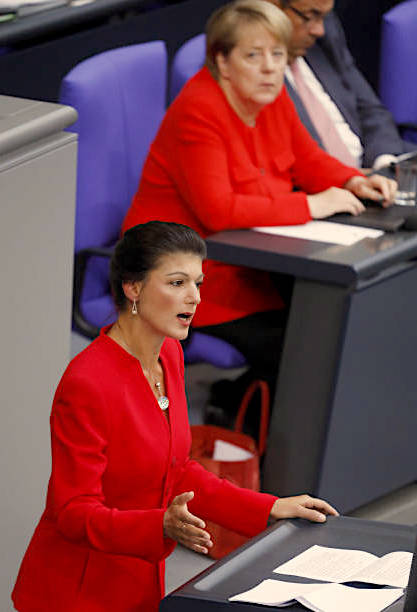
Wagenknecht in the Bundestag (Photo – Michele Tantussi/Getty Images)
Wagenknecht was born in East Germany 48 years ago to an Iranian father and German mother. She is highly educated, with a Ph.D. in economics and is author of books on the young Marx’s interpretation of Hegel, on “The Limits of Choice: Saving Decisions and Basic Needs in Developed Countries” and “Prosperity Without Greed”. The charismatic Sahra has become one of the most popular politicians in Germany. Polls indicate that a quarter of German voters would vote for her as Chancellor.
But there is a catch: her party, Die Linke. Many who would vote for her would not vote for her party, and many in her own party would be reluctant to support her. Why? Immigration.
Sahra’s strongest supporter is Oskar Lafontaine, 74, her partner and now her husband. A scientist by training with years of political experience in the leadership of the SPD, Lafontaine was a strong figure in the 1980s protest movement against nuclear missiles stationed in Germany and remains an outspoken critic of U.S. and NATO militarism – a difficult position in Germany. In 1999 he resigned as finance minister because of his disagreement with the neoliberal policy turn of SPD Chancellor Gerhard Schoeder. He is a consistent critic of financial capitalism and the euro, calling for a change of European monetary policy that would permit selective devaluation and thus relieve the economically weaker member states of their crushing debt burden.
After leaving the SPD in 2005, Lafontaine went on to co-found Die Linke, which absorbed the post-East German Party of Democratic Socialism led by lawyer Gregor Gysi. A few years later he withdrew into the political background, encouraging the rising career of his much younger partner Sahra Wagenknecht.
Lafontaine can be likened to Jeremy Corbyn in Britain and Jean-Luc Mélenchon as a left leader who has retained basic social and antiwar principles from the past and aspires to carry them into the future, against the rising right-wing tide in Europe.
The Wagenknecht-Lafontaine couple advocate social policies favorable to the working class, demilitarization, peaceful relations with Russia and the rest of a multipolar world. Both are critical of the euro and its devastating effects on Member State economies. They favor regulated immigration. Critical of the European Union, they belong to what can be called the national left, which believes that progressive policies can still be carried out on the national level.
The Globalizing Left
Die Linke is split between the national left, whose purpose is to promote social policies within the framework of the nation-state, and the globalization left, which considers that important policy decisions must be made at a higher level than the nation.
As co-leader of the Linke fraction in the Bundestag, Wagenknecht champions the national left, while another woman, the party co-chair Katja Kipping, also an academic of East German origin, speaks for the globalization left.
In a July 2016 article criticizing Brexit, Kipping made it clear that for her the nation is an anachronism unsuitable for policy making. Like others of her persuasion, she equates the nation with “nationalism”. She also immediately identifies any criticism of mass immigration with scapegoating: “Nationalism doesn’t improve our lives, it makes the poor only poorer, it takes nothing from the rich, but instead blames refugees and migrants for all present misery.”
The idea that social reform must henceforth take place only on the European level has paralyzed left parties for decades. The most extreme of the globalizing left shove their expectations even beyond the European Union in hopes of eventual revolution at the global level, as preached by Antonio Negri and Michael Hardt in their joint books Empire and Multitude.
According to Negri, an alarmingly influential Italian theorist who has been dead wrong ever since the 1970s, the final great global revolution will result from the spontaneous self-liberation of the “multitude”. This is a sort of pie in the sky, projecting hopes beyond the here and now to some desirable future made inevitable by the new immaterial means of production (Negri’s boneless imitation of Marxism). Whether or not they have read him, many anarchist anti-globalist notions of The End Times are in harmony with Negri’s optimistically prophetic view of globalization: it may be bad now, but if it goes far enough, it will be perfect.
Since the globalization left considers the nation state inapt to make the revolution, its abolition is seen as a step in the right direction – which happens to coincide with the worldwide takeover of international financial capital. Its core issue, and the one it uses to condemn its adversaries in the national left, is immigration. Katya Kipping advocates “open borders” as a moral obligation. When critics point out that this is not a practical suggestion, the globalization left replies that it doesn’t matter, it is a principle that must be upheld for the future.
To make her policy line even more unrealistic, Kipping calls for both “open borders” and a guaranteed minimum income for everyone.
It is easy to imagine both the enthusiastic response to such a proposal in every poor country in the world and its horrified rejection by German voters.
What can motivate leaders of a political party to make such flagrantly unpopular and unrealizable proposals, guaranteed to alienate the vast majority of the electorate?

Kipling: Globalized immigration in line with international finance. (Getty)
One apparent source of such fantasy can be attributed to a certain post-Christian, post-Auschwitz bad conscience prevalent in sectors of the intelligentsia, to whom politics is more like a visit to the confession booth than an effort to win popular support. Light a candle and your sins will be forgiven! Many local charitable organizations actually put their beliefs in practice by providing material aid to migrants. But the task is too great for volunteers; at present proportions it requires governmental organization.
Another, more virulent strain of the open border advocates is found among certain anarchists, conscious or unconscious disciples of Hardt and Negri, who see open borders as a step toward destroying the hated nation state, drowning despised national identities in a sea of “minorities”, thereby hastening the advent of worldwide revolution.
The decisive point is that both these tendencies advocate policies which are perfectly compatible with the needs of international financial capital. Large scale immigration by diverse ethnic communities unwilling or unable to adapt the customs of the host country (which is often the case in Europe today, where the host country may be despised for past sins), weakens the ability of society to organize and resist the dictates of financial capital. The newcomers may not only destabilize the situation of already accepted immigrant populations, they can introduce unexpected antagonisms and conflicts. In both France and Germany, groups of Eritrean migrants have come to blows with Afghan migrants, and other prejudices and vendettas lurk, not to mention dangerous elements of religious fanaticism.
In foreign policy, the globalization left tends to accept the political and media mainstream criticism of Wagenknecht as a Putin apologist for her position regarding Syria and Russia. The globalist left sometimes seems to be more intent on arranging the rest of the world to suit their standards than finding practical solutions to problems at home. Avoiding war is also a serious problem to be dealt with at the national level.
Despite the acrimonious debates at the June 8 to 10 party congress, Die Linke did not split. But faced with the deadlock on important questions, Wagenknecht and her supporters are planning to launch a new trans-party movement in September, intended to attract disenchanted fugitives from the SPD among others in order to debate and promote specific issues rather than to hurl labels at each other. For the left, the question today is not merely the historic, “What is to be done?” but rather a desperate, Can anything be done?
And if they don’t do it, somebody else will.
Diana Johnstone is the author of Fools’ Crusade: Yugoslavia, NATO, and Western Delusions. Her new book is Queen of Chaos: the Misadventures of Hillary Clinton. The memoirs of Diana Johnstone’s father Paul H. Johnstone, From MAD to Madness, was published by Clarity Press, with her commentary. She can be reached at diana.johnstone@wanadoo.fr .
The Liberal’s Lament over Israel
By James J. Zogby | LobeLog | June 18, 2018
I find it exceptionally irritating when I hear liberals worry about whether Israel will be able to remain a “Jewish and Democratic State” if it retains control of occupied Palestinian lands. It’s irritating because Israel is not now a democratic state nor has it ever tried to be one.
A state that prioritizes rights for one group of citizens (in this case Jews, who comprise 80% of the population) over the rights of another group (Arabs, who are 20% of Israel’s citizenry) cannot be democratic. Israel discriminates against its Arab citizens in law, social services, funding for education, and in everyday life. So although the concerns of liberals in the West are about the future of Israeli democracy, what they ignore is the reality of Israel, in practice.
 As I document in my book, Palestinians: the Invisible Victims, from its inception in 1948, Israel has guaranteed rights and opportunities for Jews at the expense of the indigenous Palestinians who remained after the Nakba. Instead of experiencing democracy, these Arabs were subjected to harsh military law, as a result of which they were denied fundamental human and civil rights. Their lands and businesses were confiscated. And they were even denied the opportunity to join the labor movement, or form independent political parties.
During the past 70 years, these Palestinian Arab citizens of Israel have made significant advances as they organized and fought to expand their rights. But as two stories that have appeared recently in the Israeli media make clear, the contradiction inherent in being a democracy and a Jewish state continues to plague Israel.
In the first story, the leadership of the Knesset disqualified a proposed piece of legislation offered by a group of Arab legislators. The bill “Basic Law: Israel, a State of All Its Citizens” sought to guarantee equal rights for all Israelis—Jews and Arabs alike.
Apparently the Knesset leaders were so threatened by this bill that they were unwilling to even allow it to be introduced and debated. At the same time, however, Jewish members of the body are advancing another piece of legislation that defines Israel as the “national state of the Jewish People,” making it clear that Arabs are at best, second-class citizens.
In another story, Jewish residents of Afula, a town in Northern Israel, demonstrated against the proposed sale of a home in their community to an Arab family. The flyer, mobilizing Afula residents to come to the demonstration, criticized “the sale of homes to those who are undesirable in the neighborhood.” The former mayor of the community is quoted in the story saying “the residents of Afula don’t want a mixed city, but rather a Jewish city, and it’s their right.”
This is the impact of the apartheid system that Israel established to govern the lives of its Arab citizens. Since 1948, Israel not only confiscated lands surrounding Arab towns and villages to make way for Jewish agriculture and development, it denied Arabs the right to purchase land and homes in Jewish communities. Reflecting how this history has led to the demonstration in Afula, the leader of the Arab bloc in the Knesset said, “It is not a surprise that in a country that has founded 700 towns for Jews and not even one for Arabs, the idea that Arabs should be pushed aside does not shock citizens… our hope of living together is crumbling due to hatred and racism fueled by the government.”
Meanwhile, in the West Bank, Israel appears to be preparing a similar fate for the Palestinians living under occupation. Continuing the practice the Israelis instituted in the Galilee region, they have been slowly and steadily concentrating captive West Bank Palestinians into enclaves, denying them access to their land and in some cases, evicting them from their communities. One recent case reported in the Israeli press involves a Supreme Court decision allowing the state to demolish the West Bank community of Khan al Ahmar and to forcibly relocate “its citizens to a site near a dumpster in Abu Dis”—a Palestinian community near occupied East Jerusalem. At risk are Khan al Ahmar’s 173 residents and the community’s school that serves 150 youngsters from there, and neighboring villages. This is one of four recent forced evictions to clear areas of Palestinians in order to consolidate Israeli control.
These three stories combined have two things in common. On the one hand, they establish that it is a contradiction in terms to consider that Israel can be both Jewish and democratic at the same time. Liberals therefore can stop fretting about the danger facing Israeli democracy in the future. It already is, in practice, an apartheid state.
Next to consider is the fact that none of these stories made it into the U.S. press and so I suppose I can almost understand the Western liberal’s lament. Since they just don’t know how Israel behaves, they have no idea that the future they fear, is already here.
James J. Zogby is the president of the Arab American Institute.
IDF Videos Aimed Squarely at Spurring Arab-on-Arab Hate and Sectarianism

By Whitney Webb | Mint Press News | June 11, 2018
GAZA – A new video released by an Israeli Defense Force (IDF) spokesman has unnerved many in the global Muslim community for its use of sectarian rhetoric and slurs targeting Shia Muslims that are often used by leaders of extremist Wahhabi terror groups.
The video, released on social media on Thursday and already with more than 20,000 views, shows IDF Major Avichay Adraee asserting that Palestinian resistance group Hamas is “imitating Iran’s mullahs” — thereby making the group “officially Shiites,” even though Hamas is nominally Sunni.
Adraee — fluent in Arabic, given his family’s Syrian roots — then expounded on the “dangers” of Shia Islam, the followers of which he referred to as “rafidha” — a derogatory slur frequently used by Wahhabi terror groups like Al Qaeda and Jaish al-Islam for any Muslim who does not follow their radical interpretation of the religion.
Indeed, Adraee directly quotes Muhammad ibn abd al-Wahhab, the founder of the political movement of Wahhabism, stating that Shiites are “more harmful to Islam than Jews and Christians,” as he seeks to convince his viewers that supporting “these corrupt ones” who “claim” to be Muslim – i.e. the region’s “resistance axis,” composed of secular and Shiite governments – is a rejection of Islam.
Adraee singled out Shiites in the video as a means of targeting Iran, a Shia-majority nation whose government is the archenemy of the Israeli state, largely due to its obstruction of Israeli expansionism and continued support for Palestine. Adraee makes this clear in the video by asserting that “Shia Iran’s” recognition of the Palestinian Nakba, known as “Al-Quds Day,” is a “bid’ah” or heresy invented by Iran’s government. This, again, is an appeal to Wahhabism, as Wahhabist doctrine holds that any attempts to “innovate” within Islam must be rejected completely.
While an IDF soldier quoting extremists like al-Wahhab may seem unusual, Adraee – head of the IDF’s Arabic-language media division – has been making videos of a similar nature for over a decade, many of which similarly accuse Hamas of “profaning” Islam. Though his videos are often the butt of jokes in Gaza and elsewhere in Palestine, they seem to be aimed more at the global Sunni Muslim community. Indeed, Adraee boasts over 1.5 million followers on Facebook and Twitter and has found sympathetic ears in some Arab countries — such as Saudi Arabia, where Wahhabi Islam is the official religion.
As Adraee himself has hinted, his videos are aimed at robbing Palestinians of Arab support by seeking to foment sectarian hatred for Shiites. Adraee recently told Bloomberg:
The idea was that if there was a person who you could curse at or request something from, or who you knew, it would be much easier to connect through some kind of feeling, not necessarily love, it could also be hatred.”
By preaching anti-Shia sermons on social media, it is clear which feeling Adraee is seeking to promote through his videos.
A long history of colonial and post-colonial dividing and destabilizing
Adraee’s videos and their recent success is part of a long-standing effort, backed by Israel and select Western powers, to chip away at support for a Palestinian state among Sunni Arabs in the region. Such efforts have been more successful of late, with Saudi Arabian leadership recently chiding Palestinians for resisting Israel’s colonial ambitions amid warming ties between the Gulf kingdom and Israel.
Yet this strategy aimed at reducing regional support for Palestinians is based upon much older efforts seeking to divide and thereby weaken the entire Middle East. Indeed, Wahhabism itself was created by al-Wahhab at the behest of the British Empire, which sought to erode the Muslim community as a means of weakening the Ottoman Empire by breeding sectarianism and religious in-fighting.
That same century-old strategy is still used today with great effect. Indeed, the manipulation of sectarianism has been used by the United States to destabilize Iraq and, subsequently, to destabilize Syria. Israel has similarly sought to use sectarianism to its advantage by leveraging such divisions to push for the partition of surrounding Arab countries, in order to allow Israel to emerge as a regional superpower while Sunni and Shiite governments are constantly at each other’s throats.
Adraee’s latest video is not only part of that larger project, however. It also lays bare the roots of both Wahhabism and Zionism – intolerance and hate.
Unprecedented Israeli Strikes Target Iraqi Shia Militias In Syria
By Tyler Durden – Zero Hedge – 06/18/2018
A day after a mysterious airstrike close to the Iraq-Syria border reportedly killed over 30 Syrian government soldiers and Iraqi paramilitary forces backed by Iran, a US official has told CNN the attack was carried out by Israel and not by the US coalition.
Syrian state media blamed the strike on the US-led coalition — though in the immediate aftermath any level of confirmation or evidence was hard to come by. The claims prompted the US coalition spokesman to issue a formal denial, calling Syria’s accusation “misinformation” as US-backed SDF forces are only operating east of the Euphrates, and not near Abu Kamal, which lies west, according to the statement.
If confirmed it would mark the first time in the war that Iraq’s paramilitary forces have been targeted by Israel. The Iran-backed Popular Mobilization Units (PMU, or PMF) have increasingly coordinated with the Syrian Army as well as pro-Syrian irregular Shia fighters during anti-ISIS operations along Syria’s eastern border of late.
The incident marks the second time in three weeks that the Syrian Army has accused the US Coalition of bombing their troops in southeast Syria; however it is uncertain as yet how Damascus will respond to this new claim of Israeli responsibility.
The CNN source is an unnamed US official, who gave no other details on the strike, including how many jets conducted the mission or the flight path into the Iraq-Syria border area, though CNN notes, “The area is some distance from Israel and Israeli jets would have had to overcome significant logistical hurdles to strike that area.”
This is a very big deal because it’s first time Israel:
•Targets Iraqi Shi’a Militias in Syria
•Goes as far as BouKamal
•strikes in area with heavy US and Russia and Regime Air Force— Joyce Karam (@Joyce_Karam) June 18, 2018
And as Al Masdar News points out, Israel “has never attacked the Syrian military this far from their border, so if they were behind this – this would be the first time they have every bombed the Deir Ezzor Governorate.”
The last confirmed Israeli strike in Deir Ezzor was in 2007, when Israel destroyed an alleged nuclear reactor in al-Kibar. Up until now in the war confirmed there have been acknowledged Israeli attacks in western Syria, around Damascus, and in the Homs desert (T-4 airbase).
Syrian military sources initially told Reuters that the strikes were conducted by attack drones flying from the direction of U.S. lines. Syrian forces did not respond to the attacks which left dozens of Syrian Army, allied National Defense Forces (NDF), and Iraqi paramilitary troops killed and wounded in the town of Al-Harri, in the Abu Kamal countryside.
Though casualty numbers have varied slightly — with opposition media site SOHR citing 38 and pro-government sources citing well over 40 — it marks a significant escalation given the high death toll against units which were in the midst of battling remnant ISIS pockets in Syria’s east.
The attack came the same day that Israeli Prime Minister Benjamin Netanyahu said in a cabinet meeting, “We will take action – and are already taking action – against efforts to establish a militarily presence by Iran and its proxies in Syria both close to the border and deep inside Syria. We will act against these efforts anywhere in Syria.”
Netanyahu’s words follow similar statements made last week wherein he accused Iran of importing 80,000 Shia fighters into the Syrian conflict from places like Pakistan and Afghanistan in order to both “covert” Syrian Sunnis and prepare attacks against Israel, claiming that a broader “religious war” would emerge.
“That is a recipe for a re-inflammation of another civil war – I should say a theological war, a religious war – and the sparks of that could be millions more that go into Europe and so on … And that would cause endless upheaval and terrorism in many, many countries,” Netanyahu said before an international security forum in Jerusalem last Thursday.
“Obviously we are not going to let them do it. We’ll fight them. By preventing that – and we have bombed the bases of this, these Shi’ite militias – by preventing that, we are also offering, helping the security of your countries, the security of the world,” he said.
Currently, new reports of a “massive build-up” of Syrian Army troops and their allies in Syria’s south continue to emerge after Assad recently reaffirmed his desire to liberate “every inch” of sovereign Syrian territory. As the army conducts operations increasingly close to the Israeli-occupied Golan Heights, the likelihood of more direct Syria-Israel clashes to come is high.
Venezuela To Not Participate in Guyana-led Process at ICJ
teleSUR | June 18, 2018
Venezuela expressed its decision to not participate in the procedure that the government of Guyana introduced before the International Court of Justice (ICJ) in relation to the territorial dispute over the Essequibo, its Foreign Ministry said in a statement Monday.
“The Venezuelan delegation has informed the president of the court, through a letter signed by the President of the Republic, Nicolás Maduro Moros, of its sovereign decision not to participate in the procedure that Guyana intends to initiate, since the Court manifestly lacks jurisdiction over an action unilaterally proposed by the neighboring country, which does not have the consent of Venezuela, “the statement said.
The decision was made after a meeting took place at The Hague between the Venezuelan delegation led by Vice President Delcy Rodríguez, accompanied by Foreign Minister Jorge Arreaza, along with President of the ICJ Abdulqawi Ahmed Yusuf.
Venezuela has claimed the region part of its territory for hundreds of years, but an agreement signed in 1966 by the United Kingdom, which was Guyana’s then-colonizer, granted authority of the area to Guyana. Upon receiving independence, Guyana continued to claim the region, sparking a diplomatic conflict over the territory.
The dispute reemerged when Exxon Mobil Co. found massive oil reserves in the territory, and threw its weight behind Guyana, awarding contracts to begin drilling.
Featured Video
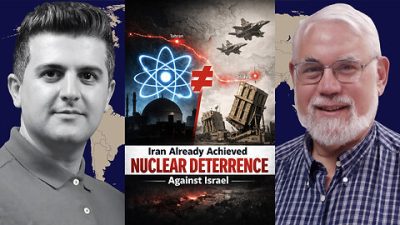
Prof. Ted Postol: Iran Already Achieved Nuclear Deterrence Against Israel
or go to
Aletho News Archives – Video-Images
From the Archives
How the occupied mentality syndrome works
Saudi Arabia on the American chessboard – Part 3
By B. J. Sabri | American Herald Tribune | June 27, 2016
Read part 2: “The occupied mentality Syndrome“
Previously I argued whether Saudi Arabia’s repeated involvements in U.S. interventions and wars stem from free national will or in response to a specific condition. For starters, in Saudi Arabia there is no national will. In Saudi Arabia, the national will is the will of the Al Saud clan. Still, when a major Arab state allies itself with a superpower that committed unspeakable crimes against humanity in almost every Arab country, then something is wrong. This fact alone should compel us to examine the U.S.-Saudi relation for one exceptional reason. As a result of the U.S.-Saudi wars, hundreds of thousands of people in Afghanistan, Iraq, Iran, Libya, Syria, Yemen, and Somalia have lost their lives. Millions became displaced in their own homelands. And millions more rendered refugees.
Attributing the Saudi policies to the bonds of “partnership” with the U.S. is frivolous. There are no bonds between these two thugs except those of business, military deals, secret plots, and wars. Proving this point, bonds such as these have no space for the American and Saudi peoples to share significant cultural or societal exchanges. If partnership is not the reason for the Saudi contribution to the U.S. strategy of empire and imperialism, then another reason must exist.
This leads to three possibilities. … continue
Blog Roll
 Aletho News
- NIAID/NIH and USDA Fund Bioengineered Chimeric Influenza Viruses Built Using Pandemic H1N1 Components: Journal ‘Science Advances’
- Hezbollah hits Israeli warship off Lebanon’s coast, sets it aflame
- Iran slams US strikes on B1 bridge, Mahshahr petrochemical plants as ‘blatant acts of state terrorism’
- In letter to UN chief, Araghchi warns of dire consequences of US-Israeli attacks on Iran’s nuclear facilities
- Why the CIA conspiracy to invade Iran with Kurdish militias failed
- Why Are Upbeat US Claims About Mission to Rescue Pilot ‘Highly Questionable’?
- Aircraft destroyed during US ‘rescue’ of downed F-15 pilot cost more than $100 million each
- Washington University removes professor who condemned US-Israeli war on Iran
- Russia Warns of Retaliation as UK Authorizes Seizure of Vessels
- Serbia thwarts plot to bomb Russia-Hungary gas pipeline – Vucic
- If Americans Knew
- In Iran, Israel-US take aim at “reason, research, and freedom of thought” – Daily Update
- US loses planes over Iran, Israel downgrades Lebanon war goals – Daily Update
- Israel Is Blocking Palestinians from Easter at Church Where Jesus Resurrected
- Plot to assassinate Palestinian activist follows harassment campaign promoted by Zionist groups and elected officials
- Prominent New York synagogue hosts presentation on why U.S. Jews should support the ethnic cleansing of Gaza
- Tapper vs. Piker: Is the CNN Anchor Auditioning for David Ellison?
- Shouldn’t Democrats Be Able to Condemn Genocide?
- Israel-US kill negotiators, destroy civilian structures, but Iran’s military capabilities still largely intact – Daily Update
- ‘War crime’: Global condemnation as Israeli ministers celebrate death penalty law targeting Palestinian prisoners
- 7 Ways Israel Is Turning Lebanon Into Gaza
- No Tricks Zone
- An Inconvenient Tree: Uncovered In Alps… Europe Much Warmer Than Today 6000 Years Ago
- New Study Reports A 60% Slowdown In Greenland’s Ice Loss Rate In The Last Decade
- Low Intensity Tornado Wrecks Major Solar Farm, Creating A Potential Toxic Dump
- New Study Finds Warming Saves Lives…Cold Temperatures 12 Times More Deadly Than Excess Heat
- German Science Blog Accuses PIK Climate Institute Of Hallucinating Climate Tipping Points
- Devastating Assessment Of Comirnaty Vaccine By Former Senior Pfizer Europe Toxicologist
- New Study: CO2 Is ‘Effectively Negligible’ As An Explanatory Climate Change Factor Since 2000
- Former Pfizer Toxicologist Dr. Helmut Sterz Tells Bundestag Hearing Pfizer Vaccine Should Have Never Been Approved
- Energy Expert: Germany’s Nuclear Phaseout Was A “500 Billion Euro Mistake”
- New Research: South Australia’s Mid-Holocene Sea Surface Temperatures Were 4°C Warmer Than Today
 Aletho News