Sic Transit Gloria Mueller
Making the Worst Case Appear the Better
By Ray McGovern | Consortium News | July 16, 2019
Friday’s surprising report that Robert Mueller had successfully sought an extra week to prepare for his House testimony on Russiagate (now set for July 24) must have come as scary news to those of his fans who can put two and two together. Over the past few weeks, it has become clearer that each of the two frayed findings of Russian interference in the 2016 U.S. presidential election has now come apart at the seams.
Saturday’s New York Times reports that “the Democrats said they chose to delay at the request of Mr. Mueller” after a day of negotiations, “as both Democrats and Republicans were deep in preparations for his testimony” earlier scheduled for July 17. The Washington Post, on the other hand, chose not to say who asked for the delay. Rather, it explained the abrupt change in timing with a misleading article entitled, “Mueller, House panels strike deal to delay hearing until July 24, giving lawmakers more time to question him.”
How to Avoid Eating Crow

Friedrich: Told Mueller put up or shut up (Flickr)
As the truth seeps out, there will be plenty of crow to go around. To avoid eating it, the Democrats on the House Judiciary and Intelligence Committees, the stenographers who pass for journalists at the Times and Post, and the “Mueller team” will need all the time they can muster to come up with imaginative responses to two recent bombshell revelations from the United States District Court for the District of Columbia.
Perhaps the most damning of the two came last Monday, when it was disclosed that, on July 1, Judge Dabney Friedrich ordered Mueller to stop pretending he had proof that the Russian government was behind the Internet Research Agency’s supposed attempt to interfere via social media in the 2016 election. While the corporate media so far has largely ignored Judge Friedrich’s order, it may well have been enough to cause very cold feet for those attached to the strained Facebook fable. (The IRA social-media “interference” has always been ludicrous on its face, as journalist Gareth Porter established.)
Ten days is not a lot of time to conjure up ways to confront and explain Judge Friedrich’s injection of some unwelcome reality. Since the Democrats, the media, and Mueller himself all have strong incentive to “make the worst case appear the better” (one of the twin charges against Socrates), they need time to regroup and circle the wagons. The more so, since Mueller’s other twin charge — Russian hacking of the DNC — also has been shown, in a separate Court case, to be bereft of credible evidence.
No, the incomplete, redacted, second-hand “forensics” draft that former FBI Director James Comey decided to settle for from the Democratic National Committee-hired CrowdStrike firm does not qualify as credible evidence. Both new developments are likely to pose a strong challenge to Mueller. On the forensics, Mueller decided to settle for what his former colleague Comey decided to settle for from CrowdStrike, which was hired by the DNC despite it’s deeply flawed reputation and well known bias against Russia. In fact, the new facts — emerging, oddly, from the U.S. District Court, pose such a fundamental challenge to Mueller’s findings that no one should be surprised if Mueller’s testimony is postponed again.
Requiem for ‘Interference’
Daniel Lazare’s July 12 Consortium News piece shatters one of the twin prongs in Mueller’s case that “the Russian government interfered in the 2016 presidential election in sweeping and systematic fashion.” It was the prong dripping with incessant drivel about the Kremlin using social media to help Trump win in 2016.
Mueller led off his Russiagate report, a redacted version of which was published on April 18, with the dubious claim that his investigation had
“… established that Russia interfered in the 2016 election principally through two operations. First, a Russian entity carried out a social media campaign that favored presidential candidate Donald J. Trump and disparaged presidential candidate Hillary Clinton. Second, a Russian intelligence service conducted computer-intrusion operations against entities, employees, and volunteers working in the Clinton campaign, and then released stolen documents.”
Judge to Mueller: Put Up or Shut Up

Mueller: Needs more time. (Flickr)
Regarding the social-media accusation, Judge Friederich has now told Mueller, in effect, to put up or shut up. What happened was this: On February 16, 2018 a typically credulous grand jury — the usual kind that cynics say can be persuaded to indict the proverbial ham sandwich — was convinced by Mueller to return 16 indictments of the Internet Research Agency (IRA) and associates in St. Petersburg, giving his all-deliberate-speed investigation some momentum and a much-needed, if short-lived, “big win” in “proving” interference by Russia in the 2016 election. It apparently never occurred to Mueller and the super-smart lawyers around him that the Russians would outsmart them by hiring their own lawyers to show up in U.S. court and seek discovery. Oops.
The Feb. 2018 indictment referred repeatedly to the IRA simply as a “Russian organization.” But in Mueller’s report 14 months later, the “Russian organization” had somehow morphed into “Russia.” The IRA’s lawyers argued, in effect, that Mueller’s ipse-dixit “Russia did it” does not suffice as proof of Russian government involvement. Federal Judge Friedrich agreed and ordered Mueller to cease promoting his evidence-less charge against the IRA; she added that “any future violations of her order will trigger a range of potential sanctions.”
More specifically, at the conclusion of a hearing held under seal on May 28, Judge Friedrich ordered the government “to refrain from making or authorizing any public statement that links the alleged conspiracy in the indictment to the Russian government or its agencies.” The judge ordered further that “any public statement about the allegations in the indictment . . . must make clear that, one, the government is summarizing the allegations in the indictment which remain unproven, and, two, the government does not express an opinion on the defendant’s guilt or innocence or the strength of the evidence in this case.”
Reporting Thursday on Judge Friedrich’s ruling, former CIA and State Department official Larry C. Johnson described it as a “potential game changer,” observing that Mueller “has not offered one piece of solid evidence that the defendants were involved in any way with the government of Russia.” After including a lot of useful background material, Johnson ends by noting:
“Some readers will insist that Mueller and his team have actual intelligence but cannot put that in an indictment. Well boys and girls, here is a simple truth–if you cannot produce evidence that can be presented in court then you do not have a case. There is that part of the Constitution that allows those accused of a crime to confront their accusers.”
IRA Story a ‘Stretch’
Last fall, investigative journalist Gareth Porter dissected and debunked The New York Times’ far-fetched claim that 80,000 Facebook posts by the Internet Research Agency helped swing the election to Donald Trump. What the Times story neglected to say is that the relatively paltry 80,000 posts were engulfed in literally trillions of posts on Facebook over the two-year period in question — before and after the 2016 election.
In testimony to Congress in October 2017, Facebook General Counsel Colin Stretch had cautioned earlier that from 2015 to 2017, “Americans using Facebook were exposed to, or ‘served,’ a total of over 33 trillion stories in their News Feeds.” Shamefully misleading “analysis” by Times reporters Scott Shane and Mark Mazzetti in a 10,000-word article on September 20, 2018 made the case that the IRA’s 80,000 posts helped deliver the presidency to Trump.
Shane and Mazzetti neglected to report the 33 trillion number for needed context, even though the Times’ own coverage of Stretch’s 2017 testimony stated outright: “Facebook cautioned that the Russia-linked posts represented a minuscule amount of content compared with the billions of posts that flow through users’ News Feeds everyday.”
The chances that Americans saw any of these IRA ads—let alone were influenced by them—are infinitismal. Porter and others did the math and found that over the two-year period, the 80,000 Russian-origin Facebook posts represented just 0.0000000024 of total Facebook content in that time. Porter commented that this particular Times contribution to the Russiagate story “should vie in the annals of journalism as one of the most spectacularly misleading uses of statistics of all time.”
And now we know, courtesy of Judge Friederich, that Mueller has never produced proof, beyond his say-so, that the Russian government was responsible for the activities of the IRA — feckless as they were. That they swung the election is clearly a stretch.
The Other Prong: Hacking the DNC
The second of Mueller’s two major accusations of Russian interference, as noted above, charged that “a Russian intelligence service conducted computer-intrusion operations against entities, employees, and volunteers working in the Clinton campaign, and then released stolen documents.” Sadly for Russiagate aficionados, the evidence behind that charge doesn’t hold water either.
CrowdStrike, the controversial cybersecurity firm that the Democratic National Committee chose over the FBI in 2016 to examine its compromised computer servers, never produced an un-redacted or final forensic report for the government because the FBI never required it to, the Justice Department admitted.
The revelation came in a court filing by the government in the pre-trial phase of Roger Stone, a long-time Republican operative who had an unofficial role in the campaign of candidate Donald Trump. Stone has been charged with misleading Congress, obstructing justice and intimidating a witness.
The filing was in response to a motion by Stone’s lawyers asking for “unredacted reports” from CrowdStrike challenging the government to prove that Russia hacked the DNC server. “The government … does not possess the information the defendant seeks,” the DOJ filing says.
Small wonder that Mueller had hoped to escape further questioning. If he does testify on July 24, the committee hearings will be well worth watching.
Ray McGovern works with Tell the Word, a publishing arm of the ecumenical Church of the Saviour in inner-city Washington. He was a CIA analyst for 27 years and a presidential briefer. In retirement he co-founded Veteran Intelligence Professionals for Sanity. His colleagues and he have been following closely the ins and outs of Russiagate.
How Assange & RT meddled in 2016, according to CNN’s ‘possibilities’, innuendo & lies
RT | July 16, 2019
CNN has released a new ‘exclusive’ report, accusing Julian Assange of conspiring with ‘the Russians’ (including RT) to meddle in the 2016 US election – again.
Citing a report compiled by a private Spanish security company – but not providing any of it – the network basically re-hashed the entirety of the Russiagate conspiracy on Monday, painting a sinister portrait of WikiLeaks publisher Julian Assange, RT and “Russians and world-class hackers” that supposedly made the revelations of Democratic National Committee (DNC) and Podesta emails happen during the 2016 election. It includes speculation, insinuation, selective quoting of special counsel Robert Mueller’s report, and even an easily and repeatedly disproven lie about RT.
Let’s dispense with the last point first. Per CNN: “On at least two occasions, RT even published articles detailing the new batches of emails before WikiLeaks officially released them, suggesting that they were coordinating behind the scenes, which they deny.”
In reality, RT journalists simply noticed a pattern to the WikiLeaks’ releases and kept a close eye on its website in expectation of every new batch. As RT’s Dublin bureau editor-on-duty at the time Ivor Crotty put it, “We merely watched a trend and performed journalism.” It was Clinton’s aides that suggested“coordinating behind the scenes,” which CNN here uncritically endorses.
The rest of CNN’s sensationally-titled “scoop” openly admits the Spanish papers merely “build on the possibility” raised by Mueller’s report about how WikiLeaks received the emails. Safe words for “unprovable speculation” begin a few lines below the headline, and keep multiplying from there on.
CNN quotes the Mueller report as having named German hacker Andrew Müller-Maguhn as someone who “may have assisted” WikiLeaks in obtaining the files – something page 55 of the report “cannot rule out” happened, based on “public reporting”, not actual evidence.
Throughout the story, the CNN authors seem almost incredulous that Ecuador allowed Assange, a political refugee, to have basic facilities like high-speed Internet or the absence of 24/7 snooping – all of which he is portrayed as having exploited to undermine American democracy.
Assange also had visitors – including a “Russian national named Yana Maximova” (who the authors never tracked down, but appear to assume her an insidious figure by the sole merit of her being Russian) and with “senior staffers from RT” such as London bureau chief Nikolay Bogachikhin, who even “gave him a USB drive on one occasion.”
Bogachikhin, one of the very few people who actually responded to CNN’s requests for comment, was open about RT’s cooperation with Assange. RT’s editor-in-chief Margarita Simonyan joined in by tweeting about her own visits to Assange and listing quite a few more things RT staff brought to him: “Cassettes, floppy disks, flash drives, pieces of paper, technical equipment, candy…”
That’s because RT hosted a show with Assange, and widely advertised it both on air and online. “It’s hard to host a show without equipment, you know. It was an awesome show. Can you google it up yourself?” Simonyan tweeted.
CNN, meanwhile, repeats the literal smear – not substantiated by a single photo or video clip since Assange’s arrest in April – that the journalist “smeared feces” on the embassy walls.
Wrapping up the piece, CNN finds it sinister that the Russian government denounced the arrest as a violation of Assange’s human rights and dignity – the ultimate proof Assange “still has allies in Russia.”
Also on rt.com:
Another nail in Russiagate coffin? Federal judge destroys key Mueller report claim
UK govt unveils plan to teach school kids about ‘fake news’… What could go wrong?
RT | July 15, 2019
The British government is planning a new initiative which will aim to help schoolchildren distinguish real information from ‘fake news’ — in an eyebrow-raising move which could be described as a little bit Orwellian.
British Secretary of State for Education Damian Hinds unveiled the new plan, warning that teachers need to better prepare students for the risks posed by “fake news” online, the Independent reported.
From 2020, British kids in both primary and secondary schools will learn about “confirmation bias” and “online risks” as part of a compulsory section of the curriculum. As part of the plan, teachers will help children identify techniques used for “persuasion” and be told “when to seek support.” They will also learn about the reasons why someone might wish to “bend the truth” in the first place.
A concerned Hinds warned that the internet makes it easier for both state actors and individuals to “spread falsehoods.” One area in particular which the government is looking at is “misleading content” regarding vaccinations. Without “firm action,” the proliferation of allegedly misleading information online will “get a lot worse,” he said.
Hinds recalled that propagandists have sought to “manipulate the truth” since “ancient times.” Indeed, this is something any British government official should be well aware of, since it’s well-known that the British mainstream media — including the BBC and British newspapers — have historically been infiltrated by intelligence agents from MI5 and MI6. One could probably safely assume that such inconvenient information will be left off the agenda, however, with the British program more likely to focus on the evils of propaganda emanating from Britain’s geopolitical adversaries.
Aside from the obvious question of whether governments are best placed to create a curriculum on fake vs. real news, there’s also the added dilemma of whether teachers should be responsible for imparting wisdom on media manipulation to children, when so much of the task of deciphering the news these days comes down to pure opinion. What one teacher might regard as real, another might view as fake.
Presumably, for example, Hinds would regard an institution like the BBC as a “trusted” source — and yet many others of a different political persuasion would likely disagree. The initiative raises the question of who exactly should be allowed to set the standards of ‘truth’ and ‘trusted’ when it comes to media. This is usually only the role of government in dystopian novels.
It’s not the first time Western governments or government-linked initiatives have sought to ‘educate’ the public about fake news through arguably sketchy means. The CIA-linked NewsGuard app has managed to get itself automatically installed on Microsoft’s Edge mobile browser, warning users away from “unreliable” whistleblowing and alternative news sites and directing them firmly toward mainstream sources that don’t often question establishment narratives.
A cynic might suggest such that the British government’s latest plan amounts to a form of state indoctrination of children to support the ‘correct’ narratives to serve its agenda from an early age.
Also on rt.com:
No need to install: Microsoft has controversial fake news filter NewsGuard built into mobile browser
Israeli firm spying on Palestinians says it only works with ‘democratic countries’
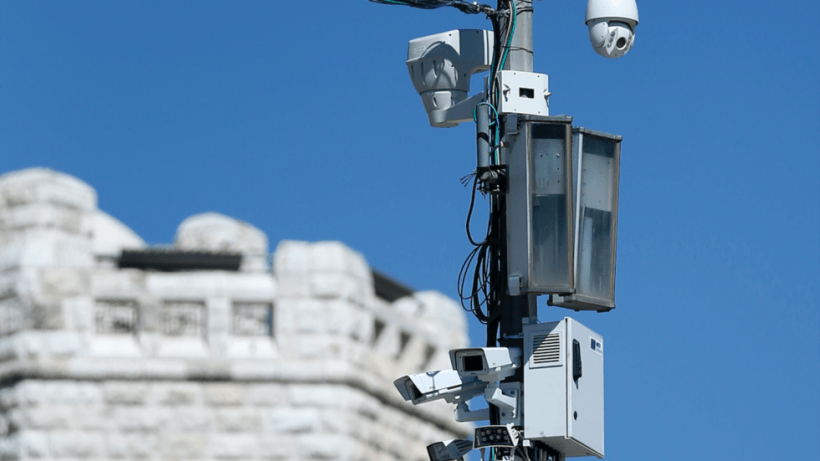
RT | July 15, 2019
An Israeli facial recognition firm secretly tracking Palestinians in the West Bank says it only works with ‘democratic countries’, ironically dismissing Israel’s own human rights abuses against the Palestinians.
Anyvision Interactive Technologies is a company with Microsoft funding, a former head of the Defense Ministry’s security department as its president, and a former Mossad head as his adviser. Its facial recognition software is used by the Israeli Army at checkpoints in the West Bank, allowing soldiers to check whether Palestinians have work permits for Israel. It also has a more secretive project with the army that installs its software in cameras inside the West Bank to surveil Palestinians.
Anyvision addressed concerns about facial recognition software by saying it “only works with democracies,” and doesn’t “operate in China” or “sell in Africa or Russia,” with CEO Eylon Etshtein explaining, “We only sell systems to democratic countries with proper governments,” Haaretz reports.
Anyvision’s dismissal of countries like China and Russia is at odds with the fact that its software is secretly being used by the Israeli military to spy on Palestinians in the West Bank, which is under Israeli occupation and subject to Israeli checkpoints and surveillance, despite being Palestinian territory.
Israel has been accused of a series of human rights violations against the Palestinians it is spying on, and its continued building of Israeli settlements within the West Bank violates UN resolutions and the Fourth Geneva Convention. The UN has said it may have committed war crimes for the killing of protesters, medics, and journalists at the Gaza March of Return demonstrations. Israel does not use Anyvision’s spying software in Israel or the Jewish settlements in the West Bank.
Israel holds democratic elections for its citizens, but not all of the over 13 million people under its control. No Palestinians in the West Bank, including East Jerusalem, can vote, even though Israel controls much of their movements, security, water, roads, and building permits. Israeli settlers living in the West Bank can vote, however.
When asked about arguments that the West Bank is not governed democratically, Etshtein said, “It’s really a huge dilemma, but I’m not the guy to ask this,” adding the company does “the maximum so that its technology isn’t misused.”
Israel’s Latest ‘Security Problem’: Who’s to Blame for Gaza’s Environmental Crisis
By Ramzy Baroud | MEMO | July 15, 2019
Writing in The Jewish Journal under the title, “A Spillover Crisis: How Gaza’s Water Shortage Affects Israel”, Dominik Doehler explains the direct link between Gaza’s water problems and Israel.
Doehler offered a scientific explanation behind the besieged Strip’s water crisis, but when it was time to assign responsibility, something went wrong. Instead of recognising how Israel’s war and protracted siege destroyed Gaza’s infrastructure, the writer blamed the “ongoing conflict between Hamas and the Palestinian Authority” for Gaza’s suffering.
“Today, those who pay the price of the conflict between the Palestinian factions are the two million people in Gaza,” Doehler writes, without any mention of Israel’s primary role in any of this.
The dishonesty of the writer should not be entirely surprising, considering the biased nature of the publication. This is particularly symptomatic of Israeli and pro-Israeli media which often shy away from acknowledging the facts, but deflect responsibility from Israel, and point the finger of blame on Palestinians only.
That said, it is interesting that Gaza’s growing humanitarian crisis is finally registering in Israel as a pressing problem requiring action. However, it is not the impact of the crisis on the population of Gaza that is sounding the alarm bells in Tel Aviv, but rather the potential environmental damage Gaza’s ongoing misery may cause Israel.
On June 3, researchers from Israel’s Tel Aviv and Ben-Gurion universities presented a report commissioned by the environmental organization, EcoPeace Middle East, in which they warned that “the collapsing water, sewage and electricity infrastructure in the Gaza Strip pose a material danger to Israel’s groundwater, seawater, beaches and desalination plants”.
One would expect any report on the environmental situation in Gaza to focus on the fact that nearly two million Palestinians in the Strip are living in inhumane conditions due to a relentless 12-year Israeli blockade and repeated devastating military assaults which are rending the area “uninhabitable by 2020“.
Instead, the report has implied that the residents are solely responsible for the imminent environmental catastrophe in Gaza, which is threatening the security and well-being of Israeli citizens. The Israeli newspaper, Haaretz, which published a detailed report on the presentation, also spun the issue as a matter of national security.
But what Israel has now identified as a “national security problem” is indeed a disaster of its own making. The occupation, colonisation, dispossession and aggression against Palestine and the Palestinians have caused untold environmental damage to the extent that now, even the Israeli occupier is suffering.
The environmental situation in Gaza is indeed dire at the moment, but it is not the Palestinians who made it so. Neither the “rapid population growth”, nor neglect or ignorance of residents that are its root causes. Countless reports by the United Nations and other organisations have documented in detail how and why the main culprit is Israel, its violent assaults on Gaza and its merciless siege.

Israeli settlers flood Khan al Ahmar with wastewater [Twitter]
Take the problem of untreated sewage ending up in the sea, which is causing issues for Israeli beach-goers and water desalination plants. The reason why Gaza’s sewage is getting disposed of in this “irresponsible” way is that water treatment plants are not operational; they were targeted in the 2014 Israeli assault on the Strip and were never rebuilt because the Israeli siege does not allow for construction materials and spare parts to be brought in.
Untreated sewage is part of the larger water crisis in Gaza. As the report rightly points out, Gaza residents are overusing the aquifer under the Strip, which has become increasingly contaminated with seawater and chemicals and which constitutes the only source of freshwater for residents because of the involuntary separation with the West Bank.
The reason for Palestinians in Gaza being unable to establish a proper water management system is again Israel’s doing. Israel has repeatedly bombed its water infrastructure, including water pipes, wells and other facilities, and the debilitating Israeli siege has prevented the local authorities from fixing it and building a water desalination plant.
Gaza’s water problem is not only an annoyance for the Israelis but a potential source of an epidemic for the Palestinians. Already, diarrheal diseases have doubled, reaching epidemic levels, according to the Palestinian Ministry of Health, while salmonella and typhoid fever are also on the rise.
Then there is the problem with rubbish which Palestinians are burning, hence “polluting Israeli air”. As Cambridge University academic, Ramy Salemdeeb, has pointed out, Gaza has been unable to develop a proper waste management system because of economic restrictions due to the Israeli siege and a “limited land availability” because of its isolation from the rest of the occupied Palestinian territories.
Given that Israel is a settler-colonial project, the overexploitation of the colonised land to the detriment of the environment and the local population is naturally a part of its modus operandi.
Indeed, all the land Israel has taken and occupied has suffered from environmental degradation in one way or another, with its harmful effects being conveniently shifted towards Palestinians area, villages and cities.
If Israel continues to treat the issue as a “security problem” it will never get resolved because at the heart of it is the destructive logic of a colonial enterprise which seeks to exploit both land and people with no regard for nature and human wellbeing.
In other words, Israel will never achieve security – environmental or otherwise – as long as it continues to oppress the Palestinians, occupy their land and ravage the environment. Israeli air, water and the overall environment will never be immune from the Israeli-made disasters in occupied Palestine.
Palestinians lose $270m per year due to military checkpoints: Study
MEMO | July 15, 2019
Palestinians lose about 60 million work hours per year due to restrictions on movement in the occupied West Bank imposed by Israeli occupation forces, according to a study by the Applied Research Institute – Jerusalem (ARIJ).
This loss is estimated at $270 million per year, as well as added fuel consumption of 80 million litres, costing up to an additional $135 million and leading to an increase in carbon dioxide emissions by 196,000 tonnes per year.
The study tracked the movement of citizens through 15 major Israeli military checkpoints between cities in the occupied West Bank as well as 11 crossing points into Jerusalem and Israeli territories. The data was collected from the beginning of January to the end of July 2018, using GPS tracking devices installed on Palestinian vehicles, including public transport and private vehicles. Each device monitored the location, time and speed of the vehicle every ten seconds, giving an accurate idea of the time spent at military checkpoints.
Israel maintains a system of checkpoints that can be closed at any time, preventing Palestinians from travelling to school, hospital or work, or to access their land.
In a July 2018 survey, the UN’s Office for the Coordination of Humanitarian Affairs (OCHAoPt) recorded that there are “705 permanent obstacles across the West Bank restricting or controlling Palestinian vehicular, and in some cases pedestrian, movement.”
Israel also runs a system of “flying checkpoints” which can disrupt travel at a moment’s notice. OCHAoPt notes that, “between January 2017 and the end of July 2018, Israeli forces employed an additional 4,924 ad-hoc ‘flying’ checkpoints, or nearly 60 a week. These involve the deployment of Israeli forces for several hours on a given road for the purpose of stopping and checking Palestinian drivers and vehicles, but without any permanent physical infrastructure on the ground.”
Israel face-recognition start-up ‘secretly tracking Palestinians’

MEMO | July 15, 2019
A start-up known as “Israel’s most high-profile biometric recognition firm” is playing a key role in monitoring Palestinians at checkpoints in the occupied West Bank, reported Haaretz.
According to the article, Anyvision Interactive Technologies “is taking part in two special projects in assisting the Israeli army in the West Bank”.
One project “involves a system that it has installed at army checkpoints that thousands of Palestinians pass through each day on their way to work from the West Bank.”
In a statement in February, the army said “27 biometric crossings” had been established in the West Bank, as part of a “wide-ranging” effort to “upgrade” the checkpoints in question.
The second project, however, “is much more confidential”, reported Haaretz, and “includes facial recognition technology elsewhere in the West Bank, not just at border crossings”, as “cameras deep inside the West Bank try to spot and monitor potential Palestinian assailants”.
Anyvision’s president, Amir Kain, is the former head of Malmab, the Defence Ministry’s security department, while one of the company’s advisers is Tamir Pardo, a former head of Mossad.
The company claims to operate in 43 countries and at more than 350 locations such as stadiums, airports and casinos, and recently raised $31 million from Microsoft’s M12 venture capital fund.
As reported by Haaretz, “Anyvision’s involvement in the West Bank is being revealed amid a lively debate around the world on the use of biometric technology, especially facial recognition.”
“About a month ago, San Francisco became the first American city to outlaw facial recognition technology. And camera maker Axon recently decided to eliminate its products’ facial recognition capacity, based on the recommendations of an ethics committee that it had formed.”
According to the paper, “the Israeli surveillance operation in the West Bank is undoubtedly among the largest of its kind in the world. It includes monitoring the media, social media and the population as a whole — and now it turns out also the biometric signature of West Bank Palestinians.”
US mission in Baghdad serves as Mossad, Daesh headquarters: Iraqi MP

This file photo shows the US embassy building in the Iraqi capital of Baghdad.
Press TV | July 15, 2019
A senior Iraqi parliamentarian warns that the US embassy in Baghdad is involved in “suspicious activities,” saying agents of the Israeli spy agency Mossad and the Daesh terrorist group have been spotted regularly visiting the diplomatic mission.
“The US embassy in Baghdad has turned into a center for Israel’s Mossad and ISIS (Daesh) terrorists,” Hassan Salem was quoted as saying by the Iraqi Arabic-language al-Sumariya news website.
Salem said the US embassy is interfering in Iraq’s internal affairs by spying, spreading rumors and hatching plots.
“The US embassy’s violation of laws and forgetting its responsibilities based on the international laws mean that the center could not be called an embassy and therefore, its closure is legally necessary,” the Iraqi lawmaker said.
US giving Daesh head protection
Salem had earlier suggested that US forces in Ain al-Assad military base were protecting Daesh ringleader Ibrahim al-Samarrai, aka Abu Bakr al-Baghdadi, in the western desert of Iraq’s Anbar province.
“Al-Baghdadi is using the Anbar desert as a safe haven, while the US forces provide him with all means of support from their station at the Ain al-Assad military base in Anbar province,” Salem said in February.
The Iraqi MP argued then that America’s support for al-Baghdadi “stems from Washington’s fear of a draft bill on expelling foreign troops from Iraq, which the parliament intends to vote on during the new legislative term.”
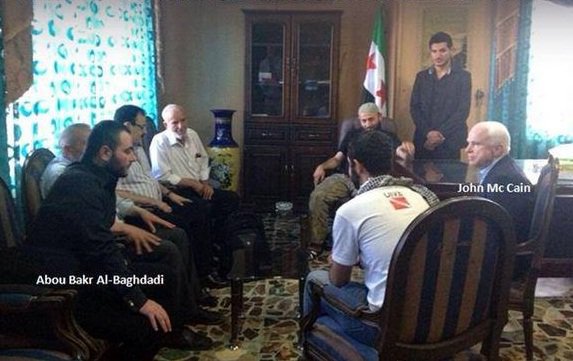
Also in February, former Iraqi Prime Minister Nouri al-Maliki for the first time divulged explosive secrets about how the United States supported Daesh and intentionally allowed the Takfiri terror outfit to gain power in Iraq so that Washington could creep back into the Arab country.
He said the administration of former US President Barack Obama had played a key role in the creation of Daesh by allowing the terrorist group to overrun Iraqi territories.
In March, an Iraqi security expert also revealed that the American embassy in Iraq was carrying out suspicious measures, describing the mission as a US-Israeli operations room that sought to destabilize the region.
Abbas al-Ardawi was quoted by the Arabic-language al-Ma’alomeh news website as saying that US administration was exerting pressures on Baghdad and killing time to prolong its deployment in Iraq.
He said the relocation of terrorists from the town of Baqouz in Eastern Syria to the US bases in Iraq was aimed to stir security tensions in the country and find a pretext for continued deployment of American forces.
Al-Ardawi said Iraqi lawmakers certainly want all US forces to be expelled from the country as soon as possible.
Another senior Iraqi expert had in January warned of Washington’s attempts to increase its influence in Iraq, saying Israeli spies and Daesh terrorists were present at across US bases in Iraq.
Hafez Al-e Basharah told al-Ma’aloumeh news website that the US was attempting to boost its presence in Iraq and the American forces had been stationed in the southern parts of Baghdad.
He went on to say that the US forces did not allow any Iraqis to enter their bases in the country in an attempt to conceal the realities from the public opinion.
Israeli intelligence agents were also operating from the bases, where Takfiri terrorists also received shelter and training, he added.
Real Hedge-Fund Managers Think Epstein’s Actual Business Was Blackmail
cryptogon | July 14, 2019
Via: New York Magazine :
Long before Jeffrey Epstein pleaded guilty to prostitution charges in Florida more than a decade ago, his fellow Palm Beach resident and hedge-fund manager Douglas Kass was intrigued by the local gossip about his neighbor.
“I’m hearing about the parties, hearing about a guy who’s throwing money around,” says Kass, president of Seabreeze Partners Management. While stories about young girls swarming Epstein’s waterfront mansion and the sex parties he hosted for the rich and powerful were the talk of the town, Kass was more focused on how this obscure person, rumored to be managing billions of dollars, had become so wealthy without much of a track record.
Kass was well-connected on Wall Street, where he’d worked for decades, so he began to ask around. “I went to my institutional brokers, to their trading desks and asked if they ever traded with him. I did it a few times until the date when he was arrested,” he recalls. “Not one institutional trading desk, primary or secondary, had ever traded with Epstein’s firm.”
When a reporter came to interview Kass about Bernie Madoff shortly before that firm blew up in the biggest Ponzi scheme ever, Kass told her, “There’s another guy who reminds me of Madoff that no one trades with.” That man was Jeffrey Epstein.
“How did he get the money?” Kass kept asking.
…
Given this puzzling set of data points, the hedge-fund managers we spoke to leaned toward the theory that Epstein was running a blackmail scheme under the cover of a hedge fund.
Ending myth of ‘Millionaire Mullah’ – Part 3
By Ramin Mazaheri | Press TV | July 9, 2019
Part 1 of this article discussed why the recent US sanctions on Leader of the Islamic Revolution Ayatollah Seyyed Ali Khamenei provoked laughter in Iran and derision even from Iranophobic Western mainstream media.
Part 2 proved that – between zakat, khums, the bonyads, generalized Iranophobia and a desire to denigrate any economic thought which is not far-right neoliberal capitalism – it is easily understandable how we have arrived at Western nonsense like “Millionaire Mullahs”.
Part 3 will show how this propaganda is unrelenting.
Like the 2013 Reuters report on Setad, a bonyad headed by the Leader post, “Khamenei controls massive financial empire built on property seizures.”
Uhhh… yes, confiscating the ill-gotten property of the king and his 1% was undoubtedly the democratic choice of Iran. Iran is a rare country to have done that, but it was not the first. Economically right-wing Reuters, of course, opposes every such occasion where this has happened.
Reuters’ report spends just ten miserly words to describe for their readers both bonyads and khums, which is certainly not enough to give a sympathetic, much less objective, rendering of these rather vital parts of the Iranian economy. Reuters makes apparent its total disinterest in admitting Setad’s universally-known, multi-billion charitable functions with the brief and dismissive “It’s unclear how much of its revenue goes to philanthropy.” It’s a report which openly airs the grievances of lawyers based in Beverly Hills, California, because talking about the economically-redistributive concepts at work in the Iranian economy are expressly against Reuters’ editorial policy.
As Reuters admitted, with a brief sentence that indicates their maximum disappointment: “Reuters found no evidence that Khamenei is tapping Setad to enrich himself.” Exactly. All Iran already knew that. Reuters buried a sentence which has been a headline in Iran.
Beyond the role of Islamic charity, the usury-banning role of Islamic finance, and the unique (revolutionary) economic principles installed after 1979, the widest-view statement I can give about the Iranian economy is this: because it is (Islamic) socialist-inspired when it comes to handling the economy, the Iranian state controls the Iranian economy even more completely than today’s “hosting-tourists-is-ok” Cuba. Both nations control their economies in a patriotic way, though Iran has, thankfully, far more oil wealth; both nations reject foreign control (neoliberal/globalist capitalism); and both nations have been incredibly successful at improving the lives of their average citizens despite decades of murderous sanctions by the US and Europe.
The revolutionary Iranian economy is thus most succinctly described (this is “daily journalism,” after all) as “Iranian Islamic Socialism” because it is exactly that, and in exactly that order of importance: first come the patriotic needs of Iran, then adherence to the principles of Islam as much as possible, and then the clear rejection of capitalism-imperialism and neoliberalism/globalism. Importantly — at least to those who believe Iranians have a democratic right to choose their own path — Forbes, Reuters, and Washington are resolutely dead-set against the success of all of these principles, and their actions and stances show that they view tolerance, accommodation, and limited cooperation as impossible.
But this — the enormously anti-neoliberal aspects and the enormously successful redistributive aspects of the Iranian economy — is something the West can never admit because… they might be copied! Indeed, when Washington talks about Iran’s “destabilising behaviors,” there is nothing more destabilising to US and Israeli hegemony in the Muslim world than the very example of Iranian democratic success.
What works usually is copied, but Iranian economic solutions do not “work” for the aristocratic readers of Forbes. Therefore, “Millionaire mullahs” has been the Western editorial line, and they are sticking to it.
It should be clear: it is a well-known reality that Ayatollah Khamenei does not personally have much to sanction at all; the Iranian economy is so unique (revolutionary) that it is easily distorted and rarely attempted to be understood; the guiding economic concepts democratically installed after the Iranian Islamic Revolution will always be the subject of massive Western propaganda.
Therefore, pity Trump and his New York City slumlord/Pentagon gun-runner advisors — by foolishly sanctioning Ayatollah Khamenei, all they did was insult him, and insult his tens of millions of often-ardent supporters, and show their total ignorance of how the Iranian economy actually works!
How did they get so misled? Simple: they read too much Western propaganda, which since 1979 has had an editorial line of “100% fake news, 24/7” when it comes to Iran. Such an editorial line is designed by their 1%-owners to push Trump, and others, to wrongly assume that Iran is some sort of dystopian, totalitarian regime where the top leader owns everything and can liquidate anything at any time for their personal profit.
Such a system only exists in comic books… and in the Arab monarchies. And are sanctions on these Arab despots arriving next? LOL, not likely. Forbes and the neoliberal-loving, English-Canadian Reuters are likely in the middle of preparing their latest puff-piece on yet another Arab monarch-dictator.
It is ironic that the only type of “millionaires” these rabidly capitalist media seem to have a problem with are of the Iranian clerical variety, a variety which Forbes was the first to ever claim even existed. But the phenomenon they allege does not exist, and Ayatollah Khamenei is often held up as a standard of good and moral leadership in many nations for very justified reasons.
What is certain is that Washington’s ignorance of and opposition to the nature of the Iranian economy will cost them dearly — sanctions on Ayatollah Khamenei will be totally ineffective in reaching their totally unjust aims. Such sanctions are amusing… but that is actually a sad commentary: the decades of murderous sanctions on Iran, Cuba, Korea, and others shouldn’t be funny at all.
Ramin Mazaheri is the chief correspondent in Paris for Press TV and has lived in France since 2009. He has been a daily newspaper reporter in the US, and has reported from Iran, Cuba, Egypt, Tunisia, South Korea, and elsewhere. He is the author of “I’ll Ruin Everything You Are: Ending Western Propaganda on Red China.”
Iran Ready to Hold Talks With US if Sanctions Lifted – Rouhani
Sputnik -July 15, 2019
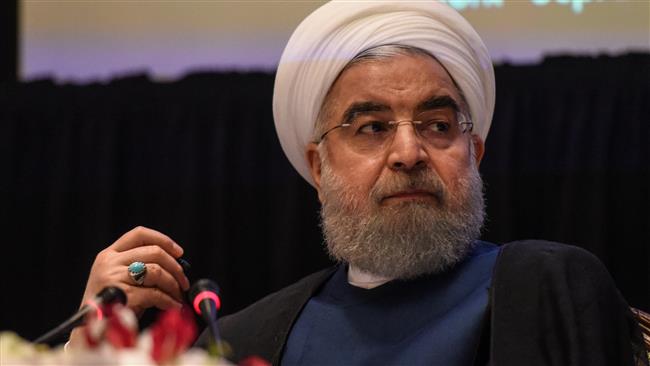
Iran is ready to hold negotiations with the United States if Washington lifts sanctions and gives up “bullying,” Iranian President Hassan Rouhani said on Sunday.
Earlier in the day, Berlin, Paris and London called for a dialogue between all parties of the Joint Comprehensive Plan of Action (JCPOA), saying the deal risks falling apart due to the US sanctions against Iran and Tehran’s decision to partially discontinue its obligations and.
“We are always ready for negotiation. I tell you this hour and this moment to abandon bullying and lift the sanctions and return to logic and wisdom. We are ready,” Rouhani said, as quoted by the Mehr news agency.
Rouhani added that Iran shifted its approach from “strategic patience” to “reciprocal action” and would respond in kind to any of Washington’s steps related to the nuclear deal.
On May 8, 2018, US President Donald Trump unilaterally withdrew his country from the JCPOA and imposed several consecutive rounds of economic sanctions on Iran. A year later, Tehran announced its own decision to partially suspend obligations under the deal and giving the other signatories – France, Germany, the United Kingdom, Russia, China and the European Union – 60 days to save the accord by facilitating oil exports and trade with Iran.
On July 7, as the deadline expired, Iranian Deputy Foreign Minister Seyed Abbas Araghchi announced that his country was ready to begin enriching uranium beyond the 3.67 percent level set in the JCPOA, adding that Tehran would go on gradually abandoning its nuclear commitments every 60 days.
Featured Video
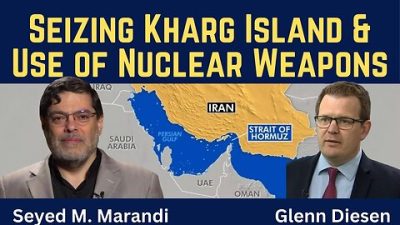
Marandi: Threat of Seizing Kharg Island & the Use of Nuclear Weapons
or go to
Aletho News Archives – Video-Images
Frlom the Archives
Provoking a Path to Persia
The Saban Center’s prescient paper on war with Iran
By Maidhc Ó Cathail | October 20, 2011
In June 2009, the Saban Center for Middle East Policy published “Which Path to Persia?—Options for a New American Strategy toward Iran.” Writing in a tone strikingly reminiscent of the Project for a New American Century’s infamous pre-9/11 paper “Rebuilding America’s Defenses,” the six co-authors noted that, “It seems highly unlikely that the United States would mount an invasion without any provocation or other buildup.” For a think tank specifically established by media mogul Haim Saban to protect Israel, this could prove to be a formidable obstacle impeding their desired march—of U.S. troops—to Tehran.
“In fact, if the United States were to decide that to garner greater international support, galvanize U.S. domestic support, and/or provide a legal justification for an invasion, it would be best to wait for an Iranian provocation, then the time frame for an invasion might stretch out indefinitely,” Saban’s think-tankers ruefully observed.
“With only one real exception, since the 1978 revolution, the Islamic Republic has never willingly provoked an American military response, although it certainly has taken actions that could have done so if Washington had been looking for a fight. Thus it is not impossible that Tehran might take some action that would justify an American invasion. And it is certainly the case that if Washington sought such a provocation, it could take actions that might make it more likely that Tehran would do so (although being too obvious about this could nullify the provocation). However, since it would be up to Iran to make the provocative move, which Iran has been wary of doing most times in the past, the United States would never know for sure when it would get the requisite Iranian provocation. In fact, it might never come at all.”
Seemingly undeterred by Iran’s frustrating unwillingness to provide the requisite provocation, the analysts continued to examine this option… continue
Blog Roll
 Aletho News
- Ukrainian Embassy in Beirut sheltering top Mossad agent
- Palestinian family displaced after settlers violently attack them in Humsa, Jordan Valley
- The EU never learns – except for the wrong lessons
- Iran attacks on UAE leaves RSF militia high and dry
- Hosting Washington’s war: Bahrain faces the consequences
- The US fell for its own Iran propaganda
- Seyed M. Marandi: Threat of Seizing Kharg Island & the Use of Nuclear Weapons
- Is there even an off ramp?
- Michael von der Schulenburg: Europe’s Self-Defeating Iran War Policy
- Sorry, The New Republic, Climate Change Isn’t Causing Somali Migration. Blame Civil Strife and Poverty.
- If Americans Knew
- ‘Of Course’: IDF Drops Case Against Soldiers Accused of Raping Palestinian Prisoner
- Don’t Fall for the Regime Change Talk. Israel Is ‘Mowing the Lawn’ in Iran
- Will Israel and the US wreck the Gulf States along with Iran?
- US so far burned through ‘years’ of munitions in Iran war: Report
- How the Israeli Tail Wags the American Dog
- Outdated intel likely led to deadly U.S. strike on Iranian elementary school, sources say
- Pentagon insider says high U.S official Douglas Feith reported to Netanyahu
- In fond memory of Walid Khalidi, the historian of Palestine
- 6 more Americans killed, as Israel ‘mows the lawn’ in Iran – Not a ceasefire Day 154
- Are we on the precipice of World War III?
- No Tricks Zone
- New Studies: UK Sea Levels Were 4 Meters Higher Than Today During The Mid-Holocene
- Destructive Green New Deal: German Energy And Metal Group Warns Of Drastic Crisis
- New Study Documents A 20-Year Pause In Arctic Sea Ice Decline – Driven By Internal Variability
- Wake-up Call: Survey Shows Majority Of Germans Now Favor Postponing Climate Targets!
- Televised! Leading German Political Candidate Tells Schoolchildren CO2 Makes Sun Hotter!
- New Study: A Century Warming Of 1.1°C Is ‘Commonplace’ And ‘Not Unusual’ During This Interglacial
- New Study: ‘Internal Noise’ And Volcanic Forcing Can Trigger 10-15°C Warming Within Decades
- Glaciers Worldwide Are Suddendly Surging, Experts Blame Warming!
- Surprising Discovery: Sahara Is Greening…Billions Of Trees Where Once Thought To Be Barren
- New Research Reaffirms Clouds, Aerosols, And Surface Solar Radiation Are ‘Driving The Climate System’
 Aletho News