
Palestinian humanitarian worker Mohammad al-Halabi, who worked with the American World Vision organization, is in serious health condition due to torture by his Israeli interrogators, according to the Palestinian Prisoners’ Affairs Commission.
Al-Halabi, 42, from Jabalya refugee camp, was in charge of the Gaza Strip office of World Vision and is now suffering from serious headaches. After losing hearing, he may also lose sight in his eyes due to the torture he underwent after his arrest in Israel.
On June 15, 2016, Al-Halabi was arrested by Israeli occupation forces at the Beit Hanoun (Eretz) Crossing which separates besieged Gaza from Israel, in a joint operation carried out by the Shin Bet security service, the Israeli army and Israeli police.
Since then, he appeared in Israeli courts 135 times in what the Palestinian Commission of Detainees and Ex-Detainees’ Affairs refers to as “one of the longest trials in the history of the Palestinian captive movement”.
“Now, Mohammed has been transferred, once again, this time to Rimon Prison, where he is being held under extremely harsh conditions, still experiencing all sorts of torture and degradation,” wrote his father, Khalil, in a recent article.
“Israel has no evidence to indict my son. Thus, it resorts to physically and psychologically tormenting him to get exactly what it wants to hear,” Khalil added.
“By charging Mohammed, the Israeli government intends to indict all international charities so that they suffocate Gaza and its heroic people entirely.”
April 11, 2020
Posted by aletho |
Ethnic Cleansing, Racism, Zionism, Subjugation - Torture | Gaza, Human rights, Israel, Palestine |
Leave a comment
OPCW Fact-Finding Mission (FFM) has determined that chemical weapons have been used or likely used in Syria. The first report of the OPCW was released April 8 and points a finger at the Syrian Arab Air Force concerning 3 attacks which occurred in Ltamenah, on March 24, 25, and 30, in 2017.
The report claims the investigation team conducts its activities in an impartial and objective manner. The only reason to believe the conclusion of such a report would be the belief that the team is honest, unbiased, and has no political agenda.
There is no proof presented and the 82-page report clearly states that they are not a legal body with the authority to assign criminal responsibility. The Investigation and Identification Team (IIT) Coordinator, Mr. Santiago Oñate-Laborde remarked that the investigative team has concluded that there are reasonable grounds to believe a chemical was used in the attacks. He further added, “In the end, the IIT was unable to identify any other plausible explanation.”
In the report, other plausible explanations were identified, but the report sticks with the personal opinion of one person who has some military experience, though is not identified. The report stated: “a military expert advising the IIT noted the use of chemical weapons in this area would not be inconsistent with a strategy aimed at inflicting terror on both civilians and combatants, at eliminating infrastructure such as the medical facilities required to continue fighting, and at ensuring that no one felt safe even behind the front lines proper. The IIT however also took into account that armed groups opposing the Government of the Syrian Arab Republic, on the other hand, might have had an incentive in “staging” a chemical attack against civilians and their own fighters, to blame the Syrian Arab Republic’s authorities.”
The report continued, that the alleged incidents in Ltamenah could potentially be explained through similar scenarios, including the ‘staging’ of an attack with sarin brought from elsewhere. Also notable in the report, is the fact that the team never visited the site, and only spoke with 20 witnesses.
The Syrian Foreign and Expatriates Ministry released a statement on April 9. “The Syrian Arab Republic condemns, in the strongest terms, what has come in the report of the illegitimate so-called Investigation and Identification Team, and rejects what has been included in it, in form and content,” the statement said, and added that Syria, at the same time, categorically denies using toxic gases in Ltamenah town or in any city or village, and affirms that the Syrian army has never used such weapons in the most difficult battles carried out against armed terrorist organizations.”
The Ministry of Foreign Affairs of the Russian Federation released a statement on April 9. “The authors of the report, and consequently the leaders of the OPCW Technical Secretariat, have thus become accomplices in the consistent violation of the basic principles and procedures of objective and unbiased investigations stipulated in the CWC, which requires the mandatory dispatch of experts directly to the sites of alleged incidents. The information gathered by the IIT mostly came from anti-government armed groups and pseudo-humanitarian NGOs affiliated with them, including the notorious White Helmets.” The statement further adds, “We have also noted that the report contains references to certain secret services data – apparently from the same states obsessed with a change of power in Damascus. There is no other word for it but misinformation.”
In March 2011, the US-NATO attack on Syria began with the goal of ‘regime change’. The plan has cost billions, which was to remove the President Assad administration, which is part of the ‘axis-of-resistance’, and to replace it with a pro-US regime headed by the Muslim Brotherhood, such as was accomplished in Egypt. However, Syria proved to be stronger than the CIA backed terrorists, and finally, in 2017 President Trump cut off the funding, but the US-NATO plan has not died a natural death. It is being kept alive by artificial means: such as dubious reports of chemical use, which may illicit US-NATO military intervention, under the ruse of ‘humanitarian intervention’, such as was accomplished in Libya in 2011.
It was President Obama who handed the terrorists following Radical Islam with the scheme of using chemical use in Syria as the reason for a US military intervention. Obama delivered his famous “Red-Line” speech and the terrorists took the bait. In East Ghouta they staged a chemical attack and filmed a video which was shown around the globe. An un-verified video almost caused the US military to attack Syria in a massive planned intervention. Obama stopped short of ordering the attack when the UK military lab at Porton Down informed him the sarin used was not from Syrian military sources. There are still many Republicans and Democrats in the US Congress who are united in their blame of Obama’s inaction. They blame him for being weak, although his actions were based on facts, not opinions.
The OPCW sent a team of experts to investigate allegations that a chemical attack took place in Douma on April 7, 2018. However, the report was discredited after an email was leaked to the well-known journalist Peter Hitchens, who confirmed the email was sent by a member of the team to his superiors, in which he exposes the report was ‘tweaked’ to intentionally misrepresent the facts.
A shocking video purported to show victims being treated in the hospital after the attack went viral, with major western media still showing the video whenever Syrian chemical attacks are mentioned. However, the symptoms shown in the video are not consistent with what witnesses reported having seen and experienced that day. This glaring inconsistency was intentionally stricken from the OPCW report. Seemingly, once again, an unconfirmed video is believable. If a picture tells a thousand words, a video tells a million.
Ian Henderson, a veteran OPCW inspector and specialist chemical engineer with military experience, visited the Douma site. His investigation concluded there was a ‘higher probability that both cylinders were manually placed … rather than being delivered from aircraft’. Mr. Henderson stored a copy of his research findings in the ‘Documents Registry Archive (DRA) when it became apparent his work would be excluded from the final report. After a senior OPCW official became aware of Mr. Henderson’s actions, the official sent an email to his staff saying: ‘Please get this document out of DRA … And please remove all traces, if any, of its delivery/storage/whatever in DRA’.
The OPCW has become a political tool for the US-NATO goal of ‘regime change’ in Syria. Instead of being an independent investigative body operating on a basis of integrity, it has delivered reports which could have been written before the investigation.
Steven Sahiounie is a Syrian-American award-winning journalist.
April 11, 2020
Posted by aletho |
Deception, Mainstream Media, Warmongering | OPCW, Syria |
Leave a comment
As Canadians focus on the coronavirus pandemic the Trudeau government announced it was lifting its suspension of arms export permits to Saudi Arabia. It has also renegotiated the government’s $14 billion armoured vehicle deal with the belligerent, repressive, monarchy.
This is not surprising. The government set the stage for this decision with its September review that found no evidence linking Canadian military exports to human rights violations committed by the Saudis. The Global Affairs review claimed there was no “credible” link between arms exports to the Saudis and human rights abuses even though the April 2016 memo to foreign minister Stéphane Dion originally approving the armoured vehicle export permits claimed they would assist Riyadh in “countering instability in Yemen.” The five year old Saudi led war against Yemen has left 100,000 dead. Throughout their time in office the Liberals have largely ignored Saudi violence in Yemen.
Despite a great deal of public attention devoted to a diplomatic spat, after Riyadh withdrew its ambassador over an innocuous tweet from the Canadian Embassy in August 2018, the Liberals have sought to mend relations and continue business as usual. In December 2018 HMCS Regina assumed command of a 33-nation Combined Maritime Forces naval coalition patrolling the region from Saudi Arabia. Last September foreign Minister Chrystia Freeland said, “Saudi Arabia is an important partner for Canada and we continue to work with Saudi Arabia on a number of different issues at a number of different levels.” For its part, the Canadian Embassy’s website continues to claim, “the Saudi government plays an important role in promoting regional peace and stability.”
According to an access to information request by PhD researcher Anthony Fenton, Freeland phoned new Saudi foreign minister Ibrahim Abdulaziz Al-Assaf in January 2019. In briefing notes for the (unannounced) discussion Freeland was encouraged to tell her counterpart (under the headline “points to register” regarding Yemen): “Appreciate the hard work and heavy lifting by the Saudis and encourage ongoing efforts in this regard.”
After Crown Prince Mohammad bin Salman’s (MBS) thugs killed and dismembered journalist Jamal Khashoggi in October 2018, Trudeau treaded carefully regarding the murder. Ten days after the Canadian Press reported, “the prime minister said only that Canada has ‘serious issues’ with reports the Washington Post columnist was killed by Saudi Arabian operatives inside Saudi Arabia’s consulate in Turkey.” Six weeks later the Liberals sanctioned 17 Saudi nationals over the issue but none of them were in positions of significant authority.
Foreign minister Freeland looked the other way when Saudi student Mohammed Zuraibi Alzoabi fled Canada last year — presumably with help from the embassy — to avoid sexual assault charges in Cape Breton. While Freeland told reporters that Global Affairs was investigating the matter, Halifax Chronicle Herald journalist Aaron Beswick’s Access to Information request suggested they didn’t even bother contacting the Saudi embassy concerning the matter.
In April 2019 the Saudis beheaded 37 mostly minority Shiites. Ottawa waited 48 hours — after many other countries criticized the mass execution — to release a “muted” statement. The Trudeau government stayed mum on the Saudi’s effort to derail pro-democracy demonstrations in Sudan and Algeria in 2018/19 as well as Riyadh’s funding for Libyan warlord Khalifa Haftar’s bid to seize Tripoli by force.
While they implemented a freeze on new export permit approvals, shipments of Canadian weaponry continued. The year 2018 set a record for Canadian rifle and armoured vehicle sales to the Saudis. Over $17 million in rifles were exported to the kingdom in 2018 and a similar amount in 2019. Canada exported $2 billion worth of “tanks and other armoured fighting vehicles” to the Saudis in 2019. In February Canada exported $155.5 million worth of “Tanks and other armoured fighting vehicles” to Saudi Arabia.
The Global Affairs review that claimed there was no “credible” link between Canadian weapons exports to the Saudis and human rights abuses noted there were 48 arms export permit applications awaiting government approval.
As Fenton has documented in detail, armoured vehicles made by Canadian company Streit Group in the UAE have repeatedly been videoed in Yemen. Equipment from three other Canadian armoured vehicle makers — Terradyne, IAG Guardian and General Dynamics — was found with Saudi-backed forces in Yemen. Fenton has shown many examples of the Saudi-led coalition using Canadian-made rifles as well.
The Trudeau government arming the monarchy’s military while saying little about its brutal war in Yemen should be understood for what it was: War profiteering and enabling of massive human rights abuses.
April 11, 2020
Posted by aletho |
War Crimes | Canada, Human rights, Saudi Arabia, Yemen |
Leave a comment
Introduction
Briefly, the literature on Vitamin D’s role in immune health has exploded in the past 10 years, particularly in relation to viral infections and autoimmune disorders. Approximately 80% of the literature is new in the past decade and much of it has been published overseas. There are studies showing that Vitamin D sufficiency is important to reduce mortality in ventilated patients. There is a large and growing literature on Vitamin D’s role in preventing viral infections and reducing their severity.
The populations at highest risk of severe cases of COVID-19 (the elderly and those with underlying health conditions) and the timing of the outbreak (end of winter in the Northern Hemisphere when population Vitamin D levels are typically lowest) are consistent with deficient Vitamin D status being a risk factor for COVID-19. The relatively small percentage of infections in children may reflect children’s higher milk consumption since milk is fortified with Vitamins A and D. Vitamin D is both a vitamin and a steroid hormone with hundreds of roles in our bodies.
A 2018 study based on NHANES data from 2001-2010 found that 28.9% of American adults were Vitamin D deficient (serum 25(OH)D<20ng/ml) and an additional 41.4% of American adults were Vitamin D insufficient (serum 25(OH)D between 20ng/ml and 30ng/ml). Americans who were black, less-educated, poor, obese, current smokers, physically inactive or infrequently consumed milk had higher prevalence of Vitamin D deficiency. Those with intestinal disorders (Crohn’s or celiac) that reduce dietary uptake of Vitamin D and those with liver or kidney diseases that may reduce the body’s conversion of Vitamin D to its active form may also be at increased risk of deficiency regardless of age. Vitamin D is a fat-soluble steroid hormone that regulates over 200 genes in the human body.
Questions that need answers
Based on the breadth of the research on Vitamin D in acute respiratory disorders and the many viral infections in which Vitamin D status plays a role, the following questions need to be answered:
- Are hospitalized COVID-19 patients Vitamin D deficient (serum 25(OH)D levels < 20ng/ml) or insufficient (levels between 20ng/ml and 30ng/ml)?
- Are hospitalized COVID-19 patients more Vitamin D deficient than would be expected in matched controls?
- Are hospitalized COVID-19 patients who need intensive care more Vitamin D deficient?
- Does giving high-dose Vitamin D to COVID-19 patients reduce their need for mechanical ventilation and/or reduce the amount of time that they require mechanical ventilation?
- Does giving high-dose Vitamin D to health-care workers reduce their risk of COVID-19?
- If Vitamin D deficiency is found in severe COVID-19 patients, what recommendation should be made to the general public, particularly those who are quarantined and/or fighting infections at home?
While only time and studies will give us definitive answers to these questions, Vitamin D testing is widely available, supplements are inexpensive and in a COVID-19 critical care setting we should consider anything that might reduce the number of cases, hospitalizations and deaths. Even a 10% reduction in one of these metrics would have a major impact.
The literature supports the importance of Vitamin D sufficiency
There are studies suggesting that sufficient Vitamin D reduces the risk of acute respiratory infections. Also, the literature supports the importance of Vitamin D sufficiency in reducing morbidity and mortality in critical care settings. This is a sample of the literature.
A 2017 article in the BMJ states the following: “25 eligible randomized controlled trials (total 11 321 participants, aged 0 to 95 years) were identified… Vitamin D supplementation reduced the risk of acute respiratory tract infection among all participants (adjusted odds ratio 0.88, 95% confidence interval 0.81 to 0.96; P for heterogeneity <0.001).” The protective effects were greatest in those who were deficient (serum levels <25 nmol/L = 10ng/ml) and in those who took Vitamin D regularly (on a daily or weekly basis) compared to large bolus doses.
Another 2018 review of the literature specifically in intensive care settings suggests that the non-significant results in some large trials of Vitamin D supplementation are likely the result of including subjects who are Vitamin D sufficient in the trials and not excluding Vitamin D supplements in the control groups. The authors are clear that “three different meta-analyses confirm that patients with low vitamin D status have a longer ICU stay and increased morbidity and mortality” and that “this hormone plays an important pleiotropic (having more than one effect) role in the setting of critical illness and may support recovery from severe acute illness.”
A small 2019 Iranian study recommended larger follow-up studies after randomizing 44 mechanically ventilated adult patients to 300,000 IU of Vitamin D vs. placebo. The study found a significant reduction in mortality (61.1% vs. 36.3%) and a non-significant 10-day reduction in time on the ventilator.
In a 2018 follow-up pilot study they found that in critically ill, ventilated patients, with Vitamin D deficiency and anemia, high-dose Vitamin D increased hemoglobin.
Additionally, a research group at Emory published a 2016 pilot study showing that high-dose Vitamin D decreased hospital length of stay in ventilated ICU patients. In a 2018 follow-up pilot study they found that in critically ill, ventilated patients, with Vitamin D deficiency and anemia, high-dose Vitamin D increased hemoglobin.
A 2017 study found that “Monthly high-dose vitamin D3 supplementation reduced the incidence of ARI (acute respiratory infections) in older long-term care residents but was associated with a higher rate of falls without an increase in fractures.”
A 2015 study in Thorax found that Vitamin D deficiency was common in patients who developed acute respiratory distress syndrome after esophagectomy.
A 2018 study in the Indian Journal of Anesthesia reported no significant results in mechanically respirated patients based on Vitamin D deficiency vs. sufficiency at admission, but this was likely due to small sample size. The trends for days in the ICU, days on mechanical ventilation, days to spontaneous breathing trial and 30-day mortality were all more favorable in the group with sufficient Vitamin D.
In another 2018 Iranian study of 46 patients with Vitamin D deficiency and Ventilator-Associated Pneumonia, a single dose of 300,000 IU of Vitamin D compared to placebo significantly reduced serum levels of IL-6 and significantly reduced mortality. IL-6 is a cytokine that is typically elevated in acute respiratory distress syndrome.
Unlike the above studies, a large 2014 Austrian study of 492 critically ill patients with Vitamin D deficiency did not find significant results with Vitamin D supplementation for most of its outcome measures. The only significant result was decreased hospital mortality in the severely Vitamin D deficient subgroup. However, this study population included surgical, neurological and medical patients and it is possible that Vitamin D is only relevant for respiratory infections. Also, this study reported no serious adverse events using very high doses of Vitamin D in a critically ill population.
A 2017 rat study showed that pretreatment with calcitriol (the active form of Vitamin D) reduced lipopolysaccharide-induced acute lung injury by modulating the renin-angiotensin system. ACE and ACE2 are part of this system and ACE2 is the binding site of SARS-CoV2 on cells. There is an unresolved ongoing debate on whether angiotensin converting enzyme inhibitors (ACE inhibitors) used to treat blood pressure and heart conditions increase or decrease the risk of SARS-CoV2 infection. How Vitamin D deficiency might fit into this discussion is an open question.
Interestingly, a 2018 case-control study of 532 Japanese workers found that in a subgroup of participants without vaccination, vitamin D sufficiency was associated with a significantly lower risk of influenza.
Research on Vitamin D in other viral infections
Vitamin D deficiency has been studied in many viruses and, generally, sufficient Vitamin D levels lead to lower rates of infection and less severe cases. This research is a combination of in vitro and in vivo studies. There is no specific literature on coronaviruses so we looked for research on Vitamin D in other viral infections including Influenza, HIV, Dengue, Epstein Barr, Hepatitis B and Hepatitis C. Some examples follow:
A 2018 Chinese trial of two different doses of Vitamin D in 400 infants showed significantly lower risk of influenza A, reduced viral load and reduced duration of symptoms in the group on the higher dose. A similar 2010 study in Japanese school children found that 1200 IU/day of Vitamin D reduced Influenza A infections from 18.6% in the placebo group to 10.8% in the supplemented group. The supplemented children with asthma also had a reduced risk of asthma attacks. Interestingly, a 2018 case-control study of 532 Japanese workers found that “In a subgroup of participants without vaccination, vitamin D sufficiency (≥30 ng/mL) was associated with a significantly lower risk of influenza (odds ratio 0.14; 95% confidence interval 0.03-0.74)”.
A 2018 study of youth with HIV showed that high-dose Vitamin D attenuated immune activation and exhaustion from anti-retroviral therapy. A 2016 study of 466 South African infants (half HIV-infected) found that low Vitamin D and SNPs on certain genes increased the risk of tuberculosis and death. A 2018 review of Vitamin D in HIV infection states, “High levels of VitD and VDR expression are also associated with natural resistance to HIV-1 infection. Conversely, VitD deficiency is linked to more inflammation and immune activation, low peripheral blood CD4+ T-cells, faster progression of HIV disease, and shorter survival time in HIV-infected patients.”
A small 2020 study of healthy patients showed that higher dose Vitamin D supplementation reduced susceptibility to DENV-2 (dengue) infection in blood cells. A 2017 study of human monocyte-derived macrophages found that “DENV bound less efficiently to vitamin D3-differentiated macrophages, leading to lower infection”.
The situation with Vitamin D deficiency and Epstein-Barr virus infection in Relapsing/Remitting Multiple Sclerosis (RRMS) is more nuanced. While each is an independent risk factor for RRMS, recent studies have found that high-dose Vitamin D supplementation resulted in significantly lower antibody levels to EBNA-1. In this case the lower antibody levels lead to lower risk of relapse and lower risk of new lesions on MRI.
A 2019 meta-analysis of studies of Vitamin D status in chronic Hepatitis B infections found that “Vitamin D levels were lower in CHB patients and inversely correlated with viral load”. A 2018 Israeli study found that Hepatitis B transfected liver cancer cells actually downregulate Vitamin D receptors to allow the virus to replicate.
In a 2012 Israeli study, the addition of Vitamin D to standard anti-viral therapy in patients with chronic Hepatitis C infections improved viral response. A 2015 study of Egyptian children with Hepatitis C found that cases treated with Vitamin D along with antivirals showed significantly higher “early and sustained virological response” compared to controls.
One additional factor should be considered. Single nucleotide polymorphisms that affect Vitamin D Receptor function and metabolism of Vitamin D to its active form affect sufficiency, so identifying patients with those polymorphisms will help identify those at greater risk for Vitamin D deficiency. There is a growing literature on these genetic factors as well.
Last week, former CDC Director, Dr. Tom Frieden, suggested that Vitamin D might decrease coronavirus infections. We hope this article will convince doctors and researchers to take a closer look at Vitamin D as a potential preventative and therapeutic option. As we stated in our recent video, we think that scarce resources should be focused on treatment versus a vaccine that may never materialize.
Last, a caveat
This is not medical advice and you should not take high doses of Vitamin D without checking with your doctor, particularly if you have any underlying health conditions. Vitamin D does have potential toxicity at high levels including hypercalcemia and kidney stones. A daily dose of 800 IU – 2000 IU of Vitamin D is generally regarded as safe and will produce sufficiency in most people, but more is not necessarily better. NIH’s information on Vitamin D dosing and drug interactions can be found here.
April 11, 2020
Posted by aletho |
Science and Pseudo-Science, Timeless or most popular |
Leave a comment
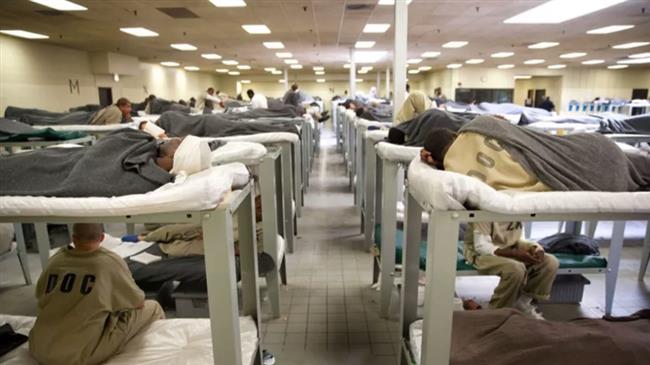
Almost 300 inmates at a Chicago prison have tested positive for the novel coronavirus that has killed at least 18,000 people across the United States and infected more than 475,000 individuals.
The Cook County Jail on Friday reported that 276 prisoners tested positive for the COVID-19 this week, ring to according to Chicago Mayor Lori Lightfoot (D). In addition, 115 prison staff have also tested positive for the virus.
The development has fueled fears about coronavirus outbreaks among the prison populations across the US, which has the highest documented incarceration rate in the world.
The 4,500-person Chicago has the largest reported coronavirus outbreak within an American prison so far.
“First and foremost, no one should be locked up if they’re not a danger to the community or a flight risk,” Lightfoot told CNN. “And certainly not because they can’t afford to pay bail.”
The family of a prisoner who died in custody filed suit against Cook County and Sheriff Tom Dart on Thursday, claiming he was shackled while died of the virus, according to the New York Times.
Human rights groups including the American Civil Liberties Union have urged US prison authorities to release nonviolent prisoners during the pandemic to mitigate the spread of the virus, but most of the US states have refused to do so. Only a few states, such as California, announced last month that it planned to release 3,500 nonviolent offenders.
The attorney for Washington, DC, Timothy Shea, last week opposed release of prisoners amid the coronavirus pandemic, arguing that “violent criminals” should not be set free.
She expressed the opposition in response to an emergency motion filed by the Public Defender Service general counsel.
According to the motion, outbreaks of COVID-19 “are far from speculative — they are imminent, with confirmed positive cases [at the jail] now approaching double digits.”
The Public Defender Service general counsel introduced the motion after several inmates in Washington jails tested positive for the coronavirus.
There are concerns about the conditions of prisoners in American jails as the pandemic is growing fast across the US states amid a shortage of medical supplies.
April 10, 2020
Posted by aletho |
Civil Liberties | Covid-19, Human rights, United States |
Leave a comment
The Israeli military has threatened to strike the positions in Syria of the Lebanese Hezbollah resistance movement, days after assassinating a senior member of the group in southern Lebanon.
The Israeli military on Friday posted grainy footage on Twitter purporting to show the head of the Syrian Armed Forces 1st Corps, Luau Ali Ahmad Assad, “visiting Hezbollah positions in Syria.”
The footage, which was filmed from a distance, showed individuals wearing military fatigues greeting a man with military salutes and shaking hands with him in an open area.
The text accompanying the footage on the Israeli post read, “See the man with white hair? That’s the head of the Syrian Armed Forces 1st Corps, Luau Ali Ahmad Assad. He’s visiting Hezbollah positions in #Syria.”
“Our message: We see you. Consider this a warning,” the caption further read. “We won’t allow Hezbollah to entrench itself militarily in Syria.”
It was unclear who had captured the footage, or whether it was of Assad visiting Hezbollah members in Syria.
Syria has been fighting foreign-backed militants since 2011. While that fight has been winding down, the country has also had to combat Daesh terrorists in Syrian territory, including near the Lebanese border. Hezbollah has dispatched fighters to help the Syrian military eradicate the terrorists and has prevented the spillover of terrorist activity into Lebanon.
The Israeli regime has, meanwhile, frequently conducted airstrikes against positions in Syria. While the Tel Aviv regime has often refused to confirm or deny specific strikes, it has claimed that it has been hitting Hezbollah forces in Syria.
 The latest threat comes a few days after a Hezbollah commander in charge of tracking collaborators with Israel, Ali Mohammed Younes, was killed in southern Lebanon apparently by agents working for Israel’s Mossad spy organization.
Younes was found by his car and had been stabbed twice and shot four times.
According to Sputnik, Younis was a “close associate” of Lieutenant General Qassem Soleimani, the former commander of the Quds Force of Iran’s Islamic Revolutionary Guards Corps (IRGC) who was himself assassinated in a United States drone strike in Baghdad back in January.
The Syrian army has managed to drive the terrorists out of most parts of the country and end Daesh’s territorial rule with help from Iran, Hezbollah, and Russia.
See also:
Hezbollah member assassinated in south Lebanon: Officials
Unknown gunmen have assassinated a member of the Lebanese resistance movement Hezbollah in southern Lebanon.
April 10, 2020
Posted by aletho |
Ethnic Cleansing, Racism, Zionism, War Crimes | Israel, Lebanon, Syria, Zionism |
Leave a comment
As of Thursday, 283 federal inmates in the US have been diagnosed with the new coronavirus and eight have died, as federal and state prisons are expanding early release to try and slow the spread of the coronavirus in otherwise congested conditions.
The US government’s handling of the coronavirus spread in federal prisons puts the health of inmates at risk, POLITICO reports citing the accounts of convicts’ spouses.
“They’re quarantining these healthy inmates with sick inmates that are already down there,” said a woman whose husband was placed in a special housing unit at a federal prison in Cumberland, Maryland.
The unit is used to quarantine prisoners before early release for 14 days – the estimated incubation period – and it is not clear why it also housed inmates suspected of having the virus.
“It’s crazy how they’re doing this,” she reportedly said. “It’s like they’re just waiting to get this…. They’re at risk of being forgotten about. They didn’t get a death sentence.”
Another woman whose spouse was sent to the same special housing unit pending early release confirmed that account. “I’m pretty sure that is not the correct protocol for quarantine,” she was quoted as saying.
Justin Long, the Bureau of Prisons spokesman, did not explain whether the agency is taking steps to separate prisoners who display COVID-19 symptoms or are presumably infected, from those set for release.
“All of the BOP’s institutions have been directed to designate available space for isolation and quarantine for inmates who have been exposed to or have symptoms of COVID-19,” he stated. “The BOP follows all CDC guidelines with regard to isolation and quarantining.”
There are around 2.3 million people being held in jails, prisons and detention centres in the United States. There are over 173,000 federal inmates in the US; the rest account for state-run and private prisons.
The coronavirus pandemic has raised concerns over the health of prisoners, who are living in congregate settings where it is nearly impossible to heed the 6-feet social distancing instruction.
As of Thursday, 283 federal inmates and 125 staff have tested positive for the coronavirus nationwide and another eight inmates have died, according to figures from the Bureau of Prisons which manages federal facilities.
Last month, in response to calls from lawmakers and campaigners, Attorney General William Barr encouraged federal prisons to double down on early release programmes and move low-risk inmates to home confinement in a bid to curb the spread of the pandemic. Meanwhile, all federal inmates have been held in their cells since 1 April as part of a 14-day lockdown.
Some state and private prisons have also started to release certain prisoners home as inmates file petitions for “compassionate release”, an option typically reserved for extreme circumstances such as terminal illness.
California plans to fast-track the release of 3,500 non-violent prisoners in the next two months, and New Jersey will temporarily free up to 1,000 jail inmates.
April 10, 2020
Posted by aletho |
Civil Liberties | Human rights, United States |
Leave a comment
The anti-China narrative is based on falsities, and serves to distract people from the failure of neoliberalism.
In early January, COVID-19 was largely limited to China. Now, just three months later, it has spread far beyond China’s border, and has effectively been halted domestically within the country.
There are currently around 1.36 million reported COVID-19 cases globally, with more than 76,000 deaths. China accounts for just 6 per cent of all cases, and 4.4 per cent of deaths. Yesterday, China reported no new deaths for the first time since January.
Countries in the West, meanwhile, have gone into lockdown, hospitals have been overwhelmed and markets are crashing. There appears to be no clear end in sight for us here.
Despite that, a group of ideologues already have their eyes on the post-pandemic world, and are concerned China may emerge as the new global superpower. As part of an effort to prevent this, these figures think other countries should hold China “accountable” for the pandemic, and are working to create popular demand among the public for this to happen.
In his 1997 book Blackshirts and Reds: Rational Fascism and the Overthrow of Communism, political scientist Michael Parenti wrote, “In the United States, for over a hundred years, the ruling interests tirelessly propagated anticommunism among the populace, until it became more like a religious orthodoxy than a political analysis. During the Cold War, the anticommunist ideological framework could transform any data about existing communist societies into hostile evidence.”
We’re currently seeing that happen with China, from columnists, reporters and politicians alike.
When the Chinese government had yet to put millions of people into lockdown, it was because they cared about their image more than fighting a pandemic. When they did enforce a lockdown, it wasn’t about fighting a pandemic, but a totalitarian move for more power.
When China was reporting hundreds of deaths a day, it was proof their government was incompetent because of just how bad the numbers were. When death counts dwindled, it was proof they were lying about numbers.
When global health organizations say anything remotely critical about China’s handling of the pandemic, it’s proof the country should be punished. When they say anything positive, it’s proof they were bought off by China.
When China had yet to send aid to other countries, they were portrayed as cruel. When they did send aid, it was portrayed as a propaganda effort.
When Chinese citizens complain about the government, it’s a sign the entire state is on the verge of collapse. When Chinese citizens praise the government, it’s evidence they’re being forced or brainwashed.
COVID-19 does appear to have originated in China, and so it makes sense, to an extent, that the country will be part of most conversations about the pandemic. However, this isn’t the reason these ideologues have focused so intently on China. Instead, it’s because of the ideological function their attacks serve.
Those in power, or adjacent to power, in the West see their government failing to deal with COVID-19, but don’t want to shoulder any blame. So, instead of criticizing policies they adopted, or failed to adopt, they direct anger outward.
For example, on March 21 the Daily Beast reported they were given a leaked government cable that contained “guidelines for how [United States] officials should answer questions on, or speak about, the coronavirus and the White House’s response in relation to China.” Unsurprisingly, officials were told to blame China for the pandemic when giving statements or answering questions from the press.
Those who aren’t in power, such as rightwing journalists, realize their neoliberal ideology is unequipped to deal with the pandemic, and therefore is under attack. They won’t abandon their views, so they have to shift blame to an outside country with an ideology that is different in the right way. Attacking China clearly serves this purpose, and offers a chance for anti-communism, which, as Parenti notes, people have been primed to hate for more than a century.
For example, Postmedia’s executive editor Kevin Libin wrote in a March 23 National Post article, “We will likely persevere, but what the world can no longer afford is the threat to our collective health and well-being that is the Chinese communist regime.”
These attacks aren’t justified, and I will break down three of the more popular pieces of the anti-China narrative in the media to show the lies or half truths they’re built on. In order to ascertain what these pieces of the narrative are, I went through the pages of the Toronto Star, the Globe and Mail, the National Post, the Toronto Sun and the Ottawa Citizen, and read through every opinion piece they published that focused on China and COVID-19, from January until early April.
China Imprisoned A Whistleblower
A main piece of the anti-China narrative is that the government arrested or imprisoned a COVID-19 whistleblower.
The story goes that a doctor found out about a new virus, tried to tell the world, was arrested and imprisoned, and then died from the virus. Commentators claim China did this because they wanted to cover up the existence of a deadly virus in the country, and that the result was COVID-19 spreading quicker and further than it otherwise would have.
Most of this narrative is false, or at least based on half-truths.
Doctor Li Wenliang was an ophthalmologist, not an epidemiologist. He initially misidentified the novel coronavirus as evidence of a SARS outbreak. He shared that claim, along with patients’ medical records, in a WeChat group on December 30 with a few colleagues, not to any hospitals or public health organizations. Li was not arrested or imprisoned. He was called in to a police station on January 3, after a screenshot from his WeChat group leaked and caused panic. At the station, he was reprimanded for falsely claiming there was a SARS outbreak, asked to sign a document pledging not to continue spreading the misinformation and then was free to leave. Unfortunately, it’s true that Li did die on February 7 from COVID-19, which he reportedly got from treating one of his patients who had been infected.
This narrative also serves to distract from another sequence of events.
On December 26, Zhang Jixian, the director of respiratory and critical care at Hubei Provincial Hospital, noticed that four patients in her unit who sought treatment for suspected pneumonia — an elderly couple, their son and someone who had come in from a seafood market — all had similar and unusual CT images, which led her to believe they were suffering from something else. The next day, Zhang — who played a crucial role in combating the 2003 SARS outbreak — reported it to the head of her hospital. Within the next two days, the information was passed on to the provincial Centers for Disease Control, which then initiated full scale research into the hospital.
All of this took place before Li shared those screenshots in his WeChat group. Zhang wasn’t punished for her efforts — she was given an award by the regional government.
I used the ProQuest database to search through the entire print editions of the five publications I mentioned earlier in the article. Li was mentioned 44 times between them. Zhang wasn’t mentioned at all.
China Didn’t Act Fast Enough
Another core part of the narrative, mentioned in nearly every one of the opinion articles I looked at, was that China didn’t react to the outbreak quickly enough due to malicious intent.
Here are quotes from just a few of the many examples I examined: “Beijing’s authoritarian government hid information about its origins, spread and severity for weeks”; “It wasn’t until Jan. 20, 40 days after the virus was first detected, that Chinese President Xi Jinping first issued instructions to control the virus, but by then it was too late”; “We know they hid this for at least a month before they told the [World Health Organization]”; “It wrapped the communist cloak of silence around the then-unknown virus running wild in Wuhan and kept it a secret until word got out.”
What these articles fail to mention is the unique difficulties of dealing with a novel coronavirus, as going through the process of noticing something is happening, identifying what it is and confirming the extent of the danger it poses takes time. This effort should not be viewed as something China was doing for itself, but rather on behalf of the world. Any country the pandemic started in would have had to do the same thing, and there are several steps involved before widespread action can be taken.
Here is a timeline of China’s efforts, continuing from the one mentioned in the previous section.
On December 31, just a few days after Zhang noticed strange CT results, the Wuhan Municipal Health Commission issued a public notice about the disease. That same day, officials informed the WHO. On January 1, officials shut down the market where they believed the virus crossed over to humans, and a day later the WHO activated their incident management system. By January 7, China had isolated what was at this point believed to be a new coronavirus. All of this happened before the first confirmed COVID-19 death, which occurred on January 9.
On January 12, China shared the genetic sequence of the novel coronavirus for countries around the world to use in creating diagnostic kits. The next day, the first case of the novel coronavirus outside of China was reported, in Thailand.
As of January 14, the WHO was still noting that “there is no clear evidence of human-to-human transmission,” a crucial component of determining how dangerous a virus may be. The first confirmed case of human-to-human transmission came more than a week later. It wasn’t until January 30 that the WHO declared a global health emergency.
So, the idea that the disease was wreaking havoc within China and in neighbouring countries before the government did anything about it is false. This isn’t to say China’s response has been perfect, although it’s unclear what perfection would even look like.
Whether China reacted quickly enough to the outbreak is a matter of opinion, which I’m sure will be debated and investigated — including by the Chinese government — long after the pandemic is over and people are able to see everything in scale. For now, however, we can look at what the experts have said about China’s performance.
In a January 30 statement, the Emergency Committee convened by the WHO Director-General wrote, “The Committee welcomed the leadership and political commitment of the very highest levels of Chinese government, their commitment to transparency, and the efforts made to investigate and contain the current outbreak. China quickly identified the virus and shared its sequence, so that other countries could diagnose it quickly and protect themselves, which has resulted in the rapid development of diagnostic tools.”
In a series of tweets the same day, Tedros Adhanom Ghebreyesus, the WHO’s director-general, wrote, “In many ways, #China is actually setting a new standard for outbreak response.”
A February report from the WHO noted, “In the face of a previously unknown virus, China has rolled out perhaps the most ambitious, agile and aggressive disease containment effort in history.” The report added, “The remarkable speed with which Chinese scientists and public health experts isolated the causative virus, established diagnostic tools, and determined key transmission parameters, such as the route of spread and incubation period, provided the vital evidence base for China’s strategy, gaining invaluable time for the response.”
The examples go on, and beg the question: Why do columnists feel more qualified to assess China’s response than the WHO? Some would say the WHO is lying, but what’s more likely: a successful conspiracy to silence the global health organization or a columnist who wrote about cancel culture a week ago being wrong?
China Is Responsible For The Crisis Globally
Commentators accusing China of failing to act quick enough likely aren’t doing so out of a concern for Chinese citizens. Perhaps that was the case initially, but now that we see China, with a population of 1.3 billion, has thus far managed to keep their death count to around 3,300, these concerns seem motivated by something else.
The reason, sometimes stated explicitly and other times just implied, is that these commentators believe the carnage in other countries is because of China. Here are just a few examples of these sort of headlines or statements: “China’s lies allowed the coronavirus outbreak to spread”; “now the whole world is paying dearly for Beijing’s behaviour”; “The virus is no conspiracy, just a cataclysmic natural phenomenon tragically mismanaged by the puppeteers in Beijing.”
This is absolutely not the case, and, difficult as it may be to accept, the carnage COVID-19 has caused within our countries is almost entirely the fault of our governments. The clearest example of this is the stark difference in how South Korea and the U.S. have dealt with COVID-19.
Both countries reported their first confirmed COVID-19 case on January 20. Since then, as of writing this article, South Korea has reported around 10,200 cases, and 192 deaths. The U.S., meanwhile, has reported more than 367,000 cases, and 10,900 deaths. Accounting for the population difference between the two countries, the U.S. has reported 5.6 times the cases, and 9.5 times the deaths.
President Donald Trump recently predicted a best-case scenario of 100,000 to 240,000 deaths within the country from COVID-19, although experts who put together the data the projection was based off of have said they’re unclear how the number was reached. South Korea, meanwhile, seems to have beat back the virus for now, with just six new deaths on April 7.
These stark differences are due entirely to the varying approaches the two countries have taken in combating COVID-19.
For example, as of mid-March, South Korea had tested more than 290,000 people for COVID-19, while the U.S. had done just 60,000 tests. Accounting for population differences, South Korea conducted 31 times more tests than the U.S. According to the Nation, “Many of the Korean tests were administered in drive-in centers around the country, where the procedure was available for free to any citizen who asked for one and results were available by text or e-mail within six to 12 hours.”
Moreover, South Koreans were encouraged to wear masks, and they were readily available. People were able to pick up two a week from their pharmacy, with the distribution of them based on the last number of one’s birth year. The U.S., meanwhile, has had a massive shortage of masks, even for frontline healthcare workers. In recent days, they’ve resorted to essentially hijacking shipments of masks intended for other countries, and asking manufacturers to stop sending them elsewhere, including Canada.
South Korea is not the only example of a nation that has performed far better than the U.S., or Italy, France, Spain and various other countries. Vietnam, for example, with a population of more than 95 million, has had zero reported COVID-19 deaths, and around 240 cases. Their success has had less to do with testing, due to a lack of resources, and instead has come from aggressive tracing measures, enforced quarantines and the conscription of medical students and retired doctors and nurses’ to fight the virus.
All of this is to say that China’s initial handling of COVID-19 didn’t doom other nations to the fates we’ve seen in the West. Instead, as journalist Ajit Singh argues in Monthly Review, China actually bought time for the rest of the world. As such, the countries in crisis are in that position due to their policies alone. Their governments should get the blame, not China.
April 10, 2020
Posted by aletho |
Fake News, Mainstream Media, Warmongering | Covid-19 |
Leave a comment
MOSCOW – The Russian Foreign Ministry on Thursday rejected allegations that the country is running a troll factory in the western African nation of Ghana to target US voters in the run-up to the 2020 presidential election.
On 12 March, CNN published a month-long journalism investigation accusing Russia-linked organizations of meddling in the US presidential election via troll factories in Ghana and Nigeria. The next day, five US Democratic Senators, in a letter on the European Union, called for tightening sanctions on Russia.
“Another ‘masterpiece’ has appeared, i.e. a CNN investigation into Russia’s alleged interference in the US electoral process. As you see, we are all over just that at the moment. Now they say about some serious Russian structures allegedly using non-governmental organizations registered in a foreign country – this time it is the Republic of Ghana – to employ deep-cover trolls to sow discord among African-American voters in the United States,” stated Maria Zakharova, director of Russia’s Information and Press Department of the Ministry of Foreign Affairs.
She added that it was not the first “pseudo-report” on the matter but one of the most catchy.
The spokeswoman described the reports as “provocative hoaxes” that have their purpose and are generously funded by those who order them.
April 10, 2020
Posted by aletho |
Fake News, Mainstream Media, Warmongering, Russophobia | CNN, United States |
Leave a comment
Twitter is no longer allowing users to hide private data like their phone’s unique tracking identifier from advertisers, at the same time the US government is apparently targeting advertiser data to track Covid-19. Coincidence?
The social media giant announced the changes in a popup when users logged in on Wednesday, glibly informing those outside Europe that they would no longer be able to disable sharing “mobile app advertising measurements” and that there was nothing they could do about it.
The latest invasion of user privacy is just the most recent incursion on user rights coming out of the social media monopolies. Last month, users were informed that content not violating the rules might be removed anyway, because coronavirus had somehow forced the platforms’ human content moderators (some of whom already worked from home) to take time off for safety reasons.
But while Twitter claims that the new always-on “share data” setting is merely intended to reassure advertisers that people are watching their ads, it coincides with a dramatic uptick in government interest in advertisers’ location data, supposedly to track the spread of the coronavirus pandemic that has torpedoed the world economy and effectively imprisoned a good chunk of humanity in their homes.
The US government was reportedly already slurping up location data on millions of Americans through mobile advertisers – the same companies that are benefiting from Twitter’s new “always-on” mobile data sharing policy – even while it was meeting with Twitter and other social media platforms to gain access to their own treasure troves of user information, according to the Wall Street Journal, which cited several individuals involved in the surveillance project.
Given the public outrage in the past when social media users discovered the government spying on them through their beloved platforms, it’s no surprise Twitter would rather just leave the back door open through its advertisers and let the government take what it wants without getting directly involved. Certainly, Facebook is taking a bigger gamble by bragging about pressing users’ private data into service in the fight against the virus. The company of course claims to be protecting user privacy, but they’ve made that claim many times – usually right before a big privacy scandal.
Even those who believe enhanced government surveillance during a pandemic is justified need only look to history to observe how ’wartime powers’ are seldom relinquished during peacetime. While it would be naive to claim Twitter isn’t already funneling users’ private data to governments as well as its corporate clients – that has been public knowledge since former NSA contractor Edward Snowden released documents on the PRISM project in 2013 – the growing romance between Big Brother and Big Tech should be cause for concern for anyone interested in ensuring privacy doesn’t become the biggest casualty of the coronavirus epidemic.
Helen Buyniski is an American journalist and political commentator at RT. Follow her on Twitter @velocirapture23
April 10, 2020
Posted by aletho |
Civil Liberties | Human rights, Twitter, United States |
Leave a comment
Tehran has released an Iranian national seen as a political prisoner in the UK as it fights the coronavirus. British activists and media rushed to say Iran’s move was not enough – while being blind to a bigger problem at home.
Aras Amiri, an Iranian national and UK resident who worked with the British Council, has been temporarily released from jail, where she has been held since 2018 after being found guilty of spying. The move is likely to be a part of efforts taken by Tehran to stem the spread of the novel coronavirus in prisons in particular.
The UK board director of Amnesty International, Daren Nair, used the occasion to remind his Twitter followers that Amiri was “unjustly imprisoned” and to demand that Iranian authorities not just set her free but “let her come home to London to be with her fiancé.” The news was then eagerly picked up by various Western media outlets, including Radio Free Europe.
Amiri was arrested back in 2018 while on a family visit to Iran. Her work with the British Council reportedly involved organizing film festivals and other cultural exchanges between the two countries. The organization, describing itself as the UK’s “international organization for cultural relations and educational opportunities,” has been banned in Iran since 2009 in response to the launch of the BBC’s Persian service and the British embassy’s supposedly “significant role” in protests that rocked the country earlier the same year.
It seems that Iran – which various British officials and activists like to scold over alleged human rights violations – is showing concern for the fate of its inmates in the face of an epidemic that has seen more than 64,000 people infected nationwide.
Earlier, Tehran also temporarily released another person who has long been seen in the UK as a victim of unjust political persecution. Nazanin Zaghari-Ratcliffe, a British-Iranian journalist and aid worker, was sentenced to five years on charges of plotting to overthrow the Iranian government back in 2016.
In mid-March, she was among some 85,000 other inmates released from Tehran’s Evin prison as part of the state response to the spread of Covid-19. On March 29, her temporary leave was extended by an additional fortnight.
Such measures were just what UN Human Rights Chief Michelle Bachelet had called for in an address to governments around the world amid the pandemic.
However, Julian Assange, whom Amnesty International also called “a prisoner of conscience,” has so far been denied the same treatment from UK authorities. The British justice system has refused to release him from maximum security prison HMP Belmarsh on bail, even though the facility has already reported not just several confirmed coronavirus cases, but the first death within its walls from the dreaded disease.
Activists, medics and even the UN rapporteur on torture have repeatedly pointed to the WikiLeaks founder’s poor state of health while calling for his release. However, their pleas apparently do not provide enough ground for London to release Assange, who has not been found guilty of any serious offenses and is awaiting a court decision on his extradition to the US.
April 9, 2020
Posted by aletho |
Civil Liberties | Human rights, Iran, UK |
Leave a comment


 Aletho News