Let’s fact-check Reuters: they say DNA vaccines don’t change your genetic makeup—true or false?
By Jon Rappoport | June 23, 2020
As my readers know, I’ve been reporting on new types of technology that could be used in a coming COVID-19 vaccine—and warning about the consequences.
One such technology is: DNA vaccines. They would alter recipients’ genetic makeup permanently.
But Reuters has seen fit to claim: “A future COVID-19 [DNA] vaccine will not genetically modify humans.” This comes from their “fact-check team” — May 18, 2020: “False claim: A COVID-19 vaccine will genetically modify humans.”
To reach this conclusion, Reuters cites two people: “Mark Lynas, a visiting fellow at Cornell University’s Alliance for Science group”, and “Dr. Paul McCray, Professor of Pediatrics, Microbiology, and Internal Medicine at the University of Iowa.”
 I have cited the New York Times, March 10, 2015, “Protection Without a Vaccine.” Here are quotes from the Times article:
“By delivering synthetic genes into the muscles of the [experimental] monkeys, the scientists are essentially re-engineering the animals to resist disease.”
“’The sky’s the limit,’ said Michael Farzan, an immunologist at Scripps and lead author of the new study.”
“The first human trial based on this strategy — called immunoprophylaxis by gene transfer, or I.G.T. — is underway, and several new ones are planned.” [That was five years ago.]
“I.G.T. is altogether different from traditional vaccination. It is instead a form of gene therapy. Scientists isolate the genes that produce powerful antibodies against certain diseases and then synthesize artificial versions. The genes are placed into viruses and injected into human tissue, usually muscle.”
[Here is the punch line] “The viruses invade human cells with their DNA payloads, and the synthetic gene is incorporated into the recipient’s own DNA. If all goes well, the new genes instruct the cells to begin manufacturing powerful antibodies.”
The Times article taps Dr. David Baltimore for an opinion:
“Still, Dr. Baltimore says that he envisions that some people might be leery of a vaccination strategy that means altering their own DNA, even if it prevents a potentially fatal disease.”
So it’s a battle of the experts. The two men Reuters cited, versus the Times’ David Baltimore.
I don’t hold up the scientific work of any of these men for great acclaim. I’m only interested in which man knows whether a DNA vaccine would permanently alter the genetic makeup of every recipient’s DNA.
David Baltimore is a Nobel Laureate (1975, in Physiology/Medicine), and the past president of the American Association for the Advancement of Science (1997-2006). He’s one of the most famous scientists in the world.
I’m betting Reuters would happily trade their unknown experts for Baltimore, if he would side with their claim. Perhaps they’ll now approach him, and perhaps he’ll change his mind. But the NY Times has him on the record, in 2015, admitting that DNA vaccines do alter genetic makeup.
World famous mainstream experts don’t readily admit this sort of thing out in the open, unless they’re stating the obvious.
The verdict on the Reuters fact-check team? Fact-checkers checked the wrong box.
Final point for the moment: Researchers are fond of saying their genetic technologies are quite safe. This a bald-faced lie. Claiming, for example, that a DNA COVID vaccine would alter humans’ genetic makeup in entirely predictable and harmless ways is like saying a car without brakes, doing a hundred miles an hour, set loose on a highway during rush hour, would create no damage whatsoever.
SOURCES:
nytimes.com/2015/03/10/health/protection-without-a-vaccine.html
Iran ready for coop with IAEA as long as it retains independence: Rouhani
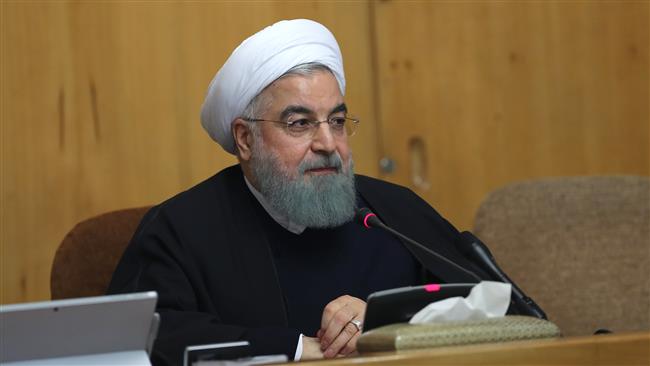
Iran’s President Hassan Rouhani
Press TV – June 24, 2020
President Hassan Rouhani says Iran is prepared, as before, to continue its cooperation with the International Atomic Energy Agency (IAEA) as long as the UN nuclear watchdog does not deviate from the legal frameworks and does not fall under Israeli and American influence.
“Iran is prepared to take the agency’s legal inspections and engage in close cooperation with it within the framework of the [standing] regulations,” Rouhani said, addressing a cabinet session in Tehran on Wednesday.
“For us, cooperation with the agency has always formed the basis,” he said, adding, “We will maintain this [principle] today too.”
He said the Islamic Republic has invariably enjoyed a “friendly” relationship with the watchdog, whose inspectors have examined the country’s nuclear facilities regularly and confirmed its non-diversion from a 2015 nuclear agreement between Tehran and world countries in more than a dozen reports.
The president, however, cautioned that “the agency too should pay attention not to deviate from its legal path.”
On Friday, the IAEA’s Board of Governors adopted a resolution — drawn up by the UK, France, and Germany — that called on Iran to allow access to two sites that Israeli intelligence services claim are related to Tehran’s nuclear program. Tehran has condemned the resolution, rebuffed the allegations, and reminded the agency that it cannot request inspections based on accusations made up by intelligence agencies.
“I fear these charlatans may tarnish the agency,” Rouhani said, referring to the Israeli regime and the United States that changelessly backs the regime’s stances and allegations. “They dupe the agency and push it away from its course.”
“The agency’s task consists of reporting on the manner of application of nuclear materials. That is what the agency is supposed to do,” the president said.
He, accordingly, urged the IAEA to act justly in its assessments and retain its independence.
Rouhani, meanwhile, berated the European trio for their falling under Tel Aviv and Washington’s pressure in devising of the anti-Iranian resolution, while praising Russia and China for their decisive stance against the resolution.
On US offer of talks
Separately, the chief executive referred to the United States’ new offer of talks with Iran.
The Islamic Republic is always prepared for negotiations as soon as the US renews commitment to the international regulations, he said, adding that it was Washington that left the negotiation table in the first place by reneging on its commitments.
Washington left the nuclear deal in 2018, although the accord has been endorsed by the UN Security Council as a resolution.
“They were the ones, who created trouble, broke the negotiation table, and tyrannized the Iranian nation,” Rouhani said.
He also urged that the US apologize to the Iranian people for the economic damage that it has tried to afflict on them through the sanctions that it reinstated after leaving the deal, and compensate the nation.
Iran has ‘no problem’ talking to US if it apologizes & offers refund over nuclear deal – President Rouhani
RT – June 24, 2020
Nothing is preventing Tehran from engaging in talks with Washington, provided that it comes up with apologies – and reimbursement – for losses in the 2015 nuclear pact America walked out on, President Hassan Rouhani has said.
“We have no problem with talking to the US,” Rouhani declared, in a nationally-broadcast speech on Wednesday. The only condition is that “Washington meets its obligations under the nuclear deal, apologizes and compensates Tehran for its withdrawal from the 2015 pact,” the president said, as quoted by Reuters.
Rouhani made it clear, however, that “these calls for talks with Tehran are just words and lies.” US President Donald Trump has previously offered to negotiate with Iran without any preconditions and to meet with Rouhani in person.
Washington repeated the offer of “serious talks” this January – but the timing of this couldn’t have been more questionable, as it came on the heels of the death of Qassem Soleimani, a renowned Iranian military leader, in an American missile strike.
Tehran, for its part, has consistently ruled out dealing with Washington under pressure, or trading vital national interests.
Last year, however, Foreign Minister Javad Zarif announced that he pitched a suggestion to the US, under which Iran would permanently accept international inspections of its nuclear program, in return for the lifting of US sanctions.
Following his pattern of being suspicious towards Iran, Trump green-lighted the pullout from the hard-earned nuclear pact in 2018. Shortly after the US formally ceased to be a member, it slapped Iran’s oil trade, finances, investment activities, and other crucial sectors with sweeping penalties under the so-called “maximum policy pressure.”
This week, Washington will try to secure a UN backing for an indefinite extension of an embargo that bans countries from selling or transferring arms to Iran unless approved by the Security Council. In order to pass, their draft resolution requires nine votes in favor and no vetoes from China, Russia, Britain or France – a quartet of countries still adhering to the 2015 nuclear deal.
Ukrainian MP reveals new ‘Biden-Poroshenko’ tapes, claims VP’s son was paid ‘protection money’ by Burisma
RT | June 23, 2020
More tapes of what appear to be Joe Biden’s phone calls with the former president of Ukraine have surfaced, along with documents showing how much his son Hunter was paid by Burisma, a gas company desperate to avoid prosecution.
Ledgers show payments of $3.4 million from Burisma to Rosemont Seneca Bohai, the company co-founded by Hunter Biden, for “consulting services,” former prosecutor Konstantin Kulyk and Ukrainian MP Andrii Derkach revealed on Monday in Kiev.
Kulyk added that these services clearly amounted to “political protection of Burisma” and its owner Mykola Zlochevsky by US vice president at the time, Joe Biden.
Kulyk also told reporters that his office had evidence of Burisma’s lawyers offering $50 million to the government to make the case against the company and its founder go away – and not $6 million as was reported earlier.
The reason Burisma’s activities stood out from the white noise of general corruption in Ukraine following the US-backed coup in 2014 is that Zlochevsky sought to shield himself from scrutiny by hiring Hunter Biden as a board member, for a reported salary of $50,000 a month. Biden had no qualifications for the job, other than father being the top US official in charge of Ukraine.
Last month, Derkach released a batch of audio recordings of what sounded like Biden and then-President Petro Poroshenko of Ukraine, discussing everything from sacking a prosecutor looking into Burisma to what Kiev needed to do to qualify for an IMF bailout loan. He revealed more tapes on Monday.
The new recordings show ‘Biden’ micro-managing Ukraine’s internal affairs, asking ‘Poroshenko’ for a “favor,” discussing personnel appointments in the prosecutor-general’s office, assuring Poroshenko the FBI is not looking into claims of a Ukrainian MP who blew the whistle on massive corruption and vote-buying schemes, and so on.
The recordings have not been authenticated and Derkach himself was careful to say the voices “sound like” Poroshenko and Biden. He has turned the materials over to the prosecutor-general’s office, which is reportedly looking into charges of treason and abuse of power against the former president.
Poroshenko’s corruption and Hunter Biden’s job have had a major impact on US politics. Last year, Democrats accused President Donald Trump of soliciting foreign interference in the 2020 election by bringing up Burisma on a phone call with his Ukrainian counterpart Volodymyr Zelensky and threatening to withhold US military aid to Kiev. The House of Representatives actually impeached Trump on those charges, though he was acquitted in the Senate.
One of the witnesses in the process was Deputy Assistant Secretary of State for European and Eurasian Affairs George Kent. On Monday, Derkach named Kent as the liaison between Biden and Poroshenko, used to keep them informed of any developments regarding Burisma.
Poroshenko responded to the revelations by claiming they were a “fabrication” by Russia as “part of a large-scale hybrid war” intended to “undermine the Ukrainian-American strategic partnership that underlies the international coalition in support for Ukraine.”
He said the same exact thing about last month’s revelations, though on that occasion he also accused someone from Zelensky’s office of handing over “raw materials” to investigative journalists who then gave the recordings to Derkach.
Democrat Rep. calls for police after being attacked in short-lived ‘autonomous zone’ near White House
RT | June 23, 2020
A Democrat lawmaker and an MSNBC reporter have been left wondering where the police were, after they were apparently attacked in a fledgling ‘autonomous zone’ near the White House.
Perhaps spurred on by activists in Seattle’s ‘Capitol Hill Autonomous Zone’, a group of protesters in Washington, DC occupied a street near the White House this weekend, declaring it the ‘Black House Autonomous Zone’. Though police cleared the street of tents and trash on Tuesday, a large crowd remained, and Democrat Rep. Eleanor Holmes Norton was on the street to talk to MSNBC’s Andrea Mitchell.
The interview was cut short when what appeared to be a bikini-clad man made a dash for the pair. He got within several feet of Norton and Mitchell before a private security team collared him and pulled him aside. Earlier, the man was seen on a segway scooter shouting profanities.
“Where’s the police when you need them?” Norton exclaimed as her security detail led the would-be attacker away. Curiously, Norton introduced a bill earlier this month that would prevent the president assuming control of Washington, DC’s police force in an emergency. At the time, Mayor Muriel Bowser had just declared the streets around the White House a celebratory space for protests, going as far as renaming the street Norton was nearly attacked on “Black Lives Matter Plaza.”
Hours before the attempted attack, Trump again threatened to meet the protesters with “serious force.” Norton criticized the president’s threat, declaring that the police should not be used to clear a “peaceful protest.”
It is still unclear whether her own experience has changed her mind on this.
“Deadly” Hydroxychloroquine (HCQ) to treat Covid 19: How the World’s Top Medical Journals, The Lancet and NEJM, Were Cynically Exploited by Big Pharma
By Elizabeth Woodworth | Global Research | June 14, 2020
Abstract and Background
A publishing scandal recently erupted around the use of the anti-malarial drug hydroxychloroquine (HCQ) to treat Covid 19. It is also known as quinine and chloroquine, and is on the WHO list of essential medicines.[i]
The bark of the South American quina-quina tree has been used to treat malaria for 400 years.[ii] Quinine, a generic drug costing pennies a dose, is available for purchase online. In rare cases it can cause dizziness and irregular heartbeat.[iii]
In late May, 2020, The Lancet published a four-author study claiming that HCQ used in hospitals to treat Covid-19 had been shown conclusively to be a hazard for heart death. The data allegedly covered 96,000 patients in 671 hospitals on six continents.[iv]
After the article had spent 13 days in the headlines, dogged by scientific objections, three of the authors retracted it on June 5.[v]
Meanwhile, during an expert closed-door meeting leaked May 24 in France, The Lancet and NEJM editors explained how financially powerful pharmaceutical players were “criminally” corrupting medical science to advance their interests.
*
On May 22, 2020, the time-honoured Lancet [vi]– one of the world’s two top medical journals – published the stunning claim that 671 hospitals on six continents were reporting life-threatening heart rhythms in patients taking hydroxychloroquine (HCQ) for Covid-19.
The headlines that followed were breath-taking.
Although wider access to the drug had recently been urged in a petition signed by nearly 500,000 French doctors and citizens,[vii] WHO and other agencies responded to the article by immediately suspending the clinical trials that may have cleared it for use.
North American headlines did not mention that HCQ has been on the WHO list of essential drugs since the list began in 1977. Nor did they mention an investigative report on the bad press that hydroxychloroquine had been getting prior to May 22, and how financial interests had been intersecting with medicine to favour Gilead’s new, more expensive drug, Remdesivir.[viii]
The statistics behind the headlines
As a Canadian health sciences librarian who delivered statistics to a large public health agency for 25 years, I sensed almost immediately that the article had to be flawed.
Why? Because health statistics are developed for different purposes and in different contexts, causing them to exist in isolated data “stovepipes.”[ix] Many health databases, even within a single region or country, are not standardized and are thus virtually useless for comparative research.
How, I wondered, could 671 hospitals worldwide, including Asia and Africa, report comparable treatment outcomes for 96,000 Covid patients? And so quickly?
The Lancet is strong in public health and surely suspected this. Its award-winning editor-in-chief, Dr. Richard Horton, has been in his job since 1995.[x]
So how could the damning HCQ claims have been accepted? Here is what I discovered.
The honour system in medical publishing
To some extent, authors submitting articles to medical journals are on the honour system, in which cited databases are trusted by the editors, yet are available for inspection if questioned.[xi]
On May 28, an open letter from 200 scientists to the authors and The Lancet requested details of the data and an independent audit. The letter was “signed by clinicians, medical researchers, statisticians, and ethicists from across the world.”[xii]
The authors declined to supply the data, or even the hospital names. Meanwhile, investigative analysis was showing the statistics to be deeply flawed.[xiii][xiv]
If this were not enough, the lead author was found to be in a conflict of interest with HCQ’s rival drug, Remdesivir:
“Dr. Mandeep Mehra, the lead co-author is a director at Brigham & Women’s Hospital, which is credited with funding the study. Dr. Mehra and The Lancet failed to disclose that Brigham Hospital has a partnership with Gilead and is currently conducting two trials testing Remdesivir, the prime competitor of hydroxychloroquine for the treatment of COVID-19, the focus of the study.”[xv]
In view of the foregoing, the article was retracted by three of its authors on June 5.
How did this fraud get past The Lancet reviewers in the first place?
The answer emerges from what has remained an obscure French interview, although it has been quoted in the alternative media.[xvi]
On May 24, a closed-door Chatham House expert meeting about Covid included the editors-in-chief of The Lancet and the NEJM. Comments regarding the article were leaked to the French press by a well-known health figure, Dr. Philippe Douste-Blazy,[xvii] who felt compelled to blow the whistle.
His resulting BFM TV interview was posted to YouTube with English subtitles on May 31,[xviii] but it was not picked up by the English-speaking media.
These were The Lancet editor Dr. Richard Horton’s words, as reported by Dr. Douste-Blazy:
“If this continues, we are not going to be able to publish any more clinical research data because pharmaceutical companies are so financially powerful today, and are able to use such methodologies as to have us accept papers which are apparently methodologically perfect, but which, in reality, manage to conclude what they want to conclude.” [xix]
Doust-Blazy made his own comments on Horton’s words:
“I never thought the boss of The Lancet could say that. And the boss of the New England Journal of Medicine too. He even said it was ‘criminal’. The word was used by them.”[xx]
The final words in Doust-Blazy’s interview were:
“When there is an outbreak like Covid, in reality, there are people like us – doctors – who see mortality and suffering. And there are people who see dollars. That’s it.”[xxi]
The scientific process of building a trustworthy knowledge base is one of the foundations of our civilization. Violating this process is a crime against both truth and humanity.
Evidently the North American media does not consider this extraordinary crime to be worth reporting.
Notes
[i] World Health Organization. “World Health Organization Model List of Essential Medicines, 21st ed.”, WHO, 2019, pp. 24, 25, 53 (https://www.who.int/medicines/publications/essentialmedicines/en/).
[ii] Jane Achan, et al., “Quinine, an old anti-malarial drug in a modern world: role in the treatment of malaria,” Malaria Journal, 24 May 2011 (https://www.ncbi.nlm.nih.gov/pmc/articles/PMC3121651/).
[iii] WebMD, “Quinine Sulfate” (https://www.webmd.com/drugs/2/drug-869/quinine-oral/details).
[iv] The Lancet, “RETRACTED: Hydroxychloroquine or chloroquine with or without a macrolide for treatment of COVID-19: a multinational registry analysis, by Mandeep R. Mehra et al,” Lancet, 5 June 2010 (https://www.thelancet.com/journals/lancet/article/PIIS0140-6736(20)31180-6/fulltext).
[v] Ibid.
[vi] Famous weekly British medical journal, founded in 1823.
[vii] Lee Mclaughlan, “Covid-19 France: petition for wider chloroquine access,” 6 April 2020 (https://www.connexionfrance.com/French-news/Time-wasted-over-use-of-choroquine-coronavirus-drug-says-petition-by-former-French-health-minister).
[viii] Sharyl Attkisson, “Hydroxychloroquine,” Full Measure, 18 May 2020 (https://www.youtube.com/watch?v=zB-_SV-y11Y). Attkisson is a five-time Emmy Award winner (https://en.wikipedia.org/wiki/Sharyl_Attkisson).
[ix] See “Stovepiping,” (https://en.wikipedia.org/wiki/Stovepiping) (accessed June 12, 2020).
[x] Dr. Horton’s career, professionalism, and awards are shown at https://en.wikipedia.org/wiki/Richard_Horton_(editor)(accessed June 12, 2020).
[xi] The Lancet and NEJM editors could not be expected to comb through data from 671 hospitals to verify their accuracy – especially when submitted by four doctors.
[xii] The full-text letter and signatories appear at https://zenodo.org/record/3862789#.XuQiNmYTGhM
[xiii] Melissa Davey, “Questions raised over hydroxychloroquine study which caused WHO to halt trials for Covid-19,” The Guardian, 28 May 2020 (https://www.theguardian.com/science/2020/may/28/questions-raised-over-hydroxychloroquine-study-which-caused-who-to-halt-trials-for-covid-19).
[xiv] Melissa Davey et al, “Surgisphere: governments and WHO changed Covid-19 policy based on suspect data from tiny US company,” The Guardian, 3 June 2020 (https://www.theguardian.com/world/2020/jun/03/covid-19-surgisphere-who-world-health-organization-hydroxychloroquine).
[xv] 1. Alliance for Human Research Protection, “The Lancet Published a Fraudulent Covid-19 Study,” 2 June 2020 (https://ahrp.org/the-lancet-published-a-fraudulent-study-editor-calls-it-department-of-error/).
- Brigham Health, “Two Remdesivir Clinical Trials Underway at Brigham and Women’s Hospital,” 30 March 2020 (https://www.brighamhealthonamission.org/2020/03/26/two-remdesivir-clinical-trials-underway-at-brigham-and-womens-hospital/).
[xvi] Vera Sharav, “Editors of The Lancetand the New England Journal of Medicine: Pharmaceutical Companies are so Financially Powerful They Pressure us to Accept Papers,” Health Impact News, 5 June 2020
[xvii] Dr. Philippe Douste-Blazy, MD, is a cardiologist, former French Health Minister; 2017 candidate for Director at WHO; and former Under-Secretary-General of the United Nations. See also: https://en.wikipedia.org/wiki/Philippe_Douste-Blazy.
[xviii] “(Eng Subs) Hydroxychloroquine Lancet Study: Former France Health Minister blows the whistle,” BFM TV, 31 May 2020 (https://www.youtube.com/watch?time_continue=2&v=ZYgiCALEdpE&feature=emb_logo).
[xix] Ibid.
[xx] Ibid.
[xxi] Ibid.
Copyright © Elizabeth Woodworth, Global Research, 2020
Yemen’s UAE-Backed Transitional Council ‘Secret friends’ with Zionist Entity: Israeli Report
Al-Manar | June 22, 2020
According to an article in Israel Today, the UAE-backed Yemeni separatist Southern Transitional Council (STC) are “secret friends” with the Zionist entity.
A new state in the Middle East had been declared behind closed doors, the article said, referring to the STC-held territory which includes the interim capital of Aden and more recently the seizure of the Socotra island from the Saudi-backed government in Yemen.
The piece, which suggests the Port of Aden “casts a friendly eye on the Jewish state”, cites a recent press conference held by the STC which expressed a positive attitude towards the Zionist entity, although the issue of diplomatic relations are yet to be discussed.
Hani Bin Briek, the vice-chairman of the STC, tweeted that “relations between Israel and Qatar are very good” and also recounted former Israeli President Shimon Peres’ visit to Doha and current Prime Minister Benjamin Netanyahu’s recent visit to Oman.
“Arabs and Israelis agree on a two-state solution, and Arab countries normalizing relations with Israel.”
The stance on normalizing ties with Tel Aviv follows current trends among Gulf states, including the STC’s patron, the UAE.
The report also states that many Israelis reacted positively and welcomed the developments of a “new autonomous state in Yemen”, with sources telling Israel Today that Tel Aviv has been conducting secret meetings with the STC.
Earlier on Friday, leader of the Houthi revolutionary movement, warned Saudi Arabia and the UAE against normalization with the Zionist entity. “Saudi Arabia and the UAE are siding with Israel, which is the chief enemy of the Muslim world,” Abdul-Malik Al-Houthi said in a televised speech broadcast live from the Yemeni capital Sanaa.
The Emirati-backed group, which is led by former Aden governor Aidrus Al-Zoubaidi, announced in April its autonomy, although this has been rejected by the Saudi-backed Yemeni government-in-exile as well as the UN.
Earlier this month the STC also confirmed it had withdrawn from the so-called Riyadh Agreement, which was a power-sharing deal intended to end the on-going conflict between the STC and the Saudi-backed forces in Yemen.
US uses arms control summit with Russia for China-bashing, derails talks needed to prevent new arms race
By Scott Ritter | RT | June 22, 2020
While promoting the possibility of bilateral agreements with Russia, the US was only interested in staging a cheap propaganda photo-op attacking China, making the prospects for New START look bleak.
Hope sprang eternal when, less than two weeks ago, the United States and Russia agreed to engage in much-needed arms control negotiations to be held in Vienna, Austria on June 22. Senior delegations of the two countries were led by Special Presidential Envoy for Arms Control Marshall Billingslea and Russian Deputy Foreign Minister Sergei Ryabkov. Two issues pertinent to global security were anticipated to be on the agenda—stability in Europe in a post-INF world (the foundational agreement for modern arms control, signed in December 1987 and which remained in force until the US withdrew in August 2019), and the extension of the New START treaty, the last remaining arms control agreement between the US and Russia which is set to expire in February 2021.)
However, while the New START treaty is a bilateral agreement between the US and Russia, the US made it clear that any extension must take into account China’s strategic nuclear forces. It’s a condition that all but kills any chance of the New START treaty being extended, since a completely new treaty vehicle would need to be negotiated on a trilateral basis. The insistence on a trilateral framework played a major role in the decision by the Trump administration to withdraw from the INF Treaty as well, something that does not portent well for the future of New START.
Even before the June 22 arms control summit, China made it clear that it would not be participating in talks, making any discussion of the extension of the New START treaty appear dead on arrival. The US, however, insisted that the talks go forward, raising the prospects that at least some progress could be made bilaterally between it and Russia.
In the end, however, cheap propaganda trumped substantive discussions, with the US, knowing full well China was not attending, setting out Chinese flags along an empty conference table for a photo that was later tweeted out by Billingslea, accompanied by a caption that read, “Vienna talks about to start. China is a no-show. Beijing still hiding behind #GreatWallofSecrecy on its crash nuclear build-up, and so many other things. We will proceed with #Russia, notwithstanding.”
The flag incident quickly drew the ire of the Russians. Ambassador to Austria Dmitry Lyubinsky said there “could not have been any Chinese flags at Russian-American consultations on strategic stability,” posting a flag-less picture on Facebook.
Billingslea’s tweet was countered by one from prominent Chinese journalist Chen Weihua, who criticized the US predilection for withdrawing from multilateral agreements such as the Iran nuclear agreement and the Paris Climate accords, before pointing out that “China has 300 nukes in contrast to 6,000 by US and Russia. So unless you agree to come down to 300 or even 500, you’re not making sense.” While not a Chinese official per se, Chen’s viewpoints are considered to closely track with official policy.
In the end, the Vienna summit was a bust, a one-day exchange of previously-held views which resolved no outstanding issues and left little hope for any breakthrough in the future. So long as the Trump administration continues to insist on Chinese presence at the negotiating table as a precondition for any new agreements, there is zero chance for progress in arms control talks with Russia, or China. This makes any extension of the New START treaty impossible, and a new nuclear arms race with Russia and China inevitable.
Scott Ritter is a former US Marine Corps intelligence officer. He served in the Soviet Union as an inspector implementing the INF Treaty, in General Schwarzkopf’s staff during the Gulf War, and from 1991-1998 as a UN weapons inspector. Follow him on Twitter @RealScottRitter
Featured Video
Theodore Postol: Iran’s Missiles & Drones Were Underestimated
or go to
Aletho News Archives – Video-Images
From the Archives
What is the Israeli Lobby in Australia Doing in Interfaith Dialogue?
By Ali Kazak | Dissident Voice | October 11, 2015
For years Israel and its lobby around the world have been trying to normalise their relations with Arabs and Muslims without solving the Palestine Question.
One of the methods they resorted to in the last few years is using human rights and community organizations such as interfaith dialogue and Multiculturalism to achieve this objective and to: isolate the Palestinians, marginalise the Palestine question, end Israel’s isolation, and prevent criticism of Israel, knowing that these organisations will be the first to stand against Israel’s violations, racial and religious discrimination.
The group responsible for this task in Australia is The Australia/Israel & Jewish Affairs Council (AIJAC); its Director of International & Community Affairs, Jeremy Jones is in charge of lobbying religious community organizations, specifically Muslims and Christians. Consequently he convened the Faith Communities for Reconciliation, founding participant in the Australian Partnership of Religious Organisations and the Australian National Dialogue of Christians, Muslims & Jews.
AIJAC is a private political propaganda group. It is recognised as the main Israeli lobby in Australia. It coordinates its activities and works intimately with the Israeli embassy in Canberra and different institutions in Israel. It is privately funded by some Jewish businessmen. It monitors closely Australian politicians, the media, ethnic and religious groups, (especially Arabs and Muslims), unions and academics on their stands towards Israel and the Palestine question. … continue
Blog Roll
 Aletho News
- Iran’s friends are about to make life much more difficult for Israel and the US
- The war of liberation of the Arab and Islamic peoples expands across the Gulf
- Envoy warns UN on Trump’s threat to ‘obliterate’ Iran’s civilian infrastructure
- The Larak Corridor: Iran’s Rial Gate With No US, No Israel, and No Way Around
- ‘Economic terrorism’: Steel facilities hit again in US-Israeli strike
- ‘War Crime’: Iran condemns attacks on Arak, Ardakan nuclear sites
- Two-thirds of Americans want quick end to Iran war even if goals unmet
- Trump to Give “Important Update on Iran” Wednesday in Prime-Time Speech
- Theodore Postol: Iran’s Missiles & Drones Were Underestimated
- Iran To Target Military Industrial-Tech Complex That Facilitated Gaza Genocide
- If Americans Knew
- Israel wants US to bomb more of Iran’s civilian structures (113,000 is not enough) – Not a ceasefire Day 173
- Ann Coulter Rips Into Fox News for Iran War Coverage
- Joe Kent Urges Americans To Call White House and Congress To Object To Sending Troops Into Iran
- DNC Resolution to Reject AIPAC Funding Puts Democratic Leaders in the Hot Seat
- Swedish foundation to build 400 schools as over 650,000 Gaza children remain without education for 2 years
- Israeli army admits photshopping image of slain Lebanese journalist
- This is how Israel is systematically killing health workers under the cover of war in Lebanon
- Carrying life under fire: Israeli invasion of Lebanon leaves pregnant women facing deadly risks
- Champagne all around for the new death penalty (for Palestinians) law – Not a ceasefire Day 172
- Why are Palestinian books struggling to be seen on Amazon?
- No Tricks Zone
- New Study Finds Warming Saves Lives…Cold Temperatures 12 Times More Deadly Than Excess Heat
- German Science Blog Accuses PIK Climate Institute Of Hallucinating Climate Tipping Points
- Devastating Assessment Of Comirnaty Vaccine By Former Senior Pfizer Europe Toxicologist
- New Study: CO2 Is ‘Effectively Negligible’ As An Explanatory Climate Change Factor Since 2000
- Former Pfizer Toxicologist Dr. Helmut Sterz Tells Bundestag Hearing Pfizer Vaccine Should Have Never Been Approved
- Energy Expert: Germany’s Nuclear Phaseout Was A “500 Billion Euro Mistake”
- New Research: South Australia’s Mid-Holocene Sea Surface Temperatures Were 4°C Warmer Than Today
- Storing Green Energy To Last Germany 10 Days Would Require A 60-Million Tonne Battery
- New Studies: UK Sea Levels Were 4 Meters Higher Than Today During The Mid-Holocene
- Destructive Green New Deal: German Energy And Metal Group Warns Of Drastic Crisis
 Aletho News