‘Russia Report’: Once-mighty British intelligence has been reduced to regurgitating sensationalist Buzzfeed stories
By Paul Robinson | RT | July 22, 2020
The ‘Russia Report’ gives us an insight into the dearth of genuine expertise available to British officials on Russia. It also introduces a new style of investigation: Seeking evidence to support predetermined judgements
On Tuesday, the British Parliament’s Intelligence and Security Committee issued a 50-page report detailing its views on the danger Russia poses to British security. “The security threat posed by Russia,” the report says, “appears fundamentally nihilistic… It is clear that Russia poses a significant threat to the UK on a number of fronts – from espionage to interference in democratic processes, and to serious crime.”
The report further argues that the British intelligence community “took their eyes off the ball” and the government “badly underestimated the Russian threat.” In particular, the government and its intelligence agencies failed to investigate claims that the Russian state had interfered in the 2016 Brexit referendum. The government, however, has rejected the committee’s demand that such an investigation now take place.
The reports’ claims are alarming at first glance. When examined, however, they can be seen to lack evidentiary support. Instead, readers are repeatedly told that there have been “widespread allegations” and that “it has been widely reported” that the Russians are up to no good. But allegations are not evidence, and time after time the report fails to substantiate the suspicions it raises.
For instance, the report declares, “There have been widespread public allegations that Russia sought to influence the 2016 referendum on the UK’s membership of the EU.” But the only evidence it provides to show that those allegations might be true is a reference to “open source studies” which point to pro-Brexit bias by the Russian broadcasters RT and Sputnik.
The committee neither names the studies nor discusses whether their conclusions are valid. Apparently, the committee asked MI5 for evidence, but all it got in reply was “six lines of text” based also on ‘open source studies’. In short, no secret intelligence supporting the claims that Russia interfered with Brexit has been provided.
This is rather embarrassing. The committee has drawn a blank. But still, it presses on. “There has been credible open source commentary suggesting that Russia undertook influence campaigns in relation to the Scottish independence referendum in 2014,” it announces. The relevant footnote fails to say what this credible commentary is. Instead, it merely says that it “was widely reported” that Russians who had observed the Scottish referendum had suggested “that there were irregularities in the conduct of the vote.”
But Russians complaining about the conduct of the vote do not constitute Russians trying to influence the campaign. After all, the observers in question said these things after the vote, and so their statements could hardly have been an attempt to affect the outcome.
This faulty mode of argument is pretty much par for the course. “It has been widely alleged” that Russia was responsible for a computer hack on the French presidential election in 2017, the report says. “It has been widely reported” that Russians were responsible for the hack and leak operation against the Democratic National Committee in the US in 2016. And so on.
Perhaps the nadir of the report is the statement that “on 15 June 2017, Buzzfeed News published the results of its investigation into 14 deaths in the UK of Russian business figures and British individuals linked to them” (Buzzfeed implied, without supporting evidence, that all 14 people were murdered by the Russian intelligence services). This, then, is what the might of British intelligence has been reduced to – regurgitating sensationalist stories from Buzzfeed. It gives you a sense of what the committee considers a ‘credible’ source to be.
The committee goes beyond repeating unsubstantiated claims to making unspecified ones. In the UK, it says, numerous “lawyers, accountants, estate agents, and PR professionals have played a role, wittingly or unwittingly, in the extension of Russian influence which is often linked to promoting the nefarious interests of the Russian state.” No names are named, no evidence produced. All the committee provides is a quote from long-time anti-Russian campaigner William Browder, as if his bold assertions amount to incontrovertible proof.
In 50 pages warning us of the evil ‘influence’ Russia has over the UK, the report fails to provide a single documented example of this influence at work. In short, the entire premise of the report (that Russia poses a significant threat to the UK) is not only not proven, but also not even demonstrated in any tangible way.
That perhaps explains why the committee has chosen to be so harsh on the British government, accusing it of failing to live up to its responsibility to defend the nation. It appears that the committee knows in its bones that all these things are true, but also knows that it lacks any evidence to prove them. The evidence is there; it’s just that the government has failed to do its job and provide it.
A proper intelligence investigation first finds the facts and then comes to a conclusion. It would seem as though the Intelligence and Security Committee wishes to go about it the other way – it has already reached its conclusion; now it wants the government to provide the evidence. The government should not indulge this.
Paul Robinson is a a professor at the University of Ottawa. He writes about Russian and Soviet history, military history, and military ethics.
Iran, Russia to devise long-term strategic cooperation agreement: FM Zarif
Press TV – July 22, 2020
Iranian Foreign Minister Mohammad Javad Zarif says Tehran and Moscow have agreed to devise and conclude a long-term strategic cooperation agreement.
Speaking to reporters on the sidelines of a cabinet meeting on Wednesday, Zarif said the agreement was made during his Tuesday visit to Moscow, where he met with his Russian counterpart, Sergei Lavrov, and talked with President Vladimir Putin on the phone for one hour due to the coronavirus pandemic.
Describing his talks with Russian officials as fruitful, Zarif said he held intensive negotiations with the authorities in Moscow for four and a half hours that resulted in the agreement.
He pointed to a 10-year agreement initially inked between Tehran and Moscow two decades ago, which has been extended twice for five years each time and is due to expire in eight months.
“If no one has any objection, the agreement will be extended automatically for another five years, but we decided it would be better to devise a long-term comprehensive strategic treaty and update it,” he added, noting the agreement will be sent to Iran’s Parliament for approval.
Zarif traveled to Moscow to hold talks with senior Russian officials on issues of bilateral and regional significance and to convey President Hassan Rouhani’s “important” message to Putin.
Iranian Deputy Foreign Minister Abbas Araqchi also accompanied Zarif in his third visit to Russia in the past six months.
US concerned about emergence of new powers like Iran
Elsewhere in his remarks, the top Iranian diplomat commented on a recent article by US Special Representative for Iran Brian Hook, in which the American official expressed skepticism at a recent strategic partnership announced by Iran and China.
In a joint opinion article published in the Wall Street Journal on Monday, Hook and the US Undersecretary of State for Economic Growth, Energy, and the Environment Keith J. Krach took aim at a 25-year strategic partnership recently announced between China and Iran.
They noted in the article other parts of the partnership between Iran and China that they claimed could cause their alliance more harm than good and praised companies and countries that have sought to cut business ties with Iran and China.
In response to the article, Zarif described Hook as the “architect of the maximum pressure” campaign against Iran.
He has definitely never been benevolent towards the Iranian people or he would not have imposed economic terrorism against them under conditions that the people are grappling with the novel coronavirus pandemic, the minister said.
“The 25-year cooperation agreement between Iran and China is completely transparent. Nothing has been finalized yet, but we are very close to an agreement,” Zarif said.
He dismissed rumors about the agreement and noted that the US is making hue and cry as it is concerned about the emergence of new powers like Iran, China and India.
Due to COVID-19, face-to-face negotiations have not yet taken place, so no document is currently valid, Zarif said, but stressed that so far, all the steps taken have been transparently announced.
“There are no hidden points in the Iran-China cooperation document,” he concluded.
Zarif said earlier the agreement is at the “negotiation” stage, noting that the Foreign Ministry has obtained the required permission from the government to engage in the relevant talks.
Speaking to ICANA News Agency, the Iranian Parliament’s news outlet, last Thursday, he dismissed rumors and anti-Iran reports that the 25-year agreement with Beijing entails cession of some parts of the Iranian territory to Chinese contractors.
“These allegations are not true. There is not even a particle of truth to these allegations, which have been put forth,” he added.
An Israeli Charity Group is uprooting Palestinians not planting Trees
By Jonathan Cook | The National | July 22, 2020
The Jewish National Fund, established more than 100 years ago, is perhaps the most venerable of the international Zionist organisations. Its recent honorary patrons have included prime ministers, and it advises UN forums on forestry and conservation issues.
It is also recognised as a charity in dozens of western states. Generations of Jewish families, and others, have contributed to its fundraising programmes, learning as children to drop saved pennies into its trademark blue boxes to help plant a tree.
And yet its work over many decades has been driven by one main goal: to evict Palestinians from their homeland.
The JNF is a thriving relic of Europe’s colonial past, even if today it wears the garb of an environmental charity. As recent events show, ethnic cleansing is still what it excels at.
The organisation’s mission began before the state of Israel was even born. Under British protection, the JNF bought up tracts of fertile land in what was then historic Palestine. It typically used force to dispossess Palestinian sharecroppers whose families had worked the land for centuries.
But the JNF’s expulsion activities did not end in 1948, when Israel was established through a bloody war on the ruins of the Palestinians’ homeland – an event Palestinians call the Nakba, or catastrophe.
Israel hurriedly demolished more than 500 cleansed Palestinian villages, and the JNF was entrusted with the job of preventing some 750,000 refugees from returning. It did so by planting forests over both the ruined homes, making it impossible to rebuild them, and village lands to stop them being farmed.
These plantations were how the JNF earned its international reputation. Its forestry operations were lauded for stopping soil erosion, reclaiming land and now tackling the climate crisis.
But even this expertise was undeserved. Environmentalists say the dark canopies of trees it has planted in arid regions such as the Negev, in Israel’s south, absorb heat unlike the unforested, light-coloured soil. Short of water, the slow-growing trees capture little carbon. Native species of brush and animals, meanwhile, have been harmed.
These pine forests – the JNF has planted some 250 million trees – have also turned into a major fire hazard. Most years hundreds of fires break out after summer droughts exacerbated by climate change.
Early on, the vulnerability of the JNF’s saplings was used as a pretext to outlaw the herding of native black goats. Recently the goats, which clear undergrowth, had to be reintroduced to prevent the fires. But the goats’ slaughter had already served its purpose, forcing Bedouin Palestinians to abandon their pastoral way of life.
Despite surviving the Nakba, thousands of Bedouin in the Negev were covertly expelled to Egypt or the West Bank in Israel’s early years.
It would be wrong, however, to imagine that the JNF’s troubling role in these evictions was of only historical interest. The charity, Israel’s largest private land owner, is actively expelling Palestinians to this day.
In recent weeks, solidarity activists have been desperately trying to prevent the eviction of a Palestinian family, the Sumarins, from their home in occupied East Jerusalem to make way for Jewish settlers.
Last month the Sumarins lost a 30-year legal battle waged by the JNF, which secretly sold their home in the late 1980s by the Israeli state.
The family’s property was seized under a draconian 1950 law declaring Palestinian refugees of the Nakba “absent” so that they could not reclaim their land inside the new state of Israel.
The courts have decreed that the law can be applied in occupied Jerusalem too, in violation of international law. In the Sumarins’ case, it appears not to matter that the family was never actually “absent”. The JNF is permitted to evict the 18 family members next month. To add insult to injury, they will have to pay damages to the JNF.
A former US board member, Seth Morrison, resigned in protest in 2011 at the JNF’s role in such evictions, accusing it of working with extreme settler groups. Last year the JNF ousted a family in similar circumstances near Bethlehem. Days later settlers moved on to the land.
Ir Amim, an Israeli human rights group focusing on Jerusalem, warned that these cases create a dangerous legal precedent if Israel carries out its promise to annex West Bank territory. It could rapidly expand the number of Palestinians classified as “absentees”.
But the JNF never lost its love of the humble tree as the most effective – and veiled – tool of ethnic cleansing. And it is once again using forests as a weapon against the fifth of Israel’s population who are Palestinian, survivors of the Nakba.
Earlier this year it unveiled its “Relocation Israel 2040” project. The plan is intended to “bring about an in-depth demographic change of an entire country” – what was once sinisterly called “Judaisation”. The aim is to attract 1.5 million Jews to Israel, especially to the Negev, over the next 20 years.
As in Israel’s first years, forests will be vital to success. The JNF is preparing to plant trees on an area of 40 sq km belonging to Bedouin communities that survived earlier expulsions. Under the cover of environmentalism, many thousands of Bedouin could be deemed “trespassers”.
The Bedouin have been in legal dispute with the Israeli state for decades over ownership of their lands. This month in an interview with the Jerusalem Post newspaper, Daniel Atar, the JNF’s global head, urged Jews once again to drop money into its boxes. He warned that Jews could be dissuaded from coming to the Negev by its reputation for “agricultural crimes” – coded reference to Bedouin who have tried to hold on to their pastoral way of life.
Trees promise both to turn the semi-arid region greener and to clear “unsightly” Bedouin off their ancestral lands. Using the JNF’s original colonial language of “making the desert bloom”, Mr Atar said his organisation would make “the wilderness flourish”.
The Bedouin understand the fate likely to befall them. In a protest last month they carried banners: “No expulsions, no displacement.”
After all, Palestinians have suffered forced displacement at the JNF’s hands for more than a century, while watching it win plaudits from around the world for its work in improving the “environment”.
Just a glitch? Google hides conservative & alt-media websites from search results for hours
RT | July 21, 2020
Google excluded major conservative and alt-media outlets from its search results for hours, hiding hits for sites like Breitbart and RedState even in searches for the outlets’ names – only to mysteriously revert to normal later.
Conservative sites were in a panic Tuesday morning, reporting they seemed to have been blacklisted from Google. Articles and pages published by PJ Media, Daily Caller, The Blaze, and many other sites were absent even from searches for the publication name, replaced by links to Wikipedia and other sites talking about the outlet in question – usually negatively.
While most of the affected sites hailed from the right side of the political spectrum, leftist sites whose views don’t conform to prevailing orthodoxy also appeared to fall victim to the purge. Mediaite’s Charlie Nash posted a screenshot of a Google search for MintPress News that included no hits from the left-leaning antiwar outlet, while another commenter noted Occupy Democrats was MIA.
Google was quick with the damage control, announcing it was “investigating this and any potentially related issues.” The search giant described the problem as if it was merely an issue with one specific search command rather than a politically-specific problem that somehow left establishment-friendly media alone.
After a few hours, searches were working normally again. However, those affected had their own suspicions about why this extremely specific search plague might have hit “wrongthink” websites all at once.
Perhaps realizing that simply returning the news sites to their rightful place in search results wouldn’t silence critics, Google later released a statement acknowledging “an issue that impacted some navigational and site: operator searches.” However, they denied any “particular sites or political ideologies” were targeted.
Project Veritas, one of the sites affected by the search blackout, interviewed a Google whistleblower last year who revealed the company has multiple “blacklists” for both YouTube and regular web search, one of which includes many of the sites that went missing on Tuesday.
Additionally, internal Google communications from 2016 show employees considered burying or blocking search results from conservative outlets in the aftermath of President Donald Trump’s electoral victory, specifically naming the Daily Caller and Breitbart – both of which were affected by the temporary blackout. While it eventually opted to run “fact-checks” next to conservative articles instead, that program was short-lived, having been quietly discontinued after its many shortcomings were exposed by the right-leaning outlets it invariably targeted. The “fact-checks” sometimes critiqued statements the original articles had not even made, and occasionally ran alongside unrelated articles.
As November’s elections loom, Google and other tech firms are likely scrambling to prevent a rerun of 2016. With 88 percent of US search engine market share, Google’s results will figure heavily in the information American voters can access in the next few months.
Calls for Google to put Palestine back on the map
MEMO | July 21, 2020
Pro-Palestine activists have launched an online campaign calling on Google and Apple to put Palestine back on their maps, accusing the internet giants of trying to erase Palestinian identity and changing facts to suit American and Israeli objectives.
“According to Google, Palestine does not exist,” a change.org petition with over one million signatories says.
“Whether intentionally or otherwise, Google is making itself complicit in the Israeli government’s ethnic cleansing of Palestine.”
Google has been replacing the names of Palestinian towns and villages with Israeli names, leading to fears that the search engine is normalising Israel’s planned annexation of parts of the occupied West Bank in line with US President Donald Trump’s controversial ‘peace plan‘.
“The omission of Palestine is a grievous insult to the people of Palestine and undermines the efforts of the millions of people who are involved in the campaign to secure Palestinian independence and freedom from Israeli occupation and oppression,” the petition adds, calling on Google to “clearly designate and identify the Palestinian territories illegally occupied by Israel.”
Israel’s collective punishment of Palestinians illegal and an affront to justice: UN expert
Office of the High Commissioner for Human Rights (OHCHR)
GENEVA (17 July 2020) – A UN human rights expert has called on Israel to immediately stop all actions amounting to collective punishment of the Palestinian people, with millions of innocent harmed daily and nothing achieved but deeper tensions and an atmosphere conducive to further violence.
“It is an affront to justice and the rule of law to see that such methods continue to be used in the 21st century and that Palestinians collectively continue to be punished for the actions of a few,” said Michael Lynk, the Special Rapporteur on the situation of human rights in the Palestinian Territory occupied since 1967. “These practices entail serious violations against Palestinians including the right to life, freedom of movement, health, adequate shelter and adequate standard of living.”
In his report to the 44th session of the Human Rights Council, Lynk said Israel’s strategy to control the Palestinian population violates a foundational rule of virtually every modern legal system: Only the guilty can be punished for their acts, and only after a fair process. The innocent can never be made to be punished for the deeds of others.
“The extent of the devastating impact of Israel’s collective punishment policy can be most strikingly seen in its ongoing 13-year-old closure of Gaza, which now suffers from a completely collapsed economy, devastated infrastructure and a barely functioning social service system,” the Special Rapporteur said.
“While Israel’s justification for imposing the closure on Gaza was to contain Hamas and ensure Israel’s security, the actual impact of the closure has been the destruction of Gaza’s economy, causing immeasurable suffering to its two million inhabitants,” the Rapporteur said. “Collective punishment has been clearly forbidden under international humanitarian law through Article 33 of the Fourth Geneva Convention. No exceptions are permitted.”
The Special Rapporteur’s new report also criticised Israel’s continued policy to punitively demolish Palestinian homes. “Since 1967, Israel has destroyed more than 2,000 Palestinian homes, designed to punish Palestinian families for acts some of their members may have committed, but they themselves did not,” he said. “This practice is in clear violation of Article 53 of the Fourth Geneva Convention.”
Lynk said it was disheartening that the demolition of Palestinian homes is still viewed by the Israeli political and legal leadership, including the Israeli High Court, as a permissible deterrent. “In fact, these demolitions only further contribute to an atmosphere of hate and vengeance, as the Israeli security leadership has itself acknowledged.”
Israel’s list of compromised officials suggests their guilt of war crimes
By Ramona Wadi | MEMO | July 21, 2020
The International Criminal Court (ICC) has adjourned without issuing its ruling on whether Israeli officials will be tried for war crimes against the Palestinian people since 2014, when Gaza was destroyed during “Operation Protective Edge”. With an extended timeframe until the ruling is due, Israel now has additional time to prepare for any eventual action taken by The Hague. It has apparently already drawn up a list of officials who might be liable to be prosecuted for war crimes.
According to Haaretz, the list contains the names of 200-300 Israeli officials, most probably including Prime Minister Benjamin Netanyahu and Defence Minister Benny Gantz. The list has been drawn up in utmost secrecy, not least because, as Haaretz points out, “The court is likely to view a list of names as an official Israeli admission of these officials’ involvement in the incidents under investigation.” The existence of the list alone is likely to be viewed as such.
However, what needs to change at an international level is the endorsement of Israel’s security narrative. The ICC’s clear mention of war crimes, as opposed to alleged war crimes – the latter being a phrase which many human rights organisations have used and through which Israeli impunity has also been cultivated – should prompt a new reckoning of Israel’s standing and its state violence.
During that 2014 military offensive against the Palestinians in Gaza, the international community was quick to promote “Israel’s right to defend itself” even as Palestinian civilians were being slaughtered. So far, the UN has never considered Palestinians as anything other than a statistical detail supporting its purported humanitarian endeavours.
The fact of the matter is that Israel is a colonial entity, but this has been eliminated from international diplomatic discourse, to the detriment of the Palestinian people. Hence the discrepancies when speaking of Israel’s perpetual violations against the Palestinians; by refusing to include the colonial-settler context, the international community eliminates the foundations of what have now been described clearly as war crimes by the ICC.
The list itself suggests guilt, admitted more or less openly by the very fact of its compilation. While the criminal investigations are down to the competence of the ICC, it rests with the international community to see them through to their conclusion, rather than simply parroting Israel’s excuses for its violence. The planned annexation of the occupied West Bank is a case in point. Israeli officials are concerned that implementing the annexation plans will be detrimental to Israel, especially given that settlement expansion is being considered as the strongest evidence of war crimes. The international community, however, has still failed to unite against the possibility of additional war crimes being committed against the Palestinian people, and limited its response to repeated statements that annexation is against international law.
Israel has never, ever, heeded such statements. The possibility of ICC investigations, however, is exposing the fact that Israel knows it has committed war crimes and is preparing to shield the perpetrators from international prosecution. If the UN is truly concerned with safeguarding human rights, it should seize the opportunity to refrain from further endorsement and dissemination of Israel’s security and “self-defence” narrative, which itself violates international law. It should adopt a strong stance against Israel and its annexation plan, and stand by the ICC’s clear admission that colonial expansion is a war crime. The UN, however, cannot do so without taking into account its own complicity in maintaining Israel’s colonial violence, hence the absence of a consistent human rights narrative which would support a possible criminal investigation at an international level.
US’ War Tactics Might Not Be Useful Anymore
By Prof. Zamir Ahmed Awan | One World | July 21, 2020
The US’ typical war tactics of the past may not be useful against China, Russia, or North Korea. Let us review the Iraq War as a typical case. The first step was the media war by building an anti-Saddam narrative. The BBC reported on the weapons of mass destruction in Iraq and termed them a threat to regional and global peace. UN inspectors were dispatched to verify their existence, but could not confirm anything. When the US was sure that Iraq had no weapons of mass destruction and capability of resistance or retaliation, that was when it decided to attack the country. Later on, the BBC apologized for spreading fake news, but only after the destruction of Iraq.
Simultaneously, the media distorted the image of President Saddam Hussein and instigated the public against him. The US intelligence identified individuals disgruntled with the Saddam regime, provided them training, equipped them, liberally funded them, and organized systematic agitations, demonstrations, and insurgency against the Saddam government.
After the US established a strong network against Saddam Hussein and agents providing them with ground intelligence, they felt comfortable attacking Iraq.
The preparatory work that was undertaken before the attack included spreading anti-Saddam sentiments, supporting insurgencies, spreading fake news, and creating an environment for a smooth attack. Media and intelligence agents were the tools to achieve all of this.
Then the US, along with its allies, launched airstrikes, carpet bombed, and dropped unlimited explosives. After destroying the control and command, dispersing troops, telecommunications, power plants, fuel storage facilities, hospitals, airports, government buildings, and other important installations, they were assured of no resistance or retaliation from the Iraqi forces.
The airstrikes were made as a result of high-tech warfare, jamming radars, and disabling Iraqi defense systems. The US used bombers at a very high altitude where Iraqi anti-air crafts defense systems could not reach so that there were no casualties on the American side. After damaging the whole country so badly, and when they were 100% sure of no resistance from the Iraqi forces, the ground troops conquered Baghdad almost without any resistance or loss of lives.
The Libyan War was a similar case. They tried to do the same thing in Syria. However, this did not succeed because Russia rescued Syria, while it was quite a different story in the case of North Korea. The US could not penetrate into Korea, reach disgruntled individuals, or lobby against the Kim regime. The media war was not successful either. On the other hand, North Korea really has nuclear deterrence. That is why the US never attacked North Korea. In the case of Iran, the US understands the potential of resistance and retaliation. Iran demonstrated its capabilities well when the US assassinated General Soleimani in Baghdad.
I am pretty sure that the US will never come into direct confrontation with China. Although the US tried its best to destabilize China by creating issues like Hong Kong and Xinjiang, China has almost fully overcome such disturbances. The media war is also under the control of the Chinese government. China is officially recognized as the second-largest economy just after the US, but the realities may be different. In the case of weapons, China is not behind the US. In high-tech and advanced technologies, in some respect, China is ahead of America. China might not compete with America in conventional warfare, but it can move swiftly, decisively, and with its most modern advanced defense systems.
At the same time, the US is losing its reputation worldwide because it was — and in some cases, still is — involved in countless killings in South America, the Middle East, Vietnam, Japan, Africa, Korea, and many other parts of the world. Some people say that “when you have America as your friend, you do not need any enemies”. Even close allies of the US are not satisfied. Anti-American sentiments are growing globally. While this is happening, China is engaged in connectivity, infrastructure development, and the promotion of understanding and harmony among various cultures. The Belt & Road Initiative (BRI) is a message of peace, stability, development, and prosperity. As a result, China enjoys an immense amount of goodwill.
In order to preserve this message of global peace, we must always struggle to avert any conflict in any part of the world and resolve all issues amicably, diplomatically, and politically under the UN Charter.
Prof. Engr. Zamir Ahmed Awan is a Sinologist (ex-Diplomat), Editor, Analyst, Non-Resident Fellow of CCG (Center for China and Globalization), National University of Sciences and Technology (NUST), Islamabad, Pakistan. (E-mail: awanzamir@yahoo.com)
Net Zero: Every Urban Street And Front Drive Will Be Dug Up
New paper reveals hidden cost of Net Zero decarbonisation
Global Warming Policy Foundation – 16/07/20
London – The UK faces a £200 billion bill to rewire the country if the government follows through on plans to electrify the country’s homes and transport systems. That’s because installation of electric car chargers and heat pumps will push up demand for power beyond the capacity of the existing wiring.
The findings are set out in a new report from the Global Warming Policy Foundation, which is published today. According to author Mike Travers, this will mean that most streets in the UK will need to be dug up (with diesel-driven machinery):
“At present new home car chargers and heat pumps are using up all the spare capacity. But we will soon reach the point where the network will not be able to handle the extra demand. So in towns and cities, the underground cables which carry the power will be inadequate. That means that we are going to have to dig up almost every urban street and many rural ones too. The whole distribution grid is going to need to be replaced.”
And the cables that carry power into the homes will need to be dug up too.
According to Travers:
“The power cables taking electricity into your home probably run underneath your front drive. So if you want a car charger and a heat pump you are going to have to pay to dig it up. If you have an expensive monoblocked drive, that will not be cheap. Distribution boards, main fuses and smart meters in homes are going to have to be upgraded too.”
Travers has estimated the cost of all this work at around £200 billion, even before considering the cost caused by the disruption. “Many homeowners will be paying thousands”, he says.
Mike Travers CEng, MIMechE, FIET is an electrical engineer, whose career spanned periods in the Royal Engineers, in the hydroelectric sector, and industry. He previously sat on the the IET Wiring Regulations Committee and was the industry representative on the committee that rewrote the Grid Codes for Scotland.
His paper is entitled The Hidden Cost of Net Zero: Rewiring the UK and can be downloaded here (pdf)
‘It’s high time we created club of countries hit by US sanctions’ – Iranian envoy to Russia
RT | July 21, 2020
The states that have been targeted by Washington’s sanctions could unite to jointly counter the US policy, Iranian Ambassador to Russia Kazem Jalali has said.
“I believe it’s high time we created a club of countries hit by sanctions,” the envoy said in an interview with Kommersant newspaper, published on Tuesday. “Among its members will be many strong powers with developed economies: Russia, China and Iran.”
Such states should help each other in order to offset the negative influence of US moves, Jalali said, adding that Washington does not want to see any rivals, whose positions in any region would be stronger than those of the US. “They want Russia to be weak, China to be economically subordinated to them, and Iran to become their colony,” the diplomat claimed.
Jalali said on May 21 that partnership between Russia and Iran impedes the influence of external factors on their relations, TASS reported.
Iran to launch special trade office in China: Businessman
Press TV – July 21, 2020
Iran is to set up a special office in China to streamline trade activities with the East Asian country.
A senior businessman says major Iranian companies are teaming up to create a trade office in China amid growing economic relations between the two countries.
Gholamhossein Jamili, a board member at Iran Chamber of Commerce, Industries, Mines and Agriculture (ICCIMA), said on Tuesday that the trade office in China would play a major role in protecting Iranian businesses and firms working in the East Asian country against growing restrictions caused by US sanctions.
“We are working to launch this office before the end of the current Christian calendar year,” Jamili was quoted as saying by the official IRNA news agency.
The announcement comes amid reports of booming economic relations between Iran and China as the two countries move to finalize a 25-year comprehensive partnership agreement that would massively boost bilateral cooperation in areas like energy, infrastructure, tourism and trade.
China was the top buyer of Iranian oil before the United States introduced its unilateral sanctions on Iran two years ago. However, Beijing is still a top economic partner for Iran and the balance of trade between the two countries hit $20 billion in the year ending March, according to Iranian government data.
Other senior Iranian figures involved in trade with China said that the planned trade office would seek to resolve problems facing Iranian businesses and companies in China.
Majid Hariri, who chairs the Iran-China Joint Chamber of Commerce, said that the office in Beijing would serve as Iran’s economic embassy in the East Asian country.
The official IRNA news agency said the ICCIMA plans similar offices in India, Turkey, United Arab Emirates and Iraq, adding that two such offices are being set up in Russia’s Astrakhan and Syria’s Damascus.
Was Jeffrey Epstein’s Boss Ghislaine Maxwell Helping Mossad Run Pedophile Rings for Prince Andrew and the Ruling Elite?

By Marco de Wit | Laiton Lehti | October 13, 2019
Video introduction to this article. (If the video is deleted by Youtube you can find it also here in Bitchute.)
The Epstein Pedoscandal Mossad Timeline shows in detail how Jeffrey Epstein and Ghislaine Maxwell were working for the Israeli intelligence agency, Mossad.

Link to Unz.com article
The timeline generated many comments at Unz.com but surprisingly most of them dealt whether Epstein was a pedophile or not. This despite the overwhelming evidence of pedophilia.
Many have also totally missed – or are afraid to notice – the big picture: Israeli intelligence agencies and especially Mossad seem to be running pedophile rings that blackmail Western political, business and scientific leaders.
Furthermore, it seems that Ghislaine Maxwell was and still is the master mind behind many of these pedophile rings.
One of the reasons Epstein and Ghislaine were able to continue sex trafficking with impunity for so long was the appearance that Epstein was a victim of jealous people and overzealous police. Many people thought that Epstein had only had sex with a 17-year old girl who had lied about her age.
This excuse worked well because in Florida the age of consent is 18 while in most other American states it is 16.
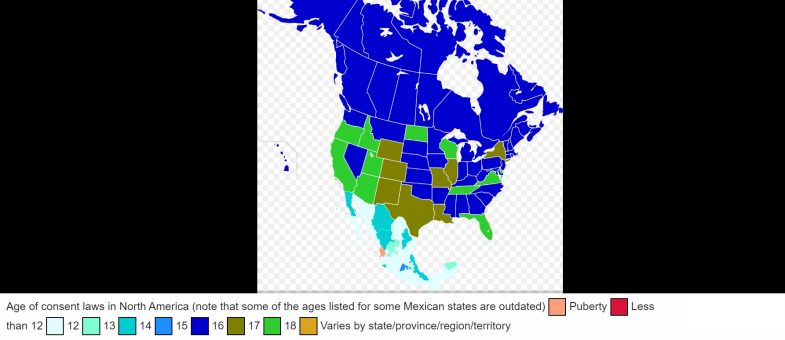
Link to Wikipedia
Epstein was able to play the martyr by not only claiming that unscrupulous girls had lied their age but also by implying that the age of consent is too high anyway in Florida.
This was also one reason why in New Mexico where Epstein had his Zorro Ranch the officials refused to register him as a sex offender. In New Mexico the age of consent was 16 until in 2018 it was raised to 18.
Furthermore, unlike in many other states, in New Mexico the courts recognize a mistake of age defense.
New Mexico courts recognize a mistake of age defense. The mistake of age defense is basically ”I thought she was 17.” However, this is no guarantee that this defense will work in court. Moreover, the mistake of age is the creation of judges in the absence of a direct statute addressing the defense. State lawmakers may pass a law overriding the courts on this issue at any time. (LegalMatch)
In reality the Epstein-Ghislaine case is not whether it is wrong for an adult to have sex with a 17 year old. Instead it is about many other things such as prostitution, grooming, pedophilia and the exploitation of children.
This all is connected to global politics involving sex trafficking, drug and arms trade, money laundering, Ponzi schemes, spy networks and blackmailing for Mossad.
Epstein’s victims were caught in a web of international spy network that used them as pawns for blackmail operations. The younger the girls were, the more leverage Israel would have over politicians, billionaires and scientists. Thus Epstein and Ghislaine tried to also recruit girls who were well under the age of 16.
What is more, they personally enjoyed having sex with these very young girls. Both Epstein and Ghislaine seem to have been pedophiles who were attracted to prepubescent girls and boys, i.e. small children.
Pedophilia is defined as:
Pedophilia (alternatively spelt paedophilia) is a psychiatric disorder in which an adult or older adolescent experiences a primary or exclusive sexual attraction to prepubescent children.[1][2] (Wikipedia)
Note that in order to be a pedophile it is enough to have merely occasional sexual attraction to prepubescent, i.e. sexually immature children who have not yet developed secondary sex characteristics, such as breasts.
Julie Brown from Miami Herald notes that Courtney Wild was only 14 when she was recruited into Epstein’s sex ring.
Wild still had braces on her teeth when she was introduced to him in 2002 at the age of 14.
She was fair, petite and slender, blonde and blue-eyed. (emphasis added. Miami Herald)

Link to Miami Herald
Julie Brown also notes that Epstein preferred girls who were not only white [and non-Jewish] but also appeared prepubescent.
Wild, who later helped recruit other girls, said Epstein preferred girls who were white, appeared prepubescent and those who were easy to manipulate into going further each time. (Emphasis added. Miami Herald)
For Epstein and Ghislaine it was important that the girls at the very least looked like small children. This is obviously why they preferred girls who were under 16.
Courtney Wild told the police that she brought Epstein over 70 girls and they were all under 16.
By the time I was 16, I had probably brought him 70 to 80 girls who were all 14 and 15 years old… (Emphasis added. Miami Herald)
Some girls were even younger. According to the police many were 13 year old.
The girls — mostly 13 to 16 — were lured to his pink waterfront mansion by Wild and other girls, who went to malls, house parties and other places where girls congregated, and told recruits that they could earn $200 to $300 to give a man — Epstein — a massage, according to an unredacted copy of the Palm Beach police investigation obtained by the Herald. (Emphasis added. Miami Herald)
It is also important to note that even 13 was not the minimum age for Epstein and Ghislaine. In fact, there was no limit to how young the girls could be. Both Epstein and Ghislaine Maxwell emphasized that the younger the better.
Eventually, she said Maxwell trained her to recruit new girls for Epstein.
“Jeffrey was very particular in the kind of girls he wanted. First off, the younger the better.”
Epstein said that to her, Giuffre claimed, and “Maxwell said that too. During the training and telling me how to do it, she said ‘You always have to go for the youngest-looking ones.’” (Emphasis added. The Daily Beast)
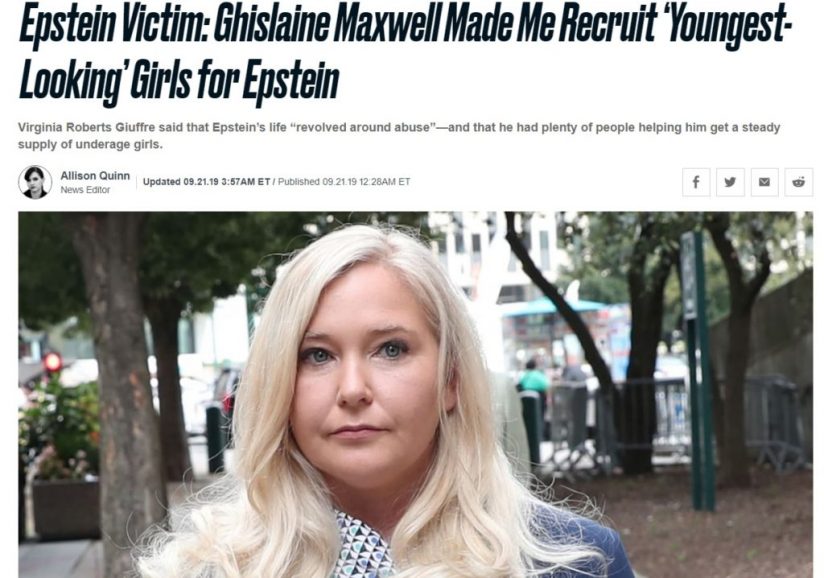
Link to The Daily Beast
It seems the primary purpose was not even blackmail since especially Epstein was having sex with these young girls all the time. On some days Epstein was having sex several times a day.
Sex games were more important for Epstein than work. Obviously, he was extremely attracted to these young girls.
Palm Beach multimillionaire Jeffrey Epstein, 54, was accused of assembling a large, cult-like network of underage girls — with the help of young female recruiters — to coerce into having sex acts behind the walls of his opulent waterfront mansion as often as three times a day, the Town of Palm Beach police found. (Emphasis added. Miami Herald)
In six months, I never saw him do a day’s work,” Ransome told The Telegraph. ”I never saw him work. He was literally sexually abusing us all day long. (Emphasis added. Business Insider)
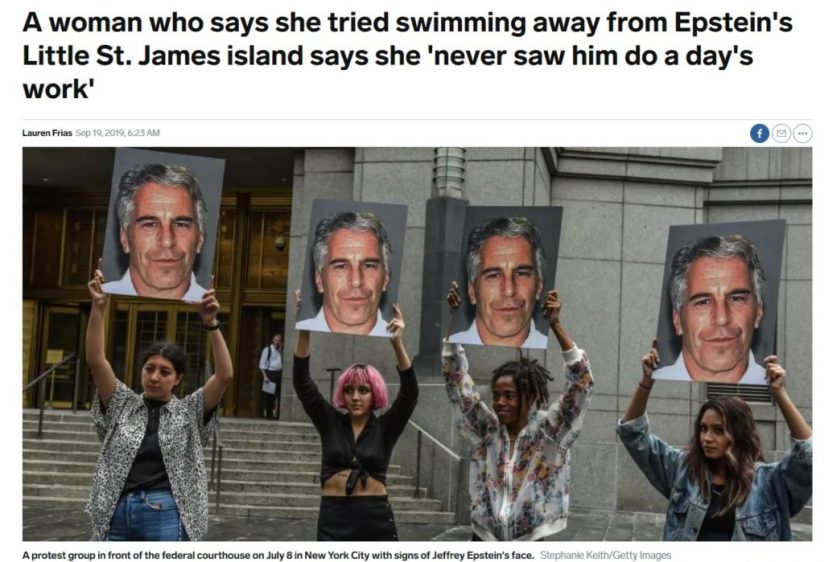
Link to Business Insider
Ghislaine also seemed to be obsessed with sex. Just like her father, Robert Maxwell she was rumored to be interested in unconventional sex which includes also sex with young children.
As she [Ghislaine] posed for the pics, which ran in a publication meant to promote Sotheby’s vintage fashion collection, she allegedly let slip comments that hinted at a twisted double life.
“She didn’t talk about Epstein, but during the shoot she did tell a story about how she just hosted a dinner party for a number of young girls, and she put dildos at each place setting,” the source said. “Ghislaine then described how during the dinner two guests, who were a couple, began demonstrating how to do the perfect fellatio on a man for all at the table. She was laughing about it.” …
“A friend of mine has a whole theory about her, that Epstein was like her father Robert Maxwell, who himself is believed to have had some strange sexual practices.” (Page Six)
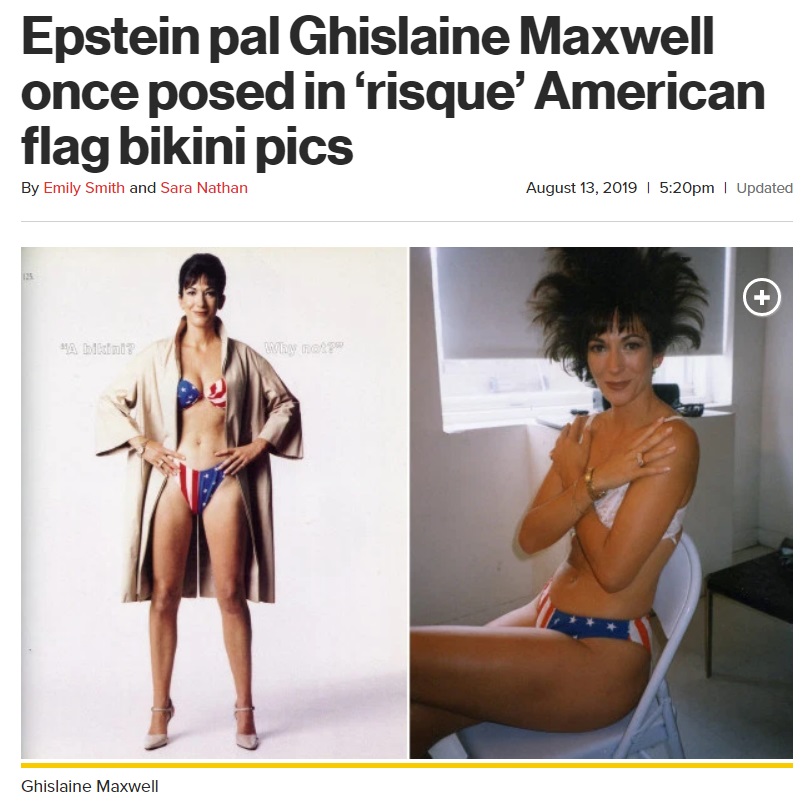
Link to PageSix
The Epstein Mossad-Timeline shows how Ghislaine was most probably trained by Mossad to use sex to gather information. That training would not have been too difficult for her since she was hypersexual. Many even considered her a nymphomaniac.
In fact, even many Israeli Jews – who usually have much fewer sexual taboos than puritan English and Americans – were shocked by her raunchy sexuality.
Flirtatious indeed: I understand from a mutual friend that after school she travelled to Israel and visited a kibbutz; she was immediately ostracised by the other girls for making a rather-too-obvious beeline for the Adonis-like lifeguard at the kibbutz pool. Very quickly she got her way, as she would with much in her life. (Tatler. Emphasis added.)
Even Ghislaine’s friend were sometimes shocked by her open sexuality that so often contrasted with her otherwise lady-like behavior and position in high society.
Ghislaine was, added Mason, ‘fantastically entertaining’ and ‘saucy’ – the paper said that she talked openly about sex.
In fact, said another acquaintance who saw her often at parties, she was ‘obsessed by sex. She’s Sphinx-like, mysterious. The last time I saw her, five, 10 years ago, I said what are you up to? And she said “I’m selling this product – stainless-steel mini dumb-bells – that you put up your fanny. For exercising your vaginal muscles, exercise your pelvic floor, learn the Singapore Grip. I’m giving seminars in LA and they all turn up and I tell them, this is how you keep your man.”’ (Tatler. Emphasis added.)
Epstein and Ghislaine were both hypersexual. All kind of sex interested them. Little girls were just part of the menu. Or more specifically, the best – and most profitable – part.
Epstein and Ghislaine were so attracted to young girls that nothing seemed to satisfy them. Perhaps this is why Epstein and Ghislaine created the highly risky sexual pyramid scheme. The girls were offered two alternatives: Either satisfy Epstein and Ghislaine sexually or get more girls to satisfy them.
In this way Epstein and Ghislaine were able to recruit literally hundreds of young girls. However, some of these girls went to the police and the sexual pyramid scheme collapsed.
When Epstein got out of jail in 2009 he had half-learned his lesson: American girls are too risky.
Now Epstein and Ghislaine would only concentrate on East European girls with the help of their Jewish-Ukrainian friend Peter Listerman.
One of the lesser-known shadowy figures linked to Jeffrey Epstein and his sex ring of teenage girls and young women is Ukrainian-born Peter Listerman, who has worked as a businessman and television presenter but is most known for his “match-making” abilities.
What match-making really means is that Listerman procures women, often underage, for the jet-set society to use for sexual purposes. His “clients” include Russian oligarchs and American businessmen and seems to have also included Jeffrey Epstein. (Citizen Truth)
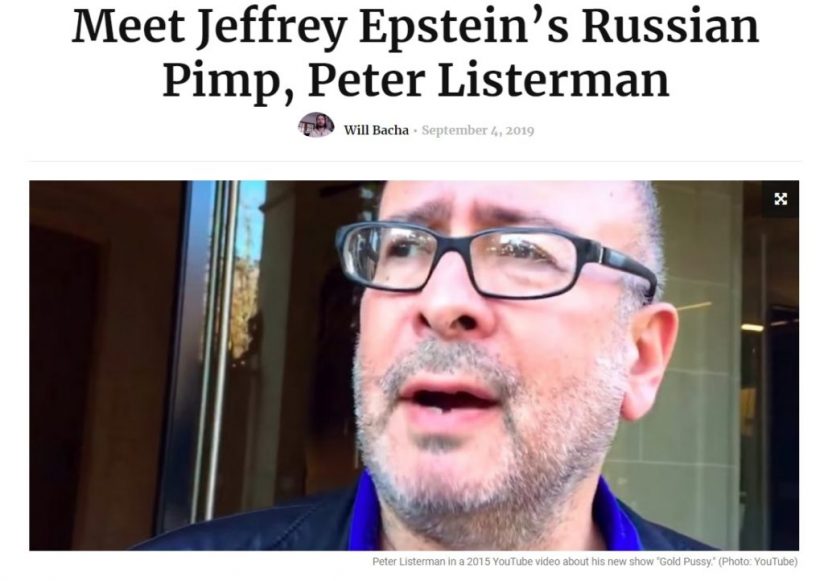
Link to the Citizen Truth.org
Listerman has such a bad reputation that he is shunned even in Ukraine!
Tatiana Savchenko, who founded the first modeling school in Odessa, Ukraine explained to the Daily Beast the lengths she had to go to keep Listerman from getting his hands on young women and trafficking them for sex work.
She claimed that he would frequently approach her students and attempt to lure them with promises of a luxurious lifestyle, and that “It took a lot of work to keep him from tricking our teen models in his traps.” (Citizen Truth)
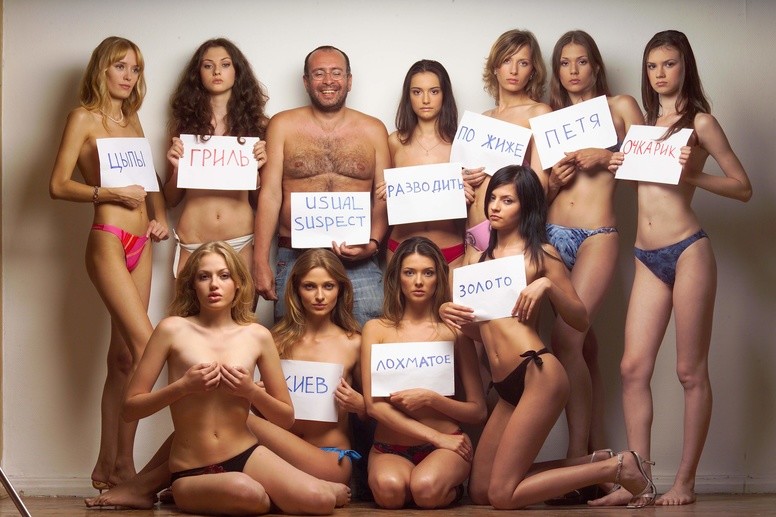
Peter Listerman is the usual suspect. Link to Fishki.net
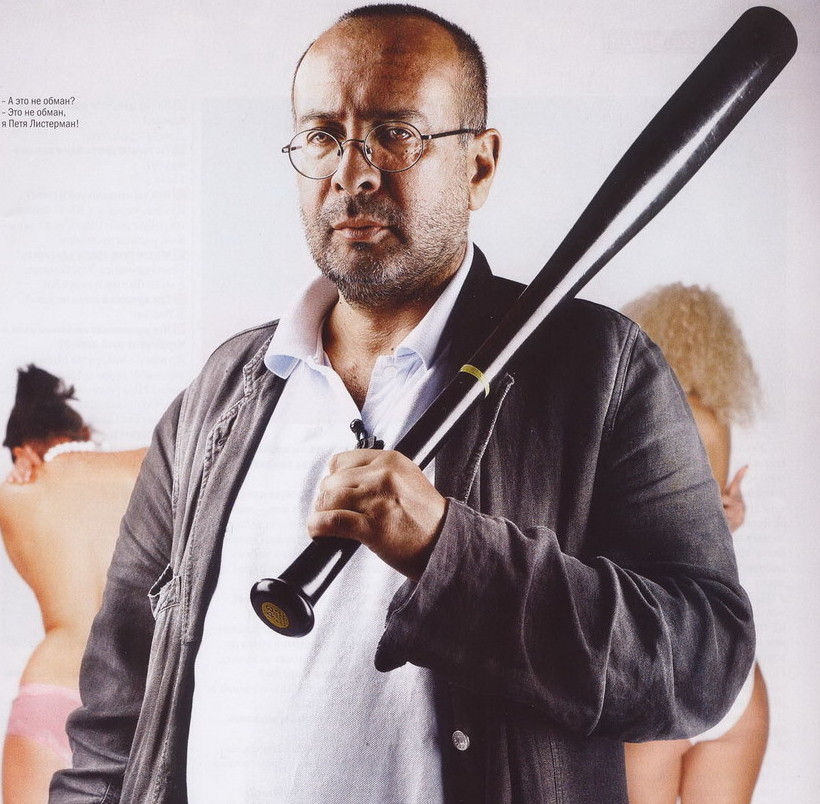
Do you think I am kidding? I am Peter Listerman! Link to Fishki.net
Both Epstein and Listerman were attracted to very young girls. Neither even tried to hide it much. In fact, Epstein was quite open about his attraction to tweens.
Just three months ago, as federal prosecutors were closing in with new charges, Mr. Epstein had a conversation with R. Couri Hay, a publicist, about continuing to improve his reputation. Mr. Epstein asserted that what he was convicted of did not constitute pedophilia, said Mr. Hay, who declined to represent him.
The girls he had sex with were “tweens and teens,” Mr. Epstein told him. (The New York Times)
But what is a tween?
Preadolescent is generally defined as those ranging from age 10 to 13 years.[4][6] … While known as preadolescent in psychology, the terms preteen, preteenager or tween are common in everyday use. (Wikipedia)
Epstein was right, of course. What he was convicted of in 2007 did not constitute pedophilia. However, that is precisely one reason why people are so outraged!
Epstein and Ghislaine did not see any problem of recruiting, grooming and having sex also with tweens. And apparently neither did the Justice Department and the FBI led by Robert Mueller!
But it gets even worse. As pointed out in the Epstein Pedoscandal Mossad Timeline, it seems that Epstein and Ghislaine were after even younger girls.
In 2003 Epstein financed Jean-Luc Brunell’s(?) and Jeff Fuller’s(J) new modelling agency MC2 that seemed to have worked with Peter Listerman.
MC2 obviously refers to the famous Einstein equation E = MC2, the energy-mass equivalence. Equally obviously, E equals Epstein, the energy, whereas the girls equal MC2, the mass energized by Epstein.

Jean-Luc Brunell
Brunell is generally known as the sleaziest man in model business who has long faced accusations that girls were drugged and raped in his employ. Already in the 80s he was the subject of a famous 60 Minutes expose on sexual abuse in the modeling industry
Despite all this – or for the very reason – Epstein invested in MC2 and became particularly close to its founders Brunel and Fuller.
The agency operates in New York, Miami and Tel Aviv. It’s in practice half-Israeli.
Many call Israel the capital of human trafficking and organ harvesting.

MC2 concentrates on importing East European girls to Israel and America. The younger the better.

Marina Lynchuk of MC2

Lolita Lvola from MC2

Linta Lapinda from MC2
Brunel seems to have given 12-year old triplets to Epstein as a birthday present.
’Jeffrey bragged after he met them that they were 12-year-olds and flown over from France because they’re really poor over there, and their parents needed the money or whatever the case is and they were absolutely free to stay and flew out,’ Giuffre said.
She said she saw the three girls with her own eyes and that Epstein had repeatedly described to her how the girls had massaged him and performed oral sex on him. They were flown back to France the next day.

Link to Daily Mail
It seems that even tweens were not young enough for Epstein.
According to court papers in 2005 Brunel called Epstein and left a message that “he is sending him a 16-year-old Russian girl for purposes of sex”. However, the written message says something even worse.
The message, filed as an exhibit in the case, was written on an office message pad, partly in code, and read: “He [Brunel] has a teacher for you to teach you how to speak Russian. She is 2×8 years old not blonde. Lessons are free and you can have your 1st today if you call.” (New York Post)
Does it mean that two eight year olds are involved? Or does 2 x 8 mean to sex 8 year old? (2=to, x=sex)
Why would the lessons be free and why is it relevant that the ”teacher” is not a blond?

There is no denying that Epstein and Ghislaine sexualised even small children. This became clear in 2005 when police raided Epstein’s Palm Peach mansion.
In one photo that was hanging on the wall a small six or seven year old girl was bending over in a tiny dress. Police blurred out the photo in the video taken during the raid.

Link to The Daily Mail
Despite all this only the Russian Television was actively trying to expose Epstein and Ghislaine.
RT aired this video already nine years ago!
The description on the video is even more revealing. It even mentions the 12-year old triplets.
The American TV networks were actively suppressing the story for years.
The American media has also been trying to cover up the fact that Jeffrey Epstein was most probably murdered in his cell. He had to be silenced.
But it gets even worse.
This hung on Ghislaine’s home wall.

NEW YORK CITY, NY – MARCH 13: Atmosphere at Hamish Bowles, Ghislaine Maxwell and Lillian von Stauffenberg dinner for ALLEGRA HICKS at Home of Ghislaine Maxwell on March 13, 2007 in New York City. (Photo by Patrick McMullan/Patrick McMullan via Getty Images). Link to Getty Images.
The so called artwork seems to be full of pedophile symbols.


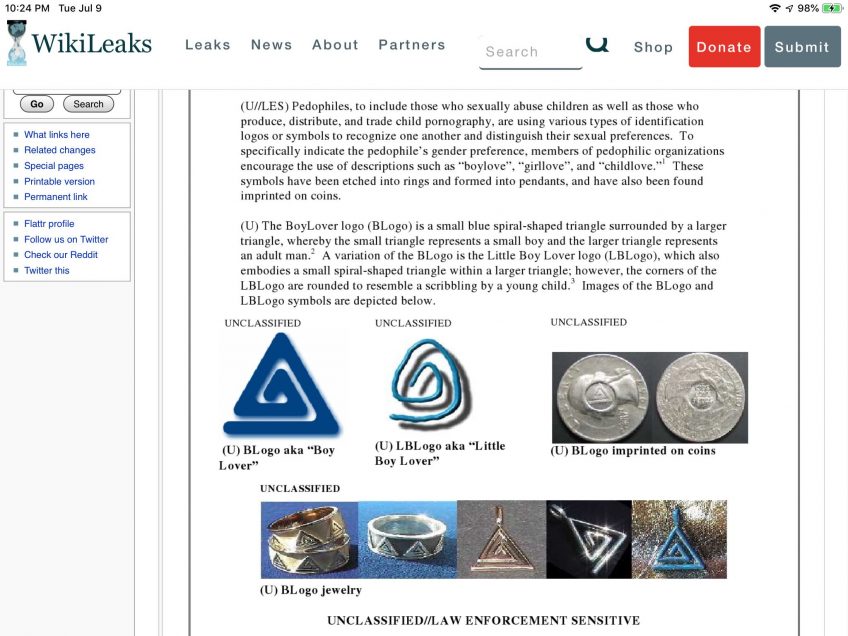
Link to Wikileaks.org
The quality of the photos taken at Ghislaine’s home are so good that even more symbols have been found in her artwork.

For some reason the mainstream media has not picked up on this pedophilia angle. No mainstream media journalist has even tried to ask why would Ghislaine have such art and symbols on her home wall.
This despite the fact that Ghislaine is most probably an Israeli superspy just like was her father, Robert Maxwell. She probably has been trained to use sex – including pedophilia – as a tool for blackmail and manipulation.
At the time in Israel females molesting little boys was not even considered rape.
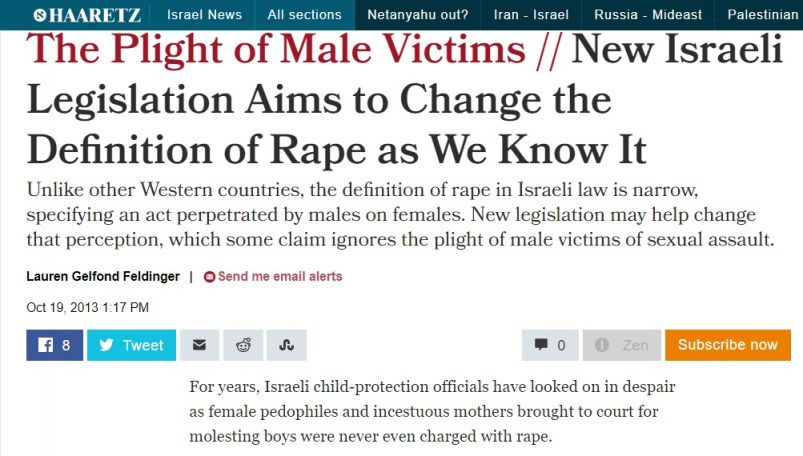
Link to Haaretz.com
Nor have mainstream journalists asked where was Ghislaine when Madeline McCann was abducted.
That would not be an unreasonable question since one of the E-Fit images looks a lot like Ghislaine.

Link to Enchanted Life Path.com
Furthermore, two of the E-Fit images (1A, 1B) look like the Podesta brothers. John Podesta was White House Chief of Staff to Bill Clinton and the Chairman of the 2016 Hillary Clinton presidential campaign.
Ghislaine and Epstein were close to the Clintons and the Podesta brothers have been directly linked also to Pizzagate.

Link to Pizzagate Map created by Tuukka Pensala
Was Ghislaine helping to run also Pizzagate and other pedophile rings for Mossad?
At least she seems to be perfectly trained to do just that. First, her own hypersexuality, family background and possible training by Mossad made it easy for her to master mind the pedophilia ring she run with Epstein.
Second, Ghislaine and Epstein had all the apparel to help run also other pedophile rings: Lolita express airplanes and helicopters, Zorro Ranch in New Mexico and luxury mansions in New York, Palm Peach and Paris.
Even more importantly they had their own island in the Virgin Islands.
In the 90s Epstein bought Little St. James island from the Virgin islands. It had a mansion which Epstein expanded.
Soon locals started to call it the Pedophile Island.
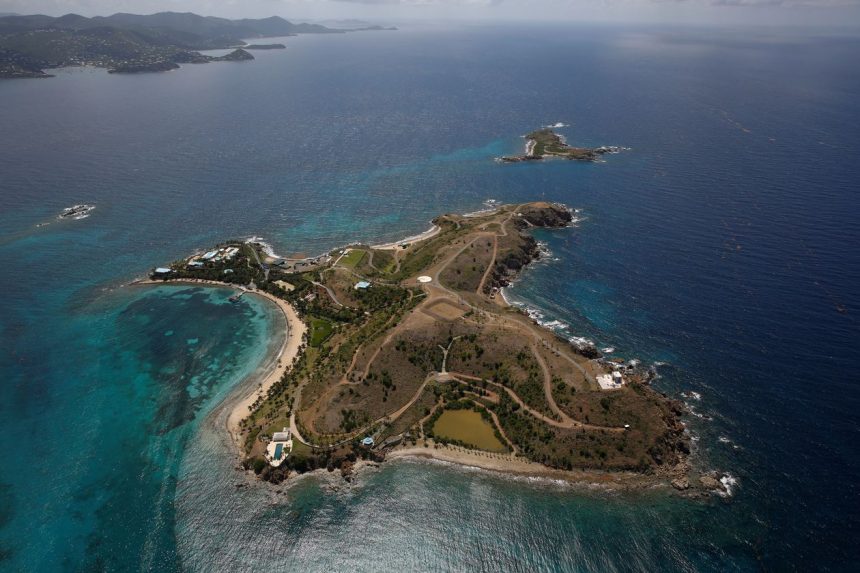
Little St. James island. Link to Wall Street Journal article
The island seems to have tunnels with several underground entrances.
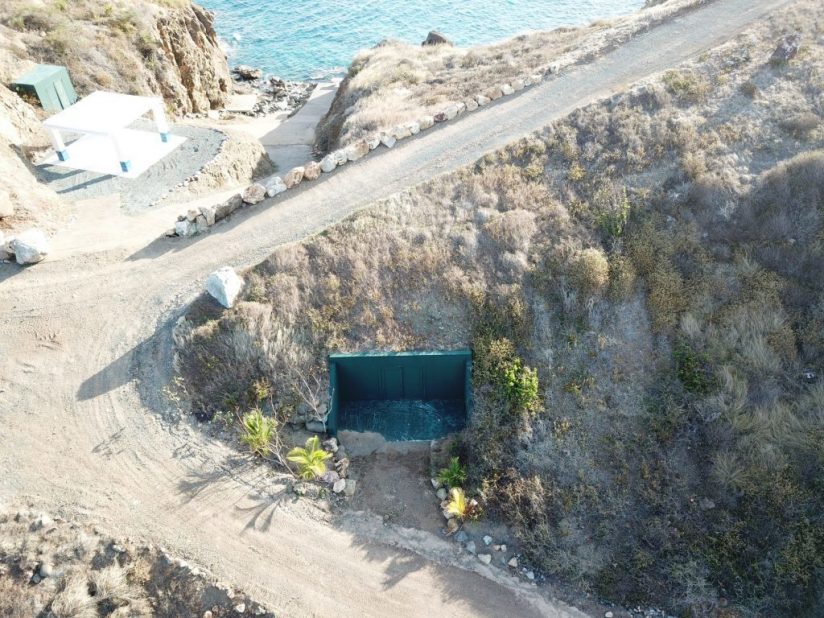
Underground entrance
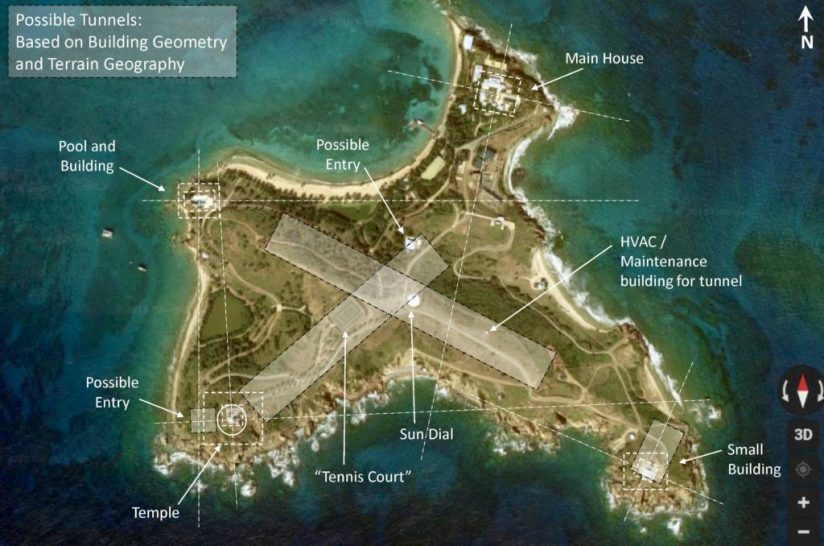
Link to Twitter
The island also has a strange temple.
We Are Change’s Luke Rudkowski and the Dollar Vigilante’s Jeff Berwick secretly visited the island but were soon chased out.
Ghislaine has a Helicopter Pilot License and often transported quests to the island.
On the weekends in the 1990s, Maxwell would have her Rollerblades FedExed to Epstein’s island in the Caribbean, and said she got her helicopter’s license so she could transport anyone she liked without pilots knowing who they were.
Maxwell also said the island had been completely wired for video; the friend thought that she and Epstein were videotaping everyone on the island as an insurance policy, as blackmail.
A source close to Maxwell says she spoke glibly and confidently about getting girls to sexually service Epstein, saying this was simply what he wanted, and describing the way she’d drive around to spas and trailer parks in Florida to recruit them. She would claim she had a phone job for them, “and you’ll make lots of money, meet everyone, and I’ll change your life.” …
Maxwell had one other thing to tell this woman: “When I asked what she thought of the underage girls, she looked at me and said, ‘they’re nothing, these girls. They are trash.’” (Emphasis added. Vanity Fair)
Ghislaine was naturally using Epstein’s helicopters. Some of them shared their FAA tail number with a US contractor, Dyncorp. That would have helped Ghislaine and Epstein to fly drugs and children.
FAA records and Epstein’s pilot’s flight manifest indicate that Epstein’s Bell helicopter used the same tail number of N474AW. This was the same tail number used until 2006 by State Department contractor Dyncorp for counter-insurgency operations in Latin America.
The congruence of Epstein’s Bell N474AW and Dincorp’s Bronco N474AW is noteworthy. In 2002, the year Epstein’s aircraft fleet stands accused of flying underage teen girls, some between the ages of 12 and 15, coincided with Dyncorp’s trafficking in underage females between the ages of 12 and 15 from Kosovo and Bosnia in the Balkans.
One Dyncorp whistleblower reported to The Washington Times’s Insight magazine’s Kelly O’Meara in 2002 the following on one Dyncorp employee in Bosnia:
[he] owned a girl who couldn’t have been more than 14 years old. It’s a sick sight anyway to see any grown man [having sex] with a child, but to see some 45-year-old man who weights 400 pounds with a little girl, it just makes you sick.”
Tail number N474AW has been shared between Epstein’s Bell helicopter like the one in this photo. (Emphasis added. Political Bull Pen)

DynCorp’s pedophilia ring became internationally infamous with the release of the movie Whistleblower.

Link to Wikipedia
Helicopters can always be seen. However, Ghislaine also has a license to operate submarines!
In 2012 – three years after Epstein got out of jail – Maxwell founded The TerraMar Project,[51] a nonprofit organization that advocated protecting ocean waters.
She gave a lecture for TerraMar at the University of Texas at Dallas and a TED talk, at TEDx Charlottesville in 2014.[52] Maxwell accompanied Stuart Beck(J), a 2013 TerraMar board member, to two United Nations meetings to discuss the project.[17] (Wikipedia)
In 2014, a United Nations event featured Maxwell as a speaker. According to her bio in the program, Maxwell’s “web-based non-profit” aimed “to protect the Oceans by empowering a global community of ocean citizens.” It further described Maxwell as “a private helicopter pilot and an Emergency Medical Technician and a qualified ROV and Deepworker submarine pilot.”
A former Coast Guard officer, Borgerson was also a fellow at the Council on Foreign Relations, which featured Borgerson and Maxwell as speakers during one 2014 talk titled “Governing the Ocean Commons: Growing Challenges, New Approaches.” Friends of Maxwell, according to The New York Times, said Borgerson became her boyfriend. Maxwell had allegedly described Borgerson as a “Navy SEAL” to her pals.
Maxwell’s dubious charity also roped in the Clinton Global Initiative, the now-defunct networking platform for the Clinton Foundation. In the fall of 2013, CGI named TerraMar as one of the “commitments to action” at their annual meeting. (Emphasis added. Daily Beast)
Did the Pedophile Island have an underground submarine base? Was it a part of global pedophile network?
And was the Ocean Citizens project an attempt to escape national jurisdictions and thus gain at least a partial immunity from police investigations and prosecutions?

Link to TerraMar Project
Interestingly, as late as 2016 Epstein bought also the nearby Great St. James Island. He started to build on the island without permits.
There were rumors that he was building underground. For some reason the mainstream media has had no interest in this second island.
Why is the mainstream media not interested in Ghislaine’s many links to pedophilia?
Perhaps because Ghislaine has so many powerful friends. The photo of the pedophile artwork on Ghislaine’s wall was taken 13 March 2007 during a party at Ghislaine’s New York townhouse. The guest list included a curious combination of elite Jews, aristocratic Brits and American WASPs.

Atmosphere==
Hamish Bowles, Ghislaine Maxwell and Lillian von Stauffenberg dinner for ALLEGRA HICKS. Home of Ghislaine Maxwell. March 13, 2007©Patrick McMullan. Photo-Patrick McMullan/Patrick McMullan.com. Link to Quick N Dirty
The party was in Ghislaine’s huge 7000-square-foot townhouse. It is located in the most opulent and prestigious neighborhood of America, the Upper East Side, New York on East 65th Street just off Park Avenue. Epstein’s townhouse was only 10 blocks away.
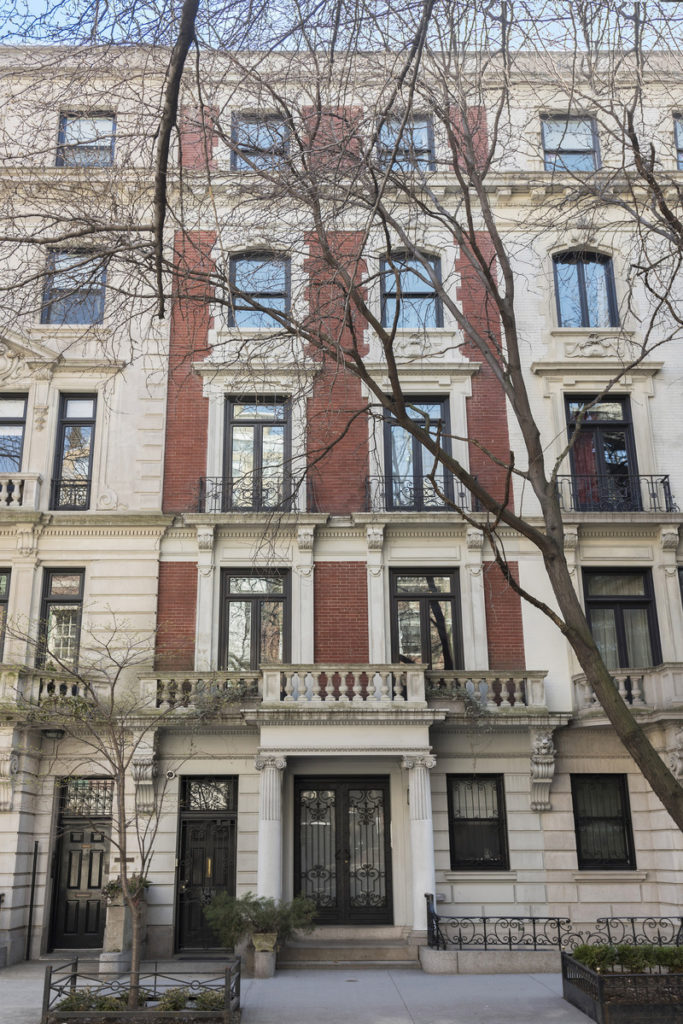
Ghislaine’s five story townhouse. Link to Street Easy

Ghislaine’s townhouse floor plan. Link to Street Easy
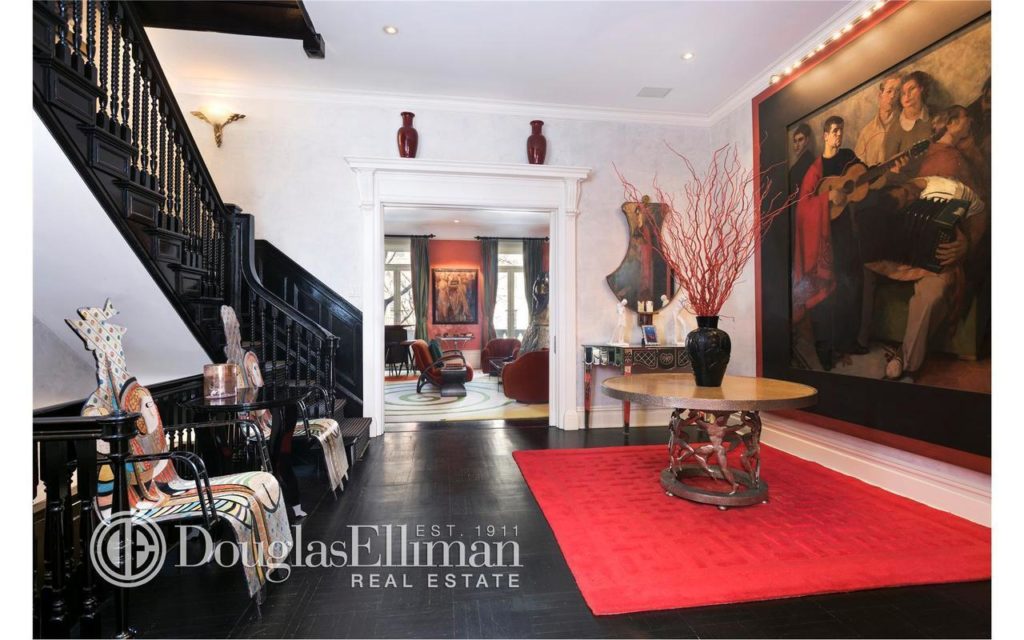
Ghislaine’s townhouse 2nd floor gallery. Link to Street Easy
There are reports from reliable sources that the townhouse was sold in 2000 to Ghislaine by Lynn Forester de Rothschild. The very same woman who had introduced Epstein and Ghislaine to Alan Dershowits and the Clintons in the 90s.
The Manhattan property, which is close to Epstein’s mansion, is owned by Lynn Forester de Rothschild, wife of British financier Sir Evelyn de Rothschild. (See The Times and the original article.)
According to Business Insider Forester sold the townhouse to Ghislaine for less than half the price.
Forester sold the mansion for about $8.5 million less than its assessed market value, which was more than $13.4 million.
Was this a pay-off to Ghislaine from the King of Jews, the Rothschilds for services rendered?

Hillary Clinton, Evelyn de Rothschild, Bill Clinton and Lynn Forester de Rothschild. Link to Mint Press
It probably is also relevant that at the time of the sale of the townhouse the Prime Minister of Israel was Ehud Barak. In the 80s he had been the head of Aman, the Israeli Military Intelligence Agency. As the Epstein Pedoscandal Mossad Timeline revealed, both Epstein and Ghislaine worked for the Israeli intelligence agencies already in the 80s during the Iran-Contra operation.
Note that it was around year 2000 that Epstein and Ghislaine started the pedophile operation in earnest. In the 80s and 90s blackmail operations were a side show but now it became the main show involving hundreds of young girls.
Sexual blackmail – especially involving little children – can be an extremely efficient way to influence key politicians and even military officials. A successful blackmail operation can achieve more than several army divisions. No wonder Barak was so close to Epstein and Ghislaine.
Furthermore, in 2000 the president of Israel was Moshe Katsev who was sexually harassing and even raping his female subordinates. Later Katsev would be convicted of rape.
It was also in 2000 when the Israeli Vice-Consul of Rio de Janeiro, Arie Scher and Hebrew language Professor George Schteinberg were running a pedophile ring for Israeli tourists. When the Brasilian police started to investigate the Israeli consulate Scher managed to flee back to Israel.

In Israel Scher was not prosecuted. Instead in 2005 he was promoted to Consul of Canberra, the capital of Australia. A spokesman for the Israeli Foreign Ministry in Jerusalem, Mark Regev explained:
He [Arie Scher] was a young and single man at the time [in Brazil]. Now he is married and he’s six years older and there is no reason why he shouldn’t make an excellent diplomatic appointment in Australia.
Australia refused to let Scher enter the country.

Link to William Bowles Info
The most shocking part of the Arie/Aryeh Scher story is that the mainstream media was not interested. Either the stories have been scrubbed from the internet or no stories were ever written by mainstream journalists except one short story by BBC in 2000 and one even smaller story by The Sydney Morning Herald in 2005. Even more surprisingly Youtube does not seem to have any videos about the Scher case.
No wonder Barak was absolutely convinced that the Western mainstream media would never dare to criticize Israel and its intelligence agencies. Not even when Mossad was running pedophile rings.
It was probably the Israeli leaders Shimon Peres, Ehud Barak and Moshe Katsev together with the ultra-Zionist Mega Group who made sure Epstein and especially the Maxwell family had not only immunity from prosecution but also all the blackmail apparel necessary including luxury townhouses, airplanes, yachts, submarines, ranch and a private island. All, of course, bugged to the hilt.

Israeli Prime Minister Ehud Barak (R) talks to Shimon Peres, Minister of Regional Planning, after Barak’s speech at the opening session of parliament in Jerusalem 30 October 2000. Barak said that he believed peace was still possible in the Middle East but that Israel did not have a partner prepared to make compromises. AFP PHOTO / SVEN NACKSTRAND (Photo credit should read SVEN NACKSTRAND/AFP/Getty Images)
Here the pedophile artwork at Ghislaine’s New York townhouse can be seen behind Lillian von Staufenberg who in March 2007 together with Ghislaine and Hamish Bowles organized a dinner party in honor of Allegra Hicks. This at a time when Epstein had already been charged with abusing young girls.

Karen Groos, Allegra Hicks, Lillian von Stauffenberg==
Hamish Bowles, Ghislaine Maxwell and Lillian von Stauffenberg dinner for ALLEGRA HICKS==
Home of Ghislaine Maxwell, NYC==
March 13, 2007==
©Patrick McMullan==
Photo-Patrick McMullan/Patrick McMullan.com==
Link to QuickNDirty
Why would Ghislaine have such a suspicious artwork on her wall knowing that it would probably be photographed during the parties?
Why would Ghislaine and her quests take such a huge risk? Or was it a sign meant to be seen? Was Ghislaine flaunting her power?
Ghislaine and her quests seemed to be absolutely sure that the mainstream media would not dare to ask embarrassing questions.
They were right, of course. The mainstream media knows its place.
However, occasionally some courageous mainstream journalist or editor does try to give hints. Some have even reported on Ghislaine’s hyper-sexual reputation and her orgies. It is just that the stories have mostly been scrubbed from the internet.
Fortunately, Whitney Webb from Mintpress has found many of the scrubbed stories. Some of them mention the Mossad connection and others note the orgies. For example, in 2003 a British newspaper, The Evening Standard reported a revealing rumor.
Salacious reports have crossed the Atlantic about Ghislaine hosting bizarre parties at her house to which she invites a dozen or so young girls, then brandishes a whip and teaches them how to improve their sexual techniques.
It seems that Ghislaine was not only a madame to Epstein but also to the ruling elite. This would both explain her popularity and the fact that the media – and especially the American media – dares not to criticize her too much. Not even after her boyfriend Epstein was charged with sex trafficking minors!
Ghislaine’s friends are just too powerful. After the March 2007 party the British Daily Mail newspaper was amazed how Ghislaine could still have attracted such creme de la creme of the highest elite. Even more amazingly, the elite was practically swooning over her.
The night before the party, the hostess [Ghislaine] had been inundated with calls from disgruntled socialites, irked that they hadn’t received an invitation.
The hostess greeted their objections with her customary charm, but remained unmoved. As always, her list had been carefully edited, and she intended it to stay that way.
Among the select few were Hollywood star Matthew Modine, Kennedy family member Mrs Anthony Radziwill, Peggy Siegel, PR consultant to the stars, and Julie Janklow, heir to a literary dynasty.
There was a Rockefeller on the list, as well as the inevitable countesses, billionaires and New York luminaries.

Link to Daily Mail
The guests at the party included also Renee Rockefeller who is married to Mark Rockefeller, the son of ex-Vice President Nelson Rockefeller and nephew of David Rockefeller.

Allegra Hicks, Renee Rockefeller==
Hamish Bowles, Ghislaine Maxwell and Lillian von Stauffenberg dinner for ALLEGRA HICKS. Home of Ghislaine Maxwell, NYC. March 13, 2007 ©Patrick McMullan/Patrick McMullan.com. Link to QuickNDirty
David Rockefeller lived at 146 East on the same 65th Street in the Upper East Side as Ghislaine. They were practically neighbors. Ghislaine would have to walk only two minutes to visit David.
David liked to pose for photos in his Beetle Room next to his favorite Picasso painting depicting a nude child ”prostitute”.

David Rockefeller. Link to Jeffrey Harris Desing.com
David was often visited by his close friend Jacob Rothschild, the patriarch of the Rothschild family.
The very same family that got Ghislaine her luxury townhouse next door.
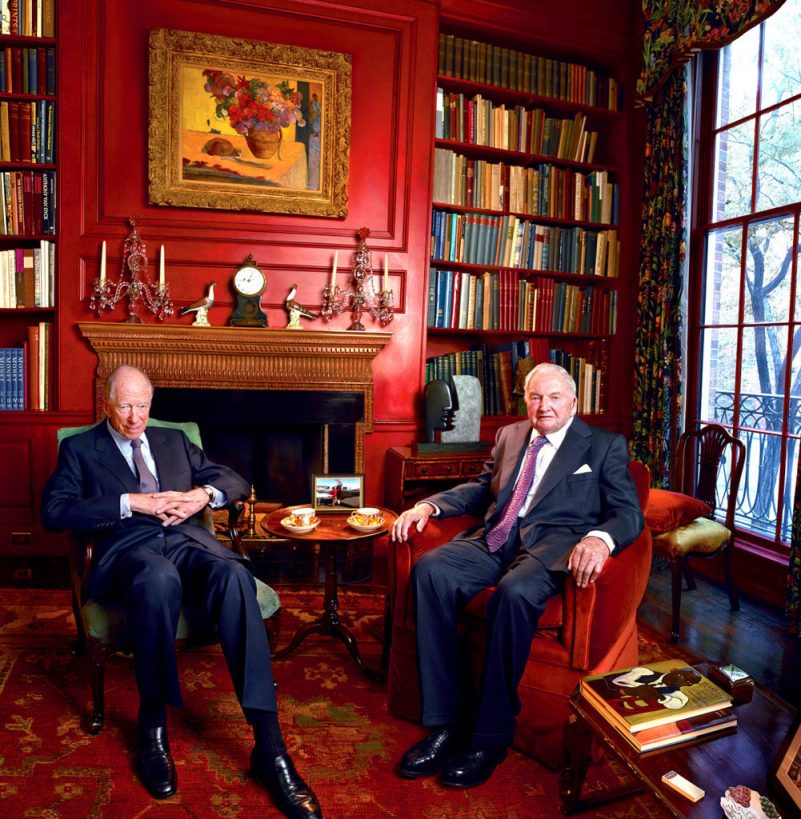
The patriarchs, Jacob Rothschild and David Rockefeller. Link to Jeffrey Harris Design.com
As shown by the Epstein Pedoscandal Mossad Timeline both Epstein and Ghislaine continued to move in the highest circles long after Epstein got out of jail. In fact, only last year Ghislaine was invited to a secret writers’ retreat hosted by the richest man in the world, Jeff Bezos.
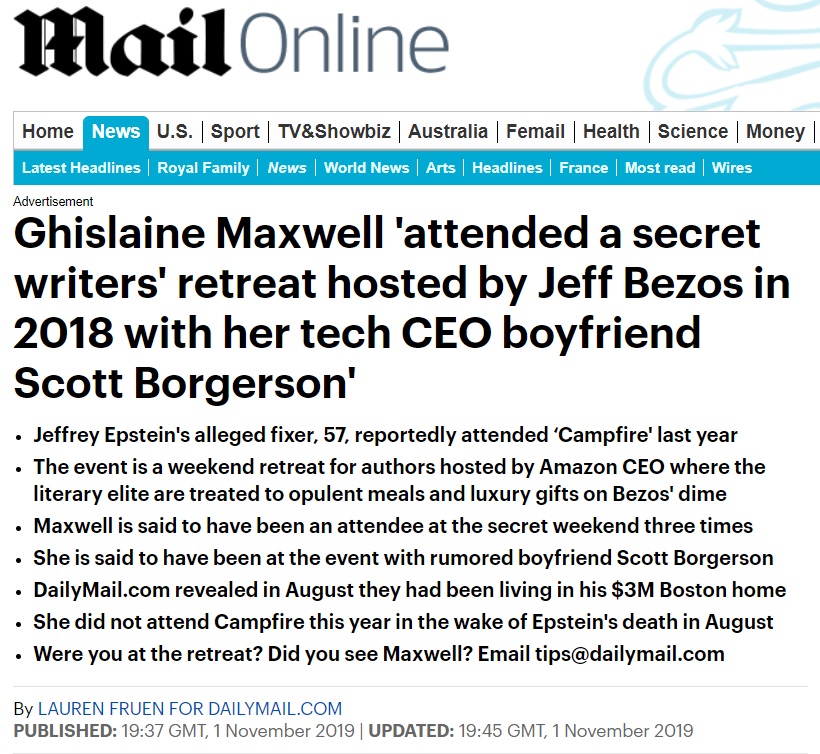
Link to The Daily Mail
Not only billionaires but also royalty kept in close contact with Ghislaine.
Prince Andrew was recently interviewed by the BBC about his relationship with Epstein, Ghislaine and their sex slave Virginia Roberts.
Amazingly, Andrew claimed she has no recollection of Epstein’s and Ghislaine’s sex slave, Virginia Roberts. This despite the fact that they were photographed together!
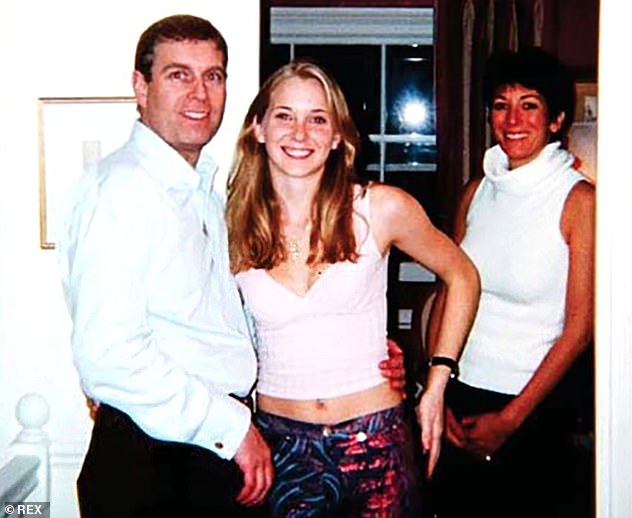
Prince Andrew, Virginia Roberts and Ghislaine Maxwell. Link to Daily Mail

Link to The Sun.com
Hardly anybody believes Andrew. The queen had no choice but to sack his own son.
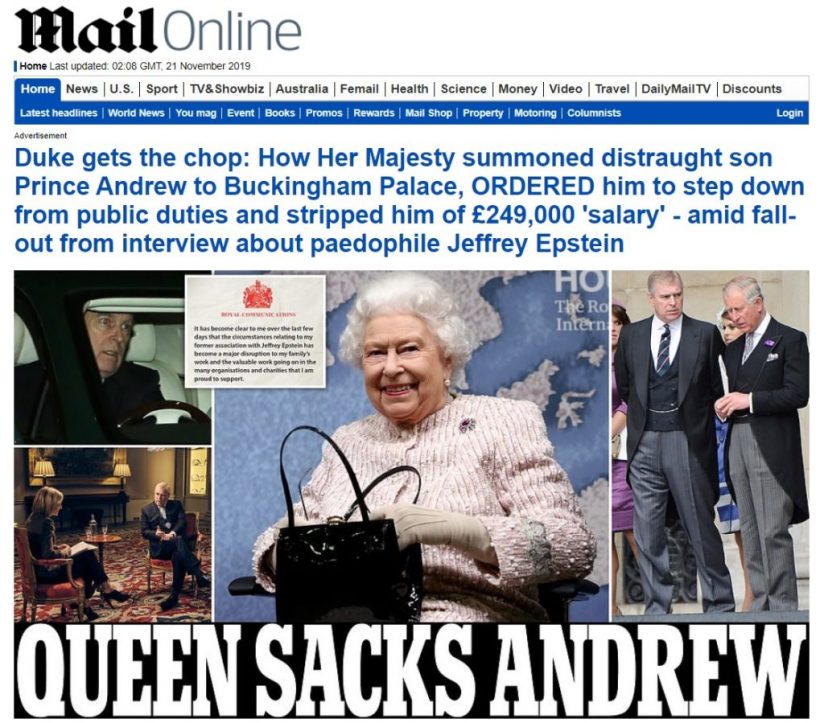
Link to Daily Mail
Andrew got sacked because he was caught in a lie.
Andrew claimed he could not have had sex with the 17-year old Virginia in 2001 because he had stayed with the British consul general.
The problem is the consul general does not recall Andrew staying with him.
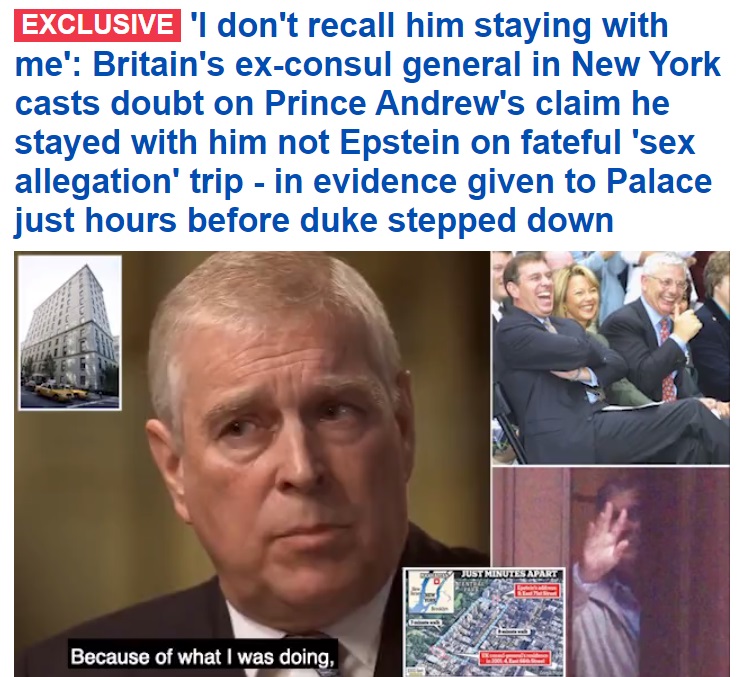
Link to Daily Mail
Curiously, most of the mainstream media has forgotten that it was Ghislaine who recruited and manipulated Virginia Roberts to become a sex slave.
Even the BBC forgot this crucial fact despite Andrew mentioning Ghislaine many times during the interview.
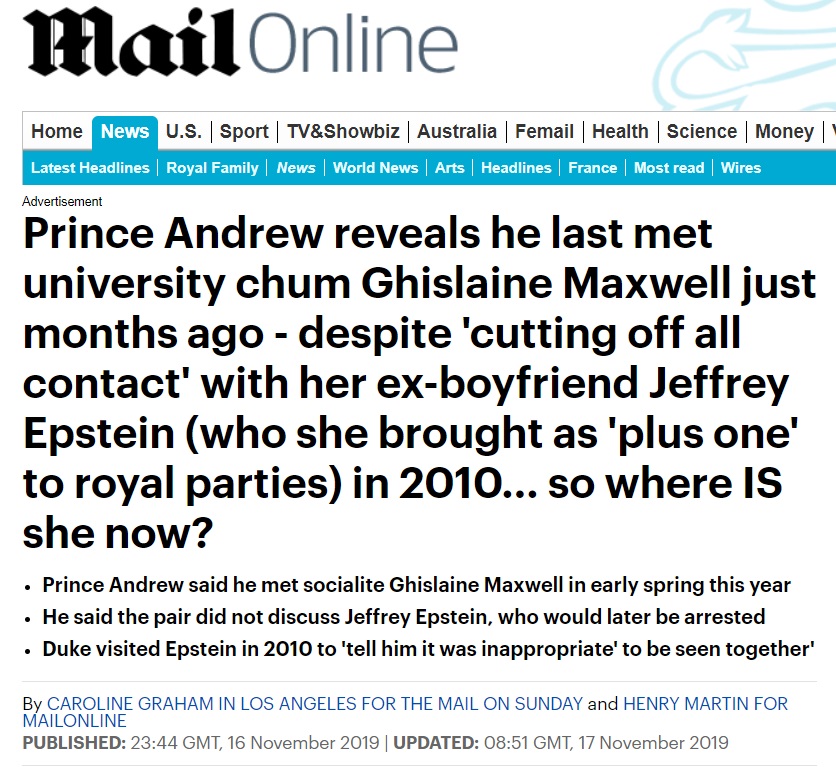
Time and again, the Prince invoked his friendship with Maxwell, 57, daughter of disgraced media tycoon Robert Maxwell, as the reason he came into paedophile Epstein’s orbit.
Asked when he last saw Maxwell, Andrew said his last contact was ’earlier this year, funnily enough’, when she ’was here doing some rally’. (Daily Mail)
Andrew claimed to have met Ghislaine last spring. In fact, they met in June just after US prosecutors reopened the case against Epstein.
The Duke of York held a meeting with Ghislaine Maxwell in London two weeks after US prosecutors announced they wanted to reopen their investigation into Jeffrey Epstein. …
The meeting took place on or about June 5, the day before Ms Maxwell took part in a four-day charity motoring rally from London to Monte Carlo.
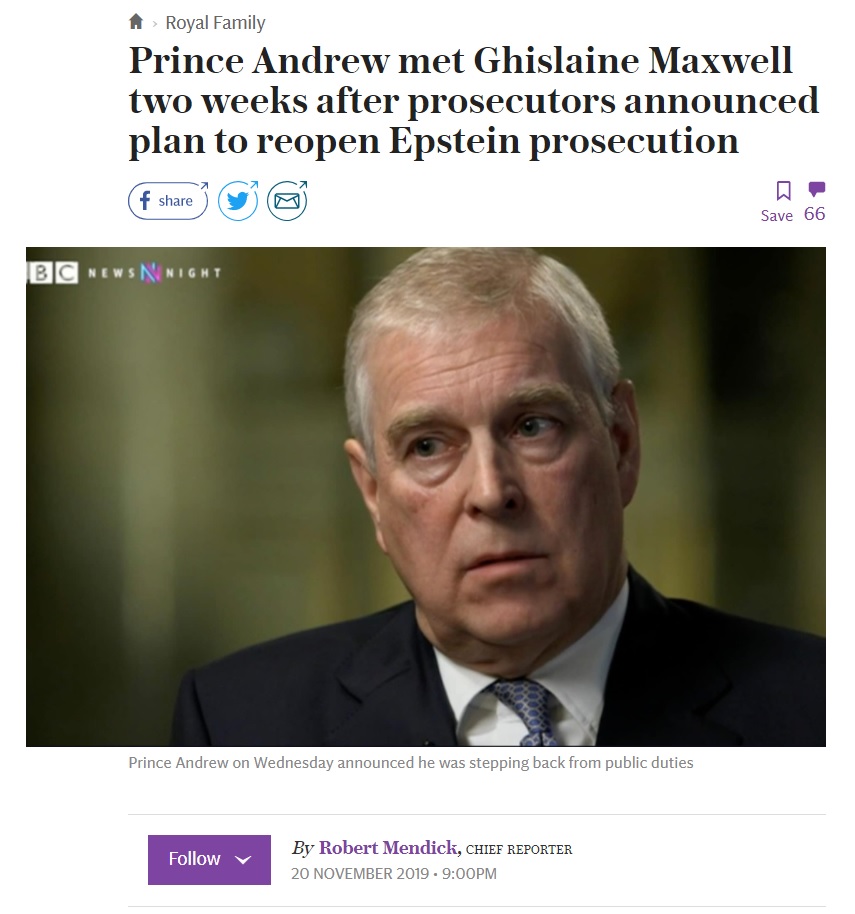
Did Ghislaine demand that Andrew help make sure that the her own parallel case would not be reopened?
After meeting Andrew she literally disappeared from the face of the earth.
The ex-socialite has not been seen since although rumours have placed her in Brazil, France, the American mid-West and even the UK.
‘No one knows where she is,’ a lawyer for one of Epstein’s victims said last night. ‘She’s done the greatest disappearing act known to man – or woman.’ (Daily Mail)
Link to Daily Mail
Shockingly, during the BBC interview Prince Andrew mentioned Ghislaine many times and seemed to be proud of their friendship. Despite this the interviewer did not dare to ask questions about their relationship.
Was this a message to all: Leave Ghislaine alone.
Ghislaine is obviously protected not only by the royal family but also by the whole ruling elite. No wonder that she has the Get-Out-of-Jail-Free card.
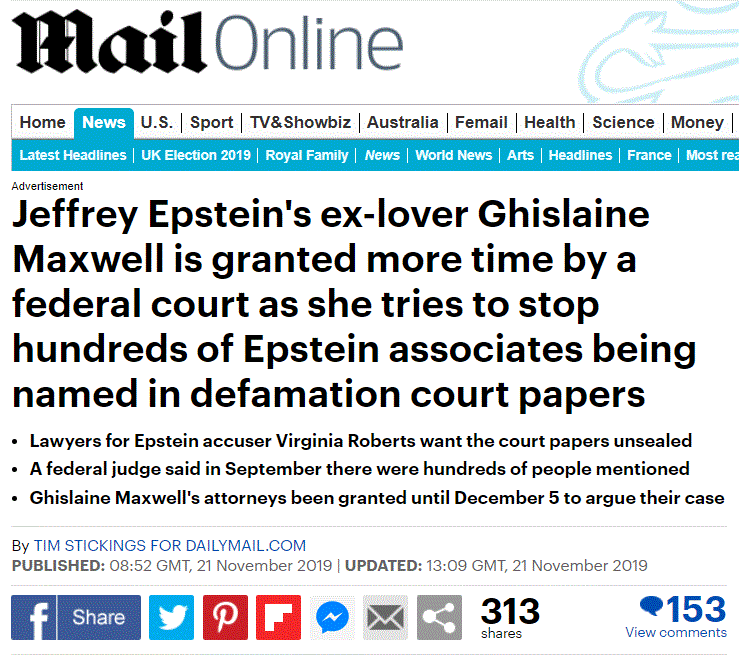
Ghislaine also tries to protect other Epstein associates.
Link to Daily Mail
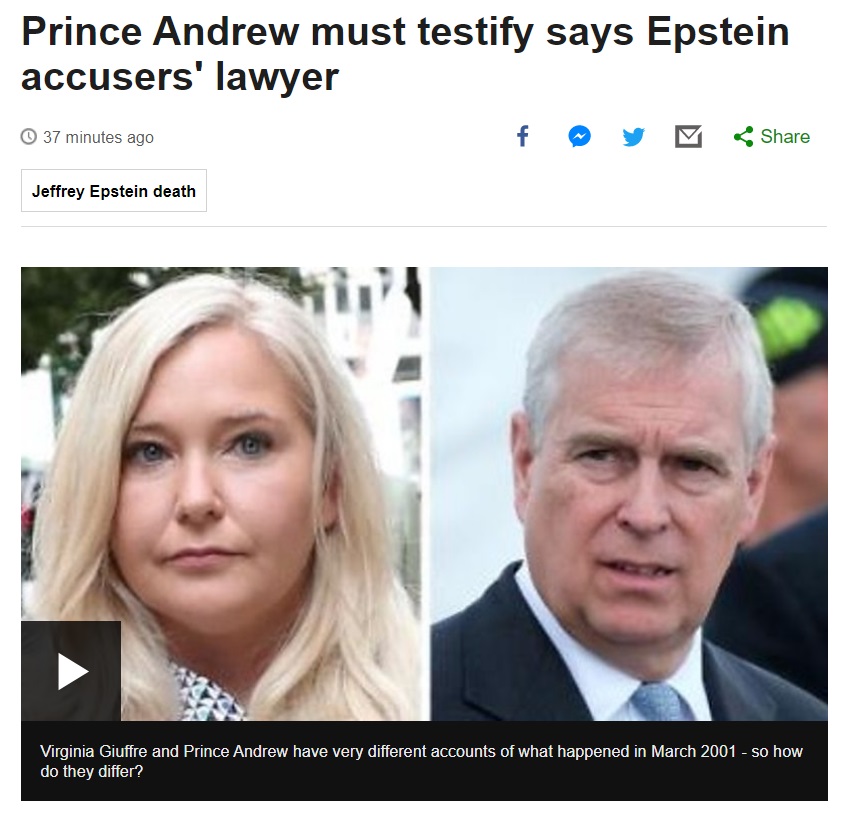
Prince Andrew is now afraid to go to the US.
Five women who accuse Jeffrey Epstein of abusing them say Prince Andrew witnessed how people were given massages at the sex offender’s homes.
The lawyer for the women has told BBC Panorama he plans to serve subpoenas to force the Duke of York to testify as a witness in all five cases.
He says the prince could have important information about sex trafficking. (BBC)
Link to BBC story and video
The BBC has now finally zoomed in on Ghislaine.
Another Epstein victim, Sarah Ransome told Panorama Ghislaine Maxwell, one of Prince Andrew’s oldest friends, worked hand in hand with Epstein.
”Ghislaine controlled the girls. She was like the Madam,” she said.
”She was like the nuts and bolts of the sex trafficking operation and she would always visit Jeffrey on the island to make sure the girls were doing what they were supposed to be doing.
”She knew what Jeffrey liked. She worked and helped maintain Jeffrey’s standard by intimidation, by intimidating the girls, so this was very much a joint effort.”
Ms Maxwell could not be reached for comment but has previously denied any involvement in or knowledge of Epstein’s abuse. (BBC)
But the American media is still not interested in Ghislaine.
What the American mainstream media always willfully forgets is that Ghislaine Maxwell is the key person and mastermind behind the whole pedo sex trafficking operation.
The key role of Ghislaine is not surprising. After all, her father was an Israeli super spy, Robert Maxwell.
But perhaps this is the very reason why the American media is not interested.
For years Ghislaine has been at the center of a vast pedophile sex trafficking network. But still to this day the American police has never dared to even interview her.
She simply knows too much.
Featured Video
Chinese jet fuel and the myth of energy independence
or go to
Aletho News Archives – Video-Images
From the Archives
The Dirty Little Secret behind the “Global Terrorism Index”
The Omission of Israeli Terrorism in the Occupied Palestinian Territories
By Karin Brothers | Global Research | December 6, 2014
… The Israeli settlements — all of which are illegal – have been identified as a major impediment to peace. The refusal of a major “global” terrorism report to name the Israeli settlers as one of the groups most responsible for terrorism not only misrepresents a major source of regional violence but exposes the Global Terrorism Index as a propaganda tool that supports a U.S. agenda.
In recent years, governments have been attempting to thwart terrorism by blocking supportive fund-raising. When it comes to Israeli settlements, however, the US and Canada actually encourage fund-raising by giving organizations (such as Christian Friends of Israeli Communities (CFOIC) and the Jewish National Fund) financial support in the form of donor tax-deductions.
Charities which provide funds for the Israeli settlements should be regarded as terror-financing organizations. They should not only lose their tax-deductible status, but they should be banned because they support the violation of international humanitarian law. The terror-financing laws that are being strictly enforced for Muslim charities should be applied to Christian and Jewish charities as well. … Read full article
Blog Roll
 Aletho News
- Chinese jet fuel and the myth of energy independence
- Ukraine Sea Drone Fired From Libya Hit Russian Tanker in Mediterranean
- IRGC: Iranian forces launched no attacks during ceasefire hours
- Trump Administration Moves To Automate U.S. Military Draft Registration
- Spain orders reopening of Tehran embassy, condemns Israel’s carpet bombing of Lebanon
- Israel faces ‘unsustainable’ strategic crisis following 40-day war against Iran: Analyst
- Iran restricts Hormuz access to 15 vessels per day under ceasefire terms: Report
- The ‘Opposition Party’ Has Done Nothing to Stop the Iran War and Much to Goad Trump Into Continuing It
- Moscow backs Tehran on status of Lebanon in US-Iran deal
- How UK Regulator Ofcom Quietly Bypassed International Law to Police American Speech
- If Americans Knew
- Amnesty: Urgent – Protect Lebanese civilians from brutal escalation in Israeli attacks
- Is The War Against Iran Over?
- Inside the Israeli army’s propaganda wing
- Hundreds of Gaza Amputees Stranded in Legal Limbo
- The gallows law: Israel moves toward executing Palestinian children
- Tucker Carlson: The Path to Peace requires ending ‘special alliance’ with Israel
- This is ceasefire? Israel’s biggest massacre yet in Lebanon, another journalist killed in Gaza – Daily Update
- Tucker Carlson on Israel: This Is the Behavior of an Ally? Really?
- Gazans face a triple crisis: severe shortages of water and bread, healthcare in tatters
- NY Times reports how Netanyahu took the US into Iran War
- No Tricks Zone
- An Inconvenient Tree: Uncovered In Alps… Europe Much Warmer Than Today 6000 Years Ago
- New Study Reports A 60% Slowdown In Greenland’s Ice Loss Rate In The Last Decade
- Low Intensity Tornado Wrecks Major Solar Farm, Creating A Potential Toxic Dump
- New Study Finds Warming Saves Lives…Cold Temperatures 12 Times More Deadly Than Excess Heat
- German Science Blog Accuses PIK Climate Institute Of Hallucinating Climate Tipping Points
- Devastating Assessment Of Comirnaty Vaccine By Former Senior Pfizer Europe Toxicologist
- New Study: CO2 Is ‘Effectively Negligible’ As An Explanatory Climate Change Factor Since 2000
- Former Pfizer Toxicologist Dr. Helmut Sterz Tells Bundestag Hearing Pfizer Vaccine Should Have Never Been Approved
- Energy Expert: Germany’s Nuclear Phaseout Was A “500 Billion Euro Mistake”
- New Research: South Australia’s Mid-Holocene Sea Surface Temperatures Were 4°C Warmer Than Today
 Aletho News