Prince Peter Kropotkin and the Murder of the Liberator Tsar
By Martin Sieff | Strategic Culture Foundation | August 11, 2020
Why did London host a convention of anarchists in July 1881 less than three months after they had murdered the Liberator Tsar of Russia?
The International Anarchist Congress of London, from July 14 to July 20, 1881 was highly unusual in many ways, though it has almost totally been forgotten by history, save as a curiosity.
It was the last such gathering to be held for more than a quarter of a century until the International Anarchist Congress of Amsterdam in August 1907. During that time, there were four other unsuccessful attempts to call international congresses, in Geneva in 1882, in Paris in 1889, in Chicago in 1890 and once again in Paris in 1900.
Those interested in the procedural minutiae of the congress can easily enough find obscure academic articles discussing theoretical intellectual positions held and debated at the Congress.
But as far as I have been able to find, no historians have given any serious study to the possibility that the Congress may have been used to coordinate or plan any program of “Propaganda of the Deed” – the assassination of important political leaders across Europe and the Americas, which was central to the achievement of the anarcho-syndicalist movement’s goals.
 Nor is there any discussion anywhere – save in terms of abstruse and apparently harmless political theory – of the role that former Prince Peter Kropotkin, the most consistently high-profile and charismatic leader of the anarchist movement played in the convention.
Most striking of all, there appears never to have been any serious investigation conducted as to why the British government permitted its capital London, to be the host of the conference that on the surface stood for the destruction of everything that the British Empire, its traditions and institutions held dear.
The decision to permit the 1881 congress to gather in London was particularly striking – and from the Russian government’s point of view outrageous – because it opened only four months almost to the day after Tsar Alexander II, the Great Liberator who freed 24 million serfs from slavery and supported Abraham Lincoln and the Union through the U.S. Civil War, was assassinated by a specially designed shrapnel grenade thrown by Ignacy Hryniewiecki on Sunday, March 13, 1881.
That hideous crime was planned and committed by the Narodnaya Volya, “The People’s Will” itself a strange, tiny, conspiratorial group shrouded in mystery and unanswered questions to this day.
The name of the group suggests – as it was meant to – a mass popular movement, But the Narodnaya Volya was no such thing. The best estimates of Russian and Western historians alike put it at no more than 200 members. Almost none of these were from peasant backgrounds. They were almost all from favored, prosperous, professional middle class families and in some cases even from aristocratic backgrounds.
Interestingly, the followers of the late Osama Bin Laden in the first generation of al-Qaeda that carried out the destruction of the World Trade Towers in New York City on September 11, 2001 exhibit an almost identical set of profiles, as former Saudi intelligence chief Prince Turki bin Feisal bin Abdelaziz ibn Saud has pointed out.
The Narodnaya Volya was only founded in 1879. But it was totally crushed by 1884. Yet in the first two years of its existence, it operated with apparent impunity carrying out no less than eight attempts on the life of Tsar Alexander. No other tsar in Russian history including Alexander’s son and grandson after him was ever hunted so mercilessly and relentlessly by assassins.
The Narodnaya Volya never lacked for any of the financing it needed for its murderous schemes. The Russian internal security services, who proved extremely efficient and energetic in smashing the group after it carried out its bloody deed, seemed utterly helpless and inept against it until that point. This may in large part have been because the group was so tiny and so novel in its operational techniques.
Who led the Narodnaya Volya? Its documented leaders were Andrey Zhelyabov and Sofya Perovskaya. Perovskaya came from an aristocratic background but showed little capability beyond her own murderously intense fanaticism and strange obsession with murdering the tsar. Other members of the group when arrested openly commented on her merciless hatred for the ruler who had liberated the serfs.
But Perovskaya from 1872 was personally very closely associated with the then handsome, dashing and charismatic anarchist leader Prince Peter Kropotkin. It is likely they were lovers.
The carefully (British) constructed image of Kropotkin that endures to this day is a tubby, kindly, smiling old, bearded Father Christmas. In his youth, however, he was darkly satanically handsome and was obsessed with Goethe’s devil figure Mephistopheles in “Faust.”
For Perovskaya, Kropotkin would have been the dashing, aristocratic brilliant love of her life. For Kropotkin, the rather plain Perovskaya would have been a means to an end: The hunting and murder of the tsar.
Kropotkin came from one of the most aristocratic eminent families in Russia. He claimed descent from the House of Rurik, the original ruling family of Russia. He had actually been a personal page of Tsar Alexander II in his early years in power. He had been brutally bullied (or so he later claimed) when entering the Imperial corps of pages. For ever after, he maintained an intense personal hatred of the tsar, intensified by the years he spent as a prisoner for his subversive activities in the Peter and Paul Fortress in St. Petersburg starting in 1872. His escape was engineered by friends in 1876.
Kropotkin’s relationship with Perovskaya starting in 1872 in the Tchaikovsky (not the great musical composer) Circle is the key documented fact that links Kropotkin directly to the murder of the great tsar he so intensely personally hated. The group’s leader Nikolai Tchaikovsky, like Kropotkin found protection in Britain for most of his later life.
Kropotkin was a noted scientist in his day who contested Darwin and argued a version of evolution based on natural cooperation rather than natural selection. In fact it was superficial and crackpot but interestingly has recently been revived, along with his scientific reputation in British academic circles.
During the remainder of his own long life (he died in 1921 at the age of 79), Kropotkin was allowed to live in complete peace and security in Britain. Not coincidentally, Britain was the only major country in Europe not to suffer from the mysterious outbreak of assassinations that swept the continent and even the United States in the last quarter of the 19th century.
As Matthew Ehret has noted, the anarchist assassinations seemed to disproportionately target major leaders who rejected free trade and a global economic order dictated by British financial interests from the City of London. Its victims included U.S. presidents James Garfield (1881) and William McKinley (1901), French President Sadi Carnot (1894), Spanish Prime Minister Antonio Canovas (1897) and King Umberto I of Italy (1900).
In addition, in 1878 alone, anarchists attempted to kill Emperor Wilhelm I of Germany twice as well as the Kings of Spain and Italy. Kropotkin hailed all these efforts at “the Propaganda of the Deed.” Not coincidentally, all of these leaders, especially the old Kaiser, Bismarck’s patron and protector stood like Tsar Alexander II squarely opposed to British efforts at global financial domination.
 Yet despite all these outrages – or more likely because of them – Kropotkin, the guiding figure of anarcho-syndicalism and the great champion of the murder of national leaders continued to enjoy a charmed life protected by the British Empire.
To this day, British historians and other writers have unanimously continued to swallow the approved line that Kropotkin was a kindly, brilliant, pacifist saint – belonging to the company of Mohandas Gandhi and Dr. Martin Luther King rather than that of Sergei Nechayev and Dostoyevsky’s “Devils.”
The hyper-energetic, much loved and woefully idiotic American popular historian Barbara Tuchman spread this Disneyworld fairy tale image of Kropotkin in her enormously popular and influential history of the pre-World War I world “The Proud Tower” in 1966. Typically, she won the Pulitzer Prize twice for writing other histories that got their central facts and theses wrong.
A serious study of the role of Kropotkin and his “Anarchist International” in the assassinations of the late 19th century is well over 100 years overdue.
But even in that age of carefully selected and discriminating terror, the hunting and murder of the great liberator Tsar Alexander stands out for its relentless nature and obsessive cruelty.
That age of assassinations and the Anarchists Congress that the British so incongruously hosted in July 1881 is not just a matter of abstract curiosity about a long forgotten and irrelevant past. It offers disquieting parallels to the use of targeted assassinations and the methodical destabilization of great nations in the name of free trade, democracy and human rights that continues at a feverish pace in our own time.
As the great American novelist William Faulkner rightly wrote in “Requiem for a Nun,” “The past is never dead. It’s not even past.”
Russia wants neither ‘rethink’ nor ‘reset’ if it means restoring American supremacy & returning to Cold War diplomacy
By Scott Ritter | RT | August 12, 2020
Some 136 American “experts” on US-Russian relations recently debated the merits of “rethinking” US policy on Russia. What these specialists failed to consider is that Moscow may not be interested in their plans.
In the span of a week, Politico, a non-partisan global news and information company whose stated mission is “providing accurate, nonpartisan impactful information to the right people at the right time,” published two pieces that addressed the topic of US-Russian relations.
The first, which appeared on August 5, was an “open letter” written by Russia policy heavyweights Rose Gottemoeller, Thomas Graham, Fiona Hill, Jon Huntsman Jr., Robert Legvold and Thomas Pickering, and signed on by 97 other prominent policy makers and academics, including George Shultz, William Perry and Sam Nunn. Entitled “It’s Time to Rethink Our Russia Policy”, the letter opined that the current mix of sanctions and diplomacy put forward as policy by the US wasn’t working, and that it was time for Washington to take a new approach toward the “problem” of Vladimir Putin’s Russia.
Six days later, Politico published a response written by 33 other Russian policy specialists, academics and journalists who took umbrage at the letter’s notion. Entitled “No, Now Is Not the Time for Another Russia Reset”, the article instead postulated that a Putin-led Russia represented a threat to American “interests and values” that required “strong pushback” rather than renewed diplomacy. While the authors of this piece acknowledge that “America’s ability to bring about change in Russia might be very limited”, any failure on the part of the US to aggressively push back against “Russia’s repression, kleptocracy and aggression” would fail to incentivize President Putin to the kind of “change” needed before any betterment of relations could occur.
On the surface, the 136 “experts” on US-Russian affairs who either wrote or endorsed these competing opinion pieces appear to have the issue of a US-Russian policy “rethink” covered from all angles. The one thing the authors of both articles have in common, however, is a tendency to view the issue from a US-centric point of view, with little or no regard as to how Russia feels about the concept of any “rethinking”—especially along the lines suggested.
What the supporters of a US-Russian “rethink” and those who oppose it insist on is the idea that Russia would either willingly assume the kind of supine posture any such “rethink” would be predicated on, or that the policy tools used to compel change, built around enhanced economic sanctions, diplomatic isolation and regional push back, would be sufficient to complete the task.
What these so-called “experts” fail to recognize is that the days of an “inferior” Russia aspiring to join the ranks of the “superior” West are gone forever. The image of the “shining city on a hill” that American exceptionalism is built upon no longer inspires as it once did. America’s reputation around the world is on a downward trajectory—in 2016, some 64 percent of the populations of 33 countries surveyed by the Pew Research Center had a favorable impression of the US, in 2020, this had fallen to 53 percent (note: the Pew survey did not include many nations, such as those in the Middle East, where the perception of the US is much lower, and as such represents a upwardly skewed result). The idea that America is the most powerful, influential nation on earth is no longer universally held. Moreover, in Russia only 20 percent have a positive impression of the US—not exactly a vote of confidence.
The American-led “liberal world order” that has dominated the globe since the end of the Second World War is, from the Russian perspective, “obsolete”, and membership of the same is no longer viewed as attractive. Indeed, Russia has eschewed the notion of rejoining the G-8, noting that the G-7 is irrelevant without the presence of global economic powers such as Brazil, China, India and Turkey, and that the G-20 forum—which includes these nations, and more—is a far more suitable one for Russia.
It is not just the world that is rejecting American leadership—its own population has lost faith. A scant 52 percent of Americans embraced the vision of a “shining city on a hill” when President Ronald Reagan gave voice to it in his farewell address in 1989; today some 62 percent believe America no longer serves as an object of emulation for the other nations of the world. The Covid-19 pandemic has exacerbated a brewing socio-economic-political crisis of identity in the US, exposing a fundamentally flawed healthcare system, a labor market operating void of a safety net and race relations that appear to be getting worse, rather than better.
The fixation on the 2016 US Presidential election, and the notion that Russia somehow put its thumb on the electoral scale to enable an otherwise improbable President Donald Trump victory, represents the manifestation of this lack of confidence, as Americans desperately search for someone other than themselves to blame for the failures of its democratic institutions.
Robert Mueller, the Special Prosecutor responsible for the eponymously named report on Russian interference in the aforementioned election, alleged that Russian internet “troll farms” had, at their peak, a monthly budget of $1.25 million for targeted advertising on US social media. This figure was pure allegation, with Facebook stating it found that Russian-affiliated accounts spent a mere $100,000 on advertisements.
In any event, whatever the amount was, the notion that any amount of Russian-derived digital advertising helped sway an election where the major candidates spent in excess of $1 billion dollars on social media-based advertisements is laughable. By way of comparison, Mike Bloomberg spent over $500 million running the most sophisticated advertising campaign in the history of US electoral politics in a losing bid for the 2020 Democratic nomination. That the psyche of the average American voter can be swayed by what he or she reads online is insultingly simplistic; most voters are well informed on the issues of concern to them, know who they want to vote for and why. The last thing they need is online click-bait to tell them what to do.
This reality appears to be lost on those involved in the Russian “reset” debate, where both sides appear to be particularly sensitive to the fragility of American democracy, and desperate to allocate blame for this disturbing truth on a manufactured Russian threat rather than focus on a failing American society.
The foundation of the Russia “reset” debate, whether pro or con, is centered on the restoration of American supremacy, and has little to do with the actual improvement of diplomatic relations. Those who oppose the reset lay out a litany of issues where the US and Russia disagree. In every instance, the issues involved are not discussed on their merits, but rather a zero-sum analysis built around the concept that if it is good for Russia, it is bad for the US. Even the reset proponents seek to restore a Cold War approach toward diplomacy and détente, because this is safe ground built on the premise that the US will once again prevail.
The need to be seen as victorious is, of course, driven by the defensive stance taken by one-time policy professionals whose entire careers were predicated on either the defeat of the Soviet Union or, following its collapse in 1991, the containment of a much-diminished Russia. The notion of an ascendant Russia at a time when the US is on the decline both at home and abroad is simply unacceptable.
For the supporters of a Russian “rethink”, this situation is best accomplished by an engagement that resets US-Russian relations according to a Cold War-era road map. For the anti-reset crowd, the present reality must be avoided at all costs by seeking to compel Russian behavior through the application of Cold War-like pressure built around sanctions and a combination of military and diplomatic pressure.
Even if the American “experts” were able to come to an agreement on how best to proceed vis-à-vis Russia, there is virtually no chance Russia would play along. The main reason for this is that Russia has seen this game played before and is fully cognizant of the cost of doing business with the US in a post-Cold War reality. The debasement of Boris Yeltsin—and by extension, Russia—at the hands of Bill Clinton is a matter of public record, as is the role played by the US in writing Russia’s post-Soviet Constitution and securing Yeltsin’s reelection in 1996.
Russia knows that when the US uses terms like “reset” or “rethink” regarding Russia, it is with a mind to return US-Russian relations to such a status, where Russia lay prostrate at the feet of the US, and Putin did not hold the reins of power.
The former US Ambassador to Russia, Michael McFaul, embraced a vision of the “reset” undertaken by President Obama that was predicated on similar conditions, which is why it failed (McFaul did not sign either letter published by Politico). While the US can engage in an intramural debate about US-Russian policy, Russia will continue to do what it has for the past six years—proceed unencumbered by the baggage of American demands, and increasingly impervious to the threat—and reality—of US sanctions and diplomatic containment.
Scott Ritter is a former US Marine Corps intelligence officer and author of ‘SCORPION KING: America’s Suicidal Embrace of Nuclear Weapons from FDR to Trump.’ He served in the Soviet Union as an inspector implementing the INF Treaty, in General Schwarzkopf’s staff during the Gulf War, and from 1991-1998 as a UN weapons inspector. Follow him on Twitter @RealScottRitter
‘We Have Absolute Proof’ DNC Leaks Were Not Hacked, NSA Whistleblower Says
Sputnik – 12.08.2020
Because the National Security Agency is tapped into data transfer points throughout the United States, via its mass surveillance programmes, if there was any evidence that the DNC servers were hacked then they would have the evidence to prove it, a former technical director at the agency explains.
Documents published by WikiLeaks that belonged to the Democratic National Committee (DNC) could not have been hacked via the internet and must have been initially downloaded from within the US, according to an investigation by members of Veteran Intelligence Professionals for Sanity (VIPS).
Bill Binney, a cryptogropher and former technical director at the US National Security Agency (NSA), blew the whistle on the agency’s mass surveillance programmes after serving with them for 30 years. Mr Binney detailed for Sputnik why the forensic evidence proves that key claims of Russiagate (regarding Russian officials hacking the DNC servers) are a “farce”.

© Photo : Bill Binney
Sputnik: A recent investigation by you and some of your colleagues at Veteran Intelligence Professionals for Sanity determined that the Democratic National Committee documents published by WikiLeaks in 2016 could not have been hacked by actors outside the US and instead had to have been downloaded onto a USB or CD-ROM.
Bill Binney: Yes, that’s right. And we have forensic evidence to prove it.
Sputnik: Could you please break down, for the average layperson, exactly how you came to this conclusion?
Bill Binney: Well, we did it by looking at the published DNC emails by WikiLeaks. In other words, the original assertion was that the DNC data was hacked externally, from Russia or by the Russians in Europe or something, and then transferred to WikiLeaks to publish so they could influence the election.
We looked at the DNC emails that were documented by WikiLeaks on the web. And that came down in three groups. One came down on 23rd of May 2016 and the other 25th of May 2016 and then one on the 26th of August of 2016. All of those three batches of emails had last modified times ending in an even number and even second, rounding up to the second, not including milliseconds. So, that meant to us that that was the property of the FAT (file allocation table) format. It’s a programme that when you read data to a thumb drive or CD ROM, and the programme indexes stuff on the [CD] and the thumb drive, for example, it then also rounds off the last modified time to an even number. That tells us very simply that there is 35,813 emails, all with the same property FAT file formatting saying that hey this was read [ie downloaded] to a thumb drive or a CD ROM before WikiLeaks got it to publish. Which meant it was physically transported to WikiLeaks. So, for us, that meant it was not a hack. Period.
We also had [CEO of cyber security firm Crowdstrike] Shawn Henry give testimony, I think it was the 7th of January of 2017, the secret testimony that just came out, where he said ‘we had indications that the data was exfiltrated, but we didn’t see the data exfiltrated’. Well, the indications that it was [exfiltrated], is this a FAT file format, to my mind. I mean, Shawn Henry never said specifically why his people were saying that. So for us, the only thing he could be [basing] it on what was last modified time.
Sputnik: So, just to be clear, when information is downloaded onto a CD roam or thumb drive, you’re saying that there’s a particular process, which means that, the last modified time will be recorded in such a way onto those files that is different than if those files were hacked and taken from a server across international boundaries or across a very long distance.
Bill Binney: Right. And we had provided all this data to the courts. Also we’ve included the Podesta emails, which show how a hack could occur and what the last modified times looked like. And that’s a, that’s also published by WikiLeaks, I think on the 21st of September [2016], that’s the date for that, that they put it out there. And the modified times of those files… close to 10,000 of them I think, run through even and odd numbers and various times, including milliseconds, things of that nature. So all that stuff, all that data, we provided to several courts, and several sets of lawyers to introduce as evidence in court and we were prepared to testify to that in court.
Sputnik: And is it not possible for the last modified time to be changed somehow or modified itself?
Bill Binney: Sure, but I don’t know of a programme that does, other than FAT, I mean, keeping in mind, you’re talking about 35,813 files. If you want to change them, you can go in and do them individually one at a time. I don’t know of any other programme that does it automatically, which is what what’s happened here, because it’s just a straightforward consistency. Humans make errors. If they go in and do something like that, they’ll make errors somewhere in the files. We didn’t see any errors at all. So that’s a program doing [it].
Sputnik: How many people from VIPs would you say were involved in this investigation that you conducted?
Bill Binney: Probably about six and a couple of auxiliaries, as we call them, in the UK cooperating with us. And we had a couple other people from outside VIPS helping us because they were also interested in getting to it too. Also, people who retired from commercial companies, running fiber lines and things like that.
Sputnik: If you were still working at the NSA and you were tasked to investigate an alleged hack would you have additional technical resources if you worked for the government, then if you’re doing it independently?
Bill Binney: Yeah, absolutely. This is one of the reasons why I started in August of 2016 saying that this entire Russiagate story was a farce. And that basically came out by knowing the capacity of NSA. The capabilities of them being able to capture stuff on the web. I mean, [the NSA] have over almost a hundred tap points inside the United States, all loaded up with fiber optic lines… You know, it can take everything off those lines and capture it. [A]nd that was true across the US as well as all the external points exiting and entering where you exit and enter the US.
And you’ll notice that NSA never said they saw any of the data transferring anywhere on any line. And that’s because it didn’t, it went on a thumb drive, you know, that’s the difference. That was one of the main reasons I said that this was not a hack. Because if it was NSA would have it. Like they did when the Chinese hacked one of the places over here in the US about six years ago. The government said, the hack came from this building in Shanghai.
Sputnik: And is there any kind of a practical or legal consideration as to why the NSA can’t publish its findings regarding the DNC servers?
Bill Binney: Actually, there isn’t, if the president approves, I mean, he can declassify anything he wants.
Sputnik: So where do you go from here? Is there more to investigate in relation to this subject or is this the end of the matter for you?
Bill Binney: As far as I’m concerned, we have absolute proof that this whole thing […] Russiagate, is a fabrication. It was a fabrication of the FBI, CIA and the DOJ primarily, but also included the State Department and [Department for Homeland Security] and a number of other departments.
Sputnik: There are those that argue Julian Assange will have a fair trial in the US should he be extradited. What can you tell us about the U.S. District Court for the Eastern District of Virginia, where Mr Assange would be tried?
Bill Binney: That’s a court that’s pro CIA because it’s in that jurisdiction of CIA. This is why they picked that court because it’s pro CIA and whatever national security issues come up, they will always go with that national security. So, you have a prejudiced judge in a court to begin with.
Sputnik: Would there be a jury with 12 men and women?
Bill Binney: Pulled from the area and most of them work for the government. So, you know, you just look at it. I mean, that should be a disqualifier as a jury from my point of view. But also think of it this way: Julian Assange published data he was given. So has the New York Times, The Guardian, all the major publications, the Washington Post, they’ve all done that. So why aren’t they being charged also?
Sputnik: Well, the US government is claiming that the first amendment does not apply to foreign journalists.
Bill Binney: Well then why don’t they go after The Guardian ?
Sputnik: Maybe they’re next?
Bill Binney: [I]f you accept their premise – of the US government – that means that any journalist anywhere in the world, publishing any article that exposes crimes by the US government, the US government can charge them with conspiracy to violate national security. So, every reporter in the world is now liable based on that [premise].
This interview has been edited for concision and clarity
Russia to Start the Production of Its COVID-19 Vaccine in Cuba
teleSUR | August 11, 2020
Russia’s Direct Investment Fund (RDIF) Chief Executive Officer Kiril Dmitriev announced that Cuba could begin producing the COVID-19 vaccine, the Sputnik V, in November.
“Cuba has a large capacity to produce medicines and vaccines with highly qualified staff. We could coordinate with its government to start the vaccine production in November,” Dmitriev stated.
He also pointed out that the third stage of vaccine trials will begin in Russia on Wednesday. Later the United Arab Emirates, Saudi Arabia, and the Philippines will continue testing it.
On Tuesday, Health Minister Mikhail Murashko announced the registration of the world’s first COVID-19 vaccine, the Sputnik V, which is named after the first artificial satellite launched into orbit by the USSR in 1957.
Before being tested in 76 volunteers, the Russian COVID-19 vaccine passed all the necessary safety and efficacy tests in several animal species.
On Tuesday morning, outlet Sputnik reported that that the Russian vaccine, which was developed by the Gamaleya Research Institute, can protect a person from the coronavirus for up to two years after injection.
“Such a prolonged period of protection is possible due to the vaccine being based on viral vectors – a harmless human adenovirus delivers a portion of the COVID-19 virus to a human body forcing it to form an immune response to it,” the Russian outlet explained.
US concerned about Serbia’s intention to buy Chinese weapons
By Paul Antonopoulos | August 12, 2020
Belgrade’s announcement that it may purchase the Chinese FK-3 anti-aircraft missile system was enough for the U.S. to express concern about Serbia’s future, not only with Europe, but with the entire world.
The U.S. Embassy in Belgrade said that “procuring military and defense equipment is a sovereign decision. However, governments should understand the short- and long-term risks and costs involved in doing business with Chinese companies. Procurement choices should reflect Serbia’s stated policy goal of greater European integration. Alternative vendors which are not beholden to authoritarian regimes offer equipment that is both capable of meeting Serbia’s defense need and comparable in quality and cost.”
Serbian President Aleksandar Vučić hit back, saying “Whenever we decide to buy something, somebody has something against it,” and emphasized that the FK-3 system was not on the U.S. sanctions list against China.
The U.S. Embassy’s statement gives the impression that Washington has a deep concern about Serbia’s future strategic interests and alliances, so much so that it warned Belgrade on its path towards the European Union even though the U.S. has no influence over Brussels in this regard. Of course Washington has no concern for Serbia’s interests after it sustained crippling sanctions on the Balkan country, recognizes Kosovo as an independent state, ensured that the Republika Srpska is attached to Bosnia and Herzegovina without option to reunite with Serbia, and led a deadly bombing campaign that destroyed Serbian infrastructure and killed thousands of civilians in 1999.
Washington is afraid of cheaper and better-quality weapons that Serbia can procure from both China and Russia. The Americans are also frustrated that Serbia has not become a state dependent on U.S. patronage despite decades of aggression and pressure. Effectively, Washington is continuing a campaign to limit Serbia’s independent and strategic interests. It is recalled that Washington threatened Belgrade with sanctions and indirect threats when Serbia purchased the Russian Pantsir missile system and trained with the S-400 missile defense system.
A NATO official who spoke on condition of anonymity, according to Defense News, said that “defense procurement is a national decision. Serbia has the right to freely choose its political and security arrangements. NATO and Serbia are close partners and we are committed to strengthening our partnership with Serbia, while fully respecting its policy of neutrality.”
Although both NATO and the U.S. Embassy in Belgrade emphasized that they respect Serbia’s sovereign decision, Washington does not truly respect Serbia’s policy of neutrality, which is why it makes continuous threats of sanctions and indirect warnings that Belgrade is becoming too close to Moscow and Beijing. Serbian political scientist Aleksandar Pavić argues that Washington expects Serbia to buy weapons from countries that have recognized Kosovo’s independence, and that this is Belgrade’s fault as they have purchased weapons from France, and even expressed the possibility of buying some American bombers, despite both countries recognizing Kosovo’s independence.
Although Serbia is attempting to maintain a policy of neutrality, so much so that it even considers buying weapons from the U.S., the reality is that such a policy is impossible. The best Belgrade can hope for is to enact a policy of balancing the Great Powers by strengthening relations with those who support Serbia’s sovereignty and independence, and maintaining friendly posture but distance with those who still support an independent Kosovo. By Serbia buying French military equipment, despite its recognition of an independent Kosovo, and entertaining the idea of buying American bombers, Belgrade is sending mixed messages to its international partners that it can overlook the Kosovo issue. By maintaining such a policy, Belgrade is giving Washington enough leeway to comment and attempt to push Serbia away from China and Russia. Having a stronger policy against those who recognize Kosovo’s independence will give Belgrade a much clearer foreign policy and will force Washington to approach Serbia differently.
None-the-less, by discouraging Belgrade from the idea of buying Chinese weapons, Serbia will likely continue to buy Chinese weapons, and with even stronger intensity. Although Serbia will always prioritize its relations with China and Russia over those who weakened it and recognized Kosovo’s independence, Belgrade should now show this more strongly by ending its policy of neutrality as the West is not neutral towards Serbia.
As the Balkans is heating up again as a place of conflict, Serbia cannot be neutral as much as it attempts to do so. This does not mean that it should have openly hostile relations with the U.S. and other Western States, but because Serbia refuses to sever its deep relations with China and Russia, Serbian interests will always be sidelined when it comes to Western ambitions in the Balkans. Under these conditions, Belgrade should take a stronger position and be unafraid to highlight that their interests do not align with those that the West has for the Balkans.
Paul Antonopoulos is an independent geopolitical analyst.
First ever railway bridge connecting Russia & China to open in 2022
RT – August 12, 2020
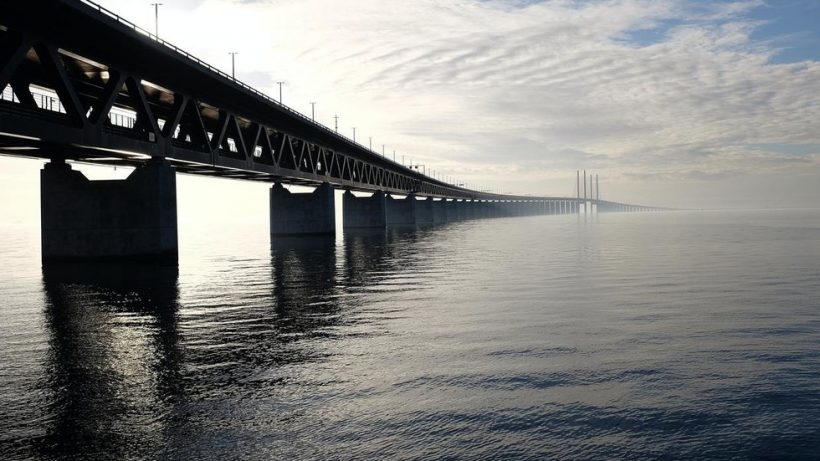
The long-awaited cross-border railway bridge linking Russia and China across the Amur river is scheduled to be commissioned in the first quarter of 2022, authorities in Russia’s Jewish Autonomous Region announced on Wednesday.
The 2,209-meter-long (1.4 mile) structure will link Russia’s Far East with China’s northernmost Heilongjiang province. The Nizhneleninskoye (Jewish Autonomous Region) to Tongjiang (Heilongjiang province) bridge will be the first railway bridge between the two countries. It is expected to bring bilateral trade to new highs.
China has already completed the construction of its part of the structure. As for the Russian side, the region’s acting governor Rostislav Goldstein said earlier it “would be preferable to complete all the work on time, which is the first quarter of 2021.”
Construction of the cross-border bridge officially began in 2016, after 28 years of negotiations. The new bridge and its associated infrastructure will be 19.9km (12.4 miles) long. Some 6.5km (4.1 miles) of the bridge and road junctions will lie in China, and the remaining 13.5km (8.4 miles) will be located in Russia, according to China’s CNS agency.
The highway section of the bridge over the Amur river was completed last year. It will greatly facilitate trade between the two countries, since the route will be roughly 3,500km (2,175 miles) shorter than before. Russia plans to export iron ore, coal, mineral fertilizers, lumber and other goods via the link to China.
Media Falsely Claim Ethiopian Climate Crisis as Crop Yields Set Records
By H. Sterling Burnett | ClimateREALISM | August 10, 2020
Among the top Google News search results today for “climate change,” an article at Insider.com claims “food insecurity from climate change” is “pushing millions of people into cities.” In reality, Ethiopian crop yields are enjoying consistent, impressive gains, and are setting new records virtually every year. Also, Ethiopia’s rural population is growing, not shrinking, as higher crop yields support more farmers and more food production. The Insider.com article being promoted by Google is a perfect example of the dishonest claims made by proponents of the Climate Delusion.
The Insider.com article, titled “Climate change is pushing millions of people into cities like Addis Ababa. Here’s what rapid urbanization looks like in the Ethiopian capital,” asserts that World Health Organization predictions of a growing Ethiopian urban population prove that climate change is devastating crop production and driving people into cities. But that is faulty logic that defies objective reality. In reality, Ethiopia is benefiting from increasing food production and rapid economic growth in its cities. This economic growth is not forcing people away from the farms, but rather enticing many Ethiopians into cities with better paying jobs and the cultural and social attractions of urban life.
Data from the United Nations Food and Agriculture Organization (FAO), charted below, show remarkable growth in Ethiopian crop yields as the Earth continues its modest warming. Crop yields per acre are currently 80 percent higher than just a decade ago, and double what they were in the year 2000.

Moreover, the FAO reports that fully half the Ethiopian population was undernourished in the year 2000, while less than 20 percent of the population is undernourished today.
It is amazing that a “news” article at Insider.com can paint this spectacular crop growth and beneficial improvement in nutrition as “food insecurity from climate change.”
About the only thing that is true in the Insider.com article is that Ethiopia is experiencing dramatic urban population growth. However, it is a lie that the urban growth is being caused by climate change destabilizing food production and forcing people into cities. According to the FAO, Ethiopia’s urban areas have added 13 million people since the year 2000. However, Ethiopia’s rural areas have added 28 million people since the year 2000. Ethiopia’s urban and rural areas are gaining population – with rural areas experiencing the largest growth – as increasing crop yields sustain more population and bring more wealth to the nation’s people.
World Bank economic data illustrate this. Per the World Bank:
“Ethiopia’s economy experienced strong, broad-based growth averaging 9.9 percent a year from 2007/08 to 2017/18, compared to a regional average of 5.4%. … Industry, mainly construction, and services accounted for most of the growth. … Higher economic growth brought with it positive trends in poverty reduction in both urban and rural areas. The share of the population living below the national poverty line decreased from 30% in 2011 to 24% in 2016.”
In summary, Ethiopia is enjoying spectacular gains in crop yields that are supporting a rapidly growing population and dramatic growth in both urban and rural populations. The growth in Ethiopia’s urban population is clearly and inarguably a result of spectacular increases in food production and a wealthier population rather than mythical food insecurity. But the easily discernible and reassuring truth doesn’t promote climate alarmism. Therefore, the media lie and invent a false narrative.
Why Immunity for the CIA?
By Jacob G. Hornberger | FFF | August 11, 2020
Amidst the controversy over the doctrine of qualified immunity for cops, no one is talking about the full immunity accorded to the Central Intelligence Agency, an agency within the national-security establishment that wields omnipotent power.
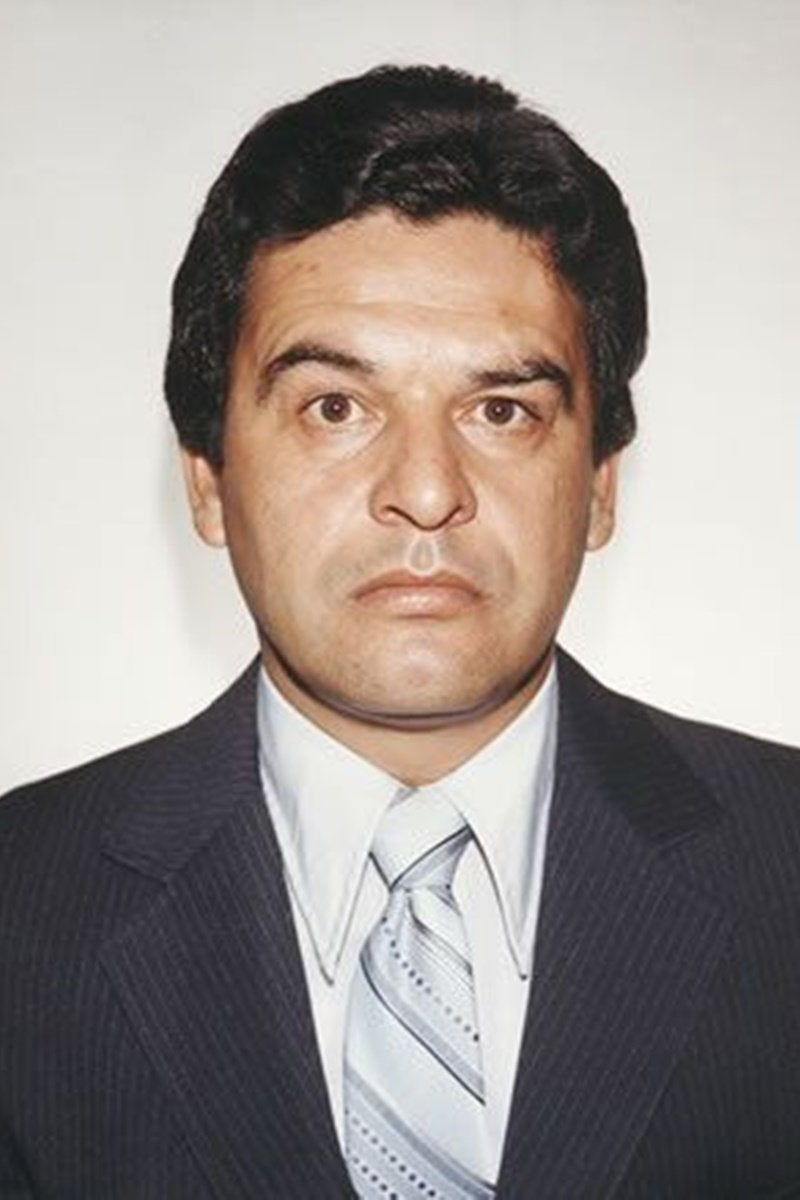 Among the most interesting lines in the new Amazon Prime series The Last Narc is what a CIA official says to DEA investigator Hector Berrellez, who was charged with leading the investigation into the kidnapping, torture, and murder of DEA agent Enrique “Kiki” Camarena. The official tells Berrellez that the CIA is not a law-enforcement agency and, therefore, doesn’t have to comply with the Constitution. Its mission, he said, is to protect the United States. Therefore, the implication is that the Constitution cannot be permitted to serve as a barrier to that end.
That’s the way it’s been since the beginning. The CIA has had omnipotent power to do whatever it deems necessary to protect “national security.” That includes, of course, the power of assassination, a power that the CIA assumed practically since its inception. In fact, as early as 1952, the CIA was developing a formal assassination manual for its assassins.
The CIA also wields the power of torture, the power to record its torture sessions, and the power to destroy such recordings to prevent Congress or the public from listening to them or viewing them.
The CIA also wields the power to lie, at least if it’s in the interest of “national security.”
No one jacks with the CIA. Not the Justice Department, including every U.S. Attorney in the land. Not the Congress. Not the president. Not the military. Who is going to mess with an organization that wields the omnipotent power to destroy or kill people and is more than willing to exercise that power in the name of protecting “national security”?
The kidnapping, torture, and execution of Kiki Camarena
A good example of this phenomenon is found in The Last Narc, which I wrote about in a blog post last week.
In 1985, 37-year-old DEA agent Enrique “Kiki” Camarena was kidnapped on the streets of Guadalajara, Mexico, and brutally tortured for 36 hours before finally being executed.
It was commonly believed that the crime had been committed by the Guadalajara drug cartel, which was headed by Rafael Caro Quintana, Ernesto Fonseca Carrillo, and Miguel Ángel Félix Gallardo, all of whom are featured in Netflix’s series Narcos: Mexico. But Mexican officials steadfastly refused to extradite the three drug lords to the United States for trial.
The DEA assigned Berrellez to take charge of the investigation. Berrellez, who felt as comfortable operating in Mexico as he did in the United States, found three former members of the Jalisco State Police who were willing to talk. They came to the United States and told Berrellez that back in 1985, they had been working double jobs — as state policemen and also as bodyguards for Caro, Fonseca, and Gallardo.
Berrellez interviewed them separately to ensure the integrity of their statements. They each pointed toward complicity of high Mexican officials with the cartel in the distribution of drugs into the United States, which I don’t think would surprise anyone.
The three former cops and bodyguards told Berrellez that they were in the room while Camarena was being tortured. Each of them stated that there were several high Mexican officials present in the house in which Camarena was being tortured while he was being tortured.
The heroism of Hector Berrellez
But then Berrellez discovered something else. According to the three former Mexican state policemen, a man named Max Gomez, also known as Felix Rodriguez, was inside the torture room and taking an active role in the brutal interrogation of Camarena. Berrellez investigated and determined that Rodriguez was a “retired” CIA agent.
Among the principal questions that was being addressed to Camarena was the extent to which he had discovered, in the course of his investigation, the nexus between the drug cartel, the CIA, and the Mexican government in the drug trade.
It was later learned that the interrogation was being recorded, which is something that one would not expect drug lords to do but that one would expect a CIA agent to do.
At that point, Berrellez was in trouble. It’s one thing to conduct an investigation that leads to the Mexican government’s involvement in Camarena’s torture and murder. It’s another thing to conduct an investigation that leads to the U.S. government’s involvement in the torture and murder of a DEA agent who is also an American citizen.
As Berrellez states in The Last Narc, he was warned to back off and let sleeping dogs lie. He was warned that if he didn’t, his life would be in jeopardy. If he didn’t back off, U.S. officials even threatened to forcibly return him to Mexico to face criminal charges that the Mexican government had leveled against him.
But Berrellez refused to back off, and so U.S. officials removed him from the investigation. Even though he could have remained silent, he instead decided to go public with his findings and cooperated in the making of The Last Narc. He comes across as a heroic figure in the series.
For his part, Rodriguez denies that he was in the torture room or that he has had anything to do with Guadalajara cartel and with drug dealing. The problem, however, is that CIA agents will lie if they believe that it is in the interest of “national security.” And they all know that they have immunity when it comes to lying and anything else that touches on “national security.”
Full immunity for the CIA
Here you have a prima facie case of U.S. governmental involvement in the torture and assassination of a U.S citizen, one who was an agent of the DEA. The alleged purpose of the torture was to determine if Camarena had uncovered evidence of CIA complicity with the Guadalajara Cartel and the Mexican government in the drug trade. Three witnesses, all giving their testimony separately, identified Rodriquez as one of Camarena’s interrogators.
That’s clearly enough evidence to launch a formal investigation into the matter. Perhaps it’s worth mentioning that Camarena’s murder took place during Iran Contra, when U.S. officials were breaking the law to raise the money to give to the Nicaraguan contras.
Has any of this caused any U.S. Attorney or the U.S. Congress to launch an aggressive investigation into the matter?
Don’t make me laugh. This is the CIA we are talking about. No one investigates the CIA, which makes the U.S. government as crooked and corrupt as the Mexican government. If you want to get a good sense of how both governments operate, I highly recommend watching The Last Narc.
Jacob G. Hornberger is founder and president of The Future of Freedom Foundation. He was born and raised in Laredo, Texas, and received his B.A. in economics from Virginia Military Institute and his law degree from the University of Texas. He was a trial attorney for twelve years in Texas. He also was an adjunct professor at the University of Dallas, where he taught law and economics.
No more water pollution from oil? Russian scientists create method to effectively clean petroleum products from industrial waste
By Jonny Tickle | RT | August 10, 2020
Scientists from Siberia have developed a technique that effectively removes petroleum from wastewater. Using a sorbent, the new system separates impurities, meaning waste released into the environment will cause much less damage.
The research, published by the United Kingdom’s IOP Publishing, was conducted by scientists based in Krasnoyarsk, a large Siberian city 3,300km east of Moscow.
According to Olga Dubrovskaya, associate professor at Siberia Federal University (SibFU), cultures “eat away” at oil, cleaning the water of “impurities.” Current wastewater treatment technologies only capture about 30 percent of dangerous substances, meaning that many toxicants enter the environment and cause significant environmental damage. By contrast, SibFU’s method removes over 99 percent of all surface and emulsified oil.
The newly developed technique was tested on heat and power equipment at Krasnoyarsk CHP-2, one of the largest thermal power plants in Siberia.
“Bacteria are placed in special spores in the structure of the sorbent,” Dubrovskaya explained. The bacteria sit dormant and activate when oil is detected, at which point the water purification begins.
Featured Video

The Source of America’s Wars – Kristol Clear
or go to
Aletho News Archives – Video-Images
From the Archives
Is Israel to blame for the Iraq War?
American Goy | March 10, 2008
I am so tired of this old canard that “Israel had nothing to do with USA’s war with Iraq – in fact, it officially advised America against it”.
Bullshit. … continue
Blog Roll
 Aletho News
- Alberta Bill Would Fine Political Deepfakes $10,000 Without Satire Exemptions
- Iran declares ‘historic victory’ over US, says enemy forced to accept its proposal
- Trump Claims Ceasefire, Reopening of Strait of Hormuz Agreement with Iran
- Israeli tank fire killed UN peacekeeper in Lebanon, UNIFIL investigation finds
- Russia, China block Bahrain-sponsored UN resolution on Strait of Hormuz
- The US-Israeli War on Science is an Assault on our Future
- Trump’s Promise to Bomb Iran ‘Like Never Before’ Faces Brutal Logistics — Expert
- Germany seeks to restrict stays abroad for men of fighting age – Berliner Zeitung
- Evidence points to Ukraine being behind TurkStream attempted sabotage, but that should come as no surprise
- Sri Lanka secures supplies of Russia oil – minister
- If Americans Knew
- Thousands dead and neighborhoods razed to the ground: Aid agencies fear southern Lebanon is becoming the new Gaza
- The war the US is fighting for Israel could cost trillions
- ‘Cigarette Burns, Nail Wounds’: Toddler Tortured in Gaza to Coerce Father
- Trump Says US Sent ‘a Lot of Guns’ to Protesters in Iran
- Israeli forces destroy 17 UN peacekeeper cameras in south Lebanon
- US-Israeli strikes ‘completely destroy’ synagogue in Tehran
- Archbishop for US Military Says Iran War Is Unjust Under Catholic Teaching
- Iranian leaders’ Open Letters to the American People
- Trump says Iranians appreciate bombs, WHO warns of nuclear risks – Daily Update
- U.N. experts demand Israel release prominent Gaza doctor after reports of ‘severe torture’
- No Tricks Zone
- An Inconvenient Tree: Uncovered In Alps… Europe Much Warmer Than Today 6000 Years Ago
- New Study Reports A 60% Slowdown In Greenland’s Ice Loss Rate In The Last Decade
- Low Intensity Tornado Wrecks Major Solar Farm, Creating A Potential Toxic Dump
- New Study Finds Warming Saves Lives…Cold Temperatures 12 Times More Deadly Than Excess Heat
- German Science Blog Accuses PIK Climate Institute Of Hallucinating Climate Tipping Points
- Devastating Assessment Of Comirnaty Vaccine By Former Senior Pfizer Europe Toxicologist
- New Study: CO2 Is ‘Effectively Negligible’ As An Explanatory Climate Change Factor Since 2000
- Former Pfizer Toxicologist Dr. Helmut Sterz Tells Bundestag Hearing Pfizer Vaccine Should Have Never Been Approved
- Energy Expert: Germany’s Nuclear Phaseout Was A “500 Billion Euro Mistake”
- New Research: South Australia’s Mid-Holocene Sea Surface Temperatures Were 4°C Warmer Than Today
 Aletho News